❌

Reading view

Animal vs. Plant Protein: Scientists Found a Surprising Nutritional Difference

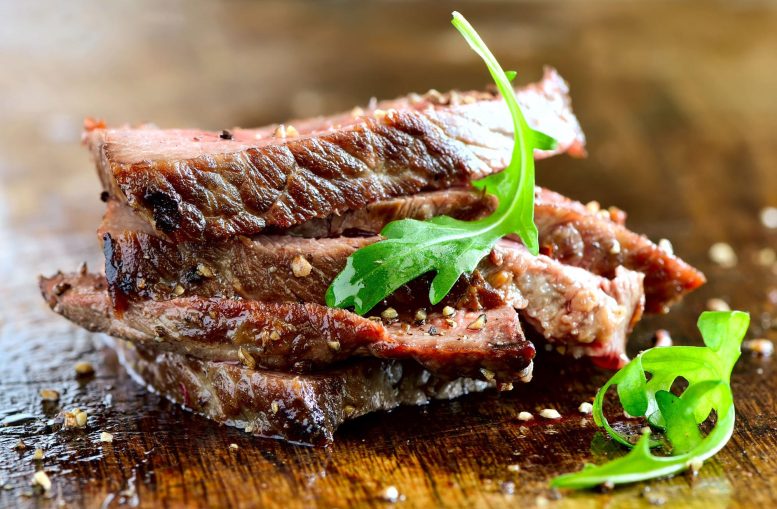
Grilled MeatResearch suggests that equal servings of animal protein may pack a much bigger muscle-building punch than their plant-based counterparts. When it comes to protein, the same serving size on paper may not mean the same nutritional payoff in the body. A 2023 Purdue University study found that two ounce equivalents (oz-eq) of animal-based protein foods [...]
  •  

Les plus grosses pouponnières d'exoplanètes ne se trouvent pas où on le croyait !

Depuis une trentaine d'années, on observe des pouponnières d'étoiles, qui sont également des pouponnières pour les exoplanètes au sein de nuages moléculaires et poussiéreux instables, susceptibles de s'effondrer gravitationnellement. Mais selon des astrophysiciens, l'Univers est capable de...

  •  

UK Electric Vehicle Loopholes Add 17 Million Tonnes CO2 While Coastal Erosion Threatens 200-Year-Old Sailors’ Grave — Today’s Environmental Briefing for Sun, Jun 7 2026

Electric vehicles charging at station with emissions visualization showing carbon dioxide impact

Across the stories today, a common thread emerges: the growing tension between ambitious climate goals and the messy realities of making change happen on the ground. From Colorado’s largest-ever oil lease sale to federal subsidies flowing toward aging coal plants, the gap between environmental necessity and economic momentum has rarely felt more stark.

The day’s coverage points to growing momentum around innovation, but also the persistent pull of established systems. While virtual power plants gain traction in Massachusetts and Minnesota as states seek clean energy solutions, the federal government simultaneously allocated $700 million to support the struggling coal industry through the Defense Production Act. It’s a reminder that progress and pressure often arrive together, creating policy landscapes that can feel contradictory but reflect the complex economics of energy transition.

Perhaps most telling are the stories of communities caught between these larger forces. In Colorado’s northwestern wilderness, the Bureau of Land Management is opening 156,000 acres of critical wildlife habitat — including migration corridors for the nation’s largest elk herd — to oil and gas drilling. Meanwhile, in the Dominican Republic, 450 families near the Pueblo Viejo gold mine are demanding relocation from what they describe as dangerous pollution, while Canada’s corporate watchdog office remains unstaffed and unable to respond.

These human-scale impacts reveal how environmental challenges increasingly operate across borders and timescales. The Middle East conflict now threatens global food security through fertilizer trade disruptions, while mangrove forests — nature’s carbon guardians for tens of millions of years — face existential pressure from rising seas happening faster than these resilient ecosystems can adapt.

Behind the numbers are real communities adapting in real time. In Nepal’s fertile southern plains, farmer Dhruba Prasai stands guard over his crops every night as wildlife emerges from nearby forests, highlighting the complex relationship between conservation success and agricultural livelihoods. In Norfolk, authorities must consider exhuming a 200-year-old mass grave of sailors as coastal erosion — accelerated by climate change — threatens this historic site.

Yet today’s stories also showcase remarkable resilience and ingenuity. A Kent village transformed itself into a living solar system model to inspire environmental awareness. The stunning turquoise dwarf gecko has rebounded from near-extinction thanks to trade bans and conservation efforts. Amazon communities are pioneering new models for sustainable resource management while protecting some of the world’s last intact forests.

The juxtaposition feels particularly acute in water policy, where federal officials prepare to impose Colorado River management plans if seven states can’t reach agreement, while a Labour politician calls for public ownership of Thames Water amid ongoing environmental concerns. These parallel struggles — one over scarcity, another over stewardship — underscore how water governance has become a defining issue for both climate adaptation and democratic accountability.

As the week unfolds, all eyes will be on whether the Biden administration’s mixed signals on energy policy — supporting both clean innovation and fossil fuel infrastructure — represent a pragmatic transition strategy or a failure to fully commit to climate goals. The stories emerging from frontline communities, from Nepal’s fields to Colorado’s wilderness, suggest that the window for managed, equitable change continues to narrow, making each policy choice increasingly consequential for both people and planet.

The post UK Electric Vehicle Loopholes Add 17 Million Tonnes CO2 While Coastal Erosion Threatens 200-Year-Old Sailors’ Grave — Today’s Environmental Briefing for Sun, Jun 7 2026 first appeared on EnviroLink Network.

  •  

June 7, 1992: The Extreme Ultraviolet Explorer launches

NASA launched the Extreme Ultraviolet Explorer satellite, or EUVE, on June 7, 1992, to conduct an all-sky survey at wavelengths inaccessible from the ground. The first satellite designed to operate in the short-wave ultraviolet range, its “objectives included discovering and studying UV sources radiating in this spectral region, and analyzing effects of the interstellar mediumContinue reading "June 7, 1992: The Extreme Ultraviolet Explorer launches"

The post June 7, 1992: The Extreme Ultraviolet Explorer launches appeared first on Astronomy Magazine.

  •  

Face à la soif d’énergie de l’IA, la Chine mise sur des serveurs immergés en mer

Face à l’explosion des besoins de calcul liés à l’intelligence artificielle, la Chine a mis en exploitation un data center sous-marin présenté comme le premier au monde à être alimenté par un parc éolien offshore, ce qui réduit la dépendance à l'eau douce et aux énergies fossiles.

  •  

Araignées bleues, papillons à plumes… cette région d’Afrique cachait un monde presque inconnu

Dans une région longtemps restée inaccessible aux scientifiques, une expédition a révélé une biodiversité exceptionnelle. Parmi les trouvailles figurent des dizaines d’espèces potentiellement inconnues de la science, dont une étonnante araignée fluorescente.

  •  

This Simple Drink Could Help Calm the Inflammation Behind Many Diseases

Fresh Tomato Juice With Basil GlassesScientists found that a tomato-soy juice rich in plant-derived compounds altered inflammation-related signals in healthy adults with obesity. A new study found that drinking tomato-soy juice rich in health-promoting plant compounds reduced levels of inflammatory proteins in healthy adults with obesity after four weeks. The results suggest the beverage could serve as a functional food [...]
  •  

Doctors May Be Overlooking the Real Cause of Persistent Arthritis Pain

Hands Holding Knee Pain Degenerative ArthritisA new study suggests that lingering rheumatoid arthritis symptoms are not always caused by ongoing inflammation. For people with rheumatoid arthritis, lingering pain and fatigue are often assumed to be signs that inflammation remains active. But new research suggests the real culprit may sometimes lie elsewhere. Researchers at Semmelweis University report that sleep disorders, depression, [...]
  •  

Breaking Barriers: First Female Chair of Grayling Society Champions River Conservation and Women in Angling

Breaking Barriers: First Female Chair of Grayling Society Champions River Conservation and Women in Angling

Marnie Lovejoy has made history by becoming the first woman to chair the Grayling Society, marking a significant milestone in the traditionally male-dominated world of fly-fishing and freshwater conservation. Her appointment comes at a crucial time for England’s rivers and the protection of one of its most elegant native fish species.

Known to anglers as the “lady of the stream” for its iridescent pink scales and graceful dorsal fin, the grayling faces mounting pressures from habitat degradation, pollution, and climate change. These beautiful fish require pristine water conditions to thrive, making them important indicators of river health across England’s waterways.

Lovejoy’s leadership represents more than just breaking glass ceilings in angling circles. She aims to inspire a new generation of women to take up fishing while simultaneously advancing conservation efforts for England’s struggling river ecosystems. Her dual mission addresses both the sport’s diversity challenges and the urgent need for river protection.

The timing of her appointment underscores broader changes in the angling community. Until 2024, some prestigious fishing clubs excluded women entirely, even as guests. Now, with Lovejoy at the helm of grayling conservation efforts, the sport is slowly evolving to embrace both gender equality and environmental stewardship. Her work could prove vital for protecting these sensitive fish and the pristine river habitats they depend on for survival.

The post Breaking Barriers: First Female Chair of Grayling Society Champions River Conservation and Women in Angling first appeared on EnviroLink Network.

  •  

Shell Operated Leaking Nigeria Pipeline for Years Despite Knowing Environmental Risks to Mangrove Forests

Shell Operated Leaking Nigeria Pipeline for Years Despite Knowing Environmental Risks to Mangrove Forests

Internal company documents reveal that oil giant Shell knowingly continued operating a severely compromised pipeline in Nigeria’s Niger Delta for years, despite being aware it posed significant pollution risks to the region’s precious mangrove ecosystems. The communications show that senior executives were informed as early as 2008 about the deteriorating conditions of the 97-kilometer Nembe Creek Trunk Line, yet chose to keep the oil flowing rather than shut down operations for repairs.

The pipeline, which carries 150,000 barrels of oil daily to export terminals, became a source of repeated environmental disasters as thieves tapped into the line through illegal connections, causing massive spills into the surrounding wetlands. Company documents from 2013 classified such compromised pipelines as requiring immediate shutdown or urgent remedial action, yet operations continued. The resulting oil contamination has devastated the region’s mangrove forests, which are home to diverse species of Rhizophora and Avicennia trees that form critical coastal ecosystems.

Local communities have paid a devastating price for Shell’s decision to prioritize profits over environmental protection. Residents of the nearby Bille community report that approximately 2,000 hectares of mangrove swamps have been killed by oil spills, with contamination affecting a total area of 13,200 hectares. The pollution has destroyed fish populations and other aquatic life that local communities depend on for their livelihoods. Satellite imagery confirms the massive scale of mangrove degradation around affected villages, showing the long-term environmental consequences of operating damaged oil infrastructure in sensitive coastal ecosystems.

The post Shell Operated Leaking Nigeria Pipeline for Years Despite Knowing Environmental Risks to Mangrove Forests first appeared on EnviroLink Network.

  •  

La plante de la semaine : facile à cultiver, cette plante géante venue des Andes cache un trésor au goût de poire

Les Français sont de vrais « jardinophiles » ! Et vous ? Avec cette chronique, (re)découvrez une plante, un fruit, un légume. Dans la famille des légumes oubliés, on demande la poire de terre. Discrète, celle qui se nomme aussi yacon mériterait pourtant d’être un peu plus présente dans nos...

  •  

VivaTech 2026 : l’innovation ouverte au grand public et notamment aux jeunes

Pour son 10e anniversaire, VivaTech 2026 ne se contente plus d’être un rendez-vous incontournable pour les quelque 180 000 visiteurs professionnels. Le salon s’ouvre au grand public pour démocratiser l’innovation, attirer les jeunes talents et prouver que la tech n’est pas réservée à une...

  •  

Cette gêne très courante en milieu bruyant cacherait un lien étonnant avec le risque de démence

Une découverte surprenante relie les difficultés auditives en milieu bruyant à un risque accru de démence. Cette étude britannique, menée sur plus de 80 000 adultes, ouvre de nouvelles perspectives dans la prévention de cette maladie neurodégénérative. Quelles sont les implications de ces...

  •  

Ces aliments pourraient davantage vous protéger du cancer du sein si vous les choisissez bio

Une nouvelle étude française menée auprès de plus de 30 000 personnes suggère qu’un simple changement dans vos habitudes alimentaires pourrait être associé à une réduction significative du risque de cancer du sein après la ménopause. Voici ce que les chercheurs ont découvert.

  •  

According to Scientists, This Simple Dietary Change Is Linked to Lower Depression Scores

Young Happy Woman Drinking Orange JuiceResearchers found that a simple addition to a 5-a-day diet was associated with improved mental well-being in adults with low fruit and vegetable intake. New research from Newcastle University suggests that drinking a daily glass of 100% fruit juice or a smoothie as part of the country’s 5-a-day nutrition recommendation may help improve mental well-being. [...]
  •  

Researchers Discover a Hidden Vitamin D Problem That Persists Year-Round

Holding Vitamin D SunlightA new study suggests that some groups may not experience the expected seasonal boost in vitamin D levels, even during the sunniest months of the year. Many people assume that spending more time outdoors during summer naturally restores vitamin D levels after the darker winter months. But new research suggests that for some groups, that [...]
  •  

One Detroit-area Hyundai dealer wants $400 to charge your car

Drivers opening an EV charging app for the first time today will be presented with thousands of so-called “public” chargers at local car dealers. Once they arrive, however, the store’s customers, store hours, security gates, and Wild West pricing can turn what should be a routine charging stop into a frustrating ordeal. For first-time EV drivers, that doesn’t just reflect poorly on the dealer – it reflects poorly on the EV, itself. And we need to fix it.

UPDATE 05SEP2026: another Hyundai store, another $418 bill.

more…
  •  

Scientists ejected from diabetes conference for distributing journal reprints

Five leading scientists were ousted from the annual meeting of the American Diabetes Association (ADA) in New Orleans on Friday. Their crime: handing out copies of an editorial, published in the journal Diabetes Care on April 29, sharply criticizing the Trump administration's ongoing attacks on scientific research.

Those ousted were Steven Kahn, professor of medicine at the University of Washington and editor-in-chief of Diabetes Care, who co-authored the published editorial; former ADA President Desmond Schatz of the University of Florida, Gainesville; Aaron Kelly, pediatrics professor at the University of Minnesota; Justin Ryder of Northwestern University; and Irl Hirsch, also of the University of Washington. The five were handing out reprints of the editorial outside a room where NIH director Jay Bhattacharya had been scheduled to speak. Bhattacharya canceled and another NIH official spoke in his stead.

"They physically grabbed us, forced us out of the conference center, and now are telling us we can no longer attend this meeting," Kelly told MedPage Today, which first reported the incident. "They're taking our lanyards. It really has come to this in America. Censorship is real. America needs to stand up. Scientists, stand up. Physicians, stand up."

Read full article

Comments

© Screenshot/MedPage Today

  •  
❌