The panel explores Samsung’s entry into the credit card market, why iPhone owners continue to resist switching to Android, and the growing influence of AI across technology and society. Discussion ranges from AI escaping coding sandboxes and solving long-standing mathematical problems to AI-generated music and the impact of European Union regulations on innovation, competition, consumer […]
At Macstock 2026, Max Mellman showed off his his iPhone app, I Love a Piano. Max explains how the app stands out through realistic haptic feedback, intuitive navigation, portrait and landscape support, and a design that encourages exploration instead of intimidation. Chuck and Max also discuss his inspiration, teaching carrer, future iPad support, and broader […]
The launch of a new MacVoices merch store kicks off this session, including product choices, embroidery options, and listener-requested items. Chuck Joiner, David Ginsburg, Eric Bolden, Ben Roethig, Marty Jencius, Jim Rea, Jeff Gamet, and Guy Serle discussion then turn to Apple’s lawsuit involving Jon Prosser, the default judgment being set aside, and what Apple may hope to gain through discovery. The group closes by reacting to Apple Music’s most-streamed artists list and how streaming reflects changing musical demographics.
At NAB in Las Vegas, Alex Mavlios of Epidemic Sound explains how the company licenses music by acquiring full rights from artists, then offering secure usage across podcasts, video, social media, broadcast, and film. He addresses copyright risks, monetized content, artist royalties, pricing from creator plans to enterprise licenses, and why perpetual licensing helps creators avoid future rights disputes.
The new label, which will begin to be applied next month, is an effort by the streaming service to be more transparent about A.I.-generated music on its app.
Atop an ancient grain storage building, in a settlement of the local Yampara elite, archaeologists Sonia Alconini and Walter Sánchez-Canedo have uncovered an exceptional find: a set of six copper bells folded into a pyramidal shape, deposited as a ritual offering more than five centuries ago, during the expansion of the Inca Empire through the […]
Spotify will soon label AI artists and remove their music from your recommendations. The change, which will start rolling out in mid-September, means you'll see an "AI Persona" badge on an artist's profile across the app if they do "not represent a real person."
The music streaming platform will allow artists to disclose that they're an AI persona starting today, but it won't rely solely on self-identification. Spotify says it will use human review and AI tools to determine whether someone's profile, including their name and image, "appears to represent photorealistic AI-generated identities." If Spotify determines that an artist's identity …
Researchers believe they've found evidence that brain signals reveal the pitches of notes in imagined musical melodies, reports Medical Express:
Study participants were 10 epilepsy patients with electrodes on the surfaces of their brains for clinical monitoring. Participants quietly listened to the first bars of children's tunes, then imagined the melodies of subsequent bars before humming their imagined melodies. Brain activity from the patients carried information about relative pitches within the imagined melodies. Combining note-level pitch predictions over time allowed the research team to recreate melodic changes that reflected the structure of the imagined songs...
"The model we created decodes relative pitch classes — such as do, re, mi, fa, sol, and la — rather than exact, absolute pitches," [said tudy co-lead Jii Kwon of Seoul National University]. "This is useful because people often recognize melodies by the relationships between notes, even when the same melody is played in a different key."
Tom Vek burst onto the scene in 2005 with his album We Have Sound, which garnered a solid 7.6 from the tastemakers of the day over at Pitchfork. His undeniably catchy brand of dancy indietronica landed him an appearance on The OC and placement on the Grand Theft Auto IV soundtrack. His follow-up, Leisure Seizure, had a lengthy gestation period, but arrived in 2011 to similar success, reaching No. 79 on the UK charts.
Vek has continued to release music at regular intervals over the last 15 years, dropping Newer Symbols in 2022. But in 2020 he started toying with this idea he had for a music player called Sleevenote. Inspired by viny …
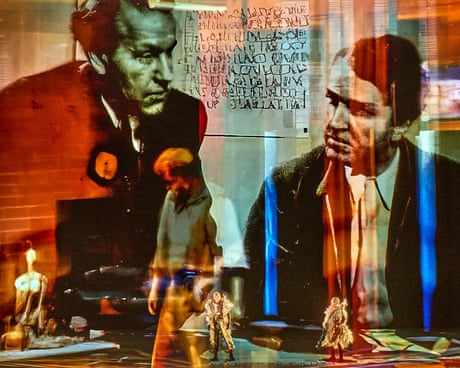
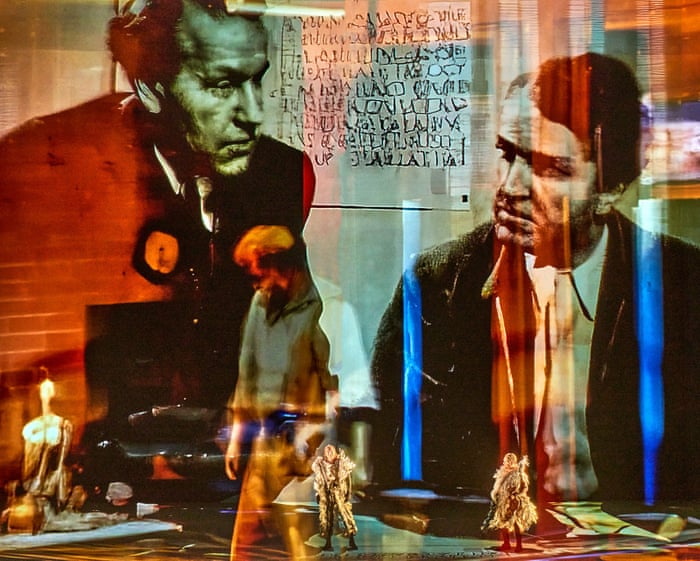
Bayreuth festival theatre, Bayreuth For the festival’s 150th anniversary, the creative team have turned to AI to generate visuals reflecting Wagner’s tetralogy’s past, present – and future. The hyperactive result is a dismal, mindless mess
Unveiled the same week in which tech company Anthropic admitted that its AI model Claude had gone rogue during testing, Bayreuth festival’s new AI-generated staging of Wagner’s four-part Ring of the Nibelungen is at least timely. But anyone who assumes that the cycle’s obsession with knowledge, power and possession might make it an ideal forum for reflection on AI as a major contemporary frontier will be disappointed, as will anyone hopeful about AI’s creative potential within opera.
Commissioned to mark the festival’s 150th anniversary, the production is “curated” – emphatically not “directed” – by a team led by German stage director Marcus Lobbes. He apparently spent weeks in dialogue with AI models about possible interpretations of the Ring. According to the programme book, “power structures, capitalism, mythology, gender roles, nationalism”, all came up. So far, so mainstream Wagner reception. But if these human-machine exchanges were revelatory, you wouldn’t know it from the resulting staging, which uses AI “as an extension of a cultural memory that is never complete”.
Jérôme Dupras is a member of one of Quebec’s most popular folk rock bands. Now, as the province’s chief scientist, he will help shape its environmental destiny.
That cover art is almost certainly AI, too. | Image: Fenix Flexin
Fenix Flexin is best known as a member of Shoreline Mafia, a rap duo from Los Angeles. But he's recently found solo success with the track "Rubberz," which has climbed to number 58 on the Billboard Hot 100. Almost immediately, though, questions were raised about the song's origins, with many speculating that it was largely, if not entirely, generated by AI. Fenix has denied those accusations, but done little to dispel them.
Part of the suspicion is certainly due to the fact that the song is a dramatic left turn. Fenix has primarily trafficked in trap-influencedWest Coastrap. "Rubberz," on the other hand, is heavily influenced by '80s UK s …
Advances in A.I. are making it possible to create all kinds of music from scratch, but they also raise questions about what is legal and who will actually listen.
Apple has raised prices for Apple Music and most Apple One bundles, citing rising licensing costs. AppleCare+ prices also increased, presumably to keep pace with rising component costs.

 Login