❌

Reading view

MNRC MN300S Review: 1:12 4WD RC Crawler With Proportional Control

Not every remote-control vehicle is designed to be fast. Some are more interesting when the terrain becomes difficult.

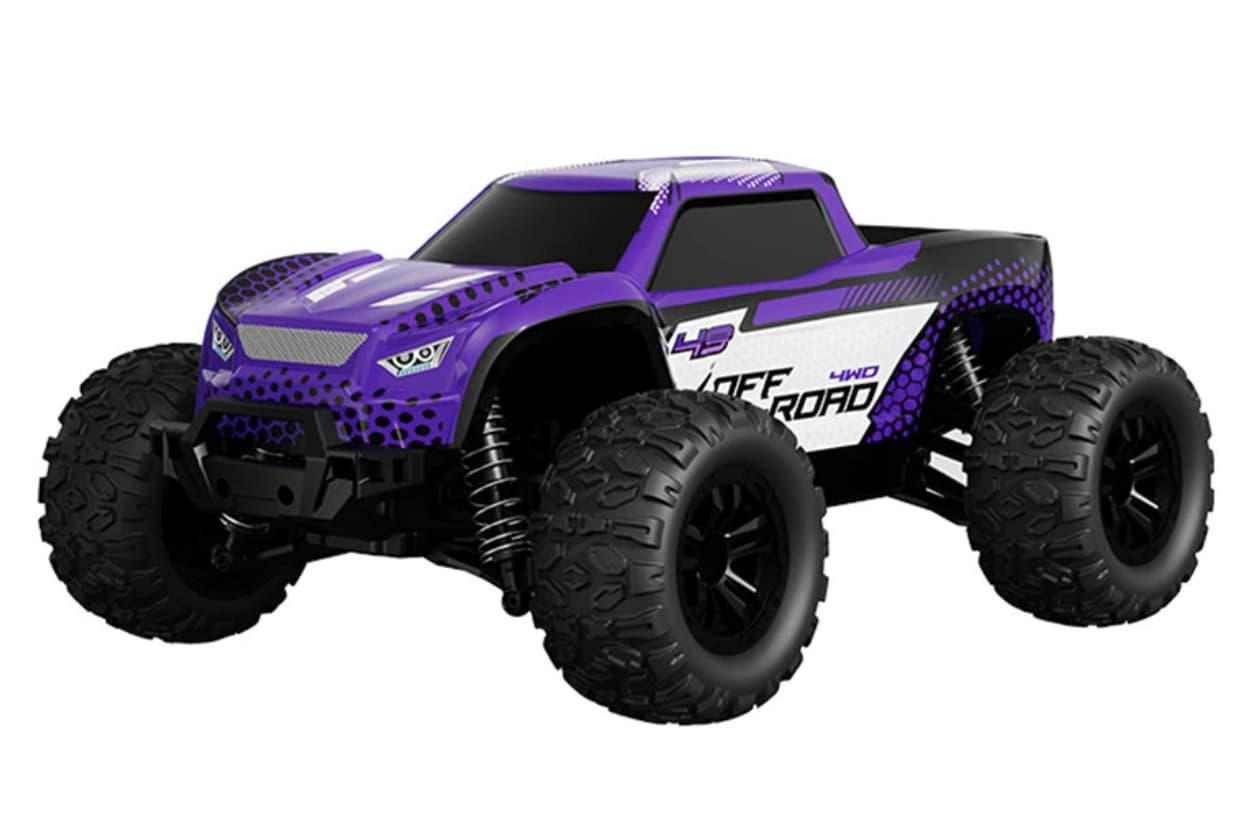
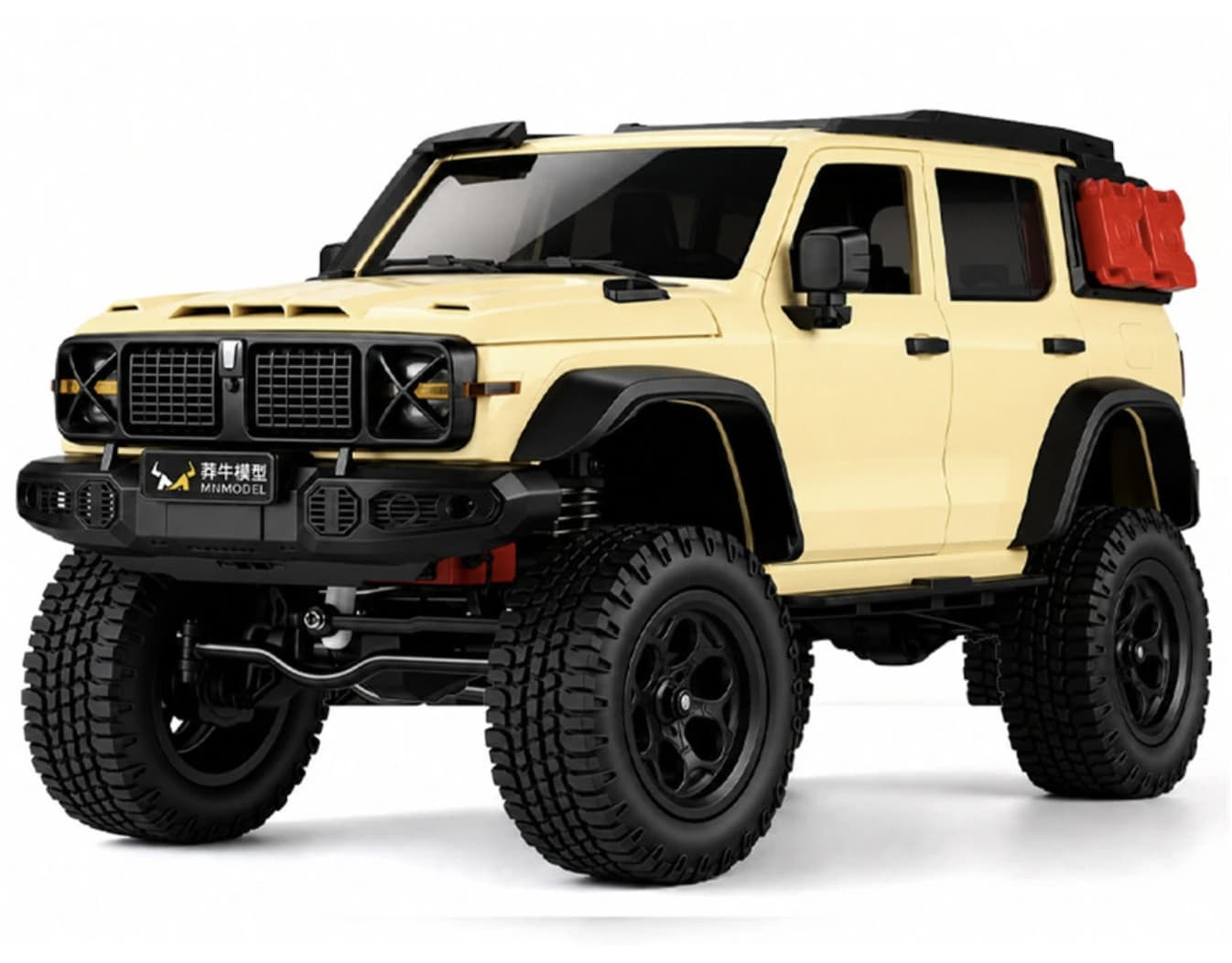
MNRC MN300S rc truck takes that approach. Rather than focusing on high top speed, this 1:12 4WD RC crawler combines four-wheel drive, proportional rc controls, a two-speed transmission and a relatively large body to create a platform aimed at climbing, trail driving and technical off-road play.

Its specifications suggest a vehicle intended for users who enjoy controlling an RC crawler through uneven ground rather than simply racing it across a flat surface. The manufacturer lists a maximum speed of 8 km/h, a climbing capability of up to 45 degrees, a control distance of around 50 meters and approximately 45 minutes of driving time from its included 7.4V 1200mAh lithium-ion battery.
The MN300S Is More About Control Than Speed

The first thing to understand about the MN300S is its character.

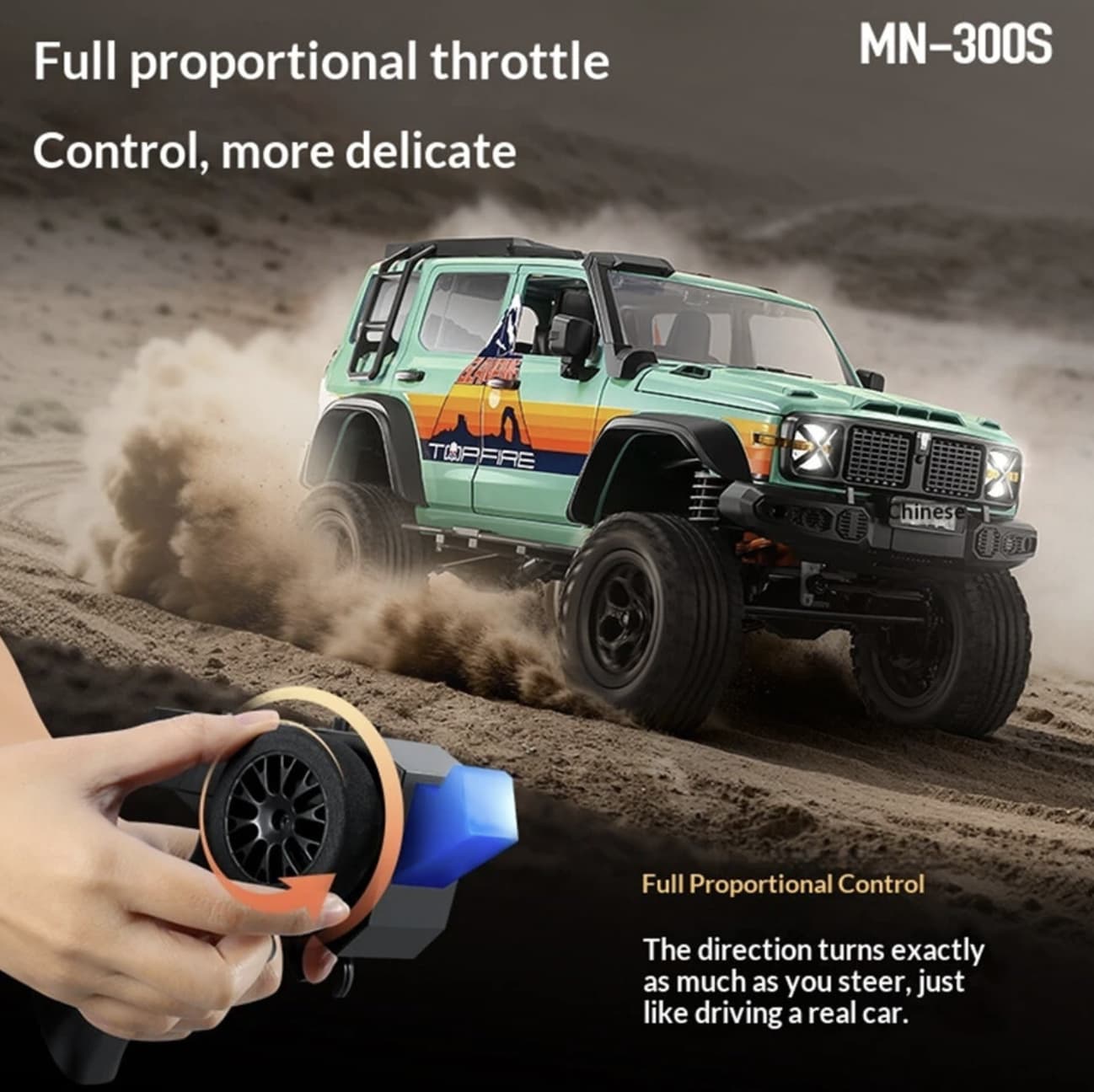
With a claimed top speed of 8 km/h, this is not positioned as a speed-focused RC truck. Instead, the combination of 4WD and proportional control gives the vehicle a more deliberate operating style.

Proportional control matters when navigating obstacles. Instead of treating steering and throttle as simple on/off commands, the controller allows the driver to make smaller adjustments. That is particularly useful when the vehicle is approaching a rock, climbing a slope or trying to keep its wheels positioned on a narrow section of trail.

For casual driving, this can make the MN300S feel more predictable. For hobbyists, it also creates more room to develop driving technique.
1:12 Scale Gives It a Substantial Trail Presence

The MN300S measures approximately 38.78 × 16.84 × 18.5 cm, putting it firmly into the larger end of casual RC toys while remaining manageable for outdoor use.

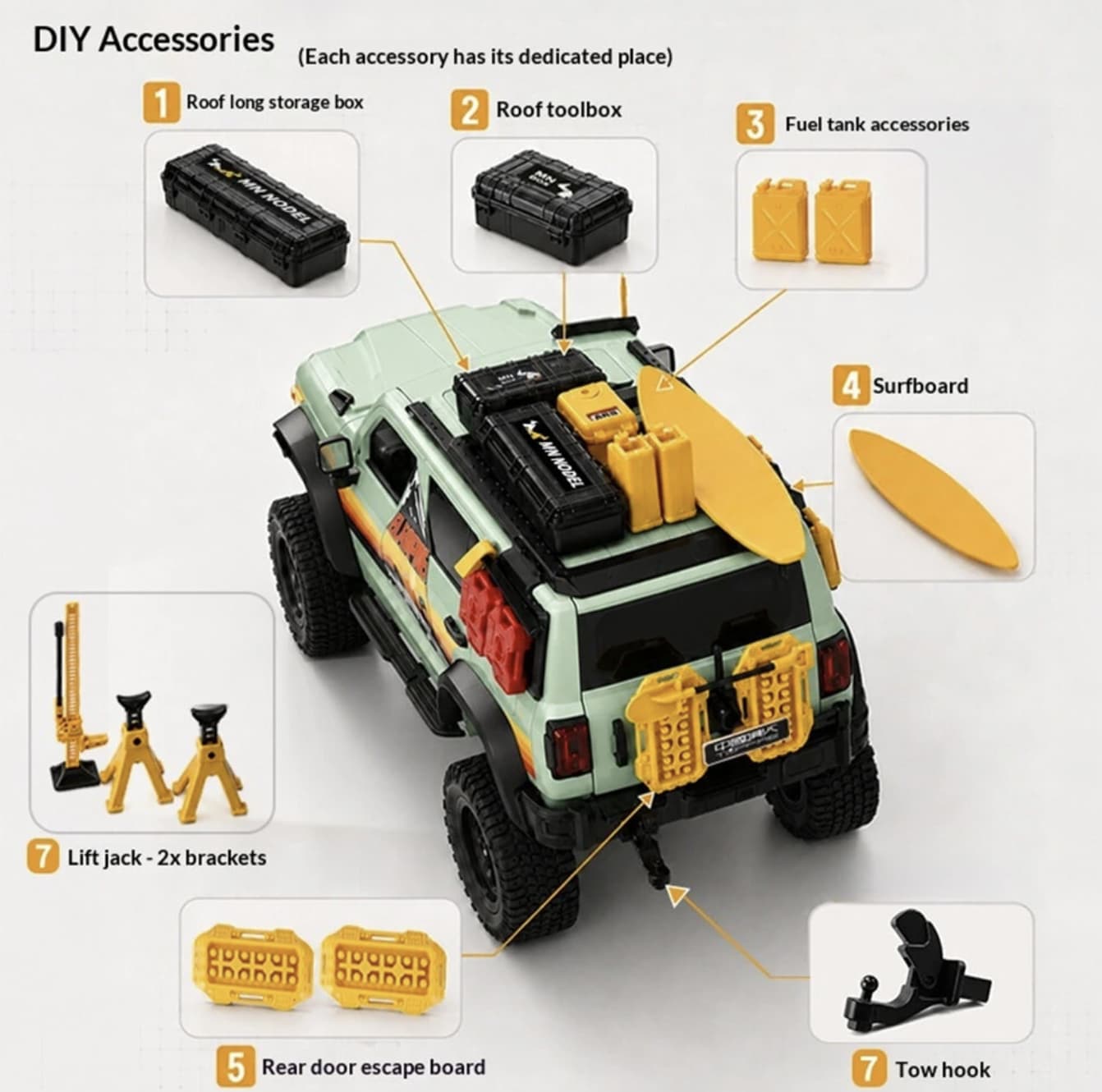
Its 1:12 scale is also important from a visual perspective. The body is designed around an officially licensed, high-simulation appearance, so the vehicle is intended to work in two different ways: as something to drive and as a model that can be displayed when it is not being used.

That combination should appeal to hobbyists who care about the appearance of their RC vehicles as much as the driving experience.

4WD Is the Key to Its Off-Road Personality

The MN300S uses a four-wheel-drive system designed for uneven outdoor terrain.

On a smooth floor, the difference between 2WD and 4WD may not be especially important. On loose soil, grass, stones and other irregular surfaces, however, maintaining traction across multiple wheels becomes much more relevant. It comes with 4WD RC cars for off-road driving.
The listing gives the vehicle a maximum climbing angle of 45 degrees. This figure should be viewed as a manufacturer specification rather than a guarantee that the vehicle will climb every 45-degree surface, because actual performance depends on terrain, tire grip, battery condition, surface material and driving technique.

Still, the specification clearly shows where MNRC expects the MN300S to be used: on terrain where traction and controlled wheel movement matter more than outright speed.

Two-Speed Transmission Adds Another Layer of Control

Another interesting feature is the two-speed transmission.

A crawler benefits from having different driving characteristics for different situations. A lower-speed setting can be useful when negotiating obstacles that require careful throttle control, while a faster setting makes ordinary trail movement less tedious.

This is one of the details that separates the MN300S from very basic RC cars. The vehicle is not simply designed around maximum acceleration. Its controls are intended to give the driver more influence over how the truck responds to the terrain.

A 7.4V Battery Provides Around 45 Minutes of Claimed Runtime

Power comes from a 7.4V 1200mAh lithium-ion battery, which is included with the vehicle. Banggood lists approximately 45 minutes of playtime and around 210 minutes of charging time.

The real runtime will naturally vary according to driving conditions. Continuous climbing and frequent throttle changes can consume more energy than relaxed driving on relatively flat ground.

The roughly three-and-a-half-hour charging time also means owners should plan charging before an outdoor session rather than expecting a quick top-up between short drives.

The transmitter itself requires two AA batteries, which are not included.

LED Lighting Makes the Vehicle More Than a Daytime Toy

The MN300S includes a remotely controllable lighting system with front lights, turn signals and rear lights.

That is more than a cosmetic detail. Lighting gives the vehicle a more realistic appearance and makes it easier to distinguish the front and rear of the model when driving at a distance.

For hobbyists who enjoy filming RC rock crawler or creating miniature trail scenes, the lighting system can also add visual interest without requiring additional accessories.

Built for Hobbyists Who Like to Modify Their Vehicles

One of the more interesting aspects of the MN300S is its stated support for customization and upgrades.

That makes the platform potentially more attractive to hobbyists than a completely closed RC toy. Owners who enjoy changing components, experimenting with setup or gradually improving a vehicle have more reason to keep working with the same chassis.

The product listing also describes the vehicle as using a combination of PA, alloy and electronic components, while the body is described separately as a sturdy ABS structure.

This suggests a design that tries to balance visual detail with the demands of outdoor driving.

50-Meter Control Range Is Enough for Trail Driving

The included 2.4GHz transmitter operates across four channels and has a listed control distance of approximately 50 meters.

For a crawler, that is a sensible range. Unlike a fast RC racer, the MN300S does not need to travel huge distances before reaching its intended driving environment.

A 50-meter range gives the driver enough room to send the vehicle along a garden path, park trail or open outdoor area while maintaining a practical distance for observing obstacles.

What the MNRC MN300S Is Actually Good At

The specifications point toward a particular type of RC experience.

The MN300S makes the most sense for:

  • Technical off-road driving
  • Rock and trail crawling
  • Outdoor RC sessions
  • Hobbyists who enjoy proportional controls
  • Drivers interested in customization
  • Collectors who want a realistic 1:12 model
  • Users who prefer controlled driving over high speed

It is less compelling if the main goal is racing. An 8 km/h maximum speed places it firmly in the crawler-oriented category rather than the high-speed RC category.

MNRC MN300S Specifications

Feature Details
Model MN300S
Brand MNRC / MNR/C
Scale 1:12
Drive 4WD
Frequency 2.4GHz
Channels 4CH
Motor 280 brushed motor
Steering servo 17g
Maximum speed Up to 8 km/h
Control distance About 50m
Car battery 7.4V 1200mAh Li-ion
Claimed runtime Approx. 45 minutes
Charging time Approx. 210 minutes
Climbing angle Up to 45°
Steering angle Up to 28°
Load weight Up to 3kg
Traction weight Up to 5kg
Vehicle size 38.78 × 16.84 × 18.5cm
Transmission Two-speed
Lighting Front lights, turn signals and rear lights
Control Proportional
Recommended age 15+

Specifications are based on the current product listing and should be treated as manufacturer/retailer claims rather than independent performance measurements.

Final Take

MNRC MN300S is interesting because it does not try to compete with RC vehicles by chasing an impressive top-speed number. Its appeal comes from a different combination: 1:12 scale, four-wheel drive, proportional control, two-speed gearing and a design intended for climbing and outdoor terrain.

The included battery and transmitter also mean the package is relatively straightforward for someone who wants to start driving without assembling a complete RC system from individual components. The addition of controllable lighting and upgrade potential gives the platform more personality than a basic entry-level RC car.

For someone looking for a realistic RC crawler to take onto trails, grass, dirt and moderate obstacles, the MN300S has a specification sheet that makes sense as a hobby-oriented off-road platform. Its relatively modest speed is not necessarily a weakness—it is part of the reason the vehicle is better understood as a technical crawler rather than a racing truck.

The post MNRC MN300S Review: 1:12 4WD RC Crawler With Proportional Control appeared first on IGeeKphone China Phone, Tablet PC, VR, RC Drone News, Reviews.
  •  

YH Toys YH18001 PRO Review: A 70km/h 1/18 Brushless RC Monster Truck Built for Speed and Off-Road Fun

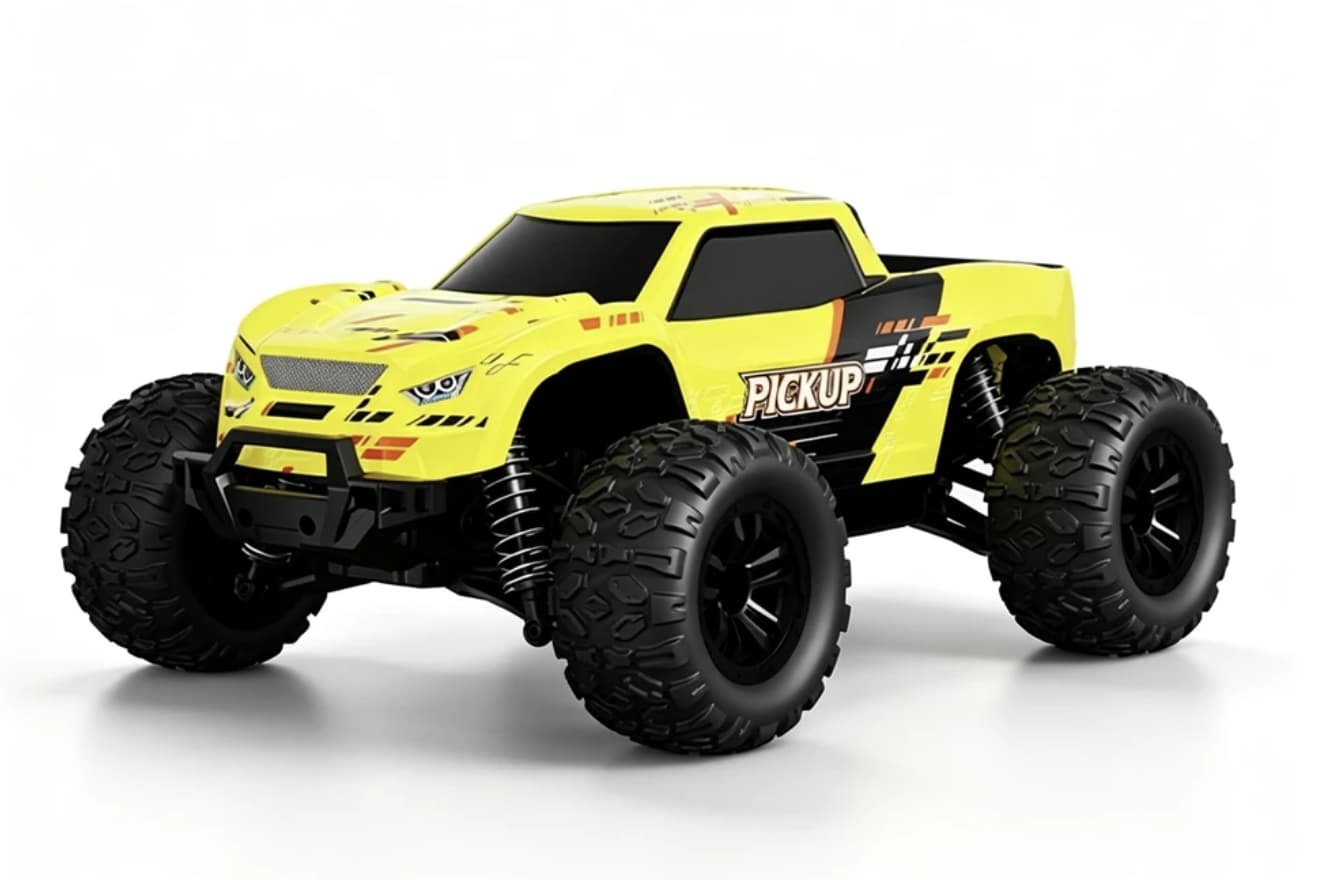
YH Toys YH18001 PRO is a compact yet powerful 1/18-scale brushless RC monster truck designed for enthusiasts who want high-speed performance without stepping up to a larger and more expensive platform. Featuring a 4300KV brushless motor, 4WD drivetrain, metal drivetrain components, and a claimed top speed of 70km/h, the YH18001 PRO promises an exciting driving experience on a wide variety of terrains.

Whether you’re new to the RC hobby or looking for a portable off-road basher, the YH18001 PRO packs impressive specifications into a rugged pickup-style body.

Compact Size, Serious Performance

Despite its 1/18 scale, the YH18001 PRO is engineered for performance rather than being a simple toy.

The truck measures 277 × 202 × 120mm and weighs approximately 758g, making it easy to transport while remaining stable at higher speeds. Its aggressive pickup truck body is complemented by LED headlights, realistic wheel arches, and a durable PVC shell that gives it an authentic off-road appearance.

4300KV Brushless Power System

The biggest highlight is its 2435 4300KV brushless motor, paired with a 35A integrated brushless ESC and receiver.

This setup enables the truck to reach speeds of up to 70km/h under ideal conditions, providing rapid acceleration and smooth throttle response. Compared to brushed RC vehicles, the brushless system delivers:

  • Higher efficiency
  • Greater reliability
  • Lower maintenance
  • Stronger acceleration
  • Longer motor lifespan

The truck supports proportional throttle and steering control, allowing drivers to precisely manage speed instead of operating at only full throttle or full brake.

Full-Time 4WD for All Terrains

The YH18001 PRO uses a shaft-driven four-wheel-drive system designed to maintain traction across challenging surfaces.

It performs well on:

  • Dirt trails
  • Gravel roads
  • Sand
  • Grass
  • Hard-packed surfaces

The drivetrain also includes numerous upgraded metal components such as:

  • Metal differentials
  • Metal center driveshaft
  • Metal CVD front driveshafts
  • Metal steering knuckles
  • Metal suspension mounts
  • Metal wheel cups

These upgrades improve durability during aggressive driving and repeated jumps.

Independent Suspension

Handling is enhanced by a double wishbone independent suspension system with front and rear spring shock absorbers.

This setup helps the truck absorb bumps while maintaining tire contact over uneven terrain, improving both stability and cornering performance.

Large off-road tires with deep tread patterns provide strong grip on loose surfaces, making the truck suitable for recreational bashing as well as casual racing.

Ready-to-Run Convenience

The YH18001 PRO arrives in RTR (Ready-to-Run) configuration.

Inside the box you’ll find:

  • YH18001 PRO RC truck
  • 2.4GHz transmitter
  • 7.4V Li-ion battery
  • USB charging cable
  • Wheelie bar
  • Screwdriver
  • Metal body clips
  • User manual

Only three AA batteries for the transmitter need to be purchased separately.

Battery Life

Power comes from a 7.4V 1600mAh 20C Li-ion battery.

Expected performance includes:

  • Approximately 18 minutes of driving time
  • Charging time of around 3–3.5 hours

While runtime is typical for a high-speed brushless RC vehicle, enthusiasts planning extended sessions may wish to purchase an additional battery pack.

2.4GHz Radio System

The included 4-channel 2.4GHz transmitter provides:

  • Full proportional steering
  • Proportional throttle
  • Stable signal
  • Approximately 80 meters of operating range

The 2.4GHz system also minimizes interference when multiple RC vehicles are operated nearby.

Key Specifications

  • Scale: 1/18
  • Drive System: 4WD shaft drive
  • Motor: 2435 4300KV brushless
  • ESC: 35A waterproof integrated ESC/receiver
  • Top Speed: Up to 70km/h
  • Servo: 9g metal gear servo
  • Battery: 7.4V 1600mAh 20C Li-ion
  • Runtime: Around 18 minutes
  • Charging Time: 3–3.5 hours
  • Remote Control: 2.4GHz 4-channel
  • Remote Range: Approximately 80m
  • Suspension: Double wishbone independent suspension
  • LED Headlights: Yes
  • Metal Drivetrain Components: Yes

Pros

  • Powerful 4300KV brushless motor
  • Claimed top speed of 70km/h
  • Durable metal drivetrain components
  • Full 4WD shaft-drive system
  • Independent suspension for better handling
  • LED headlights included
  • Ready-to-run package with battery included
  • Compact size that’s easy to transport

Final Verdict

YH Toys YH18001 PRO delivers an impressive balance of speed, durability, and value in the increasingly competitive 1/18-scale RC market. Its 70km/h brushless powertrain, metal drivetrain upgrades, independent suspension, and full-time 4WD make it a capable off-road performer that is equally enjoyable for beginners looking to step into the hobby and experienced drivers wanting a compact high-speed basher.

For RC enthusiasts seeking a portable monster truck with genuine hobby-grade performance, the YH18001 PRO stands out as an exciting option that offers far more capability than its compact dimensions might suggest.

The post YH Toys YH18001 PRO Review: A 70km/h 1/18 Brushless RC Monster Truck Built for Speed and Off-Road Fun appeared first on IGeeKphone China Phone, Tablet PC, VR, RC Drone News, Reviews.
  •  

macOS Touch

Dan Moren:

Second only in speculation to the folding iPhone might be the reported MacBook Pro that will be Apple’s first Mac with a touchscreen.

[…]

A preponderance of drawing related features are specifically making their way to the Mac, including both in Notes and in Freeform. Those features have existed on Apple’s touch-first platforms for some time, but this is their first jump to the Mac. While nominally this will work with your trackpad or even using an iPad as input, it’s not hard to imagine a future where you might be able to draw right on your Mac’s screen.

Joe Rossignol:

“MacBook Ultra” is the rumored name for a new high-end model above the MacBook Pro. The laptop is rumored to feature an OLED display, touch-screen capabilities, a Dynamic Island, a thinner design, and M6 Pro and M6 Max chips.

macOS 27 includes a trio of hints about touch-screen support and a Dynamic Island in particular.

Hartley Charlton:

macOS 27 Golden Gate adds pull-to-refresh support to the Mac, adopting one of iPhone and iPad’s most familiar gestures for the first time.

Hartley Charlton:

Apple has added direct touch input to Sidecar with macOS 27 Golden Gate and iPadOS 27, allowing users to tap and interact with macOS interface elements using a finger on their iPad for the first time.

Steve Troughton-Smith:

Unsurprisingly, UIKit-based iOS and Catalyst apps seem to handle touchscreen macOS better than AppKit apps, with all the little touches like swipe-to-go-back that you might expect.

David Price:

In a post to Weibo on Thursday, the leaker known as Instant Digital made a characteristically terse comment on the upcoming product. “It’s 100% confirmed that the MacBook screen will be touch-enabled,” they wrote (translated from the original Chinese using Google Translate).

Craig Grannell:

A touchscreen MacBook Ultra would face a similar challenge [as the Touch Bar]. It would launch as a niche, expensive device in a sea of non-touchscreen Macs. Developers would need to bet Apple was committed to rapidly rolling touchscreens out across its entire laptop line to justify their investment.

I don’t expect a touch screen to need as much developer buy-in as the Touch Bar.

The only way a MacBook Ultra makes sense to me is if it zips past that period of compromise. Which means a screen that detaches and effectively becomes an iPad, so you get a great laptop and a great touchscreen device. That sounds a lot like an iPad running macOS or, for that matter, a Microsoft Surface or any number of Windows hybrid laptops.

Steve Troughton-Smith:

NSMenuUseGlassWindowStyle

NSMenuEnableGestureTracking

macOS and iPadOS are moving closer together every day 🙃 Presume this will be enabled for the upcoming touchscreen MacBooks

Previously:

  •  

AppKit in macOS 27

macOS Golden Gate 27 Beta Release Notes:

AppKit adds NSRefreshController, providing pull-to-refresh functionality for NSScrollView.

[…]

NSToolbarItemGroup adds the role property and the NSToolbarItemGroupRole enum, allowing toolbar item groups to be tagged with a semantic role. NSSegmentedControl similarly adds a role property and the NSSegmentedControlRole enum, including a tabs role for controls that represent tab-based navigation and content selection.

[…]

NSTextSelectionManager provides common text selection interactions (click, drag, shift-click, double/triple-click word/line/paragraph selection) to a NSView with a set of NSGestureRecognizers rather than overriding NSEvent mouse methods. NSTextView now uses NSTextSelectionManager and provides its own set of NSGestureRecognizers to provide additional features in addition to text selection.

[…]

By default, NSMenu hides all menu item symbol images — non-symbol images remain visible. […] Use the new preferredImageVisibility property on NSMenuItem to customize the image visibility for your menu items. As in macOS 26.0, NSMenu automatically provides default visible menu item images for certain common system-wide menu items, such as Settings, Share, and Print.

AppKit updates:

Create events similar to UIControl events on NSControl with the new NSControl.Events type.

[…]

Initiate a drag operation from a gesture recognizer using the new beginDraggingSession(items:gesture:source:) method on NSView.

[…]

Update views automatically in response to Observable model changes using the guidance in Updating views automatically with observation tracking.

How is this different from what was announced last year?

Modernize your AppKit app:

Bring your AppKit app up to date with modern macOS conventions. Dive into handling input with control events and gesture recognizers, moving beyond traditional tracking loops. Enhance keyboard navigation in your app, implement graceful state restoration after restarts, and take advantage of new corner concentricity APIs that let your interface blend seamlessly with the macOS aesthetic.

Steve Troughton-Smith:

To summarize the singular AppKit session this year: hey remember all these APIs and design patterns from UIKit? Well they’re now in AppKit and you should use them! Also make your glass use interactive bounce effects.

Why? No reason!😉

TN3212:

In macOS 27, AppKit continues to standardize on gesture recognizers as the primary mechanism for input handling. This change directly affects Sidecar because gesture recognizers are the only way to respond to touch input from a Sidecar-connected iPad running iPadOS 27. If your app relies on tracking loops for mouse event handling, migrate to gesture recognizers to support Sidecar touch input.

This article explains how the gesture recognizer model works, how to implement gesture recognizers correctly for Sidecar touch input, how to update your existing event-handling code, and which APIs macOS 27 adds. Codebases that implement nextEvent(matching:) or mouseDown(with:), mouseDragged(with:), and mouseUp(with:) events are most affected by the updates discussed.

Greg Pierce:

After the AppKit session blindsided me a bit after telling me not to override mouseDown, and then telling me I should override hitTest

Mario Guzmán:

A few years ago, Apple introduced:

func tableView(_ tableView: NSTableView, userCanChangeVisibilityOf column: NSTableColumn) -> Bool

for NSTableView, which Is a native way users could control-click on a TableView column to show/hide columns.

This year, in #macOS27, they updated it to have a new “Reset to Defaults” option.

This is awesome bc I have done my own implementation of this feature JUST to have the option to “reset all columns” and now Apple just includes it!

Elevate your app’s text experience with TextKit:

Discover how to combine the convenience of built-in text views with the control of TextKit. We’ll show you how new APIs make it easy to extend UITextView and NSTextView with custom behaviors like line numbers and collapsible sections. We’ll also explore the TextKit architecture and walk through new caching and reuse policies for text attachments.

Previously:

  •  

Human-Dog Bond is Ancient, Universal and Strikingly the Same Everywhere: Study

Testing situation and hunters with their dogs -- examples from each of the four non-WEIRD societies: (a) pointing test in Mongolia, (b) unsolvable problem test in Vanuatu, (c) showing test in Mongolia, (d) Vanuatu, (e) Mongolia, (f) Madagascar, (g) Peru. Image credit: Bräuer et al., doi: 10.1038/s41598-026-57657-1.

New research spanning five continents and vastly different cultures -- from the steppes of Mongolia to the rainforests of the Pacific -- shows that hunting dogs and their owners cooperate, communicate and rely on each other in nearly identical ways, suggesting the relationship was forged in deep evolutionary time, perhaps 30,000 years ago.

The post Human-Dog Bond is Ancient, Universal and Strikingly the Same Everywhere: Study appeared first on Sci.News: Breaking Science News.

  •  

Audi Nuvolari é o supercarro híbrido de 1.001 cv que marca o regresso da marca à sua melhor forma

Apresentado na Côte d’Azur à sombra do Grande Prémio do Mónaco de Fórmula 1, o Nuvolari é o automóvel mais rápido e mais potente alguma vez produzido pela Audi. Limitado a 499 unidades e com entrega prevista para 2027, é também uma declaração sobre o futuro da marca.

The post Audi Nuvolari é o supercarro híbrido de 1.001 cv que marca o regresso da marca à sua melhor forma appeared first on Tek Notícias.

  •  

Feds failing in bid to take a supercomputer from a climate research center

In December, the Trump administration abruptly announced it would shut down the National Center for Atmospheric Research (NCAR), a Boulder, Colorado-based facility that helps researchers perform studies of weather, climate, atmospheric chemistry, and more. The news came as a shock, given that the government had never identified serious deficiencies in the management of NCAR and its associated supercomputing center in Wyoming.

Nevertheless, the government ordered the University Consortium for Atmospheric Research (UCAR), which manages NCAR on behalf of the National Science Foundation, to help it prepare to transfer the Wyoming facility to a different operator. UCAR sued the government and, on Monday, won a preliminary injunction that places the transfer of the facility on hold.

Is that your final decision?

NCAR is what is termed a "Federally-Funded Research and Development Center" meant to support researchers in the academic community. Rather than having its own research agenda, it provides facilities, equipment, and expertise to support projects that are too large or complex for researchers to pursue on their own. NCAR has been around since the early 1960s and has become a critical resource for the global atmospheric science community.

Read full article

Comments

© Matthew Jonas/MediaNews Group/Boulder Daily Camera via Getty Images

  •  
❌