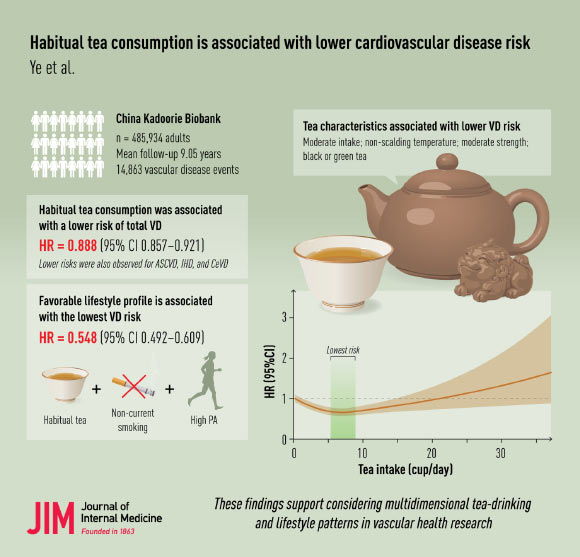
People who drink tea regularly appear less likely to develop heart and vascular disease than people who don’t, according to a new study published today in the Journal of Internal Medicine.
Les principales menaces qui pèsent sur l’humanité ne sont pas celles auxquelles nous pensons quotidiennement ! En matière alimentaire, nous avons très peur de nous faire empoisonner, alors que ce risque est devenu très faible, particulièrement en France. En revanche, nous sous-estimons fortement...
Fucoidans -- compounds found in the cell walls of brown seaweed -- could one day help treat diseases driven by oxidative stress, though the substances are far from the pharmacy shelf.
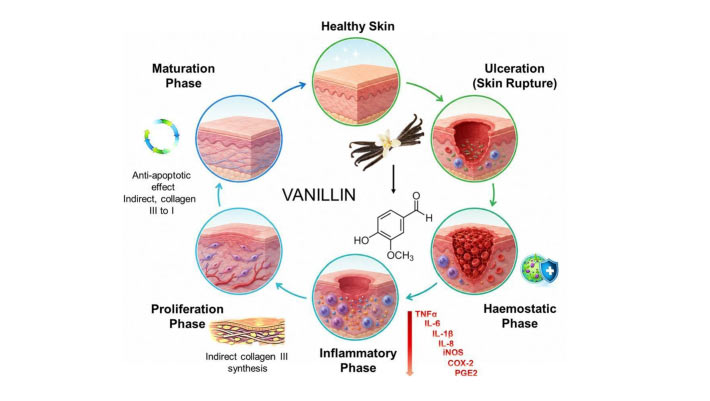
Vanillin, the compound that gives vanilla its familiar taste, may have a future in treating wounds that refuse to heal, according to a review paper published in August 2026 in the International Journal of Pharmaceutics.
In the mid-1970s, Linnda Caporael was a college student facing a seemingly mundane decision.
A science major at U.C. Santa Barbara, she needed a humanities course to graduate. The course she chose, on women in American history, came with a term paper, and she had to pick a topic.
Caporael’s first choice—Lydia Wardell, a Quaker woman who protested Puritan persecution by walking naked into a meeting house in the 1660s—was intriguing, but already taken. So Caporael instead settled on her second choice: Ann Putnam, one of the accusers in the 1692 Salem witch trials. In doing so, Caporael reshaped the way millions of people view a nearly 300-year-old chapter of American history.
Caporael’s paper introduced the theory that the visions, convulsions, and distress the “afflicted” girls reported might not have been supernatural after all. Instead, she proposed, they could be explained by ergot, a fungus that grows on rye grain and produces a hallucinogenic toxin. In other words, blame moldy bread.
The ergot theory, despite being debunked within a year of being published, has continued to spread and thrive like fungus on rye. As recently as 2023, comedian-turned-podcasting-juggernaut Joe Rogan discussed the theory enthusiastically on his show, effectively reanimating a story that seems destined to never fully die.
“It’s sexy,” says historian Margo Burns about the enduring appeal of Caporael’s ergot theory. “It’s about drugs. It’s about witches. It’s about killing people. Also, we like to think that when there’s an unjust sentence or execution, there’s someone or something to blame.”
Burns, a Salem scholar who has spent years tracing how the ergot theory took hold and persisted, says she rarely gets through a talk on the trials without someone in the audience bringing up moldy bread.
It was long thought that Ann Putnam, one of the primary accusers during the Salem witch trials, had grown up in this house, but historians now know this house was built much later, around 1891, near the Putnams’ original home location. Image: Public Domain
How a term paper went viral
The fact that a single undergraduate college paper could have such a lasting and wide-ranging impact on our understanding of the Salem witch trials seems bizarre, but it can be explained in part by a thoroughly modern phenomenon: virality. Although the World Wide Web was still decades away, Caporael’s paper found a way to spread fast through newspaper wire services.
After she started graduate school, Caporael submitted the paper to Science, which, to her surprise, published it in April 1976. That alone might have kept the theory confined within academic circles. Instead, newspaper editors saw a story with mass appeal.
“Editors and newspapers just grabbed it, saying, ‘Oh, here’s a human interest thing,’” Burns says. “And when they put it in their papers, like The Washington Post, The New York Times, The Boston Globe, it got syndicated. And the syndication of those articles went through the whole country and Canada within a matter of weeks.”
Caporael, who had explored the topic through the lens of the scientific method, wasn’t claiming to know what had happened at Salem. At the suggestion of a pre-med friend, she began looking into ergot poisoning as a possible explanation, not a definitive answer.
According to Burns, who has spoken with Caporael directly, she was only testing whether ergot could be ruled out. Working from the limited sources available to her, Caporael determined that she couldn’t rule it out. Even then, though, she called her own findings “suggestive,” not conclusive.
But that nuance didn’t survive exposure to the public, which in 1976 was already fixated on LSD and what it might do to young people. The press coverage essentially retrofitted 1692 with the anxieties of 1976, recasting the Salem girls as teenagers on a bad trip.
“You give that to the American public, which doesn’t understand there’s a difference between scientific inquiry and historical storytelling, and it’s just so compelling,” Burns says.
Debunked, but far from dead
Not all the viral attention was positive, though. Within that same year, researcher Nicholas Spanos and graduate student Jack Gottlieb published a rebuttal in Science, dismantling Caporael’s argument point by point. By their reckoning, various aspects of the Salem girls’ symptoms did not add up.
“There are a couple of different kinds of ergot poisoning, and one of them is gangrenous, so people’s fingers would start rotting,” Burns says. “And they would have gastrointestinal problems, and we don’t have any instances in the records that either of those things happened.”
This 1880 print shows Martha Corey and her prosecutors in Salem, Massachusetts, during the witch trials. Martha Corey was accused of witchcraft, found guilty, and executed by hanging. Her husband, Giles, who defended Martha against the allegations, was also put to death. Image: Print Collector / Contributor / Getty Images
The problems for the theory didn’t end there. Ergot poisoning was thought to hit hardest among people with vitamin A deficiencies, but Salem’s residents had dairy cows and the sea nearby, and likely plenty of vitamin A. (Ironically, Burns notes, that the vitamin A argument was itself based on a discredited 1930s source that relied on circumstantial evidence and has never been replicated.) And while whole families ate from the same supply of rye, usually only one or two people per household fell ill.
The rebuttal, though methodical and logical, was little more than a momentary speed bump for the runaway popularity of the psychedelic bread story. In fact, it may have helped.
Arguing with a claim, however insubstantial, implies that it’s worth arguing about, and a formal rebuttal in Science can make a student’s term paper look like one side of a valid scientific debate.
“It’s really hard to refute something,” Burns says. “If anything, it just sort of nails it and makes it more permanent.”
“They were eating their own”
Whatever was causing young women in Salem to convulse, the atrocities that followed are much harder to grasp. By the time the panic ended, 152 people had been formally accused, 19 had been hanged, and one man, Giles Corey, had been pressed to death with stones for refusing to stand trial. Several more died in jail.
“The people who were responsible were the adults in the room,” Burns says.
To the modern eye, this looks like lunacy. To most people in 1692, though, witchcraft wasn’t superstition. It was an accepted fact, part of an invisible world in which Satan and his agents wreaked havoc on everyday life. Conflict with Indigenous peoples on the Maine frontier had sent traumatized refugees into the region, relating horror stories of attacks on their homes. Many colonists thought Satan engineered those attacks, too.
In a way, the people of Salem did exactly what Americans would do nearly 300 years later, when the psychedelic era latched onto the ergot theory: They explained strange behavior through the lens of what frightened them most.
In such a charged social climate, suspicion could fall on just about anyone, and it did. The accused weren’t just outcasts, Burns says. Many were fully covenanted members of the Puritan church.
“We’re not talking about going after ‘The Other,’” she says. “They were eating their own.”
Someone to blame
Burns knows the cost of Salem’s betrayals about as well as anyone. An associate editor of Records of the Salem Witch-Hunt, the definitive collection of the trials’ legal records, she is also the 10th-generation great-granddaughter of Rebecca Nurse, who was hanged on the charge of witchcraft in 1692.
The Rebecca Nurse Farmstead still stands and is open to the public in Danvers, Massachusetts. Image: Fletcher / CC BY 4.0
Nurse, a respected member of the church in Salem Town, was tried and found not guilty. But Chief Justice William Stoughton refused to accept the verdict. He sent the jury back to reconsider a remark Nurse had made when confessed witches Deliverance Hobbs and her daughter, Abigail, were brought in to testify against her: She had said the two were “of our company.” Nurse meant that they had been jailed together, but the court heard that they were fellow witches.
When jurors asked her what she meant, the courtroom was in such an uproar that Nurse didn’t hear the question. At the time, failing to answer an accusation was treated as a confession, and the jury returned a guilty verdict. In a later appeal, Nurse wrote that she was “something hard of hearing, and full of grief,” and didn’t realize she was being asked to explain herself.
It was the kind of injustice no mere fungus could cause.
“[Chief Justice] Stoughton was singularly, individually responsible for her execution,” Burns says.
The question of who is to blame is rarely so straightforward, though. Which might be part of the ergot theory’s appeal; it offers “one silver bullet” that tidily explains everything.
“There are just so many reasons that all came together,” Burns says.
But when pressed on why she thinks it happened, she offers an answer that’s part joke, part harsh reality: “People are mean.”
In That Time When, Popular Science tells the weirdest, most surprising, and little-known stories that shaped science, engineering, and innovation.
Vitamines, fibres, minéraux, antioxydants : le brocoli a plus d’un atout nutritionnel, à l’instar des autres choux. À condition de choisir une cuisson douce, capable de préserver leurs nutriments.
Millions of Americans live with high blood pressure, a condition that can quietly damage arteries and organs over time. Controlling it can involve medicines, exercise, weight management, and changes to what people eat. Sodium is one important part of the diet. Eating too much can raise blood pressure in many people, while potassium can help […]
Plusieurs études classent le lait devant l'eau sur un critère précis : la quantité de liquide encore présente dans l'organisme quelques heures après l'avoir bu. Le résultat est réel, mais il porte sur la récupération après un effort sportif, pas sur l'hydratation par forte chaleur. La nuance...
Scientists searching for ways to protect the aging brain have turned to an unusual source: sea squirts. A study in aged mice found that supplements rich in plasmalogens, molecules found in these marine animals and in the human body, were linked with better learning, healthier brain connections and lower brain inflammation. The findings sound dramatic, […]
Les radicaux libres ont mauvaise réputation. Ils endommagent l’ADN et sont associés au vieillissement et au cancer. Mais une découverte surprenante vient bousculer cette vision : certaines cellules immunitaires ont besoin de ces molécules pour s’attaquer aux tumeurs, qui ont justement trouvé le...
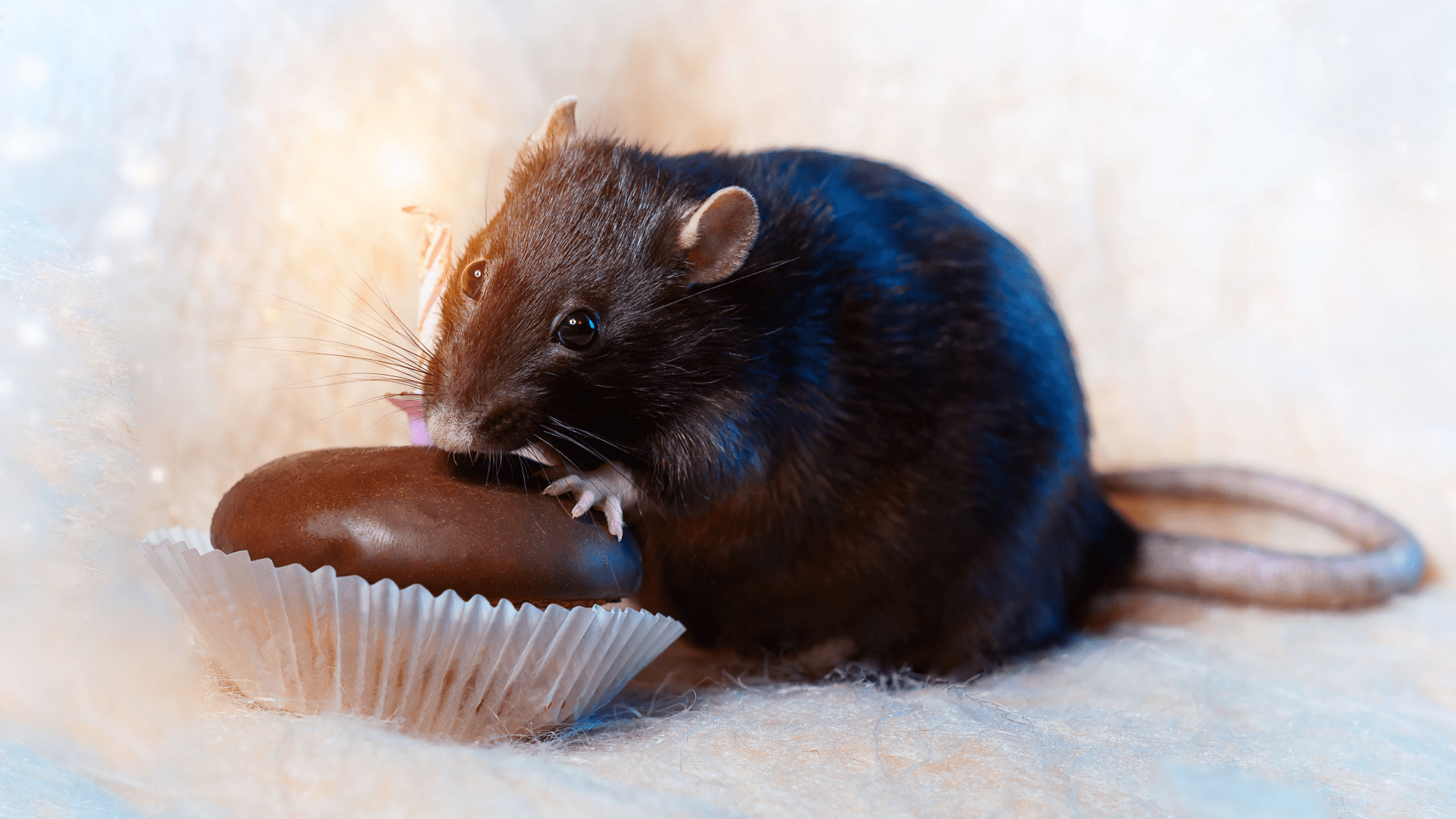
There’s nothing better than sinking your teeth into a sweet, creamy chocolate bar. Rats think so, too—and they may announce their chocolate-infused joy to the world at ultrasonic frequencies.
Researchers have previously linked ultrasonic rat vocalizations with different emotional and motivational states in the animals, such as in reaction to rewarding stimuli. For example, the rodents vocalize in this way when eating something sweet.
Now, a team of researchers in Japan have discovered that rats emit a particular ultrasonic vocalization while eating chocolate. Their findings are detailed in a study recently published in the journal eNeuro.
To come to this conclusion, the researchers compared ultrasonic vocalizations that rats emitted when they had access to chocolate, with those they made when they didn’t have access to the candy. The team also compared them with a chocolate-free control group of rats. Researchers then used AI to analyze the vocalizations’ acoustic features, identifying a distinct ultrasonic vocalization—officially 40 kHz inverted-U—strongly associated with chocolate snacking.
“When rats eat something delicious such as chocolate, they emit a distinct ultrasonic call that humans cannot hear,” Koshi Murata, a study co-author and researcher at the University of Fukui, said in a statement. “This call drops sharply when the brain’s opioid ‘pleasure’ system is blocked. This suggests that rats may be vocally expressing the enjoyment of eating, offering a new window into whether animals experience pleasure as we do.”
To see if this distinct vocalization was related to the tastiness of food or just eating in general, Murata and colleagues compared chocolate-eating vocalizations with the sounds the rats produced while eating regular food. And while the rats ate similar amounts of both, they emitted significantly more 40 kHz inverted-U USVs while eating chocolate.
In a separate food-choice test, the rats also demonstrated an obvious preference for chocolate: 15 out of 16 rats picked chocolate over the regular food (and can we blame them?). In two experiments, researchers also found that the vast majority of 40 kHz inverted-U USVs were emitted within one second of a feeding event.
“Our discovery suggests that animal vocalizations could serve as a real-time, non-invasive readout of internal emotional states—specifically, how much an animal is enjoying its food,” said Murata. “Such a tool would allow researchers to measure ‘pleasure’ more directly than current methods permit, and could accelerate research into the brain mechanisms that generate positive emotions.”
Understanding more about how the brain processes rewarding experiences could shed light on behaviors like overeating, as well as conditions like anhedonia, or the inability to feel pleasure and a common symptom of depression.
Losing weight is one challenge, but keeping it off while maintaining a healthy diet can be even harder. New research suggests that a Mediterranean-inspired eating plan redesigned for the American South can help adults maintain weight loss for two years while improving the nutritional quality of their diets. The program is called Med-South and was […]
Growing up, many of us remember dutifully taking a few more bites of protein (and, of course, vegetables) to appease our moms before we were allowed to progress to the sweet, carb-heavy goodness of dessert. Lately, it seems hard to say whether our moms would be delighted or horrified to see what has happened to protein since.
Just walk into any grocery store right now, and protein is everywhere. Protein water. Protein chips. You can even request protein foam on your favorite fancy latte. Somewhere, a bodybuilder is chugging a protein shake the size of a fire extinguisher as you read this. It’s safe to say this is not your mother’s protein.
To be fair, protein deserves at least some of its mom-and-jock-endorsed reputation. It helps build muscles, keeps you feeling full, and is an essential nutrient we truly can’t live without. Older adults, especially, have been told to eat more of it as they age.
“We think of protein as beneficial,” Dr. Dudley Lamming, a professor at the University of Wisconsin-Madison and lead researcher of the review, told Popular Science, “but a number of studies have started to come out showing that when you look at large populations over the course of decades, people who were eating more protein over the course of these decades were having higher rates of age-related diseases.”
A pattern in the data sparked new questions
Lamming didn’t set out looking for a problem with protein. If anything, he was surprised by a contradiction he was noticing between population data and the conventional wisdom about protein—people who ate more protein over time were showing higher rates of cancer, diabetes, and cardiovascular disease.
“The question is, how can this be?” he remembers wondering.
Proteinmaxxing is spiking prices for whey protein. Video: ‘Proteinmaxxing’: How this trend is spiking whey protein demands, @WKYCChannel3
But a smaller slice, about five or six randomized trials, tested protein restriction directly in people. Those human trials showed consistent short-term benefits: People lost weight, their fat mass declined, and in one study of people with type 2 diabetes, insulin sensitivity improved.
Lamming adds that these results do not appear to be associated with mere calorie reduction.
“In fact, because dietary protein is satiating, people in our studies and others actually ate more calories when they were on a protein-restricted diet,” he says. “But they lost weight, and that’s because energy expenditure increases.”
One hormone may explain what’s happening
To understand the potential connection between protein restriction and increased energy expenditure, Lamming’s review explored existing mouse studies on the topic. Findings from these studies indicate that when protein intake drops, the liver releases a hormone called FGF21. That hormone signals the brain, which in turn triggers what researchers call “beiging.”
“This is a process that essentially tells your fat tissue to stop simply storing fat, but actually to start metabolizing it and burning it for energy,” says Lamming.
In practice, protein restriction doesn’t mean cutting protein out altogether. Most people get about 16 to 17 percent of their calories from protein; in the studies Lamming and his team reviewed, that’s typically cut by around half, down to roughly seven to nine percent.
“We’re not talking about restricting to an unhealthy level where you’re protein insufficient,” he says. “What we’re really talking about, in most cases, is restricting down to the recommended daily allowance as reported by the World Health Organization, which is about 0.8 grams per kilogram [of body weight].”
You don’t necessarily have to restrict protein as a whole to achieve these benefits, either; mouse studies found that cutting back on specific amino acids, including methionine, isoleucine, and valine, may provide some of the same benefits in terms of fat mass, blood sugar control, and longevity.
This doesn’t necessarily mean everyone should be in a hurry to throw away their protein waffles. Lamming is careful to note that people who exercise routinely may be an exception.
“We actually think that dietary protein has negative metabolic health outcomes for sedentary people, like the general population, since most of the population is fairly sedentary,” he says. “But maybe people who are exercising need more protein to help build muscle, and maybe it wouldn’t have these negative metabolic outcomes.”
Although these findings are based only on mouse studies so far, they may suggest that working out might protect against the downsides of higher protein intake, Lamming says.
“Fortunately,” he says, “a lot of the people who are very pro-protein are also people who are exercising.”
Lamming says his team plans to test these ideas—specifically, whether protein supplementation genuinely benefits those who exercise, and whether restriction benefits those who don’t—more directly in both mice and people over the next few years.
“For your typical person who’s not engaged in exercise, we would suspect, based on our research, that eating more calories in the form of protein would be detrimental,” he says.
Lamming’s own suggestion for sedentary people: Consider skipping the protein-added version of a product when a regular option is available.
He was quick to add, however, that those who can safely exercise certainly should.
“No one’s going to argue that more exercise would be bad,” he says.
In Ask Us Anything, Popular Science answers your most outlandish, mind-burning questions, from the everyday things you’ve always wondered to the bizarre things you never thought to ask. Have something you’ve always wanted to know? Ask us.
A strange-looking sea animal may offer scientists new clues about how the brain changes with age. Researchers found that aged mice given supplements containing plasmalogens, natural fat-like molecules found in sea squirts, performed better on memory tests and showed several biological changes linked with healthier brain aging. Sea squirts are soft marine animals that attach […]

 Login