❌

Reading view

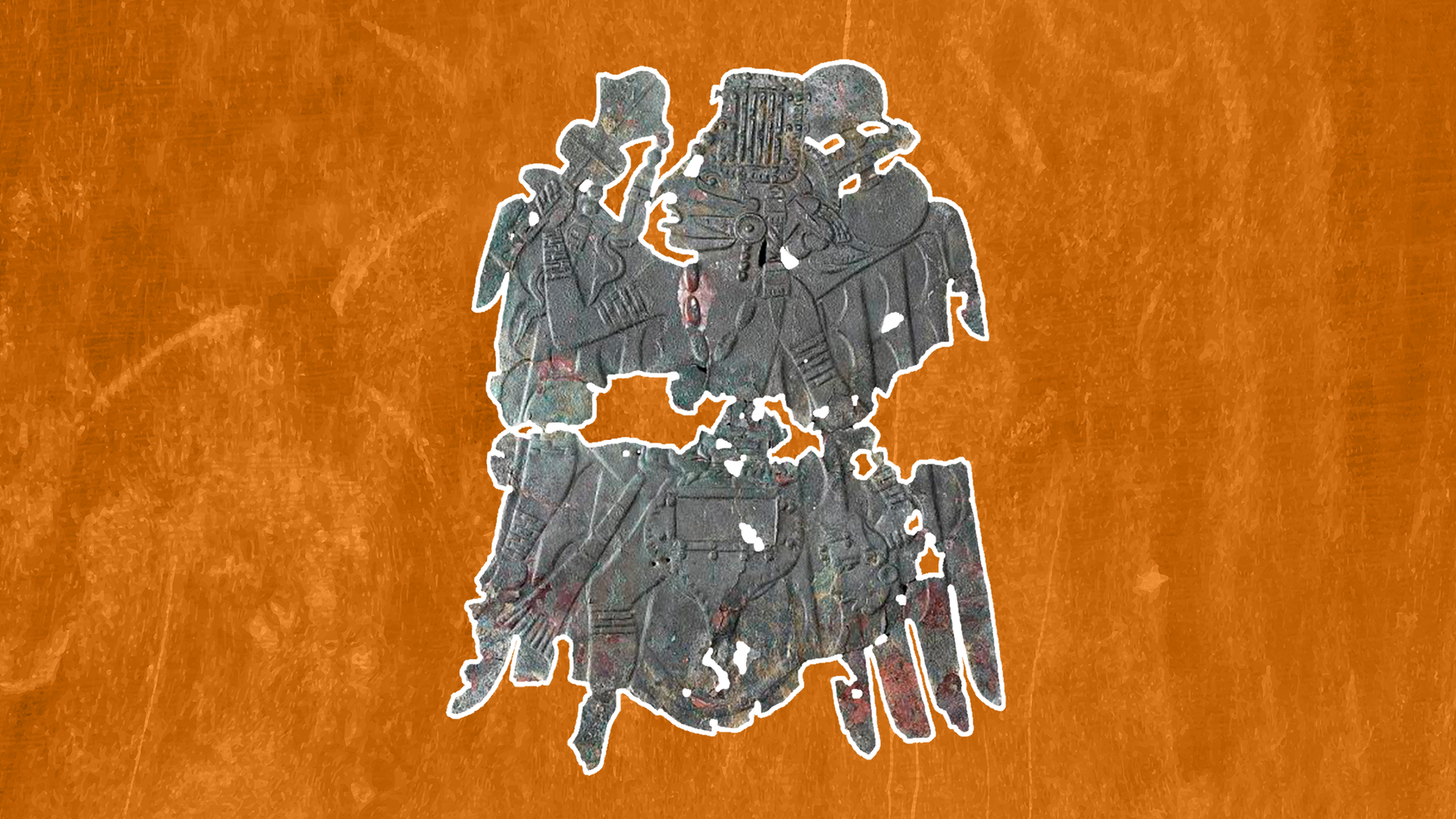
'Birdman' copper plate: A 700-year-old depiction of a Native American warrior that may be a woman holding a weapon and a severed head
a copper plate in the shape of a human wearing a bird costume against a black background

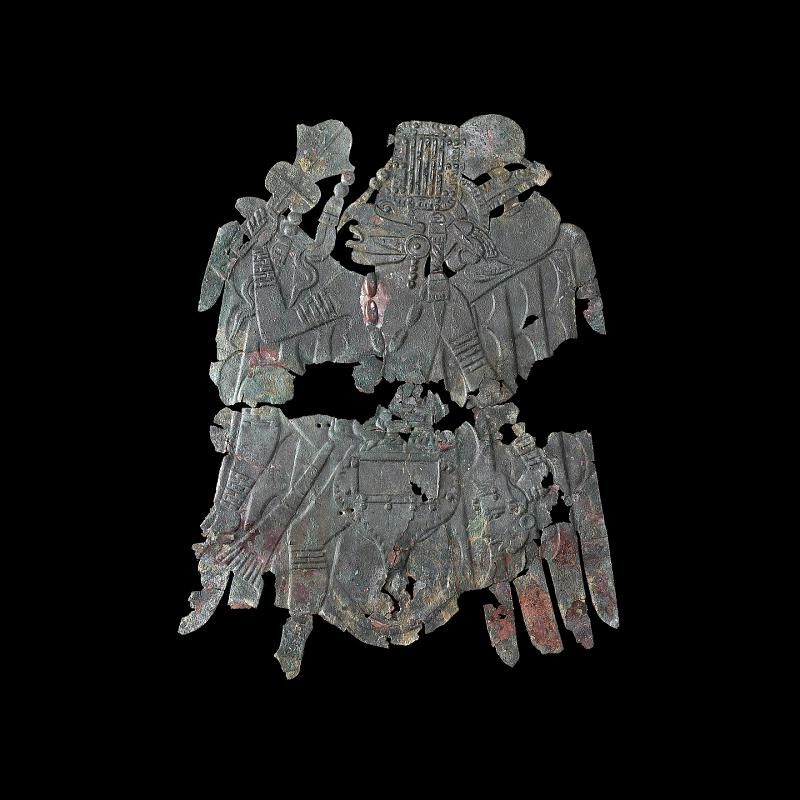
This hammered copper artifact depicts an Indigenous person wearing a bird costume and holding a severed head and a mace. (Image credit: Smithsonian National Museum of Natural History (CC0))
QUICK FACTS

Name: "Birdman" copper plate

What it is: A copper plate with a hammered decoration

Where it is from: Cahokia Mounds, Illinois

When it was made: 13th century

This copper plate was discovered in the late 19th century in a prehistoric Native American burial at the Etowah Indian Mounds archaeological site in Georgia, but it was likely made hundreds of miles away at Cahokia Mounds in Illinois. While the decorative plate showcases long-distance trade and a shared ritual culture among early Indigenous groups in the southeastern United States, the nature of the human figure depicted on the artifact has been debated for over a century.

The "Birdman" relic is one of two hammered copper plates that Smithsonian archaeologist John P. Rogan unearthed in the 1880s while digging in a burial mound at Etowah, a centuries-old village occupied by thousands of Native Americans from 1000 to 1550. Etowah was part of the "mound-building," or Mississippian, phase of Indigenous occupation; other famous sites include Moundville in Alabama and Cahokia in Illinois. These groups had extensive trade networks and shared a common artistic and ceremonial tradition known as the Southeastern Ceremonial Complex.

This copper artifact, known as Rogan Plate 1 or the "Birdman" plate, is in the collection of the Smithsonian National Museum of Natural History in Washington, D.C. The plate is roughly 11 inches (28 centimeters) tall and had been buried with a high-status person who likely died at Etowah in the mid-14th century. But experts believe the copper plate was an heirloom made decades earlier, at Cahokia, and traded south to Etowah.

A human figure dominates the copper plate with its elaborate bird costume. The person carries a severed head by the hair in their left hand, while their right hand holds a club or mace. The figure also wears a pleated skirt or loincloth that may have been made from human scalps. This bird-human figure is commonly depicted in the Southeastern Ceremonial Complex and has been called a dancing warrior, eagle warrior, eagle dancer, hawk dancer, falcon dancer and falcon warrior. But more often, the figure is called Birdman or Morning Star, a prehistoric Mississippian hero associated with agriculture and rebirth.

Archaeologists' interpretations of the Birdman plaque from Etowah have long assumed that the represented figure is a male warrior. In a 2004 study, for example, archaeologist Adam King wrote that "this plaque would have served as an emblem of office awarded to a chieftain, and would have accompanied him as a sign of his strength among the ancestral spirits."

But the sex of the skeleton in the Etowah burial is unclear, and there were high-status graves of both men and women at Etowah, archaeologist Billie Follensbee and art historian Katie Buford wrote in a 2017 study. Although experts previously assumed that both Rogan Plate 1 and Rogan Plate 2 represented male warriors, Follensbee and Buford found that the figures have slender bodies with prominent right breasts, suggesting the "Birdman" may have actually been female.

"A female bird-human warrior could have represented a gender variant individual in the form of the well-known Native American phenomenon of the 'manly-hearted woman,' a woman who has assumed the usually male role and the garb of a combat soldier," Follensbee and Buford wrote. In addition to the historic term "manly-hearted woman," third-gender or gender-variant individuals in Indigenous North America are often referred to as "two-spirit," a broad term Indigenous people coined in 1990 to describe people who take on gender-nonconforming roles.

The commemoration of a two-spirit individual on a copper artifact, as well as the use of the artifact as a high-status grave good, "not only demonstrates the Native American cultural acceptance of such gender variant roles but also further serves to celebrate the elite status and achievements of these 'manly-hearted women,'" Follensbee and Buford wrote.

For more stunning archaeological discoveries, check out our Astonishing Artifacts archives.
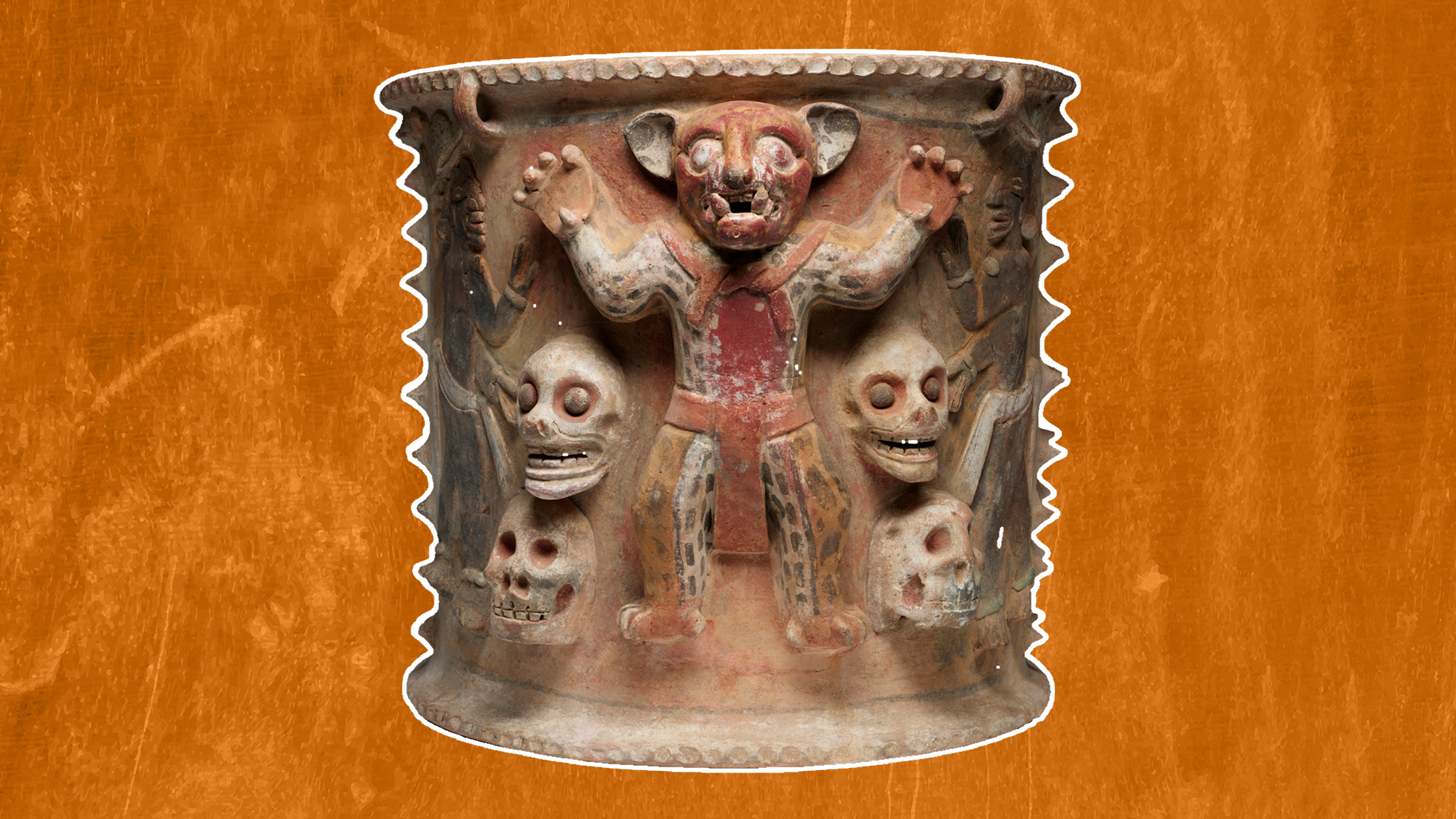
a ceramic urn with a person dressed like a jaguar surrounded by four human skulls

Jaguar Urn

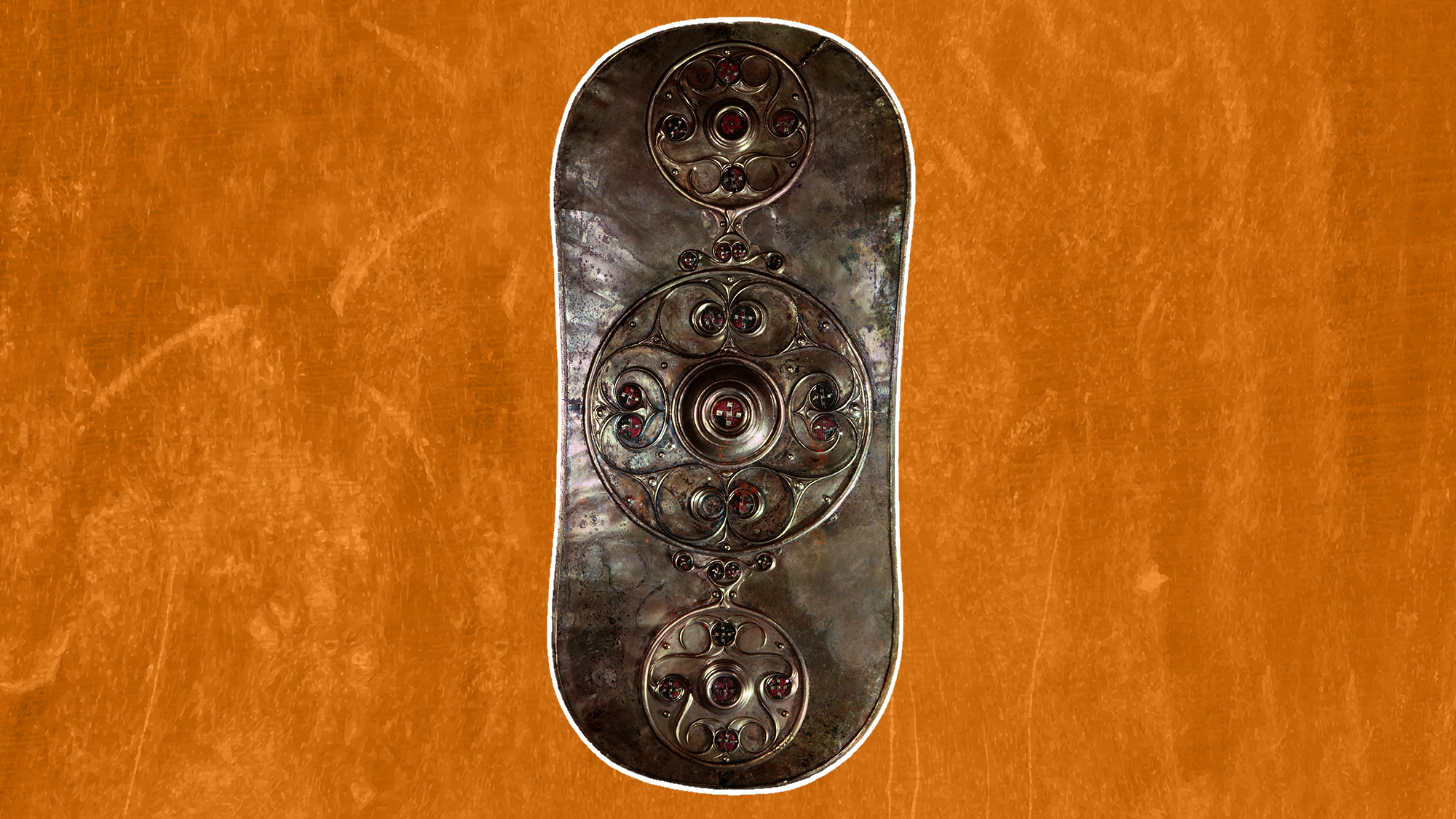
a tall bronze shield with red roundel decorations against an orange background

Battersea Shield

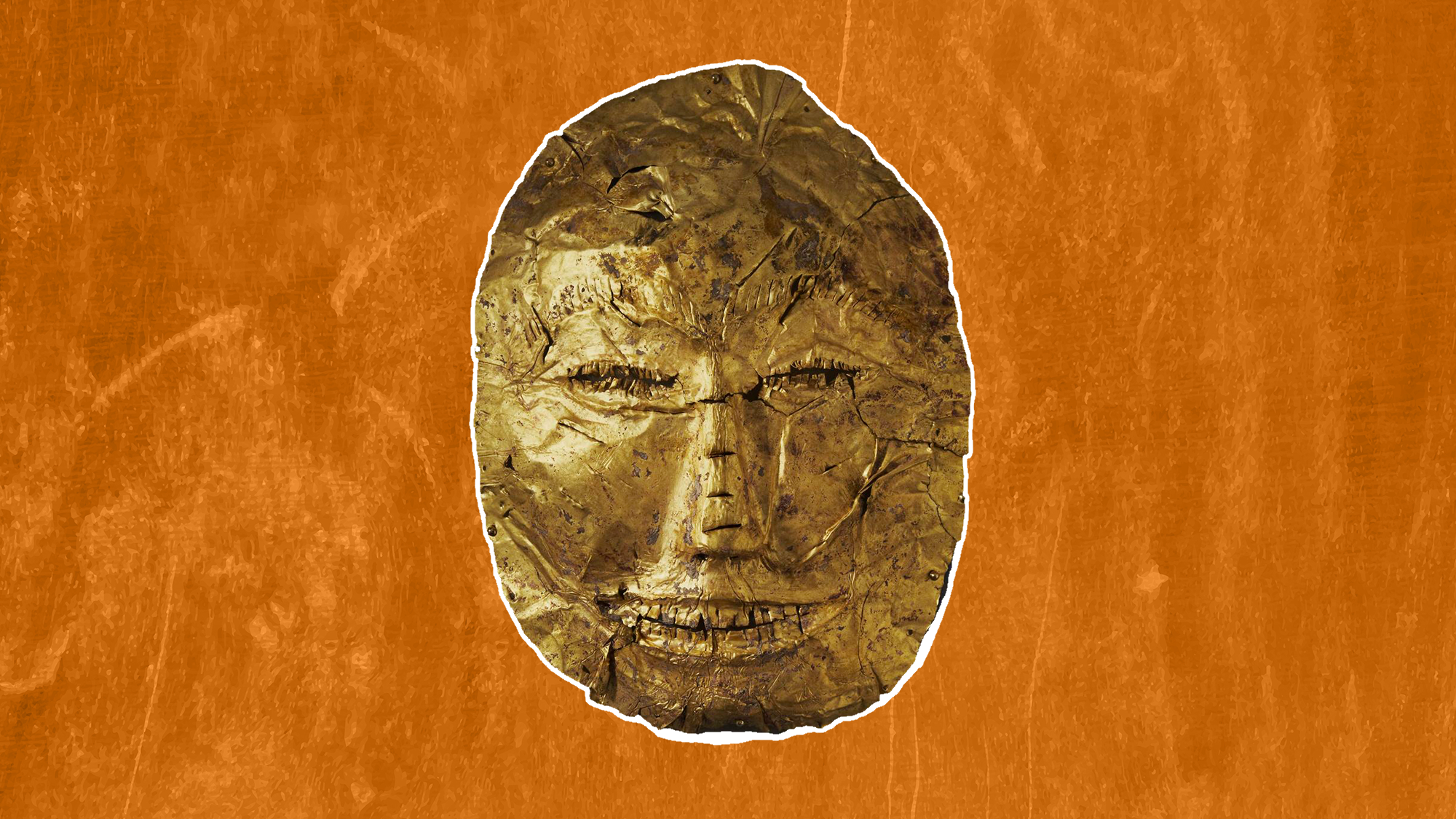
a humanlike gold mask against an orange background

Java Mask

Can you put together last week's Astonishing Artifact?
  •  

Archaeologists discover the oldest dwelling in the Western Hemisphere at a 13,800-year-old site in Alaska

Archaeologists digging at a 13,800-year-old site in interior Alaska have unearthed thousands of artifacts and fossils, including what may be the bones of the earliest domesticated dogs in the Americas, the earliest needles and dwellings in the Western Hemisphere, and stone tools that reveal cultural connections across the Bering Land Bridge.

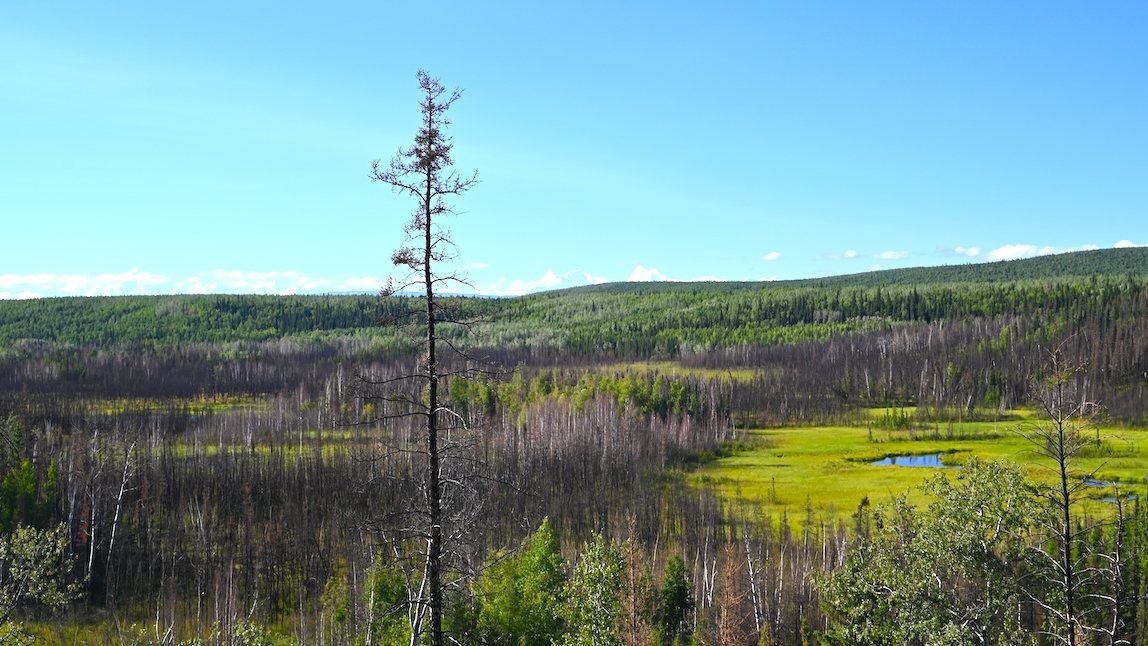
At a site called Shégˊ Xdaltthˊíˊ (which means "They Were There" in the Alaska Native Athabascan language), about 34 miles (55 kilometers) southeast of Fairbanks, archaeologists have excavated an encampment that some of the first people to settle in North America used off and on for a millennium.

Shégˊ Xdaltthˊíˊ is located in eastern Beringia, the geographical region that connected northeast Asia and northwest North America during the last ice age. The most recent archaeological and genetic studies suggest that the ancestors of today's Indigenous Americans entered the continent around 21,000 years ago. But since Beringian sites are often the remains of small seasonal hunting camps and are scattered across a large geographic area, much is still unknown about the earliest people who called the Western Hemisphere home.

"I expected we'd find hunting tools and knapping [stone tool making] debris surrounding a hearth or two, but I had no idea that we'd stumble into a base camp with tens of thousands of artifacts," study first author Kelly Graf, an archaeologist at the University of Kansas, told Live Science in an email. "It was a total surprise!"

In a study published Wednesday (Oct. 14) in the journal Science Advances, Graf and co-authors detailed their discoveries at Shégˊ Xdaltthˊíˊ, focusing on the earliest occupation, which occurred around 13,800 years ago, as evidence of people "settling in" to their new territory.

The researchers found a hearth, a small pit, and a dirt stain where a wooden post had once stood, likely the remains of a lean-to or early tent house. Additionally, the archaeologists unearthed stone tools, bone needles and a pendant made from an antler. Nearby, they found an earth oven, which was full of charcoal and animal bones and was likely used to slow-cook meat for a large family group.

"The complex feature at Shégˊ Xdaltthˊíˊ represents the earliest potential case of a habitation structure in North America," the researchers wrote in the study. "Early Alaskans knew their surroundings well."

Cross-cultural links

The archaeologists were also surprised by the stone tools recovered at Shégˊ Xdaltthˊíˊ because they are distinctively shaped and unique to central Alaska. Known as diamond-shaped hafted bifaces, the tools were crafted from rhyolite and basalt and are similar to those typically found much farther west in Beringia, in modern-day northern Siberia. Additionally, obsidian artifacts discovered at Shégˊ Xdaltthˊíˊ reveal that people brought the volcanic rock to the site from a geological source hundreds of miles to the northwest.

Bones from more than a dozen wolf-like animals suggest a further connection to Asia, according to the researchers. An analysis of the jaw of one of the animals showed that it was not from a dire wolf (Aenocyon dirus) or from a Pleistocene Beringian or gray wolf (Canis lupus sp.) but rather a population of wolf-like animals unique to central Alaska. Current genetic evidence suggests that early domesticated dogs in North America came from Siberian wolves. The timing and geographical location of Shégˊ Xdaltthˊíˊ provides circumstantial evidence that the people may have been dog owners.

"Like humans, potentially, the canids of Shégˊ Xdaltthˊíˊ and other early Alaskan sites were recent immigrants from Asian Beringia," the researchers wrote.

Although Shégˊ Xdaltthˊíˊ reveals a relationship with sites in Asia, there is also evidence of connections with early American sites south of the Canadian ice sheets, according to the study.

One clue to these connections is the presence of bone artifacts in a sewing kit. The archaeologists found eight bone needle fragments at Shégˊ Xdaltthˊíˊ. Previously, the only recovered eyed needles had come from Paleoindian sites in temperate North America. Therefore, the needles from Shégˊ Xdaltthˊíˊ are the oldest needles ever discovered in the Western Hemisphere, and they reveal connections with sites farther south, according to the study.

Another clue is the pendant, which was crafted from antler. The pendant had a hole drilled at one end and was fashioned into a point at the other end. This piece of ancient jewelry is similar to personal adornment items found farther south in North America.

"The co-occurrence of these cultural features at the single site of Shégˊ Xdaltthˊíˊ is truly notable," the researchers wrote, and they "highlight the strong cultural connection between early Beringians and Americans."

It is still unclear whether the people at Shégˊ Xdaltthˊíˊ were traveling to make these connections. "It would be hard to pin down whether or not they were moving back and forth during a lifetime, but at least we can say there is a connection," Graf said.

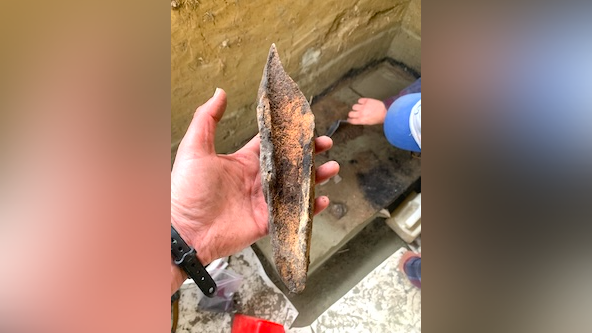
a person with light skin holds a broken animal bone in their hand

Archaeologists recovered bison bone and a hearth, among other things, at the Beringian site. (Image credit: Kelly Graf)

Further work in Beringia is needed

Future excavations in Beringia could help archaeologists learn more about the earliest people in the Americas, according to Graf. "Alaska is a big place and so remote, so there are really just a few small areas that have been intensively investigated," she said.

Spencer Pelton, an archaeologist at the University of Wyoming who was not involved in the research, wrote in an accompanying perspective published in the journal Science Advances that early Indigenous sites in Beringia are key to understanding the peopling of the Americas.

"Shégˊ Xdaltthˊíˊ is remarkable because it is the oldest site in the Americas containing a large and rich assemblage of features, artifacts, and faunal refuse indicative of prolonged residential occupation, providing an unprecedented glimpse into the lives of North America's first residents," Pelton wrote.

Graf is already planning future archaeological excavations in the area. "We're hoping to bring some younger Alaska Native folks out with us in the coming summers," she said, as incorporating local knowledge is important to the project. "Two of our co-authors are elders from Alaska Native corporations nearest to the site," she said. Elders named the Shégˊ Xdaltthˊíˊ site and have visited it to discuss where to excavate and what the archaeologists might find.

There is much left to learn about what was happening in Beringia 14,000 years ago, the researchers wrote, particularly since there are currently only two archaeological sites — including the 24,000-year-old Bluefish Caves site in the Yukon — that suggest humans were settling in Beringia considerably earlier.

How much do you know about the first people to reach the Americas? Find out with our First Americans quiz!

  •  

DNA from centuries-old skeletons buried in Montreal reveals no genetic mixing between Indigenous people and French colonists

Ancient DNA from skeletons buried in a historic cemetery in Quebec is changing people's understanding of their Indigenous ancestry. Contrary to popular belief, there may be little truth to stories of intermarriage between Indigenous and French people during the early days of colonization, according to a new archaeology study published Oct. 5 in the journal PNAS.

"Family stories of an Indigenous ancestor are very common" in Quebec, study first author Diane Martin-Moya, a biological anthropologist at the University of Quebec in Trois-Rivières in Canada, told Live Science in an email, and "commercial genealogy and DNA tests have amplified this." But distant or claimed Indigenous identities can actually undermine the rights, resources and recognition of Indigenous nations, she said.

To learn more about the founders of Quebec, Martin-Moya and co-authors investigated Notre-Dame Cemetery, which was established in Montreal in 1683 and used for Catholic burials until 1796. Based on previous studies of the skeletons in the cemetery, experts disagreed on whether people of Indigenous, European, African or mixed ancestry were buried there. To settle the question, Martin-Moya and her colleagues sequenced DNA from 45 people buried in the cemetery and compared it with the genomes of people from Europe, West Africa and Indigenous groups in the Americas.

"The ancient DNA showed that all 45 individuals we analyzed had French European ancestry, with no sign of recent Indigenous or African admixture," Martin-Moya said of the research, which she conducted while at the University of Montreal.

These findings suggest that people descended from Indigenous and African populations may have been marginalized in early Montreal, challenging the popular narrative of cooperation and intermarriage, she said.

"Our sample is small and comes from a single cemetery, so this does not show that such unions never happened," Martin-Moya cautioned. "It is, however, consistent with genealogical and genetic studies suggesting that Indigenous ancestry among present-day French Canadians is very limited."

The apparent lack of genetic mixing among European, African and Indigenous populations in this cemetery group "provides a perspective on population relationships during the colonial period, one where perhaps nongenetic interactions were present but no biological relationships were found," Raquel Fleskes, a molecular anthropologist at Dartmouth College who was not involved in the research, told Live Science.

The DNA helped the researchers find several genetic lineages of people that spanned multiple generations. But the graves were scattered across multiple areas of the cemetery, suggesting that burials were not organized into family plots. This finding suggests that, in the 17th century, people in Montreal may have been burying their dead in a way that was not defined by strict biological kinship ties, Fleskes said.

One cemetery, many possibilities

Martin-Moya stressed that the results of the new study do not necessarily apply to all of colonial Montreal.

"Not identifying recent Indigenous or African admixture in this sample does not imply that Indigenous or African-descended people were absent from the city," Martin-Moya said.

In addition, "biological ancestry cannot by itself establish Indigenous belonging," as it "is rooted in kinship, community and relationships with land, not in blood or DNA," she added.

Changes in the use of the cemetery over time also may have influenced the findings, as reburials and later urban development disturbed or destroyed earlier graves.

"Those buried inside the church, mostly clergy and wealthier residents, were more likely to be exhumed and moved," Martin-Moya explained, while the city's poorer residents were buried outside the church and further buried beneath the expanding city. This means that the skeletons in the study may have been the remains of lower-class French colonists.

Archival records show that some Indigenous people were buried in Catholic cemeteries in Montreal as early as the 17th century, Martin-Moya said. "Over time, though, Indigenous communities were increasingly separated from the colonial town through land dispossession and the relocation of missions away from urban centers," she explained. "Their dead would most likely have been buried in those communities. Enslaved people, both Indigenous and African, were often buried on their enslaver's property or in cemeteries for the poor."

The results of the study don't mean that Québécois have no Indigenous ancestors or that relations between French settlers and Indigenous peoples were only hostile, Martin-Moya said. Those relationships were complex and included alliances, trade, conflict and, sometimes, family ties.

"What our results suggest is that when such ancestry exists, it needs to be put in context," Martin-Moya said. "A single ancestor who lived more than 300 years ago does not say the same thing about a person today as being raised within an Indigenous family, community or nation."

How much do you know about the first people to reach the Americas? Find out with our First Americans quiz!

  •  

Ancient Indigenous people in New Mexico lived through extreme climate change 23,000 years ago, study suggests

Some of the first people in North America lived through extreme climate change at the peak of the last ice age, a new study suggests.

Researchers studied ancient pollen locked in rocks at White Sands National Park in New Mexico, which houses an archaeological site thought to contain the oldest human footprints in the Americas. The researchers previously dated those footprints to around 21,000 to 23,000 years ago, though their age is the subject of some scientific debate because they are significantly older than other Indigenous sites in the Americas.

The new findings, published Wednesday (Oct. 14) in the journal Science Advances, suggest that humans kept using White Sands after temperatures warmed and thus saw the landscape undergo rapid changes during the coldest era of the last ice age, known as the Last Glacial Maximum (26,500 to 19,000 years ago).

"It's remarkable that early humans in the region were real-time witnesses to a rapidly changing environment discernible within a human lifetime — that is really food for thought," study co-author Kathleen Springer, a research geologist at the U.S. Geological Survey, said in a statement.

The White Sands footprints suggest that people from Asia reached the Americas via the region around the Bering Strait much earlier than scientists initially thought, challenging a long-held assumption that humans arrived on the continent around 13,000 years ago. While some scientists have disputed the methods used to date the footprints, evidence is building that they are around 23,000 years old.

White Sands contains footprints from various time periods, including footprints of a caregiver and a toddler who were there 10,000 years ago. Over thousands of years, people trudged across the New Mexico landscape alongside iconic ice age animals, including mammoths and giant ground sloths. The researchers have also discovered sled-like drag marks alongside ancient footprints at White Sands, providing evidence for a kind of travois — a wooden frame made from two poles bound together — that people likely would have used for transporting goods.

By looking at ancient pollen for the new study, researchers could deduce which plants grew across the millennia when humans lived in the area. The site's rock samples also contained waxes from plant leaves, membrane lipids from bacteria, and other organic molecules that helped the researchers better understand the environmental conditions of the time.

The analysis revealed that around 24,200 years ago, White Sands had a large lake and its surrounding mountains were coated in conifer trees (Pinus, Abies, and Picea). Then, over the next two millennia, temperatures rose, the lake began to shrink, and the conifer trees were replaced by oak trees (Quercus) and sagebrush, according to the statement.

"Throughout these periods of change, the people continued to visit and live in this area," study co-author Sally Reynolds, a paleoanthropologist at Bournemouth University in the U.K., said in the statement. "The sediments containing their footprints show us their environment changed significantly within individual human lifetimes."

The researchers speculated that people might have returned to White Sands at different times to benefit from the changing climate, with a shrinking lake potentially providing higher concentrations of animals and plants. However, while the footprints document that humans were present, they reveal little about their behavior.

"The footprints give us a snapshot of the people who lived there over 20,000 years ago," Reynolds said. "But they are not a continuous movie of their lives. They are individual frames — showing moments when humans, mud, water and chance came together."

  •  
❌