❌

Reading view

YH Toys YH18001 PRO Review: A 70km/h 1/18 Brushless RC Monster Truck Built for Speed and Off-Road Fun

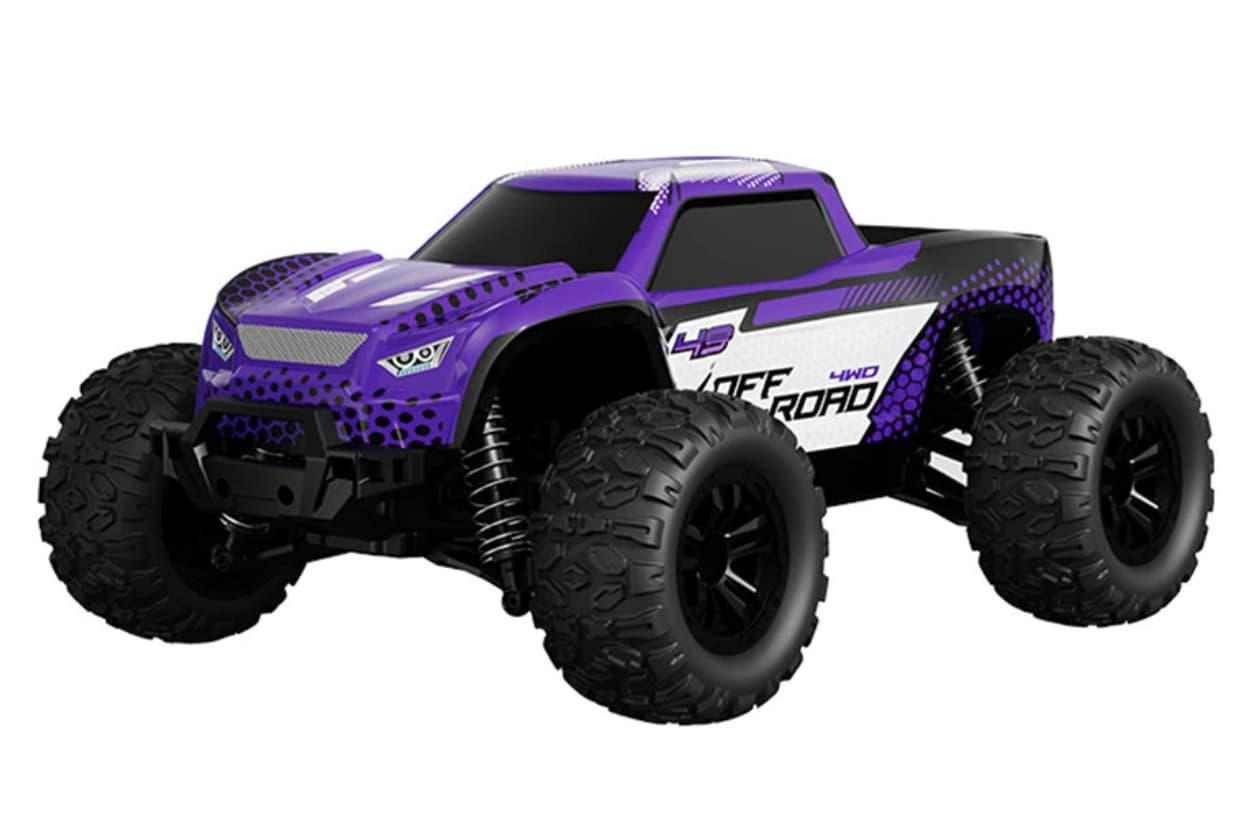
YH Toys YH18001 PRO is a compact yet powerful 1/18-scale brushless RC monster truck designed for enthusiasts who want high-speed performance without stepping up to a larger and more expensive platform. Featuring a 4300KV brushless motor, 4WD drivetrain, metal drivetrain components, and a claimed top speed of 70km/h, the YH18001 PRO promises an exciting driving experience on a wide variety of terrains.

Whether you’re new to the RC hobby or looking for a portable off-road basher, the YH18001 PRO packs impressive specifications into a rugged pickup-style body.

Compact Size, Serious Performance

Despite its 1/18 scale, the YH18001 PRO is engineered for performance rather than being a simple toy.

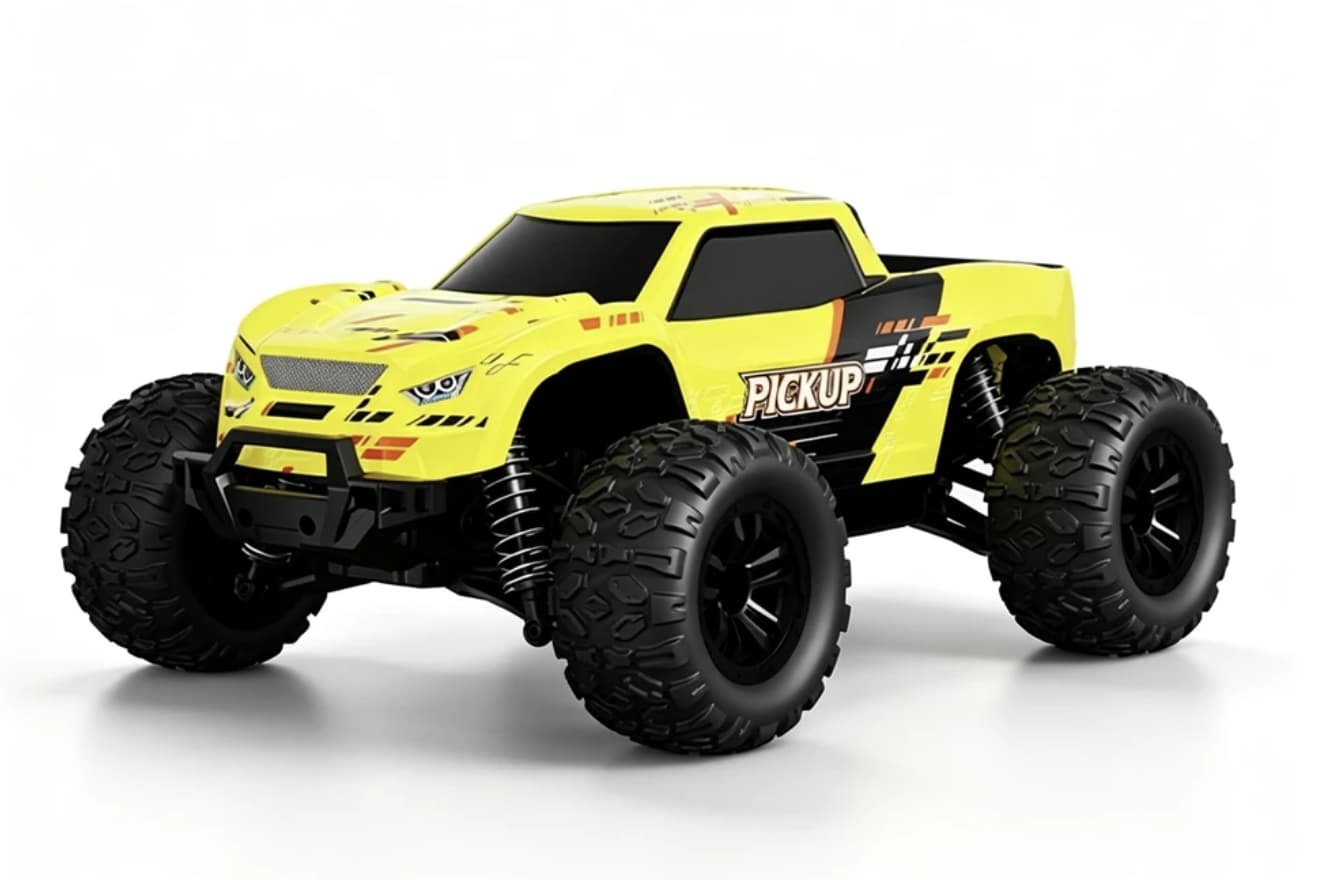
The truck measures 277 × 202 × 120mm and weighs approximately 758g, making it easy to transport while remaining stable at higher speeds. Its aggressive pickup truck body is complemented by LED headlights, realistic wheel arches, and a durable PVC shell that gives it an authentic off-road appearance.

4300KV Brushless Power System

The biggest highlight is its 2435 4300KV brushless motor, paired with a 35A integrated brushless ESC and receiver.

This setup enables the truck to reach speeds of up to 70km/h under ideal conditions, providing rapid acceleration and smooth throttle response. Compared to brushed RC vehicles, the brushless system delivers:

  • Higher efficiency
  • Greater reliability
  • Lower maintenance
  • Stronger acceleration
  • Longer motor lifespan

The truck supports proportional throttle and steering control, allowing drivers to precisely manage speed instead of operating at only full throttle or full brake.

Full-Time 4WD for All Terrains

The YH18001 PRO uses a shaft-driven four-wheel-drive system designed to maintain traction across challenging surfaces.

It performs well on:

  • Dirt trails
  • Gravel roads
  • Sand
  • Grass
  • Hard-packed surfaces

The drivetrain also includes numerous upgraded metal components such as:

  • Metal differentials
  • Metal center driveshaft
  • Metal CVD front driveshafts
  • Metal steering knuckles
  • Metal suspension mounts
  • Metal wheel cups

These upgrades improve durability during aggressive driving and repeated jumps.

Independent Suspension

Handling is enhanced by a double wishbone independent suspension system with front and rear spring shock absorbers.

This setup helps the truck absorb bumps while maintaining tire contact over uneven terrain, improving both stability and cornering performance.

Large off-road tires with deep tread patterns provide strong grip on loose surfaces, making the truck suitable for recreational bashing as well as casual racing.

Ready-to-Run Convenience

The YH18001 PRO arrives in RTR (Ready-to-Run) configuration.

Inside the box you’ll find:

  • YH18001 PRO RC truck
  • 2.4GHz transmitter
  • 7.4V Li-ion battery
  • USB charging cable
  • Wheelie bar
  • Screwdriver
  • Metal body clips
  • User manual

Only three AA batteries for the transmitter need to be purchased separately.

Battery Life

Power comes from a 7.4V 1600mAh 20C Li-ion battery.

Expected performance includes:

  • Approximately 18 minutes of driving time
  • Charging time of around 3–3.5 hours

While runtime is typical for a high-speed brushless RC vehicle, enthusiasts planning extended sessions may wish to purchase an additional battery pack.

2.4GHz Radio System

The included 4-channel 2.4GHz transmitter provides:

  • Full proportional steering
  • Proportional throttle
  • Stable signal
  • Approximately 80 meters of operating range

The 2.4GHz system also minimizes interference when multiple RC vehicles are operated nearby.
Key Specifications

  • Scale: 1/18
  • Drive System: 4WD shaft drive
  • Motor: 2435 4300KV brushless
  • ESC: 35A waterproof integrated ESC/receiver
  • Top Speed: Up to 70km/h
  • Servo: 9g metal gear servo
  • Battery: 7.4V 1600mAh 20C Li-ion
  • Runtime: Around 18 minutes
  • Charging Time: 3–3.5 hours
  • Remote Control: 2.4GHz 4-channel
  • Remote Range: Approximately 80m
  • Suspension: Double wishbone independent suspension
  • LED Headlights: Yes
  • Metal Drivetrain Components: Yes

Pros

  • Powerful 4300KV brushless motor
  • Claimed top speed of 70km/h
  • Durable metal drivetrain components
  • Full 4WD shaft-drive system
  • Independent suspension for better handling
  • LED headlights included
  • Ready-to-run package with battery included
  • Compact size that’s easy to transport

Final Verdict

YH Toys YH18001 PRO delivers an impressive balance of speed, durability, and value in the increasingly competitive 1/18-scale RC market. Its 70km/h brushless powertrain, metal drivetrain upgrades, independent suspension, and full-time 4WD make it a capable off-road performer that is equally enjoyable for beginners looking to step into the hobby and experienced drivers wanting a compact high-speed basher.

For RC enthusiasts seeking a portable monster truck with genuine hobby-grade performance, the YH18001 PRO stands out as an exciting option that offers far more capability than its compact dimensions might suggest.

The post YH Toys YH18001 PRO Review: A 70km/h 1/18 Brushless RC Monster Truck Built for Speed and Off-Road Fun appeared first on IGeeKphone China Phone, Tablet PC, VR, RC Drone News, Reviews.
  •  

How to Hide an Update in the Mac App Store

Jeff Johnson:

Although you can hide and unhide apps in your App Store purchase list, it turns out that hiding an app in the App Store purchase list does not hide the app in the updates list! I honestly can’t figure out the benefit of hiding an app in the App Store. The list of your purchased apps—a misnomer, as the list includes free apps—is practically unusable anyway: you can neither sort nor search the list. Maddeningly, the Mac App Store sorts your purchased apps by date of first install rather than by name, so it’s difficult even to scan the list manually to find a specific app.

[…]

You can clear the Updates list in the Mac App Store by deleting some cache files on disk, but that’s at best a momentary solution. The unwanted update will return eventually, or immediately if you use the Reload Page (⌘R) command.

A more lasting solution is, counterintuitively, to install the update. The trick is that you can keep more than one copy of a Mac App Store app on disk.

I wonder how long you can keep using the old version. You won’t be able to download it again. You can save a backup, but as some point a certificate will expire or you’ll get a new Mac and need a new receipt file. In theory, the store should be able to fetch one for you, but I wouldn’t rely on that long-term.

Previously:

  •  

EU Antitrust Fines for Google Search and Play Store

Tim Hardwick (Wired):

Google was today fined €890 million ($1 billion) by the European Union for breaching antitrust rules with regard to its search and Google Play store services.

The European Commission found that Google had broken the Digital Markets Act (DMA) by using its dominant position in the search market to favour its own services, like shopping and hotel deals, over those of rivals.

The Commission also said that the company had abused its position by preventing developers from directing users to cheaper ways to buy apps and app subscriptions on websites and alternative app stores.

Sergiu Gatlan:

The Commission noted that Google has begun testing changes to how its own services are placed in search results and rolled out changes to its steering terms, which the EU’s main executive body described as substantial progress towards compliance.

“Google has fallen short of effective compliance with the Digital Markets Act, and today we have taken decisive yet balanced enforcement action sanctioning these breaches,” said Teresa Ribera, Executive Vice-President for Clean, Just and Competitive Transition.

“The best products should succeed because they’re better, not because they’re owned by the company running the search engine. And European consumers have a right to be told by app developers where to sign up to the best offers, even when the app store owner does not get a cut.”

John Gruber (Mastodon):

With search, Google is required to share with competitors — search engines and AI chatbots alike — a massive amount of user data from Google Search user interactions. What terms people search for, what they click on in results, what languages and devices they use. It’s all ostensibly anonymized but that’s tricky when it comes to search terms. A lot of the terms people type into web search fields are to some degree personally identifying. The EC seems to be saying it’s Google’s problem to filter out things like passwords and usernames and omit them from the shared datasets. Google can charge money for this access, but only under “fair, reasonable, and non-discriminatory (FRAND)” prices, based on a Commission-defined methodology.

Previously:

Update (2026-07-27): John Gruber:

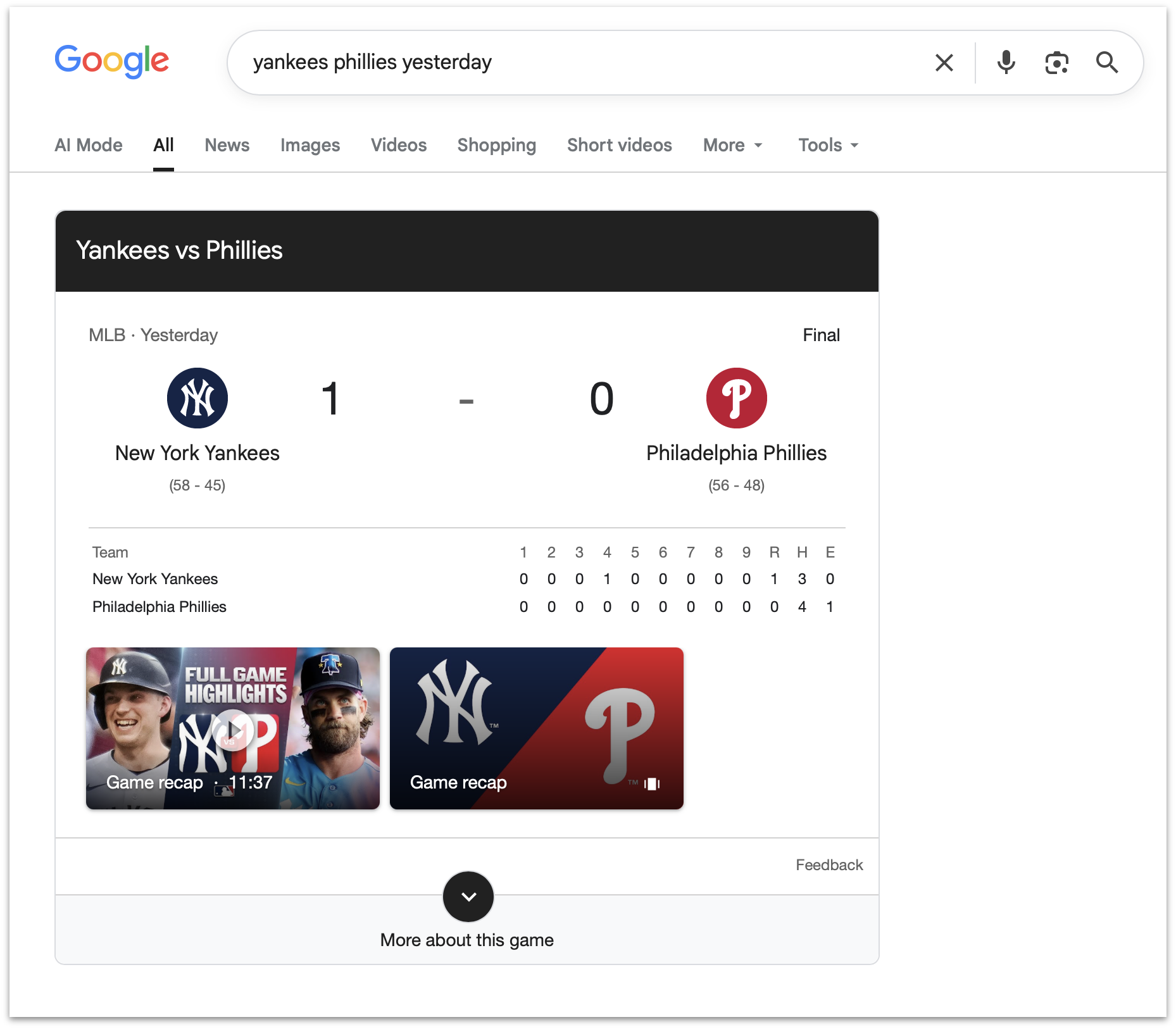
So if you search for the score of a sporting event, it’s illegal in the EU for Google to show you the score, like this search I just tried. What the EC is saying is that because Google Search is so popular, it’s no longer allowed to improve.

plantain:

It drives me insane when in Europe the link between Google Search and Google Maps is broken and I often have to copy paste an address between the two. Thanks EU, what if I like Google’s integrations?

phiresky:

They could have simply added a selector when a user first clicks on the maps preview in the search result, and then remembered it on device or across that user’s account.

But of course, then the user could choose a competitor’s product and Google would have to honor it. That would be horrible, so instead they just made the user experience worse for everyone and elegantly made people blame the EU.

See also: Hacker News.

  •  

App Store Chaos

Kalley Huang, writing for The New York Times about apps written with the help of AI agents that are flooding the App Store:

But as with many things A.I., just because something is easy to build doesn’t mean people will use it. It is not clear if vibecoding is breathing new life into the App Store or just cluttering it.

Last year, the number of new apps released in the App Store grew 30 percent to about 600,000, according to estimates by Sensor Tower, an app analytics firm. In the first half of this year, new apps doubled to about 560,000.

Now, Sensor Tower metrics should always be taken with a grain of salt. They don’t have direct access to Apple’s sales data, so they’re extrapolating from incomplete data that they collect themselves. That said, I think it’s fair to take their numbers as broadly representative of sales trends over time, and the story they tell, as reported by Huang, is interesting.

Based on Sensor Tower’s numbers, the total number of App Store releases peaked in 2016 at 890,000, hit a low of 420,000 in 2022, and this year, is on pace to pass 2016’s peak by a healthy margin. But app releases don’t equate to downloads, let alone sales. According to Huang’s reporting, downloads increased 3% in 2025 and 2% in the first half of 2026, far lower than the growth of new releases.

All of this tracks closely with what we’ve seen at MacStories. One subtle trend I’d add is that whereas for years most developers contacted us before they released an app, a lot of new developers are doing so after their apps are on the App Store. I suspect what I’m seeing is a new generation of developers learning the hard discoverability lessons of the App Store for the first time because when I check out these apps, they rarely have any App Store reviews.

The upshot of all these statistics and trends is App Store chaos of a magnitude that we haven’t seen in a long time. It’s a little like the App Store gold rush of the early days, but without the gold. Discoverability has gone from bad to worse, and the supply of apps is off the charts compared to the demand. With download numbers barely creeping up, the flood of new apps is making selling on the App Store harder for everyone.

Yet, it’s exactly this sort of chaotic disruption that leads to exciting new apps. And, it’s tools like Codex and Claude Code that empower and democratize app development, allowing people who would never have built an app to see their ideas become a reality. Those are things I love to see.

There’s no doubt that the App Store is out of whack thanks to agent-assisted coding, but like any market it will find its equilibrium again. In the meantime, it’s never been a better time to be a fan of apps because while a lot of those record numbers are comprised of mediocre apps, there are hidden gems, and we’re on the hunt for them.

  •  

Apple purges AI ‘nudify’ apps from App Store after San Francisco demands crackdown on non-consensual deepfakes

'nudify' apps

Apple has begun removing AI-powered “nudify” apps from its App Store after San Francisco City Attorney David Chiu issued cease-and-desist letters to both Apple and Google, accusing the platforms of facilitating harmful non-consensual intimate imagery.

The letters targeted approximately 13 face-swapping and image-altering apps that use artificial intelligence to digitally remove clothing from photos, creating fake nude or explicit images without the subject’s consent. Chiu argued that the apps violate consumer-protection laws and enable the spread of deepfake pornography, often targeting women and minors.

In response, Apple in a statement reiterated its longstanding policy prohibiting apps that generate or promote explicit non-consensual content. “Nudification apps are against our App Review Guidelines and we have proactively rejected many of these apps and removed many others,” the company said. It confirmed the removal of three apps identified in the letter, the termination of their developers’ accounts, and ongoing outreach to four additional developers who must address violations or face removal.

This action follows earlier reports highlighting the persistence of such apps despite Apple’s rules. In 2024 and earlier in 2026, investigations revealed that “nudify” tools continued to appear or be advertised in the App Store, prompting criticism over enforcement gaps. Apple has since taken down batches of violating apps after external reports and user flags.

The San Francisco order gives Apple and Google 28 days to respond and fully address the issue, with potential civil penalties for non-compliance. Advocates have praised the move as a step toward curbing AI-enabled abuse, while noting that similar tools can still proliferate on the open web or through sideloaded software.

Apple’s latest enforcement underscores growing pressure on tech platforms to prevent their stores from becoming distribution channels for tools that weaponize AI against privacy and consent.
‎
MacDailyNews Take: Users are encouraged to report suspected violating apps directly through the App Store via Apple’s “Report a Problem” page: https://reportaproblem.apple.com


‎
Please help support MacDailyNews — and enjoy subscriber-only articles, comments, chat, and more — by subscribing to our Substack: macdailynews.substack.com. Thank you!

Support MacDailyNews at no extra cost to you by using this link to shop at Amazon.

The post Apple purges AI ‘nudify’ apps from App Store after San Francisco demands crackdown on non-consensual deepfakes appeared first on MacDailyNews.

  •  
❌