The Trump administration's decision that forced Anthropic to pull its latest cybersecurity models could be reactionary, retaliatory, or both, but the message is clear: The AI industry isn't immune from U.S. government interference.
With support from Markwayne Mullin and Robert F. Kennedy Jr., the kratom industry is pursuing a potentially lucrative policy. Mr. Mullin owns equity in a company that could benefit.
Human skeletal biologists traditionally provide sex estimations as part of establishing biological profiles (skeletal sex, age-at-death, stature, ancestry/population affinity) for skeletonized remains, often using the shapes and sizes of the pelvis, long bones and skull, among other bones in the body. While analytical methods portray skeletal sex differences as almost purely binary (female or male), a person's sex—including hormones, genetics, external anatomy, internal anatomy and the skeleton—can be more varied than either female or male.
Deep inside a limestone cave in southern China, paleontologists have uncovered an assemblage of thirteen fossilized teeth belonging to Gigantopithecus blacki, the largest primate species ever known to have lived.
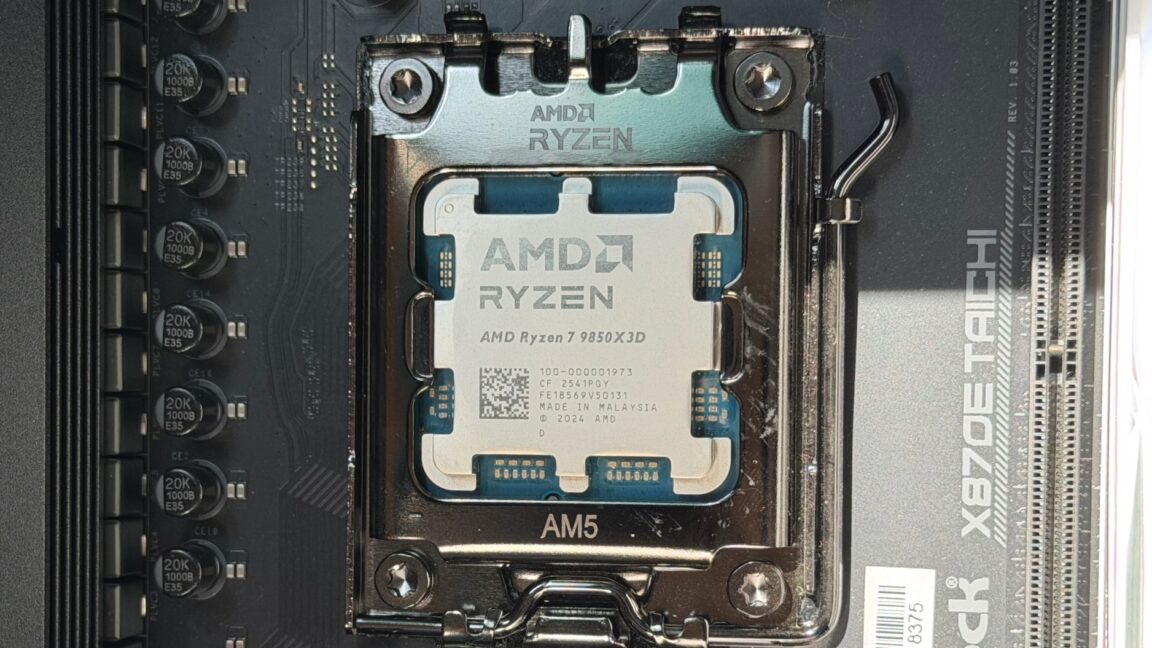
A decade ago, AMD added a protection to its high-end CPUs to protect them against cold boot attacks and other types of physical exploits that siphon sensitive data out of the connected memory chips. Short for Transparent Secure Memory Encryption, TSME encrypts the entire contents stored in memory, making the data useless to physical attackers.
Over time, AMD added TSME to lower-end processors, including the consumer version of its Ryzen chips, a CPU that costs less than the Pro version. Over the years, users of these lower-end chips have gotten used to the added security. Recently and without warning or notice, this lower-end line of AMD chips suddenly dropped the protection, and did so in a way that was impossible to detect on Windows machines and required a fair amount of technical work when using Linux.
Now you see it, now you don't
AMD has yet to say why TSME worked on these CPUs, or even to confirm the change. AMD declined to answer questions sent by email other than to say TSME "is a security feature only applied to PRO CPUs as part of AMD PRO Technologies." The statement is the first known time the chipmaker has explicitly made this restriction public.
Copper diacetyl bis(4-methyl-3-thiosemicarbazone), or Cu(ATSM), restored a key waste-removal system in the brain, reducing toxic amyloid-beta buildup and improving spatial memory in lab models of Alzheimer’s disease, according to a team of researchers at Monash University.
China is turning the massive environmental liabilities of its coal-mining history into the raw materials for its next generation of infrastructure.
In the southeastern county of Gaoping, located deep within China’s premier coal province of Shanxi, a massive new recycling facility has quietly begun operations. It transforms the waste into high-value industrial and building materials.
Reportedly, its daily output sounds like a standard quarry operation: 1,000 tonnes of sand, gravel, and unburnt bricks destined for the country’s endless appetite for concrete.
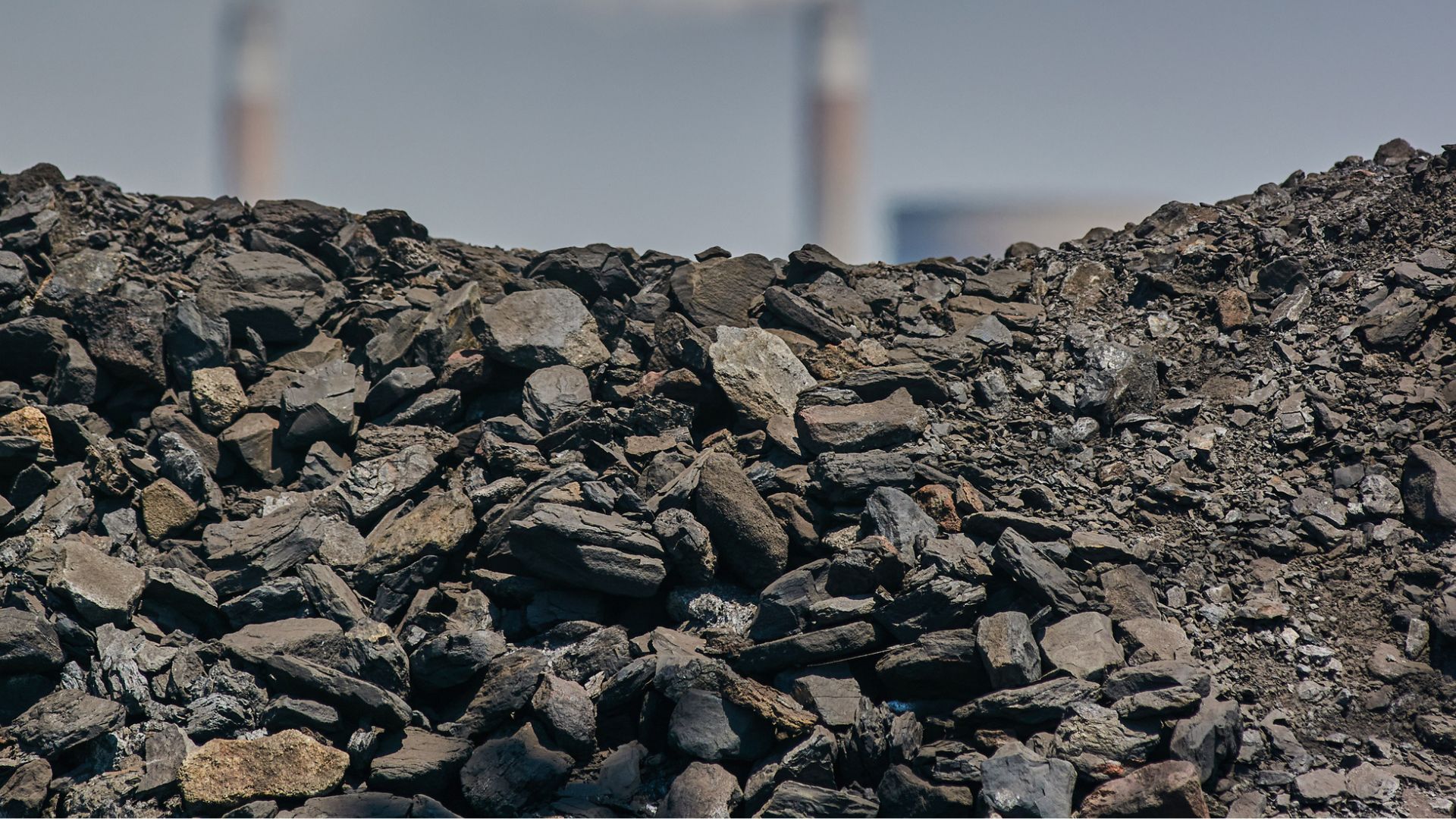
But these construction materials did not come from a riverbed or a mountain quarry. The material was extracted from coal gangue, which is the ultra-hard, toxic rock waste left behind after mining and washing coal.
Specialized facility
China’s coal gangue is expected to be around 7 billion tonnes. Left unmanaged, coal waste routinely triggers water contamination, airborne dust pollution, and spontaneous fires.
Less than 60 percent of this mountain of rock was ever reused. The rest stayed behind as a permanent ecological tax on resource-dependent cities. Now, technology is cracking that stubborn bone to turn the waste into an industrial resource.
The South China Morning Post (SCMP) reported that the Gaoping facility consists of automated systems that sort the incoming waste using X-ray separation equipment. From there, the material is crushed, screened, and stripped of impurities. The result is a stream of manufactured aggregates and eco-friendly unburnt bricks that skip the high-emission firing process entirely.
Local authorities say the applications reach far beyond basic roads. The refined waste is finding its way into ceramics and even high-tech spacecraft coatings.
Broader circular economy
Beyond recycling coal waste, China is eyeing a broader circular economy to overhaul its construction material supply.
China uses nearly half of the world’s construction sand and gravel, a habit that has severely degraded fragile river ecosystems. Replacing natural sand with coal waste solves two environmental headaches at once.
Research also suggests that recycling construction and demolition waste could meet half of China’s aggregate demand by 2050.
The industry is scaling up at breakneck speed. While attempts to recycle gangue date back to the 1950s, the economic incentive shifted after 2010 as natural sand supplies tightened and Beijing locked in its national carbon targets.
The strategy is not without its speed bumps. Industry experts caution that aggregates derived from coal waste currently represent only a tiny sliver of China’s annual consumption.
Due to the material’s structural limitations, it cannot be used for high-strength or critical load-bearing structures like skyscraper pillars or major bridges. Strict toxicity testing is also mandatory to ensure heavy metals do not leach out of the residential walls of the future.
This strategy operates alongside efforts to harvest industrial value from existing fossil fuel liabilities—such as extracting critical technology metals like lithium, gallium, and germanium from mining byproducts. Furthermore, trapping power plant emissions to manufacture affordable agricultural fertilizer.
The development shows that a zero-waste future might actually be possible simply by turning a toxic liability into literal building blocks.
In the southeastern county of Gaoping, located deep within China’s premier coal province of Shanxi, a massive new recycling facility has quietly begun operations.
Fox Corporation has agreed to buy Roku Inc. for $160 per share, an approximate enterprise value of $22 billion, the firms announced today.
The acquisition would unite Fox’s broadcast channels, including Fox, Fox News, Fox Business, and FS1, as well as its streaming businesses, including Tubi, a free ad-supported streaming television (FAST) platform that Fox bought in 2020, with Roku’s own FAST service, The Roku Channel, and Roku’s streaming hardware business, including its streaming sticks and smart TVs. Roku says it has 100 million households using its platform.
The most valuable part of Roku’s business isn't its hardware, which lost $19.1 million in the quarter ending March 31, 2026, but its the operating system (Roku OS) and advertising business. In that same quarter, Roku’s advertising and subscriptions business posted a gross profit of $584.1 million, with the advertising business pulling in $371 million in revenue. The COVID-19 pandemic helped Roku become profitable in 2021, but the company didn’t see annual profitability again until 2025.
White jobseekers are being shut out of taxpayer-funded employment schemes, with many employment support programmes offered by local authorities to benefits claimants open only to ethnic minorities.
A Northrop Grumman Pegasus XL rocket is affixed to the bottom of the company’s Stargazer, a modified L-1011 aircraft, and ready for departure, as seen on June 12, 2026, at NASA’s Wallops Flight Facility in Virginia. Inside the rocket is Katalyst Space’s LINK robotic servicing spacecraft, which will launch to boost the orbit of NASA’s Neil Gehrels Swift Observatory.
NASA/Ron Beard
Engineers attached a Northrop Grumman Pegasus XL rocket to the company’s Stargazer aircraft at NASA’s Wallops Flight Facility in Virginia on Friday, June 12.
The rocket will carry LINK, a robotic servicing spacecraft from Katalyst Space, into orbit ahead of an attempt to boost NASA’s sinking Neil Gehrels Swift Observatory.
All spacecraft in low Earth orbit experience drag caused by our planet’s atmosphere, which gradually reduces their altitudes unless they have propulsion systems to counteract the effect.
A recent bout of solar activity magnified this effect on Swift, and its orbit has lowered faster than anticipated.
Katalyst selected Northrop Grumman’s Pegasus XL rocket as the best launch option for reaching the observatory in time for LINK to perform the boost procedure, based on the mission’s orbital and programmatic needs. Northrop Grumman will deploy the rocket using Stargazer, the company’s modified L-1011 airplane.
LINK will launch from Kwajalein Atoll, part of the Republic of the Marshall Islands in the South Pacific Ocean, later this month.

 Login