 Login

NASA’s Deep Space Network Held Up During Artemis II — Here’s What Changed After the Last Overload
When NASA’s Orion capsule carried four astronauts around the Moon this April, the agency’s global web of giant


A hybrid-electric aviation company has unveiled a new conceptual aircraft design for next-generation airliners.
Electra’s conceptual aircraft uses a wide “double-bubble” fuselage that allows the body of the aircraft to contribute more lift, while two underwing turbofan engines produce thrust as well as electricity to power electric tail fans that ingest and re-energize slower-moving air over the fuselage.
The technique is known as boundary layer ingestion. Electra’s analysis found that the configuration could deliver up to a 17 percent efficiency improvement beyond gains expected by 2050 from advanced structures, engine technologies, and aerodynamic improvements.
“The value of electrification in this concept is that it lets us put the propulsion where it couldn’t go before but does the most good,” said Dr. Parker Vascik, Director of Product Strategy at Electra.
“We can radically improve how the airframe and propulsion system work together while keeping the aircraft grounded in real airline and airport operations. The goal is not just efficiency on paper, but concepts that we can actually build, certify, and use.”
The company also revealed that the concept is designed to fit within existing airport gates and airline operations, use standard jet fuel or sustainable aviation fuel, and avoid reliance on airport charging infrastructure or untested fuel types. The configuration also supports a twin-aisle cabin layout within a narrowbody aircraft class, unlocking improved passenger comfort and more efficient boarding and deplaning.
The concept is developed as part of NASA’s Advanced Aircraft Concepts for Environmental Sustainability (AACES) 2050 program.
“This concept builds on years of research into how airframe shape and propulsion placement can work together to improve aircraft efficiency,” said Dr. Alejandra Uranga, Electra’s Chief Engineer for Research and Future Concepts.
“What is different now is the ability to use electrification and distributed propulsion to more deeply integrate those systems. Designing the aircraft as a whole system is essential to realizing the full potential of future commercial aircraft.”
In addition to the concept, Electra developed 11 technical papers documenting the models, methods, and findings behind the study. The company also adopted NASA’s open-source Aviary multidisciplinary design and optimization tool and developed an electrified aircraft design suite intended for public use. Together, these contributions are intended to help advance the broader aviation research community, not just push forward a single aircraft concept, according to a press release.
Electra’s AACES 2050 team brought together leaders across industry and academia, including American Airlines, Honeywell Aerospace, Lockheed Martin Skunk Works, Hinetics, the Massachusetts Institute of Technology Department of Aeronautics and Astronautics, the University of Michigan Department of Aerospace Engineering, and the University of California, Irvine’s Aircraft Systems Laboratory, as per the release.
“Through AACES, NASA is pushing the industry to think boldly, to use our novel propulsion technologies to unconstrain design thinking for the next generation of commercial aviation,” said Marc Allen, CEO of Electra.
“The third era of aviation will bring radical change to how people and places connect, whether applied to aircraft entering service this decade, future regional platforms, or commercial transport by mid-century. Electra’s focus as the hybrid electric leader is to keep American aviation, and NASA, leading the way.”

 Detached sea cucumber tissue survived, healed, and grew for years in natural seawater, revealing a remarkable new model for regeneration and biomedical research. A chance observation has led scientists to a discovery that challenges one of biology’s most basic assumptions: that detached animal tissue eventually dies. Instead, researchers found that tissue removed from a sea [...]

For centuries, the Arctic has remained one of the most dangerous places on Earth to explore. Beneath what looks like solid snow can lie hidden pools of icy water capable of swallowing people, vehicles, and scientific equipment without warning.
These risks make collecting data from polar regions slow, expensive, and often dangerous. Now, a small four-legged robot promises to change this.
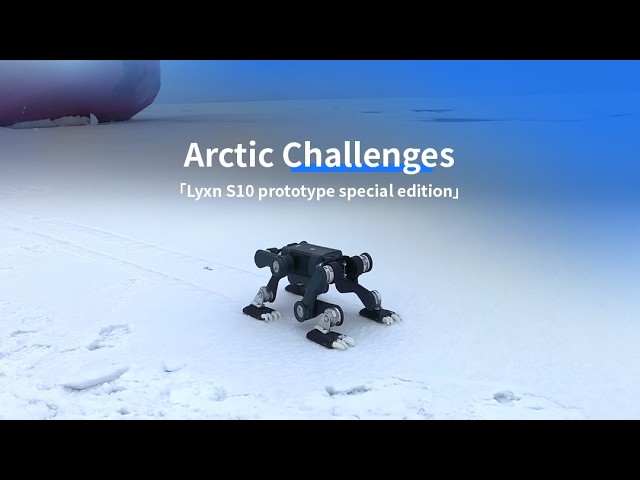
A modified version of Lynx S10, an autonomous robot developed by China-based DEEP Robotics, has become the first quadruped platform to walk on Arctic Ocean ice floes. It successfully demonstrates that autonomous machines may one day perform some of the most hazardous fieldwork in places where human access is limited.
“The Lynx S10 enables autonomous path planning and intelligent obstacle avoidance,” the DEEP Robotics team notes.
The achievement is significant not because a robot survived the cold, but because it showed that compact autonomous systems can navigate unpredictable ice, snow, and water-filled terrain that even experienced researchers approach with extreme caution.
The Arctic expedition was designed as a real-world stress test for the Lynx S10, a compact quadruped robot that weighs less than 20 kilograms even with its battery installed.
Unlike larger robotic platforms that require extensive transport and setup, the machine can be carried and deployed by a single person. “Its compact body allows single-person portability and rapid deployment, enhancing operational mobility,” the DEEP Robotics team claims.
Despite its small size, it is equipped with sixteen precision joints that allow it to bend, twist, and maneuver through spaces that would be inaccessible to bulkier robots.
The standard version of the robot is already highly capable. According to its creators, “Equipped with a next-generation AI motion control and gait algorithm, the Lynx S10 performs a variety of extreme maneuvers.”
For instance, it can travel at speeds of up to 8 m/s on flat ground, climb over obstacles as tall as 50 centimeters, and switch between wheeled and legged movement depending on the terrain.
When necessary, it can even rise into a bipedal stance to gain additional height and visibility.
To operate independently, the robot relies on an advanced perception system.
Four ultra-wide-angle cameras equipped with high-dynamic-range lenses continuously monitor its surroundings, while front and rear LiDAR sensors generate detailed three-dimensional maps. This allows the machine to identify obstacles, plan routes, and navigate without constant human control.
Its rugged design also enables operation in harsh environments. The standard platform is rated IP66 against dust and water intrusion, functions in temperatures from minus 20 to 55 degrees Celsius, carries payloads exceeding 8 kilograms, and can automatically locate and travel to a charging station when battery levels become low.
However, Arctic ice presented challenges that went far beyond the robot’s original design specifications.
Engineers therefore modified the platform before deployment. The standard wheels were replaced with large biomimetic paws inspired by the broad feet of polar bears. These custom feet spread the robot’s weight across a larger surface area, helping prevent it from sinking into soft snow.
Anti-slip textures improved grip on slick surfaces, while integrated crampons provided extra traction on hard ice. The robot’s sealing was also upgraded from IP66 to IP67 for greater protection against water intrusion.
Researchers introduced another unusual modification for environments where ice and water mixed together. By increasing the effective surface area of the limbs, the robot’s legs could function almost like paddles, allowing it to move through slushy conditions that would challenge conventional wheeled systems.
The Arctic tests quickly revealed why such adaptations were necessary. In several locations, snow concealed dangerous meltwater pools beneath the surface. The robot encountered terrain that appeared stable but actually floated above hidden pockets of water.
Thanks to its redesigned feet and traction system, it maintained stability while traversing these deceptive surfaces. In one instance, it successfully glided across an area that looked like solid ice but concealed water underneath.
Later tests pushed the machine into regions where ice and water were intermixed, and the modified limbs enabled it to continue moving through the difficult terrain.
More importantly, this was not a finished commercial product being showcased under controlled conditions. The Arctic vehicle was still an alpha-stage prototype.
The broader significance of the project extends well beyond a single expedition. Environmental researchers and emergency responders often need to operate in locations that are dangerous, remote, or impossible for humans to access safely.
Lynx S10 “confidently handles challenging environments such as dusty sites, heavy rain, and humid/foggy conditions,” the researchers at DEEP Robotics added.
This lightweight autonomous robot is capable of crossing unstable ice and moving through mixed ice-water environments. Therefore, it could help collect environmental data, monitor climate-related changes, and support search-and-rescue operations without exposing people to the same risks.
Researchers are now using the performance data gathered during the mission to further improve the design. Hopefully, future versions will be even more capable of handling unpredictable natural environments.
You can read more about Lynx S10 here.
The James Webb Space Telescope (JWST) has revealed a cosmic catastrophe, as winds extinguished a star-forming galaxy in the early universe, offering new insight into earlier strange observations.
Cosmic winds may destroy entire galaxies, according to new JWST research exploring the lingering mystery of why certain parts of the universe are unexpectedly devoid of growth.
The findings were published in a recent paper in the Monthly Notices of the Royal Astronomical Society, revealing galactic-scale death in a universe just one billion years old, and potentially answering questions about previous troubling JWST observations.
Observations made by the JWST revealed cold gas, an essential star-forming material, blowing out of the CRISTAL-2 galaxy in a massive plume, severely degrading its ability to produce new stars. According to the researchers, it would take less than 50 million years for the galaxy to be completely dead if this activity keeps up, a mere blink in the scheme of a 13.8 billion-year-old universe.
Astronomers consider galaxies to be “dead” if they are no longer capable of producing fresh stars. Traditionally, astronomers expected that it would take billions of years for an old galaxy to slowly run out of fuel and burn out. However, JWST observations have continually captured events in the early universe that were not expected to occur until much later.
One of these was finding a host of dead galaxies in the early universe shortly after it first became operational in 2022. How galaxies could die so close to the beginning of the universe, without sufficient time to burn through their cold gas supplies, has long perplexed scientists.
As researchers began considering various explanations for the phenomenon, they initially settled on dark energy, essentially explaining one unknown with another. Dark energy is a theoretical substance that scientists believe drives the expansion of the universe and was once a stronger force than it is now. While the Dark Energy Spectroscopic Instrument survey revealed last year that dark energy appears to be weakening over time, an exotic galaxy-killer is not required, according to this latest research.
Instead, researchers offer a much simpler explanation of powerful cosmic winds in the remote past. Conventional thinking has it that such powerful winds could only be generated by a supermassive black hole, yet these new observations challenge that assumption.
CRISTAL-02 is a galaxy still in the making, composed of several smaller galaxies in the final stages of merging into a single system. Because the early universe was far denser than it is today, such collisions were much more common. During these mergers, gravitational forces funnel vast amounts of gas toward the galactic centers, triggering intense bursts of star formation.
Observations of CRISTAL-02 by the James Webb Space Telescope and the Atacama Large Millimeter/submillimeter Array (ALMA) revealed a star formation rate roughly twice that of similar galaxies. Ironically, this extraordinary burst of stellar activity is also generating a powerful cosmic wind that is stripping away the very gas needed to form new stars.
Compounding the effect, many of the newly formed stars rapidly exhaust their fuel and end their lives as supernovae, producing additional outflows that further deplete the galaxy’s star-forming material.
Together, these processes appear capable of shutting down star formation far more quickly than astronomers previously believed possible. Going forward, ongoing JWST observations are likely to continue challenging astronomers’ assumptions, as more evidence indicates that nearly half of the early universe’s massive galaxies were interacting—a finding which also suggests early “galactic deaths” like these may not be all that rare, after all.
The paper, “Multiphase Images of a Powerful Supernova-Driven Wind in the Early Universe,” appeared in Monthly Notices of the Royal Astronomical Society on June 10, 2026.
Ryan Whalen covers science and technology for The Debrief. He holds an MA in History and a Master of Library and Information Science with a certificate in Data Science. He can be contacted at ryan@thedebrief.org, and follow him on Twitter @mdntwvlf.
Over two years after Japan’s Smart Lander for Investigating Moon (SLIM) mission deployed a tiny, shape-shifting rover on the Moon, the country’s space agency JAXA has finally revealed previously unreleased details about the first-of-its-kind autonomous robotic lunar exploration.
According to a statement announcing the recently published mission account, the SLIM team deployed the rover on the Moon’s surface, “after which the rover transformed from a tiny sphere into a wheeled robot that took images of the lander and its environment.” A second rover transmitted the data back to Earth, with all steps occurring autonomously.
The team behind the historic mission said their success could pave the way for swarms of small, transformable robots capable of exploring high-scientific value areas that larger spacecraft and robots cannot reach, including caves, tunnels, lava tubes, vents, and deep extraterrestrial craters.
In the published study, the JAXA team explains that robotic technologies like SLIM “are expected to drive substantial advancements in planetary exploration and resource prospecting” by performing tasks in extraterrestrial environments that are inaccessible to other platforms, including human astronauts. For example, the team noted that miniature robots offer tremendous weight savings over bulkier platforms, especially when added to missions with “strict payload limitations.”
“Miniature robots have the potential to reduce payloads and to reach cramped spaces such as small vents and craters that are inaccessible to larger, conventional robots,” they explain.
Still, the SLIM team notes that building tiny, shape-shifting rovers capable of exploring a variety of complex environments presents its own set of challenges. The most limiting constraints involve computational power and battery capacity. The team also observed that smaller robotics platforms inherently suffer from “reduced locomotion performance” due to their small size.
Now, when revealing the details of the SLIM mission, the researchers note that advancements in miniaturization and computational performance spurred by the Internet of Things “have catalyzed the emergence of smaller, lighter, and more intelligent rovers at lower costs.”
To build a tiny, shapeshifting robot capable of exploring the lunar surface autonomously, team leader Daichi Hirano and colleagues designed the Lunar Excursion Vehicle (LEV) system, which comprises LEV-1 and LEV-2. According to the team’s statement, LEV-1 can communicate directly with mission planners back on Earth. For locomotion, the robot moves via what the team termed “a controlled hopping mechanism.”
The second robot, LEV-2, starts out as a compact sphere 8 inches in diameter. However, once on the Moon, the mission controllers said that the tiny robot can transform into a “two-wheeled rover with cameras and a tail stabilizer.”
“Here, we introduce a two-wheeled centimeter-scale rover, designated Lunar Excursion Vehicle 2 (LEV-2), also known as SORA-Q (named after the Japanese words for space and sphere), which transforms into a wheeled configuration from a compact spherical form, enabling efficient traversal of soft lunar terrains,” they write.
According to the new mission details, the SLIM lander deployed LEV-2 “immediately before its landing on the lunar surface.” In the mission details, the team explained that upon deployment, the rover autonomously extended its wheels, tail stabilizer, and cameras, “thereby enhancing its mobility and stability on soft lunar terrain.”

After deployment, LEV-2 navigated the lunar surface in the immediate area around the lander. According to the published study, “the palm-sized rover accomplished autonomous lunar exploration by navigating around the SLIM lander, capturing images of both the SLIM lander and its environment.” Critically, the rover’s exploration was autonomous and “without reliance on ground-based teleoperation,” marking a historic first in lunar exploration.
After finishing its exploration, the tiny robot transmitted images of its adventures to LEV-1. The hopping rover then transmitted the data to Earth. The team notes that all these steps were also accomplished autonomously.
The team notes that the LEV-2 shape-shifting rover operated for “more than 100 minutes: before losing communication with LEV-1. Although determining the exact cause may require direct examination of the two robots, Hirano’s team suspects that issues caused by LEV-1’s hopping motions or battery depletion “may have contributed to connectivity issues.”
When discussing the implication of an autonomous, shape-shifting rover successfully navigating the lunar surface and completing its mission directives, the team concedes that the capabilities of a single, small rover like LEV-2 “are inherently limited.” However, they also note that their mission success highlights the potential of this category of robotic platform “as independent explorers, capable of accessing environments beyond the reach of a primary large spacecraft.”
“Swarm-controlled small robots are poised to be deployed in high-risk yet scientifically valuable environments, such as vents, caves, and steep slope craters, that are inaccessible to larger, conventional rovers,” the researchers conclude. “This approach promises to enhance both the efficiency and safety of future planetary surface exploration.”
The study “From ball to rover: Transformable palm-sized rover SORA-Q for autonomous lunar exploration” was published in Science Robotics.
Christopher Plain is a Science Fiction and Fantasy novelist and Head Science Writer at The Debrief. Follow and connect with him on X, learn about his books at plainfiction.com, or email him directly at christopher@thedebrief.org.
 Researchers have created a model that follows food beyond traditional calorie calculations, incorporating the role of gut microbes in digestion. Food labels make calorie counts look straightforward. The number listed per serving is calculated from the food’s fat, carbohydrate, and protein content. In reality, the digestive process is much more complex. As food moves through [...]
 Scientists found a concerning Alzheimer’s link involving glucosamine, a joint supplement used by millions. A widely used supplement marketed for joint pain relief may be linked to faster progression of Alzheimer’s disease, according to new research from University of Florida scientists. The study found that people with mild cognitive impairment (MCI) who reported taking glucosamine [...]


**
Across the stories today, a common thread emerges: the tension between revelation and rescue—moments when new understanding drives urgent action, even as time runs short.
Beneath our feet, scientists have mapped fungal networks stretching nearly a billion times the distance to the sun, revealing an underground web of connection that dwarfs anything visible above ground. It’s a reminder that the natural world operates on scales both microscopic and cosmic, with systems we’re only beginning to understand. This same spirit of discovery appears in unexpected places—from the ghostly earthshine illuminating the moon’s dark side to the arrival of a tropical western reef heron in Wales, likely pushed northward by changing climate patterns.
The day’s coverage points to growing momentum around what happens when scientific insight meets conservation urgency. In Mozambique, nine female white rhinos completed their journey to establish the country’s first viable breeding population in generations—a decade-long effort finally bearing fruit. Meanwhile, Australian researchers at PlantBank work like modern-day ark builders, preserving seeds before species disappear forever. On Palau’s Ulong Island, the simple act of removing invasive rats triggered rapid ecological recovery across both land and marine environments, challenging assumptions about how long nature needs to heal.
Yet revelations don’t always bring good news. China’s power sector emissions fell for the first time in a decade, a historic milestone, but a coal surge threatens to reverse that progress. Trees may store less carbon than scientists hoped, according to new research examining growth patterns across 137 forest sites. And Antarctica is missing sea ice equivalent to France’s size, with winter temperatures soaring 20°C above normal—numbers that feel abstract until you consider their global implications.
It’s a reminder that progress and pressure often arrive together. Lake Mead approaches the critical threshold that will slash Hoover Dam’s electricity production, while thousands of marine animals die in fishing nets annually through bycatch. For the 58-year-old Kenyan fisherman Mohamed Mwazigona, returning to shore with just 2 kilograms of fish, these aren’t statistics—they’re the reality of dwindling catches that threaten coastal livelihoods.
Behind the numbers are real communities adapting in real time. Eight volunteers used ropes and pulleys to rescue a 172-pound loggerhead turtle named Bowser from a Florida pier—the kind of hands-on conservation that makes the difference between survival and loss. In Albania, protesters dubbed the “Flamingo Revolution” emerged after bulldozers illegally destroyed protected wetlands for a luxury resort, showing how environmental destruction can galvanize public resistance.
The stories also reveal how legal frameworks struggle to keep pace with environmental challenges. A federal judge ruled the Trump administration’s cancellation of environmental justice grants illegal, while Australia’s climate chief outlined plans to transform the country from fossil fuel exporter to renewable energy leader. Meanwhile, environmental laws were waived to enable border wall construction through Big Bend National Park, illustrating how political priorities can override conservation concerns.
What emerges is a picture of a planet under pressure, but also of human ingenuity rising to meet unprecedented challenges. As commercial satellites threaten the night sky that has guided humanity for millennia, conservationists celebrate osprey chicks hatching in Wales and sengi pups born in captivity. Progress isn’t linear, and solutions often come from unexpected directions—underground fungal networks, community rescue efforts, and the patient work of seed preservation.
As the week unfolds, all eyes will be on how these parallel stories of discovery and rescue continue to intersect, shaping our understanding of what’s possible when knowledge meets action.
The post China’s Coal Surge Threatens Historic Emissions Drop, Hoover Dam Faces Massive Power Cut as Lake Mead Hits Critical Low — Today’s Environmental Briefing for Sat, Jun 13 2026 first appeared on EnviroLink Network.
The Liberal Democrats' intolerance of gender critical campaigners and Christians has rightly landed them in legal hot water and shown that those in charge are no friends of liberty, say David Campanale and Natalie Bird.
The post The Liberal Democrats Are No Friends of Liberty appeared first on The Daily Sceptic.

Chinese researchers have reportedly developed a new “three-lane highway” optical fiber system. The new system, the researchers explain, could dramatically expand the data-transfer capacity of future networks, notably those for artificial intelligence (AI).
Put in simpler terms, the innovation effectively “squeezes” more traffic from fiber-optic cables without having to replace or lay new cabling. According to the team, they have been able to increase traffic by as much as five times while also increasing transmission capacity per core by nearly 50%.
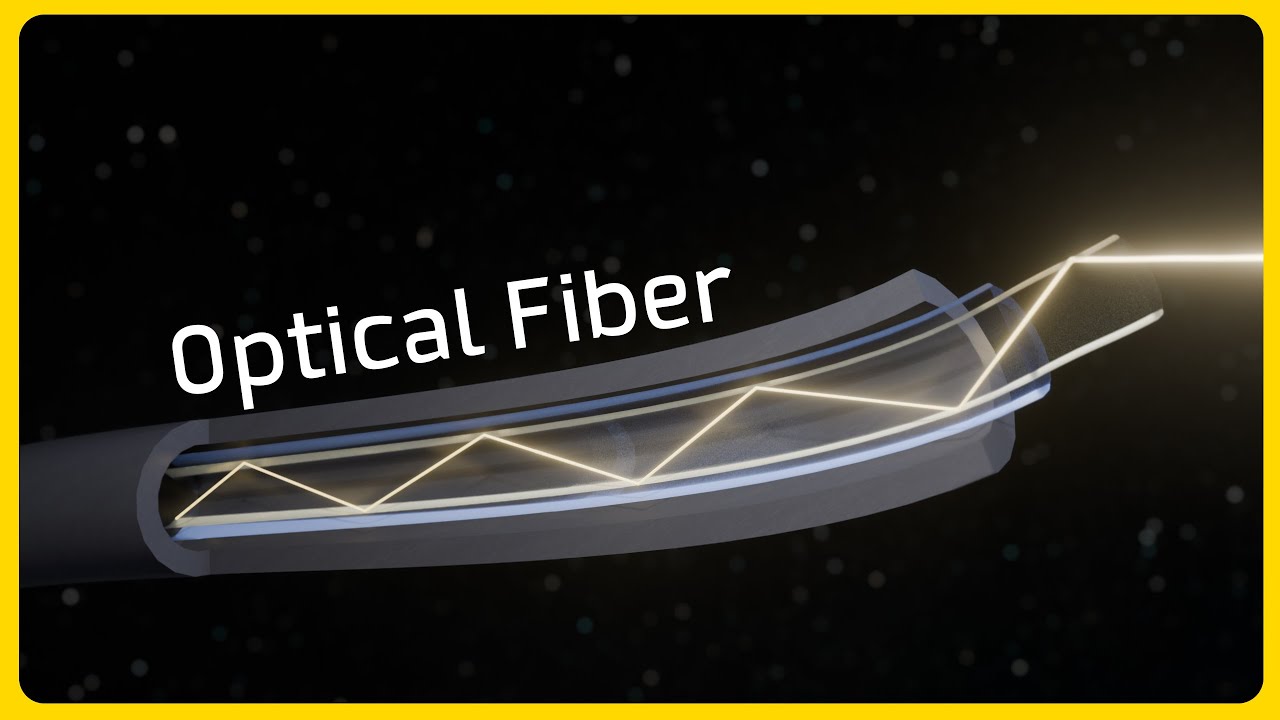
Today, most internet traffic travels through glass fibers using laser light. Importantly, each fiber doesn’t just carry one beam of light. It carries many wavelengths (colors) of light simultaneously, like multiple radio stations sharing the airwaves.
Presently, most commercial systems use a mixture of C-band (the workhorse) and L-band wavelengths. The latter is used to extend capacity when needed.
The team, they report, has managed to add a third, called S-band; hence the “three-lane highway” analogy. The fiber itself isn’t necessarily wider; they’re simply using more of the available light spectrum.
So, you might ask, why hasn’t S-band been used before? Well, in short, over long distances, optical signals tend to weaken. To overcome this, telecom companies use optical amplifiers placed along the route.
The industry’s amplifiers were optimized for C-band (and later L-band). S-band signals were more difficult and expensive to amplify cleanly. To this end, the Chinese team claims to have solved enough of these engineering problems to make commercial deployment practical.
But there is another trick up the team’s sleeve: multiple cores to the fibers. Normal optical fibers consist of a single core, but the team’s new ones reportedly actually contain four.
To this end, each of these core acts like an independent fiber. So, unlike traditional fibers with a single core and two optical bands, the new fibers actually have four cores, with three optical bands working simultaneously.
That’s a significant leap in capability. For applications like AI, this could prove to be very useful indeed, especially when it comes to removing data-transfer bottlenecks.
At present, most large AI models tend to use thousands of graphics processing units (GPUs), constantly exchanging data at the speed of light. A modern AI cluster can move terabits per second between machines.
Often, the bottleneck is not the GPU but getting data from one GPU cluster to another. So, if you can move five times more data through the same fiber infrastructure, you necessarily get faster training, larger distributed models, and lower network congestion.
Looking at the bigger picture, this isn’t a breakthrough in terms of fiber optics; similar achievements have happened in Japan, Europe, and the US. What is different is that this appears to have been commercially deployed, not just developed in a lab.
According to reports, the new optic fibers have run over about 21.7 miles (35 km) of an existing telecoms network, combining the innovations mentioned. Looking ahead, the team suggests the new cables could be deployed internationally, perhaps even in submarine cables.
It could also play a major role in China’s “Eastern Data, Western Computing strategy,” which seeks to shift data-intensive workloads from densely populated eastern regions to resource-rich western provinces, according to the developers.

As demand for electric vehicles, smartphones, and renewable energy storage continues to grow, so does the need for lithium, a key ingredient in modern batteries. Now, researchers at Monash University have developed a new method that could make lithium production more efficient and environmentally friendly. The new technology allows lithium to be extracted from salt […]
The post New lithium extraction method achieves 95% recovery with almost no freshwater appeared first on Knowridge Science Report.

Inflammatory bowel disease, often called IBD, is a group of long-term conditions that cause inflammation in the digestive tract. The two main forms are Crohn’s disease and ulcerative colitis. These conditions can cause symptoms such as abdominal pain, diarrhea, fatigue, weight loss, and reduced quality of life. While treatments have improved over the years, scientists […]
The post Could Highly Processed Grains Increase Your Risk of Inflammatory Bowel Disease? appeared first on Knowridge Science Report.

Millions of people take glucosamine every day in the hope of reducing joint pain and maintaining mobility as they age. The supplement has long been marketed as a natural way to support joint health, particularly for people with osteoarthritis. Because it is sold over the counter and does not require a prescription, many consumers assume […]
The post Could a Popular Joint Supplement Increase Alzheimer’s Risk? appeared first on Knowridge Science Report.
 A new study suggests evolution stayed stuck for millions of years until sexual reproduction helped unleash a burst of biodiversity. New research suggests that the earliest animals on Earth may have unintentionally slowed the pace of evolution for millions of years. Scientists have found that their reliance on asexual reproduction limited competition and reduced the [...]
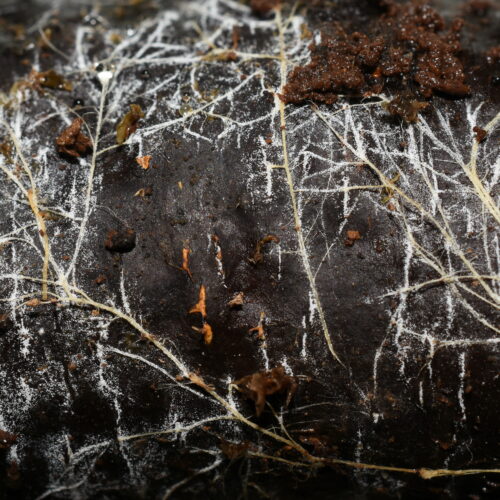
Hidden underground around the world lie 110 quadrillion kilometers of arbuscular mycorrhizal fungal networks—webs of ultra-thin threads that, if connected in a single line, would stretch almost a billion times the distance between the Earth and the sun, according to new research published in Science on Thursday.
These fungal communities form intimate relationships with the roots of plants, which they provide with nutrients like phosphorus and nitrogen in exchange for carbon, 1 billion tons of which the networks sequester underground annually, previous research has found. If the fungal network wasn’t storing it, that carbon would be warming the atmosphere.
But those networks have never been mapped globally until now. The new study led by Society for the Protection of Underground Networks, or SPUN, an organization founded to map mycorrhizal fungi networks, used a combination of literature review, soil samples from around the globe, machine learning and laboratory testing to estimate the distribution and mass of these systems and map where they are densest.
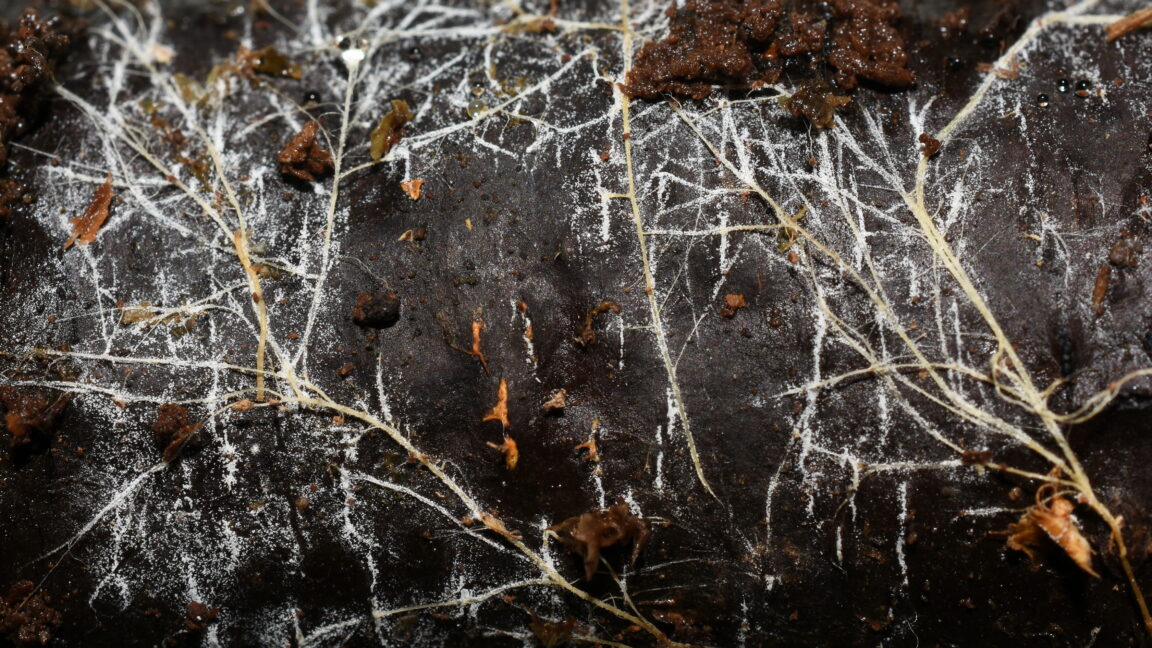
© HHelene via Getty Images
