❌

Reading view

Votre futur PC pourrait vous obéir comme R2-D2 : Nvidia dévoile RTX Spark et sa vision pour l’ordinateur du futur

Au Computex, Jensen Huang n’est pas seulement venu présenter une nouvelle puce ARM pour Windows. À travers RTX Spark, le patron de Nvidia dessine surtout une vision beaucoup plus ambitieuse de l’avenir du PC, qui serait destiné à devenir comme R2-D2.

  •  

Half-Ton Cattle Relatives Roamed Europe 4 Million Years Ago

Paleoartistic reconstruction of the environment in the surrounding of Camp dels Ninots maar lake during the Early Pliocene. Image credit: Mauricio Antón.

Near-complete bovine skeletons unearthed the Early Pliocene site of Camp dels Ninots in northeastern Spain reveal that the ancestors of today’s buffalo and cattle were already growing to impressive sizes long before humans arrived on the continent.

The post Half-Ton Cattle Relatives Roamed Europe 4 Million Years Ago appeared first on Sci.News: Breaking Science News.

  •  

Haven-1 : à quoi ressemblera la station qui doit remplacer l'ISS ?

La nomination du Français Arnaud Prost a mis la lumière sur Haven-1, station spatiale qui doit entrer en service à partir de 2027. Le projet est en cours depuis des années, mais reste encore assez opaque... L'occasion de faire le point sur ce que l'on sait.

  •  

Le jour où la plus large tornade jamais observée a piégé trois célèbres chasseurs d’orages en plein tournage

C’est un événement qui a profondément marqué la communauté météorologique à travers le monde :  il y a quelques années, trois des plus célèbres chasseurs d’orages américains, et stars de la télévision, ont été tués par une tornade en pleine tournage pour une grande chaîne de télévision.

  •  

Voici dans quelle catégorie votre chat vous classe selon un spécialiste de l'éthologie féline

Votre chat vous voit comme une mère de substitution de grande taille. Pas comme un maître, ni comme un chef, pas même comme un ami au sens humain du terme. Cette révélation, issue de travaux en éthologie féline, est à la fois déconcertante et intéressante. Que dit vraiment la science sur la...

  •  

Webb Weighs Most Distant Inactive Black Hole Ever Found

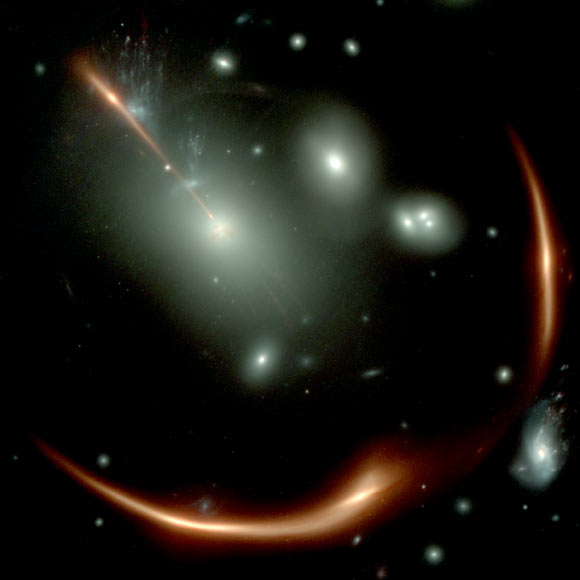
This Webb image shows the highly distorted red galaxy MRG-M0138 seen through a foreground cluster of galaxies (white sources). Image credit: NASA / ESA / CSA / Webb.

A supermassive black hole 6 billion times the mass of the Sun lurks in MRG-M0138, a gravitationally lensed quiescent galaxy seen when the Universe was just 3 billion years old, according to an analysis of data collected by the NIRSpec Integral Field Spectrograph onboard the NASA/ESA/CSA James Webb Space Telescope.

The post Webb Weighs Most Distant Inactive Black Hole Ever Found appeared first on Sci.News: Breaking Science News.

  •  

Apple set for AI reboot at Cook’s WWDC farewell

Analysts tipped Apple to use its annual Worldwide Developers Conference (WWDC), set to take place on Monday (8 June), to reset its AI strategy and unveil a major Siri overhaul as CEO Tim Cook prepares to hand over the reins.

Ahead of the event, Ben Wood, chief analyst at CCS Insight, described WWDC as “a pivotal moment for Apple Intelligence”, adding its voice assistant Siri had been “a thorn in Apple’s side for several years”, making its reboot central to Apple’s attempt to reset its AI narrative.

According to Bloomberg, Apple is expected to unveil a revamped AI-powered Siri designed to act as conversational companion with screen awareness, richer app control, the ability to tackle multiple commands in one prompt and a dedicated Siri app.

Wood expects Apple to frame the overhaul around “a slew of agentic AI capabilities”, while avoiding any overt positioning of Siri as being powered by Google’s Gemini technology.

Apple has indeed lagged rivals including Google and Samsung in bringing AI features to smartphones and other devices. Its push has been hampered by challenges building in-house AI capabilities, prompting the company to lean on partnerships with players including Google and OpenAI.

Paolo Pescatore, chief analyst at research house PP Foresight, said the iPhone-maker does not need to win the AI race through “noise, novelty or endless model comparisons”, but by making AI “useful, trusted, private and deeply embedded” across its devices.

Bloomberg reported Apple is also expected to unveil iOS 27 alongside updates for iPadOS, macOS, watchOS, tvOS and visionOS. Unlike last year’s focus on Liquid Glass design, the next software cycle is expected to focus on reliability, battery life, performance and deeper integration of Apple Intelligence features.

Symbolic
Notably, the event also marks Tim Cook’s final WWDC as Apple CEO before his planned transition to executive chairman on 1 September, when SVP of hardware engineering John Ternus will take the helm.

Pescatore explained the upcoming WWDC “carries far more significance than a normal developer conference”, describing it as “as much a symbolic handover moment as a software showcase”.

In his view, Cook’s legacy has been built on “scale, discipline, services, privacy, Apple Silicon and deep ecosystem integration”, but argued the key question is how Apple uses that foundation in the AI era.

He argued the tech giant will need to reassure developers, investors and customers the transition is “about continuity, not disruption”, while showing its blend of hardware, silicon, software and services can deliver “a more intelligent, more personal ecosystem”.

Similarly, Wood warned any missteps in Apple’s hotly anticipated agentic and on-device AI strategy “could have significant implications”.

The post Apple set for AI reboot at Cook’s WWDC farewell appeared first on Mobile World Live.

  •  

Festival d’Astronomie de Fleurance 2026 : cap sur les familles, l’éclipse solaire du 12 août en point d’orgue

Pour sa 36e édition, le Festival d’Astronomie de Fleurance réunit au cœur du Gers scientifiques, passionnés et grand public du 31 juillet au 7 août 2026. Résolument tourné vers les familles, il inaugure des formats inédits et prépare les festivaliers à vivre un moment céleste exceptionnel :...

  •  

The Fitbit Air is a good wearable weighed down by a chatty AI "coach"

Smartwatches can track your health stats, but they also do a lot of other things you might not always want or need. The $100 Fitbit Air tracker ditches the screens that have become common on people's wrists, leaving behind a tiny puck of health sensors you can often forget you're wearing. You will not, however, forget that Google's new health platform is built around AI.

The Air has no speaker, and there's only one LED on the side to indicate battery level. You can double-tap the tracker to check the level, and that's about the end of on-device features. The vibration motor is only for alarms—it can't sync with notifications on your phone. That makes sense, given there is no screen to tell you what that buzz was all about.

Fitbit Air side view The Fitbit Air doesn't have a display or buttons—just a small LED on the side for battery status. Credit: Ryan Whitwam

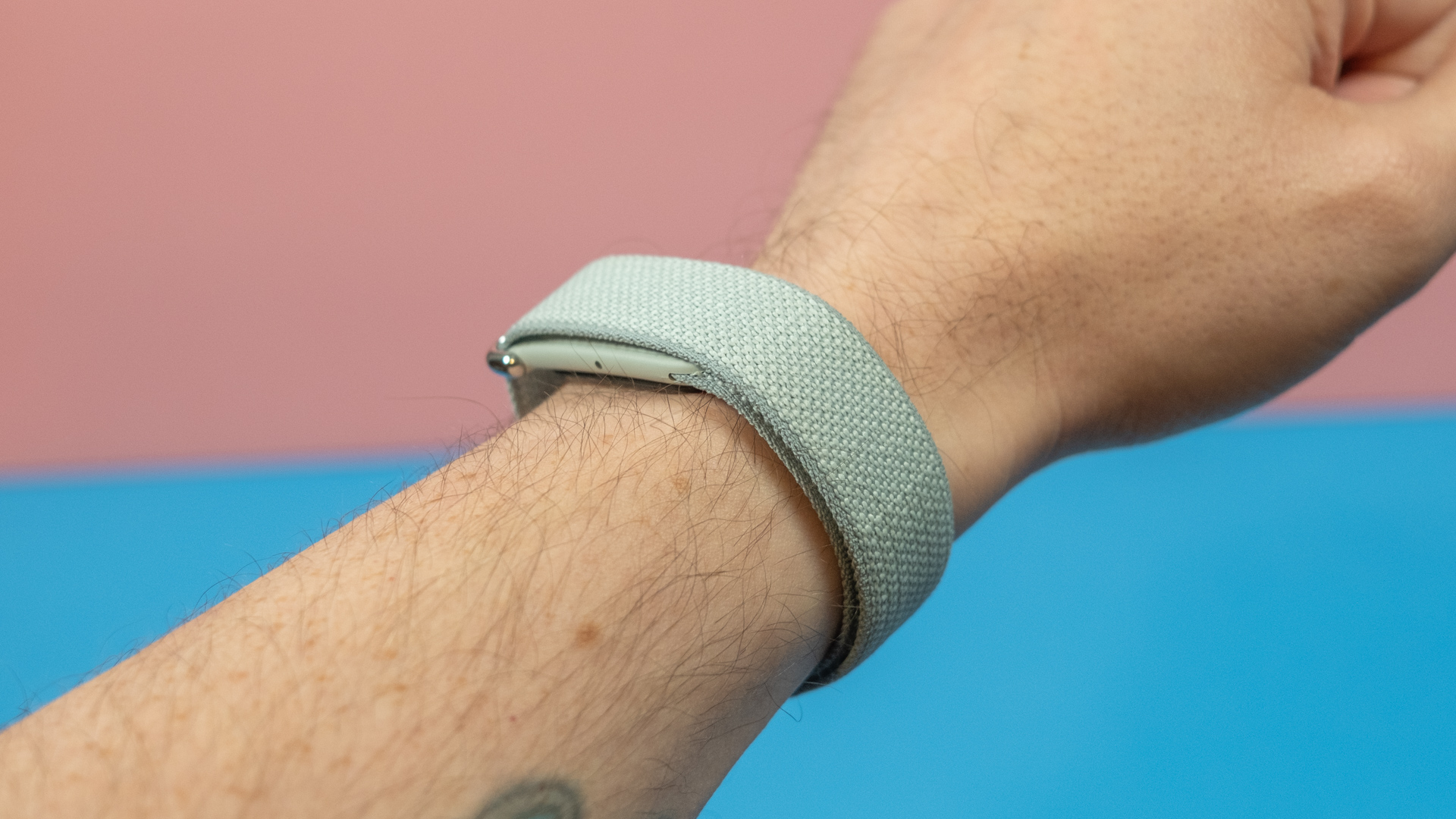
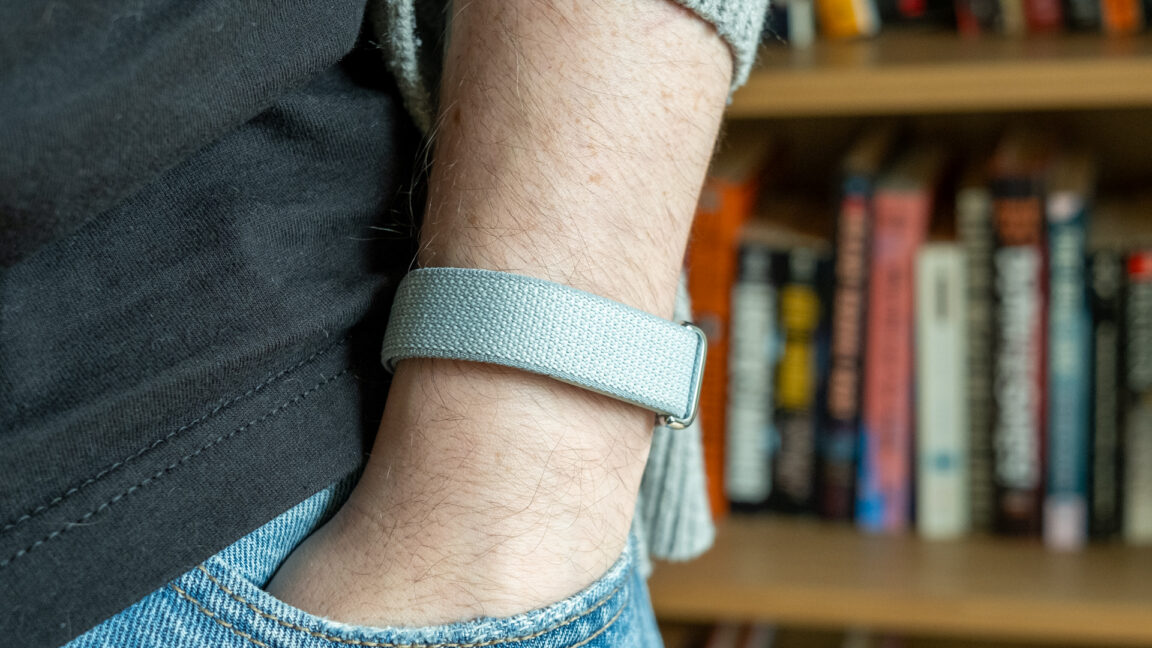
The stock Performance Band is simple, consisting of a smooth polyester yarn with small velcro pads and a metal loop. It's durable but does seem to absorb a bit of moisture. For swimming or heavy workouts, you'll probably want the silicone active band. This one hides the Air puck a bit more effectively, and it looks good in a sporty way.

Read full article

Comments

© Ryan Whitwam

  •  

Google, attraverso la sussidiaria biotech Verily e l'iniziativa "Debug Proj…

Google, attraverso la sussidiaria biotech Verily e l'iniziativa "Debug Project", ha richiesto all'EPA l'autorizzazione sperimentale per liberare fino a 32 milioni di zanzare maschio sterilizzate tramite il batterio Wolbachia in California e Florida nell'arco di due anni. Il piano punta ad azzerare le popolazioni della specie invasiva Aedes aegypti, responsabile di virus letali, sfruttando la tecnica dell'insetto sterile automatizzata da intelligenze artificiali e robotica di allevamento.
  •  

Un vrai cauchemar volant : des chercheurs ont découvert un « dragon » préhistorique avec 4 ailes qui terrorisait les premiers oiseaux !

Les raptors, dinosaures à plumes du Crétacé, ne pouvaient pas voler malgré leur lien étroit avec les oiseaux. Une nouvelle étude menée sur un site fossilifère en Chine révèle toutefois que certains d’entre eux auraient été capables de planer et de chasser les premiers oiseaux.

  •  

Why Apple may be winning again

As we lean into WWDC, three strategically brilliant Apple moves have been exposed in the last couple of weeks, two of which will have immense consequences in the coming year, while one sets the scene for essential future growth.

In each case, Apple’s leadership has found counter-intuitive gambits that actually secure the company’s future. Let’s start with Vision Pro.

It came from the future

News this week is that incoming CEO John Ternus has made some tough decisions around Apple’s approach to spatial computing, terminating development of Vision Pro (even as leaked images of a black model emerge) while focusing R&D on two smart glasses projects to compete with Meta. 

The intention is to introduce XR and AR glasses priced at around $300 to $500 each. While not as richly-featured as the Vision Pro, they will be within the reach of more people and draw deeply on the huge R&D effort that went into the original Apple AR visors. Apple hopes a focus on trust and privacy will be enough to push Meta aside, helping Cupertino dominate this part of the category. If that plan succeeds, don’t be at all surprised to see plans for Vision Pro 2 return to the table, though that’s not the focus now.

Apple frequently described the Vision Pro as a product “pulled from the future,” a device for enterprise users and early adopters. For many such users, the existing product will be useful in their work for time to come. 

What’s strategically solid about this is that Apple has now defined a good future for spatial computing and is bringing components of that future to the mass market on the basis of a provable technology you can already try for yourself in any Apple Store. This is a long game, and while it will take time to play out, it’s a game the company has proved it can join.

Privacy as a standard

Apple has apparently chosen to use Nvidia and Google technologies to support at least some of the Apple Intelligence/Siri improvements to be announced at WWDC next week. This seems to fly against the company’s general approach to privacy on its platforms, with the silicon, operating system and — thanks to Private Cloud Compute — the cloud all in its control.

How, you might ask, can Apple ensure privacy when using third-party infrastructure to manage some AI transactions? How can it do so without damaging its trusted brand?

One direction that makes sense is to consider that Apple and its partners have reached consensus on what privacy should be and how it should be delivered. That’s a very important consensus, as it suggests Apple is building an approach that makes privacy an attestable standard.

The company has been pushing governments for years to agree to such standards, but all it seems to have had in return are continued government attempts to erode personal privacy. That’s particularly evident in the UK government’s egregious move to undermine encryption to the detriment of all. (The UK isn’t really alone in preferring surveillance above liberty.)

Android developer Google has had the same experience, and while its approach to privacy differs from Apple, both companies understand the need for encryption. As such, any form of consensus on some form of privacy standards is welcome — and while I’d very much prefer an enforceable, verifiable approach, some industry agreement has to be better than nothing at all. 

While I don’t believe Apple’s approach to privacy in the new breed Siri/Apple Intelligence will be introduced in this way at WWDC, it will be interesting to see what does emerge from the new tech triptych (Apple, Google, Nvidia) in the coming months. Certainly, all three have a great interest in guarding encryption against Quantum attacks for which hidden backdoors would be easy pickings.

Winning the PC War

Apple has won the PC war.

That last point needs explanation: Apple’s entry-level MacBook Neo also has just 8GB RAM, but it also has custom-designed Apple processors and an operating system optimized to run on the hardware. That means those Macs use memory far more efficiently than their competitors. 

So, you can pick up some mass market Windows laptops for $800 that hold just 8GB memory, or spend $699 for a MacBook Neo with double amount and that can also run Windows in VM extremely well. 

Component prices are not going to shrink back for a while, any more than further magical thinking is going to end the war in Iran. At this point in the cycle, Apple has the PC market advantage. Millions are purchasing its entry-level Mac and the vast majority of those new users will love the platform, as new users usually do. That’s going to lead to a spike in Apple services sign-ups, and prompt solid future upgrade and accessory sales cycles.

Apple accomplished this by selling a low-cost Mac at a time when competitors face existential problems maintaining their grip on the mid-range market. The longer Apple holds prices on the device, the greater the advantage it builds, while applying huge pressure on PC competitors.

Summing up the goods

With the Mac hitting its iPod moment as it achieves mass market sales, Apple finally seeing something like progress in its attempt to secure privacy in a digital age, and a strong position from which to grow in the wearables market, the company has played a fine hand. 

That’s even before it introduces us to its improved Apple Intelligence, and an era of AI access in which many everyday tasks take place token free directly on the device. Indeed, when it comes to AI, if it gets things right at WWDC, Apple appears to be making money, while AI competitors are bleeding financial oxygen as their inflated bubble heads to its inevitable demise. What about the enterprise? Take a look at this chart.

You can follow me on social media! Join me on BlueSky,  LinkedIn, Mastodon, and follow The Core.

  •  

À Rome, des lycéens ont découvert sous leur gymnase une maison de l’élite romaine vieille de 1 800 ans !

Des rumeurs qui circulaient depuis des années dans un lycée romain ont fini par attirer l’attention des archéologues. Sous le sol d’un gymnase, ils ont découvert les vestiges remarquablement conservés d’une résidence appartenant à l’élite de la Rome antique.

  •  

Rakuten sort l’artillerie lourde sur l’Apple Watch Series 11 et offre 28 % de remise

Apple baisse rarement ses prix, mais Rakuten a décidé de prendre les devants. L’Apple Watch Series 11 voit ainsi son tarif reculer de 449 € à 319,99 €, de quoi alléger la facture tout en gardant la dernière génération de montre connectée au poignet.

  •  

Un forfait sans engagement pour s’adapter aux imprévus : RED Série limitée 150 Go reste flexible toute l’année

Dans les comparatifs des meilleurs forfaits mobiles, les offres sans engagement gardent un avantage évident : elles suivent les besoins du moment. Changement de téléphone, télétravail ponctuel, voyage, budget à surveiller, logement sans Wi-Fi stable… un forfait mobile doit parfois encaisser plus...

  •  

Gemini ganha uma versão mais leve para substituir o Google Assistant nos smartphones com Android Go

Segundo a Google, o Gemini Go é uma versão mais leve do assistente inteligente, concebida para os smartphones Android com especificações mais modestas. A substituição do Google Assistant nos modelos equipados com Android Go será disponibilizada de forma faseada.

The post Gemini ganha uma versão mais leve para substituir o Google Assistant nos smartphones com Android Go appeared first on Tek Notícias.

  •  
❌