A Insta360lançou hoje o Insta360 Mic, adição intermediária à sua linha de microfones (que já inclui o Mic Air e o Mic Pro), contando com uma tela eink personalizável e armazenamento expansível via microSD.
Pensado para criadores de conteúdo que buscam recursos mais sofisticados de áudio sem investir em um modelo topo de linha, ele é ideal para vlogs do cotidiano, gravações de esportes nos fins de semana, viagens, transmissões ao vivo e conversas em grupo.
O painel eink customizável permite a inserção de logos, emojis, animais de estimação, paisagens ou elementos da identidade visual do criador.
Divulgação/Insta360
Para quem adquirir apenas o receptor, é possível utilizar o Insta360 Mic com as câmeras da fabricante (Insta360 X6, X5, Luna Ultra, Luna Pro, GO Ultra e Ace Pro 2), bem como com smartphones, tudo via Bluetooth. Outra alternativa para as gravações é o cartão microSD, que permite armazenar os áudios capturados pelo produto.
Com o cartão microSD inserido, o Mic é capaz de gravar áudios em ponto flutuante de 32 bits diretamente no transmissor e conta com um chip dedicado à supressão de ruído, baseada na NPU 1Neural processing unit, ou unidade de processamento neural. do microfone, que reduz sons ambiente com maior intensidade.
Divulgação/Insta360
O dispositivo tem dois modos de ganho automático: o Dynamic equilibra as variações de volume para manter a coesão sonora, enquanto o Auto ajuda a evitar a saturação de som. Ele conta ainda com três predefinições de timbre (Regular, Rich e Bright) para ajudar a preservar as características naturais da sonoridade captada.
Assim como o do Mic Pro, um único receptor do Mic se conecta a até quatro transmissores ao mesmo tempo, o que inclui produções com múltiplas câmeras (que podem receber o áudio de até dois receptores simultaneamente).
Divulgação/Insta360
De acordo com a fabricante, cada transmissor possui até 13 horas de bateria com uma única carga, enquanto a case de carregamento amplia essa autonomia para até 34 horas.
Preço e disponibilidade
O Insta360 Mic está disponível na loja oficial da Insta360, com a seguinte relação de valores (em dólares) para o Brasil:
Insta360 Mic (dois transmissores + um receptor): US$250;
Insta360 Mic (um transmissor + um receptor): US$140;
Um transmissor Insta360 Mic: US$80.
NOTA DE TRANSPARÊNCIA: O MacMagazine recebe uma pequena comissão sobre vendas concluídas por meio de links deste post, mas você, como consumidor, não paga nada a mais pelos produtos/serviços ao usar os nossos links de afiliado.
Notas de rodapé
1
Neural processing unit, ou unidade de processamento neural.
Intitulada “Fleetwood Mac: The Chain”, a produção será dirigida pelo cineasta Frank Marshall, cinco vezes indicado ao Oscar, e contará com “as vozes, memórias e perspectivas” de todos os membros da banda (Mick Fleetwood, John McVie, Christine McVie, Lindsey Buckingham e Stevie Nicks), segundo a Maçã.
Com roteiro de Mark Monroe, o documentário busca refletir o profundo significado do hit “The Chain”, que “personifica uma família forjada por uma paixão compartilhada”, além de ser a única música do álbum “Rumours” creditada a todos os cinco membros.
A canção captura perfeitamente o vínculo complexo, porém duradouro, no coração do Fleetwood Mac, e sua letra icônica tornou-se um poderoso símbolo do respeito e da conexão que persistiram durante a tumultuada jornada da banda rumo ao estrelato.
Espectadores podem esperar reflexões sobre o álbum, os recordes batidos pela banda e suas turnês, bem como imagens nunca antes vistas e entrevistas inéditas realizadas ao longo das últimas décadas. O documentário promete ainda explorar a “resiliência pessoal e destreza musical” dos membros e levar os assinantes do Apple TV pelos altos e baixos da banda.
O Apple TV está disponível no aplicativo Apple TV em mais de 100 países e regiões, seja em iPhones, iPads, Apple TVs, Macs, dispositivos Android, smart TVs ou online — além de estar em aparelhos como Roku, Amazon Fire TV, Chromecast com Google TV, consoles PlayStation e Xbox. O serviço custa R$34,90 por mês, com um período de teste gratuito de 7 dias. Por tempo limitado, quem comprar e ativar um novo iPhone, iPad, Apple TV ou Mac ganha 3 meses do Apple TV. Ele também faz parte do pacote de assinaturas da empresa, o Apple One.
NOTA DE TRANSPARÊNCIA: O MacMagazine recebe uma pequena comissão sobre vendas concluídas por meio de links deste post, mas você, como consumidor, não paga nada a mais pelos produtos/serviços ao usar os nossos links de afiliado.
A plan to funnel the heat given off by data centers into nearby homes has run aground in Germany. Across Europe, policymakers are weighing AI ambitions against climate objectives.
Editor’s Note: This article was originally published on Oct. 15, 2026, and has been updated to correct the location of the flights.
A NASA Dynamic Aviation A200 aircraft will conduct low-flying research flights over farmland near Amarillo, Texas, from Thursday, Oct. 22, through Monday, Nov. 9. These flights will measure gaseous and particulate emissions from animal feeding operations.
A photo of the Dynamic Aviation A200 aircraft, which will conduct low-flying research flights over farmland near Amarillo, Texas, to measure emissions in October and November 2026.
Dynamic Aviation
Agricultural emissions represent an important and understudied part of Earth’s land and atmosphere systems. The FarmFlux mission will deploy more than a dozen sensors to measure ozone, methane, ammonia, particulates, and other pollutants rising from crop lands and livestock farms and their interaction with the Earth’s atmosphere. The mission is jointly led by NASA’s Goddard Space Flight Center in Greenbelt, Maryland; Colorado State University; and Boston University.
Additional low-altitude research flights with a NASA P-3 Orion aircraft are scheduled for the March to July 2027 growing season in the Midwest and California’s Central Valley with a focus on cropland.
For more information about the FarmFlux mission, visit:
Le puits canadien utilise la température stable du sol pour rafraîchir l'air neuf d'une maison en été et le préchauffer en hiver. Ce n'est ni un chauffage ni une climatisation, mais un dispositif de ventilation qui allège le travail des équipements existants. Ses performances dépendent d'une...
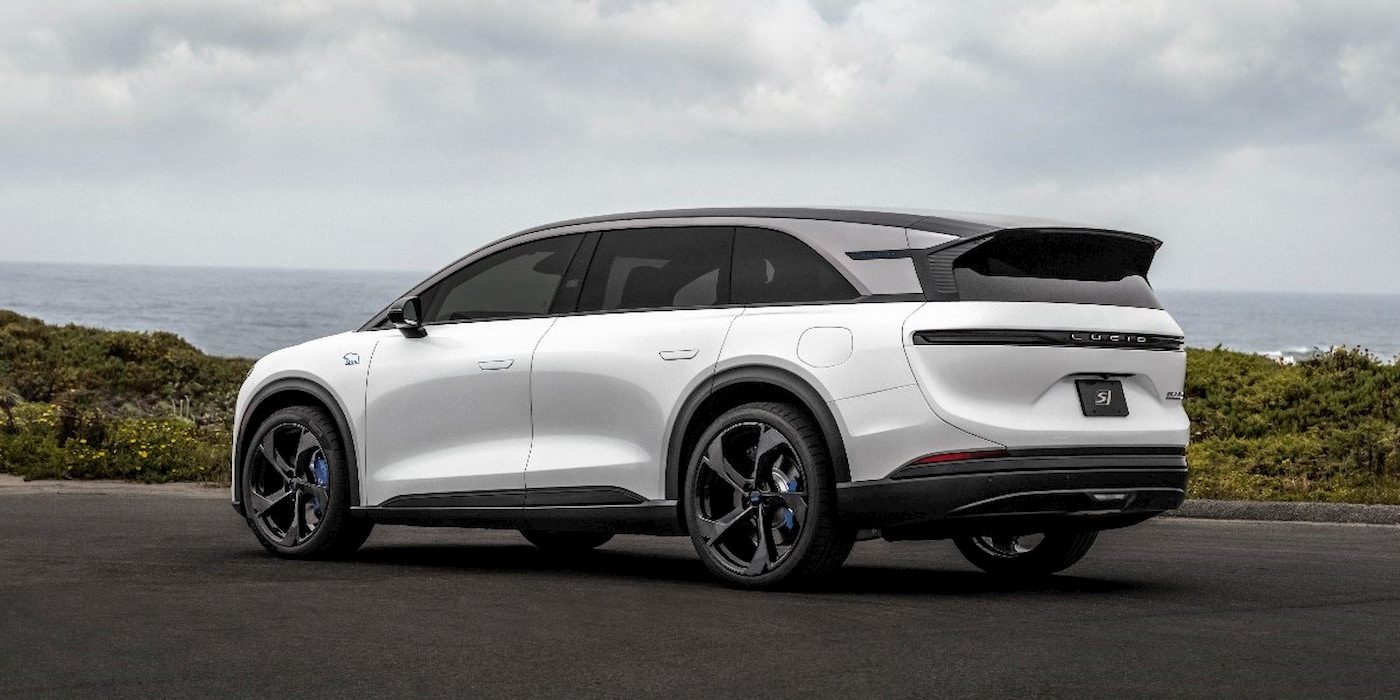
Lucid (LCID) delivered 3,806 vehicles in the third quarter, down 7% from a year ago. It built only 2,954, a 38% cut from the previous quarter and its lowest production since early 2025.
The automaker says that’s on purpose. New CEO Silvio Napoli is selling down the unsold cars Lucid piled up in the first half of the year, and Q3 is the first quarter of 2026 in which it delivered more vehicles than it built.
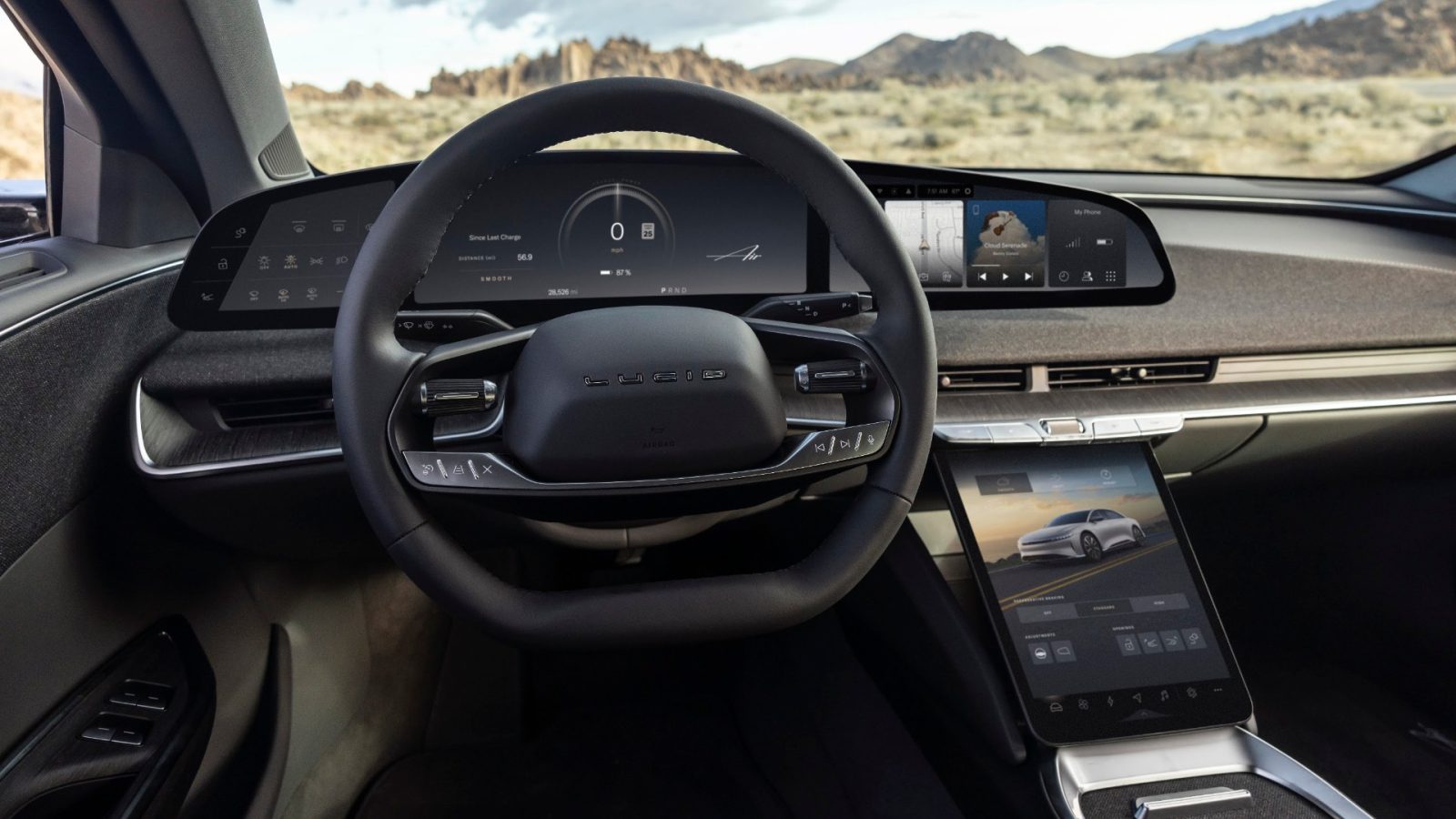
Lucid Air owners are finally getting the Gravity’s interface. Lucid started pushing Air UX 3.0 today as part of software version 2.11.0, its biggest Air software overhaul in years.
Owners of 2025 and newer Airs get it for free over the air. But if you bought a 2022, 2023, or some 2024 Air, you’ll first need a $950 infotainment processor upgrade at a Lucid service center.
Lançado em 2022 e disponível em mercados selecionados, o Self Service Repair permite que consumidores adquiram peças genuínas de dispositivos da Maçã e as ferramentas adequadas para realizar manutenções por conta própria, além de oferecer manuais de reparo.
No caso dos iPhones supracitados, agora é possível comprar itens como vidro traseiro, bateria, alto-falante inferior, alto-falante superior, câmera traseira, câmera frontal, tela, carcaça, placa lógica, microfone principal, bandeja do cartão, Taptic Engine e outros componentes.
No caso da nova geração do Mac Studio, é possível comprar peças como portas Thunderbolt e USB-C, ventoinhas, alto-falante, módulo de SSD, placa lógica e fonte de energia.
Como assinalado pelo 9to5Mac, o Mac mini tem uma lista mais enxuta de peças disponíveis do que os demais, mas ainda é possível encontrar componentes como ventoinhas, alto-falantes, placas lógicas e fontes de energia.
Ao que tudo indica, os preços dessas peças ficaram, em grande parte, inalterados em relação aos das gerações anteriores. Um módulo de câmera para os iPhones, por exemplo, segue saindo por US$250 — valor que cai para US$189,24 caso você devolva o original.
Já é possível adquirir essas peças nas lojas do Self Service Repair nos Estados Unidos, no Canadá e na Europa.
iPhone 18 Pro Max
Cores: bordô, glacial, prateado e preto Armazenamento: 256GB, 512GB, 1TB ou 2TB
NOTA DE TRANSPARÊNCIA: O MacMagazine recebe uma pequena comissão sobre vendas concluídas por meio de links deste post, mas você, como consumidor, não paga nada a mais pelos produtos/serviços ao usar os nossos links de afiliado.
O material parece confirmar um vazamento de julho, posicionando o dobrável da Apple entre os 4.288mAh do iPhone 18 Pro e os 5.567mAh do iPhone 18 Pro Max — ambos, vale notar, em suas versões sem bandeja para chip.
O dobrável da Apple tem capacidade ligeiramente superior à do Samsung Galaxy Z Fold8, que utiliza silício-carbono no bateria e conta com 4.800mAh, além de ser 36% maior do que o iPhone Air, o modelo mais fino lançado pela Apple até então (com 3.149mAh).
Embora não tenha a maior bateria entre os iPhones, o dobrável apresenta autonomia semelhante à do iPhone 18 Pro Max: pela métrica de reprodução de vídeo divulgada pela Apple, são até 44 horas na tela externa, contra até 45 horas do iPhone 18 Pro Max.
Já a tela interna do iPhone Duo tem uma autonomia de 31 horas, um pouco abaixo das 34 horas possíveis no 18 Pro.
iPhone Duo
Cores: branco-estrela ou céu noturno Armazenamento: 256GB, 512GB, 1TB ou 2TB
NOTA DE TRANSPARÊNCIA: O MacMagazine recebe uma pequena comissão sobre vendas concluídas por meio de links deste post, mas você, como consumidor, não paga nada a mais pelos produtos/serviços ao usar os nossos links de afiliado.
Un purificateur d'air domestique pour faire baisser la tension artérielle : l'idée peut sembler surprenante. Pourtant, une étude publiée en août 2025 dans le Journal of the American College of Cardiology apporte des preuves sérieuses : 3 mmHg de moins sur la pression systolique. C'est modeste,...
Here’s the 17 family data as a percentage of overall usage for Widgetsmith.
Generally they followed the usual adoption pattern, and overall did very well ending at around 20% of total usage.
With the exception of the Air really struggling to find market share. For comparison the 16 Plus ended its first year at around 1.4% (vs the Air’s 0.3%).
This works out to about 6% of my iPhone users using the iPhone Air, or about 20x more proportionally than David's more mainstream app. Honestly, the numbers are pretty striking here, with David showing a pretty even split between the iPhone 17, 17 Pro, and 17 Pro Max, slightly decreasing in that order. Meanwhile, almost half of my users are on the Pro Max, another quarter are on the Pro, and the 17 is neck and neck with the Air. Clearly, my customers lean more enthusiast and are higher end buyers on average.
The apparent unpopularity of the iPhone Air is not what caught my eye. Instead, it is the percentage of iPhone 17e users: 0.5% of Widgetsmith users, and something like 1–2% of the total iPhone 17 generation in Birchler’s.
The iPhone 17e hasn’t been on sale for as long, though.
In the entire year since the iPhone Air was announced, I’ve never seen Apple advertise it. No billboards, no commercials. It raises a chicken/egg question: did no one buy it because Apple didn’t market it, or did Apple not market it because no one wanted it?
[…]
But the shame of these low iPhone Air sales reminds me, very much, of the late great iPhone 12 and 13 Mini — also a truly great design, also terribly disappointing sales numbers.
With Apple Intelligence in iOS 27, dictation uses an on-device model to improve spelling, punctuation and capitalization. Apple says it’s available in English on “iPhone 17 Pro, iPhone 17 Pro Max, iPhone Air, or later,” and its feature availability page lists nine varieties of English. That device list is narrower than the one for Apple […]
Apple has barely finished unveiling the iPhone Duo, iPhone 18 Pro lineup, AirPods 5, and new Apple Watches, but the company already has a much larger pipeline queued up for late 2026 and the first half of 2027, according to Bloomberg News‘ Mark Gurman.
The coming products are part of what new CEO John Ternus has internally described as Apple’s most ambitious product road map yet. Many of the devices are designed to spread Siri AI more widely across the lineup and close some of the gap with rivals in artificial intelligence. As always, dates can slip and products can be delayed or canceled.
Later this yearGurman reports that Apple is preparing several updates before year-end:
• HomePod mini with Siri AI — Same familiar design as the 2020 model, but with a new chip to power the overhauled assistant.
• Apple TV with Siri AI — Another look-alike refresh, this time with a faster chip for navigation and the new Siri experience.
• Smart-home hub — A square display that can sit on a speaker base or mount on a wall. It will run a new operating system, support video calls, and use facial recognition to personalize what it shows. Apple had considered showing it at last week’s event and is now aiming as early as October, though the timeline remains fluid after repeated delays.
• Touch-screen MacBooks — The biggest MacBook Pro change since 2021, adding OLED panels and touch screens for the first time, with M5 Pro and M5 Max chips.
• Entry-level 14-inch MacBook Pro — Current design, updated with the M6 chip.
• iMac — New colors and an M6 processor.
• iPad mini — One of the line’s biggest upgrades, adding an OLED display.
The HomePod mini and Apple TV are already being tested with iOS 27. The new Macs are running macOS 27.1 internally, and the iPad mini is on iPadOS 27.1. Both of those software updates are expected late next month.
First half of 2027
The spring and early summer slate is heavier on refresh cycles than radical redesigns:
• MacBook Air — Same 13-inch and 15-inch designs, moving to the M6 chip.
• MacBook Neo — Follow-up model with an A19 Pro chip and more memory.
• Entry-level iPad — Faster chip so the cheaper tablet can run Apple Intelligence and Siri AI.
• iPad Pro — Chip upgrade plus vapor-chamber cooling similar to the iPhone 18 Pro.
• iPad Air — First OLED screens in that line, plus a new chip.
• iPhone 18 — Largely an A20 chip upgrade, with the notable change that the standard model is shifting from fall to spring.
• iPhone 18e — Another chip-focused update; Apple will need to make clear how it differs from the regular iPhone 18.
• iPhone Air 2 — More substantial: a 2-nanometer A20 Pro chip, better battery life, and a second rear camera for ultrawide shots.
• Apple Pencils — New Pencil Pro and USB-C models timed with the iPads; the iPhone Duo will support the stylus as well.
Looking further ahead
The second half of 2027 is expected to get more ambitious still, Gurman writes, with M7 updates to MacBooks, smart glasses, camera-equipped AirPods, a home security system, a redesigned Apple Watch, Twentieth Anniversary iPhones, and a second-generation foldable iPhone Duo.
MacDailyNews Take: Taken together, the road map suggests Apple is trying to do two things at once: push Siri AI onto more affordable and living-room devices, and finally refresh categories that have languished for years. Whether October brings a full event or quieter waves of launches, the next 12 months look unusually crowded with product launces!
Please help support MacDailyNews — and enjoy subscriber-only articles, comments, chat, and more — by subscribing to our Substack: macdailynews.substack.com. Thank you!
Chaleur, pollution, incendies, pollens… Les conséquences sanitaires du changement climatique sont particulièrement marquées dans les villes. Un vaste rapport européen révèle une aggravation des risques, mais aussi des réponses encore très inégales. En France, certaines communes affichent des...
There is something wrong with the tractor. The water-in-fuel sensor, a small device embedded in the John Deere machine that monitors the integrity of its diesel engine, is disconnected. And I’ve got to fix it.
I’m not a mechanic or a farmer. I’m poking at a laptop at John Deere’s corporate office in Santa Clara, California. There’s a cable connecting the computer to a 5130ML tractor sitting on the grass nearby. A bright red notification sits on the screen, telling me something is wrong. I type in a question and the software pulls up instructions and a few images from the user manual that matches the serial number of the machine.
Apple finally shipped a foldable phone, and the most interesting thing about it is not the hinge. It is what happens when you stop treating the iPhone Duo like a book and start treating it like a laptop.
Bend the device partway, rest the bottom half on a table, and iOS 27 splits the 7.6-inch inner display into two jobs. The top half becomes a landscape screen for the app, document, or video you are actually using. The bottom half turns into a touch keyboard and control deck. That is the mode that makes the $1,999 iPhone Duo feel less like a foldable smrtphone and more like a pocket computer.
Apple has spent years insisting that foldables should not feel like two phones glued together. The Duo is its answer: a passport-shaped handset with a 5.4-inch outer display that opens into a 7.6-inch inner panel, both sharing the same 1:1.4 aspect ratio so content does not warp when you unfold it. The software is the real product. iOS 27 watches the hinge, not just the open/closed state. Content slides away from the crease. Speakers retune as the halves move. And the keyboard follows the posture of your hands.
The laptop pose is the feature people will actually use
Apple and reviewers keep circling the same demo. Set the Duo down half-open, like a tiny clamshell. Video, Mail, Notes, or Safari stay on the upper pane. Playback controls and a full or split on-screen keyboard occupy the lower pane. Slightly more fold and the keyboard splits left and right, so thumbs can type while you hold the device like a book. No settings menu. The crease becomes the dividing line.
That is why the Duo suddenly looks like an argument for a larger sibling. A 7.6-inch inner screen is close to an iPad mini, which is enough for email, messages, and a movie on a tray table. It is not enough for a spreadsheet, a long draft, or two serious windows without feeling cramped. Once you have tasted laptop posture on a phone, a 12- or 13-inch foldable iPad that does the same thing stops sounding like a rumor and starts sounding like the obvious next product.
Apple already designed the Duo to feel “as natural and intuitive as iPad.” Split View finally arrives on iPhone. You can park two apps side by side, or two windows of the same app. Saved app pairs come back later. Controls migrate to the vertical edge so the content column stays tall. StandBy works without a charger: tent the phone on a nightstand and it becomes a clock, photo frame, or widget slab. Those are iPad ideas squeezed into a pocket. They work. They also expose the size ceiling.
Why a foldable iPad now feels inevitable
A foldable iPad has been in the rumor mill for years: first as a ~20-inch board that folds to something closer to a 13-inch slate, later as a delayed 2028 or 2029 project after cost and weight problems. The Duo changes the brief. Apple no longer has to invent hinge software from scratch. It already has angle-aware layouts, a crease-aware keyboard, tent mode, table-top sensors in each half, and developer APIs for reserved fold regions. Scaling that system to a tablet is relatively easy.
Imagine the same half-fold grammar on a larger canvas. Top half: a proper landscape document, timeline, or browser. Bottom half: a real-size software keyboard, or a trackpad zone, or a palette of tools. Apple Pencil on the Duo already hints at the tablet version of that idea. On a phone, Pencil is a nice extra. On a foldable iPad, it is the point: sketch on the upper pane, keep reference material or a keyboard on the lower one, then flatten the device into a single drawing board.
The Duo also proves Apple will move iOS elements when the hardware demands it. Dock and navigation sit on the side. The status bar collapses into a corner puck. Dynamic Island runs vertically. Third-party apps that are not ready get a safe area; apps built for iOS 27.1 can use the full inner panel. That same discipline would make a foldable iPad less of a novelty and more of a second computer.
The iPhone Duo makes an iPad Duo feel necessary rather than greedy. The phone version is a proof of concept. It shows that Apple can make a hinge feel like an input device: slightly open for thumb typing, tented for widgets, laptop-angled for media and mail. The missing piece is area. Give that same software a screen that can hold a full page of text above a usable keyboard, and the “pocket laptop” pitch stops being a clever demo and becomes a category.
Apple did not announce an iPad Duo this week. It did something more useful. It shipped the interaction model first, on the device people actually carry every day. After a few weeks of using the Duo half-folded on a café table, a lot of people will not want a bigger phone. They will want the same trick, at iPad scale.
MacDailyNews Take: An iPad Duo that folds into a laptop pose would steal the exact jobs for which a lot of people already use a MacBook Neo or even MacBook Air: email, docs, browsing, video, light travel work. The iPhone Duo already shows the posture: screen on top, keyboard/controls below. Scale that to iPad size and the “why did I bring a laptop?” question gets louder.
An iPad Duo would not wipe out MacBooks, for the same reasons the iPad Pro never did:
• Software ceiling. iPadOS is still app-and-touch first. Serious windowing, files, terminals, IDEs, and pro apps still live more comfortably on macOS.
• Input. A software keyboard on glass is fine in a pinch. All-day typing still favors a real keyboard and trackpad. People who need that will keep buying Airs and Pros.
• Apple’s own mix. Apple has long accepted overlap: iPad Pro vs. MacBook Air, iPhone vs. iPad mini. A foldable tablet would shift the mix, not collapse it. Some MacBook Neo and Air buyers become Duo buyers; some Duo buyers still want a Mac at the desk or on the go.
Net effect of an iPad Duo: partial cannibalization of entry-level MacBook sales, plus some new demand from people who would never haul a laptop, but would fold a tablet. The Macs most at risk would be mostly MacBook Neo with some MacBook Air.
Please help support MacDailyNews — and enjoy subscriber-only articles, comments, chat, and more — by subscribing to our Substack: macdailynews.substack.com. Thank you!
Apple recently launched its first foldable phone, and the high price is raising eyebrows. At $1,999, the new iPhone Duo carries a price tag that easily beats out a brand-new MacBook Air. Buyers are naturally asking how a phone that fits in a pocket can cost twice as much as a laptop. The answer comes […]

 Login











 Credit: