 Login

Uber rival inDrive scales beyond ride-hailing to capture more consumer spending
First piloted in July 2025, inDrive's ad business has served more than 2 billion impressions and attracted over 2,000 paying advertisers a month.

A spacecraft propelled by a subluminal warp drive would cause an extremely bright glow if it passed through Earth’s atmosphere, according to findings detailed in a new study.
Physicist Shaun Fell from the international think tank Applied Physics (AP) and Harvard astrophysicist Avi Loeb detail their findings in a new paper, which also suggests that extremely small “warp bubbles” could be used as weapons, and that Einstein’s theory of general relativity permits warp bubbles with micrometer-sized surfaces housing very large craft, similar to technologies that appear in science fiction.
The authors emphasize that their new study, which appeared on the preprint server arXiv and has not yet been peer-reviewed, does not prove the existence of aliens, extraterrestrial technology, or warp drives. However, they suggested their analysis offers a viable scientific foundation for many UAP reports of bright lights and “orbs” discussed in recent Pentagon file drops, and is supported by a mathematically valid means of interstellar travel that interplanetary visitors—if they exist—might use to reach Earth.
“Warp drives are a fantastic way to travel through the universe, and it makes sense to my human brain that aliens would find them advantageous too,” Dr. Fell told The Debrief.
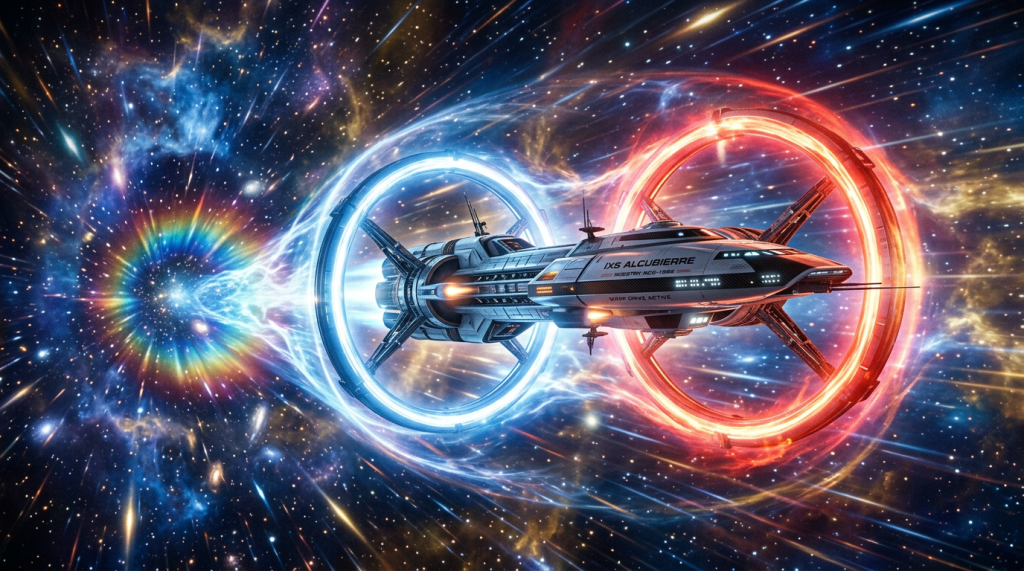
Science fiction authors have proposed ways to travel faster than the speed of light for decades. In the 1960’s, science fiction TV trendsetter Star Trek brought the concept to the wider public with the U.S.S. Enterprise’s infamous Warp Drive. Although a convenient storytelling tool for propelling the show’s heroes across the cosmos at human time scales, the scientific viability of warp drive travel didn’t exist when creator Gene Roddenberry’s vision first premiered.
In 1994, Mexican mathematician Miguel Alcubierre moved the discussion from science fiction to science fact when he proposed the first mathematically viable warp drive metric. Since then, several other scientists have weighed in, including noted NASA warp drive pioneer Harold G. Sonny White. Still, even the most elegant mathematical solutions for traveling faster than the speed of light have hit roadblocks that prevent their realization, including the use of exotic forms of matter that exist only in theory.
In an email to The Debrief, Dr. Fell explained that superluminal warp drives (meaning faster than light) “have a whole host of fundamental difficulties that have not been solved yet, not even including negative energies that have historically plagued previous solutions.”
The Debrief previously covered the Applied Physics team’s attempt to solve the problem with a physical warp drive capable of approaching the speed of light but not exceeding it. Although that metric has conquered outstanding physics hurdles that have hampered previous models, the AP team said their new paper used a subluminal version of the original Alcubierre metric.
“The Alcubierre metric is used as a proxy for any zero ADM mass solution, meaning any warp drive solution that does not exhibit typical gravitational effects,” Dr. Fell explained.
In a recent post on Medium, Dr. Loeb said his previous studies confirmed that the distortion of spacetime proposed in the warp drive metric “must perturb the air” when passing through Earth’s atmosphere. The Harvard scientists also noted that those studies showed that such an atmospheric perturbation caused by a relativistic warp drive “would inevitably generate a bright fireball by shocking the air around it.”
In a previous article, AP physicists told The Debrief that a well-known 2006 UAP sighting in Chicago that included a hole “punched in the clouds” also fits with predictions of warp drive interactions with Earth’s atmosphere.
To follow up on his latest proposal, Loeb and Fell conducted detailed hydrodynamical simulations of the airflow around warp bubbles encasing theoretical spacecraft. In warp drive models, a warp bubble encases the craft in an area of stable space, keeping it completely still as the drive propels toward its destination by warping space itself. This effect is what gives the drive its name.
After running the numbers, Loeb and Fell determined that the heated air around the warp bubble would reach 220 billion degrees Kelvin if the spacecraft was traveling fast enough. Critically, the team calculated the effects of such craft passing through the atmosphere “at a fraction of the speed of light.”
“Any warp bubble traveling faster than 5% the speed of light through the atmosphere will generate optical signatures qualitatively the same as those presented in our paper,” Fell told The Debrief, before adding “slower than that, and the optical signature has a different physical origin.”
Loeb said the calculation suggests that an “aircraft-scale” spacetime (warp) bubble moving at the right velocities would produce luminosities exceeding one terawatt. For comparison, the AP scientist noted that this amount of energy is roughly one-tenth of global electric power consumption.
When describing how this high-energy atmospheric interaction would appear to a ground observer, Loeb said, “It should be easy to detect such a brilliant fireball at great distances.”
For example, Loeb explained that any observer would witness two distinct signals suggesting that a warp drive-propelled craft has entered the atmosphere. The first would be a direct, high-energy burst of radiation emanating from the shock zone. Next, a wave of extremely energetic photons would get absorbed by the thicker lower atmosphere. Loeb said this “extreme” energy ends up “reradiated” as light in the visible ultraviolet (UV) spectrum.
“This will manifest itself as a bright atmospheric glow directly below the shock zone,” the Harvard scientist explained.
The study authors also noted that some fireballs would be larger than others. In the right scenario, Loeb suggested that the atmospheric glow caused by a warp drive could “completely dominate the surface solar flux by orders of magnitude.” This means it would be the brightest object in the sky even during daytime.
Conversely, the Applied Physics team noted that warp drives moving much more slowly through the atmosphere, including just above the speed of sound, would not be nearly as bright as those moving above 5% the speed of light. Loeb said warp drive craft at rest or moving well below relativistic speeds “would not generate such extreme luminosities.”
Another intriguing aspect of the study involves the possibility of extremely small warp bubbles interacting with the atmosphere to generate visible light signatures. For example, Loeb suggested that “a micrometer-scale bubble moving at a few times the sound speed at sea-level would result in a modest luminosity of order 1 kilowatt.”
“This slower velocity regime is something we are currently studying,” Fell told The Debrief.
When asked what practical benefits a micrometer-sized warp bubble seemingly too small to accommodate a full-sized spacecraft might offer, Fell joked that a discussion with “my alien buddies” resulted in some unexpected solutions. This included one potentially ominous possibility and another more fantastical explanation that sounds like something right out of the world of Harry Potter.
The first harrowing solution Fell and his hypothetical “otherworldly” colleagues offered involved using tiny warp drive-enabled craft as weapons. For example, the AP physicist explained, even a microscopic warp bubble would exhibit “tremendous gravitational tidal forces.” Based on their models, Fell told The Debrief that such a micrometer-sized warp bubble “would obliterate almost any material in its path, especially if it’s traveling exceedingly fast.”
“This is a very difficult topic to analyze critically because we don’t really know if superluminal warp travel is allowed by the laws of physics,” Fell also told The Debrief. “Would it create observable signatures? Almost certainly. Would any human still be alive to record the measurement? Probably not.”
Since any plan that would likely annihilate the Earth “wouldn’t be very practical for the aliens,” Fell offered The Debrief an even more fantastical explanation for why our spacefaring visitors may want to engage a micrometer-sized warp bubble, which scientists call the Van Den Broeck warp drive.
As Fell explained, general relativity allows the surface area of a theoretical warp bubble to be microscopically small, “while the interior volume may be as large as you want.”
“I always think of the Weasley tent at the Quidditch World Cup in the 4th Harry Potter book (Harry Potter and the Goblet of Fire),” the AP physicist told The Debrief. “The outside looks like a normal camping tent, but the inside is this great big room.”
Surprisingly, such fantasy world solutions to practical scientific problems are theoretically achievable within general relativity. As a result, Fell added, if the models were correct and such a warp bubble was viable, relativity as we understand it “provides an avenue for microscopic warp bubbles that can house great big ships or other cargo.”
“The applications are really endless for that,” he added.
When discussing the connection between their findings and the accounts of Unidentified Aerial Phenomena (UAP) chronicled in recent Pentagon document releases, Loeb pointed to a series of ‘puzzling’ orbs “mentioned explicitly in a reliable report dated June 5, 2026.”
According to Loeb, that report, signed by Dr. Jon Kosloski, director of the All-Domain Anomaly Resolution Office (AARO) in the Pentagon, describes “an orange ‘mother’ orb launching smaller red orbs.” Loeb’s retelling of Dr. Kosloski’s account also notes that “40% of the phenomena during the reported event lack a reasonable explanation and remain unresolved.”
Although some UAP reports describe physical craft, researchers have often noted that the largest category involves glowing light or orbs. Although Loeb did not suggest all or any sightings were alien craft, the study’s author noted that warp-drive physics supports the idea that some of these reports could be explained by advanced propulsion technology.
“Could some of the reported orbs be slow warp bubbles?” Loeb asked. “There is one way to find out: by studying them experimentally.”
Dr. Fell agreed, telling The Debrief that “the important thing is that purported UAP observations can be critically examined through the laws of physics, as we know them today.”
“If there really are intelligent beings visiting our Earth, how did they get here?” he asked. “What was their mode of transport? If such a spacefaring vehicle entered our atmosphere, what would it look like?”
While neither author suggested that their mathematical solution settles the debate about aliens or alien craft visiting Earth, Fell said their paper “places observational constraints on these questions and narrows the possibilities.”
AP founder Gianni Martire similarly told The Debrief that his team’s paper does not prove warp drive or alien life. However, the enthusiastic scientist did note that the mathematics makes it possible that science “may simply be catching up to UFO lore that has existed for hundreds of years.”
“It’s possible E.T has been flashing his headlights at us along, not by choice,” Martire said.
The study “Radiative Signatures from Warp Drives Traveling Through the Earth’s Atmosphere” is available on the preprint server, arXiv.
Christopher Plain is a Science Fiction and Fantasy novelist and has spent the last six years as Associate News Editor and Head Science Writer at The Debrief. Follow and connect with him on X, learn about his books at plainfiction.com, or email him at christopher@thedebrief.org.
One of our Macs kept filling up its SSD even though there isn’t supposed to be anything more stored on it. Photos is set to optimize its storage, and Messages is set to only keep messages for a year. It should be pretty much in a steady state, but we kept getting alerts from Mail that it couldn’t launch because there wasn’t enough free space. It’s an M4 MacBook Air used mostly for Web stuff, but somehow it felt as slow as the Intel one it had replaced.
I deleted unused apps and offloaded photos. Restarting sometimes helped, so I thought maybe it was an issue with Time Machine snapshots not being reclaimed promptly, which has been an issue before. But what data would even be changing so much to create large snapshots?
The problem kept getting worse, so I broke out OmniDiskSweeper. It didn’t find anything unusual, except it showed that the totals for the main folders added up to about 90 GB less than was reportedly used on SSD. Disk Utility showed that there were no snapshots taking up space. There must be real files but not ones that the app could see.
I relaunched OmniDiskSweeper using sudo, and it found a huge amount of stuff hidden in the root account: /private/var/root.
I had thought that wasn’t really used except when running Terminal from macOS Recovery. But apparently various daemons store all kinds of stuff there now. The /private/var/root/Library/Logs folder alone was using 74 GB, and there were also several multi-GB cache folders.
The logs were almost entirely from RTCReporting, and I’m not the only one to run into this.
I deleted the files using OmniDiskSweeper, but that didn’t help. It turns out that by default it moves files to the trash, and I guess since it was running under sudo this meant the invisible trash folder for the root account. It’s better to hold down the Option key to Delete Immediately.
After deleting the files and restarting the Mac, the free space looked right at first but then steadily dropped. Pretty soon there were again 5 GB of RTCReporting logs with the Mac just sitting there. I started using sudo du -h -d 2 /private/var/root/ to track how the sizes were changing. Within a day it was back up to 27 GB.
Activity Monitor showed that rtcreportingd and fileproviderd were each using almost 100% CPU constantly. I immediately suspected Dropbox because it had been working poorly on this Mac for a year or so. It wouldn’t keep files offline and constantly seemed to be syncing even when files weren’t changing. Sure enough, turning off Dropbox stopped the CPU use and the ballooning log files.
This was our last Mac still using Dropbox, so it seemed time to migrate it to iCloud Drive. The syncing problems ended up not being limited to keeping files offline. It couldn’t even reliably download most of them from the cloud to move them out of the Dropbox folder, instead reporting I/O errors for most files. And the files that I did move to the Documents folder never synced that deletion up to the cloud. I ended up just downloading the whole folder from the Web interface. iCloud Drive uploaded everything quickly and then settled into a state of no CPU use.
Previously:
Microsoft DELETED my account AND OneDrive!!?? After ACKNOWLEDGING that I’m the owner of the account and that it was compromised???
25 fucking years of data, thousands of euros spended on games?? My son’s baby pictures? GONE!
This is EXACTLY why cloud providers should be building (and might need to FORCED to, via consumer protection regulation) access for other online backup services into their solutions INHERENTLY. Apple… are you paying attention?
Honestly they could recover it, they choose not to because they dont give a shit about their user base.
We’re sorry this happened, it’s not the experience we want anyone to have when their account is compromised. We have been working to restore access to your purchases and reached out with the next steps.
Running to the press works.
Previously:
Se você quer usar o serviço Synology no sistema do pinguim, conheça e veja como instalar o cliente Synology Drive no Linux via Flatpak.
Leia o restante do texto "Como instalar o cliente Synology Drive no Linux via Flatpak"
O post Como instalar o cliente Synology Drive no Linux via Flatpak apareceu primeiro em Blog do Edivaldo - Informações e Notícias sobre Linux.
The Varta crisis has entered another severe phase after the German battery manufacturer lost the customer responsible for nearly all production at its specialized factory in Nördlingen.
Varta has not publicly identified that customer, but reports from German media and industry sources point to Apple. The iPhone maker is reportedly moving battery orders for a future AirPods generation to a lower-cost supplier in China.
The decision will lead Varta to stop producing rechargeable button cells in Nördlingen during fall 2026. Approximately 350 jobs will be eliminated across the factory and the company headquarters in nearby Ellwangen.
Describing the development as a complete corporate collapse would go too far. Varta continues operating other battery businesses and recently completed an extensive financial restructuring backed by Porsche. The loss of Apple, however, has destroyed the economic foundation of a production site created around one highly influential customer.
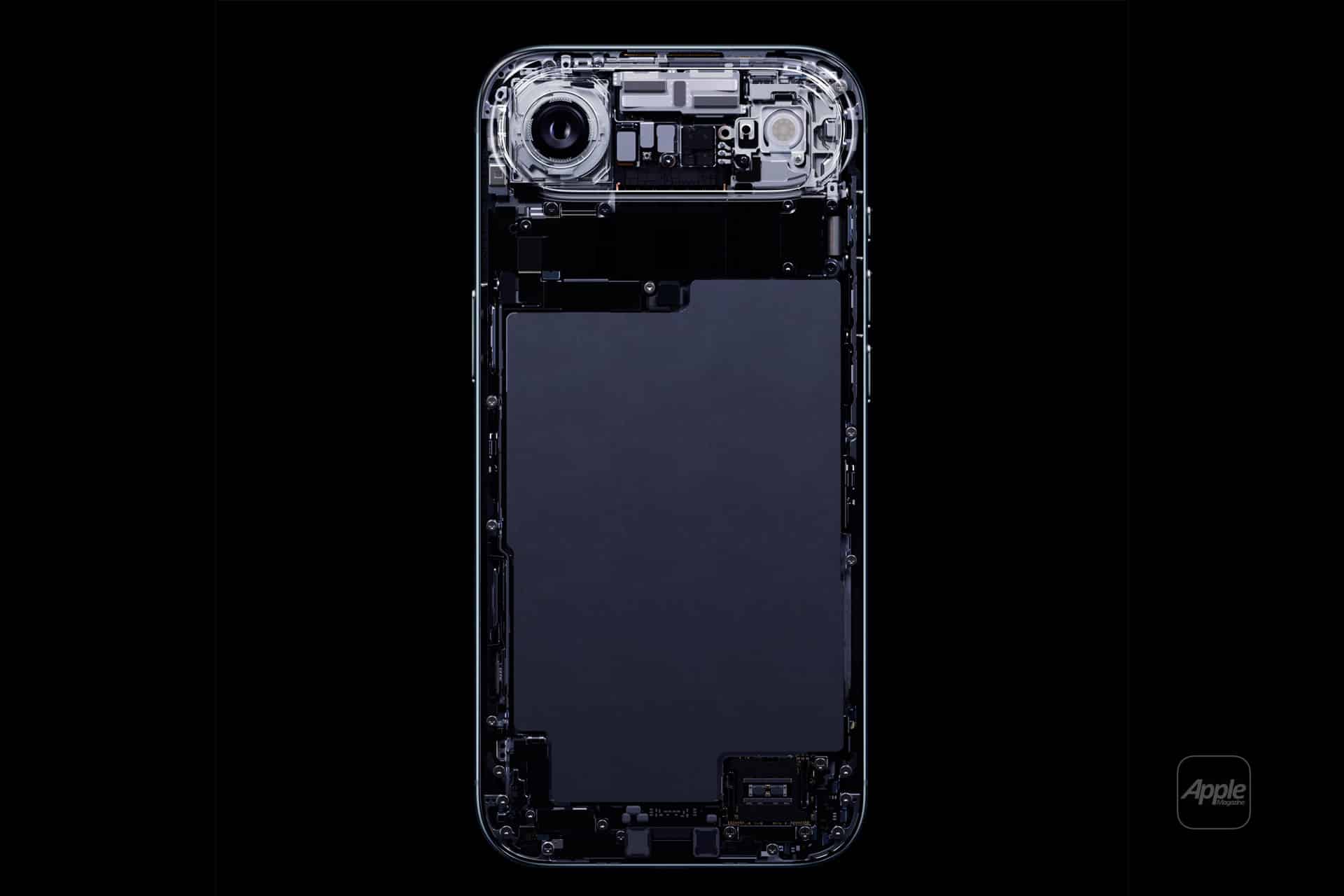
The Varta crisis illustrates how a large technology customer can transform a supplier and then leave it with capacity that cannot easily be reassigned.
Varta became an important producer of CoinPower lithium-ion cells, small rechargeable batteries designed for wireless earbuds and other compact devices. Teardowns of AirPods Pro models identified Varta cells inside the earbuds, although Apple does not publicly discuss most component suppliers by product.
Demand from premium wireless headphones helped Varta expand rapidly. In 2020, its Microbatteries and Solutions division generated approximately €508 million in revenue, representing growth of 49% from the previous year.
The company invested heavily in production as wireless earbuds became a mass-market category. Apple demand provided the volume needed to justify specialized lines, equipment and hiring in Germany.
That dependence became dangerous when AirPods production weakened and Apple began adding other battery suppliers. A factory developed for unusually large orders could not operate efficiently once those orders declined.
The customer now leaving Nördlingen had previously accounted for nearly the entire capacity of the site. Varta says it has gained other customers, but their combined demand is not sufficient to keep the specialized factory running.
The plant is therefore closing not because rechargeable button cells have disappeared, but because replacing one customer of Apple scale requires far more than several smaller contracts.
German reports indicate that price was the decisive factor behind the supplier change.
Varta battery quality was reportedly equal to or better than the competing product. The German manufacturer could not, however, match the cost offered for the next generation of cells from China.
Battery production in Germany faces higher labor, energy and operating expenses than many Asian manufacturing centers. Chinese suppliers also benefit from extensive domestic electronics supply chains, access to materials and production volumes spread across numerous customers.
Apple has enormous leverage when negotiating component contracts. AirPods ship in sufficient quantities for a small difference in the cost of each battery to produce substantial savings across an entire product cycle.
The company regularly qualifies multiple suppliers for components when technical requirements and available capacity permit. Competition can reduce prices, protect production against interruptions and prevent one manufacturer from gaining excessive influence over the supply chain.
For Varta, that process brought the opposite effect. The supplier expanded to serve Apple and then faced declining utilization as the customer divided orders among additional manufacturers.
The latest move appears more final. Varta expects the contract to expire at the end of October, removing the volume that kept Nördlingen economically viable.
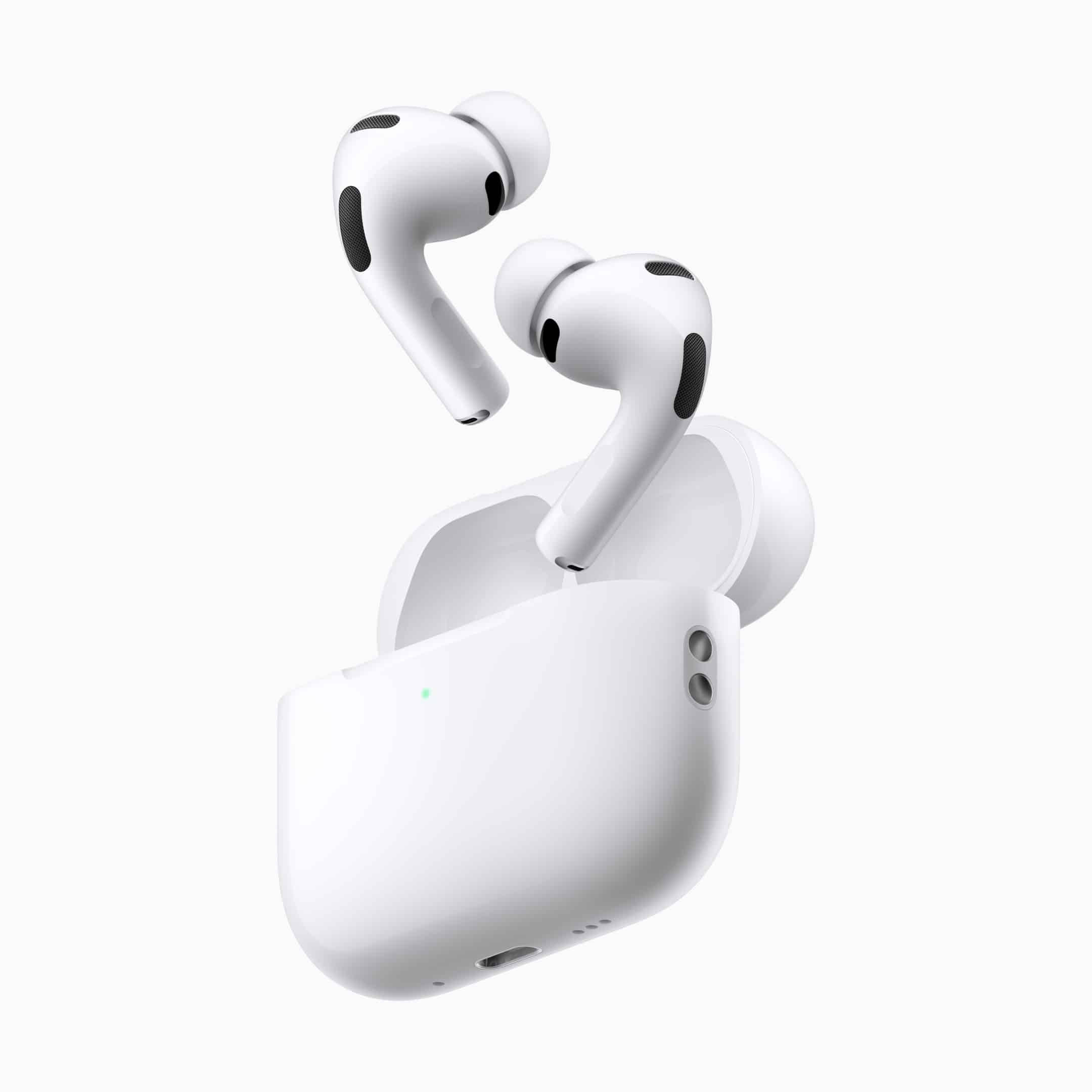
The reported decision does not mean Apple is moving its complete production network toward China.
Apple has spent several years expanding device assembly and component production in India, Vietnam and other countries. AirPods manufacturing has grown in India, while Macs, iPads and wearables are assembled across a wider group of Asian locations.
The Varta case concerns a particular component for which a Chinese supplier reportedly offered a more competitive price. It shows that diversification away from one country can coexist with cost-driven sourcing from that same country.
Apple may reduce its dependence on Chinese final assembly while continuing to purchase Chinese batteries, displays, enclosures or electronic components when suppliers provide the required scale and pricing.
That balance creates a difficult environment for European manufacturers. Political interest in domestic technology production does not guarantee that major customers will accept higher component prices.
Premium engineering can protect a contract when it produces a measurable advantage in battery capacity, safety, dimensions or lifespan. Once competing suppliers reach comparable performance, procurement decisions become increasingly sensitive to cost.
The Varta crisis suggests that manufacturing location and supplier history carried less weight than the economics of the next AirPods battery.
Apple did not create every problem affecting Varta.
The company entered the current dispute after years of debt, costly investments, volatile customer orders, supply-chain problems and weaker demand in parts of its energy-storage business. A cyberattack in early 2024 also disrupted production and delayed financial reporting.
Varta warned that its earlier restructuring plan might fail after Apple reduced AirPods production. By mid-2024, the company had reached a point where it could no longer service its debt without another intervention.
A pre-insolvency restructuring reduced financial liabilities from approximately €485 million to €200 million. Porsche and majority shareholder Michael Tojner agreed to provide new capital, while creditors supplied additional financing.
Existing shareholders lost their investment as Varta was removed from the stock market. The process preserved the operating company but demonstrated how little financial room remained for another major disruption.
Varta reported a loss of €64.5 million for 2024. Although that was an improvement from the previous year, the business remained dependent on successful restructuring and stronger performance from its surviving divisions.
The Apple contract loss therefore did not independently bring down a healthy battery group. It struck a manufacturer that had already narrowly avoided insolvency.

Porsche participation gives Varta a future in automotive batteries, but it does not rescue the Nördlingen button-cell operation.
The automaker invested in the restructuring and took control of the V4Drive business, which develops high-performance cylindrical lithium-ion cells for hybrid and performance vehicles. Porsche gains greater access to battery technology while helping retain part of that expertise in Germany.
Varta also continues producing household batteries and energy-storage systems. Those businesses serve different customers and do not depend on the machinery used for tiny CoinPower cells.
Employees affected by the Nördlingen closure may be offered positions at other locations, although Varta has not indicated how many can realistically be transferred. The company and its works council are negotiating measures for the workers whose roles will disappear.
The shutdown leaves a modern production unit without enough demand only a few years after wireless earbuds were presented as one of Varta most promising growth markets.
Its remaining automotive operation now has the security of a strategic customer with a direct ownership interest. The microbattery division learned the cost of building a factory around a customer that never made the same commitment.
The post Varta Crisis Deepens After Apple Battery Defection appeared first on AppleMagazine.

I have a Mac Studio M2 Max with 32 GB of RAM and a 1 TB SSD in front of me. While not the most powerful personal computer you can purchase today, it is among the most computationally capable ever made—a vastly capable machine. So why do I have to wait for typing to catch up with me and see a rainbow spinner on the regular?
I’ll tell you why: iCloud Drive and Spotlight. Apple lacks any transparency about how iCloud Drive works or fails. The same is true of Spotlight. These big black boxes churn away, performing a million billion operations a day, and we don’t know exactly what they do. That’s not me being conspiratorial: I honestly don’t care what’s happening under the hood—until it breaks. Without diagnostic tools, even someone like me, ostensibly an expert, can be completely at a loss and waste many hours.
I wrote “Cloudy with a Chance of Insanity: Unsticking iCloud Drive” for TidBITS back in October 2023 about a multi-month odyssey with Apple technical support in trying to dislodge unsyncable files.1 That problem has barely surfaced since—an 80K file will sometimes get stuck for a while—and I thought Apple might have really solved syncing, at least as exhibited on my Mac. I receive dramatically fewer emails about iCloud Drive than I used to, which is another data point.
But Mr. Edge Case here can always find a way to break something.2 I’ve been working on a large manuscript for my upcoming book, Flong Time, No See, a revised and expanded collection of researched articles I’ve written about printing and type history over the last several years.3 I pasted in text that was typically copied from Web pages, and wound up with over 250 footnotes.
While putting together the files for this book, Apple released its Creator Studio system, and shipped Pages 15. After having no problems, I dutifully switched over. This was months ago, and as I continued to work on this reasonably large file—weighing it at about 60,000 words now—everything seemed fine.
A few weeks ago, however, I started to experience system slowdowns. Pages was taking up 12 GB of system memory! System load went through the roof! CPU consumption was outlandish! All signs pointed to corespotlightd, a long-time enemy of performance. That daemon handles background indexing for Spotlight, and the slightest thing wrong in a file or directory, or perhaps due to mild corruption in its underlying files, turns it into a rampaging beast that eats processor cycles like I consume potato chips.4
There’s a well-known procedure for killing this beast, though another is spawned from its remains: stop the index, delete the index files, restart, and re-enable indexing. From the Terminal, use these commands. Make a backup before proceeding. Take extreme care with rm -rf, as a misstep in entering or copying can wipe out files!
 sudo mdutil -a -i off
 rm -rf ~/Library/Metadata/CoreSpotlight
You can use Restart from the Apple Menu while holding down the Option key (to avoid being asked), or you can take a shortcut from Terminal, assuming you have ensured all files are saved:
sudo reboot
After your Mac restarts, go back to the Terminal and re-enable indexing:
sudo mdutil -a -i on
For many (perhaps most) people, this solves the problem. For me, it just delayed it. With some isolation using System Settings: Spotlight: Search Privacy, I added specific folders, such as mail archives, since that seemed like it might be part of the problem.

One piece of advice I found suggested that if I thought Pages was the problem, I should exclude the iCloud Drive path containing Pages files. Fine! I clicked the plus icon in Search Privacy, pressed Command-Shift-G to bring up the path dialog, entered ~/Library/Mobile Documents/com~apple~Pages/, and clicked Choose. This seemed to work for a while, then nothing availed.
Finally, after analyzing logs and caches, the culprit was clear. It was not that large a Pages file: every time I saved, Spotlight’s worker bee was performing excessive re-indexing that consumed gigabytes and one or more processor cores. Moving the file to a local directory (in my Documents folder) while editing eliminated the problem. It also freed up space, as the temporary Spotlight indexes and Time Machine snapshots had become absurdly large.

What could Apple have done to help here? This is where I would hope machine learning, coupled with some interactive code- and system-expertise bots, could help:
In the case I describe above, an Apple-created daemon was rampaging out of control due to a single identifiable file!—cascading into other problems. It should be solvable by Apple. The fact that we have more power under the hood by orders of magnitude in the past, coupled with neural cores in the CPU packages, just makes this even more embarrassing. Solve Siri, Apple, yes, but real transparency and troubleshooting in macOS would also make a big difference.
[Got a question for the column? You can email glenn@sixcolors.com or use /glenn in our subscriber-only Discord community.]



Procura guardar os seus ficheiros fora do alcance das Big Tech americanas? O pCloud é uma alternativa suíça ao Google Drive com uma proposta difícil de ignorar, o de pagar uma vez e ter garantido armazenamento para sempre.
The post pCloud: O armazenamento na nuvem suíço que desafia o domínio das Big Tech americanas appeared first on Tek Notícias.

O Windows 11 tem ferramentas nativas para fazer cópias de segurança automáticas dos seus ficheiros, e pode configurá-las demora menos de cinco minutos. Mostramos como fazê-lo passo a passo, com e sem disco externo.
The post Como ativar o backup automático no Windows 11 e nunca mais perder um ficheiro importante appeared first on Tek Notícias.

