Apple’s latest financial results drive a discussion about record iPhone, Mac, Services, subscription, and R&D numbers, along with the market’s negative reaction and stock volatility. The MacVoices Live! panel also examines leadership changes under new CEO John Ternus, including the return of a retired engineering executive, before debating Apple’s planned clipboard sharing between iPhones and Windows PCs, its implications for users, and whether it introduces meaningful security concerns.
Apple’s plans for advertising in Apple Maps spark a lively discussion about whether limiting certain categories of ads creates a better user experience or puts Apple at a disadvantage against Google Maps. The MacVoices Live! panel examines the balance between relevance, discoverability, and business incentives before shifting to Apple’s expanding Sports app and the company’s […]
The MacVoices Live! panel starts with a discussion about Apple'’s new AI-powered creative tools, including possible benefits for Final Cut users and the subscription value question. Chuck Joiner, David Ginsburg, Brian Flanigan-Arthurs, Ben Roethig, Eric Bolden, Marty Jencius, Jeff Gamet, Norbert Frassa, Jim Rea, and Web Bixby also examine Apple’s Supreme Court appeal in the Epic case, then digs into urgent security patches, AI-assisted vulnerability discovery, automatic updates, enterprise risk, and how users should rethink update habits.
The MacVoices Live! panel discusses Apple’s updated App Store review guidelines, the challenge of filtering low-quality or AI-generated apps, and whether trusted developers should receive faster review. Chuck Joiner, David Ginsburg, Jim Rea, Marty Jencius, Web Bixby, Jeff Gamet, and Eric Bolden also debate Apple’s Passwords app gaining automatic password-changing abilities, weighing convenience against account-lockout risk. They also provide reactions to Snap’s new Specs and the uncertain future of smart glasses.
Google began offering third-party app store downloads in the Play Store earlier this week, but US District Judge James Donato says the company isn't doing enough. After reviewing the process for accessing the first non-Google store, Donato ruled that Google has added unnecessary "anticompetitive friction," ordering the company to rectify the issues.
While Epic and Google are patching things up with a global partnership agreement, the two are still on opposite sides of the antitrust case in the US. Google lost the case in 2023, and the intervening years have been about determining how to implement remedies to address Google's anticompetitive behavior. One of the court's key elements is the requirement that Google include third-party app stores in the Play Store, giving users an easy way to get apps from non-Google sources. Aptoide Games became the first such app store recently.
However, Google worked hard to avoid this outcome, attempting to settle with Epic to keep third-party app stores out. When it was forced to admit the Aptoide store under the terms of the ruling, Google didn't exactly put up a banner welcoming third-party app stores. In fact, Judge Donato found in a Thursday hearing that Google's implementation was not good enough, according to The Verge.
Preparations for Next Moonwalk Simulations Underway (and Underwater)
This article is for students grades 5-8.
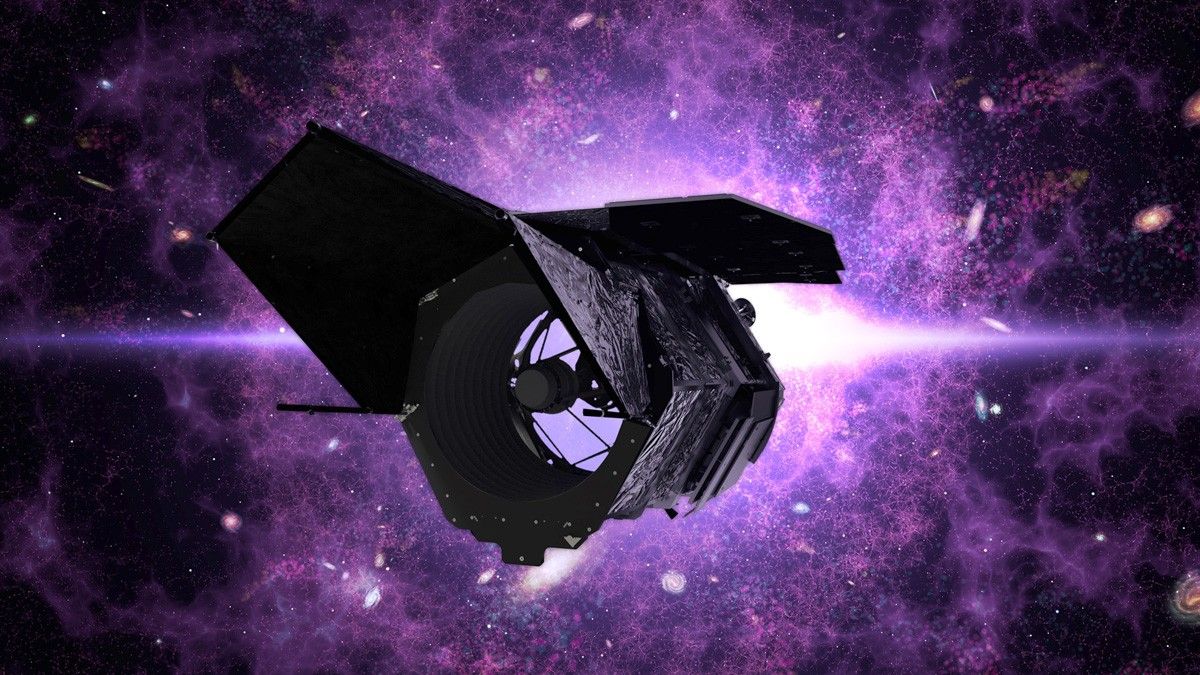
The Nancy Grace Roman Space Telescope is NASA’s newest astrophysics observatory. The telescope will scan large sections of space. Roman will help astronomers answer questions about dark energy, dark matter, exoplanets, and more.
The Nancy Grace Roman Space Telescope is NASA’s newest space telescope that will study dark energy, exoplanets, and astrophysics.
Astrophysics: a branch of space science that applies physics and mathematics to study the universe.
Lagrange point: a position in space where the gravitational forces of a two-body system, such as the Sun and Earth, are balanced. This point creates an “orbital parking spot” where minimal fuel is needed to maintain a spacecraft’s position.
Infrared light: light that is completely invisible to the human eye but can be felt as heat. It’s the area on the electromagnetic spectrum where wavelengths are longer than visible red light, but shorter than microwaves.
Dark energy: the mysterious force that is causing the universe to expand at an accelerated rate.
Exoplanet: a planet outside of our solar system.
Dark matter: the mysterious gravitational “glue” that holds cosmic structures together.
When and Where Will the Nancy Grace Roman Space Telescope Launch?
The Nancy Grace Roman Space Telescope is scheduled to launch Aug. 30, 2026. It will launch aboard a SpaceX Falcon Heavy rocket. Liftoff will take place from Launch Complex 39A at NASA’s Kennedy Space Center in Florida.
Where Will the Nancy Grace Roman Space Telescope Go in Space?
The Nancy Grace Roman Space Telescope will orbit about 930,000 miles (1.5 million kilometers) away from Earth. It will orbit around a special place in space called the second Sun-Earth Lagrange point, or L2. This gravitational sweet spot is perfect for unobstructed views of the universe.
What Instruments Does the Nancy Grace Roman Space Telescope Have?
The Nancy Grace Roman Space Telescope will peer through dust and across vast stretches of space using infrared light. Roman’s primary mirror is 7.9 feet (2.4 meters) across. The large surface of the telescope mirror gathers lots of light. More light equals finer details.
The primary mirror will send light to Roman’s two science instruments: the Wide Field Instrument and the Coronagraph Instrument.
The Wide Field Instrument is a 300-megapixel infrared camera. It allows scientists to look very far back in time because the light captured by the camera has been traveling for billions of years before reaching the instrument. Seeing the universe in its early stages will help unravel how it has expanded throughout its history. This will give scientists hints about how the universe may continue to evolve.
The Coronagraph Instrument uses technology that blocks the glare from a star. This lets astronomers see planets in orbit around it. This instrument is the most powerful coronagraph ever flown in space. It will allow astronomers to see planets that are almost a billion times fainter than their host star.
On Nov. 25, 2025, technicians joined the inner and outer segments together and the observatory was complete.
NASA / Sydney Rohde
What Will Scientists Study With the Nancy Grace Roman Space Telescope?
Scientists using the Nancy Grace Roman Space Telescope will focus on three main topic areas: dark energy, exoplanets, and dark matter.
Dark energy is a mysterious part of the universe. Scientists aren’t sure what it is, but it makes up about 68% of the universe’s total contents. It is believed to be responsible for the accelerating rate at which our universe is expanding. But recent observations seem to show that the pressure from dark energy is shifting over time. Scientists hope to use the Roman Space Telescope to help solve the mystery of dark energy’s true nature.
Exoplanets are planets outside of our solar system. Scientists have discovered more than 6,000 exoplanets. But they believe that billions could exist. Most of the exoplanets detected so far are wildly different than the planets in our solar system. Scientists expect Roman to find more unusual exoplanets. It will also allow astronomers to find planets in the habitable zone of their stars. This will be key to finding planets similar to Earth.
Dark matter is the invisible glue that holds the universe together. Scientists aren’t sure what dark matter is made of. Roman will allow scientists to peer back in time to trace how galaxies and galaxy clusters formed. If dark matter consists of heavy, sluggish particles, it would clump together readily and Roman should see galaxy formation early in cosmic history. If dark matter is made up of lighter, faster-moving particles, it should take longer to settle into clumps and for large-scale structures to develop. If astronomers can narrow down the candidates for dark matter particles, we’ll be one step closer to finally detecting them directly in experiments on Earth.
Who Was Nancy Grace Roman?
Nancy Grace Roman was NASA’s first chief astronomer and the first female executive at the agency. Roman championed the making of the first space-based telescope — the Hubble Space Telescope. She was involved in every crucial decision about the telescope from its funding to where it was built to the details of its instruments. Her vital role in making the project a reality led her to be known as “the mother of the Hubble Space Telescope.”
Roman was born May 16, 1925, in Nashville, Tennessee. She died Dec. 25, 2018.
Nancy Grace Roman was NASA’s first chief astronomer. She is knows as “the mother of the Hubble Space Telescope.”
NASA
Career Corner
More than a thousand technicians and engineers assembled Roman from millions of individual components. Here are a few examples of the careers that shaped NASA’s newest space telescope:
Instrument technician: These experts install, calibrate, and maintain sensors and control systems. They troubleshoot issues that might come up with delicate systems and equipment. This career path often starts with an apprenticeship or hands-on training alongside experienced technicians. An associate’s degree is often required.
Mechanical engineer: This branch of engineering focuses on complex machines and engines. Mechanical engineers design, build, test, and improve mechanical systems. They play an essential role in making a complex observatory like the Roman Space Telescope a reality. A career in engineering demands a strong understanding of math and complex problem-solving and usually requires an advanced college degree.
Astrophysicist: These scientists study the physics of the universe. They are interested in learning how the universe began, how it is evolving, and how it works. Becoming an astrophysicist requires advanced college degrees.
NASA also needs people who work in photography, management, social media, videography, and much more. Learn about some of the people who have made the Roman mission possible here!
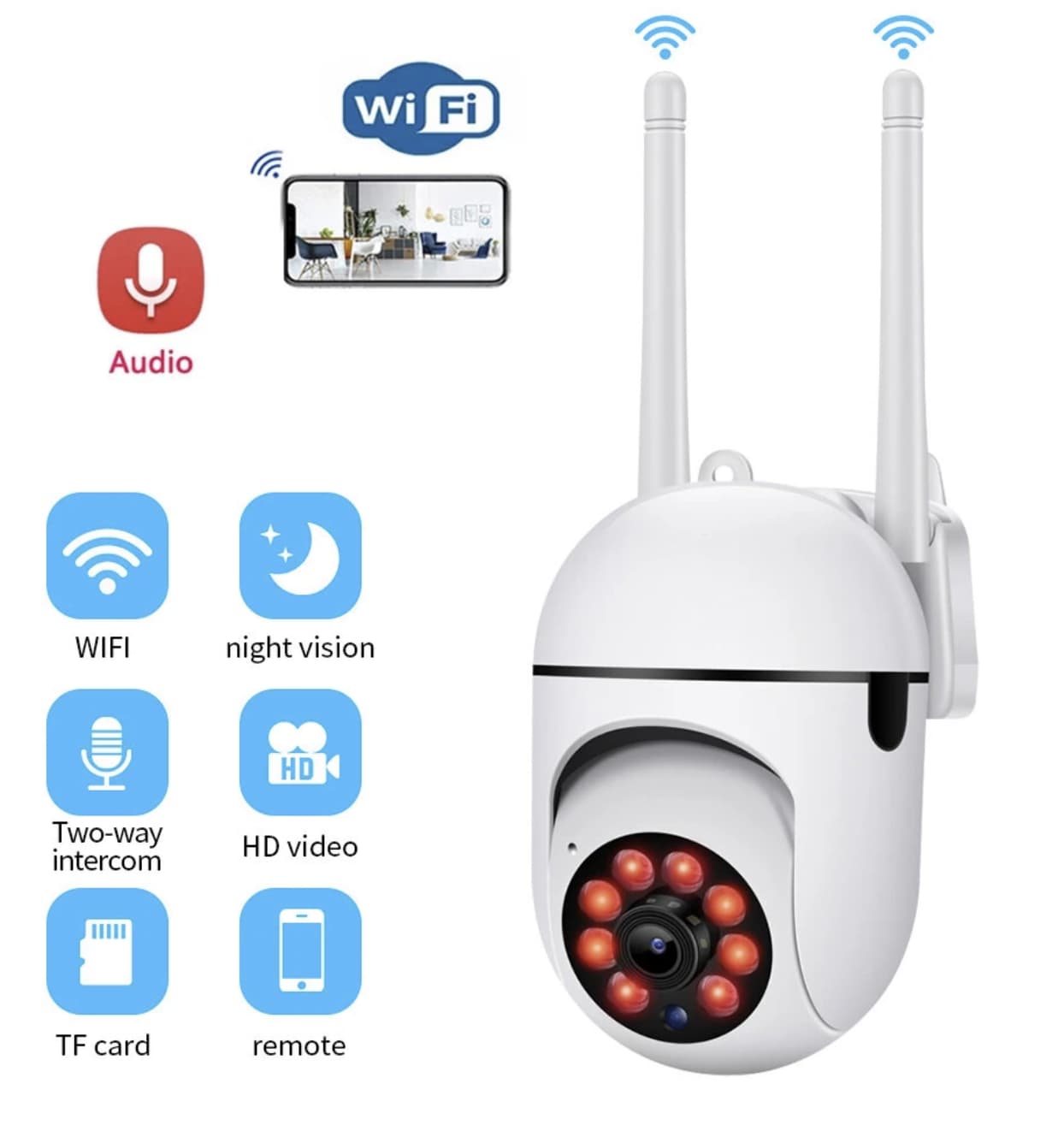
A7 Smart 1080P WiFi PTZ Security Camera is a versatile wireless surveillance camera designed for home, office, and outdoor monitoring. Featuring 1080P Full HD video quality, PTZ panoramic movement, infrared night vision, motion detection, two-way audio, and wireless WiFi connectivity, the A7 provides an affordable way to improve security and monitor important areas remotely.
With its compact design and smart monitoring features, the A7 Smart Camera is suitable for users who want real-time viewing, family protection, pet monitoring, and property surveillance without complicated installation. Similar smart PTZ cameras commonly combine 1080P resolution, WiFi connection, motion detection, and two-way communication features for convenient remote monitoring.
A7 Smart 1080P WiFi PTZ Security Camera Main Features
1080P Full HD Clear Video Quality
The A7 Smart Security Camera delivers 1080P Full HD resolution, providing clear and detailed images for everyday monitoring.
The high-definition camera helps users capture:
Clear room views
Visitor activity
Pet movements
Family interactions
Important security events
Compared with lower-resolution cameras, 1080P provides sharper details, making it easier to identify objects and movements.
PTZ Pan-Tilt Design for Wider Coverage
One of the key advantages of the A7 camera is its PTZ (Pan-Tilt-Zoom) design.
Unlike fixed-angle security cameras, PTZ cameras can adjust their viewing direction to cover a larger area.
Benefits include:
Wider monitoring range
Flexible viewing angles
Reduced blind spots
Remote camera adjustment
Users can control the camera direction through a connected mobile application, allowing them to check different areas without physically moving the device.
Smart WiFi Wireless Connection
The A7 Smart Camera supports wireless WiFi connectivity, making installation easier without complicated network wiring.
Wireless advantages include:
Easy setup
Flexible placement
Remote access through mobile devices
Suitable for homes and offices
The camera can be placed in locations such as:
Living rooms
Bedrooms
Offices
Shops
Garages
Outdoor areas
Many smart WiFi cameras use 2.4GHz wireless networks because they provide stable coverage and better wall penetration for home environments.
Infrared Night Vision for 24-Hour Monitoring
Security problems can happen at any time, which is why the A7 includes infrared night vision technology.
The camera automatically switches between day and night modes, allowing users to monitor environments even in low-light conditions.
Night vision features help with:
Nighttime security monitoring
Baby room observation
Pet monitoring after dark
Outdoor area protection
This provides continuous surveillance without requiring additional lighting.
Motion Detection Alerts
The built-in motion detection function helps users stay informed about unexpected activity.
When movement is detected, the camera can send notifications to the connected device, helping users respond quickly.
Motion detection is useful for:
Home security
Package monitoring
Pet activity tracking
Office protection
Smart camera systems often combine motion detection with app notifications and recording functions for more convenient security management.
Two-Way Audio Communication
The A7 Smart PTZ Camera features two-way audio, allowing users to communicate remotely through the built-in microphone and speaker.
This function enables:
Talking with family members
Checking on children
Communicating with visitors
Interacting with pets
For example, users can answer the door remotely or speak to someone inside the home while away.
Wide-Angle Monitoring for Home Security
The camera’s wide viewing capability helps cover more space with a single device.
It is suitable for monitoring:
Entrances
Hallways
Living spaces
Small businesses
Outdoor zones
The PTZ movement further improves coverage compared with traditional fixed cameras.
Remote Monitoring Through Mobile App
The A7 Smart WiFi Security Camera supports remote viewing, allowing users to check live footage from smartphones or tablets.
Remote monitoring features include:
Live video viewing
Camera control
Playback access
Security notifications
Whether users are traveling, working, or outside the home, they can keep track of important areas remotely.
A7 Smart 1080P WiFi PTZ Security Camera Specifications
Feature
Details
Product Name
A7 Smart WiFi PTZ Security Camera
Resolution
1080P Full HD
Camera Type
Wireless IP Security Camera
Movement
PTZ Pan/Tilt
Connection
WiFi Wireless
Night Vision
Infrared Night Vision
Audio
Two-Way Audio
Detection
Motion Detection
Use
Indoor / Outdoor Monitoring
Storage
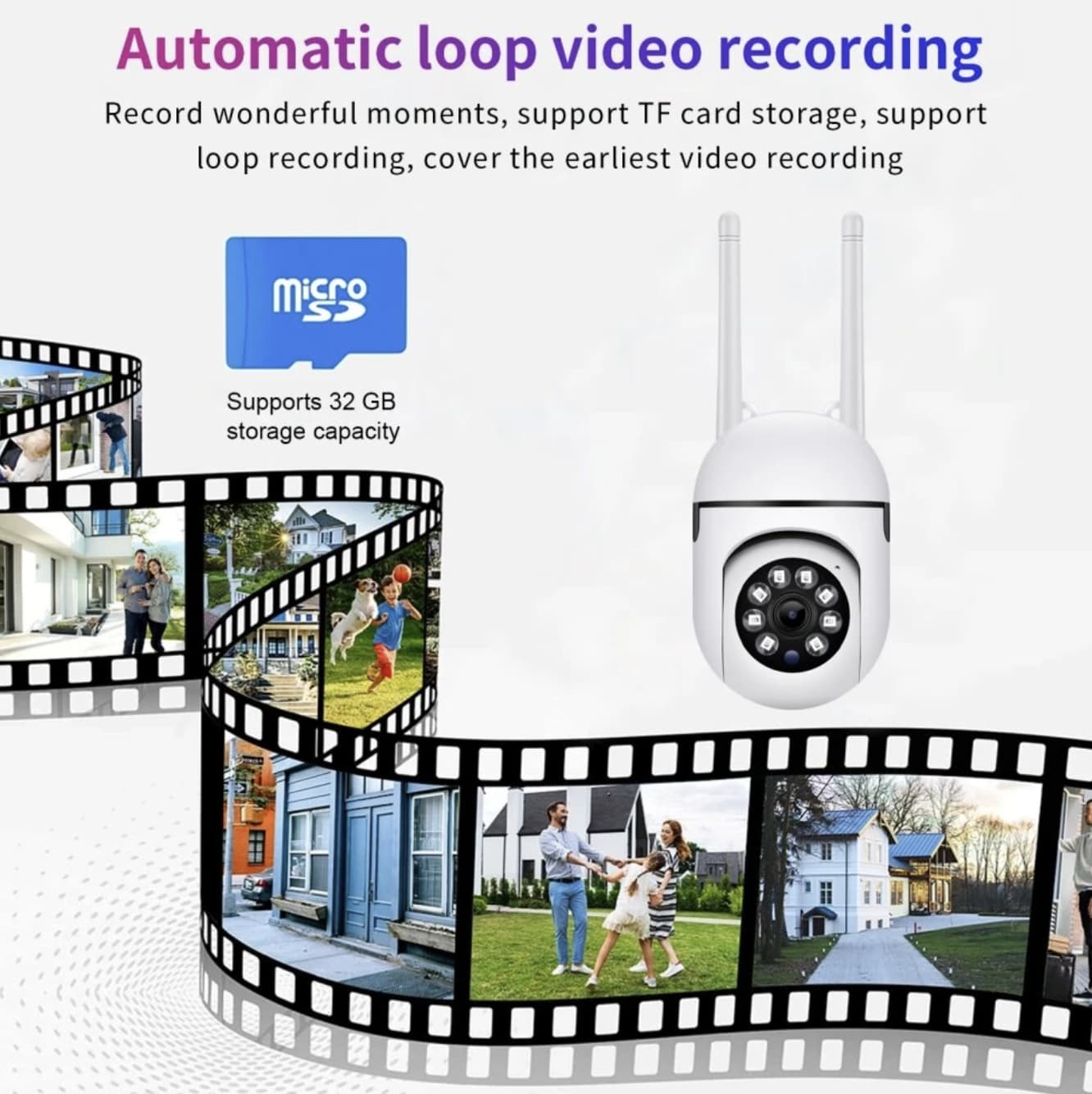
TF Card / Cloud Storage Support (depending on setup)
Installation and Usage Experience
Easy Setup
The A7 camera is designed for simple installation. Users can connect it to WiFi, place it in the desired location, and start monitoring through the mobile application.
No complicated security system installation is required.
Home Security Applications
The camera is ideal for everyday security needs, including:
Baby Monitoring
Parents can check on children remotely and communicate through two-way audio.
Pet Monitoring
Pet owners can watch pets during work hours and interact with them remotely.
Home Protection
The camera helps monitor entrances, rooms, and outdoor areas for unexpected activity.
Office Surveillance
Small businesses can use it to monitor workspaces and improve security.
Pros
1080P Full HD video quality PTZ rotating camera design Wireless WiFi connection Infrared night vision Motion detection alerts Two-way audio communication Remote smartphone monitoring Easy installation
Who Should Buy the A7 Smart PTZ Security Camera?
The A7 Smart Camera is suitable for:
Homeowners looking for affordable security
Parents monitoring children
Pet owners
Small business owners
Users wanting remote surveillance
It is a practical choice for anyone who wants basic smart monitoring features without investing in expensive CCTV equipment.
Final Verdict: Is A7 Smart 1080P WiFi PTZ Security Camera Worth Buying?
A7 Smart 1080P WiFi PTZ Security Camera offers a strong combination of essential smart surveillance features, including Full HD video, PTZ movement, night vision, motion detection, WiFi connectivity, and two-way audio.
For everyday home monitoring and personal security needs, the A7 provides an easy-to-use and cost-effective solution. Its wireless design and remote access features make it a convenient choice for users who want smarter protection for their home, office, or outdoor spaces.
A Aptoide Games é uma das primeiras lojas de terceiros aprovadas para distribuição através Play Store da Google nos Estados Unidos. De acordo com a empresa portuguesa, o novo enquadramento representa uma “evolução significativa no ecossistema Android”.
A new day has dawned in the Play Store, and it's one that Google tried very hard to avoid. The first third-party app store has arrived in Google Play as a result of the long-running antitrust lawsuit with Epic. Those in the US can now head into Google Play and download Aptoide, a game-focused store that has been available as a sideloaded client since the early days of Android.
Forcing Google to distribute third-party app stores in Google Play was one of several remedies imposed by Judge James Donato after Epic emerged victorious in 2023. The remedies also included lowering developer fees, mirroring Google Play apps in other app stores, and allowing developers to use alternative payment systems. But it was the app store stipulation that seemed to irk Google the most.
Google almost avoided this outcome when it agreed to a settlement with Epic, which was announced early this year. Under the terms, Google would certify third-party app stores to allow users to install and use them with less friction, but it would not host them in Google Play. However, Google and Epic withdrew the settlement when it appeared the court would not approve it. This Registered App Store program is still slated to launch internationally, but in the US, Google is only doing what it must to comply with the judge's orders.
Un félin solitaire, réputé intolérant envers ses congénères, qui accepte soudain de partager son garde-manger. La cause ? 40 000 couples de manchots sur deux kilomètres de côte. En étant réintroduits en Patagonie, les pumas ont trouvé un écosystème modifié, et ils s'y sont adaptés d'une manière...
On the web, if I build something that works within the standards, it works. Whether people use it is up to them. On iOS, there is another question entirely: whether Apple decides it should exist.
[…]
In the past couple of years I’ve built three apps that were rejected from the App Store on various grounds.
[…]
A while ago I tried to submit an iOS app for Dark Hours, my astronomy website for normal people. It was rejected on the grounds that it was astrology.
[…]
I see countless ChatGPT wrappers with nearly identical icons and eye-watering subscriptions. I see astronomy apps requesting permissions that have nothing to do with looking at the night sky. My kids download games that interrupt play every few minutes to advertise the developer’s other subscription apps, each with their own $20–50 yearly plans.
But if you actually look at Godier’s Dark Hours, for even just a few seconds, it is instantly obvious that it pertains to the science of astronomy and has absolutely nothing — zero, zilch, nada — to do with astrology.
[…]
Godier proceeded through a series of escalations up to the App Review Board and the Review Board responded that they determined the original rejection was valid because, I shit you not, “We understand that the app includes a live tarot reading feature.” Which isn’t even about astrology. It’s straight out of Kafka.
[…]
This isn’t just contrary to the benefit of developers, like Godier. It’s obviously contrary to the benefit of Apple itself, which should not just accept an app like Dark Hours, but celebrate it as an exemplar of the platform.
Mistakes happen. But in a functioning system mistakes get corrected, and mistakes as obvious as this one get corrected almost instantly and include a quick apology for the conflation. The App Store is not a functioning system.
To the best of my recollection, this is the first post I’ve retracted in the 24 years I’ve been writing Daring Fireball. I hope it’s the last. I was misled, both overtly and through omissions[…]
[…]
The truth is, the app, as originally submitted by Godier to the App Store (under the name “Asterly”, not “Dark Hours”), was entirely dedicated to astrology, not astronomy, and did in fact include a “Tarot card of the day” feature amongst other occultist horseshit.
[…]
I wrongly took Godier at his word, both in his public blog post and in private iMessage correspondence yesterday, that the rejection wasn’t just merely debatable, but completely and rather preposterously ungrounded. Whether Godier ever submitted a build of “Asterly” to the App Store that contained no occult horseshit and only the hard-science astronomy features that were present in his “Dark Hours” website that was available for the last week, I don’t know. But I have no reason to believe that he did.
[…]
In an uncomfortable exchange between Beher and Godier on Bluesky, Beher pointed out that Godier’s Dark Hours had the same bug as Beher’s that routed people to “random fields in Mexico”. Earlier today, Godier took his web app down and redirected his darkhours.io domain to Beher’s darkhours.app.
I’m really unhappy about this, both for my role in spreading a false story and because I think it will hurt the cause of reforming App Review. I know there are many crazy rejections and have experienced some first-hand. This story was believable because of that well-known history and because Godier didn’t seem like a nobody trying to get attention—he was the developer of another highly regarded app. But now people are going to point to true developer stories and accuse them of being fakes, too.
BOTH projects were generated using Claude. So you have two people - both generating the same app from the same training data - having a public throw down over who copied who.
[…]
The “original” developer does claim to know how to code - which wasn’t clear from my research. That still doesn’t necessarily mean the original app was the source of the training data. They both may be a result of the same training data.
Holy shit, so the “Claude plagiarised an app” story is actually “Claude produced the same app twice when prompted to do so by two separate developers” 😅
It’s not clear to me exactly how much each developer relied on Claude or which training data was used, but I wanted to note this angle of the story.
With all this talk of an astrology app being rejected by App Store review I’m reminded there’s still a flat Earth/astrology app on the App Store that actively leaks the location of all of its users.
Apple has increased its estimated trade-in values for most current iPhone, iPad, Mac, and Apple Watch models in the United States. The adjustments give customers slightly more credit toward a new device, although some older Apple hardware and several Android phones have moved in the opposite direction.
The updated values are maximum estimates rather than guaranteed payments. Apple calculates the final credit after confirming the model and inspecting its condition. A damaged display, enclosure problems, missing functionality, or an inaccurate description can reduce the amount offered.
Most of the increases are modest, but they arrive across several of Apple’s largest product categories at the same time. Recent iPhones receive between $10 and $25 more, every iPad category listed in Apple’s summary gains value, and several popular Macs receive larger increases.
The revisions also reinforce the role of trade-ins within Apple’s retail operation. Credit can reduce the cost of a regular purchase, be delivered through an Apple Gift Card, or lower payments at the beginning of an eligible Apple Upgrade lease.
Image Credit: Apple Inc.
Trade-In Values Rise Across iPhone and iPad
Every iPhone 16 model included in the update receives a higher maximum estimate. The iPhone 16 Pro Max moves from $685 to $695, retaining the highest listed value among the affected iPhones.
The iPhone 16 Pro increases from $550 to $560, while the iPhone 16 Plus moves from $455 to $465. The standard iPhone 16 receives the largest increase within the family, rising by $25 from $435 to $460.
These changes narrow the difference between the standard iPhone 16 and the larger Plus model. The Pro models retain substantially higher estimates, reflecting their higher original prices and stronger position in the used-device market.
An additional $10 or $25 will not transform the cost of an upgrade, but it can offset part of a case, charger, AppleCare plan, or storage upgrade. The difference also becomes more relevant for customers comparing Apple’s direct program with a third-party reseller offering a similar amount.
Apple’s iPad adjustments are more consistent. The maximum estimate for an iPad Pro rises from $670 to $690, an increase of $20. The iPad Air moves from $445 to $460, while the standard iPad rises from $220 to $235.
The iPad mini also gains $15, moving from a maximum of $250 to $265. That means every current iPad category displayed in Apple’s trade-in summary receives a higher estimate.
Apple’s direct trade-in values are generally lower than the prices an owner might obtain through a private sale. The program instead emphasizes convenience: the device can be returned at an Apple Store or sent using Apple’s online process, with the credit connected directly to a new purchase.
A private sale can produce a better return, especially for a recent device in excellent condition. It also requires the owner to set a price, find a buyer, manage payment, and handle the transfer independently. Apple’s program trades some resale value for a simpler exchange.
Mac and Apple Watch Changes Are Less Consistent
Mac trade-in values receive some of the largest increases, but the category also includes notable reductions.
The MacBook Air rises from a maximum of $485 to $520, adding $35. The Mac mini receives the same increase, moving from $340 to $375. The MacBook Pro changes only slightly, increasing from $685 to $690.
Apple leaves the current iMac estimate unchanged at $355. The Mac Studio receives a larger increase from $975 to $1,045, reflecting the higher value retained by recent desktop configurations.
Older professional desktops move in the other direction. The iMac Pro falls from $325 to $315, while the top Mac Pro estimate declines from $2,090 to $2,045.
That $45 reduction at the top of the Mac range means Apple’s maximum Mac trade-in offer decreases even though several mainstream models receive more credit. The changes appear more closely connected to the resale position of individual product families than to a uniform increase across every computer.
Mac estimates can vary considerably because one model name can cover different years, processors, memory configurations, storage capacities, and physical designs. Apple asks for a serial number before producing a more specific estimate for a Mac.
The Apple Watch adjustments are similarly mixed. Apple Watch Ultra 2 rises from $295 to $305, while Apple Watch Series 9 increases from $120 to $130.
Apple Watch Series 10 remains unchanged at a maximum of $150. The original Apple Watch Ultra falls from $215 to $205, losing $10.
Wearable trade-in values can decline quickly because watches receive frequent updates and are exposed to greater physical wear than many computers or tablets. Battery condition, display damage, case wear, and working buttons can influence whether the device receives the estimated credit.
Apple also accepts devices that no longer qualify for monetary value. Those products can be returned for recycling, including older hardware and accessories that would otherwise remain unused.
Image Credit: Apple Inc.
Android Offers Face Several Reductions
Apple accepts selected smartphones from Samsung, Google, and other manufacturers when customers move to an iPhone. The latest revisions are less favorable to several Android devices.
The maximum Android estimate across Apple’s displayed range decreases from $370 to $360. Individual changes vary by model.
The Samsung Galaxy S23 Ultra drops from $230 to $200, a $30 reduction. Google’s Pixel 8 Pro declines from $170 to $165.
Other devices remain unchanged. The standard Galaxy S23 continues to carry an estimated value of up to $125, while the OnePlus 12 remains at up to $200.
Apple’s Android offers are primarily designed to remove friction for people moving to the iPhone. They do not necessarily match the amount available from the manufacturer, a carrier promotion, or a private buyer.
Carrier promotions can advertise considerably higher trade-in credits than Apple, particularly around a new iPhone launch. Those offers commonly require an eligible unlimited plan, a new line, monthly bill credits, or a commitment lasting two or three years.
Apple’s direct credit is easier to understand because it is tied to the assessed value of the device rather than a long carrier agreement. The best choice depends on whether the customer values flexibility, immediate credit, or the largest possible promotional discount.
A Higher Estimate Is Not the Final Offer
Apple’s published figures represent the maximum available for qualifying devices in suitable condition. The online estimate is based on the answers supplied before the product is inspected.
After receiving the device, Apple or its trade-in partner verifies its identity and checks whether it powers on, functions properly, and matches the reported condition. A difference can produce a revised offer.
Customers can accept or reject a lower revised value. Rejecting it cancels the trade-in and returns the device, although the payment arrangement for the accompanying purchase may also be adjusted. If the inspected value is higher than the original estimate, Apple says it automatically increases the credit.
The way the credit is delivered depends on the purchase. When a customer pays in full for a new iPhone, iPad, Mac, or Apple Watch, the confirmed value can be returned to the original payment method up to the price of the new product. Any remaining amount can be issued through an Apple Gift Card.
With an eligible monthly payment arrangement, the estimated credit can be applied directly to the new device’s purchase price. Under Apple Upgrade, a qualifying trade-in owned by the customer can reduce payments across the initial lease term. Another device cannot be traded in each time the customer exercises the lease’s upgrade option.
Values also differ between countries and can change without a product announcement. The revised dollar amounts apply to Apple’s United States program, while local market prices, available models, currencies, and trade-in partners determine estimates elsewhere.
Anyone considering an exchange should obtain a fresh estimate shortly before purchasing. Apple requires the trade-in device to arrive within the specified return period and says an online estimate is generally protected for 14 days after the customer receives the new product.
Apple briefly removed Telegram from the App Store on Monday night after a review found content that violated its guidelines against child sexual abuse material (CSAM), but restored the app a short while later, according to Reuters.
It seems like this was a symbolic gesture. Removing the app didn’t affect any of the customers who had already downloaded it. Probably none of them saw the image. And restoring the app doesn’t mean that it’s completely free from CSAM—probably none of the major platforms is. It just means that Telegram did the obvious thing after the violation was reported, which presumably they would have done, anyway.
And before even contacting the developer? Telegram banning the account is what actually prevented users from potentially seeing the CSAM. Apple’s action seems like either a mistake or trying to send them a message.
I would note, by the way, that the Telegram app was apparently never removed from the Mac App Store. Which goes to show how little Apple cares about the Mac App Store.
Because Telegram quickly removes illegal content from public groups using all kinds of moderation tools, the attacker had to resort to a technical trick. He inserted AI-modified illegal content by editing an old message in an active group chat. As a result the content was effectively hidden from the group’s members, preventing them from seeing/reporting it.
The attacker was a takedown extortionist: someone who demands ransom from group owners in exchange for not targeting their communities. These extortionists use automated accounts to plant illegal content in public groups and then report it directly to Apple, attempting to trigger the removal of legitimate communities whose owners refused to pay them.
[…]
Extortionists have found a way to manipulate Apple into overreacting. Apple removed Telegram from the App Store before contacting us. This creates a potential systemic risk for every mobile app that hosts user-generated content. If an app used by more than a billion people can be removed from the App Store without prior warning, any app can be.
During the time the app was unavailable, many speculated that the move was politically motivated, or perhaps in response to the recent discovery that Telegram has allegedly been using an obfuscated private UIKit API to animate its emoji picker.
It’s sad but kind of hilarious that both of these so disparate theories were considered possible. Durov really does have political enemies, and Apple really does seem to have it out for Telegram. But, also, using private API to animate emojis totally seems like something that Telegram would do and that Apple would overreact to.
Over the last nine months, Mark Zuckerberg’s Meta has run dozens of paid ads that include explicit AI-generated child sexual abuse material (CSAM) and images of minors alongside sexually suggestive statements, according to details of the ads shared with WIRED. The ads, which in some cases reached several thousand accounts, were targeted at people living in the United States, United Kingdom, and more than a dozen European countries.
This is much worse than what happened with Telegram, yet Apple didn’t overreact.
Apple briefly removed Telegram from its App Store late on Monday after detecting child sexual abuse material (CSAM) in a public group. The messaging app was restored within about 40 minutes once Telegram deleted the content and banned the responsible user. Telegram CEO Pavel Durov later described the incident as the work of a “takedown extortionist” who deliberately planted AI-modified illegal content to trigger the removal and pressure online communities.
According to Durov’s statement on X (see below), the attacker edited an old message in an active public group chat to insert the prohibited material. Because the edit was backdated, the content remained effectively invisible to ordinary group members, limiting their ability to report it through normal channels and helping it evade some of Telegram’s automated moderation tools. The perpetrator then reportedly flagged the material directly to Apple.
Durov characterized the actor as a takedown extortionist—someone who demands payment from group owners in exchange for not targeting their communities. These operators, he said, rely on automated accounts to seed illegal material in public groups and then report it to platform gatekeepers such as Apple in an effort to force the removal of legitimate communities whose administrators refuse to pay.
“From a practical standpoint, illegal pornographic content in Telegram’s public groups is not a systemic problem,” Durov wrote. “Our moderation is effective. The fact that attackers must resort to backdated, effectively invisible content and other technical tricks proves this.” He emphasized that Telegram routinely removes illegal material from public groups using a range of moderation tools.
Apple confirmed that a content review had identified CSAM that violated App Store guidelines. The company stated that Telegram “promptly removed the content and banned the user,” after which the app was returned to the store. Apple has not publicly addressed Durov’s claim that an extortionist manipulated the process. Durov noted that Apple pulled Telegram before contacting the company.
Durov framed the episode as a warning for other developers. “Extortionists have found a way to manipulate Apple into overreacting,” he said. “This creates a potential systemic risk for every mobile app that hosts user-generated content. If an app used by more than a billion people can be removed from the App Store without prior warning, any app can be.” He also cautioned that the tactics used by such coordinated reporting groups are evolving and that other platforms may be less prepared to identify and counter them.
The incident underscores ongoing tensions between large platforms that host user-generated content, the moderation challenges they face, and the policies of mobile app marketplaces that can unilaterally restrict distribution. Telegram continues to operate normally on iOS following the short-lived removal.
Last night Apple briefly removed Telegram from the AppStore because a user had planted illegal porn in a public chat.
Telegram was restored within hours. But I want to explain what happened — to warn other app developers and help protect online communities from similar attacks.
Because Telegram quickly removes illegal content from public groups using all kinds of moderation tools, the attacker had to resort to a technical trick. He inserted AI-modified illegal content by editing an old message in an active group chat. As a result the content was effectively hidden from the group’s members, preventing them from seeing/reporting it.
The attacker was a takedown extortionist: someone who demands ransom from group owners in exchange for not targeting their communities. These extortionists use automated accounts to plant illegal content in public groups and then report it directly to Apple, attempting to trigger the removal of legitimate communities whose owners refused to pay them.
From a practical standpoint, illegal pornographic content in Telegram’s public groups is not a systemic problem. Our moderation is effective. The fact that attackers must resort to backdated, effectively invisible content and other technical tricks proves this.
However, there are two important lessons here for app developers and online communities:
— Extortionists have found a way to manipulate Apple into overreacting. Apple removed Telegram from the App Store before contacting us. This creates a potential systemic risk for every mobile app that hosts user-generated content. If an app used by more than a billion people can be removed from the App Store without prior warning, any app can be.
— The tactics used by takedown extortionists are evolving, putting communities across social platforms at risk. Telegram has extensive experience identifying the tricks used by coordinated reporting gangs and protecting legitimate communities (even when doing so risks our own app being temporarily removed from the App Store). Other platforms may not be equally prepared.
Stay vigilant!
MacDailyNews Take: Apple’s App Store really is one of history’s most profitable cans of worms.
It’s an astonishing money machine: the broader App Store ecosystem facilitated over $1.4 trillion in developer billings and sales in 2025 alone. Physical goods and services (retail, food delivery, travel, etc.) made up the bulk (~$1.1 trillion), where Apple takes no commission. Digital goods and services accounted for about $149 billion, and in-app advertising another $151 billion. On the digital slice Apple typically charges 15–30%, generating many billions in high-margin revenue that helps power its Services business.
Yet the same walld garden that produces those results is a perpetual source of headaches. Apple’s near-total control over iOS distribution and payments has fueled years of antitrust battles — Epic Games, the U.S. DOJ, EU Digital Markets Act enforcement, court findings of non-compliance, and ongoing developer lawsuits. Critics call the commission the “Apple Tax,” complain about arbitrary review decisions, limited sideloading or alternative stores (outside certain regulated markets), and the risk that a single content flag can yank a major app offline without warning.
The recent Telegram episode fits the pattern perfectly. A brief App Store removal triggered by planted illegal content (which Telegram says was the work of a takedown extortionist) showed how Apple’s gatekeeper power can be gamed or lead to rapid, high-stakes reactions.
Please help support MacDailyNews — and enjoy subscriber-only articles, comments, chat, and more — by subscribing to our Substack: macdailynews.substack.com. Thank you!
The App Store is evolving at a breakneck pace not seen since its earliest days. We saw the first glimmers of what was to come early in 2025, but it wasn’t until late last year that the tsunami of apps developed with the help of AI agents really took hold.
How these forces play out long-term is anyone’s guess, but it’s worth examining because, just as Federico’s link to Bryan Irace’s post about agentic coding tools foreshadowed the rise of tools like Codex and Claude Code, today’s trends are sparks that have the potential to become tomorrow’s App Store wildfires or simply fizzle out.
Utility apps are on the front lines of this change. The TechCrunch story I linked in April picked up on this trend:
Another interesting tidbit from Appfigures is that the Utilities app category moved up the top five chart.
If anything, the trend has accelerated in the months since.
It’s not surprising at all that utility apps have taken off. They’ve been a staple of new developers since long before agents came along. That’s because many are UI wrappers around command line tools. That isn’t a knock against the developers of those apps; most users don’t want to open Terminal to convert a video or audio file to another format using ffmpeg, for example. By building a great UI around command line tools, developers have made them far easier to use.
However, the relative simplicity and narrow scope of many utility apps have made them a natural fit for AI agents, too. That’s why the App Store (and my inbox) is deluged with Mac menu bar and single-screen iPhone and iPad utility apps.
On the one hand, the abundance of utilities has been great for users. More choice means you’re more likely to find the app that perfectly fits your needs.
On the other hand, though, I don’t think what’s happening in the category is sustainable and expect to see it dramatically shift again in the coming months. As we’ve seen from reporting by The New York Times, app supply is outstripping demand by orders of magnitude, which will drive down prices. That alone is likely to cause the utility app market to shrink. But there’s more to it than that.
Remember, the demand shifts that The New York Times reported, based on Sensor Tower numbers, are for the entire App Store, where download numbers have grown 2-3% this year and last. I expect utility downloads to actually shrink in the coming months – again, because of agents. Utilities, especially simple ones, are exactly the sorts of apps that are becoming trivially easy for power users – the very users these utilities are made for – to create themselves. From frontier labs‘ model improvements to a growing number of app-building tools from those same labs and third parties, it’s never been easier to build a web or native app yourself.
And although I agree with people, like Nilay Patel, who say the notion that everyone will build their own software is overblown, the utility market is different. Your average person is not downloading apps to adjust the frame rate and file format of a video or downloading YouTube videos to watch later. But those are exactly the sort of things that people who are using agents are doing with them, whether they’re having an agent do those things directly via a command line tool in an app like Codex or Claude Code or building an app to do the same thing. That’s going to put even more pressure on the category.
That said, I think there will always be a cohort of users who would rather pay for an app than build it themselves, so I’m not predicting the demise of utilities in general – just the end of today’s frothy market. I also think there remains a place for simple utilities that solve hard problems with clever solutions. Not every utility is a UI wrapper for a terminal command. Plenty of apps feature original solutions or thoughtful and unconventional remixes of disparate tools.
Utilities aren’t going away, but just like other App Store deluges, the trend will recede. It’s just that this time, it’s likely to flip faster than usual.

 Login











 However, there are two important lessons here for app developers and online communities: