eTravelSim propose des forfaits eSIM dès 3,03 € dans plus de 190 pays, avec activation rapide et tarifs fixes pour mieux maîtriser son budget data à l’étranger.
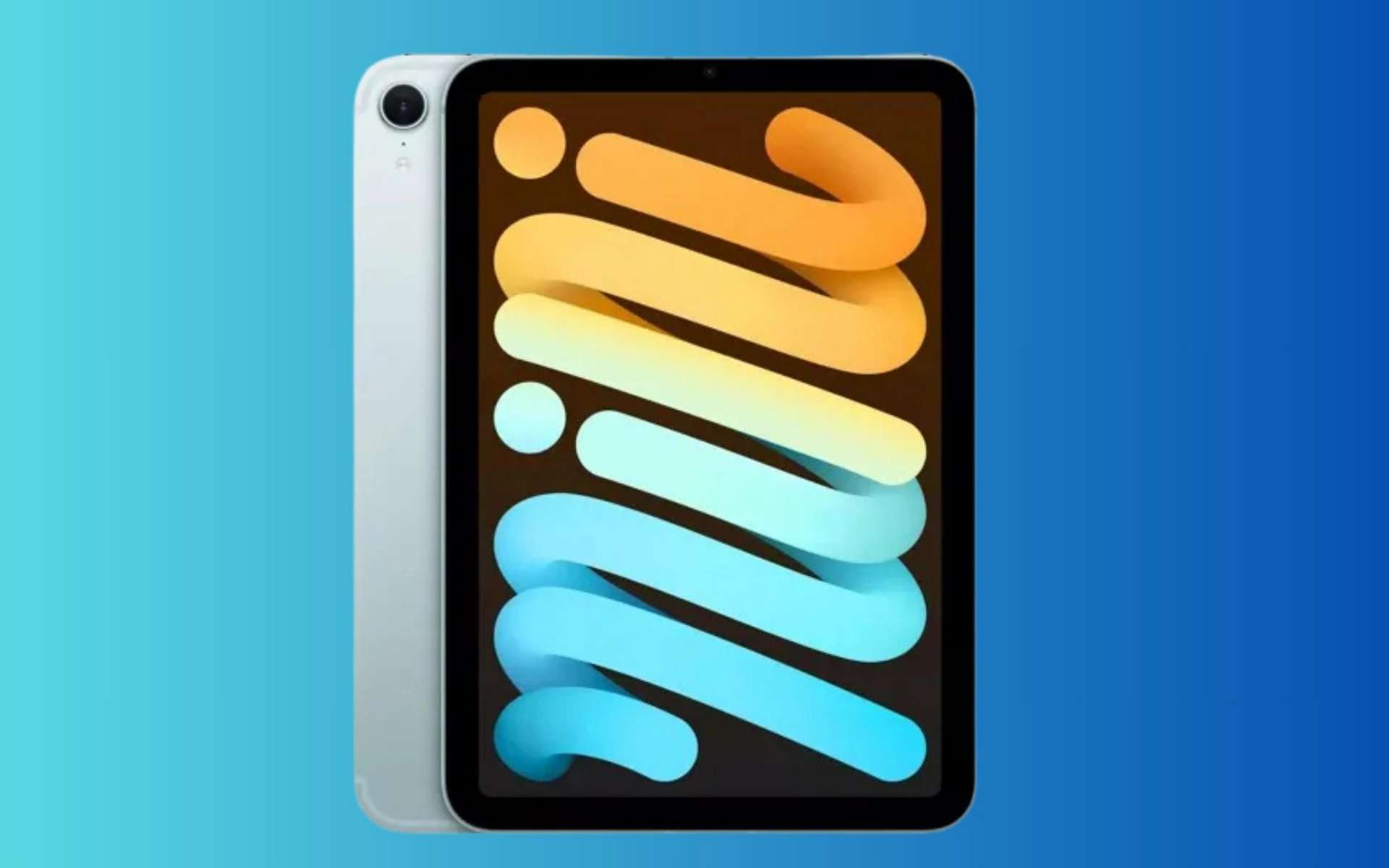
L’iPad mini 7 voit petit côté format, mais pas côté performances. À l’approche de la rentrée, la tablette Apple avec puce A17 Pro profite d’une remise chez Rakuten, une bonne occasion de l’emporter partout sans alourdir son sac.
Pratique à transporter et agréable à utiliser au quotidien, la tablette gagne du terrain sur les bancs des universités. Le choix du bon modèle passe avant tout par les besoins de la formation, les applications utilisées et le budget prévu.
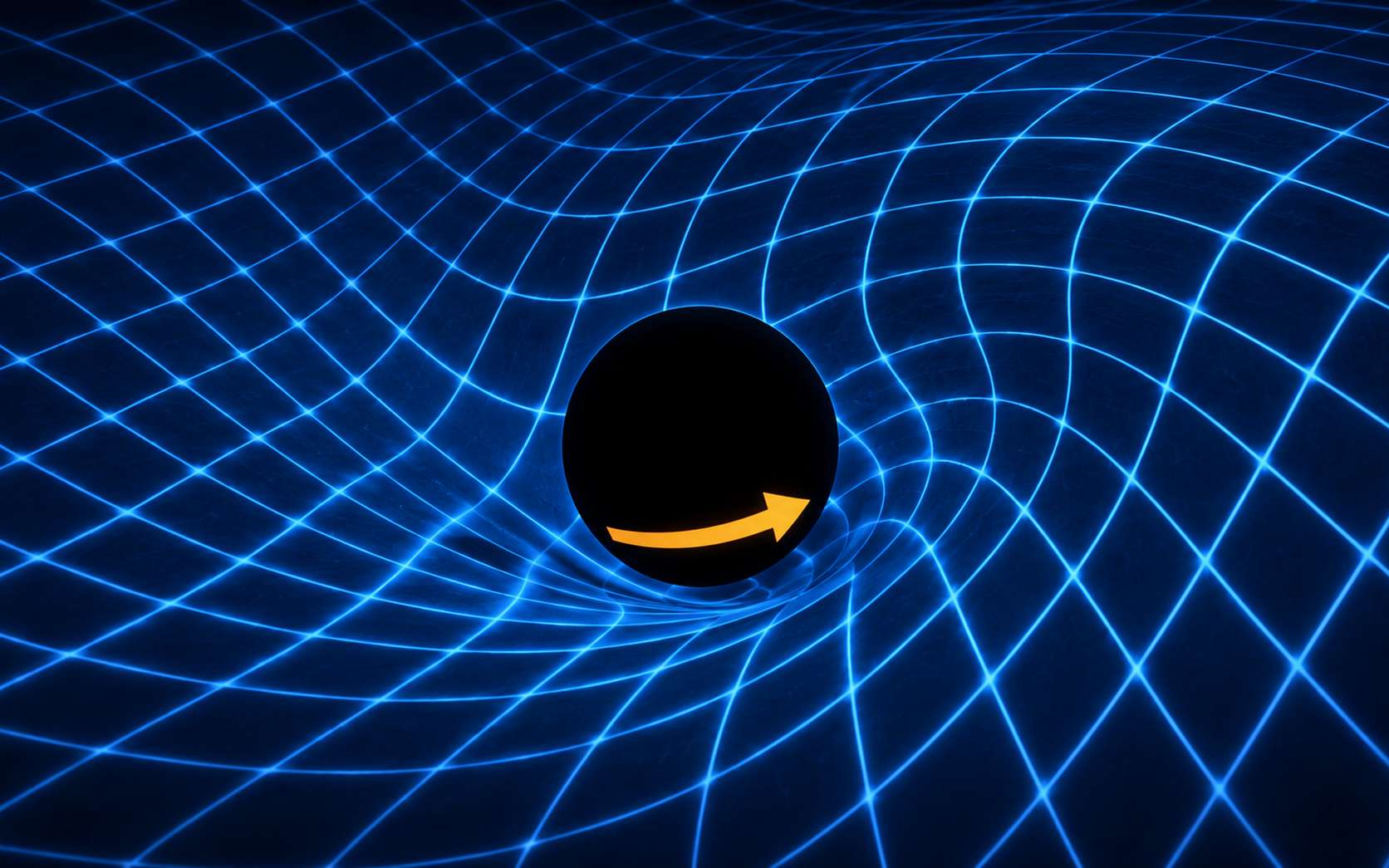
Autrefois dissimulée par d'épais nuages de poussière dans le bulbe central de la Voie lactée et trop proche de son trou noir central pour être observable, même avec de grands télescopes, l'étoile S301 a finalement été débusquée avec les progrès des instruments de mesure équipant le VLT de l'ESO,...
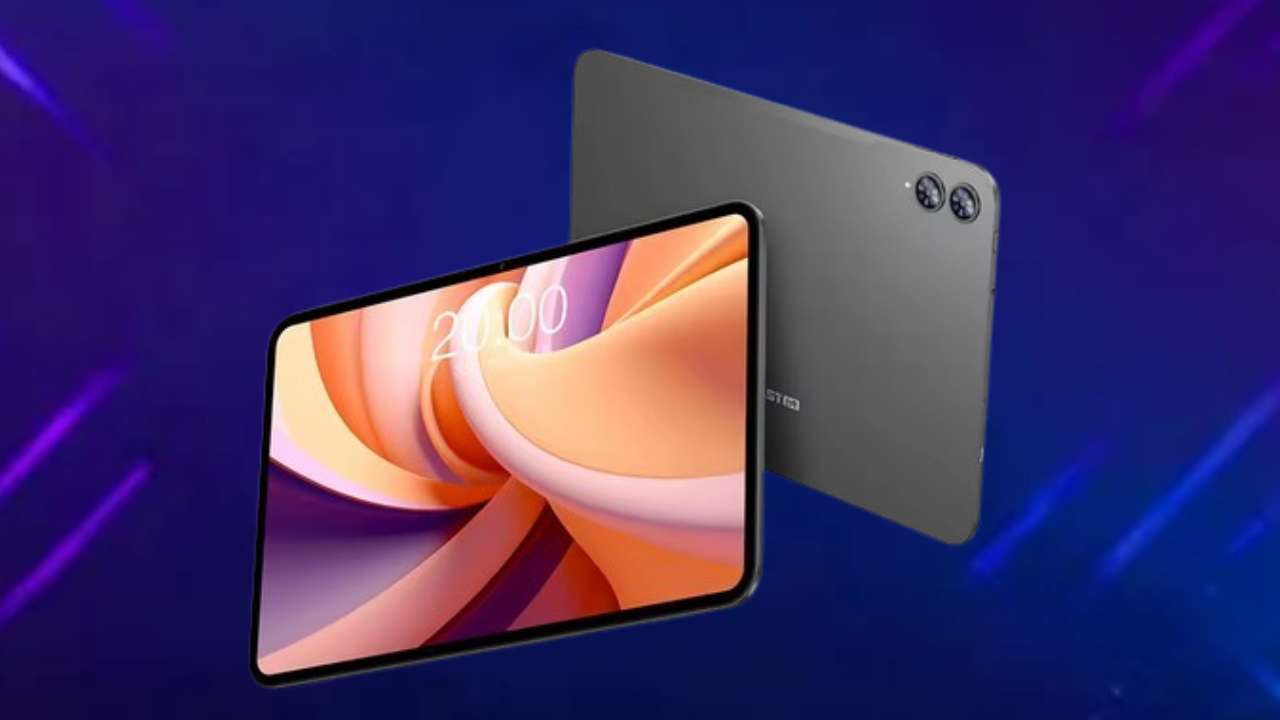
Avec sa grande dalle de 13,4 pouces et sa fréquence de 120 Hz, la tablette tactile Teclast T65 s'adresse aux personnes en quêtes d'une tablette pratique et réactive pour un usage quotidien. La connectivité 4G et son stockage extensible renforcent le côté polyvalent de cette tablette affichée à...
AST SpaceMobile booked a big year-on-year rise in revenue in Q2, driven by gateway deliveries and milestones tied to US government contracts as the direct-to-device (D2D) satellite operator continues to scale ahead of a planned beta service launch later this year.
The company stated it remains on track to meet its full-year 2026 revenue guidance of $150 million to $200 million on the back of additional contract awards from the US government.
Revenue backlog grew to approximately $1.3 billion in aggregate contracts with commercial partners and government.
Chair and CEO Abel Avellan said the company’s technology platform, spectrum strategy and manufacturing capabilities position it to deliver D2D connectivity for commercial and government customers globally, pointing to the growth of its constellation to 13 spacecraft in orbit
On its earnings call, president Scott Wisniewski highlighted growing momentum with US government customers who he said view the company’s technology as unique, strategic, innovative and flexible for communications and non-communications uses.
He said AST SpaceMobile previously flagged a trend of small development contracts evolving into larger awards, eventually maturing into full programmes of record.
“Today, you can see that trend as we are announcing three new contract awards with funded near-term value of over $100 million in total expected during 2026 and 2027.”
Further public details on the awards are expected soon, but Wisniewski described them as capabilities developed in partnership with the US Department of War over several years which employ the company’s technology to address a significant strategic need.
Trends AST SpaceMobile booked revenue of $31.5 million compared with $1.2 million in Q2 2025.
Net loss attributable to common stockholders grew from $99.4 million to $230.9 million.
Trends in the opening half followed suit, with revenue of $46.3 million compared with $1.9 million, and attributable net loss up from $145.1 million to $421.9 million.
Dinosaurs evolved into some of the largest animals ever to walk the Earth, but a new mathematical model suggests that early mammals may have crowded them out of the ecological niches reserved for the smallest creatures.
Apple continues work to get White House go-ahead to source memory from Chinese supplier CXMT, which the US government has placed restrictions on.
For Apple, the issue comes down to simple math. With the cost of making iPhones up 38% because of eye-watering memory price increases — up almost 7-fold since the beginning of 2025 — it makes sense to make pragmatic choices when it comes to sourcing supply, particularly when other computer companies (including HP and Acer) already obtain memory from CXMT.
US resistance to the plan is that because of the way Apple packages memory on chip, the use of that memory might partly contravene the technology transfer restrictions the US has in place. Note: use of off-the-shelf components is fine.
Apple has been lobbying to use memory from the supplier only on devices made and sold in China and would likely argue this is reasonable given that both HP and Acer already use CXMT memory in products sold outside the US.
Why it’s really about supply
The iPhone maker’s dilemma isn’t just about memory price, it’s also about ensuring it has enough component supply to satisfy demand for its products. This is plausibly a bigger challenge for the company, which is already warning of constrained supply because of lack of available memory. Samsung, Micron, and SK Hynix have allegedly already sold through all their DRAM production for 2027, which only sharpens Apple’s case to secure alternate sources.
With that in mind, it matters that China consumes around 20% of all Apple hardware sold globally. All the company needs is the go-ahead to use RAM from CXMT in those Chinese-made, China-sold devices.
That alone would effectively grow its usable memory supply by the same amount, because the non-restricted memory it currently has to use in Chinese-market products could be freed up for devices sold elsewhere, with CXMT covering the China-sold units instead.
With demand for its products accelerating —even amid a broad industry downturn — Apple really wants to make sure it has enough of the component to meet demand. Those powerful, on-premises 1.5TB RAM-equipped M7 Ultra Mac Studio AI clusters won’t exist unless it’s possible to find memory to put inside them.
The timeline challenge
The proposed arrangement with CXMT might not be a quick fix. Recent reporting indicated the company has already reached its production capacity for 2026, though it is working to double capacity by 2028. Apple has already tested memory chips from the company across products including iPhones and MacBooks.
While Apple this year has applied steep price increases across all its products (except for iPhones), it is now expected to increase the cost of the current iPhone 17 models perhaps as soon as this week.
Market reports already warn that Apple will raise prices on its soon-to-debut iPhone 18 Pro and iPhone Ultra devices next month, and we expect availability to be constrained, once again as a result of RAM shortages. Even if Apple gets the go-ahead to work with CXMT to close the gap, the positive impact of that arrangement is unlikely to kick in before next year.
Enjoy the pain
Elsewhere, big memory manufacturers, including SK Hynix, have announced plans to invest in new DRAM manufacturing capacity. But this will not be operational until 2029, at the earliest.
This suggests constrained product availability and higher prices for the coming months — and the only way Apple, or anyone else, will be able to limit the impact of those price increases across the entire electronics industry will be if they can obtain additional stocks of memory from vendors outside the big three. If they cannot, you can kiss the age of abundance goodbye.
Dans les profondeurs de la forêt tropicale de Bornéo se cache une créature fascinante : le lézard-moniteur sans oreilles. Ce reptile énigmatique, surnommé le « mini-dragon », défie les scientifiques par sa rareté et son mode de vie secret. Pourquoi ce petit dragon bien réel est-il si difficile à...
Et si la prochaine preuve d’une civilisation extraterrestre ne venait pas d’un message radio, mais d’un excès de chaleur invisible à l’œil ? Depuis 1960, les sphères de Dyson, ces mégastructures capables d’engloutir l’énergie d’une étoile, font rêver scientifiques et amateurs de SF. Grâce au...
Amazon régale les amateurs de productivité et de multimédia avec une baisse de prix très incitative sur un ensemble tout-en-un d'exception ! La tablette tactile haut de gamme Lenovo Idea Tab Pro, livrée en pack complet avec son clavier détachable et son stylet Lenovo Tab Pen Plus, bénéficie...
T-Mobile officially retired its 2G GSM network on August 3, 2026, marking the end of 2G service from all three major U.S. carriers. With AT&T having discontinued 2G in 2017 and Verizon following in 2020, devices that rely solely on the older standard—including the original 2007 iPhone — can no longer connect to any cellular network in the United States. The move also affects remaining smartphones, alarm systems, payment terminals, and other IoT devices still using 2G, though T-Mobile had given customers advance notice to upgrade or transition.
T-Mobile kept its 2G network active because it still had some legacy customers who were using it. Some customers visiting the United States and using international roaming carrier agreements for connectivity also needed 2G for voice calling, but T-Mobile worked with carriers globally to prepare for the end of its 2G network.
Customers who were still on T-Mobile’s 2G network were warned well ahead of time about the shutdown and given time to transition. Smartphones, alarm panels, payment terminals, and other IoT accessories that used 2G will no longer function.
AT&T ended support for 2G almost a decade ago in 2017, and Verizon stopped supporting 2G in 2020. Now that no carriers in the U.S. support 2G, legacy devices like the original iPhone will not be able to connect to any cellular network.
MacDailyNews Take: Time marches on!
Please help support MacDailyNews — and enjoy subscriber-only articles, comments, chat, and more — by subscribing to our Substack: macdailynews.substack.com. Thank you!
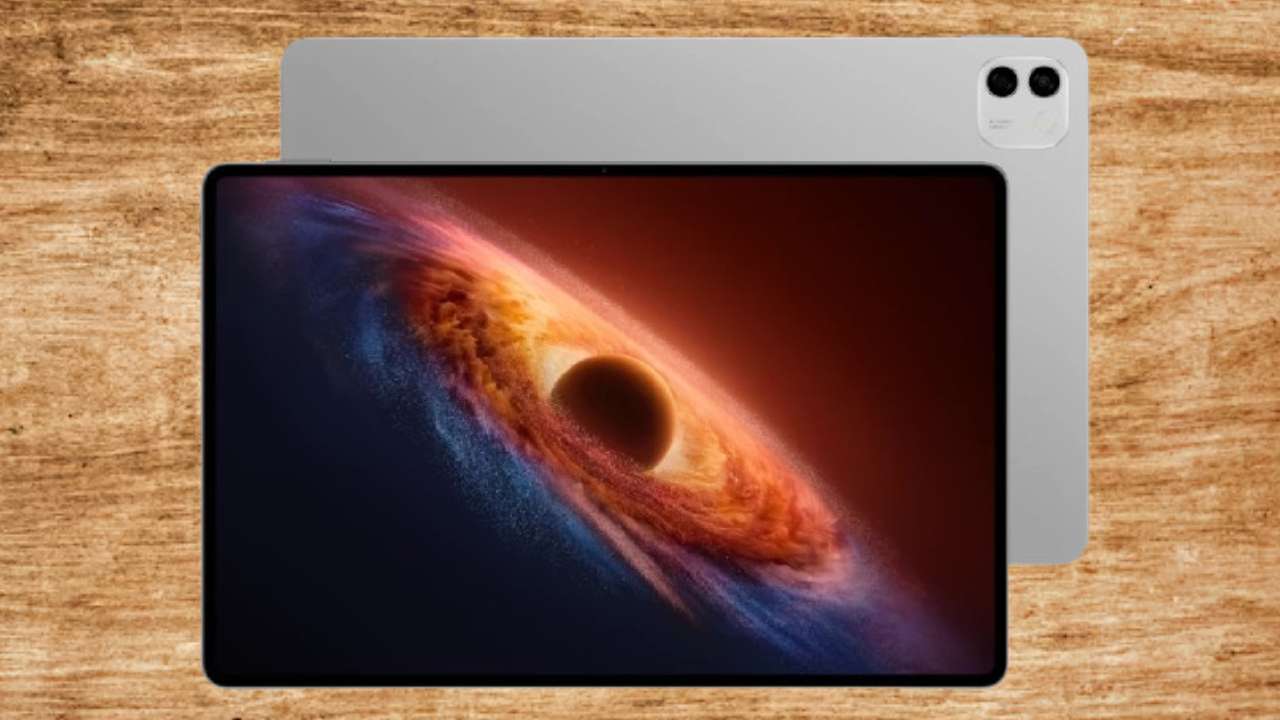
La Honor MagicPad 4, tablette tactile de pointe offrant un excellent rapport qualité-prix, bénéficie actuellement d’une remise de 25,05 € sur AliExpress, complétée par un coupon promotionnel de 63 €. Ce faisant, le prix de la tablette passe sous la barre des 600 € pour une durée limitée.
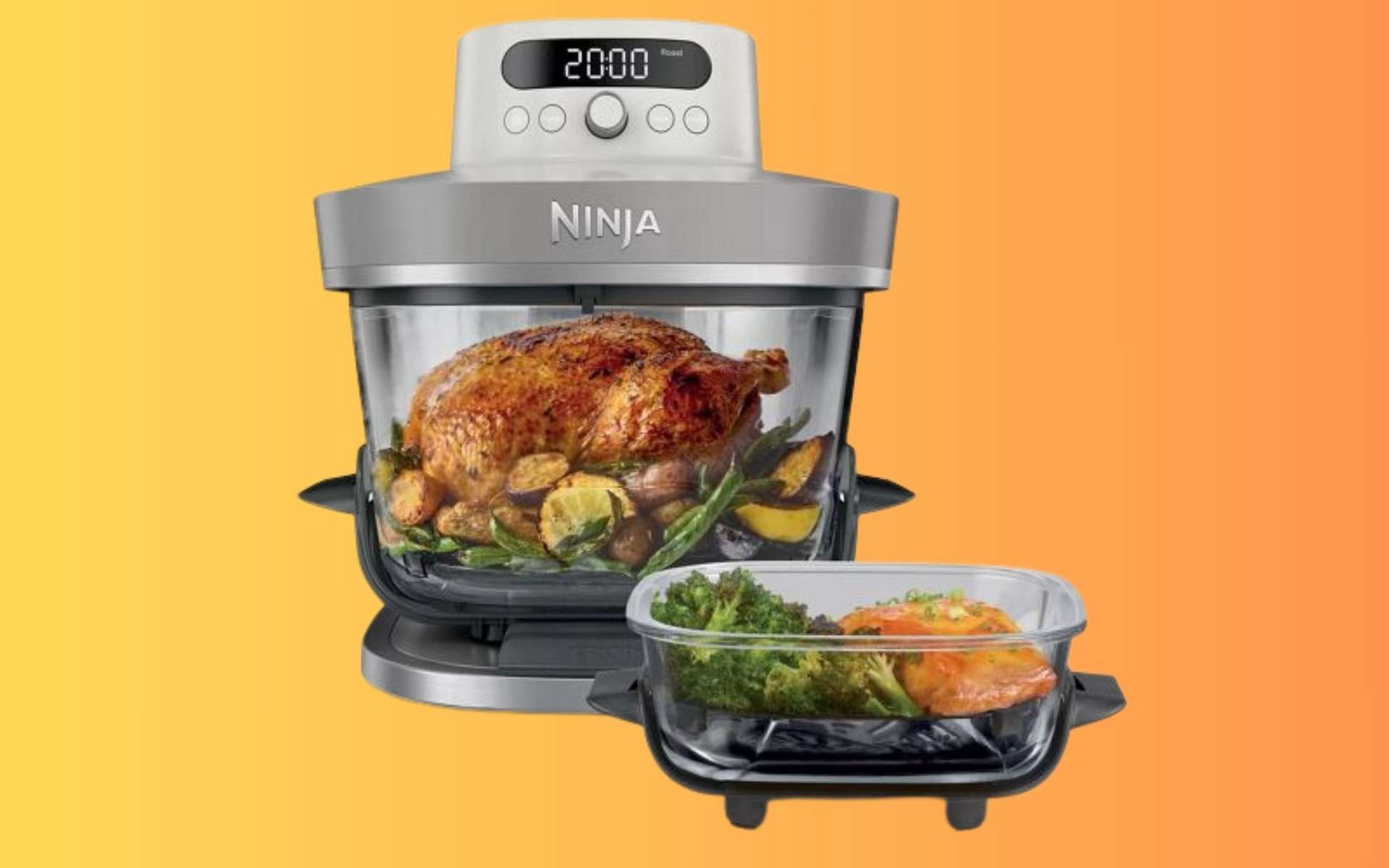
Envie de passer à un airfryer nouvelle génération ? La Ninja CRISPi Pro XL en verre 7 en 1 profite d'une offre attractive chez Rakuten. Une bonne excuse pour cuisiner plus facilement des plats croustillants avec peu de matières grasses.
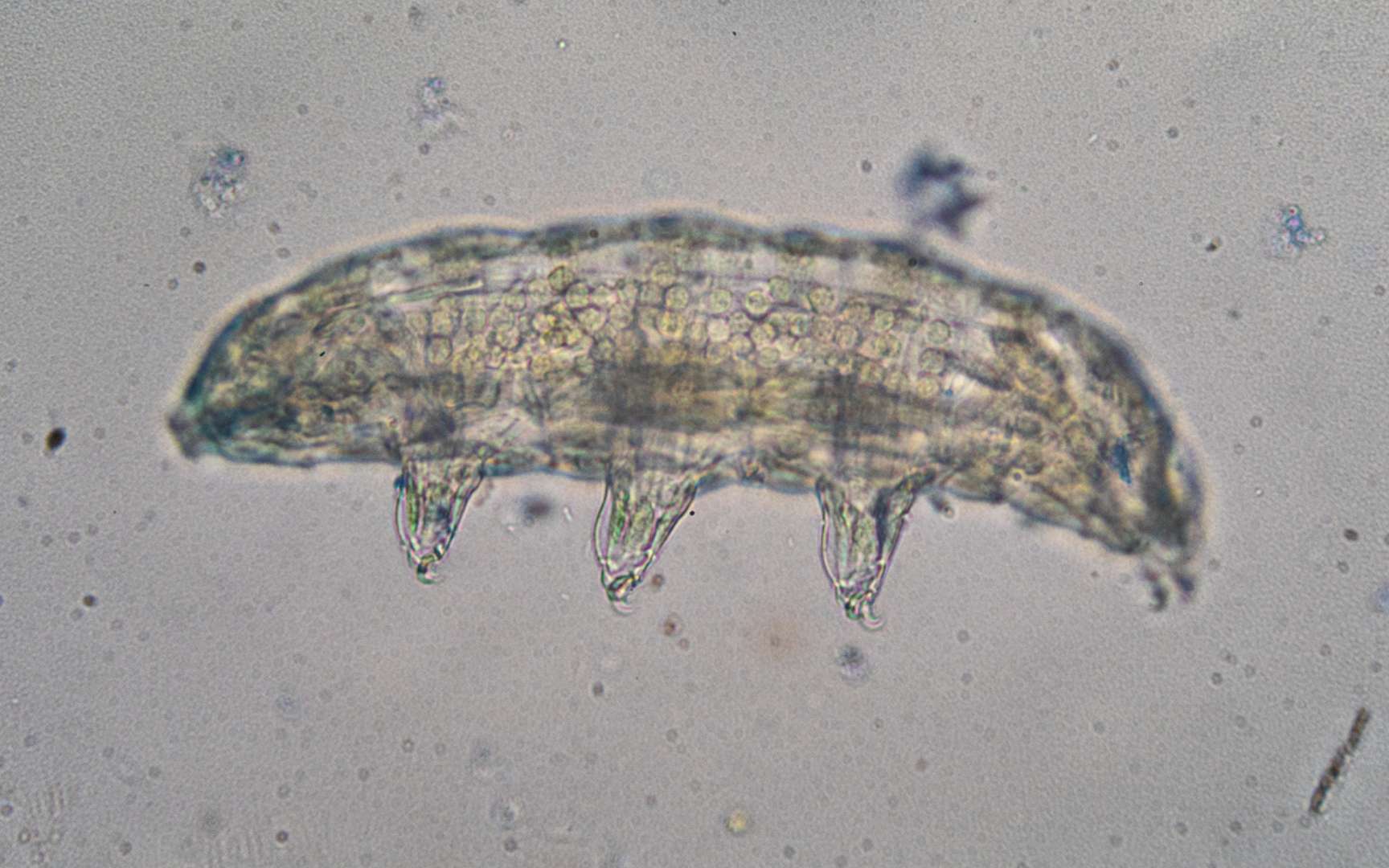
Un demi-millimètre de long, et une résistance aux radiations mille fois supérieure à la nôtre. Le tardigrade doit une partie de ce pouvoir à une seule protéine, capable de s'enrouler autour de l'ADN comme un bouclier. Greffée dans des cellules humaines, elle divise presque par deux les dégâts...
T-Mobile retired its 2G GSM network on Monday, August 3, which means all three major carriers in the United States have now ended 2G service.
T-Mobile kept its 2G network active because it still had some legacy customers who were using it. Some customers visiting the United States and using international roaming carrier agreements for connectivity also needed 2G for voice calling, but T-Mobile worked with carriers globally to prepare for the end of its 2G network.
Customers who were still on T-Mobile's 2G network were warned well ahead of time about the shutdown and given time to transition. Smartphones, alarm panels, payment terminals, and other IoT accessories that used 2G will no longer function.
AT&T ended support for 2G almost a decade ago in 2017, and Verizon stopped supporting 2G in 2020. Now that no carriers in the U.S. support 2G, legacy devices like the original iPhone will not be able to connect to any cellular network. The iPhone technically lost cellular support in 2017 when AT&T sunset its 2G network, and now the last workaround is gone.
All three carriers also ended support for 3G back in 2022, and have also abandoned early LTE iPhones without VoLTE support.
An exquisitely preserved specimen of Austronaga minuta, a small, long-necked marine reptile from the Triassic of China, contains a fossilized stomach, liver and intestines, offering paleontologists their oldest detailed glimpse yet of how early reptiles digested food.
The 13-sided tile that solved a half-century-old math problem, discovered by an amateur mathematician at his kitchen table in 2022, turns out to bend light into a twisting pinwheel unlike anything produced by an ordinary crystal, according to a new study in Nature Communications.
The work, from physicists at the University of Tokyo and NTT’s Nanophotonics Center in Japan, marks the first time anyone has taken the celebrated “einstein” tile—a term derived from the German ein Stein, meaning “one stone,” and unrelated to the famous physicist—out of pure mathematics and asked what it does to light.
The answer is a form of optical handedness that even quasicrystals, the closest known relatives of this structure, do not possess.
Unlike circles or squares, which are identical when mirrored, our hands are not. They may be reflections of each other, but you can’t place one perfectly on top of the other, no matter how you rotate it. Likewise, a handed structure “notices” the difference between left- and right-circularly polarized light, while a mirror-symmetric structure—such as a circle—cannot. The flat tile pattern has no mirror image identical to itself, much like your hands, and that asymmetry becomes imprinted onto the light it diffracts.
“We found that the diffraction patterns themselves become chiral because the structure lacks mirror symmetry,” Masaya Notomi, the study’s senior author, explained in a press statement. “This kind of optical response is fundamentally different from that observed in conventional quasicrystalline materials.”
To see why that matters, it helps to go back to the shape.
The Einstein Problem
Mathematicians had pursued a particular puzzle for roughly 50 years, known as the “Einstein problem.” The question was whether a single shape could completely tile a flat plane, but only in a pattern that never repeats. Roger Penrose reduced the problem to two tiles in the 1970s. Finding a single tile remained out of reach.
Then, in November 2022, David Smith, an amateur mathematician and retired print technician from Bridlington, England, found one while tinkering with shape-tiling software. He cut copies out of cardstock, laid them across his table, and watched the pattern refuse to settle. He nicknamed it “the hat” because it looks vaguely like a fedora. Smith and three collaborators posted the proof in March 2023, and it made news around the world.
An aperiodic tiling using a single shape by Smith, Myers, Kaplan and Goodman-Strauss. (Image: CMG Lee/Wikimedia Commons)
That same year, a 2023 theory paper by physicist Joshua Socolar had already predicted chiral diffraction from hat tilings, but there was one wrinkle. The hat needs its own mirror image sprinkled among the tiles to work, a hint of handedness baked into the geometry. That handedness is exactly what the new study chases into the behavior of light, so to do it, the team led by Yuto Moritake did something a mathematician would never bother with: they built the thing.
They marked the center of each hat tile with a point, producing a pattern with perfect threefold rotational symmetry (it looks identical when you turn it a third of the way around) but no mirror symmetry, meaning its reflection is a genuinely different object. Then they etched that pattern into a 350-nanometer-thick film of silicon nitride, drilling 372,100 tiny holes across a patch half a millimeter on a side.
Shine a laser through a regular grid of holes, and you get a neat, symmetric spray of dots on the far wall—a diffraction pattern, the same effect that throws rainbows off a CD. The team fired a green laser at their aperiodic version and photographed what came out.
It was a pinwheel.
A Quasicrystal Structure
The diffraction pattern was sharp and filled with bright, well-defined spots—the signature of long-range order—and evidence that the structure behaves like a true quasicrystal despite never repeating. But unlike conventional diffraction patterns, the entire arrangement twisted in one direction, with no mirror symmetry anywhere in the image. When the researchers repeated the experiment using the mirror-image version of the tile, the pinwheel twisted in the opposite direction.
So the team did what all scientists do in these situations. They just started blasting different kinds of light at it.
“Because the structure is chiral, a circular-polarization dependence should not be forbidden. But on the first trial, I couldn’t find any difference. I thought it might be very weak, so I changed the camera to a more sensitive one — and then I finally found it,” Moritake told The Debrief. “I somehow expected it, but I was still surprised when I found it.”
The strange result came with that circularly polarized light test. It’s a light whose electric field corkscrews as it travels, clockwise or counterclockwise. The pattern responded differently depending on which way the light was spinning. Feed it left-handed light and certain spots brightened; feed it right-handed light and different ones did. That behavior, the authors note, has never been seen in a conventional quasicrystal.
Underneath all of it sits a piece of elegant bookkeeping. The angle of the pinwheel’s twist, about 15.5 degrees, isn’t arbitrary. Moritake’s team showed that it falls straight out of the Fibonacci sequence and the golden ratio, the same numbers that govern the tile’s geometry. The shape’s real-world twist is written directly into how it scatters light.
The findings are a scientific first, but the paper is quick to point out that this is fundamental physics and not a product. There is no device here, and the authors are careful to call their structure a possible “platform” rather than a working component. The chirality at play is a strictly two-dimensional kind (the absence of a mirror line within the flat pattern), not the three-dimensional handedness of a molecule or, you know, your hands.
“At least, this effect is forbidden in an inversion-symmetric structure, so it reflects the chiral nature of the monotile,” Moritake said. “Of course, this effect could appear in other structures too. But I don’t know of another lattice that is both chiral and quasiperiodic like this one.”
Still, the result does something basic research quietly does all the time: it takes an object discovered for no reason beyond that it was beautiful and finds that nature had a use for it. Breaking a structure’s mirror symmetry is how physicists coax materials into nonlinear optical tricks and polarization-sensitive behavior, and aperiodic tiles offer a new and largely unexplored way in.
“Mathematical discoveries have always led to important developments in physics,” Moritake said. “The monotile is generated from a honeycomb frame, and in nanophotonics, the honeycomb lattice is used constantly because it produces interesting phenomena — graphene is the representative example. So I thought the monotile lattice might be interesting in real physics too.”
For a shape that started as a puzzle on a hobbyist’s kitchen table, that’s a long way to travel.
MJ Banias is a co-founder of The Debrief, covering science and technology news. You can email him at mj@thedebrief.org or follow him on LinkedIn.
 Login