❌

Reading view

How do slingshot maneuvers work to propel spacecraft?

If a satellite’s velocity increases as it approaches a planet during a slingshot maneuver, why does it not decrease by the same amount when it leaves the planet? How can it experience a net gain in velocity? Robert WaltyStephens City, Virginia Slingshot maneuvers can seem counterintuitive. We know that a spacecraft speeds up as itContinue reading "How do slingshot maneuvers work to propel spacecraft?"

The post How do slingshot maneuvers work to propel spacecraft? appeared first on Astronomy Magazine.

  •  

Russian drones found near vital European offshore gas site, get blown up

Romanian army divers used explosives to destroy two Russian-made drones found floating in the Black Sea near Romania’s largest natural gas project, according to the NATO member country’s defense minister.

Defense Minister Radu Miruță posted a Facebook video supposedly showing one of the drones being blown up in the water by explosive ordnance disposal divers of the Romanian army on August 11, as reported by Reuters and other news outlets. The drones were first spotted in the water by a ship working in the vicinity of the Neptun Deep—an offshore gas project under development in the Black Sea that will make Romania the largest gas producer in the European Union.

A Romanian Coast Guard ship that responded with army soldiers aboard found two drifting Gerbera-type drones of Russian design along with other debris. Miruță also disclosed that Romania had reached out to “Ukrainian partners who confirmed that the systems do not belong to them.”

Read full article

Comments

© Romanian Ministry of Defense

  •  

Daorson, la ciudad iliria capital de los misteriosos daorsi a la que Roma no protegió a pesar de que llevaba más de un siglo demostrando su lealtad

En una colina de Herzegovina, a menos de una hora de Mostar, sigue en pie un muro de piedra caliza de 65 metros de largo, 4,2 de ancho y hasta 7,5 de alto que lleva más de dos mil años sin una sola gota de mortero entre sus bloques. Los arqueólogos lo llaman muro ciclópeo, […]

  •  

Los anillos de los árboles revelan la cronología exacta de la antigua ciudad frigia de Gordio, la capital del legendario rey Midas

La antigua ciudad de Gordio, capital del reino frigio y recientemente declarada Patrimonio de la Humanidad por la UNESCO, ha obtenido una nueva y precisa cronología para sus fases constructivas más importantes. Un equipo internacional de investigadores, liderado por la Universidad de Estambul-Cerrahpaşa, ha analizado 16 muestras de madera extraídas en las excavaciones de la […]

  •  

Las mujeres también organizaban banquetes: la epigrafía revela el protagonismo femenino en las celebraciones públicas de la Hispania romana

Cuando pensamos en la sociedad romana, la imagen que suele venir a la mente es la de un mundo dominado por hombres: senadores, magistrados, generales y emperadores. Las mujeres, según el relato tradicional, ocupaban un espacio secundario, confinadas al ámbito doméstico y excluidas de la vida pública. Sin embargo, un estudio reciente basado en el […]

  •  

Así vivían y se alimentaban los celtas hace 2000 años antes de que llegasen los romanos: cereales y frutos silvestres, pero nada de legumbres

Hace más de dos mil años, en plena Edad del Hierro, los celtas construyeron un gran asentamiento fortificado en dos penínsulas que se adentraban en el río Rin, cerca de lo que hoy es la ciudad suiza de Schaffhausen. Este lugar, conocido como el oppidum de Altenburg-Rheinau, está considerado por los arqueólogos como una auténtica […]

  •  

FDA cleared a huge Samsung Galaxy Buds feature to help you hear every moment

What you need to know

  • Samsung announced that its Hearing Aid feature for the Galaxy Buds 3 Pro and 4 Pro has been FDA-cleared.
  • It states this will work alongside its Hearing Test, which lets users use "clinical-grade, pure-tone audiometry" to test their hearing and see clear results.
  • Samsung says Hearing Test and Hearing Aid will arrive on the Buds 3 Pro and 4 Pro in the U.S. and other approved markets in Q4 2026.

Samsung announces that a major accessibility feature for its Galaxy Buds has cleared a key governmental hurdle.

The company announced this morning (Aug 11) that its Hearing Aid feature for the Galaxy Buds 3 Pro and 4 Pro has been FDA-cleared. Samsung says this enables the previously mentioned devices "to serve as an over-the-counter hearing aid for adults (18 or older) with perceived mild to moderate hearing loss."

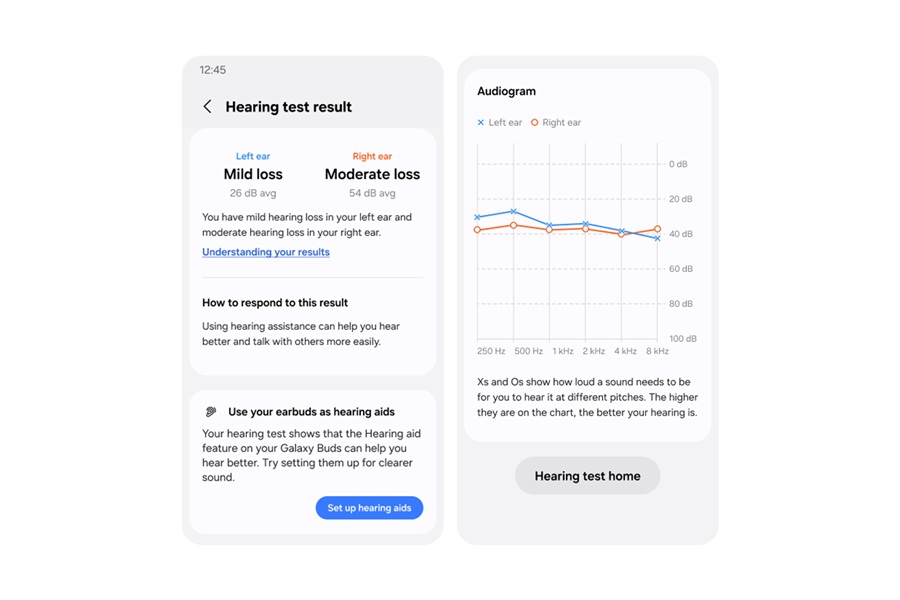
For users, this means you'll have access to the Galaxy Buds' Hearing Test, alongside this Hearing Aid feature. Hearing Test is self-administered from the Galaxy Buds menu in your Settings. Samsung says it uses "clinical-grade, pure-tone audiometry" to test your hearing in each ear. Hearing Test is also said to highlight any "hearing deficits." Your Galaxy Buds will generate an "audiogram" that Samsung says mirrors what you'd receive from a professional test.

Once completed, your test will categorize your results in one of the following categories: mild, moderate, severe, or profound.

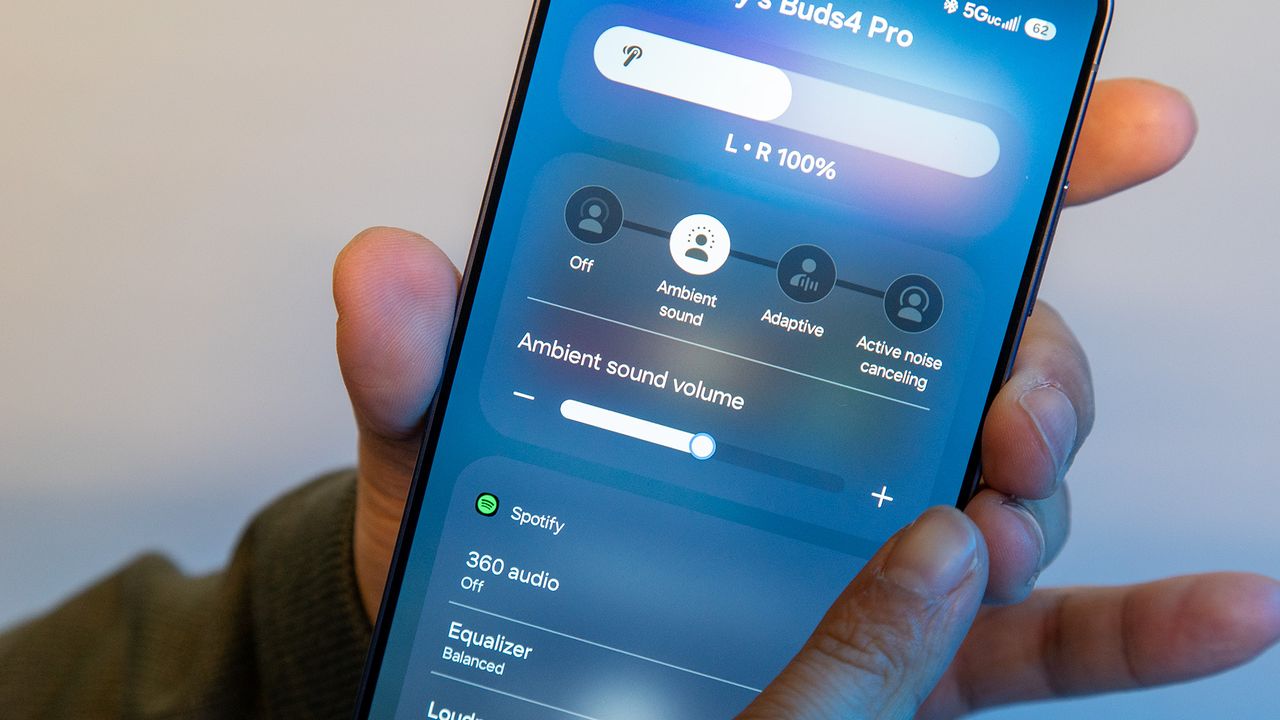
Your Galaxy Buds will then use your Hearing Test results to fine-tune its Hearing Aid feature. It might boost "high frequencies, surrounding whispers, or distant voices." The Galaxy Buds 3 Pro and 4 Pro benefit from familiar true hearing aid features, such as "noise elimination and beamforming." Hearing Test and the Hearing Aid feature for the Buds 3 Pro and 4 Pro will arrive on Galaxy devices in Q4 2026 in the U.S. and other approved markets.

Hear the world around you

Samsung's Hearing Test feature works with its Hearing Aid feature for the Galaxy Buds 3 Pro and 4 Pro, capable of delivering a near professional-like experience to understand your hearing health.

(Image credit: Samsung)

Samsung has continued to focus on the user's hearing health ever since its huge Health app update in June. In the spirit of being proactive, Samsung announced Hearing Health. It will leverage your Galaxy Watch, phone, and Buds to monitor the noise level around you. If loud noises are a constant, your Galaxy Watch would let you know and urge you to make changes. The idea is to help users better preserve their hearing for the long term.

This capability was announced for the revamped app, which includes a lot of new health features for current and upcoming Galaxy devices. For example, the Galaxy Watch 9 and Watch Ultra 2 feature this new Hearing Health feature right out of the box. Samsung reiterates that users can keep tabs on their Hearing Health from the Health app, and now these new features are on the way for the Galaxy Buds to take things further.

Android Central's Take

Preserving your hearing is incredibly important. It's one of those things that if you lose it, it's hard to get back. This is even more important, given that we love earbuds. It's easy to pop those in and start listening while working, reading, or walking. But we've got to be conscious about our noise level. You never want those earbuds too loud. That's something we all learned when we were kids, right?

  •  

iPhone 18 Pro Will Reportedly Start With 256GB of Storage

While the iPhone 17 Pro has double the base storage compared to the iPhone 16 Pro, there will apparently be no further increase this year.


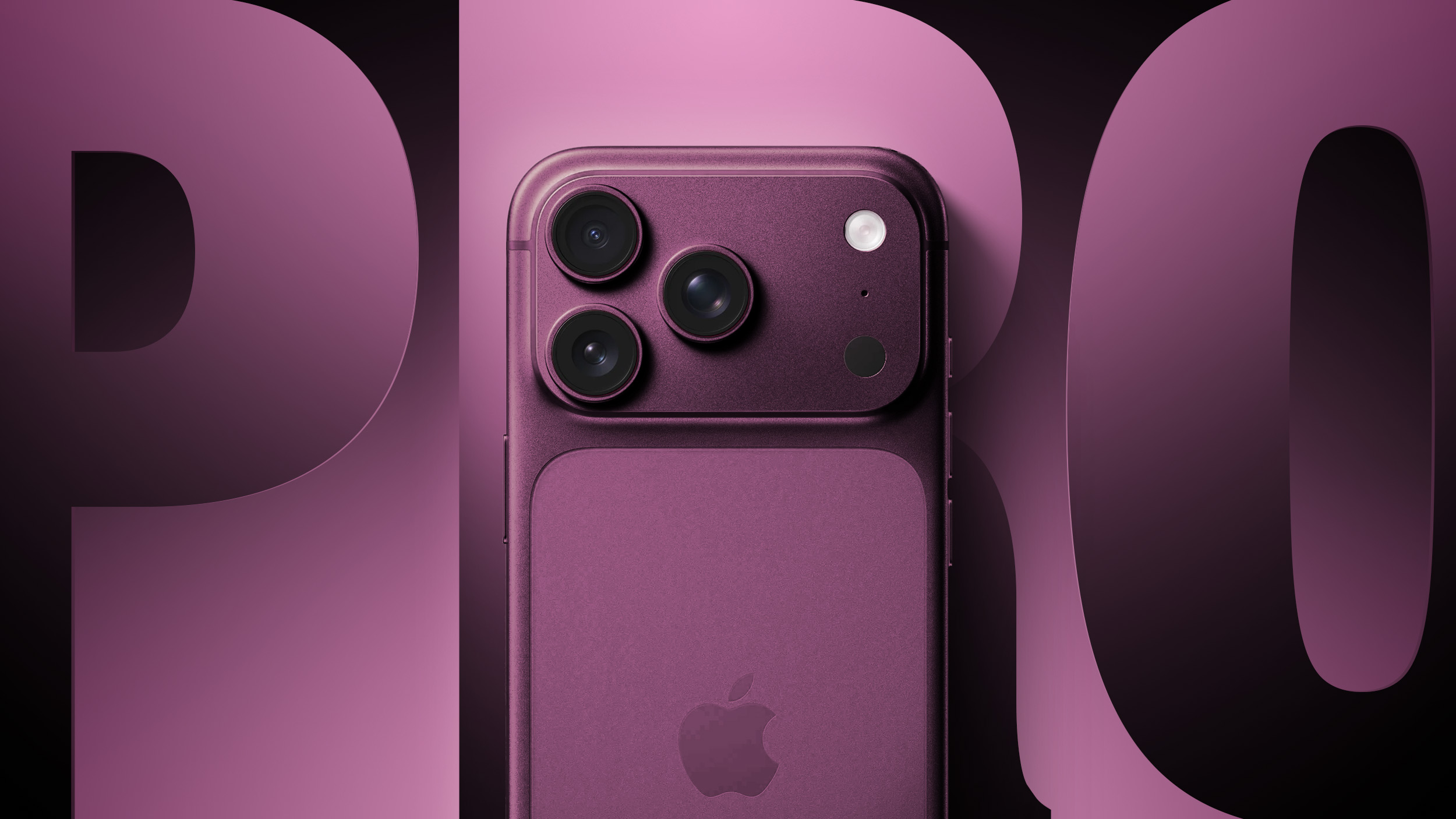
In a report this week estimating that the iPhone 18 Pro's bill of materials will be nearly 40% higher than the iPhone 17 Pro, Taiwanese research firm TrendForce said the iPhone 18 Pro will start with 256GB of storage, matching the iPhone 17 Pro's minimum capacity. The report did not explicitly mention the iPhone 18 Pro Max, but the Pro and Pro Max models have started with the same amount of storage for the past two generations.

Minimum storage capacities by model:
  • iPhone 16 Pro: 128GB

  • iPhone 17 Pro: 256GB

  • iPhone 18 Pro (rumored): 256GB
Even though it does not expect an increase in base storage, TrendForce said that retail price increases for the iPhone 18 Pro models are "unavoidable" due to increased costs for components. RAM costs have increased significantly due to the ongoing memory chip shortage, and prices for storage and A20 Pro chips are also expected to be higher.

According to reports, iPhone 18 Pro starting prices in the U.S. could be $200 to $300 higher compared to iPhone 17 Pro starting prices. If so, the iPhone 18 Pro and iPhone 18 Pro Max could start at up to $1,399 and $1,499, respectively.

In June, Apple raised prices on all Macs and iPads, as well as the Apple TV, HomePod, HomePod mini, and Vision Pro. The increases ranged from $30 for the HomePod mini to up to $1,300 for a high-end Mac Studio configuration.

Apple said it raised prices because of the ongoing memory chip shortage, resulting from companies building out data centers with powerful AI servers. The supply-demand imbalance has led to skyrocketing prices for RAM and SSD storage chips used in a wide range of Apple products, and Apple has now passed those costs on to customers.

Apple CEO Tim Cook previously commented that price increases were "unavoidable" due to "a hundred-year flood" on memory pricing.

Apple is expected to announce the iPhone 18 Pro models in September.
Related Roundup: iPhone 18 Pro

This article, "iPhone 18 Pro Will Reportedly Start With 256GB of Storage" first appeared on MacRumors.com

Discuss this article in our forums

  •  

The 6 myths of agile project delivery (and how to solve them)

When you ask businesses about how they are innovating their ways of working, one word will come up time and again: Agile. Agile delivery. Agile workflows. Agile everything.

The term has been so overwhelmed by buzzwords, supposed best practice guides, and misguided strategy documents that it has almost lost all meaning.

In fact, if many organizations that believe they’re operating in an Agile manner were to take a step back and take an objective look at their ways of working, they would quickly come to realize they have not moved away from legacy command-and-control structures.

In this fog of misunderstanding, a series of myths has taken hold that have made the role of Agile professionals far less clear-cut, making it harder for organizations to put this invaluable methodology into practice.

One root of these problems lies in a tendency for people to narrow Agile’s scope, approaching it as a tick list of processes to adhere to rather than a fundamental shift in how people work and deliver for a business.

It is critical that Agile professionals equip themselves to fact-check these myths as they come up in their work. Every failed project done in Agile’s name diminishes the luster attached to the methodology, increasing the risk that future businesses will reject this powerful way to improve program and project management.

Myth 1 – “Agile delivery leaders are just administrators”

Agile professionals are often seen principally as bureaucratic note-takers, or schedulers – the people who organize everyone else’s work.

This view misses the point: their real value is as facilitators and protectors from distraction. Good Agile professionals create the space for teams to focus, and align delivery with outcomes rather than just activity.

Myth 2 – “Agile professionals are the scrum police”

Some believe Agile delivery operates within a top-down hierarchy, with Agile professionals in place to enforce frameworks and control how team members spend their time.

This is quite wrong: Agile professionals work with teams, coaching them to make better decisions, remove friction, and build confidence in delivery – without resorting to outdated command-and-control methods.

Myth 3 – “Agile delivery must be technical”

It’s a common assumption that Agile delivery leaders require a deep technical background. Technical awareness can certainly help, supporting a deeper understanding of the team’s tasks and challenges, but it isn’t the core of the job.

The real skill lies in understanding people and processes, then creating the conditions for specialists to succeed. In most projects, the need is for strong communication and facilitation across the entire team rather than strategic decision-making or technical troubleshooting.

Indeed, in some circumstances ‘hands-on’ Agile delivery leaders who think they know best can create conflict within teams, damaging morale and motivation in the process. Think of it like athletics: coaches don’t need to run faster than the athletes; their task is to help the athletes run faster.

Myth 4 – “Certification equals capability”

A certificate may prove that somebody knows about an Agile framework, but it does not demonstrate that they’re capable of applying it in practice.

The best Agile professionals succeed through experience, attitude, and ‘soft’ skills. They know from experience how to adapt Agile values and principles to particular circumstances; when to challenge people, and when to simply step back and get out of their team’s way.

Like any profession, being truly effective at the job requires skill, practical experience, and professional characteristics appropriate for the role. A piece of paper doesn’t make you agile; effectiveness with people and process does.

Myth 5 – “Agile delivery leaders are cheerleaders”

Contrary to popular belief, Agile delivery isn’t principally about arranging team socials or keeping everyone upbeat during stand-ups.

The value lies in keeping people aligned and productive under deadline pressure and/or changing priorities; after all, no plan survives contact with the enemy. Agile delivery leaders are there to create stability within an uncertain environment: they help teams stay focused on what matters, and shield them from distractions so they can maximize time spent ‘in the zone’.

That said, there is value in boosting morale – and championing a team’s achievements is one way to do this. According to the “broaden-and-build” theory of psychologist Barbara Fredrickson, positive emotions broaden our thought-action repertoires, enabling us to develop skills and resources that improve our long-term productivity.

One famous study from the "Journal of Labor Economics" showed that happiness at work leads to improved performance, especially in jobs where creativity and initiative are key.

Myth 6 – “Agile delivery leaders must remove all blockers for their teams”

While impediment removal is without doubt a core responsibility for an Agile delivery leader, the reality is that teams solve most of their own issues – perhaps with the assistance of a little coaching or support.

Nonetheless, sometimes a challenge is too big, distracting or political for them to handle, and Agile delivery leaders must step in – often by representing the team with stakeholders and at governance layers: this can be helpful in reducing the ‘noise’ around the team and the number of distracting interactions that take team members away from the core task.

As captured in the proverb: “Give a man a fish, and you feed him for a day; teach a man to fish, and you feed him for a lifetime,” effective Agile delivery leadership is about enabling, not babysitting.

True Agile

So Agile is a much more subtle and responsive discipline than the stereotypes present – and it must be led by subtle and responsive practitioners. The approach can generate huge benefits – saving time, handling change more elegantly, reducing project failure rates and, above all, creating better products and services that more effectively meet customer needs and objectives.

These goals are achieved by working with people – rather than by tinkering with processes – to surface problems early in the development process, resolve them quickly and with a minimum of fuss, and avoid interfering when the team is already functioning effectively.

High-performing teams depend on trust, accountability and continuous learning. Leaders who foster those qualities are more likely to deliver successful outcomes, creating teams that stay focused, take ownership of their work, and continuously improve how they operate.

This is a role that is all about empowerment; when they’re doing their job well, much of an Agile practitioner’s work occurs out of sight. So how do you know when you’ve got a really great Agile delivery leader? When their team runs perfectly well without them.

This may not sound like the smartest business model for the practitioner, but it’s definitely the best outcome for the client’s own business – and that, ultimately, is what Agile is all about.

We've rated and ranked the best productivity tools.

This article was produced as part of TechRadar Pro Perspectives, our channel to feature the best and brightest minds in the technology industry today.

The views expressed here are those of the author and are not necessarily those of TechRadarPro or Future plc. If you are interested in contributing find out more here: https://www.techradar.com/pro/perspectives-how-to-submit

  •  

Dos modelos premium aos mais “económicos”: 12 smartphones com as melhores câmaras que pode comprar em Portugal

Fomos procurar quais os smartphones com as melhores câmaras à venda em Portugal, dividindo-os em duas categorias, sem limite de preço e até 500 euros. Explicamos também quais os critérios que deve ter em contra na hora de escolher.

The post Dos modelos premium aos mais “económicos”: 12 smartphones com as melhores câmaras que pode comprar em Portugal appeared first on Tek Notícias.

  •  

Stellantis, svelato il propulsore elettrico per chi sogna il V8: addio turbo lag

Il ritardo del turbo, nell’enciclopedia delle quattro ruote, indica l’attesa tra la pressione dell'acceleratore e l'effettiva risposta del turbocompressore nei motori sovralimentati. La <strong>divisione performance SRT </strong>di <strong>Stellantis</strong> ha presentato un nuovo concept di propulsore battezzato eBoost Air. La nuova tecnologia di compressione elettrica è realizzata per risolvere uno dei principali problemi dei propulsori.Come si può gestire l'elevata potenza dei turbocompressori di grandi dimensioni conservando la reattività dell'acceleratore? Associata a un prototipo di <strong>motore Hurricane </strong>a<strong> sei cilindri</strong> in linea da 3,0 litri ad alte prestazioni, eBoost Air sfrutta un compressore elettrico per far entrare in funzione i turbocompressori fin dai bassi regimi, offrendo una risposta repentina.<h2>L’innovazione di Stellantis</h2>Quando il motore raggiunge un regime più elevato, entra in funzione l'energia dei gas di scarico. Il risultato è una sovralimentazione costante su tutto l'arco dei giri, eliminando virtualmente il <strong>turbo lag.</strong> Un boost che regala un piacere di guida agli appassionati. I turbocompressori sono alimentati dai gas di scarico del motore, generalmente dissipati in termini energetici.Non disperdendo l'aria di scarico forzata per far girare la turbina, i turbocompressori creano un<strong> sistema di sovralimentazione</strong> che riduce le perdite di pompaggio e garantiscono più ossigeno al motore. Tutto questo si traduce in combustioni più intense, dando una maggiore potenza. Con turbocompressori più grandi, è possibile forzare più aria nel motore, producendo più potenza, ma solo ad alti regimi.A regimi più bassi, la pressione di scarico abitualmente risulta troppo debole per far funzionare correttamente i turbocompressori. La tecnologia del <strong>compressore elettrico eBoost Air </strong>di <strong>SRT</strong> risolve questo problema riducendo il divario di giri con la pressione positiva generata da una turbina elettrica rapida e potente, che fa entrare in funzione i turbocompressori prima, ottimizzando la risposta all'acceleratore.[caption id="attachment_281598" align="alignnone" width="1200"]<img class="size-full wp-image-281598" src="https://www.hdmotori.it/app/uploads/2026/08/Stellantis-Propulsore-Elettrico-Turbo-Lag.jpg" alt="Stellantis, svelato il propulsore elettrico" width="1200" height="800" /> Propulsore elettrico: addio turbo lag Stellantis[/caption]<h2>La soddisfazione dei tecnici</h2>Quando il conducente vuole una coppia immediata e i turbocompressori non hanno ancora raggiunto la velocità di funzionamento richiesta, il <strong>sistema di bypass</strong> convoglia il flusso d'aria attraverso il compressore elettrico, che genera rapidamente la pressione di sovralimentazione necessaria per far entrare in funzione le turbine.Tim Kuniskis, responsabile dei marchi americani e del marketing per il Nord America, ha assicurato: <em>"Gli appassionati non sono interessati alla tecnologia fine a se stessa. Ma quando la tecnologia migliora le prestazioni senza svantaggi, la apprezzano appieno. L’eBoost Air offre esattamente questo tipo di vantaggio tangibile. <strong>È un'idea intelligente</strong> e semplice che affronta di petto il turbo lag e rispecchia ciò che <a href="https://www.hdmotori.it/dodge-charger-daytona-flop-vendite-srt-banshee-eliminata/">SRT</a> sa fare meglio: muoversi velocemente, sfidare le convenzioni e perseguire prestazioni superiori".</em>L’eBoost Air offre le sensazioni istantanee e lineari di un <strong>V8 sovralimentato.</strong> La divisione Street and Racing Technology (SRT) di <a href="https://www.hdmotori.it/stellantis-richiama-20-000-auto-un-guasto-al-servosterzo-potrebbe-provocare-un-incendio/" target="_blank" rel="noopener">Stellantis</a> riafferma così il suo ruolo di primo piano nelle innovazioni dell’industria dell’Automotive 2.0.<em>"La divisione SRT sta sfruttando lo <strong>sviluppo rapido</strong> e l'ingegneria interfunzionale per valutare le tecnologie emergenti in termini di prestazioni -</em> ha dichiarato Tom Sacoman, responsabile delle operazioni SRT - <em>In questo caso, pre-caricando elettromeccanicamente i turbocompressori prima che l'energia dei gas di scarico sia disponibile, siamo in grado di migliorare significativamente la risposta alla sovralimentazione e la guidabilità".</em>[drivek_widget brand_id="fiat" model_id="500-hybrid"]

Lo Smartphone piccolo che va bene a tutti? Motorola Edge 50 Neo, compralo al miglior prezzo da Unieuro a 239 euro.

CLICCA QUI PER CONTINUARE A LEGGERE

  •  

OpenAI extends 'Daybreak' security project and reveals new cyber model — but for approved users only

  • OpenAI expands Daybreak with Blue and Red tiers for defensive cyber work
  • New GPT‑5.6‑Cyber model offers high compliance for authorized vulnerability research
  • Access remains restricted due to dual‑use risks and reduced safeguard operation

OpenAI has announced two new tiers for its Daybreak dedicated cybersecurity project, each offering a different model with different levels of compliance. It also used the opportunity to introduce a new security-focused AI model, as well.

Hackers and criminals are increasingly abusing AI to improve and speed up the creation of phishing emails and malicious code, and with the introduction of AI agents, they’ve also used it to automate entire attack processes. The AI community responded by placing strong guardrails, making sure their models do not comply with requests to build malware, or hack other companies.

These guardrails ended up being a two-edged sword, because as they slowed down attackers, they also slowed down the defenders.

What is Daybreak?

To give the cybersecurity community the upper edge, companies like OpenAI started creating dedicated cybersecurity initiatives that provide a vetted list of companies state-of-the-art models, free of guardrails. The company also provided them with pre-trained AI agents, as well as access to a pool of shared knowledge.

Initially launched in June 2026, Daybreak originally included GPT.5-5-Cyber (a model optimized for security work), Codex Security (an agent that can analyze codebases, identify vulnerabilities, validate findings, and help develop patches), Patch the Planet (an initiative with Trail of Bits to find and fix vulnerabilities in open-source software), Daybreak Cyber Partner Program (lets approved cybersecurity companies such as Cloudflare or Cisco integrate OpenAI's cyber capabilities into their own products and services), and Trusted Access for Cyber (the governance/access system for organizations doing authorized cybersecurity work with these capabilities).

Now, OpenAI has expanded Daybreak with two access tiers, Daybreak Blue, and Daybreak Red.

The company says Daybreak Blue is “the recommended starting point for most defenders, supporting vulnerability discovery, secure code review, malware analysis, incident response, and patch validation. Companies opting for this tier can expect access to frontier general-purpose models, including GPT‑5.6 Sol, whose safeguards have been tailored to authorized defensive security work.

Daybreak Red, on the other hand, provides access to OpenAI’s “purpose-trained cybersecurity models for authorized vulnerability research, exploit validation, and security testing.” This tier offers the brand new GPT‑5.6‑Cyber, built on GPT‑5.6 Sol and trained to improve capabilities on several specialized cybersecurity tasks such as finding zero-day vulnerabilities and developing exploit chains.

This model is also more compliant and less likely to refuse certain higher-risk, dual-use cyber tasks.

Complying with "dangerous" requests

Request compliance is the name of the game here. OpenAI says the new model addresses feedback from security researchers who “encountered persistent refusals with the earlier model.” General-purpose GPT-5.6 Sol, for example, will comply with just 1.5% of the requests usually given by cyber-defenders working on codebase analysis or vulnerability identification. This percentage increases to 2.0% with Daybreak Blue access.

GPT-5.6-Cyber, on the other hand, completes 95.0% of requests, OpenAI says, up from 57.3% of the previous model, GPT-5.5-Cyber. We weren’t able to independently verify these claims, though.

While it doesn’t outright say it, OpenAI considers these models relatively dangerous to use, which is why they’re locked behind the Daybreak Cyber Partner Program. However, the program is now expanding, allowing these companies to embed the models behind their own products, managed services, or cybersecurity engagements, and offer them to clients of their own.

Those who wish to be a part of the program directly can do so by applying to join online now.

“Models running with reduced safeguards carry risks beyond standard model usage, whether from misuse or misalignment. Despite these risks, we believe that democratizing access to frontier intelligence for defenders is crucial to accelerating and automating cyber defense,” OpenAI said.

“Daybreak Blue and Daybreak Red access are available for approved individuals⁠ and organizations conducting authorized work. We control access through identity verification, account security, monitoring, approved-use restrictions, and legal attestations.”

  •  

Fetal brain models show IL-17A disrupts cortical development after maternal immune activation

A new study has brought scientists closer to observing how inflammation during pregnancy may alter the earliest stages of human brain development. Using three-dimensional tissue models made from human fetal brain samples, researchers modeled maternal immune activation and identified the signaling molecule interleukin-17A, or IL-17A, as a major driver of abnormal cortical development. The findings, published in Nature Neuroscience, offer a human-based experimental system for investigating how immune signals outside the brain can influence the formation of neural circuits before birth.

Maternal immune activation refers to the biological response triggered when a pregnant individual experiences infection or significant inflammation. Epidemiological studies have associated certain prenatal inflammatory exposures with an increased likelihood of neurodevelopmental conditions, including autism spectrum disorder, schizophrenia, and intellectual disability. Yet the mechanisms behind these associations have remained difficult to study. Animal models have provided important clues, but differences between species can limit their ability to reproduce the timing, cellular organization, and molecular environment of the developing human cortex.

The researchers addressed this challenge with “brain cerebroids,” three-dimensional, ex vivo models that preserve features of developing human fetal brain tissue. Unlike simplified cultures composed of a single cell type, these structures retain a more complex arrangement of neural progenitors, immature neurons, and supporting cells. Their three-dimensional architecture allows cells to communicate and organize in ways that more closely resemble the fetal cortex, including the production and movement of neurons that ultimately establish the layered structure of the brain’s outer region.

To recreate aspects of maternal immune activation, the team exposed the fetal brain cerebroids to inflammatory conditions associated with immune signaling during pregnancy. The central focus was IL-17A, a cytokine produced primarily by activated immune cells, particularly a subset of T cells known as T helper 17 cells. Cytokines are small signaling proteins that coordinate immune responses, but they can also affect tissues beyond the immune system. In the developing brain, inappropriate or excessive exposure to such signals may influence cell proliferation, migration, differentiation, and the formation of connections between neurons.

The study found that IL-17A exposure was linked to disruptions in cortical development within the human cerebroids. These effects are described as “IL-17A-driven,” indicating that the cytokine was not merely associated with the developmental changes but played a functionally important role in producing them. The disturbances affected the organization and behavior of developing neural cells, processes that are essential for building the cortex. During normal development, neural progenitor cells generate new neurons in tightly regulated sequences, while young neurons migrate to their appropriate positions. Interference with either process can alter the structure and connectivity of later-forming brain tissue.

The results are especially significant because they were observed in human fetal brain material rather than inferred only from animal studies. Previous research in mice has implicated maternal immune activation and IL-17A in changes to cortical organization and behavior in offspring. However, the human cerebroid model provides an opportunity to examine whether similar immune mechanisms operate in human tissue, where the timing of neurogenesis, cell-type composition, and cortical architecture differ from those of rodents. The approach may also help reveal human-specific responses that conventional laboratory animals cannot capture.

The findings do not mean that IL-17A exposure during pregnancy inevitably causes a neurodevelopmental condition, nor do they establish that prenatal inflammation is a single explanation for such conditions. Brain development is shaped by a combination of genetic factors, immune signals, environmental influences, and developmental timing. The experiments also took place in an ex vivo model, outside the full physiological environment of a living pregnancy. Cerebroids cannot reproduce the placenta, maternal circulation, hormonal changes, or the complete immune system, all of which influence how inflammatory signals reach the fetus and how long they remain active.

Nevertheless, the model could become a powerful platform for testing mechanisms and potential interventions. Researchers may use it to determine how IL-17A changes gene activity in neural progenitors, whether it alters communication between neurons and glial cells, and which molecular pathways make some developing cells more vulnerable than others. Because the tissue is human and three-dimensional, it may also support studies of patient-specific genetic risk, allowing investigators to compare how different backgrounds respond to the same inflammatory signal.

The work also highlights a broader shift in neuroscience toward experimental systems that combine human tissue with controlled laboratory manipulation. Understanding prenatal inflammation is difficult in clinical studies because immune exposure cannot be ethically assigned or precisely timed in pregnant people. Brain cerebroids offer a way to isolate individual components of that complex biology while preserving more of the developing tissue’s natural organization than conventional two-dimensional cell cultures. As these models improve, they may help distinguish temporary developmental changes from persistent alterations in cortical circuitry and identify when immune signaling is most consequential.

By showing that IL-17A can disrupt human cortical development in a three-dimensional ex vivo system, the study gives researchers a clearer biological target in the search for links between prenatal inflammation and later neurodevelopment. Its most immediate contribution is not a new diagnosis or treatment, but a more precise experimental framework: one that connects maternal immune signaling to cellular events in the developing human cortex. That connection could guide future work on prevention, therapeutic timing, and the complex origins of developmental differences long before the first symptoms become visible.

Subject of Research: Maternal immune activation and IL-17A-driven disruption of human fetal cortical development in 3D ex vivo brain cerebroids.

Article Title: Modeling maternal immune activation in 3D ex vivo human fetal brain cerebroids reveals IL-17A-driven disruption of cortical development.

Article References: Assir, M.Z.K., Yanakiev, M., Gim, D.H. et al. Modeling maternal immune activation in 3D ex vivo human fetal brain cerebroids reveals IL-17A-driven disruption of cortical development. Nature Neuroscience (2026). https://doi.org/10.1038/s41593-026-02400-2

Image Credits: AI Generated

DOI: https://doi.org/10.1038/s41593-026-02400-2

Keywords: maternal immune activation, IL-17A, fetal brain development, cortical development, brain cerebroids, neurodevelopment, prenatal inflammation, human brain models, cytokines, neuroscience

  •  
❌