Un hallazgo en el yacimiento de Minferri, en la localidad leridana de Juneda, ha venido a trastocar por completo la cronología establecida para la metalurgia del plomo en la península ibérica. Las investigaciones desarrolladas en este enclave de la Edad del Bronce, cuyos resultados se acaban de publicar en la revista científica Antiquity, sitúan la […]
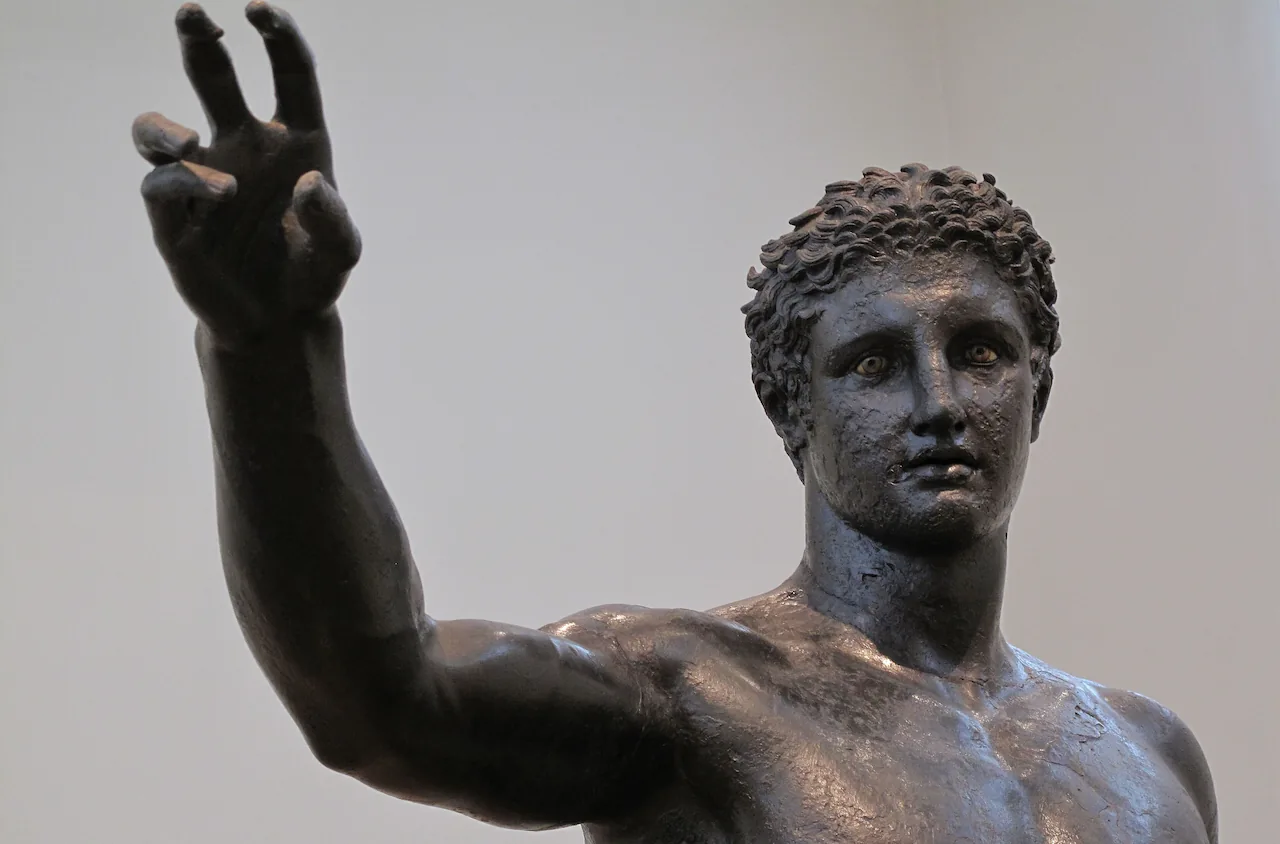
Tiene 1,96 metros de altura, casi dos mil trescientos años y un detalle que la hace especial entre las esculturas de bronce que se conservan de la Antigüedad griega, junto con el Auriga de Delfos y los bronces de Riace: al igual que ellos el Efebo de Anticitera conserva sus ojos, hechos de pasta vítrea, […]
La campaña arqueológica desarrollada durante los meses de mayo y junio de 2026 en Cova Dones, ubicada en el municipio valenciano de Millares, ha transformado por completo la dimensión conocida hasta ahora de este enclave subterráneo. Los trabajos, liderados por investigadores de las universidades de Alicante y Zaragoza, han permitido documentar un total de 120 […]
El hallazgo se produjo en el lugar menos esperado. Durante las excavaciones en el Odeón de Éfeso, un edificio dedicado a representaciones musicales y poéticas construido en el siglo I de nuestra era, los arqueólogos localizaron en 2010 un pequeño enterramiento que ha permanecido oculto durante más de doce siglos. No se trataba de una […]
Plagas, sequías y rebeliones: la crisis que estuvo a punto de acabar con Asiria terminó dando origen al primer imperio de la historia. Una tablilla dañada del Museo Británico reescribe un episodio clave de la historia mesopotámica.
Se você pretende desenvolver aplicativos para as plataformas mobile iOS e Android, conheça e veja como instalar o Ionic Framework no CentOS e comece a criar seus apps.
The Last Person on Earth will bring a different kind of dating experiment to Apple TV, pairing people who appear fundamentally incompatible before sending them to some of the world most romantic and isolated destinations.
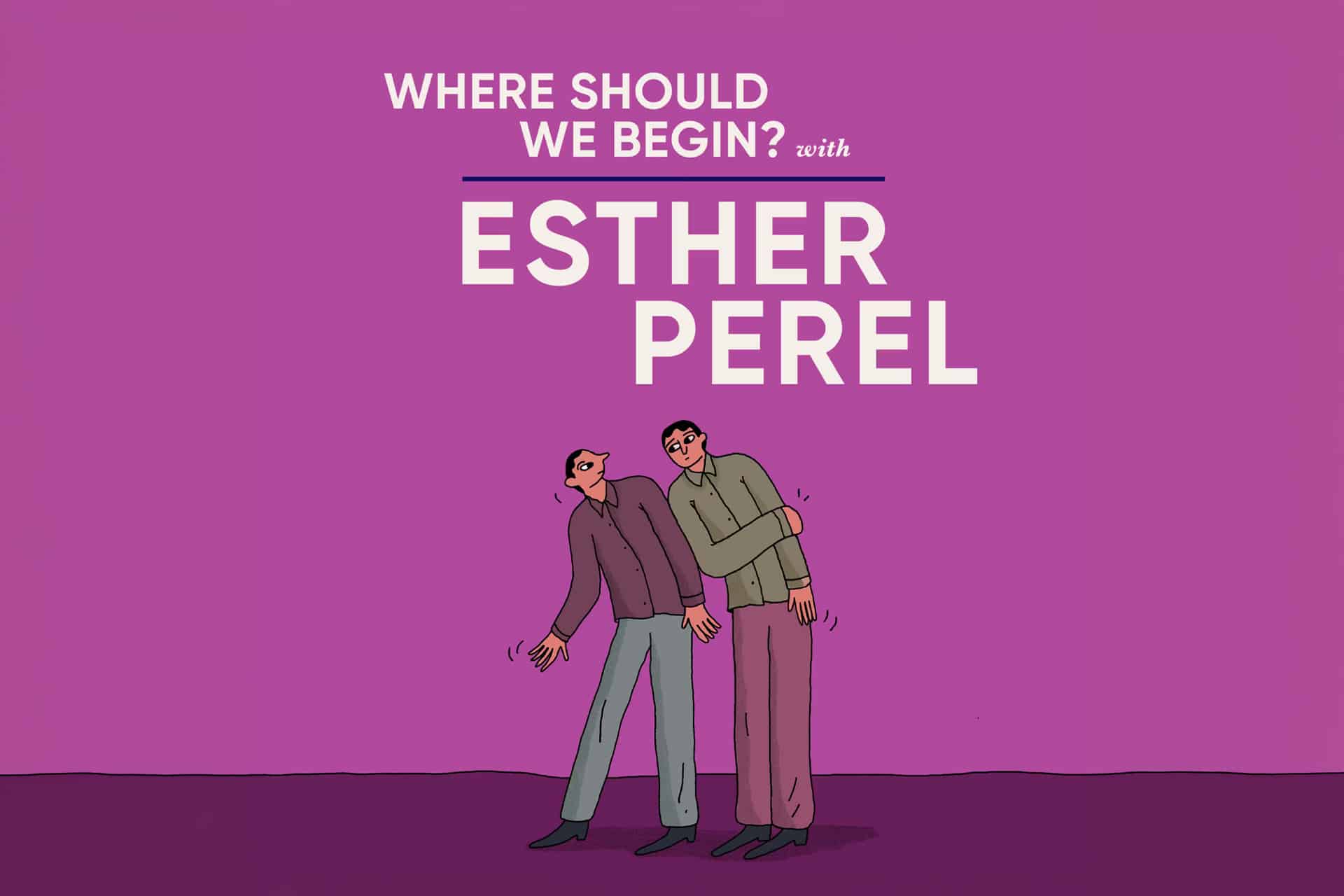
Apple announced the eight-episode documentary series with Esther Perel, the bestselling author, psychotherapist and relationship expert known for examining desire, intimacy, infidelity and the tensions inside modern partnerships.
Perel will work with a team of matchmakers and therapists to create pairings that challenge the usual assumptions surrounding compatibility. Rather than finding contestants who share the same interests, routines and preferences, the series will deliberately bring together people who may initially see each other as the last person they would ever choose.
The central question is whether attraction can develop when familiar dating checklists are removed. Apple describes the series as an exploration of whether an unexpected partner can become the person someone ultimately cannot imagine living without.
No premiere date, contestant list or filming locations have been announced.
Image Credit: AppleMagazine
The Last Person on Earth Challenges Compatibility
The Last Person on Earth enters a crowded dating television market with a premise that rejects one of the most common promises made by matchmaking services: that compatibility can be predicted through similarity.
Dating apps routinely organize potential relationships through age, location, interests, lifestyle preferences, political beliefs and other personal filters. The process can help users avoid obvious conflicts, but it can also create increasingly narrow definitions of who deserves consideration.
Perel has frequently argued that desire does not always emerge from familiarity. Attraction can depend on difference, curiosity and the discovery of qualities that were not included on a checklist.
The Apple TV series turns that idea into a structured experiment. Participants will meet someone who appears to contradict their expectations before traveling together to a remote setting where ordinary distractions and familiar support systems may be limited.
That environment creates immediate dramatic possibilities. A beautiful destination can make a first connection feel unusually intense, but isolation can also expose differences that would remain hidden during short dates in familiar surroundings.
The presence of therapists and matchmakers suggests that the series will examine those reactions rather than presenting every disagreement as entertainment. Perel can help participants distinguish between genuine incompatibility, defensive habits and discomfort created by encountering someone outside their usual pattern.
The experiment does not promise that every opposite pairing will succeed. Difference can produce curiosity, but it can also reveal conflicts involving values, communication, life goals or emotional availability.
The more revealing outcome may be whether participants leave with a broader understanding of attraction, even when the relationship itself does not continue.
Esther Perel Brings a Different Voice to Dating TV
Perel gives the series a more analytical foundation than the competition-driven structure used by many dating programs.
Her books Mating in Captivity and The State of Affairs examine the contradictions surrounding commitment, desire and personal freedom. She also hosts the podcasts Where Should We Begin? and How Work, presenting conversations that explore relationships without reducing complicated behavior to simple villains and heroes.
That background may help The Last Person on Earth avoid familiar reality television shortcuts. Dating shows often depend on rapid attraction, artificial scarcity and public rejection. Contestants compete for one person, choose partners through brief impressions or make long-term commitments before they have experienced ordinary life together.
The new series begins with a different source of tension. Participants are not being told that a seemingly perfect match has been selected. They are being asked to question why someone who appears wrong may deserve a closer look.
Perel describes the project as an invitation to move beyond what feels familiar or safe. Her involvement also raises expectations that the series will explore how participants construct their preferences.
A person may insist on dating only someone with a certain career, personality or social style without understanding where that requirement originated. Some preferences protect legitimate needs. Others may repeat an old relationship pattern or prevent vulnerability by eliminating anyone capable of creating uncertainty.
The matchmakers and therapists can examine those distinctions before, during and after the trip. Their role could become particularly valuable when participants confuse immediate comfort with long-term suitability or mistake tension for romantic chemistry.
Apple has not explained how long each pairing will remain together, whether several couples will appear in each episode or how the experiment will determine its final outcomes.
Image Source: Google
Remote Destinations Change the Dating Environment
Sending couples to romantic and remote destinations adds more than scenery.
Modern dating frequently develops through phones, messaging, social media profiles and quick meetings fitted around work schedules. Participants may arrive with established habits for checking other options, retreating into digital distractions or ending contact before uncertainty has time to become meaningful.
A remote journey removes part of that structure. Two people must spend sustained time together, make decisions and respond to unfamiliar situations without immediately returning to separate routines.
Travel can accelerate intimacy because it creates shared memories and reveals behavior under pressure. Delays, unfamiliar environments, fatigue and practical disagreements may show more than a polished restaurant conversation.
The destinations may also create a misleading sense of closeness. A relationship formed in an exceptional setting still needs to survive ordinary responsibilities, geography, work and family expectations after the trip ends.
The documentary format gives Apple an opportunity to follow that transition rather than ending with a dramatic choice at the destination. Whether the series continues documenting the couples after they return home has not been disclosed.
The title adds another layer to the concept. The “last person” can mean the least expected match, but it also reflects the anxiety surrounding modern dating. A growing number of people describe exhaustion with apps, repeated disappointment and the feeling that suitable partners are disappearing.
Apple links the experiment to rising social isolation and polarization. People increasingly sort themselves into cultural, political and lifestyle groups, while digital systems learn to reinforce existing preferences.
A relationship series built around difference can test whether those divisions remain as rigid when two people encounter each other as individuals rather than profiles representing opposing categories.
Unscripted Relationships
The eight-episode order gives the production enough space to develop several pairings without extending the experiment indefinitely. Its success will depend on whether the participants receive room to behave naturally or are pushed toward the exaggerated conflict expected from conventional dating television.
Perel provides the series with a promising tension: lasting relationships require genuine compatibility, yet attraction can disappear when every element feels predictable. The challenge is not proving that opposites always belong together. It is discovering which differences create possibility and which ones should remain deal-breakers.
This to me is proof that Apple leadership is suffering from cognitive dissonance over their slide into advertising. They’re conflating cause and effect. The Apple brand stands for high-quality superior user experiences because the devices and software Apple makes traditionally deliver high-quality superior user experiences. The work Apple ships is what makes the brand what it is. But now they’re stricken with the mindset that it’s the Apple brand that makes something a high-quality superior experience.
[…]
If you refuse to admit that the ads make these services worse, you also can’t admit that there’s a reason to offer an ad-free experience. So the thinking is something like “Apple always focuses on the user experience, and never deliberately makes the user experience worse. Therefore, if an Apple service shows ads, those ads are high quality and don’t detract from the quality of the product or the experience of using it. Therefore, there’s no reason to offer users a paid ad-free tier, because there’s no reason to want to avoid Apple’s ads.”
What a brand stands for can change over time. It’s eventually determined by the products, not the mantras.
“It just works.”
“A thousand no’s for every yes.”
“What happens on your iPhone, stays on your iPhone.”
I feel bad admitting it, because some of my friends are betting on iAd revenue to feed their family, but I’m just not on board with Apple running an advertising network. I don’t want to see ads in my apps, and I don’t want Apple to ever lose even a little of what it means to be a product-driven company.
The whole thing is funny because at a fundamental level we all just know in our bones that Apple never even considered putting “Intel Inside” stickers on Macs.
[…]
Apple still treats its hardware with that level of respect. With reverence. iPhones don’t even say “iPhone” on the hardware. No model or serial numbers. No small print. Just an Apple logo on the back.
[…]
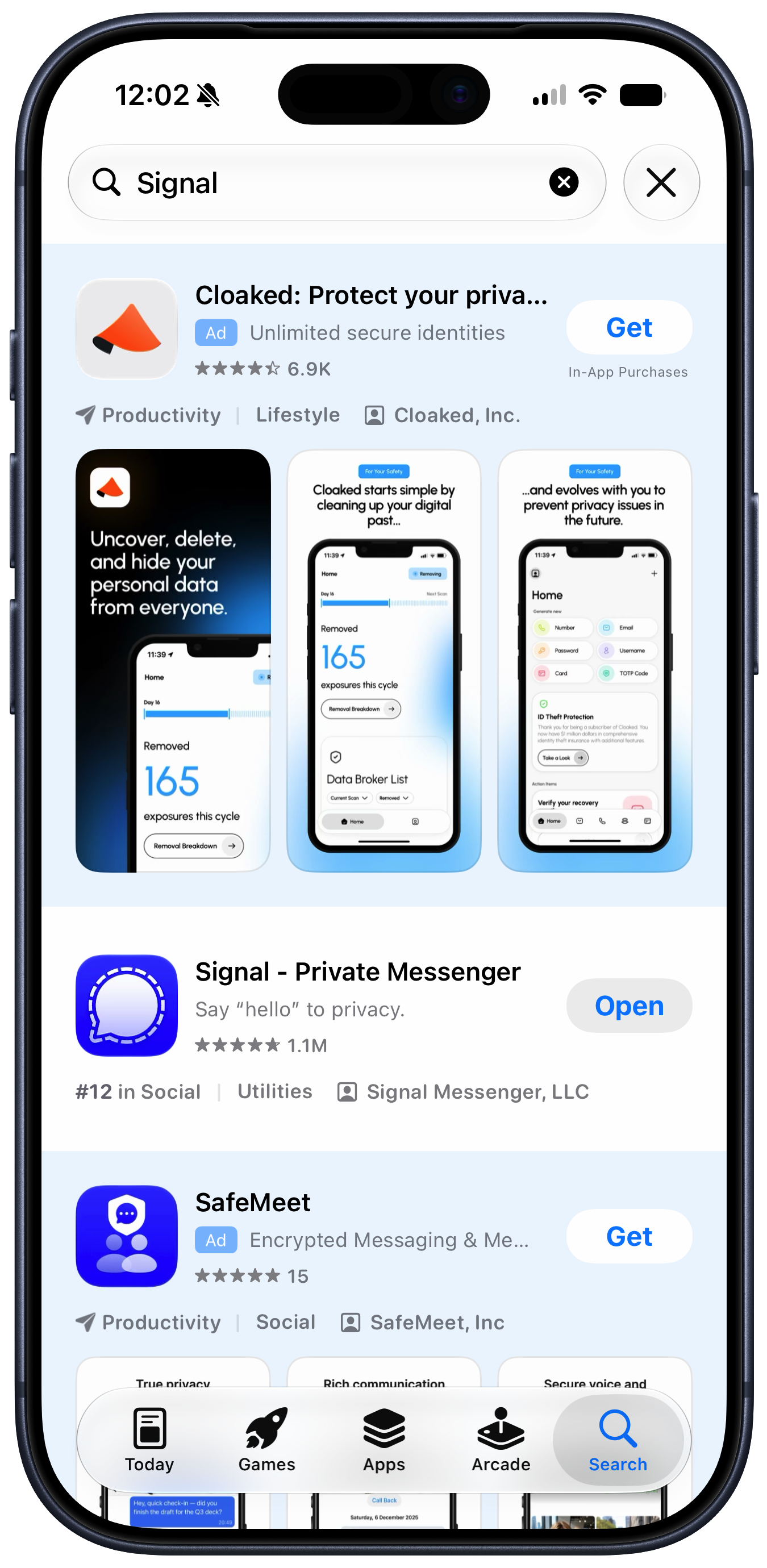
Putting themselves in customers’ shoes today, how many ads do Apple’s executives want stuck in the results when they search for an app in the App Store? We know the honest answer. But the answer evidenced by the actual App Store is “Two really big ones, including one in the first spot.”
While Apple can spin adding ads to Apple Maps as a revolutionary new way for businesses to be discovered, it’s telling that its initial announcement was hidden inside a press release about an entirely different product, and introduced as “Enhanced Discoverability in Apple Maps.” Those choices show that this isn’t something Apple is actually proud of—and that the people in charge of communicating and explaining Apple’s decisions to the world are at odds with those who are making the decisions about expanding revenue.
[…]
To this day, you’re confronted with an ad for Creator Studio every time you create a new document in those apps, and their default toolbars contain buttons that won’t work unless you subscribe to the bundle. As a result, Apple has essentially turned its free productivity suite—software that was designed to enhance the inherent value of Apple’s products—into a freemium package with upsell to a creative professional subscription bundle that’s irrelevant (and a terrible value!) for most of its existing users.
[…]
There are many more examples. Using notifications to promote subscriptions and badging the Settings app to push AppleCare plans are among the ways Apple has chosen to intervene in the user experience to drive revenue. I’m actually not opposed to the idea that Apple should communicate opportunities for its customers to get more out of their devices—but it should be careful not to cross the line into actively annoying those customers. If someone doesn’t want to see what you offer, you need to accept that and go away—not keep needling them. Apple often falls on the wrong side of that line.
[…]
It makes me wonder if the people making these decisions at Apple have lost track of the Apple brand and what it stands for.
What Snell’s column makes clear is that the incremental revenue Apple is gaining from putting shitty ads in its software comes at a price. They’re withdrawals from Apple’s brand equity. And I would argue that the value they’re detracting from the brand far out-values the dollar amount they’d padding to Apple’s bottom line.
[…]
If your competitors’ stores all smell like dogshit, don’t aim to have the store that smells the least like shit. Aim to have a store that smells pristine. “Our stores only carry a vague whiff of dogshit” is not insanely great.
The people haven’t changed, but Apple has. Strong leaders inevitably shape the personality — the spirit — of organizations over time. Apple in 2011 was peak Steve Jobs Apple. Apple in 2026 is peak Tim Cook Apple. But it was Cook who popularized the “you’re not the customer, you’re the product” argument against “free with ads” online services. But that was in 2014.
“Slippery slope” is a perfect term. But I wanted to add something here. In my experience, in the realm of UI, there is no middle notch. I’ve seen it time and time again… the moment you open the door to One, Infinity starts exerting its pull[…]
I HATE, HATE, HATE having ads pop up when I’m trying to do something else. It’s bad enough on Web sites where at least they have the excuse of having to make money some how but it rises to intolerable when they put them up on a device I’ve already paid for.
The annoyance is reason enough to dislike Apple’s ads but for me the worst thing is that they’re corrupting and inevitably lead to the user being replaced by the advertiser as the customer.
This instruction is a fever dream of three weird things in sequence:
What on earth is “QuickTime”?
I am recording with a player?
Why can’t I choose the option [“New Screen Recording”] that describes exactly what I want to do?
[…]
It’s noticing this kind of complexity, places where an easy way was chosen, design debt accumulated, and things got simply too weird. Apple allowed three weird things to accumulate here.
It makes sense in terms of the history and how the technology works, but from a clean slate one might expect this functionality to be in the Screenshot app, Screen Sharing, iPhone Mirroring, or perhaps even Finder.
Last month, cybersecurity research firm Paradigm Shift published details about a boot ROM vulnerability affecting Apple's A12 and A13 chips, but it has since removed the blog post after being sued by digital forensics firm Magnet Forensics.
In a complaint filed in Georgia federal court this month, Magnet Forensics alleged that the security vulnerability revealed by Paradigm Shift was substantially the same as the one its former employee Mario Del Gaudio worked on before joining Paradigm Shift. Accordingly, Magnet Forensics alleged that Del Gaudio exposed its trade secrets.
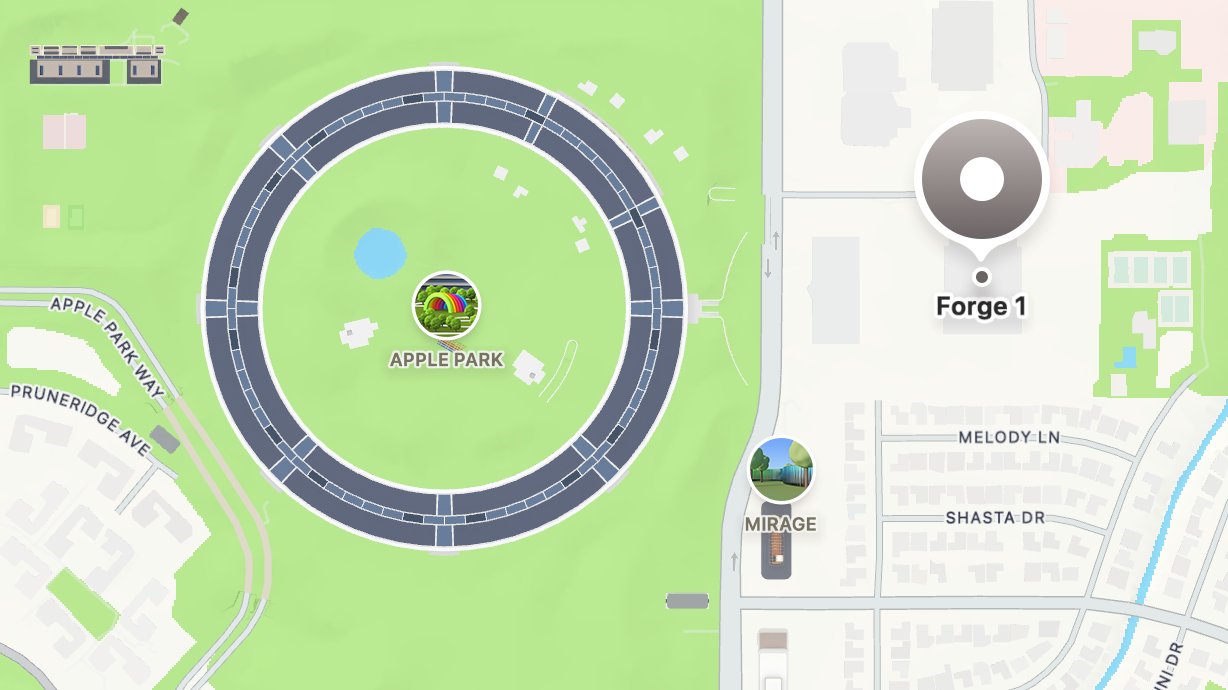
According to the Santa Clara County Fire Department, firefighters responded at approximately 5:30 p.m. local time on Thursday to a report of an outdoor fire at an Apple-leased building adjacent to Apple Park in Cupertino, California.
The fire occurred outside of a building known as Apple Forge 1, which spans 18920 to 18922 Forge Drive. While one person on social media described the damage as "huge," the photos they shared only show damage to some fencing on the property. The incident report was marked as closed after 45 minutes. It is unclear if there were any injuries.
ChatGPT Health is returning with substantially wider access, giving more iPhone users the option to connect information from Apple Health directly to the AI assistant.
The expansion follows a limited test introduced in January. OpenAI is now gradually making the dedicated Health experience available to eligible ChatGPT Free, Go, Plus and Pro users in the United States who are at least 18 years old.
Despite the close Apple connection, this is not a feature created by Apple or built directly into the Health app. OpenAI operates the service through ChatGPT, while Apple Health serves as one of the sources users can voluntarily connect.
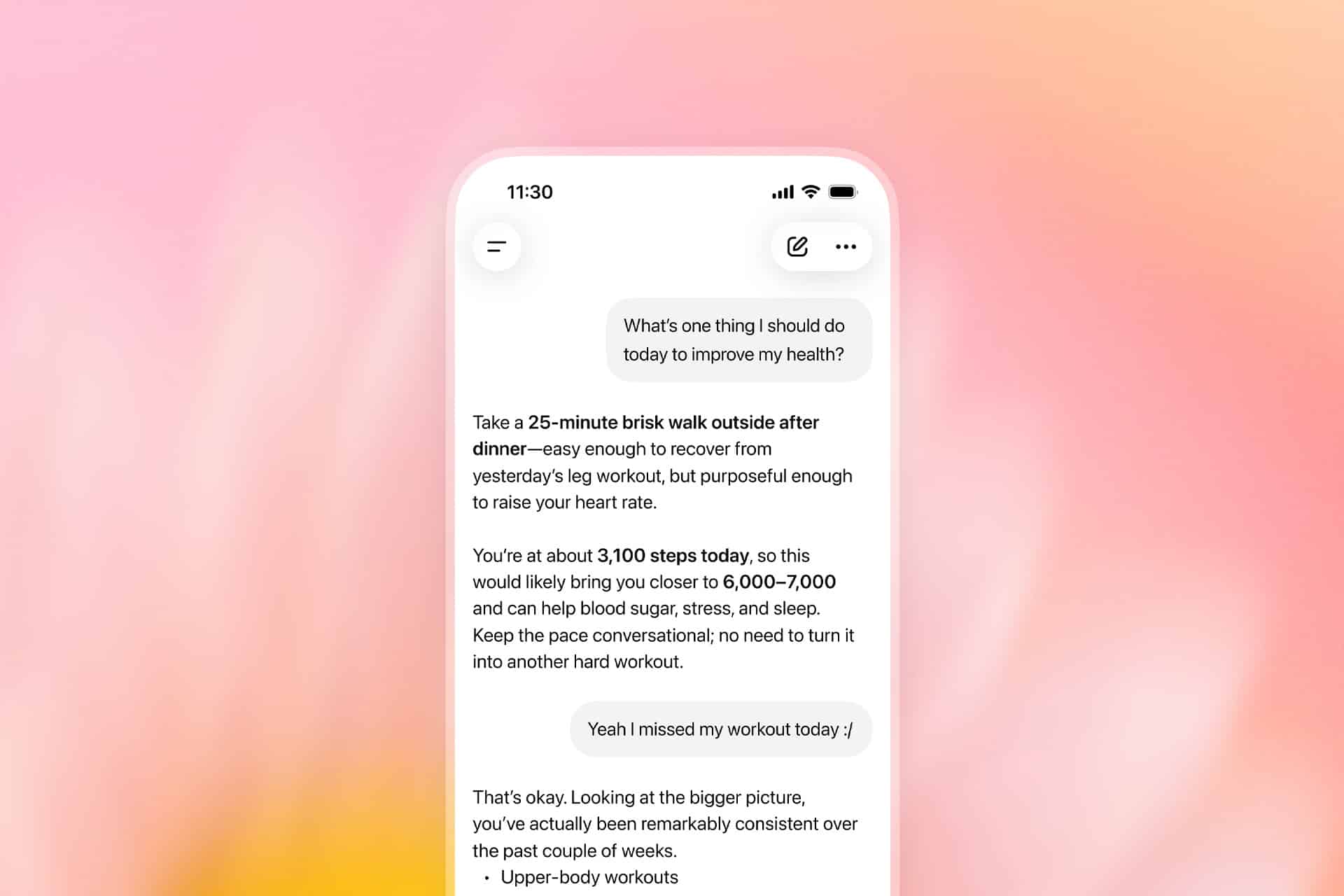
Once permission is granted, ChatGPT can examine selected health and fitness information stored on iPhone, including activity, sleep, workouts and other measurements collected by compatible apps and devices. Users can then ask questions about changes over time without manually exporting records or uploading screenshots during every conversation.
Image Credit: OpenAI
ChatGPT Health Reaches More iPhone Users
ChatGPT Health originally appeared as a limited early-access experience for a small group of testers. The expanded rollout replaces that narrow availability with support for eligible adult users across the United States, although OpenAI says access may take several weeks to reach every account.
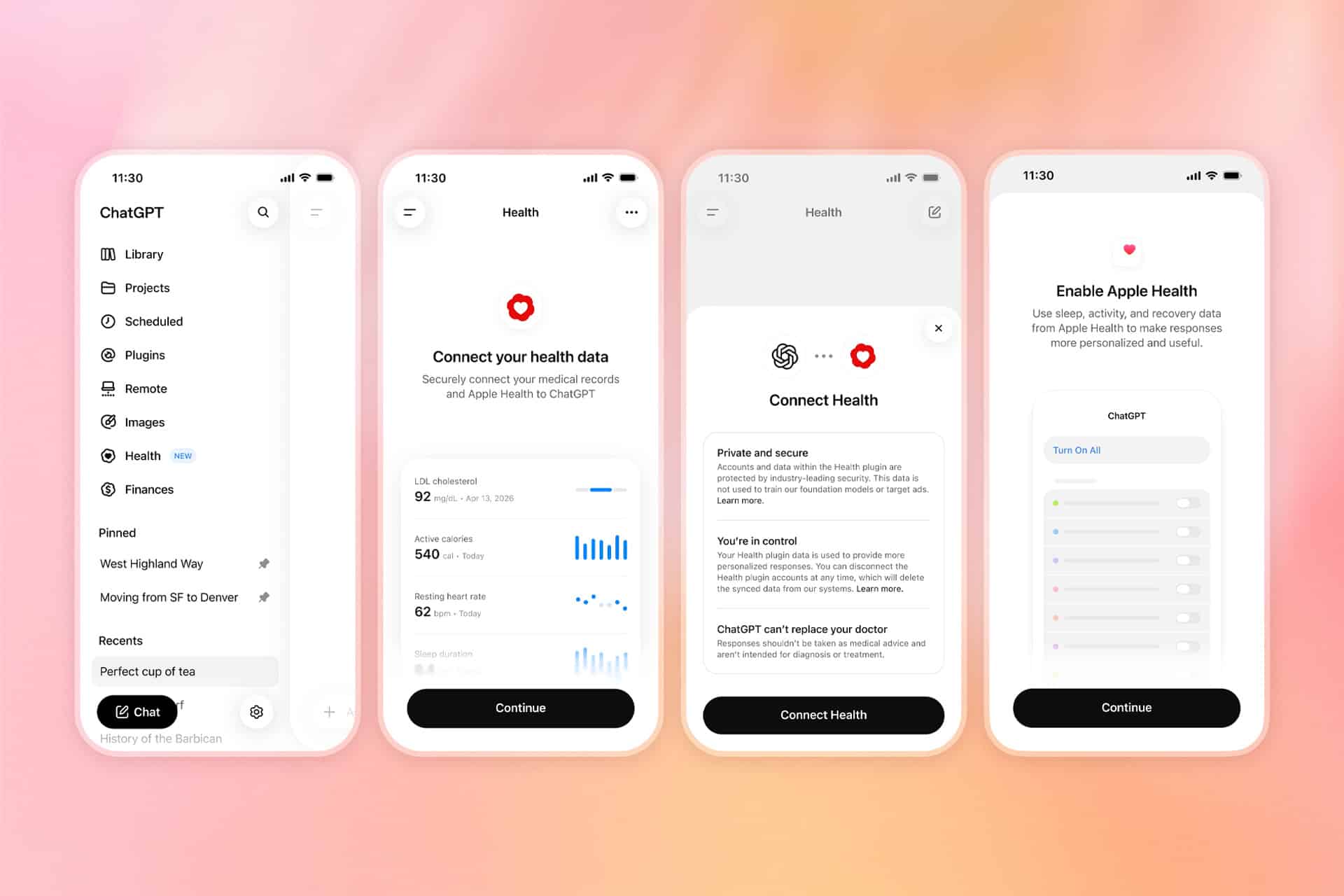
The feature works on the ChatGPT website and iOS app, but connecting Apple Health requires an iPhone. Users also need a recent version of the ChatGPT app before the Health option appears in the sidebar or More menu.
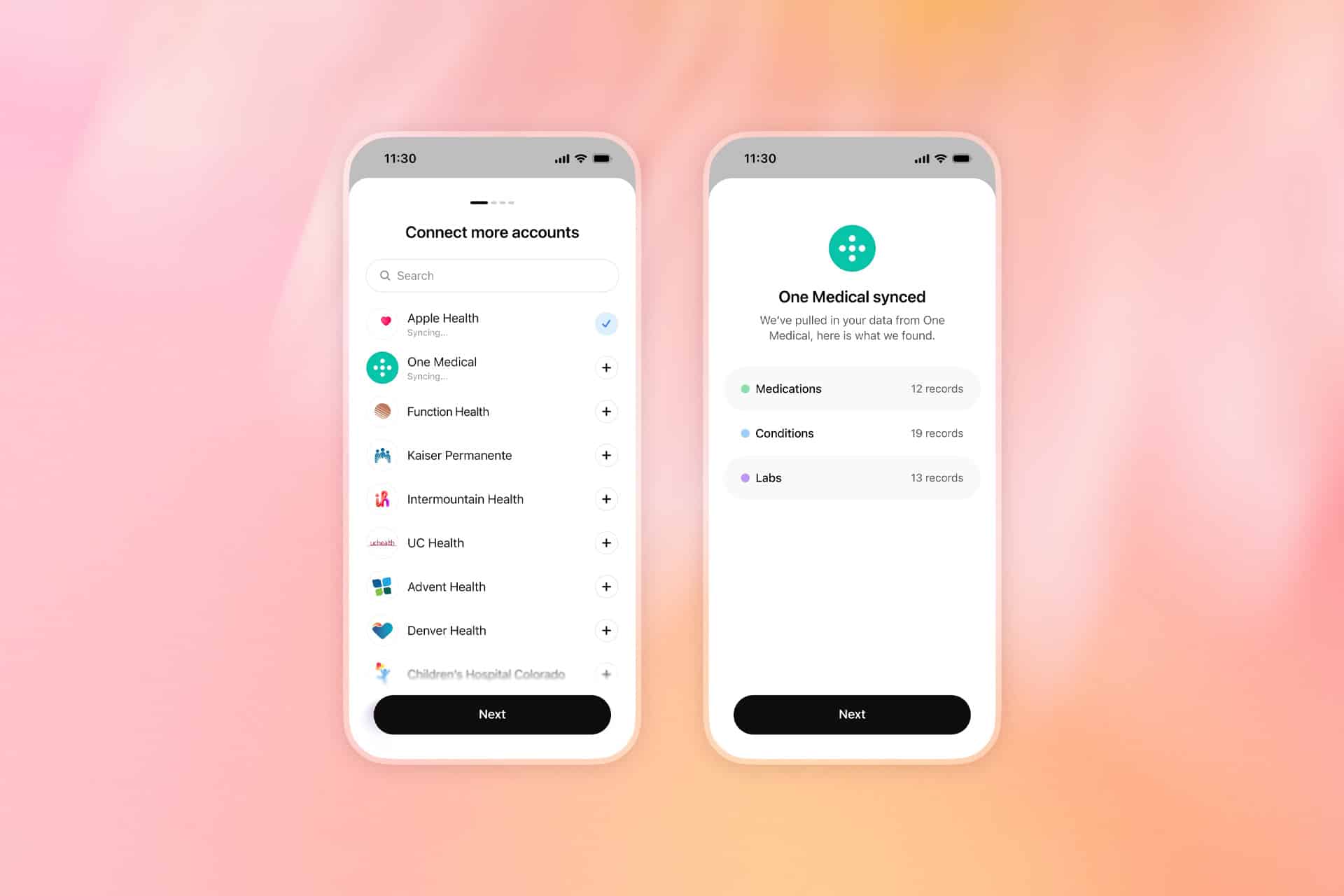
Apple Health is only one part of the system. ChatGPT can also connect to supported medical-record portals, One Medical and Function Health. Bringing those sources together allows the assistant to answer questions using a broader personal context than activity data alone.
A user could ask how sleep duration has changed across several weeks, whether workout frequency declined after a schedule change or how recent laboratory results compare with earlier tests. ChatGPT can also help organize questions before a medical appointment or summarize changes found across connected records.
Information from third-party fitness services can reach ChatGPT through Apple Health when those apps already share their data with the iPhone database. That may include measurements from platforms such as Garmin, Oura, Whoop, Strava and MyFitnessPal, depending on which categories each service makes available.
Not every proprietary score transfers. An app may calculate its own readiness, recovery or sleep score without writing that exact result into Apple Health. ChatGPT can only use the information made available through the connected source and approved by the user.
After synchronization, health information can inform responses throughout ChatGPT rather than remaining limited to conversations opened from the Health tab. The assistant normally asks for permission before using connected information, and users can also add “@Health” to a prompt when they specifically want a response based on their records.
Image Credit: OpenAI
Apple Health Data Gains a Conversational Layer
The appeal of the integration comes from turning a large collection of measurements into questions expressed in ordinary language.
Apple Health can already organize trends, highlights, medications, laboratory results and activity records. ChatGPT adds a conversational layer capable of comparing those categories or explaining them in a more personalized format.
Someone preparing for an annual physical could ask for a summary of meaningful changes since the previous appointment. A runner might request a comparison between training volume, sleep and resting heart rate. Another user could ask which information deserves discussion with a clinician after receiving new laboratory results.
That does not make ChatGPT a doctor. OpenAI says the feature is intended to support medical care rather than diagnose conditions or recommend treatment. Urgent symptoms and emergencies still require professional assistance.
The distinction is especially important because health data can appear more conclusive than it is. A change in heart rate, sleep or activity may have several explanations that cannot be determined from an iPhone record alone. Wearables can identify patterns, but they do not automatically reveal the medical cause behind them.
ChatGPT may help users notice relationships and prepare better questions. It should not be treated as the final authority on whether a symptom is harmless, whether medication should change or whether professional care is unnecessary.
The service is also read-only. ChatGPT can examine approved Apple Health information but cannot alter the original records stored on iPhone. It cannot add a diagnosis, change a medication list or write new measurements back into the Health app.
Users retain control over which Apple Health categories are shared. Someone may allow access to steps, workouts and sleep while withholding reproductive health, medications or other sensitive information.
That selective approach may be more appropriate than approving every category simply because the option is available. A useful response does not always require a complete health history.
Image Credit: OpenAI
Privacy Becomes the Central Decision
Connecting Apple Health to ChatGPT creates a different privacy relationship from using health features entirely within the Apple ecosystem.
Apple designs the Health app around on-device protections and user-controlled permissions. ChatGPT Health requires selected information to synchronize with OpenAI systems so the company can analyze it and generate personalized responses.
OpenAI says connected Apple Health data, medical records and conversations using that information are not used to train its foundation models or target advertising. The company also applies additional encryption and isolation protections to health information.
Users can disconnect Apple Health at any time. OpenAI says synchronized data from the disconnected source will be deleted from its systems within 30 days.
Previous conversations are handled separately. Information already included in ChatGPT conversation history remains until those chats are deleted, even after the Apple Health connection is removed.
Memory introduces another consideration. Conversations using Health can create memories when ChatGPT memory is enabled, although OpenAI says memories are not generated directly from synchronized health data. Temporary Chat or separate project memory can reduce how much personal context continues across future conversations.
The new Health experience should also not be confused with the existing ChatGPT integration inside Apple Intelligence. Siri and Writing Tools can use ChatGPT for certain requests without requiring the dedicated ChatGPT app or a connected account.
ChatGPT Health is a separate OpenAI service with its own account, permissions, privacy controls and health-data connections. Using ChatGPT through Siri does not automatically give OpenAI access to Apple Health.
That separation gives users a meaningful choice. They can continue keeping health information inside Apple apps, share only selected categories with ChatGPT or connect medical records for a more comprehensive view.
The expanded rollout makes one of the most personal databases on iPhone available to conversational AI. Its usefulness will depend not only on the quality of the answers, but also on whether users understand exactly which information they are sharing and where it goes after leaving the device.
Un nuevo análisis de los restos microscópicos del impacto de Chicxulub identifica con una precisión sin precedentes el tipo de asteroide que chocó contra la Tierra hace 66 millones de años y obliga a replantear uno de los mecanismos que habrían desencadenado la gran extinción.
Un análisis de más de 3.000 huesos fósiles revela que el gran depredador también aprovechaba cadáveres y, además, cambia la forma en que los paleontólogos identifican las mordeduras en dinosaurios.
Tired of getting bombarded with frequent DoorDash advertising, promotional, and marketing notifications on iPhone? You’re not alone. If it feels like your notifications are getting spammed by DoorDash, this is a broad nuisance to many, and fortunately with some hidden settings adjustments, you can completely stop the DoorDash marketing rubbish that gets pushed to your ... Read More
Benicio Del Toro is heading to Apple TV for his first-ever starring role in a comedy series.
The Oscar winner will lead “Protective Custody,” a new comedy from Mike Judge, Ben Stiller (who also stars and executive produces), Steve Hely, and Dave King.
It’s a reunion for Del Toro and Stiller after their acclaimed limited series “Escape at Dannemora.” The series is currently in development at Apple Studios.
“Protective Custody” will follow “a disgraced financier accused of massive fraud who is thrown into protective custody, where he must navigate prison politics, salvage his reputation and confront the consequences of his actions while awaiting trial,” according to the synopsis.
Apple will not say if Del Toro or Stiller (or someone else!) is that disgraced financier.
Judge will direct the series, which hails from Apple Studios, Stiller’s Red Hour, Propagate Content, and 3 Arts Entertainment.
Stiller is one of Apple TV’s most prolific producers. He executive produces and often directs episodes of “Severance,” and Stiller’s documentary about his parents, “Stiller & Meara: Nothing Is Lost,” is also on the platform. Stiller produces and stars in the upcoming feature-length comedy movie “The Dink” for Apple TV, and is in production for its limited series “The Off Weeks,” which he stars in and executive produces opposite Jessica Chastain.
MacDailyNews Take: Shut up. Just shut up. You had us at Mike Judge. You had us at Mike Judge.
Please help support MacDailyNews — and enjoy subscriber-only articles, comments, chat, and more — by subscribing to our Substack: macdailynews.substack.com. Thank you!
A corrida da IA está a sair cara à casa-mãe da Google e o "peso" dos gastos com infraestruturas já se faz sentir nas contas da gigante tecnológica, levantando preocupação junto dos investidores.
Para quem deseja mudar do ecossistema iPhone para Android, a Google facilita o processo com uma nova ferramenta nativa disponível na mais recente versão do sistema operativo.

 Login