❌

Reading view

A Hidden Arctic Ocean Crisis Is Unfolding Beneath the Melting Ice

Polar Research Vessel RV Kronprins Haakon Fram Strait Arctic OceanScientists say melting sea ice may have pushed the Arctic Ocean past a tipping point, triggering changes that could reshape marine life for decades. Scientists have identified what appears to be a major and potentially irreversible change in the Arctic Ocean. According to a new study, climate-driven sea ice loss has altered the region’s chemistry [...]

  •  

Scientists Create β€œLiving Plastic” That Self-Destructs in Just Six Days

Scientist Examining Small Plastic Particles Laboratory FlaskScientists have developed β€œliving plastics” that can be programmed to break themselves down when triggered. Many plastic items are made for one-time use, but the materials can remain in the environment for years. Researchers are exploring a different approach: living plastics, materials built with microbes that can be activated to break down the polymer when [...]
  •  

Scientists Have Discovered These Deadly Parasites Are Secretly Swapping DNA

Leishmania Parasite LeishmaniasisLeishmania parasites appear to evolve through widespread genetic exchange, reshaping assumptions about how they adapt and spread. A parasite long thought to spread mostly by cloning itself may be far more genetically dynamic than scientists once believed. A new international study suggests that Leishmaniaβ€”a group of microscopic parasites responsible for debilitating tropical diseasesβ€”regularly swaps genetic [...]
  •  

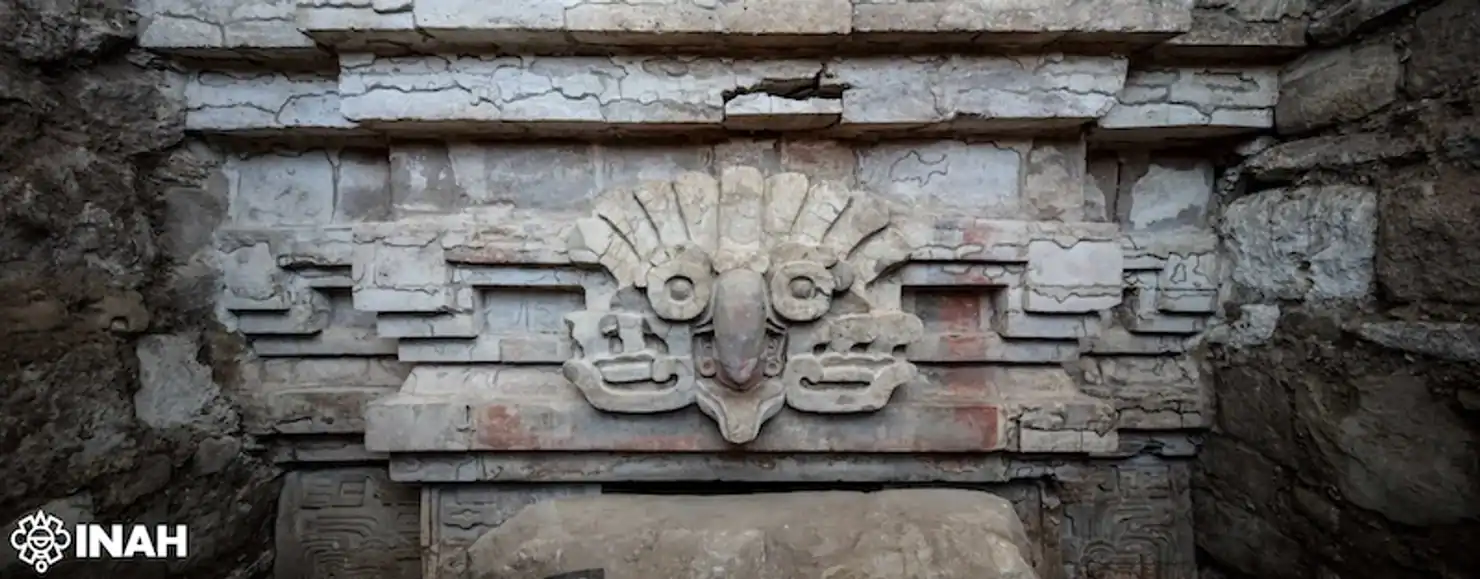
β€˜Discovery of the Decade’: 1,400-Year-Old Zapotec Tomb Found in Mexico

Mexican officials have announced what experts are calling the most significant archaeological find of the last ten years: a pristine, 1,400-year-old Zapotec tomb discovered in the state of Oaxaca. Located in San Pablo Huitzo, the ancient mausoleum has stunned researchers with its exceptional state of preservation and, most notably, a monumental sculpture of an owl, […]

The post β€˜Discovery of the Decade’: 1,400-Year-Old Zapotec Tomb Found in Mexico appeared first on Curiosmos.

  •  

WWDC, Apple, and AI: Waiting for the gift

I will sit right down (waiting for the gift of sound and vision)
And I will sing (waiting for the gift of sound and vision)

β€” David Bowie

Apple is planning toΒ sponsor and present 14 AI research papers at the annual IEEE/CVF Conference onΒ Computer Vision and Pattern RecognitionΒ (CVPR) in Denver next week, just days before it introducesΒ major new AI features at its Worldwide Developer Conference (WWDC).

The fresh research explores topics such as using LLMs in image generation, quality testing, and user interface prototyping. For months, supply chain rumors have hinted at a radical evolution for the ubiquitous AirPods in the form ofΒ built-in ambient cameras. With this in mind, it’s noteworthy that one of the research papers, β€œFrom Where Things Are to What They’re For: Benchmarking Spatial–Functional Intelligence for Multimodal LLMs,” specifically seems to cater for such use cases.Β 

Accessibility for the people

In application, this tech promisesΒ profound potential for accessibility. It suggests that someone with limited vision might be able to get their AirPods to guide them through an unfamiliar room. This is something that should fit well inside the company’sΒ ongoing narrative around machine vision intelligence and accessibility.Β 

Accessibility is central to a second presentation to be made during the Generative AI for Sign Language Workshop at the conference. Led by Apple’s Colin Lea, who presented a session on speech tech forΒ people with speech disabilitiesΒ at a similar event, this focus on machine vision intelligence and accessibility is entirely deliberate.Β 

Indeed, even though the industry and critics condemn Apple for lagging behind others in the AI space, the publication of these 14 papers at a key industry session just before WWDC shows the company has been doing a great deal of foundational work behind the scenes. We expect this work to bear its first fruit at WWDC, and it is important to understand the disclosures as a power move. Apple is using the show to celebrate its strengths in AI development, and given its decade work on Apple Car, many of those strengths relate to machine vision intelligence.Β 

Apple is so advanced in the field it is already deploying advanced models that empower consumers. Just last week, itΒ promised to introduce a new tool called Image Explorer in VoiceOver to help partially sighted customers later this year. Among many other features, this will arrive alongside a system to let disabled users control compatible wheelchairs with spoken word commands.Β 

Apple is pushing boundaries all the way. Its paper β€œVSAS-Bench: Real-Time Evaluation of Visual Streaming Assistant Models,” proves it is actively refining models to process live video instantly on consumer hardware.Β 

What matters, the human or the machine?

The difference between Apple and its competitors is deep and philosophical. I’d argue that while others build cloud-dependent chatbots, Apple is embedding AI tools that solve real human problems in its systems.Β 

This extends to its plans at WWDC, where it will introduce a raft of AI tools made withΒ help from Google Gemini and a host of AI services it has developed in house. The latter will include a great many accessibility tools of the type it will discuss at the CVPR event, the beauty of which being that they will run privately and on-device. You could argue that while other tech giants are using AI to automate white-collar jobs or build a surveillance dystopia, Apple is searching for applications of machine intelligence that solve real human problems.Β 

The company seems pretty realistic about the ongoing AI transformation. It recognizes that its own ecosystem must become a peer player in the emerging AI-augmented environment the tech industry seems intent on building.Β 

With that in mind, Apple is willing to engage in strategic, mutually beneficial partnerships, such as permitting Siri to use third-party AI services to handle requests. But even as it does that, it is also focusing on those areas in which it can make a unique difference, such as the accessibility features Apple as a platform has always provided.

Open up

As the Vision Pro demonstrated, and as these mythical video-enabled AirPods will in the future suggest, computers are steadily getting smarter. So, the way we use them is also changing as we move away from the rigid boundaries of keyboards, mice, and touchscreens. Apple’s quest for ambient computing began long before the sudden gold rush for generative AI chatbots.Β 

In the end, as the latter services become commodified, the way humans interact with them will define the next generation of hardware. That’s exciting for Apple, given that product design is where it excels. The era of sound and vision may finally have arrived.

You can follow me on social media! Join me onΒ BlueSky, Β LinkedIn,Β Mastodon, andΒ MeWe.Β 

  •  

Rocket Report: A dark day for Blue Origin; Pentagon eyes new launch site

Welcome to Edition 8.43 of the Rocket Report! A disclaimer: No one yet fully appreciates the ramifications of Blue Origin's New Glenn rocket explosion Thursday night on its launch pad at Cape Canaveral, Florida. What we know as of this writing is that much of Blue's sole orbital-class launch pad has been destroyed, and the New Glenn rocket will be grounded for an extended period of time. It is too soon for any hot takes, at least until the Sun rises at the Cape on Friday morning. One thing I am sure of is that we will be writing about this event for weeks, months, and years to come.

As always, we welcome reader submissions. If you don't want to miss an issue, please subscribe using the box below (the form will not appear on AMP-enabled versions of the site). Each report will include information on small-, medium-, and heavy-lift rockets, as well as a quick look ahead at the next three launches on the calendar.

Charting China's contribution to space junk.Β There's a problem with the drastic uptick in Chinese space launches over the last decade. China appears to be ignoring long-established norms about disposing of the upper stages of rockets, Ars reports. These are the parts of the vehicle that separate from the first stage of a rocket and push a satellite or spacecraft into orbit. In the early decades of spaceflight, launch operators routinely left upper stages in orbit after they released their payloads. But most launch companies today reserve enough propellant in their rockets to remove them from orbit to avoid the risk of spent upper stages becoming a source of space debris. But China is not following this trend. There has been striking growth in China’s rocket body mass. In the past five years, the mass of Chinese rocket bodies in long-lived orbits has risen from less than 100 metric tons to 252, according to a new analysis by Space Domain Awareness expert Jim Shell.

Read full article

Comments

Β© VCG/VCG via Getty Images

  •  
  •  
  •  

How NextEra Energy Wielded Political Power in Florida

NextEra, which is seeking to buy Dominion Energy, has often butted heads with consumer groups, residents and journalists in its home state.

Β© Ulysse Bellier/Agence France-Presse β€” Getty Images

A Dominion Energy power plant near Davis, W.Va. NextEra Energy’s political activities are expected to be scrutinized as it seeks approval of its purchase of Dominion.
  •  

A Clean Energy PAC Helped Beat Chip Roy, and Now It Has New Targets

A PAC representing wind and solar energy interests spent $1.1 million to boost the Republican primary opponent of Chip Roy, an opponent of renewables. Now they are trying to save a Republican ally in Iowa.

Β© Michael A. McCoy for The New York Times

A group of renewable energy investors paid for this projection on the side of the Energy Department building in Washington gloating over Representative Chip Roy’s defeat in a Republican primary for Texas attorney general.
  •  

490-Million-Year-Old Arthropod Fossil Fills Puzzling Gap in Fossil Record

Life reconstruction of Magnicornaspis garwoodi. Image credit: Thomas Turner.

A new species of corcoraniid arthropod that lived during the Furongian epoch, between 497 and 487 million years ago, has been identified from an exceptionally preserved specimen found near QuΓ©bec, Canada.

The post 490-Million-Year-Old Arthropod Fossil Fills Puzzling Gap in Fossil Record appeared first on Sci.News: Breaking Science News.

  •  

Intel makes a bid for handheld gaming PCs with new Arc G3 processors

Most of the Steam Deck imitators on the market right now use AMD silicon, specifically the Ryzen Z-series chips. These are the same chips AMD makes for regular laptops, but with different power settings better suited to a compact handheld system. There are handhelds based on Intel silicon (MSI’s Claw is the main one), but Intel hasn’t yet tried making silicon marketed specifically for that purpose.

Today, the company is throwing its hat in the ring with two Intel Arc G-series processors, which will allow gaming handhelds to leverage the company's genuinely quite good Arc B-series integrated GPUs. Intel says that several Arc G-series handhelds will arrive "starting in June 2026, with broader availability throughout the year." These systems will include a new MSI Claw model, a Predator Atlas 8 from Acer, and a device from OneXPlayer.

Intel normally uses its "Arc" branding for integrated and dedicated GPUs, but in this case, the "Arc" brand encompasses the entire chip, including the CPU, GPU, NPU, and other components.

Read full article

Comments

Β© Intel

  •  

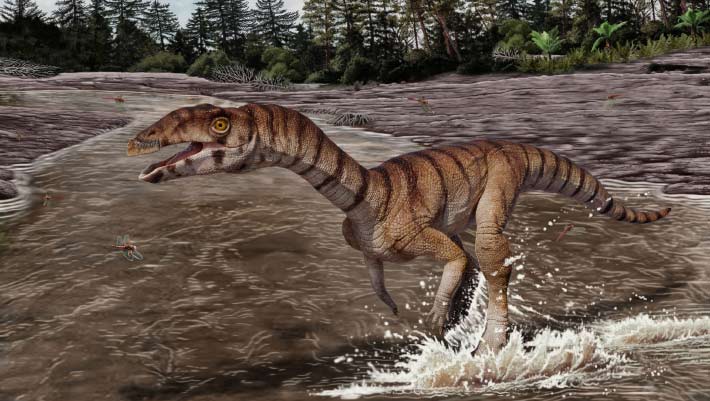
Toothless, Bipedal Crocodile Relative Lived in New Mexico 212 Million Years Ago

Labrujasuchus expectatus navigated the world on two legs with tiny arms and a toothless mouth tipped in a beak. Image credit: Jorge Gonzalez / NHMLAC Dinosaur Institute.

Paleontologists have described a new species of bipedal shuvosaurid archosaur from New Mexico, shedding light on a group of creatures that roamed North America during the Triassic period, more than 200 million years ago.

The post Toothless, Bipedal Crocodile Relative Lived in New Mexico 212 Million Years Ago appeared first on Sci.News: Breaking Science News.

  •  

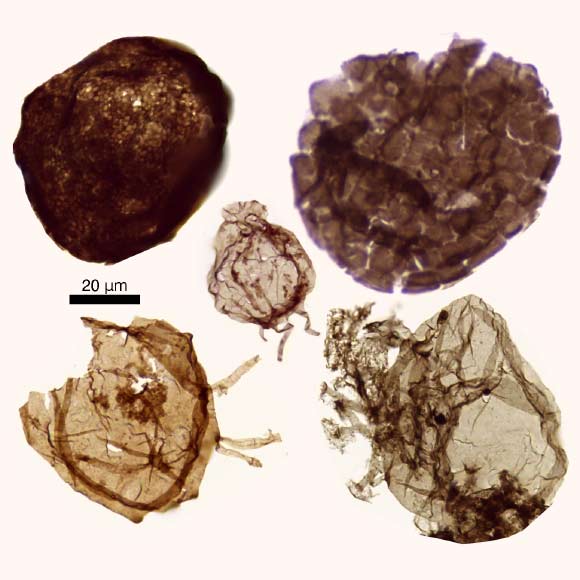
Study: Early Complex Life Forms Were Bottom-Dwellers

Fossil eukaryotes from Northern Territory, Australia. Image credit: Lechte et al., doi: 10.1038/s41586-026-10533-4.

Analyzing 1.75-billion-year-old microfossils from ancient Australian seabeds, paleontologists say ancient eukaryotes -- the ancestors of every plant, animal and fungus -- huddled in oxygenated seafloor patches for over a billion years before breaking free into open water.

The post Study: Early Complex Life Forms Were Bottom-Dwellers appeared first on Sci.News: Breaking Science News.

  •  
❌