Elon Musk’s SpaceXAI is stuck facing a lawsuit over alleged data center pollution after Donald Trump failed to convince a judge that his Environmental Protection Agency (EPA) has complete control over all Clean Air Act lawsuits and can dismiss any suit at whim.
Soon after unpermitted gas turbines were discovered powering Musk’s giant Colossus data center in Memphis, Tennessee, the NAACP sued. Its lawsuit sought an injunction requiring xAI (which, following a merger, is known now as SpaceXAI) to use the best available pollution control technology when operating the turbines and ordering penalties up to $124,426 per day per violation. Without such remedies, the turbines risked drastically spiking pollution in already vulnerable neighborhoods housing predominantly Black communities nearby, the NAACP argued.
To block the lawsuit, Trump tried to intervene, arguing that the EPA had the power to unilaterally dismiss lawsuits any time the president decides against enforcing the Clean Air Act. According to Trump, it would supposedly “not serve the public interest” if citizens were allowed to seek massive civil penalties to punish polluting AI firms that were trying to get data centers operational as fast as possible to support Trump’s AI Action Plan.
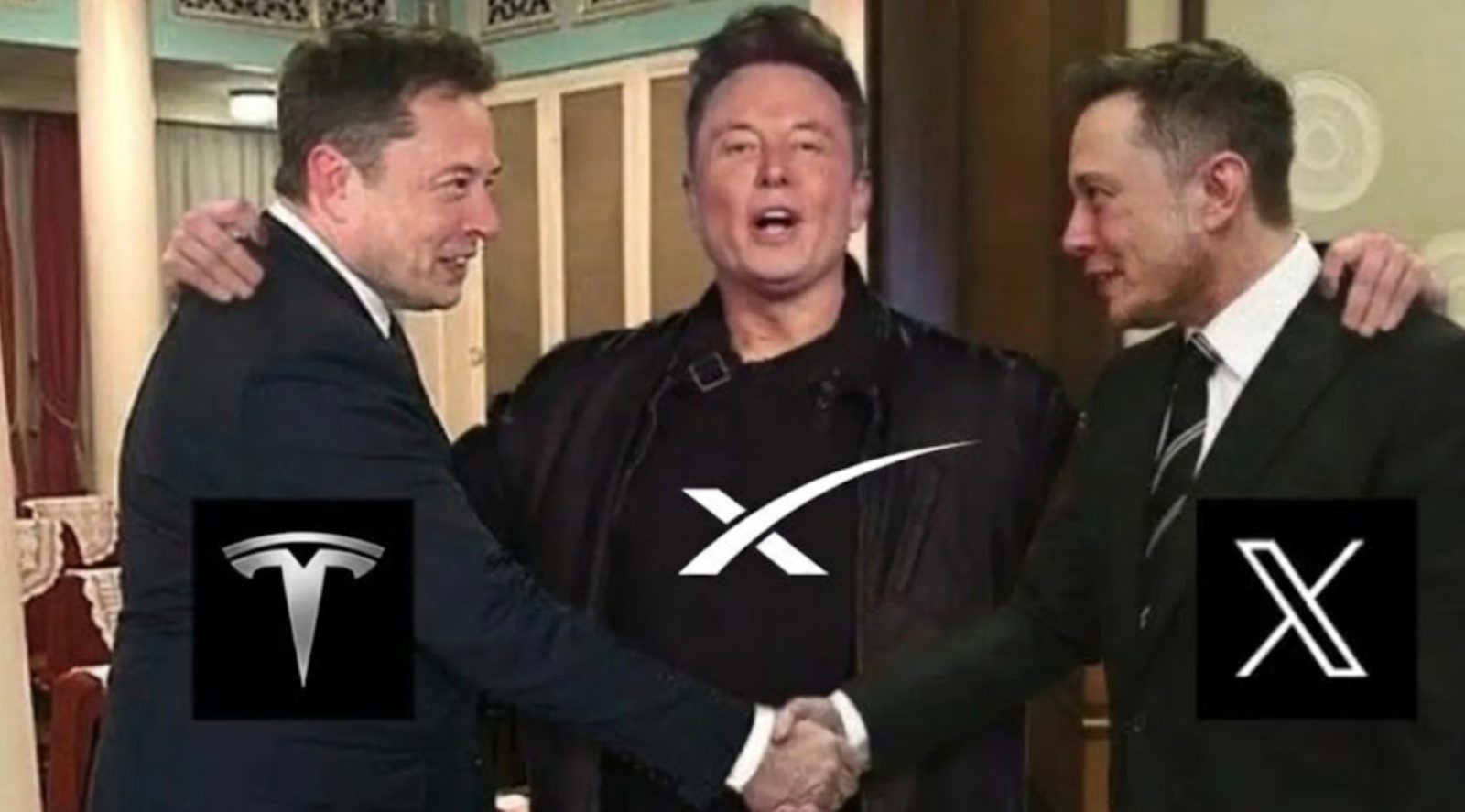
Tesla’s proxy for its 2026 annual meeting, filed today, confirms that one of its supposedly independent directors now sits on SpaceX’s board. Ira Ehrenpreis, who chairs both Tesla’s compensation committee and its governance committee, joined SpaceX’s board in February.
That’s one of several details in the filing that line up with a Tesla-SpaceX merger. There’s a three-item ballot, an auto-voting program that kicks in for the next vote, and Musk pay terms that pay out on a deal price alone.
Let Elon Musk never be accused of not leading by example.
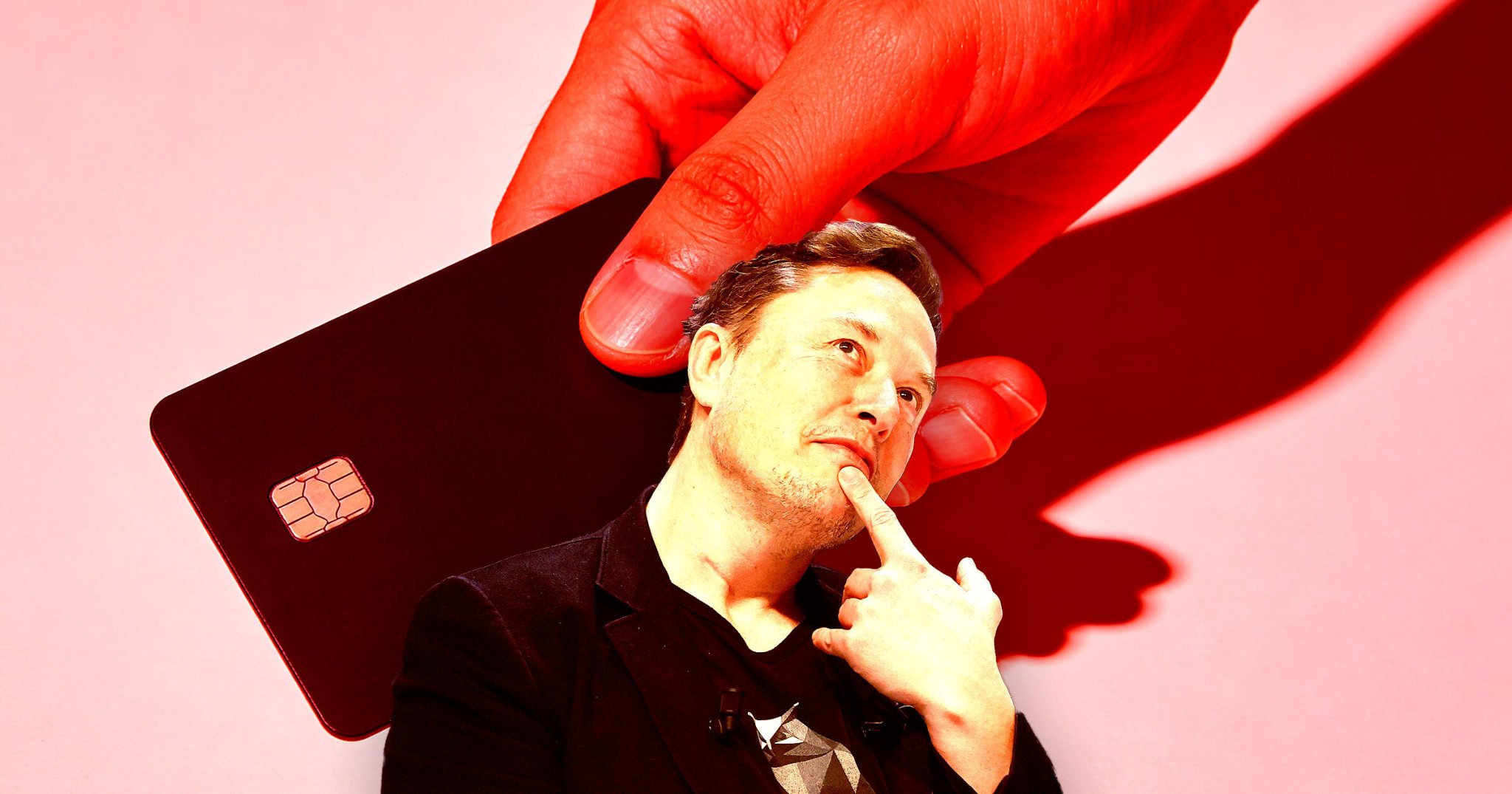
Last week, the world’s richest man sung the praises of his new Grok Bot AI agent, encouraging his followers to let it control their credit cards and shop for them.
“To buy stuff, you can just take a picture of your credit card, drop it in the chat and Grok @Bot will scour the Internet for the best deal on the item you want and order it,” he wrote.
The next day, he posted a screenshot of how he’d used Grok do exactly that, telling it “to research the most fun Lego Star Wars kits for young kids and order them.” If it wasn’t a testament to how much of a thoughtful dad he was, it at least showed that Grok could, in fact, use your credit card.
But almost as if provoking pranksters, Musk didn’t censor his screenshot at all. There, on proud display, was his order number, his email, and even the last four numbers of his credit card.
Immediately, a user named Enderman posted screenshots showing how he supposedly tricked a LEGO customer service bot into canceling Musk’s order. The post went mega viral, and an outraged Musk, taking the bait, fumed in the replies and insisted his order wasn’t canceled.
True or not — Musk certainly isn’t above a little lying — imitators followed. Another jokester showed how they used the LEGO support bot to un-cancel Musk’s order and place 400 more orders of the same product. To top things off, he also claimed to change the shipping address to Little St James, the infamous island owned by Jeffrey Epstein, which Musk discussed visiting in emails with the deceased sex trafficker.
LEGO passed up on providing a surreal statement for the ages, decliningWired’srequest for comment.
Anyway, it’s probably not a good idea to let an AI agent, Grok included, control your financial information. Scammers have been targeting AI chatbots to manipulate them into recommending — or buying — scam products, such as by propping up entire fake storefronts to phish for your information or imitate defunct businesses. And the more permissions you give an AI, the more chances it has to make a terrible mistake.
Tesla (TSLA) got the SEC’s blessing today to let retail shareholders sign up for a standing instruction that automatically votes their shares the way Tesla’s board recommends, at every meeting, until they cancel it.
The timing is hard to ignore. Tesla still hasn’t scheduled its 2026 annual meeting, and Elon Musk keeps teasing a SpaceX merger that could hand him a big chunk of his $1 trillion pay package without hitting a single operational goal.
Grok Bot is in beta and available today for SuperGrok, SuperGrok Plus, and SuperGrok Heavy; Cursor Pro, Pro+, and Ultra; and Cursor Teams Standard and Premium subscribers on desktop and iOS. Grok Bot comes with its own usage, separate from your Grok and Cursor plans, so anything you hand off to a Bot won’t count against your existing usage. Download the app, create your first teammate, and start handing off work.
[…]
Inside SpaceXAI, that already looks like real, multi-step coordinated jobs being handled: a sales Bot updating the CRM with call transcript notes and drafting follow-ups, an ops Bot seating new hires and processing invoices received in Gmail, and an engineering Bot reproducing a bug in the product UI, filing the ticket, and handing the fix off to a debugging Bot.
[…]
People inside SpaceXAI often run multiple Bots in parallel, with one to manage the others. A chief of staff sits on top, with a specialist for each lane: inbox management, expenses, recruiting, bug fixes, or operations. Instead of multiple agents you have to manage, Grok Bot gives you a small team that can work in parallel so you’re not the middleman.
Grok 4.6 gains 5 points over Grok 4.5 on the Intelligence Index just over one month after its release, or +23 points compared to Grok 4.3. This brings SpaceXAI back to the intelligence frontier alongside OpenAI, behind only Anthropic.
A real dilemma. People whose opinions on tech topics I take seriously are saying good things about Grok Bot.
It sounds like it nailed OpenClaw/Hermes for the masses but as a point of principle I don’t use MechaHitler. I would love an overview of what it gets right that everyone else missed.
I don’t trust xAI (or Meta) with my data, but it doesn’t seem like Siri AI can do all that much. So far, I’ve been too busy to do much with agents, even on a test Mac. But I don’t think agents are going away, so there’s a tension here that will need to be resolved eventually. My guess is that most people will throw caution to the wind in order to get results. Maybe Google will have something more trustworthy and powerful by then.
Over the past few days, a lot of people who stand to make a lot of money from AI all publicly agreed that it's time to make everyone slow down before we lose control - including OpenAI CEO Sam Altman, Anthropic CEO Dario Amodei, Google DeepMind cofounder Demis Hassabis, Microsoft CEO Satya Nadella, and X CEO Elon Musk.
When people who profit from something declare that it's dangerous and needs to be regulated, there's always reason to be skeptical. But whatever their reason, this is far from the first time AI thought leaders have sounded the alarm.
Charles Darwin's theory of evolution prompted author Samuel Butler to warn about intelligen …
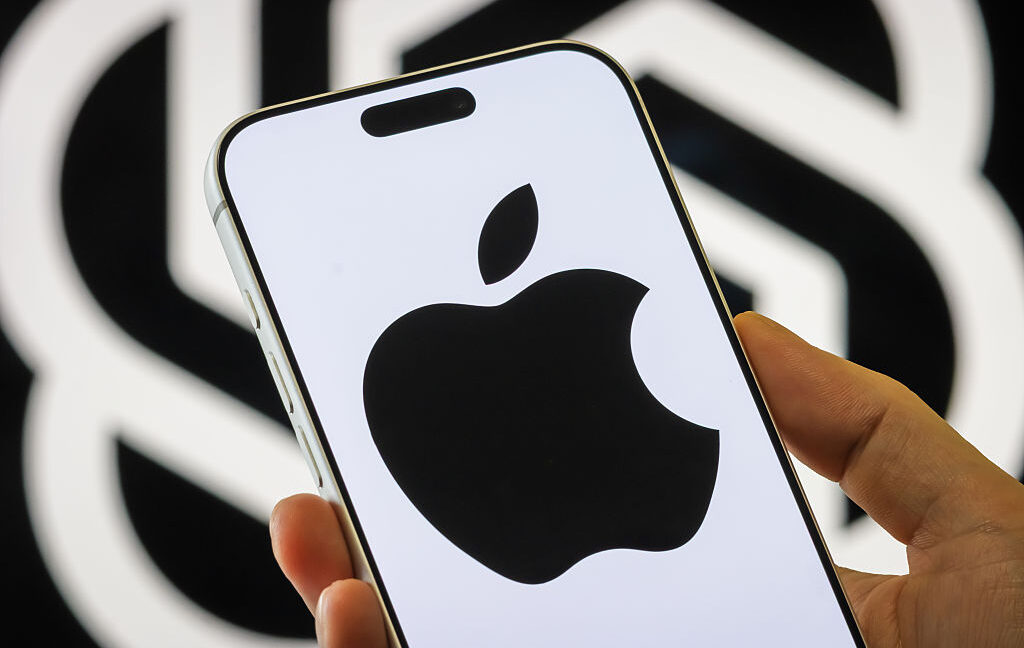
Elon Musk is seemingly done attacking Apple over its decision to integrate ChatGPT into iPhone features.
Back in 2024, when the partnership was first announced, Musk slammed the integration as an agreement from Apple to let OpenAI install “creepy spyware” on users’ devices. The next year, he sued, claiming the partnership gave the firms a “monopoly” on Apple users’ AI prompts, which allegedly harmed competition in both smartphone and chatbot markets.
For Musk, the fight with Apple seemingly escalated after he believed that his chatbot, Grok, was perhaps being illegally blocked from topping Apple’s App Store rankings. Last August, he claimed that “Apple is behaving in a manner that makes it impossible for any AI company besides OpenAI to reach #1 in the App Store, which is an unequivocal antitrust violation.”
Elon Musk’s X Corp and SpaceXAI said Monday they have resolved their lawsuit in federal court in Texas alleging Apple conspired to monopolize markets for smartphones and generative AI chatbots, Reuters reports.
The companies announced the resolution on September 14th. Reuters did not report financial terms, whether any party admitted liability, or whether the case was dismissed with or without prejudice.
Reuters identified the plaintiffs as X Corp and SpaceXAI.
MacDailyNews Note: The suit had accused Apple of conspiring to lock up the smartphone and generative AI chatbot markets.
Please help support MacDailyNews — and enjoy subscriber-only articles, comments, chat, and more — by subscribing to our Substack: macdailynews.substack.com. Thank you!
Talking to an AI chatbot can feel like confiding in a mirror, a private exchange equivalent to brainstorming in a Word document. Yet when it comes to the most popular AI chatbots, that mirror is really one-way glass — and you might be shocked to learn how many different people can watch from the other side.
Since the rise of easily accessible AI chatbots, untold millions of people have happily fed AI models their deepest, darkest secrets. According to a recent survey conducted by browser company DuckDuckGo and flagged by CNET, a full third of all AI users admit to having told their chatbots a secret they wouldn’t tell the “trusted people” in their lives.
There’s a grim irony there, because by telling an AI chatbot those closely guarded secrets, you may inadvertently be sharing intimate details with tech companies, police departments, lawyers, and even your boss. That’s according to new reporting by the Washington Post, which notes that there have been a dozen court cases where chatbot transcripts were cited in the public record over the last two years.
Even if your transcripts don’t end up in the hands of Johnny Law, they can easily be obtained by your boss, assuming you’re using a company-provided AI service. And of course, there’s no telling how long AI companies like OpenAI and Anthropic might hold onto details of your conversations, as WaPo notes numerous scenarios in which they may be required to hold onto your chatlogs by law.
There’s also the grim possibility of leaks from the AI companies themselves. In July, it was revealed that a whole trove of chats with Anthropic’s chatbot Claude had been exposed to the open web — and not for the first time.
“Unless you are having a chat with a service that has a temporary chat or, basically, an incognito version… [and] you’re also having it within a browser that’s not tracking you, the answer is no,” Jen King, a privacy researcher at the Stanford Institute for Human-Centered Artificial Intelligence told WaPo. “You can’t be sure that it’ll be totally private.”
And though users are remarkably comfortable divulging those details to their favorite bot, fewer are aware of those myriad ways their chat logs might live on in perpetuity. According to the DuckDuckGo poll, 53 percent of regular users said they didn’t know that AI chatbots are training on data obtained through their conversation, while 75 percent didn’t realize that conversations with large language models (LLMs) can easily be subpoenaed by police.
So when in doubt about whether to tell ChatGPT about your intimate relationship troubles, keep in mind that the internet is forever; and that goes double for AI chatbots.
As if a million white collar workers suddenly cried out in terror at once, a great disturbance in the AI force forced down every major AI chatbot service — a brief moment of reprieve from our AI empire overlords.
OpenAI’s ChatGPT, Anthropic’s Claude, Google’s Gemini, and X’s Grok mysteriously went down Thursday morning, and we still don’t know what’s behind it.
OpenAI’s status page noted “elevated errors across ChatGPT and Codex.”
“We have applied the mitigation and are monitoring the recovery,” the company wrote.
While X’s Grok shows widespread outages, Anthropic’s Claude status page noted that the “only affected models right now are Opus 4.8 and Opus 5.”
“The rest of the models have recovered to baseline error rate,” Anthropic’s website reads.
Spiking and falling reported incidents on Downdetector suggest outages affecting OpenAI’s services have largely been resolved. Other services, including Google and the popular video game “Fortnite,” continue to experience issues.
Netizens were quick to joke about out the unusual outage affecting almost every major AI chatbot service, describing a momentary glimpse of lucidity for a society obsessed with a tech that’s deteriorating our cognitive abilities.
Millions of users worldwide were left staring at blank prompt boxes and error screens on September 3, 2026, as the world’s leading artificial intelligence models — OpenAI’s ChatGPT, Anthropic’s Claude, and xAI’s Grok — suffered simultaneous global outages.
India Today
The widespread disruption began halting traffic around mid-morning EDT, with outage tracking site Downdetector showing sharp spikes in error reports across all three platforms within minutes of each other. Users attempting to send prompts were met with failed connection warnings, severe latency, or complete internal server error messages. Secondary services and developer APIs that rely on these foundational models, including popular coding agent tools like Cursor, also confirmed downtime as upstream infrastructure collapsed.
While occasional single-platform downtime is common in tech, a near-simultaneous failure across competing models developed by separate companies — OpenAI, Anthropic, and xAI — is exceptionally rare. Early speculation points toward shared dependencies, such as regional cloud backbone providers, major domain name system (DNS) routing failures, or distributed denial-of-service (DDoS) attacks targeting core AI infrastructure networks.
Engineering teams at OpenAI, Anthropic, and xAI acknowledged the disruptions via their respective status pages, confirming active investigations into platform instability and API timeouts.
The widespread dark-out instantly disrupted workflows across tech, media, and finance, where reliance on AI assistants for coding, research, and content generation has become deeply embedded. Social media platforms like X were quickly flooded with memes and posts from developers, students, and professionals suddenly forced to resume manual operations.
Updates are ongoing as network engineers work to isolate the root cause and restore normal service across affected clusters.
MacDailyNews Take: Oh, the inhumanity!
Please help support MacDailyNews — and enjoy subscriber-only articles, comments, chat, and more — by subscribing to our Substack: macdailynews.substack.com. Thank you!
Amazon’s artificial intelligence ambitions will soon be partly fueled by a natural gas-burning power plant in Texas that “could become the largest single source of climate pollution in the United States,” The New York Times reported.
These gas-burning plants are increasingly lumped into data center projects. They produce harmful pollutants, which can accelerate climate change impacts and harm public health—contributing to conditions like asthma, heart disease, lung cancer, and strokes. Some communities are demanding more stringent environmental reviews, but the Trump administration favors fast-tracking that can include skipping the permitting process entirely.
SpaceX confirmed it will power Terafab, its $16.8 billion chip megafactory in Texas, with its own natural gas power plants and “very large battery arrays.” Tesla solar isn’t in the plan.
That’s despite Tesla being a partner on the project, and despite Tesla selling solar panels, Powerwalls, and grid-scale batteries built for exactly this kind of load.
We certainly wouldn’t blame you for having completely forgotten that last year, Elon Musk tried to reinvent Wikipedia because he thought it was too woke.
In October, his AI startup xAI launched Grokipedia, named after its AI chatbot. The encyclopedia stole human-written and edited pages from Wikipedia wholesale and ran them through a large language model, which also fielded user-submitted edits, to better reflect Musk’s contorted worldviews.
Perhaps unsurprisingly, the desperate attempt to twist the largest online encyclopedia in human history into an extension of an almost-trillionaire’s bigoted mind appears to have ground to a screeching halt — and, damningly, barely anybody seems to have noticed.
According to a new investigation by Lawfare, Grokipedia appears to have entirely stopped updating itself sometime earlier this year. Reviewing suggested edits from humans has also ground to a halt.
“As far as we can tell, no entry has changed in more than three months,” Lawfare concluded of the site, which is now owned by SpaceX since it merged with Musk’s AI efforts.
Worse yet, the site’s edit log appears to have broken completely as well, making it impossible to track which user-suggested changes were “accepted” or “rejected” by the AI.
Since then, it has turned into a ghost town, a completely redundant and misinformation-filled copy of Wikipedia, which remains one of the last bastions of human-edited and verified sources of information on the internet.
Even when Lawfare submitted an “uncomplicated factual update” about SpaceX having launched its IPO in June — an irrefutable fact that any allegedly “open source, comprehensive collection of all knowledge” should probably include — the Grokipedia entry remained stagnant.
Even pages that are purportedly drawing millions of views aren’t updating. The most recent approved update Lawfare could locate — to the entry about OpenAI’s ChatGPT — dates back to April 24.
As of today, Lawfare found that that there are 13,002 suggestions that “sit unresolved, trapped ‘in review.'”
“Altogether, what we found was that the ‘live’ change feed is gone, past decisions were retroactively reverted without explanation, new decisions are not being issued, and article text appears frozen (and, in some cases, outdated),” the publication concluded. “We do not know whether xAI is preparing a major revision or has altogether abandoned active development of the project.”
It’s a precarious situation. Despite having been abandoned, Similarweb data suggests Grokipedia received over six million visits in June alone. Hundreds of thousands of sites are also still citing Musk’s encyclopedia, which could spread misinformation even further.
Futurism has reached out to SpaceX for an update on the project, but considering the reputation of Musk’s companies and their refusal to interact with the media, we’re not holding our breath for a response.
SpaceX shares dropped on Wednesday after Elon Musk’s plans for blockbuster spending to position his AI and rocket company as a data center developer spooked investors.
SpaceX surpassed analysts’ expectations in Tuesday’s debut earnings report, posting quarterly revenues of $7.8 billion, well above analysts’ estimates of $6.82 billion and up 92 percent from a year earlier. It posted a net loss of about $541 million, better than estimates of $2.12 billion.
But shares in SpaceX fell 10 percent in early trading after it reported capital expenditure of almost $16 billion on AI, double the previous quarter and well above Wall Street’s expectations. It said spending would persist at current levels for at least two more quarters.
Tesla CEO Elon Musk has spent 2026 turning his X feed into a problem no investor relations team can fix. His posts have escalated from trolling into open white nationalism, and this week his AI company sued the state of Minnesota to block a law targeting nonconsensual sexual deepfakes.
The board of a public company would have fired the CEO for just a fraction of the stuff Musk is posting these days. However, Tesla is not a normal company. Shareholders have given full control to Musk and now, they have to live with it.
Is it possible to not like a movie in a normal way? Can it simply not be “your thing” without being transposed onto some intangible, ever-raging culture war?
It certainly isn’t if you’re an anti-woke crusader like SpaceX CEO Elon Musk. Like a lot of very online right wingers who are suddenly qualified classicists, he’s very upset about the new Odyssey adaptation directed by Christopher Nolan.
Nolan, according to Musk, “desecrated Homer and groveled on his knees just to meet the woke rules required to win an Oscar.” That’s because his movie dares to do stuff like cast Black women and a trans man in prominent roles, making the director what Musk termed an “anti-White racist.” In other words, it’s supposedly not “historically accurate” — never mind the fact that the epic poem contains gods wandering the Earth and a Cyclops.
Thankfully, there’s a wonderful piece of technology called AI out there that’s perfect for realizing the juvenile aesthetic predilections of stunted creatives who want to wallow in an imagined idea of what the past was like.
“Before this year ends, Grok Imagine will make a full-length movie of The Odyssey that is historically accurate and true to the art of Homer,” Musk declared Tuesday, referring to his own AI video generator.
Musk’s post quoted, and implicitly endorsed, a three minute dialogue scene that another user generated with Grok Imagine, featuring a virtual cast that looks more Western European than Mediterranean. No comment from Musk on if this was sufficiently “historically accurate,” of course, despite previously accusing Nolan of having “total contempt for the Greek people” with his casting.
Before this year ends, Grok Imagine will make a full-length movie of The Odyssey that is historically accurate and true to the art of Homer https://t.co/bVHzUmY9WN
Someone should probably let Musk know that there’s already a fully AI-generated Odyssey adaptation coming out, but the creators behind that one seem to respect Nolan, so it probably won’t be anti-woke enough for his taste.
But maybe the perfect Odyssey film doesn’t have to be AI-generated, if it’s in the hands of the right director.
One Musk fanboy suggested that he should “give Mel Gibson $100 million” to create a “painstakingly historically accurate” adaptation. Musk replied, “I’m down.” (The last movie Gibson directed, “Flight Risk,” was ripped to shreds by both critics and audiences.)
Though for the past few months Musk has fought like a combatant in the Trojan War to drum up controversy over Nolan’s film, his efforts have failed spectacularly. It opened to $264 million globally and will probably make a billion dollars, if not more, by the end of its run. It’s gotten rave reviews from critics, and moviegoers seem to love it, too.
And is anyone surprised? Nolan is a beloved figure in Hollywood with legions of fans. Musk has his own army of devout followers, too, but the difference is that Musk is constantly miserable, alienating even some of his own followers with his extreme takes.
Nolan, whether you like his movies or not, is a showman that wants you to have a good time. Even Musk said Nolan was “awesome” a few years ago. Audiences will remember that they liked some of his other films and turn out for his new one. They probably won’t take notice Musk melting down about it online, even if each of his posts gets hundreds of thousands of likes on his platform he remolded to be his personal echo chamber.
Elon Musk’s xAI is suing a man for using its flagship chatbot, Grok, to create nonconsensual sexual deepfakes of women and children.
The Grok user, a 67-year-old in South Carolina named Terry Wayne Harwood, was arrested in March on multiple counts of sexual exploitation of a minor. According to the allegations, Harwood possessed and distributed child sexual abuse material, or CSAM. Filed earlier this week in Texas, xAI’s lawsuit accuses Harwood of using Grok to do just that, per Reuters. He apparently used two different Grok accounts, according to the lawsuit, and though xAI claims that Grok refused some of Harwood’s requests, he was able to tailor prompts to sidestep Grok’s safety guardrails and create the disturbing imagery.
The lawsuit follows a massive deepfake scandal that unfolded over the winter, as X users realized that Grok — which had been updated with a new photo and video-editing feature — could be used to quickly and easily alter images to artificially undress real people and depict them in sexual positions.
As Futurism reported, some of these images depicted real women in sexually violent and degrading scenarios. Some of the nonconsensual deepfakes depicted minors. The Center for Countering Digital Hate estimated that during an 11-day period, Grok “generated an estimated 3 million sexualized images, including 23,000 of children.”
Now, as it sues one of its users for the creation of illegal content, xAI is fighting multiple lawsuits over Grok-generated CSAM. In March, teenagers in Tennessee sued the company in a proposed class action, alleging that Grok had been used to create deepfakes of them and more than a dozen other minors. Just last week, the suit was amended to include allegations that a man used Grok to generate more than 7,000 sexual deepfakes of his stepdaughter. The amended complaint alleges that the man’s prompts largely went unflagged by Grok’s guardrails.
In another high-profile case, the former conservative influencer (and mother to one of Musk’s many children) Ashley St. Clair sued xAI after she was aggressively targeted by sexualized deepfakes, including one depicting her as a minor.
Law enforcement professionals and child online safety experts say that AI has led to an overwhelming and disorienting new flood of CSAM, as Bloomberg detailed in a devastating report earlier this year. It’s also created a host of new challenges for those attempting to find and arrest child predators, as AI has made it more difficult for investigators to determine whether a child depicted in abuse material is real or AI-generated.
In its latest lawsuit, xAI accuses Harwood of engaging in a “calculated scheme to weaponize Plaintiff’s tool for criminal ends, exposing real victims to profound and lasting harm, while exposing Plaintiff to significant legal risk and reputational damage.”
xAI — which is now owned by SpaceX and has since been renamed to SpaceXAI — also alleges that it “enforces its rules against violators through account suspensions, account terminations, and by reporting suspected child sexual abuse material to the National Center for Missing and Exploited Children,” or NCMEC. It also claims that xAI “has suspended 52,222 accounts and made 73,604 reports to NCMEC in 2026, resulting in (at least) 244 arrests.”
But despite its best efforts, it’s clear that the startup still has a serious deepfake problem. If a user is engaging in deeply disturbing criminal activity using a company’s service, it’s reasonable for a company to hold them to account. But suing users doesn’t fix a chatbot’s failing guardrails, facilitating their crimes.
Facing mounting pressure to acknowledge that Grok can still be used to generate non-consensual sexualized images of adults and minors, xAI filed a lawsuit Tuesday, suing the first user that Elon Musk’s firm has accused of using its chatbot to create illegal content.
The complaint targets Terry Wayne Harwood, who was arrested earlier this year for possession and distribution of child sexual abuse materials (CSAM), the South Carolina attorney’s office announced.
As xAI alleged, the company assisted in that arrest after discovering that Harwood had been using two xAI accounts for months to undress or “nudify” non-sexual images of multiple victims, including a young girl who appeared to be as young as 10.

 Login