❌

Reading view

O primeiro iPod completa 25 anos de idade hoje!

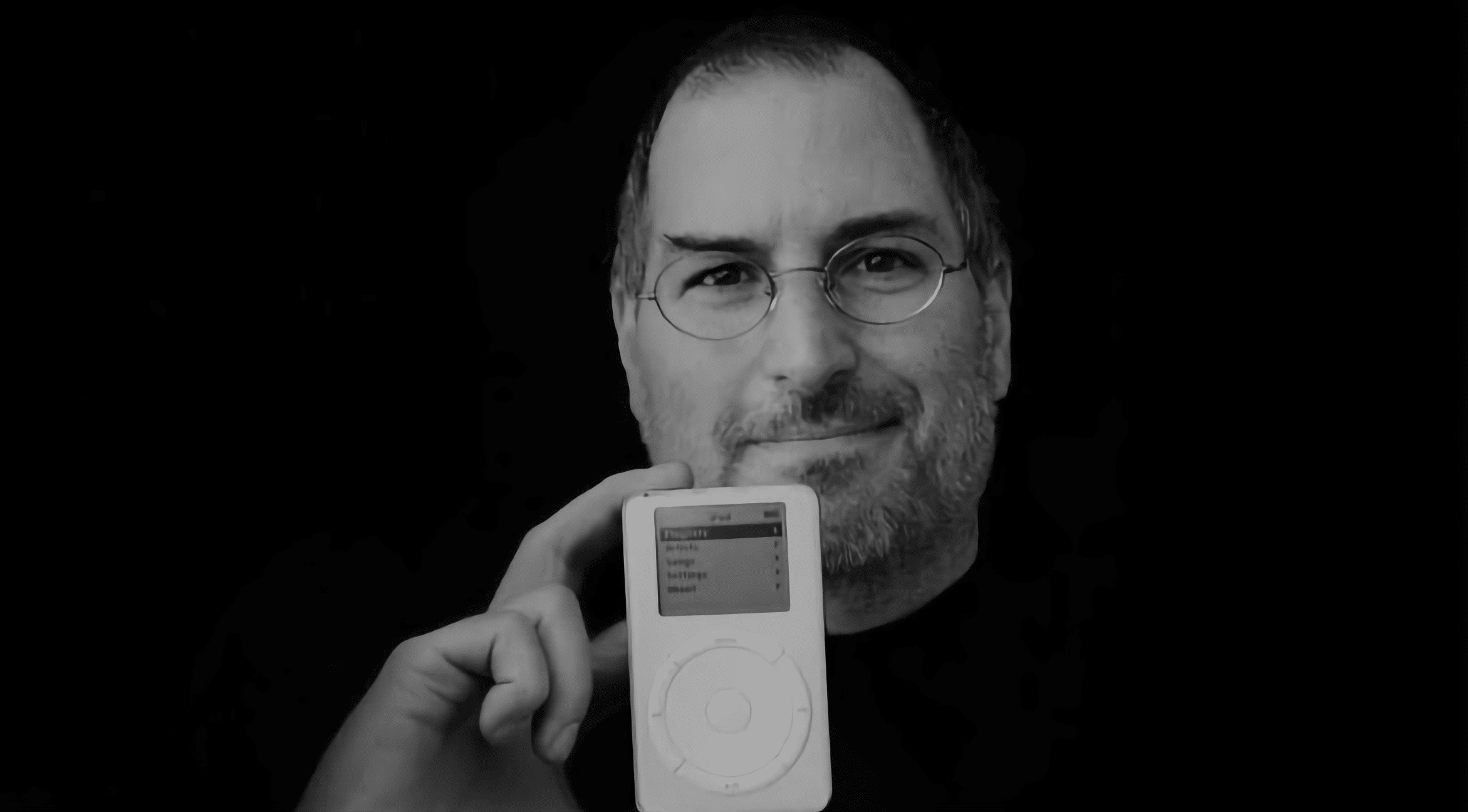
Há exatos 25 anos (ou 1/4 de século, para efeito dramático), o primeiríssimo iPod era revelado ao mundo por Steve Jobs, o então CEO 1Chief executive officer, ou diretor executivo. da Apple.

Equipado com uma tela LCD 2Liquid crystal display, ou display de cristal líquido. monocromática, um espaçoso (para a época) disco rígido de 5GB e um design para lá de icônico, ele mexeu com as estruturas da indústria fonográfica, além de ter servido como o primeiro “protótipo” de produtos como o iPhone e o iPad.

Com uma porta FireWire, o iPod original era capaz de transferir discografias inteiras em uma fração do tempo levado por reprodutores USB tradicionais, além de poder ser usado como uma espécie de HDD 3Hard disk drive, ou disco rígido. externo — possibilidade de uso que foi ativamente explorada pela Apple para justificar os US$400 cobrados pelo aparelho em 2001 (cerca de US$760 em valores atuais).

Mão segurando um iPod original
Foto de Cartoons Plural na Unsplash

Embora tenha motivado algumas críticas, o preço relativamente alto não chegou nem perto de ameaçar o sucesso do primeiro iPod, que podia armazenar até 1.000 músicas em seu HDD da Toshiba — capacidade que era constantemente lembrada pelo material de divulgação da Maçã.

Ele vinha com um CD de instalação do iTunes 2 — software que, junto com o iPod, mudou a forma como as pessoas consomem músicas — e era compatível apenas com Macs, o que também fez muita gente torcer o nariz na época.
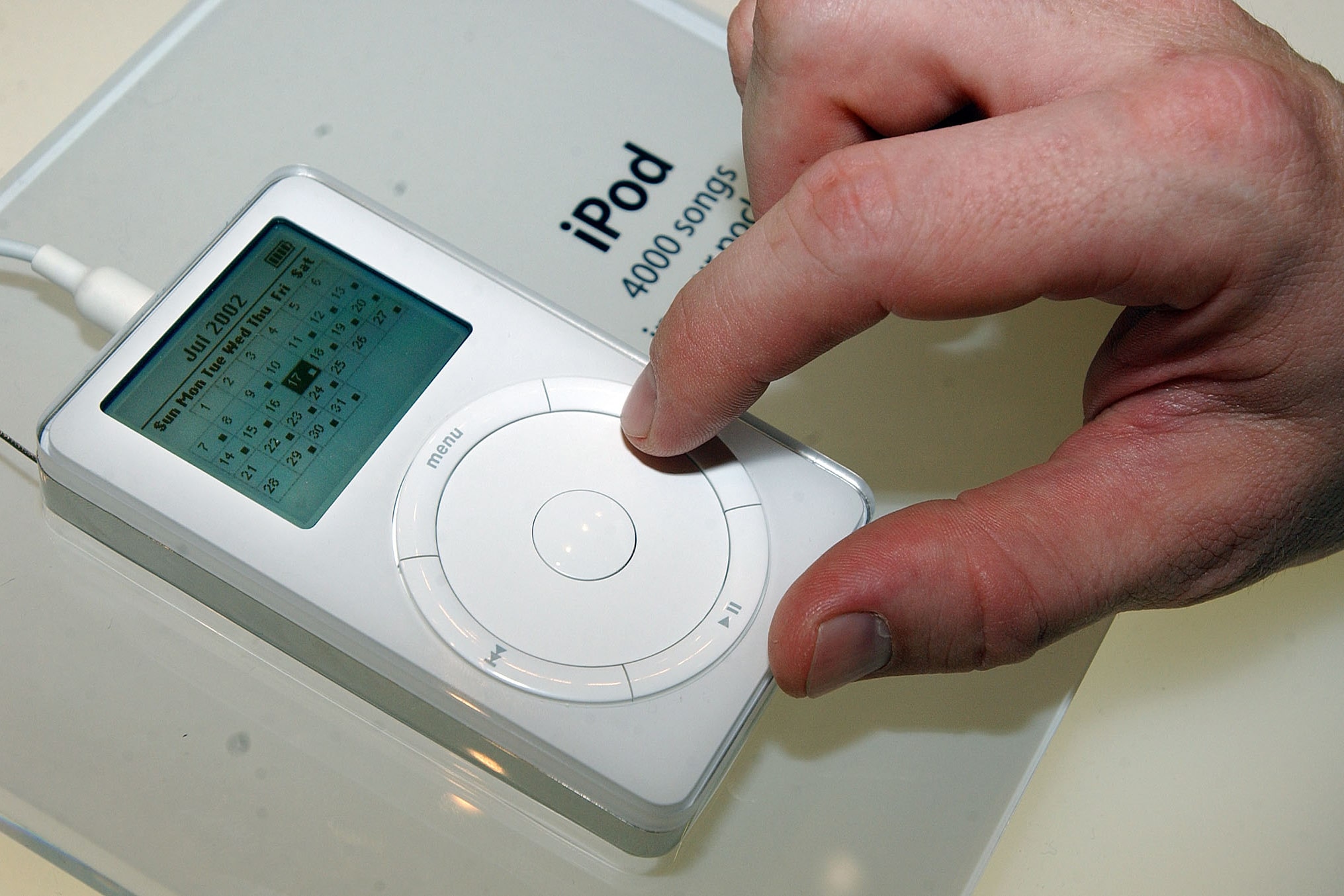
iPod em exposição
Foto: Fortune

Medindo cerca de 6cm de largura, 10cm de altura e pouco menos de 2cm de espessura, o iPod original está longe de ser o produto mais compacto do mundo para os padrões de 2026, mas na época ele com certeza chamava atenção, sendo comparável a um baralho de cartas — nas palavras do próprio Jobs.

A famosa scroll wheel também marcou época, oferecendo uma forma prática e intuitiva de interagir com o software, embora não tenha durado muito tempo (pelo menos não daquela forma) por questões de confiabilidade — como salientado por Tony Fadell (considerado o “pai do iPod”) há alguns anos em uma entrevista.

Depois do choque inicial, o iPod recebeu, é claro, novas versões, cada uma com as suas próprias peculiaridades. O modelo de segunda geração, por exemplo, passou a ser compatível com PCs com Windows, enquanto os modelos de terceira e quarta gerações adotaram o clássico conector de 30 pinos, que acabou dando as caras também nos primeiros iPhones e iPads anos depois.

iPod de segunda geração, compatível com Windows (2002)
Foto: RR Auction

O primeiro iPod com uma tela colorida veio na forma do iPod photo, que logo passou a fazer parte da quarta geração do reprodutor — tempo depois, ele foi renomeado para iPod with color display. Também com uma tela colorida, a quinta geração adicionou suporte ao codec H.264 e a capacidade de reproduzir vídeos (até então, rechaçada pela Apple devido à tela pequena do dispositivo).

Em 2007, tivemos o lançamento da sexta geração do iPod, que foi a primeira a receber o sufixo “classic”, atribuído também aos modelos anteriores retroativamente. Esse modelo chegou a receber uma revisão em 2009 que acabou se tornando a última “geração” do modelo clássico do iPod, equipada com 120GB de armazenamento e um corpo mais fino.
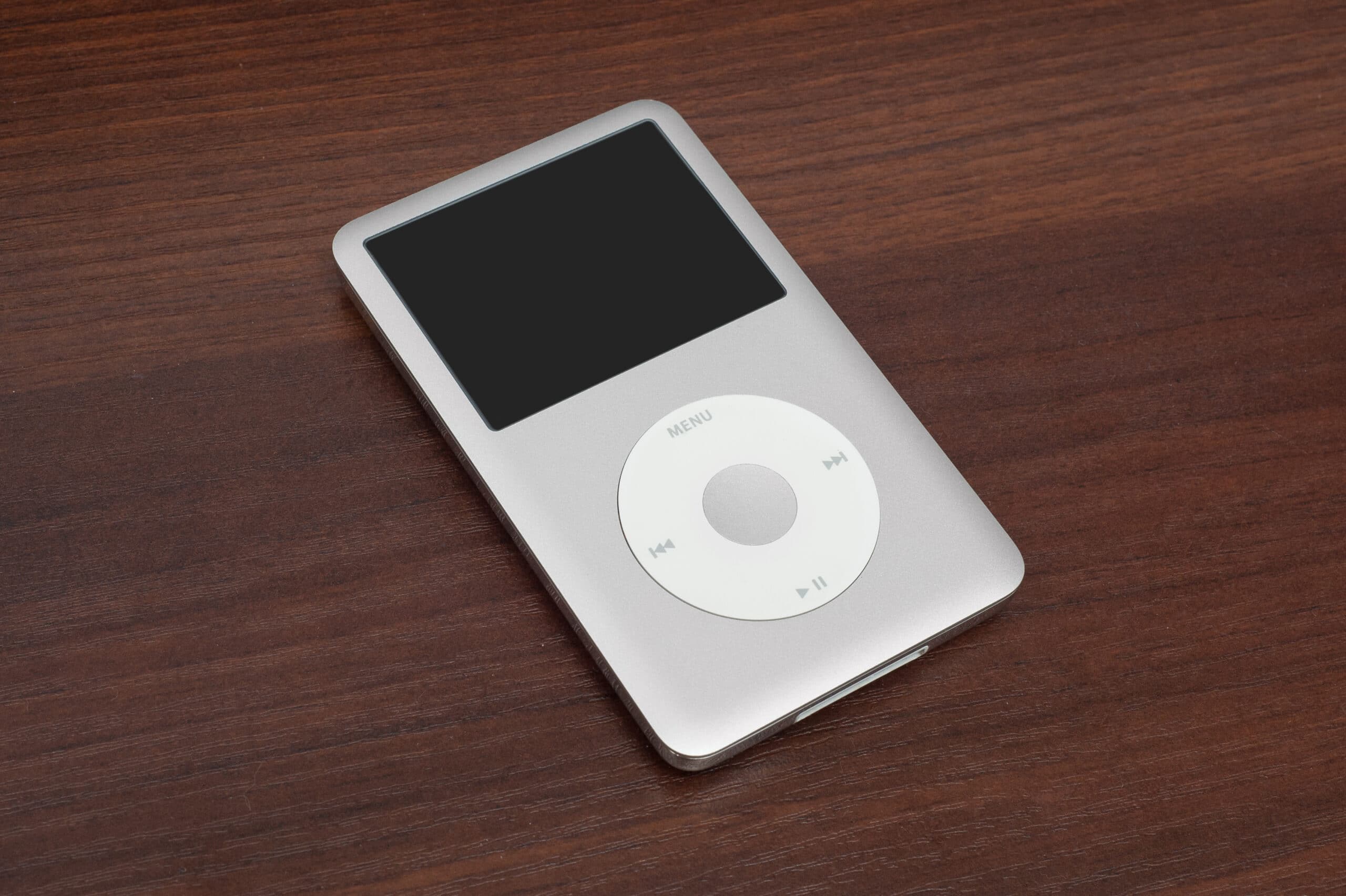
iPod classic prata sobre uma mesa
Foto: Vdovichenko Denis / Shutterstock.com

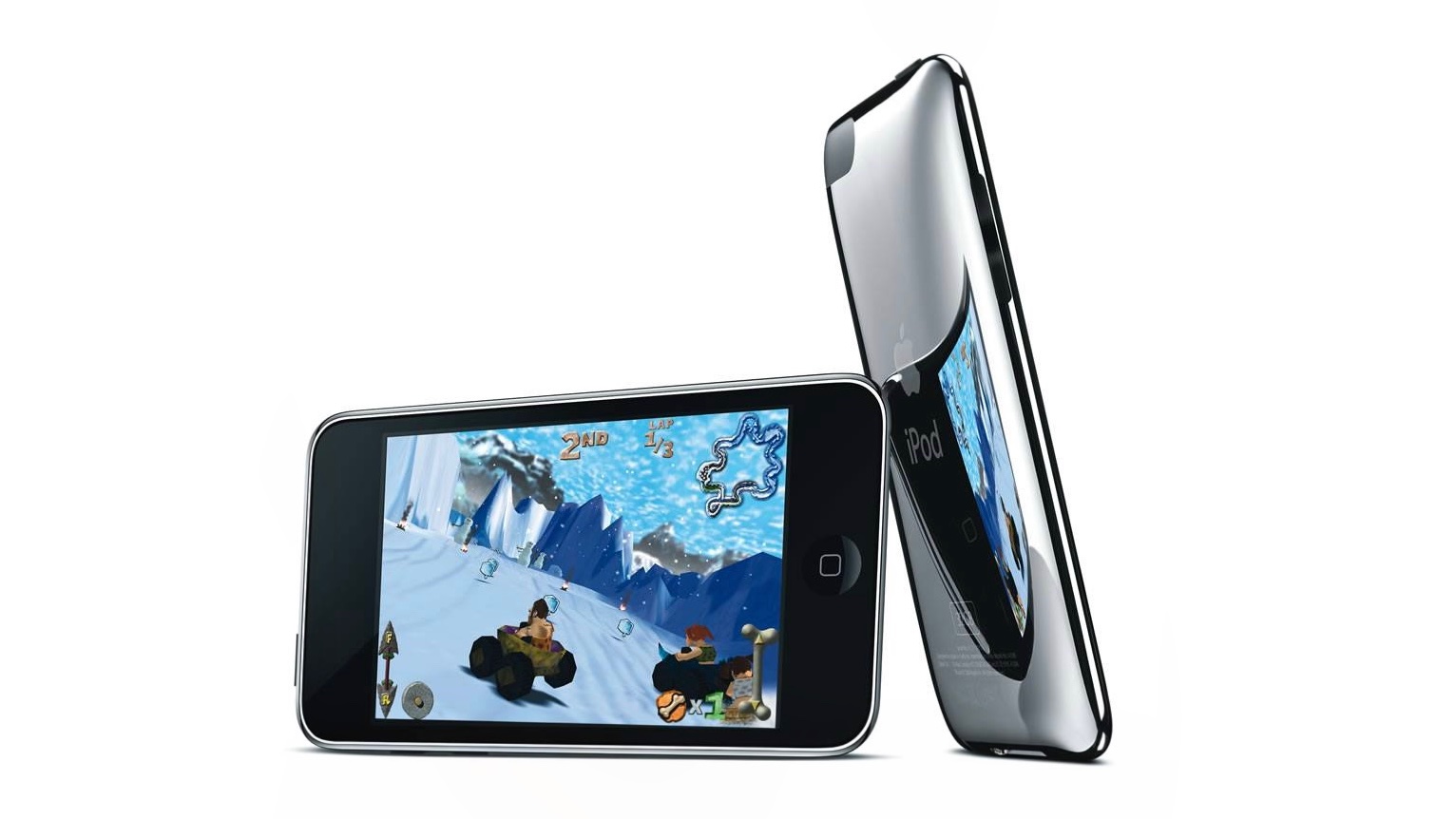
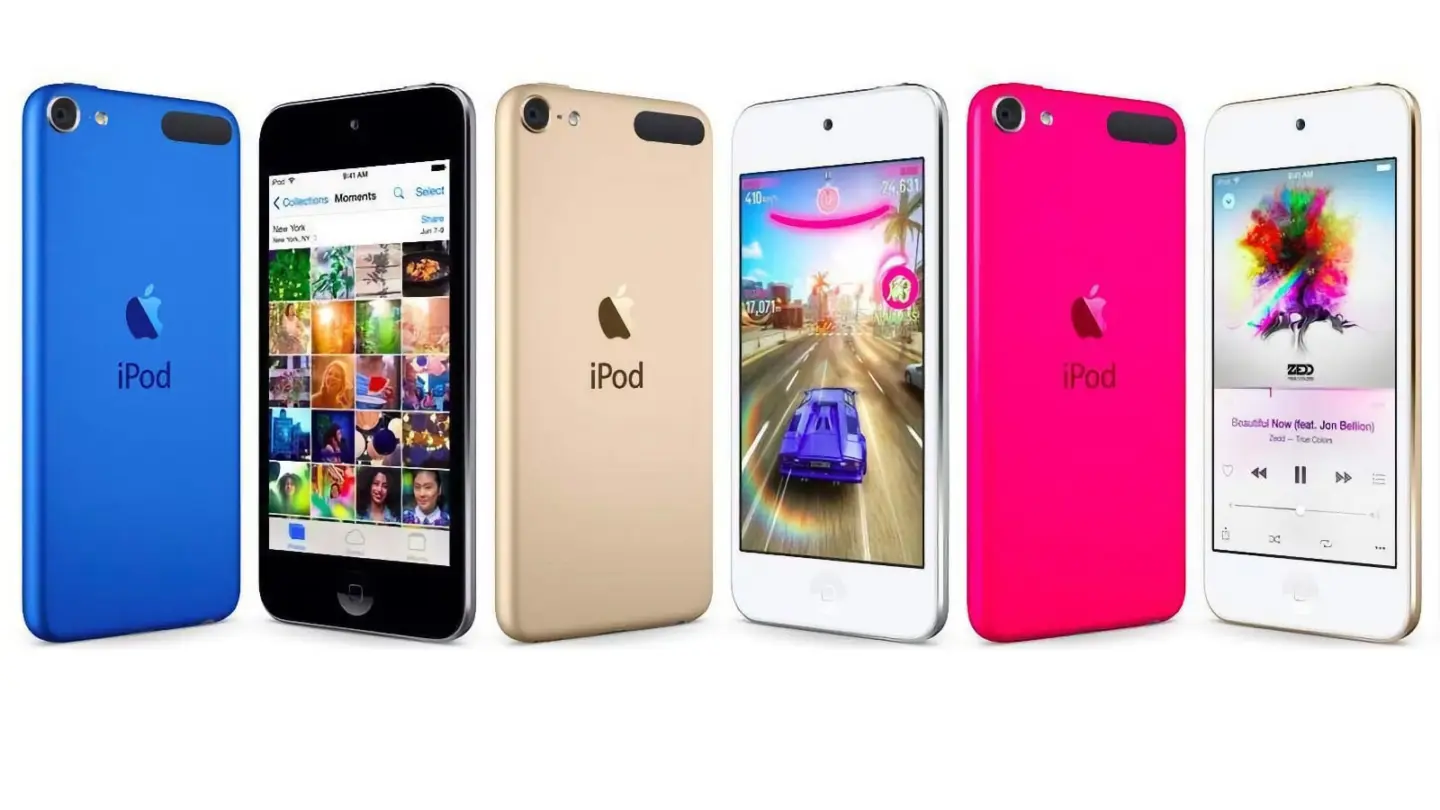
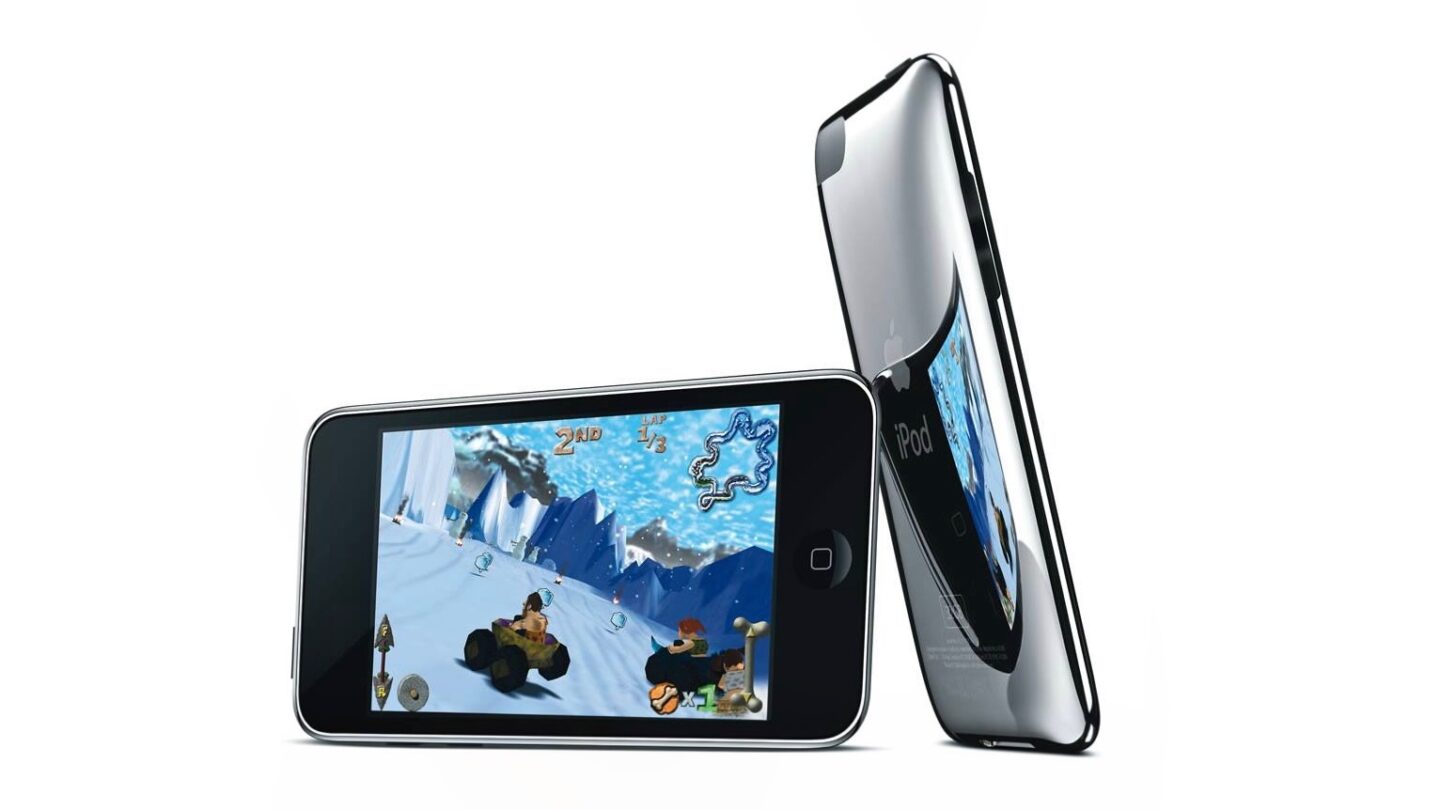
Como sabemos, o iPod classic foi descontinuado pela Apple em setembro de 2014, mas o fim da linha como um todo ainda estava a alguns anos de distância, com a descontinuação do iPod touch em 2022. Antes disso, no entanto, várias outras versões do reprodutor de mídia da Apple ficaram pelo caminho: o iPod mini (introduzido em 2004), o iPod shuffle (2005) e o iPod nano (2005).
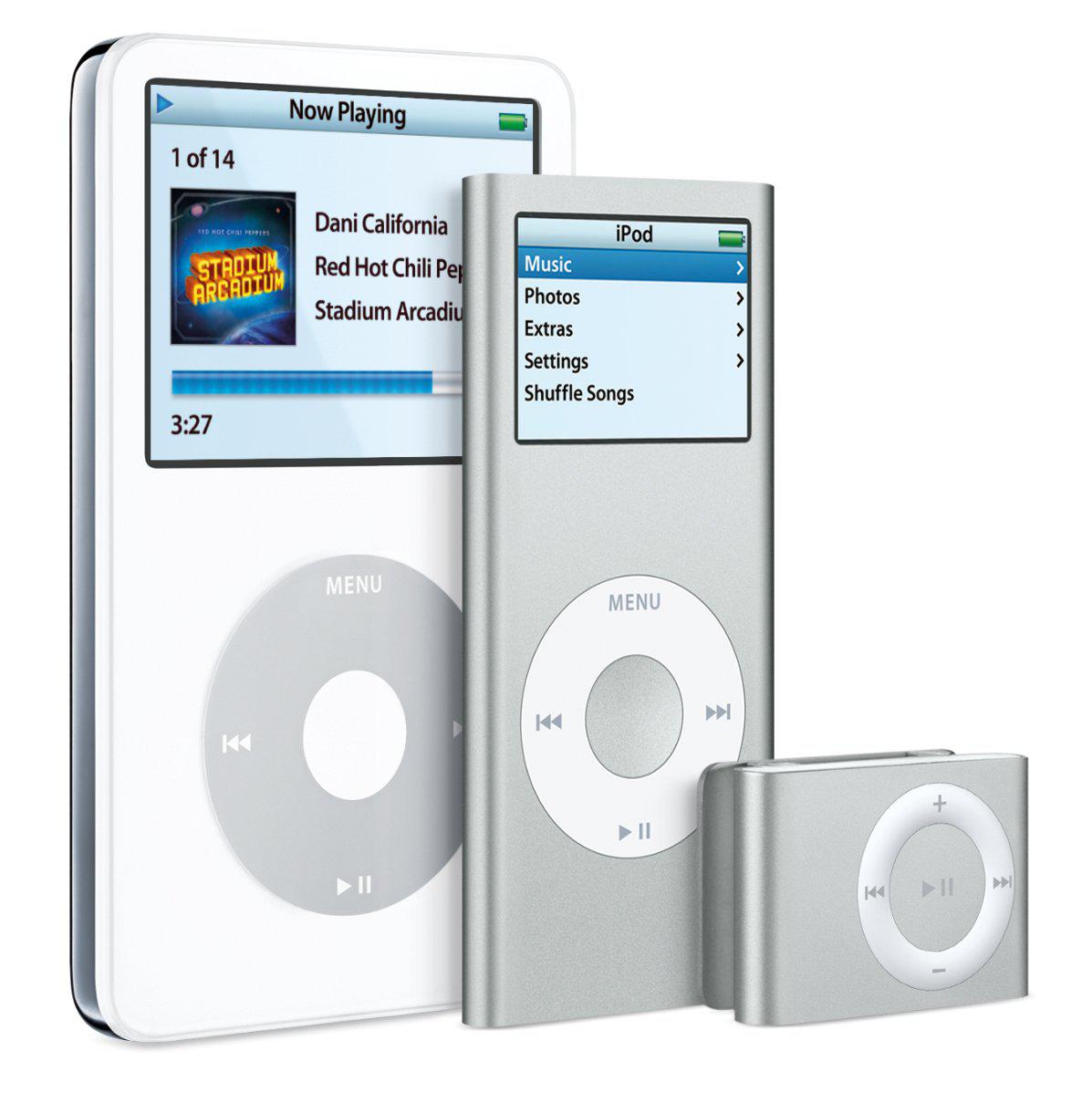
iPods
Da esquerda para a direita: iPod classic, iPod nano e iPod shuffle

Antes um dos gadgets mais populares do mercado, o iPod classic se tornou hoje um item de colecionador cultuado por uma legião de usuários nostálgicos, que apontam as vantagens do aparelho em um mundo ultraconectado e fazem de tudo para manter suas unidades funcionando a todo vapor.
E você, tem ou teve um iPod original? Ou quem sabe um modelo mais recente? Comente abaixo!

Notas de rodapé

  • 1
    Chief executive officer, ou diretor executivo.
  • 2
    Liquid crystal display, ou display de cristal líquido.
  • 3
    Hard disk drive, ou disco rígido.
  •  

Promoções na App Store: Endling, Labyrinth City, Kana School: Japanese Letters e mais!

Nesta quinta-feira, economize e aproveite a nossa seleção de promoções na App Store!

Endling, criado pela HandyGames e um dos vencedores dos Apple Design Awards 2023, é o nosso destaque do dia.

Experimente e explore um mundo devastado pela humanidade na pele da última raposa da Terra e de seus filhotes. Descubra toda a destruição, a poluição e os problemas causados ao planeta.

Explore várias áreas de rolagem lateral em 3D e defenda suas pequenas bolas de pelo, alimente-as, veja-as crescer, observe suas personalidades e medos únicos e, o mais importante, ajude-as a sobreviver.

Confira um vídeo:

Controles na tela serão as suas ferramentas. Proteja-se de ameaças, cace, esconda-se e teste o seu instinto de sobrevivência. Aproveite a oferta e compre esse belo título! 🦊


Confira outros jogos/apps que, juntos, somam mais de R$90 em descontos:

Jogos

Puzzle.

Torne-se um predador.

Controle de fronteira.

Aplicativos

Aprenda japonês.

Diversão educacional.

Observe a Terra.


Aproveite as ofertas e até amanhã! Lembrando que elas são sempre por tempo limitado, então é bom correr. 🛸

  •  

Promoções na App Store: ELOH, MO: Astray, DualPhotoCalendar e mais!

Abrindo a semana — ontem foi feriado, então não conta! 😛 — de evento da Apple com a nossa seleção de promoções na App Store!

ELOH, criado pela Broken Rules, é um puzzle perfeito para relaxar e se divertir.

Trata-se de um quebra-cabeça no qual você deve escutar o groove e deixar que ele o guie pelas 98 fases. Controles intuitivos, belíssimas animações e uma trilha sonora desenvolvida especialmente por SCNTFC fazem parte deste jogo.

Confira um vídeo:

Aproveite o bom desconto e boa diversão!


Abaixo outros jogos/apps que, juntos, somam mais de R$60 em descontos:

Jogos

Puzzles.

Jogo de aventura.

Jogo de ação.

Aplicativos

Calendário com fotos.

Temporizador culinário.

Utilitário para escrita.


Aproveite as ofertas e até amanhã, com a nossa cobertura especial dos lançamentos da Maçã! Lembrando que elas são sempre por tempo limitado, então é bom correr. 🦖

  •  
  •  

This Color-Changing Material Could Give Robots a New Way to Detect Touch

Engineers at Queen Mary University of London have created a tactile sensor, described in a study published in Science Advances, that allows robots to detect touch using a simple camera.  

The sensor converts mechanical forces into visible color patterns, reducing the need for dense arrays of embedded sensors. Giacomo Sasso, a postdoctoral researcher at Queen Mary’s School of Engineering and Materials Science, led the team that developed this new sensor. Rather than relying on embedded electronic sensors, they created a soft material that changes color when pressed or bent.

This effect, known as structural color, is the same reason butterfly wings look iridescent without pigment. Pressure causes microscopic structures within the material to shift, altering how light reflects and creating a real-time visual indicator of force.

Touch Without the Computation

Most vision-based tactile sensors can map contact and force in detail, but only at the cost of heavy computation that slows them down. Simpler systems are faster, but sacrifice detail. The new material developed by Sasso’s team sidesteps this problem by building the sensing function into the material itself. With just a standard USB camera, researchers can track color changes on the surface and immediately infer pressure, strain, and contact shape without complex data reconstruction.

“You won’t guess how much information is generated when your finger presses a light switch. A human hand contains more than 10,000 mechanoreceptors to do the job, yet touch sensing remains one of the major challenges in robotics,” Sasso said. “We were happy to capture the finger ridges, as no existing technology can reproduce such sensor density at [a] comparable scale and simplicity. The key idea behind this project was to think outside the box: instead of embedding dense and overengineered sensor arrays, sensing is moved into the material itself, where mechanical cues are directly transformed into colour fields and captured using a simple low-cost USB camera.”

Professor James Busfield, one of the paper’s co-authors, described the advantage more simply: “What is particularly powerful is that the information is already in the light signal. You are no longer reconstructing touch – you are observing it directly.”

From Precision Manufacturing to the Operating Room

Reducing the computational demands of touch sensing opens up new possibilities. A robotic gripper made with this material could handle tiny parts more gently, since changes in force are immediately detectable. Prosthetic limbs equipped with similar sensors could also provide users with more detailed tactile feedback.

The researchers also see potential applications in surgery, where detecting subtle pressure differences could help clinicians interpret tissue properties.

A Decade of Groundwork Behind One Material

Professor Federico Carpi from the University of Florence and Professor James Busfield from Queen Mary worked together on this project, merging years of separate work on stretchable sensors and polymer behavior into one material system. This allowed the team to use a mechanochromic material as the sensor itself, not just as a base for electronics.

Many approaches to robotic touch have relied on increasingly complex sensor arrays, wiring, and computing systems. Rather than adding more electronics, Sasso’s team’s approach allows the material itself to encode touch into visible color. It remains unclear whether this color-based method can be scaled for use in commercial robotic hands, but this work suggests that the future of robotic touch might rely as much on smart materials as on advanced electronics.

Austin Burgess is a writer and researcher with a background in sales, marketing, and data analytics. He holds an MBA, a Bachelor of Science in Business Administration, and a data analytics certification. His work focuses on breaking scientific developments, with an emphasis on emerging biology, cognitive neuroscience, and archaeological discoveries.

  •  

Scientists Demonstrate What Pianists Have Argued for Over 100 Years


For more than a century, musicians have maintained that the way a pianist touches a key influences the sound that emerges. Many scientists, however, have argued that after the hammer strikes the string, the instrument itself determines the outcome, making the pianist’s touch irrelevant.

Now, a recent study published in the Proceedings of the National Academy of Sciences provides some of the strongest evidence yet in support of the musicians’ perspective.

A research team led by Dr. Shinichi Furuya of the NeuroPiano Institute and Sony Computer Science Laboratories developed a custom sensor system called HackKey. This system can record the movement of all 88 piano keys at 1,000 frames per second, with a spatial precision of 0.01 millimeters. The team invited 20 internationally recognized pianists to play notes while intentionally aiming for contrasting timbres, such as bright versus dark and light versus heavy. Listeners were able to distinguish among the different timbres, even individuals with no experience playing the piano.

The Movements Behind the Sound

The researchers identified a series of micro-movements beneath each keystroke. These movements are so subtle that they are almost impossible to see, but precise enough for listeners to perceive differences in sound.

Small changes in how quickly a key accelerates, slight overlaps between notes, and variations in the speed of initial contact with the key all influenced how listeners described the resulting sound. When each of these factors was adjusted individually, the perceived timbre changed. Adjusting a single movement feature was enough to reliably change how listeners perceived timbre. The results show that touch has a direct effect on sound, independent of factors such as volume or tempo.

The study describes these micro-movements as a motor skill developed through years of advanced training. The researchers call the emerging science of mapping movement to musical experience “dynaformics.”

A Debate as Old as the Modern Piano

The debate over whether touch can alter piano timbre dates back to at least the early 1900s, when music educators began discussing what distinguishes one performer’s sound from another. The piano’s mechanical action appeared to support the skeptics, since the hammer, once released, moves independently before striking the string and is not directly contacted by the pianist’s finger.

As a result of this mechanical process, many acousticians concluded that any reported differences in tone were psychological, influenced by context, volume, or timing rather than by touch. Musicians maintained their position but did not have the scientific tools to prove it.

To settle this debate, Furuya’s team developed a custom biometric contact-sensing system called HackKey, capable of recording the movement of all 88 piano keys at 1,000 frames per second with sub-millimeter precision. The system captured in-depth piano movement data that previous technology could not. For the first time, researchers could observe the specific actions of elite pianists and relate those movements to listeners’ descriptions of sound.

What It Means Beyond the Concert Hall

Piano teachers have often used general phrases like “play warmer” or “use a softer touch” because the specific movements that create certain sound qualities were not well understood. This study now offers a guide to those movements.

Future training tools may allow students to see precisely what their fingers are doing when a note is played successfully or not. Instead of relying on a teacher’s metaphor, students could compare their own keystrokes to a standard and work to improve their technique. The researchers suggest that this approach could make expressive technique easier to teach and visualize, especially for students who find it difficult to translate verbal instructions into physical actions.

The research may also apply to rehabilitation, robotics, and human-computer interaction. Discovering that small differences in movement can shape auditory perception offers new insight into how the brain links movement and sensory experience. Some researchers are exploring whether systems based on expressive musical movement could help patients recover dexterity and coordination after injury.

Most scientific research on music has focused on elements that are easier to measure, like pitch, loudness, and rhythm. Timbre, or the quality or “color” of a sound that makes one instrument or voice different from another, has been harder to measure. This study offers a new way to understand the mechanics behind this concept. The findings suggest that some of the most expressive parts of music come from movements too small to see, developed through years of practice.

Austin Burgess is a writer and researcher with a background in sales, marketing, and data analytics. He holds an MBA, a Bachelor of Science in Business Administration, and a data analytics certification. His work focuses on breaking scientific developments, with an emphasis on emerging biology, cognitive neuroscience, and archaeological discoveries.

  •  
❌