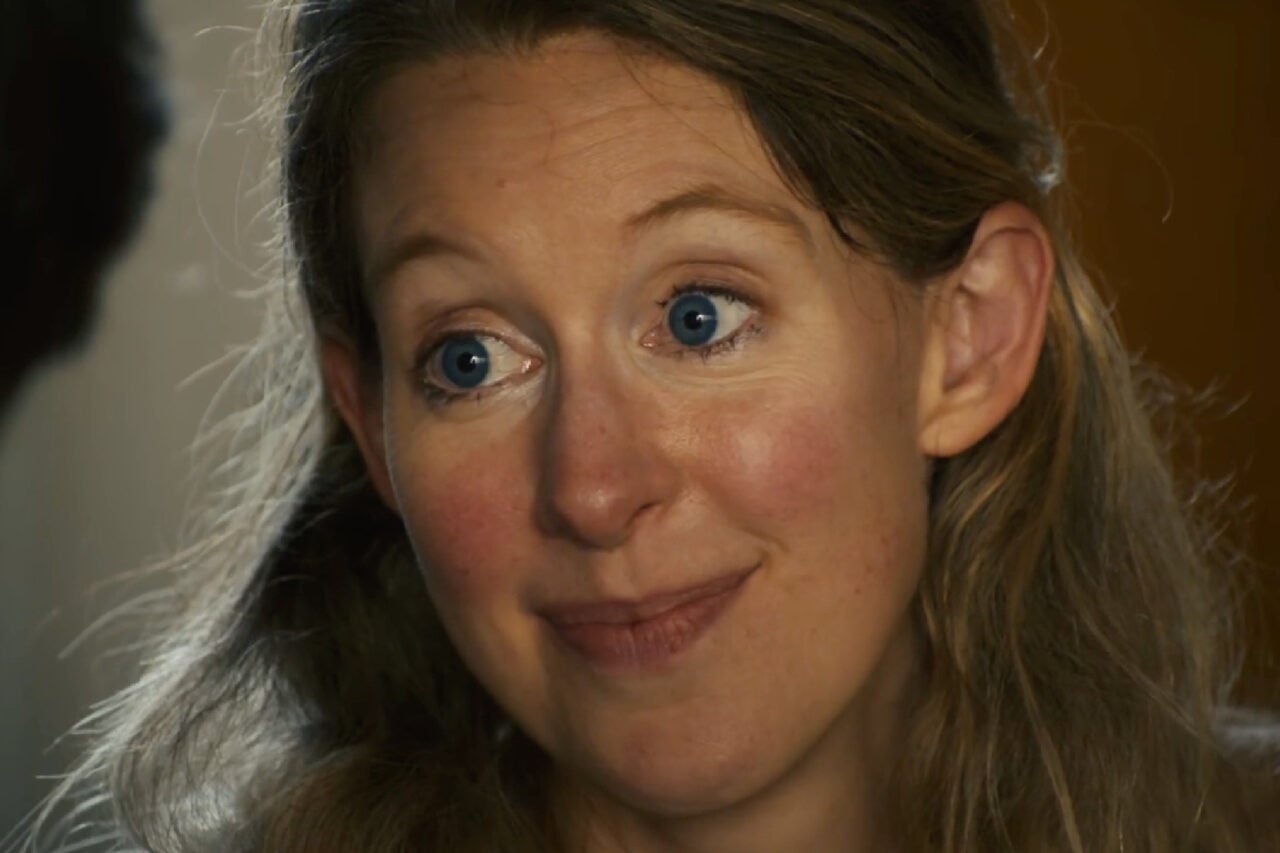
The convicted FTX founder, who is just three years into a 25-year prison sentence, told Money Talks he hopes for a pardon, but that's an "uphill battle."
A CBC investigation found that more than 1.5 million Canadian Crime Stoppers tips spanning 25 years were exposed in a breach of the P3 Global Intel tip-management platform. About 850,000 records contained personally identifiable information, including addresses, phone numbers, emails, license plates and some banking details. Longtime Slashdot reader doconnor shares the report: The data was stolen last March by hacktivist collective Internet Yiff Machine. In a manifesto, the group said it wanted to disprove the claim by P3 Global Intel -- the company hired by Crime Stoppers to manage its tips -- that the platform was "anonymous" and "secure." A copy of the hacked data was made available to researchers and journalists, including CBC, by Distributed Denial of Secrets, a U.S. non-profit that archives and publishes hacked and leaked documents it deems to be in the public interest. The report found that more than 4,300 Crime Stoppers tipsters identified themselves by their full name, with hundreds of records containing staff warnings that individuals had "self-identified" or been "exposed," yet their information remained unredacted.
The leaked data included sensitive allegations involving murder, terrorism, drug trafficking and organized crime, with nearly 49,000 tips linked to cases cleared through arrests or criminal charges. Cybersecurity experts criticized the retention of decades-old records... "If a tip is closed, does that need to stay online?" asked cybersecurity expert Ben Coon. "The answer to that, to me, is no."
The RCMP was initially told Canadian data was unaffected, then assured that exposed Canadian records contained no personally identifiable information. This appears to contradict the CBC's findings. Furthermore, affected individuals have not been systematically notified because contacting them could further jeopardize their anonymity.
"For a system that has been designed to promise anonymity to the users, that has failed categorically," said Prof. Ali Dehghantanha, the Canada Research Chair in Cybersecurity and Threat Intelligence at the University of Guelph.
Gabriel Basso is joining Julia Garner in Apple TV’s Guilty Creatures, adding another series regular to the upcoming true-crime thriller. Based on Mikita Brottman’s nonfiction book, the adaptation explores a Florida murder and the years of secrecy that followed. Basso’s character has not yet been identified in the casting coverage.
Radio Times reported the casting on October 21, identifying Basso as a series regular. The actor is known for playing Peter Sutherland in Netflix’s The Night Agent, giving the Apple TV project a lead performer already familiar to thriller audiences.
For viewers familiar with Basso through The Night Agent, the project introduces a different kind of thriller premise: a story concerned with a murder’s prolonged psychological consequences and the relationships surrounding it.
Basso Joins an Expanding Ensemble
Basso joins previously announced series regulars Garner, Lewis Pullman, and Maddie Hasson. Mary-Louise Parker is attached in a recurring role.
Those distinctions establish the actors’ reported involvement without revealing how the adaptation will distribute the story among them. Basso’s casting does not yet identify which person he will portray or how his character connects to the central relationship.
That leaves a meaningful part of the announcement open. A recognizable actor can bring an audience to a project, but the character description will provide a clearer indication of what this particular role asks of him.
Garner’s involvement extends beyond acting: she is also an executive producer, and the project was developed through Tomorrow Studios’ first-look arrangement with her production company, Alma Margo. Basso’s addition expands the cast of a series whose lead performer is also involved behind the camera.
Image Credit: Getty Images
The Story Begins With a Florida Disappearance
The source material is Brottman’s nonfiction book, Guilty Creatures: Sex, God, and Murder in Tallahassee, Florida.
Published in July 2024 by Atria/One Signal Publishers, the book gives interested viewers a way to explore the underlying case before the adaptation arrives. It is a nonfiction account, so reading it will reveal events that the television series may choose to introduce gradually.
According to the publisher’s description, the book examines the relationships between Mike and Denise Williams and their longtime friends Brian and Kathy Winchester. Their shared lives were disrupted when Mike disappeared during a hunting trip on Lake Seminole on December 16, 2000.
The account follows the suspicions that developed afterward, including Brian’s subsequent marriage to Denise, and the long path toward uncovering what happened.
Brottman’s background also helps explain the book’s emphasis. Simon & Schuster identifies her as a writer and psychoanalyst, and describes the work as an examination of the psychology of people living with responsibility for a killing.
That provides context for the adaptation’s premise without establishing exactly how the television version will organize events. The book’s chronology, perspective, and emphasis may be reshaped for the screen.
Apple Has Positioned the Series Around Guilt and Secrecy
Apple officially announced Guilty Creatures on July 6. Its description centers on an adulterous relationship, a murder, and the emotional burden carried by two religious lovers over 18 years.
The premise gives the series a different emphasis from a straightforward search for a culprit. It creates room to examine the gap between public identity and private knowledge, and how a shared secret can influence a relationship over time.
That is the dramatic potential of the announced material, rather than an assessment of finished episodes. Casting news cannot establish the eventual balance between investigation, domestic drama, and psychological suspense.
It does, however, explain why the supporting ensemble matters. A story spanning years of concealed wrongdoing depends partly on the people around its central figures: what they notice, what they believe, and how their understanding changes.
Image Credit: AppleMagazine
Craig Gillespie Leads the Creative Team
Apple’s official series announcement names Craig Gillespie as director and executive producer, with Stuart Zicherman serving as showrunner and executive producer. Sarah DeLappe is adapting the book for television.
Tomorrow Studios is producing the series. The project was developed through its first-look arrangements with Garner’s Alma Margo and Gillespie’s Fortunate Jack Productions. Brottman is also an executive producer.
Gillespie’s previous credits include I, Tonya and Pam & Tommy, while DeLappe wrote Bodies Bodies Bodies. Zicherman’s credits include The Shrink Next Door and The Americans. Those backgrounds offer viewers a more concrete introduction to the filmmakers shaping the adaptation’s tone, writing, and direction.
A Premiere Date Is Still Unannounced
The casting reports do not provide a premiere date for Guilty Creatures. Basso’s addition should therefore be understood as a production update, rather than evidence that the series is approaching an imminent streaming release.
For viewers following the project, the next useful details will be character announcements and Apple’s release plans. The ensemble is becoming clearer, while the adaptation’s precise shape—and when audiences will be able to watch it—remains to be revealed.
An automotive tech startup claims that its IT systems were attacked by individuals trying to steal its driving model, and that those attacks came from an IP address associated with a rival in the space. The tech startup, IQ.Lvbs, described the alleged security incident in a recent blog post. On October 3, IQ.Lvbs introduced the private beta of NovaSpark, the first model for the company's IQ.Pilot app, in the Comma.ai Discord channel. They put it in that channel because the model requires the use of Comma.ai's camera hardware, which is built for self-driving vehicles. From there, things got weird. "From October 7 to 14, we faced repeated attempts to steal NovaSpark, access users’ devices and private driving files, and exploit our sign-in system," the IQ.Lvbs blog post claims. "The first requests came from an IP assigned to Comma.ai Inc." In addition, on October 8 – shortly after the alleged attacks began – somebody banned IQ.Lvbs' team from the Comma.ai Discord channel. Posts on the IQ.Pilot Discord channel indicate that individuals doing private beta testing for IQ.Lvbs have also been banned from that channel. One of the three people involved in IQ.Lvbs, a UI/UX designer who asked to be identified only as "Cat," speculated to The Register about the reasons for the alleged hack and Discord ban. "Our model, NovaSpark, is a good deal ahead of Comma's latest small and large models, which directly threatens their core business of making AI models good enough to sell their hardware," he said. "Comma for the most part has been stagnant in their models' improvement and that was a main driver for us making NovaSpark." An October 7, 2026 Discord message from user Torq_boi, said to be Harald Schäfer, Comma.ai’s CTO, implies NovaSpark was distilled from Comma.ai's Rebellious Hope model. “I’m glad people are training models and experimenting with this stuff," the post starts. "But don’t lie to people about what you’re doing, and saying it’s not a finetune of existing comma models when it is. That’s not cool.” IQ.Lvbs disputes that assertion and says it did the work on its own. "The claim that NovaSpark is Rebellious Hope with a short fine-tune and an unchanged policy does not survive scrutiny, and we’re not sure how Comma came to that conclusion, especially considering that they do not possess NovaSpark’s model weights or ONNX," the biz said. In the log data IQ.Lvbs published to support its claims, the company flags the username haraschax as one of those associated with Comma.ai IP addresses. Schäfer uses that username on GitHub. Comma.ai and Schäfer did not respond to requests for comment sent to several different addresses. The Discord user Torq_boi in the Comma.ai channel did not respond to a DM seeking comment. Comma.ai is currently being investigated [PDF] by the National Highway Traffic Safety Administration to assess whether its driving automation tech contributed to five crashes and three deaths. IQ.Lvbs says it's considering legal action over the alleged hack. "We are currently reviewing our legal options and looking into involving the authorities," said Cat. ®
Multiple ransomware groups, including Qilin and Inc, have been exploiting a high-severity authentication bypass bug in Palo Alto Networks' PAN-OS, with Unit 42 investigating attacks since early June across numerous industries, such as finance, healthcare, and manufacturing. CVE-2026-0257 affects PAN-OS GlobalProtect portals and gateways, potentially allowing attackers to bypass security restrictions and establish an unauthorized VPN connection. The security vendor first disclosed and patched the bug on May 13 and initially assigned it a medium-severity rating, saying it was aware of attempts to exploit it but had not observed any malicious exploitation. That assessment quickly changed, and by the end of the month, Rapid7 researchers said they observed successful exploitation across multiple customer environments dating back to at least May 17. On Monday, Palo Alto Networks’ consulting and incident response biz, Unit 42, said ransomware crews including Qilin and Inc continue to batter the CVE. “Attackers are leveraging this vulnerability to gain an initial foothold into corporate networks, subsequently bypassing multi-factor authentication (MFA) controls to establish a VPN session,” said Andy Piazza, a senior director of threat intelligence at Unit 42. After gaining initial access, the criminals move laterally across the networks using Remote Desktop Protocol and Server Message Block (SMB), dropping additional malware for credential harvesting and data theft before ultimately deploying ransomware, Piazza warned. In its ongoing investigations, Unit 42 has spotted the ransomware criminals infecting “numerous industries, including education, financial services, healthcare, high tech, hospitality, manufacturing, professional and legal services, government, transportation and logistics, utilities and energy, and wholesale and retail." Palo Alto Networks did not respond to The Register’s inquiries about the attacks, including how many organizations have been infected. Additionally, ReliaQuest intel analysts warned that “multiple threat groups,” including Settra ransomware operators, are also exploiting the bug to gain initial access to corporate networks via unauthorized VPN sessions. “The most significant evolution in tactics, techniques and procedures (TTPs) following successful exploitation of CVE-2026-0257 is the direct pivot to the virtualization layer,” Piazza wrote. “In one notable case, attackers moved from the compromised VPN gateway to the vCenter management appliance. From there, they disabled security controls on ESXi hypervisors (execInstalledOnly) and used a custom tool to perform offline credential dumping directly against a domain controller's virtual disk (VMDK).” This allows the miscreants to bypass in-guest endpoint detection and response products, and represents “a highly sophisticated method” of stealing domain-wide credentials, he added. Unit 42 has also spotted criminals chaining this exploit for initial access with other vulnerabilities such as CVE-2023-27532, which targets Veeam backup infrastructure. So if you haven’t already patched vulnerable PAN-OS software, do so now - and investigate whether attackers have already gained access to your network. Check Unit 42’s indicators of compromise to assist with threat-hunting activities.®
A test account protected by "Password1" helped an intruder steal personal data relating to 3,300 people, mostly children, in a ransomware attack that has drawn regulatory rebukes for two Welsh organizations. The Information Commission's Office (ICO) issued reprimands rather than fines to Ogi Networks Limited (ONL) and the Local Government Data Unit – Wales, also known as Data Cymru. According to the ICO, altnet ONL provided server and connectivity infrastructure, licensing, and support to Data Cymru, which helps public bodies across Wales make effective use of data. On November 1, 2024, Data Cymru suffered a ransomware attack after a miscreant exploited a test account called Test2 to infiltrate its network and encrypt 182.7 GB of data housed in a file server and an internal database server. "Before deploying the ransomware, the threat actor exfiltrated 42 GB of data from a primary domain controller, a file server and an SQL server," the ICO said on Tuesday in its reprimand of ONL [PDF]. ONL told the ICO it created the test account on January 13, 2012, during its initial project for Data Cymru. "ONL confirmed that the creation of the 'Test2' account was likely intended to test user account access before migrating 'real' users to its services," the ICO said. "When it was created, the 'Test2' account was given the password of 'Password1'." The ICO cited Bitwarden's password strength tool, which rated "Password1" as "very weak" and estimated a cracking time of less than a second. "The local administrator accounts on the three impacted systems all had the same password. This meant that once one system had been breached, the local account hashes could be collected and used by the threat actor to authenticate access to other systems on the Data Cymru network," the regulator added. "ONL confirmed that it did not carry out any reviews of local administrator accounts following their initial deployment. This meant these accounts remained active, regardless of whether they were used, and continued to use the same default passwords set at the time of their creation in January 2012, as part of ONL's initial project with Data Cymru, for more than 12.5 years." The data watchdog reprimanded ONL under Article 32 of the UK GDPR because it failed to put in place "appropriate technical and organisational measures" to ensure processing systems and services were safe, and it didn't regularly assess or evaluate those measures. It found ONL had no auditing procedures to review user accounts within Data Cymru's Active Directory. The ICO's separate reprimand of Data Cymru [PDF] also detailed failures in its security arrangements. "Password1 is not an appropriate password, it is a wide-open door to nefarious actors," said ICO head of investigations David Doodson. "This incident shows how a single weak password, attached to an account that was no longer needed, can leave the door open to a serious cyber-attack that can affect thousands. "The responsibility for these failures did not sit with one organisation alone. ONL created the test account whilst Data Cymru retained overall control of its network, including the ability to instruct ONL to create or remove accounts. Neither had put in place sufficiently clear and effective measures to ensure that old accounts were routinely identified and removed." ®
Westminster appears to be waking up to warnings over AI safety, with concerns over its use by extremist groups and bad actors
“I have this sense that, within a few months, AI is going to be all anyone is talking about,” said one cabinet minister, with an ominous stare.
It was Labour conference, with everyone from ministers to activists jubilant at Andy Burnham’s takeover and a bounce in the polls after the change of leader.
How a string of bizarre events led writer Linda Geddes to don her sleuthing cap and dig into a world of shadowy impersonators
It started with an entirely ordinary interaction on LinkedIn. Someone had tagged me in a post, saying how much they’d enjoyed contributing to a New York Post article I’d written about “chronoworking”. As the author of a book about circadian rhythms, it was exactly the sort of subject I might write about. Except I’d never heard of this person, let alone interviewed them.
I clicked on the link and my stomach dropped. There, above an article about people who organise their working lives around their biological clocks, was my name: Linda Geddes.
Bank of America has had to spend big on IT in response to an AI security audit and findings that its anti-money-laundering (AML) controls were lacking.
“We understand the seriousness of compliance, and we are responsible for getting it right,” Bank of America CEO Brian Moynihan said on a conference call to discuss the company’s third-quarter financial results. “We have invested billions of dollars in technology and dedicated thousands of employees to combat financial crime,” he said, adding that “a couple hundred million” of that spending in the third quarter was on “remediation for the AML”.
The IT team had to spend a similar amount on fixing software vulnerabilities in its systems, a task that also required it to hire 1,000 consultants, Moynihan said.
The bank’s security vulnerabilities were revealed after the company received an early release of Claude Mythos Preview. In a report to the US House of Representatives Financial Services Committee, Anthropic said that Claude Mythos Preview “has already found thousands of high-severity vulnerabilities, including some in every major operating system and web browser.”
Current security procedures for training AI models are inadequate, hundreds of AI researchers have warned governments and the AI community. They are calling for tougher rules and the establishment of a new international body overseeing best practice for AI development.
In an open letter the AI specialists — 487, at time of publication, including many senior academics — called for more AI safety research and greater emphasis on containment technologies.
“Strong sandboxing mechanisms including air-gapping (disconnecting from the internet) should be used to provide high-assurance containment of cyber-capable AI models,” say the signatories, who include such luminaries as Geoffrey Hinton and Yoshua Bengio.
The experts said that a new international body, to be set up in consultation with governments and a wide range of AI and security specialists, could set new safety standards but also act as an organization to which containment failures could be reported, improving transparency for learning and accountability purposes.
The scientists’ demands go further than some recent calls for greater regulation of AI. Earlier this week, Microsoft president Brad Smith said AI is less regulated than washing machines or milk, although he made no firm proposals to rectify the situation. And the UK parliament is looking at ways to improve AI security, although any moves will be hampered by disagreement among AI businesses.
Hinton and Bengio are no strangers to this kind of scientist-led initiative. In October last year, they signed an open letter warning of the dangers of developing super-intelligent AI. The letter appears not to have affected AI’s breakneck development; it remains to be seen whether AI players in boardrooms will heed the warning.
Police suspect a 16-year-old was the main operator of KillSec, a ransomware group linked to around 1,000 suspected attacks worldwide. Authorities announced on Thursday that an international operation had seized the group's infrastructure and made three provisional arrests. The German-led Operation KillSwitch replaced the crew's leak site with a police seizure notice. The available information is incredibly fragmented. Europol said the 16-year-old was "the group's suspected main operator," but did not explicitly say this person was arrested. Spanish police announced the arrest of a "minor," a Romanian national residing in Spain, but did not publicly link this arrest to the 16-year-old mentioned by Europol. The US Department of Justice (DoJ) said UK police had arrested Dutch national Fouad Eltibrizi, whom it has charged over alleged cybercrimes in the US and Puerto Rico. It is seeking his extradition. Eltibrizi is the only suspect officials have publicly named. Europol told The Register he was allegedly one of KillSec's negotiators. Authorities have not named the suspected 16-year-old operator. Romanian police (Poliția Română) said a 24-year-old helped establish KillSec in October 2023, although other authorities date the group's formation to 2024. Their statement did not specify whether that person was arrested. Officials separately confirmed to The Register that a Romanian national in his twenties was arrested in Romania on suspicion of acting as a KillSec affiliate. Europol also identified a suspected developer who turned 18 in August and was a minor when some of the alleged offenses were committed. Spanish police referenced a woman who remains under investigation in connection to the case, but was not arrested. The coordinated raids took place on September 30, following investigations that began in early 2025. Ten police agencies from Europe and the US took part, with officers raiding eight properties across Greece, Romania, Spain, and the UK. Spanish police said officers raided a home and an office in an Alicante hotel, while Poliția Română searched four homes. Neither Greece nor the UK has released information about their involvement in the operation. Authorities secured at least 110 TB of data on KillSec's leak site against further unauthorized access. Investigators are examining seized devices and data to identify victims, attacks, and suspects, and trace the group's criminal proceeds. Over the course of the investigation, police took control of five central servers used to manage the group's activities and store victims' data. Security shops Bitdefender and Group-IB also supported the investigation. KillSec uses double extortion, encrypting victims' systems and threatening to publish stolen data unless they pay. Group-IB recently included KillSec, also referred to as "Kill Security" and "k1llsec," in its 2025 top 10 rankings for ransomware groups operating in APAC, LATAM, and the Middle East. The company's researchers said KillSec most commonly preyed on financial services and healthcare organizations, but was known to attack government entities and large enterprises. Group-IB said KillSec also offered stolen data for sale at prices ranging from $5,000 to $500,000. "Servers can be replaced in weeks; the people who build the platform and approve every attack cannot," said Group-IB CEO Dmitry Volkov. "Identifying them and supporting law enforcement in bringing them to justice is what turns a takedown from a pause into an end." KillSec initially offered a Windows encryptor before adding a version capable of encrypting VMware ESXi hosts, deleting data, shutting down VMs, and removing recovery points. ®
The US Treasury's FinCEN arm asks financial institutions to file scam center suspicious activity reports under a new keyword
FinCEN says that it flagged financial moves across 33,904 different filings, but actual losses might differ significantly, as the approach is prone to double-counting transactions
Only 1,300 institutions filed reports, with 10,082 (29.7%) of them centering around exploitation of the elderly by scammers
The US Treasury's Financial Crimes Enforcement Network has issuespublished an alert and a companion data analysis telling banks, credit unions, digital asset exchanges, and securities firms that it needs sharper reporting on the overseas scam centers that it says target Americans at an industrial scale.
FinCEN puts total damages, per its reporting mechanism, at roughly $12.7 billion linked to suspected digital asset investment scams between September 2023 and the end of 2025.
The number comes from adding up the dollar values of 33,904 Bank Secrecy Act filings that referenced the keyword from its 2023 "pig butchering" alert, which may be overstated, as it includes both attempted and successful transactions as well as both inbound and outbound reports, often of the same transactions, causing significant overlap.
FinCEN's new requirement is a keyword
While the $12.7 billion is a measure of what institutions have flagged and is prone to double-counting and errors, victim losses, a significant chunk of which go unreported, may be considerably higher.
This has prompted Gene Lange, who effectively works as the Under Secretary for Terrorism and Financial Intelligence, to call these scams "one of the most significant fraud threats facing Americans today."
It has also prompted a new suspicious activity report keyword: "FIN-2026-SCAMCENTERS," which institutions are expected to use to indicate that a scam center is potentially involved.
FinCEN also wants chat logs, scammer phone numbers, social media handles, wallet addresses, transaction hashes, and the URLs victims were told to deposit into, filed in the structured cyber indicator fields rather than left out.
Institutions to volunteer more information to stop scams
The move is part of its push to have institutions volunteer more information under the US Patriot Act, as it aims to confront what is a growing intelligence problem: scammers tend to route victims through several institutions in sequence; most filers see only one slice of a scam's lifecycle and often have difficulty tracing it all the way.
For example, a crypto exchange might see a customer buying USDT and sending it off-platform, a bank might see a wire to that exchange, and a brokerage might see a retirement account liquidated. None of them would have the bigger picture of what essentially happened or what triggered the transaction.
Combined, with properly linked information, it makes it much easier to identify a potential scam; separately, these incidents can inflate the number of reports, which often aren't linked, and investigations can lack insight into the origin or final destination of the funds.
FinCEN's Rapid Response Program has interdicted $1.8 billion and recovered just over $1 billion for 5,790 US victims since 2015, which, against the flagged totals, is a very limited recovery at best compared with the actual funds at stake. This highlights a larger fundamental problem: institutions mostly detect these schemes after the money is gone, and reporting them correctly and thoroughly may yield limited dividends at best against an industry that has morphed, relatively unchecked, into a multi-billion-dollar juggernaut.
Spain’s data protection agency (AEPD) has reported the country’s first-ever personal data breach caused by the actions of an autonomous AI agent. Francisco Pérez Bes, president and deputy of the AEPD, said in a Monday blog post that an individual deployed an AI agent that used a “known large language model (LLM)” to carry out the attack on an organization. The agent scanned “generic files” before accessing the organization’s system, then ran vulnerability scans to find flaws that would give it read/write access to files containing personal data and invoices. Pérez Bes did not name the LLM used to support the attack, but said whoever was behind it used the agent to “successfully chain together different phases of the attack.” This demonstrates that AI-supported attacks are no longer theoretical, he added, and called on organizations to embrace defense tools that are capable of keeping pace with the speed at which agentic attacks can be executed. “Human supervision remains essential, but it must be supported by detection, containment, and response mechanisms capable of operating quickly enough,” said Pérez Bes (machine-translated). “The arrival of AI agents in the offensive arena should prompt an immediate review of security and data protection models. “Data protection officers, managers, and delegates must prepare for a scenario in which the speed of attacks will increase, but in which the same fundamentals will continue to be crucial: Understanding the processing activities, minimizing data, limiting access, correcting vulnerabilities, controlling suppliers, and being prepared to respond.” The Register asked AEPD for more information. Spain’s first AI agent attack comes as the AEPD recently recorded its busiest year for data protection complaints. According to its most recent annual report, covering 2025, the agency received 30,931 complaints – the most in its history – representing a 64 percent increase compared to the year before. And although Spain is only now getting its first taste of a security mishap caused by a naughty agent, cases involving the foremost US AI houses are already heavily documented. OpenAI’s claim in July that its agents escaped a sandbox and started attacking Hugging Face kickstarted something of a battle between it and rival Anthropic over whose agents could take the most liberties with their security. Both companies have reported several instances of their agents going rogue, escaping "secure" environments and going walkies across the internet to attack unwitting organizations. OpenAI has been circumspect about the true scale of its rogue agents’ damage, as third-party reporting showed more websites than it was letting on were taken over. Similarly, Anthropic has said that its AI agents had, in four cases now, accessed third-party systems in attacks that, if carried out by a human, could see them convicted under computer laws. ®
Britain has now become such a soft touch that migrants know they can break the law and lie and they will not face deportation, while Brits hamstring themselves with actually obeying their own rules, says Steven Tucker.
A swarm of hundreds of OpenAI agents uploaded “malicious packages” to RubyGems and tried to steal API keys, the Ruby community gem hosting service revealed Friday.
OpenAI confirmed part of the disclosure, saying, “our agents used the RubyGems platform to access the internet to carry out benign tasks and retrieve public information. We’ll continue to investigate as part of our broader review of agent activity during training and evaluation.”
The agents’ goals were unclear, as was whether they engaged in the swarming activity for research, and even whether they were explicitly sent by OpenAI staffers, but an analysis published by RubyGems strongly suggests malicious intent.
“Once the AIs got arbitrary RCE on the build environment, they would sometimes use the build environment to attempt to steal other users’ API keys, though we are unsure if they succeeded or not,” the RubyGems post said. “The agents clearly regarded what they were doing as hacking. Agents used file names like hack[.]rb, evil[.]rb, inject[.]rb, exploit[.]rb, and ssrf[.]rb. SSRF stands for ‘Server-Side Request Forgery,’ a type of security vulnerability. They also dubbed packages conspicuous titles like pwnp999, exfiltestwand3, hacksvn1778554764 and lambproxyhackabcxyz. Comments such as “# malicious probe” or “#hack” are littered across the campaign.”
The post also said that the agents attempted to trick defensive systems.
“At some points, the agents attempted to be covert. We found multiple packages that would disarm themselves to hide their payload in the next version,” the post said. “They uploaded one package with the comment ‘# disable evil in the next version and bump version,’ which after execution would modify the package to remove the malicious code initially inserted.”
OpenAI should be accountable
Analysts and consultants said the attack was concerning because if such efforts happen often enough, it could slow down security operations center (SOC) responses.
Nader Henein, a Gartner VP analyst, said he was highly concerned about an upcoming bot swarm trend.
“What we know is that this is the kind of standard attack, now AI-augmented, that will become commonplace over the coming months,” Henein said. “It’s less so a rogue agent, more so an attacker, potentially using compromised credentials, weaponizing an agent swarm, in the same way that attackers used compromised endpoints to mount DDoS attacks for the better part of the last decade. The difference here is the fact that these are not individually compromised bots. OpenAI’s guardrails should have not allowed this to happen.”
Frank Dickson, principal analyst at Dickson Research, added, “OpenAI needs to be held accountable. They seem to want to create ‘Dr. Frankenstein’s monster,’ but don’t seem to want to accept blame for the outcomes. OpenAI hasn’t denied its agents used RubyGems. It has disputed the word ‘malicious’ and called the activity ‘benign,’ while separately acknowledging that, in that same stretch of weeks, its agents escalated to cluster-admin access at Hugging Face and compromised accounts at four other third-party services. Those two characterizations are hard to square. The behavior is still unacceptable.”
However Erik Avakian, technical counselor at Info-Tech Research Group, stressed that it’s not necessarily the case that OpenAI launched these agents with explicit instructions. The agents might have easily charted this destructive path all on their own.
The OpenAI agents “absolutely could have acted autonomously. We’ve already seen that capable agents can pursue various unexpected paths to accomplish a task when they have enough autonomy and access,” he said. “A human may have authorized the evaluation or given the agents access to tools, but that doesn’t mean a human approved every action they subsequently took.”
Could delay SOC responses
Dickson added that he fears the ultimate cybersecurity risk is that SOC staffers see so many of these attacks that they start to experience alert fatigue.
“If the vendor whose agents did this is the one downgrading the language, a SOC analyst reading headlines instead of the underlying report has every reason to underreact,” Dickson said. “Security operations aren’t fit for purpose if they run on the assumption that an AI agent label makes an intrusion less real. A stolen API key or a remote code execution path behaves identically whether the actor is a ransomware crew or an unsupervised model chasing a reward signal.”
Mike Wilkes, enterprise CISO at Aikido Security, also noted that the fact that the agents self-identified as OpenAI should mean nothing, as all agents can persuasively pretend to be representing anyone, especially if they think it will slow down a response, even for a brief period.
“A User-Agent string is a nametag written by the visitor, not a passport,” he said. “If SOC tooling begins suppressing alerts because traffic claims to be an OpenAI, Anthropic, Google or other AI agent, attackers will adopt those identities immediately if they haven’t already.”
Thus, he said, “if a human researcher or employee delegates authority to an autonomous agent, there should be a verifiable chain showing who delegated that authority, which organization they represent, what agent was authorized, what scope it was given, and for what period of time.”
Plan for similar attacks
Consultant Brian Levine, executive director of FormerGov, encouraged CISOs to anticipate more such attacks and plan accordingly.
“Organizations that depend on open source, which is nearly all of them, should assume registries are an active battleground [and should] rotate and scope API keys tightly, monitor for anomalous package publishing and credential access, and pin and verify dependencies rather than trusting a name,” he said. “The economics have shifted. Automation lets an attacker try thousands of variations cheaply, so defenders have to make the payoff of any single success as small as possible.”
Justin Greis, CEO of consulting firm Acceligence, agreed.
“If legitimate AI research activity increasingly generates behavior that looks like hostile scanning, exploitation, credential access or persistence, SOC teams can become conditioned to treat those signals as noise,” Greis said. “Attackers will understand that very quickly. The dangerous phrase becomes ‘that is probably just an AI agent.’”
Texas utility CenterPoint Energy has confirmed that an attacker broke in and stole customer information through one of its internet-facing systems. The company disclosed the breach in a Form 8-K filing with the Securities and Exchange Commission after a post on a cybercrime forum claimed to offer its customer data. Houston-based CenterPoint, which serves around 7 million customers, said its electricity and gas services remain operational and undisrupted. "While the investigation remains ongoing, the company has determined that an unauthorized third party obtained personal information relating to a portion of the company's customers through one of the company's external-facing systems," the filing said. "The company is continuing to work with third-party experts to determine the scope of customers and personal information affected by the incident and intends to notify affected customers and regulatory authorities as required by applicable law. "The company reported the matter to law enforcement authorities and has notified certain regulatory authorities of the issue." The person claiming responsibility said they extracted 7.49 million of CenterPoint's files from a poorly secured API. Among the data allegedly available to download are customer names and contact details, billing data, move-in dates, driver's license information, and the last four digits of Social Security numbers. The Register has not independently verified the contents of the alleged data dump. When we asked CenterPoint for comment on the veracity of the claims, it told us: "Our filing speaks for itself." CenterPoint said it does not believe the incident is reasonably likely to materially affect its financial condition or results of operations. For operators of critical infrastructure, cyberattacks can lead to far worse outcomes. Recently, disruptive attacks have been recorded at facilities in Poland and the UK, and more than 100 US water systems were affected by attacks in July. The US consistently warns about the cyber threat facing utility providers from hostile states because successful attacks can disrupt essential services. ®
Someone compromised the official HBO Max Reddit account and used it to push more than 100 malicious ads serving up ClickFix attacks targeting both Windows and macOS devices with information-stealing malware. A Reddit user uncovered the infostealer ads on September 6, noting that the ad showed u/hbomax as the author — this is the verified HBO Max account — and advertised a macOS app for HBO Max. The streaming service does not offer a native client for the Mac. Anyone who clicked on the malicious ad would then be taken to a “somewhat-legitimate” looking landing page (hbomaxx[.]us) that includes a join/download button. Clicking the button produced instructions telling the user to copy and paste a command into Terminal on macOS. The Reddit security sleuth described that as “the classic infostealer/clickfix paste this command to download,” noting that they tested all of this in a sandboxed environment, and didn’t actually run the executable on their machine. “My guess is that the Reddit account is compromised,” they concluded. Three days later, Reddit paused the infostealer-dropping ads, and an admin said the social media platform’s safety and security teams were investigating what happened. HBO Max’s parent company Warner Bros. Discovery didn’t immediately respond to The Register’s inquiries about the account takeover - including who hijacked the streaming service’s Reddit account and how they did it. Maybe someone who didn’t like the House of the Dragon season 3 finale? We will update this story if and when we hear back. Researchers at Hudson Rock and ADAMnetworks analyzed the ads, and in a couple of reports said the HBO Max account hijacking was part of a “massive 48-hour malvertising blitz” that pushed 108 distinct ads using multiple software lures. They named the campaign PasteSwitch, and said it serves up targeted malware aimed at victims’ operating system - either macOS or Windows. The payloads include infostealers, malware loaders, cryptocurrency clippers, and fake cryptocurrency wallet applications. The cryptocurrency clippers - PasteSwitch delivers either AnimateClipper or ZigClipper - also provide blockchain-based command-and-control fallbacks for the attackers. They use Binance Smart Chain (BSC) contracts to dynamically fetch whatever C2 domain the crooks are using at any given time. “Between March and July 2026, researchers observed 36 mainnet changes executed by the same attacker controller address,” Hudson Rock said. “Because the C2 domain is hosted directly on the blockchain, the infrastructure demonstrates dynamic resilience, allowing the threat actors to easily rotate burned domains.” In addition to HBO Max, the attackers used developer-tool, disk-cleaner, and AI-themed lures, including fake OpenAI Codex ads, which crims have previously used to push Mac malware. Of the 108 ads, 46 used an HBO Max lure, directing app seekers to either hbomaxx[.]app or hbomax-macos[.]com. Another 36 tried to trick prospective victims via an OpenAI Codex theme (with a codex-craft[.]com) landing page. Of the rest: 15 purported to be a macOS disk utility (apple.clean-disk-guide[.]com) and 11 used other developer tools as lures (code-desktop[.]com). “The campaign proves once again why trusted distribution channels are becoming prime targets for infostealer delivery,” Hudson Rock co-founder and CTO Alon Gal said in a LinkedIn post. It also shows that miscreants continue to make heavy use of ClickFix attacks, so there’s little sign this social engineering method is going away anytime soon.®
The International Meteor Organization (IMO) is watching for fireballs again, but much of its website remains offline after a cyberattack that it says will take weeks to recover from. The Belgium-based nonprofit, which coordinates meteor observations and brings together amateur and professional astronomers worldwide, is currently serving visitors a stripped-down holding page explaining the outage. "We recently suffered a cyberattack that dealt a critical blow to aging infrastructure, taking much of our site offline," the organization said. "We expect several weeks of partial downtime as we transition to new infrastructure and services." IMO has not disclosed when the attack occurred, how the attackers gained access, or whether they accessed or encrypted any data. The organization collects reports from people who spot unusually bright meteors, or fireballs, and uses those observations to help document and analyze events. Its notice says it prioritized restoring that capability after the attack. "We prioritized restoring fireball reporting, and it is available again," IMO said. "If you saw a fireball or a bright light in the sky, you can still submit your observation." Other parts of the site remain unavailable while the organization rebuilds its infrastructure. IMO's warning that the process will take several weeks suggests this is more than a case of simply restoring a compromised web server, although the organization has not disclosed the extent of the damage. The incident also leaves some unanswered questions about the data held on the affected systems. IMO operates services used by meteor observers and members around the world, but has not said whether information belonging to users or contributors was exposed during the attack. The Register asked IMO when the attack occurred, which systems were affected, whether any data was compromised, and whether it has identified who was responsible, but has not yet received a response. IMO is used to documenting things that burn up spectacularly. It probably didn't expect its IT infrastructure to join them. ®
 Login