O aplicativo Anotações (Stickies) está disponível nos Macs há vários anos. Com ele, você pode adicionar textos, imagens e listas que ficam disponíveis para consulta a qualquer momento.
Caso o utilize com certa frequência, você pode exportar todo o conteúdo do app Anotações para o Notas (Notes) — que traz mais ferramentas de edição e está disponível também no iPhone, iPad e Apple Watch.
Na barra de menus, clique em “Arquivo” e selecione “Exportar Tudo para o app Notas…”;
Confirme clicando em “Exportar Tudo”.
A Apple informa que as anotações são exportadas para o Notas, organizadas em pastas separadas para cada cor de nota. Mesmo assim, essas notas seguirão disponíveis no app Anotações.
Além de permitir exportar notas do app Anotações (Stickies) dos Macs, a Apple também possibilita importá-las de um jeito supersimples, para que você possa consultá-las quando quiser no computador.
Segundo a empresa, é possível importar arquivos nos formatos de texto simples, RTF e RTFD (incluindo imagens).
Uma das maiores críticas ao iPhone Duo nestes dias de pré-lançamento com certeza é o estado dos aplicativos disponíveis para o dobrável, que nem sempre apresentam uma experiência adaptada ao formato pouco convencional do aparelho.
Muitos desenvolvedores, no entanto, já lançaram atualizações para o dobrável, e a Apple está fazendo questão de destacar isso com novas coleções na App Store, as quais trazem apps e jogos que já foram adaptados para o iPhone Duo. Softwares otimizados para o aparelho também ostentarão o rótulo “Made for iPhone Duo” (“Feito para o iPhone Duo”, em tradução direta).
Susan Prescott, responsável global pelas relações com desenvolvedores da Apple, falou sobre a recepção que o dobrável tem recebido por parte de criadores de apps:
A resposta da nossa comunidade de desenvolvedores ao iPhone Duo tem sido incrível, e estamos inspirados pela rapidez com que eles adotaram a tela maior e as novas formas de interação. Desde assistir a programas e conteúdos populares na tela interna expansiva até realizar multitarefas em várias janelas ou jogar games com qualidade de console, desenvolvedores do mundo todo estão reinventando o que seus apps podem fazer. Mal podemos esperar para que os usuários descubram essas experiências a partir desta sexta-feira, com muitas outras novidades em apps a caminho.
Criadores de conteúdo, por sua vez, já podem aproveitar o Instagram e seu app irmão Edits no iPhone Duo, bem como o app de IA Detail e o editor de vídeos VLLO.
A Maçã também citou o SmartGym, o Flighty e o Tripsy, sobre os quais falamos ontem junto com o app Suporte da Apple, que também ganhou suporte ao iPhone Duo.
Mais apps
Além dos apps destacados acima, outros também já abraçaram o iPhone Duo, incluindo os desenvolvidos pela própria gigante de Cupertino, como o TestFlight e o GarageBand.
Como o iPhone Duo ainda está nos seus primeiros dias de vida, é possível que apps não otimizados continuem sendo um problema por mais algumas semanas. No entanto, como pudemos conferir, a situação parece estar melhorando num ritmo bastante interessante.
iPhone Duo
Cores: branco-estrela ou céu noturno Armazenamento: 256GB, 512GB, 1TB ou 2TB
NOTA DE TRANSPARÊNCIA: O MacMagazine recebe uma pequena comissão sobre vendas concluídas por meio de links deste post, mas você, como consumidor, não paga nada a mais pelos produtos/serviços ao usar os nossos links de afiliado.
Notas de rodapé
1
Role-playing game, ou jogo de interpretação de papéis.
I’m stubborn about turning on the heat. I grew up in a “heat is expensive so put on a hoodie” household and that has stuck with me into adulthood. Bedsure has a big batch of cold-weather gear on sale in its Amazon store, including electric throws, heated mattress pads, sherpa blankets, wearable blankets, and thick comforters. Warming the person on the couch usually costs less than warming every room in the house, and an electric throw uses a small fraction of the power a plug-in space heater pulls. Use the money you save to buy some soup, which was another “pretend it’s not cold” favorite from my childhood.
Top Bedsure heated blanket and cold-weather deals on Amazon
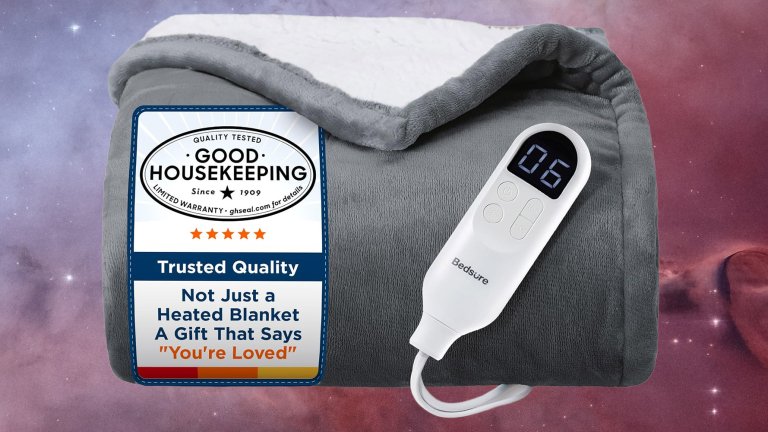
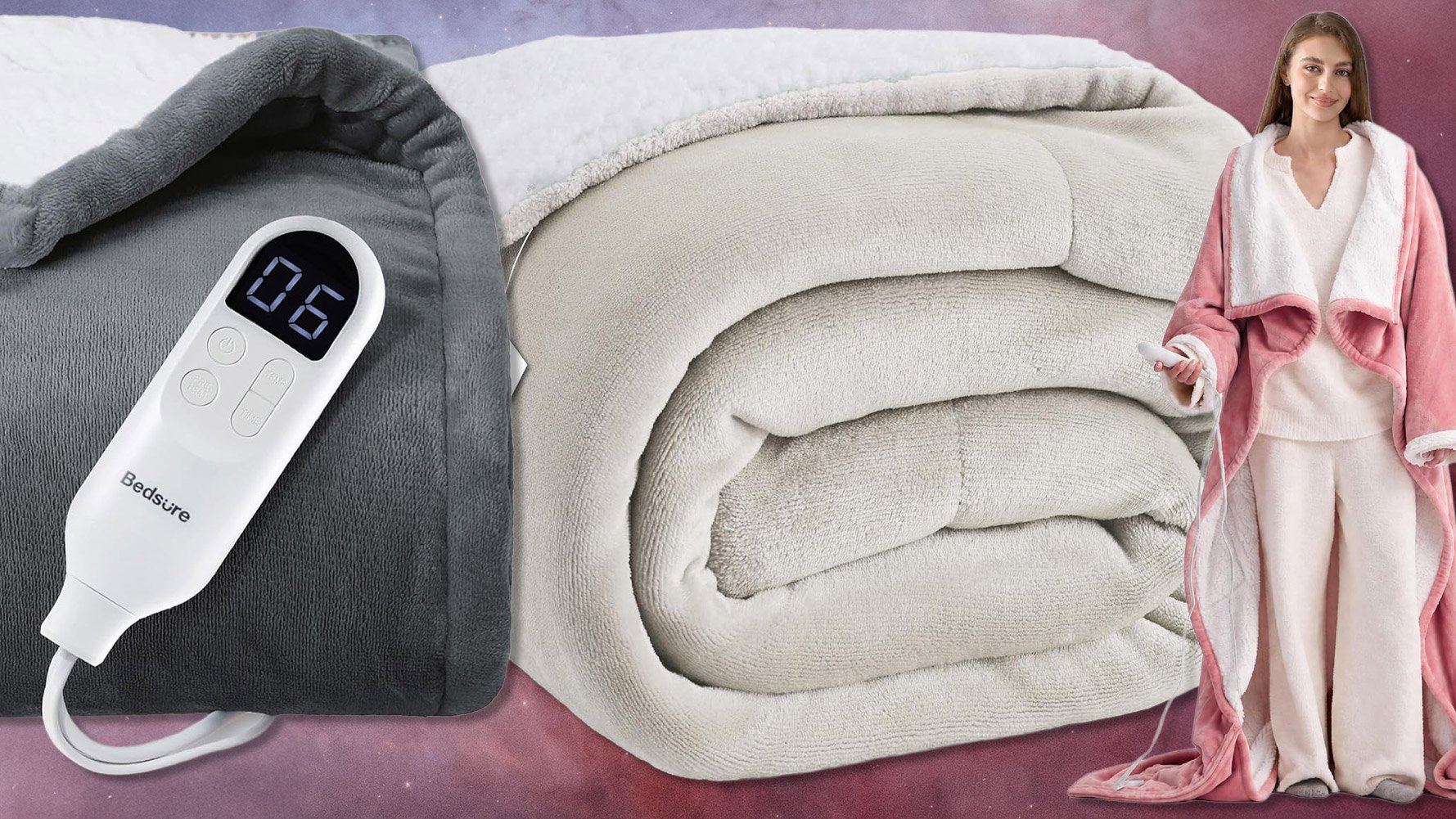
Before you give in and turn on the heat, try plugging in the Bedsure heated throw. Prime members can get the grey 50-by-60-inch version for $36.97, which is under the average price camelcamelcamel has tracked for it. Other colors and sizes cost more. It has six heat settings, timer options from one to 10 hours, and a preheat mode that runs hot for the first two hours before it drops to a lower setting. Bedsure rates it at 100 watts, and a typical space heater on high draws 1,500. Switched off, it works as a regular flannel throw with a sherpa back. Our guide to the best heated blankets covers more options.
If you would rather not run a cord across the living room, the Bedsure GentleSoft sherpa throw handles the job with no electricity at all. The linen color costs $19.99, about $5 under its average on camelcamelcamel. One side is flannel and the other is sherpa. At 50 by 60 inches, it fits one person on a couch, or two people who get along.
A throw stays on the couch when you get up for a snack, and the Bedsure wearable blanket hoodie goes with you. The grey version costs $35.99, about $6 under its camelcamelcamel average. It is an oversized, extra-long sherpa hoodie with a slit on the side so you can walk normally. It ships in a gift box, so it also works as an early holiday present. The dark purple version costs $44.99.
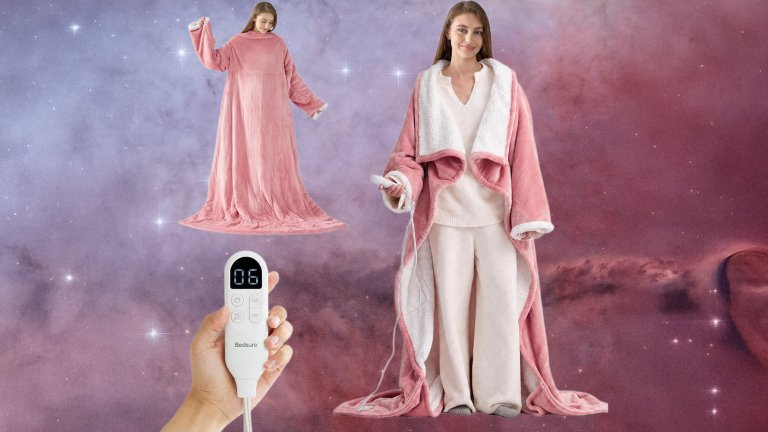
The Bedsure wearable heated blanket combines the two ideas above. It is a flannel-and-sherpa robe with heating wires, sleeves, a side pocket, and a closed pocket at the bottom for your feet. It uses the same six heat levels and six timer settings as the heated throw. The pink version costs $82.99, about $14 under its average on camelcamelcamel.
Best Bedsure heated blanket and mattress pad deals under $115
The grey heated throw and the wearable heated blanket are covered above. The ribbed heated throw in navy costs $49.97, and the full-size heated mattress pad costs $67.99. A mattress pad warms the bed from underneath before you get in, so the bedroom itself can stay cold.
Para quem busca decorar o interior de casa com uma curadoria personalizada, o app brasileiro Curvinha pode ser um grande aliado na hora de adquirir móveis de acordo com seu gosto e seu orçamento.
Desenvolvido por Gabriel Taveira, o app combina a medição por scan (com suporte ao scanner LiDAR dos iPhones e iPads compatíveis), planta em 3D e sugestões de móveis feitas com a curadoria da arquiteta Ana Julia Moretto (da Curva Interiores).
Divulgação/Gabriel Taveira
A medição de ambiente leva cerca de dois a cinco minutos, segundo os desenvolvedores, e é seguida da visualização da planta em 3D com as medidas, da adição de sugestões de peças e, de acordo com as preferências do usuário, da geração de uma lista de compras — permitindo o monitoramento de preços e a visualização do móvel em lojas como Tok&Stok e Mercado Livre.
Para aparelhos sem LiDAR, é possível enviar a foto ou o PDF da planta da construtora para que o app obtenha as medidas e consiga fazer as sugestões.
As sugestões levam em consideração as preferências do usuário, bem como os limites orçamentários estabelecidos (que impactam a lista de peças geradas posteriormente).
Divulgação/Gabriel Taveira
O Curvinha está disponível em três modalidades de aquisição: é possível pagar pelo planejamento de um único cômodo via licença vitalícia de R$80, de até 5 cômodos via assinatura anual de R$130 e de até 20 cômodos via licença vitalícia de R$350.
A Insta360lançou hoje o Insta360 Mic, adição intermediária à sua linha de microfones (que já inclui o Mic Air e o Mic Pro), contando com uma tela eink personalizável e armazenamento expansível via microSD.
Pensado para criadores de conteúdo que buscam recursos mais sofisticados de áudio sem investir em um modelo topo de linha, ele é ideal para vlogs do cotidiano, gravações de esportes nos fins de semana, viagens, transmissões ao vivo e conversas em grupo.
O painel eink customizável permite a inserção de logos, emojis, animais de estimação, paisagens ou elementos da identidade visual do criador.
Divulgação/Insta360
Para quem adquirir apenas o receptor, é possível utilizar o Insta360 Mic com as câmeras da fabricante (Insta360 X6, X5, Luna Ultra, Luna Pro, GO Ultra e Ace Pro 2), bem como com smartphones, tudo via Bluetooth. Outra alternativa para as gravações é o cartão microSD, que permite armazenar os áudios capturados pelo produto.
Com o cartão microSD inserido, o Mic é capaz de gravar áudios em ponto flutuante de 32 bits diretamente no transmissor e conta com um chip dedicado à supressão de ruído, baseada na NPU 1Neural processing unit, ou unidade de processamento neural. do microfone, que reduz sons ambiente com maior intensidade.
Divulgação/Insta360
O dispositivo tem dois modos de ganho automático: o Dynamic equilibra as variações de volume para manter a coesão sonora, enquanto o Auto ajuda a evitar a saturação de som. Ele conta ainda com três predefinições de timbre (Regular, Rich e Bright) para ajudar a preservar as características naturais da sonoridade captada.
Assim como o do Mic Pro, um único receptor do Mic se conecta a até quatro transmissores ao mesmo tempo, o que inclui produções com múltiplas câmeras (que podem receber o áudio de até dois receptores simultaneamente).
Divulgação/Insta360
De acordo com a fabricante, cada transmissor possui até 13 horas de bateria com uma única carga, enquanto a case de carregamento amplia essa autonomia para até 34 horas.
Preço e disponibilidade
O Insta360 Mic está disponível na loja oficial da Insta360, com a seguinte relação de valores (em dólares) para o Brasil:
Insta360 Mic (dois transmissores + um receptor): US$250;
Insta360 Mic (um transmissor + um receptor): US$140;
Um transmissor Insta360 Mic: US$80.
NOTA DE TRANSPARÊNCIA: O MacMagazine recebe uma pequena comissão sobre vendas concluídas por meio de links deste post, mas você, como consumidor, não paga nada a mais pelos produtos/serviços ao usar os nossos links de afiliado.
Notas de rodapé
1
Neural processing unit, ou unidade de processamento neural.
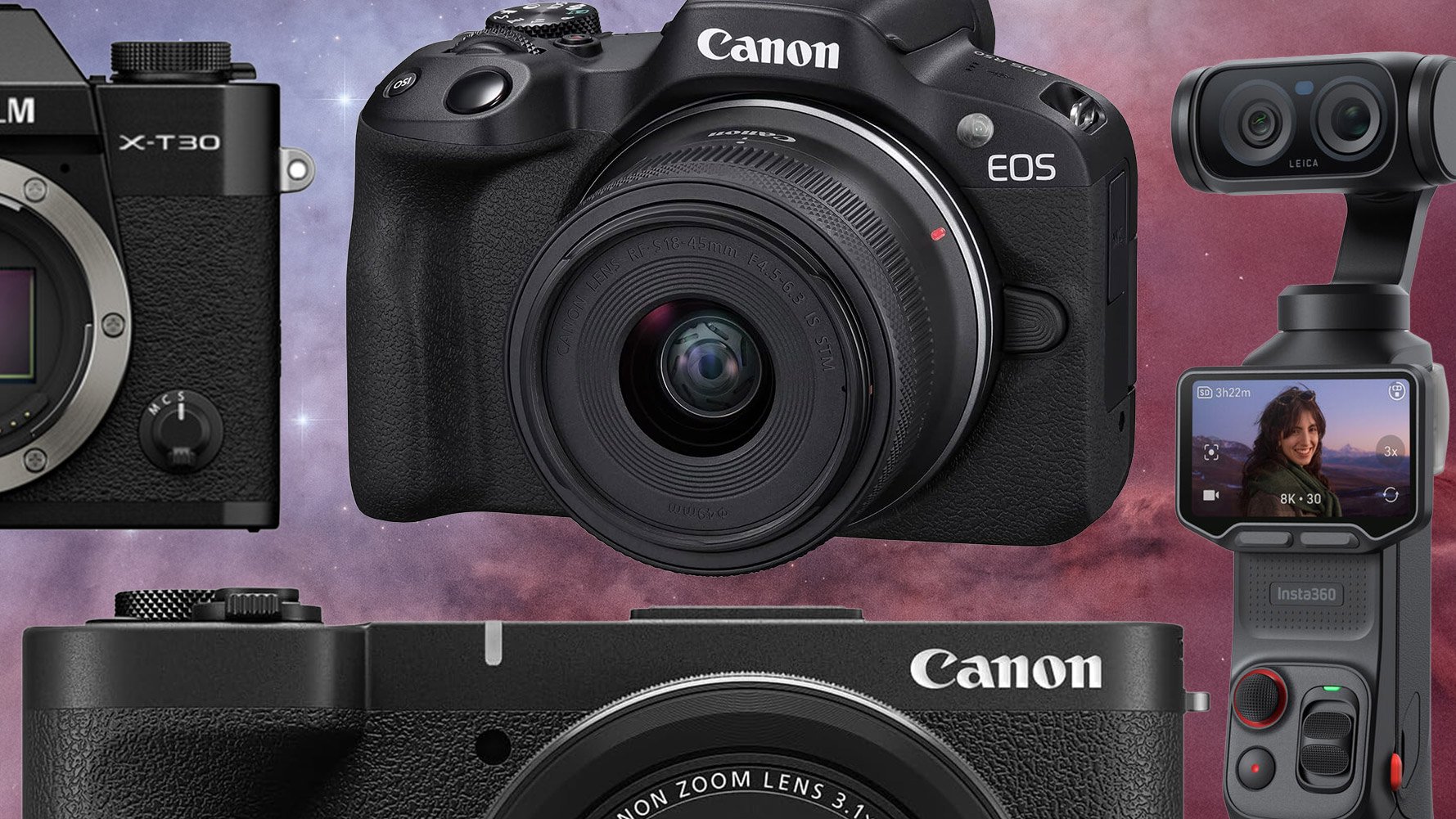
The best camera under $1,000 for most people is the Canon EOS R50 ($849.99 with an 18-45mm lens at Canon as of October 2026), because it pairs a 24.2-megapixel sensor and uncropped 4K video with Canon’s current lens mount and an assisted auto mode built for backlit and night scenes. If you’re mostly filming yourself, the Insta360 Luna Ultra ($769.99) puts a 1-inch sensor, a 3x telephoto, and a mechanical gimbal in your pocket. Plenty has changed since our last update: price increases, many tied to US tariffs, have pushed favorites like Sony’s a6400 past $1,000 for the body alone, Canon has discontinued the EOS RP in Japan, GoPro’s new flagship is the Mission 1 Pro rather than a Hero 14, and DJI’s newest pocket gimbal hasn’t officially reached the US. Here are your options if you’re looking to get started under a grand.
I have been a professional photographer and camera journalist for nearly two decades. During my time at our sibling publication, Popular Photography, I shot with almost every major camera released in the past decade. For this guide, I looked for cameras with clear strengths that fit specific kinds of shooting, and weighed durability, performance, and less tangible things like access to a deep catalog of lenses and accessories.
For this update, we started from our previous picks and the cameras released since, then checked every finalist against its maker’s spec page and a live US retailer listing on October 20, 2026. That price pass cut more cameras than any spec comparison did: Sony’s a6400 now costs $1,098 for the body at Adorama and the Fujifilm X-E5 is $1,699.95 for the body. We also checked each maker’s product lifecycle and business news, which is why the Canon RP section says “while stock lasts” and the GoPro section mentions the company’s sale process.
The best cameras under $1,000: Recommendations
The picks below run from about $620 to $1,000. Five are interchangeable-lens cameras; the other three have built-in lenses, for people who want one device that does everything. Camera prices have moved a lot this year in both directions, so check before you buy. While we always make specific picks for specific needs, there’s plenty of overlap, so read the whole list before you set your heart on one.
24.2MP APS-C sensor and uncropped 4K/30, oversampled from 6K (Canon’s spec)
Up to 15 fps with the electronic shutter, 12 fps with electronic first curtain
Vari-angle touchscreen plus a 2.36-million-dot OLED viewfinder
Advanced A+ Assist mode helps with backlit and night scenes
Cons
No in-body stabilization, per Canon’s spec page
Small grip gets cramped with larger lenses
$849.99 is a sale price; it was $799 in early October, per CPriceWatch
Specs
Lens mount:
Canon RF (RF-S lenses for APS-C)
Sensor size:
APS-C
Megapixels:
24.2
Maximum video resolution:
4K at 30 fps, uncropped (Canon’s spec)
Price:
$849.99 with RF-S 18-45mm at Canon as of October 20, 2026
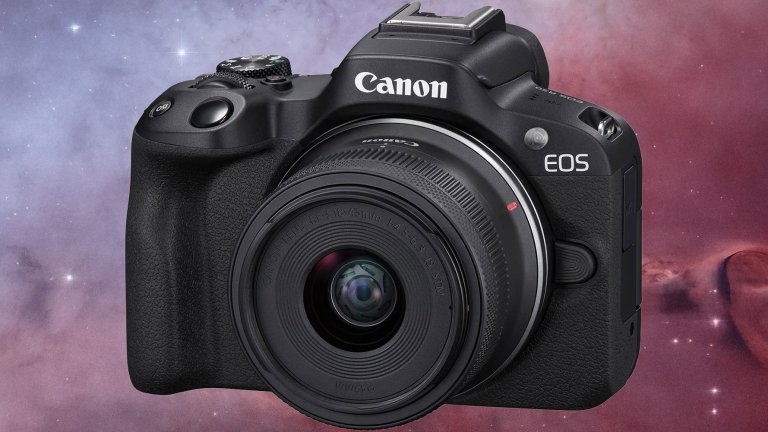
Canon’s EOS R50 is still the camera we’d hand to someone trading up from a phone. The kit with the RF-S 18-45mm IS STM lens costs $849.99 at Canon as of October 20, 2026 (a sale price against a $899.99 regular price), which leaves room in a $1,000 budget for a memory card and a bag. If that’s still too much, Canon’s refurbished store had this same kit for $529 with a one-year Canon USA warranty in late September (per CPriceWatch), though restocks sell out fast. Y.M.Cinema Magazine reported in late August that it was still the best-selling mirrorless camera on Amazon, more than three years after launch.
The video spec has aged better than the price tag suggests. Canon rates the R50 for 4K at 30 fps using the full width of its 24.2-megapixel APS-C sensor, oversampled from 6K, so you don’t lose your wide angle when you switch from stills to video. Subject-detection autofocus locks onto people and animals and follows them across the frame without any fiddling, and there’s a mic jack for when the built-in microphone stops cutting it.
For beginners, the Advanced A+ Assist mode is the feature that matters. It works like a full auto mode that reads the scene, so backlit portraits and night shots come out better than they would on plain auto, and you can graduate to aperture priority when you’re ready. Canon’s spec page lists no in-body stabilization, so stick with stabilized lenses for low-light handheld shooting, or budget for Canon’s inexpensive RF 50mm f/1.8 STM, which gathers far more light than the kit zoom. If you mostly shoot video, the R50 V below is the same camera reworked for creators, without the viewfinder.
Detachable 2-inch OLED screen doubles as a remote up to 20 meters away
47GB of built-in storage plus a microSD slot
Cons
About 233 grams, heavier than DJI’s Osmo Pocket 4, per T3
T3’s reviewer found controls lag slightly with the screen detached
No focus peaking at launch, per T3
Specs
Lens mount:
Fixed dual lens (Leica Summicron)
Sensor size:
1-inch main, 1/1.3-inch telephoto
Megapixels:
Not published (photos up to 37MP in UltraPhoto mode, per Insta360)
Maximum video resolution:
8K at 30 fps (Insta360’s spec)
Price:
$769.99 at Insta360 as of October 20, 2026
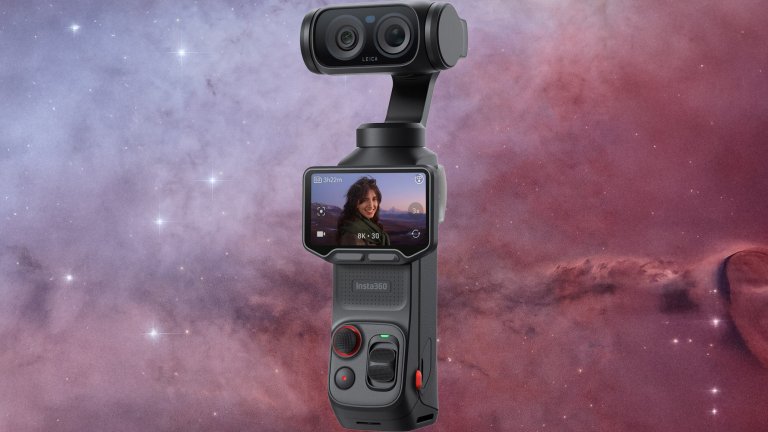
A phone on a gimbal gets you steady video. A pocket gimbal camera gets you steady video from a much bigger sensor, with the screen facing you and the stabilizer built in. The Insta360 Luna Ultra is the one we’d buy in that category, at $769.99 for the standard bundle at Insta360’s store. Its main camera puts a 1-inch sensor behind a Leica Summicron lens, and a second camera with a 1/1.3-inch sensor handles 3x telephoto. Insta360 rates the pair for 6x lossless zoom and 12x total.
That second lens is why we’d pick it over a single-lens pocket camera. You can frame yourself at the wide end, then punch in on a street performer across the plaza without walking over. Insta360 rates it for 8K at 30 fps, 4K at up to 120 fps, Dolby Vision HDR, and 10-bit I-Log, and the gimbal is a mechanical 3-axis unit, so most of the steadying happens physically instead of by cropping the frame. I have been using this for the past few months to shoot everything from personal videos to footage for work and I’ve been impressed with everything from battery life to image quality.
The 2-inch OLED screen pops off and works as a wireless monitor and remote from up to 20 meters, per Insta360, which is handy when the camera is on a tripod and you’re in the shot. It’s not the quickest to zoom or focus, but you’re trading a bit of performance for convenience. The bigger story for US buyers is the competition: DJI’s Osmo Pocket 4 launched in April with its FCC authorization still pending, per DroneXL, and Amateur Photographer reported in June that DJI’s products remained off the US market. The $969.99 Creator Bundle adds a wireless mic transmitter, a battery handle, and a wide-angle lens; start with the standard bundle unless you already know you need the mic.
Full-width 4K/30 oversampled from 6K, per DPReview
Headphone and mic jacks, a front tally lamp, and a side tripod thread for vertical video
Optional RF-S 14-30mm power zoom is wide enough to hold at arm’s length
370 grams for the body, per DPReview
Cons
No viewfinder and no built-in flash
No in-body stabilization
4K/60 uses a 1.56x crop, and electronic stabilization crops further
About 70 minutes of 4K/30 per charge, per Canon’s manual (via DPReview)
Specs
Lens mount:
Canon RF (RF-S lenses for APS-C)
Sensor size:
APS-C
Megapixels:
24.2
Maximum video resolution:
4K at 30 fps uncropped; 4K at 60 fps with a 1.56x crop (per DPReview)
Price:
$619.99 body, $799.99 with RF-S 14-30mm, at Canon as of October 12, 2026 (per CPriceWatch)
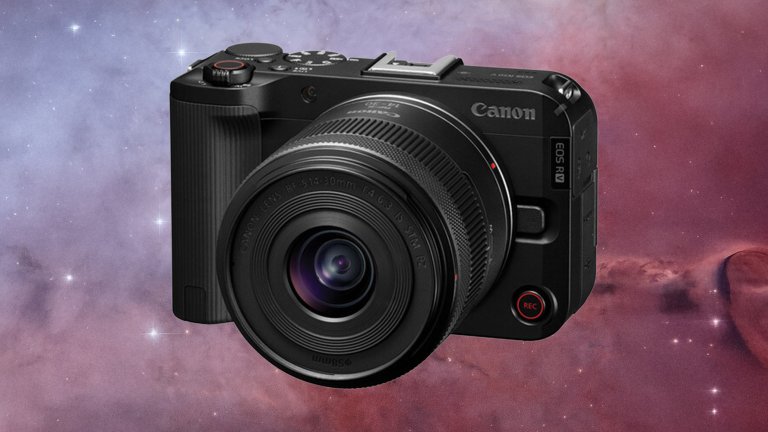
The Canon EOS R50 V takes the R50’s 24.2-megapixel sensor and rebuilds the body around video. The viewfinder and flash are gone. In their place you get a headphone jack next to the mic jack, a red tally lamp on the front so you know you’re recording, and a second tripod thread on the side for shooting vertical video without an L-bracket.
It’s the camera for the creator who wants interchangeable lenses on a desk or a tripod rather than a gimbal in a pocket. DPReview lists full-width 4K at 30 fps oversampled from 6K, the same clean 4K as the R50, and 4K at 60 fps with a 1.56x crop. Get the 14-30mm kit if you film yourself: on APS-C, that’s roughly a 22-48mm equivalent by our arithmetic, wide enough to hold at arm’s length.
There’s no in-body stabilization, so walking shots depend on a stabilized lens, a gimbal, or Canon’s electronic stabilization, which crops further. Battery life is the other limit. Plan for about 70 minutes of 4K/30 per charge, so grab a spare battery or USB power for long sessions. If you’d rather have a viewfinder for stills, the regular R50 kit above costs $50 more than the R50 V kit and does both jobs.
26.1MP X-Trans CMOS 4 sensor and X-Processor 5 (Fujifilm’s spec)
Top-plate film simulation dial with three slots for saved recipes
Built-in electronic viewfinder
6.2K/30 open gate and full-width 4K/30 video, per DPReview
Cons
No in-body stabilization
$999.95 is body only; the 13-33mm kit is $1,149.95
Body-only stock was thin at the retailers we checked
CIPA-rated for 315 shots per charge (425 in Economy mode)
Specs
Lens mount:
Fujifilm X
Sensor size:
APS-C
Megapixels:
26.1
Maximum video resolution:
6.2K at 30 fps open gate; 4K at 60 fps with a 1.18x crop (per DPReview)
Price:
$999.95 body only at Hot Rod Cameras as of October 20, 2026
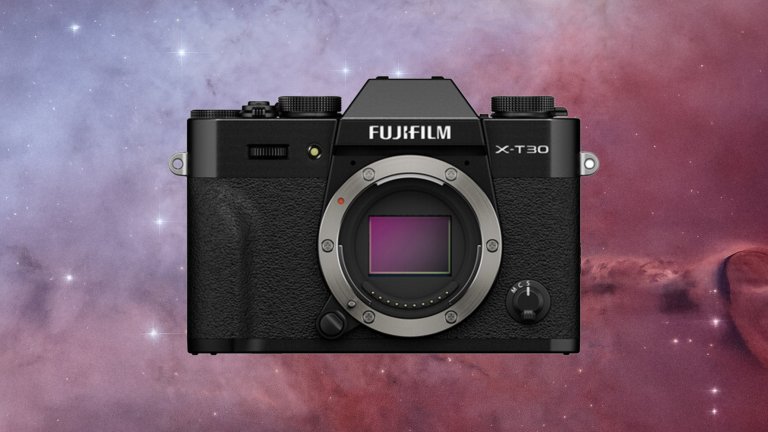
The T30 III runs the same X-Processor 5 as the X-E5. It trades the X-E5’s 40-megapixel sensor for a 26.1-megapixel X-Trans CMOS 4 chip, which is plenty for prints and cropping, and it still has a built-in viewfinder, which Fujifilm’s cheaper X-M5 doesn’t.
The new top-plate dial is the reason to want this camera. It switches between 20 film simulations, and three of its positions store custom recipes, so you can build a Classic Chrome look with your own grain and white balance settings and call it back with a thumb. Fujifilm’s straight-out-of-camera color is why many people choose the system in the first place, and the dial moves it from the menus to the top of the camera. Video is better than an enthusiast stills camera needs: DPReview lists 6.2K at 30 fps in open gate and 4K at 30 fps from the full sensor width, with 10-bit 4:2:2 internal recording.
It’s still an entry-level body. There’s no in-body stabilization, so handheld low-light shots depend on a stabilized lens or a steady grip, and the battery offers roughly 315 shots per charge under good conditions. Stock is the other catch. On October 20, Glazer’s Camera showed the body sold out in all three colors and Hot Rod Cameras listed it as a preorder. The kit with the XC 13-33mm lens, at $1,149.95, breaks this guide’s budget, so pair the body with one of Fujifilm’s compact primes instead.
Dedicated shutter speed, ISO, and exposure compensation dials
Uncropped 4K at 30 fps, per Nikon
Fully articulating 3-inch touchscreen
Body price has dropped below $760
Cons
No in-body stabilization
Five years old, with an older processor than Nikon’s Z50 II
Our price is body only
Specs
Lens mount:
Nikon Z (DX)
Sensor size:
APS-C
Megapixels:
20.9
Maximum video resolution:
4K at 30 fps, uncropped (Nikon’s spec)
Price:
$756.95 body only at Adorama as of October 20, 2026
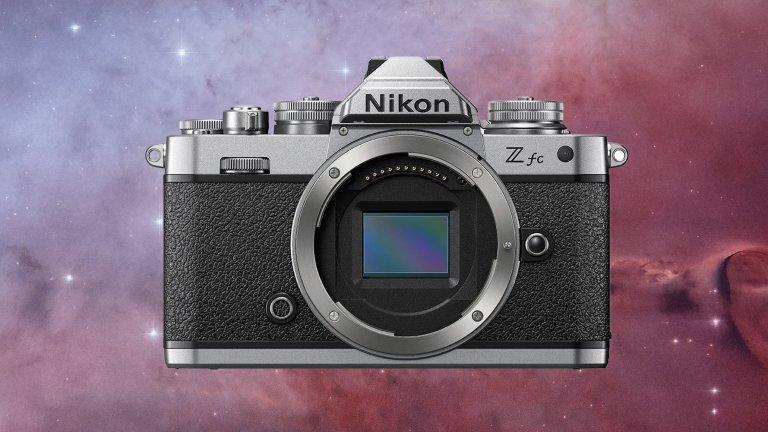
The Nikon FM2 is one of the great film SLRs, and the Z fc copies its top plate closely enough to fool people at a distance. Shutter speed, ISO, and exposure compensation each get their own engraved aluminum dial, so you can read every exposure setting with the camera switched off. I love setting exposure with real dials, and so do many of the working photographers I know. The price has come down too: Adorama had the body at $756.95 on October 20, 2026, against a $1,056.95 list price, and Nikon’s own store listed it starting at $759.95.
Inside, it’s a 20.9-megapixel DX sensor. Nikon rates it for 4K at 30 fps with full-pixel readout and no crop, plus bursts up to 11 fps, and the 3-inch touchscreen flips fully around for selfies and flips in to hide, which keeps the retro look intact. The contoured front makes it easier to hold than its flat sides suggest, and the 2.36-million-dot OLED viewfinder is big and bright for a camera this size.
It’s from 2021, and you can tell in places. There’s no in-body stabilization, and the Z50 II that Nikon launched at $909.95 in late 2024 has a newer processor and better subject detection inside a plainer body. The Z fc is the one to buy if you’ll enjoy using it more, and that’s a real consideration. The short Z-mount flange also makes it a good host for adapted vintage lenses, and Nikon’s FTZ II adapter covers decades of F-mount glass.
Maximum video resolution:
4K at 60 fps (1.4x crop); 4K at 30 fps full width
Price:
$849 at Canon as of October 20, 2026
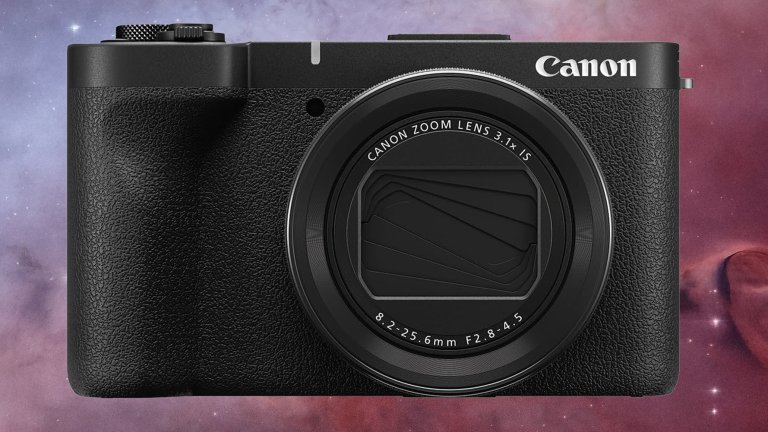
Canon couldn’t keep up with orders for the PowerShot V1 after it launched in 2025. It’s easier to find now, and cheaper: Canon’s store had it for $849 on October 20, 2026, down from a $1,029 regular price. It replaces the Sony ZV-1 II we used to recommend here, because the Insta360 above covers that camera’s vlogging job better and the V1 is the stronger camera for everything else.
Its sensor is the reason. Canon calls it a 1.4-inch type, and at 22.3 megapixels it has roughly the area of a Micro Four Thirds sensor, per PetaPixel, which by our arithmetic is about twice the area of the 1-inch sensors in most premium compacts. More area means cleaner low-light shots and easier background blur from a camera that fits in a jacket pocket. The zoom covers 16-50mm equivalent at f/2.8-4.5 (17-52mm in video mode), wide enough to hold at arm’s length and long enough for a head-and-shoulders portrait.
The V1 is also a better video camera than most compacts because it has a fan. PetaPixel’s launch report says Canon rates it for more than two hours of 4K/60 in typical conditions with the right settings, and the fan settings lift the time limits on 4K/30 and Full HD. 4K/60 crops the frame by 1.4x, though, so use 4K/30 when you need the full width, and expect the lens to get slow at the telephoto end indoors. Canon lists optical image stabilization in the lens plus digital Movie IS, and Galaxus’s hands-on review notes a built-in ND filter, which helps keep motion natural in bright daylight. The same review called the lack of a viewfinder the camera’s biggest weakness, and the screen is dim in direct sun, so this is a camera you’ll frame at arm’s length.
Discontinued in Japan in June 2026; US stock won’t last forever
4K tops out at 23.98 fps with about a 1.76x crop, per Digital Camera World
About 5 fps bursts, per Canon
Specs
Lens mount:
Canon RF
Sensor size:
Full-frame
Megapixels:
26.2
Maximum video resolution:
4K at 23.98 fps (Canon’s spec)
Price:
$899 body only at Canon as of October 20, 2026
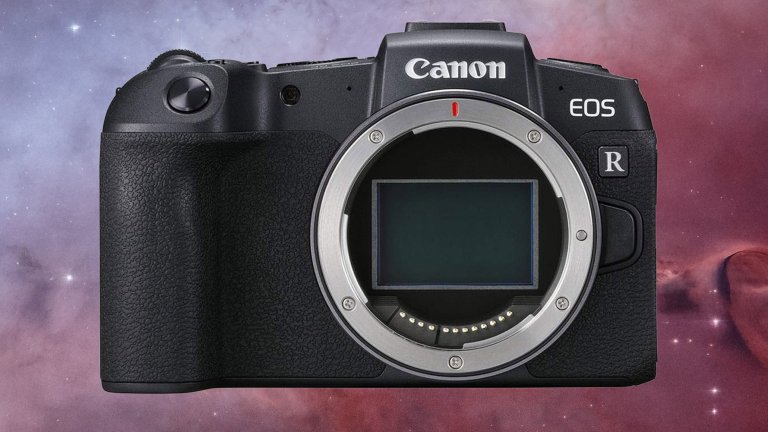
Canon listed the EOS RP as discontinued in Japan in June. In the US, Canon’s store still sells it, at $899 for the body as of October 20, 2026, which is $250 off a $1,149 regular price through November 1, per Canon. It was $799 at Canon and B&H in early October, per CPriceWatch, so a holiday sale could bring that back. Canon U.S.A. told PetaPixel in June that the RP remained on sale in the United States, with no end date announced, so treat this as a while-supplies-last pick.
I’ve shot with the RP as a backup body, and it’s a capable camera for what it is: a small, light way into full-frame for people who mostly shoot stills. The reason to buy it is the sensor. A full-frame sensor is the size of a frame of 35mm film, so lenses behave the way their focal lengths suggest: a 50mm lens looks like a 50mm lens, wide angles stay wide, and it’s easier to get a sharp subject against a soft background. The RP’s 26.2-megapixel sensor also handles dim rooms better than the APS-C cameras above, and anything you buy for it works on Canon’s newest full-frame bodies when you upgrade.
It’s a stills camera first. Canon’s spec page lists bursts of about 5 fps and 4K at 23.98 fps, and Digital Camera World’s review measured about a 1.76x crop in 4K, with Canon’s Dual Pixel autofocus unavailable in that mode, so the R50 is the better Canon for video. The kit with the RF 24-105mm f/4-7.1 lens runs $1,199 at Canon, past our budget; buy the body and add the RF 50mm f/1.8 STM for portraits.
1-inch 50MP sensor, 8K at 60 fps, and 4K at 240 fps (GoPro’s spec)
Waterproof to 66 feet (20 meters) without a housing
Front and rear screens, HyperSmooth stabilization, and Horizon Lock
Built-in mounting fingers fit standard GoPro mounts
Cons
$699.99 list, well above the Hero 13 Black
3.5mm mic input requires the optional Media Mod
GoPro is looking for a buyer, per RedShark News
Specs
Lens mount:
Fixed, 159-degree native field of view (GoPro’s spec)
Sensor size:
1-inch
Megapixels:
50
Maximum video resolution:
8K at 60 fps (GoPro’s spec)
Price:
$699.99 at Adorama as of October 20, 2026
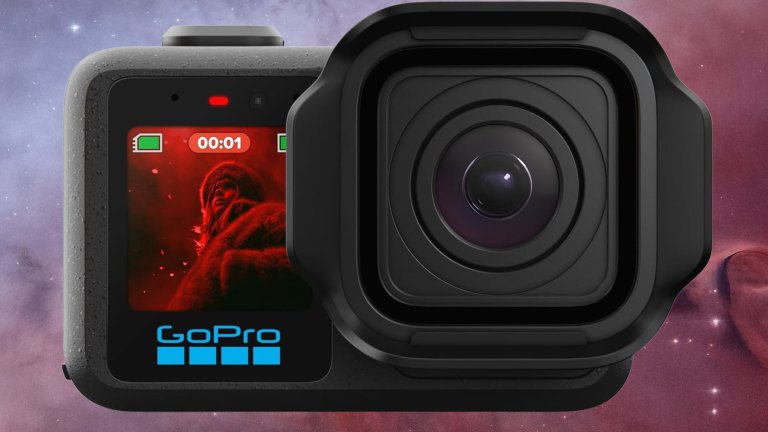
GoPro hasn’t released a Hero 14 Black. GoPro’s 2026 flagship is the Mission 1 Pro, a camera the company pitches at filmmakers, but it keeps everything that makes a GoPro useful for action: it’s waterproof to 66 feet without a housing, it has mounting fingers built into the body, and it has screens front and back. The difference is the sensor. It uses a 1-inch, 50-megapixel chip, much larger than the 1/1.9-inch sensor in the Hero 13 Black, which should mean cleaner footage at dusk and indoors.
GoPro rates it for 8K at 60 fps, 4K at 240 fps for slow motion, and 1080p at 960 fps in 10-second bursts, with 10-bit GP-Log2 and HLG HDR. Its native field of view is 159 degrees, per GoPro, and four microphones record 32-bit float audio, which makes a sudden shout much harder to clip.
If you just want a camera to stick on a helmet and forget, GoPro still sells the Hero 13 Black for less. If you want a waterproof camera that shoots photos first, with an optical zoom, look at OM System’s Tough TG-7 instead. Both are rugged and totally waterproof without a case, which also makes either one a good underwater camera.
Cameras that just missed the $1,000 cut
Several cameras that show up in nearly every budget camera roundup didn’t make this list because their current prices are over $1,000. If one goes on sale below that line during the holidays, it’s worth a look.
Nikon Z50 II: about $1,007 for the body at Focus Camera in mid-October, with a newer processor than our Z fc pick. It’s about $7 over the line, so a holiday sale could easily push it under.
Sony a6400: $1,098 for the body at Adorama as of October 20, 2026, for a camera that launched at $899.99 for the body in 2019.
Sony ZV-E10 II: $1,198 at Adorama as of October 20, 2026.
Canon EOS R10: $1,249 with the 18-45mm lens at Canon and B&H as of October 12, 2026. Canon’s refurbished store sold the same kit for $649 in May, per CPriceWatch.
Ricoh GR IIIx: about $1,247 at US retailers in late August, per Digital Camera World, and Ricoh is ending production in Japan this month.
Fujifilm X-E5: $1,699.95 for the body at Fujifilm’s US store in mid-October.
What to consider when buying a camera under $1,000
The right camera depends less on the spec sheet than on what you’ll actually shoot and how you’ll carry it. Here’s what to look at before you buy.
Sensor size matters more than megapixels
Most cameras here land between 20 and 26 megapixels, which is plenty for prints and cropping. Sensor size makes a bigger difference. A full-frame sensor matches a 35mm film frame. APS-C sensors, like the ones in the Canon R50, Fujifilm X-T30 III, and Nikon Z fc, have roughly 40 percent of that area, and the 1-inch and 1.4-inch-type sensors in the compacts and gimbal cameras are smaller still, though larger than most phones’ main sensors. Bigger sensors generally mean cleaner low-light shots and easier background blur. APS-C makes telephoto lenses smaller and cheaper, which is why it’s a good fit for most beginners.
Interchangeable lenses or a fixed lens
Compact cameras, gimbal cameras, and action cameras have built-in lenses, which keeps everything in one tidy package. Interchangeable-lens cameras let you add a fast prime for portraits or a long zoom for sports later, but you’re buying into a lens mount. Canon RF, Nikon Z, and Fujifilm X all have current lens lines from the camera makers plus third-party options, so any of the mirrorless picks here will have new glass to grow into.
Gimbal cameras are their own category
A pocket gimbal camera like the Insta360 Luna Ultra mounts its lens on a motorized 3-axis stabilizer, so walking shots stay smooth without the cropping that electronic stabilization uses. The trade is that the lens is fixed and the camera is built around video. If you mostly film yourself, buy one. If you mostly shoot photos, a mirrorless camera will serve you better.
Video specs to check
4K is standard across this list, but how a camera makes it varies. Some read the full width of the sensor; others crop in, which narrows your field of view and makes wide shots harder. Frame rate matters too: 30 fps is standard, 24 fps looks more like film, and 60 fps or higher lets you slow footage down. Check the recording format and bit depth as well. Log profiles and 10-bit recording give you more room to edit color, but they also mean more time grading.
Manual controls and build
When you’re starting out, manual mode can seem intimidating. That won’t last, and you want a camera you can grow into, which is why dial-heavy bodies like the Nikon Z fc and Fujifilm X-T30 III are worth a look even for beginners. Most cameras under $1,000 also aren’t built for harsh conditions. If you plan to get your camera wet or dirty, buy one made for it, like the GoPro, rather than worrying about a mirrorless body every time it rains.
FAQs
Q: What’s the best camera for beginners under $1,000?
The Canon EOS R50. It costs $849.99 with an 18-45mm lens at Canon as of October 2026, shoots uncropped 4K video, and has an Advanced A+ Assist mode that handles backlit and night scenes while you learn.
Q: Is the Canon EOS R50 still worth buying in 2026?
Yes. Canon hasn’t announced a successor as of October 2026, and the R50 still offers a 24.2-megapixel APS-C sensor, uncropped 4K at 30 fps, and Canon’s current RF lens mount. Y.M.Cinema Magazine reported in August 2026 that it was still the best-selling mirrorless camera on Amazon. If you mostly shoot video, consider the R50 V instead.
Q: When do cameras go on sale?
Around big retail events. Canon’s prices dropped during the early-October sales, then rose on October 12: the R50 kit went from $799 to $849 and the EOS RP body from $799 to $899, per CPriceWatch. The holiday shopping season around Black Friday is the next likely window.
Q: Which is better: mirrorless or DSLR?
For a new camera, mirrorless. Camera makers have moved their new bodies and lenses to mirrorless systems, and you get features like subject-detection autofocus that DSLRs largely missed. A used DSLR can still be a bargain if you already own lenses for it, but new glass for those mounts has mostly stopped.
Q: Can modern cameras use vintage lenses?
Yes, and mirrorless cameras are especially good at it. Their short lens mounts leave room for inexpensive adapters, so older manual-focus lenses can work on bodies like the Nikon Z fc or Fujifilm X-T30 III. You’ll usually focus by hand, which is easier with the focus magnification and peaking tools most mirrorless cameras include.
Q: Can you buy the DJI Osmo Pocket 4 in the US?
Not through official channels as of our research. DJI launched the Osmo Pocket 4 in April 2026 with its FCC authorization still pending, per DroneXL, and Amateur Photographer reported in June that DJI’s products remained off the US market. The Insta360 Luna Ultra, our vlogging pick, is sold at Insta360’s US store and major retailers.
Q: Is there a Fujifilm X-E5 under $1,000?
Not new. Fujifilm’s US store listed the X-E5 body at $1,699.95 in October 2026. The Fujifilm X-T30 III gets you the same X-Processor 5, a film simulation dial, and a viewfinder for $999.95, body only, with a 26.1-megapixel sensor instead of the X-E5’s 40 megapixels.
Final thoughts on the best cameras under $1,000
Best overall:Canon EOS R50, $849.99 with a lens ($529 refurbished when Canon has it), for uncropped 4K and beginner-friendly auto modes
Best for vlogging:Insta360 Luna Ultra, $769.99, for a 1-inch sensor, a 3x telephoto, and a mechanical gimbal in your pocket
Best for video on a budget:Canon EOS R50 V, $619.99 body only, for creator features on the R50’s sensor
Best Fujifilm camera: Fujifilm X-T30 III, $999.95 body only, for Fujifilm color and a film simulation dial
Best retro camera:Nikon Z fc, $756.95 body only, for real dials and FM2 styling
Best point-and-shoot:Canon PowerShot V1, $849, for a big-sensor point-and-shoot with a cooling fan
Best full-frame:Canon EOS RP, $899 body only, for full-frame while stock lasts
Best action camera:GoPro Mission 1 Pro, $699.99 (and $599.99 on sale this fall), for a 1-inch sensor in a waterproof GoPro body
Pro cameras still cost thousands of dollars, but $1,000 buys a lot of camera, as long as you pick for what you shoot. Photographers should start with the Canon R50 or Fujifilm X-T30 III, and video-first creators on a budget should look at the R50 V. If you mostly film yourself, get the Luna Ultra. Whatever you buy, learn it well. A great camera won’t do much without the person holding it.
A Assistência de Conectividade (Connectivity Assist) chegou aos iPhones e iPads com o iOS/iPadOS 27 — uma evolução do antigo recurso Assistência Wi-Fi.
Como o próprio nome indica, esse recurso ajuda você quando a rede Wi-Fi está instável ou lenta, usando dados celulares para melhorar a conexão.
Caso você se preocupe com o uso de dados celulares, talvez seja interessante desativar esse recurso. Mas, ainda que esse ajuste possa ser ativado e desativado para todo o sistema, a Apple também permite configurá-lo individualmente para cada rede — ou seja, você pode mantê-la habilitada em uma e desabilitada em outra.
Cardiovascular magnetic resonance measurements identified a hemodynamic pattern associated with death or heart-transplant referral or listing in people with Fontan circulation, according to a retrospective study of 182 patients followed at a moderate-altitude center. Patients who later experienced the composite outcome had a lower superior vena cava flow index than those who did not. In time-to-event analysis, each 0.1-liter-per-minute-per-square-meter increase in the indexed flow was associated with a 30% lower hazard of the outcome.
The association remained in an exploratory model that also included ventricular ejection fraction, but the researchers said the estimate requires prospective, multicenter validation before clinical application. The cohort comprised people who had undergone Fontan palliation between 1999 and 2021 at a tertiary institution approximately 5,118 feet above sea level. Fontan circulation passively directs systemic venous blood into the pulmonary arteries without the support of a sub-pulmonary ventricle.
Eligible participants had a clinically indicated CMR examination at least five years after Fontan completion, a threshold selected to match the center’s routine surveillance practice. For patients with multiple examinations, investigators used the last CMR obtained before an outcome or censoring. Most participants, 173 of 182, or 95%, had an extracardiac conduit Fontan circulation, and 76, or 42%, underwent a Damus–Kaye–Stansel anastomosis.
At CMR, the median body surface area was 1.43 square meters, with an interquartile range of 1.16 to 1.69 square meters. The median age at Fontan completion was 3.2 years, and the median interval between surgery and imaging was 10.9 years. Median follow-up after CMR was 4.7 years, while participants’ median home elevation was 5,221 feet above sea level.
Hypoplastic left heart syndrome was the most common underlying diagnosis, accounting for 35% of the cohort, followed by tricuspid atresia at 30%. The systemic ventricle was left-dominant in 53% and right-dominant in 47%. Magnetic resonance examinations were performed on 1.5- or 3.0-tesla scanners, with cine imaging used to assess ventricular function and phase-contrast sequences used to measure blood flow.
The primary endpoint combined death with referral or listing for heart transplantation. Fourteen patients, or 7.7% of the cohort, met that endpoint during follow-up: two died and 12 were referred or listed for transplantation. Among patients who experienced the outcome, the median time from CMR to the first qualifying event was 1.2 years, with an interquartile range of 0.5 to 2.5 years.
The median superior vena cava flow index was 0.54 liters per minute per square meter among patients with the primary outcome, compared with 0.82 liters per minute per square meter among those without it; the difference was statistically significant, with a p-value of 0.011. The superior vena cava-to-ascending-aorta flow ratio was also lower in the event group, with medians of 0.22 and 0.30, respectively. Several other CMR flow measures did not differ significantly between patients with and without the primary outcome.
These included flow indices in the ascending aorta, right pulmonary artery, left pulmonary artery and inferior vena cava, as well as calculated systemic-to-pulmonary collateral flow. Receiver operating characteristic analysis indicated that superior vena cava flow index discriminated between patients who met the endpoint and those who did not with an area under the curve of 0.74 and a 95% confidence interval of 0.56 to 0.92. A data-derived threshold of 0.66 liters per minute per square meter, selected using the Youden index, yielded 70% sensitivity and 75% specificity.
Kaplan–Meier curves showed significantly poorer event-free survival among patients below that threshold. Because the threshold and discrimination measures came from the same cohort, they are exploratory rather than externally validated clinical cutoffs. Univariable Cox proportional hazards regression found a hazard ratio of 0.70 for each 0.1-liter-per-minute-per-square-meter increase in superior vena cava flow index, with a 95% confidence interval of 0.50 to 0.92 and a p-value of 0.008.
Right-dominant ventricular morphology was also associated with a higher hazard than left-ventricular dominance, with a hazard ratio of 3.21, a 95% confidence interval of 1.00 to 10.29 and a p-value of 0.049. The investigators constructed a two-variable Cox model containing superior vena cava flow index and ejection fraction. Each one-percentage-point increase in ejection fraction was associated with an adjusted hazard ratio of 0.92, with a 95% confidence interval of 0.86 to 0.97.
Because only 14 primary events occurred, the multivariable analysis was deliberately restricted and was intended to test whether the flow association persisted beyond ventricular function rather than develop a full prediction model. Internal bootstrap analysis using 2,500 resamples produced a median hazard ratio of 0.71 for superior vena cava flow index and 0.92 for ejection fraction, close to the original adjusted estimates. Collinearity between the two variables was negligible, with a Spearman absolute correlation below 0.1, an R-squared value of 0.008 and a variance inflation factor of 1.01.
Tests did not indicate violation of the proportional-hazards assumption. Ventricular measures also differed according to morphology: in the right-dominant subgroup, patients with events had larger indexed ventricular volumes and lower ejection fraction than those without events, whereas comparable differences were not statistically significant in the smaller left-dominant event subgroup. The study does not establish why lower superior vena cava flow was associated with poorer outcomes.
One proposed explanation is that chronic hypobaric exposure at moderate altitude promotes pulmonary vasoconstriction and raises pulmonary vascular resistance, potentially restricting passive flow through the Fontan pathway. However, pulmonary vascular resistance was not directly measured, and the cohort included no sea-level comparator, so the study cannot determine whether altitude caused the observed hemodynamic pattern. Other possible contributors include anatomical differences in the superior vena cava, systemic venovenous collateral vessels that divert blood around the pulmonary vascular bed, and differences in preload or single-ventricle filling.
The findings therefore associate reduced indexed flow with an unfavorable hemodynamic state rather than demonstrate a specific underlying mechanism. Important limitations constrain the results. The retrospective, single-center design creates the possibility of selection bias, and clinically performed CMR examinations were not acquired at standardized surveillance intervals.
Selecting the last scan before an outcome or censoring may introduce reverse-causation bias because patients approaching clinical deterioration could have been imaged nearer the event. Clinically relevant potential confounders—including functional class, cardiopulmonary exercise capacity, resting oxygen saturation, natriuretic peptide levels, catheterization-derived Fontan pressure and pulmonary vascular resistance, pulmonary vasodilator therapy, arrhythmia burden and the severity of liver disease—were unavailable or not incorporated. The small number of events also leaves the multivariable estimates vulnerable to overfitting despite the deliberately parsimonious model and bootstrap resampling.
Furthermore, the predominance of fenestrated extracardiac conduit Fontan circulation limits generalizability to other surgical configurations. The results position superior vena cava flow index as a candidate prognostic marker that may complement ventricular size and ejection fraction in longitudinal assessment of Fontan circulation, but they do not establish a clinical measurement rule or treatment strategy. Prospective, multicenter studies comparing cohorts across elevations would be needed to test the temporal relationship, determine whether altitude modifies the association, and establish external validity.
The authors also identified four-dimensional flow CMR as a possible tool for characterizing three-dimensional flow patterns and energy loss within the Fontan pathway. Further work could compare imaging signatures with exercise physiology, biomarkers of end-organ dysfunction and pulmonary vascular imaging. Until those studies are completed, the association between reduced superior vena cava flow and adverse outcomes should be regarded as an exploratory finding that requires independent validation.
Subject of Research: Association between CMR-derived blood flow and adverse outcomes in people with Fontan circulation
Article Title: Cardiovascular magnetic resonance–derived hemodynamics predict adverse outcomes after Fontan palliation
Article References: Platnick, C., Frank, B., Romanowicz, J., Gonzalez De Alba, C., Chase, M., Umer, A., Chaudhuri, N. R., Awori, J., Chauhan, D., Mascio, C. E., Udassi, J. P., & Hedjazi Moghari, M. (2026). Cardiovascular magnetic resonance–derived hemodynamics predict adverse outcomes after Fontan palliation. Frontiers in Cardiovascular Medicine, 13, Article 1937933. https://doi.org/10.3389/fcvm.2026.1937933
Una coppia di stelle di neutroni completa un’orbita in 2 ore e 22 minuti. Le osservazioni con FAST verificano la relatività generale con uno scarto dell’1%.

 Login