A survey-based study of 246 village-level social welfare data operators found that business architecture, cross-organizational collaboration and technological readiness were positively and statistically significantly associated with perceived e-government integration impact in two Indonesian regencies. The research, focused on Gunung Kidul and Bangkalan, examined organizational, institutional, relational and technological capabilities associated with social welfare data integration. Governance and leadership and information policy did not show statistically significant direct relationships with perceived integration impact in the pooled sample.
The authors analyzed the survey with partial least squares structural equation modeling. In their framework, e-government integration impact, or EGII, represents perceived improvements in information, system and service quality, responsiveness and public trust. E-government integration scope, or EGIS, describes the breadth of integration across data, applications, electronic communication and knowledge-sharing processes.
EGII was strongly associated with EGIS, meaning that operators reporting more favorable perceived integration outcomes also tended to report broader integration. Because this was an observational analysis of survey responses, the results establish statistical relationships rather than causal effects. The findings identify three capabilities with significant direct relationships to EGII in the pooled model: business architecture, cross-organizational collaboration and technological readiness.
The evidence does not provide operational definitions for these constructs, but the results show that their measured levels were associated with respondents’ assessments of e-government integration outcomes. By contrast, governance and leadership and information policy had no statistically significant direct relationships with EGII in that analysis. This absence of a detected direct relationship does not establish that the two factors are unimportant or that they operate only through indirect pathways, because the supplied findings do not report such indirect effects.
A regency-based robustness analysis found that some relationships were sensitive to local implementation conditions. Significant differences between Gunung Kidul and Bangkan were reported for the technological-readiness-to-EGII relationship and the EGII-to-EGIS relationship. The geographic comparison therefore cautions against assuming that the same capability relationships apply uniformly across the two regencies, although it does not identify the specific local practices responsible for those differences.
Its direct contribution is to show which measured interoperability capabilities were associated with perceived integration impact in the surveyed population, alongside evidence that some relationships varied between the two regencies.
Subject of Research: Survey-based analysis of interoperability capabilities for social welfare data integration in two Indonesian regencies
Article Title: Determinants of E-government interoperability capabilities for social welfare data integration in Gunung Kidul and Bangkalan Regencies, Indonesia
Article References: Fikri, R., Purnomo, E. P., Pribadi, U., Mohamed, A. M., & Mohammad, N. B. (2026). Determinants of E-government interoperability capabilities for social welfare data integration in Gunung Kidul and Bangkalan Regencies, Indonesia. Discover Sustainability. https://doi.org/10.1007/s43621-026-04608-5
Keywords: social welfare data, e-government, interoperability, Indonesia, PLS-SEM, technological readiness, cross-organizational collaboration, business architecture, digital governance, public services, Determinants, capabilities
Atlassian report claims the number of developers saving significant time through AI is actually dropping
Finding information and participating in meetings are major human bottlenecks
More then four in five organizations still don't have a clear AI strategy
Nearly nine in 10 (87%) developers surveyed by Atlassian now sayAI is helping them to write and ship code faster, but despite offering significant speed improvements across certain parts of the workflow, three in four (72%) also report either the same or greater friction across the entire lifecycle.
Longer-term optimism around AI's ability to save time is also dropping, with just 25% of developers saving 10+ hours a week when using AI, compared with 68% in 2025.
Ultimately, Atlassian's findings point toward AI simply shifting the bottleneck further downstream rather than tackling time constraints altogether.
Is AI actually helping developers?
The data shows that faster code generation isn't translating into faster software delivery, with the reality of AI-assisted coding now highlighting other areas where AI could actually help. For example, half of developers struggling with finding information (51%) and meeting frequency (50%)
"Faster code is not the same as better software delivered sooner," Atlassian Customer CTO Andrew Boyagi explained. "If teams still struggle to find information, clarify requirements and move work through the delivery process, speeding up coding alone won’t translate into business outcomes."
However, many developers simply feel that AI is being implemented too quickly without consideration for its impacts. Three in five say merely using AI is seen as a positive metric – but its real-world impacts don't fall under that scope.
Companies with an effective strategy were found to be in the best position to reduce friction, where twice as many workers reported positive effects. Still, not even a fifth (17%) of developers say their employer has a clearly communicated and implemented AI strategy.
Now that we're beginning to emerge from the early, experimental years of artificial intelligence, and that use cases are starting to be identified, the report calls for greater consideration and clearer strategies from the top down in order to unlock the real benefits.
Spurred on by the Trump administration’s embrace of psychedelic medicine, researchers are experimenting with new — and not so new — forms of the anesthetic.
Two new Chicago lawsuits claim unauthorized biometric data collections
In these cases, the biometrics are face and body scans
Coco Robotics and Serve Robotics have denied the allegations
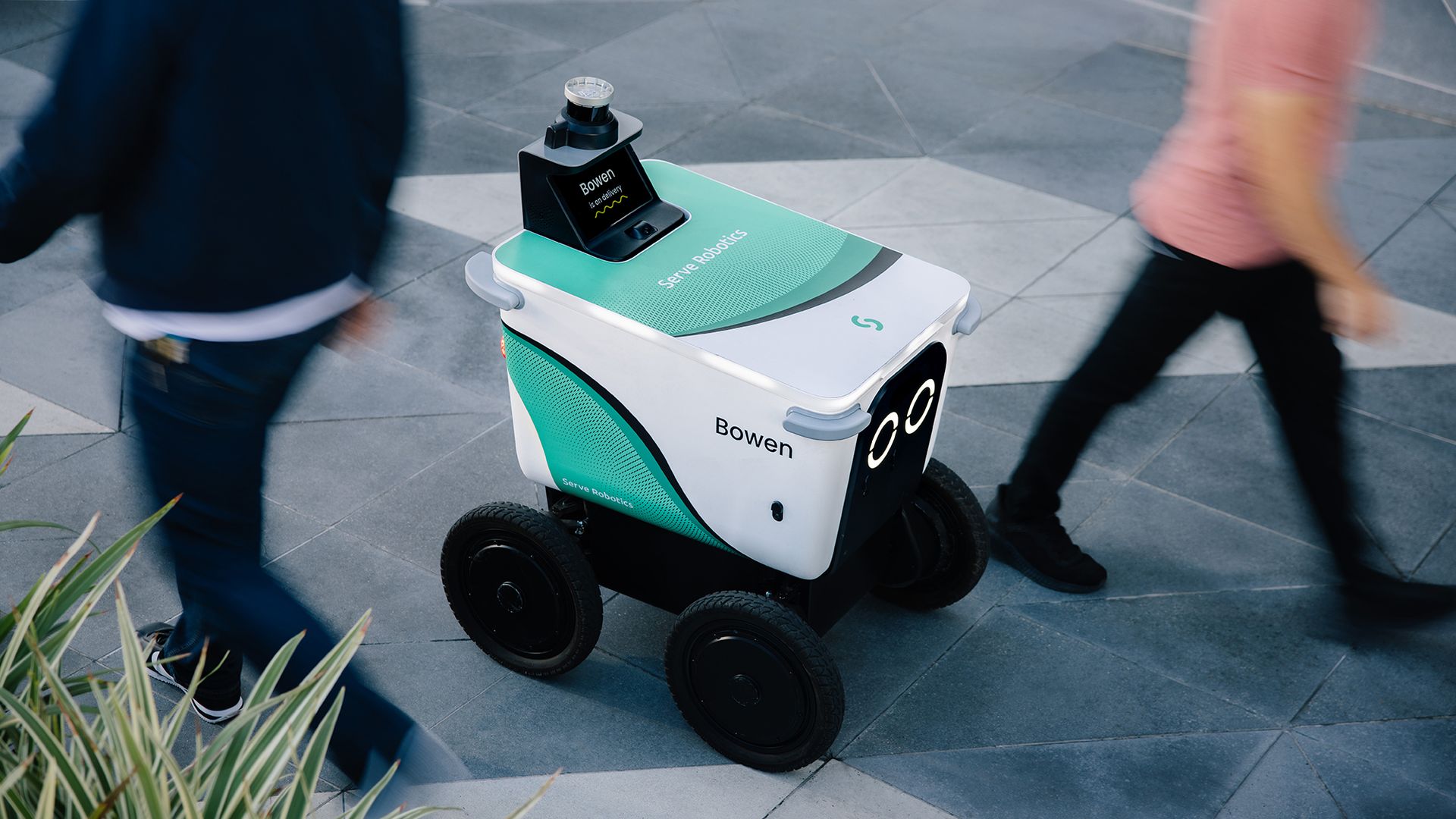
The backlash to what's perceived as surveillance technology continues, with two Chicago residents taking robot delivery companies to court over the alleged collection of biometric data while dropping off food and groceries.
As the Associated Press reports, the two men bringing the cases claim that robots from Coco Robotics and Serve Robotics turned up — via DoorDash and Uber Eats respectively — even though robot delivery hadn't been requested in the app.
The key allegation is that when these individuals were unlocking the robot cargo bay to get their orders, their hands and faces were scanned via camera and LiDAR technology, without explicit prior permission. If true, that would put Coco and Serve in breach of the Illinois Biometric Information Privacy Act (BIPA) of 2008.
Both class-action lawsuits claim that video and sensor data is being retained by these bots in violation of privacy law, and shared with AI companies for training purposes. Statutory damages of $1,000 per negligent violation or $5,000 per intentional or reckless violation are being claimed through the courts.
Both Coco Robotics and Serve Robotics have denied the allegations. We've reached out to both companies and will update this story if we hear back, but the AP reports Coco as saying the legal action is "frivolous", while Serve says it "does not use data to identify individuals or create biometric profiles".
'Fundamentally misunderstands our technology'
A Serve delivery robot (Image credit: Serve Robotics)
The Coco Robotics privacy policy — last updated in 2022, before it started operating in Chicago — is a little light on data retention policies, but does mention sharing data with third parties and affiliates, though most of this seems to be aggregated and anonymized before it's used.
As for the Serve Robotics privacy policy, it's been updated much more recently. It says data retention periods are determined by "contractual obligations with our delivery partners", and there's the standard vagueness about sharing information with unnamed "service providers and vendors" on occasion. There's also an explicit mention of sharing data "to train AI agents and models".
It's obviously impossible for a delivery robot to work without scanning its environment and navigating around sidewalks and pedestrians, and that's the defense being put forward here. The crux of the case will be whether the data collection involved was done without permission, and contravenes the Illinois privacy act.
"This lawsuit fundamentally misunderstands our technology, we have not collected biometric data in Chicago," a Coco spokesperson told the AP. "The data we share is navigational data used to make sidewalks safer for all users."
With complaints around Flock cameras, delivery drones, 'spy' glasses, and other tech on the rise, it does feel there's more privacy scrutiny than ever before — with Redditors describing these bots as "mobile data thieves" and "sidewalk surveillance".
Unitree has shown off an impressive demo for its new 'kung fu' robot
It's based on the company's H2 platform, and is designed for security
It's unlikely to go on general sale, though, and there are no details on pricing or availability
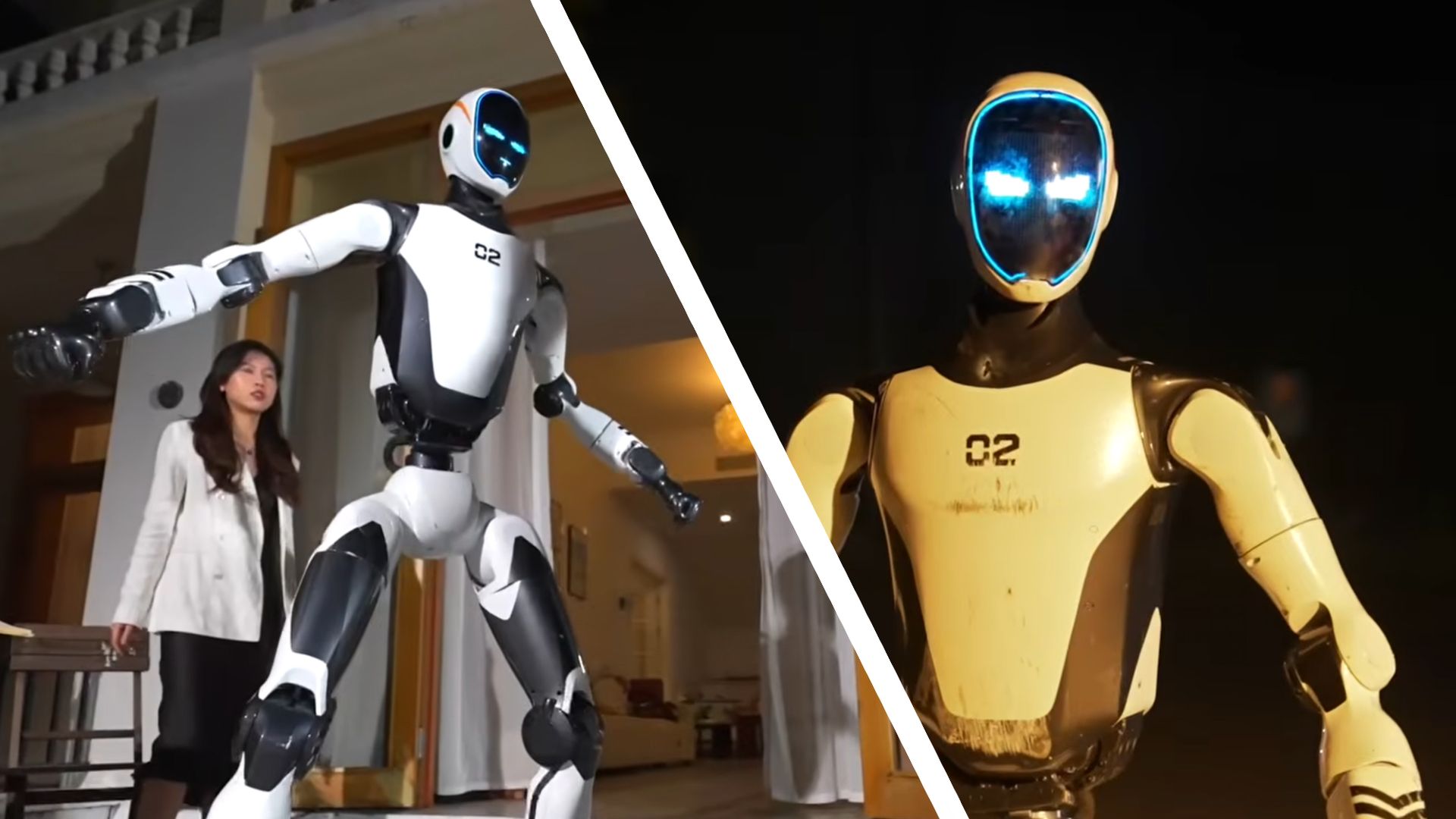
Humanoid robots are improving at a rapid pace, and the world's biggest robotics manufacturer, Unitree, has just revealed a Robocop-esque new model called the H2-X Kung Fu Legend Guardian.
A one-minute teaser video released on X and YouTube (below) shows the H2-X in action across a series of slightly bizarre scenarios. The first few clips show the robot unleashing a series of knees and punches to cars in a scrapyard, in scenes reminiscent of a Street Fighter II bonus stage.
Beyond the robot's kung fu credentials, it isn't exactly clear what real-world roles Unitree is trying to showcase there. But the rest of the video shows that the H2-X is being billed as a personal security guard that can jump in front its owner during attempted robberies, or lift cars to release humans trapped underneath.
Unitree hasn't revealed much in the way of specs for the H2-X, with the only specifics being that it's capable of jumping from four-meter high platforms and also standing for "approximately eight hours" between charges.
However, the similar Unitree H2 robot is a 1.8-meter tall humanoid that comes with an optional Nvidia Jetson AGX Thor chip and costs $29,900 (around £22,380 / AU$42,720). We've asked Unitree for some more specifics on the specs and pricing for the H2-X, and will update this story if we hear back.
However, that doesn't mean Unitree isn't making big strides in humanoid robots, or what is often billed as "embodied intelligence". At Computex 2026 the trio of Unitree, Nvidia and Sharpa announced a collaboration to create an H2+ blueprint for next-gen robots, with Nvidia supplying the much-needed training data and its Jetson AGX Thor T5000 chip.
The H2-X Kung Fu Legend Guardian demo appears to be a different project that's focused more on physical prowess. But despite those impressive jumping abilities, the robot would find it nigh-on impossible to clear the global and national consumer certification hurdles necessary for it make it to market as a personal bodyguard.
It's possible that a version of the robot could be designed for industrial or military uses, but Unitree hasn't yet commented on its future plans. What is clear is that Unitree is keen to continue the momentum it's gained after its IPO in August 2026, which started well but then ran into turbulence last month after a 55% slump from its peak.
According to Reuters, that drop has apparently prompted China to put the brakes on a humanoid robot IPO rush, which has seen half a dozen Chinese robotics companies queuing up to follow Unitree's stock-market debut.
Still, Unitree's latest H2-X video at least keeps us dreaming that personal robot safety guards are coming, even if they might dent a few cars along the way.
Microsoft CEO Satya Nadella extols virtues of "frontier ecosystem" for AI
AI can do great things for human workers, but there still needs to be some control
Microsoft reveals new research showing a divide between bosses and employees over the future of AI in the workplace
Microsoft CEO Satya Nadella has urged businesses to embrace AI even further to push on and succeed, but urged caution around giving such systems too much control in everyday work tasks.
"When I think about what keeps us grounded every day at Microsoft, it's our mission to empower every person and every organization on the planet to achieve more,” Nadella told the company’s Frontier Tour London event.
Looking at what he called the "frontier ecosystem", Nadella identified three key pillars which need to be tackled - including recapturing individual empowerment, as although AI is taking charge of the dullest parts of our jobs, there is still need for a human to have control.
Frontier AI
Nadella also highlighted "the reverse information paradox" - with a digital learning system which is constantly improving itself, the challenge is for organisations to "capture that knowledge and keep it locally to yourself...in other words, you have to own the knowledge that gets created, both with the human capital that you have, as well as the token capital that you generate"
The final challenge concerns trust, as Nadella noted, “our scaling laws are producing even more powerful models that are less and less trustworthy…you need to treat these models as new forms of insiders, and create a zero-trust architecture around it.”
(Image credit: Shutterstock)
The speech came as Microsoft unveiled new research revealing something of a divide between bosses and employees over the future of AI in the workplace.
It found the vast majority (84%) of business leaders believe the UK can become a world-leading AI economy within five years, compared with just 41% of employees.
But it also noted that workers are becoming increasingly concerned about the impact on jobs and opportunities for young people, with over half (57%) of employees using AI at work afraid it will reduce opportunities for young people, while 35% fear for their own job security.
For bosses, the future was a bit brighter, with 90% of leaders claiming they had a clear AI strategy in their business, while 84% of those in organisations already adopting AI say they’ve already experienced moderate or significant changes to how their work gets done.
“Bending the curve changes what the UK can achieve, increasing productivity, business growth, better public services, and the measure of that progress is the difference that people feel in their everyday lives,” noted Darren Hardman, Microsoft UK CEO.
“We will not bend the curve unless people see a place for themselves in what comes next…the question is no longer whether you have a strategy, it’s whether AI is actually changing how work gets done.”
“For organizations here, the challenge is to turn AI's potential into improvements that people can feel in the work they do, the services they use, and the opportunities that are open to them...our role at Microsoft to bring intelligence and trust together in AI that puts your organization's knowledge to work helping people achieve more while providing the safeguards and visibility to stay in control.”
OpenAI recently introduced GPT-6, a new model of ChatGPT. You've probably heard about a lot of its new features but one that I don't think has had nearly enough attention, especially considering how much fun you can have with it, is Intelligent UI.
It allows ChatGPT to generate interactive experiences directly within a conversation. OpenAI explains: “With Intelligent UI, responses can include graphics, tappable buttons, forms, charts, and interactive experiences you can use directly in your conversation.”
What's interesting is there isn’t a single format. Which means, depending on what you ask, ChatGPT might create an interactive diagram, a calculator, a mood board, a map or even a little gaming console.
There are some genuinely useful applications here, from making complicated subjects easier to understand to building simple tools on the spot. But I was particularly interested in something a little less practical — games.
ChatGPT can now create games you can actually play within the chat window. And while there are all sorts of possibilities for educational games, quizzes and entirely new creations, I wanted to see what would happen if I asked it to recreate some old favorites.
So I started with five classic games, including Snake, Pong and Tetris. I gave ChatGPT simple prompts to see how faithfully it could recreate them. I then asked it to reinvent each game with new aesthetics, unexpected gameplay mechanics and a few deliberately chaotic twists. Think Snake in a neon cyberpunk world and Tetris with rules that change every time you clear a line.
Here's what happened when I put ChatGPT's new game-making abilities to the test.
Snake gets a neon makeover
(Image credit: Future)
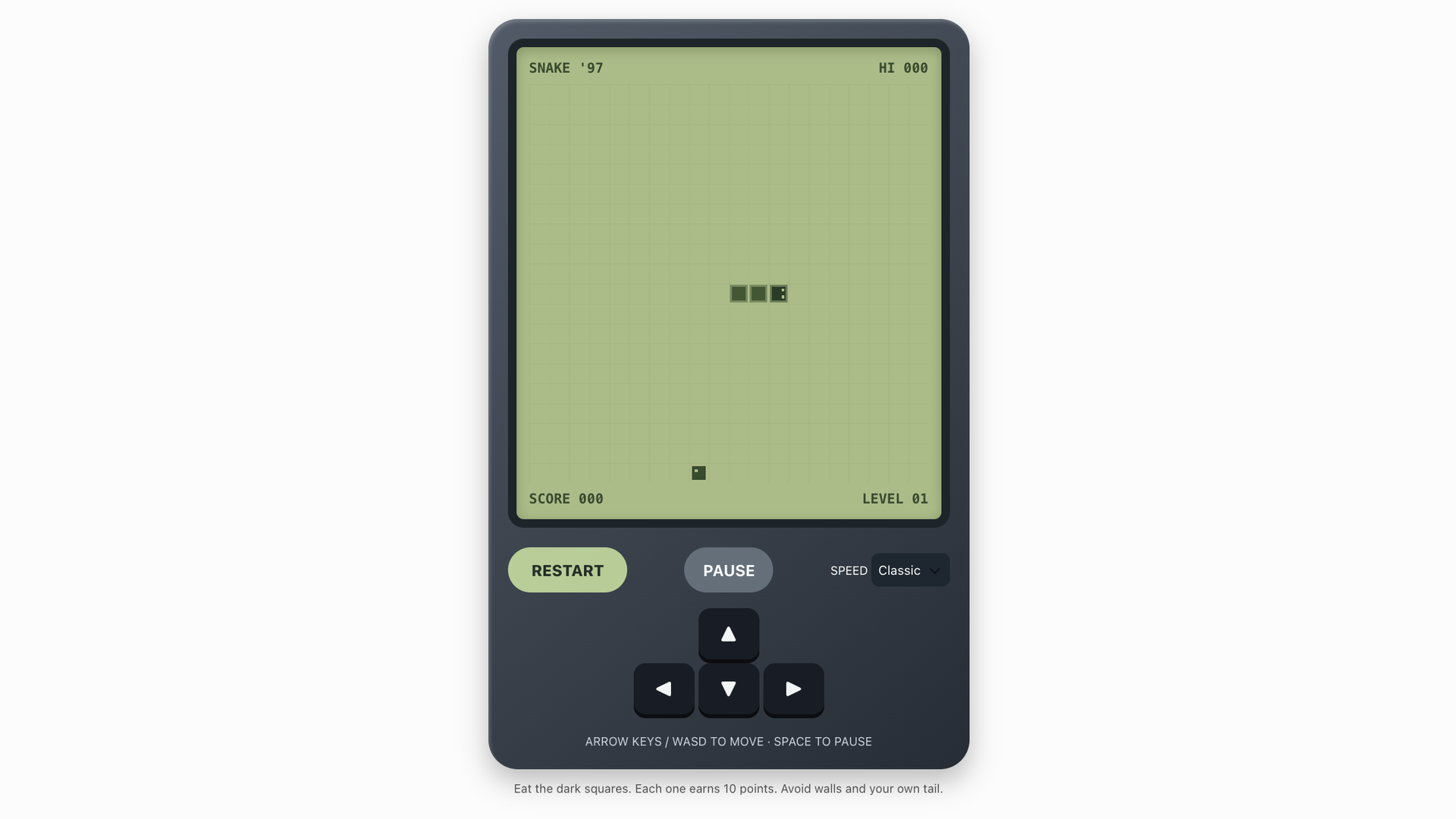
The prompt: "Create a playable version of the classic Snake game directly inside this conversation."
ChatGPT got the basics right straight away. The game was instantly recognizable, with responsive controls and even a slider to adjust the speed. It looked good and, importantly, it was actually fun to play for a couple of games.
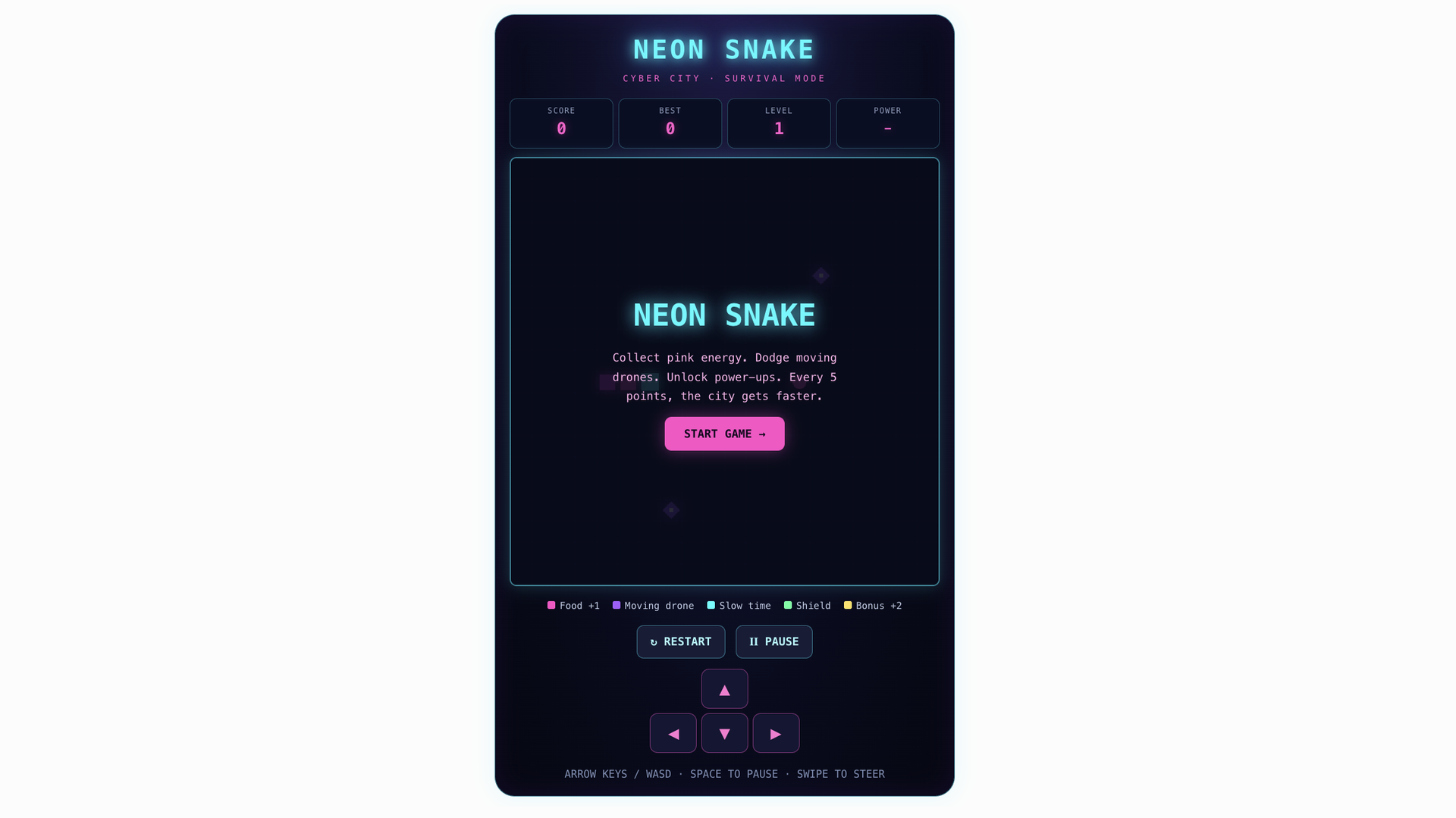
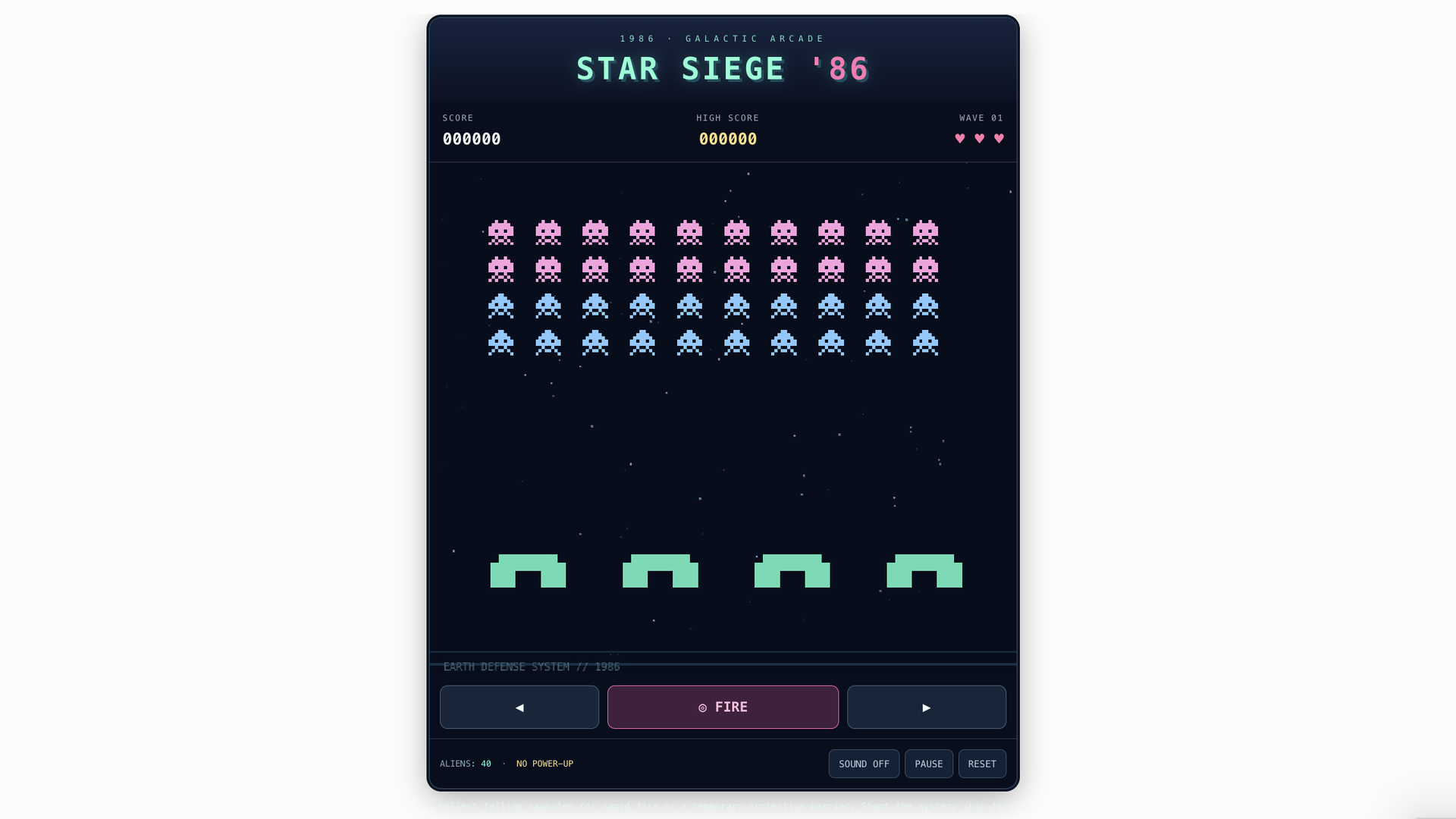
I then asked it to give Snake a neon cyberpunk makeover, complete with moving obstacles, special power-ups and a speed increase every five points. Say hello to Neon Snake.
(Image credit: Future)
There was one small hiccup. Instead of creating the new game directly in the chat window, ChatGPT initially gave me the code. Which wasn't much use when the whole point was to play it there and then.
I tried another prompt asking it if it could make it directly playable in the conversation and that worked. The results of that experiment were fun. The neon aesthetic looked good, everything was color-coded and the new mechanics gave the classic (and, let’s be honest, sometimes boring) game an extra layer of challenge.
Tetris gets new rules
(Image credit: Future)
The prompt:"Create a playable game inspired by Tetris directly inside this conversation."
This one worked really well from the start. I’d just assumed it would be a bit buggy and glitchy because there’s so much going on compared to Snake, but the controls were intuitive and responsive, and the classic block-stacking mechanic was all there.
But what if Tetris changed the rules every time you cleared a line? That was the idea behind my follow-up prompt.
(Image credit: Future)
I asked ChatGPT to introduce unexpected twists, which could include rotating the board to adding unusual block shapes or special powers that could destroy part of the grid.
And it delivered. The changing rules introduced a fun element of unpredictability to a game that's usually all about getting into a rhythm. I also came away thinking about how much further you could take this. There are so many opportunities to experiment with different rules, challenges and power-ups.
Space Invaders becomes a First Contact situation
(Image credit: Future)
The prompt: "Build me a fully playable retro arcade game inspired by Space Invaders"
Again, ChatGPT recreated the classic arcade experience surprisingly well. It looked and played like the original, with straightforward controls and all the fun of shooting at waves of approaching aliens.
But I wanted to see whether it could do something a bit more imaginative than adding extra enemies or making everything move faster. So I asked it to introduce a choice: what if I could defend Earth by fighting the aliens or negotiating with them?
(Image credit: Future)
I wanted waves of pixel-art enemies, but also decisions between rounds that could unlock weapons, stop an invasion or make the next attack more dangerous.
ChatGPT called its reinvention First Contact, which I loved. Up until this point it was calling most of the games "chaos" or "chaotic" so this felt more inventive.
It was a fun way to introduce a new dimension to a familiar game. But did it work well? I don't know, I couldn't ever make it past the first level. This experiment really suffered with my poor alien-fighting abilities.
Haunted Pac-Man
(Image credit: Future)
The prompt: "Create a fully interactive retro maze game inspired by Pac-Man that I can play directly inside this ChatGPT conversation."
This was easily my favorite of the five, but I have always adored Pac-Man. ChatGPT's first attempt was a fun, responsive maze game with the familiar mechanics of moving around, collecting things and trying to avoid enemies. Bonus points for the fact it renamed it Maze Muncher.
For the reinvention, I decided to lean into Halloween. I asked it to turn the game into a haunted 1980s arcade, with me playing a little ghost hunter instead of Pac-Man.
(Image credit: Future)
I also wanted the maze itself to change. Every ten orbs collected would trigger a surprise, like shifting walls, new passages or an extra ghost. And I asked for temporary power-ups that would let me chase the ghosts for a change.
ChatGPT handled this well but didn't wait until I'd collected orbs. It was super fast-paced and there were new ghosts, secret passages and changing mechanics from the start. It was quick, easy to control and genuinely fun to play.
Pong reinvented
(Image credit: Future)
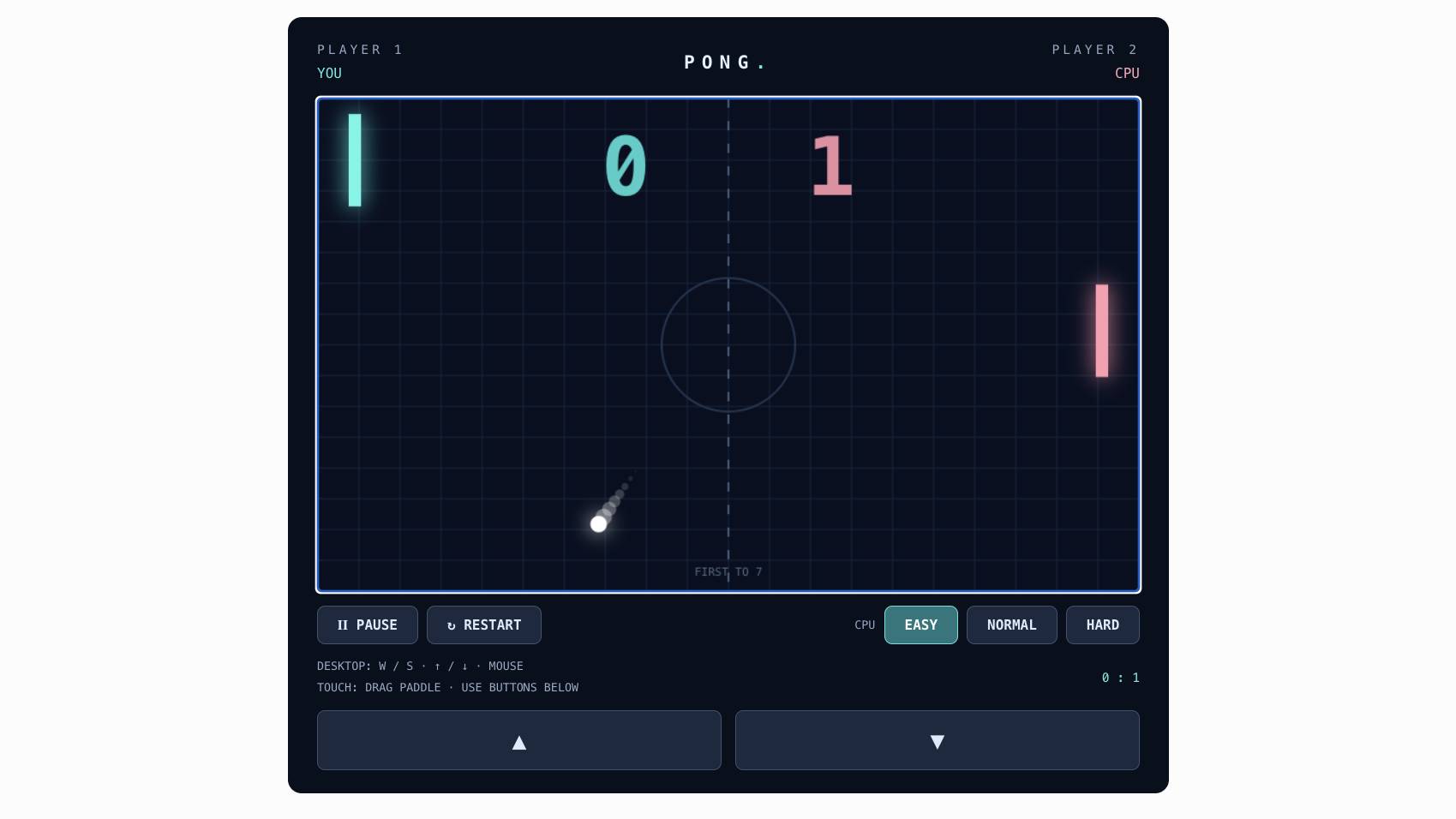
The prompt: Build me a fully playable version of Pong inside this conversation.
Pong might be the simplest game of the bunch, but ChatGPT made a really solid version. The controls were easy, the aesthetics were nice and it even offered easy, normal and hard difficulty settings.
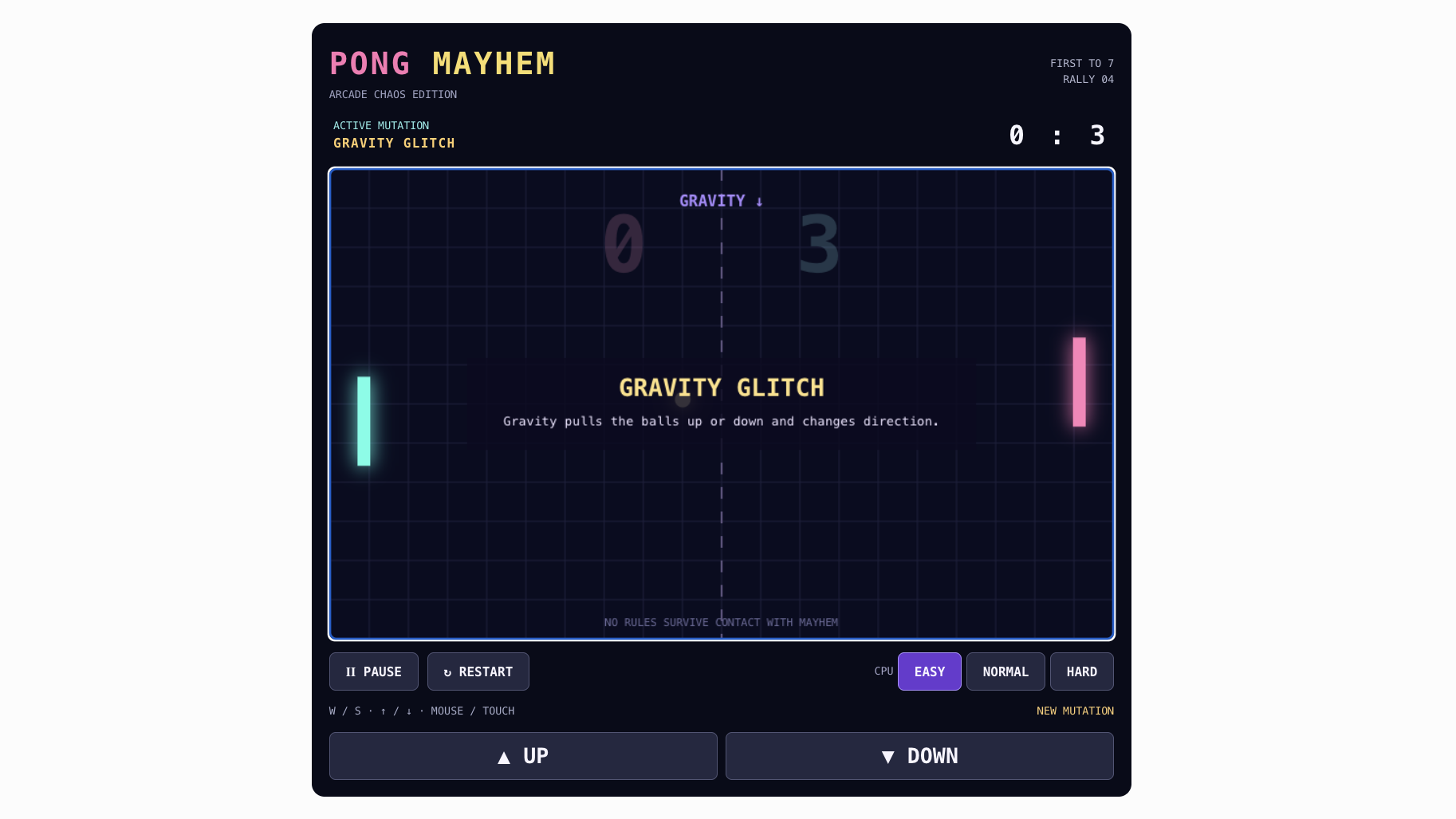
I decided to ruin that simplicity and asked ChatGPT to create a more chaotic version where every point triggered a random modifier. The ball could split in two, the paddles could shrink, gravity could change or an obstacle could appear in the middle of the court.
The result definitely delivered on the chaos. The familiar back-and-forth gameplay was still there, but the changing rules made each rally a little less predictable. It was also a reminder of how much fun you can have with a simple idea. You don't need to reinvent every part of a game to make it entertaining.
(Image credit: Future)
I was genuinely impressed with how well all five games worked, especially considering how simple my original prompts were.
Yes, there were a few hiccups along the way, like ChatGPT deciding to give me code instead of a playable game a couple of times. But overall, the controls were responsive, the games looked good and the reinventions were more imaginative than I expected.
What I enjoyed most was how easy it was to experiment. You could take a game you already know, change the aesthetic, introduce an unexpected mechanic or come up with something completely ridiculous and see what ChatGPT made of it.
I can imagine this being a fun way to waste half an hour, especially if you loved these games growing up. Although, after all this experimenting, I do feel like I should remind you that the originals are still out there, and they're well worth revisiting too.
Les principales menaces qui pèsent sur l’humanité ne sont pas celles auxquelles nous pensons quotidiennement ! En matière alimentaire, nous avons très peur de nous faire empoisonner, alors que ce risque est devenu très faible, particulièrement en France. En revanche, nous sous-estimons fortement...
In hot weather, trees “sweat” to cool down by releasing water from their leaves or needles and then replacing it with water from the soil. But during long periods of high temperatures, trees may release more water than they can replace. To strengthen forests against heat stress and other environmental hazards, scientists have suggested adding fungi to the soil.
Soil fungi living on tree roots are called ectomycorrhizal fungi. They help trees absorb water by expanding their root networks, and trees help the fungi by providing them with sugars for energy. This beneficial partnership is known as symbiosis. Scientists at Fujian Agriculture and Forestry University in China tested whether symbiosis with ectomycorrhizal fungi could help the pine trees Pinus massoniana survive warmer temperatures.
For their experiment, the researchers grew pine seedlings with and without ectomycorrhizal fungi in a greenhouse under different temperature conditions. First, they grew fungi called Cenococcum geophilum for 45 days on a gel-like substance called agar. At the same time, they grew the pine seedlings for 30 days, then transferred them into pots with natural soil.
After 15 days in the pots, the researchers spread the gel-like agar containing the fungi over small 1 x 1 centimeter (cm) areas of the pine root tips to introduce the fungi to the seedlings, a process called inoculation. They assumed that the fungal network would expand from the starting area to colonize new root tips as the seedlings grew. The team’s inoculations included 6 different C. geophilum strains and 1 fungi-free control. To simulate heat stress, the researchers replicated each of the 7 inoculations at 25°C (77°F) and 35°C (95°F). They repeated each inoculation condition in 3 pots with 3 seedlings, for a total of 126 seedlings.
After 60 days, the researchers harvested the pine seedlings and used a microscope to count how many of their root tips had fungi. They divided the number of root tips with fungi by the total number of root tips to calculate a colonization rate. They considered seedlings with a colonization rate of 80% or higher to have successfully formed a symbiotic relationship with the fungi. Then, the researchers analyzed seedlings with an 80% colonization rate to investigate their symbiotic partnerships.
The team observed that pine seedlings grown under heat stress at 35°C were 24% to 59% smaller than those grown at 25°C, and their needles were yellow instead of a healthy green. However, the seedlings that formed a symbiotic relationship with the ectomycorrhizal fungi were greener and 80% heavier than the control seedlings.
Investigating the trees further, the team measured 3 chemical compounds related to plant stress, including malondialdehyde (MDA), proline, and nitric oxide. Plants release MDA when damaged, so high MDA levels mean a plant is struggling. In contrast, plants release proline and nitric oxide to repair cells or hold water, so high amounts of these compounds mean a plant is healing.
To measure MDA and proline levels in the pine needles, the researchers mixed them with different acids that change color depending on the sample’s MDA or proline content. To measure nitric oxide, the researchers mixed the needles with a protein that converts the compound into a chemical that changes color. They found that inoculated seedlings at 35°C had about 30% to 40% less MDA, 15% to 30% more proline, and 150% more nitric oxide in their roots than the control seedlings.
Finally, the researchers measured changes in gene activity in the inoculated pine seedlings. They identified active genes by analyzing RNA molecules from the pine seedling roots with a process called RNA sequencing or transcriptomics. They found that inoculating the seedlings with ectomycorrhizal fungi activated more genes related to root strength, water retention, cell defense, and general plant protection than were activated in the control seedlings.
By combining chemical analyses with growth measurements, the team concluded that a symbiotic partnership with the ectomycorrhizal fungi helped the pine seedlings survive heat stress. They demonstrated that through prolonged heat, inoculated seedlings maintained greener needles and lower levels of stress chemicals. They suggested that ectomycorrhizal fungi could be an ecological tool to help trees stay hydrated in a warming world. They recommended that future researchers conduct field trials with inoculated trees to translate these findings into forest management strategies.
When millions of people died in Europe during the Black Death, biodiversity suffered too, new research suggests. The findings suggest that human activities once promoted biodiversity in the landscape — and experts say we could use these findings to boost biodiversity in our modern agricultural landscapes.
The 14th century was a tumultuous time for the people of Europe. Persistent cold, wet weather at the beginning of the century led to widespread agricultural failures and unprecedented levels of starvation in what became known as the Great Famine from 1315 to 1317.
This was followed by the Black Death, an epidemic of bubonic plague caused by the bacterium Yersinia pestis that killed more than a third of Europe's population. As a result of the widespread deaths and resultant social upheaval, large swaths of agricultural land were abandoned. Population levels didn't begin to recover until the 16th century.
The Black Death era is the perfect opportunity to look at the effects of humans on biodiversity over a longer period, Jonathan Gordon, a paleoecologist at the Leverhulme Centre for Anthropocene Biodiversity at the University of York and first author of the paper, told Live Science.
In the study, which was published March 4 in the journal Ecology Letters, the researchers compared more than 100 European pollen records that included about 4,600 samples. The records came from sites ranging from the lowlands of France and uplands of the southwest United Kingdom to the Swiss Alps.
The pollen records "give us information on the past diversity of the plant records," Gordon said.
For example, cereal grains — such as wheat, barley and rye — were a fundamental part of medieval agriculture. The representation of pollen from these types of crops in the pollen record points to historic land use.
The researchers divided the pollen data into three categories based on the presence of cereal pollen: places where agricultural production went up, places where it went down, and places where there was no evidence of cereal cultivation.
"We found a decline in biodiversity overall, but the decline overall was driven by those landscapes that declined in agricultural production," Gordon said.
"In those landscapes where agricultural production went down, there was a reduction in biodiversity of around 40%. Then, after about 150 years, as populations started recovering and landscape disturbances started increasing again, biodiversity went up to slightly above the level it was before."
Mosaic landscapes
Many people think there was a "stable and pristine world in which the entry of people has only one result: net loss of species and homogenization," Erle Ellis, an agroecologist at the University of Maryland, Baltimore County who was not involved in the research, told Live Science in an email. "The paleoecologists have always known the story is far more complicated."
There is a growing body of evidence showing that people's long-term cultural shaping of their landscapes often creates more diverse habitats, known as "mosaics," that can sustain more species than simple homogenous landscapes can, he said.
Whereas modern agriculture focuses on single crops on plots of land, in previous centuries, "you had all these different types of agriculture operating within the same landscape," Gordon said.
"In that landscape, you had lots of natural features that remained from the Middle or Early Holocene (which began after the last Ice Age about 12,000 years ago)," he added. "You had old bits of woodland, you had heaths, you had ponds, and bits of secondary forest. It was all interlaced with these agricultural mosaics, and that led to raised biodiversity because there were more habitats for different plant species to exploit."
Modern farming often uses monoculture, where one crop species is grown over a large area. This lowers biodiversity in the area. (Image credit: alffoto via Getty Images)
The findings highlight the differences between medieval and modern land use practices — and their consequences for biodiversity. Research suggests that during the 20th century, global biodiversity declined by up to as much as 11% and human activities, such as land-use changes, pollution, and climate change, are the major culprits. In agriculture, the practice of monoculture — where a single crop species is grown over a large area — reduces biodiversity.
"What this work contributes to showing is that, until relatively recently, even in Europe, very different forms of land management and interaction were practiced than exist today," Patrick Roberts, director of Department of Coevolution of Land Use and Urbanisation at the Max Planck Institute of Geoanthropology, told Live Science in an email.
"Rather than the monoculture, plantations, or uniform changes to landscapes we see in the 20th and 21st centuries, emphasis was placed on maintaining 'mosaics,'" said Roberts, who was not involved in the new research.
In the study, "we can see how relationships between people and biodiversity have changed through time and how people can actively use landscapes while maintaining biodiversity and mixed ecosystem functions," he said.
There is still more to understand about how humans' disappearance from landscapes in the Black Death era affected the natural world, Gordon said. "There are a lot of other types of diversity — not just the number of types, but what the different types present actually do." There may be a hundred types of plants in a landscape, but if they do the same thing, "you have low functional diversity," he said.
Functional diversity "is super important for how ecosystems adapt to changes in climate and how resilient they are, which is something we need for future-proofing our agricultural system," Gordon said.
When temperatures spike, California redwoods slow down photosynthesis, new research has found. This finding has serious implications for the long-term survival of the iconic trees in a warming world, and their role in storing carbon from the atmosphere.
The region has seen significant warming in recent decades, and faces more frequent extreme heat days, with temperatures spiking above 100 degrees Fahrenheit (37 degrees Celsius). Now, in a new study, published Sept. 22 in the journal JGR Biogeosciences, a team of researchers has shown that California's renowned redwoods are struggling to photosynthesize in the heat.
Photosynthesis is the process used by plants, algae and some bacteria to turn sunlight into energy. It chemically converts carbon dioxide and water into sugars and oxygen.
"These trees adapted to grow in really temperate environments, so no one had really looked at the impact of heat on photosynthesis," study first author Lily Klinek, a doctoral candidate in the Plant Optics Lab at the University of California, Davis, told Live Science.
From 2022 to 2024, Klinek and colleagues measured how the leaves of redwoods in Garcia River Forest in Mendocino County responded to the heat. Once or twice a month, the researchers took three different California redwood leaf samples and measured their fluorescence and temperature.
The researchers wrapped a fourth leaf in tinfoil for 20 minutes to put it in a state of "rest" before taking the same measurements. "When they're in a state of rest, we expose them to a pulse of light that’s in the wavelength they would use for photosynthesis to see what would be their maximum photosynthetic rate," Klinek said.
They found that on hot days, the leaves exposed to sunlight were up to 18 degrees Fahrenheit (10 degrees Celsius) hotter than the air temperature. "That's a huge difference and indicates that the leaves are stressed to the point where they can't thermoregulate effectively," Klinek said.
Many plants' leaves manage their temperature and photosynthesis by opening or closing their stomata, which are tiny pores on their surface. These stomata (from the Greek word for mouth) regulate the amount of carbon dioxide entering the plant, and how much oxygen and water vapor it releases. Lower carbon dioxide intake leads to reduced photosynthesis, meaning the plant has less energy.
The large differences between air and redwood leaf temperatures suggest that the leaves had closed their stomata to avoid losing water from evaporation during hot conditions and consequently overheated, Klinek said.
To further investigate the impact of heat on leaf physiology, the researchers took California redwood leaf samples back to the laboratory and exposed them to a range of temperatures while they were in water. Despite their access to water, the leaves still photosynthesized less as they got hotter, even though their stomata were open, Klinek said.
This shows that heat imposes direct limitations on redwood photosynthetical capacity, rather than indirectly decreasing that capacity by causing stomatal closure, the researchers wrote. The finding indicates that redwoods' ability to photosynthesise and store carbon will decrease as temperatures rise.
"It is not only stomatal closure that is causing reduced photosynthesis," Lucy Rowland, an ecologist at the University of Exeter in the U.K. who was not involved in the study, told Live Science in an email. "These trees are already suffering from the direct effects of heat on their photosynthetic systems."
The finding has serious implications for the future of redwoods and similar plants. "The points at which this damage becomes irreversible remains really poorly understood, but is something which is really essential to understand if we want to predict how our future climate is going to impact plants," she said.
The next step in Klinek's research is to move beyond leaf physiology to understand these thresholds on the trees and their ecosystems as a whole.
"We're not sure to what extent the effect that we saw is a reversible stress response and if they are sustaining damage from this constant stress," she said. Researchers need more data to "really get a better sense, beyond the leaf scale, how these ecosystems are responding to heat and drought," she added.
California’s Death Valley is one of the driest, hottest and harshest places on Earth. In summer, thermometers there often climb above 49° Celsius (120.2° Fahrenheit). Such extreme heat can make it hard for desert dwellers to survive. But one shrub has found a curious way not only to survive Death Valley, but also to thrive in its blistering heat.
The Arizona honeysweet essentially sweats.
“This plant has evolved a way to survive temperatures that would kill most other plants and animals,” says botanist Seung Yon Rhee. This plant scientist at Michigan State University (MSU), in East Lansing, worked on the new study. Even on scorching days, this plant grows fast. It can add about one-third to its weight every day.
This “in itself is an amazing biological phenomenon,” says Joanna Feehan. She’s another MSU plant biologist who worked on the study. The team shared its new findings August 3 in bioRxiv. Studies posted there have not yet been peer reviewed by other scientists.
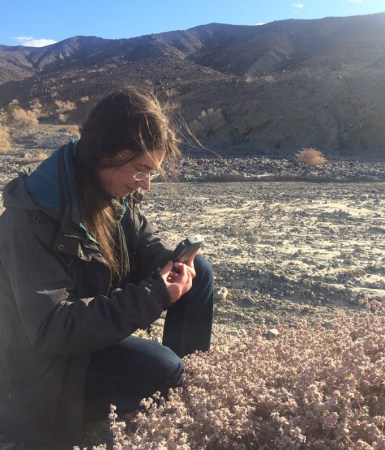
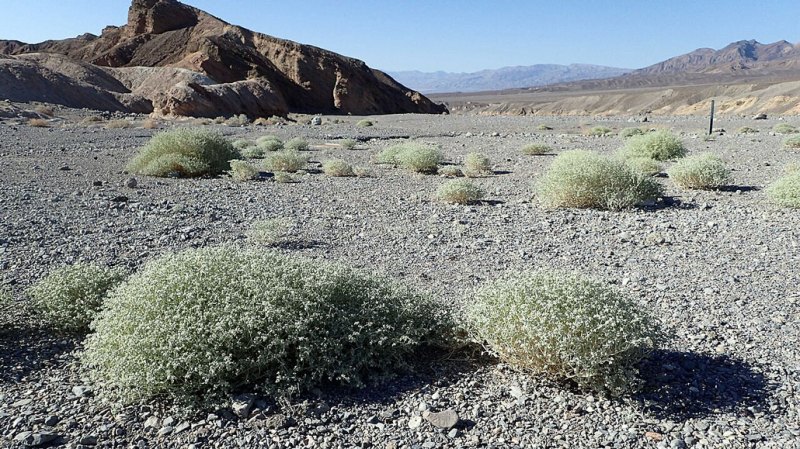
Here’s a closeup of leaves on the Arizona honeysweet (Tidestromia oblongifolia). In high heat, structures in the leaves morph in shape, allowing this plant to boost its growth.Karine Prado
In-leaf air conditioning?
The ability of the Arizona honeysweet (Tidestromia oblongifolia) to endure extreme heat has long fascinated scientists. It performs photosynthesis best at a blazing 47 °C (117 °F). That’s the highest peak-performance temperature for any plant, says Karine Prado, a plant biologist at MSU. “These plants wait [for] the hottest month just to grow fast,” she told Science News.
But to do that, its leaves have to keep from baking into a crisp. This year, Rhee says, her team set out to ask a simple question: “How can a plant survive in one of the hottest places on Earth?”
Scientists knew this honeysweet can cool itself by releasing water vapor. Vapor exits through stomata — tiny pores on its leaves and stems. Called transpiration, this process is like sweating, Feehan says. It was never clear, though, how big a role this method of cooling played in helping the plant survive Death Valley’s heat.
Karine Prado examines T. oblongifolia in Death Valley, Calif.Jennifer Johnson
To find out, the MSU team collected seeds from 223 wild honeysweets growing in and near Death Valley. Then they grew more than 1,200 seedlings in the lab at a comfortable 30 °C (86 °F). Over several more days, the researchers gradually turned up the heat. They maxed out at 60 °C (140 °F) for six to eight hours daily. (Scientists believe that 60 °C is the hottest temperature at which complex life, such as plants or animals, can survive.)
At each step, the team measured how hot the plants got. Once the number of surviving and non-surviving plants did not change, the experiment ended.
Some plants survived repeated exposures to high temperatures. And they didn’t simply tolerate the heat. They actively cooled their leaves through transpiration. Some leaves were able to stay roughly 13 degrees C (23 degrees F) cooler than the surrounding air!
When the team experimentally closed the leaves’ stomata, shutting down this cooling, the plants didn’t live as long.
Clearly, Rhee concludes, “This cooling makes the difference between life and death.”
This is “direct evidence that leaf cooling contributes to survival under extreme heat,” says Wataru Yamori. He is a plant biologist at the University of Tokyo in Japan who did not take part in this work.
However, not all the honeysweets survived.
Some died after only a few days. Others remained healthy for weeks. These differences may trace to their DNA, Rhee suspects. It’s like “how some of us have brown eyes whereas others have blue eyes,” she says. Some of the plants, she explains, carry versions of genes that appear to more effectively help them cool off and survive extreme heat.
The new study did not pinpoint which genes bring better cooling relief, notes Rubén Rellán Álvarez. He studies plants at North Carolina State University in Raleigh and did not take part in the new study. Identifying those genes could help uncover “the secrets of this extreme adaptation,” he says.
That could have out-of-this world payoffs, says Rhee. To grow plants on the moon or Mars, she says “we’ll need to learn from the toughest plants on our own planet first.” The plants in Death Valley — where filmmakers have shot scenes set on desert planets in Star Wars and other movies — might just be the perfect teachers.
One limit in this study was water availability, Yamori says. The experiment was done without water restrictions. Opening the stomata can cool the leaf, but it also increases water loss. If stomata are closed, not only is the plant’s intake of carbon dioxide halted, but its cooling through transpiration is also turned off.
So the plant must balance cooling and CO2 intake as it conserves water, says Feehan. Further work, she says, will need to explore how it does this in nature.
Editor’s note: This story was updated on Oct. 19, 2026, to remove an incorrect mention that Karine Prado was part of the team that collected honeysweet seeds.
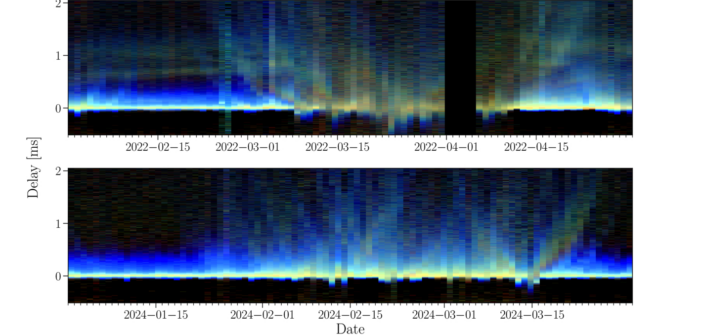
What at first might appear to be abstract pixel art or a fuzzy photograph of skyglow from a distant city is actually a representation of radio emission from the pulsar at the center of the Crab Nebula. When a pulsar’s radio emission passes through a region of ionized gas — like the complex filaments of the Crab Nebula — the plasma deflects the radio signal from its intended course. This detour can create “echoes”: copies of the pulsar signal that arrive later than the original pulse. Thierry Serafin Nadeau (University of Toronto) and collaborators studied these echoes from the Crab pulsar by compiling an archive of giant pulses detected over 2.5 years by the Canadian Hydrogen Intensity Mapping Experiment (CHIME). Giant pulses, which are brighter and narrower than typical pulses, offer a powerful way to probe plasma echoes. The image above shows sweeping parabola-shaped echoes during two particularly active periods. The color shows the frequencies at which power was received: mainly at low (blue), high (red), or all (yellow-white) frequencies. This dataset revealed for the first time a feature predicted to exist but never seen: echoes from plasma structures that never pass directly in front of the pulsar from our point of view. To learn more about the echoes of the Crab pulsar, be sure to check out the research article linked below.
Citation
“Echoes in Different Tempo: Long-Term Monitoring of Crab Echoes with CHIME,” Thierry Serafin Nadeau et al 2026 ApJ1006 82. doi:10.3847/1538-4357/ae7336
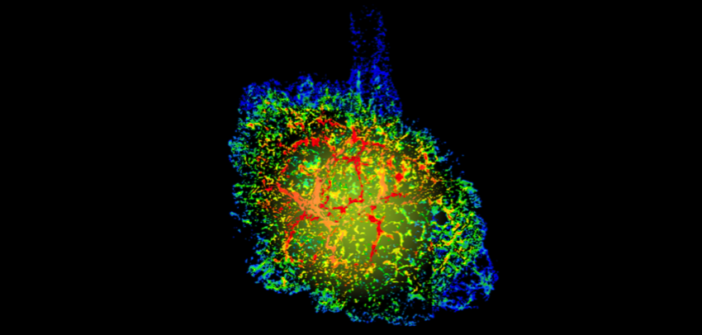
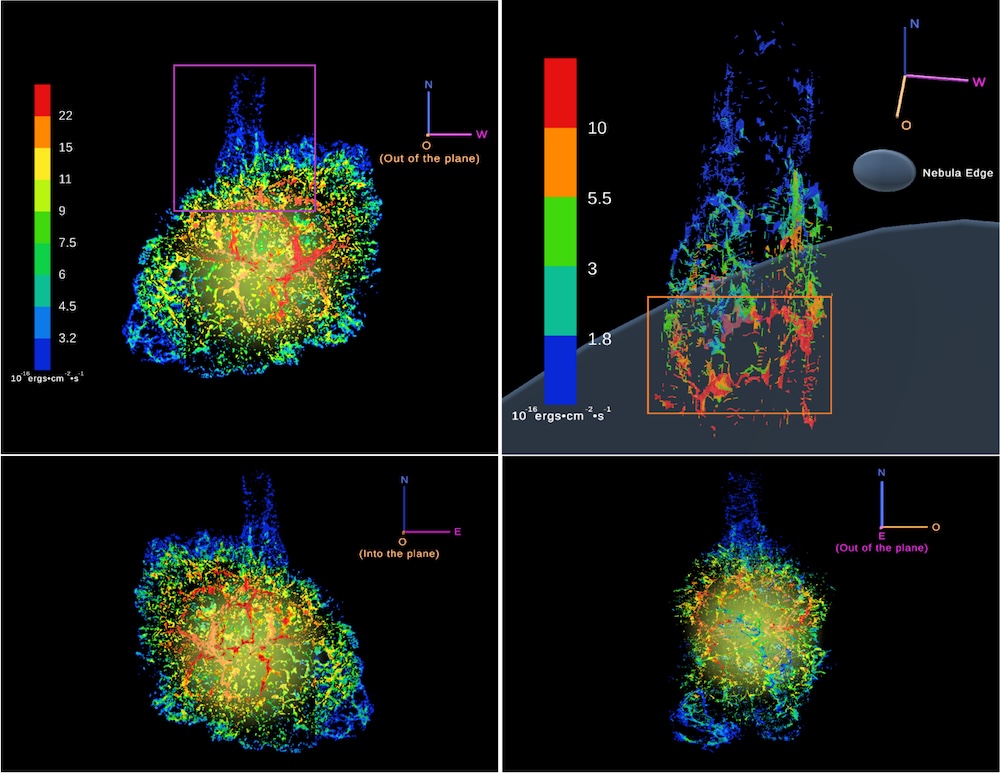
Three-dimensional reconstructions of the Crab Nebula using oxygen emission lines. An animation of the 3D reconstruction is also available. [Ding et al. 2026]
A recent research article by Ziwei Ding (Purdue University) and collaborators introduces a new 3D kinematic reconstruction of the Crab Nebula, the remnant of a supernova seen from Earth in the year 1054. The team observed the nebula’s oxygen emission in 2020 and 2022 with the Canada-France-Hawaii telescope, then compared these observations against others made in 2016 to study the nebula’s structure and motion. The images above and to the right show the nebula from multiple vantage points. These images show a prominent jet-like feature emerging vertically from the nebula. Ding and collaborators demonstrated that the jet appears to be linked to a light-year-wide cavity at its base. The source of the jet is not yet known; past mass loss, a circumstellar disk, and a locally under-dense region might all play a role. Future hydrodynamic simulations can probe each of these possibilities to understand how the winds of the young pulsar at the core of the nebula produced the features seen today. To learn more about these observations of the Crab Nebula, be sure to check out the full research article linked below.
Citation
“3D Kinematic Reconstruction of the Crab Nebula That Includes the Northern Ejecta ‘Jet,'” Z. Ding et al 2026 ApJ1007 130. doi:10.3847/1538-4357/ae84c0
Carbon is the 4th most abundant element in the universe. It’s everywhere, from the air you breathe to the carbohydrates in your food to the petroleum in the Earth’s crust. Like most elements, carbon was not created by the Big Bang, but came from 2 different types of stars that fuse lighter elements together.
Massive stars at least 8 times the Sun’s mass fuse 3 helium atoms into a carbon atom in their cores, through a mechanism called the triple-alpha process. They eventually expel this carbon into space, either through a stream of material called astellar wind or at the end of their lives during a core-collapse supernova.
Meanwhile, low-to-intermediate-sized stars between ½ and 8 times the Sun’s mass also induce the triple-alpha process. But unlike massive stars, they produce carbon not in their cores, but in a dense shell of helium that surrounds them during an advanced stage known as the asymptotic giant branch or AGB. AGB stars undergo cycles of swelling and contraction, during which they shed some of their material into space.
While scientists understand these processes, the contribution of each star type to the carbon supply in the universe remains uncertain. To address this, a team of scientists modeled how the chemical elements in the Milky Way Galaxy change over time with different contributions from the 2 carbon-creating processes. They then verified their findings by comparing them with the actual carbon concentration in the Milky Way.
To obtain the benchmark for the Milky Way Galaxy’s carbon content, the team turned to the catalog of stars observed by the Apache Point Observatory Galactic Evolution Experiment (APOGEE) survey. They selected 14,066 stars that were large and bright enough to yield reliable data but, unlike AGB and massive stars, were still at a stage of life when their newly produced carbon was still confined to their cores. The researchers used the carbon in the outer layers of these stars, known as subgiants, as a compositional record of the gas from which they formed, thereby estimating the Galaxy’s carbon content during their formation.
The scientists started with a computer program developed by another team that models how the Milky Way’s chemistry changes over time. First, the team calculated the potential amount of carbon produced by different types of stars using estimates from earlier studies. Then, they incorporated these results into a model that accounts for how stars form, fuse elements, and release carbon into the Galaxy, using a simulation program called the Versatile Integrator for Chemical Evolution, or VICE. The researchers ran 14 versions of this model, each assuming a different contribution of carbon from AGB stars relative to massive stars.
In their computer model, the Milky Way Galaxy began as a set of 200 concentric rings, each containing its own population of stars, different speeds at which stars form, and varying amounts of gas available to form new stars. The team then stitched these rings together by having stars migrate between them. They allowed these model Galaxies to settle over 10 billion years, then picked a random sample of 14,066 simulated stars to compare their carbon content with carbon in the same number of observed subgiants from APOGEE.
The team’s model most closely reproduced the actual carbon content of the Milky Way’s subgiant stars when AGB stars contribute between 10% and 40% of the Galaxy’s carbon, with the strongest agreement occurring at 15% to 30%. Even though they found that massive stars are the dominant source of carbon, they also found that smaller AGB stars could produce carbon more efficiently than previously thought, though they take longer to become carbon sources than their larger counterparts.
The team concluded that their estimates of how much carbon comes from AGB and massive stars provide a benchmark for future studies, as the connection between the production of elements inside stars and the processes by which those same stars lose mass remains poorly understood. They suggested that future researchers analyze larger sample sizes, examine other galaxies, and use data from future surveys to better understand the chemical history of the universe.
Neutral mesons, the fleeting particles that endlessly oscillate between matter and antimatter forms, have just acquired a strikingly new mathematical lens. In a theoretical study published in The European Physical Journal C, physicist Swarup Sangiri of the Indian Institute of Technology Kharagpur has constructed a fresh class of geometric objects, called connected sequential Bargmann invariants, that encode how two different decay channels of an entangled meson pair relate to one another inside the projective geometry of quantum states. The work extends an earlier framework and shows that when decay-projected states are wired directly into a cyclic chain of quantum overlaps, the resulting quantities behave in a fundamentally different way near the boundary where CP violation switches off.
To appreciate why this matters, it helps to recall what makes neutral meson systems so special. Particles such as the neutral kaon, the D meson, and the two neutral B mesons are produced as flavor eigenstates but propagate as mixtures of heavy and light eigenstates, conventionally written as combinations of the meson and its antiparticle with coefficients p and q. When the magnitudes of p and q differ, the two propagation eigenstates are no longer orthogonal, and this nonorthogonality is the hallmark of indirect CP violation, the subtle asymmetry between matter and antimatter that was famously discovered in kaons in 1964. Because any physical observable must be independent of arbitrary phase conventions attached to quantum states, the natural language for describing interference in these systems is one of rephasing-invariant quantities.
Bargmann invariants provide exactly that language. For a closed sequence of quantum states, the nth-order Bargmann invariant is the product of overlaps taken around the cycle, and it remains unchanged under independent phase redefinitions of each state. Its phase is a geometric phase, the kind of holonomy familiar from the Berry phase, accumulated along a closed loop in the space of rays. Earlier work had applied this machinery to correlated neutral meson decays, constructing third-order invariants that probe single-channel interference and fourth-order invariants that correlate two decay channels through the heavy and light propagation eigenstates. Those constructions linked the geometric picture to conventional flavor observables, including Jarlskog-type structures, without introducing any new phenomenological parameters.
The new study asks a deceptively simple question: what happens if the two decay-projected states themselves are connected directly inside the cyclic overlap chain? When one meson of an entangled pair, produced for example in the decay of a phi or Upsilon resonance, decays into a channel f, its partner is projected into a conditional state determined by the decay amplitudes. A second channel g prepares a different conditional state. The connected sequential fourth-order Bargmann invariant follows the loop from the heavy eigenstate to the f-conditioned state, then directly to the g-conditioned state through their mutual overlap, then to the light eigenstate, and finally back to the heavy one. The crucial new ingredient is the overlap between the two conditional states, a quantity built purely from the decay amplitudes that measures how similar the two post-selected meson states are in projective Hilbert space.
This change in connectivity has dramatic consequences for how the geometric quantities scale as CP violation becomes small. The previously studied disconnected fourth-order invariant, when normalized by the product of two third-order invariants, produced a ratio that blows up quadratically, scaling as the inverse square of the mixing asymmetry, the difference between the squared magnitudes of p and q. The connected sequential ratio, by contrast, carries only a single factor of that asymmetry in its denominator, so its enhancement near the CP-conserving limit is merely linear. Physically, replacing one propagation-mediated link with a direct overlap between the projected states removes one power of the heavy-light suppression, placing the two classes of geometric correlation in distinct scaling classes.
A second new ratio compares the sequential invariant directly with the disconnected one. This comparison ratio behaves in the opposite manner: it is proportional to the mixing asymmetry itself, vanishing in the exact CP-symmetric limit. Its behavior is governed by a competition between two effects, the shrinking of the heavy-light overlap on one side and the possible alignment of interference phases between the two decay channels on the other. When the conditional states prepared by the two channels become geometrically aligned, the suppression can be weakened, revealing that the connected structure is sensitive not only to mixing asymmetry but also to the relative coherence of the decay projections.
To make these statements precise, the analysis is carried out in terms of the standard rephasing-invariant interference parameters lambda, the products of the mixing ratio q over p and the ratios of decay amplitudes to their CP-conjugates. A systematic small-asymmetry expansion, with the squared magnitudes of p and q written as one half plus or minus a small parameter, shows that the sequential ratio depends explicitly on the phase difference between the two channels through the numerator structure. This dependence has no analogue in the disconnected construction, where the channels communicate only through the propagation eigenstates. It means the connected sequential geometry probes the relative orientation of the decay-conditioned rays themselves, a piece of interference information that conventional observables do not isolate on their own.
The geometric interpretation is perhaps the most elegant part of the story. Both the disconnected and the sequential fourth-order invariants involve the same four rays, the heavy and light propagation eigenstates and the two decay-projected states, yet they define different closed paths through projective Hilbert space. A Bargmann invariant depends not just on which states participate but on how they are stitched together, so rewiring the cycle produces a genuinely different geometric correlation. In the CP-conserving limit the heavy and light eigenstates become orthogonal, one link of every cycle collapses, and the entire cyclic structure degenerates, which is why the invariants vanish there. The formalism thus ties the very existence of these CP-sensitive geometric objects to the nonorthogonality of the propagation eigenstates.
Crucially for experiment, none of this requires new physics inputs. The sequential invariant and both ratios can be written entirely in terms of the mixing parameters and decay amplitudes already extracted from time-dependent flavor analyses at flavor factories such as the KLOE experiment with entangled kaons and the BABAR and Belle measurements with entangled B mesons. The framework simply reorganizes the same accessible information into cyclic geometric quantities. The neutral kaon system, with its small indirect CP violation and long-lived interference phenomena, is flagged as a particularly natural arena where the linear enhancement of the sequential ratio could be pronounced, with candidate channels including two-pion, semileptonic, and multi-pion final states. The B meson systems, including channels like B decays to J/psi kaons and to pion pairs, offer rich phase-dependent interference structures, while the D system, where both mixing and CP violation remain tiny in the Standard Model, could serve as a sensitive testing ground for small deviations from exact symmetry.
The study stops short of claiming a new dynamical observable. The author is careful to note that the sequential construction does not add an extra propagation stage in the manner of conventional cascade CP analyses; it is a reorganization of overlap geometry within a single meson system. Even so, the result establishes a hierarchy of Bargmann invariant structures, from single-channel triangles through disconnected quadrilaterals to directly connected sequential cycles, each capturing a different layer of CP-sensitive interference. As precision flavor physics continues to squeeze ever tighter constraints on the origins of matter-antimatter asymmetry, geometric tools of this kind may reveal correlation patterns hiding in plain sight within data that experiments already collect.
Subject of Research: Geometric Bargmann invariant structures and CP-sensitive interference in correlated neutral meson systems
Article Title: Connected sequential Bargmann invariants and (\mathcal CP~)-sensitive geometric correlation structures in neutral meson systems
Article References: Sangiri, S. (2026). Connected sequential Bargmann invariants and $$\mathcal CP~$$-sensitive geometric correlation structures in neutral meson systems. The European Physical Journal C, 86(9), Article 1056. https://doi.org/10.1140/epjc/s10052-026-16308-5
Frost is one of the most punishing adversaries of tea cultivation. A single cold snap can scorch tender leaves, derail an entire season’s harvest, and degrade the delicate chemistry that gives tea its value. For growers and breeders, however, judging how badly a field has been damaged has long been a stubbornly subjective exercise: visual ratings lump continuous injury into crude categories, and laboratory assays destroy the very tissue they measure. A new study published in Plant Methods by Zhengtong He of Shihezi University, Zhiwei Chen of the Tea Research Institute of Shandong Academy of Agricultural Sciences, and colleagues offers a way out, pairing hyperspectral imaging with a purpose-built deep learning model to read frost damage directly from the way leaves reflect light.
The core problem the team confronted is that frost injury is not a binary event but a continuum. Leaves exposed to sub-zero temperatures suffer a cascade of overlapping stresses: photosynthetic pigments degrade, the machinery of photosynthesis falters, and cell membranes and walls break down. Any single measurement captures only a sliver of that cascade. To capture the whole picture, the researchers collected hyperspectral data together with eight key physicochemical indicators from tea plants growing across natural frost damage gradients in the field, rather than in the artificial conditions of a growth chamber. From these multidimensional physiological responses they constructed a composite measure, the tea cold stress response index, or TCSRI, which expresses frost damage severity as a continuous value instead of a coarse visual class.
Building TCSRI is a meaningful advance in itself. Traditional frost assessment often relies on ordinal scales, where an observer assigns a score of mild, moderate, or severe. Such scales throw away information and make it difficult to track recovery or compare cultivars with fine precision. By integrating several physiological dimensions into one index, the team created a target variable that reflects the plant’s actual internal state. The challenge then became predicting that index, and the individual chemical indicators behind it, from spectral data alone, without touching or destroying a single leaf.
Hyperspectral sensing is well suited to this task in principle. Across hundreds of narrow wavelength bands, plant leaves encode a wealth of information: chlorophyll absorption in the visible range, water and structural features in the near infrared. But the data are high-dimensional, with far more spectral channels than samples, a regime that invites overfitting, especially in field studies where collecting ground-truth measurements is laborious. Conventional chemometric approaches, from partial least squares regression to standard machine learning pipelines, often struggle to separate genuine physiological signals from noise, sensor drift, and the confounding effects of leaf surface properties and illumination variation.
The researchers’ answer is a model they call STAMPformer, short for spectral-prior-guided multi-view attention pooling. Its architecture reflects a deliberate design philosophy: rather than letting a neural network rediscover everything from scratch, the model is steered by what spectroscopists already know about how plants respond to stress. At its front end, a parameter-free attention convolution extraction module jointly models both the raw reflectance spectra and their first-order derivatives. Derivative spectra are a classic spectral prior: they accentuate subtle local features such as absorption peaks and shoulders that are easily drowned out in raw reflectance, while suppressing broad baseline drift and noise. By processing both views together, the module sharpens the local spectral signatures that carry physiological meaning.
On top of this extraction stage sits the second innovation, a multi-view attention pooling module. Deep networks processing spectral sequences produce long streams of features, but not all wavelengths matter equally for a given prediction. The pooling module adaptively aggregates sequence features drawn from different feature subspaces, learning to amplify the responses that are most diagnostic of cold stress and to down-weight the rest. This attention mechanism acts like a learned spotlight, and because it operates across multiple subspaces, it can capture complementary patterns that a single attention head might miss. The result is a compact representation tailored to the prediction task at hand, whether that is estimating a specific chemical indicator or the composite TCSRI.
The performance numbers are striking. Across all nine prediction tasks, spanning the eight physicochemical indicators and the TCSRI itself, STAMPformer achieved coefficients of determination above 0.87 and ratios of performance to deviation above 2.80, thresholds generally regarded as indicating reliable quantitative prediction. In other words, from a leaf’s reflectance fingerprint alone, the model could reconstruct the plant’s internal frost-stress state with an accuracy that approaches laboratory measurement, while remaining entirely non-destructive. The team did not stop at headline metrics. Ablation experiments systematically removed each proposed module to confirm that both the attention convolution extraction and the multi-view pooling contributed measurably to the gains, and paired statistical tests across multiple random seeds ensured the improvements were not artifacts of a lucky initialization.
Interpretability was a further priority, and here the study delivers something rarer than raw accuracy. Applying SHAP analysis, a technique that attributes each prediction to the contributions of individual input features, the researchers identified the wavelengths the model relied on most heavily. These key spectral regions correspond to physiologically meaningful processes: pigment degradation, photosynthetic impairment, and the disruption of cellular structure. That alignment between machine attention and plant biology matters on two fronts. It gives spectroscopists confidence that the model has learned genuine stress signatures rather than spurious correlations, and it hands plant physiologists a data-driven map of which parts of the spectrum track which facets of cold injury, potentially guiding future sensor design and breeding assays.
Crucially, the model also proved itself on data it had never seen. Independent external validation, using samples not involved in training, demonstrated that STAMPformer’s predictive ability generalizes beyond its original dataset, addressing one of the most common failure modes of machine learning in agricultural sensing. For a field where models are often tuned and tested on the same plots, this external check is an important credibility marker, suggesting the framework could be deployed across different farms, seasons, and frost events rather than remaining a laboratory curiosity.
The practical implications reach well beyond tea. An accurate, non-destructive, continuous measure of cold damage opens the door to rapid post-frost field surveys, letting growers quantify losses within hours instead of waiting for symptoms to develop or sending samples to a lab. For breeders screening for cold-tolerant germplasm, a spectral readout of TCSRI could accelerate the evaluation of hundreds of candidate lines without destructive sampling. And in the emerging vision of the smart tea garden, where drones and handheld spectrometers roam the rows, a model like STAMPformer could feed real-time frost maps into irrigation, shading, and recovery-management decisions. The authors frame their work as supporting frost monitoring, cold-tolerant germplasm evaluation, and intelligent garden management, and the architecture’s reliance on general spectral priors rather than tea-specific tricks suggests the approach could be adapted to other crops facing abiotic stress. As climate variability makes late-season frosts increasingly erratic, tools that turn light reflected from a leaf into a precise physiological diagnosis may become as essential to the tea garden as the thermometer.
Subject of Research: Hyperspectral deep learning prediction of continuous frost damage severity in tea plants
Article Title: STAMPformer: spectral-prior-guided multi-view attention learning for hyperspectral prediction of continuous frost damage severity in field-grown tea plants
Article References: He, Z., Chen, Z., Ding, Z., Wang, Z., Zhang, F., Zhao, Y., & Dong, C. (2026). STAMPformer: spectral-prior-guided multi-view attention learning for hyperspectral prediction of continuous frost damage severity in field-grown tea plants. Plant Methods. https://doi.org/10.1186/s13007-026-01597-4

 Login