
❌

Reading view

Tea Drinkers May Have Fewer Heart and Blood Vessel Problems, Large Study Finds
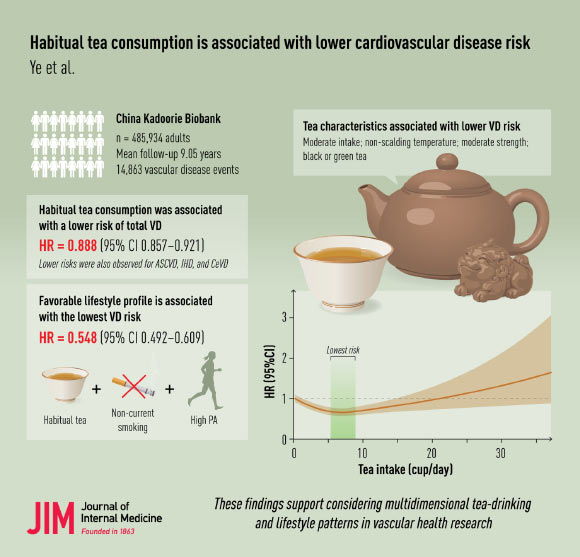
Ye et al. found an 11% lower risk of vascular disease among regular tea drinkers. Image credit: Ye et al., doi: 10.1111/joim.70172.

People who drink tea regularly appear less likely to develop heart and vascular disease than people who don’t, according to a new study published today in the Journal of Internal Medicine.

The post Tea Drinkers May Have Fewer Heart and Blood Vessel Problems, Large Study Finds appeared first on Sci.News: Breaking Science News.

  •  

Cat Hormones and Owner Moods Appear to Move Together: Study

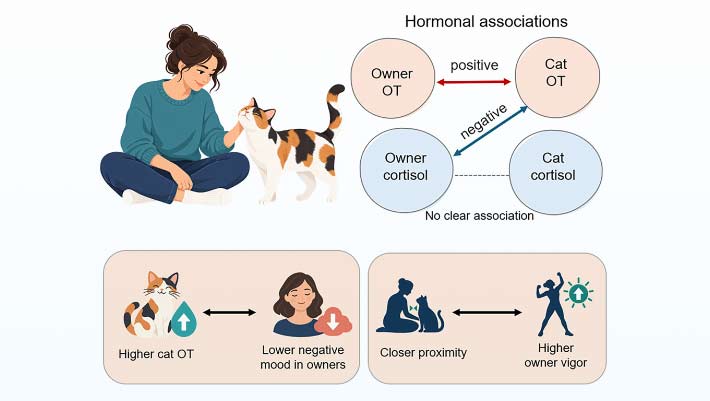
Higher cat oxytocin linked to lower owner cortisol and negative mood. Image credit: Takagi et al., doi: 10.1016/j.isci.2026.117934.

The β€˜love hormone’ oxytocin may rise and fall in tandem in cats and the people who live with them, according to a new study published in the journal iScience.

The post Cat Hormones and Owner Moods Appear to Move Together: Study appeared first on Sci.News: Breaking Science News.
  •  

Seaweed Compounds Show Promise against Cell Damage

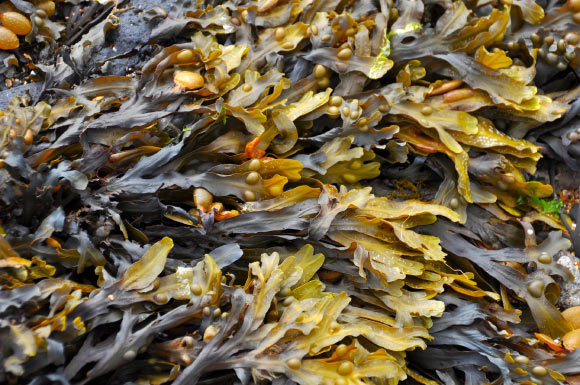
Fucoidans are structurally diverse, fucose-rich, sulfated polysaccharides derived mainly from brown seaweeds. Image credit: Ronile.

Fucoidans -- compounds found in the cell walls of brown seaweed -- could one day help treat diseases driven by oxidative stress, though the substances are far from the pharmacy shelf.

The post Seaweed Compounds Show Promise against Cell Damage appeared first on Sci.News: Breaking Science News.
  •  
  •  

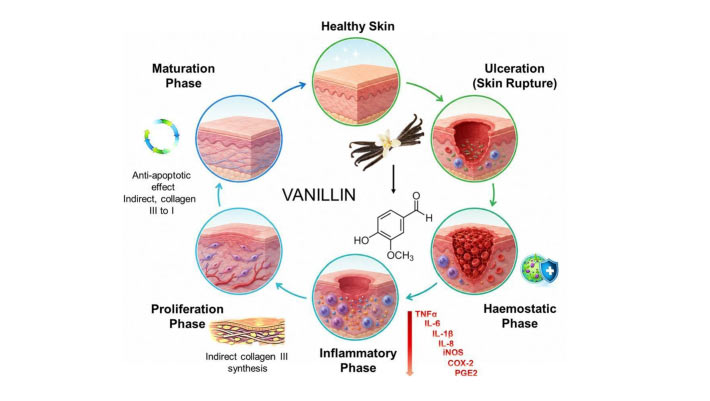
Vanillin Shows Promise for Treating Chronic Wounds

Vanillin has pronounced antioxidant, anti-inflammatory and antibacterial properties. Image credit: Stoilov et al., doi: 10.1016/j.ijpharm.2026.127263.

Vanillin, the compound that gives vanilla its familiar taste, may have a future in treating wounds that refuse to heal, according to a review paper published in August 2026 in the International Journal of Pharmaceutics.

The post Vanillin Shows Promise for Treating Chronic Wounds appeared first on Sci.News: Breaking Science News.
  •  

VISTA Focuses on Inner Regions of Magellanic Clouds

This image from ESO’s VISTA telescope shows the Large Magellanic Cloud. Image credit: ESO / Cioni et al.

Astronomers using ESO’s Visible and Infrared Survey Telescope for Astronomy (VISTA) have observed the densest, most crowded regions at the centers of the Large and Small Magellanic Clouds, our Milky Way Galaxy’s closest dwarf companions, offering an unprecedented look at areas that have long resisted detailed study.

The post VISTA Focuses on Inner Regions of Magellanic Clouds appeared first on Sci.News: Breaking Science News.

  •  

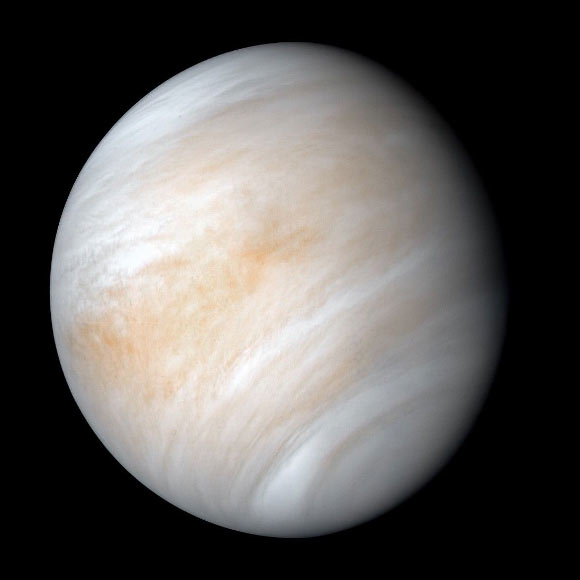
New Study Explains Why Venus Has No Moon

NASA’s Mariner 10 spacecraft captured this view of Venus in February 1974. Image credit: NASA / JPL-Caltech.

Dr. Stephen Kane from the University of California, Riverside and colleagues offer a tidy explanation for one of the Solar System’s enduring puzzles: why Venus, so similar to Earth in size and mass, has no moon at all.

The post New Study Explains Why Venus Has No Moon appeared first on Sci.News: Breaking Science News.
  •  

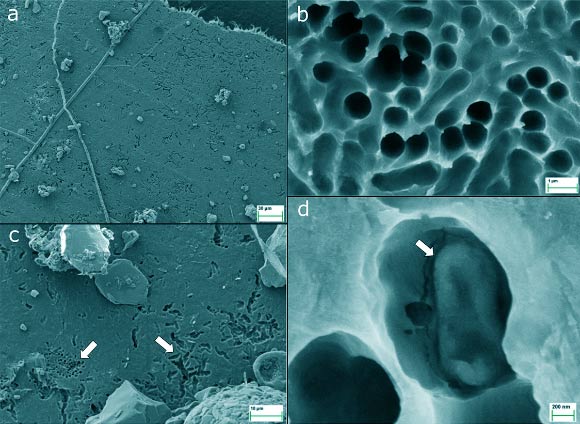
Scientists Discover Soil Bacteria Enzyme that Breaks Down Both Plastic and Antibiotics

SEM images of LCAP films incubated undisturbed for more than a year in pristine forest soil. The arrow in panel (d) points at an object inside of such a cavity that might represent a (damaged) microbial cell; however, these were found very rarely; empty cavities were more representative (a-c). Image credit: Lerner et al., doi: 10.1093/ismejo/wrag203.

Biologists studying how bacteria break down a new generation of plant-based bioplastics -- long-chain aliphatic polyesters -- have discovered an enzyme that can dismantle both plastic and antibiotics.

The post Scientists Discover Soil Bacteria Enzyme that Breaks Down Both Plastic and Antibiotics appeared first on Sci.News: Breaking Science News.
  •  

Some of Smallest Bee Species See Best, New Study Finds

The blue-banded bee Amegilla murrayensis. Image credit: Callin Switzer.

According to a new paper published this week in the Proceedings of the National Academy of Sciences, some of the smallest bees studied have photoreceptors as sharp as those of much larger honeybee drones.

The post Some of Smallest Bee Species See Best, New Study Finds appeared first on Sci.News: Breaking Science News.

  •  

Study: Night Owls Face Higher Mental Health Risks Tied to Work-Life Balance

Weekend recovery sleep doesn’t prevent weight gain or reduce insulin sensitivity. Image credit: Wok & Apix.

In a study of 2,266 workers in Finland, evening-type people, or night owls, were up to three times more likely to be treated for depression or anxiety than morning types, with poor work-life balance identified as a key contributing factor.

The post Study: Night Owls Face Higher Mental Health Risks Tied to Work-Life Balance appeared first on Sci.News: Breaking Science News.

  •  

Dodo Had Surprisingly Keen Sense of Smell and Owl-Like Vision, New Study Reveals

The dodo (Raphus cucullatus) by Frederick William Frohawk, 1905.

New research led by University of Lethbridge scientists offers the most detailed look yet at how the dodo (Raphus cucullatus) -- the flightless bird driven to extinction by the 1600s -- actually perceived its world, suggesting the β€˜stupid bird’ had a far more complex sensory life than its reputation implies.

The post Dodo Had Surprisingly Keen Sense of Smell and Owl-Like Vision, New Study Reveals appeared first on Sci.News: Breaking Science News.

  •  

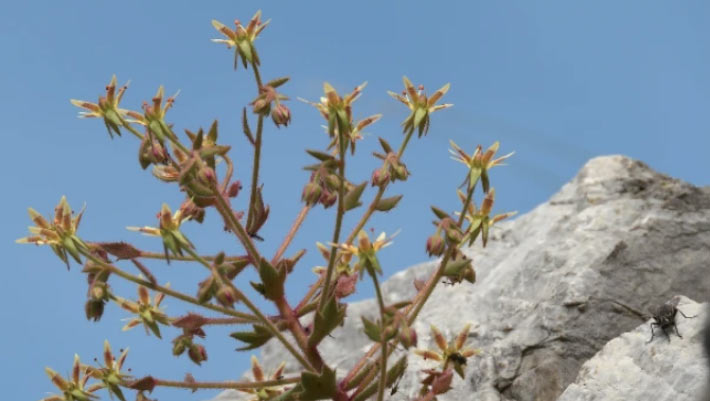
Scientists Add Unlikely New Member to World’s Carnivorous Plants

Morphology of Saxifraga candelabrum. Image credit: Zhang et al., doi: 10.1038/s41467-026-75288-y.

More than 150 years after Charles Darwin first wondered whether certain sticky-leaved Saxifraga plants might be secretly carnivorous, Kunming Institute of Botany researcher Tao Deng and colleagues say they have finally confirmed it.

The post Scientists Add Unlikely New Member to World’s Carnivorous Plants appeared first on Sci.News: Breaking Science News.
  •  

Moving Cat Indoors is Easier than Owners Expect: Study

The owner experiences of transitioning cats indoors suggest that, for most owners and cats, a transition to indoor cat management is manageable and worthwhile. Image credit: Natali Anderson.

Moving a free-roaming cat indoors for good is a decision many owners approach with dread: guilt over confining a former outdoor explorer, worry about litter boxes and scratched furniture, and doubts about whether the cat will ever adjust.

The post Moving Cat Indoors is Easier than Owners Expect: Study appeared first on Sci.News: Breaking Science News.

  •  

Scientists Propose New Strategy in Fight against High Blood Pressure

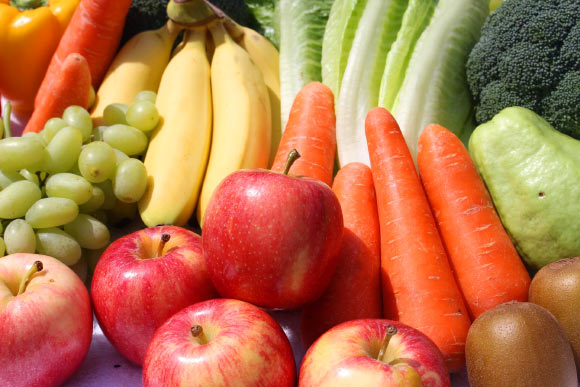
Potassium-rich foods include fruits, vegetables, legumes and dairy. Image credit: Jasmine Lin.

In a perspective paper published in The American Journal of Clinical Nutrition, a team of researchers and health experts calls for a β€˜paradigm shift’ in how public health agencies address hypertension.

The post Scientists Propose New Strategy in Fight against High Blood Pressure appeared first on Sci.News: Breaking Science News.
  •  

Decades of Financial Hardship Linked to Faster Brain Aging

Long-term financial stress accelerates age-related cognitive decline. Image credit: Thomas Breher.

A large British study spanning more than 70 years has found that people who experience chronic money struggles over their working lives show measurable declines in memory and processing speed by their 50s, along with signs of accelerated brain shrinkage decades later.

The post Decades of Financial Hardship Linked to Faster Brain Aging appeared first on Sci.News: Breaking Science News.

  •  

New Study Finds Eating Breakfast Boosts Diet Quality in Teens Who Usually Skip It

Teenagers who regularly skipped breakfast improved the quality of their diets when they began eating a morning meal. Image credit: Pexels.

Adding breakfast back into the daily routine of teens around age 18 who habitually skip the meal can meaningfully improve their nutrition, with the biggest gains seen among those given protein-rich morning meals, according to a six-month clinical trial.

The post New Study Finds Eating Breakfast Boosts Diet Quality in Teens Who Usually Skip It appeared first on Sci.News: Breaking Science News.

  •  

Planetary-Mass Exomoon Found Circling Brown Dwarf

This illustration shows the stellar system CD-35 2722, with the newly found exomoon at the center; the star has about half the mass of our Sun, and it is orbited by a brown dwarf, the reddish-brown object seen here in the foreground (right). Image credit: ESO / M. Kornmesser.

Astronomers using ESO’s Very Large Telescope (VLT) have discovered a gas giant around a brown dwarf in the stellar system CD-35 2722.

The post Planetary-Mass Exomoon Found Circling Brown Dwarf appeared first on Sci.News: Breaking Science News.

  •  

Juno’s Microwave Vision Peers beneath Surface of Jupiter’s Volcanic Moon Io

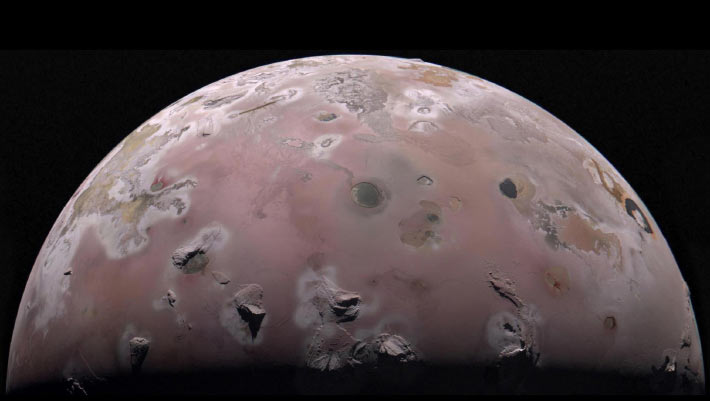
The north polar region of Io was captured by NASA’s Juno spacecraft on December 30, 2023. Image credit: NASA / JPL-Caltech / SwRI / MSSS / Gerald EichstΓ€dt.

New data from NASA’s Juno spacecraft show temperatures spike more than 20 degrees Celsius just a few meters under Io’s surface, providing the first look at what’s happening below the crust of the Solar System’s most volcanic world.

The post Juno’s Microwave Vision Peers beneath Surface of Jupiter’s Volcanic Moon Io appeared first on Sci.News: Breaking Science News.
  •  

385-Million-Year-Old Amber Found in China

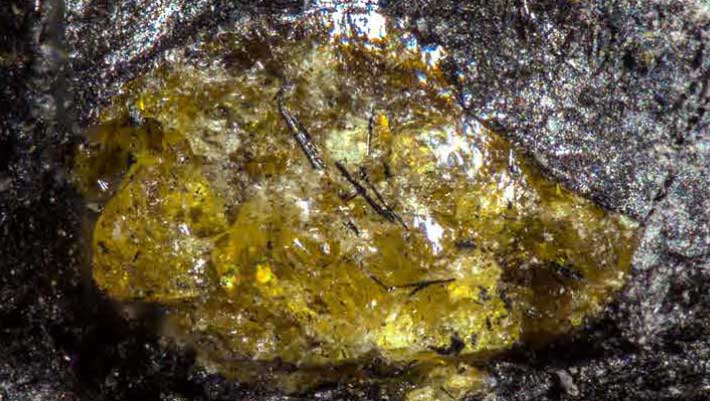
The Middle Devonian Hujiersite amber. Image credit: Lu et al., doi: 10.1126/sciadv.aeh1266.

Paleontologists in China have discovered what they say is the earliest confirmed pieces of amber ever found, a fossilized resin roughly 385 million years old (Middle Devonian epoch) that predates the previous record-holder by about 65 million years.

The post 385-Million-Year-Old Amber Found in China appeared first on Sci.News: Breaking Science News.
  •  
❌