❌

Reading view

Case of mysterious medieval skeleton buried in Roman-era sarcophagus at Westminster Abbey finally solved

In the late 1800s, Westminster Abbey clergy stumbled upon a mysterious sarcophagus. The lid was decorated with an 11th-century Anglo-Saxon cross, but the base had a fourth-century Roman funeral inscription. For nearly 150 years, the tomb has baffled experts, but the abbey's consulting archaeologist may have finally figured out who was buried there, according to a new study.

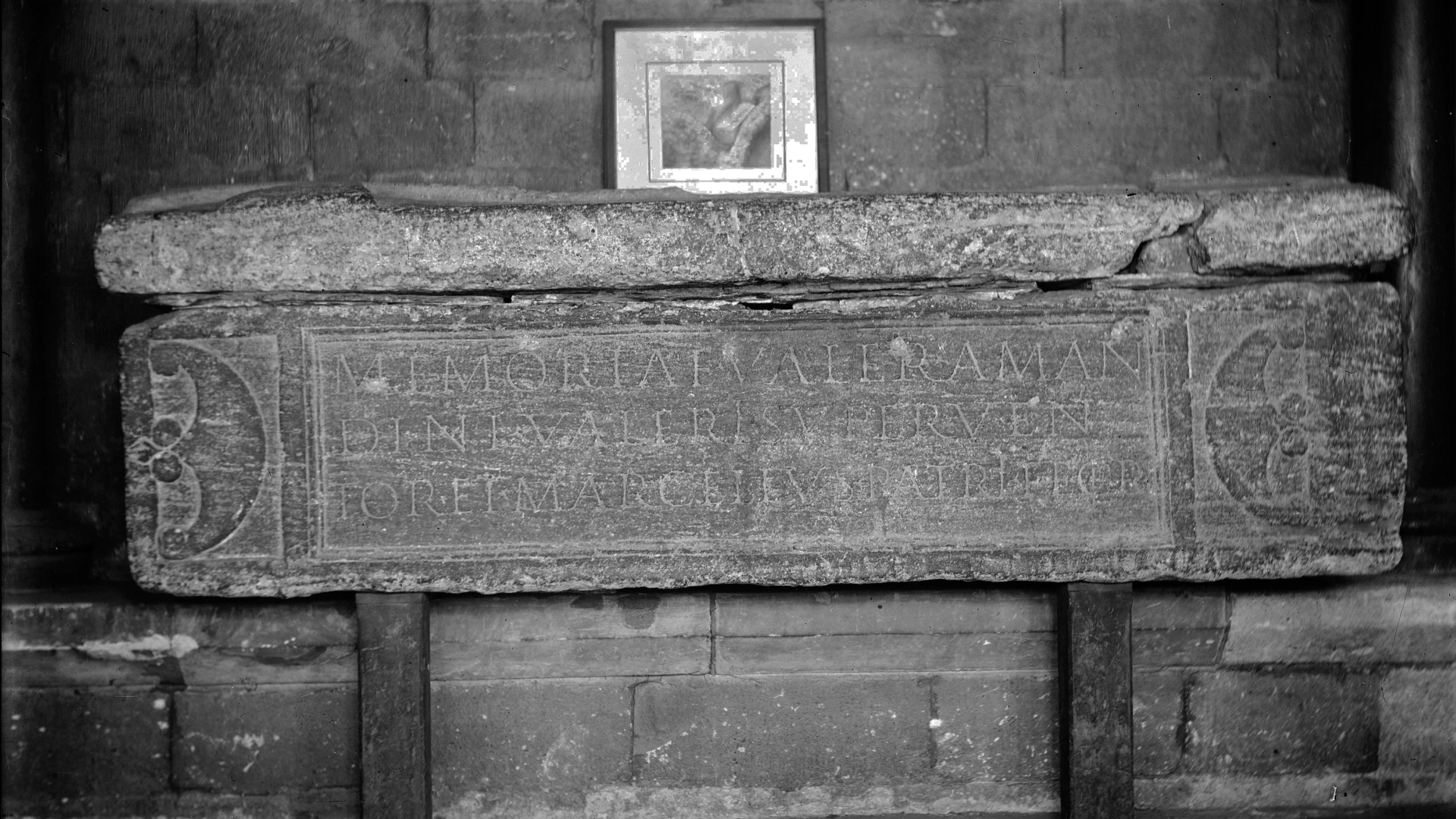
Westminster's chief mason unearthed the stone sarcophagus in 1869, but when experts investigated it, they discovered that the burial had been looted earlier that century. Experts also noticed that the carved decoration on the side of the sarcophagus was stylistically Roman, with a Latin inscription that can be translated as "To the memory of Valerius Amandinus. Valerius Superventor and Marcellus made this for their father." But an enormous medieval cross had been carved into the lid of the sarcophagus, suggesting that the tomb had been reused to bury an important religious figure hundreds of years later.

The mystery of the medieval individual buried in a Roman sarcophagus remained unsolved for 150 years, as no one thought that any bones were left inside. But when the stone coffin was opened for conservation in 2016 and a full skeleton was discovered, clues to the identity of the deceased finally came to light, Warwick Rodwell, the consultant archaeologist for Westminster Abbey, wrote in a study published Wednesday (Oct. 21) in the Journal of the British Archaeological Association.

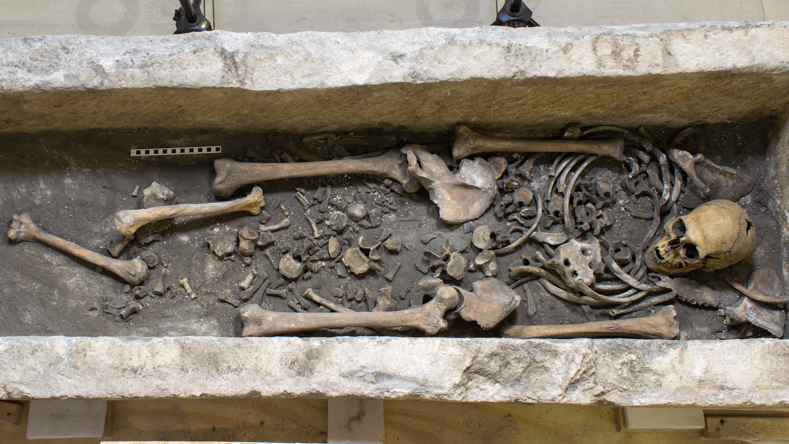
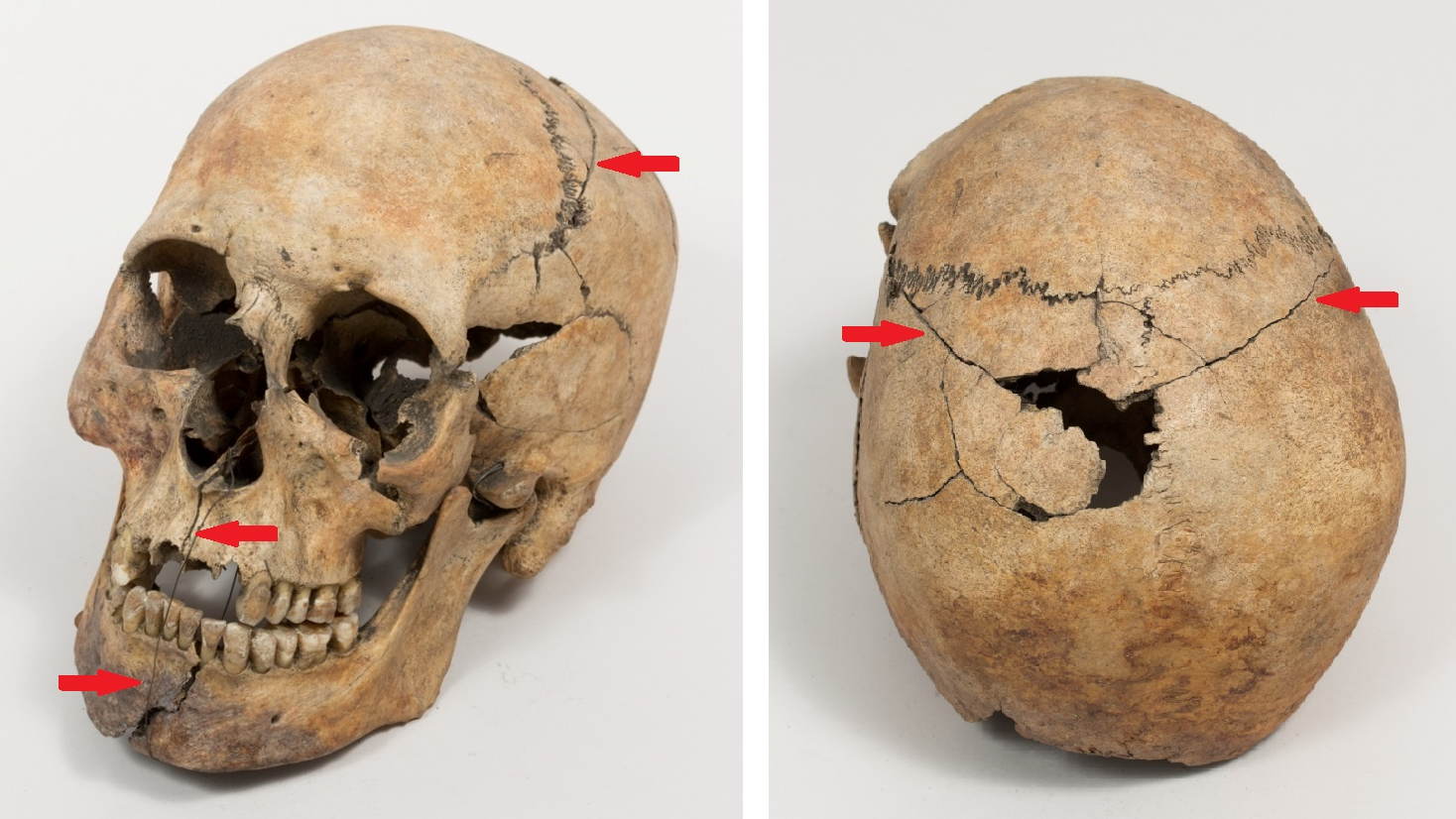
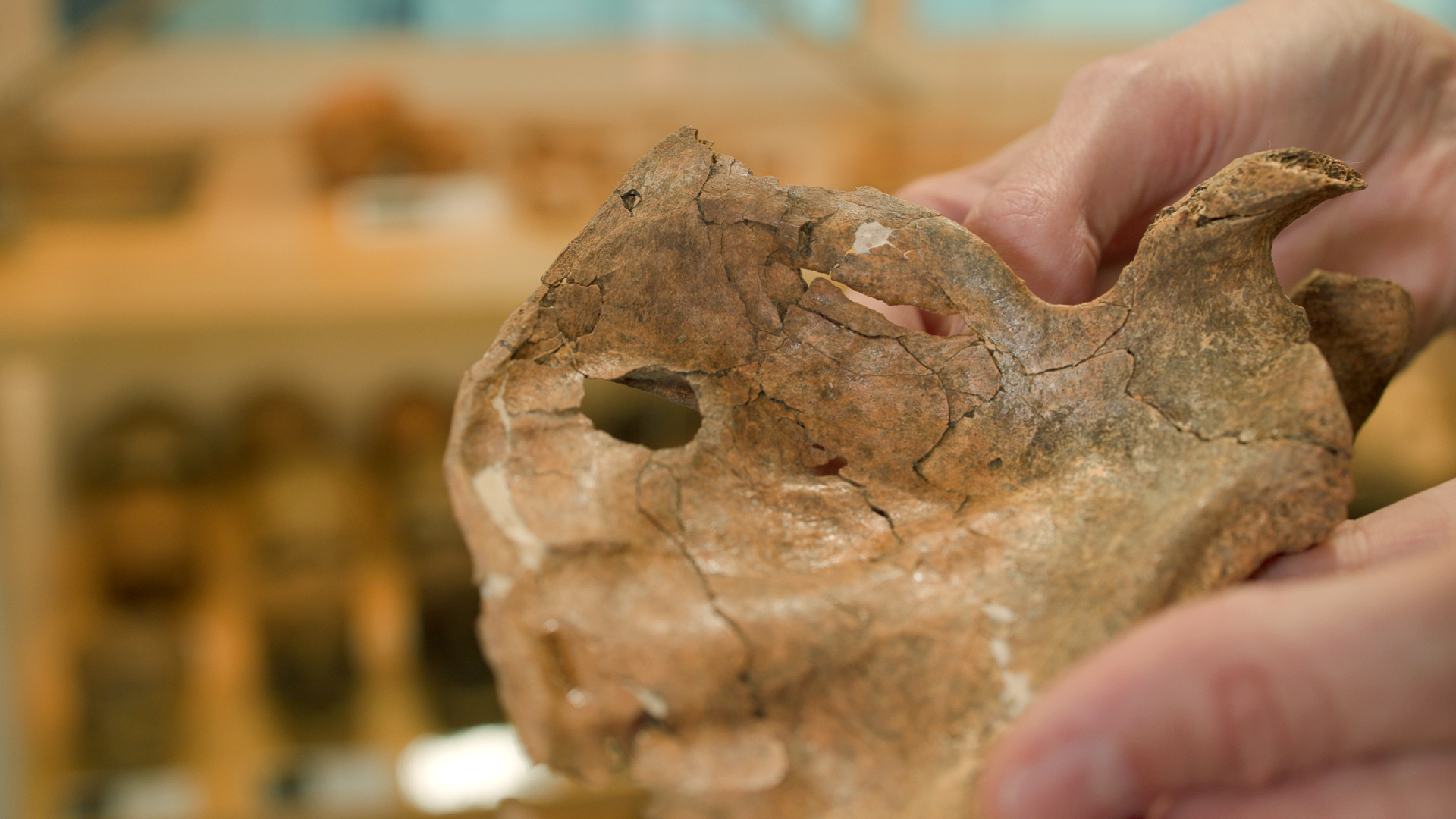
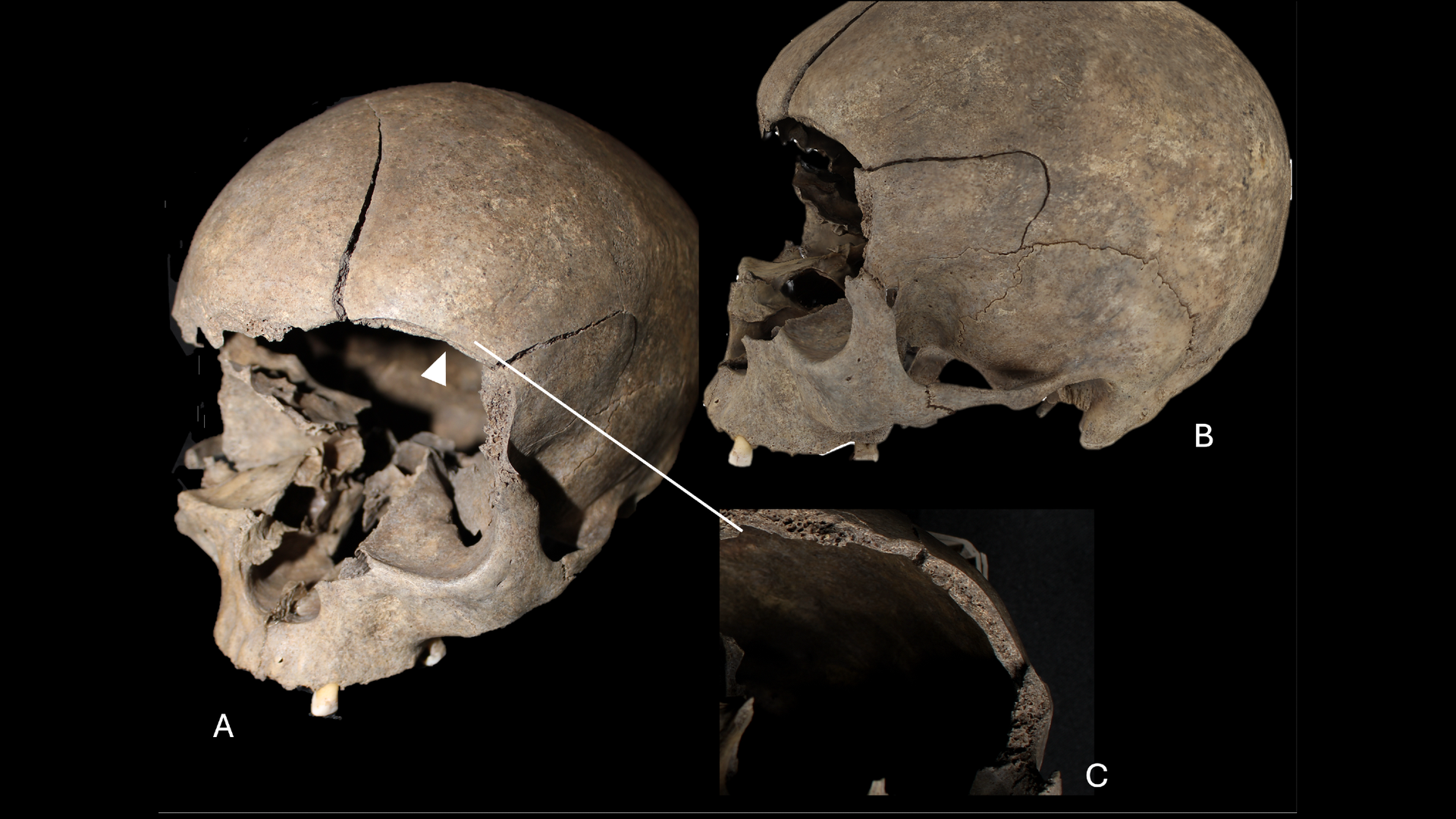
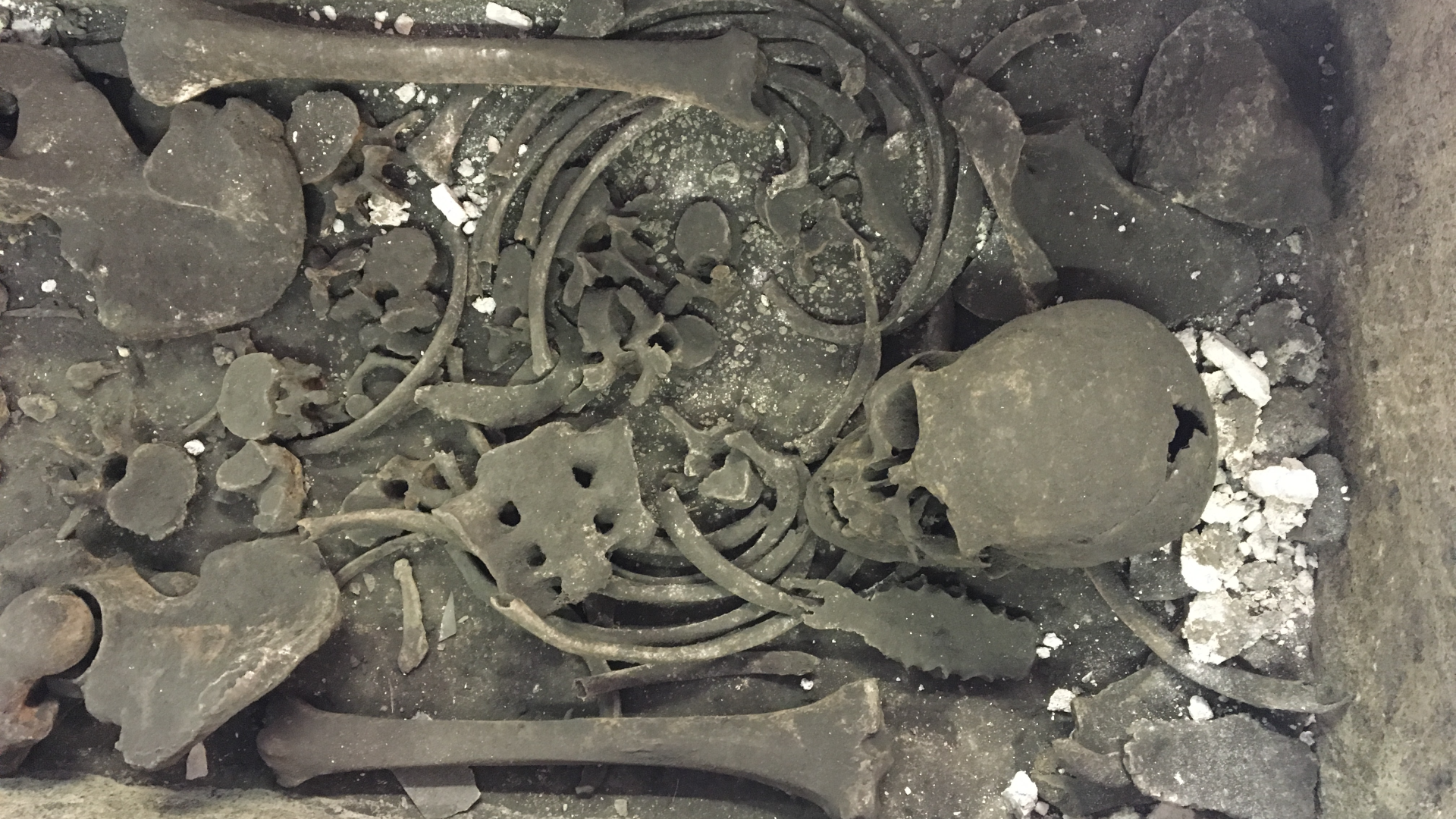
Although the skeleton had been disturbed over the years, with a hole accidentally made in the skull and arm and leg bones mixed up, it was clear that the person was male, middle-aged, and of average height, bioarchaeologist James Langthorne of Pre-Construct Archaeology wrote in a 2016 report. The man also had some evidence of osteoarthritis, two healed rib injuries and gout. The bones were carbon-dated to between 987 and 1052, confirming that the Roman-era sarcophagus was reused in the Middle Ages.
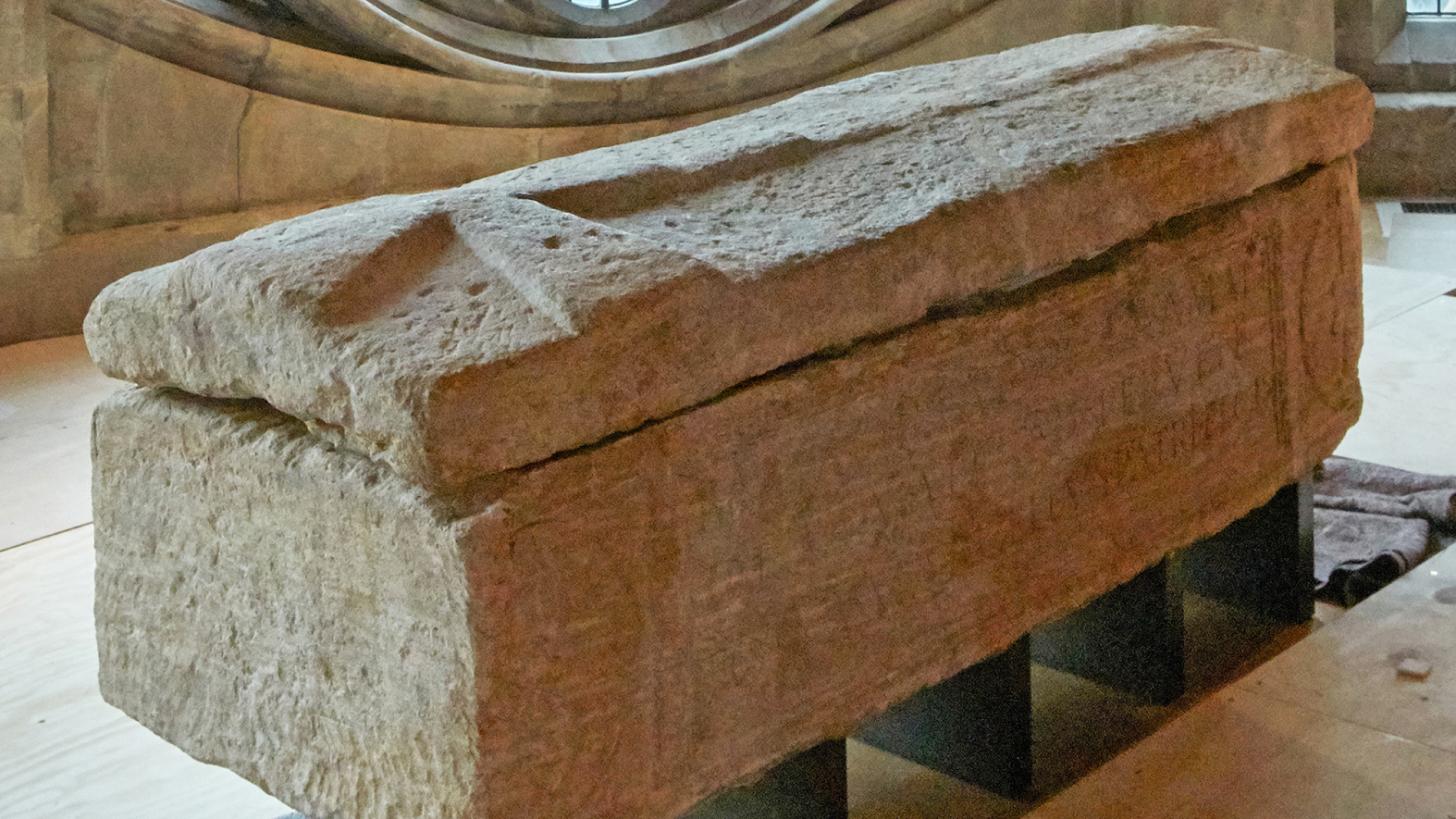
a limestone sarcophagus whose lid has been carved into a large cross
Dean & Chapter of Westminster
a black-and-white photograph of the side of a Roman sarcophagus showing an inscription
Dean & Chapter of Westminster
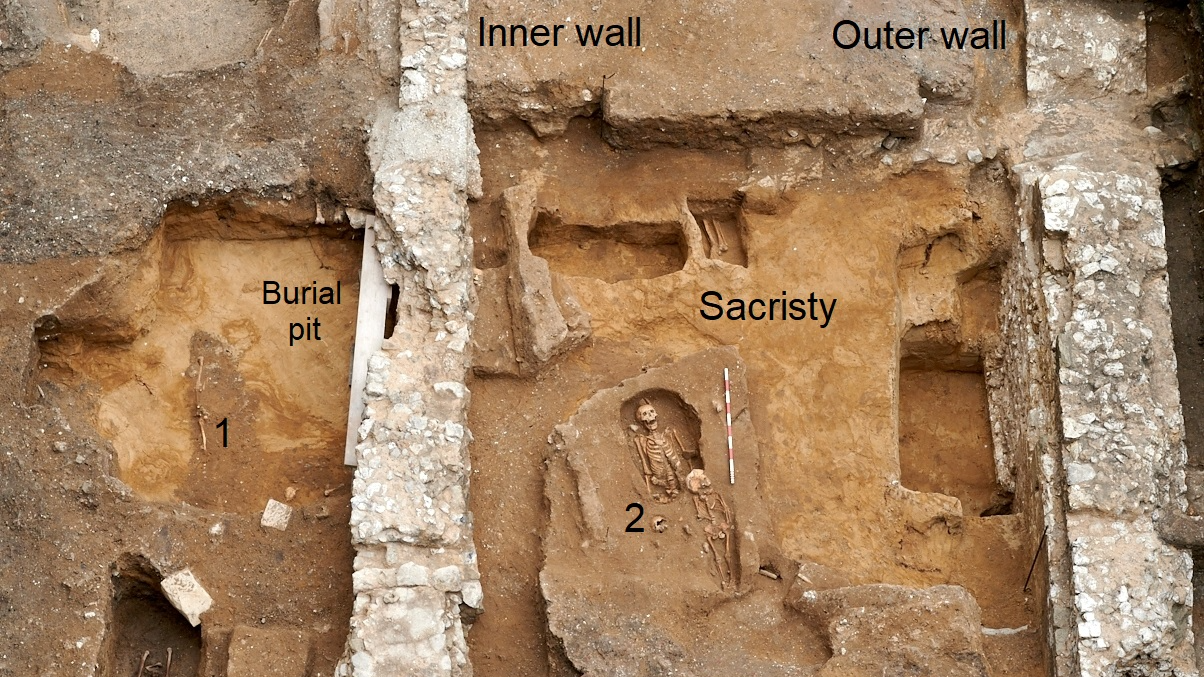
an aerial view of an excavation showing walls and the burial pit where a Roman sarcophagus was placed
© Pre-Construct Archaeology Ltd; (CC-BY-ND 4.0)
a human skeleton fully laid out in a sarcophagus but with several bones misplaced
© Pre-Construct Archaeology Ltd; (CC-BY-ND 4.0)
two views of a human skull showing post-mortem damage and reconstruction
© Pre-Construct Archaeology Ltd; (CC-BY-ND 4.0)

"This brings us to the final question of importance: who was he?" Rodwell wrote in the study. Despite the lack of grave goods, which may have been stolen in the early 19th century, "he was almost certainly an abbot" who was given a dignified burial in a stone sarcophagus with a large cross, Rodwell wrote.

Based on the birth and death dates of the abbots of Westminster and their tenure as clergy, Rodwell narrowed the candidates down to Wulfsige (abbot from 988 to 993), Ælfwig (abbot from 993 to 1020) and Wulfnoth (abbot from 1020 to 1049). Given that Wulfsige left Westminster to become a bishop elsewhere, he was likely not buried in the abbey.

"Consequently, we have two viable contenders for the occupant of the sarcophagus," Rodwell wrote. "The fact that Ælfwig was already a monk of Westminster might favour him."

Although the final resting place of Ælfwig may have been found after a millennium, some questions remain unanswered.

For example, it is unclear why an 11th-century abbot was buried in a recycled fourth-century Roman sarcophagus. The reuse of Roman coffins is extremely unusual, Rodwell noted in the study, and nothing comparable to this sarcophagus has ever been found. One explanation for the reuse may rest with the Latin inscription, whose first word — "memoriae" (to the memory) — suggests that Valerius Amandinus was an early Christian himself. This Roman may have been a significant figure in Roman London, Rodwell wrote, but "unfortunately, nothing is known about his career."

Experts are also unsure where the Roman sarcophagus came from. It was made from limestone sourced from Oxfordshire, a county in the South of England. But perhaps the coffin was originally buried in a Roman mausoleum and they were unearthed and moved at some point, Rodwell noted. But as Rodwell pointed out in the study, "there could be a villa and its cemetery somewhere in the vicinity of Westminster Abbey, awaiting discovery."

The sarcophagus is currently on display in the Queen’s Diamond Jubilee Galleries at Westminster Abbey.

What do you know about the Empire's conquest of the British Isles? Find out with our Roman Britain quiz!

  •  

Undeciphered Voynich manuscript may have been bound out of order, study finds

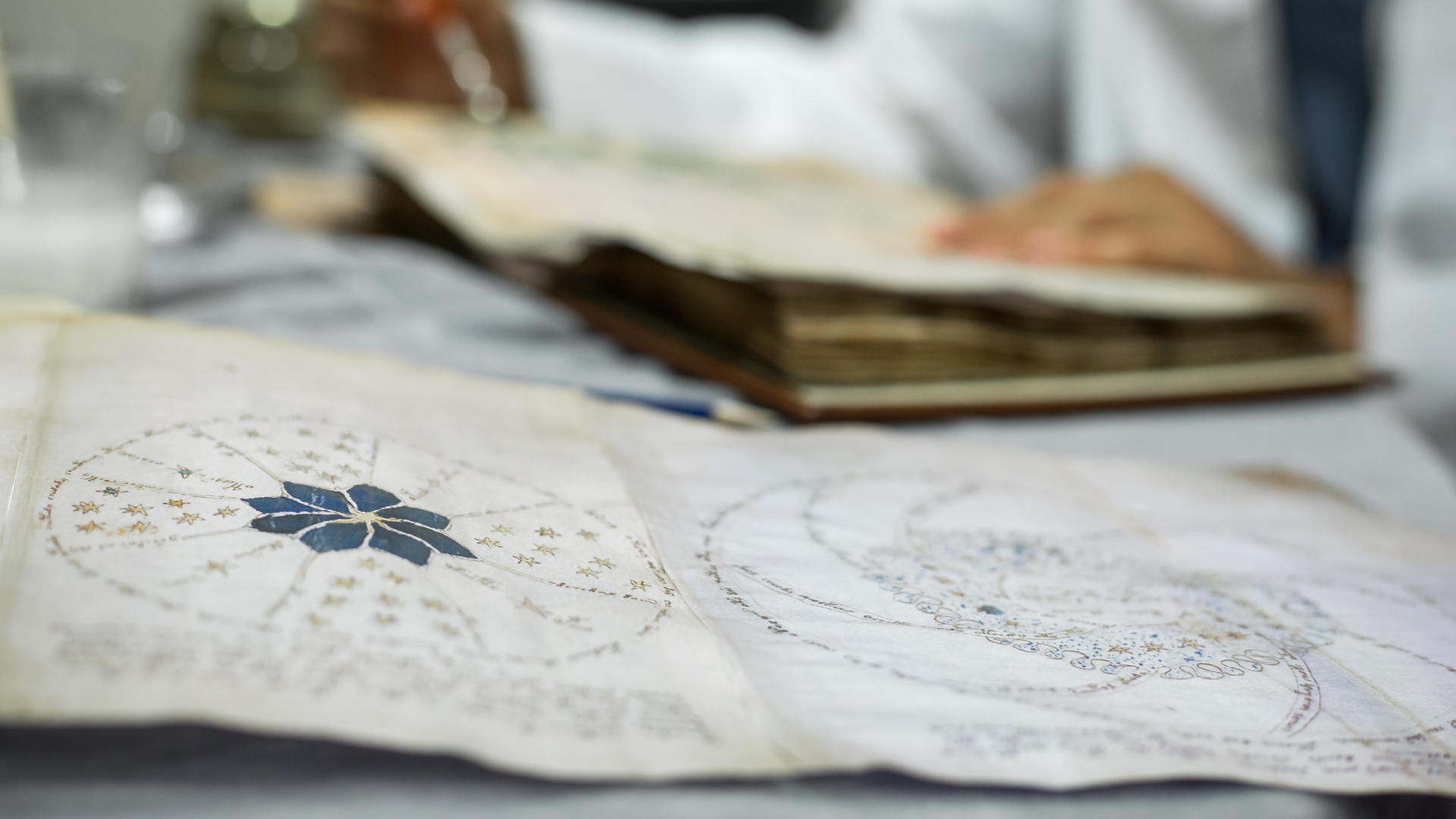
The mysterious and undeciphered Voynich manuscript has caused consternation among code-breakers, linguists and scholars of medieval literature for more than a century. But now experts think they've worked out why it's so hard to crack: It was bound incorrectly in the 15th century, meaning the pages are out of order. The new linguistic analysis of the document has moved researchers closer to figuring out what the text was all about.

The Voynich manuscript is a medieval codex made up of leaves of parchment carbon-dated to the early 15th century. Its 240 pages are covered with about 38,000 words of a unique script called "Voynichese" along with illustrations of people, plants and astrological symbols. Also known as the Beinecke Cipher manuscript, the document was initially owned by a Holy Roman emperor and was purchased by Wilfrid Voynich in 1912. Since 1969, the manuscript has been in the collection of Yale University's rare book library. Experts have unsuccessfully tried to decipher the manuscript for more than a century.

"We don't know if it's a code," Lisa Fagin Davis, study co-author and executive director of the Medieval Academy of America, told Live Science. "But there are some odd characteristics of the Voynich manuscript in terms of its physical structure."

When doing research on the number of scribes who copied the document, Davis realized from the handwriting that the manuscript's pages alternate in ways that don't make sense. In addition, she said, "there are several examples where the image goes off the page in the middle and comes out on the other side, even though there are a bunch of pages in between."

In a study published Monday (Oct. 19) in the journal Digital Medievalist, Davis and co-author Colin Layfield, an information systems researcher at the University of Malta, suggested that the inconsistent structure of the enigmatic manuscript is the result of someone mis-binding a manuscript they were unable to read.

a series of illustrations of how a medieval book was bound

An illustration of how the Voynich manuscript may have been bound incorrectly. (Image credit: Quinn Reynolds for Live Science)

Medieval manuscripts were made up of rectangular sheets of parchment (animal skin), typically folded in half to produce what experts call a bifolium. Around five bifolia would typically be nested together, creating what experts call a quire. Then, a stack of quires would be bound together along the spine to create a book. However, Davis and Layfield suggested that the Voynich manuscript was intended to be a stack of singulions — a series of loose bifolia never meant to be bound together as a quire or a book.

This is not the first time a researcher has suggested the Voynich manuscript has pages out of order. But Davis and Layfield analyzed the graphic properties of the untranslated document to see if their hypothesis made sense.

"We're viewing it as a text and assuming it has a message," Layfield told Live Science, which means it should be possible to statistically compare blocks of text to see if they're similar or disconnected. Layfield used a technique called latent semantic analysis (LSA), which is a natural language processing technique invented in the late 1980s to find hidden patterns in texts.

LSA is particularly useful for small sets of data, Layfield explained. "Modern AI techniques need ridiculous amounts of data to train on, which we just don't have. We've got just 35,000 or so words. That's it." The researchers' LSA analysis of the Voynich manuscript revealed that some pages had low similarity, suggesting they may not have gone together, while others had high similarity, bolstering the idea that they were supposed to be read together.

By looking at the Voynich manuscript as a collection of singulions, Davis and Layfield solved some of the nagging issues with the document.

"When you start to think about it in the context of the other strange features of the manuscript, all of those problems are resolved," Davis said. "It solves the problem of each scribe writing one sheet. It solves the problem of the images crossing the gutter."

This means that any previous work on the Voynich manuscript that assumes it was ordered correctly now needs to be reconsidered, she said, but it also means there is new progress on the book.

"This work helps us think about whether there's actual meaning underneath it all," Davis said. "It doesn't get us there," she said about a definitive translation, "but it moves the ball because you can't make sense out of a book where all the pages are mixed up."

Davis is optimistic that someone will crack the Voynich mystery, in part because a similar modern puzzle known as Cain's Jawbone has been successfully deciphered by a handful of people. This devilishly difficult linguistic puzzle from the 1930s consists of 100 pages of a murder mystery arranged in the wrong order. Due to the unique nature of the text and its vague, stylized language, even AI has failed to solve it.

"We have some ideas for other work we want to do," Davis said. For example, there's a large water stain in the upper margin of some of the pages of the Voynich manuscript. "The stain should be symmetrical from one page to the next but it's not. That also supports the idea that the manuscript is bound out of order."

Davis and Layfield are thinking about ways to compare the stain shapes across the pages, as that may help them reorder the incorrectly organized pages.

See if you know what these mysterious artifacts are with our archaeological fragments quiz!
  •  

11th-century 'pizza peel' discovered in Russia doubled as a medieval game board

Archaeologists have unearthed an 11th-century wooden kitchen gadget with an ancient board game carved into the back. Medieval bakers may have used the wooden paddle not just to transfer bread into an oven but also to pass the time while they waited for the food to cook, the researchers said.

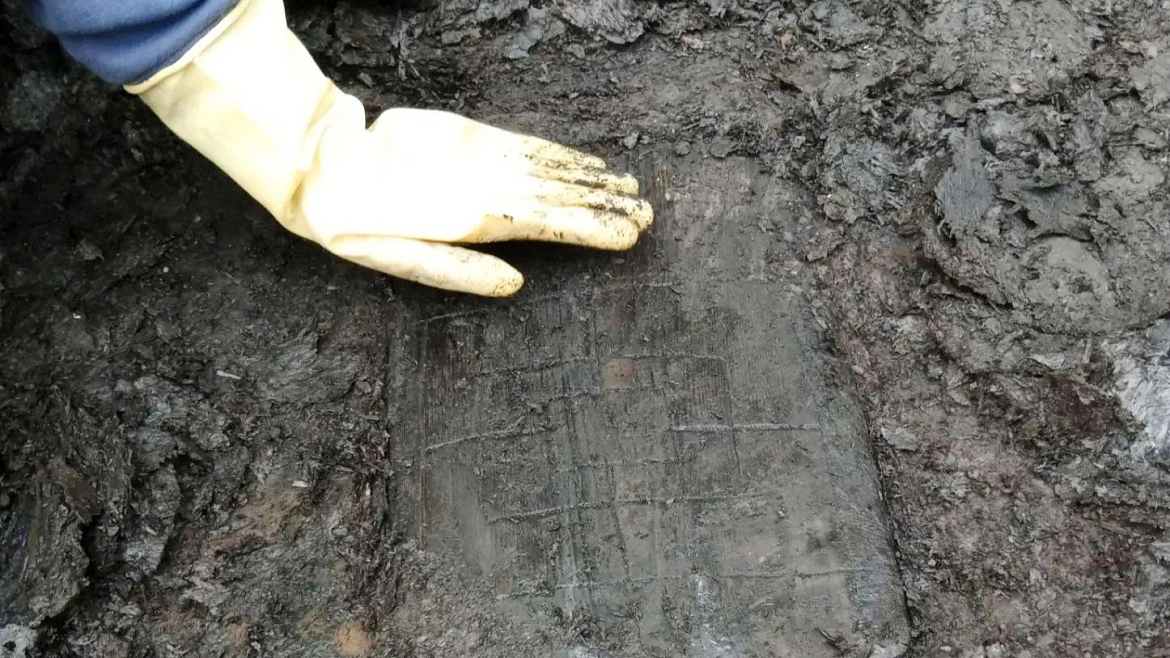
"We discovered a fragment of a fairly large shovel," Sergey Toropov, director of Novgorod State University's Center for Archaeological Research, said in a translated statement. "Most likely, it was a bread shovel, which was used to bake bread in an oven. On the reverse side, however, three squares have been carved, one inside the other."

The "bread shovel" — also known to contemporary home bakers as a wooden bread peel, a pizza paddle or a pizza peel — was found at the archaeological site of Pyatnitsky in the center of Staraya Russa, a medieval town between Moscow and St. Petersburg where last month, archaeologists reported their discovery of a "snake amulet."

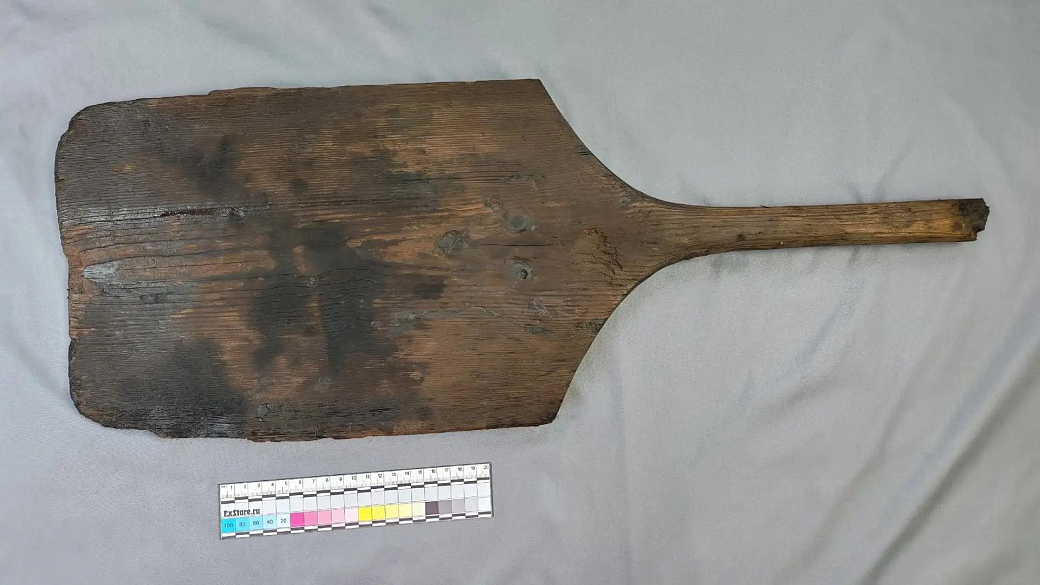
a flat, rectangular wooden paddle with a broken-off handle

Archaeologists discovered a wooden baking implement — likely a pizza-paddle-like tool — dating back to medieval times. (Image credit: Novgorod State University)

The preserved portion of the bread peel measures about 12 by 16 inches (30 by 40 centimeters), and it was likely crafted from oak. While one side is flat, likely for baking tasty treats, the other side had been carved with a board for the ancient game known as merels, merrelles, mills, nine-men's morris or cowboy checkers.

The origin of the game is unknown, but historical records and archaeological artifacts suggest a similar two-person logic game was played by the ancient Romans two millennia ago — and the game may be even older than that. In the Middle Ages, merels became particularly popular across Europe and Asia, possibly because it requires little equipment and can be set up quickly.

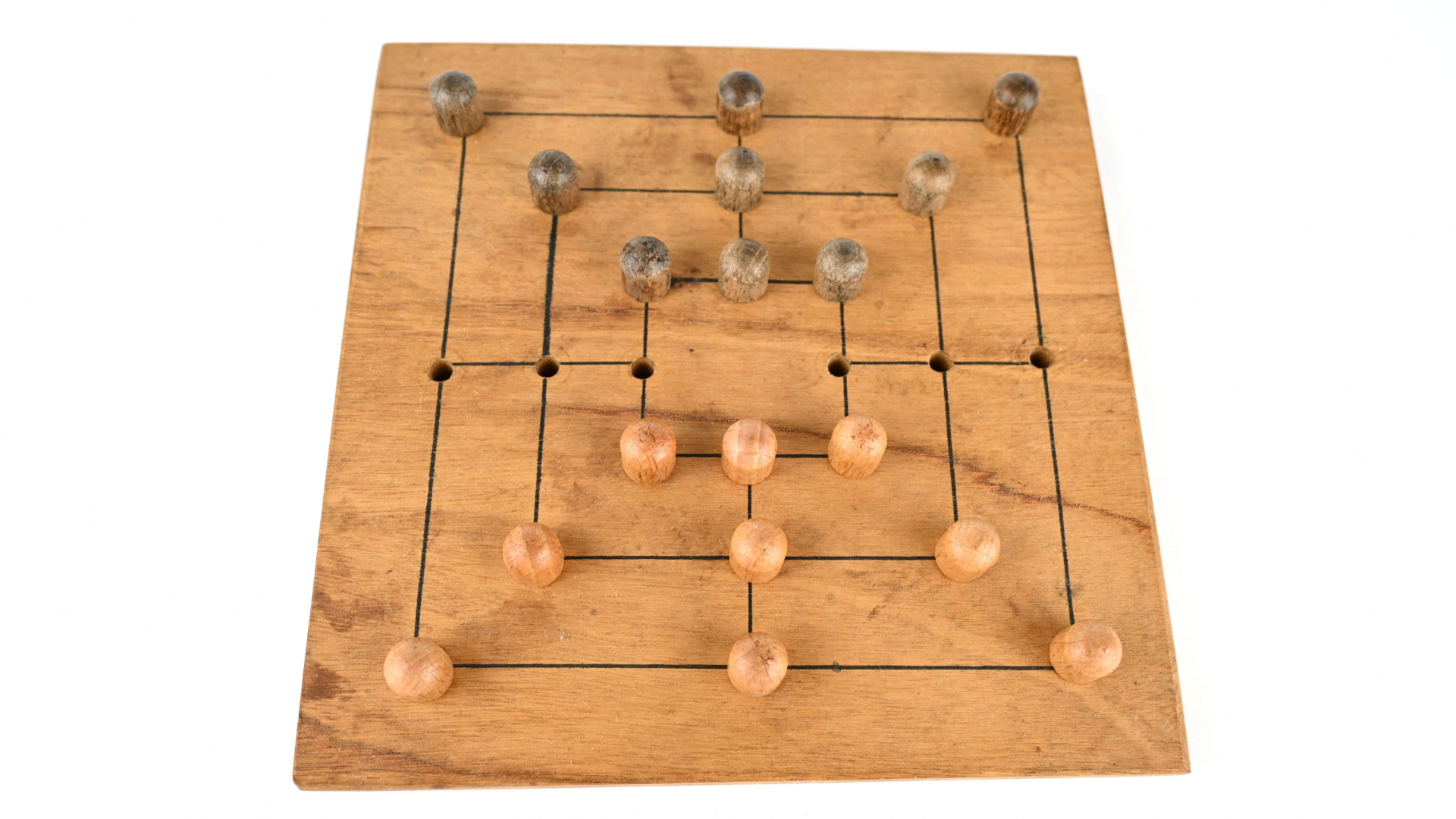
a wooden board with 24 holes and 3 concentric squares and 18 pegs

A typical merels (also known as nine-men's morris, mills or merrelles) board and pieces. (Image credit: Alamy)

A typical merels board has three nested squares connected by horizontal and vertical lines. Each player has nine pieces of the same color. The goal is to arrange the pieces into columns of three along the lines. When a player forms a line, they can remove any one of their opponent's pieces. In this way, merels is a mixture of tic-tac-toe and checkers. A player wins when their opponent has only two pieces left or is completely blocked. (You can play an online version here.)

"Perhaps special boards for playing merels existed in antiquity," Toropov said, "but more often, one finds playing boards scratched or carved into the flat surfaces of household objects."

The archaeologists are not sure whether the wooden bread peel served two functions or whether it was repurposed as a game board after it broke and was no longer useful.

"At any moment, one could mark out a board on a flat surface, find suitable pieces — for example, small stones lying underfoot, and while away some time," Toropov said.

Merel boards and playing pieces have been recovered from ninth-century archaeological sites in the kingdom of the Rus', whose ancestors were Vikings who arrived in what is now Russia in the eighth century, according to the statement, but "a find as well-preserved as the one from Staraya Russa is practically unique."

  •  

Romans may have set fire to Celtic town during conquest to 'humiliate' the enemy, archaeologists find

Archaeologists have unearthed a Roman military camp in Spain, where they found fragments of weapons and metal tacks from soldiers' shoes. The camp was used during the Cantabrian Wars fought by Emperor Augustus as he expanded the Roman Empire in the first century B.C.

The fortified military camp is made up of an earthen platform roughly 39 feet (12 meters) wide, which is surrounded by a stone perimeter wall about 5 feet (1.5 m) thick, according to a translated statement. Uncovered during excavations earlier this year, the camp is situated about one-third of a mile (500 m) from where an Iron Age settlement was once inhabited by the Cantabri people, a group of Celtic tribes that lived among the Cantabrian Mountains in modern-day northern Spain.

The Cantabri fiercely resisted Roman rule for a decade, but in 19 B.C., they were conquered by the military commanded by Emperor Augustus. The Cantabrian Wars marked the end of local control over the territory, as the Iberian Peninsula then came under control of the Roman Empire.

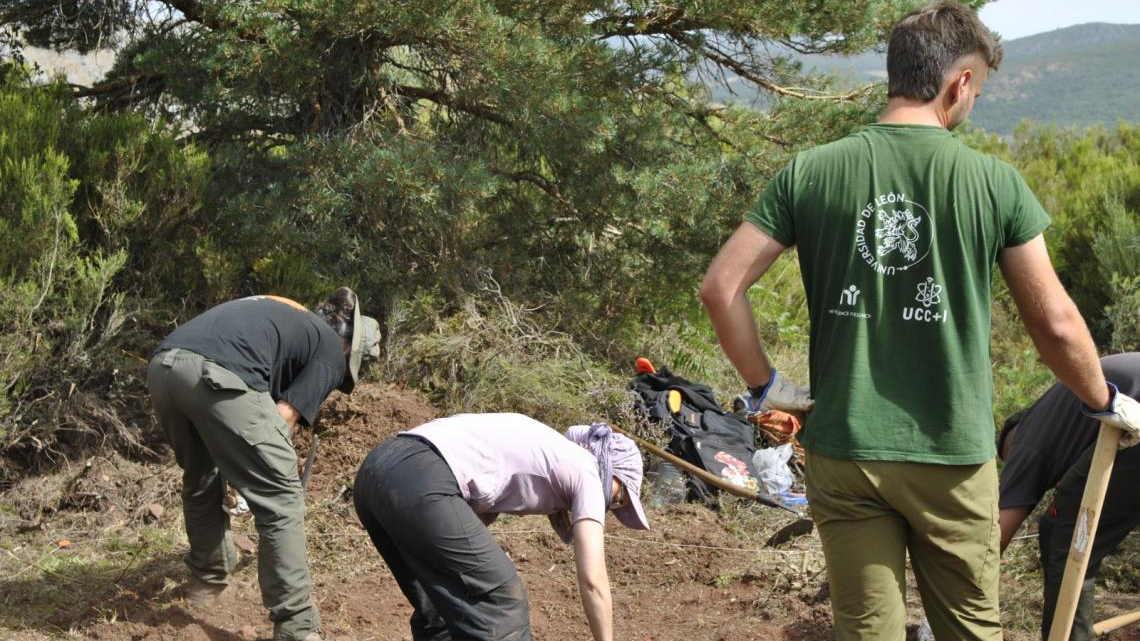
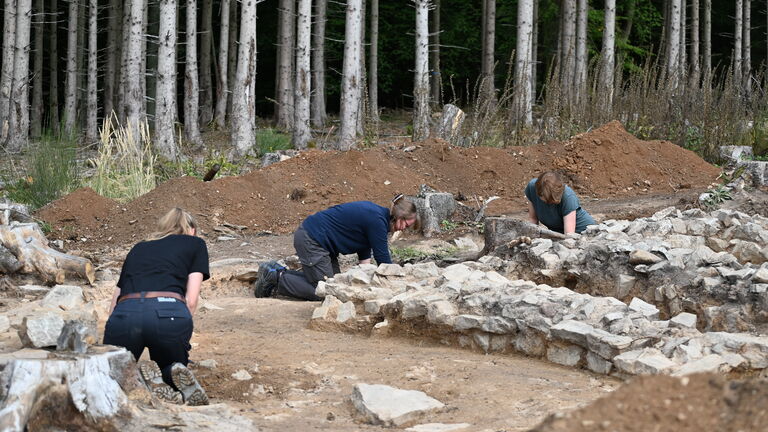
three people work on a wooden archaeological site

Archaeologists work at the site of the Roman fort. (Image credit: University of León)

"It's not easy to find a camp associated with a hill fort in this condition," Eduardo González Gómez de Agüero, an archaeologist at the University of León who co-directed the excavation project, said in the statement.

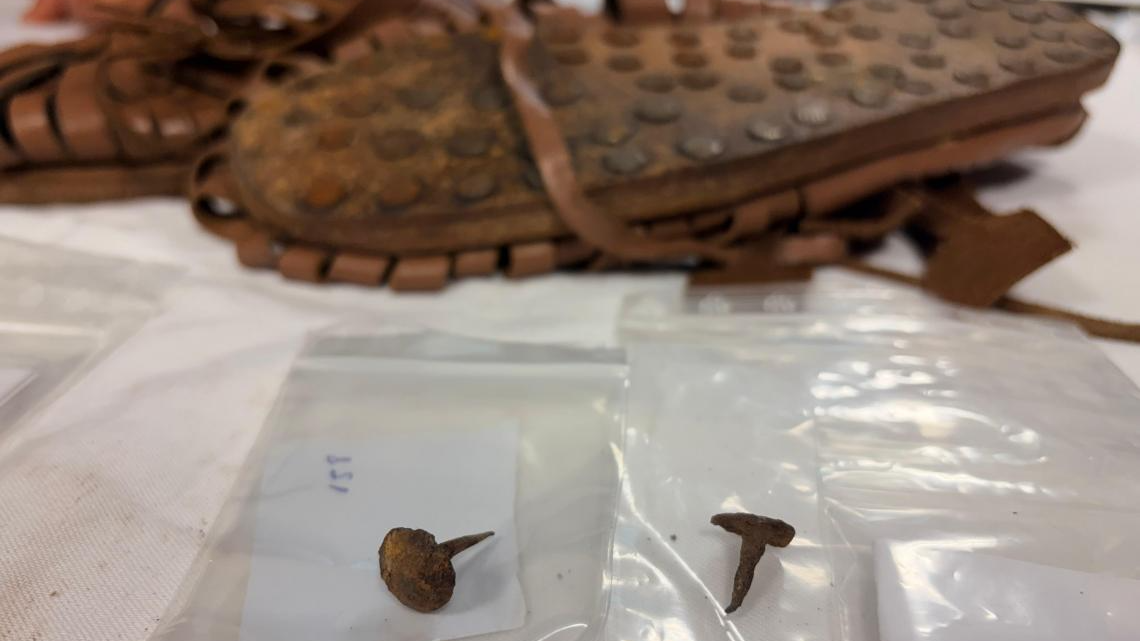
Among the well-preserved remains at the camp were metal weapon fragments and small iron tacks known as hobnails, which were hammered into the bottom of Roman soldiers' leather military sandals to help provide traction on rocky and muddy terrain. These objects are evidence that the Roman military was prepared to attack and subdue the Iron Age community, according to the statement.

The archaeologists also uncovered evidence of a major fire that destroyed most of the pre-Roman settlement, including two temples. González Gómez de Agüero suggested that the Romans may have deliberately set the fire as part of their conquest.

"It's not just about defeating the enemy, but about humiliating them, erasing their identity, and breaking their connection to the land," he said in the statement.

Researchers are still working on establishing the chronology of the Romans' final attack on the Cantabri and want to understand if the settlement was destroyed in a single event or over time. Previously, another research team found 66 Roman camps in northern Spain, showing the immensity of the empire's attacks against the Cantabri.

The latest find is helping researchers understand the scale and location of Rome's fight for control of the Iberian Peninsula.

"It is an important step in understanding how the conquest was carried out on the Cantabrian slope of León, an area where it was necessary to link the Roman camps with Iron Age settlements," Carlos Fernández Rodríguez, an archaeologist at the University of León, said in the statement.

Can you identify these historical objects of war? Test your smarts with our weapons of the world quiz!
  •  

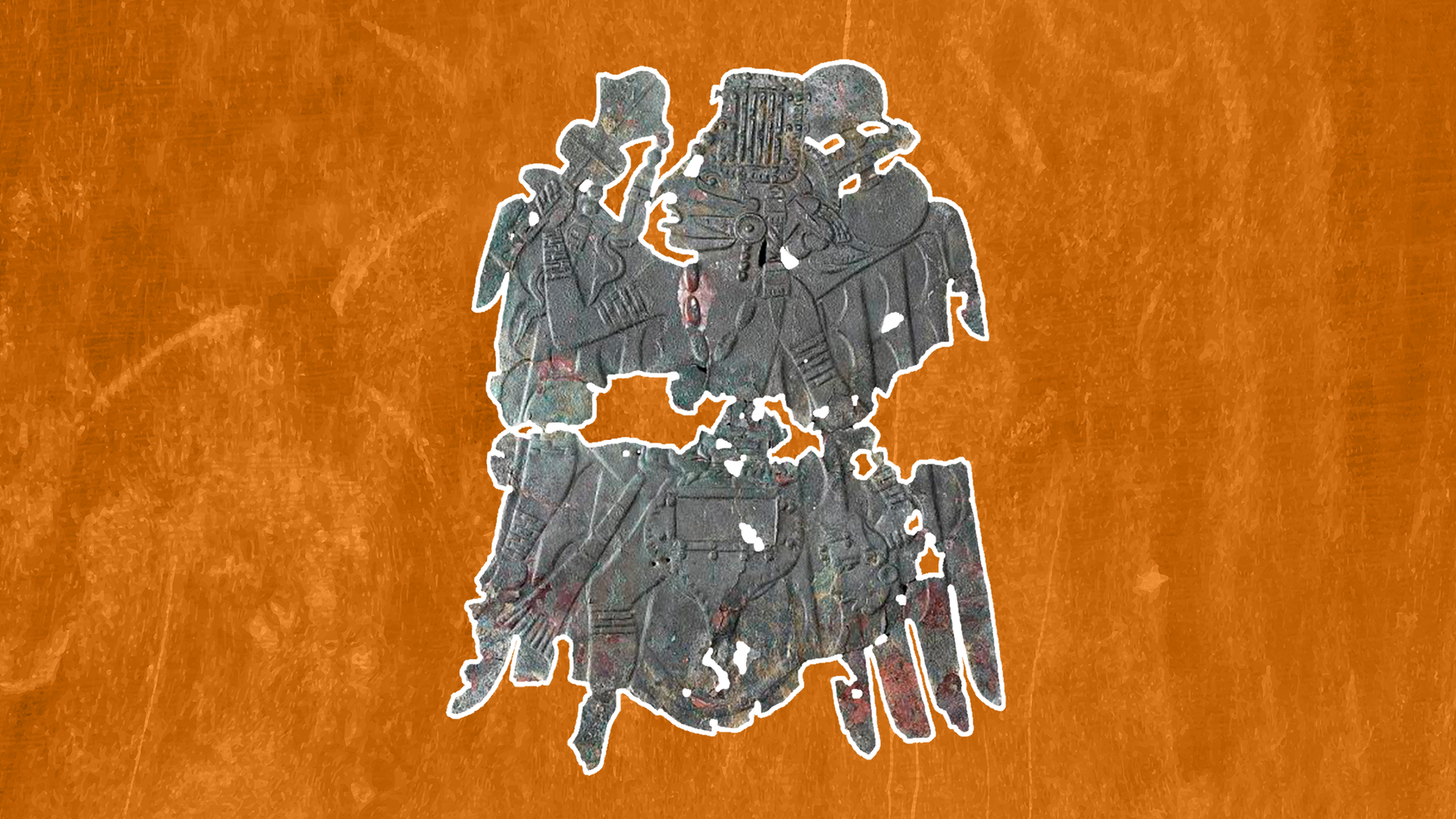
'Birdman' copper plate: A 700-year-old depiction of a Native American warrior that may be a woman holding a weapon and a severed head

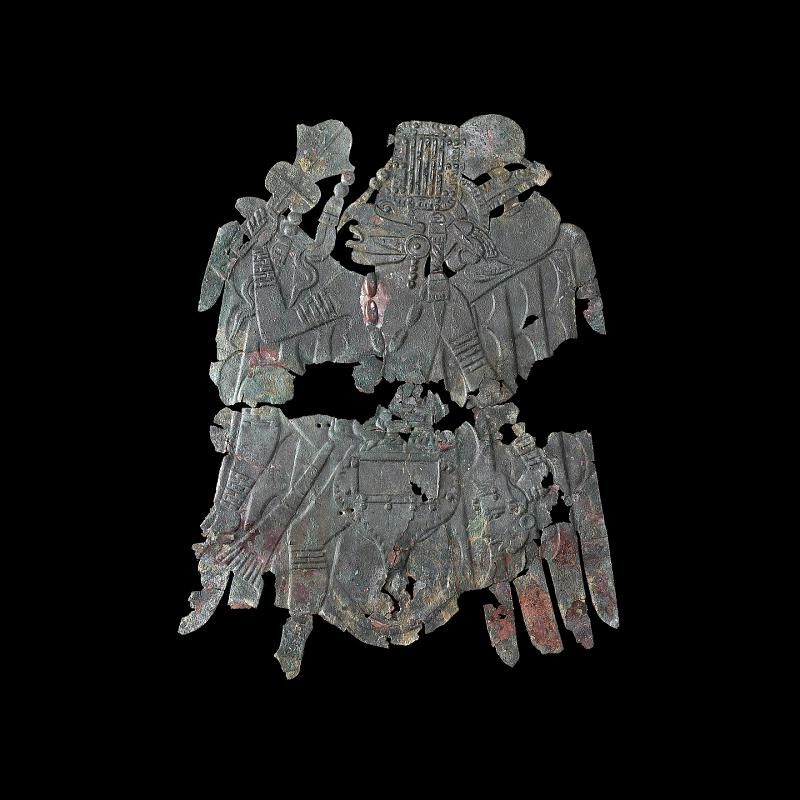
a copper plate in the shape of a human wearing a bird costume against a black background

This hammered copper artifact depicts an Indigenous person wearing a bird costume and holding a severed head and a mace. (Image credit: Smithsonian National Museum of Natural History (CC0))
QUICK FACTS

Name: "Birdman" copper plate

What it is: A copper plate with a hammered decoration

Where it is from: Cahokia Mounds, Illinois

When it was made: 13th century

This copper plate was discovered in the late 19th century in a prehistoric Native American burial at the Etowah Indian Mounds archaeological site in Georgia, but it was likely made hundreds of miles away at Cahokia Mounds in Illinois. While the decorative plate showcases long-distance trade and a shared ritual culture among early Indigenous groups in the southeastern United States, the nature of the human figure depicted on the artifact has been debated for over a century.

The "Birdman" relic is one of two hammered copper plates that Smithsonian archaeologist John P. Rogan unearthed in the 1880s while digging in a burial mound at Etowah, a centuries-old village occupied by thousands of Native Americans from 1000 to 1550. Etowah was part of the "mound-building," or Mississippian, phase of Indigenous occupation; other famous sites include Moundville in Alabama and Cahokia in Illinois. These groups had extensive trade networks and shared a common artistic and ceremonial tradition known as the Southeastern Ceremonial Complex.

This copper artifact, known as Rogan Plate 1 or the "Birdman" plate, is in the collection of the Smithsonian National Museum of Natural History in Washington, D.C. The plate is roughly 11 inches (28 centimeters) tall and had been buried with a high-status person who likely died at Etowah in the mid-14th century. But experts believe the copper plate was an heirloom made decades earlier, at Cahokia, and traded south to Etowah.

A human figure dominates the copper plate with its elaborate bird costume. The person carries a severed head by the hair in their left hand, while their right hand holds a club or mace. The figure also wears a pleated skirt or loincloth that may have been made from human scalps. This bird-human figure is commonly depicted in the Southeastern Ceremonial Complex and has been called a dancing warrior, eagle warrior, eagle dancer, hawk dancer, falcon dancer and falcon warrior. But more often, the figure is called Birdman or Morning Star, a prehistoric Mississippian hero associated with agriculture and rebirth.

Archaeologists' interpretations of the Birdman plaque from Etowah have long assumed that the represented figure is a male warrior. In a 2004 study, for example, archaeologist Adam King wrote that "this plaque would have served as an emblem of office awarded to a chieftain, and would have accompanied him as a sign of his strength among the ancestral spirits."

But the sex of the skeleton in the Etowah burial is unclear, and there were high-status graves of both men and women at Etowah, archaeologist Billie Follensbee and art historian Katie Buford wrote in a 2017 study. Although experts previously assumed that both Rogan Plate 1 and Rogan Plate 2 represented male warriors, Follensbee and Buford found that the figures have slender bodies with prominent right breasts, suggesting the "Birdman" may have actually been female.

"A female bird-human warrior could have represented a gender variant individual in the form of the well-known Native American phenomenon of the 'manly-hearted woman,' a woman who has assumed the usually male role and the garb of a combat soldier," Follensbee and Buford wrote. In addition to the historic term "manly-hearted woman," third-gender or gender-variant individuals in Indigenous North America are often referred to as "two-spirit," a broad term Indigenous people coined in 1990 to describe people who take on gender-nonconforming roles.

The commemoration of a two-spirit individual on a copper artifact, as well as the use of the artifact as a high-status grave good, "not only demonstrates the Native American cultural acceptance of such gender variant roles but also further serves to celebrate the elite status and achievements of these 'manly-hearted women,'" Follensbee and Buford wrote.

For more stunning archaeological discoveries, check out our Astonishing Artifacts archives.

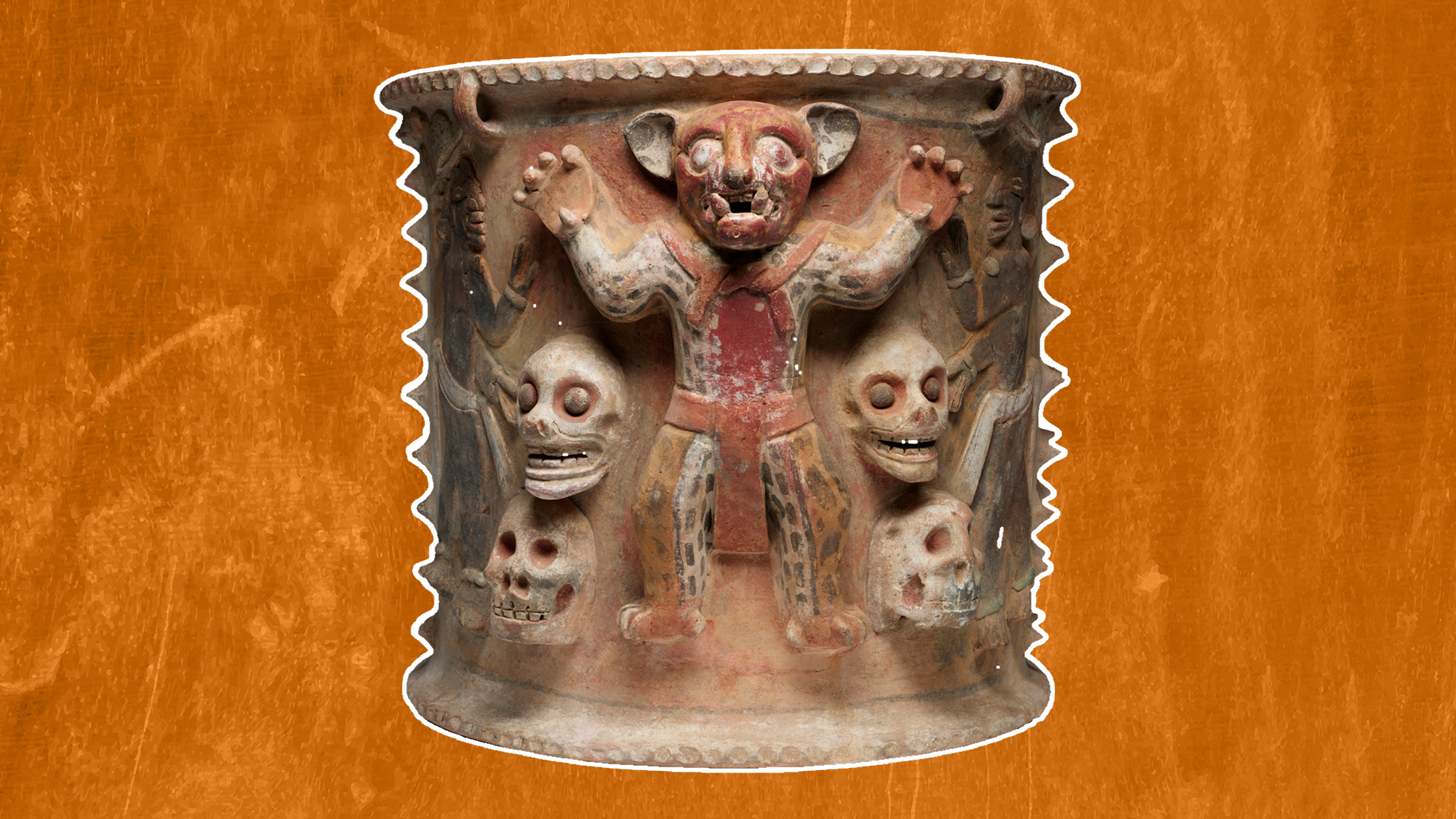
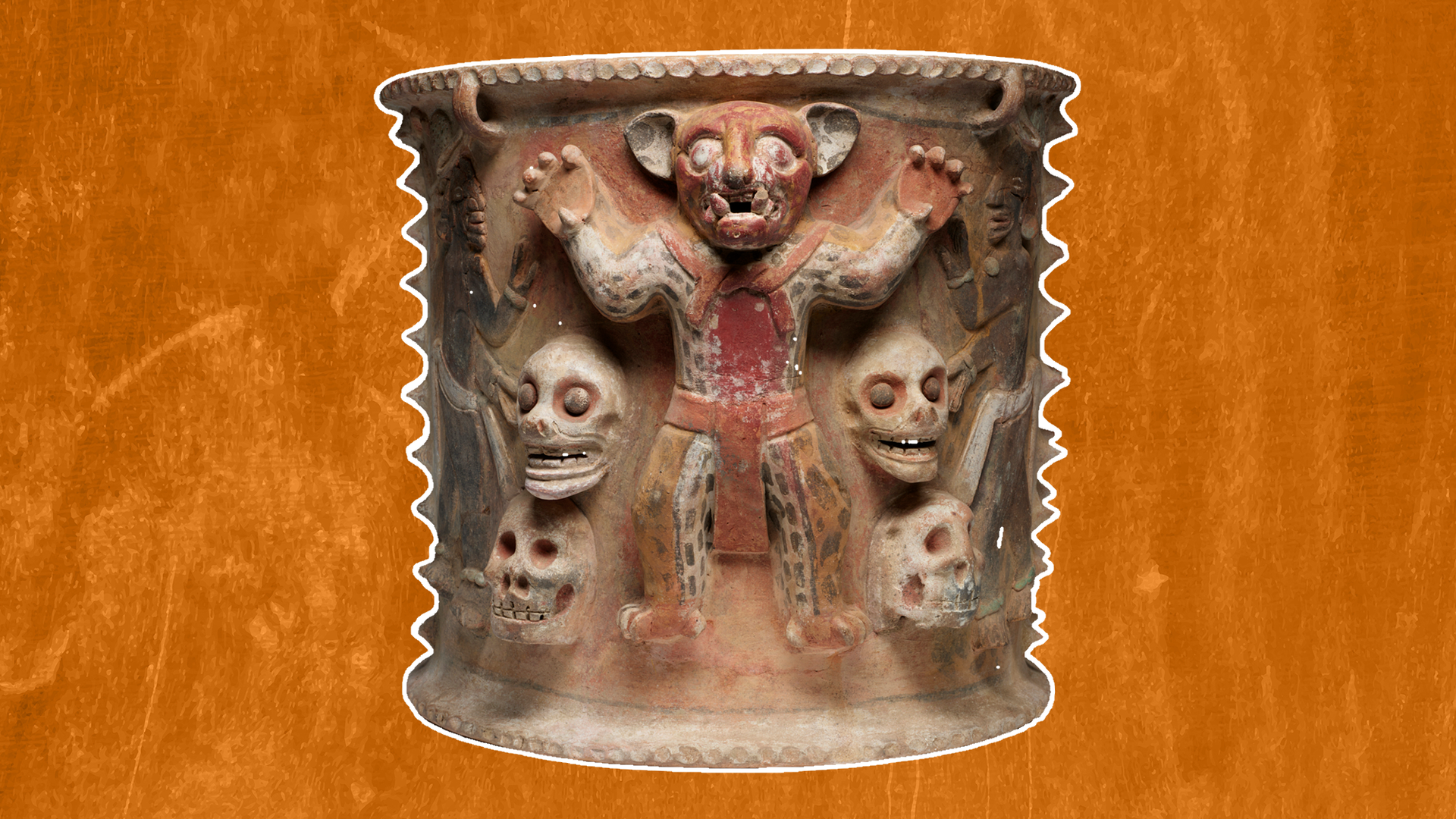
a ceramic urn with a person dressed like a jaguar surrounded by four human skulls

Jaguar Urn

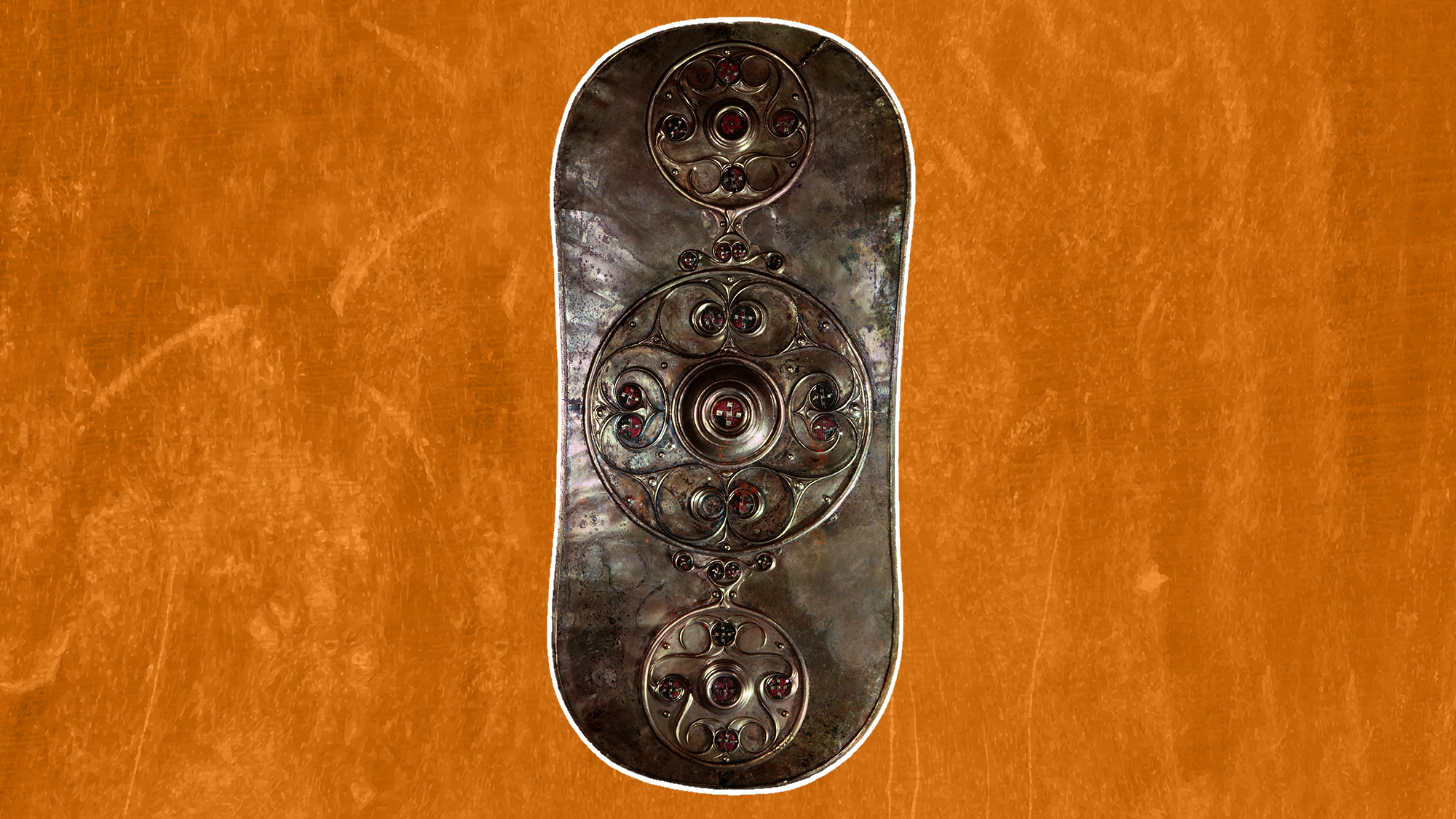
a tall bronze shield with red roundel decorations against an orange background

Battersea Shield

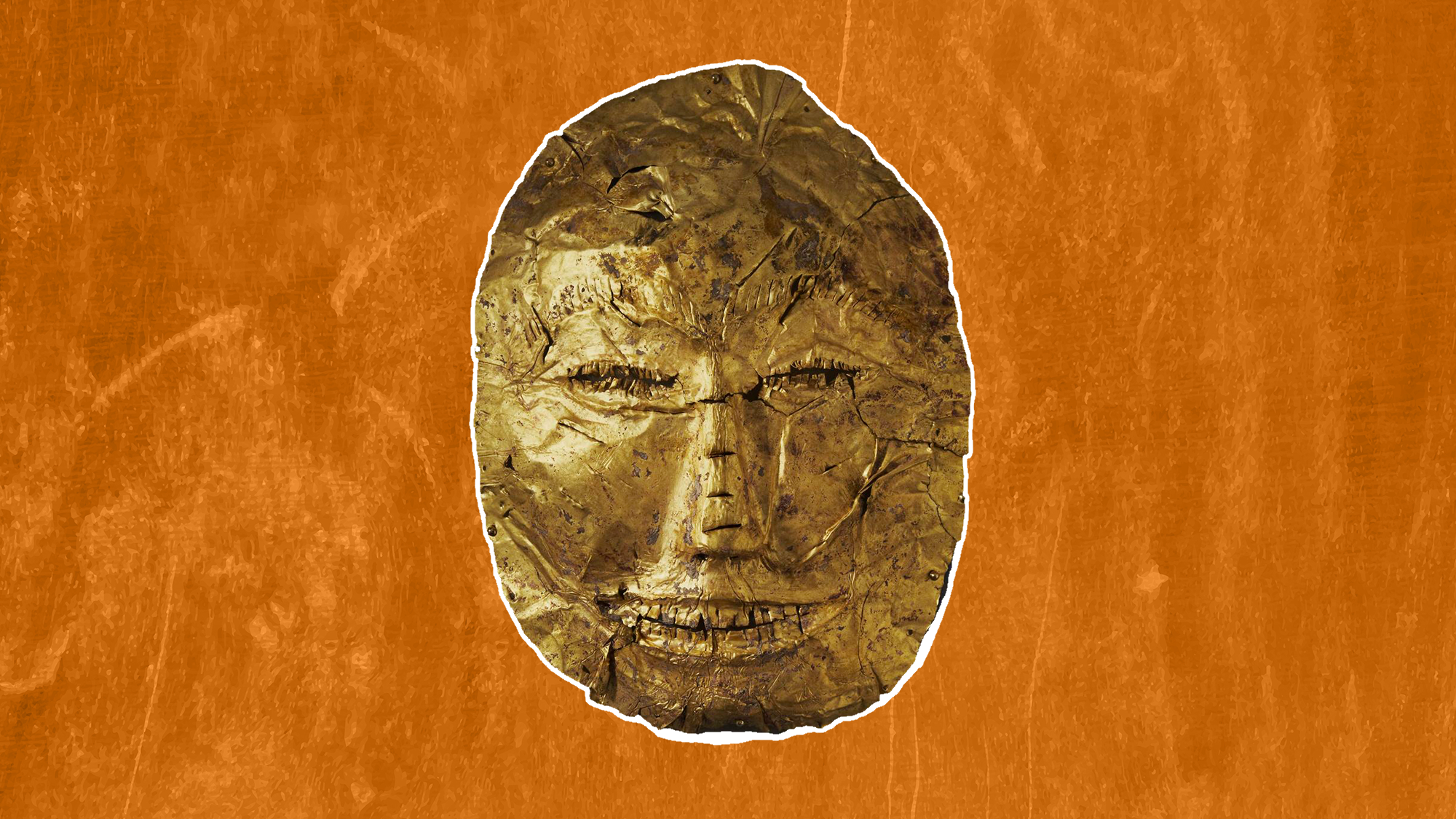
a humanlike gold mask against an orange background

Java Mask

Can you put together last week's Astonishing Artifact?

  •  

Archaeologists discover the oldest dwelling in the Western Hemisphere at a 13,800-year-old site in Alaska

Archaeologists digging at a 13,800-year-old site in interior Alaska have unearthed thousands of artifacts and fossils, including what may be the bones of the earliest domesticated dogs in the Americas, the earliest needles and dwellings in the Western Hemisphere, and stone tools that reveal cultural connections across the Bering Land Bridge.

At a site called Shégˊ Xdaltthˊíˊ (which means "They Were There" in the Alaska Native Athabascan language), about 34 miles (55 kilometers) southeast of Fairbanks, archaeologists have excavated an encampment that some of the first people to settle in North America used off and on for a millennium.

Shégˊ Xdaltthˊíˊ is located in eastern Beringia, the geographical region that connected northeast Asia and northwest North America during the last ice age. The most recent archaeological and genetic studies suggest that the ancestors of today's Indigenous Americans entered the continent around 21,000 years ago. But since Beringian sites are often the remains of small seasonal hunting camps and are scattered across a large geographic area, much is still unknown about the earliest people who called the Western Hemisphere home.

"I expected we'd find hunting tools and knapping [stone tool making] debris surrounding a hearth or two, but I had no idea that we'd stumble into a base camp with tens of thousands of artifacts," study first author Kelly Graf, an archaeologist at the University of Kansas, told Live Science in an email. "It was a total surprise!"

In a study published Wednesday (Oct. 14) in the journal Science Advances, Graf and co-authors detailed their discoveries at Shégˊ Xdaltthˊíˊ, focusing on the earliest occupation, which occurred around 13,800 years ago, as evidence of people "settling in" to their new territory.

The researchers found a hearth, a small pit, and a dirt stain where a wooden post had once stood, likely the remains of a lean-to or early tent house. Additionally, the archaeologists unearthed stone tools, bone needles and a pendant made from an antler. Nearby, they found an earth oven, which was full of charcoal and animal bones and was likely used to slow-cook meat for a large family group.

"The complex feature at Shégˊ Xdaltthˊíˊ represents the earliest potential case of a habitation structure in North America," the researchers wrote in the study. "Early Alaskans knew their surroundings well."

Cross-cultural links

The archaeologists were also surprised by the stone tools recovered at Shégˊ Xdaltthˊíˊ because they are distinctively shaped and unique to central Alaska. Known as diamond-shaped hafted bifaces, the tools were crafted from rhyolite and basalt and are similar to those typically found much farther west in Beringia, in modern-day northern Siberia. Additionally, obsidian artifacts discovered at Shégˊ Xdaltthˊíˊ reveal that people brought the volcanic rock to the site from a geological source hundreds of miles to the northwest.

Bones from more than a dozen wolf-like animals suggest a further connection to Asia, according to the researchers. An analysis of the jaw of one of the animals showed that it was not from a dire wolf (Aenocyon dirus) or from a Pleistocene Beringian or gray wolf (Canis lupus sp.) but rather a population of wolf-like animals unique to central Alaska. Current genetic evidence suggests that early domesticated dogs in North America came from Siberian wolves. The timing and geographical location of Shégˊ Xdaltthˊíˊ provides circumstantial evidence that the people may have been dog owners.

"Like humans, potentially, the canids of Shégˊ Xdaltthˊíˊ and other early Alaskan sites were recent immigrants from Asian Beringia," the researchers wrote.

Although Shégˊ Xdaltthˊíˊ reveals a relationship with sites in Asia, there is also evidence of connections with early American sites south of the Canadian ice sheets, according to the study.

One clue to these connections is the presence of bone artifacts in a sewing kit. The archaeologists found eight bone needle fragments at Shégˊ Xdaltthˊíˊ. Previously, the only recovered eyed needles had come from Paleoindian sites in temperate North America. Therefore, the needles from Shégˊ Xdaltthˊíˊ are the oldest needles ever discovered in the Western Hemisphere, and they reveal connections with sites farther south, according to the study.

Another clue is the pendant, which was crafted from antler. The pendant had a hole drilled at one end and was fashioned into a point at the other end. This piece of ancient jewelry is similar to personal adornment items found farther south in North America.

"The co-occurrence of these cultural features at the single site of Shégˊ Xdaltthˊíˊ is truly notable," the researchers wrote, and they "highlight the strong cultural connection between early Beringians and Americans."

It is still unclear whether the people at Shégˊ Xdaltthˊíˊ were traveling to make these connections. "It would be hard to pin down whether or not they were moving back and forth during a lifetime, but at least we can say there is a connection," Graf said.

a person with light skin holds a broken animal bone in their hand

Archaeologists recovered bison bone and a hearth, among other things, at the Beringian site. (Image credit: Kelly Graf)

Further work in Beringia is needed

Future excavations in Beringia could help archaeologists learn more about the earliest people in the Americas, according to Graf. "Alaska is a big place and so remote, so there are really just a few small areas that have been intensively investigated," she said.

Spencer Pelton, an archaeologist at the University of Wyoming who was not involved in the research, wrote in an accompanying perspective published in the journal Science Advances that early Indigenous sites in Beringia are key to understanding the peopling of the Americas.

"Shégˊ Xdaltthˊíˊ is remarkable because it is the oldest site in the Americas containing a large and rich assemblage of features, artifacts, and faunal refuse indicative of prolonged residential occupation, providing an unprecedented glimpse into the lives of North America's first residents," Pelton wrote.

Graf is already planning future archaeological excavations in the area. "We're hoping to bring some younger Alaska Native folks out with us in the coming summers," she said, as incorporating local knowledge is important to the project. "Two of our co-authors are elders from Alaska Native corporations nearest to the site," she said. Elders named the Shégˊ Xdaltthˊíˊ site and have visited it to discuss where to excavate and what the archaeologists might find.

There is much left to learn about what was happening in Beringia 14,000 years ago, the researchers wrote, particularly since there are currently only two archaeological sites — including the 24,000-year-old Bluefish Caves site in the Yukon — that suggest humans were settling in Beringia considerably earlier.

How much do you know about the first people to reach the Americas? Find out with our First Americans quiz!

  •  

Mysterious hole in Neanderthal shoulder blade may have been a 'kill shot' from a wooden spear, according to archaeologists

A Neanderthal who was buried 75,000 years ago in Shanidar Cave in Iraq died from a wooden spear straight through the chest, archaeologists have revealed.

While it's impossible to know exactly what happened, the violence may have been a targeted hit.

"The position of the wound and the force required to push it right through the Neanderthal's body bear the hallmarks of an intended kill shot directed towards the heart," study first author Emma Pomeroy, a paleoanthropologist at the University of Cambridge, said in a statement.

In a study published Thursday (Oct. 15) in the journal Scientific Reports, Pomeroy and co-authors analyzed the bones of Shanidar A, a Neanderthal who died violently at about age 45 and was then buried in Shanidar Cave.

The archaeological site at Shanidar is famous for its evidence of purposeful burial, which experts once thought was only done by modern humans. Although the Neanderthal "flower burial" at Shanidar has since been debunked, the cave holds other evidence of repeated Neanderthal burials, which shows that these extinct humans placed specific meaning on that location, the authors wrote in the study.

The skeleton of Shanidar A was incomplete when it was discovered in 2019, consisting of a mostly complete right hand, three ribs, six teeth and a left scapula or shoulder blade, which meant they could not figure out the sex of the Neanderthal.

Near the edge of the shoulder blade, archaeologists noticed a round hole about 0.6 inches (1.5 centimeters) in diameter and a round piece of bone that had been punched out of the shoulder blade. The researchers ruled out post-mortem damage to the bone, including animal gnawing and insect burrowing.

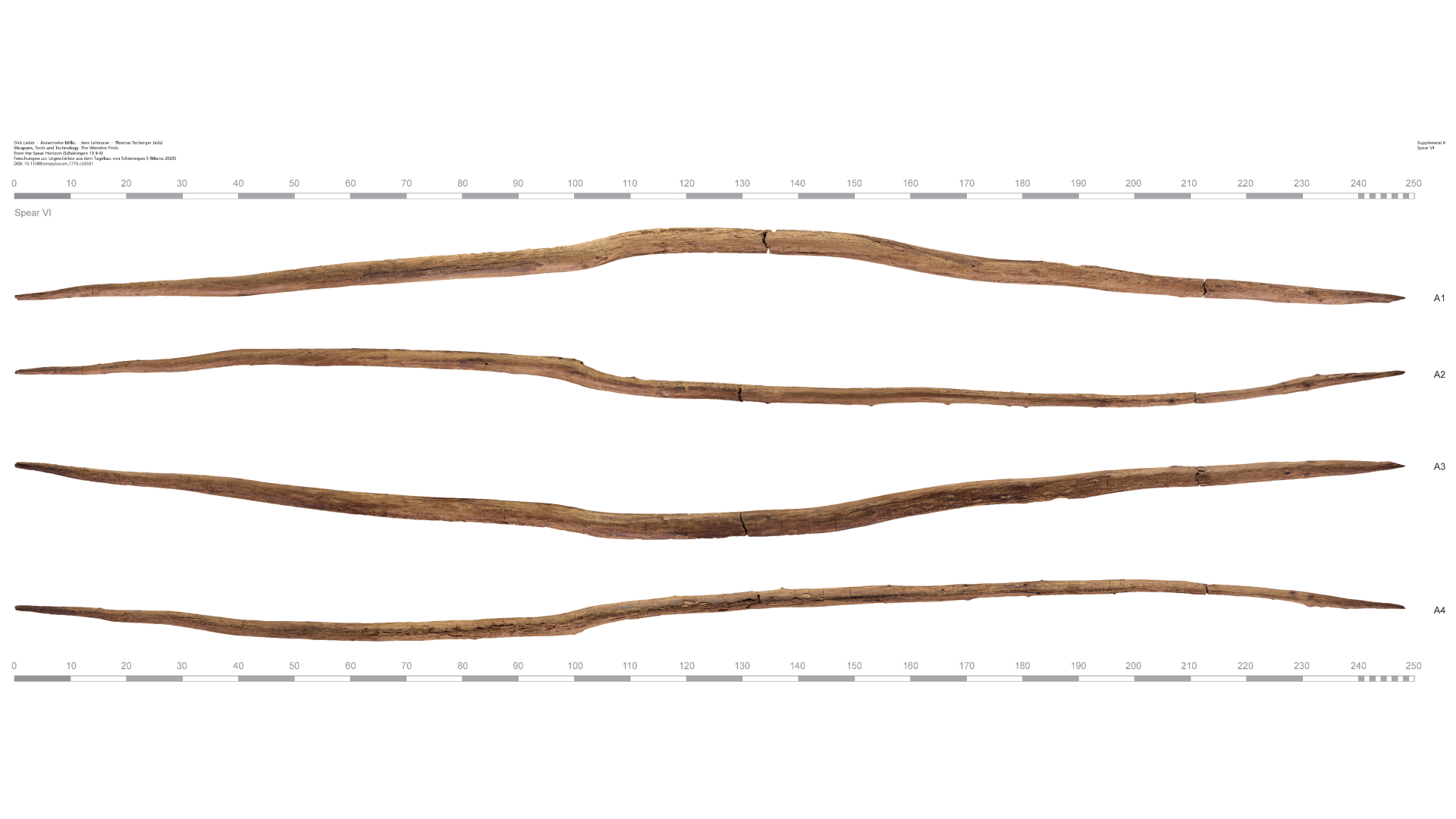
a series of four images of a wooden spear against a white background

An example of a Paleolithic thrusting spear found in Germany. This may have been the kind of weapon that killed the Shanidar A Neanderthal. (Image credit: Dirk Leder et al. (eds), Weapons, Tools and Technology (2026))

"The perforation is best explained as resulting from perimortem [around the time of death] penetrating trauma, such as that caused by a projectile or a thrusting implement such as a spear," the researchers wrote in the study. Specifically, the Neanderthal was killed by a spear that entered their chest from the front at a high velocity and pierced their shoulder blade.

The shape of the wound in the shoulder blade appears to match experimental evidence of injuries made by wooden spears rather than stone-tipped weapons, the researchers wrote in the study. Neanderthals would have used wooden spears for both thrusting and throwing. But it is unclear if this individual died because of a violent interaction with another Neanderthal or by accident, such as a hunting incident.

"All we can ever know about the end of this Neanderthal's life is that it was violent, and came at the end of a wooden spear," study co-author Graeme Barker, an archaeologist at the University of Cambridge, said in the statement.

"Care and support from other Neanderthals"

Even though this Neanderthal had an untimely demise, evidence on the teeth suggested that the individual was cared for during life.

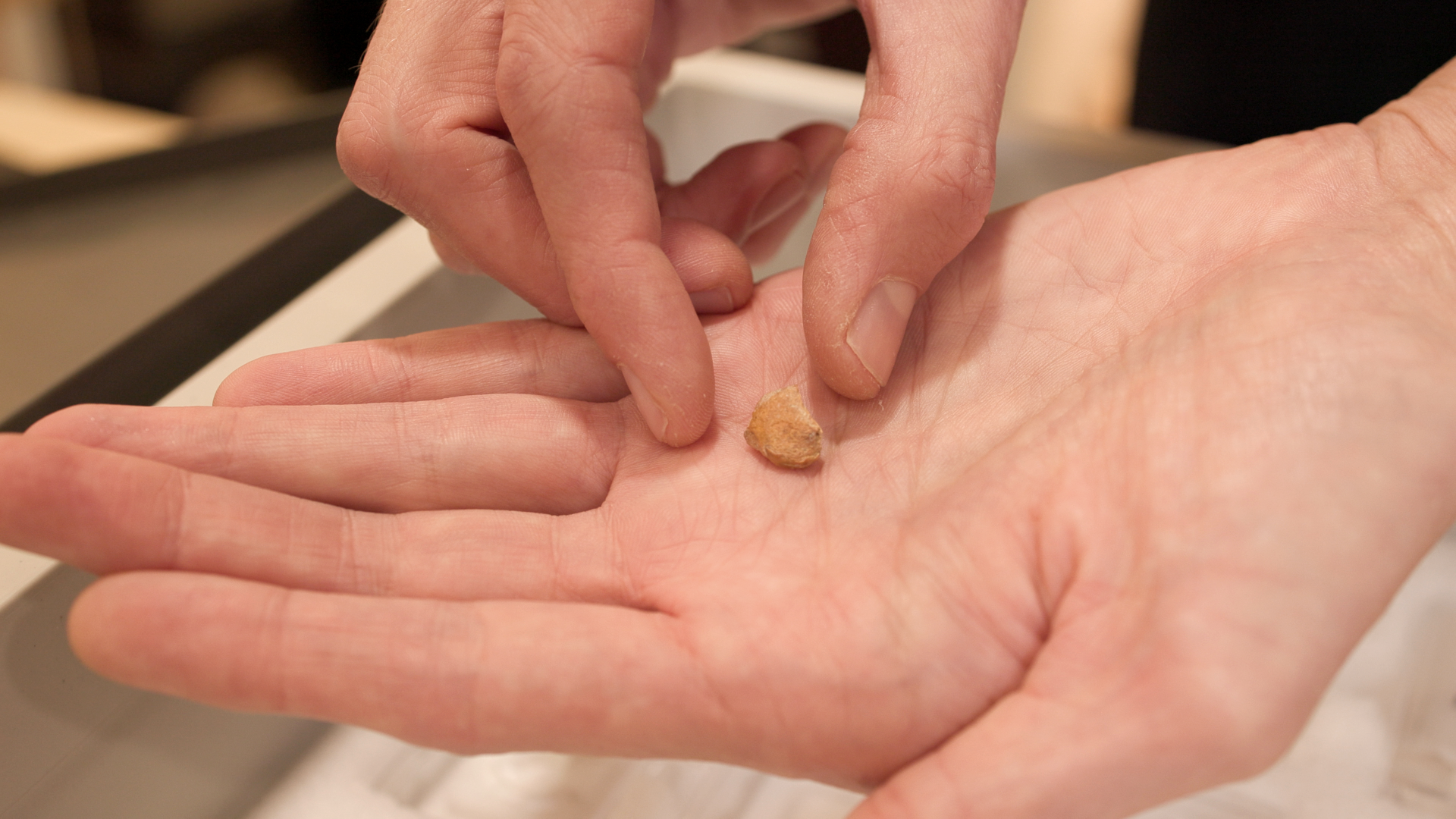
The six teeth from Shanidar A were heavily worn-down in an unusual manner, the researchers wrote. One of them — a front tooth with a large quantity of tartar on it — had been split in half during the Neanderthal's life, and the individual continued to use the damaged tooth for a considerable amount of time. The collection of teeth suggests the Neanderthal sustained a major trauma to the face that fractured the lower front tooth and may have caused additional injuries to the jaw.

a person with light skin holds half a Neanderthal tooth in their open palm

The Neanderthal's lower front tooth was fractured during life. (Image credit: University of Cambridge)

"There’s no doubt that Shanidar A would have had difficulty communicating and been in absolute agony for a long period of time," Pomeroy said in the statement. "Surviving a blow that splits a tooth in this fashion, then continuing to live and eat for a period of at least a year and maybe more, would have required care and support from other Neanderthals."

Rebecca Wragg Sykes, an archaeologist and author of "Kindred: Neanderthal Life, Love, Death and Art" (Bloomsbury, 2020) who was not involved in the study, told Live Science in an email that the apparently fatal chest injury is an important addition to our understanding of Neanderthals. While it is plausible the Neanderthal was stabbed by a wooden spear, Wragg Sykes said, "it would be interesting to also compare whether a wild goat horn, the most intensely hunted species at Shanidar, might have been responsible."

Shanidar A is not the first mortally wounded Neanderthal to be found at the site. In 2009, researchers analyzed the skeleton of Shanidar 3, an older adult male who died 50,000 years ago, and found a deep slice in one of his ribs. The researchers suggested that the Neanderthal may have been killed by a stone-tipped spear possibly thrown by a modern human. Although modern humans first reached Europe around 54,000 years ago, experts aren't sure exactly how they interacted with Neanderthals.

Pomeroy told Live Science in an email that the discovery at Shanidar of two stabbed Neanderthals 25,000 years apart is interesting but possibly just a coincidence.

"We know from the archaeology that Neanderthals were repeatedly coming back to Shanidar and using it for short periods at a time, both around 75,000 years ago and around 45-50,000 years ago, as well as leaving their dead there," Pomeroy said.

The traumatic injuries, purposeful burial and indirect evidence of wooden spears all show that 75,000 years ago, Neanderthal life — and death — were complex, the researchers wrote in the study.

How much do you know about our closest relatives? Find out with our Neanderthal quiz.

  •  

Chinese pottery discovered in Great Zimbabwe reveals medieval African empire's vast connections spanning thousands of miles

Archaeologists digging in the medieval city of Great Zimbabwe have discovered pieces of jade-green Chinese pottery, suggesting that the enigmatic empire had long-distance connections with East Asia more than 1,000 years ago.

Great Zimbabwe, located in the southeastern part of modern-day Zimbabwe, was the capital of an ancient empire that arose in southeastern Africa in around A.D. 1000. Little is known about this precolonial empire because its people did not leave a written history, but new archaeological excavations are shining a light on the enormous scale of the centuries-old civilization known for its intricate metalworking and ritual stone carvings.

In the new PBS documentary "Secrets of the Dead: Africa's Golden City," filmmakers followed a team of archaeologists from the field to the laboratory to try to answer questions surrounding the origins of the understudied civilization, its ritual and trade activities and why it disappeared after 500 years.

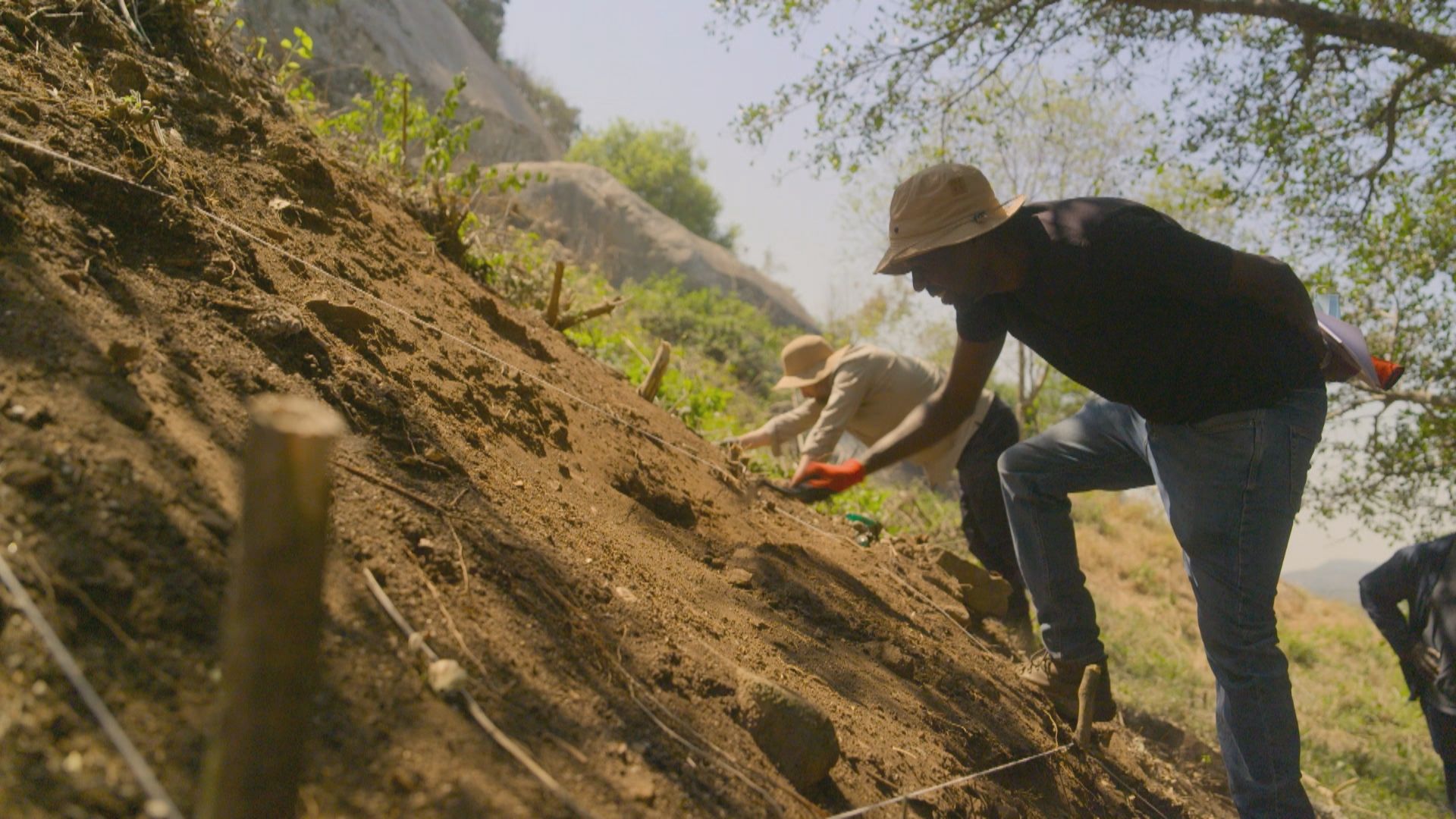
"When I was growing up, I was surrounded by symbols of Great Zimbabwe," University of Oxford archaeologist Shadreck Chirikure, who is leading the new excavations at the site, said in the documentary. "It was only when I started studying archaeology at university that I started realizing that there was this very big debate around who built Great Zimbabwe."

a man excavates a steep hillside

Archaeologist Shadreck Chirikure excavates the hillside at Great Zimbabwe. (Image credit: Secrets of the Dead / PBS)

The site was first excavated in the late 19th century and quickly looted by British colonists for its ivory, metal and gold artifacts. These colonists insisted that Africans hadn't built Great Zimbabwe, instead claiming it arose from the Phoenicians, a people originally from the Mediterranean; they used that inaccuracy to justify taking all the artifacts to England, according to the documentary. Today, many Great Zimbabwean artifacts are held in the collection of the Pitt Rivers Museum at the University of Oxford.

But excavations are showing that Great Zimbabwe was a highly connected African kingdom that flourished from the 11th century until at least the 15th century, when the population may have gotten too large for the dry, over-farmed land to feed. Archaeologists have already discovered glass artifacts at Great Zimbabwe that came from Southeast Asia, India and the Middle East via boat.

"From India or Sri Lanka to Great Zimbabwe, it's at least 8,000 kilometers [5,000 miles]," Chirikure told Live Science. Merchants sailed the Indian Ocean using winds kicked up by monsoon cycles.

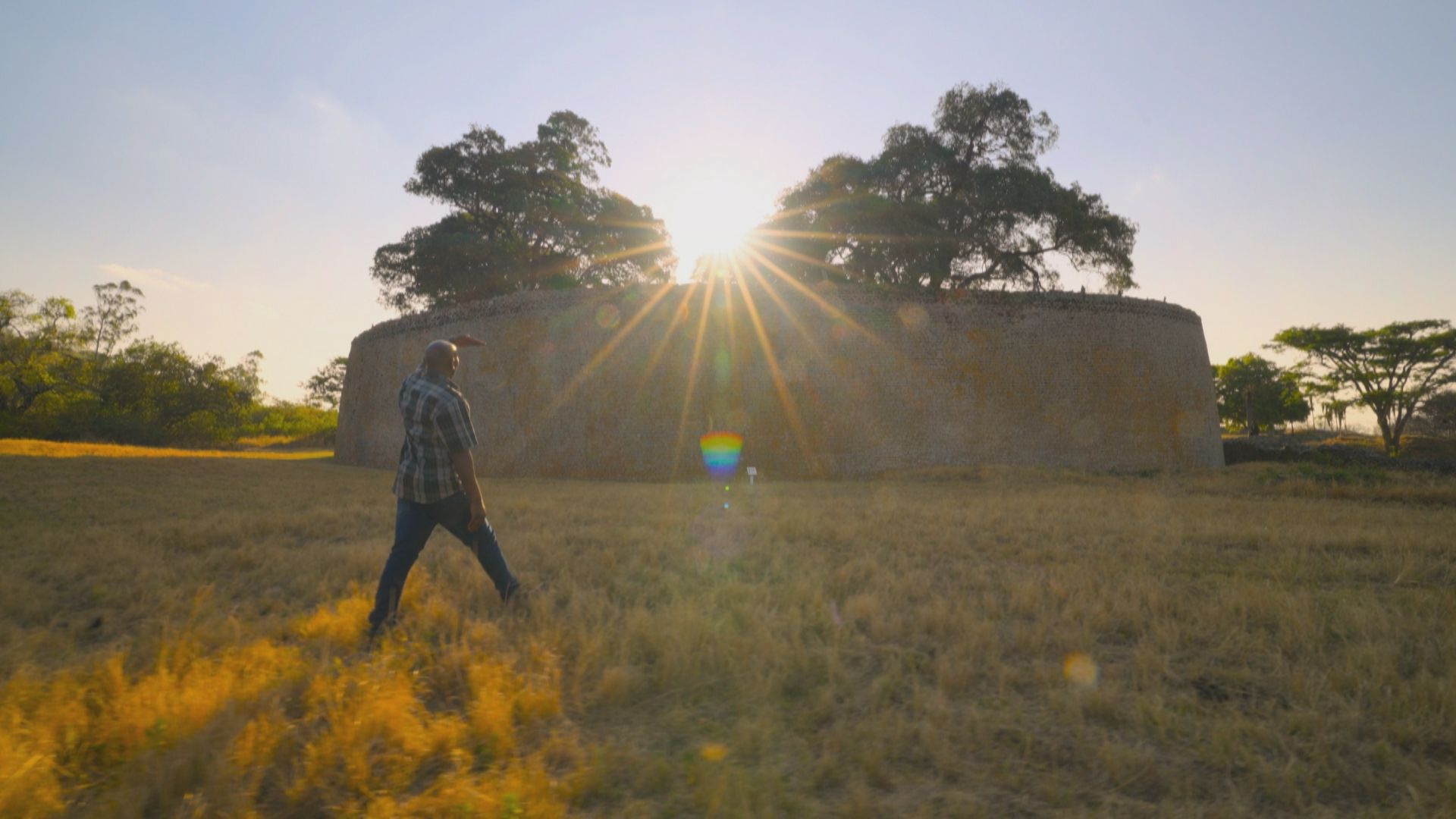
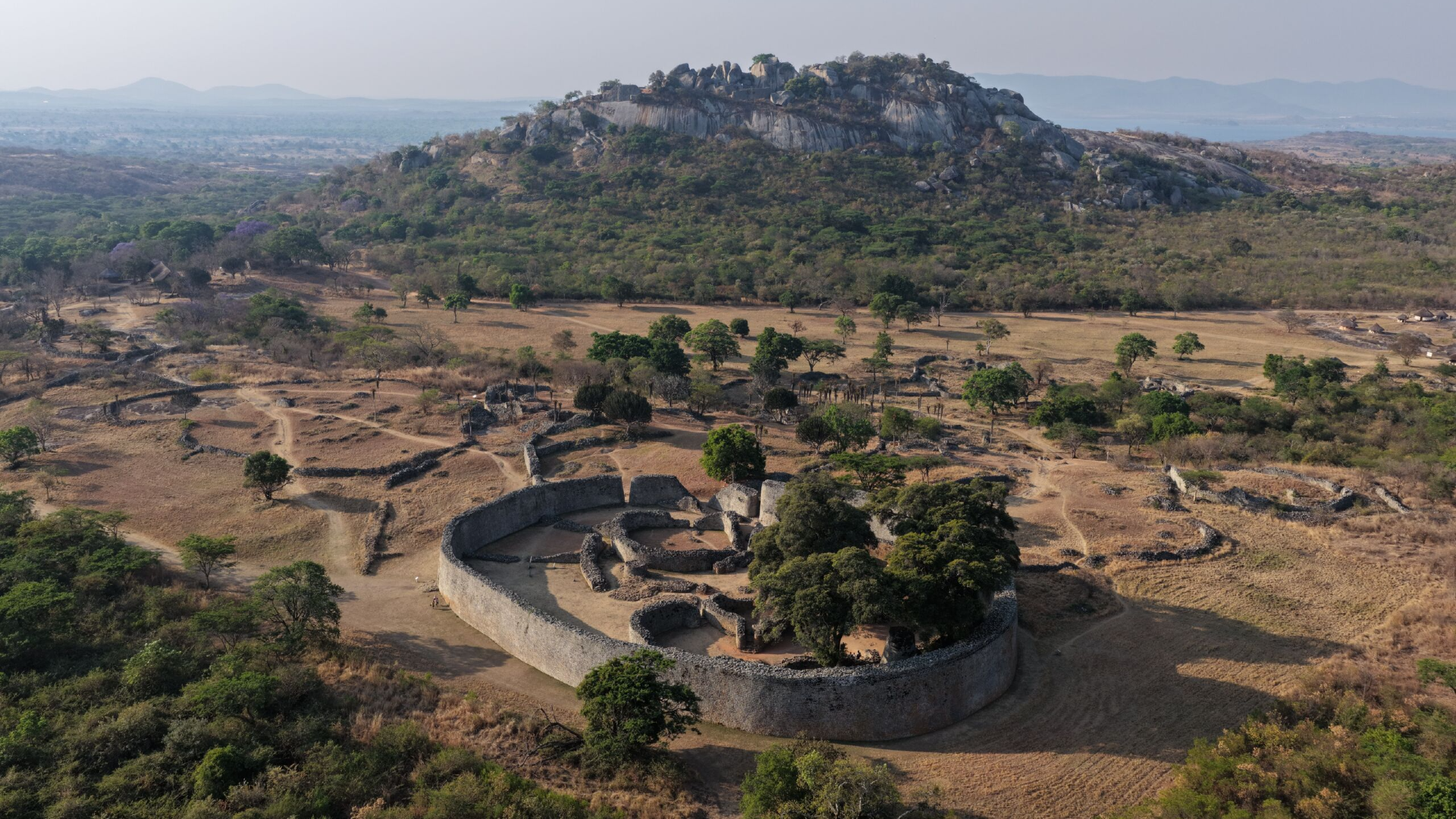
a man walks across a grassy field with a circular stone enclosure rising in the background

Archaeologist Munyaradzi Manyanga walks toward the Great Zimbabwe National Monument. (Image credit: Secrets of the Dead / PBS)

"It's time we try to understand a bit more about trade and exchange," Chirikure said, "particularly by comparing the communities in places like Sri Lanka and southern Africa. Because it's the water that separated people, but it was also the water that connected people."

In this exclusive clip from the documentary, Chirikure and archaeologist Muchen Zhou, a doctoral student at the University of Oxford, examine a jade-green piece of pottery unearthed from the hillside at Great Zimbabwe. The glossy sheen on the sherd suggests the pot was fired at an extremely high temperature, a technological achievement that had only been accomplished in China at that early date. This style of pottery, called Longquan celadon, was made in eastern China starting around A.D. 950.

"We find it across the site of Great Zimbabwe," Chirikure said, but in small quantities. "This means the Chinese ceramics are a rarity. Perhaps they were used by the elites. They would have been quite a significant or highly valued exotic ware."

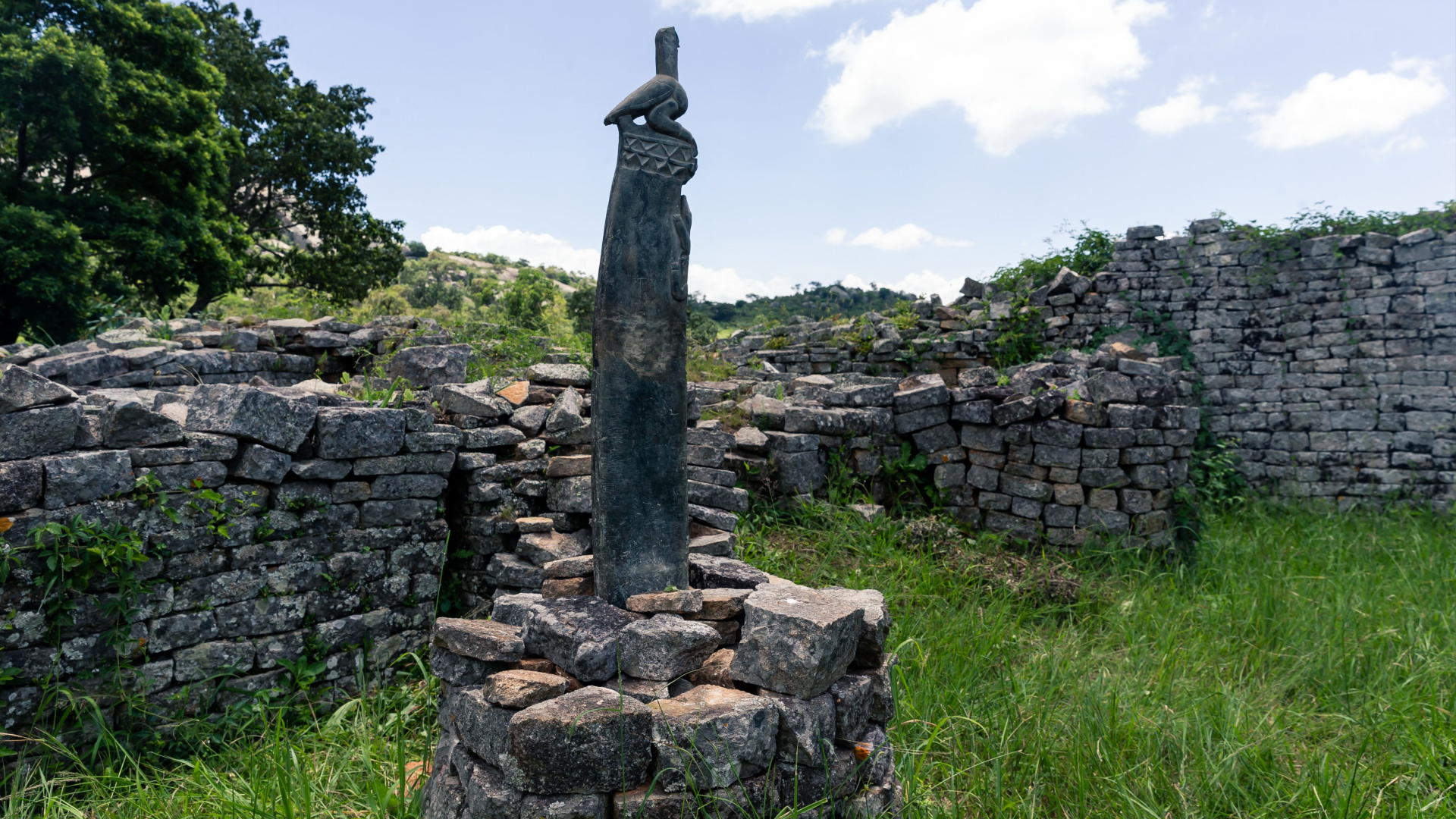
a tall soapstone carving of a bird stands in the middle of a ring of stones

Great Zimbabwe is famous for its soapstone bird carvings. (Image credit: Jekesai Njikizana/Getty Images)

Other evidence of long-distance trade has been discovered at Great Zimbabwe, Chirikure said, including metal objects from what is today the Democratic Republic of Congo, around 1,250 miles (2,000 kilometers) away. The people of Great Zimbabwe were also sourcing copper and tin from modern-day South Africa, more than 300 miles (500 km) away. And chemical analysis of cattle bones has shown that some of the animals were being traded across an 87-mile (140 km) area.

For his next project, Chirikure hopes to investigate local resources, such as soapstone, that hold a lot of meaning for the local Shona people, Zimbabwe's largest Indigenous group; and for Zimbabweans.

"Soapstone birds are an important part of Great Zimbabwe," he said, "but no one really knows where they got their soapstone from."

The Zimbabwe Bird, designed based on a series of birds carved from soapstone that were found at the archaeological site, is the national emblem and appears prominently on the country's flag.

"There are a number of soapstone outcrops around Great Zimbabwe," Chirikure said. "Next time in the field, that's one of the things I want to do — just go out there and try and find the geological sources of that soapstone."

The PBS documentary "Secrets of the Dead: Africa's Golden City" premieres Wednesday, Oct. 14, at 10 p.m. U.S. Eastern time.

  •  

Archaeologists discover a child's skull built into the floor of a 2,500-year-old Scandinavian house

Archaeologists have unearthed evidence that men, women and children were subjected to violence within their communities in ancient Scandinavia — and that these victims were buried in unusual places, such as pits or wells or under a family's house or yard.

During the Scandinavian Iron Age and Viking Age (from roughly 500 B.C. to A.D. 1050), violent encounters between individuals and communities steadily increased, resulting in archaeological evidence of elite warrior burials and mass graves from battles.

To better understand the context of violence in the Iron and Viking ages, researchers analyzed 192 human bones from people buried in domestic areas at settlements in what are now Denmark, Norway and Sweden.

"The fact is that not all bodies ended up in monumental burial mounds in the Iron and Viking Ages, or even in more modest urnfields and cemeteries," the researchers wrote in a study published Sept. 28 in the Journal of Archaeological Method and Theory. Rather, some bodies — or pieces of bodies — were placed in postholes, pits, floors, wells, houses, yards and feasting halls.

The archaeologists discovered that at least 12 of the individuals had sustained a violent injury around the time of death. Half of those cases involved head trauma, while four people suffered multiple injuries. Most of the victims of violence were adult males, but there were two females and a child as well.

In one Iron Age house in Denmark, built sometime between 500 and 1 B.C., archaeologists discovered a frontal bone from the skull of a child who died between the ages of 2 and 4 years old.

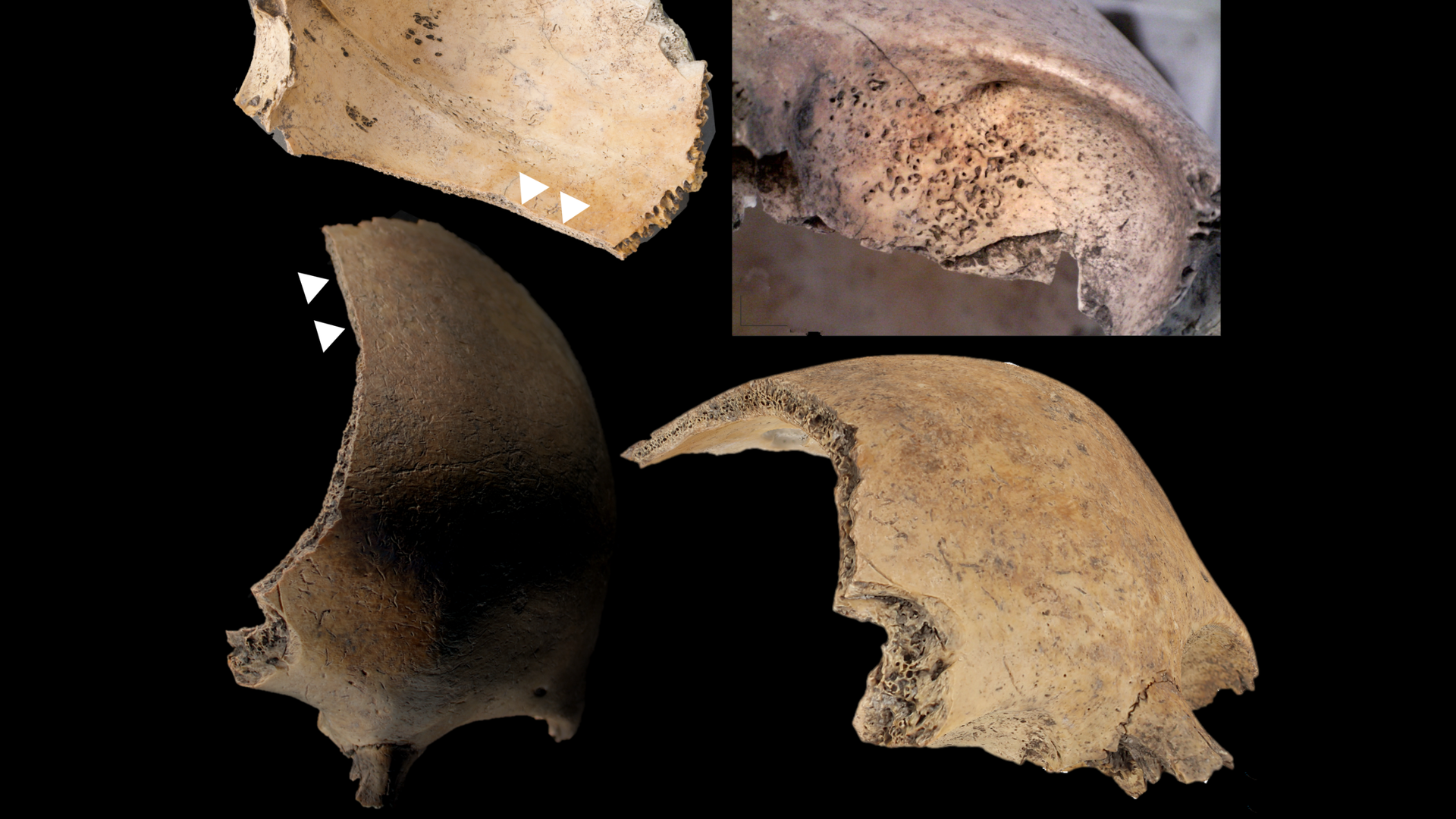
four views of the frontal bone of the skull of a human child showing injuries

The skull of a child aged 2 to 4 from Aalborg, seen from different angles, and showing the damage from a sword cut. The skull was later placed on the floor of a house. (Image credit: National Museum of Denmark)

"Our DNA analyses show that it is a small boy who has been cut with a sword," study first author Marianne Hem Eriksen, an archaeologist at the National Museum of Denmark, said in a translated statement. "The child's skull was placed on the floor of a house where people continued to live. This means that someone has walked over a child's skull day after day."

Radiocarbon dating revealed that the child's skull is significantly older than the house itself, by as many as two centuries, suggesting the bone may have been kept for some time before being placed in the house floor, according to the study.

At a Viking Age site dated to around 750 to 1050, archaeologists found a young woman's skull in a well near a cluster of four small houses. "The woman's skull bore traces of blows and was buried in a well," Eriksen said. She may have been cut or slashed with a sword or ax and, like the child, her bones may have been kept for a significant amount of time before being buried in the well. "These glimpses of lives lived from the past show how fascinatingly different people must have thought about life and death," Eriksen said.

And at the Viking Age site of Gammel Lejre, a royal feasting hall that many experts consider to be the inspiration for the epic Old English poem "Beowulf," archaeologists found the burial of a man whose skeleton bore numerous blunt force injuries, several of which had healed, and which attested to a difficult and likely painful life. His skeleton was discovered directly south of the feasting hall.

The study of bones in domestic areas "opens up a completely new understanding of Iron Age society, of the occurrence of violence and of the handling of the dead," Eriksen said. "The results show a much greater complexity in the everyday life and world of imagination of the time than we often attribute to Iron Age people."

But it is unclear exactly why these particular people were the victims of violence and why they were buried in such unusual ways. One possible scenario, the researchers wrote in the study, is that these were victims of violent domestic encounters rather than warfare. Their deaths may also have been the result of socially acceptable corporal punishment or some form of aggression within the community.

Given the increase in social inequality and rise in violence in the Iron and Viking ages, the researchers suspect that precarious community members may have been targeted.

"Not all lives were equally grieved and commemorated in the Iron and Viking Ages of Scandinavia," the researchers wrote. "We may question whether some lives were already considered disposable."

See how much you know about ancient norsemen with our Viking quiz!
  •  

1,800-year-old temple to Mars and statue of Victory unearthed at Roman military fort in Germany

Archaeologists have discovered a temple dedicated to the Roman war god Mars in the wooded foothills of the Taunus mountains in Germany. The temple was part of a military settlement that was built in the third century to defend the border of the Roman Empire against Germanic tribes.

The Roman military constructed thousands of forts across Europe, northern Africa and western Asia while expanding the empire, and most of these fortifications had an adjacent settlement, called a "vicus," that was occupied primarily by merchants, families and other civilians.

Since 2024, archaeologists have been excavating the Kapersburg Roman fort and its adjacent vicus in Hesse, roughly 16 miles (26 kilometers) north of Frankfurt, according to a Sept. 25 translated statement from the Hessen State Office for Monument Preservation.

One of the highlights of the current excavation is the unexpected discovery of a Roman temple, Kai Mückenberger, an archaeologist with Hessen Archaeology, a part of the Hesse State Office for Monument Preservation, said in a translated video. "Inside the temple, we found several fragments of a dedicatory inscription," he said. Experts have already translated a portion of the inscription, which mentions that the temple was dedicated to Mars, the Roman god of war.

"We also have the remains of a Mars [statue]," Mückenberger said, as well as a statuette of "a winged figure holding a palm branch and laurel wreath," which is likely the ancient Roman goddess Victoria, a personification of victory in battle.

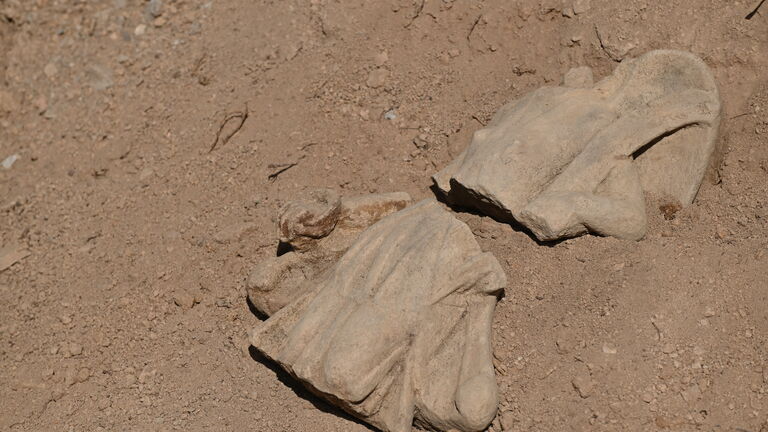
a statuette broken in two lies on the ground

One of the important finds was a broken statuette of the goddess Victoria, the personification of victory. (Image credit: © Lars Görze MA, LfDH)

When archaeologists first excavated the Kapersburg fort near the turn of the 20th century, they discovered that it was built in the early second century, likely under either Emperor Trajan, who ruled from A.D. 98 to 117, or Emperor Hadrian, who reigned from A.D. 117 to 138 and expanded the Roman Empire further into northern England, building Hadrian's Wall. The Kapersburg fort was used by a unit of Roman soldiers and cavalry for about a century and a half, until around A.D. 275.

Although the fort's defensive structures and some of its walls have been visible since antiquity, practically nothing was known about its nearby vicus prior to the excavations that began in 2024, according to Mückenberger.

"The astonishing thing is the exquisite preservation of the archaeological layers that start right beneath the forest floor," Mückenberger said. These layers, which include burnt material, almost never survive in agricultural areas but have been well preserved at the vicus. "This is an incredible learning process and a gain in knowledge for us," Mückenberger added.

During their excavations, the research team discovered far fewer houses than they expected. However, they found much more evidence of craft activities, such as blacksmith pits and ovens for drying wheat and baking bread.

"These are all very technical elements related to local services, indicating that we're in a kind of intermediate area not directly adjacent to the fort itself, but perhaps more like the fort's craft area," Mückenberger said.

The temple and votive statues provide new insight into the Roman world of beliefs on the border of the empire, according to the statement. But when the fort was no longer useful, the Romans leveled the camp and replaced it with residential buildings, the archaeologists discovered.

Mückenberger and his team plan to continue their excavation of the site next year.

From Augustus to Nero, see how much you know about ancient Rome's famous leaders with our Roman emperor quiz!
  •  

Urn with jaguars and skulls: A 1,400-year-old burial container depicting a deceased ruler's arrival to the Maya underworld

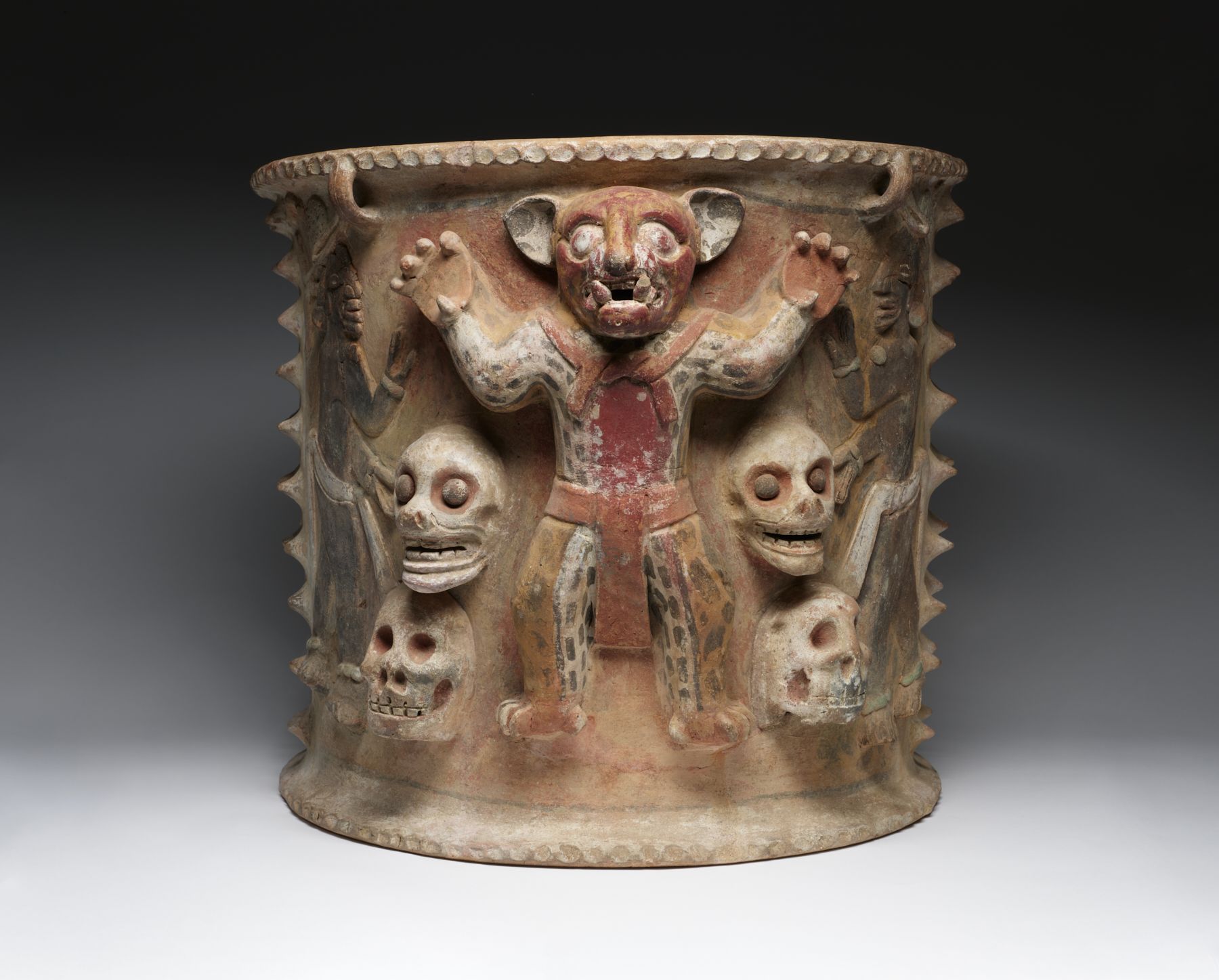
a ceramic urn depicting a person wearing a jaguar costume surrounded by four human skulls

This burial urn depicts a person, accompanied by skulls, as they are received into the Maya underworld. (Image credit: The Walters Art Museum; (CC0 1.0 Universal))
QUICK FACTS

Name: Urn with jaguars and skulls

What it is: A ceramic burial urn

Where it is from: Guatemala

When it was made: Circa A.D. 600 to 900

This colorful ceramic urn depicts a person wearing a jaguar costume and surrounded by human skulls, about to be received into the Maya underworld. The urn once held the bones of an ancestor for their descendants to venerate.

The urn was anonymously gifted to The Walters Art Museum in Baltimore in 2008. According to the museum, the urn is about 17.5 inches (44.5 centimeters) tall and was likely produced in Guatemala by the K'iche' Maya people more than a millennium ago. Originally, the urn probably had an elaborate lid that was tied on with string through the loops near the lip of the vessel, but it is now missing.

The decoration on the urn is striking. A person wearing a jaguar costume splashed with blood — claws and teeth bared — looks out at the viewer from the center of the urn. This individual may be a deceased ruler who is entering the world of the dead, which is symbolized by two pairs of human skulls and the dark figures of two Maya gods of the underworld. Behind the underworld gods are raised spikes representing thorns of the tropical kapok tree (Ceiba pentandra).

The Maya believed that the kapok tree, which was also called the Maya "world tree" or the Yaxche, had roots in the aquatic underworld, so its depiction on this funerary urn may reflect how it is a conduit between realms, according to The Walters Art Museum. Jaguars also held important spiritual meaning to the Maya; they were thought to move fluidly between the three realms — sky, Earth and underworld. Therefore, the depiction of the deceased ruler wearing a jaguar costume to enter the underworld may have suggested that they could also mediate between the world of the living and the Maya gods.

This colorful and symbol-laden urn shows that death was not an ending for the Maya, according to The Walters Art Museum, and that the urn "serves as a graphic reminder of how the dissolution of the body could be a positive change, transforming a beloved ancestor into an honored spirit who would continue to guide the living for eternity."

For more stunning archaeological discoveries, check out our Astonishing Artifacts archives.

a humanlike gold mask against an orange background

Java Gold Mask

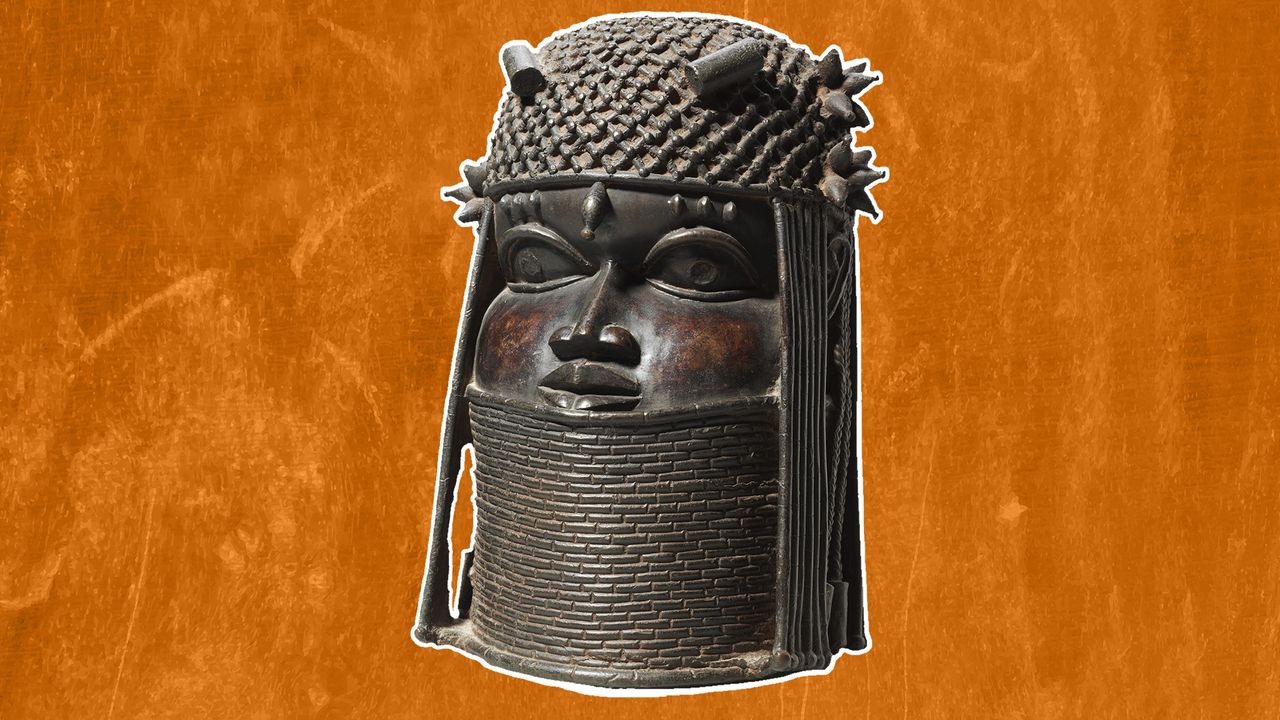
This brass head depicts an

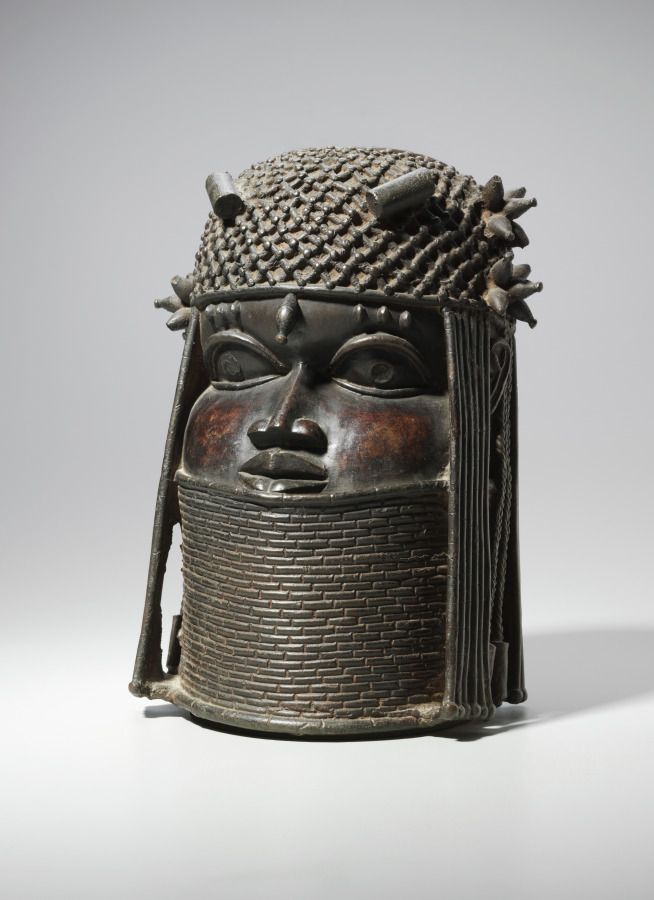
Benin Bronze

an x-shaped folding wood chair frame against an orange background

Guldhøj Chair

Can you put together last week's Astonishing Artifact?

  •  

Ancestral commemorative head: A 500-year-old brass bust depicting an African king

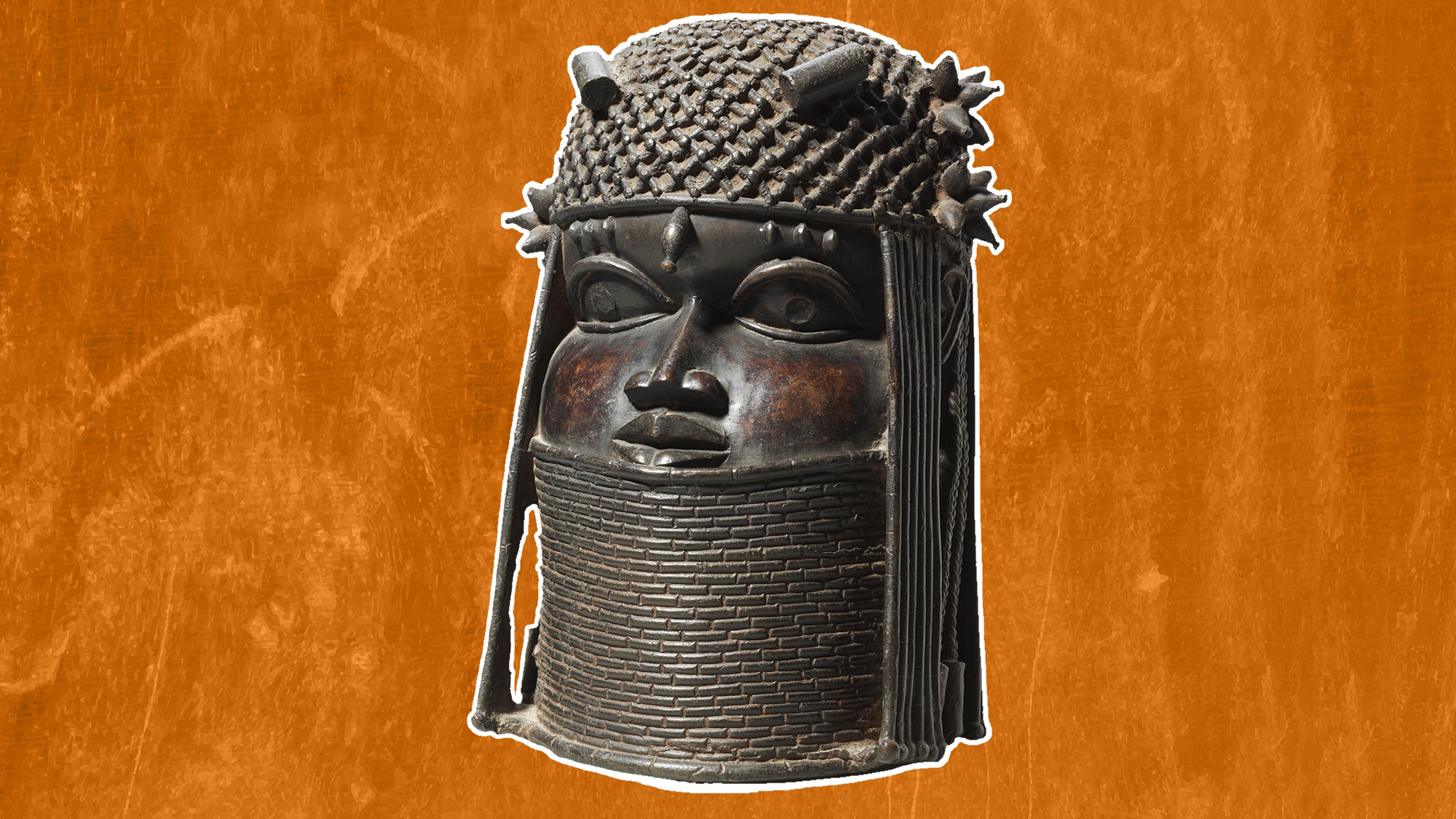
A close up of a brown brass head on a white surface

This brass head depicts an "oba," or ruler of the Kingdom of Benin. (Image credit: Cleveland Museum of Art (Public Domain))
Quick facts

Name: Ancestral commemorative head

What it is: A copper-alloy sculpture of an African ruler's head

Where it is from: Edo, Nigeria

When it was made: Mid-1500s

In the Kingdom of Benin, one of the oldest monarchies in West Africa, a traditional ruler known as an oba would commission a brass or bronze bust of their predecessor upon taking the throne. The bust of the past oba would then be set on an ancestral altar in the palace. But when the British Empire annexed the Kingdom of Benin into colonial Nigeria in 1897, the British looted thousands of African artifacts spanning the kingdom's seven-century history, and the country of Nigeria has asked that they be returned.

This particular bust is in the collection of the Cleveland Museum of Art (CMA), which acquired it from prominent French art dealer Louis Carré, who sold many of the artifacts looted from Benin to Western museums in the 1930s. This head of an oba ancestor, also known as "uhunmwun-elao" in the Edo language spoken in the historic Kingdom of Benin, is roughly 1 foot (30 centimeters) tall and was made from a copper alloy, using a lost-wax casting process that would produce one unique bust, then-CMA curator William Milliken wrote in a 1937 study.

Initially, CMA experts thought the ancestral head represented a princess, due to the layers of coral necklaces around the oba's neck and the thin braids hanging from the individual's temples. But the coral necklaces and the lattice-pattern beaded caps were actually potent representations of a ruler's power. The top of the bust is partly open, and it would have supported an intricately carved elephant tusk that recorded the oba's accomplishments and major life events.

Many of the surviving ancestral commemorative heads were created in the 15th and 16th centuries by the Igun Eronmwon, a hereditary guild of brass and bronze artisans that made objects for royalty in the Kingdom of Benin. According to the CMA, Benin royalty prized brass because it does not corrode. Much of the African brass was imported from as far away as Germany.

When British forces invaded the Benin royal palace in 1897, they looted thousands of metal plaques, sculptures of humans and animal figures, and royal and personal ornaments that have come to be known as the Benin Bronzes, even though most of the objects are technically brass, an alloy of copper and zinc. The British Museum holds the world's largest collection of Benin brass artifacts — over 900 objects — which Nigeria formally requested be returned in 2021.

Some institutions have begun repatriating this historic royal art back to its homeland. A group of German museums that collectively held over 1,100 of these objects transferred ownership of them to Nigeria in 2022. That same year, the Smithsonian's National Museum of African Art transferred ownership of 29 Benin Bronzes to Nigeria. And, in 2025, the Netherlands returned 119 Benin Bronzes to Nigeria. To date, however, the British Museum has not officially returned any of the Benin Bronzes in its collection.

There is also controversy about who should have ownership of these artifacts. In 2025, the Museum of Fine Arts, Boston returned two Benin Bronzes to Oba Ewuare II, the great-great-grandson of the last oba before the 1897 British invasion. Oba Ewuare II is the Oba of Benin and custodian of Benin culture.

A full catalog of royal artifacts looted from Benin in the late 19th century can be found on the Digital Benin project website.

For more stunning archaeological discoveries, check out our Astonishing Artifacts archives.

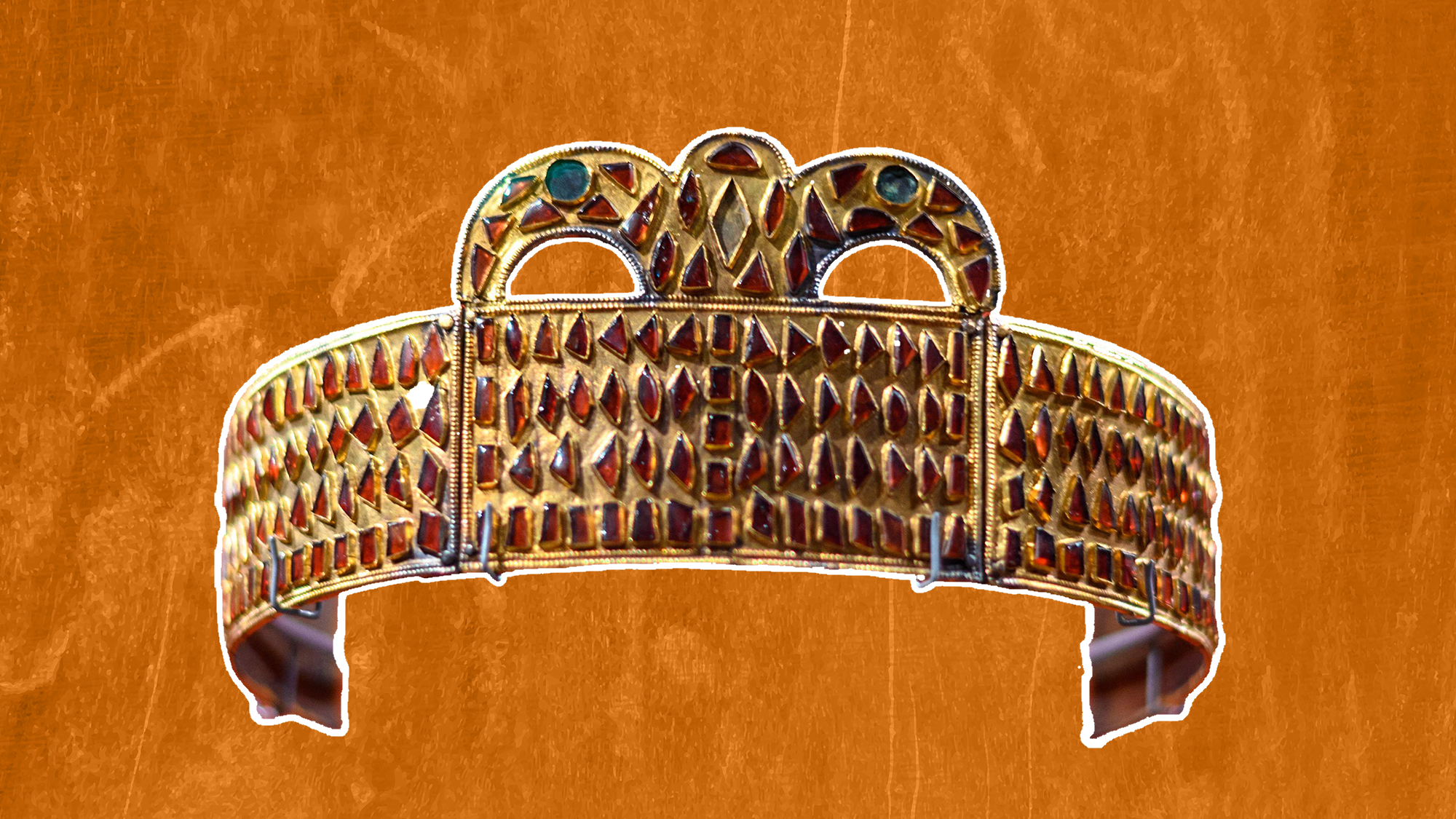
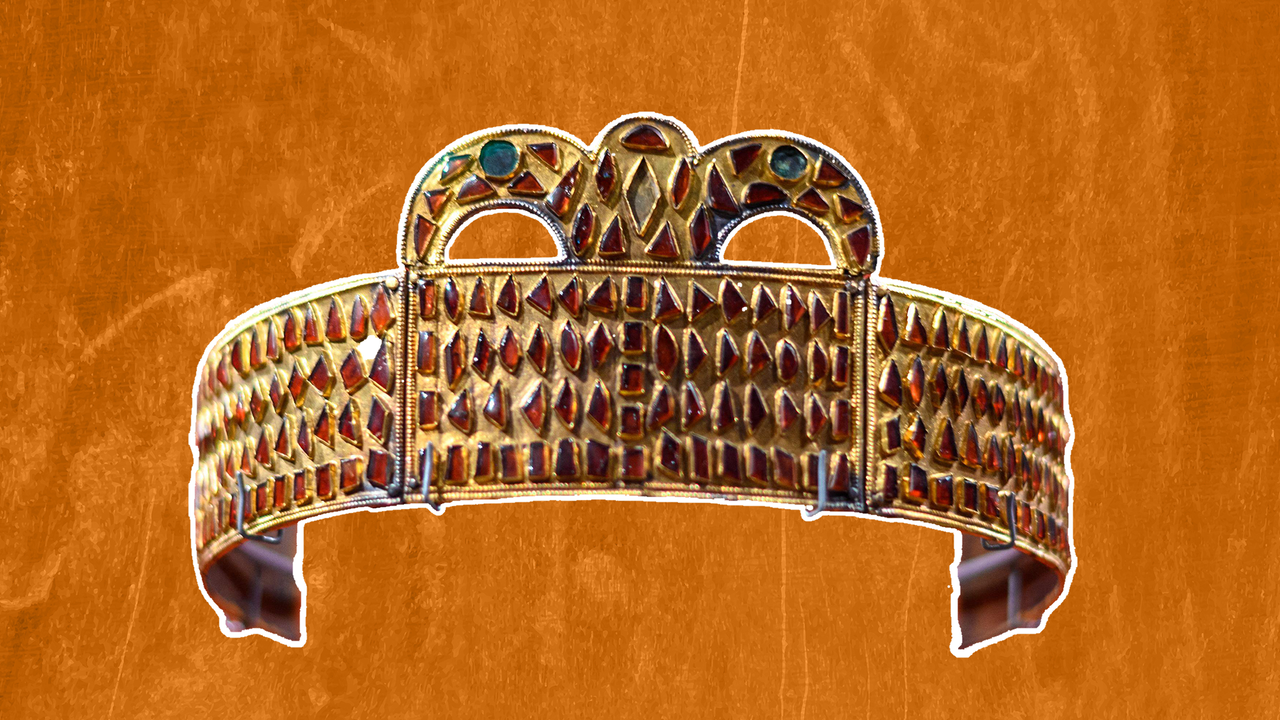
a gold and garnet crown against an orange background

Kerch Crown

This crown depicts two birds of prey and was discovered in the grave of a fifth-century noblewoman in Crimea.

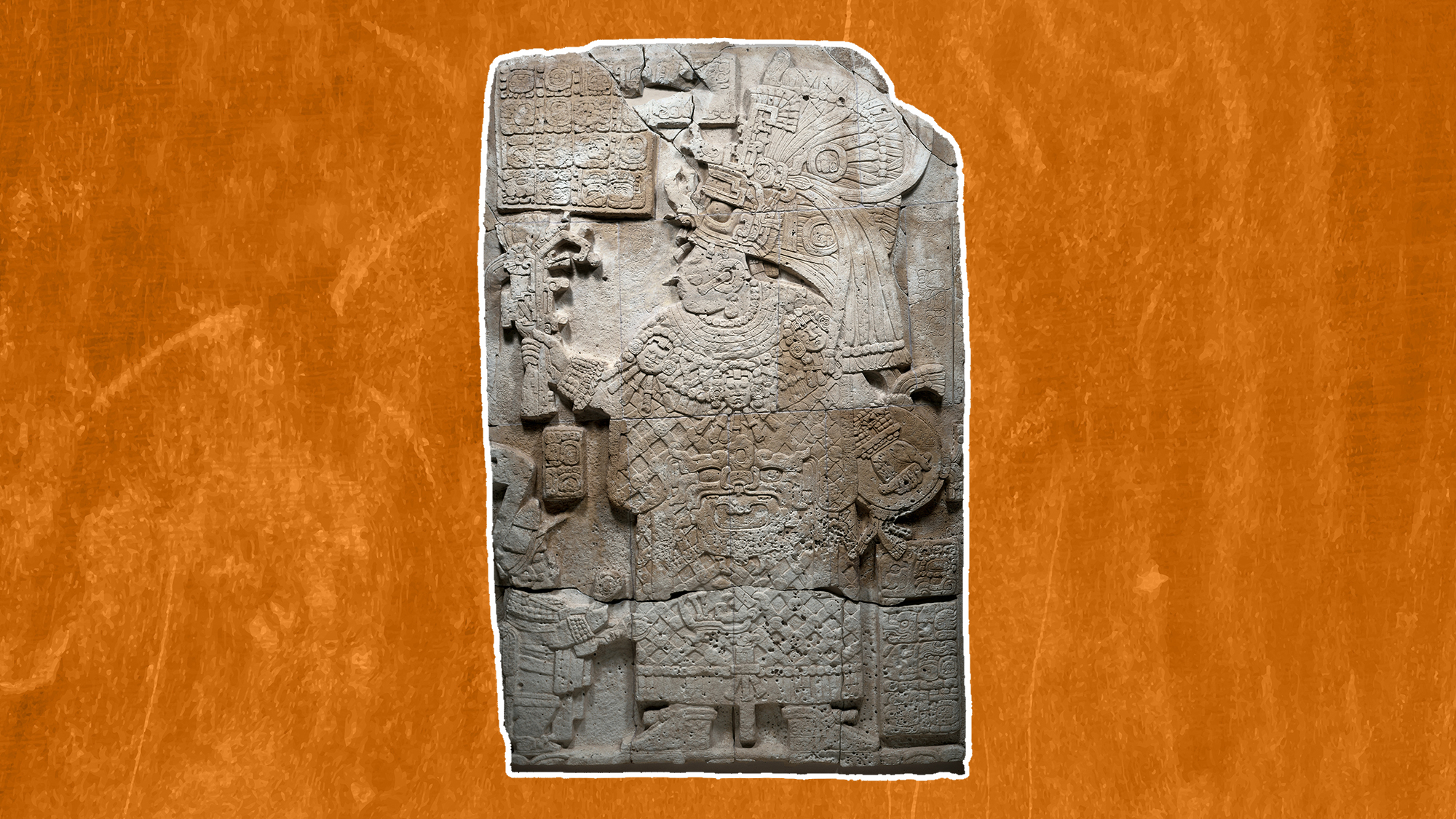
a carved portrait of a Maya queen with an orange background

Lady K'abel Stela

This monumental carving depicts a powerful Maya queen called Lady K'abel, who ruled an ancient city in Guatemala at the end of the seventh century.

a coil-built pot that tapers from the top and has stylized flames around the rim, against an orange background

Fire Flame Vessel

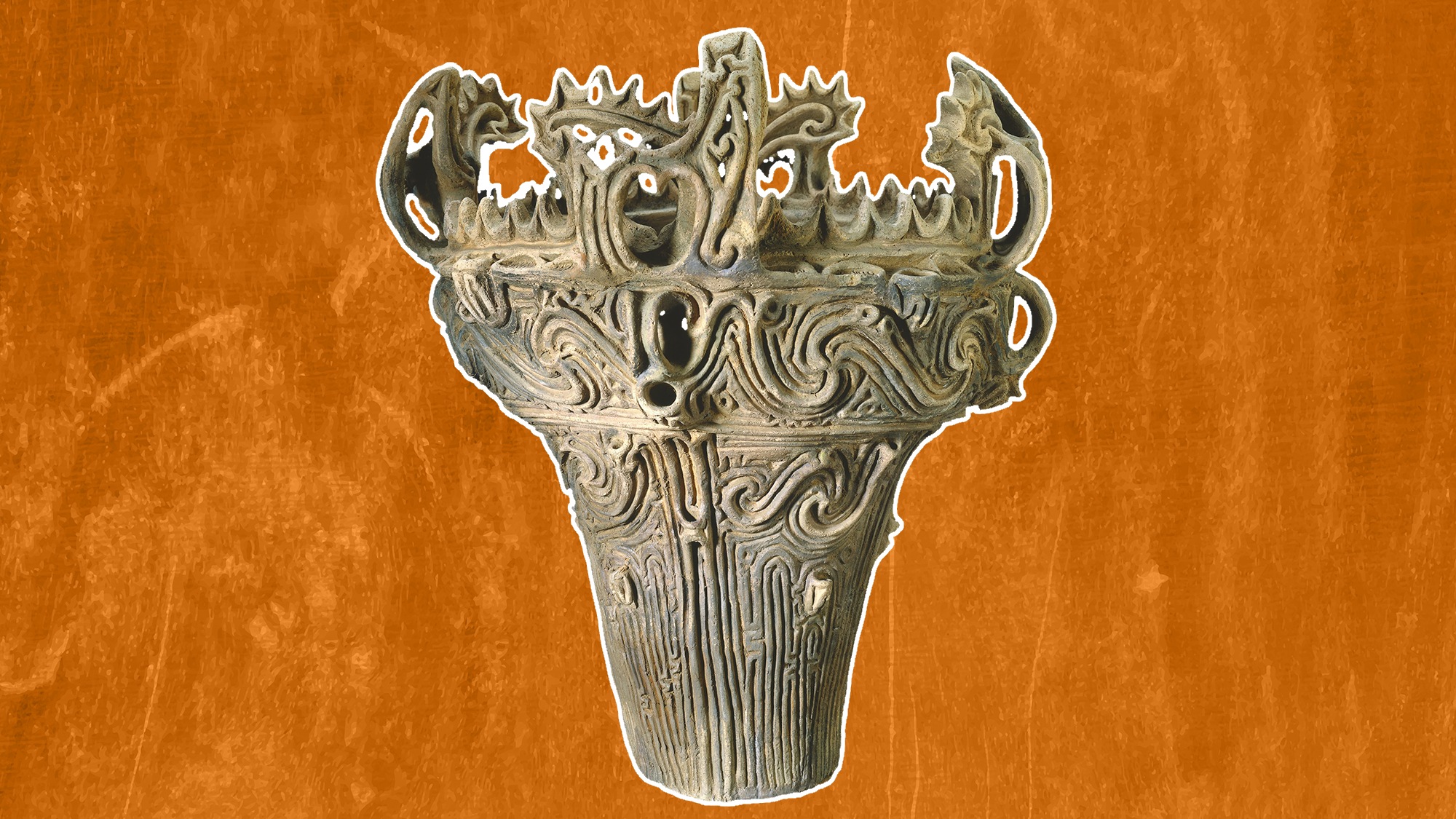
Archaeologists aren't sure why prehistoric people in Japan made these elaborate vessels decorated with flames.

Can you put together last week's Astonishing Artifact?

  •  

Enigmatic Denisovans lived by cave in what is now China for 100,000 years, rare fossils and handcrafted tools reveal

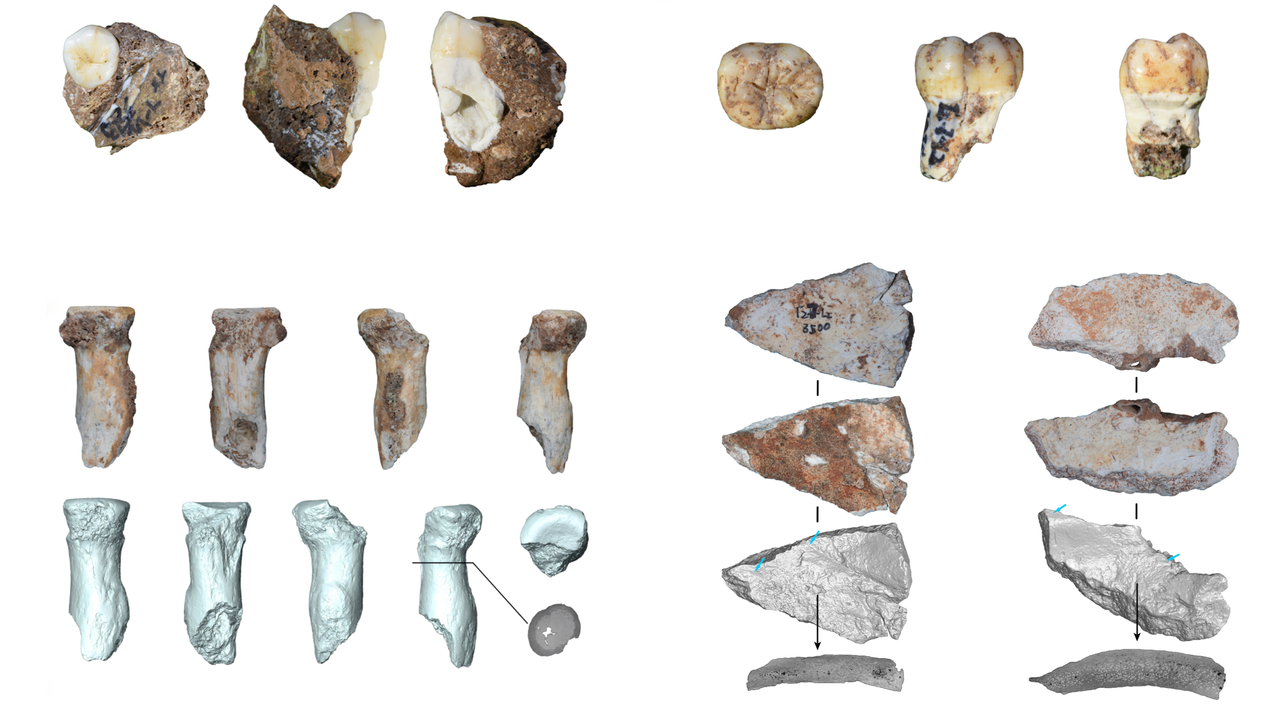
Archaeologists excavating in southwestern China have discovered a cave that was used by Denisovans for more than 100,000 years. Five human fossils, scores of stone tools, and hundreds of animal bones recovered from the cave reveal for the first time that the enigmatic Denisovans thrived in a forested environment where they hunted and ate large game animals.

Denisovans were a lineage of humans who lived in Asia and went extinct around 30,000 years ago. Ancient DNA has shown that Denisovans, Neanderthals and modern humans (Homo sapiens) are distantly related and that all three groups interbred in the past. But while archaeologists have found numerous Neanderthal and modern-human skeletons, Denisovans are known from only a handful of fragmentary fossils scattered from Siberia to Laos. This lack of evidence has severely limited experts' understanding of Denisovans' bodies and their culture.

In two studies published Wednesday (Sept. 9) in the journal Nature, researchers detailed their excavation of Bianfu Cave in southwestern China. Animal bones and ancient tools revealed that the cave was used from 190,000 to 70,000 years ago, and five human fossils dating to between 134,000 and 167,000 years ago confirmed that the people who used the cave were Denisovans.

Bianfu Cave is in the Yunnan province of southwestern China. In 2019, archaeologists excavated several stratigraphic layers of the cave and discovered nearly 1,400 stone artifacts, more than 64,000 mammal bones, and four teeth from an unknown human lineage. The Yunnan area is where Denisovans and modern humans are known to have met and mated, so researchers were unsure which group had used tools to butcher animals inside Bianfu Cave.

a map of Asia showing the location of Bianfu Cave in China

The geographical location of the Bianfu Cave, where researchers have discovered several teeth and bones from Denisovans. (Image credit: Institute of Vertebrate Paleontology and Paleoanthropology of China)

In one study, a research team used a technique called zooarchaeology by mass spectrometry (ZooMS) to quickly and efficiently screen the bone fragments from Bianfu Cave. ZooMS is a form of protein analysis that involves extracting collagen from the bones of an unknown species and comparing the protein pattern to the unique "fingerprint" of reference animals.

When the researchers applied the ZooMS technique to the Bianfu Cave bones, they discovered that three of the fragments had a collagen pattern found in members of the Homo genus. Then, using proteomic analysis, the researchers found that two teeth and three bones from Bianfu Cave had a particular amino acid variation linking the fossil remains with Denisovans.

Denisovans are still poorly understood, in part because no complete skeleton has ever been found. Most of the Denisovan fossils that experts have studied are pieces of the skull and teeth. A tiny finger bone and a rib fragment were all that had been found of Denisovans' bodies before the Bianfu Cave excavation. But one of the three bones identified as Denisovan through ZooMS was a fragment of a radius, one of the paired bones in the forearm. It is the only Denisovan radius found to date.

The newly discovered radius has a large head (where it connects to the humerus at the elbow) that is more similar to those seen in Neanderthals than in modern humans, but its overall shape is more similar to modern-human radii, the researchers wrote in one of the new studies. The fact that the Denisovan radius was shaped more similarly to the radius in humans "likely provided functional advantages for lightweight, precise manipulation," study co-author Qiaomei Fu, director of the Ancient DNA Laboratory at the Institute of Vertebrate Paleontology and Paleoanthropology, part of the Chinese Academy of Sciences, in Beijing, told Live Science in an email.

The unique features of the Denisovan radius also suggests that the Denisovans living near Bianfu Cave had different biomechanical demands on their bodies and different behavioral adaptations, the researchers noted.

Denisovan stone and bone tools

In a related study, researchers looked at the entire cultural sequence from Bianfu Cave to work out what Denisovans were doing there.

Of the nearly 1,400 stone artifacts recovered from the cave, there were about 200 flake tools, many of which were made from a sedimentary rock called sandy mudstone. These tools left marks on a number of animal bones discovered in the cave, suggesting that Denisovans regularly hunted, butchered and extracted marrow from cow- and deer-like animals, the researchers wrote in the study.

But the stone tools found at Bianfu Cave are different from the more sophisticated ones that Neanderthals made around the same time. The Denisovan stone tools appear to have been crafted quickly and efficiently from locally available materials, according to the study. The researchers, however, discovered that Denisovans at Bianfu Cave were also making bone tools, which Neanderthals did as well. This suggests that bone tool use may have been more widespread among Pleistocene human groups than experts previously thought, the researchers wrote, and it highlights the need to better understand the human evolutionary record of eastern Asia.

Although the studies have contributed new information to archaeologists' understanding of the enigmatic Denisovans, more work needs to be done, according to the researchers.

"We hope that similar proteomic analyses will aid in the identification of further Denisovan long bones in the future," Huiyun Rao, an associate professor at the Institute of Vertebrate Paleontology and Paleoanthropology, Chinese Academy of Sciences, and colleagues wrote, "to further understand the adaptive behavior of Denisovans in response to climate change or competitive pressure from contemporary hominins."

What do you know about early humans? Test your knowledge with our human origins quiz!
  •  

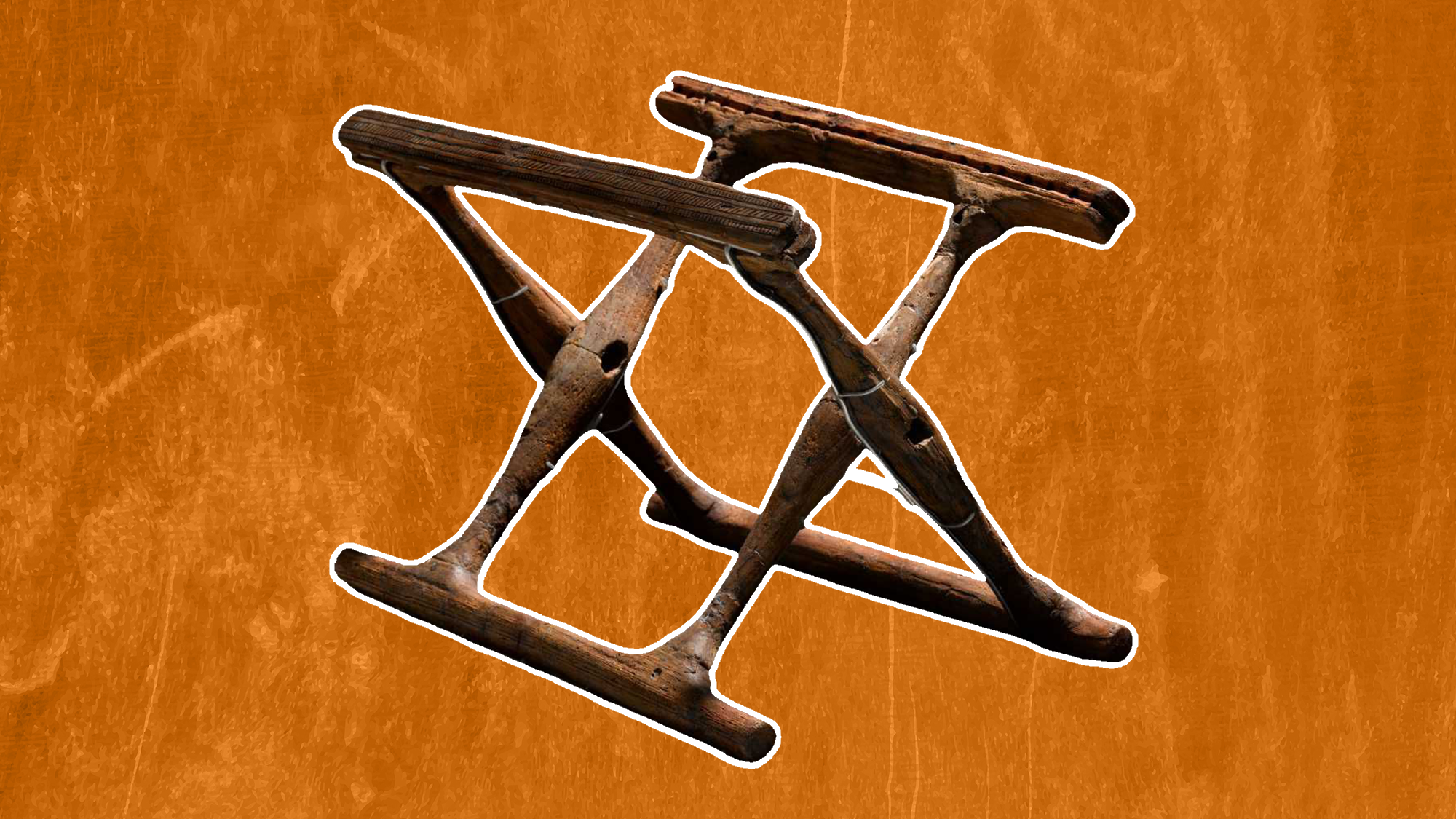
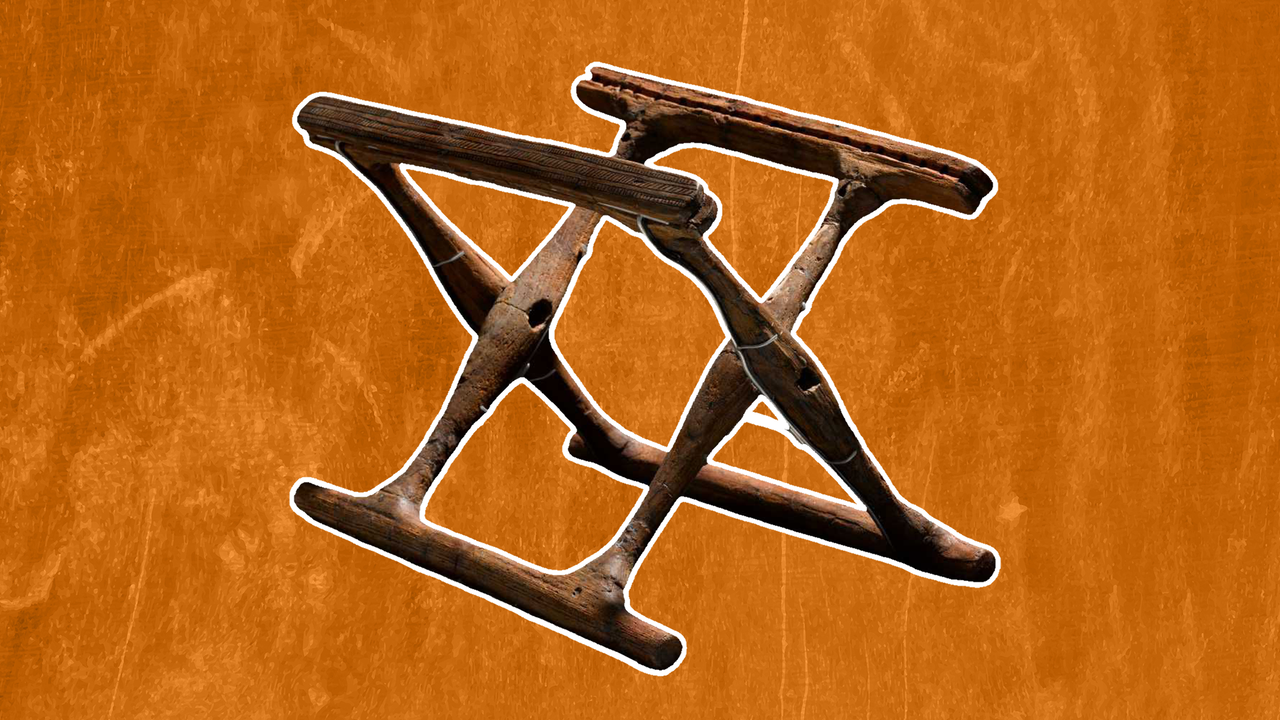
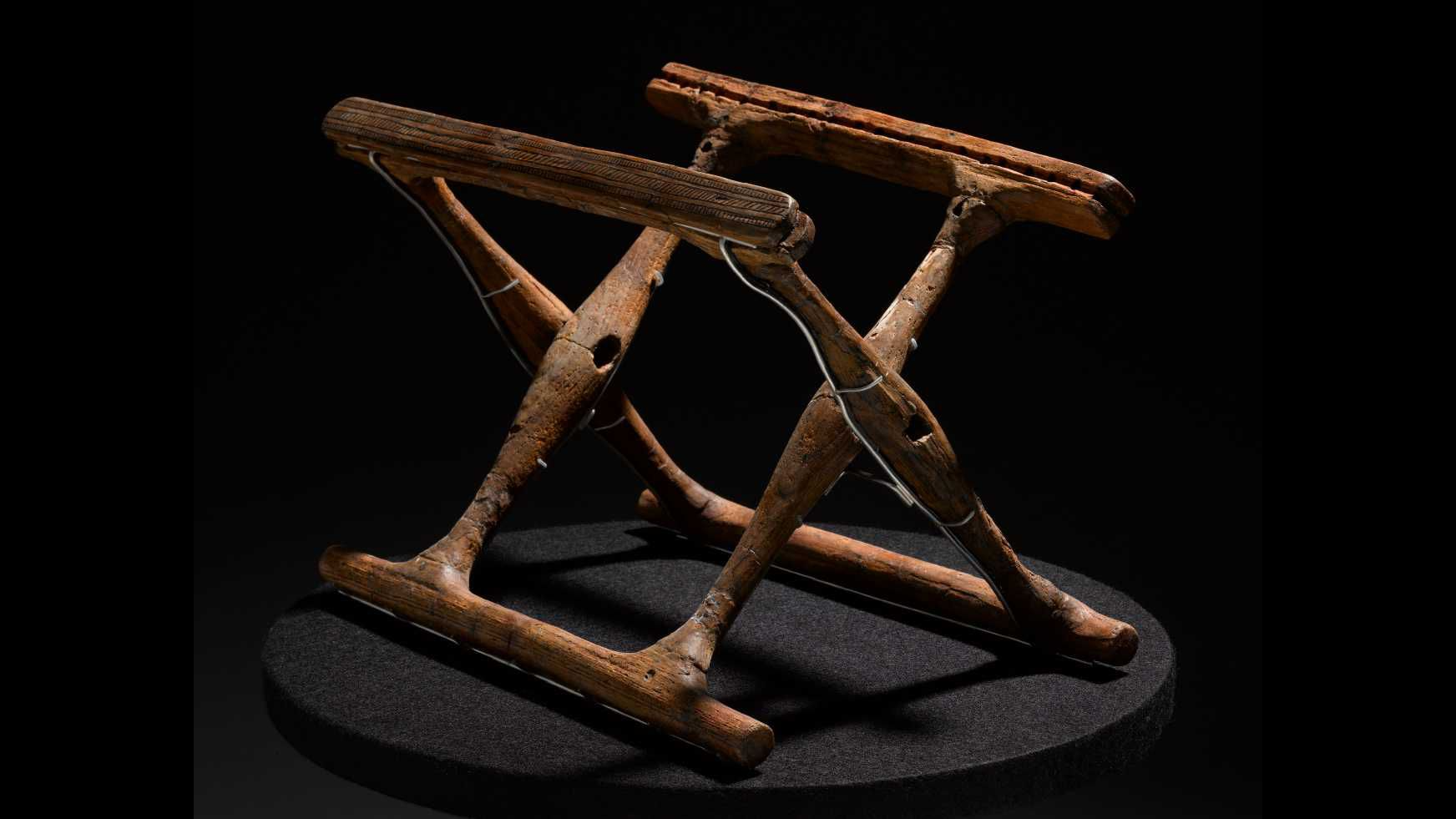
Guldhøj folding chair: The only completely preserved chair from Bronze Age Europe

a folding chair base of two wooden squares hitched together at a 45-degree angle against a black background

Remains of a Bronze Age folding chair were found in a chieftain's grave in Denmark. (Image credit: National Museum of Denmark (CC-BY-SA))
QUICK FACTS

Name: Guldhøj folding chair

What it is: A wooden chair with an otter-skin seat

Where it is from: Guldhøj, southern Denmark

When it was made: Circa 1400 B.C.

When archaeologists with the National Museum of Denmark excavated a burial mound called Guldhøj (Gold Hill) in southern Jutland in 1891, they were surprised to find a well-preserved wooden folding chair similar to those known from ancient Egypt and Greece. But the Guldhøj folding chair was made in Denmark around 3,400 years ago and is the only completely preserved chair from the Bronze Age in Europe, according to the National Museum of Denmark.

The chair was discovered in the grave of a chieftain, who was buried in a hollowed-out oak tree trunk and wrapped in a cowhide. The man had been dressed in a wool cloak secured with a bronze brooch, two wool hats, woolen mittens and leather shoes. Among the offerings his loved ones left in the grave were a bronze ax and a bronze dagger, along with two ornate wooden bowls and a wooden box. But the folding chair was an unusual addition to the grave and was likely a marker of the man's extremely high status.

The frame of the Guldhøj folding chair was crafted from ash wood, while the seat was made from otter skin, only a fragment of which was preserved over the millennia. Patterns incised into the top of the wooden frame were inlaid with a black, tar-like substance to create a band of geometric decoration.

In a 1999 study led by archaeologist Kirsten Prangsgaard, researchers who examined the chair determined that it was made from two frames of wood, each about 13 inches (33 centimeters) tall. When the frames were put together at a 45-degree angle, the low chair or stool would have been around 9.5 inches (24 cm) off the ground. Originally, the chair frame was likely held together with bronze nails, which may have been removed before the seat was placed in the grave, according to the researchers.

Folding chairs may seem simple, but they were important pieces of furniture that signified the seated person was of high rank, and they were likely used in rituals or ceremonies, according to the National Museum of Denmark.

Archaeologists have found ancient folding chairs in this style in Bronze Age Egypt and Greece, where weather conditions are better for preserving organic material such as wood. The Guldhøj folding chair is not unique in Nordic countries; pieces of chairs have been found in other chieftain graves in Denmark and northern Germany, and a rare metal folding chair was even found in an early medieval woman's grave in Germany. However, it is the only completely preserved wooden folding chair from Bronze Age Europe, Prangsgaard and colleagues noted in the study. "The folding chairs thus seem to belong to the warrior graves of the Early Bronze Age," they wrote.

The similarity of the Guldhøj chair, which was made in Denmark, to chairs found in far-flung civilizations means that Bronze Age people were exchanging ideas through trade and gift giving, the researchers wrote. The chairs show a clear artistic connection between Bronze Age Nordic and Mediterranean groups. Another connection is the four-spoked wheel on the famous Sun Chariot from Trundholm, which mimics designs seen in the Aegean region.

Both the unusual folding chair and the wooden bowls buried with the Bronze Age chieftain in the Guldhøj mound "can only be described as rare objects of high prestige," according to the National Museum of Denmark.

For more stunning archaeological discoveries, check out our Astonishing Artifacts archives.

Can you put together last week's Astonishing Artifact?

  •  

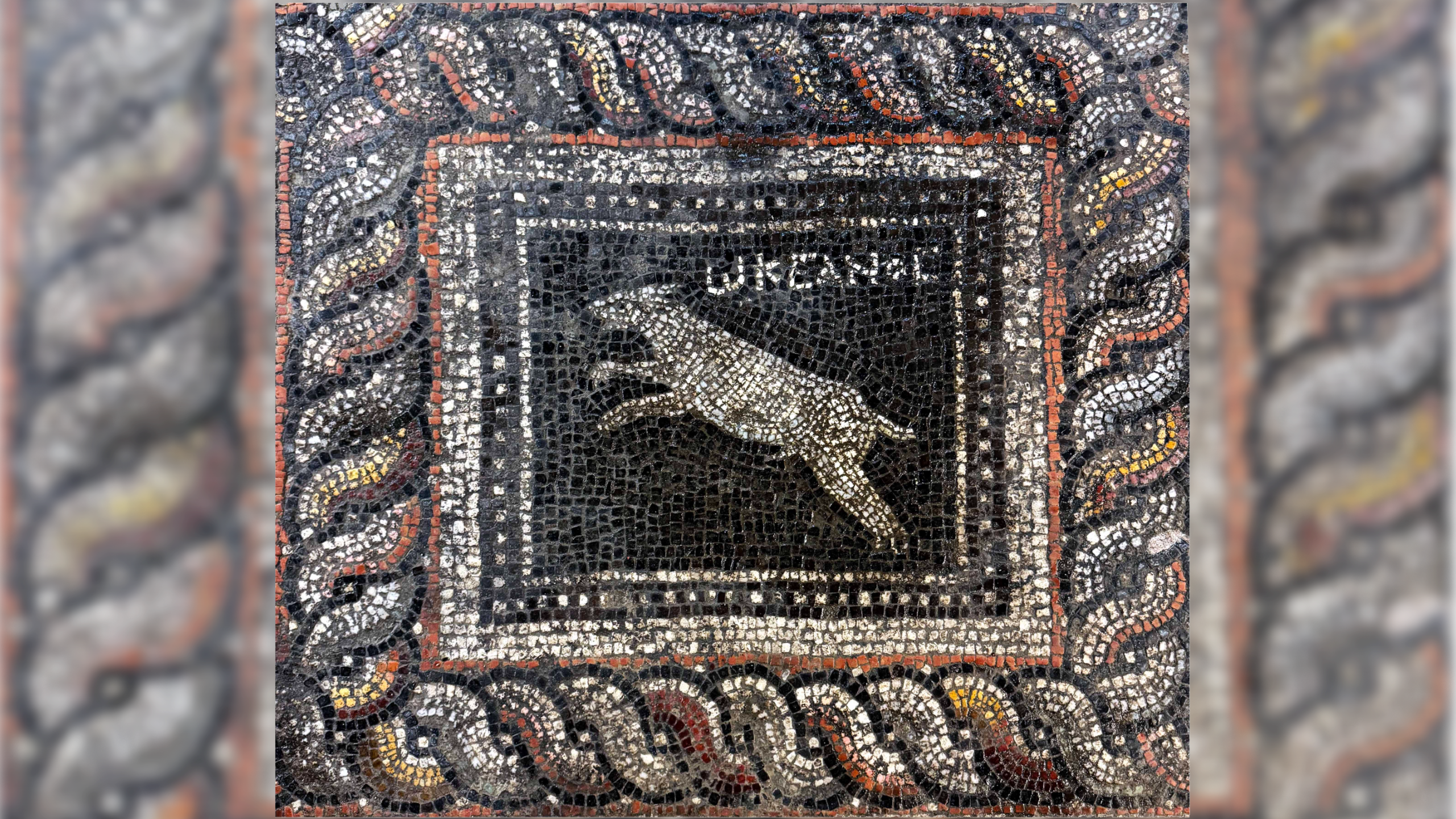
Stunning Roman-era mosaic discovered in Turkey features 'Emerald' the cat and 'Ocean' the dog

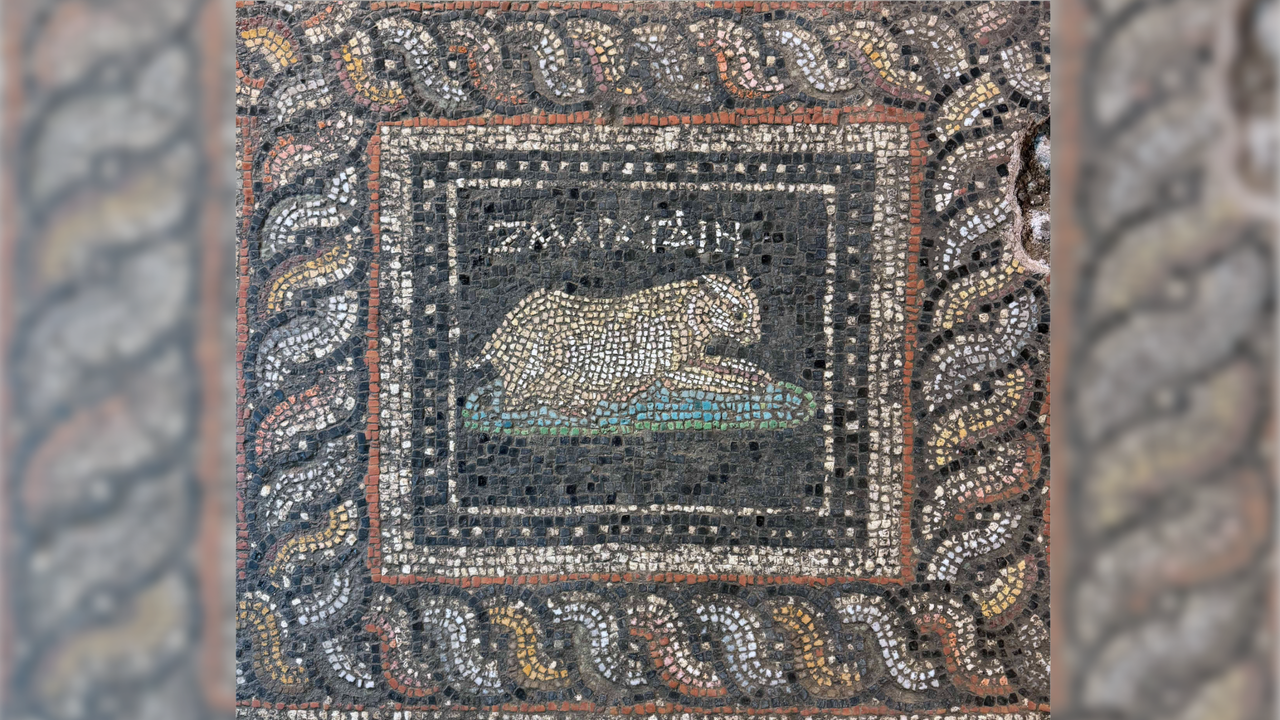
Nearly two millennia ago, a wealthy Roman commissioned an intricate, multicolored floor mosaic that depicted two beloved household animals: a cat named Emerald and a dog named Ocean. The mosaic was a key feature of a villa, which archaeologists recently unearthed from beneath the ancient city of Adramytteion on Turkey's Aegean coast.

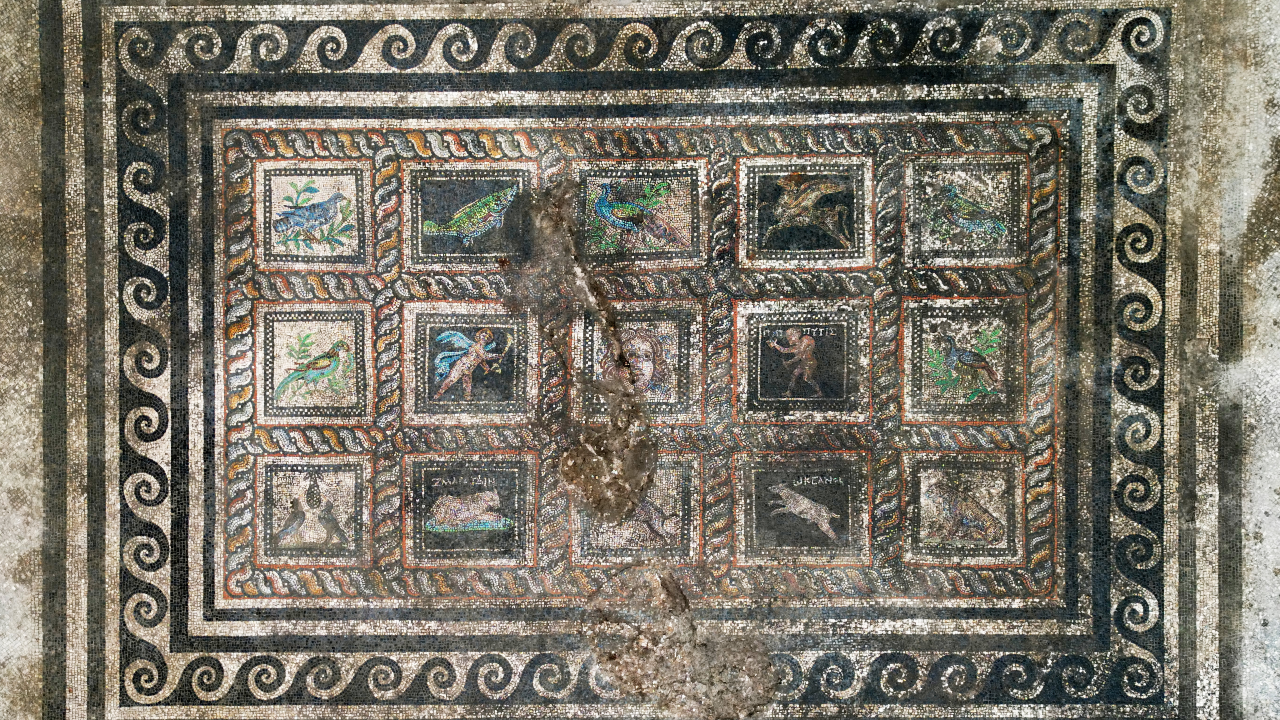
Within the Roman villa, which has been dated to the late second to third centuries A.D., archaeologists discovered three halls surrounding a central atrium. In one room, which likely functioned as the villa's main reception hall, archaeologists found a colorful mosaic with 15 separate panels depicting living and mythological creatures.

In a study forthcoming in the Journal of Mosaic Research, archaeologist Hüseyin Özgen, head of the Adramytteion research team at Mimar Sinan Fine Arts University, wrote that the 15 panels are centered around what appears to be a depiction of Medusa, while the named cat and dog may preserve the memory of household creatures.

a panel of a multicolored Roman floor mosaic that depicts a dog named Ocean

Another panel of the mosaic depicts a dog named Ocean. (Image credit: H. M. Özgen/Adramytteion Research Archive)

Özgen began excavating at Adramytteion in 2012, but he and his team discovered the Roman villa only recently and excavated it in 2025 and early 2026. In the Roman period, Adramytteion was a provincial capital within Asia Minor and a prime trading spot due to its location at the head of a gulf on the Aegean Sea. The impressive villa included three mosaic-paved halls, a number of secondary rooms, and a network of pipes and drains that may have connected to a latrine.

Visitors approaching from the courtyard of the villa would have been greeted by the largest, most elaborate mosaic in the residence, according to Özgen. Located in the middle of the room, the mosaic measures about 16.4 by 11.8 feet (5 by 3.6 meters) and contains 15 panels arranged in three rows. Most of the panels depict birds, fish and felines, but two mythologically inspired panels include a gorgon (possibly Medusa) and a winged horse (possibly Pegasus). Ancient artists used white, black, red, orange, yellow, pink, burgundy, blue, turquoise and green tiles to create the intricate design.

overview image of a 15-panel multicolored Roman mosaic

Archaeologists discovered the colorful floor mosaic in a Roman-era residence at Adramytteion, an archaeological site in Turkey. (Image credit: H. M. Özgen/Adramytteion Research Archive)

Only two of the animals depicted in the mosaic are named. As someone entered the room, the first mosaic panel they would have seen to their left was a pale cat seated on a blue-green cushion, Özgen wrote in the study. Above the cat are the Greek letters ΖΜΑΡΑΓΔΙΝ (Zmaragdin), meaning emerald. The relaxed cat sitting on a cushion suggests that Emerald may have been a pet rather than a stray.

One possible explanation for Emerald's name may be a link to the desert of Roman Egypt, where emeralds were mined in antiquity; the villa owner may have been a merchant with North African connections.

On the right side as someone entered the room was a mosaic panel depicting a running or leaping dog. This animal is labeled with the Greek letters ΩΚΕΑΝΟΣ (Okeanos), meaning ocean. Adramytteion was a harbor city, so Ocean's name may have been bestowed due to his surroundings, according to Özgen.

Emerald and Ocean were likely familiar to the villa's residents, even if they weren't specifically pets, Özgen wrote, and their depictions in the mosaic may have functioned as familiar signs of ownership and household identity.

Research at Adramytteion by Özgen and the project team is ongoing.

From Augustus to Nero, see how much you know about ancient Rome's famous leaders with our Roman emperor quiz!

  •  

Excavation in Poland reveals Stone Age man buried with decapitated heads and a tooth necklace

Archaeologists were excavating in a Roman-period cemetery in Poland when they came across something extremely unusual: the grave of a man who was buried with two decapitated human heads, a necklace made from 42 mammal teeth, and a battle ax. That ax provided an important clue: He was actually from the Stone Age, three millennia older than the Roman cemetery.

"We were practically packing up, and then we discovered a circular shape in the ground and began digging," Paweł Dąbrowski, a biological anthropologist at Wrocław Medical University, said in a Sept. 2 translated statement. "We found fairly well-preserved animal teeth arranged in a necklace."

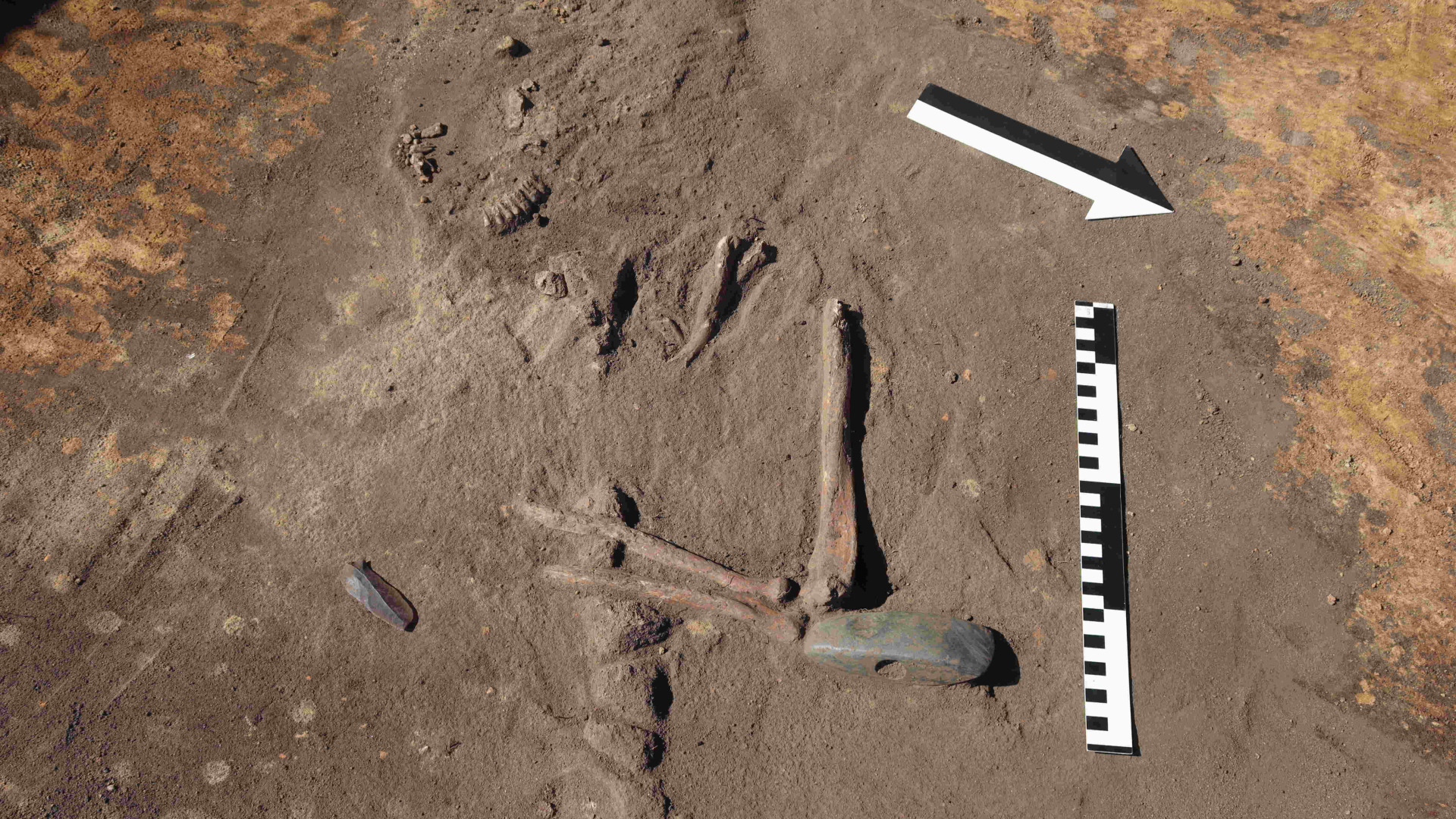
The grave, which was found near Wrocław in southwest Poland, included the nearly complete skeleton of an adult male who was buried with amber beads, a flint blade and a battle ax made of serpentinite, a greenish metamorphic rock. The style of the stone ax suggests the burial was made around 2900 B.C., during the Middle Neolithic period (New Stone Age), according to the statement.

But a handful of teeth and bones that were also deposited in the grave as funeral offerings made the burial stand out as particularly unusual.

partial remains of a human skeleton being excavated from the dirt with a stone ax and measurement tool

Archaeologists found an ax under the skeleton's right elbow, as well as teeth from another human skull. (Image credit: Wrocław Medical University)

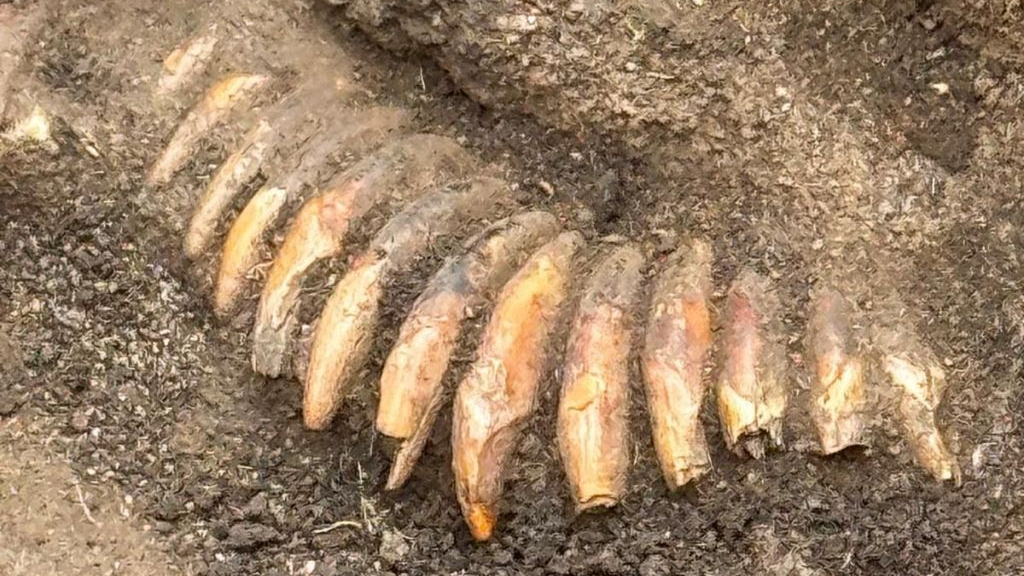
"The arrangement of the 42 teeth was precise," Dąbrowski said, "and upon further inspection, it turned out that all of them had holes drilled through their roots. They must have formed a kind of necklace."

The teeth that made up the necklace were incisors and canines that belonged to large mammals, such as wolves, deer, bears and potentially humans, Dąbrowski said in a Sept. 4 translated statement.

"It's possible we've discovered the grave of a warrior or hunter, but because of this necklace, we can assume it was someone important, for example, the leader of a family clan," Dąbrowski said.

The burial also contained the remains of two human skulls, which the archaeologists think may be from decapitated heads that were buried with the man as gifts or funeral offerings. However, further analysis of the skulls is needed to confirm or rule out decapitation, according to the first statement.

A similar elite person's burial filled with axes, flint tools and amber beads was previously discovered nearby, the researchers noted in the statements. In that case, the bones of a calf suggested that the animal had been sacrificed at the grave. But to date, these are the only two burials of their kind in the area. According to the statements, they might be from members of the Corded Ware culture, which likely spread Indo-European languages around Europe and Asia.

According to Dąbrowski, the next step is to analyze the remains from both Stone Age burials to figure out if the people were related and what their lives were like nearly 5,000 years ago. He expects the first results of the analyses to be available later this year.

What do you know about the Paleolithic, Mesolithic and Neolithic eras? Find out with our Stone Age quiz.

  •  

Lavish private bath used by Roman emperor and 'high-status residents' discovered at imperial palace in Serbia

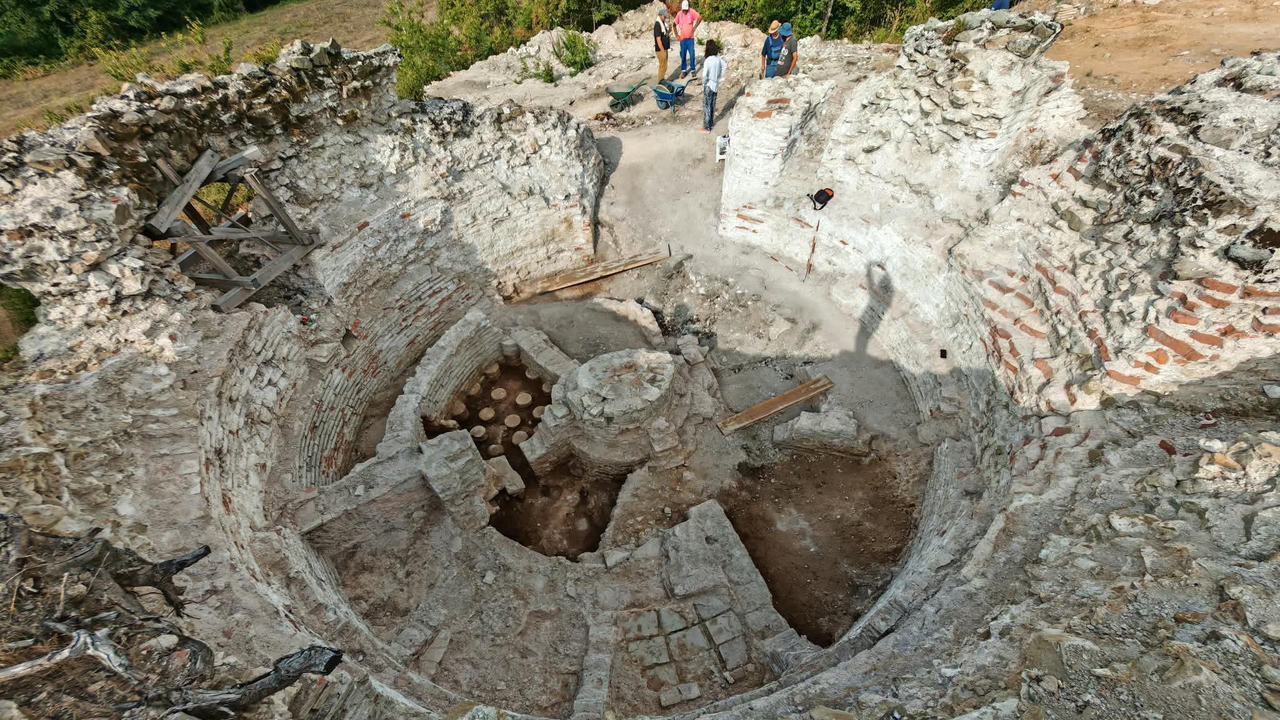
Archaeologists excavating in eastern Serbia have discovered the remains of a lavish and uniquely constructed Roman bath that once belonged to an emperor. The suite of rooms ‪—‬ which included heated floors, three bathing pools and a sauna ‪—‬ was uncovered at the bottom of a tower within an imperial palace, a design archaeologists had never seen before in the Roman Empire.

The bath complex, known in Latin as a balneum, was found at the archaeological site of Vrelo-Šarkamen, a monumental fortified residential complex that was built in the early fourth century and was occupied by Maximinus Daza (or Daia), who was Roman emperor from 310 to 313. Archaeologists have been excavating at Vrelo-Šarkamen on and off for decades, and the latest discovery was made by a research team from the Institute of Archaeology, an independent research institution in Serbia, according to a Sept. 3 statement.

Galerius Valerius Maximinus, born in what is now Serbia and originally named Daza, was one of the four Roman "tetrarchs." In A.D. 293, Emperor Diocletian essentially split the Roman Empire into two halves — Eastern and Western — and each was administered by a senior emperor and a junior ruler. By 305, the rulers of the Roman Empire were Constantius and Galerius as senior emperors and Severus and Maximinus Daza as junior rulers, but the tetrarchy had begun to fall apart. Maximinus claimed the title of senior emperor in 301 but lasted only three years. He died in 313 after losing a civil war against his rival, Licinius.

The new excavations at Maximinus Daza's imperial residence have revealed that the palace was even more complex and luxurious than previously thought, according to the statement.

aerial image of an excavated ancient roman bath showing low pillars that supported the floor

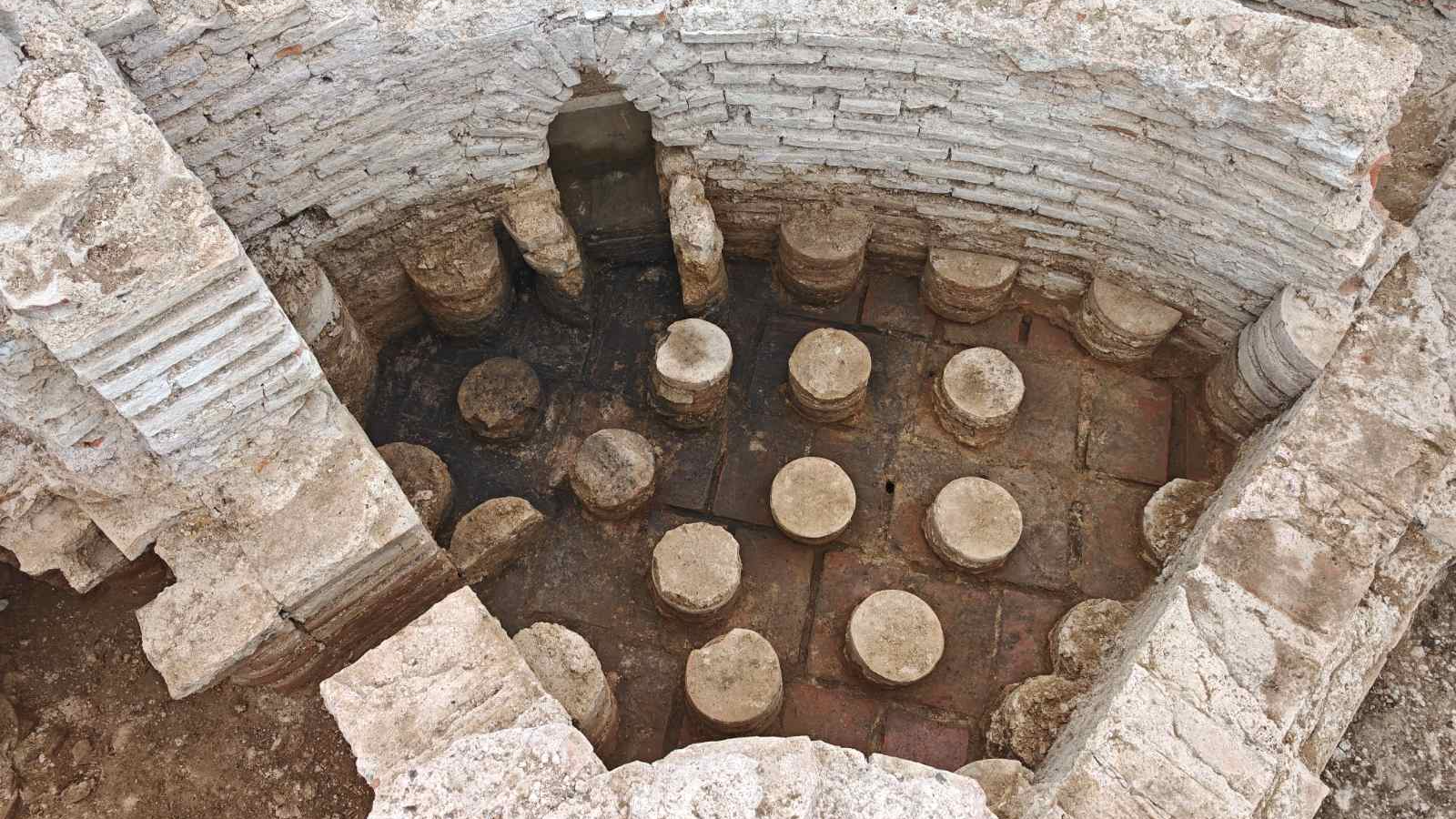
Archaeologists identified this part of the bath as the "sudatorium," or steam room. (Image credit: Vrelo-Šarkamen research team/Institute of Archaeology)

Maximinus' palace had a monumental tower in the southwest corner. But archaeologists were surprised to find a circular bath complex on the lowest level of the tower, as most ancient balnea were oriented linearly, with rooms in a row. This bath area had a domed ceiling with six windows, which shows a high level of engineering knowledge, according to the statement.

The balneum was split into two sections: one for equipment needed to run the baths and one for bathing and relaxing. Within the equipment room, archaeologists found the furnace that heated the bath's floors. They also discovered the base for a copper boiler that would have been used to heat up bath water. However, the copper boiler itself is now missing.

Within the suite of rooms that the emperor used, archaeologists found three bathing pools or tubs, along with a sudatorium, the Latin word for a steam bath or sauna.

According to the statement, "the complex was not simply a space intended for personal hygiene, but a carefully designed private bath intended for high-status residents of the palace, in which architecture, technical infrastructure and comfort formed a single functional whole."

Researchers will continue to explore the bath complex to better understand how the rooms were structured and how Emperor Maximinus and his family accessed it.

From Augustus to Nero, see how much you know about ancient Rome's famous leaders with our Roman emperor quiz!

  •  

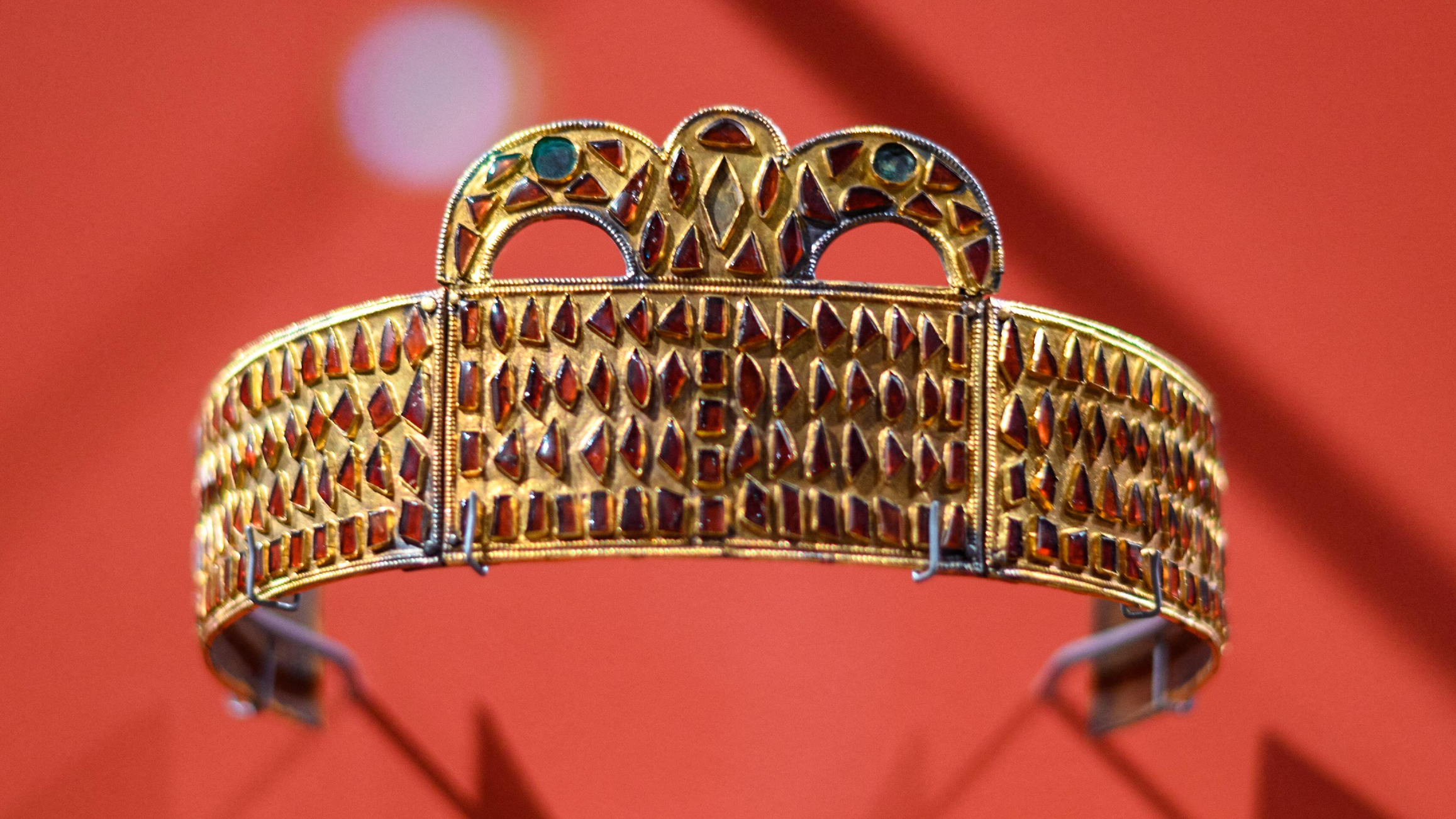
Crown of Kerch: A 1,600-year-old gold, gem-studded diadem found in the grave of a Hun noblewoman

a garnet-studded gold crown against a red background

The Crown of Kerch was discovered in a high-status woman's grave in Crimea more than a century ago. (Image credit: Mirko Kuzmanovic/Alamy)
QUICK FACTS

Name: Crown of Kerch

What it is: A gold-and-garnet diadem

Where it is from: Kerch, Crimea

When it was made: Late fourth to early fifth centuries

At the beginning of the 20th century, a German art collector acquired dozens of artifacts from a Russian-led excavation of an ancient Hun settlement in Crimea. The most spectacular piece of the collection was the Crown of Kerch ‪—‬ a garnet-studded, gold diadem featuring stylized birds of prey.

The artifact, which is now on display at the Neues Museum in Berlin, is made up of three gold-covered, bronze plaques and more than 250 gem-studded cells. According to the museum, the crown was discovered in the grave of a high-status woman buried in the ancient city of Pantikapaion on what is now the Kerch Peninsula of Crimea.

The band of the rare gold diadem is roughly 1.7 inches (4.4 centimeters) tall and is associated with the fearsome nomadic warriors known as the Huns, who moved west from the Don River in what is now Russia in the late fourth century A.D.

Pantikapaion was founded as a Greek colony in the sixth century B.C. but was conquered by the Huns in the late fourth century A.D. A large necropolis with as many as 2,000 burials was excavated at Pantikapaion in the early 20th century, but only a handful of artifacts and skulls were saved from the excavation. Pantikapaion was incorporated into the Byzantine Empire in the sixth century by Emperor Justinian I.

The Crown of Kerch features two stylized heads of birds of prey, likely eagles, flanking a central floral motif. Round, green gems mark the birds' eyes. These birds likely represented power and authority among the Huns and other groups, according to the museum, and they were a popular symbol on jewelry and accessories of the time. Similar birds of prey have been found on Visigoth women's jewelry in Spain from the sixth century, for example.

German archaeologist Joachim Werner wrote in a 1956 study that the Crown of Kerch was found in a burial chamber near the skeleton of a woman with an artificially modified skull. Although the woman was buried with the diadem, Werner believed that these items were not just used for grave goods, and that high-status Hun women regularly wore the accessory during life, possibly with a cloth cap or veil attached.

Around two dozen examples of similar gold diadems have been discovered to date. This suggests that the Crown of Kerch is not technically the royal insignia of a queen but rather a diadem worn 1,600 years ago by a member of the ruling Hun elite.

For more stunning archaeological discoveries, check out our Astonishing Artifacts archives.

Can you put together last week's Astonishing Artifact?

  •  

2,400-year-old grave of possible ancient pro wrestler discovered in Turkey

Archaeologists excavating near the ancient town of Aspendos in Turkey have discovered the grave of a person who may have been a pro athlete over two millennia ago.

"Coins with depictions of wrestlers and other artifacts found in the tomb indicate that the person buried here may have been involved in sports, perhaps even a wrestler," Mehmet Nuri Ersoy, Turkey's minister of culture and tourism, said in a translated statement Monday (Aug. 10).

The archaeologists found the skeleton and artifacts in a box-style sarcophagus made of stone slabs while digging in one of the cemeteries outside Aspendos. The tomb likely dates to between 475 and 300 B.C., during the city's Classical period, according to the statement.

Aspendos was a Greco-Roman city in southwest Turkey, roughly 10 miles (16 kilometers) inland from the Mediterranean Sea. The city was founded by Greek colonists in the fifth century B.C. and quickly rose to prominence as a trading center for salt, olive oil, wood and horses. Aspendos had a large Greek gymnasium as well as a large stadium that was erected in the second century A.D. and could hold up to 8,000 spectators who watched footraces, javelin contests and wrestling.

The ancient sport of wrestling is linked to Aspendos primarily through the city's coinage. Aspendos minted its own silver coins with the image of two naked wrestlers on one side.

an ancient silver coin depicting two male wrestlers

A recently excavated grave reveals a human skeleton and silver coins depicting wrestlers from the ancient city of Aspendos in Turkey. (Image credit: Alamy)

These coins, called staters, were minted for well over a century, which suggests wrestling held civic significance for Aspendos, Oğuz Tekin, an archaeologist at Koç University in Turkey, suggested in a 2000 study.

Although wrestler-type Aspendos coins were discovered in the newly excavated grave, it is unclear whether the deceased was a wrestler.

"There will need to be much more analysis before a positive identification of the body as a wrestler can be determined," Sarah E. Bond, a historian at the University of Iowa who was not involved in the discovery, told Live Science. For example, signs of a broken and healed nose could indicate the person was an athlete.

"Coins alone cannot indicate this was a Classical era Greek wrestler," Bond said, because "these coins were numerous and used as payment by the entire populace, not by wrestlers alone."

The grave is part of the ongoing excavation of a newly discovered cemetery at Aspendos, according to Ersoy. "With every new find in Aspendos, we will continue to complete the missing pages of our history, protect our cultural heritage through scientific studies, and carry it into the future," he said in the statement.

See if you know what these mysterious artifacts are with our archaeological fragments quiz!

  •  

Berlin gold hat: A 3,000-year-old ceremonial headdress that a cult used to track the sun, moon and lunar eclipses

a conical gold hat on display with a black background

The Berlin gold hat was made around 3,000 years ago from a single sheet of gold and accentuated with motifs that represent a calendar. (Image credit: Alamy)
QUICK FACTS

Name: Berlin gold hat

What it is: A tall, conical hat

Where it is from: Likely southern Germany

When it was made: Circa 1000 to 800 B.C.

This tall, conical hat made from a single sheet of hammered gold was likely worn by an ancient priest during a sun cult ceremony. The Berlin gold hat is the best preserved example of only four Bronze Age accessories of this type that have been found in Central and Western Europe.

The gold hat is in the collection of the Museum of Prehistory and Early History in Berlin. The museum acquired the artifact in 1996 after it circulated on the antiquities market. As a result, it is unclear where the hat was found, but the other three known Bronze Age gold hats were discovered in southern Germany and western France.

The hat is roughly 29 inches (74 centimeters) tall and weighs just over 1 pound (480 grams). It is accented with a flat bronze band with a bronze wire bordering its brim. A wool or felt lining was likely worn underneath the gold hat to stabilize it, but no traces of a lining remain.

Bands of decoration on the Berlin gold hat make the artifact stand out. The repeated motifs of concentric circles, disks, ovals and other symbols encode numerical values that correspond to a calendar, archaeologist Wilfried Menghin argued in a 2008 study. Each band represents a numerical value, and combinations of bands can help calculate lunar months and solar years, as well as convert between lunar and solar dates. The calendar can also be used to predict lunar eclipses.

"The person who wore this hat was the carrier of secret and very special knowledge," Matthias Wemhoff, director of the Museum of Prehistory and Early History, said in a translated 2018 video. Wemhoff described the hat's wearer as a priest who may have come out on a mountaintop at sunrise. The glistening gold hat would have caught the sun's first morning rays, dazzling the other participants in the ceremony.

Although there are no historical records of a Bronze Age sun cult in Europe, other astonishing artifacts, such as the Trundholm Sun Chariot and the Nebra Sky Disk, showcase the importance of celestial bodies to these prehistoric societies.

For more stunning archaeological discoveries, check out our Astonishing Artifacts archives.

Can you put together last week's Astonishing Artifact?

  •  
❌