
❌

Normal view

New quantum chip verifies its own hardware while generating secure random numbers

9 June 2026 at 21:55

Researchers at the National University of Singapore have developed a quantum random number generator chip that can verify the integrity of its own hardware while producing random numbers, addressing a long-standing security challenge in digital encryption systems.

Random numbers are critical for encryption keys, secure transactions, digital signatures, and other cybersecurity applications. Existing random number generators, including quantum versions, rely on users trusting that their hardware components continue to operate as intended. If a component degrades or is tampered with, the output could become predictable without being detected.

The new chip is designed to eliminate that risk by continuously checking whether its measurement hardware is behaving as expected during operation.

The research team, led by Associate Professor Charles Lim from the National University of Singapore’s Department of Electrical and Computer Engineering, says the approach could strengthen security in sectors ranging from finance and healthcare to artificial intelligence and connected devices.

Hardware trust removed

Most quantum random number generators operate using what researchers call a trusted-device model. Under this approach, components such as lasers, modulators, and detectors are assumed to match their specifications throughout their lifetime.

The new chip instead uses a measurement-device-independent protocol. This means users only need to trust the quantum light signals entering the system rather than the detector responsible for measuring them.

During operation, the chip generates known quantum light states and compares detector responses against predictions from quantum theory. If the results match expectations, the system converts the data into certified random numbers. If not, the process stops automatically.

“The measurement unit in quantum random number generators has traditionally been very difficult to characterize, making its real-world reliability hard to guarantee. Our solution removes the need to trust that this unit is operating as specified during use,” said Associate Professor Charles Lim.

The device integrates both the signal encoder and optical detector on a single silicon chip manufactured using an eight-inch wafer process commonly used in semiconductor production. Unlike some quantum technologies, it operates at room temperature and does not require cryogenic cooling.

Researchers also addressed a challenge involving silicon-based light modulators. Adjusting the phase of light can unintentionally change its brightness, potentially affecting security. The team developed a control method that compensates for this effect and maintains stable optical signals.

Security over speed

The chip’s detector achieved a total efficiency of 69.1 percent, exceeding the protocol’s minimum requirement of 67 percent. Tests also showed that the system generated more certified random bits than it consumed as an input seed, confirming that it produces fresh randomness.

Researchers describe the device as the most secure quantum random number generator chip demonstrated so far. Its security analysis assumes a worst-case scenario in which an attacker may possess quantum correlations with the detector itself.

That level of security comes with a trade-off. The current experimental system produces 64 bits per second, significantly slower than conventional quantum random number generators that can exceed 100 gigabits per second.

The team believes performance can improve substantially through better detector technology. Laboratory photodiodes developed by the researchers have already reached 92.4 percent efficiency, and simulations suggest future versions of the chip could achieve data rates of 68 megabits per second.

“This chip paves the way towards integrating practical self-testing quantum random number generators into compact, secure systems,” added Assoc Prof Lim.

The study was published in the journal PRX Quantum.
NASA Announces Artemis III Crew

9 June 2026 at 21:48
NASA announced the crew of Artemis III mission, which will fly to low-Earth orbit to test rendezvous and docking maneuvers with one or two lunar landers.

Flight Dynamics Research Facility Characteristics

9 June 2026 at 21:47

1 min read

Preparations for Next Moonwalk Simulations Underway (and Underwater)

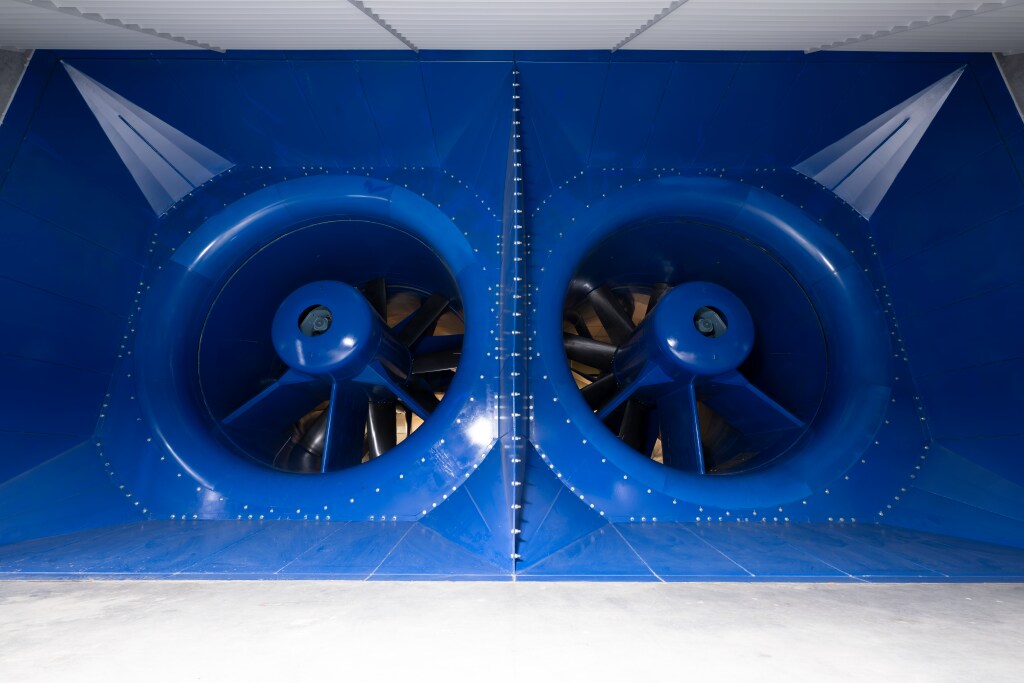
Flight Dynamics Research Facility Characteristics image showing two wind tunnel fan blade sections.

Home
Characteristics

The Flight Dynamics Research Facility (FDRF) is a large, subsonic wind tunnel with a vertical test section for conducting flight dynamics research for stability, controllability, free-fall and aircraft spin, and spin recovery testing of atmospheric vehicles.

Characteristics

  • Test Section Dimensions: 20 ft. diam. by 24 ft. high
  • Speed: 0 – 172 ft/s (0 – 117 mph)
  • Dynamic Pressure: (0 – 35 psf)
  • Reynolds Number: 0 – 1.10×10^6 per ft.
  • Pressure: Atmospheric
  • Temperature: Actively cooled (79° F)
  • Test Gas: Air
  • Facility Height: 131 ft.

Flight Dynamics Flight Research

Aerosciences Evaluation and Test Capabilities

Share

Details

Last Updated
Jun 09, 2026
Editor
Lillian Gipson
Contact

Il telescopio spaziale James Webb sta offrendo una visione senza precedenti…

9 June 2026 at 21:33
Il telescopio spaziale James Webb sta offrendo una visione senza precedenti dell’universo primordiale grazie alla sua capacità di osservare la luce infrarossa proveniente da oggetti estremamente lontani. Tra le sue scoperte più sorprendenti figurano galassie molto luminose e apparentemente mature esistite poche centinaia di milioni di anni dopo il Big Bang. Queste osservazioni hanno acceso un intenso dibattito scientifico, poiché suggeriscono che la crescita delle prime strutture cosmiche potrebbe essere avvenuta più rapidamente del previsto. Sebbene analisi successive abbiano ridimensionato alcune delle stime iniziali, Webb continua a fornire dati che stanno portando gli astronomi a perfezionare le teorie sulla formazione delle galassie, dei buchi neri supermassicci e dell’universo delle origini.

Anthropic unveils Claude Fable 5, opening Mythos-class capabilities to all users

9 June 2026 at 21:22

Anthropic has opened the doors to its most advanced AI system yet, but not without placing guardrails around its most sensitive capabilities.

The company on Tuesday unveiled Claude Fable 5, the first publicly accessible version of its Mythos-class AI model. Anthropic says the model outperforms every generally available system it has released to date, delivering major gains in software development, analytical work, visual understanding, and scientific reasoning.

The launch marks a significant shift for the AI firm. Until now, Mythos-level capabilities remained restricted to a small group of trusted organizations because of concerns that the technology could aid cyberattacks and other harmful activities. Fable 5 changes that equation by bringing those capabilities to a broader audience while routing certain high-risk requests through a less permissive model.

Safety before scale

Anthropic said Fable 5 includes a new layer of AI-powered classifiers designed to detect potentially dangerous prompts and jailbreak attempts. The company stress-tested those safeguards before releasing the model to the public.

If users submit requests involving cybersecurity, biology, chemistry, or model distillation, the system automatically redirects those interactions to Claude Opus 4.8 instead of Fable 5. Users receive a notification whenever that fallback occurs, allowing them to understand why the switch happened.

Introducing Claude Fable 5: a Mythos-class model that we’ve made safe for general use.

Its capabilities exceed those of any model we’ve ever made generally available. pic.twitter.com/2AvmEjHIX8

— Claude (@claudeai) June 9, 2026

The company acknowledged that the safeguards may occasionally block harmless requests. However, Anthropic said early testing showed that fewer than 5% of sessions triggered a fallback response. “We’ve deliberately tuned the safeguards to be cautious,” the company said, adding that it plans to refine the system over time to reduce unnecessary interventions.

Built for demanding work

Anthropic argues that Fable 5 delivers its biggest advantages when tackling lengthy and complex assignments. The company says the model can stay focused across extended workflows while maintaining consistency over large amounts of context.

During early evaluations, payments company Stripe reported that the model completed a large-scale migration across a 50-million-line Ruby codebase in roughly one day. According to Anthropic, the same task would have otherwise occupied an engineering team for more than two months.

The company also highlighted gains in financial analysis. On Hebbia’s finance benchmark, Fable 5 posted the strongest results among leading models. Trading firm IMC found that the system performed well across factual analysis, reasoning tasks, root-cause investigations, and expected-value calculations.

Fable 5 also advanced Anthropic’s vision capabilities. The model can extract detailed information from scientific figures and reconstruct web applications from screenshots. In another demonstration, it completed Pokémon FireRed using a minimal vision-only setup after earlier Claude models struggled with the challenge.

Mythos stays restricted

Alongside Fable 5, Anthropic introduced Claude Mythos 5, a version of the same underlying model with fewer restrictions in select areas. Anthropic says the model offers the strongest cybersecurity capabilities it has developed so far.

Access to Mythos 5 remains limited. The company is deploying it through Project Glasswing while expanding availability to approved cyber defenders and organizations responsible for critical infrastructure. Anthropic said it intends to broaden access further through a trusted program in the future.

Fable 5 is available through Anthropic’s Claude API and consumption-based Enterprise offerings. Through June 22, Pro, Max, Team, and seat-based Enterprise subscribers can access the model at no additional cost. After that date, Anthropic plans to move users to a credit-based system before eventually restoring broader subscription access.

As competition intensifies across the AI industry, Anthropic is betting that powerful models do not have to arrive without safeguards. With Fable 5, the company is testing whether frontier capabilities and tighter controls can coexist in the hands of everyday users.

💾

Anthropic has launched Claude Fable 5, bringing Mythos-class capabilities to the public while redirecting high-risk prompts through Opus 4.8.

Due punti luminosi, vicini al limite del contatto visivo, dominano il cielo…

9 June 2026 at 20:30
Due punti luminosi, vicini al limite del contatto visivo, dominano il cielo occidentale subito dopo il tramonto. Gianluca Masi, astrofisico e responsabile scientifico del Virtual Telescope Project, osserva la convergenza tra Venere e Giove, i due pianeti più brillanti del sistema solare, che la sera del 9 giugno raggiungono la minima distanza angolare. Un’apparente sovrapposizione […]

Spanish Cave Sanctuary Reveals More Than 11,500 Years of Activity

9 June 2026 at 19:46
Sala Keimada, a chamber of Cueva Palomera in Burgos, Spain. Image credit: Ortega-Martínez et al., doi: 10.1016/j.jasrep.2026.105818.

New radiocarbon dates from Sala Keimada, a hard-to-reach chamber of Cueva Palomera in the province of Burgos, northern Spain, suggest that generations of people returned to the sacred space from the end of the Ice Age through the Iron Age, leaving behind art, structures and offerings.

The post Spanish Cave Sanctuary Reveals More Than 11,500 Years of Activity appeared first on Sci.News: Breaking Science News.

A Scientific Achievement That’s Totally Random

9 June 2026 at 18:19
Encryption systems rely on “random” numbers, but conventional computers can’t generate them perfectly. New research shows that quantum physics can.

Nasa names Artemis III crew, but a rocket explosion has thrown US Moon plans into turmoil

The Artemis III mission will involve launching the Orion spacecraft into low Earth orbit. Nasa/Esa/ATG Medialab

Nasa has named the crew of its next Artemis mission, which it promised would be an “extraordinary demonstration of what is possible”. Artemis is the ambitious American-led effort to return humans to the lunar surface by 2028.

However, the Artemis III mission will not travel to the Moon. Instead, the Orion spacecraft will stay in low Earth orbit and aim to dock with lunar landing vehicles launched separately by one or two space companies.

Nasa astronauts Randy Bresnik, Frank Rubio and Andre Douglas and Italian European Space Agency astronaut Luca Parmitano will carry out the mission in late 2027.

There are two potential landers that could fly on their separate mission to then rendezvous with the Orion spacecraft; one made by Elon Musk’s SpaceX and the other by Jeff Bezos’ firm Blue Origin. They will carry astronauts down to the Moon’s surface on subsequent missions.

However, the timetable for Artemis III and the first mission to return astronauts to the lunar surface (Artemis IV) has been thrown into doubt by the recent explosion of a New Glenn rocket. This rocket is intended to launch Blue Origin’s lander, called Blue Moon.

The blast could add significant delay to the Artemis schedule and there is speculation that it could even put the US out of contention to reach the Moon before China, which is planning its own Moon landing mission for 2030.

The Artemis III crew: (L-R) Andre Douglas, Luca Parmitano, Randy Bresnik, Frank Rubio.
The Artemis III crew: (L-R) Andre Douglas, Luca Parmitano, Randy Bresnik, Frank Rubio. Nasa

On May 28, 2026, Blue Origin’s New Glenn rocket, which is able to carry heavy payloads, was undergoing a standard engine fire test. For reasons which are still unclear, a huge explosion destroyed the rocket and damaged Blue Origin’s only launchpad, located at Cape Canaveral Air Force Station in Florida.

To reduce costs, Nasa’s Artemis programme relies on companies like Blue Origin to deliver key elements for lunar missions, like the landers.

Rockets capable of lifting heavy payloads into orbit will be needed for launching the building blocks of Nasa’s Moon base, which will be assembled over the next few years.

Under previous plans, SpaceX’s Starship vehicle would have been used as the lander for the first two Artemis missions to touch down on the Moon. However, Starship ran into problems during flight tests, so Nasa hatched a plan B.

The New Glenn explosion at Cape Canaveral Air Force Station (NasaSpaceflight.com).

This backup plan brought Blue Origin’s Blue Moon lander into the mix for Artemis IV, the first mission back to the lunar surface. Now, with the explosion, even their Plan B seems to have moved out of reach.

How bad is the situation though? Blue Origin only has one launch pad that, at the moment, cannot be used. But recent updates by the company’s CEO, Dave Limp, indicated that the situation may not be as dire as it might have been. He indicated that New Glenn might even return to launch before the end of the year.

The propellant farm (which stores the rocket fuel and oxidiser that are pumped into the rocket just before launch), as well as the water tower were undamaged. So were the booster and upper stages of another New Glenn rocket held in the pad’s integration facility. The launch tower will only need to be repaired and not rebuilt.

To gain some insight into the potential impact on the timescale for a next launch, we might be able to look at a similar situation faced by SpaceX in September 2016 where a Falcon 9 rocket exploded on one of their launchpads.

They were able to continue only four months after, but from one of their alternative launch sites, none of which were fully operational at that time. But Blue Origin has no alternative site at all. SpaceX needed more than a year to start up operations again on their damaged launch site.

Kiko Dontcev, vice president of launch at SpaceX, commented on the task ahead for Blue Origin. He described the rebuild as a high precision dissection of the damaged site to help better understand the incident. “In the initial days and weeks after you’re using a scalpel not a bulldozer,” he commented on X.

This might cast doubt on hopes that New Glenn could launch again this year. Indeed, Nasa’s chief Jared Isaacman told CNBC that the launch pad might not be restored until 2028. Currently, we just do not have the full picture of the damage and work needed. So, we can only hope that New Glenn launches can resume as soon as possible.

Nasa is already trying to limit the impact of the New Glenn explosion by urging Blue Origin to look at other rockets for launching its Blue Moon lunar landers. This would allow Nasa to still meet its deadline of landing astronauts on the Moon in 2028.

But New Glenn is still needed to land hardware such as the lunar terrain vehicles for Artemis missions and a robot rover called Viper, which will scout for water ice at the Moon’s south pole.

Exploring with pride

However, with 2030 approaching fast, the knock-on effects of the explosion could lead to China beating the US to the Moon. But the Artemis programme had already been hit by delays as a result of Nasa’s dependence on government whims and variable funding. Overall, the Artemis programme has had a relatively tight budget to work with.

Space agencies like Nasa must try (as much as possible) to decouple their efforts in space from ongoing turmoil in domestic politics. It could also do well to rely less on ventures led by billionaires, who often have their own private objectives.

One could view the Chinese lunar programme as being more stable, because of their one-party state as well as their strong sense of national pride. However, there is also a lack of transparency in their space programme and a focus on propaganda.

As an outside observer, it appears that Nasa’s current timeline for landing on the Moon and establishing a permanent lunar base is slipping away. But this may not be the disaster some in the space industry think it is. Perhaps we should embrace a pride in exploring space as a community of nations working together.

The Conversation

Daniel Brown does not work for, consult, own shares in or receive funding from any company or organisation that would benefit from this article, and has disclosed no relevant affiliations beyond their academic appointment.

One day after discovery, Meta pulls facial recognition code from its smart glasses

One day after WIRED revealed that Meta had quietly embedded an unreleased face-recognition system into an app installed on more than 50 million phones, the company removed it, according to a WIRED analysis of the latest version’s code.

The most recent version of Meta AI, a companion app for its line of smart glasses, strips out the unactivated software components that powered the system Meta internally called NameTag. The version published the day of WIRED’s report included several code libraries explicitly named for face recognition. Friday’s release includes none of them.

Andy Stone, Meta's vice president of communications, told WIRED on Monday that the feature is purely exploratory, adding: “No final decision has been made on what to do here, if anything.”

Read full article

Comments

© David Paul Morris/Bloomberg/Getty

Gold isn’t inert, it just has bodyguards protecting it

9 June 2026 at 15:23

Gold is weird. It's one of the few metals that doesn’t really oxidize. Even silver and copper—from the same column of the periodic table—form weak oxides. Naively, you might expect that gold would tarnish just like silver. Gold also sits right next to platinum, but it has none of that metal’s catalytic properties.

Then came gold nanoparticles that acted like catalysts, and we were confused by their apparent willingness to take part in chemical reactions.

Now, a pair of scientists has explained that gold’s inertness isn’t inherent to the atom but rather to the surfaces that gold crystals form. Before we get to the results, let’s first take a look at the traditional explanation for gold’s inertness and why an inert material that has no catalytic activity suddenly acts as a catalyst when in its nanoparticle form.

Read full article

Comments

© Kieran Stone

❌