❌

Normal view

Windows 98 SE users get a Thunderbolt 4 driver, thanks to AI assistance

20 October 2026 at 12:30

Windows 98 SE devotees can now enjoy (experimental) support for USB4 and Thunderbolt 3/4. Developer and maker Yeo Kheng Meng, who also enjoys retrocomputing, recently released the vibe-coded xHCI98 v3.0.0.0, enabling the practical use of generic USB 3.x, USB4, and Thunderbolt 3/4 host controllers on systems running Windows 98 SE, ME, 2000, XP, Vista, and 7. An extensive blog post by the dev provides further reading about the driver, compatibility, its creation, and usage.

Demo video “shows many different USB devices being hotplugged to a modern 2020 ThinkPad P14s Gen 1 with only xHCI controller.”

Some of you will be wondering why a project to bring USB4 (Thunderbolt 3 and 4) to PCs running Windows 98 SE exists. Retro computing fan Meng explains on his GitHub that this project should appeal directly to users of PCs from the mid-2010s that have xHCI-only (USB 3.x) chipsets and no legacy EHCI controller. However, older OSes don’t have xHCI drivers, and that’s where xHCI98 steps in. “Without xHCI support, even keyboards, mice, and flash drives need the BIOS's legacy support, cannot be hotplugged, and devices such as Ethernet and audio do not work at all,” explains Meng, revealing his motivation. “This project fills that gap.”

Impressively, xHCI98 drives a lot more than USB storage. It replaces Windows’ own USB port and hub drivers to facilitate the connection and use of USB 1.1 and 2.0 and SuperSpeed (USB 3.x) devices and hubs, UAS (USB Attached SCSI) storage through a second driver (xhciuas.sys), and Thunderbolt 3 and USB4 docks and NVMe enclosures through a third driver (xhcicm.sys).

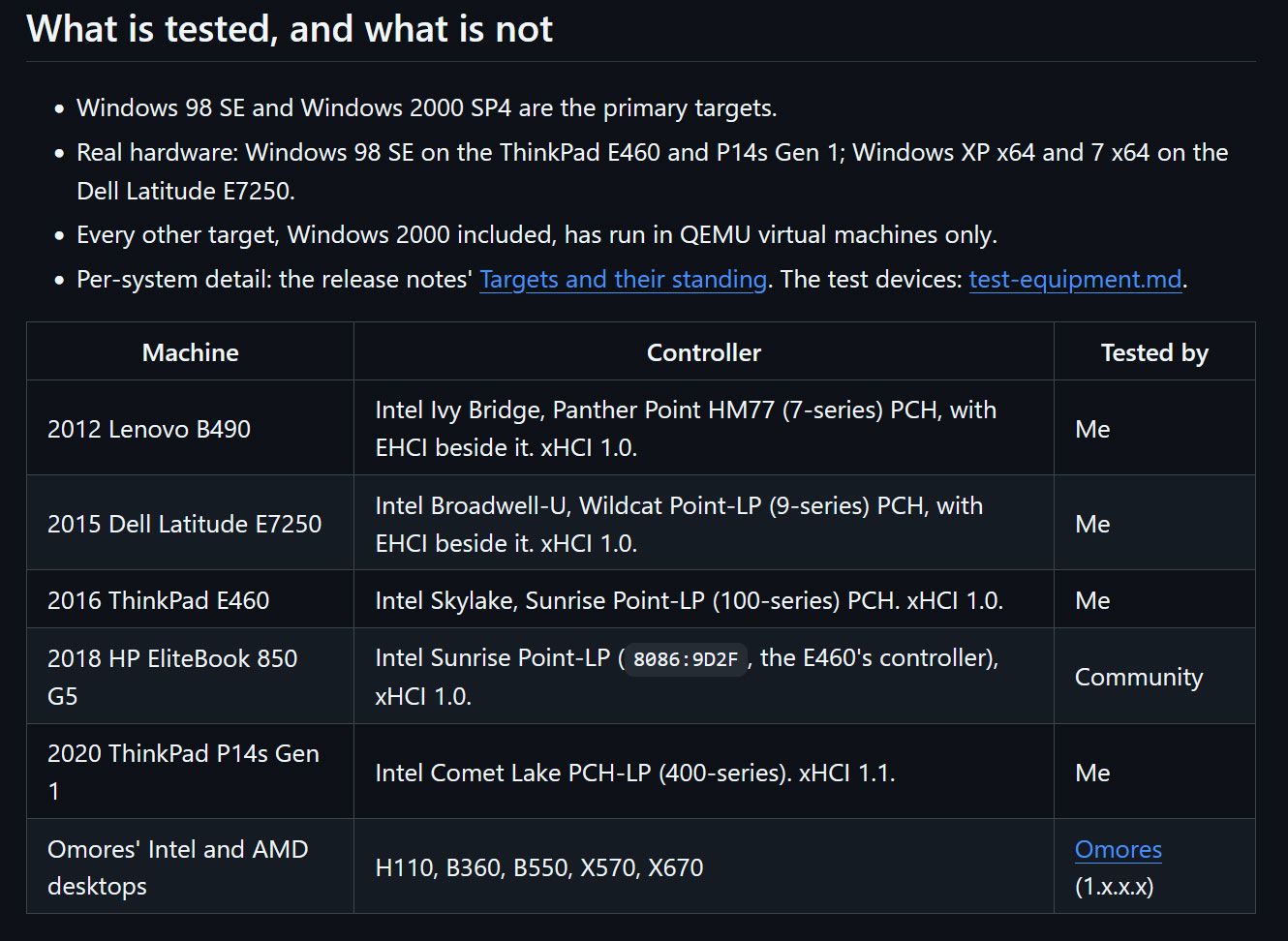
Meng has developed and tested xHCI98 mostly on Intel hardware, as that is what he owns. Candidly, he admits “this is a solo human's project with AI assistance, so bugs are not unexpected,” even if you do have the same hardware as the dev - a 2020 ThinkPad P14s Gen 1 (Comet Lake xHCI, no EHCI). It stands up pretty well during the plug/unplug video demo above, though the test rig used is not quite the USB cart of death.

Windows 98 users get Thunderbolt 4 driver

(Image credit: Yeo Kheng Meng)

As a solo developer, Meng isn't shy to admit he leaned heavily on AI assistance to prepare the xHCI98 release. His vibe coding adventure was supported by Claude Fable 5.1 for planning, Claude Opus 5.5 for coding, and Codex GPT 6 Astra as an adversarial reviewer.

In addition to a few bug warnings, there are some other things to know about using this driver with the various older versions of Windows it supports, standby and hibernation, and more. The dev helpfully sketches out a process for checking your hardware, outlines various install methods, discusses updating, and talks about tuning the driver for those who will be jumping in at the deep end with this project.

Electronics hobbyist converts $120 DDR5 SODIMM kit into ‘$1000’ desktop kit to fight RAM crisis

20 October 2026 at 12:10

What if you could buy a cheap used DDR5 SODIMM (laptop memory) kit and transform it into a super-fast DDR5 desktop kit? That’s what electronics hobbyist Blighted Agent recently did when they succeeded in converting a SK hynix 2x 16GB DDR5-5600 SODIMM kit they got from Facebook Marketplace for $120 into a 2x 16GB DDR5-7800 desktop kit, claimed to be worth around $1,000. They also had to buy some blank DDR5 desktop memory PCBs from AliExpress for around $16 each, and a set of heatsinks for around $18.

In the above video, our hero says they bought the donor laptop 2x 16GB DDR5-5600 sticks for just $120, which is a bargain. With extra bits and pieces from AliExpress (desktop DDR5 PCBs, etc.), the total bill of materials came to $175. Blighted Agent comments that the SODIMMs used what he believed to be SK hynix A-die modules, which are the same as the ICs used in expensive desktop DDR5 modules like the G.Skill Trident Royal line.

The process began with taking the memory ICs from the donor modules using a hot air station. Then they were cleaned and had 0.45mm leaded solder balls added, using a DDR5 stencil, reballing jig, and hot air. Next, the blank desktop DDR5 PCBs were prepared. A little solder was added to the plethora of BGA connectors to be ready for the memory chips to connect to.

The old DDR5 ICs and the new desktop modules could now be mated, using flux, the preheater, hot air, and watching and prodding carefully with a dental pick. Blighted Agent’s experience lets him know when the BGA chips have successfully mated with the PCB. You can eyeball when they pop precisely into place due to surface tension, and offer up a modicum of resistance to pick prodding.

Finally, the enthusiast added the SPD chip and BIOS chip from the SODIMMs to the new desktop DIMMs. These new desktop DIMMs were quickly tested in a PC before they were finished off with carefully applied thermal pads and the fancy-looking heatsinks.

Blighted Agent felt lucky that there were no issues with the newly created desktop modules. There’s a lot of intricate things that can go wrong during such a process. The initial boot verification showed them recognized in his Asus ROG Maximus Z790 Apex Encore motherboard as two “SK hynix 16,384MB 5600MHz” modules, which was correct. Some tuning resulted in rock-steady performance at DDR5-7800 CL38 and 1.40V. This was verified by stress testing for 90 minutes, which the enthusiast reckons was ample for a gaming PC. It is very likely a better result than using those mechanical SODIMM-to-DIMM converters you can buy, which can be problematic.

Blighted Agent seems to specialize in BGA soldering work, and has also successfully upgraded several graphics cards with double the VRAM. Though videos like this are edited to be brief, and they make the process look easy, the TechTuber admits there is a lot that can go wrong during this kind of rework. Moreover, with RAM modules, they lack the testing equipment to locate an issue with any particular IC on the PCB. So, if this module didn’t work, they might have ended up in a world of pain, not knowing which memory chip had an issue due to either an internal fault or a BGA soldering glitch.

Electronics hobbyist converts a $120 DDR5 SODIMM kit into a $1000 desktop kit
Blighted Agent on YouTube
Electronics hobbyist converts a $120 DDR5 SODIMM kit into a $1000 desktop kit
Blighted Agent on YouTube
Electronics hobbyist converts a $120 DDR5 SODIMM kit into a $1000 desktop kit
Blighted Agent on YouTube

Looking around at used DDR5 SODIMMs, it looks like Blighted Agent was very lucky to get a used working 32GB kit for $120. I just checked eBay U.S., and the best deal there was $320. Meanwhile, the best price for a new 32GB DDR5-6000 kit seems to be $449 at the time of writing.

We reported on Russian enthusiast VIK-on succeeding in a similar project earlier this year, but all their costing was in Rubles, and they went the extra mile in flashing custom firmware so the remade modules would be auto-detected with 6400 MT/s XMP support on most motherboards. In late 2026, DDR5 RAM continues to be too expensive.

Ukraine rescues wounded soldier using drone in daring 'world's first' UAV evacuation of a human

20 October 2026 at 11:00

The Ukrainian military is claiming a world’s first after using an unmanned drone to rescue an injured soldier on the eastern Kharkiv front. Ukraine’s United24 news shared a video of the historic first. It also explained that the wounded infantryman was stuck in a heavily mined area, guarded by Russian kamikaze drones.

🔴 HISTORIC FIRST: Ukrainian forces completed the first-ever aerial evacuation of an injured soldier from the frontline using a drone.Soldiers from the 92nd Assault Brigade and 30th Mechanized Brigade used a heavy Gurzuf Defence hexacopter to rescue the wounded infantryman from a heavily mined area.October 19, 2026

The above video starts with the Ukrainian drone locating the soldier, callsign ‘Kostya,’ in enemy territory. Various media reports suggest he was 11 miles (18km) behind enemy lines, at the mercy of Russian kamikaze drones, and perilously located in a minefield. Traditional land-based rescue was therefore not possible, but Kostya bravely agreed to be part of the first-ever human drone-lift rescue plan.

After being located, the injured infantryman clipped himself into a harness. He said, “That’s it, we can take off,” when he was fully buckled into the rudimentary-looking harness. UAV operator, callsign ‘Black’ from the 20th Mechanized Battalion, 30th Infantry Brigade, then appeared in the video and explained: “We were constantly in touch with him."

Ukrainian drone rescue key facts:

  • Drone used: Gurzuf Defense hexacopter
  • Drone capable of carrying 130kg (~287 pounds)
  • Drone’s known range: it has previously transported 90kg (~198 pounds) loads up to 25km (16 miles)
  • Infantryman weight: 80kg (~176 pounds)
  • Rescue distance: 8km (11 miles)
  • Hazards: enemy kamikaze drones, mines, gravity, many more

Wounded soldier rescued using hexacopter drone

(Image credit: United24 news video)

Being in constant touch with the operations HQ would have been reassuring. However, the surrounding presence of a fleet of Ukrainian support drones, both kamikaze devices and UAVs with anti-drone nets, was probably most comforting.

Eventually dropping back into safe(r) territory, after what must have been an arduous, nerve-wracking journey, control said, “Congratulations, you’re on the ground,” to Kostya, as he touched down in a field. Then the control room erupted into applause. They got their man back safely, and he is now being treated and is in recovery.

UAV operator ‘Black’ was delighted with the concerted efforts that brought back this wounded soldier. “A lot of people were involved, and everything worked out for us,” he said. Importantly, this may be the start of a whole new system of personnel evacuations for wounded and/or stranded soldiers using drone technology, indicated brigade leader ‘Napalm’ toward the end of the video.

French rioters ransack eSports team premises and are seen looting RAM sticks from PCs

19 October 2026 at 14:32

Leading French eSports club Team Vitality has confirmed that its Paris HQ has been smashed up, with trophies, computer equipment, and more looted over the weekend. Thankfully, no team members or staff have been hurt. The team’s V.Hive premises were attacked by criminal opportunistic looters under cover of the widespread protests in France over issues related to school funding, living costs, and government spending cuts. Other shops, public buildings, and property have been smashed, looted, and sometimes burned.

Aujourd'hui, les locaux de notre club ont été pillés en marge de la mobilisation du 17 octobre.Heureusement, aucun membre de notre staff ni aucun fan n’a été blessé. En revanche, nos vitrines ont été détruites, nos trophées et notre matériel informatique volés.En attendant d’évaluer la totalité des dégâts, V.Hive restera fermé.Plus d’informations seront communiquées par la suite.Prenez soin de vousOctober 17, 2026

Above, you can see the confirmation of the serious, unfortunate events seen over the weekend. “Our display windows were destroyed, and our trophies and computer equipment were stolen,” lamented the post [machine translation], while being thankful that no members, staff, or fans of Team Vitality were hurt. The bulletin ends with the news that the V.Hive will remain closed for now, until after damage has been assessed. More information is promised in due course.

There are a multitude of social media posts sharing images, videos, and pointing fingers at what they see as the cause of the protests, riots, and looting. Of course, fingers point in all directions, and unfortunately there are also reports of AI-generated rage-farming media, so keep a critical eye open should you dare to doom scroll.

Of course we’ve focused on the damage and looting of Team Vitality’s HQ due to the tech angle. The compendium of video clips shared by the news organization NEXTA provides evidence of the extent of the V.Hive attack. This 30-second clip appears to show rioters hammering at and kicking in the eSports HQ’s windows, taking items from the premises, and throwing gaming chairs onto bonfires in the street.

Los "estudiantes" franceses saquearon la arena de Esports de paris y se robaron el trofeo que team vitality gano en el torneo de counter strike Tambien se robaron las PC gamer y las destriparon ahi nomas en plena calle https://t.co/FjEkVPDuV6October 17, 2026

We also see accounts like ElBuni share clips of looters brandishing what appear to be eSports trophies from Team Vitality’s HQ (embedded above). The second clip shows looters with their hands inside gaming PCs opened up on the sidewalk. It looks like the hooded and gloved looter in the video is removing RAM sticks, an easily pocketable yet highly valuable PC component, as you will all know.

This morning, the French Prime Minister has called for local and partial curfews to contain the post-demonstration rioting. Meanwhile, there are concerns that there could be copycat behavior across Europe.

Claude Code AI agent caught a crypto miner hiding on a developer’s overheating Mac

19 October 2026 at 12:36

A developer using Claude Code to help build a temperature monitor app got a friendly warning from the coding agent. “Your Mac is running a crypto miner that I didn’t put there,” flagged the helpful agent. “I saw xmrig using about 1175% CPU, roughly 12 cores,” it informed its human master. Perhaps developer and Redditor UntilHEX should have sensed the crypto miner’s presence without AI help, as they admitted the malware’s presence “explains why my Mac has been running like s**t.”

Claude caught a cryptominer on my Mac whilst building me a temperature monitor app
 from r/claude

Ironically, the cryptomining malware’s nefarious CPU cycle hogging activity is what may have led to its discovery and demise. Pondering over a screenshot of the Claude Code window, we see that this malware was probably added to the Mac’s startup roster on August 29. It looks like UntilHEX was inspired to develop a Mac temperature monitor app after this infection to track and diagnose why the computer was running so hot.

Claude stepped in after the Redditor was concerned about a dump of the Mac’s raw temperature sensor readings. “They seemed far too high,” commented UntilHEX in the social media post. Indeed, the well-known coding agent pointed out that the CPU was peaking at a very toasty 112 degrees Celsius. It explained this was due to a sustained heavy load, specifically “xmrig using about 1175% CPU, roughly 12 cores.” We don’t know how many cores the Mac being used had, but maybe 12 were all of them.

Claude Code went on to describe how the crypto miner software had hidden itself on the Apple computer and ran at startup. It cautiously decided not to kill or remove anything from the Mac, but offered to clean up the CPU-hogging crypto miner, which was sucking all the power from the Apple Silicon computer. “Can I clean it up now?” Claude inquired. “I’d stop the startup item and the miner, and move the files into a quarantine folder.”

Later in the comments, UntilHEX informed the social media throng that Claude was indeed tasked with cleaning up the unwanted crypto miner software. “I only had to delete 1 file manually because Claude had an access issue, but it was very effective,” the Redditor said. After that, a Malwarebytes scan was run to check to see if the AI coding agent-driven clean had really been successful.

Anycubic's award-winning 3D printer hits all-time low pricing

18 October 2026 at 16:24

Anycubic's Kobra X Multicolor 3D Printer is at the lowest price it's ever been since reaching retail availability. Prime members who head over to the Anycubic store on Amazon can now snag this well-reviewed device for just $299.99 for a limited time. The 17% or $60 off its MSRP makes the Kobra X a bargain, as it was highly praised as a contender in the entry-level four-color printer category by our reviewer earlier this year. It even won a coveted Tom's Hardware Editor's Choice award.

Though it may appear to be a Bambu Lab A1 clone at first glance, we praised the Kobra X for its multimaterial system, the ACE Gen 2, which is built directly into the toolhead. This is a great timesaver for prints with lots of color changes, and we calculated that on a four-color print with 776 color swaps, the Kobra X was a shocking 10 hours faster than the rival A1, despite similar printing speeds.

Kobra X Multicolor 3D Printer: was $359 now $299
All-time low price

The Kobra X delivers fast, affordable multicolor printing without a complicated external AMS or premium price tag. It features a 260 x 260 x 260mm (10.23 x 10.23 x 10.23-inch) build volume, automatic + Z bed leveling, and a color touch screen.View Deal

The Anycubic Kobra X Multicolor 3D printer was launched earlier this year, with consumer shipments starting in late March / early April. We reviewed it in February and gave it a great score for its innovative ACE Gen 2 system, fast filament swaps, and reliable 49-point full-auto leveling and vibration compensation. It also "worked flawlessly" throughout the testing period. The only stain on its glowing report card was due to the spool holder guide making loading awkward.

This 600mm/s 3D printer expands up to 19 colors if combined with four ACE 2 Pro units. It also packs a 720P camera with real-time monitoring and instant error alerts, plus AI-driven anti-foreign object and spaghetti detection, and reasonably quiet operation at ≤48 dB.

Now at its lowest price to the public since launch, at just $299.99, this Bambu Lab A1 rival is a compelling choice for 260 x 260 x 260mm (10.23 x 10.23 x 10.23-inch) build volume projects in PLA/PETG/TPU/PVA/PLA-CF/PETG-CF/ASA materials.

Original Sony PlayStation 2 security chip ‘broken wide open’ after 26 years — chemical decapping and four years of reverse engineering unlocks MechaCon secrets

16 September 2026 at 11:30

The ‘magic security chip’ inside the original PlayStation 2 has been successfully reverse-engineered and dumped. Canadian retro hardware and software enthusiast DiscoStarslayer was the manic mind behind the cracking open of the CXP102064 MechaCon chip, which arrived inside the ‘PS2 Fat’ from 1999. It took “four years of effort” to reach this stage, but this milestone should be a boon to hardware preservation, repair, and emulation projects.

After 4 years of effort, I'm happy to announce that one of the final secrets of the PS2 has been broken wide open!It's been a long process of decapping, optical dumping, and now at last a software solution.Thank you Libby for finding the exploit from our dirty optical dumps! pic.twitter.com/VrsCH8I35CSeptember 13, 2026

The Mechacon got its name from its primary duty of controlling the PS2’s optical and flash drive mechanics. It also played a significant part in Sony’s game optical disc security, supporting “Magic Gate [memory card] and KELF file [executable] decryption among other things,” notes the PSDev Wiki. Unlocking the secret workings of such chips can be important to those involved in video game preservation. So, many people will appreciate DiscoStarslayer’s work in reverse engineering and dumping one of the PS2’s last remaining secrets.

As per the social media post, the arduous task of breaking the MechaCon’s security took four years. Some of the reverse engineering tricks utilized by DiscoStarslayer include chemically decapping the CXP102064 to expose the die, then using microscopes and optical dumping skills to analyze the silicon chip circuitry. In this case, a lucky break during the hacking apparently uncovered an exploit that provided a method whereby the chip’s data could be extracted through software.

With this achievement unlocked, the game/hardware preservation and programming communities can look forward to improved emulation and homebrew developments. It should also open up possibilities for replacing the aging optical drives in PS2 consoles.

Beyond the confines of PS2 Fat consoles, some social media commenters noted that the MechaCon was also used in a handful of arcade machines from the era. Specifically, the Namco System 246 and System 256, as well as the Konami Python 1, which used modified PS2 hardware, used the MechaCon firmware to authenticate security and allow the execution of encrypted game data.

Minecraft Legacy gets rewritten in C++ for PS2 and Wii ports — code is tuned so it works well even on the PS2’s meager 32MB of RAM

15 September 2026 at 11:30

Games optimization specialist OptiProjects (AKA OptiJeugos) has released a new port of Minecraft Legacy for the Sony PlayStation 2 and Nintendo Wii consoles. The project is based on the Minecraft Java 1.2.5 source code, rewritten in C++, and using a recreated legacy console interface (machine translation). Even on the quarter-century-old PS2 with its cramped 32MB of RAM, the OptiCraft Heritage Edition runs at 15-30 fps. Check out the video demo embedded below.

TERMINADO!!! FINALMENTE NUEVO PORT DE ""MINECRAFT LEGACY"" a PS2 y WII!!Es un PORT de JAVA 1.2.5 a C++ con la interfaz de Legacy recreada, corriendo nativamente en la PS2 y Wii.Probado en hardware real! La wii soporta online con servidores de JAVA en esa version! https://t.co/x3pQw8XvBJ pic.twitter.com/nZNc0QehGySeptember 14, 2026

Minecraft is one of the best-selling games of all time, with sales above $400 million according to an Entertainment Weekly report earlier this year. Meanwhile, the PS2 is the best-selling home console in history, with 160 million units shifted worldwide. When Minecraft first launched, the PS2 had already been kicking around for close to a decade and was rapidly reaching retirement age. Thus the Minecraft PS2 game release was never a thing (it did launch on PS3 in 2013-14). Similarly, the Wii got overlooked by Minecraft's publishers, with the Wii U only getting the game in late 2014.

Windows PC (Java Edition 1.2.5)

PS2 (OptiCraft Heritage)

Wii (OptiCraft Heritage)

Engine / Language

Java

C++ (native port)

C++ (native port)

Hardware / RAM

Min. ~2GB recommended for era

32MB system RAM

~88MB available RAM

Chunks / draw distance

Scalable, (usually 8–16+ chunks)

2 chunks

4 chunks

Performance

Often 60+ FPS on period PCs

15–30 FPS

15–60 FPS

Controls

Keyboard + mouse

DualShock 2

Wii Remote / Classic Controller

Interface

Original 1.2.5 UI

Recreated Legacy interface

Recreated Legacy interface

Ponder over the features and performance comparison table we have nailed together, above. You can see how tightly the PS2 version is constrained by its hardware limitations. In comparison the Wii version is significantly more comfortable. Moreover, the Wii version has experimental online gaming functionality.

Minecraft Legacy for the Sony PlayStation 2 and Nintendo Wii
OptiProjects
Minecraft Legacy for the Sony PlayStation 2 and Nintendo Wii
OptiProjects

If you are interested in enjoying some retro Minecrafting on your old PS2 or Wii, or emulators for either system head on over to the official OptiProjects page linked top for your downloads. Those aiming to play on original hardware will need to be able to load .ELF files from USB (on PS2), or access the game via SD card and the Homebrew Channel (on Wii). To my knowledge that means your PS2 or Wii must be soft or hard modded to play homebrew code.

Need for Speed Underground 2 now runs directly on Nintendo Switch — other Classic Windows titles playable thanks to custom firmware boot

14 September 2026 at 14:36

Retro gaming fans who own Nintendo Switch consoles now have several classic Windows titles they can now enjoy. A video shared on Twitter/X shows the well-loved Need for Speed Underground 2 running pretty smoothly on Nintendo’s hybrid device. Meanwhile, a forum about Wine-NX says that Quake III and OpenTTD are also playable, with WarCraft III nearly ready, too. It's early days for this 'experimental' software, but things look very promising.

Windows x86 games are now running directly on Nintendo Switch homebrewNeed for Speed Underground 2 on capture 😀 pic.twitter.com/SD0sugV4DsSeptember 13, 2026

In the embedded video you can see NFSU2 runs rather well on Nintendo’s hardware. Older PC games are perhaps a good fit for what many consider to be the rather anemic specs of the Switch. A status panel shows CPU and GPU usage. According to the forum post “Races run at roughly 20–45 fps at default detail with the CPU overclocked.”

Other games that Wine-NX can handle well at this time include OpenTTD (Transport Tycoon Deluxe), which runs at up to 60 fps. Quake III Arena is also capable of running at around 37 fps at 1,280 x 720 pixels, according to the source. The last PC game mentioned as being compatible, almost, is WarCraft III, and specifically this work in progress has working “menus, campaigns, and now cutscenes.”

The Wine-NX forum page linked to helpfully explains what exactly this is, and how it works. In brief, Wine-NX is a port of Wine 11 to the Switch’s native Horizon OS. It comes as a homebrew package in the NRO format Horizon expects games to be in, but that allows it to run Windows programs and games with Box64's ARM64 dynarec translating the x86 code. Graphics are handled through Mesa 20.1's nouveau driver. It supports audio and touchscreen, and the Switch controllers can also handle mouse / keyboard duties – as well as doubling as an Xbox 360 controller.

You can’t use any Nintendo Switch to load Wine-NX and Windows PC games. You’ll need to have a console that can boost custom firmware, and run homebrew NROs. That means an older unpatched Switch or one with a hardware mod.

Meta Quest user vibe-codes 3D object throwing to 3D printer — ‘I've never felt more like Tony Stark’ says the software engineer

14 September 2026 at 12:17

A software engineer and creative tinkerer has shown off a futuristic Meta Quest plus 3D printer workflow in a video shared on social media. Hank on X demonstrates modeling a 3D object on his computer, which he then picks up and throws to his 3D printing system across the room. “I've never felt more like Tony Stark,” joked the tech enthusiast.

I've never felt more like Tony Stark than I do now. Using my Meta Quest, I can just throw 3D models at my 3D printers to have them start printing it😂 pic.twitter.com/xNTe4KAVM2September 13, 2026

Let’s look more closely at the hardware in use before talking about the integration in play. The demonstration video clearly shows that Hank has a Bambu Lab P2S 3D printer with an AMS 2 multi-material system on top. We reviewed the Bambu Lab P2S with AMS2 last October, and gave it a pretty glowing 4.5/5 review score thanks to lots of features and factors in its favor. Hank has integrated this 3D printer with his Meta Quest 3 headset. We last reviewed one of these HMDs back in December 2024 when we tested the Quest 3S, and it was also a 4.5/5 star winner.

So, these two great pieces of hardware don’t usually work together, but that didn’t deter Hank. Not much anyway. Later in the tweet thread, Hank reveals that “The Bambu Lab printers have an API that you can use to control them locally! [So I] Spun up a quick web server on my PC that glued everything together! (Android app -> PC -> 3D printer).”

Of course, other Bambu Lab 3D printer users with Meta Quest headsets were interested in following in Hank’s footsteps. The software engineer said that the integration was finessed with the help of OpenAI’s GPT-6 Astra model (so, yes, it’s vibe coded), but wasn’t available on GitHub as yet. However, our 3D printing-in-VR hero indicated that they would be happy to share the code online if there was enough interest (and after a bit of code polishing).

We've entered the golden era of gaming. I had GPT-6 Astra reverse engineer Super Smash Bros Melee to work on my Meta Quest 3 with VR controls. I'll post my first real battle in the replies https://t.co/vDHsPTPOmM pic.twitter.com/abJvxHU5KfSeptember 9, 2026

Hank’s tweets are full of interesting projects mixing VR and vibe coding. In another noteworthy post (embedded above), he shows he used Astra to get the recently released Super Smash Bros Melee decompilation to work on the Meta Quest 3 with VR controls.

Dumpster diver builds home lab Proxmox server from weekly landfill runs for SSDs, HDDs, GPUs, and even RAM — weekly e-waste raids net multi-drive Proxmox server and Asus ROG laptop

14 September 2026 at 11:00

A tech enthusiast says that they managed to put together a home lab-worthy Proxmox server using PC parts scavenged from the nearby county landfill. Furthermore, Tsuto told fellow Redditors that they now routinely raid the dump’s separate electronics recycling area once a week. We can’t blame them; their gallery of liberated hardware includes plenty of valuable trinkets like SSDs, HDDs, GPUs, even RAM, complete laptops, and more.

The county landfill has a separate bin for electronics and I’ve taken to raiding it once a week to scavenge for parts for my labs.
 from r/homelab

‘It’s wild what people throw away these days,’ says the successful tech scavenger. Tsuto seems to admit that many of the bits and pieces are “on the older end,” but even folks paying cold, hard cash at retail in 2026 are competing for components like RTX 3060s, AM4 motherboards/CPUs, and DDR4. That’s how hard the components shortage is hitting folks.

Tsuto also seems rather pleased with an Asus ROG laptop found at the landfill site. “The Asus ROG laptop just needed a $25 battery off Amazon and still has decent enough specs for casual gaming for my son,” they comment. Pixel peeping Tsuto’s gallery indicates that this portable gaming laptop packs an Intel Core i7-4710HQ (4C/8T) supported by 16GB of RAM, and allied with a GeForce GTX 860M 2GB GPU. It will be playing less demanding titles such as Stumble Guys, we see.

In a follow-up post, the Redditor explains that one of their home lab projects that has been built from the dumpster finds includes a Proxmox server. It’s a dusty-looking machine (it’s a shame Tsuto hasn’t found an air duster yet?), but it is ample for their needs. The ‘new’ Proxmox machine is said to pack in “Two mirrored 256GB SSDs for the OS, one extra 1TB SSD for fast storage, and three 2TB HDDs in RAID1 for ZFS storage.”

Despite the lavish tech finds from this landfill, Tsuto says they actually bought some key components off Amazon to finalize the system – a Core i7-7700 and 64GB of RAM. We hope the RAM wasn’t bought in recent months, with the prices as they are.

Where I live, you might as well rob a bank as try and swipe electronics from the local council recycling centers. There’s security and cameras around these trash = treasure hoards, which can be particularly appealing to folks who appreciate retro computing.

Bernie Sanders proposes 20 year prison sentence for AI devs who plow ahead with Artificial Superintelligence plans — penalty on par with illegally developing rogue nuclear weapons

13 September 2026 at 15:10

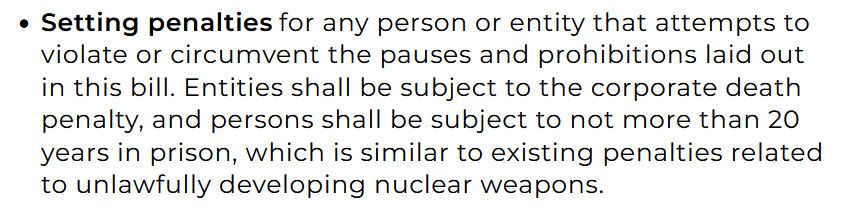
Senators Bernie Sanders and Greg Cezar have announced their Ban Artificial Superintelligence Act. Seeking to pause advanced AI development, the legislation’s stick is pretty severe. Penalties facing entities/developers who violate the pauses and prohibitions in the bill could face up to 20 years in prison. That’s a sentence on a par with someone found guilty of designing a rogue nuclear weapon.

Ban Artificial Superintelligence Act wording on penalties

(Image credit: Ban Artificial Superintelligence Act)

The news is suddenly filled with grave concerns about AI becoming too powerful. It could even threaten the future of humanity. Moreover, it might surprise casual observers that AI industry leaders like Sam Altman, Dario Amodei, and Elon Musk appear to agree. With this threat on the horizon, politicians are keen to introduce legislation to protect the citizens they serve.

According to USA Today, the Sanders bill “is the most extreme AI-related legislation to date.” It likely faces strong opposition in Congress, particularly among enterprise-supporting Democrats and Trump-aligned Republicans. However, with recent statements from industry leaders seemingly harmonizing with calls to slow down AI development and in favor of greater oversight/regulation, we could see politicians agree on something for a change.

Back to the Ban Artificial Superintelligence and Temporarily Pause Advanced AI Development bill and its specific wording, we note that it is advised that the government set up a new cabinet-level federal agency "to safeguard the public from the dangers of artificial intelligence, including by enforcing a prohibition on artificial superintelligence." As well as setting harsh penalties in the U.S., it is proposed that work be done to "ban superintelligence around the world" via international agreements, allied coordination, and so on.

Full speed ahead, or hit the brakes?

There remain plenty of interesting arguments on both sides of the AI progress divide. It is difficult to argue that the U.S. shouldn’t keep going as fast as it can, as a matter of national security, for example. On the other hand, the whole of humanity being wiped from the face of the Earth by opening Pandora’s AI box of tricks makes geopolitical concerns seem like minor grumbles.

We’ve seen some other theories about why the AI barons are suddenly in favor of regulation. Some critics say they may be running out of road, unable to balance private investments with credible paths to profitability. Thus, they now want to move away from a commercially funded model to a government-funded ‘Manhattan Project II,’ with their terrifyingly powerful AI being guarded by the state.

Apple’s new A20 Pro smartphone chip around 25% faster than its predecessor in leaked benchmark — the 2nm CPU in the iPhone Duo and 18 Pro hits nearly 5 GHz clocks

10 September 2026 at 17:04

We reported on the new Apple A20 Pro system-on-a-chip (SoC) for smartphones yesterday, an integral attraction within Apple’s first foldable, the iPhone Duo, and in the iPhone 18 Pro devices. Now the first A20 Geekbench 6 benchmark results are starting to pop up online, and they’re very impressive, particularly in single-core performance. If the result spotted by Longhorn is a typical one, the 4,719 single-core and 12,677 multi-core scores mean the new A20 is around 25% faster than its predecessor. Its single-core score can also make some of the best PC CPUs look anemic.

huhApple A20 Pro Geekbench 6 numbers 🫠https://t.co/py5rdZ1ekk pic.twitter.com/Snrn9lTks9September 10, 2026

Apple’s official performance claims are interesting, as usual, but we’re always happy to see the third-party performance indicators start to emerge ahead of independent reviews. Heralding its new 2nm silicon yesterday, Apple might have actually understated the boost the A20 can deliver, with the official line about this “desktop-class” processor being the “fastest CPU in a smartphone,” and a claim that it is ‘just’ 20% faster than the previous gen. However, Geekbench isn’t the best indicator of real-world performance, and this is just a sample of one to sprinkle salt upon.

What are numbers without relevant comparisons, though? For more perspective on Apple’s newest silicon, which might also be thrown into a new Neo laptop (or desktop) in the coming months, check out the table below.

Apple A20 performance leak

Apple A20 Pro

Apple A19 Pro

Apple M5 Max

Qualcomm SD X2E-94-100

AMD 9950X3D2

GB6 1T

4,719

~3,800

~4,300

~3,800

~3,600

GB6 nT

12,677

~10,000

~29,000

~22,750

~28,000

Cores

2P + 4E

2P + 4E

6P + 12E

6P + 12E

16C / 32T

Clocks

4.93 GHz

4.26 GHz

4.61 GHz

4.7 GHz

4.3 GHz

Above, we’ve pitted the Apple A19 Pro from last year’s iPhone 17 Pro as the second comparison column entrant. Apple has worked on multiple angles to deliver improvements over last year. It says that it has both new super-cores and efficiency cores in play. Then there’s the refined 2nm process and the faster clocks, too.

For some wider context, we’ve also tabulated one of Apple’s newest M5 computer chips, a modern Qualcomm Snapdragon Elite X2 laptop chip, and the AMD Ryzen 9 9950X3D2, for a fun desktop PC angle. Less fun is the comparison with the Asus Zephyrus G16 2024 laptop I’m using now, with an AMD Ryzen AI HX 370 chip. Its Geekbench 6 scores of roughly 2,800 / 14,500 are easily outclassed by Apple’s new smartphone processor in 1T tests, but retain a little dignity by winning by ~1,800 points in nT tests.

Apple is opening up pre-orders for its new iPhones with A20 silicon shortly, with retail release on Friday, September 18. It usually lifts review embargoes a few days before retail. We should therefore see a broader range of benchmarks and tests from good sources in the coming week.

Minecraft-spawned crypto kingpin faces 20 years for $245 million heist — mastermind's role in hacking campaign fueled their supercar, bodyguards, and private jet habit

10 September 2026 at 15:25

The ringleader of a cybercrime gang, which reportedly formed after meetups in Minecraft online, has pleaded guilty to a racketeering charge. Sentencing is yet to be finalized, but 22-year-old Singaporean and Miami resident Malone Lam could face 20 years behind bars. Lam is accused of helping to steal and launder hundreds of millions of dollars in cryptocurrency. Here are the full United States District Court for the District of Columbia documents (PDF), via The Register.

According to the court documents, Lam visited the U.S. to meet fellow Minecrafters Jeandiel Serrano and Veer Chetal, for the first time in real life, in 2023. Soon, Lam’s role in the cybercriminal gang seems to have become an important one. The Singaporean reportedly found high-net-worth crypto holders to target, supported social engineering operations, leveraged technology to trigger account access alerts on target devices, and was involved in laundering the pilfered digital booty.

Lam’s crypto fraud gang reportedly totaled 12 members, and this criminal fraternity operated for about two years. Documents indicate that the individual crypto thefts ranged from $800,000 to tens of millions of dollars. One crypto heist purportedly netted $245 million from a single victim.

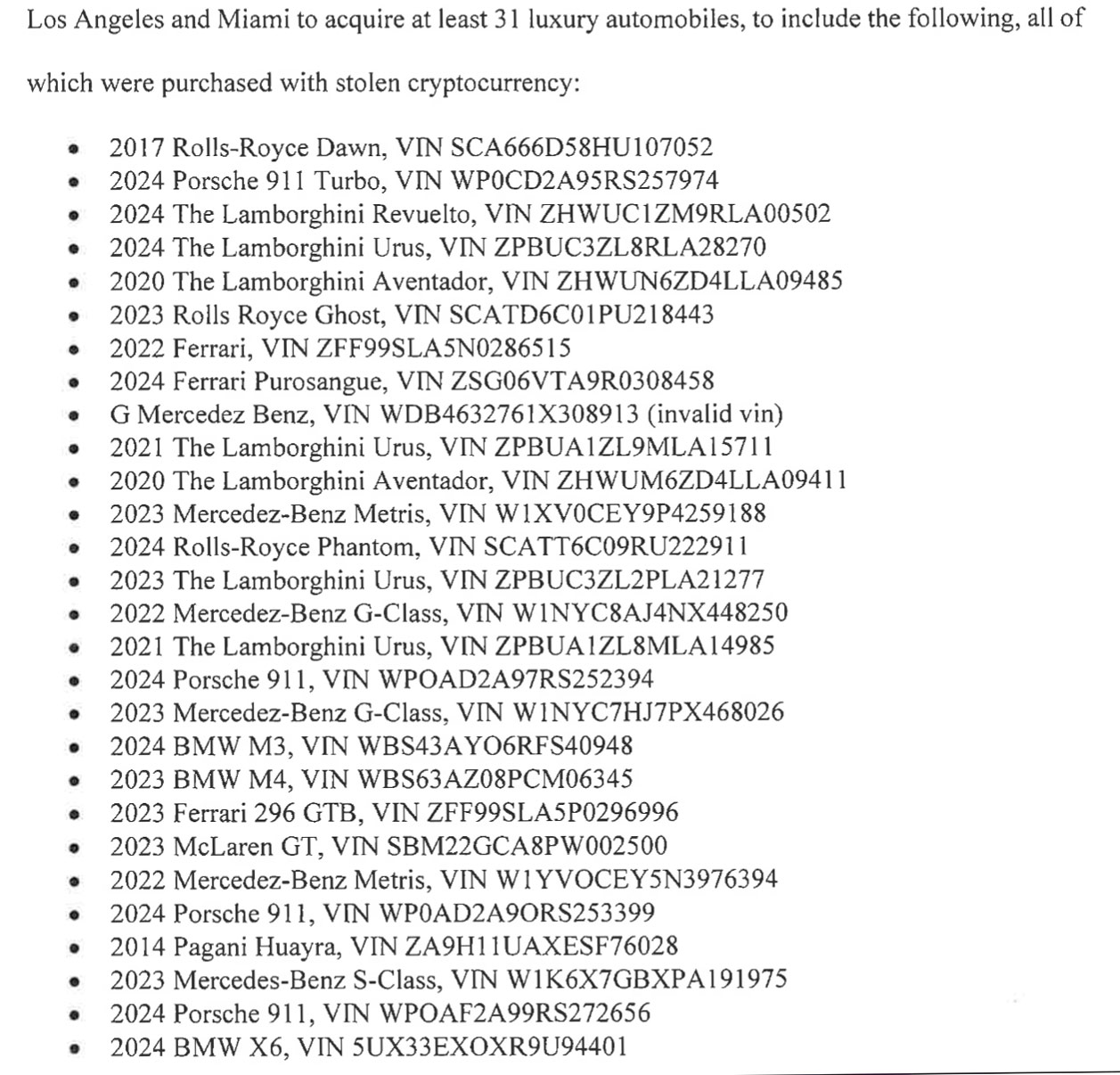
Cybergang members enjoyed lavish lifestyles due to their swindling successes. The court documents mention members of the gang owning “a fleet of 31 exotic cars, ranging in value from $100,000 up to $3,800,000.” They would also run up nightclub service bills of up to $500,000 a night, buy luxury watches, clothing, and more. As well as rent prestigious homes in locations like Los Angeles, the Hamptons, and Miami – traveling around in private jets and protected by a team of security guards.

Court document screenshot of car fleet

(Image credit: Future)

Lam was arrested in September 2024, though, so they didn’t really get to enjoy that lavish luxury lifestyle for very long. Since that time, their suspected criminal activities have been under deeper investigation. The last members of the ‘Minecraft crew’ threw in the towel around May 2025. Lam has now pleaded guilty to RICO violations, and a status hearing is scheduled for December 8 this year; the Singaporean faces up to 20 years in jail. The Register notes that another member of Lam’s fold, Marlon Ferro, was handed a 6.5-year sentence back in May. Ferro’s role was effectively a ‘physical plan B,’ and they reportedly took part in multiple physical burglaries at the behest of the gang if/when social engineering attacks weren’t enough.

Old MacBook uses a mirror, webcam, and AI agent to code its own AMD GPU drivers — 'agent-first' Omarchy Linux debugs itself, AI can check its own progress on screen in real-time

10 September 2026 at 14:00

A Linux developer has shared a photo of their laptop using realtime visual feedback during an AMD Radeon GPU driver tuning task. Justin Schroeder (@jpschroeder) explains that “the MacBook is using its webcam to look at its screen in a mirror to improve AMD Radeon chip support in Omarchy.” Linux distro Omarchy is tailored “for the age of agents,” a field in which Schroeder is something of an expert. So, we assume the MacBook is running some kind of programming agent like Claude Code, and it is watching its own screen to assess the GPU driver tweaks it is making.

Can’t make this up…the MacBook is using its webcam to look at its screen in a mirror to improve AMD Radeon chip support in Omarchy. pic.twitter.com/pw5Yu0JVJ7September 9, 2026

Schroeder’s quirky hack has gained many admirers. We note that the Epic Games boss, Tim Sweeney, humorously commented on this use of AI, giving him “HAL 9000 lip-reading vibes.” Of course, HAL 9000 was the increasingly unhinged superintelligent computer from Kubrick’s 2001: A Space Odyssey. In the movie, it famously read the lips of astronauts plotting to limit its operational scope.

Since the MacBook is working on itself, it must be an older Intel Mac with an AMD GPU inside. Thus, the coding agent can refine Radeon hardware support and actually benefit from the webcam’s visual feedback.

Omarchy can be a good fit for users of older Intel-based Macs due to its specialized drivers and configurations. However, this interesting flavor of Linux is headlined as a handsome Linux distro designed for the age of agents. The OS’s homepage also boasts of a lightning-fast installation, with built-in agents that can debug issues. In short, users can “vibe your way through every alteration, tweak, or trouble.”

More details about this operating system can also be found on its GitHub repository. Omarchy isn’t just for ‘vintage’ Intel Macs like Schroeder’s image shows. It is available for Apple Silicon Macs and modern x86 PCs. Moreover, it is also suitable for ‘potato PCs’ like “a 2011 ThinkPad X220 with 2GB of RAM,” according to the developers. Omarchy is distributed under the MIT license.

Developer uses Claude to vibe code a Windows 3.1 shell in an hour — reanimated 12MB retro launcher runs on both Windows 11 and Apple Silicon

10 September 2026 at 12:00

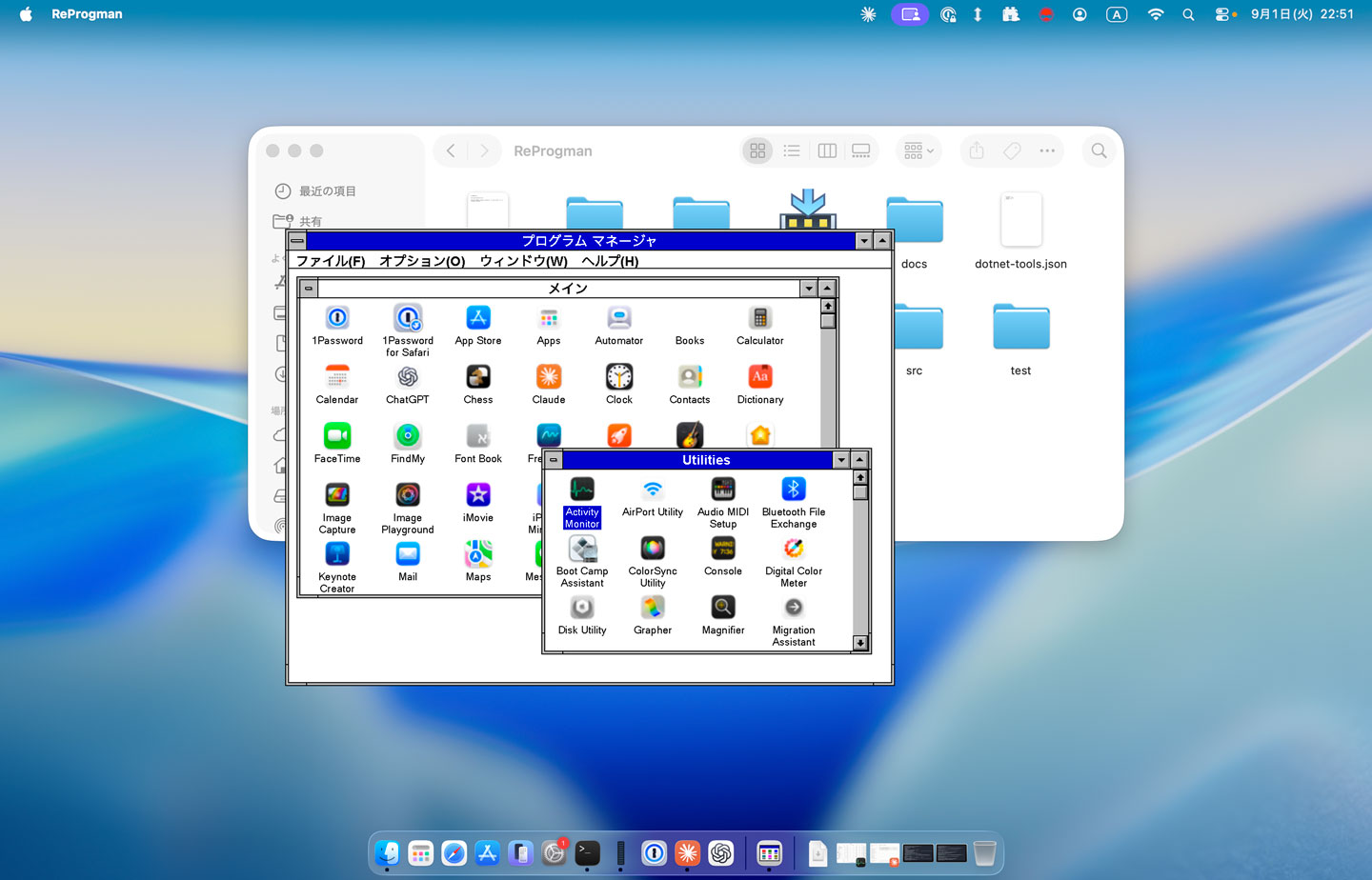
If you are yearning for a quick-shot retro Windows experience on your modern Windows 11 or macOS system, then there’s a new vibe-coded clone of the Windows 3.1 Program Manager that may interest you. Developer Mayuki has released a neat little nostalgia project dubbed ReProgman – named after the ancient Windows 3.1 ‘progman.exe ’, which was the primary shell of the era – until Windows 95 swept it away three decades ago.

ReProgman macOS screenshot

ReProgman macOS screenshot (Image credit: Developer Mayuki on GitHub)

ReProgman looks pretty authentic to my eyes, and it brought back memories of why I wasn’t sad to see it shrivel away from Windows machines. In a social media post about the release of ReProgman, Mayuki seems to agree with my sentiments. “I asked Claude to create a clone of the Windows 3.1 Program Manager,” wrote the developer (machine translation). “I think you'll enjoy reminiscing with it for about 30 seconds.”

Claude Code worked pretty swiftly to churn out this clone of the Windows 3.1 shell. The first version that was precipitated in about an hour was “pretty decent” but needed some effort to iron out the wrinkles. Then Mayuki complains again that actually using ReProgman induced boredom after about half a minute of usage.

The end-user-ready releases of ReProgman weigh in at between 12 and 16MB, so they are quite a trivial download and don’t need installing. Thus, it isn’t very taxing to give them a try for a spot of nostalgia-tinted navigation around your present system’s programs and files. Mayuki says that building and running this application needs the .NET SDK 10.0+. The code has been released on GitHub under the MIT license.

In conclusion, Miyuki’s ReProgman provides an easy trip down personal computing's memory lane, specifically to the Windows 3.X era of the early to mid-1990s. However, some will prefer to get their retro computing kicks by running the actual MS-DOS/Windows 3.1 combo on real hardware. As we discovered recently, that doesn’t limit users to dusting off an old i486 or similar. Back in April, an enthusiast demoed Windows 3.1X on ultra-modern bare metal with a system using a Ryzen 9 9900X and RTX 5060 Ti.

Self-taught tinkerer demos working room-sized Cold War-era supercomputer with vacuum tubes — takes 15 minutes to warm up and smells like burning dust, 8-bit design uses 460 recycled 1950s Soviet tubes

10 September 2026 at 11:00

A self-taught electronics tinkerer called Mike recently shared details of his retro-computing project on Hackaday. It certainly is retro, as the design eschews modern computer component niceties like microprocessors or microcontrollers. Instead, Mike’s computer is “a modern 8-bit design, built with recycled 1950s vacuum tubes.” It uses 460 Soviet-era 6N3P (Cyrillic 6Н3П-ЕВ) double triode tubes, which were manufactured around 50 years ago, combined with era-appropriate germanium diodes.

The wall-mounted vacuum tube-based computer you see in the video above is apparently the third tube computer Mike has engineered this decade. Previous iterations have sometimes come to an explosive end…

Of course, there have been a number of famous historically significant computers based on arrays of these tubes or valves, which offer similar functionality to the transistors that largely succeeded them. There are plenty of reasons the computer industry moved from tubes to transistors, and then silicon ICs, but enthusiasts aren’t bound by such practicalities.

Mike notes a few drawbacks with vacuum tubes, actually. Most notably, this simple 8-bit computer design needs 460 of these fragile, rather bulky, white-hot glowing tubes to run. Furthermore, these used/old stock 6N3P models only have about a 500-hour operational life, so a few handy spares are required, as is a stepladder to reach the whole array of tubes, which may fizzle out at any time. The tubes run hot, so Mike's computer room is always toasty whether the season makes that a nice thing or not. A fire extinguisher is always kept handy, and the room smells of burning dust.

Performance and capabilities are about as limited as one might expect. Mike notes that starting The Tube Computer (MK3) means waiting 10 to 15 mins after power-on for the machine to literally warm up. This is followed by a mandatory reset to get the tubes into a unified operational state.

For compute functionality, Mike’s Tube Computer architecture uses an arithmetic logic design to perform just the five essential functions needed for its instruction set (sum, carry, not, increment, and XNOR). Meanwhile, its instruction cycle relies on a non-pipelined architecture with a six-step fetch and single-execute cycle.

Components:

  • 460 × 6N3P vacuum tube
  • 46 × 10 tube pcbs
  • 1 × 190cmx130cm 4mm acrylic panel
  • 3 × 2m 30mmx30mm Aluminium box section
  • 5 × Backplane pcbs

User interaction with this wall-mounted homemade computer varies depending on the program in use. Currently, Mike has it set up to run an Airship Simulator piloting a British R80 airship from Brighton to Paris. “By pressing controls on the image of the bridge of the R80, you can direct the airship software,” says Mike. “These membrane buttons simply put 5 volts directly to the input board of The Tube Computer. You can control the ballast, gas release, engine power, elevators, rudder and the bow mooring gear, which is used to release the airship from the tower.”

Another charming feature of this admittedly “build it now, fix it later” computer design is the very audible accompanying ex-British Rail flip-digit display. That add-on will invoke another entirely different flavor of nostalgia for some of our readers.

Big Tech eyes glacier-strewn Patagonia for building mega AI data centers — region offers 17,300 glaciers, coldness, and cheap energy, but fiber lines are scarce

9 September 2026 at 11:00

Patagonia, a region of Argentina with 17,300 glaciers, has the potential to turn into a data center hotspot. The cool climate and abundant energy resources there are drawing interest from the likes of Amazon, Google, and OpenAI, according to Reuters. However, there needs to be more work on tapping into the resources and equipping high-speed networking, like fiber, to make the place irresistible. There’s also the question of political stability with a presidential election next year.

Argentina, and Patagonia in particular, has some juicy lures for potential hyperscale data center operators, and the cold climate is a bonus. That environment helps keep data centers cool and use less power while maintaining agreeable thermals. Patagonia has tens of thousands of glaciers across the Northern Patagonian Ice Field and the Southern Patagonian Ice Field combined.

Another bonus to would-be Patagonian data center operators are the range of energy sources there. Reuters mentions hydroelectric power, wind, and shale gas, but some operators who are already established are also adding solar.

Then, the social and political climate looks good for data centers in Argentina. According to the source, the populace doesn't hate data centers yet. At least there seems to be no campaign groups or public backlash. It is also reported that President Javier Milei has been making changes to court Big Tech. That’s a positive, and may be a negative. Positive in that the Argentines are now being accommodating to the needs of huge AI data centers. Negative, as there’s a presidential election next year, where things could take a dramatic turn, or not. There are also some regions in Patagonia where data center expansions may be complicated by the wishes and needs of indigenous communities. Businesses offering sizable, long-term investments aren’t keen on uncertainty.

With the pretty good environment for hyperscale buildouts established, it isn’t that surprising to see Reuters say OpenAI has confirmed a $25B and 500MW clean energy data center in the country. Lesser-known (to us) companies like Poland's Green Capital also plan a $3B and 300MW data center in Patagonia. It is also reported that FlexDomes, a U.S.-based green data center company, is planning the first stage of a 120MW facility.

Meanwhile, in neighboring South American countries, there are large developments from the likes of Amazon, Google, and others. Argentina must have these data center whales in its sights, as they are known to be scouting for expansion into new locations.

As well as political / business risk, Argentina has some structural weaknesses that need to be addressed by those developing in the country. It is said to have connectivity and power grid infrastructure deficiencies, for example. In other locations, we have seen these addressed on almost a per-project basis, with some state intervention, but it adds some high costs to setting up.

Super Smash Bros Melee gets fully decompiled after over six years of effort — ambitious and technically impressive project delivers GameCube classic as C code

8 September 2026 at 13:57

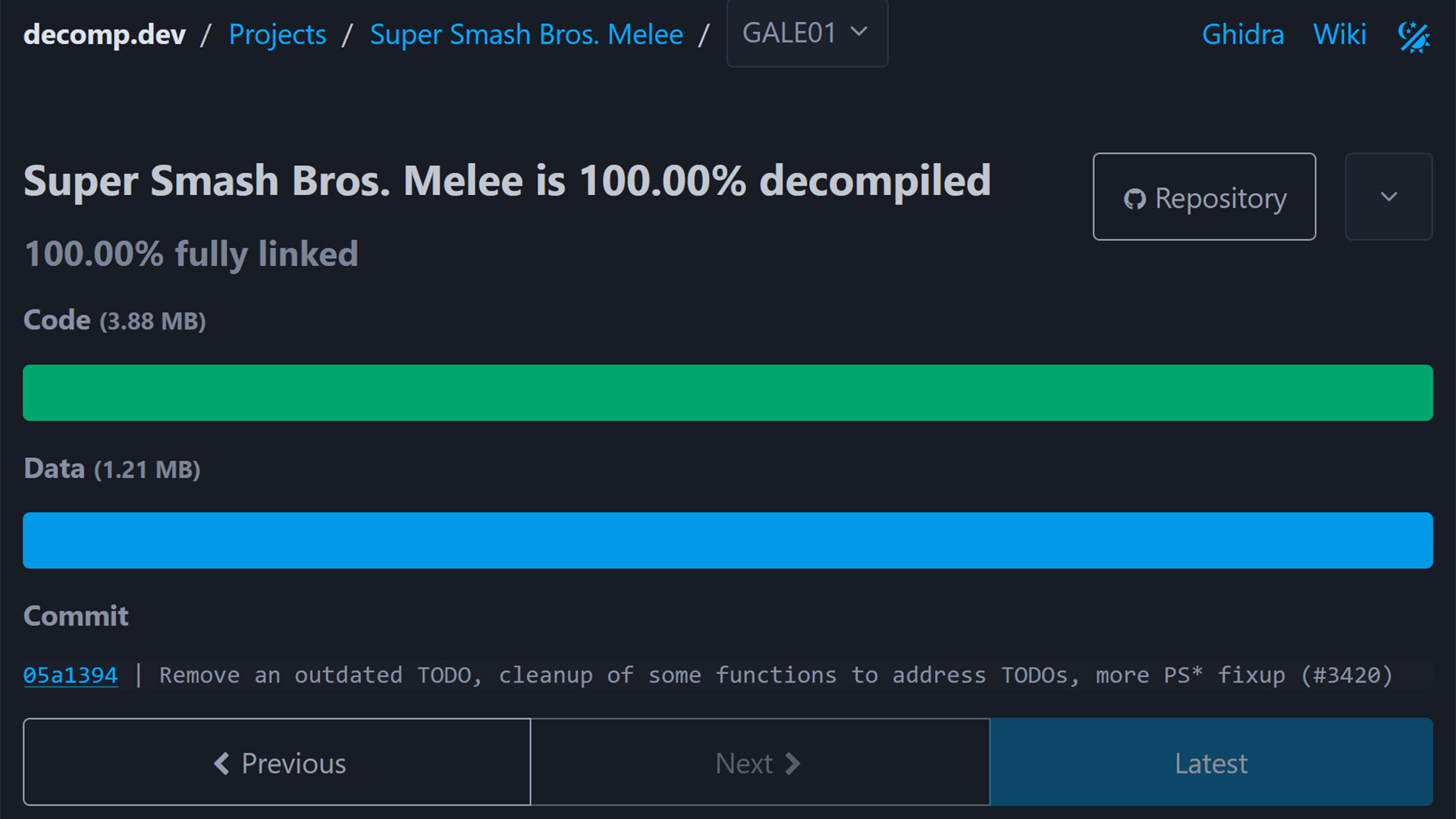
A Super Smash Bros Melee decompilation project hit its key long-standing goal a few hours ago. Nintendo’s legendary platform fighting game, which launched on the GameCube in 2001, has now been 100% decompiled by a team of developers. This is a complex game to convert to C code, but the project code can now be compiled into a binary byte‑for‑byte identical to Nintendo’s original main.dol. The effort has taken the team six years or more to get to this stage, with OpenAI's Astra part of the effort to get it over the line. Gamers may already be excitedly anticipating Super Smash Bros Melee ports and modding tools, but these too will take time and effort.

Super Smash Bros. Melee has been 100% decompiled!
 from r/SSBM

Decompilation projects seem like the latest trend to grasp the retro gaming and development communities, but some, like this, have been in progress for a very long time. Enthusiasts are spurred on by old console hardware becoming scarce, expensive, or uneconomical to repair. Thus, they want to preserve the original game code in a manner that can be ported to modern supported systems. Demanding 100% accuracy with a complex game like this was ambitious, but now that milestone has been reached.

Super Smash Bros Melee decomp

(Image credit: decomp tracker)

Preservation isn’t the only goal, or result of projects like this. Seasoned developers will now be able to pore over the game’s C code and gain insights into Melee’s engine, physics, game mechanics, and more. Armed with this knowledge, we should eventually see the modding potential of this game blossom. This has happened in the wake of previous successful decompilation projects.

If you drop in on the doldecomp/melee GitHub page, linked above, you can check over the code for yourself. There are instructions for compiling this Super Smash Bros Melee C code on various platforms, including Windows. However, please remember these aren’t ports; you will just be recreating the v1.02 US release main.dol file from the GameCube, which weighs in at 3.88MB. You'll also need the original assets (textures, audio, etc.) from the GameCube disc that you own, in order to run the game.

Some highlight that the project was finalized with thanks in part to the latest AI tech, including GPT-6 Astra. Similar tech might also be used to rapidly develop the ports and mods that the crowds are looking forward to.

Google maps entire brain and central nervous system of adult male fruit fly, software engineers immediately make it run Doom — AI-powered 3D model of over 166,000 neurons can also play Super Mario 64

8 September 2026 at 12:06

Late last week, Google announced that scientists had, for the first time, “mapped the complete brain and central nervous system of an adult male fruit fly.” On Monday, software engineers were already demonstrating the full MaleCNS v1.0 fruit fly connectome being trained to play Doom, as well as Super Mario 64. In light of these developments, perhaps it is time to amend Arthur C. Clarke’s Third Law. We suggest something similar to ‘Any sufficiently advanced new technology will immediately be forced to play Doom.’

For the first time, scientists have mapped the complete brain and central nervous system of an adult male fruit fly — a key model organism in science. 🪰Working alongside HHMI Janelia Research Campus and the scientific community, @GoogleResearch scientists and researchers used… pic.twitter.com/dpcXH4jmNSSeptember 3, 2026

Let’s look at this story in its natural chronological order. Scientists have been using fruit flies for research for over a century. The winged insects have a strong history in the avenues of genetic research. The humble fruit fly is still relevant in the 2020s in genetics, neuroscience, and more.

Now, for the first time, the complete brain and central nervous system of an adult male fruit fly have been fully mapped. Google Research scientists worked alongside HHMI Janelia Research Campus and the scientific community to achieve this milestone. In the social media post outlining the achievement, Google claimed that AI was used “to combine millions of 2D images into 3D neural shapes, reconstructing a record-breaking 166,000+ neurons.” That’s somewhat below the estimated 86 billion neurons in the human brain. AI data centers are going to need more RAM, folks.

This scientific breakthrough is going to “accelerate our understanding of the brain, and is a major milestone in neuroscience,” noted Google last Thursday. By Tuesday, it was already being trained to play classic video games.

I'm training a fly brain to play Doom using the full MaleCNS v1.0 fruit fly connectome.Each Doom frame stimulates sensory neurons. Neural activity is mapped to game controls. Damage triggers a stimulus to two PPL101 dopamine cells as reinforcement.Will the fly learn to… https://t.co/ObCJ03gxy3 pic.twitter.com/H2YDBtyuR8September 6, 2026

We’ve seen software engineer Alex Wormuth and ‘C++ ragebaiteur’ Jessica Paquette already demonstrate fly-brain video game training. Their fly-brain tinkering focuses on Doom and Mario 64, respectively.

Of their Doom training efforts, Wormuth says that “Each Doom frame stimulates sensory neurons. Neural activity is mapped to game controls. Damage triggers a stimulus to two PPL101 dopamine cells as reinforcement.” The dev closes their tweet with the question “Will the fly learn to survive?” The code is fully open source, and you can also watch the training progress of the 166,700 neurons live.

playing mario 64 using a fly's brain pic.twitter.com/G4BmfMSWb8September 7, 2026

Paquette’s short video clip shows Mario repeatedly taking off and bumping into a wall. If it were bumping into a window, it would be exhibiting the pinnacle of fly-brain intelligence. We also have the code to this fly-brain video gaming project, which was “literally 100% vibe coded with GPT Astra… just for fun.” Hopefully non-coders/tinkerers will get updates on the success of this training via Paquette’s socials.

❌