Scientists from the Quantum Technologies Group at the Institute of Physics Zagreb, in collaboration with a colleague from the Physics Department at the Faculty of Science (PMF), have experimentally demonstrated for the first time the existence of discrete one-dimensional (1D) solitons in an optically induced photonic lattice in warm rubidium vapor.
Scientists from the Quantum Technologies Group at the Institute of Physics Zagreb, in collaboration with a colleague from the Physics Department at the Faculty of Science (PMF), have experimentally demonstrated for the first time the existence of discrete one-dimensional (1D) solitons in an optically induced photonic lattice in warm rubidium vapor.
Researchers at the Linac Coherent Light Source (LCLS) at the U.S. Department of Energy's SLAC National Accelerator Laboratory have measured the shortest high-energy X-ray pulses ever recorded at an X-ray free-electron laser (XFEL). The pulses had photon energies of about 9 kiloelectronvolts (keV) and clocked in at durations of 100 to 400 attoseconds—mere billionths of a billionth of a second. The results are published in Nature Photonics.
Researchers at the Linac Coherent Light Source (LCLS) at the U.S. Department of Energy's SLAC National Accelerator Laboratory have measured the shortest high-energy X-ray pulses ever recorded at an X-ray free-electron laser (XFEL). The pulses had photon energies of about 9 kiloelectronvolts (keV) and clocked in at durations of 100 to 400 attoseconds—mere billionths of a billionth of a second. The results are published in Nature Photonics.
“The UK is really good at photonics and it should be something that the UK celebrates.” That was the verdict of John Lincoln, chief executive of the national network organization UK Photonics Leadership Group (PLG) at a recent meeting of the photonics community in Newcastle. He was speaking in a panel debate at the Photon2026 conference run by the Institute of Physics (IOP) at Newcastle University on 1–4 September. Attended by hundreds of delegates, the meeting focused on the strengths, opportunities and future potential for optics and photonics in the UK and EU.
The photonics industry, which has been in the UK for more than 60 years, is one of the country’s most economically productive sectors. According to the PLG, photonics generated £18.5bn in revenue in 2024 – up 20% from 2022 – and contributed £8.6bn to the UK economy. It now employs more than 75,000 people in over 1200 firms across all UK. Lincoln says that part of the UK’s success is the wide geographical spread of the hundreds of companies involved in photonics. Northern Ireland is Europe’s largest manufacturer of lasers by volume, for example, producing a million lasers per day, and is on course to be the world’s largest by 2028.
A national UK roadmap for photonics is expected to be published soon, which will feature recommendations to further boost the sector. Indeed, by 2035 photonics is estimated to be a £50bn industry where more than 60% of the UK economy will directly depend on photonics to keep it competitive. It is also expected to produce an additional 150,000 direct jobs and be one of the top three most productive manufacturing sectors in the UK.
The panel debate at Photon2026 was co-ordinated by physicist Jolyon De Freitas, chair of the IOP Optical Group, together with the European Optical Society – an umbrella organization for national optical societies across Europe. Speaking at the event, Ruth Oulton from the University of Bristol, who specializes in semiconductor quantum dots, said that many companies, including those in the US, want to move their companies to the UK given its focus and support on photonics and quantum. “The UK government has a very strong and coherent story to tell and it gives a bit of stability and clarity for people coming here, which is really promising,” she added.
Optics and photonics have important applications in several sectors including telecommunications, space and quantum technologies as well as defence and security. John Howell from Chapman University in the US, who is immediate past president of the International Commission for Optics, highlighted that improving access to optics and photonics instrumentation in the developing world can boost environmental and water monitoring and disease detection.
Opportunity knocks
Panel member Laura Young from the University of Newcastle, who works on medical technologies, said that the UK could improve further by making the most of “translational opportunities” when it comes to the application of optics into medical devices and getting those benefits out to patients. “Taking those early developments all the way through to products that have commercial or societal impact also makes it a more inviting domain for new talent to come to the UK,” she said.
That view is backed up by fellow panellist Chris Johnson, chief scientific adviser for the UK’s newly renamed Department of Business, Innovation, Science and Trade, which in July absorbed the science and innovation portfolios of the former Department for Science, Innovation and Technology under new UK prime minister Andy Burnham. Johnson said that photonics still has room for improvement when it comes to applications, pointing to the synthetic biology sector, for example, which has managed to engage with venture capitalist to grow from small, medium enterprises to larger businesses. He said that the photonics sector must have plans in place not only to generate start-ups and spin-outs, but also to plot their trajectory to growth beyond that.
The UK has a strong history in photonics research. Some 20% of global publications in photonics originate in the UK
As well as industry, the UK also has a strong history in photonics research. Some 20% of global publications in photonics originate in the UK. Yet Oulton, who also works at the foreign commonwealth and development office as an adviser on quantum technologies, added that scientists should explain more clearly to policy-makers why support for photonics needs to be continued. Oulton said it’s important that scientists clearly provide evidence for success and make international comparisons, rather than solely providing a wish list of support to government. “Make sure to read white papers the government produces like the modern industrial strategy,” she added.
Lincoln agreed, saying it’s important for researchers to clearly explain how photonics is critical to emerging technologies such as AI, energy, quantum and connectivity. Lincoln added that the government needs to embrace the complexity of photonics and its many varied applications and make sure the talent pipeline exists at all levels. “One of the things we are calling for is to make sure that skills support goes beyond PhD to engineers and technicians,” he said.
Continental effort
The panel debate at Photon2026 – the first time such an event has been hosted at a Photon meeting – was moderated by Anne Crean, associate director for science, business and data insights at the IOP. She noted that the UK and EU are “global leaders” in photonics featuring world-class research institution, innovative companies and strong partnerships, adding that the collaboration between the UK and EU will be “vital” in maintaining and advancing that position.
That collaboration was put to the test in 2016 when the UK voted to leave the EU, bringing with it significant amount of uncertainty not only for academia but industry too. Yet some of those initial issues are beginning to be resolved. Tom Grinyer, chief executive officer of the IOP, said that there are many positives about recent developments. “In 2022 we were outside of the Horizon funding framework and it felt like we were staring through a window,” he says. After negotiating back into the programme in 2024, Grinyer pointed out that the UK has received about 8.7% of optics and photonics funding in Horizon over the past two years, compared to other areas where the UK has received about a 7.6% share.
Talking points Clockwise from top left: Jolyon De Freitas, Tom Grinyer, Chris Johnson, Anne Crean, John Howell, Ruth Oulton, Laura Young and John Lincoln. (Courtesy: Jen Lovell/IOP)
Lincoln added that it is critical for the UK to address the confusion around the UK’s involvement in the next European framework programme – FP10 – that will run from 2028 to 2034 with a proposed budget of €175bn. Delegates stressed that collaborating with the EU not only bring partnerships but also the ability to “scale” efforts.
“The UK and the EU are quite different in how they operate,” noted Oulton from Bristol. “The EU has scale and is the only body large enough to be competitive with the US and China but it can be quite slow from a policy perspective.” She pointed out that the UK has the ability to move more quickly into new fields, while the EU can piggyback onto those areas that show the most promise.
For all those benefits, Lincoln maintained that funding for photonics in Europe is “slightly out of phase” with the UK given that EU funding for photonics will be wrapped into the European Chips Act, which aims to strengthen the EU’s semiconductor industry and reduce its reliance on foreign suppliers for critical technologies. “We must adapt to a world where photonics is a semiconductor,” said Lincoln.
While collaboration cropped up many times in the discussion, it does bring challenges. Johnson pointed out the importance of photonics to national security, whether it’s the production of chips or its use in defence, and the growing threat of industrial espionage that it brings. Some countries are looking at ways to protect research and innovation from other nations by demanding that collaborative research be limited particularly when it comes to “dual-use” technologies that may also find military applications. Indeed, there is a general move towards requiring dual-use applications when applying for research and development support.
Yet Lincoln urged scientists to “embrace” working in these areas and for policy makers to not see the world as a zero-sum game. “Collaboration makes everyone better,” he said. “Don’t think of it as us versus them, but look at it as how we can both win.”
Bringing together the UK optics and photonics community
The Photon2026 conference was jointly organized by several IOP special interest groups including environmental physics, optical, quantum electronics and photonics, and medical physics. Held in the UK every two years, Photon2026 was the 13th in the series and featured talks from leading physicists and technology experts as well as an exhibition showcasing the latest optics and photonics technologies.
At the conference, theoretical physicist Michael Berry from the University of Bristol delivered the 2025 IOP Isaac Newton Lecture titled “What we learn(ed) from rainbows?” in which he explored how centuries of studying rainbows have bridged connections across physics, mathematics, colour and optical illusions.
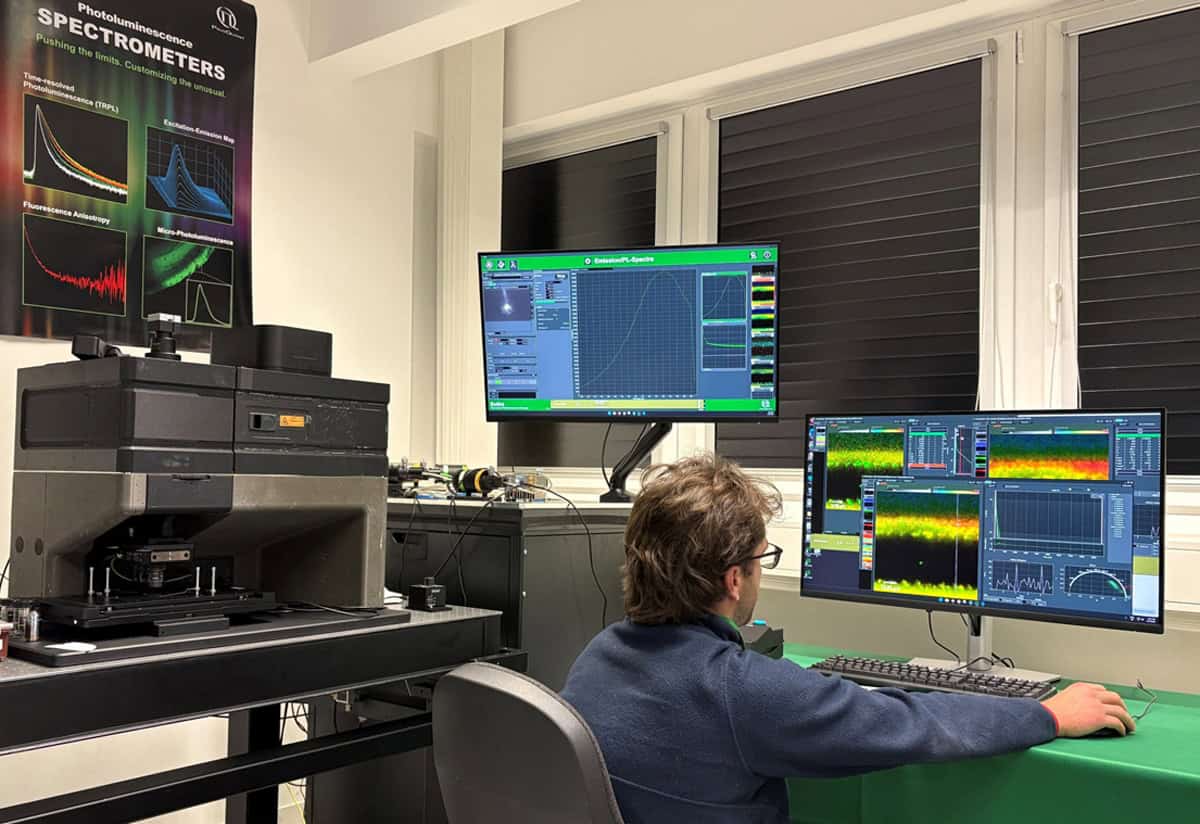
Maxim Simmonds measuring perovskite solar mini module samples with Solira. (Courtesy: PicoQuant)
When evaluating new materials for optoelectronic applications – perhaps promising solar panel materials like halide perovskites or semiconductor compounds for microLED displays – optical characterization is almost always the materials scientists’ first port of call. And up to now steady-state photoluminescence (PL) has been the de facto workhorse for this task.
This non-destructive and highly sensitive technique involves optically exciting a sample and recording the integrated intensity and wavelength of re-emitted photons. Through this, researchers gain a quick understanding into a material’s electronic structure, optical transitions and emission characteristics.
However, these spectra alone can be misleading. Materials with substantially different microscopic properties can generate similar steady-state PL results, masking the fundamental physical dynamics that govern the material’s performance in the real world. To gain deeper understanding of a given material, a more comprehensive and correlated approach is needed.
Blinding average
The core issue lies in the fact that steady-state PL provides a time-integrated view of the emission and depending on the measurement geometry, may also average over spatial variations. Steady-state PL records a static equilibrium in which charge carrier generation balances recombination. This means that, on its own, it does not directly reveal how these excited charge-carriers evolve and ultimately dictate how a device manipulates energy and light.
For example, although two semiconductor thin films may show identical steady-state emission, they can perform very differently in a real device. One film might have long carrier lifetimes consistent with low non-radiative losses – useful in solar cells, for example – while the other could suffer from high defect densities that are masked by strong light absorption or intense excitation light.
Conversely, weak emission does not necessarily mean poor material quality. Again using a layered solar cell as an example, dim luminescence often signals fast, beneficial charge extraction across an interface rather than harmful defect recombination (where structural imperfections convert charge-carrier energy into wasted heat). Because steady-state measurements only show an overall average, they cannot separate these competing mechanisms.
Resolving in time, space and spectrum
Time-resolved PL (TRPL) is a key technique in illuminating these hidden dynamics. Unlike steady-state PL, which continuously bathes a sample with light, TRPL uses a short laser pulse and measures how the photoluminescence intensity evolves afterwards. This can reveal carrier dynamics over timescales ranging from picoseconds to microseconds.
TRPL is particularly important in materials where local variations strongly influence device behaviour. For instance, it can expose the difference between regions that exhibit long-lived emission consistent with efficient radiative recombination, and those that exhibit fast decay caused by, for example, defect recombination.
Of course, steady-state PL averages over time and space, and therefore TRPL only solves part of the problem. Spatially resolved TRPL addresses the missing spatial dimension. Combining a high-precision, motorized XY stage with TRPL’s precise timing, spatially resolved TRPL forms a 2D map that directly correlates localized structural features – such as grain boundaries and defects – with variations in carrier kinetics across the surface.
Complementary to these techniques is time-resolved emission spectroscopy (TRES), which combines spectral selection with time-resolved detection to measure how emission dynamics vary across the spectrum. By recording wavelength-dependent decay behaviour, TRES reveals how different spectral contributions evolve following excitation.
In short, where TRPL reveals kinetics over time and spatially resolved TRPL locates variations in space, TRES adds a spectral dimension, showing how the emission spectrum evolves after excitation. This allows researchers to track changes in the distribution of photon energies over time to understand carrier evolution and gain insight into the mechanisms underlying material behaviour.
A correlative approach
Though powerful in isolation, reconciling insights across these different instruments is slow and prone to errors. There can be microscopic differences between samples or even within positions in a single sample that dramatically alter emission spectra. Moreover, moving a sample between separate instruments is fraught with difficulty, potentially damaging the sample or causing delays that lead to sample degradation.
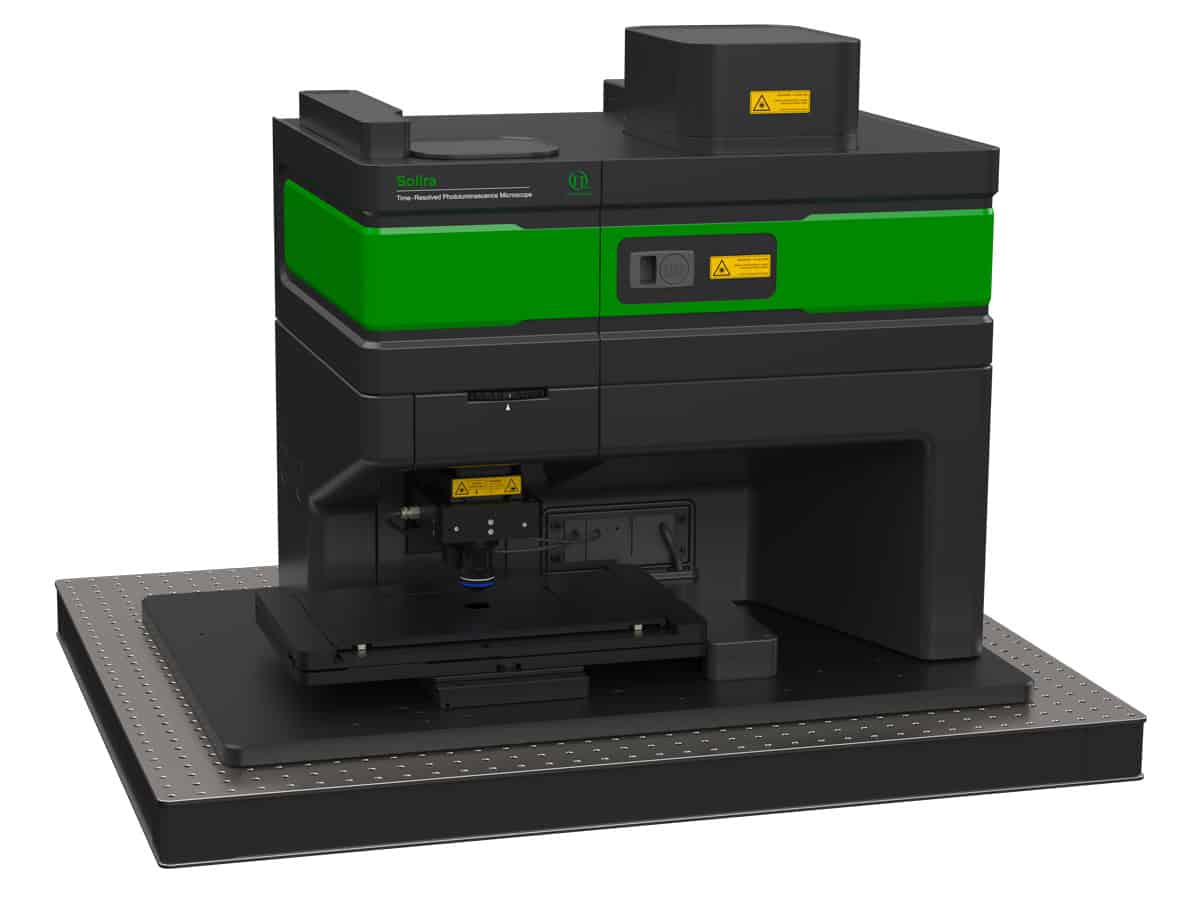
PicoQuant’s Solira, an all-in-one time-resolved photoluminescence microscope for flexible optical characterization of materials and optoelectronic devices. (Courtesy: PicoQuant)
More comprehensive and reliable physical insight comes when temporal, spatial and spectral factors are recorded correlatively on the exact same sample region. This need for correlation is the motivation behind PicoQuant’s Solira, an integrated workflow platform for steady-state PL, TRPL, spatially resolved TRPL and TRES (the latter when combined with the complementary FlexLambda Kit), as well as additional imaging techniques, such as hyperspectral imaging, required for different scientific questions.
Bringing these techniques together within one configurable microscope system means a materials scientist can gain a more informed interpretation of material behaviour. For instance, they can identify the relevant emission bands at selected points of interest with steady-state PL. They can then wield TRPL to measure the associated decay kinetics, before perhaps applying TRES to resolve how those kinetics vary across the emission spectrum.
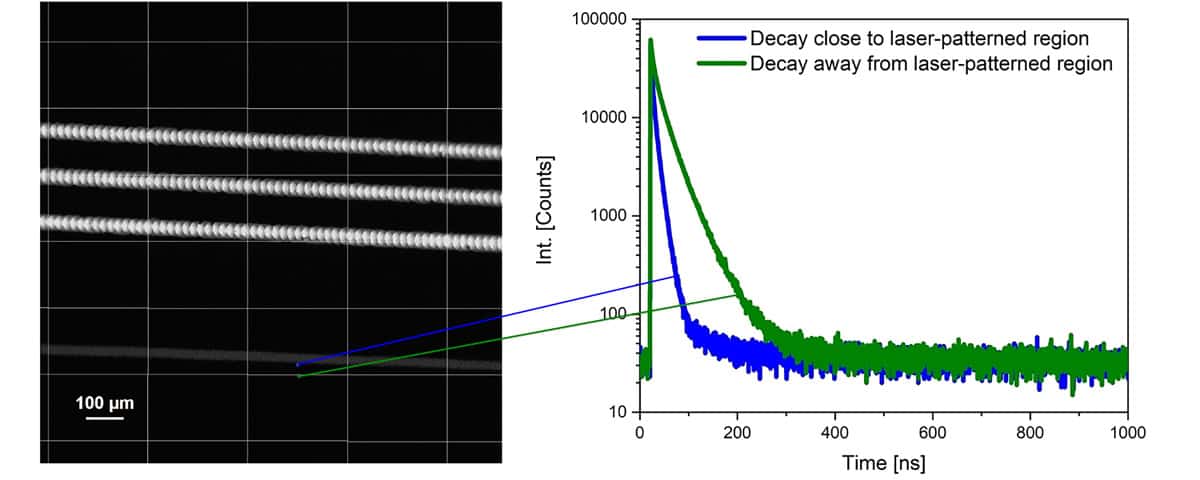
TRPL decay curves recorded at positions close to and away from a laser-patterned region of a perovskite solar mini module sample. The decay measured adjacent to the structured line exhibits faster PL decay dynamics compared to the unmodified region farther from the laser-patterned area. (Courtesy: PicoQuant)
Bright demonstration
The power of this correlated approach was demonstrated recently by Professor Eva Unger’s group at Helmholtz-Zentrum Berlin, Germany, with measurements carried out by Maxim Simmonds. Investigating perovskite solar mini-modules, the team worked with PicoQuant and used Solira to locate precise laser-patterned lines – microscopic scribes used to interconnect individual cells in a solar module – before verifying emission from the active layer. Localized TRPL measurements then revealed significantly faster decay dynamics next to these laser cuts compared to the pristine bulk material, indicating altered carrier recombination or diffusion near structured features.
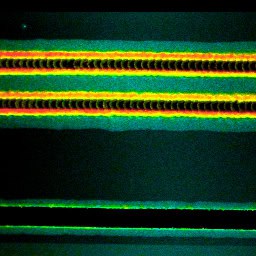
Spatially resolved TRPL image recorded from a sample of a perovskite solar mini module, showing photoluminescence lifetime differences between laser-patterned lines and bulk material. The structured regions remain photoluminescent, indicating that the laser process modifies local photophysical properties rather than completely removing the emissive material. (Courtesy: PicoQuant)
However, point measurements alone were not enough to discern whether the laser had fully removed the perovskite or merely modified it. Switching to spatially resolved TRPL imaging on Solira revealed that measurable photoluminescence persisted along the laser-patterned lines. This showed that laser structuring had altered local photophysical properties rather than eliminating the active layer – a conclusion only made possible by consistently mapping charge-carrier dynamics across temporal, spatial and spectral dimensions together on one setup.
As semiconductor materials and optoelectronic devices become more complex, optical characterization tools must keep pace. By unifying these tools within an integrated workflow platform such as Solira, materials scientists now have the means to paint a more complete picture of material characteristics and thereby unlock the next generation of innovative functional materials.
A research team at the Institute of Applied Physics at TU Darmstadt has shown for the first time that atoms that are completely disordered and in constant motion can nevertheless emit jointly directed light preferentially in one direction—even though neither the atoms nor their environment exhibit a direction—and that the strength of this asymmetry can be specifically adjusted. The paper is published in the journal Physical Review Letters.
Within tiny halos of light clinging to a vanishingly thin wisp of optical fiber, scientist Jongmin Lee guides atoms like marbles through a narrow pipe. Rock the fiber and the atoms shift side by side; they just don't fall off. But don't be deceived by the seemingly delicate nature of his experiment. Lee is exploring how to measure motion precisely in rough-and-tumble environments.
Tiny manufacturing imperfections in optical components normally go unnoticed. Yet they can alter light in surprisingly significant ways. An international research team led by TU Darmstadt has shown that such imperfections can affect not only polarization—the direction in which light oscillates—but also the spatial shape of a light beam.
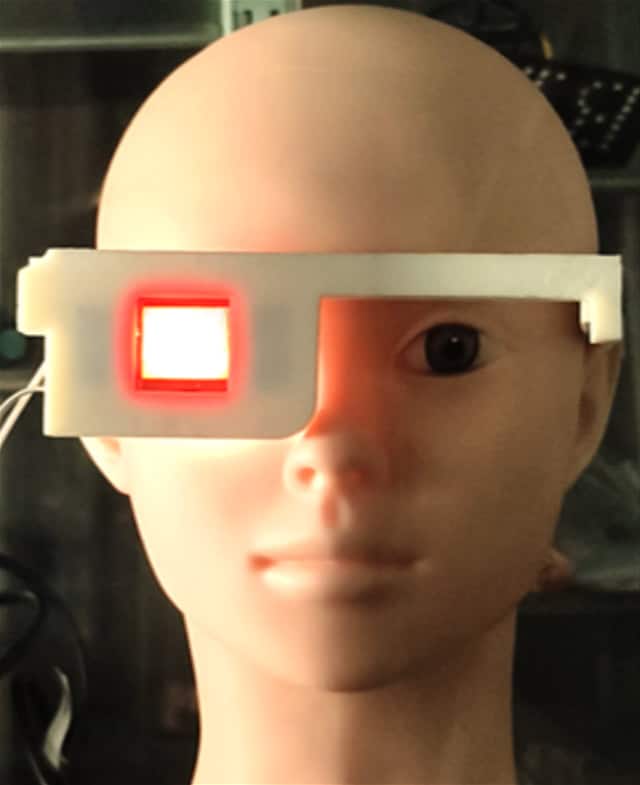
Infrared visualization Wearable eyeglasses. (Courtesy: Fu et al., Sci. Adv. 12, eaed0245 (2026))
Most people can perceive different colours in the visible range of the electromagnetic spectrum – at wavelengths between about 400 and 700 nm. However, our eyes cannot see infrared radiation, let alone perceive infrared “colours”. But now a team at China’s Beijing Institute of Technology has created colloidal quantum dot-based light upconverters that convert the infrared to the visible while preserving the spectral notion of colour. These nanostructures can be incorporated into wearable eyeglasses and, more ambitiously, could someday be implanted directly into the retina.
Photoreceptors in mammalian eyes contain light-absorbing pigments consisting of opsins and their covalently linked retinals. Infrared light at wavelengths greater than 700 nm cannot be absorbed by these photoreceptors, so when such light reaches the retina no corresponding electric signal is sent to the brain. Seeing infrared radiation could reveal otherwise invisible features and improve night vision, which relies on infrared light.
In recent years, researchers have made great strides in developing materials that capture photons with lower energies (in the infrared, for example) and re-emit them as photons with higher energies (typically visible or ultraviolet light). This process is known as upconversion, and the emitted light is said to be anti-Stokes shifted. This has led to the development of photoreceptor-binding upconversion nanoparticles that convert infrared light into visible emissions. These have been injected into mouse eyes and have been used to create wearable lenses for humans – with nonlinear upconversion projecting infrared-transformed visible light onto the cornea. While effective, these applications are limited to the narrow near-infrared (NIR) spectral range.
Confined electrons
Now, a team led by Ge Mu and Xin Tang studied a structure made up of semiconducting mercury telluride (HgTe) colloidal quantum dots (CQDs) atop an organic light-emitting diode (OLED). The OLED contains two light-emitting layers, one red-light-emitting and one cyan-light-emitting. Because of the small size of the CQDs, the electrons in them are confined in all three directions. This means that the electrons are restricted to discrete and separate atomic-like energy subbands rather than having access to a continuous band of allowed energies as they would in a bulk material.
When the CQDs absorb photons with infrared wavelengths, spanning the NIR to short-wave infrared regions, they produce excited carriers (electrons and holes) that then travel from their different energy levels into the OLED. This is a seamless process because the OLED is designed so that its electronic bands align with the sub-bands of the HgTe. When either the light intensity or the wavelength of the incident infrared light changes, explains Tang, the excited photocarriers are transported and recombined in the different emissive layers of the OLED thanks to the hole-trapping barriers that were engineered in these layers. The result is infrared-to-visible-light (red and cyan) upconversion.
Semi-transparent wearable eyeglasses
As a proof-of-concept, the researchers integrated their upconverter into lightweight, semi-transparent wearable eyeglasses and found that they can project multispectral infrared light onto the retina without affecting normal vision, so allowing the wearer to see infrared light as well as visible light. Indeed, a wearer can detect infrared light at wavelengths greater than 2 μm with a luminance of over 700 cd m−2.
Looking ahead, Tang says that the upconverter could be bound to light-sensitive proteins in the retina and so serve as an implantable next-generation retinal bionic photoreceptor. This structure would transform infrared light into visible light emissions that stimulate light-sensitive proteins on retinal neurons to bypass damaged photoreceptor cells and potentially restore visual function across both the visible and infrared.
This full colour upconverter has been a long-term project in my group, Tang tells Physics World. “Starting from an efficient single-colour upconverter, we then successfully demonstrated colour-tuneable OLEDs and Si-/Ge-/CMOS-integrated upconverters. And with our recent progress on the understanding of interfacial carrier transport between quantum dots and colour-tuneable OLEDs, we have now demonstrated this new full-colour upconverter.”
Over the past two decades, photonic-crystal surface-emitting lasers (PCSELs) have shown promise as a type of advanced semiconductor laser useful in defense- and aerospace-related applications. Typically, these devices are made with photonic crystal patterns that repeat across the area of the device. But new research from the lab of electrical and computer engineering professor Kent Choquette has demonstrated a quasi-periodic photonic-crystal surface-emitting laser (QPCSEL). Fabricated with their buried dielectric platform, the group's device highlights a new avenue for creating tunable, more reliable semiconductor lasers. Their findings appear in Applied Physics Letters.
Researchers at the University of Basel and the Technical University of Munich have developed a new method to reveal the collective motion of electrons in one of the most elusive states of matter: the Wigner crystal. Using light, the physicists were able to uncover previously inaccessible properties of this fragile quantum state.
Researchers at the University of Basel and the Technical University of Munich have developed a new method to reveal the collective motion of electrons in one of the most elusive states of matter: the Wigner crystal. Using light, the physicists were able to uncover previously inaccessible properties of this fragile quantum state.
A radio signal has been amplified by scattering it from a stationary coin-sized electronic circuit that behaves as though it is rotating at an enormous rate. Conceived by a team at the City University of New York, the experiment is said to provide the first observation of rotational super-radiance involving electromagnetic waves. This wave-amplification effect is inspired by rotating black holes and was predicted more than half a century ago. Andrea Alù and colleagues found that only radio waves carrying a particular kind of twist were boosted, by as much as a factor of six in power.
In 1969 Roger Penrose pointed out that a rotating black hole holds a vast reservoir of energy that, in principle, can be tapped. “An object entering the region around the black hole can split into two parts, one falls into the black hole while the other escapes with more energy than the original object had, effectively taking some rotational energy from the black hole,” Alù, explains.
Two years later the Soviet physicist Yakov Zel’dovich realized that the same thing should happen to waves. “If a wave carrying angular momentum reflects from a rapidly rotating absorbing cylinder, the reflected wave could be amplified and come back stronger than it arrived,” says Alù. That amplification is called rotational super-radiance, which Alù describes as, “a process in which a wave becomes stronger by extracting energy from a system that rotates very rapidly”.
The catch has always been the word “rapidly”. For the effect to occur, the rotation must outrun the wave itself, and for light or radio waves that means rotational rates no mechanical object could survive. The effect has been coaxed out of water waves swirling around a vortex and out of sound waves bouncing off a spinning absorber, but electromagnetic waves had been out of reach. “While the idea is fascinating, no experimental demonstration was reported for electromagnetic waves, due to the required very fast speeds,” Alù says.
Clever solution
The CUNY team has found a clever way around the speed restriction. “Instead of physically spinning an object, we created an artificial rotation by periodically changing the properties of a network of resonators in space and time in a way that mimics rotation,” says Alù. The new device is disarmingly simple, comprising three small electrical circuits wired into a loop roughly two centimetres across, each one tuneable like a radio dial. The tuning of all three is wobbled up and down, with each kept slightly out of step with its neighbours, so the pattern sweeps around the loop like a wave passing through a stadium crowd.
“Although no physical object is rotating, this travelling modulation pattern acts like a rotating system,” Alù explains. And because the apparent speed is set purely by how quickly the electronics are driven, it can be pushed as high as one likes. “In fact, this speed can be faster than the velocity of light without violating any physical law.” Nothing material moves, so nothing outruns light.
The researchers fed a 100 MHz radio signal into the loop. This light was in a specific twisted state (possessing orbital angular momentum). They then swept the rotational rate from 5 MHz up to 195 MHz. Below 100 MHz the reflected light weakened steadily, as expected. Above 100 MHz, however, the synthetic rotation overtook the wave and the behaviour flipped. The reflected signals reappeared at the same frequencies as before — 60, 70 and 80 MHz — but were twisted the opposite way, and were stronger rather than weaker. That reversal, Alù notes, is “a key signature of entering the regime associated with super-radiance”. The gain arises in special windows the team calls angular-momentum bandgaps, which open once the synthetic rotation is fast enough and through which “energy can be transferred from the synthetic rotation to the wave”.
Fussy amplfier
The amplification was fussy about its input. “Our observed amplification was selective to the angular momentum of the input wave, only waves with particular angular-momentum properties experienced gain,” says Alù. Stranger still, the effect feeds on waste. In an ordinary amplifier, energy leaking out of the device is the enemy. Here a leakier circuit gave more gain, exactly as the thermodynamic reasoning behind super-radiance demands.
Alù is careful about what the experiment does and does not deliver. “The experiment does not study actual black holes or quantum gravity. Instead, it creates a laboratory system that reproduces some of the same physical principles involved in rotational energy extraction.” What it offers, he says, is “a controllable analogue platform where researchers can test and explore concepts that are otherwise difficult or impossible to study experimentally in astrophysical black holes”.
Three circuits in the loop allow only three distinct twists, so the immediate goal is bigger loops supporting a wider range. Beyond that lies the jump from radio waves to visible light, and a quantum version in which synthetic rotation might conjure photons out of empty space. Practical spin-offs may arrive sooner. Amplifying only one twist at a time is a natural fit for encoding information, and, Alù suggests, “new forms of lasers, with selective emission of angular momentum, can be envisioned”.
In a new Nature Physics study, researchers accelerated electrons to more than twice the energy predicted by the traditional dephasing limit for laser-plasma accelerators operating over the same distance. This was made possible by a specially engineered laser pulse called a flying focus, which counteracts a longstanding limitation known as "dephasing."
In a new Nature Physics study, researchers accelerated electrons to more than twice the energy predicted by the traditional dephasing limit for laser-plasma accelerators operating over the same distance. This was made possible by a specially engineered laser pulse called a flying focus, which counteracts a longstanding limitation known as "dephasing."
Using light to process quantum information is one of the most promising approaches to building future quantum computers. Light particles, known as photons, are excellent carriers of quantum information, but their lack of natural interactions has created a major challenge for researchers seeking to build systems capable of performing a full range of computations.
Using light to process quantum information is one of the most promising approaches to building future quantum computers. Light particles, known as photons, are excellent carriers of quantum information, but their lack of natural interactions has created a major challenge for researchers seeking to build systems capable of performing a full range of computations.
Researchers achieved the first real-world demonstration of quantum entanglement over a busy telecommunications fiber network. A single photon carrying quantum information had to travel more than 24 kilometers through an optical fiber already crowded with powerful internet signals. Despite the noise, it reached downtown Chicago still entangled with its partner at Northwestern University’s Evanston campus. [...]

 Login