When millions of people died in Europe during the Black Death, biodiversity suffered too, new research suggests. The findings suggest that human activities once promoted biodiversity in the landscape — and experts say we could use these findings to boost biodiversity in our modern agricultural landscapes.
The 14th century was a tumultuous time for the people of Europe. Persistent cold, wet weather at the beginning of the century led to widespread agricultural failures and unprecedented levels of starvation in what became known as the Great Famine from 1315 to 1317.
This was followed by the Black Death, an epidemic of bubonic plague caused by the bacterium Yersinia pestis that killed more than a third of Europe's population. As a result of the widespread deaths and resultant social upheaval, large swaths of agricultural land were abandoned. Population levels didn't begin to recover until the 16th century.
The Black Death era is the perfect opportunity to look at the effects of humans on biodiversity over a longer period, Jonathan Gordon, a paleoecologist at the Leverhulme Centre for Anthropocene Biodiversity at the University of York and first author of the paper, told Live Science.
In the study, which was published March 4 in the journal Ecology Letters, the researchers compared more than 100 European pollen records that included about 4,600 samples. The records came from sites ranging from the lowlands of France and uplands of the southwest United Kingdom to the Swiss Alps.
The pollen records "give us information on the past diversity of the plant records," Gordon said.
For example, cereal grains — such as wheat, barley and rye — were a fundamental part of medieval agriculture. The representation of pollen from these types of crops in the pollen record points to historic land use.
The researchers divided the pollen data into three categories based on the presence of cereal pollen: places where agricultural production went up, places where it went down, and places where there was no evidence of cereal cultivation.
"We found a decline in biodiversity overall, but the decline overall was driven by those landscapes that declined in agricultural production," Gordon said.
"In those landscapes where agricultural production went down, there was a reduction in biodiversity of around 40%. Then, after about 150 years, as populations started recovering and landscape disturbances started increasing again, biodiversity went up to slightly above the level it was before."
Mosaic landscapes
Many people think there was a "stable and pristine world in which the entry of people has only one result: net loss of species and homogenization," Erle Ellis, an agroecologist at the University of Maryland, Baltimore County who was not involved in the research, told Live Science in an email. "The paleoecologists have always known the story is far more complicated."
There is a growing body of evidence showing that people's long-term cultural shaping of their landscapes often creates more diverse habitats, known as "mosaics," that can sustain more species than simple homogenous landscapes can, he said.
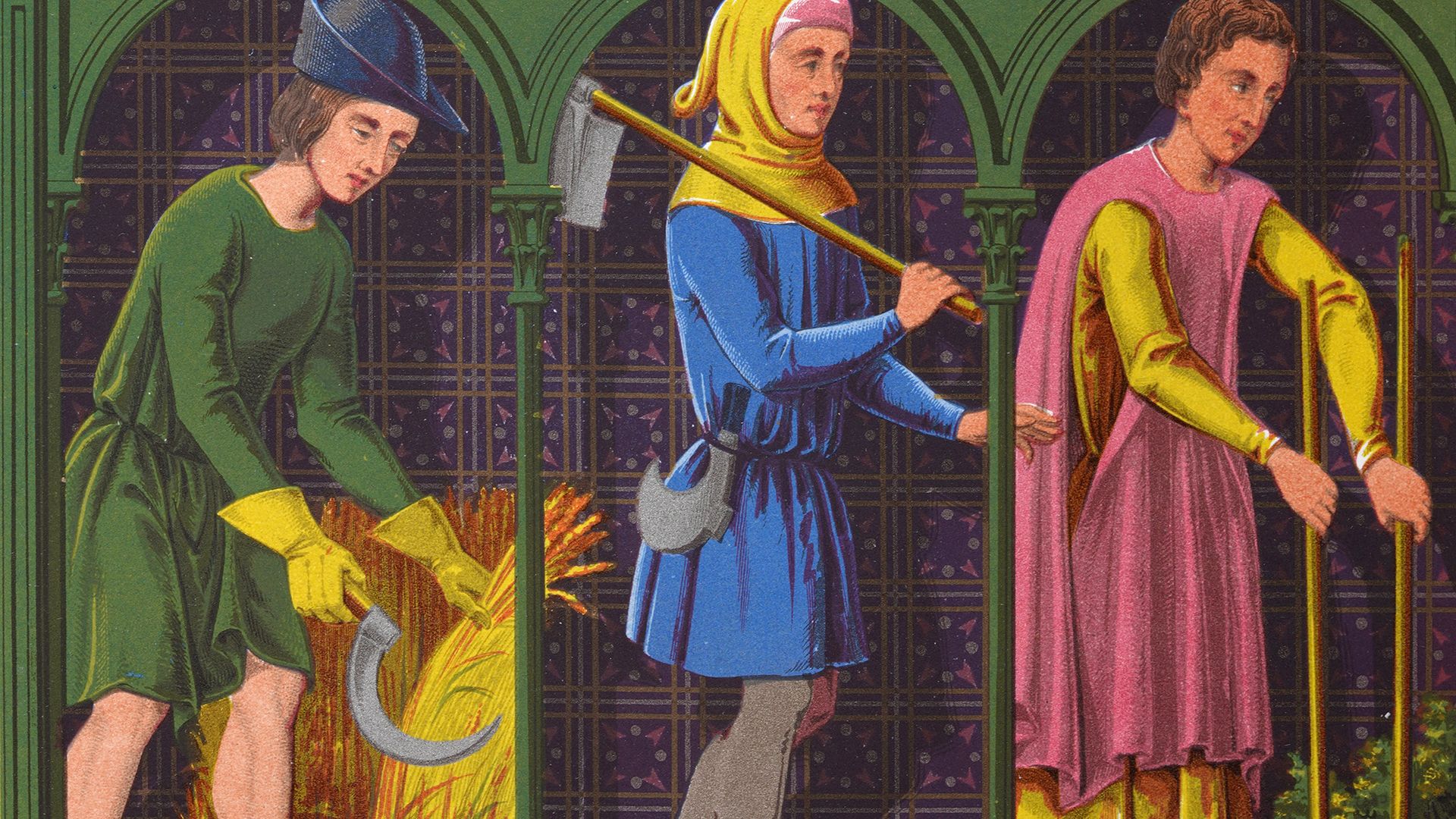
Whereas modern agriculture focuses on single crops on plots of land, in previous centuries, "you had all these different types of agriculture operating within the same landscape," Gordon said.
"In that landscape, you had lots of natural features that remained from the Middle or Early Holocene (which began after the last Ice Age about 12,000 years ago)," he added. "You had old bits of woodland, you had heaths, you had ponds, and bits of secondary forest. It was all interlaced with these agricultural mosaics, and that led to raised biodiversity because there were more habitats for different plant species to exploit."
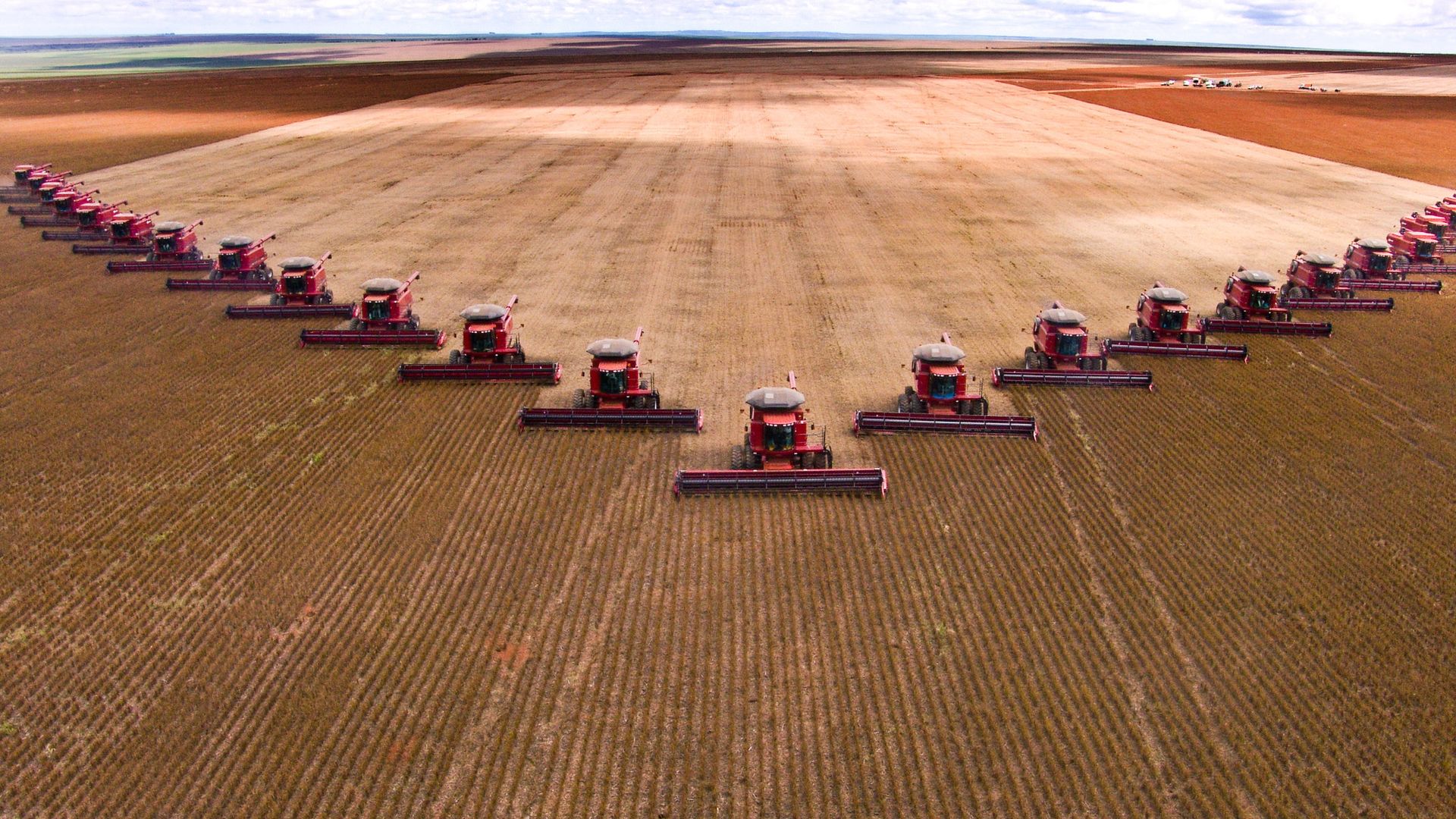
Modern farming often uses monoculture, where one crop species is grown over a large area. This lowers biodiversity in the area. (Image credit: alffoto via Getty Images)
The findings highlight the differences between medieval and modern land use practices — and their consequences for biodiversity. Research suggests that during the 20th century, global biodiversity declined by up to as much as 11% and human activities, such as land-use changes, pollution, and climate change, are the major culprits. In agriculture, the practice of monoculture — where a single crop species is grown over a large area — reduces biodiversity.
"What this work contributes to showing is that, until relatively recently, even in Europe, very different forms of land management and interaction were practiced than exist today," Patrick Roberts, director of Department of Coevolution of Land Use and Urbanisation at the Max Planck Institute of Geoanthropology, told Live Science in an email.
"Rather than the monoculture, plantations, or uniform changes to landscapes we see in the 20th and 21st centuries, emphasis was placed on maintaining 'mosaics,'" said Roberts, who was not involved in the new research.
In the study, "we can see how relationships between people and biodiversity have changed through time and how people can actively use landscapes while maintaining biodiversity and mixed ecosystem functions," he said.
There is still more to understand about how humans' disappearance from landscapes in the Black Death era affected the natural world, Gordon said. "There are a lot of other types of diversity — not just the number of types, but what the different types present actually do." There may be a hundred types of plants in a landscape, but if they do the same thing, "you have low functional diversity," he said.
Functional diversity "is super important for how ecosystems adapt to changes in climate and how resilient they are, which is something we need for future-proofing our agricultural system," Gordon said.
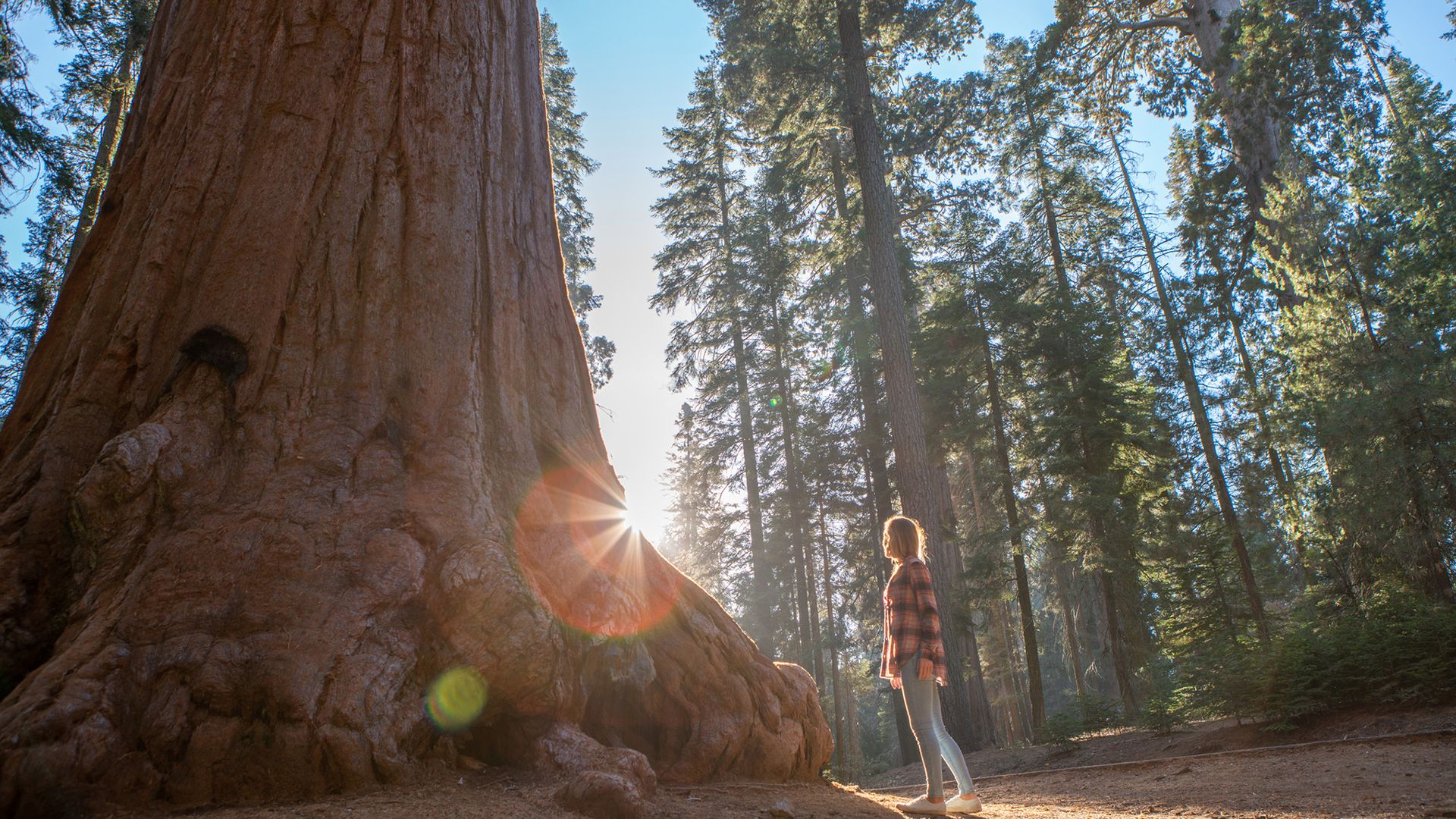
When temperatures spike, California redwoods slow down photosynthesis, new research has found. This finding has serious implications for the long-term survival of the iconic trees in a warming world, and their role in storing carbon from the atmosphere.
The region has seen significant warming in recent decades, and faces more frequent extreme heat days, with temperatures spiking above 100 degrees Fahrenheit (37 degrees Celsius). Now, in a new study, published Sept. 22 in the journal JGR Biogeosciences, a team of researchers has shown that California's renowned redwoods are struggling to photosynthesize in the heat.
Photosynthesis is the process used by plants, algae and some bacteria to turn sunlight into energy. It chemically converts carbon dioxide and water into sugars and oxygen.
"These trees adapted to grow in really temperate environments, so no one had really looked at the impact of heat on photosynthesis," study first author Lily Klinek, a doctoral candidate in the Plant Optics Lab at the University of California, Davis, told Live Science.
From 2022 to 2024, Klinek and colleagues measured how the leaves of redwoods in Garcia River Forest in Mendocino County responded to the heat. Once or twice a month, the researchers took three different California redwood leaf samples and measured their fluorescence and temperature.
The researchers wrapped a fourth leaf in tinfoil for 20 minutes to put it in a state of "rest" before taking the same measurements. "When they're in a state of rest, we expose them to a pulse of light that’s in the wavelength they would use for photosynthesis to see what would be their maximum photosynthetic rate," Klinek said.
They found that on hot days, the leaves exposed to sunlight were up to 18 degrees Fahrenheit (10 degrees Celsius) hotter than the air temperature. "That's a huge difference and indicates that the leaves are stressed to the point where they can't thermoregulate effectively," Klinek said.
Many plants' leaves manage their temperature and photosynthesis by opening or closing their stomata, which are tiny pores on their surface. These stomata (from the Greek word for mouth) regulate the amount of carbon dioxide entering the plant, and how much oxygen and water vapor it releases. Lower carbon dioxide intake leads to reduced photosynthesis, meaning the plant has less energy.
The large differences between air and redwood leaf temperatures suggest that the leaves had closed their stomata to avoid losing water from evaporation during hot conditions and consequently overheated, Klinek said.
To further investigate the impact of heat on leaf physiology, the researchers took California redwood leaf samples back to the laboratory and exposed them to a range of temperatures while they were in water. Despite their access to water, the leaves still photosynthesized less as they got hotter, even though their stomata were open, Klinek said.
This shows that heat imposes direct limitations on redwood photosynthetical capacity, rather than indirectly decreasing that capacity by causing stomatal closure, the researchers wrote. The finding indicates that redwoods' ability to photosynthesise and store carbon will decrease as temperatures rise.
"It is not only stomatal closure that is causing reduced photosynthesis," Lucy Rowland, an ecologist at the University of Exeter in the U.K. who was not involved in the study, told Live Science in an email. "These trees are already suffering from the direct effects of heat on their photosynthetic systems."
The finding has serious implications for the future of redwoods and similar plants. "The points at which this damage becomes irreversible remains really poorly understood, but is something which is really essential to understand if we want to predict how our future climate is going to impact plants," she said.
The next step in Klinek's research is to move beyond leaf physiology to understand these thresholds on the trees and their ecosystems as a whole.
"We're not sure to what extent the effect that we saw is a reversible stress response and if they are sustaining damage from this constant stress," she said. Researchers need more data to "really get a better sense, beyond the leaf scale, how these ecosystems are responding to heat and drought," she added.

 Login