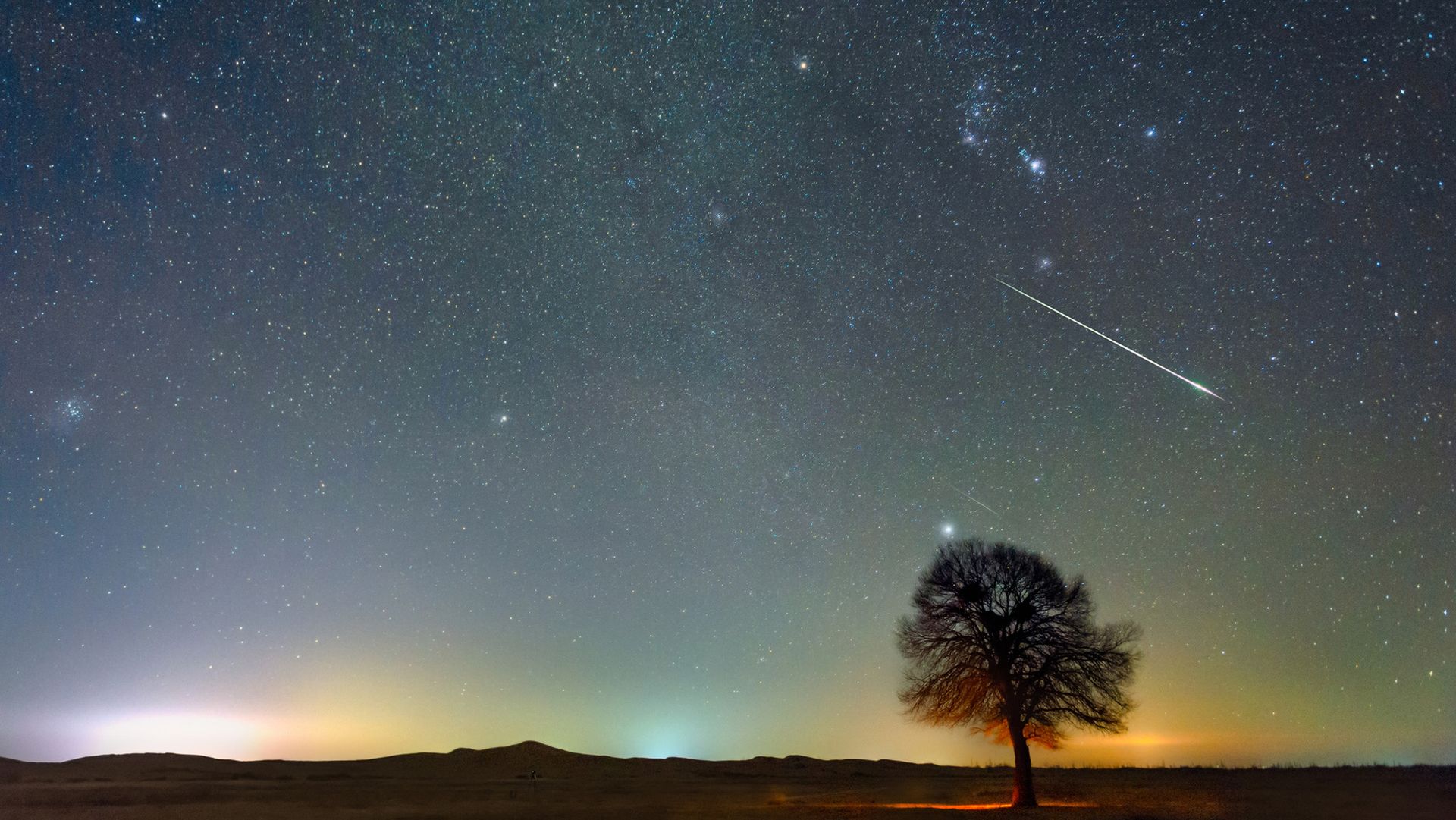
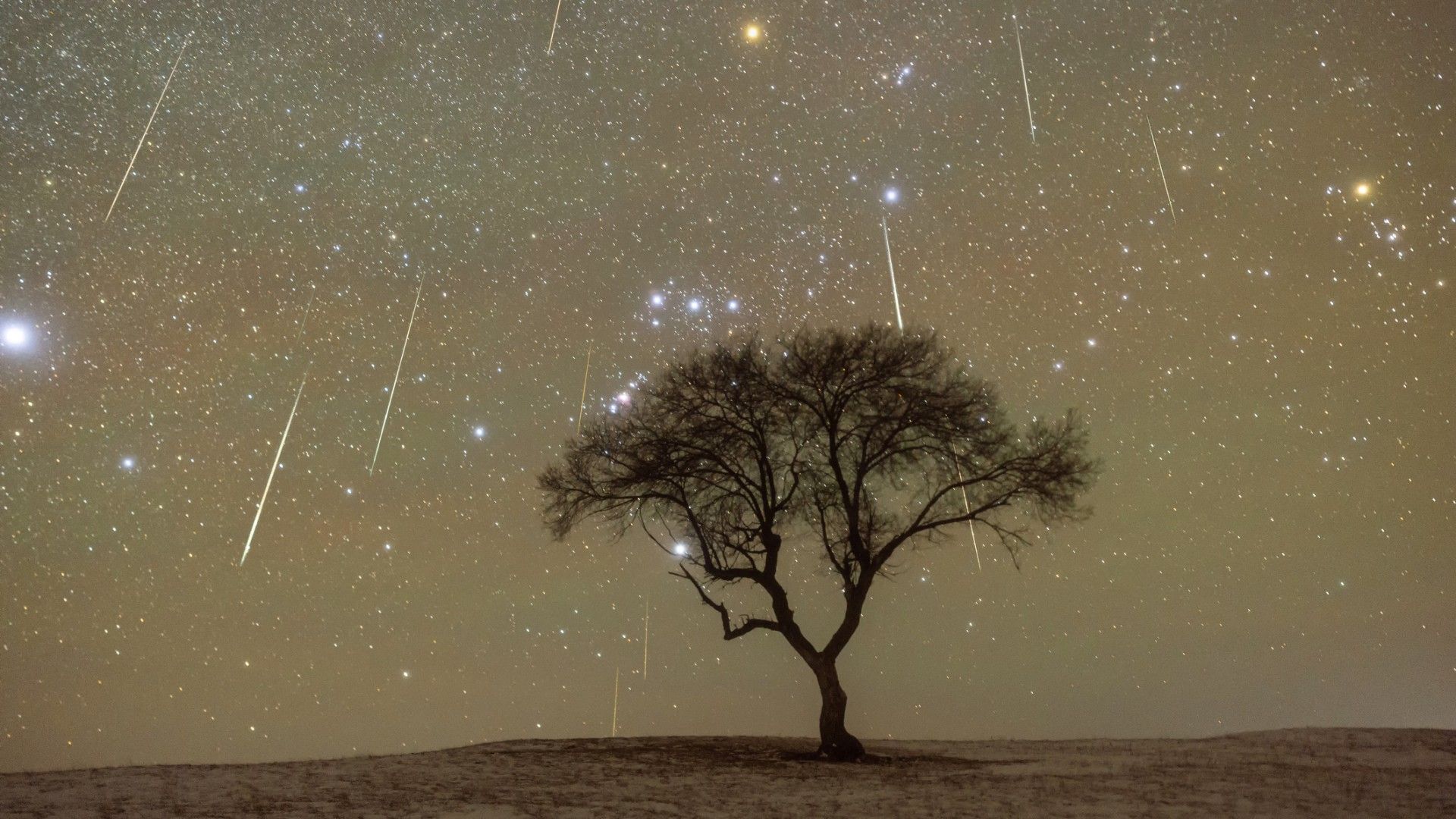
One of the best fall meteor showers peaks this week, when pieces of the famous Halley's Comet streak across Earth's atmosphere as fast-moving "shooting stars."
The Orionid meteor shower will peak overnight Wednesday (Oct. 21) through Thursday (Oct. 22), potentially producing around 20 meteors per hour under a dark sky, according to Time and Date. The Orionids are caused when Earth passes through the debris left by Halley's Comet, which last passed through the inner solar system in 1986 and will return in 2061.
Halley's Comet is presently beyond the orbit of Neptune, according to The Planets Today, but it doesn't need to be close to Earth to cause "shooting stars." Every time the comet travels through the inner solar system, heat from the sun causes it to shed dust and rocky particles along its orbital path. Earth's own orbit takes the comet through streams of that ancient debris several times a year, with the particles vaporizing as they slam into our planet's atmosphere.
The Orionids are particularly fast meteors, striking Earth's atmosphere at around 41 miles per second (66 kilometers per second). They can produce bright streaks, occasional fireballs (extremely bright, sometimes colorful meteors) and "persistent trains" — glowing trails that remain visible briefly after a meteor has disappeared. The best way to view them is with the naked eye, although a nice pair of stargazing binoculars or a small backyard telescope will help you enjoy more sights during peak skywatching season this fall.
Halley's Comet produces not one but two annual meteor showers. Its orbit comes close to Earth's at two different points, so our planet encounters the comet's debris twice each year — once during the Orionids in late October, and again during the Eta Aquariid meteor shower in early May.
There's a slight complication with the Orionids this year. A 71%-illuminated waxing gibbous moon will brighten much of the night, making it harder to spot meteors. However, the moon will set early Thursday morning, creating a valuable window of darkness before dawn. That's also when the constellation Orion will be high in the sky, making the predawn hours the best time to watch.
You can trace the paths of Orionid meteors back to their radiant: the famous red supergiant star system Betelgeuse in the constellation Orion. (That's why the shower is called the Orionids.) However, there's no need to look directly at Orion. Meteors seen farther from the radiant can produce longer streaks across the sky; each one comes from a tiny piece of Halley's Comet completing a journey that began many centuries ago.
Spain is one of the easiest places in the world to experience thetotal solar eclipse on Aug. 2, 2027. The so-called "eclipse of the century" first makes landfall in Andalucía, where totality will last up to 4 minutes and 40 seconds during mid-morning, with the sun comfortably high at around 38-42 degrees above the horizon in the eastern sky. Excellent roads, plentiful accommodation and Málaga's international airport make this an obvious alternative to North Africa and the Middle East.
However, choosing where to watch requires some thought. Southern Spain's narrowing shape funnels the path toward the Strait of Gibraltar, potentially concentrating huge numbers of eclipse chasers around Tarifa, the Costa del Sol and the British Overseas Territory of Gibraltar during the peak summer holiday season.
From busy Mediterranean beaches to mountain villages, here's where to see the total solar eclipse on Aug. 2, 2027 in southern Spain. All times, totality durations and historical cloud cover data come from Time and Date.
1. Tarifa
At the southernmost tip of mainland Europe, Tarifa will experience almost four minutes and 40 seconds of totality on Aug. 2, 2027. (Image credit: MEDITERRANEAN via Getty Images)
Location: Cádiz province
Start of totality and duration: 10:45 a.m. CEST; 4 minutes, 40 seconds
Historical August cloud cover: 13%
Altitude of the sun: 38 degrees above east
At the southernmost tip of mainland Europe, where the Atlantic Ocean meets the Mediterranean Sea, Tarifa is likely to be one of the country's busiest eclipse-watching locations because it will experience the longest totality in mainland Spain. Just 9 miles (14 km) across the Strait of Gibraltar from Morocco, the historic port town is known for its whitewashed old town, the medieval Castle of Guzmán el Bueno and its long, sandy beaches. Los Lances and Valdevaqueros offer wide horizons and plenty of open space.
2. Gaucín
The whitewashed mountain village of Gaucín will experience more than three minutes of totality on Aug. 2, 2027. (Image credit: japatino via Getty Images)
Location: Málaga province, Andalucía, Spain
Start of totality and duration: 10:46 a.m. CEST; 3 minutes, 13 seconds
Historical August cloud cover: 5%
Altitude of the sun: 38 degrees above east
For eclipse chasers who would rather head into the mountains than join the crowds on the Costa del Sol, Gaucín is an intriguing alternative. One of Andalucía's classic pueblos blancos, the whitewashed village occupies a spectacular position in the mountains above the coast, crowned by the ruins of Castillo del Águila. Its elevated setting offers sweeping views across the surrounding countryside towards Gibraltar and, on clear days, the mountains of North Africa. Crucially, heading inland doesn't sacrifice too much totality.
3. Gibraltar
The Rock of Gibraltar will be plunged into darkness for almost four and a half minutes during the total solar eclipse on Aug. 2, 2027. (Image credit: Eloi_Omella via Getty Images)
Location: Gibraltar
Start of totality and duration: 10:45 a.m. CEST; 4 minutes, 29 seconds
Historical August cloud cover: 17%
Altitude of the sun: 38 degrees above east
Few places in Europe could provide a more dramatic setting for totality than Gibraltar, the tiny British Overseas Territory dominated by its famous 1,398-foot (426-meter) limestone Rock. However, eclipse chasers will need to view either from The Rock or its east coast, where elevated viewpoints and beaches face the Mediterranean and the eclipsed sun. However, Gibraltar has a potential complication — the easterly Levanter wind can create a distinctive cap of cloud over the Rock even when surrounding skies are clear. Another issue is accommodation, which is already at a premium. See Gibraltar Eclipse 2027.
4. La Línea de la Concepción
La Línea de la Concepción offers the chance to watch more than four minutes of totality with the Rock of Gibraltar dominating the horizon. (Image credit: fhm via Getty Images)
Location: Cádiz province
Start of totality and duration: 10:45 a.m. CEST; 4 minutes, 24 seconds
Historical August cloud cover: 17%
Altitude of the sun: 38 degrees above east
Immediately north of Gibraltar, La Línea de la Concepción occupies the sandy isthmus between the Bay of Gibraltar and the Mediterranean Sea. Its location creates one of Spain's most distinctive possibilities for eclipse photography. On the Mediterranean side, Playa de Santa Bárbara is a wide sandy beach north of the border, with the immense Rock of Gibraltar rising to the south — a potentially spectacular foreground. The city has around 9 miles (14 kilometers) of coastline, providing plenty of alternatives for eclipse viewing.
5. Estepona
Estepona on the Costa del Sol will experience more than three and a half minutes of totality on Aug. 2, 2027. (Image credit: John Harper via Getty Images)
Location: Costa del Sol, Málaga province
Start of totality and duration: 10:46 a.m. CEST; 3 minutes, 41 seconds
Historical August cloud cover: 7%
Altitude of the sun: 38 degrees above east
About an hour's drive southwest of Málaga Airport, Estepona is one of the Costa del Sol's most attractive resort towns, with a pedestrianized old quarter of whitewashed streets, colorful flowerpots and squares centered on Plaza de las Flores. For eclipse day, the mile-long Playa de la Rada is the obvious gathering place, with its broad Mediterranean horizon and proximity to the town center. Other attractions include Estepona Marina and the Sierra Bermeja mountains rising behind the coast.
6. Cádiz
The ancient Atlantic port of Cádiz will experience almost three minutes of totality on Aug. 2, 2027. (Image credit: Flottmynd via Getty Images)
Location: Cádiz province
Start of totality and duration: 10:45 a.m. CEST; 2 minutes, 56 seconds
Historical August cloud cover: 13%
Altitude of the sun: 37 degrees above east
Historic Cádiz occupies a narrow peninsula jutting into the Atlantic and is packed with reminders of its long maritime past, including the Cádiz Cathedral, the Roman Theatre and Torre Tavira, one of more than 100 watchtowers once used to spot approaching ships. For eclipse day, the long, sandy Playa de la Victoria offers plenty of open space, while La Caleta provides a more historic setting between two coastal castles.
7. Málaga
Málaga, capital of the Costa del Sol, will experience almost two minutes of totality on Aug. 2, 2027. (Image credit: Guven Ozdemir via Getty Images)
Location: Málaga province
Start of totality and duration: 10:48 a.m. CEST; 2 minutes
Historical August cloud cover: 9%
Altitude of the sun: 39 degrees above east
Málaga may lose some duration compared with locations farther west, but it makes up for it with excellent transport links, plentiful accommodation and all the attractions of a major Mediterranean city. It combines the hilltop Gibralfaro Castle and Moorish Alcazaba with a Roman theatre, cathedral, museums and a lively historic center. For eclipse day, the obvious option is the coast. La Malagueta beach is within walking distance of the city center, while numerous beaches extend east and west along the Costa del Sol.
8. Torremolinos
The beaches of Torremolinos on the Costa del Sol will experience almost three minutes of totality on Aug. 2, 2027. (Image credit: By LTCE via Getty Images)
Location: Málaga province
Start of totality and duration: 10:47 a.m. CEST; 2 minutes, 46 seconds
Historical August cloud cover: 11%
Altitude of the sun: 39 degrees above east
One of the best-known resorts on Spain's Costa del Sol, Torremolinos combines a long Mediterranean beachfront with easy access to Málaga and its international airport. Its 4-mile (6-kilometer) promenade links broad sandy beaches, including Playa del Bajondillo and Playa de la Carihuela, offering plenty of potential eclipse-watching spots with views toward the eastern sky. For a higher vantage point, nearby Mount Calamorro rises almost 2,600 feet (800 meters) above Benalmádena, with panoramic views across the Costa del Sol and, on clear days, towards Gibraltar and North Africa.
9. Marbella
Marbella's Mediterranean beaches will experience more than three minutes of totality on Aug. 2, 2027. (Image credit: Tu xa Ha Noi via Getty Images)
Location: Costa del Sol, Málaga province
Start of totality and duration: 10:46 a.m. CEST; 3 minutes, 21 seconds
Historical August cloud cover: 7%
Altitude of the sun: 38 degrees above east
Marbella has around 17 miles (27 kilometers) of Mediterranean coastline, so eclipse chasers will have dozens of beaches to choose from, from San Pedro de Alcántara in the west to Cabopino in the east. Options include the sandy beaches and dunes around Cabopino, Las Chapas, Puerto Banús and San Pedro de Alcántara, all with open views across the Mediterranean. Away from the beach, Marbella offers a whitewashed old town centered on Plaza de los Naranjos, while the Sierra Blanca mountains provide a dramatic backdrop to the resort.
10. Motril
Motril on Spain's Costa Tropical lies close to the northern edge of the path of totality on Aug. 2, 2027. (Image credit: Getty Images)
Location: Costa Tropical, Granada province
Start of totality and duration: 10:49 a.m. CEST; 1 minute, 57 seconds
Historical August cloud cover: 10%
Altitude of the sun: 39 degrees above east
Close to the northern edge of the path of totality, Motril gets a shorter eclipse than destinations farther west, but could be among the quieter places on Spain's Mediterranean coast from which to experience it. The largest town on Granada's Costa Tropical sits between the Mediterranean and the foothills of the Sierra de Lújar, with the Sierra Nevada rising beyond. Nearby Playa Granada and Playa Poniente offer broad coastal views.
Where it is: 7,500 light-years away, in the constellation Cassiopeia
When it was shared: Oct. 6, 2026
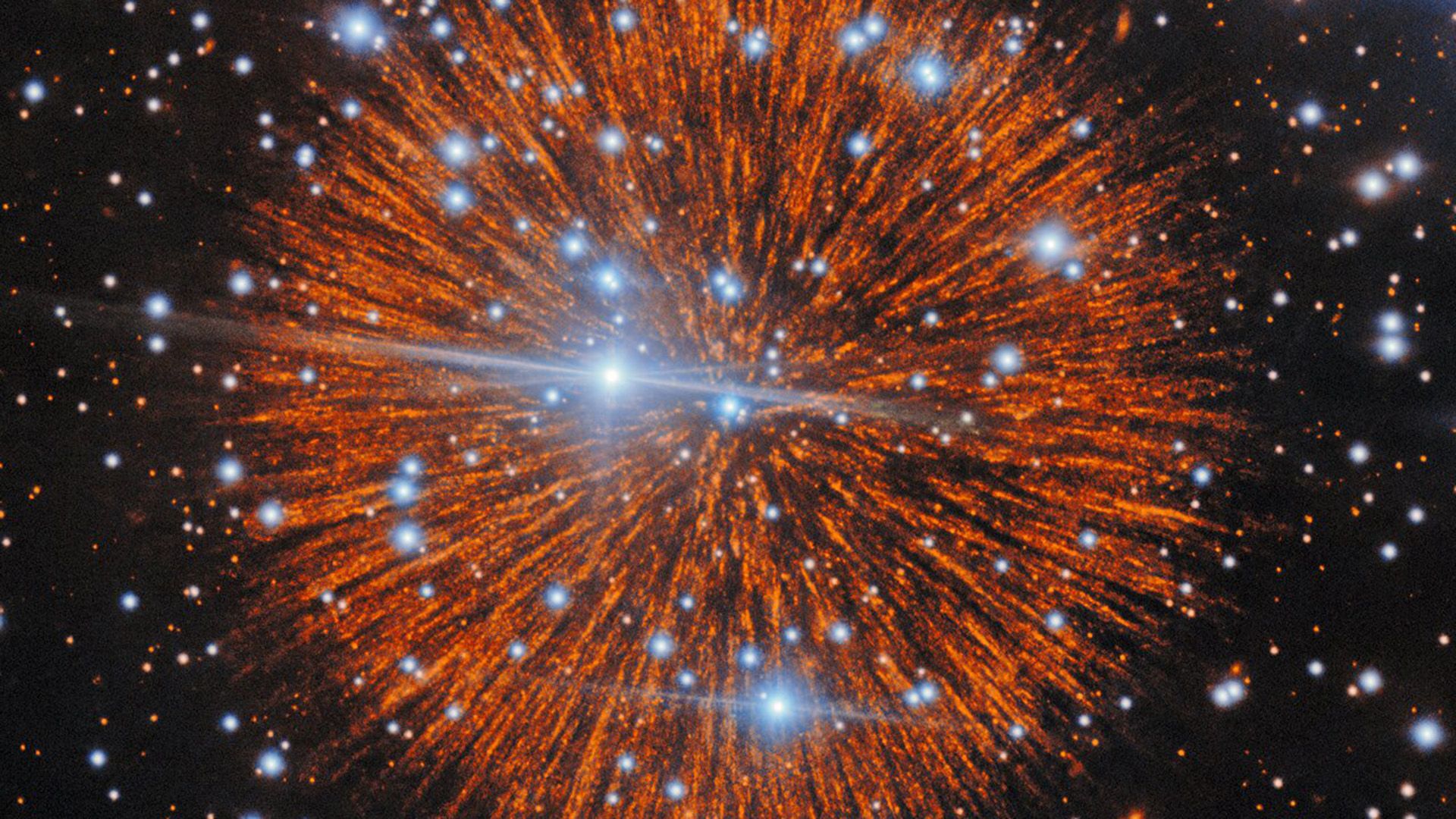
A mysterious "guest star" recorded by medieval astronomers nearly 850 years ago has revealed new secrets after scientists obtained the clearest images yet of its explosive aftermath.
New observations of Pa 30, thought to be the leftovers of a historic supernova called SN 1181, show that its spectacular firework-like filaments are not smooth streams of material. Instead, they consist of chains of tiny gas knots.
SN 1181 is so called because astronomers in China and Japan recorded its brief appearance in the year 1181, when they saw it as a naked-eye object in the constellation Cassiopeia. Eight surviving texts date its appearance to between Aug. 4 and 6 of that year. The mysterious object remained visible for 185 days.
"It's rare to get this level of detail on a supernova we can date to a specific week in history," Timothy Cunningham, an assistant professor of astronomy and astrophysics at the University of Warwick who led an international team of researchers to study the object, said in a statement.
SN 1181 is one of only five supernovas in the Milky Way galaxy known to have been witnessed from Earth before the invention of the telescope. (Those optical instruments first appeared in the Netherlands in 1608.) Now, advanced ground-based telescopes can produce wonderfully detailed images of those historic remnants. This latest image is from the Gemini North telescope on Mauna Kea in Hawaii and reveals about 10 times more filamentary structures in Pa 30 than have been seen before. This extraordinary detail gives astronomers fresh clues about the unusual explosion and the environment surrounding the star.
"These images give us the clearest picture yet of Pa 30's structure, and it's not what we expected," said Cunningham, whose team published their findings in The Astrophysical Journal. "The filaments are made of chains of tiny knots rather than smooth streaks, providing new constraints on the nature of the space around the star before it exploded and the physical processes that have shaped the expanding ejecta."
The knot-like structures may have resulted from variations in temperature or density in material surrounding the star as debris from the explosion expanded.
Pa 30 contains another unusual feature: a surviving star that sits almost exactly at the center of the remnant. That's highly unusual, because a supernova explosion typically sends stars away from their original positions. It suggests that the original explosion was highly symmetrical, the researchers said.
Furthermore, Pa 30 is thought to be a Type Iax supernova. Unlike standard Type Ia supernovas, which destroy their stars, a Type Iax event is a lower-energy, incomplete explosion of a white dwarf star that can leave behind a remnant known as a "zombie star." It's the only Type Iax supernova ever found.
I used to think being interested in the night sky meant I had to try every meteor shower. If a calendar said "peak," I interpreted that as an instruction. I'd set an alarm, find several layers of clothing and go outside at around 2:00 a.m. when even the neighborhood cats seemed surprised to see me. Then I'd spend an increasingly resentful 45 minutes staring upward, occasionally see one meteor and wonder whether I was somehow doing it all wrong. As I've grown into stargazing, I've become much more selective.
The Orionids peak next week, and normally I'd be tempted. These fast meteors come from debris from Halley's Comet, which is enough of a connection to make almost anyone want to go outside. However, another object is in the sky this year — a big, bright waxing gibbous moon that will brighten the night sky and make "shooting stars" very hard to see.
That doesn't make the Orionids unobservable. In fact, there is a narrow window when the night sky will be free from moonlight. But it does make me far less inclined to sacrifice an entire night for them, and I certainly won't be trying to spend the night camping under a dark sky in a remote rural location far from light pollution. I've discovered that knowing when not to observe is an underrated stargazing skill.
What's happening and when to look
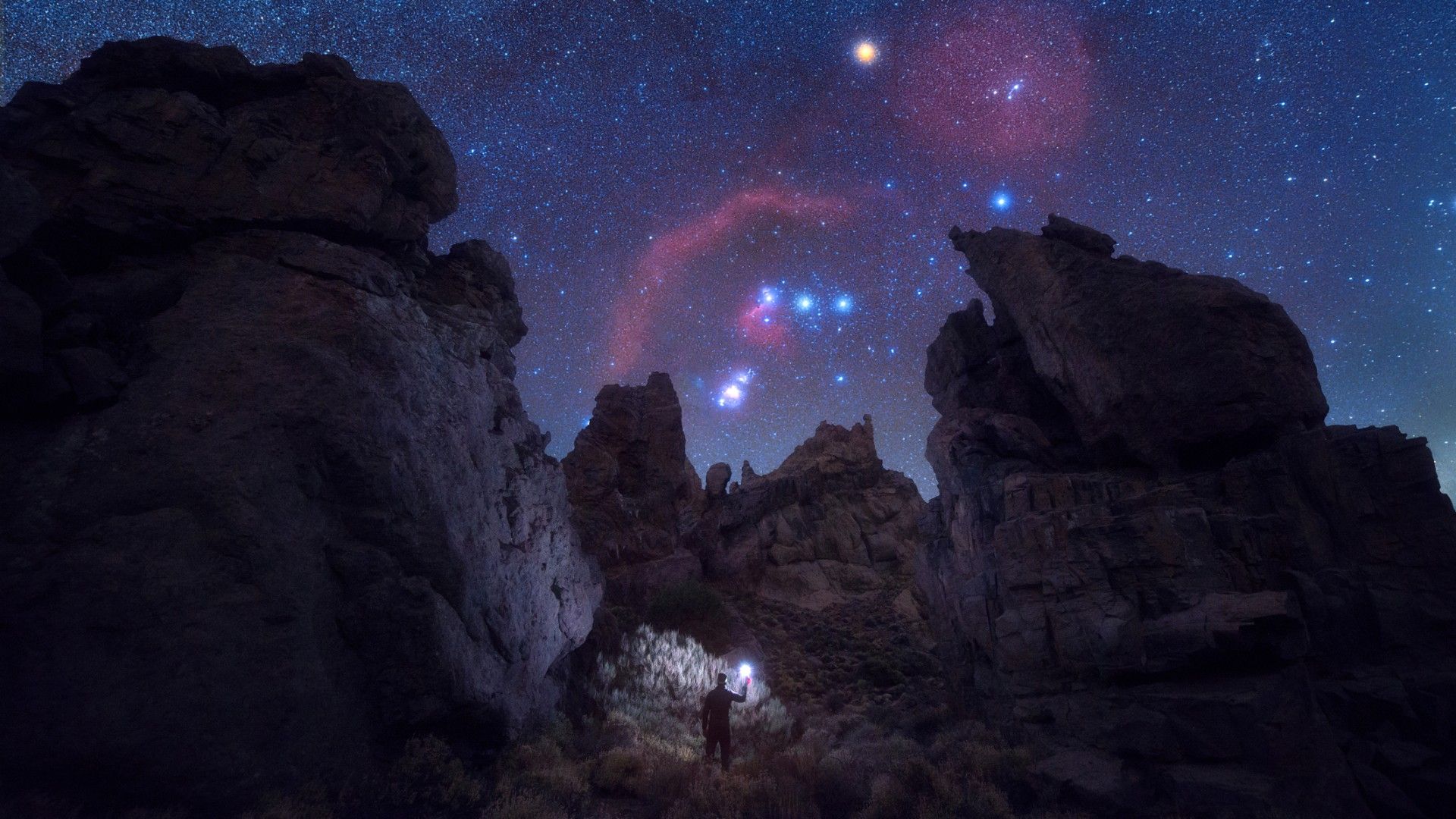
The Orionid meteor shower's radiant is the constellation Orion. (Image credit: Inigo Cia via Getty Images)
The Orionids are active from Oct. 2 through Nov. 7, with their 2026 maximum expected overnight on Oct. 21-22. They appear to radiate from a point near Orion, although the meteors themselves can streak across almost any part of the sky.
The shower happens because Earth crosses a stream of debris left behind by Halley's Comet, which was last in the inner solar system in 1986 and will return in 2061. Those tiny particles hit our atmosphere at roughly 41 miles (66 kilometers) per second, making Orionids particularly fast meteors.
Under ideal conditions, the International Meteor Organization gives the shower a zenithal hourly rate of 20 or more around maximum. But "zenithal hourly rate" is not the same as promising that I will personally see 20 meteors while standing in my backyard for an hour. It assumes an excellent dark sky, a well-placed radiant and unobstructed viewing. In reality, that's impossible — at the very least you'd have to have eyes in the back of your head. And on each side.
This year adds another complication. The moon reaches first quarter on Oct. 18 and continues waxing toward full on Oct. 26. On the peak night of the Orionids, an 80%-illuminated waxing gibbous moon will be in the night sky as it gets dark on Oct. 21 and sets around 03:00 a.m. local time across Europe and North America on Oct. 22. You can probably see the workaround. Sunrise is roughly 06:30 a.m. local time, which means astronomical darkness — when the sun is more than 18 degrees below the horizon, meaning complete darkness — lasts until around 05:00 a.m. local time (these times work as a ballpark, but you can (check the exact times of moonset and sunrise for your location on Time and Date).
So there is a dark window before dawn, and that is when I would try to see the shower if I were determined to see it. The Orionid radiant is also much better placed after midnight than it is in the evening.
Knowing exactly what's going to happen in the sky turns a casual meteor watch into a rather more calculated exercise.
How and when I'm watching it
My plan for the Orionids this year is the same as usual — after checking the moon phase and the moonset and sunrise times, there's one more variable. The weather forecast first.
If the forecast is excellent and I'm feeling enthusiastic, I'll target the period after moonset and before morning twilight on Oct. 22. If it's due to be cloudy, I'm staying in bed.
This sounds obvious, but I think beginners are sometimes given the impression that successful stargazing requires heroic commitment. It doesn't. A meteor shower is not a performance that disappears the moment the advertised "peak" passes. The Orionids have a relatively broad period of activity, so meteors can appear on nights either side of maximum, too.
If I do go outside at 3:00 a.m., I'll do so without two hugely valuable resources for meteor showers — a lawn chair and bags of patience.
Stargazer's corner: October 16-22, 2026
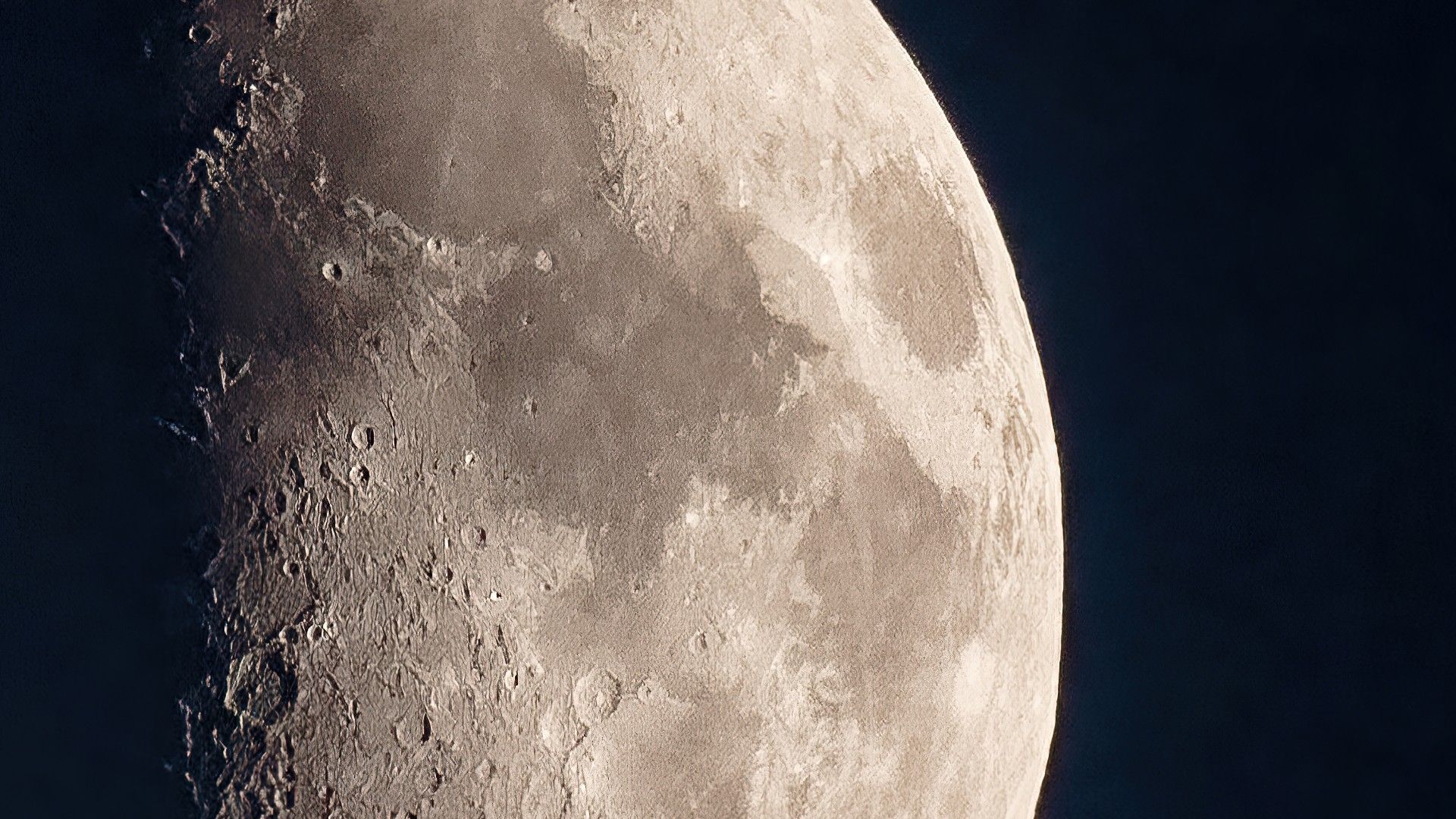
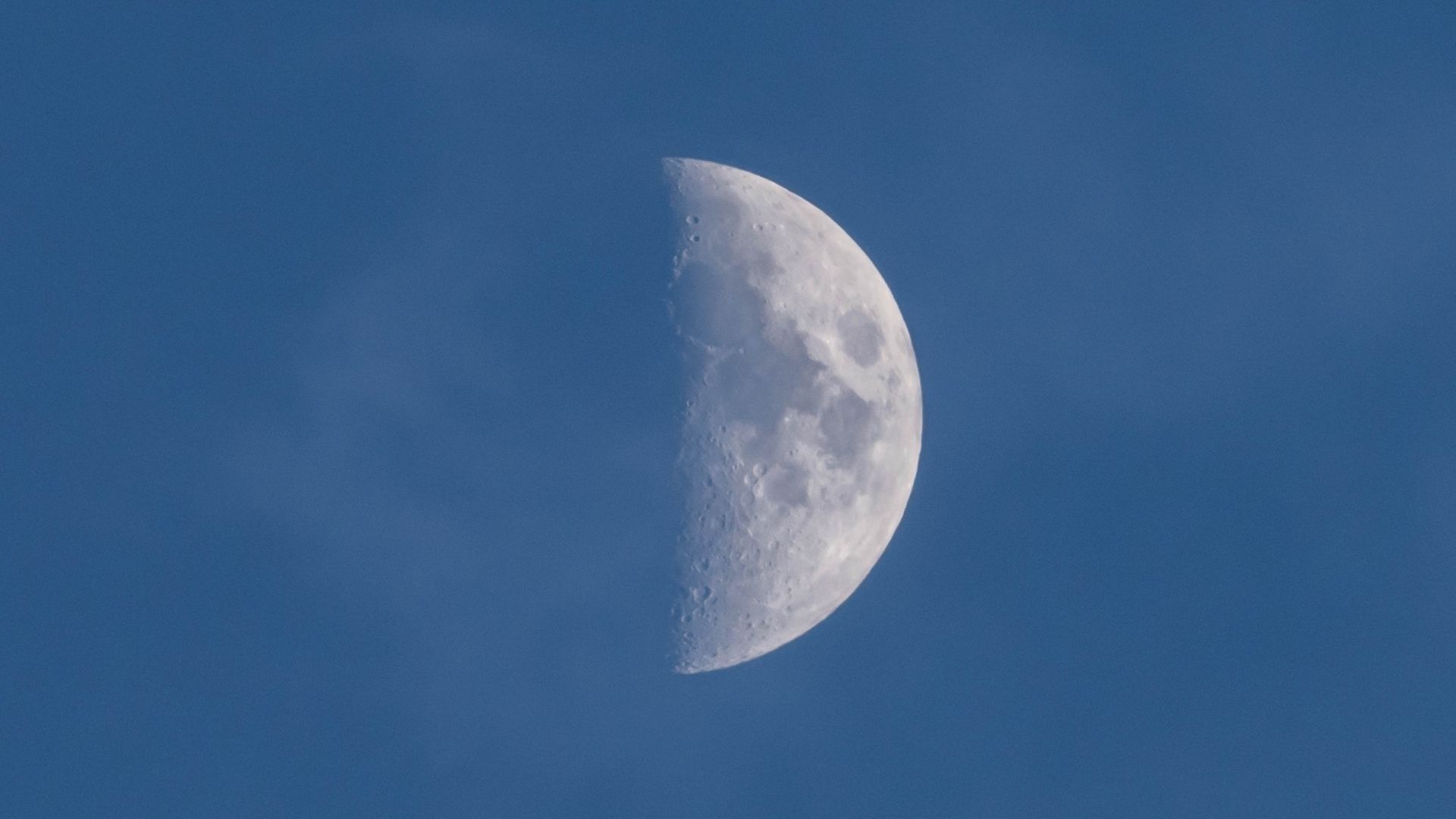
A first quarter moon is ideal for a pair of binoculars. (Image credit: Darwin Fan via Getty Images)
The moon reaches first quarter on Oct. 18, making stargazing tricky this week. That means I'm changing what I observe rather than declaring the week a write-off. The moon itself becomes an excellent target in early evening around first quarter. Sunlight strikes the lunar landscape along the terminator — the boundary between lunar day and night — throwing mountains and crater rims into strong relief. A cheap pair of binoculars can reveal a surprising amount. With a telescope, you can spend hours getting lost in the Montes Apenninus mountain range and three nearby craters — Eratosthenes and Archimedes on either side, and Plato above. Saturn remains another easy evening target after its Oct. 4 opposition. Look toward the eastern and southeastern sky after dark for its steady yellowish light. Even a modest telescope pointed at Saturn's rings will astound.
Constellation of the week: Cassiopeia
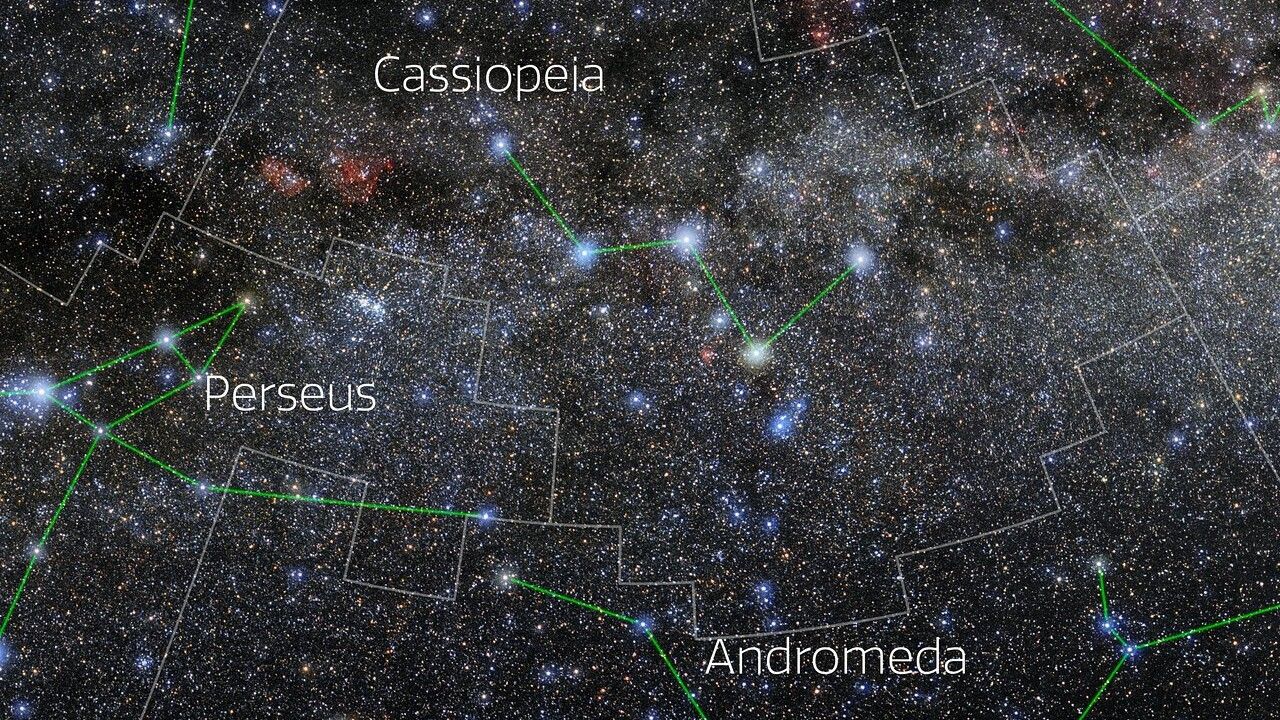
The Milky Way runs directly through Cassiopeia, "The Queen." (Image credit: E. Slawik/NOIRLab/NSF/AURA/M. Zamani)
Cassiopeia is one of the easiest constellations I know to find because its five main stars form a conspicuous W — or, right now, something that looks suspiciously more like an M. Look toward the northern sky in the evening. From mid-northern latitudes, Cassiopeia is high and prominent during autumn, on the opposite side of Polaris from the Big Dipper. That relationship is more useful to me than memorizing exactly which way the W should point. Cassiopeia circles Polaris as Earth rotates, so its orientation changes through the night. From sufficiently northerly locations, it's circumpolar, meaning it never sets below the horizon.
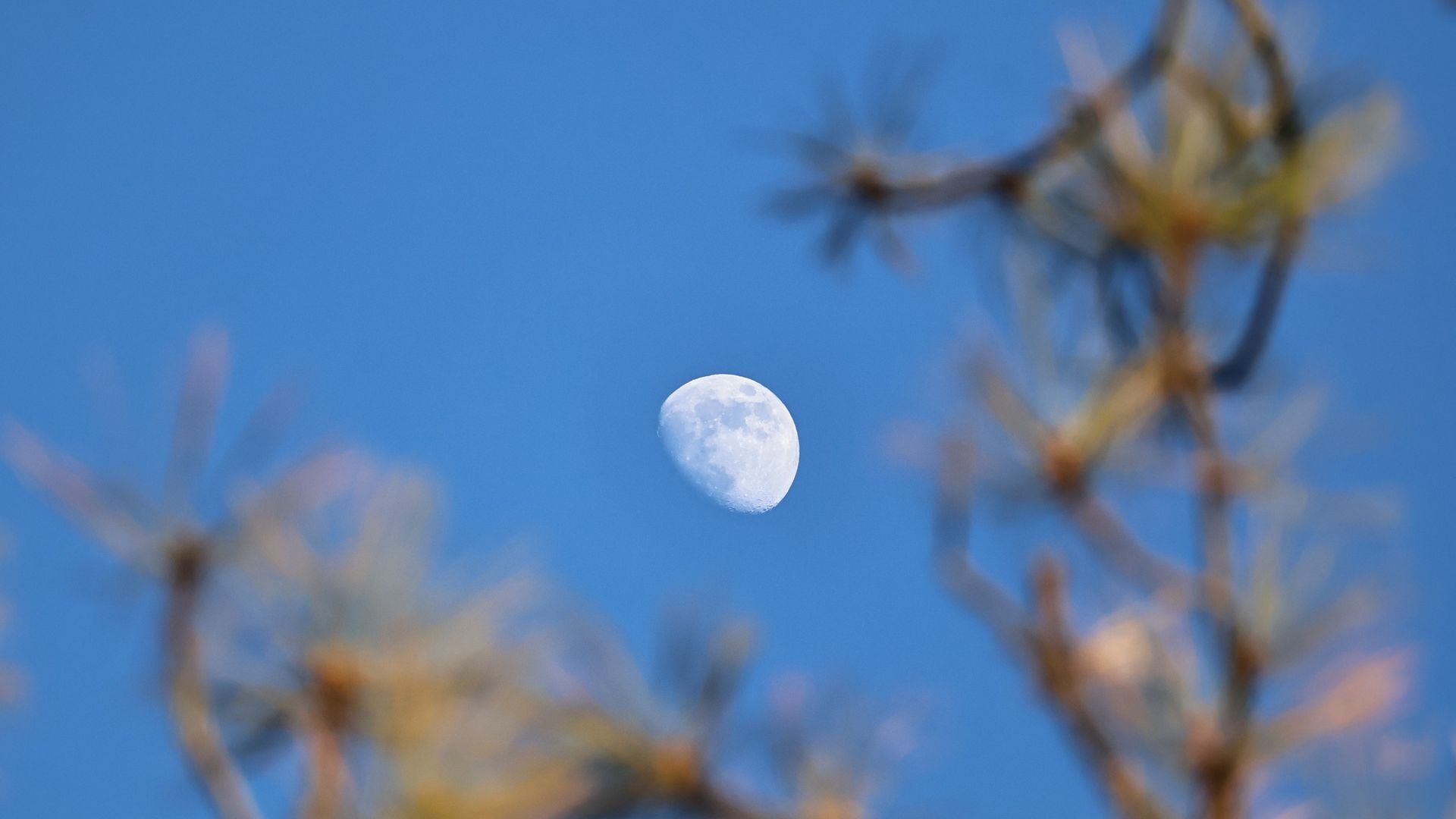
I know perfectly well that the moon comes out during the day. I have known this for decades. Yet whenever I spot it in a blue afternoon sky, some primitive part of my brain still thinks it has turned up early.
I'm certainly not the only one. Many people don't understand how it could be visible in daylight. In their eyes, the moon is a nighttime object. Why? Because that's when they notice it — it appears brighter.
We tend to think of the sun as belonging to the day and the moon to the night because that's how they're usually presented to us as children. Astronomically, it makes little sense. The moon spends plenty of time above our horizon while the sun is also up — it spends half its time in the daytime sky, in fact.
If the moon, pale but unmistakable, looks slightly out of place against a blue sky, it's not — you are. This week is a great time to get used to seeing it there. Just past first quarter, the moon will spend each afternoon hanging in the daytime sky, becoming easier to spot as the sun sinks towards the horizon.
What's happening and when to look
The moon reached first quarter on Sunday, Oct. 18, and is now waxing toward full moon, which occurs early on Monday, Oct. 26 (Oct. 25 in some time zones). That puts it in the right part of its orbit to be conspicuous during the late afternoon this weekend.
Here's the useful bit to remember. Around first quarter, the moon rises roughly around midday. As it waxes towards full, it rises progressively later in the afternoon. By full moon, it rises around sunset.
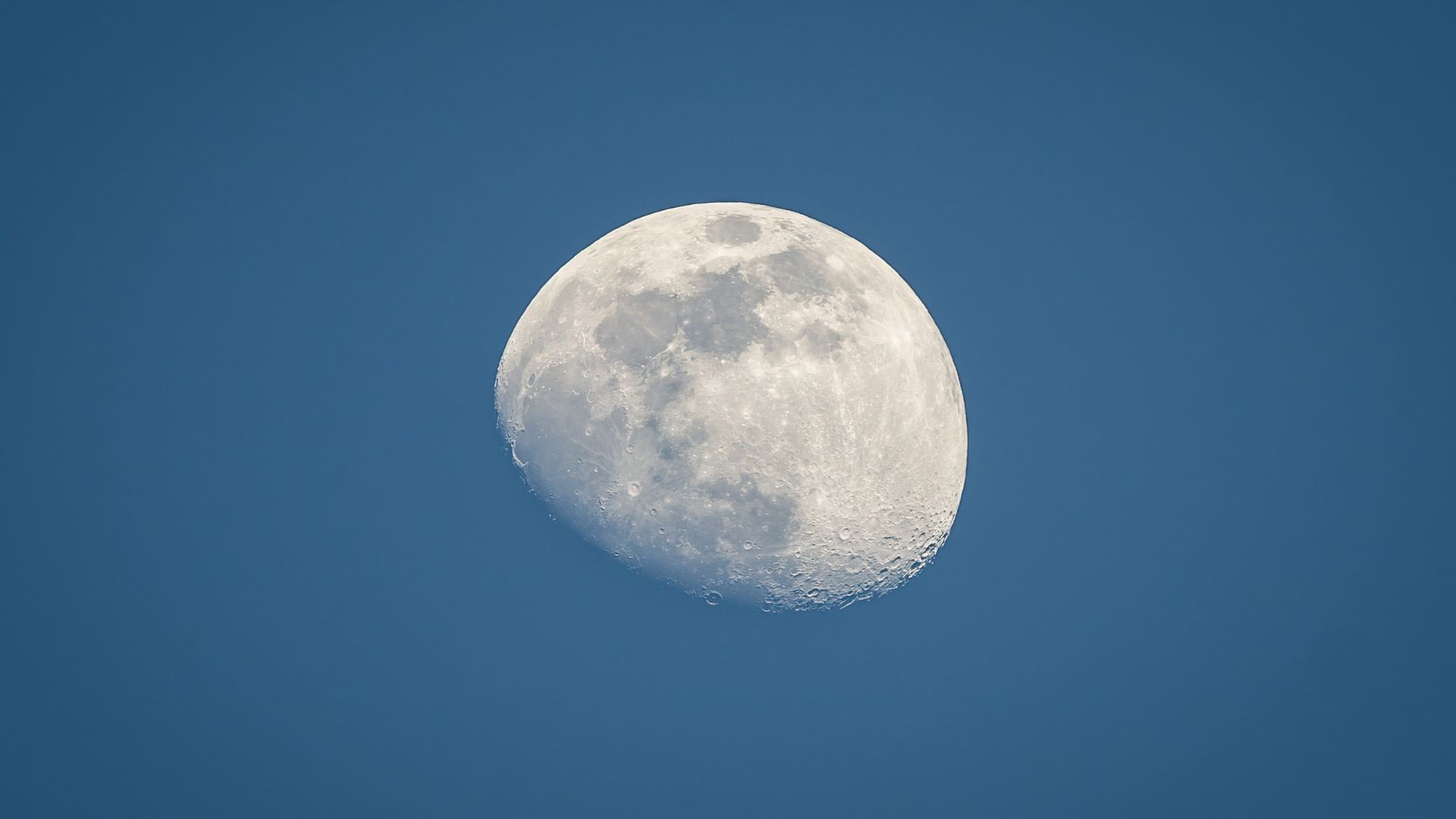
The moon reached first quarter on Oct. 18. (Image credit: Taro Hama @ e-kamakura via Getty Images)
That makes the days immediately after first quarter an excellent time to get into the habit of finding the moon before sunset. On Monday, Oct. 19, look southeast in the afternoon for a moon just over half-lit. Each afternoon this week, it will become a little more illuminated, move farther east against the background stars, and appear progressively later in the day.
You don't need to wait until dusk. In fact, that's the point. Start looking during the afternoon, when the sun is still well above the horizon. Once you find the moon, it can be surprisingly conspicuous against the blue sky.
How and when I'm watching it
The moon is now waxing towards being full, so it's already in the sky by dusk. (Image credit: 5c5q2cnvmg / 500px via Getty Images)
I'll start looking in the mid-to-late afternoon this week, when the waxing moon should already be high enough to find easily. You can check the exact moonrise timewhere you are, but there's no need to catch it as it rises. Look towards the east or southeast and scan the blue sky.
Once you've found the moon in daylight, keep checking on it as sunset approaches. The moon doesn't suddenly become brighter, of course. Instead, the surrounding sky darkens, increasing the contrast until the pale daytime moon seems to switch on at dusk and grow increasingly brilliant.
Binoculars will give you a superb view at dusk, particularly along the terminator — the boundary between lunar day and night. That's where low-angle sunlight throws mountains and crater rims into sharp relief. As the moon waxes this week, the terminator will move steadily across its surface, revealing a different landscape each afternoon.
That's another reason not to wait for the full moon. The full moon gets most of the attention, but the week beforehand is arguably a much better time to get to know our nearest celestial neighbor — and you don't even have to wait until dark.
Stargazer's corner: October 23-29, 2026
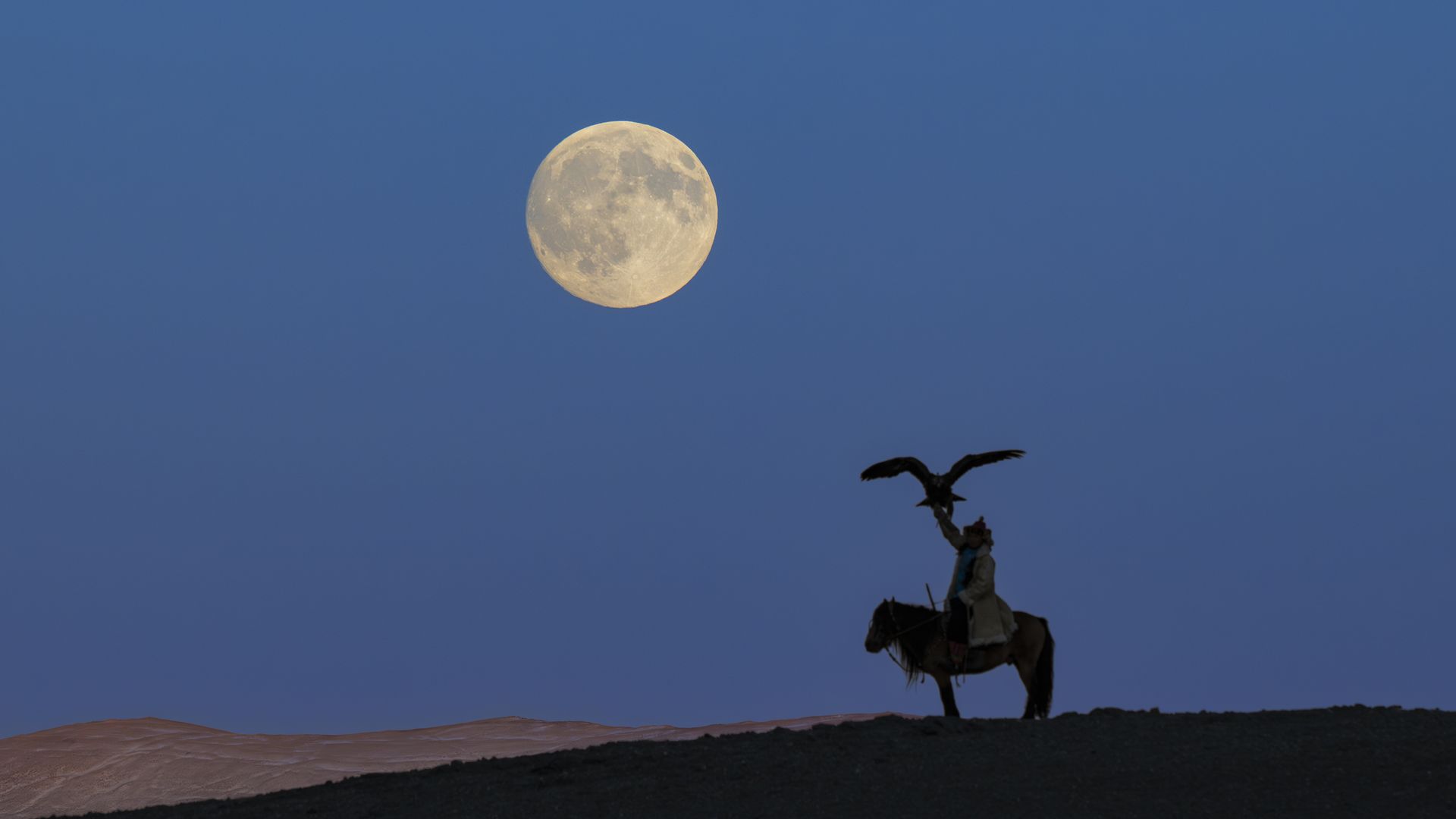
The full moon arrives on Monday, Oct. 26. (Image credit: Westend61 via Getty Images)
This is a bright-moon week. Full moon arrives early on Monday, Oct. 26, so moonlight will wash out faint stars and make galaxies and nebulas much harder to see. So go for Saturn instead. It reached opposition earlier this month and remains very well placed in the evening sky. Better still, the nearly full moon passes near Saturn around Oct. 23-24, giving beginners a convenient landmark for locating the planet. The moon's glare will hide faint nearby stars, but Saturn itself is easily bright enough to cope. A good example will be Oct. 27, when the Pleiades is passed closely by a bright moon. The Seven Sisters therefore won't be at their best, so you'll need to use binoculars — if you do, you'll see them easily enough.
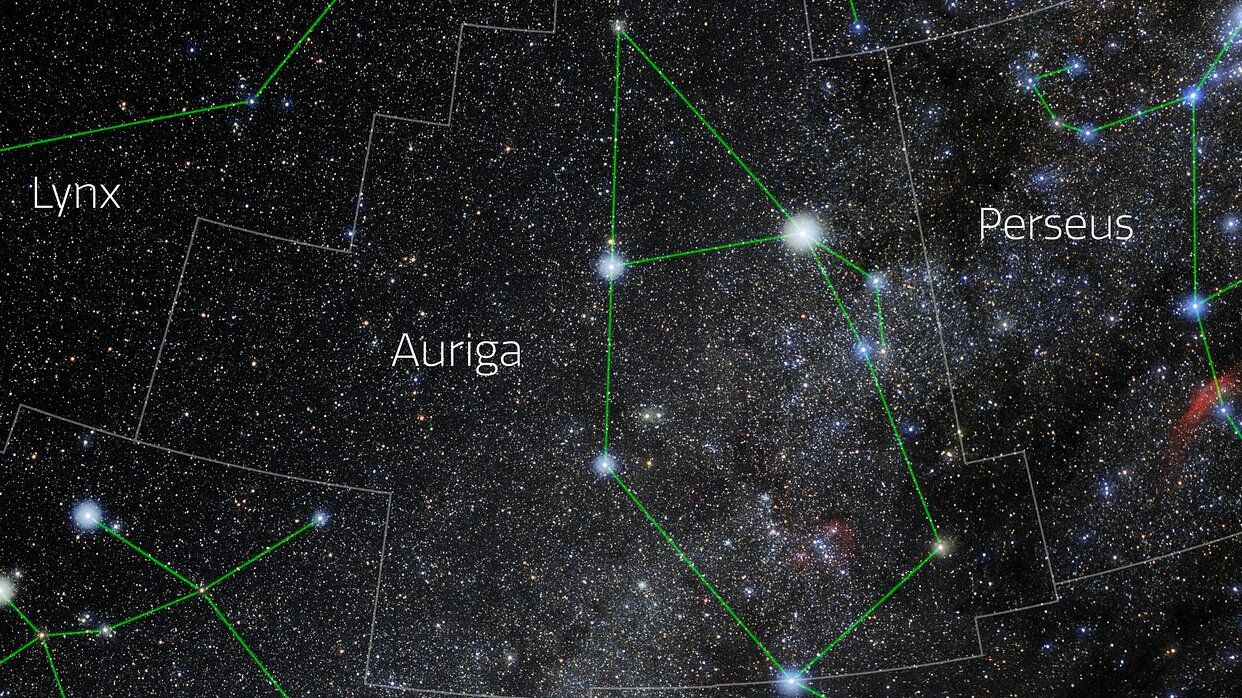
Constellation of the week: Auriga
Auriga is one of the easiest constellations to find in the Northern Hemisphere's winter night sky. (Image credit: E. Slawik/NOIRLab/NSF/AURA/M. Zamani)
Auriga, "the Charioteer," is climbing in the northeastern and eastern sky during late October evenings. It's easiest to find if you start at Capella, one of the brightest stars in the entire night sky. It's just 43 light-years from the sun. From there, I look for the other stars that form Auriga's rough pentagon, including Menkalinan, Mahasim and Almaaz. The fifth corner is Elnath, although it officially belongs to neighboring Taurus.
Auriga gets even better with binoculars. The Milky Way runs straight through it, bringing with it three bright open star clusters — M36, M37 and M38. All three show up in binoculars under a reasonably dark sky, while a small telescope starts to resolve them into individual stars. There's always another layer to find in the night sky.
My latest stargazing obsession
There's something special about stargazing during the blue hour — that brief transition when daylight drains from the sky and night's window begins to open. It's particularly beautiful a few days before full moon, when the near-full orb is already rising in the east as the sun sets in the west. Look below it, and you may also see the Belt of Venus, a pinkish band above the eastern horizon caused by reddened sunlight shining through Earth's atmosphere, with our planet's dark blue-gray shadow beneath. As the sky fades through ever-deeper shades of blue, the moon brightens, and the first stars emerge around it.

 Login