❌

Reading view

WWII fighter plane crash found in Hungary after nearly 80 years

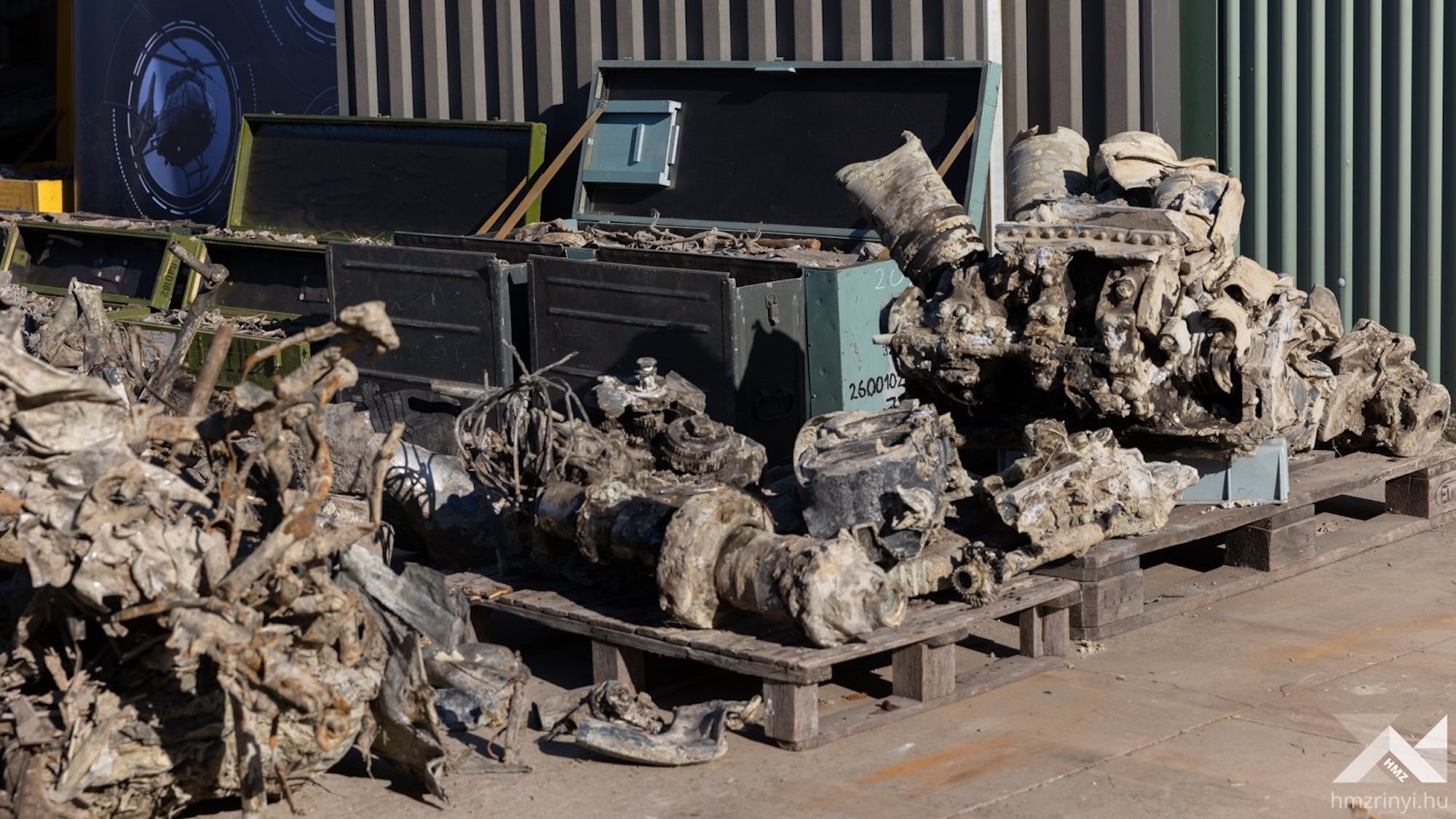
After nearly 82 years, historians in Hungary have finally located a missing Soviet aircraft downed by a German ace pilot during World War II. After a monthslong investigation that involved painstaking archival dives and eyewitness interviews, a team led by Hungarian Aircraft Wreck Research Association co-founder István Kocsis pinpointed the Yakovlev Yak-1 fighter plane. The aircraft was buried over 17 feet underground roughly 50 miles southeast of Budapest. Despite the poor condition of many of the plane’s components, the recoverable remnants still included portions of the aircraft’s fabric covering and even some of the pilot’s personal items.

“Discoveries of this aircraft type on such a significant scale are extremely rare,” a member of the Hungarian Defense Forces said during a recent press conference announcing the find.
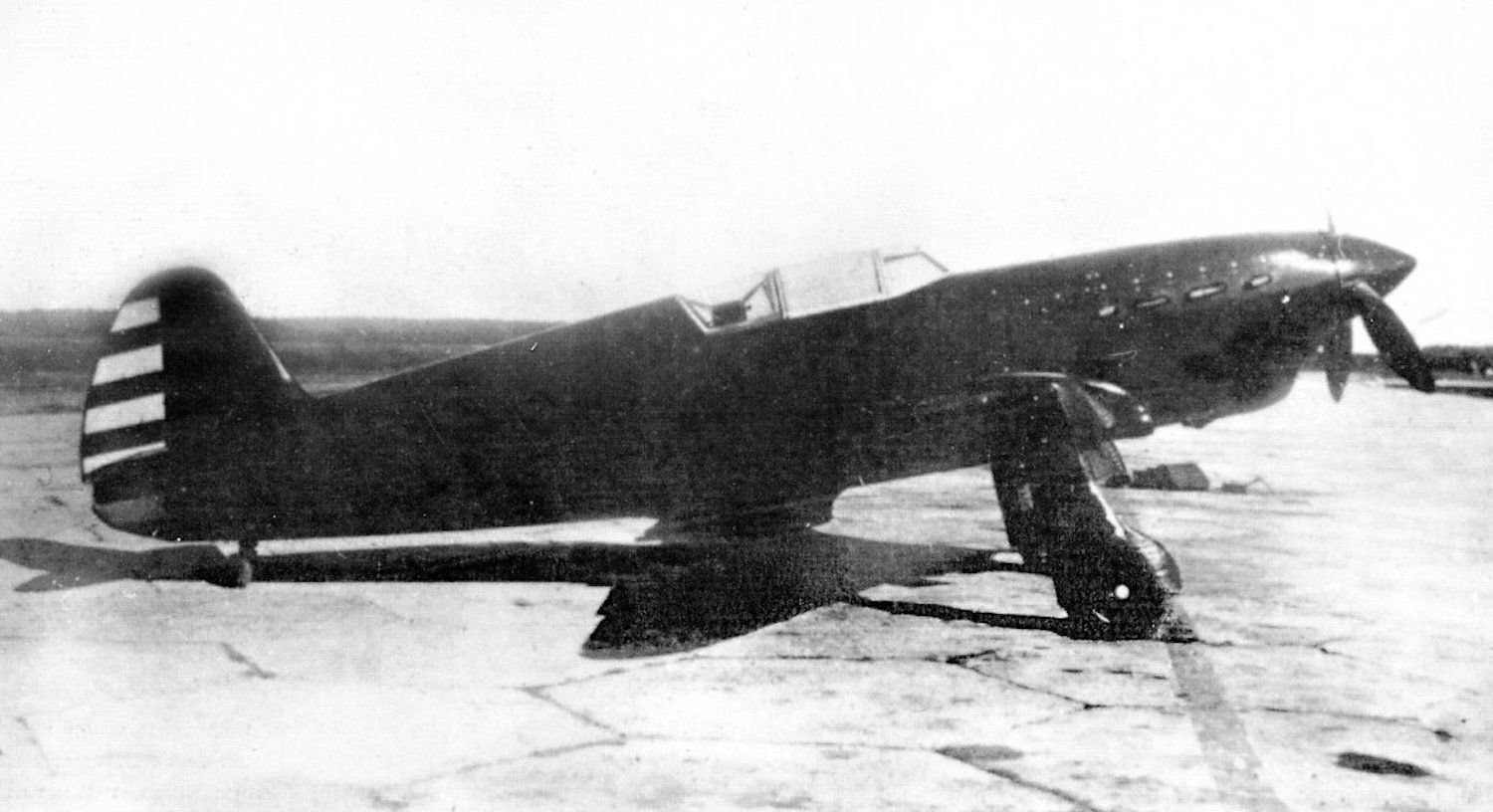
Black and white photo of Yak-1 fighter plane on tarmac
The wreck was finally located about 50 miles southeast of Budapest. Credit: Wikimedia Commons / Public Domain

The crash dates back to November 1944, after Soviet Guards Lieutenant Alexander Semyonovich Andrianov encountered German Lieutenant Peter Düttmann above the town of Törtel. Unfortunately for Andrianov, Düttmann was already infamous for his dogfighting abilities, and the Nazi pilot eventually shot down his Soviet foe. Although Andrianov successfully ejected with his parachute, he was later taken prisoner of war. Although Andrianov’s fate is unclear, historians estimate roughly half of all Soviet servicemen taken as POWs died while in German hands.

The Yak-1 fared even worse. Constructed from composite materials like steel tubing, wood, and even fabric, the crash destroyed the aircraft and immediately scattered the wreckage. With no one to claim it, the plane slowly sank into the region’s particularly loose soil over the next eight decades.
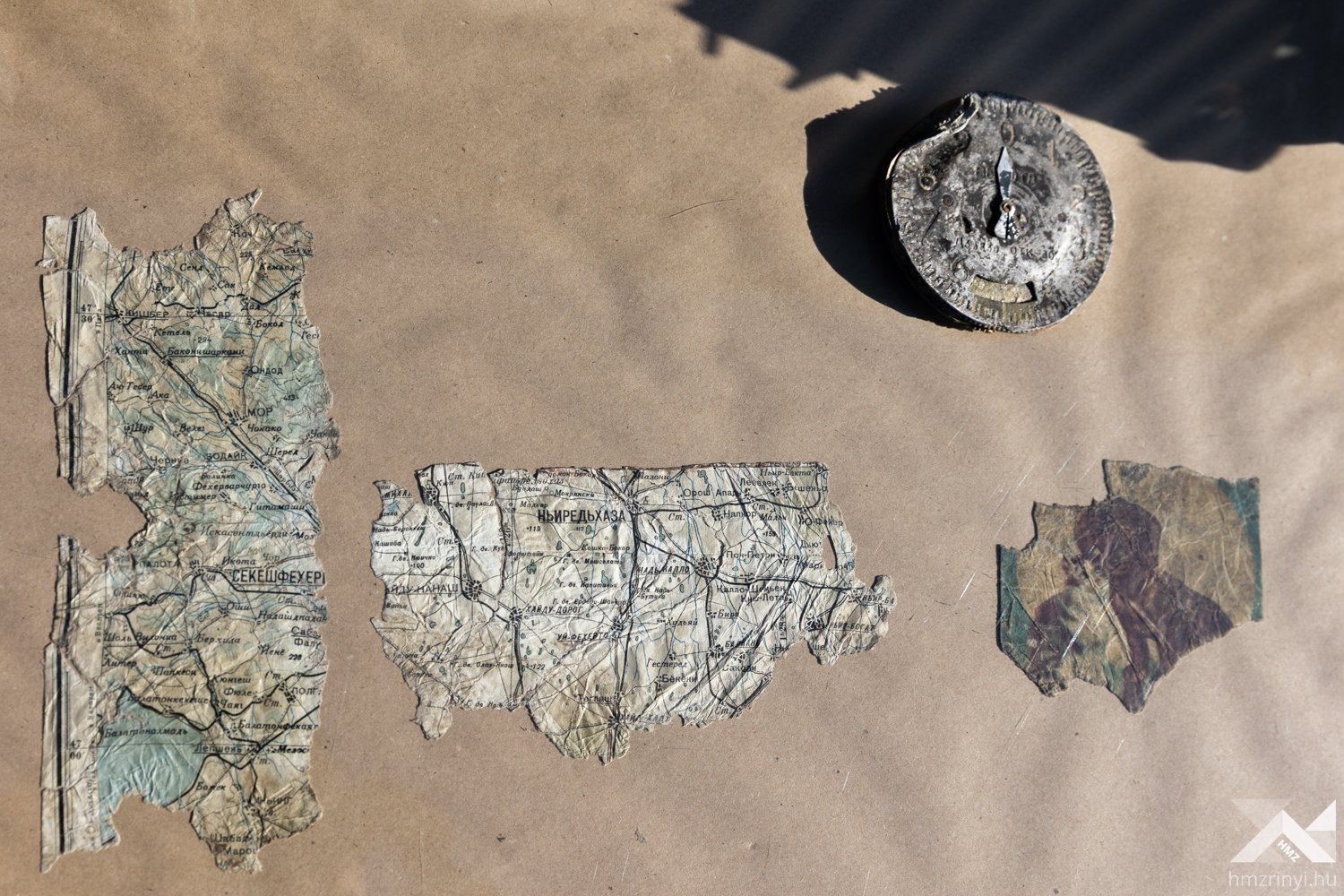
Items recovered from Soviet plane crashing including pieces of a map, an illustration that appears to show a cat, and a compass
Archaeologists managed to recover a portions of a book signed by Andrianov. Credit: Zsuzsa Szűcs-Horváth

Much of the plane remained intact underground, but military archaeologists chose to rely on a recovery strategy called block lifting. Instead of excavating at the site, heavy machinery portioned out hefty chunks of earth that the researchers then carefully cleared one layer at a time. This layer-by-layer method allowed them to identify and preserve numerous smaller pieces of wreckage, including the engine serial number and construction identification that matched Andrianov’s Yak-1. The team also exhumed some of Andrianov’s personal belongings, including a book signed by the pilot.

While much of the wreck was heavily deformed from the crash’s impact, restoration experts are confident they can reconstruct many of the Yak-1’s parts. Once preserved and documented, these sections of the plane will go on public display at Budapest’s Military History Museum while the rest remain safely archived.

The post WWII fighter plane crash found in Hungary after nearly 80 years appeared first on Popular Science.
  •  

Distant space ‘hamburger’ hides a baby gas giant

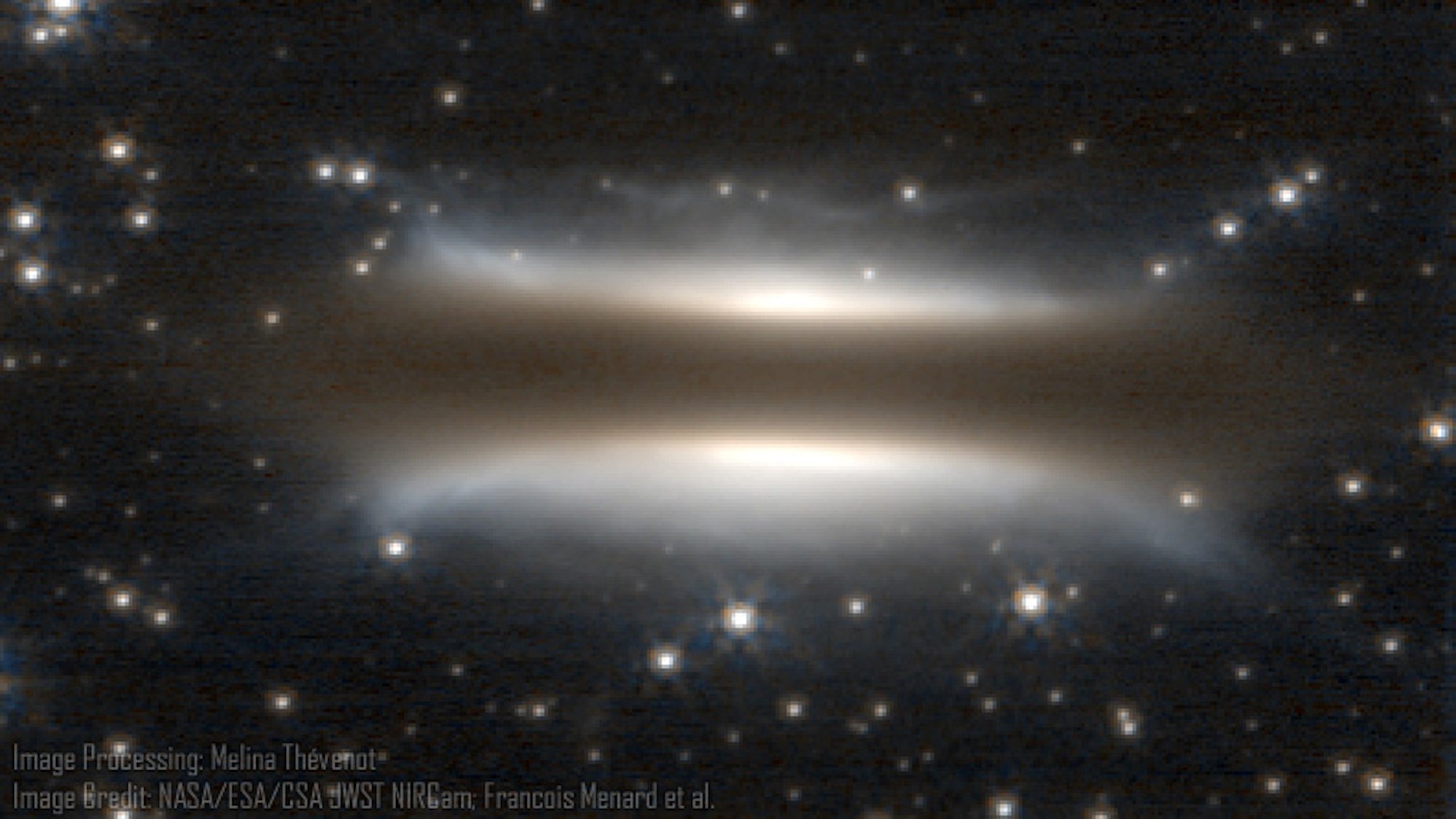
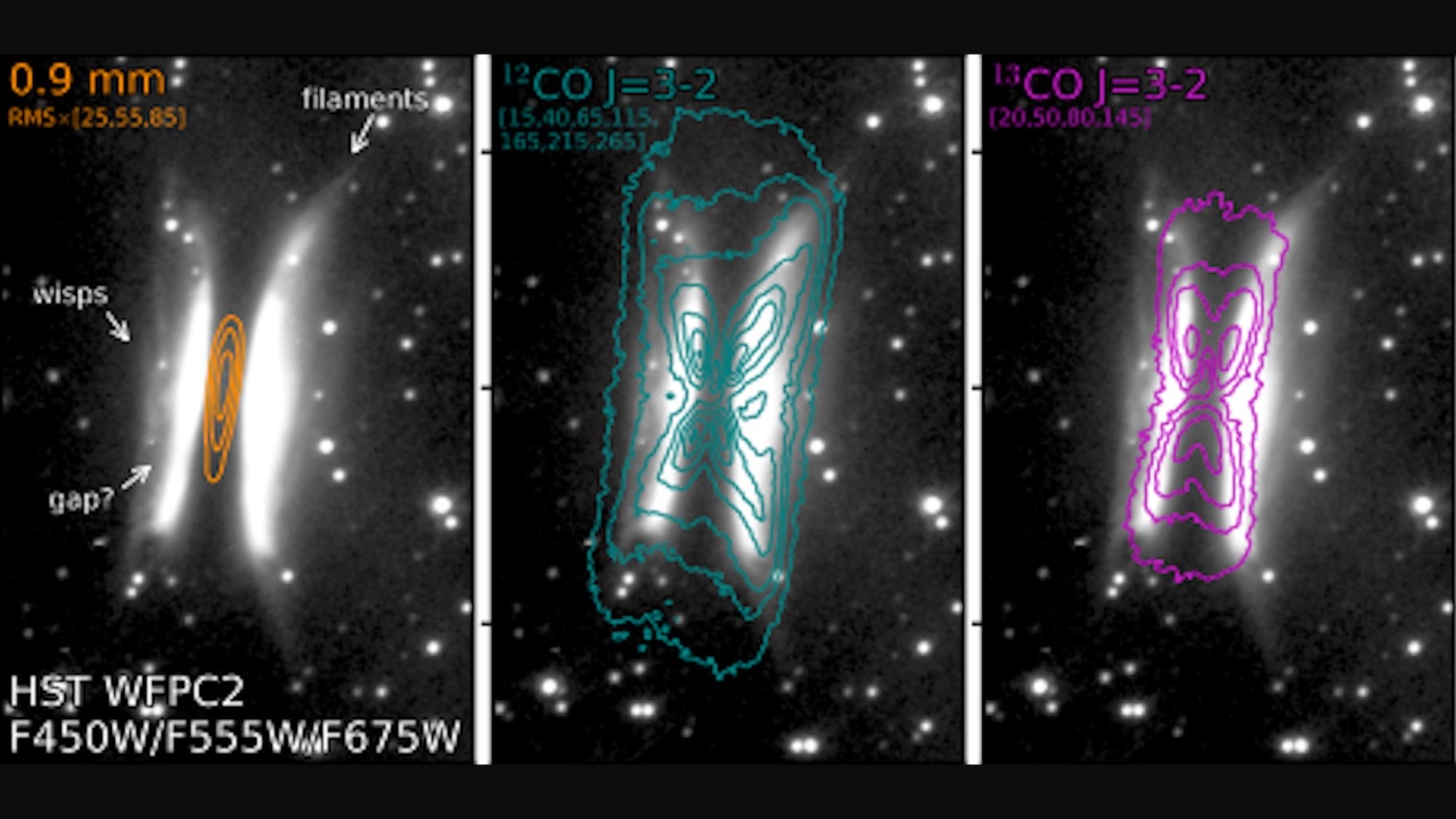
A cosmic Quarter-Pounder is providing us with a near-perfect view of a distant gas giant’s earliest moments. Known as Gomez’s Hamburger (or GoHam for short), the massive protoplanetary disk surrounds a young star located in the Scorpius-Centaurus stellar region of our home galaxy about 453 light-years away from Earth. As researchers explained in a study recently published in The Astrophysical Journal, GoHam’s vantage from Earth is virtually unparalleled for anyone hoping to glimpse the subtle layers of dust and particles that will one day coalesce into a humongous gas giant.

Early observers first spotted GoHam in 1985, but initially pegged it for a planetary nebula as far as 6,500 light-years from Earth. Astronomers have since revised their assessments with data gathered by the Atacama Large Millimeter/submillimeter Array (ALMA) in northern Chile. As its full name implies, ALMA measures millimeter-and-smaller wavelengths, allowing scientists to map the miniscule dust grains and gaseous molecules that compose distant objects. GoHam is a particularly unique subject for ALMA, because its position makes it a new benchmark example for testing models of how planets evolve.

“GoHam gives us a rare and clear view of the vertical and radial structure of a very large, nearly edge‑on disk,” explained study co-author and University of Minnesota astronomer Charles Law.

Three telescope images of Gomez's Hamburger with outlines defining its gas layers
Gomez’s Hamburger was first discovered in 1985, but originally misidentified as a planetary nebula. Credit: Law, et al. (2026)

According to Law, its mixture of cosmic winds, large formational asymmetries, massive disk size, as well as the potential for planetary formation makes GoHam a “perfect laboratory.” With ALMA, Law and his colleagues analyzed GoHam’s layers of carbon monoxide, and sulfur-bearing molecules. As predicted, the lightest gas is in the highest layer above the formation’s midplane, while the heavier sulfur components lay beneath it. Meanwhile, a thin but concentrated section of millimeter dust is visible in the midplane itself.

Comparisons to GoHam’s fast food namesake only go so far, however. Its dust clouds lean north–south, with one side containing brighter and wider emissions. This likely stems from a disturbance such as a cosmic vortex, which may capture additional material for planetary formation. Dim, thin carbon monoxide emissions along the disk’s northern section also suggest GoHam’s central star is blowing gases into deep space as what’s known as photoevaporative wind.

Astronomers also noted that GoHam is one of the largest protoplanetary disks ever observed. At nearly 93 billion miles wide and with an exponentially larger dust mass than the typical protoplanet disk, GoHam may ultimately host not just one gas giant, but an entire planetary system.

The post Distant space ‘hamburger’ hides a baby gas giant appeared first on Popular Science.
  •  

Roman sarcophagus inside Westminster Abbey originally held a different body

A formerly inexplicable Roman sarcophagus discovered at England’s Westminster Abbey over 150 years ago is likely a rare example of medieval funerary recycling. Although archaeologists stopped short of definitively identifying who was buried inside, the team confidently narrowed down their candidates to a pair of high-ranking Benedictine monks.

“We have two viable contenders for the occupant of the sarcophagus,” said Westminster Abbey archaeological consultant Warwick Rodwell, co-author of an accompanying study published today in the Journal of the British Archaeological Association.

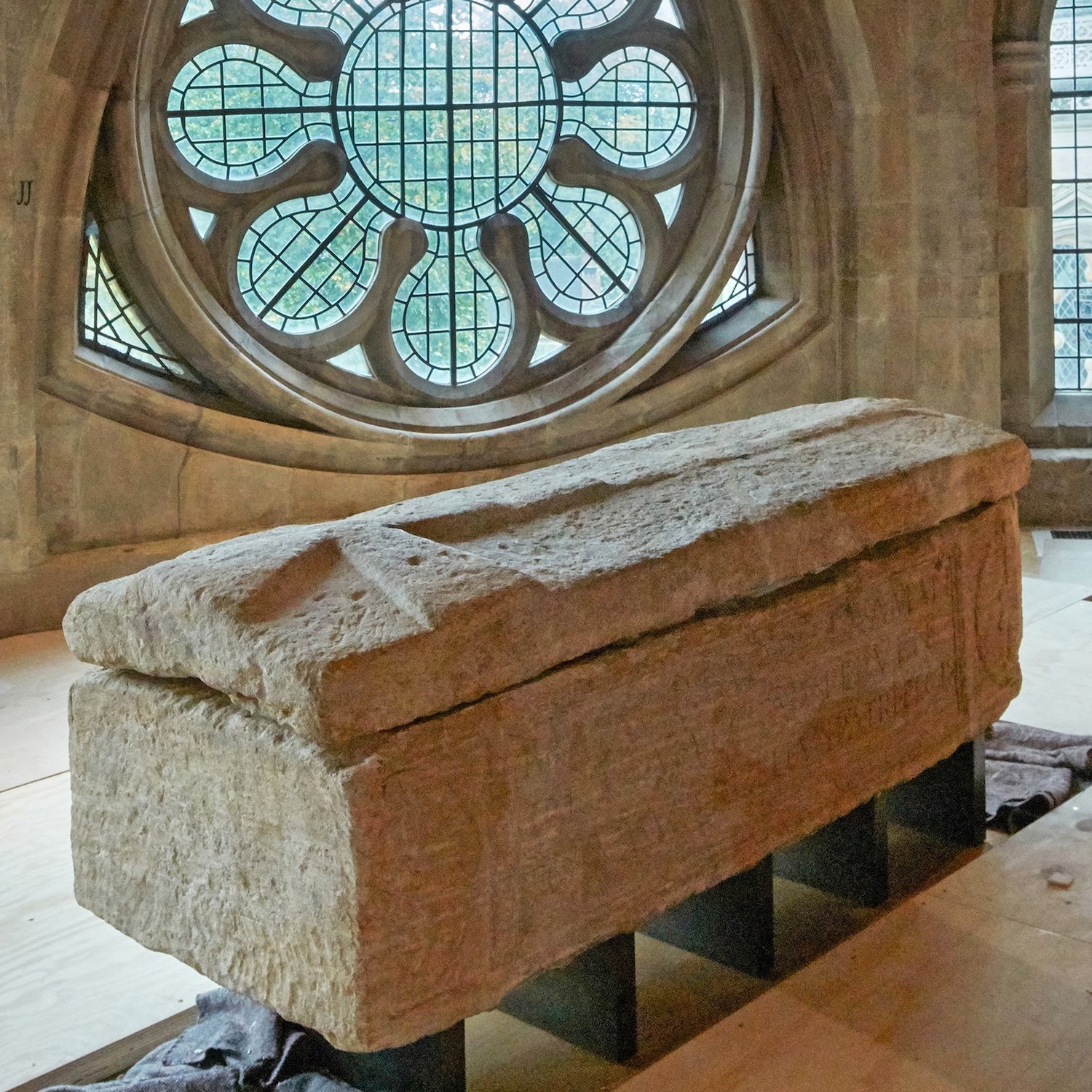
The mysterious limestone tomb was originally crafted during the 4th century CE, when the Roman empire’s jurisdiction still extended as far away as Britain. By the mid-13th century, King Henry III constructed a Benedictine sacristy above the sarcophagus, and it remained undisturbed for nearly 600 years. In 1820, workers accidentally cracked its lid into six pieces after unintentionally exposing the tomb. It would take until 1869 for archaeologists to finally repair the damage, as well as discover its confounding origins.

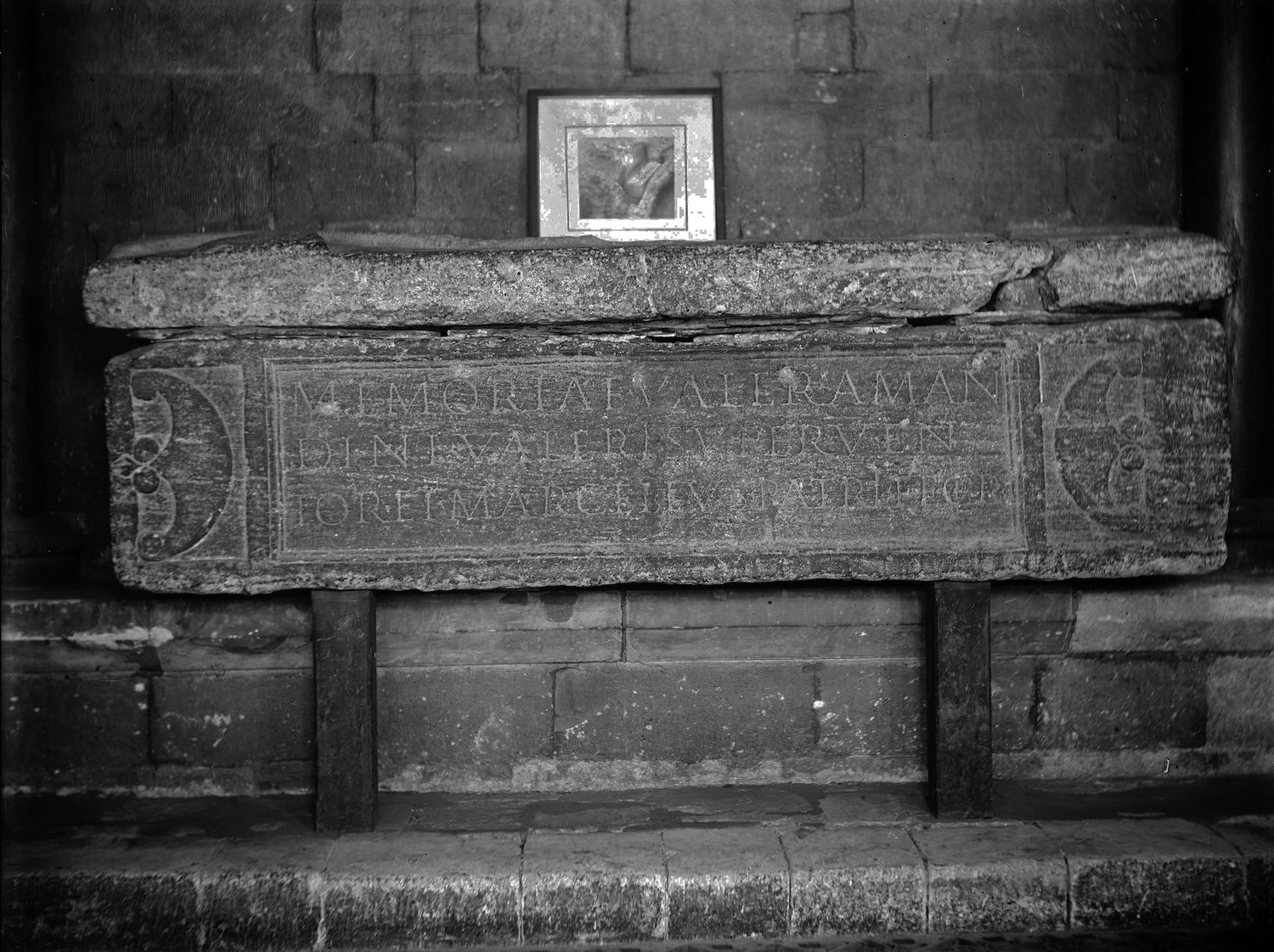
Roman coffin when displayed in Chapter House vestibule (whereabouts of the framed watercolour above showing it in the ground is not known) Library neg box 61
The coffin features an inscription to Valerius Amandinus, who died during the 4th century CE. Credit: Dean & Chapter of Westminster

The Roman sarcophagus has baffled researchers ever since. The limestone enclosure featured an inscription to Valerius Amandinus, a rich local who lived nearby sometime between 300 and 400 CE. But the sarcophagus lid clearly displayed a much more recent, medieval Latin cross. The cross implied the sarcophagus possibly housed someone other than Amandinus, but who?

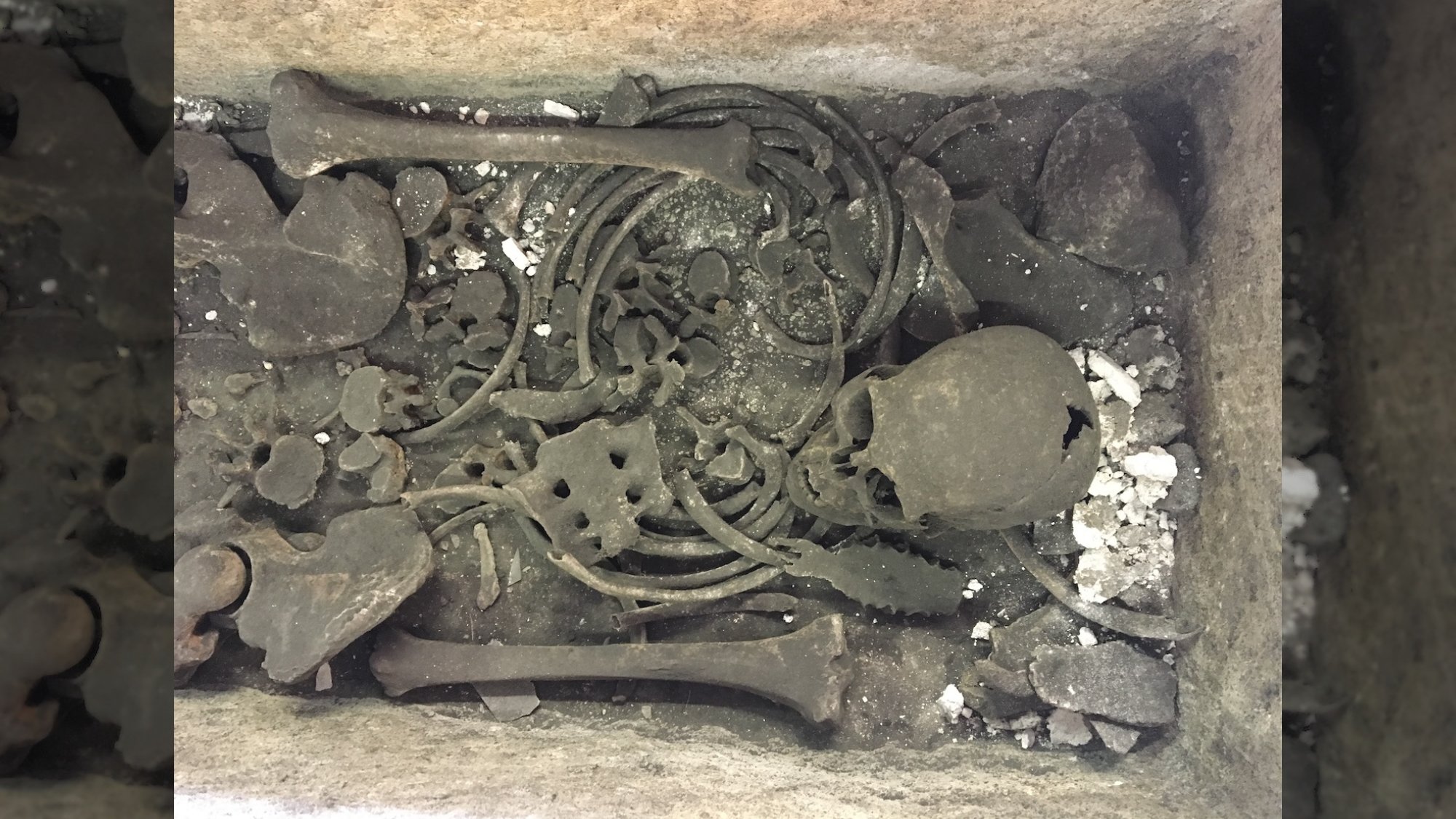
Extensive stonework analysis and skeletal carbon dating finally point towards two probable suspects. The first possibility is the Westminster Abbot Aelfwig, who died around 1020. The second is his successor, Wulnoth, who died in 1049. Further skeletal examinations indicate the man was 35 to 49 years old and around 5-foot 9-inches tall when he died. Interestingly, this contradicts the initial 19th century theory of a slightly shorter, “robust young man” less than 30 years old.

Limestone Roman coffin on display in Westminster Abbey
The full sarcophagus on display at Westminster Abbey. Credit: Dean & Chapter of Westminster

“We do not know the date of birth of either. But either would fit equally well if we assume the Abbot was in his early twenties when the appointment was made and close to fifty when he died,” explained Rodwell.

If Rodwell had to pick between the two, he may lean towards Aelfwig, since he was already a Westminster monk during that era.

The monk’s associates likely first placed him in a timber coffin that they lowered into the sarcophagus. Next, they sealed it with a re-carved cover displaying the Latin cross. But regardless of who resided in the tomb, its reuse wasn’t considered a slight. Instead, its original craftsmanship was intended to honor the deceased monk. It’s unlikely the mourning monks gave much thought to anyone else’s opinion on burial recycling, especially those living nearly 1,000 years after their respected Abbot’s passing.

The post Roman sarcophagus inside Westminster Abbey originally held a different body appeared first on Popular Science.
  •  
❌