❌

Reading view

Elon Musk’s Growing Death Toll: “What He Put Into the Woodchipper Were Children”

As Elon Musk tries to save face by claiming he’ll give every American child a chunk of SpaceX stock, here’s a chilling reminder of what he did that affected millions of children the second he had a whiff of federal power.

In a new interview, the documentary filmmaker Alex Gibney, who directed a just-released four-hour look at the billionaire’s life titled “Musk,” discussed the staggering death toll of Musk’s cuts to USAID, calling it a “crime against humanity.”

“There was an estimate that what [Musk] did by so suddenly cutting USAID would cost through disease and starvation as many as 14 million lives,” he told journalist Katie Couric. “Even if you discount that by an enormous amount, we know that within about a year of those summary cuts — where they were literally burning food that had already been paid for that was going to starving children — 500,000 children died.”

Musk, to Gibney’s astonishment, even joked about the cuts by saying he’d “put USAID into the woodchipper.” 

“What he put into the woodchipper,” Gibney said, “were children.”

Gibney, whose documentary Musk called a “hit piece,” is drawing from a 2025 study published in The Lancet, one of the most prestigious medical journals. It estimated the impact of Musk effectively neutering USAID by implementing a freeze on its foreign aid funding — which went to programs to combat HIV/AIDS, malaria, and to address food insecurities — and slashing nearly 10,000 employees. 

In sum, the researchers found that the “steep funding cuts could result in more than 14 million additional all-age deaths, including 4.5 million in children younger than age five, by 2030.”

Even conservative estimates concurred that the number of deaths would be staggering. A tracker created by Brooke Nichols, a professor and infectious disease mathematical modeler at Boston University, projects the 1-year death toll caused by the USAID cuts at 518,000 children.

It’s a touchy subject for Musk, who continues to bristle at accusations that his actions could’ve caused harm. This summer, he challenged his critics to “cite a single name of someone who died” as a result of him gutting USAID. Nicholas Kristof, a Pulitzer Prize-winning journalist, took him up on it and gave him a list of the specific children who had died directly from his policies, many of whom were in South Sudan and Liberia — places he had visited in person to talk to locals and healthcare workers.

Musk, rather than countering his arguments, called Kristof “evil.”

More on Elon Musk: Elon Musk Says It Was the Pentagon That Shut Down Starlink for the Ukrainian Military

The post Elon Musk’s Growing Death Toll: “What He Put Into the Woodchipper Were Children” appeared first on Futurism.
  •  

Wait, Was Elon’s “Flying Car” Just an Empty Shell?

Flying cars are right around the corner, if Tesla CEO Elon Musk is to be believed.

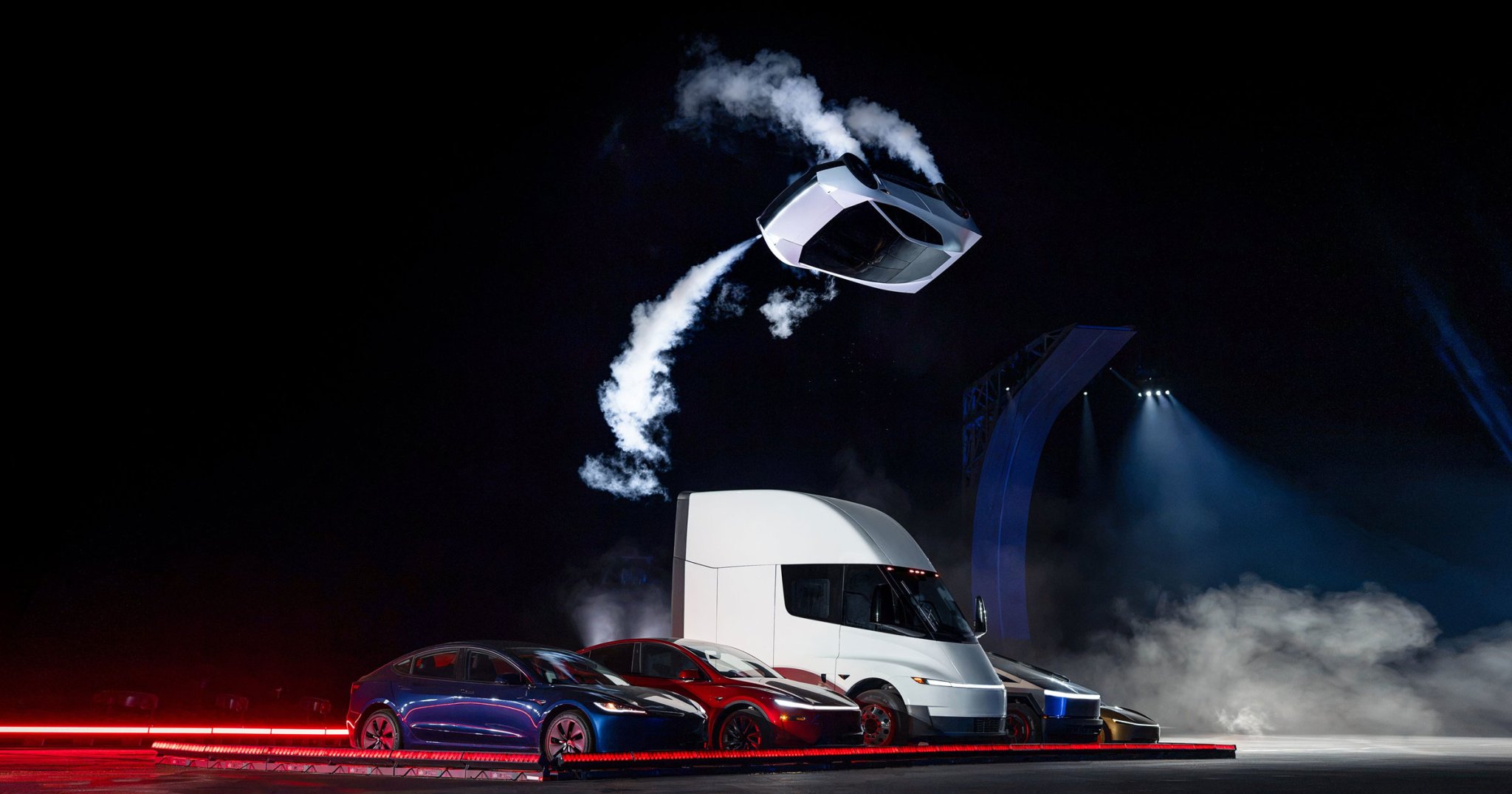
Last week, he unveiled the automaker’s long-awaited Roadster by having it drive to the top of a ramp, flipping upside down in the process, then fling itself into the air before using its cold-fuel thrusters to gently land in style. Minutes later, another Roadster did its best Evel-Knievel-with-a-jetpack impression by blowing itself into the air and leaping over a row of six Tesla vehicles, including its Semi Truck cab.

Sure, the Roadster can “fly.” There’s no denying that it was an impressive stunt. But huge questions remain, such as whether regulators will ever deem it road — let alone air — worthy. Another is if the cars used in the stunt will remotely resemble the actual product that’s sold to consumers, if such a thing does ever come to pass.

Tesla says the “Rocket” version of its Roadster is loaded with 600 liters of compressed air, 10 directional cold-gas thruster nozzles, and a huge suction-fan system on the bottom. To make room for it all, Tesla says it removed the passenger seat.

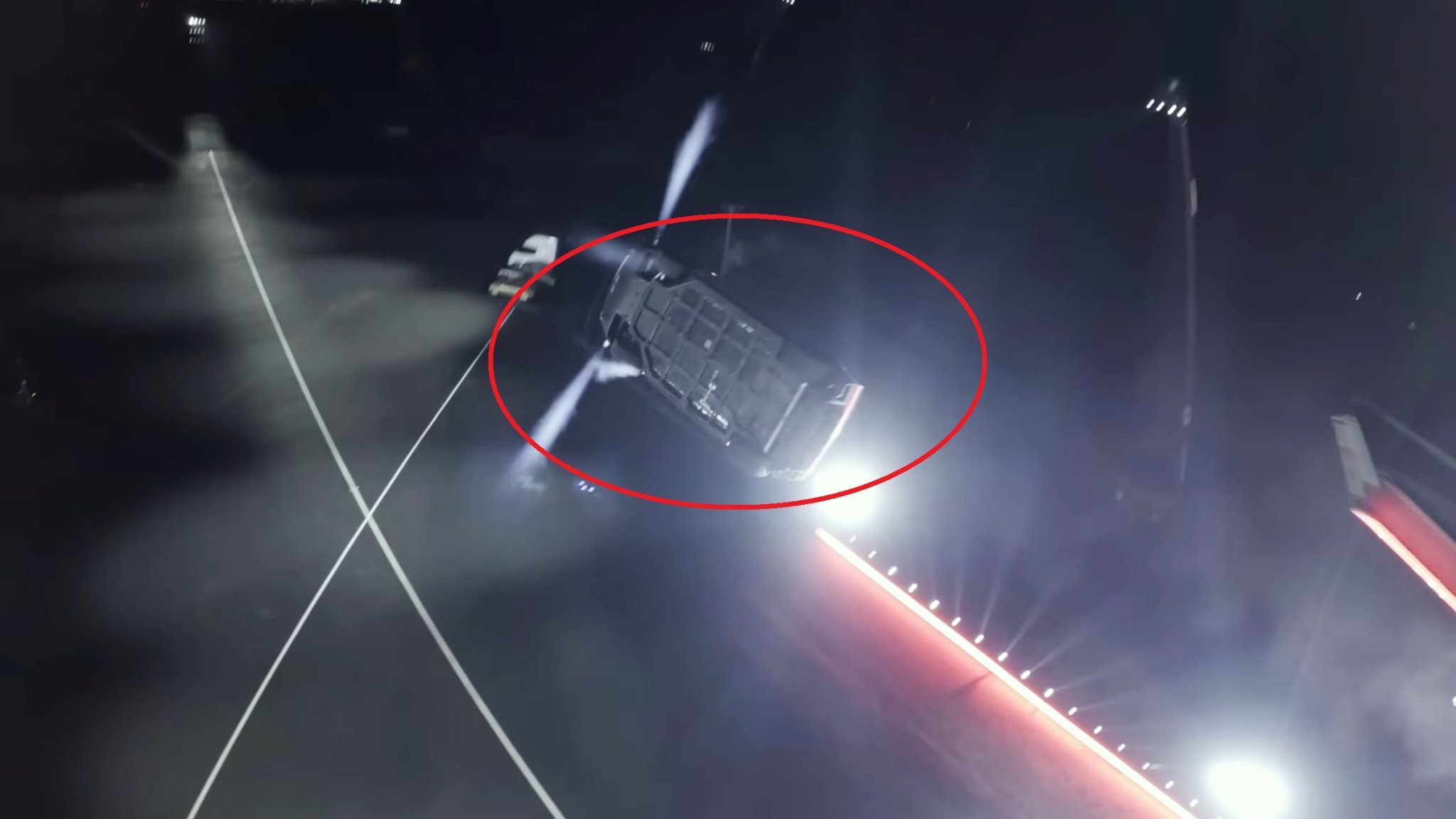
But some observers are wondering if the car is even more stripped down than that, perhaps even lacking a full-sized battery so the engineers could save room and cut down weight. Meanwhile, screenshots of the car’s sparse looking underside taken while it was midair seemed to show it lacking a suction fan, fueling further speculation that Tesla hasn’t figured out to fully combine its capabilities as they’re being presented. The car that stuck upside down to the top of the ramp and then cushioned its landing was, some skeptics allege, equipped with different hardware from the one that leaped into the air to leapfrog the other cars.

Practical questions abound. Without a full-sized battery, the car obviously wouldn’t be able to drive around on roads even if it were allowed to.

None other than computer scientist and “godfather” of AI Yann LeCun derided the Roadster’s aerial acrobatics display, calling it a “marketing stunt” and questioning its authenticity.

“Even assuming that 50 percent of the mass of the car is the compressed air, that gives you less than 10s of useful thrust (with thrust-to-weight ratio larger than 1.0). Probably more like 5 seconds, actually,” he wrote on X. “So the car must be an empty, lightweight shell containing big compressed air tanks. Cute demo, but totally impractical.”

A little bit of misleading showmanship certainly isn’t below Musk. Tesla stunned the world in 2016 with a promotional video of its self-driving car puttering along public roads and dutifully stopping for red lights. Musk boasted that it was clear evidence that “Tesla drives itself.” But later, its engineers admitted the whole thing was staged. 

At its glitzy “We, Robot” event in 2024, Tesla tried to wow investors with its Optimus humanoid robots that poured drinks, danced on stage, and mingled with attendees while holding down a conversation. But it quickly became apparent that what Tesla had unleashed weren’t real-life C-3POs, because the seemingly autonomous robots were in reality individually teleoperated.

In any case, it’s impossible to verify what Musk’s showing off with the Roadster since Tesla isn’t allowing the public — journalists included — to take a peek under the hood.

More on Tesla: Tesla Bros Using AI to Dream Up Improbable Scenarios Where the Flying Tesla Roadster Would Be Helpful

The post Wait, Was Elon’s “Flying Car” Just an Empty Shell? appeared first on Futurism.

  •  

Tesla Bros Using AI to Dream Up Improbable Scenarios Where the Flying Tesla Roadster Would Be Helpful

Tesla’s newly unveiled Roadster can apparently fly and spin through the air for a few seconds, using thrusters that work like a giant jet-pack.

It feels more like a car you’d buy in “GTA Online” than from an actual dealership, and there’s pretty much no conceivable way that this would ever be street legal, let alone practical. Nonetheless, that hasn’t stopped Elon Musk fanboys from dreaming up improbable scenarios where being able to go airborne in their Roadster — which they’ll definitely be able to afford — would actually be helpful.

One even tried to prove his point using the tool of choice for all of those who possess a boundless imagination: AI. 

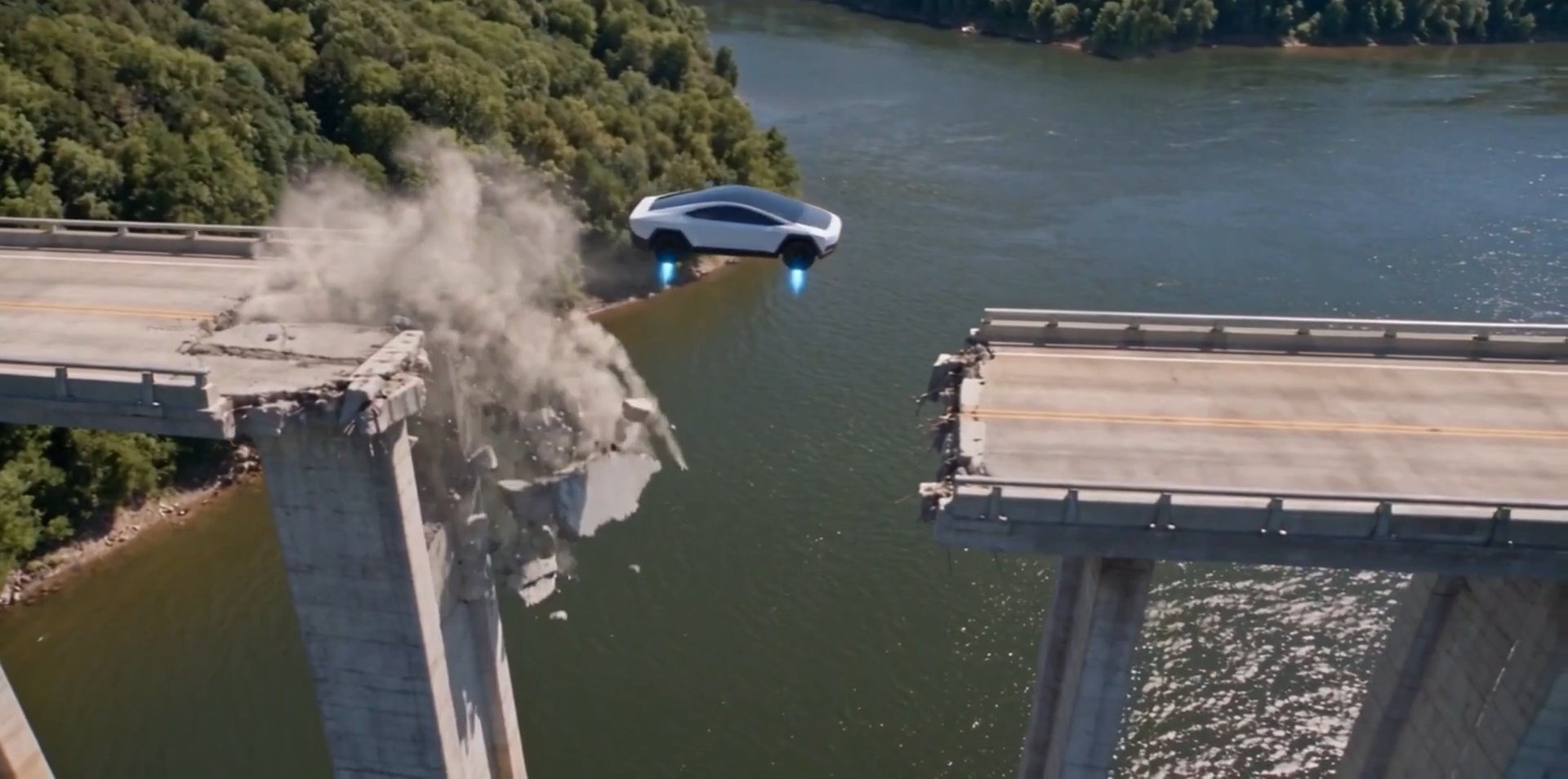
In a clearly AI-generated video, a Roadster is shown cruising down a bridge that spans a beautiful river valley. Using your car for a scenic roadtrip? That does sound useful. But no, that’s not what they’re getting at here. A part of the bridge instantly collapses ahead, so our quick-witted Roadster driver presses a big red button to activate its cold-gas thrusters and leap over to the other side in an epic slow-mo sequence.

“The Roadster could genuinely be a lifesaver in situations like these,” the Tesla fan wrote.

The Roadster could genuinely be a lifesaver in situations like these. https://t.co/iSNd2gGkgb pic.twitter.com/WDGI5CpIhQ

— Umesh Kumar (@itsumeshk) October 16, 2026

Let’s cut to the chase: there’s zero chance that something like this would happen, so using it to justify the Roadster’s existence is as feeble an exercise as thinking of comebacks you should’ve said after you lost an argument. Then again, as absurd as it is, we’re struggling of a better reason to have a briefly flying car. If it’s not to save your life, what’s it for?

There were other AI depictions of the Roadster’s aerial capabilities being put to good use. Some show it jumping over toll booths or flying over standstill traffic.

We hate to burst anyone’s bubble, but the Roadster is not going to be able to do any of this. The point is that these capabilities are a marketing stunt — an impressive tech demo, but nothing more. It’s not unlike how Musk heavily marketed the Cybertruck as “apocalypse-proof,” building it with (somewhat) bulletproof doors and windows and off-road capabilities. The reality, of course, is that it was hard to imagine an apocalypse where a car better known for easily breaking down and being held together with glue would be useful. Consumers agreed, and the expensive truck turned into an all-time flop.

The Roadster will almost certainly face similar struggles at finding a demographic who will want to buy it. But hey, you can always use AI to imagine an alternate reality where it turns out to be a best-seller, too.

More on Tesla: Tesla Bros Posting Videos Showing Them Hog Out on Decadent Meals While Careening Down the Road in Self-Driving Mode

The post Tesla Bros Using AI to Dream Up Improbable Scenarios Where the Flying Tesla Roadster Would Be Helpful appeared first on Futurism.

  •  

Tesla Running FSD Slams Into Police Cruiser After Driver Falls Asleep Behind the Wheel, Hospitalizing Two Officers With Serious Injuries

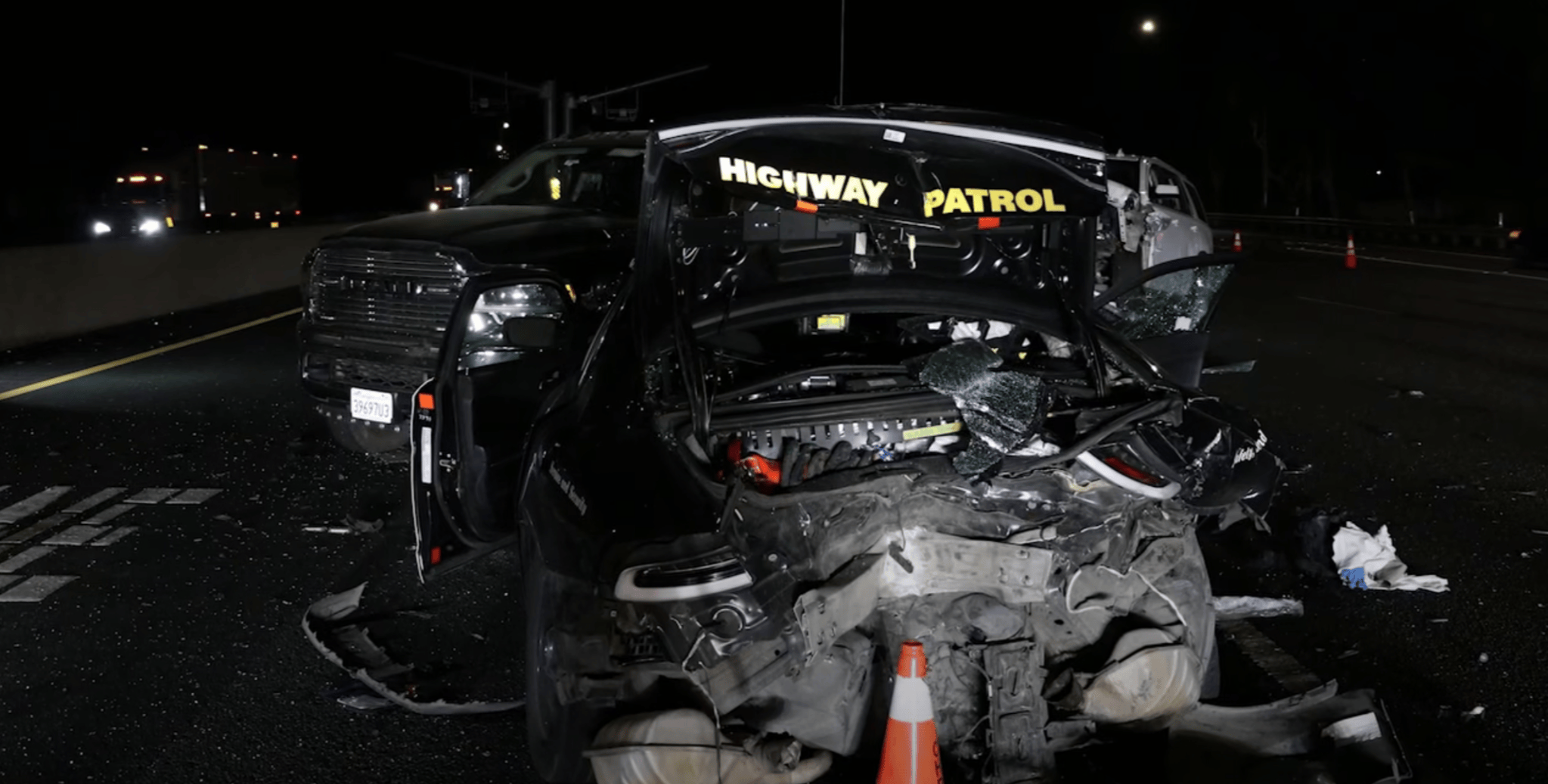
A Tesla slammed into a police cruiser after the driver said he fell asleep behind the wheel while the vehicle’s Full Self-Driving mode was activated.

According to the California Highway Patrol, KRON4 reports, the crash happened on the night of October 13 while the officers were pulled over to the side of Interstate 80 eastbound highway to investigate a fatal accident. 

Though the “lanes were closed with flares and cones, and several emergency vehicles were at the scene with emergency lights flashing,” police said, the Tesla veered into the clearly cordoned-off area and slammed into their patrol car. The impact sent their ride flying into another emergency vehicle, footage showed.

Both officers were hospitalized with serious injuries and have since been discharged from the hospital. The driver, a 22-year-old man, sustained minor injuries.

“The driver claimed he was asleep and that the vehicle was operating in Tesla’s Full Self-Driving mode at the time of the crash,” CHP said. “Despite its name, Full Self-Driving is not fully autonomous. It is an SAE Level 2 driver assistance system that requires continuous driver supervision.”

A self-driving Tesla crashed into a California highway patrol vehicle, seriously injuring two officers inside.

According to the officers, the driver said he was asleep at the time and using the car’s driver-assistance technology. pic.twitter.com/l36px6sqT4

— ABC News (@ABC) October 16, 2026

Drowsy driving is a common issue with Tesla’s FSD system, since it doesn’t require the motorist to be as engaged. To combat this, the vehicles have several safeguards to ensure drivers stay alert, including an in-cabin camera that monitors their eyes and face — but they don’t always work. 

Tesla has previously been investigated by federal regulators after an older version of its self-driving software, Autopilot, repeatedly crashed into emergency vehicles. In a 2024 report, the National Highway Traffic Safety Administration linked Autopilot and FSD to hundreds of crashes, concluding that it misled drivers into a false sense of security and caused them to be “not sufficiently engaged in the driving task.”

More on Tesla: Tesla Bros Posting Videos Showing Them Hog Out on Decadent Meals While Careening Down the Road in Self-Driving Mode

The post Tesla Running FSD Slams Into Police Cruiser After Driver Falls Asleep Behind the Wheel, Hospitalizing Two Officers With Serious Injuries appeared first on Futurism.

  •  

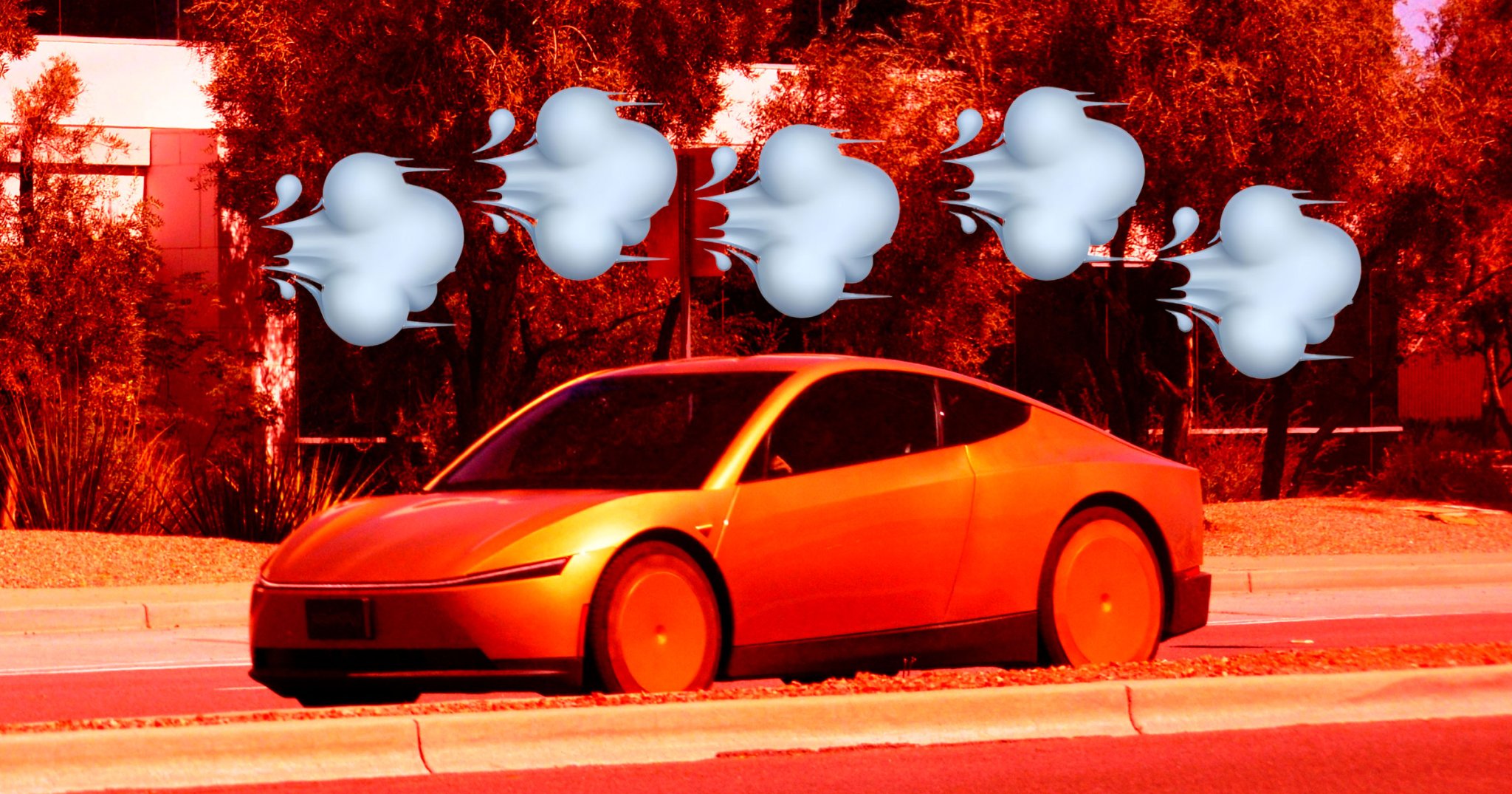
Passenger Disgusted When Tesla Robotaxi Gets Stuck on “Fart Mode”

In 2018, Elon Musk’s Tesla released a software update timed for the holidays that included a so-called “emissions testing” mode allowing Model S, 3, and X owners to play a variety of flatulent noises with the push of a button.

While the novelty of the prank feature has more than likely worn off for the vast majority of users, some Tesla employees continue to be haunted by it to this day.

As the San Francisco Standard’s Zara Stone experienced first hand, her Bay Area Tesla robotaxi seemingly got stuck in the mode, erupting in gaseous sounds during her ride. An Instagram video shows her bewildering encounter with far more flatulence than anybody could’ve bargained for.

When Stone asked the human safety driver — who Tesla is required to have behind the wheel as the company’s robotaxis are not licensed in California yet — why the car kept farting, he shrugged and replied “no idea.”

“That’s crazy!” a baffled Stone can be heard saying, while stifling laughter.

The driver said he was playing with the settings, only to lose control of the feature.

“It’s the first time I’m experiencing this,” he said. “Sorry.”

“Even the volume doesn’t control it,” the driver added, laughing.

The incident is particularly hilarious considering Tesla is trying to roll out a fully autonomous ride-hailing service in the country. Considering how controlling an eight-year-old prank feature is proving a little too challenging, it’s anybody’s guess what else could go wrong as the EV company lets software take the reins.

We’ve already seen plenty of reports of terrifying close calls, crashes, and shoddy service. Most recently, Musk admitted that the company’s software — which relies entirely on cameras, and not LIDAR or radar sensors — struggled not to “run over pets” at night.

More on robotaxis: Elon Musk Admits Why Tesla Robotaxis Can’t Be Trusted at Night

The post Passenger Disgusted When Tesla Robotaxi Gets Stuck on “Fart Mode” appeared first on Futurism.

  •  

Tesla’s New Flying Death Trap Looks a Lot Like a Cybertruck

Tesla CEO Elon Musk has been promising a next-generation Roadster for the better part of a decade. And while early promises that it will quite literally fly were met with incredulity back in early 2019, the EV maker has finally made good on its promise.

As demonstrated late Thursday evening, the new Roadster can indeed fly — briefly, at least — thanks to a “SpaceX package” made up of cold-gas thrusters. The company showed the company flipping around on stage, rotating on its own axis mid-air, leaping over the company’s entire EV lineup, and sticking to a vertical ramp thanks to a fan system that generates up to two Gs of downward force.

Good luck doing any of that on a public road, or even surviving on private property. And the flying car bears a striking resemblance to the company’s controversial Cybertruck, featuring extremely sharp body lines and flat panels. It’s a low-poly design approach that feels intimately familiar after a few years of the brutalist pickups.

And the similarities aren’t limited to the overall shape, either. The Cybertruck was and still is a major outlier in the automotive landscape — mostly for the worse. From rusting stainless steel body panels that were shoddily glued to the vehicle’s exterior and an excessive curb weight that greatly reduced range to a buggy steer-by-wire system, the Cybertruck was a major departure from design norms in the industry, much like Tesla’s latest Roadster.

While we don’t know if the Roadster will suffer from the same issues, its cold-gas thruster system is more than likely going to require some additional upkeep. Besides, considering the system can easily throw the car high into the air, anything going wrong could put any driver in severe danger. After all, Tesla has a long history of treating its customers as guinea pigs.

As Musk admitted during Thursday’s event, the bizarre rocket on wheels isn’t exactly going to be the next Honda Civic. It definitely won’t “move the needle in a major way financially,” the billionaire cautioned the audience, calling the Roadster a “small potato situation.”

As such, Tesla investors were left unimpressed, with shares bumping by less than two percent when the markets opened.

In other words, much like the Cybertruck, the latest Roadster is more tech demo than an actual consumer-facing product, a harsh lesson owners of the former are still learning as their vehicles continue to age like milk.

And whether we’ll ever see it gliding along mid-air at highway speeds on public roads is as unclear as ever. Tesla is looking to sell a thruster-less Performance variant, a “Race Ready” mid-tier version with rear-mounted cold-gas thrusters, as well an entirely not-road-legal and “invite only” model that can fly, as shown off on stage.

Even more so than the Cybertruck, the Roadster is the ultimate Tesla loyalty test. While the company has yet to release a price, the Roadster is undoubtedly going to cost a pretty penny — if you can even get your hands on one. Whether it will appreciate, like Musk has long promised about the company’s fleet, or turn into an expensive death trap after a short and likely terrifying stint of ownership, remains to be seen.

Perhaps it’s more of an attempt to warm up investors to the idea of merging Tesla and SpaceX, a high-stakes gamble that has investors unsettled.

More on Tesla: Tesla Robotaxi With No Driver Spotted Smashing Through Traffic Barriers

The post Tesla’s New Flying Death Trap Looks a Lot Like a Cybertruck appeared first on Futurism.

  •  

Tesla Bros Posting Videos Showing Them Hog Out on Decadent Meals While Careening Down the Road in Self-Driving Mode

Now years into the US release of Tesla’s so-called “Full Self-Driving” mode, brand loyalists are becoming increasingly comfortable trusting their lives — not to mention those of others on the road — to the company’s software.

While there have been plenty of videos showing Tesla drivers answering emails, vibecoding, or even gaming from the driver’s seat, a new genre of Tesla content is emerging in which Tesla bros dine out on huge feasts from behind the wheel.

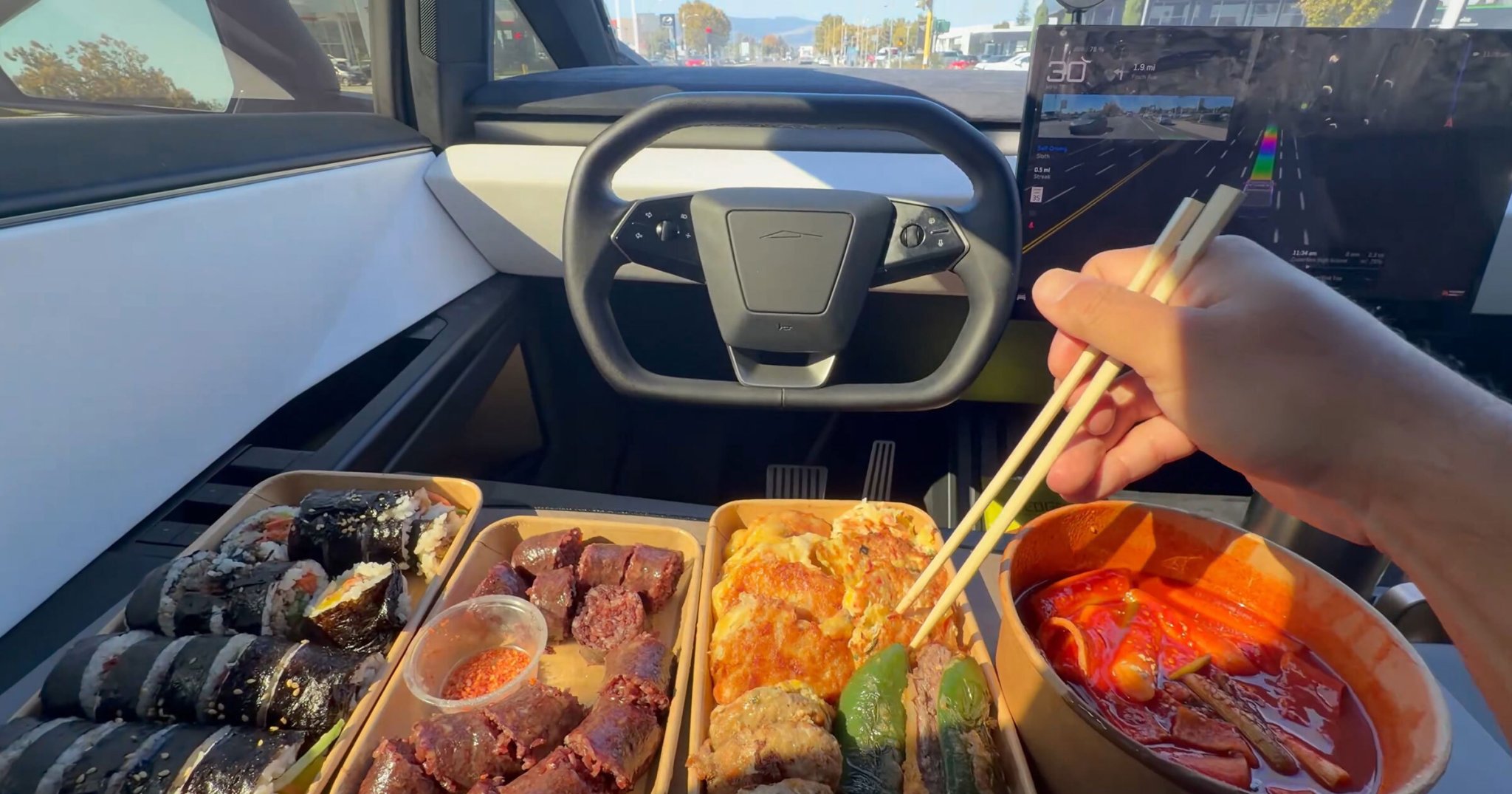
In a now-viral clip shared by the account Teslaconomics on X-formerly-Twitter, a Tesla driver presents the point of view from behind the wheel of what appears to be a Cybertruck. The driver in the video is going hog wild on a buffet of food, made up of sushi rolls, sausages, a fiery red stew, and what appears to be a tray of potato pancakes, biscuits, and peppers.

From the video, it’s immediately clear that the driver is careening down a busy roadway as they pick away at their potluck, drawing widespread ridicule from commenters.

“I don’t wanna share the road with people like this and I need them to start getting tickets, points on their license, all that good shit,” one user raged. “Healthy, normal societies don’t reward you for breaking the rules.”

Others pointed out that train riders have been able to do this for ages. “In China you eat while traveling 10 times faster,” another poster commented alongside a video of a Chinese high-speed train in action.

How I be eating on Tesla FSD pic.twitter.com/2MiMvUlf0f

— Teslaconomics (@Teslaconomics) October 10, 2026

“The comments and quote reposts of my video are pretty hilarious to me,” Teslaconomics carped in a follow-up comment. “First of all, I’m wearing Ray-Ban Meta glasses. They record exactly what I’m seeing, completely hands-free. I’m not holding a phone or a camera.”

“Second, this is Tesla FSD (Supervised),” the account continued. “That means I’m still responsible for watching the road, paying attention, and being ready to take over at any moment.”

Of course, the full tray of decadent foods between the driver’s hands and the steering wheel would make taking control difficult in a split-second emergency.

Teslaconomics is far from the only poster sharing clips like this. Another popular account with the handle Cyber_Trailer makes a point to share videos of Tesla owners eating while driving in a recurring segment called “What are you eating in your Tesla?”

One Reel shows a woman eating what looks to be a grape salad while her Tesla drives down the freeway. Another captures a Tesla driver carefully chowing down on a burrito, apparently more concerned about getting the fillings on herself than keeping her hands on the wheel.

Though the software has clearly given these drivers a false sense of security, it’s worth noting that Teslas operating in self-driving mode — even under close watch — can still cause enormous harm to pedestrians and other drivers, making the decision to pig out behind the wheel a selfish gamble with death.

More on Tesla: Tesla Argues in Court That the N-Word Is Acceptable Under Certain Circumstances

The post Tesla Bros Posting Videos Showing Them Hog Out on Decadent Meals While Careening Down the Road in Self-Driving Mode appeared first on Futurism.

  •  
❌