Frontier AI models helped researchers discover PHP vulnerabilities that had lurked undetected for over a decade. The flaws affect 70% of websites, and exploits are already circulating. If you run a website, update PHP now or confirm your host has patched.
TP-Link is fully determined to get in the good graces of the U.S. government to break free from a total ban on newly developed routers manufactured outside of the country. Although TP-Link is incorporated in the U.S. with a headquarters in Irvine, California, the company has been under pressure from the full weight of the U.S. government because of its historical Chinese roots. However, in an effort to appeal to the Trump administration’s zeal for creating jobs and touting American manufacturing, TP-Link this week announced that it has signed a letter of intent to assemble routers in the U.S. through a crucial partnership with Key Tronic.
How did we get here?
The ongoing saga started back in late 2024, when the House Select Committee on the Chinese Communist Party requested that the Department of Commerce investigate TP-Link. At the time, the committee warned that “TP-Link products are also found on U.S. military bases, with the Army and Air Force Exchange and the Navy Exchange selling these devices to members of the military and their families,” and claimed TP-Link routers were sending user data back to China.
The select committee implored the Department of Commerce to use its broad powers to investigate TP-Link and take any necessary action to mitigate threats to national security. The campaign against TP-Link ramped up in mid-2025, with 17 members of Congress petitioning the Commerce Department to ban the sale of the company’s hardware in the U.S. due to alleged deep ties to the CCP. In late 2025, 23 U.S. House members and Senators again asked the Commerce Department to investigate TP-Link’s actions, including adding the company to the Covered List, investigating any threats to national security, and informing the public about potential risks associated with using the company’s devices.
The situation reached a boiling point in March 2026, when TP-Link and other router manufacturers were added to the Federal Communications Commission (FCC) Covered List, forbidding the sale of foreign-made routers in the U.S. that hadn’t already been approved. At the time, the FCC noted, “Recently, malicious state and non-state sponsored cyber attackers have increasingly leveraged the vulnerabilities in small and home office routers produced abroad to carry out direct attacks against American civilians in their homes. From disrupting network connectivity to enabling local networking espionage and intellectual property theft, foreign-produced routers present unacceptable risks to Americans.”
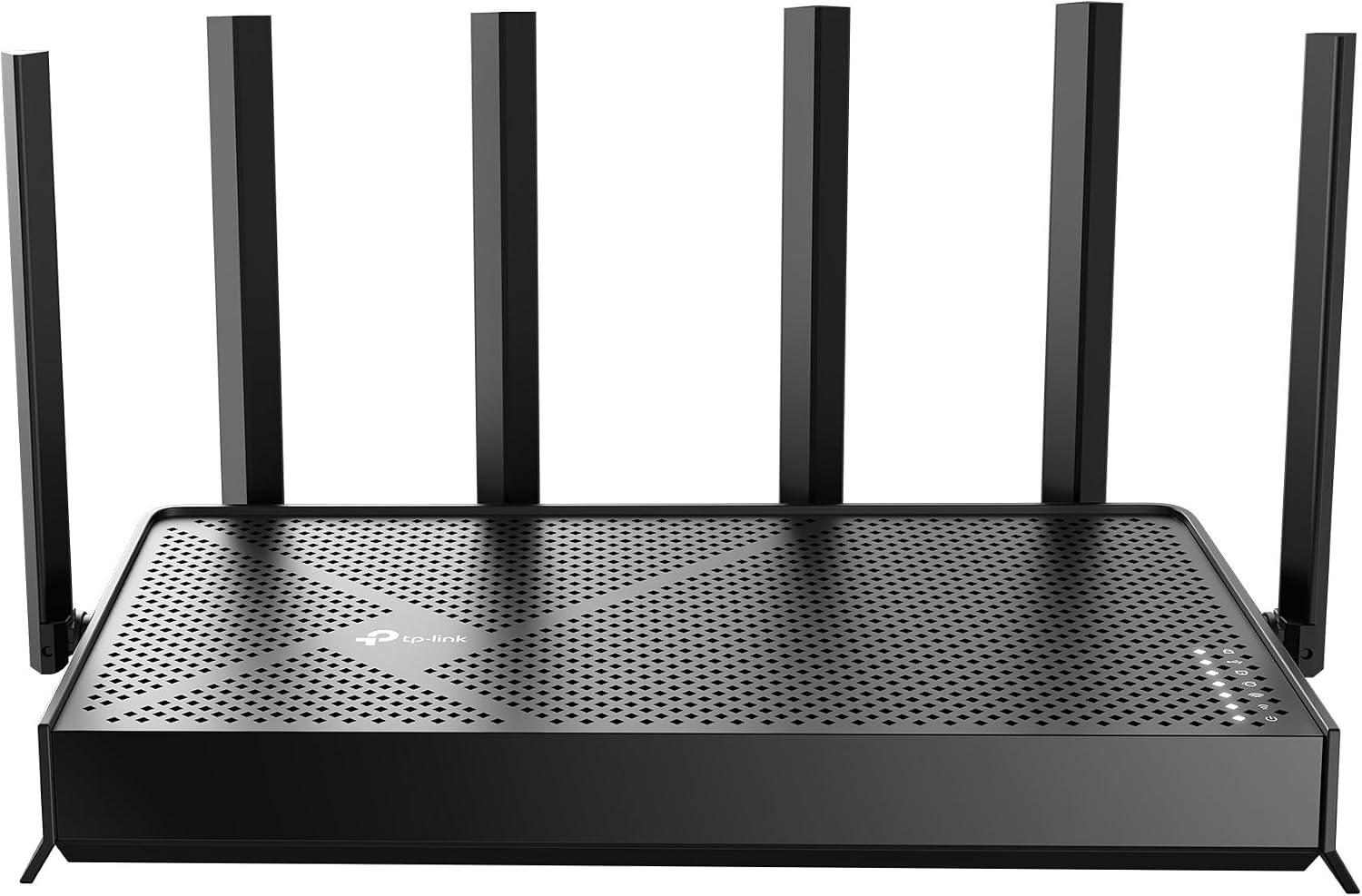
TP-Link Archer 8 Ultra (Image credit: TP-Link)
Since that time, several things have changed, with none of them being positive developments for TP-Link. Over the past six months, Amazon, Asus, and Netgear have all gained conditional approvals from the FCC to sell new wireless products in the U.S., while TP-Link has been stonewalled (conditional approvals are valid for 18 months from the date of issuance). Considering that TP-Link has been the world’s largest provider of Wi-Fi routers and associated devices for over a decade, losing access to the U.S. market for its new line of Wi-Fi 8 devices is a significant blow. This was readily apparent in late September when TP-Link opened preorders for its Archer 8 Ultra Wi-Fi 8 router. The company announced that the router would be available in the United Kingdom, Germany, and Australia. However, the U.S. was conspicuously absent from that list because of the ongoing ban.
Adding insult to injury, earlier this month, multiple states (including Florida, Montana, Iowa, and Nebraska) sued TP-Link Systems, alleging that the company has made false and misleading claims about the security capabilities of its products and continued ties to China.
“TP-Link’s conduct has placed Montana consumers at risk of harm by making their home and small-office networks vulnerable to exploitation and intrusion by foreign actors with a proven track record of nefarious conduct. That risk is ongoing: many consumers keep their routers for years, and many of the compromised TP-Link models in Montana homes do not support automatic firmware updates and no longer receive security support at all,” stated Montana Attorney General Austin Knudsen.
Knudsen further claimed that while TP-Link touts that it employs 300 people in the U.S., the bulk of its workforce (numbering over 11,000 employees) conducts development and manufacturing operations in China. “Further, TP-Link claims to manufacture its U.S.-market products in Vietnam, but less than one percent of the components by value are sourced in Vietnam, and the rest are imported from or through China,” Knudsen added.
“Iowans’ sensitive data and our national security is at risk because of TP-Link and their connection to the communist Chinese government,” stated Iowa Attorney General Bird. “TP-Link tells Iowans its routers are safe, our personal data is secure, and that they have no ties to China. They are not telling the truth. It’s time to hold China and China-backed companies accountable.”
TP-Link barks back
Up until this point, TP-Link has vehemently denied any ties to the Chinese government and has refuted similar allegations from one of its primary competitors, Netgear. However, on October 13, the company issued its sharpest rebuttal yet in a letter to the FCC. TP-Link touted its “America-first” strategy and chastised the state lawsuits brought earlier this month.
“A group of 21 state-level officials recently raised a scattershot barrage of baseless and previously debunked allegations relating to TP-Link’s confidential, non-public application,” TP-Link exclaimed. Rather than seeking to advance legitimate public policy objectives, the letter appears aimed primarily at encouraging federal officials to apply a heightened standard to TP-Link’s pending application that would be unattainable to TP-Link or any other router manufacturer in the world.”
TP-Link stated that its innovation in the router space earned its position as the market leader in the U.S., and that the constant barrage of legal fights and war of words is undermining fair competition and is an actual threat to national security and critical infrastructure given the broad proliferation of its products.
To that end, TP-Link reiterated that it has officially filed for conditional approval from the FCC, so that it can specifically sell two next-generation Wi-Fi 8 routers in the U.S. The company noted, “As the United States positions itself as a leader in wireless technology, a Conditional Approval would guarantee American consumers access to the same cutting-edge wireless equipment that will soon be available in other parts of the world."
TP-Link proposes $1 billion investment in the U.S.
With its back against the ropes, TP-Link is appealing to the U.S. government in the best way it knows how: with money and jobs. If there’s anything that the U.S. government likes, it’s investment in manufacturing on its own soil and high-paying jobs to bolster local economies. To help push the U.S. government along in approving a conditional approval to sell Wi-Fi 8 hardware, TP-Link has signed a letter of intent with Key Tronic to manufacture routers in the U.S. instead of importing them from Vietnam. More specifically, the routers would be assembled in Corinth, Mississippi.
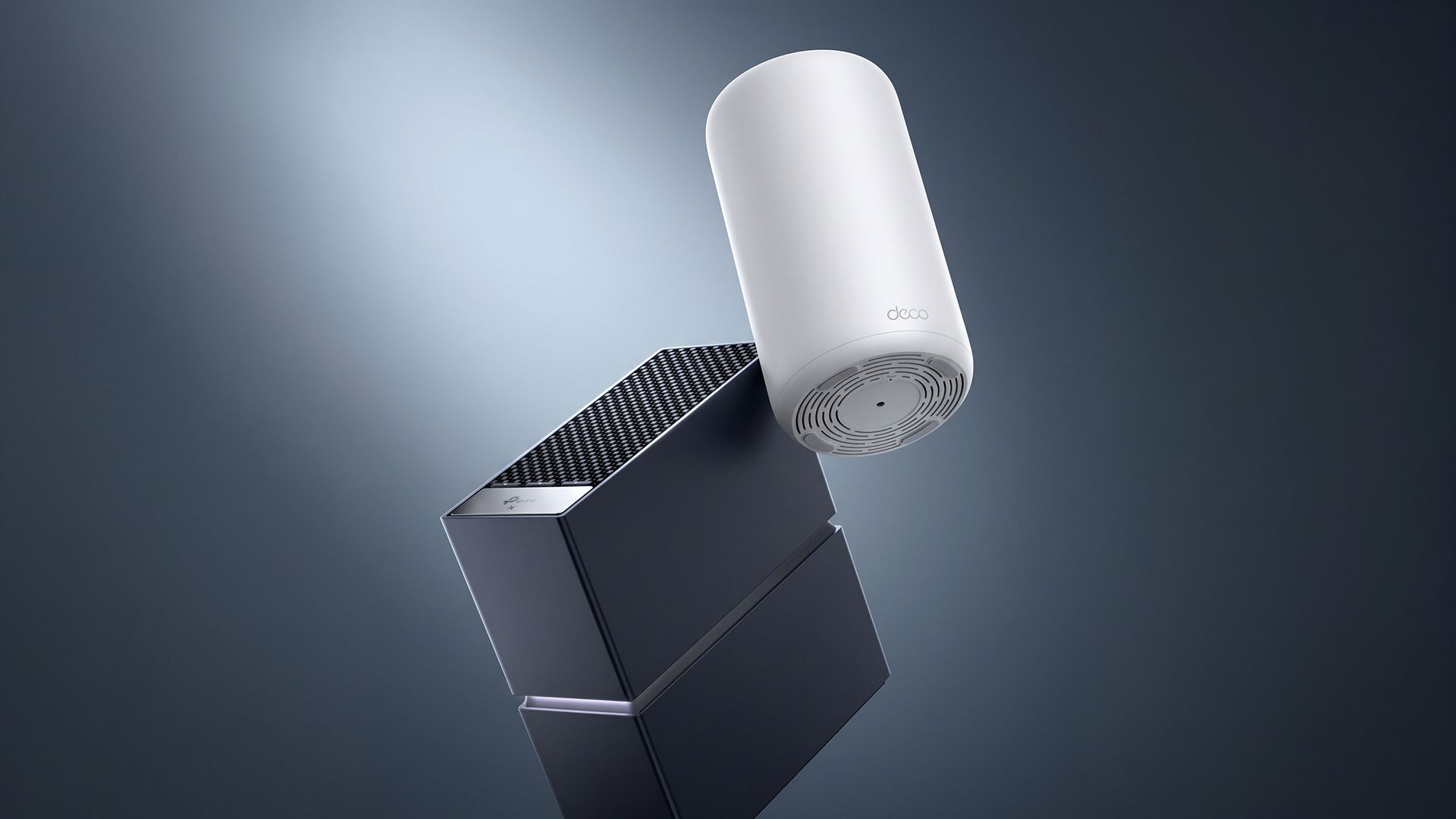
TP Link Deco 8 Ultra (Image credit: TP-Link)
“This LOI with Key Tronic demonstrates our firm commitment to expanding domestic advanced manufacturing, and establishing America as our base for delivering secure, reliable connectivity solutions to households and businesses around the world,” said TP-Link Systems Inc. CEO Jeffrey Chao. “By choosing to assemble cutting-edge products here at home, we are thrilled to support U.S. high-tech job growth and empower a new generation of American innovation and innovators.”
TP-Link hopes that the investment will cut through most of the red tape that is currently preventing it from selling its latest products stateside. However, it remains to be seen if these latest sweeteners will be enough to sway President Trump and the agencies under his purview. As the company notes, it was the first to deliver Wi-Fi 7 routers in the U.S., and it wants to continue that leadership position by offering the first Wi-Fi 8 routers. The hardware is ready to go, as evidenced by the opening of preorders; it’s just currently being held up by roadblocks at the federal level, along with added pressure from state governments.
Until that time, Wi-Fi 8 products like the Archer 8 Ultra and Deco 8 Ultra will remain off-limits to Americans, which have given TP-Link a reported 65 percent share of the U.S. consumer router market.
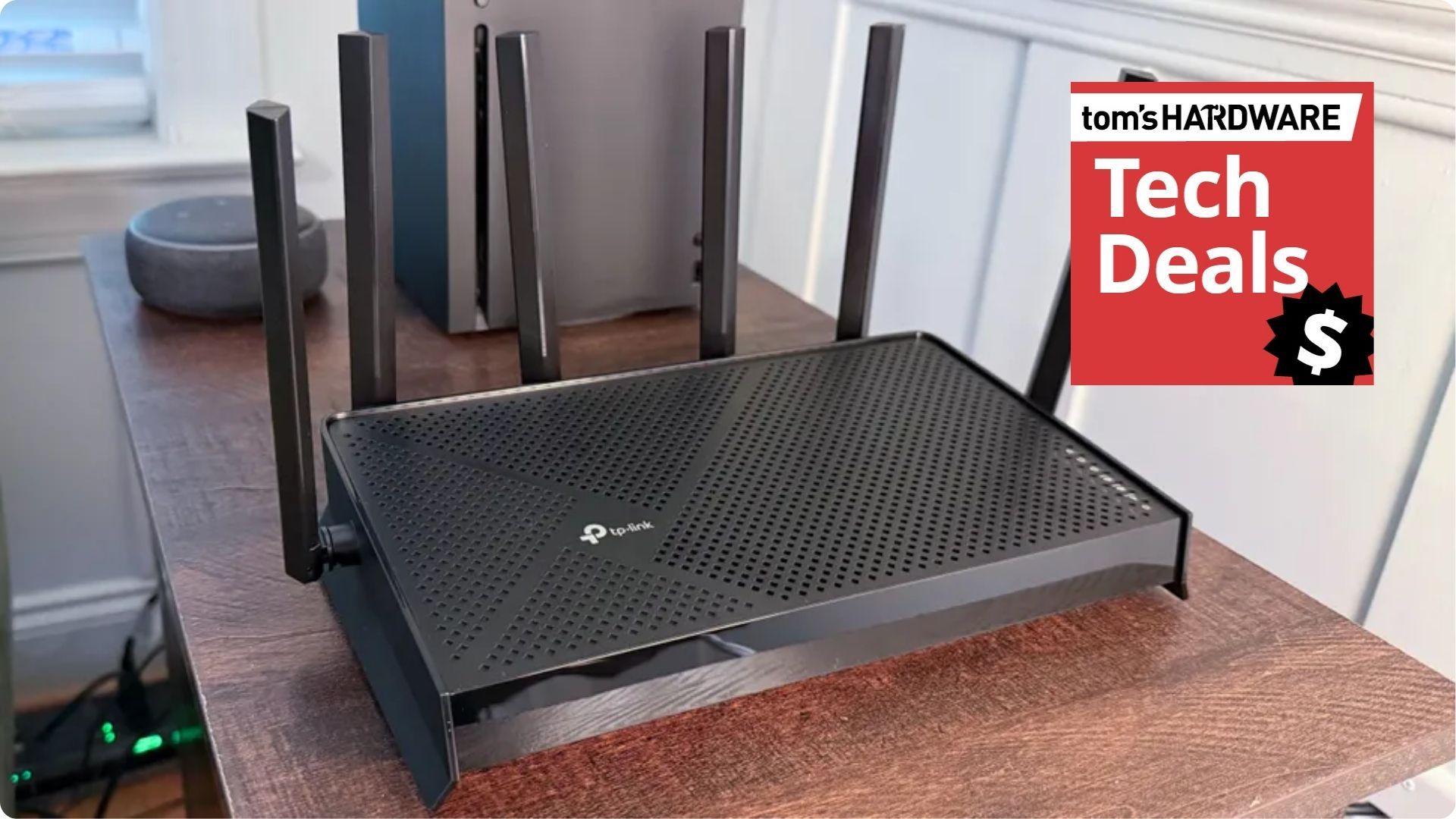
There's no point upgrading your internet connection if you've got a bad Wi-Fi router slowing you down. If the ISP-provided router isn't up to the task, and you're ready to banish the lag, you'll want to pick up this TP-Link router, on sale for a limited time only. The TP-Link Archer BE9700, also known as the BE600, is down to $189.98 right now, giving you a 24% saving on its list price.
With the BE9700, you're getting a tri-band Wi-Fi 7 router with six external antennas, enough to give you coverage for up to 2,600 sq. ft. with up to 120 different devices connecting to it. TP-Link reckons you can expect to see speeds of up to 5,765 Mbps on the fastest 6 GHz band, with 2,882 Mbps at 5 GHz, and 1,032 Mbps at 2.4 GHz. MLO, or Multi-Link Operation, support means you're able to connect using these different bands at the same time, giving you even faster speeds and better protection against congestion.
The TP-Link Archer BE9700 router has six antennas and adds Wi-Fi 7 support for your network, with one 10Gb WAN port and four additional 2.5 Gb Ethernet ports for high speed wired connectivity.View Deal
Our TP-Link BE9700 review shows this is a serious option for your network. This is a good value router with solid Wi-Fi 7 support, with speeds that make it a competitive option, especially at this price point. Our review shows that it comes with class-leading 6 GHz performance, with decent enough speeds at 5 GHz and 2.4 GHz. It's the top choice in our best Wi-Fi router shortlist, too.
While Wi-Fi 7 support is the big deal here, the wired connections aren't bad, either. You get a 10Gb WAN port to hook this router up to your super-fast modem, giving you max speeds. You also get four 2.5Gb Ethernet ports for your home devices, including your PC, laptop, NAS drives, game consoles, and more.
Aside from the speeds, you get a USB 3.0 port on the side, which you could use to hook up a printer or external hard drive as a basic NAS. EasyMesh support, meanwhile, means you can use this as a wireless node in a mesh network. It also has Quality of Service controls to help you prioritize traffic for your core devices, such as your gaming PC, so you don't lose out when you're gaming.
The $189.98 sale price for this TP-Link Archer BE9700 router is a good one, even if it has yo-yo'd in price over recent months. That said, this is a solid discount off the $249.99 list price that it was at a few weeks ago, and one that'll give you an ultra-fast upgrade to your local network.
Can AI-powered vibe coding challenge established software companies? Photocraft and other Adobe application clones spark a discussion of their capabilities, legal questions, and the possibility of creating customized software. A live download offers a closer look at the applications. The conversation also explores the Swift Angels developer meetup, LinkedIn’s growing importance for professional networking, and generational differences in technology.
Of all the privacy protections in macOS, those for local networking are among the most recent and the least understood.
[…]
All non-exempted apps and other processes start without any privilege. Those that try to make a local network connection result in the user being prompted to allow or deny their access. Your decision is then recorded in that app’s new entry in the Local Network section, and you can then set that to allow or deny its future access. For that to happen, the responsible app needs an additional item in its property list to explain to you why it requires that access, something that should appear in any prompt for access.
[…]
A process with a short life that immediately fails if it can’t complete a local network operation may not trigger a user prompt, and can continue to fail repeatedly as it can’t be granted the privilege. Apple recommends changing the code so that it doesn’t exit immediately after failure, to allow the prompt to be displayed and access granted.
Another clue came in the statement in that note that “on macOS there’s no way to reset your program’s Local Network privilege to the undetermined state”. This contrasts with pretty well every other category of privacy protection, which are handled by the dreaded TCC, Transparency Consent and Control.
During testing, you might want to reset your program’s Local Network privilege to the undetermined state. Your options for this vary by platform.
On iOS, the easiest option is to delete your app.
Alternatively, if you don’t want to delete your app for some reason, reset the entire privacy subsystem using Settings > General > Transfer or Reset > Reset > Reset Location & Privacy.
On macOS, the list in System Settings > Privacy & Security > Local Network has add (+) and remove (-) buttons. To reset your program’s Local Network privilege, select it in the list and click the remove button.

 Login