Reading view
Meta Earnings Show Increased A.I. Spending, Even as Cash Pressures Grow
Judge Orders Meta to Pay $25 Billion Over Decade-Old Facebook Scandal
Meta ordered to pay $25 billion in penalties over the Cambridge Analytica scandal
The Cambridge Analytica scandal has come back to haunt Meta after a New Mexico judge ordered it to pay $25 billion in penalties for more than 43 million violations of the state's unfair practices law. The ruling marks the biggest legal hit Meta has taken this year, even as it's faced several other losses or settlements.
A New Mexico jury ruled in September that Meta misled consumers over how it protected their data and prevented misinformation and hate speech on its platforms. The case stemmed from a 2021 complaint in the wake of the revelations a few years earlier that UK political consultancy Cambridge Analytica harvested data from millio …
How The New York Times Reports on A.I. Images
Arqueólogos creen haber identificado al personaje enterrado en un sarcófago romano hallado en la abadía de Westminster en 1820
‘A difficult line’: meet the editors tackling Wikipedia’s arms trade pages
Volunteers and new recruits come together for ‘wikithon’ to put more detail about industry into public domain
“Anyone can edit Wikipedia,” the adage goes. But, it turns out, a relatively small number actually do.
What is worthy of a digital page in the world’s largest and most-read encyclopedia is decided by roughly 270,000 active volunteers, enthusiasts who populate the online resource with information on anything from 19th-century medicine to TikTok trends. Inevitably, some subjects are sidelined – the global south, notable women – but a new batch of Wikipedian recruits are waging war on one neglected topic: the arms industry.
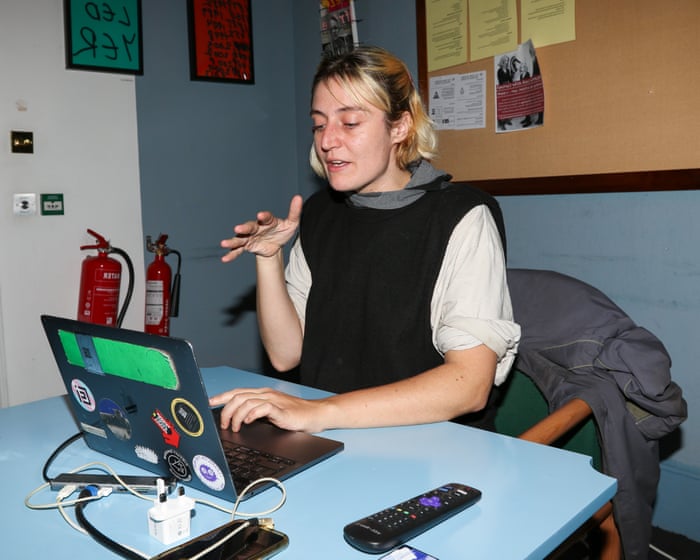
Last week, in a classroom in central London, two dozen volunteers huddled around laptops and free servings of vegan Ethiopian food for what is known as a “wikithon”, an event of collective and in-person Wikipedia editing. Some were veteran editors in their 70s, others young students who had never registered an account before. But their targets include subjects such as Palantir, Project Maven and Nitro-Chem.

© Photograph: Lily Renshaw/The Guardian

© Photograph: Lily Renshaw/The Guardian

© Photograph: Lily Renshaw/The Guardian
UK watchdogs urged to tackle suicide social media content after death of girl, 14
Adriana Retyte took her own life after viewing ‘high-risk’ material on the video-sharing platform TikTok
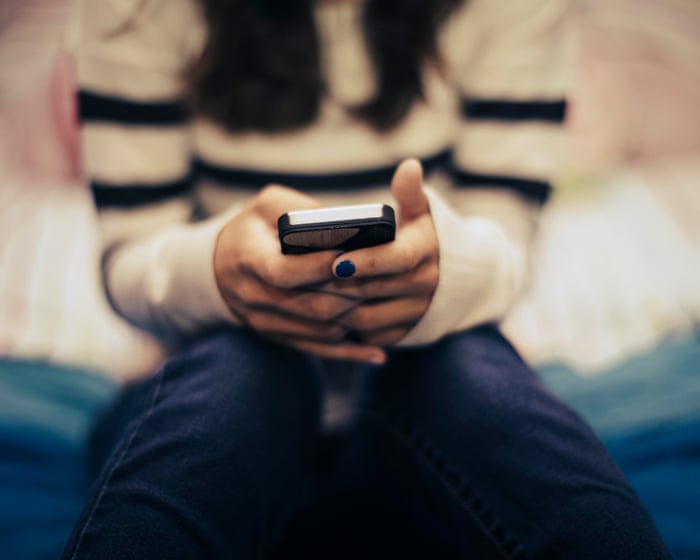
A 14-year-old schoolgirl’s death after TikTok served her suicide content has prompted renewed calls for UK watchdogs to crack down on “toxic” social media feeds.
Adriana Retyte, a pupil at Langley school in Norfolk, took her own life after she viewed videos and images related to suicide on the video-sharing platform, according to a coroner who last week found her access to the material on TikTok “may have played a significant part in her decision to take her life”.
Continue reading...
© Photograph: The Good Brigade/Getty Images

© Photograph: The Good Brigade/Getty Images

© Photograph: The Good Brigade/Getty Images
Meta drops the word "train" from its commercial TOS after AI backlash
Hoping to quell criticism, Meta has dropped the word “train” from its “streamlined” commercial terms of service that kick in on October 30.
Last week, Meta faced backlash after legal experts warned that the tech giant’s sweeping new commercial terms of service seemed to give Meta permission to endlessly scrape websites linked on business pages. Talking to Nieman Lab, experts suggested that Meta could possibly use the policy to avoid millions in licensing fees from news organizations by requiring all business users to share a wealth of AI training data simply for running a business page.
A Meta spokesperson confirmed that Meta did not alert users to the changed language following backlash. This potentially only adds to confusion ahead of the policy rollout. In response to backlash, Meta's spokesperson provided a statement to Ars, acknowledging Nieman Lab's initial report but not its follow-up report reiterating experts' concerns:


© filo | DigitalVision Vectors
Joel Kaplan, Meta’s Global Policy Chief, to Leave After 15 Years
A Reporter Who Saw Covid Coming Has Died
Fake Linda and me: the Agatha Christie-worthy mystery of the fraudster who stole my byline
How a string of bizarre events led writer Linda Geddes to don her sleuthing cap and dig into a world of shadowy impersonators
It started with an entirely ordinary interaction on LinkedIn. Someone had tagged me in a post, saying how much they’d enjoyed contributing to a New York Post article I’d written about “chronoworking”. As the author of a book about circadian rhythms, it was exactly the sort of subject I might write about. Except I’d never heard of this person, let alone interviewed them.
I clicked on the link and my stomach dropped. There, above an article about people who organise their working lives around their biological clocks, was my name: Linda Geddes.
Continue reading...
© Photograph: Adrian Sherratt/The Guardian

© Photograph: Adrian Sherratt/The Guardian

© Photograph: Adrian Sherratt/The Guardian
Mark Stephens (Robert X. Cringely), RIP
Mary Alyce Stephens (Hacker News, Reddit, TidBITS Talk):
Mark Stephens, known to much of the world as Robert X. Cringely, passed away on October 3, 2026. He was 73.
Mark was a gifted writer, journalist, storyteller, husband, father, brother, and friend. To millions of readers and viewers, he was Robert X. Cringely, the witty and sometimes irreverent observer of the technology world. But to those of us fortunate enough to love him, he was simply Mark-and losing him leaves an emptiness that is difficult to put into words.
[…]
Writing as Robert X. Cringely, Mark became a distinctive voice in technology journalism. He had an unusual ability to understand not only technology but also the human beings behind it-the dreamers, inventors, entrepreneurs, eccentrics, and risk-takers who were changing the world. He could take a complicated subject and make it understandable, entertaining, funny, and deeply human.
Steven Sinofsky (via John Gruber):
Bob wrote “Accidental Empires” that chronicled SV and the tech industry of the PC era, 1970s-90s. It led to the highly regarded PBS series “Triumph of the Nerds” a definitive series of interviews of the era. Through that time he authored the “gossip” column” in InfoWorld on the latest goings on at OG PC companies. Everyone read it in print religiously.
See also: I, Cringely and Wikipedia.
Previously:
Update (2026-10-20): Paul Tyma (Hacker News):
The next day Bob and I went to Sun Microsystems. He and I sat in a room with Jonathan Schwartz (CEO) and Rich Greene (C-something-else) while they defended Java and gave me nasty looks wondering who the hell I was and why the hell I was even there. They seemed plenty interested in impressing Bob though. By the way, Dotnet didn’t squish Java but I did get a Sun t-shirt.
MacVoices #26269: MacVoices Update 2026-09
Antennagate Q&A
A 47-minute video of the Q&A session from Apple’s 2010 iPhone 4 “antennagate” press conference has surfaced on YouTube, showing Steve Jobs, Tim Cook, and Bob Mansfield answering reporters’ questions.
[…]
Jobs used his prepared presentation to announce free cases for eligible customers and a 30-day return option. Apple later posted video of that presentation, but left out the Q&A, which was documented at the time through written reports and photographs.
The Q&A was on the record (which is the entire point of a Q&A), and was reported widely, but I don’t think there’s ever been video of it. Here’s a report by Jeff Carlson at TidBITS, published the day the event was held, which states, “The video omits a long and interesting Q&A at the end.”
Then, yesterday, video of the Q&A hit YouTube. I don’t know what truck it fell off the back of, why it took 16 years, or how it came into the hands of “Sir Mix-A-Lot Rare Music”, but I’m sure glad it did. There are parts of this Q&A that I remembered, and parts I didn’t. Carlson was exactly right: it was long and it was interesting.
My main takeaway is still that there were two stories here, but most of the media missed one of them, and Apple was happy to focus on the other.
The first story was that holding iPhone 4 in the wrong way would reduce the signal strength. Apple pointed out that other phones had the same problem, to varying degrees, and offered cases as a solution.
The second was that, even with a case, iPhone 4 had worse reception than previous iPhones. I saw this directly myself: testing my iPhone 3GS and my father’s iPhone 4 in some areas that had poor signal, and finding that one worked reliably and the other was completely unusable. Apple examined my father’s iPhone 4 and assured us it wasn’t a lemon, so there was no choice but to return it. AnandTech did some more precise testing and published some graphs that were consistent with what we saw. I think it was the only bad iPhone Apple made.
In the Q&A, the first question was about Jobs’s health. The second was about whether Apple was going to make any changes to the antenna. Jobs responded that the iPhone 4 antenna was better in almost every way than previous designs. But Apple did end up redesigning the antenna with the iPhone 4s, and it worked just fine in my same test areas. It’s possible that the cell towers had changed in the interim, but the 4s worked well for me everywhere that it could be expected to and ended up being one of my favorites.
Sam Henri Gold decided to pick apart the changes between iOS 4.0 and iOS 4.0.1, which changed the number of bars shown in moderate-to-low reception areas[…]
Previously:

- macOS 10.12.2 Removes Battery Time Remaining Estimate
- How to See Your iPhone’s Precise Signal Strength
- Low-Cost iPhone
- AnandTech’s iPhone 4S Review
- Verizon iPhone 4 Antenna
- Apple Removes Antenna Videos
- Tone
- iPhone 4 Antenna Press Conference
- iOS 4.0.1 Signal Bars and Tape Reception Test
- Apple Responds to iPhone 4 Reception Problems
- AnandTech’s iPhone 4 Review
- The iPhone 4 Grip of Death
Descubren que una iglesia de Lugo que se creía románica es prerrománica asturiana del siglo IX