❌

Reading view

PLOS Issues Expression of Concern for Yangtze River Delta Study

The PLOS One editors have issued an expression of concern for a 2024 case study concerning the digital economy, innovation factor allocation and industrial structure transformation in China’s Yangtze River Delta city cluster. The notice, published on October 21, 2026, states that the article was identified as one of a series of submissions for which the journal has concerns about the integrity or reliability of the peer-review process. Readers are advised to interpret the original study with this issue in mind.

The notice does not report a new scientific finding, identify an error in the paper or evaluate the study’s scientific validity. According to the editors, PLOS did not assess the article’s integrity or scientific validity when following up on the matter. The expression of concern therefore records a concern about the circumstances surrounding peer review rather than announcing that the study’s data, methods or conclusions have been disproved. The editors also state that they have no concerns regarding the authors’ conduct during the peer-review process.

The affected article was published in PLOS One in 2024 under the title “Digital economy, innovation factor allocation and industrial structure transformation—A case study of the Yangtze River Delta city cluster in China.” The supplied notice does not provide the study’s findings, population details, analytical methods, model estimates, uncertainty measures or specific mechanisms linking the subjects named in the title. As a result, the notice does not support conclusions about the relationship between digital-economy development, innovation factors and industrial structure in the region, nor does it establish whether any reported association or causal effect is reliable.

For the wider research record, the immediate effect is that the 2024 article is accompanied by an editorial notice questioning the integrity or reliability of its peer-review process. The notice does not provide details about the submissions or explain the specific basis for the journal’s concerns. It also does not announce a correction, replacement analysis or revised conclusion. The central status of the paper’s scientific validity remains unevaluated in the supplied material, while the issue is sufficiently significant for PLOS One to advise readers to consider it when interpreting the study.

Subject of Research: A PLOS One expression of concern concerning peer-review reliability in a Yangtze River Delta regional-economy case study.

Article Title: Expression of Concern: Digital economy, innovation factor allocation and industrial structure transformation—A case study of the Yangtze River Delta city cluster in China

Article References: The PLOS One Editors (2026). Expression of Concern: Digital economy, innovation factor allocation and industrial structure transformation—A case study of the Yangtze River Delta city cluster in China. PLOS One, 21(10), e0360867. https://doi.org/10.1371/journal.pone.0360867

Image Credits: AI Generated

DOI: 10.1371/journal.pone.0360867

Keywords: PLOS One, expression of concern, peer review, research integrity, digital economy, innovation factors, industrial structure, Yangtze River Delta, China, Expression, Concern, Digital

  •  

Puncture-site closure linked to early wound events after vertebroplasty

A retrospective study of 1,307 patients undergoing elective percutaneous vertebroplasty for osteoporotic vertebral compression fractures found that 136, or 10.4%, had a puncture-site wound event within two weeks of surgery. The composite outcome included erythema or swelling, bleeding or exudate, subcutaneous hematoma, and infection. After adjustment for patient and procedural factors, suture closure was associated with more than twice the risk of the composite outcome, while diabetes, mildly elevated international normalized ratio, and multilevel treatment were also associated with higher risk.

The findings come from consecutive patients treated at Ningde Municipal Hospital in China between January 2022 and June 2026. Patients were excluded if they underwent surgery for a new fracture, had uncontrolled coagulation disorders, received concomitant open spinal surgery, required an intraoperative incision at the puncture site, had malignant tumors or abnormal immune status, or lacked key clinical or follow-up information. The analysis therefore describes elective vertebroplasty performed within one hospital system, rather than all fracture patients or all puncture wounds treated after other forms of spine surgery.

Researchers extracted information from electronic medical records, operative and anesthesia records, laboratory reports, dressing-change notes, wound-clinic assessments, and documented telephone follow-up. All puncture sites were covered with waterproof dressings and assessed within two weeks through inpatient observation, clinical review, or telephone follow-up. A wound event was counted only when explicitly documented in the records. Erythema, swelling, bleeding, exudate, hematoma, and infection were combined into one patient-level outcome, counted once even if a patient experienced several types of event, while individual components were also summarized separately.

Closure was not assigned through a randomized comparison. The operating physician selected nonsuture or suture closure according to intraoperative bleeding, exudation, skin condition, wound tension, and routine practice. Sutured wounds were typically closed with one 3-0 Vicryl Rapide stitch. Among the 1,307 patients, 774 received nonsuture closure and 533 received sutures. An early event was recorded in 53 nonsuture cases, or 6.8%, and in 83 sutured cases, or 15.6%. The crude risk ratio for any event was 2.27, with a 95% confidence interval of 1.64 to 3.15 and a P value below 0.001.

After the researchers adjusted for closure method, diabetes, INR above 1.2, age, sex, body mass index, and multilevel treatment, the association with suturing remained. The adjusted risk ratio was 2.24, with a 95% confidence interval of 1.59 to 3.16 and P below 0.001. Diabetes was associated with an adjusted risk ratio of 1.57, with a 95% confidence interval of 1.11 to 2.21 and P equal to 0.010. An INR above 1.2, defined using the hospital laboratory’s upper reference limit, was associated with an adjusted risk ratio of 1.66, with a 95% confidence interval of 1.08 to 2.57 and P equal to 0.022. Multilevel treatment had an adjusted risk ratio of 1.73, with a 95% confidence interval of 1.03 to 2.89 and P equal to 0.038.

The component findings were concentrated in relatively common superficial manifestations rather than infection. Erythema or swelling occurred in 4.1% of patients with nonsuture closure and 10.9% of those with sutures, producing a crude risk ratio of 2.63, with a 95% confidence interval of 1.73 to 3.99. Bleeding or exudate occurred in 2.7% and 5.8% of the respective groups, with a crude risk ratio of 2.14 and a 95% confidence interval of 1.25 to 3.69. Subcutaneous hematoma was uncommon, affecting two nonsuture cases and three sutured cases, and its wide confidence interval included no difference. Infection was documented in one nonsuture case and no sutured cases, too few events to model infection separately.

Age, sex, and body mass index were not independently associated with the composite outcome in the primary adjusted model. Each additional decade of age had an adjusted risk ratio of 1.15, with a 95% confidence interval of 0.94 to 1.41 and P equal to 0.186. Female sex had an adjusted risk ratio of 0.96, with a 95% confidence interval of 0.66 to 1.39 and P equal to 0.829, while each 1 kg/m² increase in body mass index had an adjusted risk ratio of 1.07, with a 95% confidence interval of 0.99 to 1.17 and P equal to 0.091. These estimates mean that the study did not find clear independent associations for those demographic and anthropometric measures, not that they have no relationship to wound events in every clinical setting.

The suture result is particularly notable because the design cannot establish that suturing caused the additional events. The authors excluded several conditions that could make closure decisions unusual, including uncontrolled coagulation disorders, concomitant open surgery, and wounds requiring an intraoperative incision. Even so, surgeons may have selected sutures for locally difficult wounds, bleeding, exudation, poor skin condition, or excessive tension. Those unrecorded features could confound the comparison, while the fact that sutured patients may have had more wound checks or suture-removal visits could also increase the likelihood that mild redness or exudate was noticed and recorded. The finding should therefore be interpreted as an adjusted observational association rather than proof that sutures themselves produce wound inflammation or other complications.

Several other constraints limit what the study can establish. Follow-up was retrospective and varied among inpatient observation, wound-clinic examination, and telephone reporting, so assessment intensity and recording thresholds were not standardized. Very mild redness or transient bleeding may have been missed, and the records did not consistently capture event duration, patient discomfort, additional care, revisits, or hospitalization. The composite endpoint improved capture of local findings but combined conditions with different causes and severities. Only one infection occurred within two weeks, preventing meaningful analysis of surgical-site infection or later infections. The single-center design and the selected elective population also limit generalizability to open spine surgery, malignant disease, immunosuppression, or puncture sites requiring remedial closure.

Overall, the study identifies four factors associated with the short-term local wound status after elective vertebroplasty: suture closure, diabetes, elevated INR, and multilevel treatment. Its practical signal is that early observation may be especially relevant for patients with these characteristics, although the findings do not establish a clinical rule or a preferred closure technique. Because closure was clinician-selected, follow-up was not standardized, and the endpoint combined mild events with rare infection, the results point to priorities for further prospective research rather than definitive guidance. Within those limits, the observed 15.6% event rate after suturing compared with 6.8% after nonsuture closure provides the clearest signal in the cohort, while the observational design makes the mechanism unresolved.

Subject of Research: Factors associated with early puncture-site wound events after percutaneous vertebroplasty for osteoporotic vertebral compression fractures

Article Title: Factors associated with early puncture-site wound events after percutaneous vertebroplasty for osteoporotic vertebral compression fractures: a retrospective cohort study

Article References: He, X., Huang, C., Zheng, B., Wu, X., Huang, C., Lu, S., Huang, Y., Chen, J., Huang, J., & Li, B. (2026). Factors associated with early puncture-site wound events after percutaneous vertebroplasty for osteoporotic vertebral compression fractures: a retrospective cohort study. Frontiers in Medicine, 13, Article 1988843. https://doi.org/10.3389/fmed.2026.1988843

Image Credits: AI Generated

DOI: 10.3389/fmed.2026.1988843

Keywords: Percutaneous vertebroplasty, Osteoporotic fractures, Puncture-site wounds, Suture closure, Diabetes, Coagulation, Multilevel treatment, Retrospective cohort, Postoperative care, Factors, associated, early

  •  

Astronauts on the Moon could shelter from radiation, micrometeoroids and extreme temperatures inside a lava tube, and NASA is sending a suite called GIMLI to scan beneath the Marius Hills Pit to see whether the pit opens into one

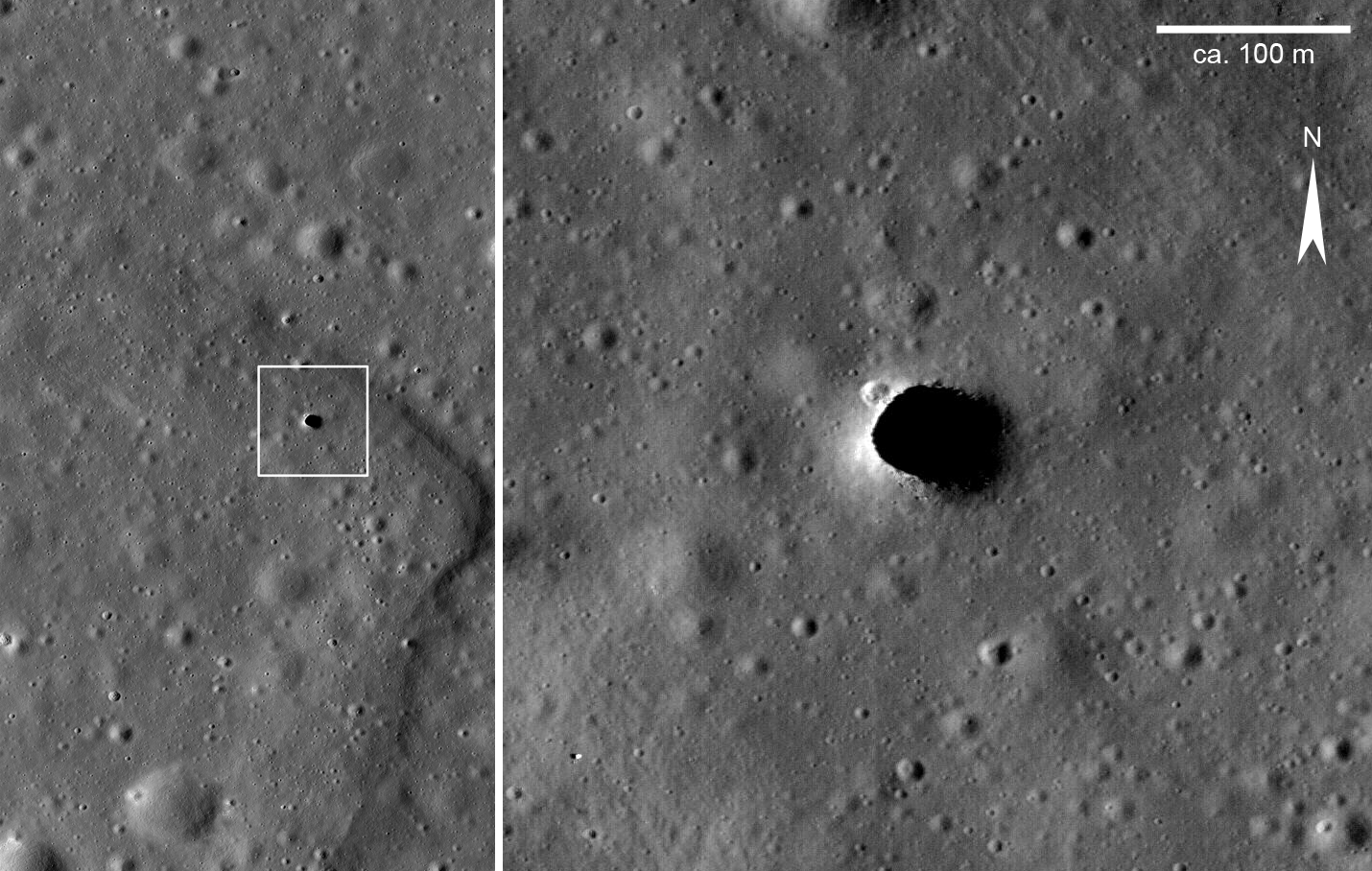
Orbital image of the Marius Hills pit, a dark hole in a lunar rille, with a magnified inset

WASHINGTON, NASA has selected a radar, seismic, gravity and camera suite called GIMLI to be deployed at the Marius Hills Pit and test from the surface whether the pit opens into a lava tube.

The agency named GIMLI on 30 September 2026 as one of three payload suites chosen under its PRISM programme for the Moon Base effort, to fly on a commercial lander under the Commercial Lunar Payload Services scheme. No launch date and no lander vendor have been named. The principal investigator is Nathaniel Putzig of the Planetary Science Institute.

The pit lies in the Marius Hills, an ancient volcanic region. In 2017 a team using the Lunar Radar Sounder on Japan’s Kaguya spacecraft reported echoes near the pit that it interpreted as an intact lava tube, and candidate tube sites line up with mass deficits in gravity maps from the GRAIL spacecraft, the Japanese space agency said. None of that has shown whether the hole leads anywhere.

“Readers should not conclude that the pit is an opening to a lava tube,” Gareth Morgan, GIMLI’s deputy principal investigator at the institute, told Space Daily in an email on 19 October 2026.

High-resolution images from NASA’s Lunar Reconnaissance Orbiter show the pit walls “form an overhang above a subsurface void space that is wider than the diameter of the pit itself”, Morgan said. The size of that void is unknown, and so is whether it is an isolated cavity or part of a larger cave system.

Similar pits exist in volcanic terrain on Earth, Morgan said. “Sometimes they are skylights into lava tubes, but in other cases they are isolated shafts/cavities caused by volcanic-tectonic activity,” he said. “GIMLI has been designed to differentiate between the two scenarios.”

“It has long been speculated that lava tubes, which on Earth are remnants of drained lava flows, exist on the Moon, but this has never been definitively confirmed,” Morgan said. “GIMLI will enable us to address this for the first time.”

“Confirming these void spaces now could shift future habitat planning, offering natural, ready-made shelters that provide crucial thermal stability and shielding from deadly ionizing radiation and micrometeoroid bombardment,” the agency said in its 30 September 2026 release.

GIMLI’s ground-penetrating radar is supplied by the Norwegian Space Agency, according to the institute. Honeybee Robotics, a Blue Origin company, is building the active-source seismic system, the gravimeter and the cameras, and is managing the project.

Each instrument should respond to a tunnel in its own way, Putzig told Space Daily in an email on 19 October 2026. “With the ground-penetrating radar, we would expect a strong reflection from the top of the lava tube back to the antenna, due to the high dielectric contrast between rock and the vacuum within the lava tube,” he said.

“For the active-source seismic, we would expect strong reflected and refracted acoustic waves from the perimeter of the lava tube, but the acoustic waves will not pass through the void space,” Putzig said. “For the gravimeter, we would expect to see a strong, negative gravity anomaly when passing over the lava tube, as it represents a locally reduced mass in what is otherwise dense rock.”

“If we see all of these effects, it will represent very strong evidence that the pit does in fact represent a collapse feature into a much more extensive lava tube,” he said.

Elevator and sealed walls

Published figures for the pit’s depth disagree. NASA’s description of the orbiter’s images puts the pit at about 34 metres deep. The Lunar Reconnaissance Orbiter Camera team gives 40 metres in a 2017 update. Putzig put the drop at about 60 metres.

“There’s a sharp drop of about 60 m between the pit rim and the floor of the pit, so while first explorations could be done by flying or rappelling into the pit, it may become necessary to install an elevator to move people and equipment in and out of a shelter,” Putzig said.

“Creating a shelter would require walling off either end of a portion of the lava tube and pressurizing the interior, but cross-cutting fractures could make it necessary to seal off the tube walls as well to avoid leaks,” he said.

In July 2022 NASA reported that Diviner data from the orbiter and computer modelling showed shaded locations within some lunar pits “always hover around a comfortable 63 F (about 17 C)”. Radiation shielding inside the Marius Hills Pit has not been measured on site.

Morgan said a null result would still be useful. “If we don’t find evidence of a cave system at our Marius Hills landing site, our measurements will still allow us to test alternative hypotheses for lunar pit formation, which in turn will provide new insights into volcanic activity, such as localized volcanic-tectonic processes,” he said.

The pit walls also expose layers of rock. The suite’s camera mast “will be used to inspect these outcrops (from a safe distance) to measure the number, thickness and origin of the layers”, Morgan said, with the results compared against the geophysical surveys to reconstruct the site’s sequence of eruptions.

Sources:

The post Astronauts on the Moon could shelter from radiation, micrometeoroids and extreme temperatures inside a lava tube, and NASA is sending a suite called GIMLI to scan beneath the Marius Hills Pit to see whether the pit opens into one appeared first on Space Daily.

  •  

In 1965 an astronaut smuggled a corned beef sandwich into orbit, and NASA’s chief asked if he should be disciplined

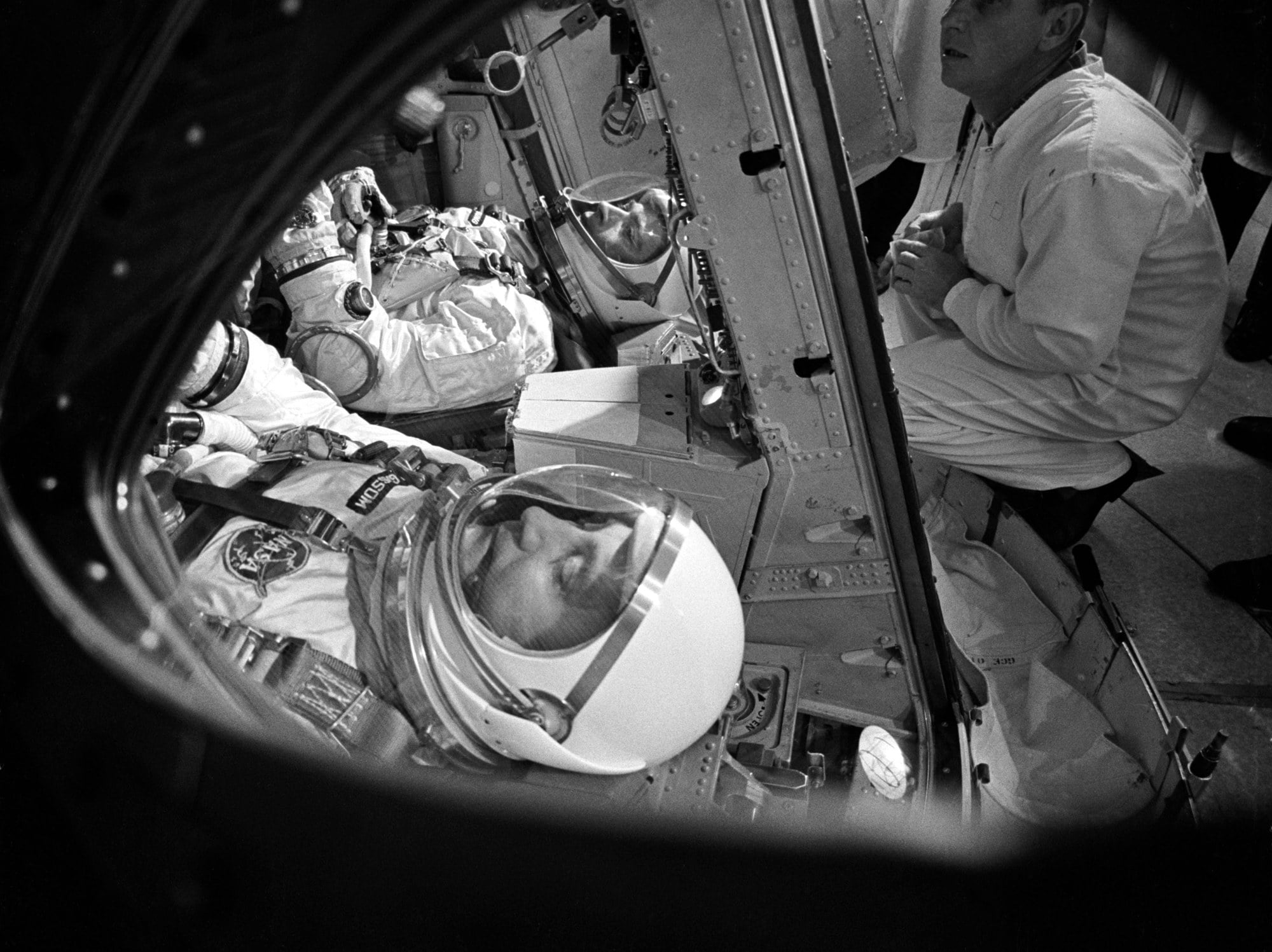
Gus Grissom and John Young in spacesuits and helmets strapped into the Gemini III spacecraft, seen through the open hatch

NASA Administrator James Webb pressed Manned Spacecraft Center director Robert Gilruth for a report on whether John Young should be disciplined for smuggling a corned beef sandwich onto Gemini III, NASA’s History Office says.

Young had fellow astronaut Walter “Wally” Schirra, the backup command pilot, buy the sandwich, then pocketed it in his pressure suit as he headed to the launchpad on March 23, 1965, Jennifer Ross-Nazzal, NASA’s human spaceflight historian, wrote in the History Office essay on March 20, 2025.

Nearly two hours into a flight of almost five hours, Young offered it to commander Gus Grissom, historian James Anderson wrote in a NASA Ames essay published on March 17, 2022. Grissom took a bite, found the rye crumbling, and put the sandwich in his own suit pocket.

The whole exchange lasted less than a minute. Congress raised the matter with NASA leadership at hearings on the agency’s 1966 budget, Ross-Nazzal wrote.

Webb told the committee that “this is the United States of America’s space program and, as a matter of policy, we are not going to permit individuals to superimpose their judgment as to what is going to be taken on these flights.”

He added: “I think it is fine for Dr. Gilruth to take a very strong position with respect to the individuality of these men, but from those of us who have to look at the totality of the matter, this was not an adequate performance by an astronaut.”

Representative George E. Shipley likened the Gemini cabin to a “surgeon’s operating room” and called Young’s antics “foolish”. Crumbs behind an instrument panel could interfere with flight equipment and cost the mission and its crew.

George Mueller, associate administrator for Manned Space Flight, told the committee that NASA did not “approve [of] unauthorized objects such as sandwiches going on board the spacecraft.” He said the agency had “taken steps, obviously, to prevent recurrence of corned beef sandwiches in future flights.”

Mueller also said: “There was no detriment to the experimental program that was carried on, nor was there any detriment to the actual carrying out of the mission because of the ingestion of the sandwich.”

Gilruth defended the crew. Such antics, he told the committee, helped crews “break up the strain” of spaceflight.

Gilruth said he hesitated “to be too strict in the future by laying down a lot of rules for men who have this responsibility and who, in all the flights so far, have done such good jobs.”

Webb read the incident as a sign that Gilruth was too lax with his astronauts, Ross-Nazzal wrote, and pressed him for a report to determine whether Young should be disciplined or at the very least reprimanded. Young never received a formal reprimand.

The sea urchin experiment

Near the approved food box beside Grissom sat a canister of sea urchin eggs, Arbacia punctulata, Anderson wrote. It was NASA’s first fundamental space biology experiment in orbit.

The canister held eight identical chambers. Turning its handle was meant to start fertilization in specific chambers, with a fixative halting cell division at different stages through the flight.

The handle broke when Grissom turned it, and the experiment’s objectives were not achieved. NASA redesigned the canister, substituted frog eggs, and flew it on Gemini VIII and Gemini XII.

By the end of the program, cell division had been shown to occur in microgravity without detrimental effects attributable to lower gravity.

Gemini III had none of the strict diet controls that other Gemini experiments on astronauts often required, so a few bites of the sandwich “would not have disrupted any of the planned experiments,” Anderson wrote.

Young hatched the idea during training, when Grissom grew “bored” with the dehydrated food, Ross-Nazzal wrote. Bringing a sandwich “seemed like a fun idea at the time” to Young.

One goal of the flight was to test NASA’s food packaging and its waste disposal procedures. Young called the chicken bites “barely edible” in his post-flight debriefing.

On the air-to-ground recordings, Grissom asked, “Where did that come from?” Young said: “I brought it with me.” He added: “Let’s see how it tastes.” Then: “Smells, doesn’t it?”

Two days after the flight, reporter Bill Hines asked at the postflight press conference what became of the sandwich. “How did you find out about that?” Young said, then laughed and said Grissom “ate the sandwich.”

Starting with Gemini IV, crews had to submit a list of items they planned to carry. Sandwiches were prohibited, along with bulky, heavy or metal objects that could affect spacecraft equipment.

The incident did not harm Young’s career. He became the first astronaut to fly to space six times, on two Gemini, two Apollo and two space shuttle missions. He also served as chief of the Astronaut Office for 13 years.

Sources:

The post In 1965 an astronaut smuggled a corned beef sandwich into orbit, and NASA’s chief asked if he should be disciplined appeared first on Space Daily.

  •  

A buried crater under the town of Ames, Oklahoma, that produces oil and gas was dated to the wrong era by about 100 million years, and its new age of about 370 million years puts it close to a mass extinction that wiped out much of the sea’s life

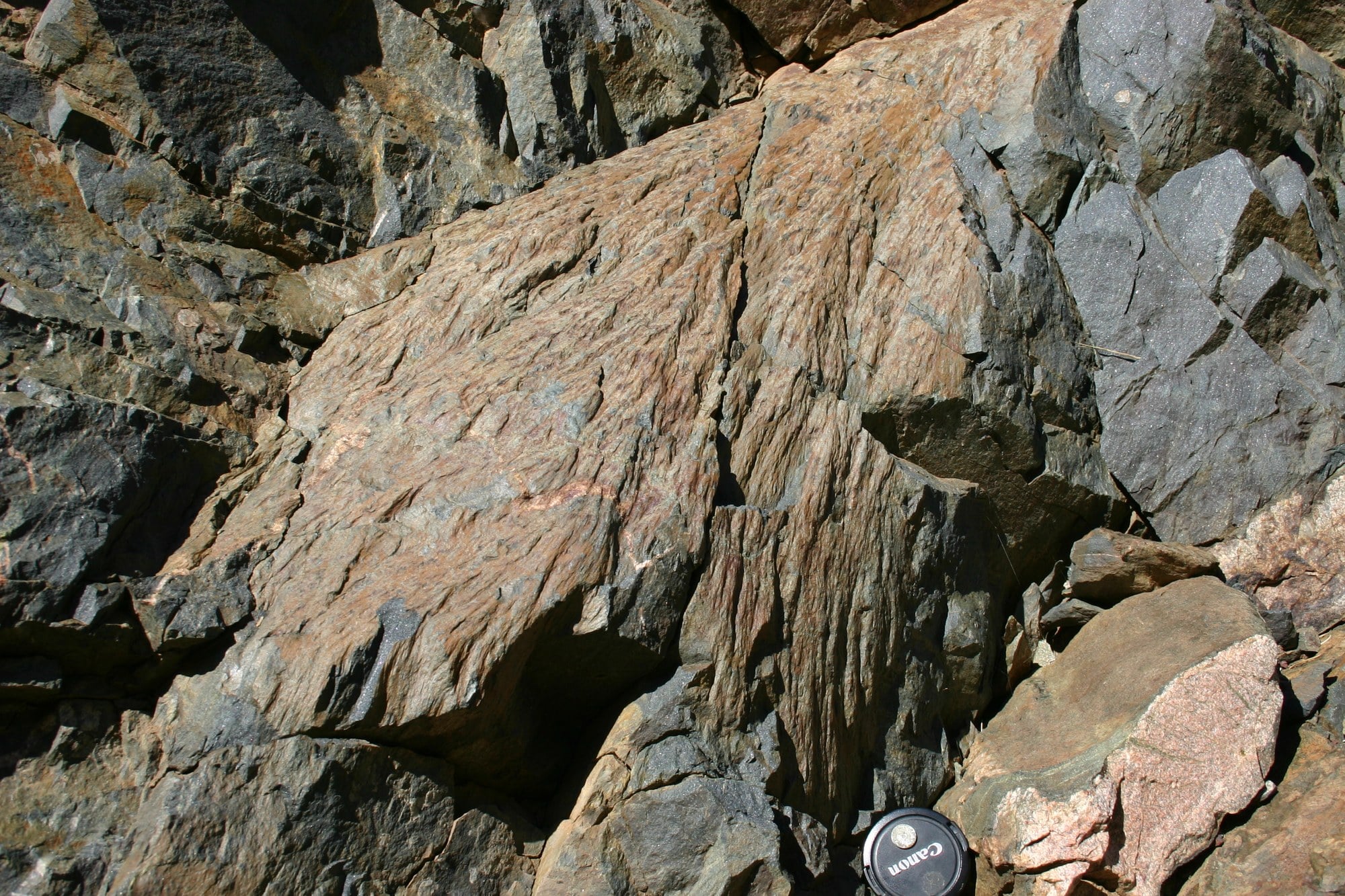
Rock face with ridged, cone-shaped shatter cone fractures in the Santa Fe impact structure, New Mexico

Austin, Texas: A meteorite impact buried under the town of Ames, Oklahoma, struck about 370 million years ago, nearly 100 million years later than previously believed, University of Texas at Austin researchers have found.

The study, published in July 2026 in Meteoritics & Planetary Science as an open access paper, dated zircon crystals from granite struck by the impact. Zircon is a mineral that forms small crystals and is used in uranium-lead dating.

The earlier age of 467 million years placed the impact in the Ordovician period. It was grouped with a series of North American impacts centred around 467.5 million years ago, called the Ordovician Meteor Event, according to a University of Texas press release.

The new date puts Ames in the Late Devonian, close to the Frasnian-Famennian mass extinction about 372 million years ago. The release says that event led to the extinction of a huge percentage of marine life on Earth.

Whether the impact and the extinction are connected remains an open question.

“Our results establish a new hypothesis that the Ames impact is linked to the Late Devonian mass extinction, but they do not demonstrate the causal relationship,” Elizabeth Catlos, lead author and associate professor in the Department of Earth and Planetary Sciences at UT’s Jackson School of Geosciences, said in an email.

“Establishing this connection requires additional evidence, such as finding impact-related material in Late Devonian sedimentary rocks, identifying other impact structures of this age and understanding their environmental consequences,” she said.

Catlos said she had “a high degree of confidence in the age”. It came from two independent radiometric dating approaches, laser ablation and ion-beam methods, applied to zircon grains taken directly from the impacted granite, she said.

For an impact structure, the strongest age constraint comes from dating minerals in the impacted material directly and showing that they record the impact, she said. That is what the team did.

“No matter what technique we used, it was coming back to this younger signal,” Catlos said in the university’s press release. The release says the result means Ames could not have been part of the Ordovician Meteor Event.

Doubts over the fossil date

The old date was biochronological, meaning it came from fossils. Researchers had found teeth of conodonts, eel-like creatures that lived during the Ordovician, in rock from the site. The teeth were probably already millions of years old when the asteroid struck and got jumbled in the impact, Catlos said in the release.

Catlos said in an email that she does not question the identification of the Ordovician conodonts. “The issue is whether they remain in their original stratigraphic position and can therefore reliably date the impact itself,” she said.

The conodont evidence came from a conference abstract and a PhD dissertation, Catlos said. Those sources did not go through the same formal peer review as a journal paper, but they gave the historical basis for assigning an Ordovician age to the structure.

To show the zircons recorded the impact, the team worked with NASA to image the crystals using cathodoluminescence and electron backscatter diffraction, two imaging methods. A zircon hit by an impact recrystallises in a specific way that these methods reveal, the release says.

Danny Stockli, dean of the Jackson School and a co-author, said in the release that uranium-lead dating of zircon is the most accurate way to tell when such events occurred. Microstructures in zircon can also record the shock pressures of impacts, he said.

He said he would like to see the same done for more impact sites across the continent to build a more accurate timeline of these events.

Catlos said in the release that a more accurate timeline for mass extinctions and other big moments in Earth’s history is needed to understand how the planet works. The question is whether such extinctions were driven by an extraterrestrial force or an interior one such as a series of massive volcanic eruptions, she said.

In her email, Catlos said the findings allow researchers to investigate a possible connection that had not been considered before.

The work was begun by Andrew Parisi, a Jackson School graduate student who collected the Ames rock core from the Oklahoma Geological Survey, extracted the zircons and helped date them. He graduated in 2018 and has since died, as has co-author Michael Brookfield. Sean Gulick and Mark Cloos of the Jackson School also contributed.

The Ames impact structure is a major oil and gas producer, the release says. The crater is more than eight miles wide and lies about 20 miles southwest of Enid under 9,000 feet of sediment, according to the American Oil & Gas Historical Society.

It went unrecognised until 1991, when Continental Resources found an oilfield there. Many geologists had believed impact craters were unlikely places for petroleum, the society says.

Sources:

The post A buried crater under the town of Ames, Oklahoma, that produces oil and gas was dated to the wrong era by about 100 million years, and its new age of about 370 million years puts it close to a mass extinction that wiped out much of the sea’s life appeared first on Space Daily.

  •  

A Dutch schoolteacher clicking through galaxy images on a volunteer website in 2007 flagged a green smudge she couldn’t identify and asked what it was. It turned out to be a cloud of gas lit by a quasar that had already switched off, and astronomers named the object after her.

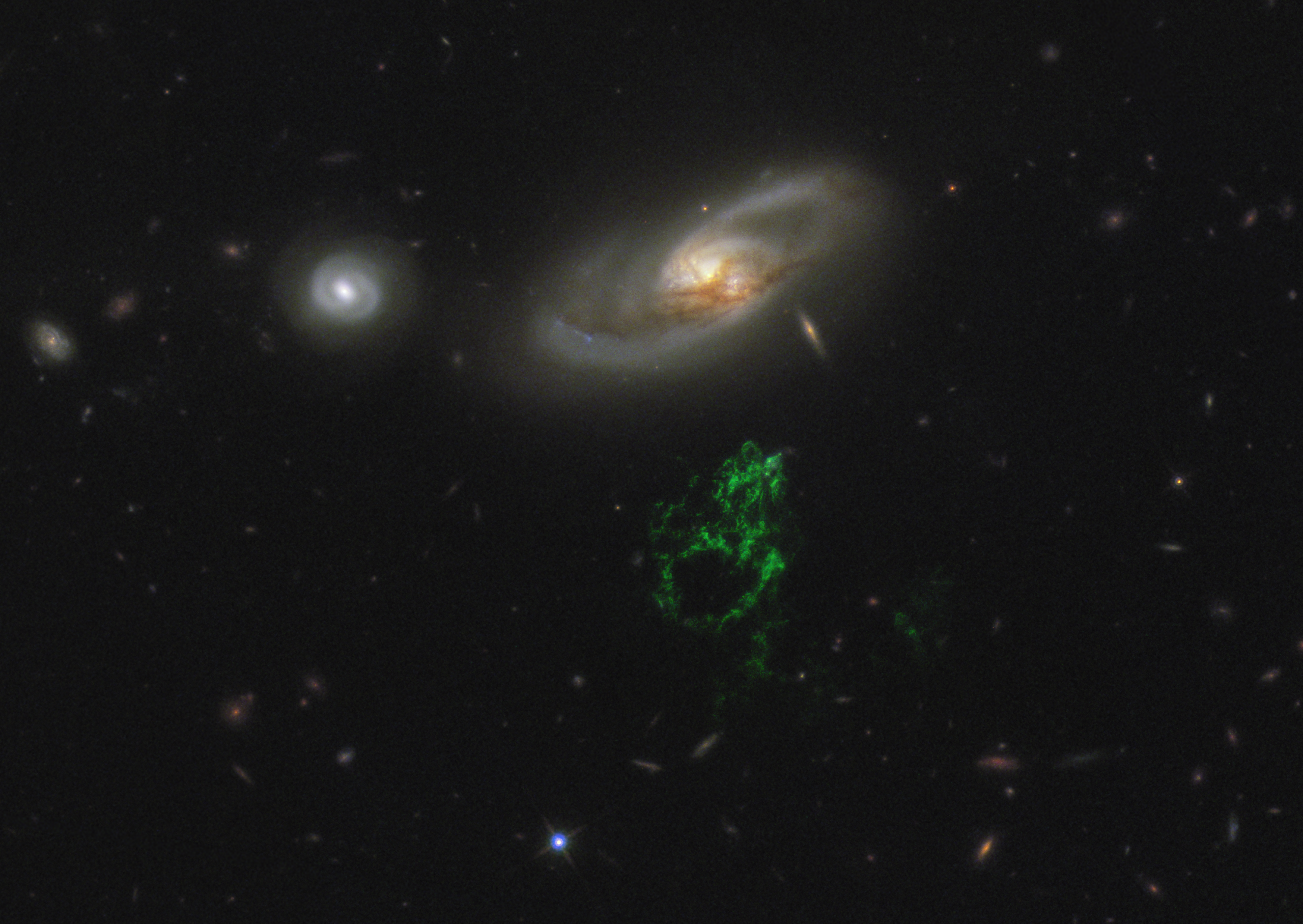
In August 2007, a 25-year-old primary school teacher in the Netherlands called Hanny van Arkel was working her way through the online classification queue of a citizen science project called Galaxy Zoo, which had been asking members of the public to look at individual galaxy images from the Sloan Digital Sky Survey and sort them into categories like spiral or elliptical. She had signed up because Brian May, the guitarist from Queen, had mentioned Galaxy Zoo on his personal website, and she was a fan. On one of the images she was classifying, sitting a little way off from the target galaxy, there was a small bright blue-green smudge that didn’t match anything on the sorting list she had been given. It wasn’t a spiral, it wasn’t an elliptical, and it didn’t look like the kind of image artefact she had been told to ignore. She emailed one of the astronomers running Galaxy Zoo, Chris Lintott at Oxford, to ask what she was looking at. Neither Lintott nor any of his colleagues immediately knew.

What Galaxy Zoo was for

Galaxy Zoo had gone live in July 2007, and the reason it existed was that automated computer algorithms of the time still couldn’t reliably classify galaxy shape from a photograph. Human eyes could, and the Sloan Digital Sky Survey had produced far more galaxy images than professional astronomers could work through themselves. The project put roughly 900,000 galaxy images online, invited anyone in the world to help sort them, and by the time it had reached full operation it had drawn something like 100,000 volunteers doing exactly that. Van Arkel was one of them. What the project’s designers had expected was mainly the sorting output itself, a very large, very reliable catalogue of galaxy morphology. What they had not fully anticipated was that some of the volunteers, looking at those images with fresh eyes, would spot things that hadn’t been catalogued at all. Van Arkel’s blue-green smudge was one of the first, and turned out to be one of the strangest.

What was actually there

The nearby galaxy in the image was called IC 2497. It sits in the constellation Leo Minor, about 650 million light-years from us, and up to 2007 it had been catalogued as an unremarkable spiral. The smudge to one side of it, once astronomers started looking properly, turned out to be a cloud of highly ionised gas the size of a small galaxy, glowing green because of an extraordinarily strong emission line from doubly ionised oxygen. The peculiar thing was the ionisation itself, which was much too energetic to be produced by any ordinary source in the object’s own vicinity. Whatever was lighting the gas up had to be delivering a hard ultraviolet radiation field of essentially quasar intensity. But when the team pointed X-ray telescopes at IC 2497 to look for that quasar, there was nothing there. According to the paper Chris Lintott, Kevin Schawinski, William Keel and colleagues eventually published in Monthly Notices of the Royal Astronomical Society in 2009, the best explanation for that combination of a highly ionised gas cloud and an apparently quiet host galaxy was that IC 2497 had contained a bright quasar in the recent geological past which had since switched off, and that what the cloud was showing was the light echo. The gas is far enough from the black hole that the radiation from the quasar’s active phase is still travelling across it, illuminating it, even though the quasar itself has already gone quiet at the source. The Lintott paper framed the object as, potentially, the first direct evidence that a quasar could shut down on timescales of order a hundred thousand years, which is very short compared to what most models of quasar life cycles had assumed.

What followed the discovery

Follow-up observations turned Hanny’s smudge into a considerably bigger object than it had first appeared. Time was granted on the Hubble Space Telescope, which is heavily oversubscribed and hard to get on, and the Hubble imaging revealed that the visible green Voorwerp was only the illuminated tip of a much larger streamer of hydrogen gas stretching across roughly 300,000 light-years around IC 2497, most of it not currently lit by anything. According to NASA Goddard’s account of the follow-up work, Hubble also picked up clusters of newly forming stars in a small region at the tip of the Voorwerp facing the host galaxy, evidence that gas being blown out of IC 2497 had compressed part of the cloud enough to trigger a modest starburst. Bill Keel, the astronomer at the University of Alabama who led much of the follow-up work, then went back through Hubble archival imagery of 15,000 galaxies that had once hosted quasars, using a further 200 Galaxy Zoo volunteers to look for anything comparable to Hanny’s original object. They found eight more similar structures across the archive. The population of quasars that had switched off within the last hundred thousand years was, on the strength of that survey, no longer an implausible or isolated phenomenon. It was a category.

What the naming actually meant

The object was catalogued in the astronomical literature as Hanny’s Voorwerp, using the Dutch word for object, and it kept that name because that was how the discovering team referred to it and because there wasn’t a more formal designation available. Astronomical objects picked up by professional surveys ordinarily get catalogue numbers rather than personal names, and objects picked up by amateurs traditionally get named after the amateur only in a narrow set of cases, most famously comets. What made this case different was that van Arkel hadn’t spotted anything by pointing a telescope of her own at the sky. She had spotted it in an image on a screen that a professional survey had already collected, that professional astronomers had already looked at, and that the target galaxy of the image had already been catalogued as ordinary. The relevant instrument was her attention. Galaxy Zoo has since gone on to spawn a whole family of related citizen science projects across biology, climate science and history, some of them running under the Zooniverse umbrella that Lintott and his collaborators established. Hanny’s Voorwerp remains the discovery that most clearly shows what those projects are actually for, which is putting a very large number of unpredictable human observations against a very large volume of automatically collected data, and letting the anomalies fall out.

The post A Dutch schoolteacher clicking through galaxy images on a volunteer website in 2007 flagged a green smudge she couldn’t identify and asked what it was. It turned out to be a cloud of gas lit by a quasar that had already switched off, and astronomers named the object after her. appeared first on Space Daily.

  •  
❌