❌

Reading view

US electric VTOL wins landmark FAA clearance, completes 39-mile flight in 20 minutes
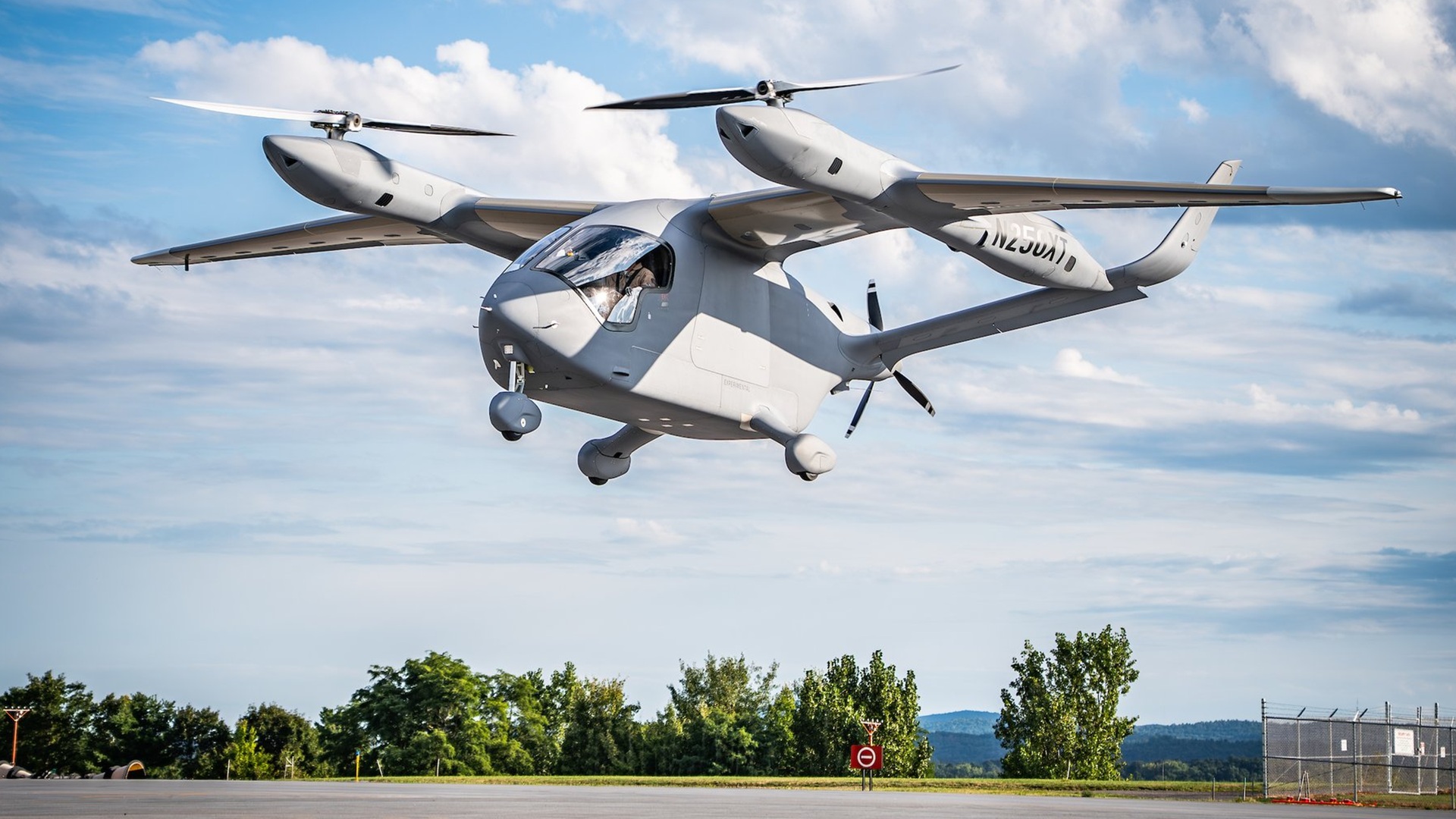
The Federal Aviation Administration (FAA) has granted US aerospace and defense company BETA Technologies a first-of-its-kind authorization to conduct flights with prospective customers aboard its electric vertical takeoff and landing (VTOL) aircraft, marking a significant step toward commercial operations.

The approval, granted under a Special Airworthiness Certificate for market surveys, allows the aerospace and defence company to demonstrate its ALIA A250 aircraft to prospective operators and other participants. It also expands the geographic scope of the company’s flight operations.

The authorization comes after a safety review by FAA experts and represents a step toward commercial deployment, although the aircraft has not yet received full type certification for routine commercial service.

BETA completed its first flight under the new authorization on October 20, traveling 34 nautical miles (39 miles) in 20 minutes.

First authorized demonstration flight

The ALIA A250 departed Plattsburgh International Airport in New York, taking off vertically before transitioning to conventional wing-borne flight. It then landed vertically at Patrick Leahy Burlington International Airport in Vermont.

Designed to operate with or without runway access, the aircraft can potentially support passenger transportation, cargo delivery, medical services and defense operations. It features dual pilot controls and is designed to carry up to five passengers or more than 1,200 pounds of cargo.

According to BETA, the A250 shares several major systems with its conventional takeoff and landing (CTOL) aircraft, including electric propulsion, flight control computers, batteries and charging infrastructure.

The common architecture allows the company to apply operational experience and technical improvements across both aircraft.

BETA said its CTOL and VTOL aircraft have accumulated more than 250,000 nautical miles of combined flight experience.

The company previously received FAA market-survey authorization for its CTOL aircraft and completed its first crewed electric VTOL transition flight in 2024.

β€œThis authorization brings vertical flight closer to the people and places that will put it to work, building on BETA’s track record of industry firsts,” said Kyle Clark, BETA’s founder and CEO.

The latest certificate permits market-survey flights rather than unrestricted commercial passenger services. BETA must still complete the FAA’s full certification process before beginning routine commercial operations.

Expanding electric aviation operations

The US government is working to accelerate the testing and integration of advanced air mobility aircraft into national airspace.

In March, Transportation Secretary Sean Duffy announced the eVTOL Integration Pilot Program (eIPP), which supports testing of next-generation aircraft in real-world operating environments.

The program includes eight selected projects spanning 28 states, involving aircraft manufacturers, operators and government partners.

The projects cover urban air taxis, regional passenger transportation, cargo networks, emergency medical response, autonomous flight and offshore transportation.

The FAA said BETA’s authorization would allow the company to demonstrate its aircraft across a broader range of operating conditions, subject to applicable restrictions.

β€œThe FAA is committed to working with American innovators to safely integrate these new aircraft into our national airspace, while maintaining the rigorous safety standards that have made the United States a global leader in aviation,” said FAA Administrator Bryan Bedford.

BETA is continuing flight testing and working toward full type certification as it prepares its electric aircraft for potential commercial applications.

  •  

Flying Roadsters can’t lift Tesla’s flat Q3 revenues

Elon Musk against a purple background of Tesla logos.

As the smoke clears from its outrageous Roadster demo, Tesla reported Q3 earnings on Wednesday - and the cold reality is that revenue has flatlined.

Tesla said it earned $1.7 billion in net income on $28.0 billion in revenue in the quarter that ended in September 2026. Revenues were flat, while profits dropped 4 percent compared to the third quarter of 2025, when the company earned $1.4 billion in net income on $28.1 billion in revenue. Tesla's revenue came in above Wall Street expectations of $27.9 billion, according to data compiled by LSEG. Tesla's own company-compiled expectations predicted Q3 revenues of $28.3 billion.

The earnings …

Read the full story at The Verge.

  •  

Jet engine blades exposed to 1,832Β°F heat could be reused after 5,000 flights

A new heat treatment invented by scientists in Germany could give old jet engine blades a second life, reduce the need for expensive replacements, and conserve critical raw materials.

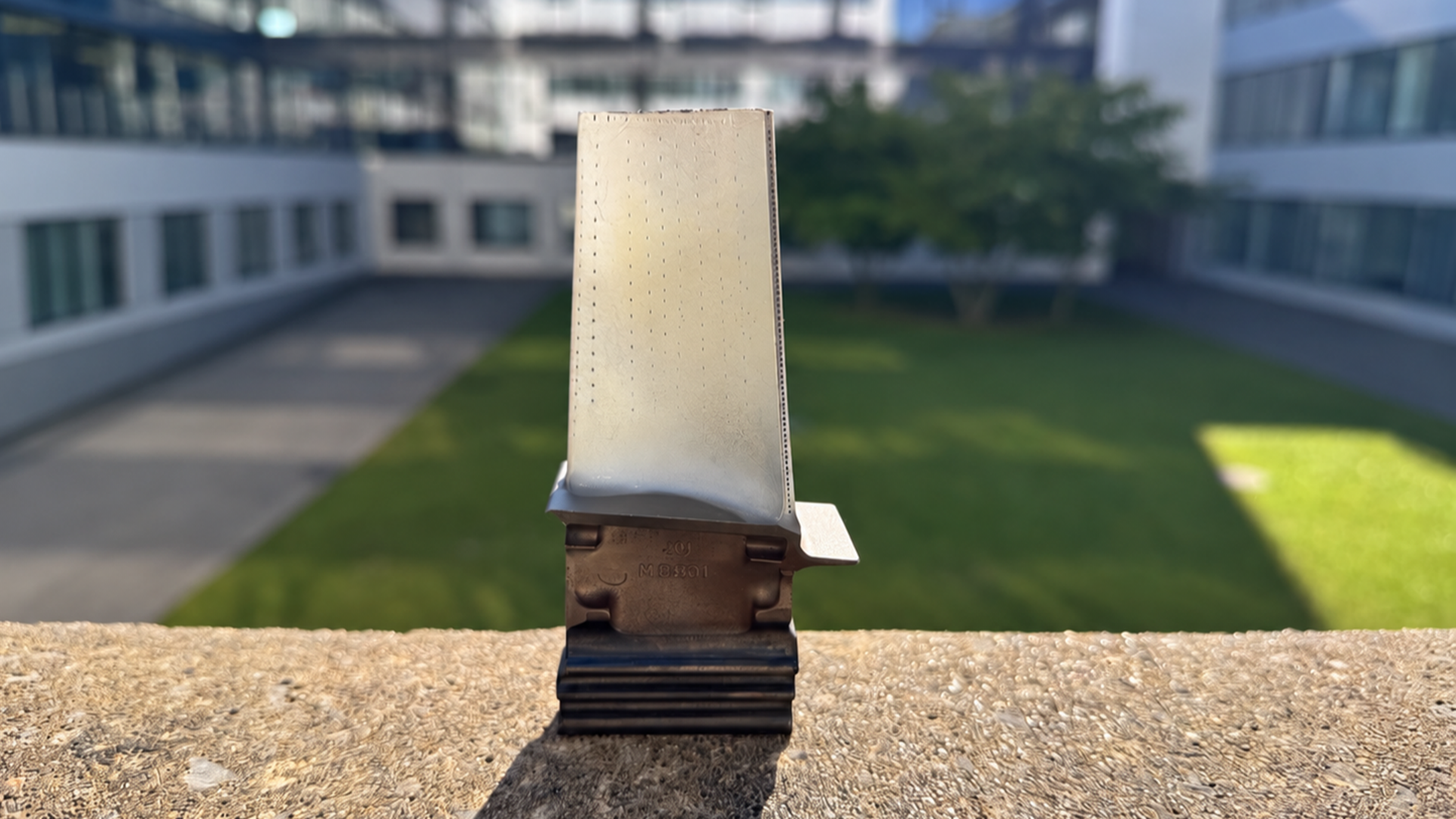
Introduced by scientists at Ruhr University Bochum in Germany, the method uses high-pressure gas and heat to fix microscopic damage inside jet turbine blades. It could reportedly store the blades to their original state after 5,000 flight missions.

According to the team, the novel technology could make the blades suitable for reuse even years after mechanical stress, and exposure at extreme temperatures above 1,832 degrees Fahrenheit (1,000 degrees Celsius).

The initiative is part of a three-year project known as Second_Life, which began in August 2026. It also brings together the German Aerospace Center (DLR), aircraft engine repair specialist Lufthansa Technik, heat and surface treatment company Aalberts Surface Technologies, and metal-processing firm Otto Fuchs.

Restoring turbine blades

Jet engine blades are made to handle extreme temperatures that can sometimes exceed 2,732 degrees Fahrenheit (1,500 degrees Celsius), even above the melting point of the materials themselves. They also withstand rotational speeds of up to 16,000 RPM and enormous centrifugal forces.

They are produced from single-crystal nickel-based superalloys. Their atoms form a continuous crystal structure without grain boundaries, which could weaken the material at high temperatures. However, even these materials degrade.

Over time, the extreme conditions alter the blades’ internal structure and weaken them by creating tiny pores within it. First-stage turbine blades are often replaced after about 5,000 flight missions, equivalent to about three to six years of service.

β€œDuring turbine operation, the blades are subjected to tensile stress caused by rotational centrifugal forces at high temperatures and are damaged by what is known as creep fatigue,” Sebastian Weber, PhD, a researcher at the university, and study co-author, said.

To address the challenge, the scientists turned to a method known as hot isostatic pressing (HIP). The process involves heating damaged components under uniform gas pressure before rapidly cooling them.

It could potentially close the microscopic pores and restore the material’s original structure without destroying its single-crystal properties. β€œThe restoration of the microstructure and mechanical properties is to be achieved through hot isostatic pressing, or HIP for short,” Louis Becker, PhD, another scientist at the university who helped lead the study, added.

Aviation sustainability

To test the technique, the team will first recreate real-world turbine blade damage at the German Aerospace Center. They will expose samples to high temperatures and mechanical stress to induce controlled creep-fatigue damage.

The samples will then undergo hot isostatic pressing at Ruhr University Bochum, where the researchers will determine the best treatment conditions and examine changes in the material’s microstructure. Subsequent mechanical tests will assess whether the treatment can restore the blades’ original performance.

The team’s ultimate goal is to prove that the damaged turbine blades can safely return to service after treatment and recoating. The technology has the potential to reduce the demand for newly produced turbine blades.

β€œBy extending the service life of turbine blades, we can reduce both the demand for newly manufactured components and the associated consumption of energy and raw materials,” Weber concluded in a press release.

πŸ’Ύ

A new process uses high-pressure gas and heat to repair microscopic damage in aircraft turbine blades and restore their original properties.
  •  
❌