Login

Scientists Found a Spider That Pretends to Be Killed by a Zombie Fungus
 Naturalists thought they'd found a spider killed by a parasitic fungus. Then it moved.
 Naturalists thought they'd found a spider killed by a parasitic fungus. Then it moved.
A fossil that sat in a museum collection for over a century is a previously unknown species of predatory dinosaur, researchers have found. The discovery could help scientists solve a longstanding mystery about how some of the Cretaceous period's most formidable hunters spread around the globe.
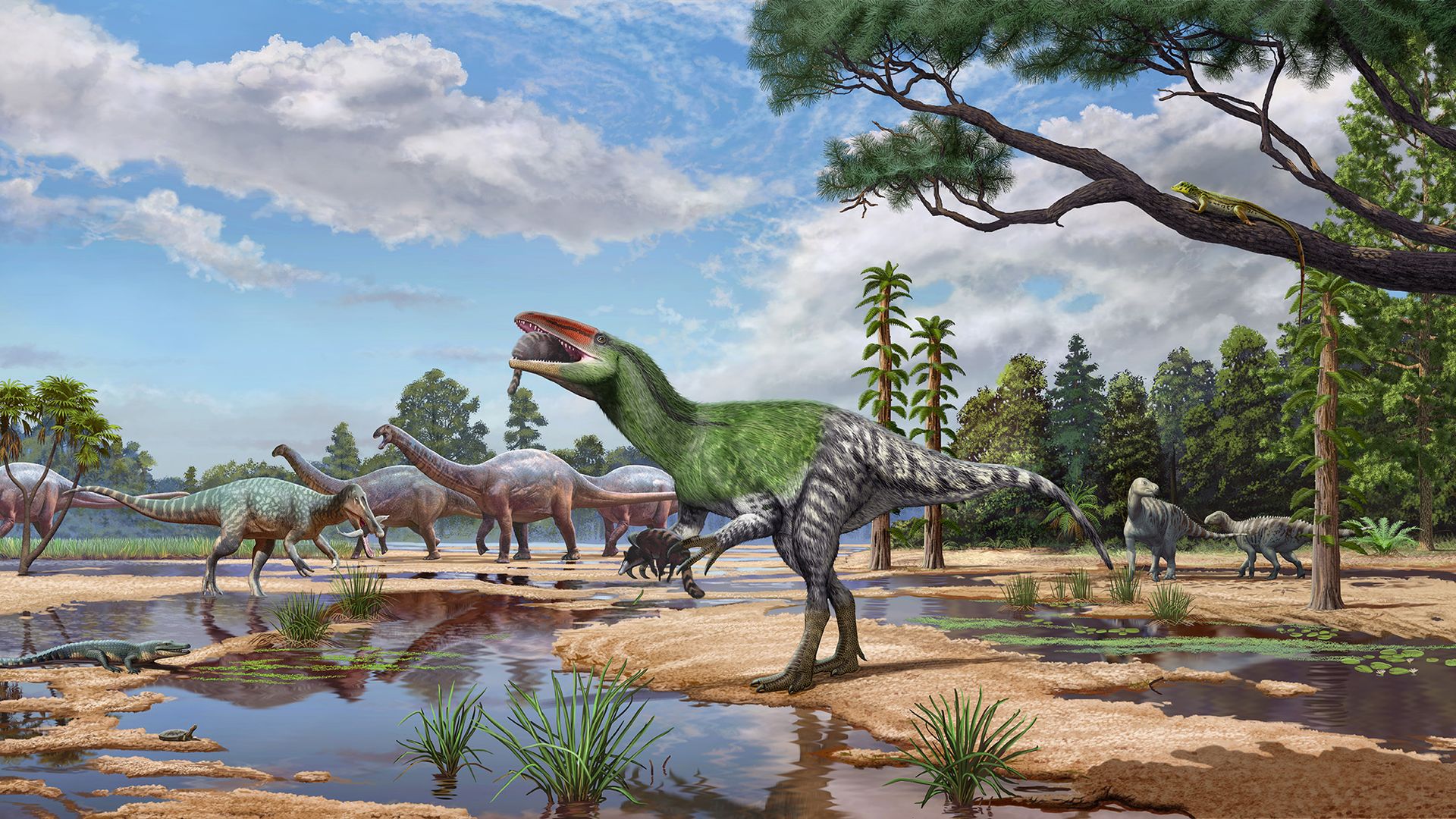
The dinosaur lived on what is now the Isle of Wight in southern England about 120 million years ago. It belonged to a group of two-legged carnivores called megaraptors, which are related to tyrannosaurs. But unlike tyrannousars, megaraptors are thought to have relied on their powerful arms and large curved claws to attack prey and defend themselves.
The newly identified species was described in an Oct. 14 study in the journal Royal Society Open Science. It is the first megaraptor identified in Europe, filling an important gap in the fossil record of a group whose evolutionary history remains poorly understood.
"It is a real mystery that this fossil was overlooked for so long, sitting in a drawer for nearly 100 years," study first author Cassius Morrison, a researcher in the Department of Earth Sciences at University College London (UCL) said in a statement. "Lots of bones are found on the Isle of Wight — who knows what else is waiting to be discovered."
The discovery of the megaraptor began in 1924, when an amateur fossil collector discovered a dinosaur skull fragment on the Isle of Wight. The specimen eventually entered the collections of London's Natural History Museum, but it was largely forgotten.
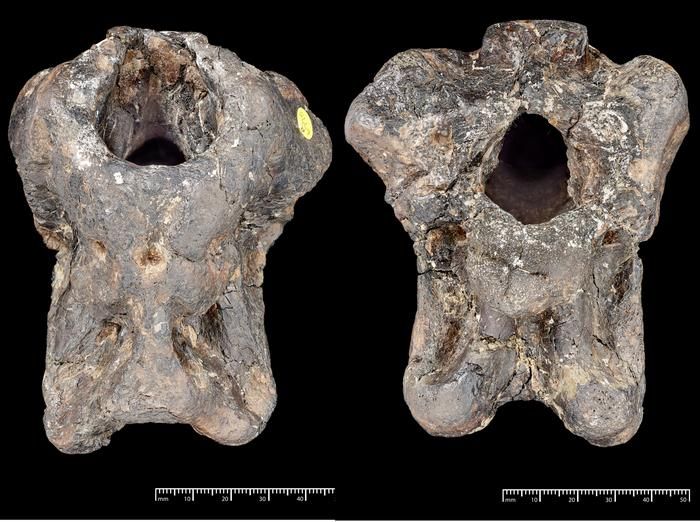
Recently, researchers revisited the fossil as part of a study on dinosaur braincases. To identify the animal, the researchers used micro-CT scanning to examine the fossil's internal structure and build detailed 3D digital models of the space that once held the dinosaur's brain.
The researchers then compared the animal's anatomy with that of other meat-eating dinosaurs, including tyrannosaurs, spinosaurs and other theropods (the group of two-legged, mostly meat-eating dinosaurs). Several features differentiated the unknown specimen, including an almost oval opening where the spinal cord entered the skull and an unusual, hourglass-shaped ridge at the back of the braincase.
Computer-based evolutionary analyses placed the fossils within the Megaraptora family tree, supporting the idea that the skull represented a never-before-seen species. The researchers named the dinosaur Invictibellatrix amberina, combining the Latin words "unconquered" and "female warrior" for the genus name, while amberina refers to amber found in the rocks associated with the fossil.
Megaraptors lived between roughly 125 million and 66 million years ago and varied considerably in size. While early members were relatively small, some later species became enormous predators. Maip macrothorax, discovered in Argentina, may have reached up to 33 feet (10 meters) long and weighed as much as an elephant. Based on comparisons with related dinosaurs, I. amberina was much smaller, likely around 10 to 13 feet (3 to 4 m) long and standing roughly 5 feet (1.5 m) tall. The researchers estimated it weighed around 440 to 660 pounds (200 to 300 kilograms), making it one of the smallest known megaraptors.
"It was not the apex predator of its time, but for humans this dinosaur would have been more dangerous than a T. rex," Morrison said. "We would have been perfectly sized prey, about a third of their body weight. They definitely would have chased us."
Although the newly described fossil doesn't preserve the animal's arms or claws, its closest relative suggests that its claws may have measured around 4 to 8 inches (10 to 20 centimeters) long. The researchers also suggested I. amberina may have been feathered, though that feature can't be determined directly from the specimen.
Scientists have long suspected that megaraptors originated in Asia before spreading to other parts of the world, eventually becoming the dominant predators across the southern supercontinent Gondwana, which included present-day Africa, South America and Antarctica. But a lack of European fossils left an important gap in verifying this migration route.
The new study's evolutionary models suggest that I. amberina descended from Asian megaraptors that dispersed into Europe around 130 million years ago. From there, members of the group may have moved through what is now Africa and further into Gondwana via temporary landbridges and temporary land connections across the shallow Tethys Ocean.
"This new species is the first proof we have that megaraptorans were also present in Europe and that they reached Gondwana this way rather than island-hopping further south," study co-author Charlie Scherer, a doctoral student at UCL Earth Sciences, said in the statement.
However, the specific route these animals took over millions of years is still unknown. The researchers also cannot yet explain why megaraptors disappeared from northern areas, but changes in climate or competition with other predatory dinosaurs may have contributed. More research on other megaraptor fossils like I. amberina could help uncover more clues.
"Work like this shows the exceptional value of working with historical museum collections where there are still many discoveries to be made," study co-author Paul Barrett, a researcher of dinosaur evolution at the Natural History Museum in London, said in the statement.
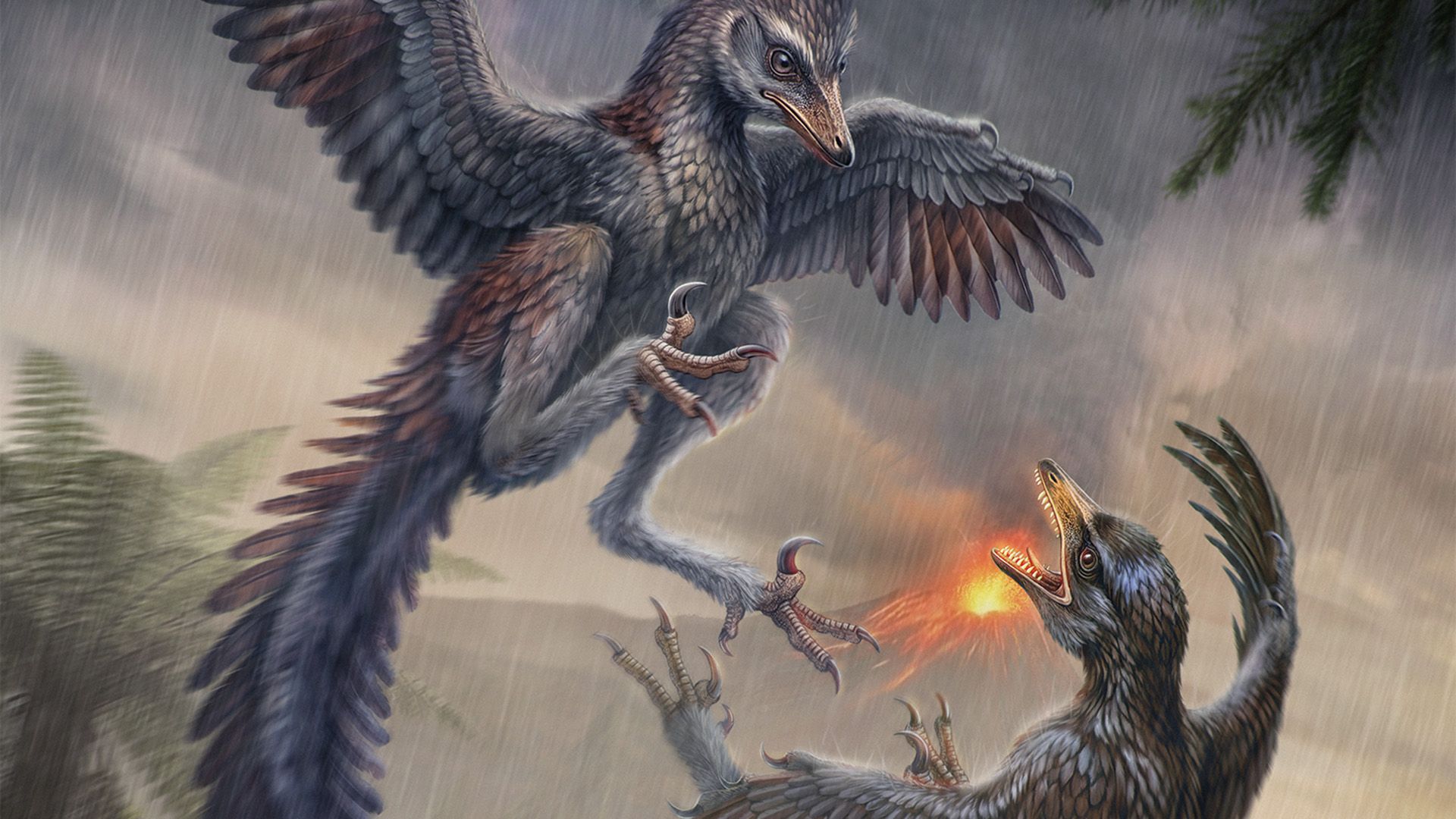
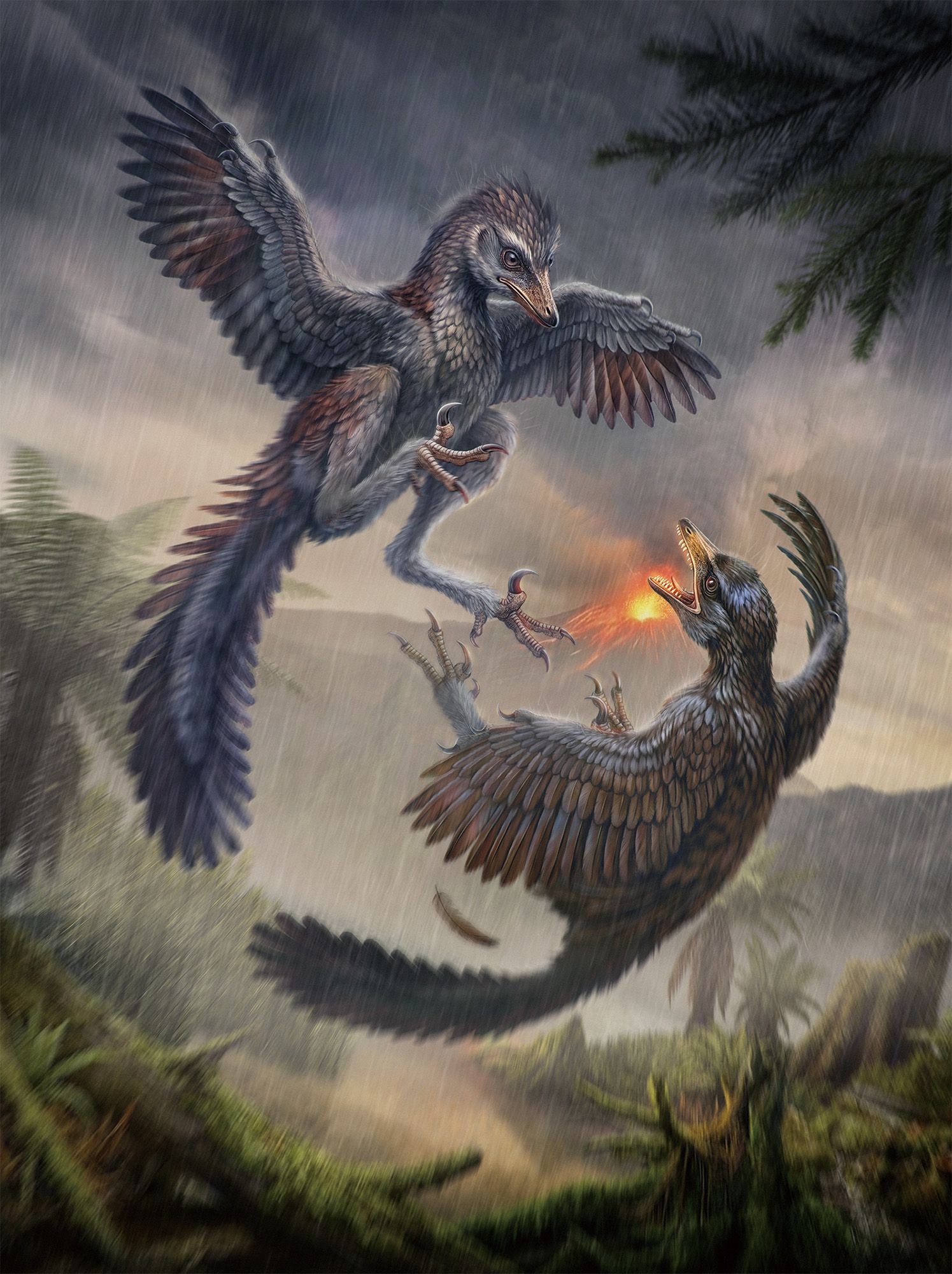
Paleontologists in China have discovered a small Jurassic bird that was likely a land-based predator — like a carnivorous pheasant with killer claws. It had some features of birds and others of dinosaurs, suggesting that the earliest birds had a greater diversity of lifestyles than previously recognized.
Jurassic birds first emerged 150 million to 148 million years ago, and fossils of them are rare, so experts are just starting to understand how early birds diversified and evolved the ability to fly.
The researchers discovered the newly identified Yuezhuornis yangyuanensis in 2024, in the fossil assemblage known as the Upper Jurassic Zhenghe Fauna in southeastern China. It lived 150 million to 148 million years ago, roughly when birds started to appear in the fossil record. The team published their findings Wednesday (Oct. 14) in the journal Nature.
Analysis of the fossilized skeleton revealed the animal was small and weighed about 1.8 pounds (0.8 kilograms). "It was probably as large as a crow," Min Wang, a researcher at the Chinese Academy of Sciences, told Live Science via email.
Y. yangyuanensis had a mix of features seen in birds and predatory Deinonychosauria dinosaurs, such as Velociraptor, which are known for their sickle-shaped toe claws. It had deinonychosaur-like hyperextensible toes, with forelimbs that were roughly one-third shorter than its hind limbs. This is odd because modern birds and many other Jurassic paravians — the group that includes bird-like dinosaurs, including the ancestors of birds as well as modern birds themselves — have long forelimbs, linked to giving wings more lift force for taking off.
Y. yangyuanensis also had slender cranial elements and sparsely spaced teeth. These features, alongside the curved claw-like toes that were capable of securing prey, suggest that the animal's diet included meat.
"Its key anatomical features are the combination of dinosaurs' and birds' features: for instance, its teeth, pectoral gird, and especially the hyperextensible, 'sickle-clawed' second pedal digit are similar to that of dinosaurs," Wang said. Meanwhile, he said its slender cranial bones and bird-like pelvis are comparable to early birds.
This combination of features suggests that "the morphological gap between birds and dinosaurs is much smaller than we thought," he added.
Comparisons with 377 living bird species showed that the limb proportions of Y. yangyuanensis were most similar to those of terrestrial birds.
Wang suggested that Y. yangyuanensis was a flightless bird, but not one specialized to live in trees or wade in the swamps in the region. It was a small carnivore, with similar proportions to a pheasant, that was well adapted for running. "I think there are no directly comparable modern birds," he said.
The mosaic of features hints that Y. yangyuanensis may have occupied an ecological niche that was rarely utilized by early birds, and that there wasn't a systematic progression toward flight optimization, Wang said.
Despite being flightless, Wang and his colleagues place Y. yangyuanensis closer in the evolutionary tree to modern birds than to Archaeopteryx, one of the world's first proto birds, which lived about 150 million years ago and is thought to have been able to fly.
This adds to evidence that "the ability to fly arose not once, but several times among disparate groups of carnivorous dinosaurs that are closely related to birds," wrote Fernando Novas, a paleontologist at the Felix de Azara Natural History Foundation in Buenos Aires, Argentina, who wasn’t involved in the study, in an accompanying article in Nature. This includes flight evolving in early birds and in scansoriopterygid dinosaurs, which had membranous folds like the wings of bats, and the four-winged microraptors. Y. yangyuanensis seems to have taken a different road, eschewing the flying ways of its relatives.
"It highlights the extraordinary breadth of ecological and morphological diversification that took place close to the origins of avialans," Wang said.