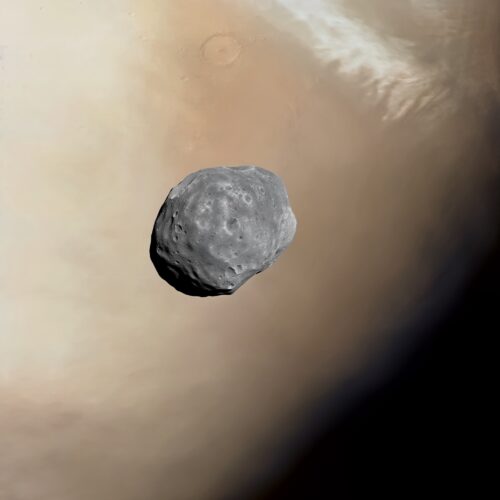
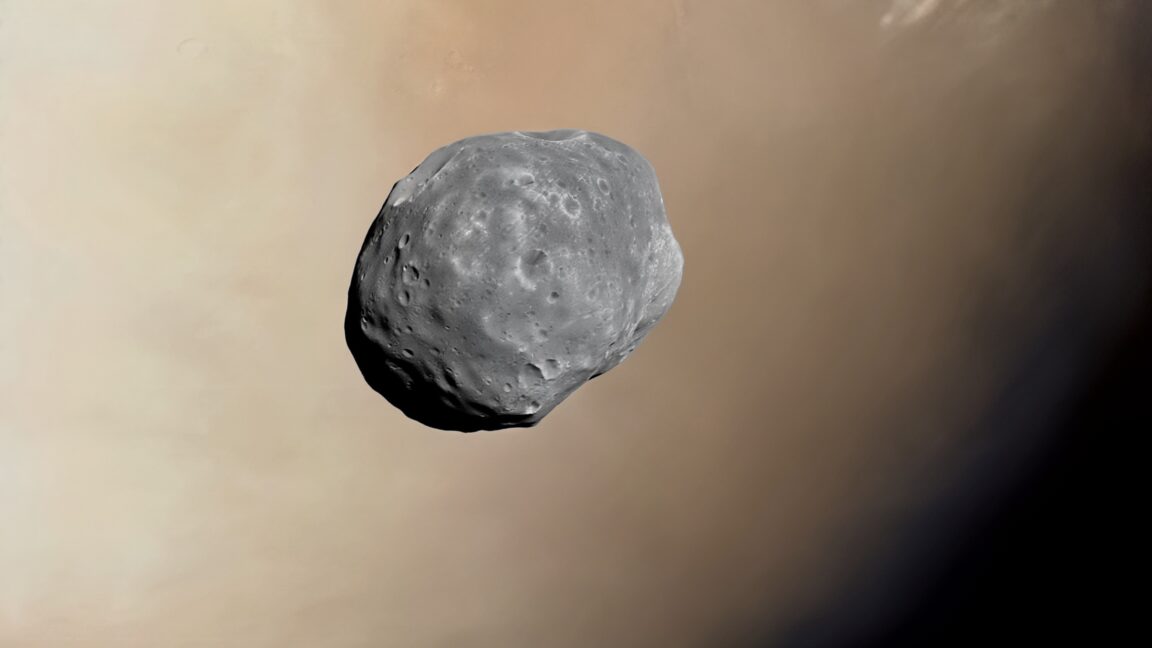
A missão que pode trazer pela primeira vez para a Terra amostras de uma lua de Marte já está a caminho do Planeta Vermelho. A sonda japonesa MMX vai estudar Fobos e recolher amostras da sua superfície. Se tudo correr como planeado, a cápsula com as amostras recolhidas deverá chegar em 2031.
Japan launched a $578 million mission Monday on a five-year expedition to land on the largest moon of Mars and retrieve samples for return to Earth, a daring international project that could yield new insights into the formation of the Solar System.
The robotic Martian Moons eXploration mission, known as MMX, lifted off at 3:41 pm EDT Monday (4:41 am Japan Standard Time Tuesday) from Tanegashima Space Center in southern Japan.
The MMX spacecraft rode into orbit atop a 207-foot-tall (63-meter) H3 rocket, Japan's flagship launch vehicle. The rocket assigned to MMX debuted a new souped-up configuration with four strap-on solid rocket boosters, full-throttle main engines, and an extended payload shroud to accommodate the demands of Japan's heaviest and most ambitious interplanetary mission to date.
Rocket launches this week On Monday, Oct. 19, the Japan Aerospace Exploration Agency (JAXA) successfully launched its Martian Moons eXploration (MMX) mission aboard an H3-24L rocket from Tanegashima Space Center in southern Japan at 3:41 p.m. EDT. MMX will study the martian moons Phobos and Deimos and is designed to return a sample from PhobosContinue reading "Japan sends MMX toward the martian moons"
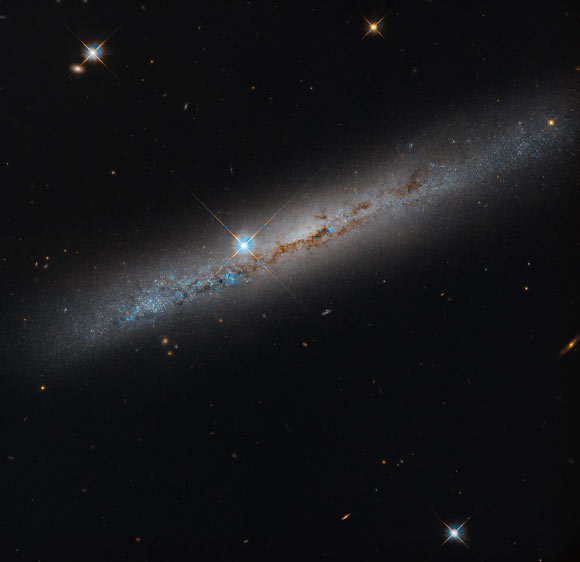
Astronomers using the NASA/ESA Hubble Space Telescope have captured a new view of NGC 1827, an intermediate spiral galaxy seen edge-on in the constellation Columba.
His early Mars expedition called for 70 people, orbital assembly and winged landers. The design reveals how much depended on a planet nobody had visited.
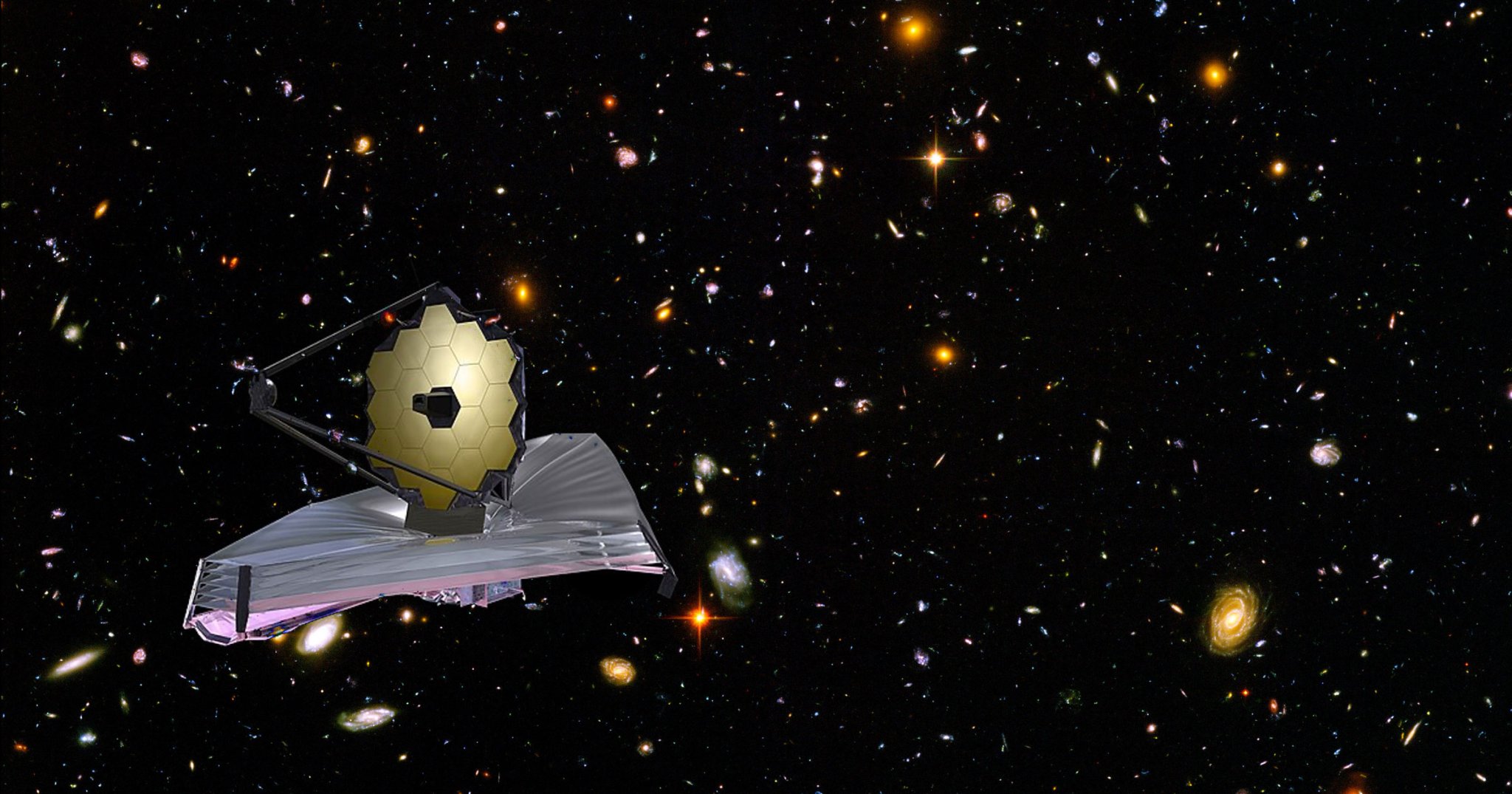
Using the NASA’s James Webb Space Telescope, a team of researchers led by University of Minnesota astrophysicist Mason Huberty had a closer look at a group of almost 10,000 galaxies spanning billions of light-years in the Fornax constellation. As detailed in a new paper published in The Astrophysical Journal, they honed in on a small space in the region that they thought was entirely unoccupied.
But to their astonishment, they observed a single emission line emanating from it — twice over a span of just three months. Emission lines are bright, narrow bands of light emitted at a specific wavelength by distant celestial objects and other phenomena. Puzzlingly, prior observations from the same region didn’t feature the same reading.
Put simply, the JWST stared into the abyss — and the abyss stared back.
Instead of hunting down already known objects, Huberty and his colleagues tried to use the James Webb’s Near-Infrared Spectrograph to uncover new ones, as Science Alert explains. The team examined what they thought was an empty region twice, in August and November 2023, at different angles to rule out any artifacts.
Out of seven total detections of emissions in the region, one stood out because they couldn’t match it to a distant galaxy.
It also stood out as the only near-infrared emission without any other accompanying emission lines near it. It should’ve also shown up in earlier James Webb observations since it’s technically bright enough — but didn’t.
The astronomers offered several possible explanations, none of which “provide a fully satisfactory explanation,” according to their paper. The emission line may have been produced by a galaxy dating back to the earliest days of the Universe. It could’ve also come from a younger galaxy or a supernova, both of which are usually accompanied by other emission lines. Finally, the researchers propose that it could’ve been the result of a black hole devouring a star — a guess that would require plenty of other data to confirm.
“Follow-up observations are essential to confirm the redshift and determine the physical origin of the emission,” the team concluded in their paper. “Deeper, more sensitive spectroscopy could reveal additional emission lines and definitively establish the redshift and nature of the source.”
Most planetary scientists will tell you the heyday of Venus exploration was more than a generation ago. That is about to change.
Two NASA missions are on track to launch to Venus in the early 2030s. The first, known as the Deep Atmosphere Venus Investigation of Noble gases, Chemistry, and Imaging (DAVINCI), is now scheduled for launch in December 2030, a year earlier than previously planned. DAVINCI will send a parachute-assisted descent probe through the atmosphere of Venus, returning the first direct images of the planet's surface since 1982. A second mission, Venus Emissivity, Radio science, InSAR, Topography, And Spectroscopy (VERITAS), will follow with a launch in November 2032 to map the Venusian surface by radar from orbit.
The European Space Agency is building another orbiter, Envision, for launch to Venus in 2032. The Venus armada might get started as soon as next year, when Rocket Lab aims to launch a privately funded probe to search for signs of organic material in the planet's clouds.
On October 11, 2026, NASA’s Perseverance rover reached 45.22 km (28.1 miles), edging past the 45.16 km (28.06 miles) logged by NASA’s Opportunity rover, which explored Mars from 2004 to 2018.
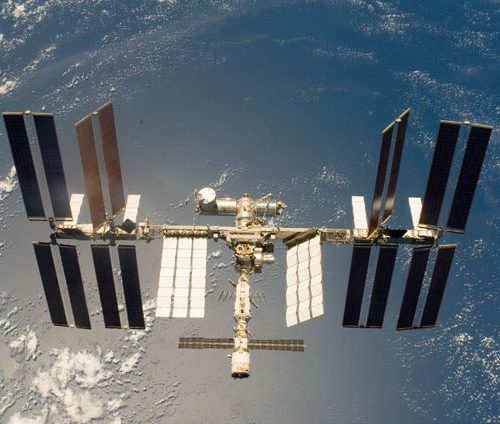
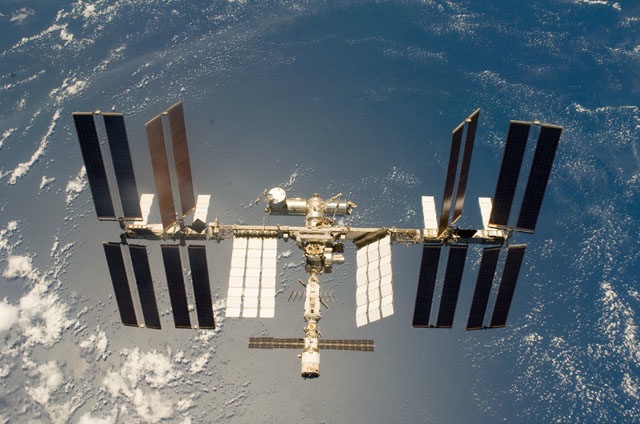
NASA on Friday released a much-anticipated "request" to the US commercial space industry to develop private space stations that, as early as 2030, will succeed the International Space Station as a place for astronauts to live in low-Earth orbit.
In a cover letter accompanying the 360-page "request for proposals," NASA stated its plan: "This will ensure NASA has a sustained human presence in LEO for crew members to perform science and exploration." Several private companies that have worked for years on designing and developing such stations have been keen to learn exactly what capabilities NASA is seeking. These new documents finally provide some answers.
NASA's solicitation can be found here. Industry responses are due back to NASA on December 8. NASA said it plans to select "two or more" contractors in this phase of the competition and intends to make a final decision in April.
It's no surprise that NASA's new tack toward foreign partnerships—good deals only, please—is challenging preconceived notions of international cooperation in space.
Without a massive budget hike, the US space agency's emphasis on building a Moon Base and winning a competition for lunar real estate and resources with China will inevitably leave lesser priorities behind.
Gone is the Lunar Gateway, a space station that was to be assembled in orbit around the Moon. For the United States, Gateway was an unnecessary distraction and expense as NASA goes all-in on placing a surface station near the Moon's south pole.
As a flight director during NASA's Apollo missions, Gerry Griffin led several lunar landings. He helped bring the crew of Apollo 13 safely back to Earth. Later, he directed Johnson Space Center in Houston.
Through these experiences, Griffin learned the value of teamwork in spaceflight—during the dynamic moments that can make or break a successful launch or landing, you absolutely have to trust your colleagues in the trenches.
"When lightning struck the rocket during Apollo 12, we had to react in a hurry," Griffin said in an interview. "With people like John Aaron and Jerry Carr, the trust and communications came through. It made the difference."

 Login