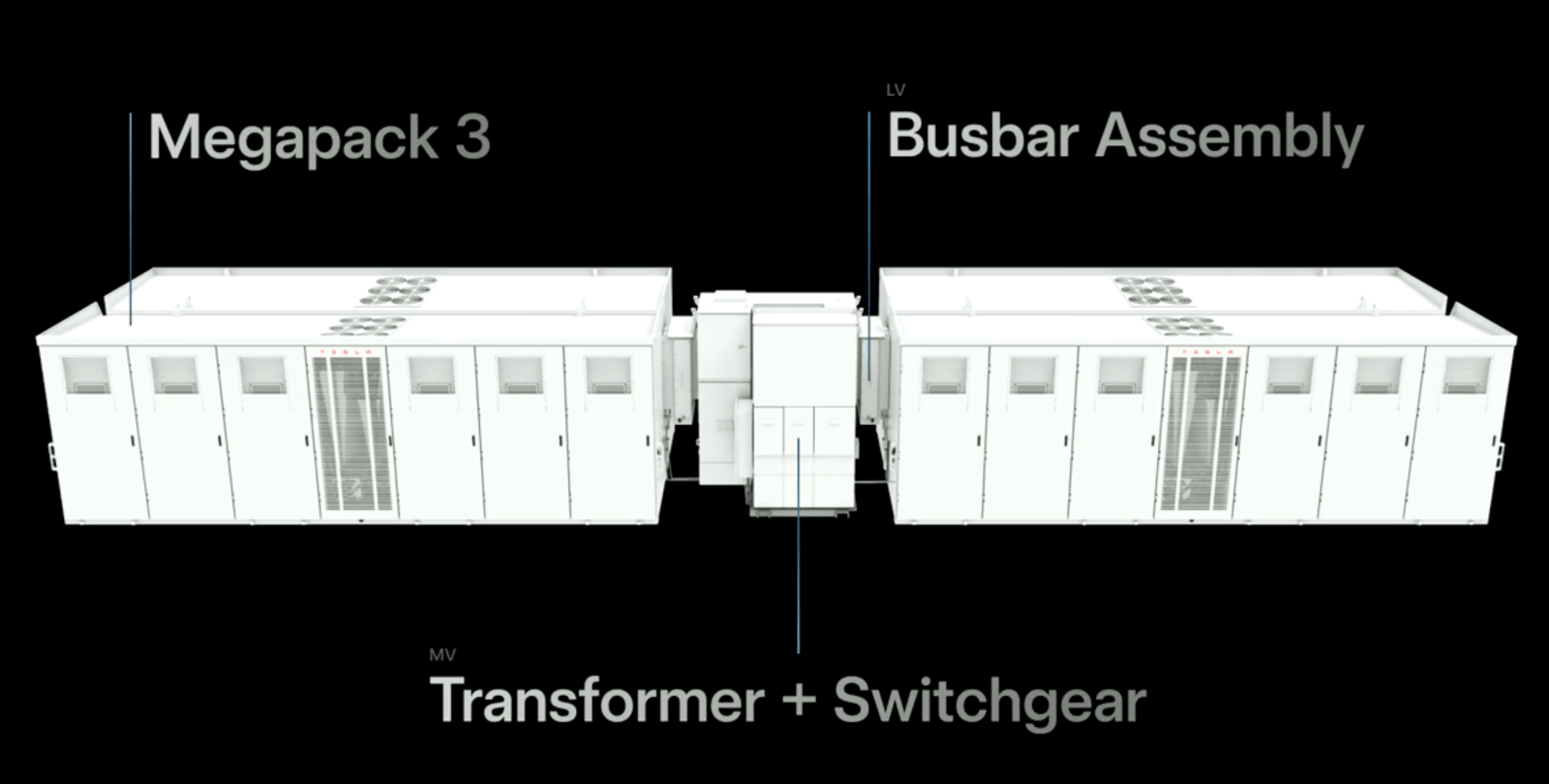
Tesla’s energy business deployed more batteries in Q3 2026 but brought in less money. Energy generation and storage revenue fell 16% year-over-year to $2.88 billion, even though storage deployments rose 10% to 13.7 GWh.
Tesla’s shareholder letter blames the drop “partially” on “tariff-related customer refunds.” It doesn’t say how much it refunded, to which customers, or why it was accounted for as reduced revenue.
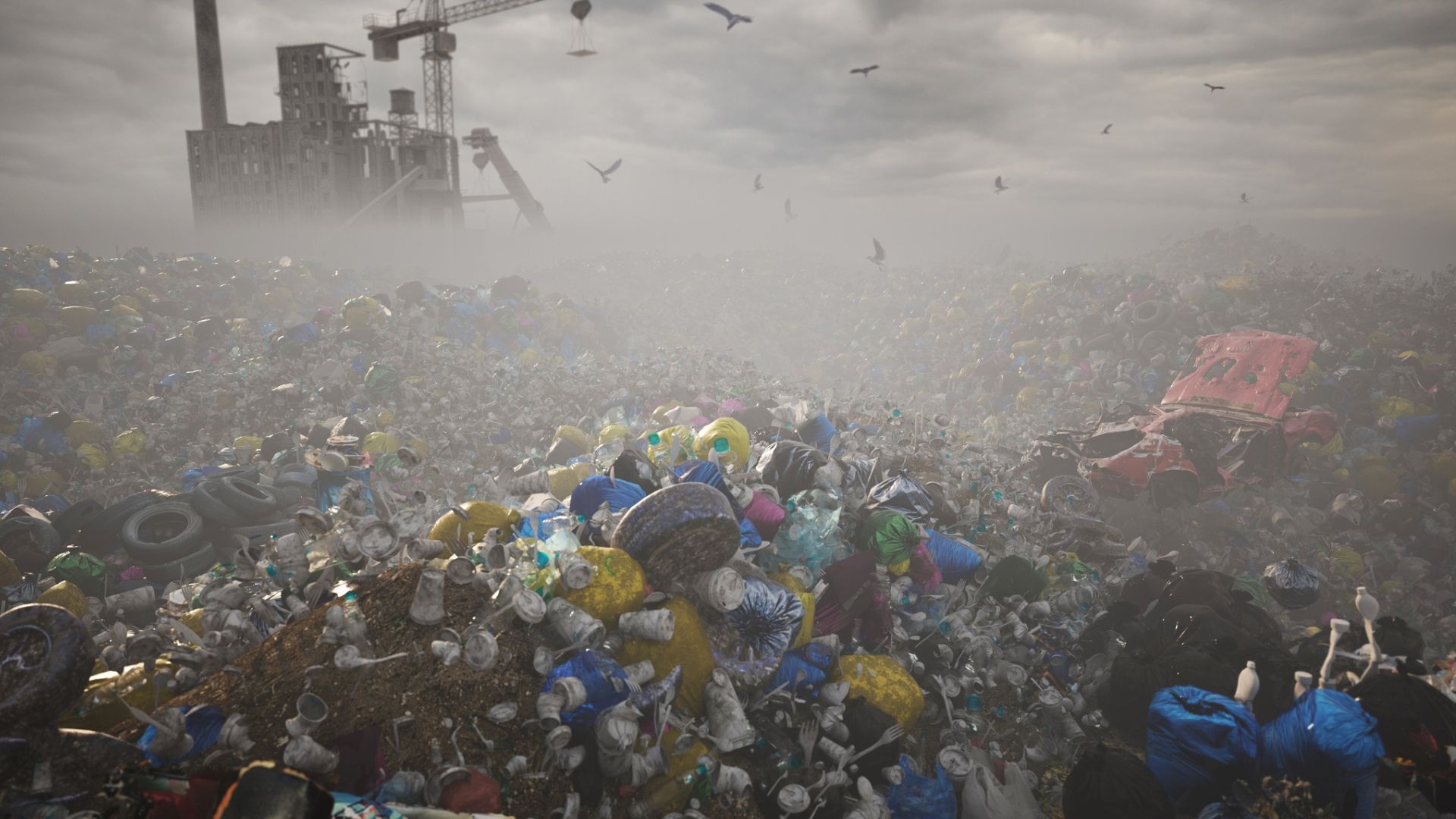
Australian researchers said non-recyclable landfill waste could help produce low-carbon cement.
Using refuse-derived fuel (RDF) to produce cement could help reduce the carbon footprint of the industry, which relies heavily on fossil fuels.
The researchers said clearer standards would be essential to support wider and more responsible use of waste-derived fuels.
Australian researchers said non-recyclable landfill waste could help produce low-carbon cement.
Using refuse-derived fuel (RDF) to produce cement could help reduce the carbon footprint of the industry, which relies heavily on fossil fuels.
Cement manufacturing accounts for an estimated 8% of global carbon dioxide emissions, largely because key ingredients must be fired in massive kilns at extreme temperatures.
Researchers are turning to waste as fuel to decarbonize cement manufacturing.
RDF is made from processed non-recyclable waste. Cement kilns can use these fuels alongside traditional fuels in a process called co-processing.
Waste to fuel
Researchers at the University of Adelaide studied whether fuel made from non-recyclable waste could make cement production cleaner and reduce waste sent to landfills.
They conducted a literature review of more than 200 research articles published between 1991 and July 2025.
The findings showed growing interest in RDF as a way to reduce landfill waste and cut fossil fuel use in cement production.
Based on her analysis, Geethmi Thisakya, a PhD candidate in the School of Civil Engineering and Construction at the university, said that waste management could be linked with industrial decarbonization.
”Previous research has highlighted the potential of refuse-derived fuel to turn suitable waste materials into a useful resource rather than sending them to landfill,” she said.
Need for clear, consistent standards
However, she cautioned that a simple fuel replacement would not suffice.
For RDF to help cut carbon emissions, it will need consistent quality, clear regulations, and stronger evidence of its environmental and economic impacts, the study said.
The study also examined challenges that could affect the use of waste-derived fuels in cement production.
It found widespread confusion between refuse-derived fuel (RDF) and solid recovered fuel (SRF), a more standardized form of waste-derived fuel.
Although both can be used in cement manufacturing, inconsistent terminology and differing quality standards make it difficult to compare studies, interpret regulations, and ensure consistent fuel quality.
The researchers said clearer standards would be essential to support wider and more responsible use of waste-derived fuels.
“Cement manufacturers need confidence that alternative fuels will perform consistently, meet environmental requirements and support safe, reliable production,” Thisakya said.
However, she cautioned that more work is needed before the cement industry can confirm RDF as a reliable alternative to fossil fuels.
”Developing stronger quality assurance systems and clearer regulatory frameworks will help industry make informed decisions about using waste-derived fuels.”
The findings were published in the International Journal of Building Pathology and Adaptation.
Meanwhile, scientists at ETH Zurich are turning to some of the smallest living organisms on Earth to build sustainable cities, using biocement as an alternative to reduce the industry’s carbon footprint.
Researchers developed a 3D bio-printing process for biocement elements using a custom bio-ink made of water, natural gums, sand, and live bacteria.
In a second approach, they use a robotic arm to spray alternating layers of sand, bacteria, and mineralizing agents onto surfaces to produce biocement.
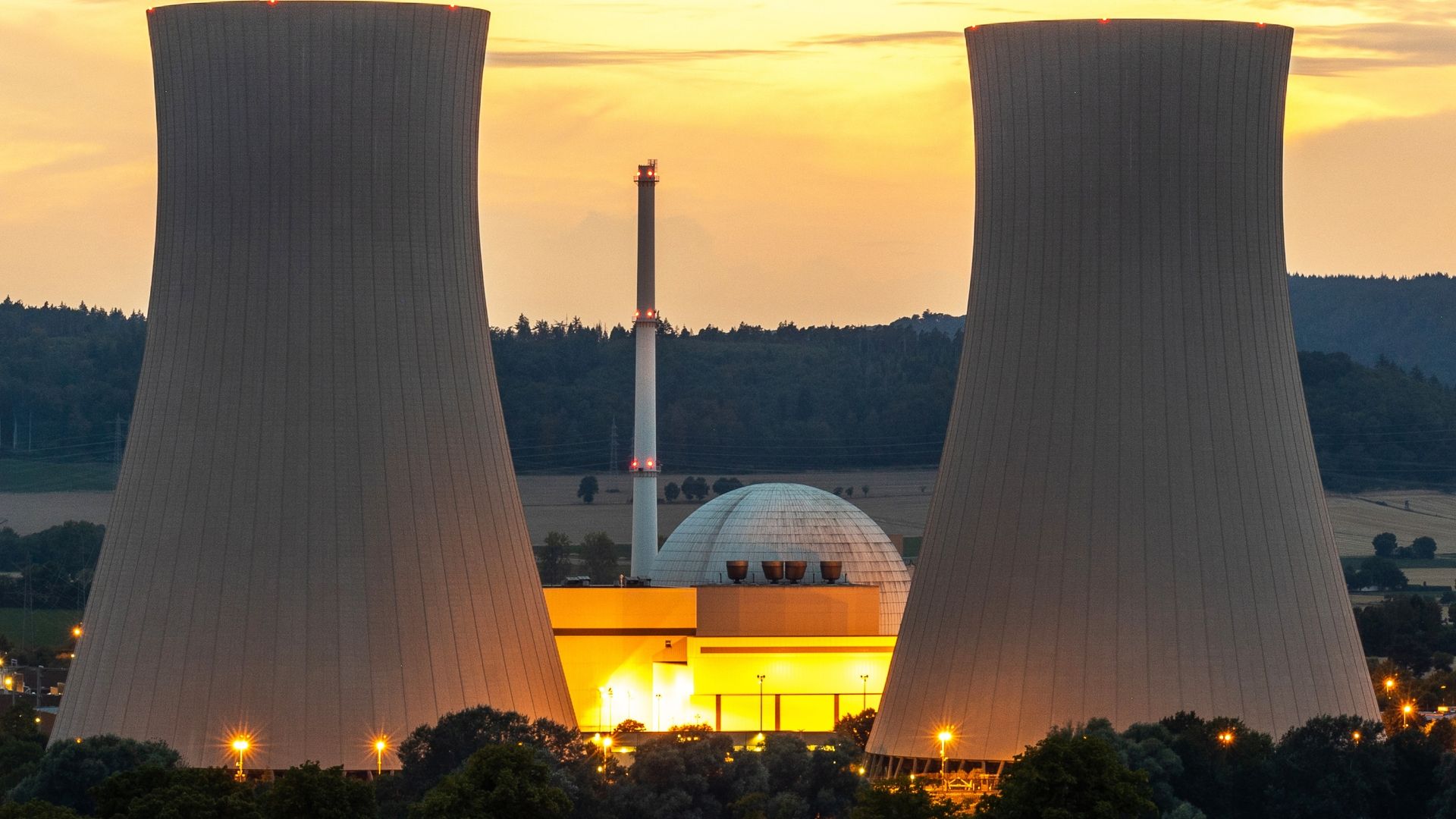
The United States is eyeing eight nuclear power plants with a combined capacity of 6 gigawatts (GW) that would be refueled on power, eliminating plant shutdowns and enabling continuous operation.
According to a press statement, the eight sites would adopt Canadian reactor designs based on CANDU (Canada Deuterium Uranium) technology.
Unlike conventional reactors that are fueled by enriched uranium, the CANDU reactors are fueled by natural uranium. They use heavy water (deuterium oxide) as moderator and coolant and are designed for large-scale electricity generation.
Replacing gas plants
To evaluate deployment scenarios for the project, the State of Indiana, Hoosier Energy Rural Electric Cooperative, and AtkinsRéalis Group, a Canadian company that holds the manufacturing and licensing rights for CANDU technology, signed a memorandum of understanding Monday.
The agreement follows the nuclear company’s letter of intent, submitted in June this year to the US Nuclear Regulatory Commission, to begin licensing its technology in the USA.
”This collaboration demonstrates the value of working with our American partners to address shared energy challenges and explore solutions that strengthen energy security, support skilled jobs and deliver lasting benefits to communities in the state,” said Joe St Julian, President, Nuclear, at AtkinsRéalis.
According to the MoU, the evaluation would consider a potential gas-to-nuclear construction model to accelerate the deployment of new nuclear power capacity. This means existing gas power sites, including those that have been retired or are expected to close soon, would also be considered for conversion rather than starting from scratch.
No project timeline
However, the US government has not yet announced any potential project timeline.
Multiple factors, including site selection, financing, utility or offtake arrangements, applicable regulatory and licensing activities, environmental review, transmission and interconnection planning, community and stakeholder engagement, and other diligence and approvals, are likely to influence the project timeline, the MoU stated.
If built, the project would strengthen grid resilience and energy security, while providing reliable, affordable, and environmentally sustainable electricity to American homes and industries.
The first CANDU reactor came online at Rolphinton, Ontario, in 1962 with a gross capacity of only 25 MWe. Since then, the technology has come a long way.
The company has built nearly 34 units worldwide, nearly half of which are in Canada. Other reactors operated by the nuclear company are located in Romania, Argentina, South Korea, and China.
Earlier this week, Amazon backed plans for a 960-megawatt nuclear power facility in Indiana that could house 12 small modular reactors (SMRs) at the site of a former coal-fired power plant.
The design for the project uses TRISO fuel, which contains uranium particles surrounded by several protective layers, including high-temperature ceramic materials. These layers are designed to retain radioactive materials even under extreme operating conditions.
The Northern suburbs of Toledo, Ohio turned into a real life Don DeLillo novel overnight, after an explosion at a chemical facility sent plumes of industrial compounds billowing into the sky.
According to the local station WTOL11, the blast happened at a chemical distribution site in Ohio’s Lucas County on Tuesday night, prompting an immediate evacuation order for anybody living within one mile of the disaster zone. Those within three miles were given an order to shelter in place.
In a press conference on Wednesday, city emergency officials explained that the leaking chemical exhaust is glycidyl methacrylate, an industrial manufacturing chemical broadly suspected to be carcinogenic to humans.
Maps show numerous residential neighborhoods in the immediate vicinity, the closest being a trailer park just 0.25 miles as the crow flies from the site of the chemical explosion. The nearby Ottawa river, a tributary of Lake Erie, is situated under a half mile to the South.
Complicating matters for first responders and any broader evacuation order is the onset of a fog alert, which combined with the hazmat emergency has turned Toledo into America’s apocalypse zone du jour.
Images circulated by WTOL11 on Facebook show the cataclysmic scenes unfolding across the city, with commenters expressing confusion over whether the clouds of haze were caused by the airborne chemical leak, the fog, or a noxious mix of both.
“I can’t see out my window,” one Toledo resident wrote. “Should I and my dog leave?”
Scientists have developed a new material that helps a costly catalyst survive for thousands of hours while producing hydrogen from water. The advance could address one of the problems holding back a promising method of making low-emission hydrogen. Researchers at Tohoku University designed a structure that keeps tiny particles of iridium firmly in place and […]
A new study suggests that hydrogen could be produced from natural gas while capturing most of the carbon dioxide generated during the process. In detailed computer models, some designs captured between 90% and 99% of those emissions. Researchers at the University of Manchester assessed a technology called chemical looping reforming. Their work, published in Carbon […]
Lithium and sodium are neighbours in the periodic table. Both are alkali metals, both have a single electron in their outer shell, and both can be used to shuttle ions between two electrodes to store and release electrical energy. At first sight, replacing lithium with sodium in a rechargeable battery might therefore seem straightforward.
There are good reasons to try. Sodium is widely available and sodium-ion batteries can rely on electrode materials containing abundant elements such as iron and manganese. But chemical similarity does not mean electrochemical equivalence. A sodium ion is larger and heavier than a lithium ion, and its interaction with the materials surrounding it is different. As a consequence, replacing Li+ with Na+ changes much more than the identity of the charge carrier.
The electrodes have to accommodate a different ion. Their structures may respond differently as sodium is inserted and removed. The electrolyte has to transport and solvate it. New interfaces form between the electrolyte and the electrodes. Even graphite, the standard anode material of most commercial lithium-ion batteries, does not store sodium under conventional conditions nearly as effectively as it stores lithium 1.
A sodium-ion battery is therefore not simply a lithium-ion battery containing a different element. Understanding why requires looking at what happens to sodium once it enters the battery.
Graphite does not play by the same rules
Charging a conventional lithium-ion battery involves moving lithium ions from the positive electrode through the electrolyte and storing them in the negative electrode. Graphite is particularly good at this job. Its carbon atoms are arranged in sheets, and lithium can reversibly occupy the spaces between them, a process known as intercalation. It would be convenient if sodium behaved in the same way. It largely does not.
The poor ability of conventional graphite to accommodate sodium has long been one of the reasons why lithium-ion concepts cannot simply be transferred to sodium-ion batteries. Instead, one of the most widely studied negative-electrode materials is hard carbon 2.
Hard carbon is still carbon, but structurally it is very different from graphite. Rather than a regular stack of extended carbon sheets, it contains disordered graphitic domains, defects and pores. This disordered architecture provides environments in which sodium can be stored, but it also makes the underlying mechanism considerably harder to describe.
Where exactly does the sodium go? Researchers have proposed contributions from adsorption at defects and surfaces, insertion between graphitic layers and storage associated with nanopores. The relative importance of these mechanisms depends on the structure and microstructure of the carbon. This is more than a microscopic detail: where and how sodium is stored determines the voltage profile, reversible capacity, first-cycle losses and, ultimately, the energy that a complete cell can deliver.
Researchers at CIC energiGUNE and collaborators have studied this connection between charge-storage mechanisms, carbon structure and electrochemical performance 3. Their analysis highlights an important point: maximizing the amount of sodium that an anode can store is not enough. The potential at which that storage occurs and the irreversible losses during the first cycle are equally important when the material is incorporated into a full battery.
The problem is therefore not simply to find a carbon that accommodates more sodium. It is to understand how its structure stores sodium and then engineer that structure so that capacity, voltage and efficiency improve together. This has led researchers to explore different ways of controlling hard-carbon structure, including the use of lignocellulosic biomass as a precursor. Work has shown that even apparently simple processing decisions, such as acid treatment of the biomass precursor, can affect the resulting carbon and its behaviour as a sodium-ion anode 4.
And the negative electrode is only half of the problem. At the positive electrode, sodium ions have to repeatedly leave and re-enter a solid structure. Layered transition-metal oxides are attractive candidates because sodium can be reversibly extracted from and inserted into spaces between layers of metal and oxygen atoms. Compositions based on relatively abundant elements such as iron and manganese are particularly interesting 5.
Again, however, accommodating sodium is not enough. The host structure has to survive the process. A useful example is the layered oxide P2-Na₂/₃[Fe₁/₂Mn₁/₂]O₂, investigated by researchers from CIC energiGUNE and collaborators 6. The material can provide high capacity, but its long-term stability strongly depends on the voltage range over which it is operated.
This produces a familiar battery dilemma. Increasing the operating voltage can increase the amount of energy extracted from a material. But pushing the electrode further can also trigger structural transformations that make subsequent cycles less reversible.
The researchers compared cells operating in different voltage windows and combined electrochemical measurements with structural characterization and theoretical calculations. Above approximately 4.0 V versus Na+/Na, the cathode undergoes a high-voltage phase transition. Avoiding this transition improves capacity retention, revealing a direct connection between the structural state of the electrode and its long-term electrochemical behaviour.
Changing the chemical composition can also alter this structural response. In another study, researchers investigated the effect of introducing titanium into sodium manganese-rich layered oxides 7. A certain degree of Ti substitution helped the crystal structure accommodate electrochemically induced strain. Too little was insufficient to stabilize it, while further substitution introduced other destabilizing effects.
Other studies have approached the same problem from a different angle, examining how the precise stoichiometry of P2 layered oxides affects their performance 8, or following their structural evolution under different current rates and dopants using operando techniques 9. The lesson is that there is no single property called “a good sodium cathode”. Composition, atomic arrangement, voltage and cycling conditions are interconnected. Even an element that does not directly provide the stored charge can determine how well the electrode survives sodium repeatedly moving through its structure.
A different chemistry
Layered oxides are not the only possible positive electrodes. Sodium chemistry allows other structural families to be explored.
One particularly instructive example is NaFePO₄, the sodium analogue of the well-known lithium iron phosphate chemistry. Researchers involving CIC energiGUNE have used in situ X-ray diffraction to follow how NaFePO₄ changes during sodium insertion and extraction 10. They have also shown that the reaction mechanism itself depends on how rapidly the electrode is charged or discharged 11.
This is a subtle but important point. We often describe an electrode material as if it had a fixed reaction mechanism. In practice, what happens inside it can depend on how the battery is operated. Computational work has gone further by investigating sodium diffusion in NaₓFePO₄ 12. Combining experiments and modelling in this way makes it possible to connect what is observed at the battery level with the motion of ions through an atomic structure.
But even understanding both electrodes is not enough. Between them lies the electrolyte, and the sodium ion spends much of its journey there. It becomes surrounded by solvent molecules, travels across the cell and eventually reaches an electrode surface. At that interface the electrolyte can decompose, producing a solid-electrolyte interphase, or SEI.
This apparently thin layer can have a disproportionate influence on battery behaviour. Researchers at CIC energiGUNE have investigated both the composition and evolution of the SEI in sodium-ion electrodes 13 and, more broadly, the relationship between electrode-electrolyte interphases, transport properties and electrochemical performance in non-aqueous sodium-ion batteries 14.
The interface illustrates particularly well why changing lithium for sodium is not a simple substitution. The chemistry of the ion influences its solvation, its transport and the decomposition reactions that occur when it reaches an electrode. A material that can reversibly store sodium may still perform poorly if the interface around it continuously consumes electrolyte or sodium during cycling.
This is why sodium-ion research has to consider the cell as a system. Graphite may have to give way to hard carbon. Positive electrodes require structures able to tolerate repeated sodium insertion and extraction. Electrolytes and additives have to create suitable transport conditions and stable interfaces.
And every attempt to solve one of these problems can affect the others.
Sodium is not the new lithium
Lithium has a fundamental advantage that materials engineering cannot simply remove: it is the lightest metal and has a very low electrochemical potential. Sodium is heavier and its electrochemical potential is less favourable, placing intrinsic constraints on the gravimetric energy density that sodium-ion batteries can reach.
That does not necessarily make sodium a worse battery chemistry. Energy density is only one parameter of an electrochemical storage system. Cost, raw-material availability, lifetime, power, safety and operating temperature can become equally important depending on the application. A battery designed for a mobile phone, an electric vehicle or stationary storage does not necessarily have to optimize the same variables. And sodium chemistry itself offers several possible ways of balancing them.
CIC energiGUNE researchers have explored, for example, low-cost phosphate-based cathodes for aqueous sodium-ion batteries 15, Prussian Blue compounds as positive electrodes in aqueous systems 16, alternative sodium layered oxides [5,8,9], hard-carbon anodes [2,3,4] and even materials such as NaTiOPO₄ designed to modify or potentially avoid some of the interfacial problems normally associated with sodium-ion anodes 17.
These are not different routes towards exactly the same battery. They represent different ways of deciding which compromises are acceptable.
This changes the original question. The relevant challenge may not be how to make sodium behave as much like lithium as possible. Research on hard carbons shows that sodium may require a different type of host structure. Work on layered oxides shows that extracting more energy from an electrode can alter its structure and compromise its stability. Studies of NaFePO₄ show that the reaction pathway itself can depend on cycling conditions. And research on interfaces shows that storing sodium reversibly is only part of the problem: the chemistry taking place around the active material matters as well.
Sodium-ion batteries are therefore not lithium-ion batteries in which one element has simply been exchanged for another. Changing the ion changes the materials that host it, the structures they adopt, the reactions they undergo and the interfaces they form.
Sodium may not need to beat lithium at its own game. The more interesting question is whether understanding its different chemistry will allow us to play a different one.
The BRTA is a consortium that remains a step ahead of future socio-economic challenges worldwide and in the Basque Autonomous Community; it addresses them through research and technological development, thus projecting itself internationally. The BRTA centres collaborate to generate knowledge and transfer it to Basque society and industry so as to make them more innovative and competitive. The BRTA is an alliance of 17 R&D centres and cooperative research centres with the support of the Basque Government, the SPRI and the Chartered Provincial Councils of Araba, Bizkaia and Gipuzkoa.
References
Muñoz-Márquez, M. A., Saurel, D., Gómez-Cámer, J. L., Casas-Cabanas, M., Castillo-Martínez, E. & Rojo, T. Na-Ion Batteries for Large Scale Applications: A Review on Anode Materials and Solid Electrolyte Interphase Formation. Advanced Energy Materials 7, 1700463 (2017). DOI: 10.1002/aenm.201700463. ↩
Xiao, B., Rojo, T. & Li, X. Hard Carbon as Sodium-Ion Battery Anodes: Progress and Challenges. ChemSusChem 12, 133–144 (2019). DOI: 10.1002/cssc.201801879. ↩
Saurel, D., Orayech, B., Xiao, B., Carriazo, D., Li, X. & Rojo, T. From Charge Storage Mechanism to Performance: A Roadmap toward High Specific Energy Sodium-Ion Batteries through Carbon Anode Optimization. Advanced Energy Materials 8, 1703268 (2018). DOI: 10.1002/aenm.201703268. ↩
Dou, X., Hasa, I., Saurel, D., Jauregui, M., Buchholz, D., Rojo, T. & Passerini, S. Impact of the Acid Treatment on Lignocellulosic Biomass Hard Carbon for Sodium-Ion Battery Anodes. ChemSusChem 11, 3276–3285 (2018). DOI: 10.1002/cssc.201801148. ↩
Gonzalo, E., Zarrabeitia, M., Drewett, N. E., López del Amo, J. M. & Rojo, T. Sodium manganese-rich layered oxides: Potential candidates as positive electrode for Sodium-ion batteries. Energy Storage Materials 34, 682–707 (2021). DOI: 10.1016/j.ensm.2020.10.010. ↩
Zarrabeitia, M., Nobili, F., Lakuntza, O., Carrasco, J., Rojo, T., Casas-Cabanas, M. & Muñoz-Márquez, M. A. Role of the voltage window on the capacity retention of P2-Na₂/₃[Fe₁/₂Mn₁/₂]O₂ cathode material for rechargeable sodium-ion batteries. Communications Chemistry 5, 11 (2022). DOI: 10.1038/s42004-022-00628-0. ↩
Zarrabeitia, M. et al. Unraveling the role of Ti in the stability of positive layered oxide electrodes for rechargeable Na-ion batteries. Journal of Materials Chemistry A 7, 14169–14179 (2019). DOI: 10.1039/C9TA02710F. ↩
Ortiz-Vitoriano, N. et al. High performance P2 sodium layered oxides: an in-depth study into the effect of rationally selected stoichiometry. Journal of Materials Chemistry A 7, 21812–21826 (2019). DOI: 10.1039/C9TA07346A. ↩
Stansby, J. H. et al. Dopant and Current Rate Dependence on the Structural Evolution of P2-Na₂/₃Mn₀.₈Zn₀.₁M₀.₁O₂ (M = Cu, Ti): An Operando Study. Chemistry–Methods 1, 295–304 (2021). DOI: 10.1002/cmtd.202000075. ↩
Galceran, M., Saurel, D., Acebedo, B., Roddatis, V. V., Martin, E., Rojo, T. & Casas-Cabanas, M. The mechanism of NaFePO₄ (de)sodiation determined by in situ X-ray diffraction. Physical Chemistry Chemical Physics 16, 8837–8842 (2014). DOI: 10.1039/C4CP01089B. ↩
Saurel, D., Galceran, M., Reynaud, M., Anne, H. & Casas-Cabanas, M. Rate dependence of the reaction mechanism in olivine NaFePO₄ Na-ion cathode material. International Journal of Energy Research 42, 3258–3265 (2018). DOI: 10.1002/er.4078. ↩
Bonilla, M. R., Lozano, A., Escribano, B., Carrasco, J. & Akhmatskaya, E. Revealing the Mechanism of Sodium Diffusion in NaₓFePO₄ Using an Improved Force Field. The Journal of Physical Chemistry C 122, 8065–8075 (2018). DOI: 10.1021/acs.jpcc.8b00230. ↩
Muñoz-Márquez, M. A., Zarrabeitia, M., Castillo-Martínez, E., Eguía-Barrio, A., Rojo, T. & Casas-Cabanas, M. Composition and Evolution of the Solid-Electrolyte Interphase in Na₂Ti₃O₇ Electrodes for Na-Ion Batteries: XPS and Auger Parameter Analysis. ACS Applied Materials & Interfaces 7, 7801–7808 (2015). DOI: 10.1021/acsami.5b01375. ↩
Muñoz-Márquez, M. A., Zarrabeitia, M., Passerini, S. & Rojo, T. Structure, Composition, Transport Properties, and Electrochemical Performance of the Electrode-Electrolyte Interphase in Non-Aqueous Na-Ion Batteries. Advanced Materials Interfaces 9, 2101773 (2022). DOI: 10.1002/admi.202101773. ↩
Fernández-Ropero, A. J., Zarrabeitia, M., Reynaud, M., Rojo, T. & Casas-Cabanas, M. Toward Safe and Sustainable Batteries: Na₄Fe₃(PO₄)₂P₂O₇ as a Low-Cost Cathode for Rechargeable Aqueous Na-Ion Batteries. The Journal of Physical Chemistry C 122, 133–142 (2018). DOI: 10.1021/acs.jpcc.7b09803. ↩
Fernández-Ropero, A. J., Piernas-Muñoz, M. J., Castillo-Martínez, E., Rojo, T. & Casas-Cabanas, M. Electrochemical characterization of NaFe₂(CN)₆ Prussian Blue as positive electrode for aqueous sodium-ion batteries. Electrochimica Acta 210, 352–357 (2016). DOI: 10.1016/j.electacta.2016.05.176. ↩
Galceran, M., Rikarte, J., Zarrabeitia, M., Pujol, M. C., Aguiló, M. & Casas-Cabanas, M. Investigation of NaTiOPO₄ as Anode for Sodium-Ion Batteries: A Solid Electrolyte Interphase Free Material? ACS Applied Energy Materials 2, 1923–1931 (2019). DOI: 10.1021/acsaem.8b02040. ↩
The project will lessen the country’s dependence on imported energy, though environmental advocates say it undercuts a pledge to reduce carbon emissions.
Scrubbing Earth of per- and polyfluoroalkyl substances—a.k.a. PFAS or forever chemicals—could eliminate a list of woes for people and planet. Used for decades in everything from nonstick pans to firefighting foams, PFAS have been linked to increased risks of fertility challenges, developmental delays, cancer, and reduced immune response. They are known for a strong bond between carbon and fluorine, which the environment struggles to break down.
The sticking points
PFAS are everywhere: They spew from factories and slough off products and into water with normal use. Scientists have found them in everything from human blood to Antarctic snow. One 2022 report found that 89% of the US population had PFAS in excess of two nanograms per milliliter of blood plasma, a common threshold for potential adverse health effects, and 9% of the population had passed the riskier level of 20 nanograms per milliliter.
The PFAS monster is also a moving target. New compounds are still being created and used. There are more than 12,000 of them, and much of the cleanup research focuses on only a small handful.
The progress
Cleansing PFAS-contaminated soil is a project in its infancy, but it is possible to prevent more buildup by pulling the chemicals out of water systems. There are two ways to handle this: trap or destroy. Some scientists have found reverse osmosis—a process that pushes water through supertight filters—useful in point-of-use cases, like water filters at kitchen sinks.
Other techniques in the pipeline might be more suitable for large-scale removal—for example, at water treatment facilities. One, called foam fractionation, generates bubbles that capture PFAS. More approaches, like ensnaring the chemicals in nanothin layers of charged metal, are also under investigation.
Trapping, though, is imperfect. You’re left with PFAS-filled brine, which if not properly destroyed (an expensive and energy-sucking endeavor) can still end up in the environment.
Jack Huang, a professor of crop and soil sciences at the University of Georgia, is working on destruction. He’s testing a method called electrochemical degradation, which uses electrodes to break down the bonds that hold PFAS together. The product destroyed more than 90% of PFAS mass in tests and has already been licensed by the engineering consulting firm AECOM.
Ridding life of PFAS is also a policy challenge. There are alternatives; we just need the push to use them. And we’ve had success before: The EPA’s 2010/2015 PFOA Stewardship Program has helped slash the release of water-repellent perfluorooctanoic acid by 95%. More recently, Minnesota, Maine, and New Mexico have passed bans on PFAS in products like cookware and dental floss.
Progress meter ………… 6
Scientists are making strides toward removing and destroying PFAS—but it’ll be all for naught if we don’t turn off the tap.
The rise of the lithium-ion battery, which powers everything from the smallest personal electronics to gargantuan energy storage systems, has been nothing short of revolutionary. But as anyone who’s boarded a plane in the last decade could tell you, storing and pumping out energy by moving charged lithium ions through a liquid electrolyte soup has its drawbacks, not least that the batteries have a troubling tendency to catch fire. Enter the solid-state battery, which swaps liquid for a solid ceramic or polymer, creating power packs that charge faster, last longer, cram more energy into smaller spaces, and (crucially) run cooler. A new generation of companies aim to bring such batteries to market, and if their bets pan out, the tech could substantially ease the shift away from fossil fuels.
The sticking points
Solid-state batteries have been “just a few years away” for more than a decade now. In laboratories, the technology works. But there have been challenges. In designs that pair the solid electrolyte with a lithium-metal anode (the side of the battery that releases electrons into an electrical circuit), needlelike filaments called dendrites tend to grow during charging, and they eventually push through the electrolyte and short the cell. Solid electrolytes are supposed to physically block the formation of dendrites, but many of them crack as the treelike projections break through like roots in a concrete foundation.
Then there’s the problem of manufacturing at scale. Mass production requires large quantities of defect-free sheets of ceramic-like material to make the electrolytes as well as dry rooms for assembly, since those electrolytes have a tendency to react with water. Would-be manufacturers quote a range of potential prices for solid-state batteries, but most expect them to fall in line with lithium-ion packs sometime in the mid-2030s.
The progress
Nascent as the technology is, solid-state batteries have already seen high-profile missteps. But one of America’s most advanced solid-state-battery companies says it’s closing in on being able to bring its product to market. The Bill Gates–backed QuantumScape launched in Silicon Valley in 2010 and built its battery around a class of ceramic materials that it says is compatible with lithium—meaning no dendrite formation. “We spent, then, like 10 years learning how to process it to satisfy all of the other requirements,” says Tim Holme, QuantumScape’s cofounder and chief technology officer. In 2025, the startup announced a proprietary, large-scale manufacturing method for quickly producing and heat-treating the ceramic electrolytes used in its batteries. “Nobody has ever done this in the field of ceramics before,” Holme claims. For 10,000 years, producing ceramics has involved slowly cooking the starting materials in an oven over the course of days. “We figured out a way to shorten that down to several minutes,” he says.
Plenty of other companies are pushing the tech forward as well. Toyota, the world’s biggest automaker, launched a research program on solid-state batteries way back in 2010. It’s now partnering with the global energy and petroleum company Idemitsu Kosan on a pilot plant, promising cars that can travel up to 745 miles after charging 10 minutes or less—a huge leap, if it works out. In China, CATL, the giant behind roughly 40% of the global battery market, is aggressively pursuing solid-state batteries too, pumping nearly $2.6 billion into a research program in 2024 alone. Mercedes, meanwhile, equipped one of its EQS sedans with solid-state batteries last fall; after driving nonstop for 750 miles, the car still had some range to spare.
Will the tech gain traction? Investing in vehicle batteries makes sense given the size of the potential market. But any little uptick in cost typically gets passed on to buyers, so the first solid-state EV batteries will inevitably be more expensive.
Grid storage buyers, who are working to meet the increasing demands posed by data centers, may also hesitate to purchase new technologies that still haven’t come down the cost curve. Then again, the promise of energy storage that lasts longer than lithium-ion’s typical eight hours could make them easier to persuade.
Some companies are taking a page from a playbook employed by outfits pursuing fusion: Focus on near-term markets with better margins to help fund development and bring down costs. Solid-state firms including California-based Solid Energies and Arizona-headquartered Sion Power are looking at selling batteries to the aviation industry or the military. “Those are sectors that are less sensitive to cost, and they typically require lower volumes as well,” says Evelina Stoikou, head analyst for battery technologies and supply chains at the consultancy BloombergNEF. “It’s a good way to prove your concept, then go through and fund the pilot plant where you can make that and eventually scale up.”
Progress meter ………… 7
The technology works, the capital is there, and demand is not far behind. But as with anything in manufacturing, unknown unknowns remain.
Top AI labs have been hiring subject matter experts across academic disciplines for years at this point — often turning them into glorified fact-checkers whose labor is used to train the AI models of tomorrow. Still, Google’s latest job listing is odd, even by those admittedly strange standards, and may reveal a lot about the future big tech has in mind for humanity.
As reported by the tech industry publication Data Center Dynamics, Google’s AI research lab, DeepMind is now hiring a team of “highly qualified physicists and nuclear engineers” for the role of “nuclear subject matter expert in the Chemical, Biological, Radiological, Nuclear, and high-yield Explosives team within the Responsible Development and Innovation team.”
According to the job listing, interested candidate should have a PhD in a field like plasma physics or nuclear engineering, or else “equivalent practical experience,” on top of experience collaborating with a US government lab and familiarity with policy related to “stockpile stewardship, nonproliferation, arms control, or threat reduction” — and that’s just at a minimum.
Ideally, Google says it would prefer its candidates to also have experience to have experience working with AI safety, as well as expertise in computational modeling, experience working at “major laser user facilities,” or the ability to design evaluations and mitigations that are “demonstrably unclassified and non-export controlled by developing dual use science proxies for weapons topics.”
The lucky candidates will be offered a salary in the ballpark of $174,000 to $252,000, with a 15 percent bonus on top.
The job won’t be easy, however. As the listing notes, the role involves evaluating safety risks of so-called “frontier AI models” in the “nuclear domain.” Specifically, this means “model assistance in fission, fusion, and thermonuclear weapons proliferation, radiation hydrodynamics, magnetohydrodynamics, etc. in a demonstrably unclassified and non-export controlled manner.”
Put together, it reads as if Google’s top AI research lab expects the company’s AI tools to start churning out actionable instructions for developing nuclear devices, and is now hiring nuclear physicists to help spearhead the defense efforts.
How serious the scenario is remains to be seen — but Google is clearly willing to put its money where its mouth is.
The world’s first demonstration of a subsea geothermal power plant has taken place near an active underwater volcano almost a mile below the ocean surface. It generated less than 10 seconds of net-positive electricity but showed the technical feasibility of tapping another form of renewable energy underwater.
The three-week test deployment of the 3-ton prototype power plant took place at the Axial Seamount in the northeast Pacific Ocean in September. Endurance Energy, the Seattle-based startup behind the effort, aims to eventually commercialize subsea geothermal power for Pacific island nations and other customers looking for alternatives to importing expensive fossil fuels.
“The deep ocean gives us unlimited cold seawater for cooling, and its weight keeps the system and the well pressurized, so our plants can be compact,” said Andrew Redd, founder and CEO of Endurance Energy, in an email to Ars.
A biodiversity research team journeying into the incredibly diverse subtropical forests of China’s Ailaoshan Mountains took a strange companion with them: a robotic dog.
The robot, a Lynx M20S developed by DEEP Robotics, assisted the team on a trip organized by the China Association for Scientific Expedition, China’s state-run tabloid the Global Times reported. Photos of the expedition show the researchers using the robot like a pack mule to carry field and imaging supplies, though the unit reportedly also assisted with other tasks like route scouting, image recording, and data collection.
At one point, the robot was even used to capture footage of a rare parasitic plant known as Monotropa uniflora, as well as forest gibbons (though, to be fair, these are tasks a human scientist could surely perform just as well.)
Whether the expedition amounts to a practical deployment or a frivolous gimmick probably depends on how you view commercial robots as a whole. Though it can carry a load of about 220 pounds, the battery life on the Lynx M20S lasts just 2.5 to 3.5 hours, likely putting a decent burden on any researchers who have to lug replacement batteries up the Ailaoshan Mountain range or figure out a way to charge them in situ.
At the same time, it makes for a pretty effective product demo. The Ailaoshan Mountain range and its surrounding area are notoriously treacherous, with navigation of ravines and dense primeval forests complicated by extreme outbursts of precipitation. In 2021, a rapid change in weather on the range resulted in the deaths of four experienced geological researchers — an illustrative example of the kinds of conditions one can expect on the Ailaoshan Mountains.
As a device designed for challenging outdoor terrain, the Lynx M20S’s apparently successful participation in this trek seems to validate the company’s engineering efforts.

 Login