
❌

Reading view

Lizard Dropped Its Tail 99 Million Years Ago, Amber Preserved Evidence
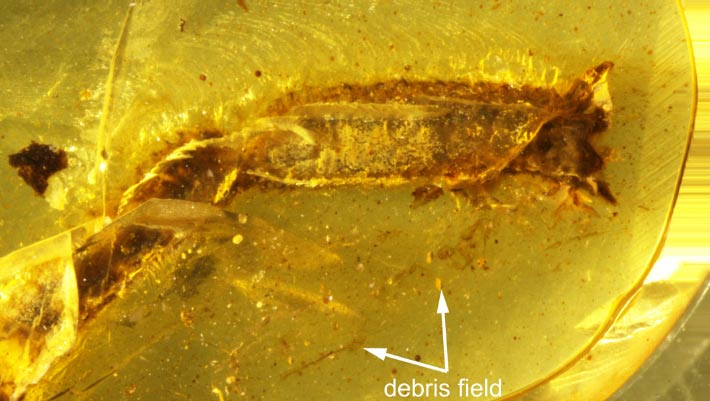
General view of the amber piece from Myanmar, arrows highlighting the debris stuck to the initial resin flow at the level of the ventral surface of the tail. Image credit: Fabrikant et al., doi: 10.26879/1706.

A tiny piece of amber from Myanmar has captured a defensive maneuver that lizards still use today: shedding part of their tail to escape a predator.

The post Lizard Dropped Its Tail 99 Million Years Ago, Amber Preserved Evidence appeared first on Sci.News: Breaking Science News.
  •  

New Species of Predatory Dinosaur Identified in UK

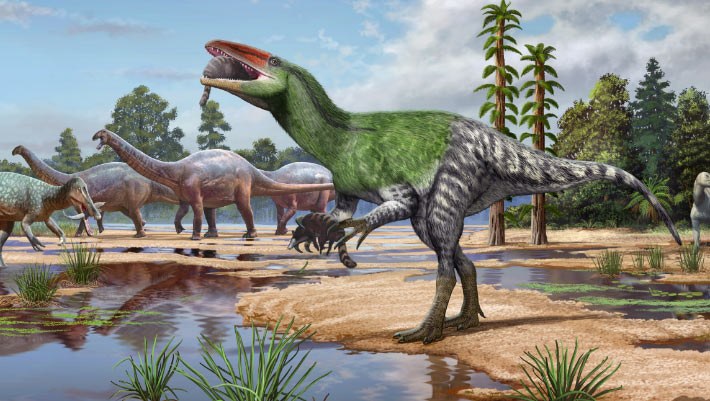
Artists’ rendition of Invictibellatrix amberina with contemporary fauna in the lower part of the Wessex Formation. Image credit: Sergey Krasovskiy / Pedro Salas.

A fossilized braincase that sat in in the collection of the Natural History Museum in London for a century has been identified as Europe’s first megaraptoran dinosaur, a lineage once thought to have flourished mainly in the southern hemisphere.

The post New Species of Predatory Dinosaur Identified in UK appeared first on Sci.News: Breaking Science News.
  •  

Small Raptors Likely Feasted on Fallen Tyrannosaur, Fossil Bite Marks Suggest

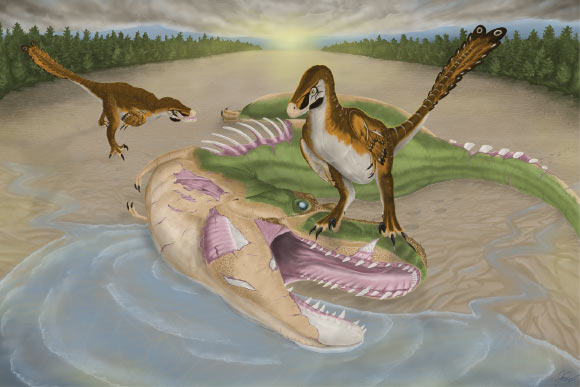
Atrociraptor scavenge the carcass of Albertosaurus along the edge of a river floodplain. Image credit: Joshua Adam Doyon.

Tyrannosaurs sit at the top of the food chain in the popular imagination, but a newly described fossil from Alberta, Canada, suggests that a much smaller predator may have fed on the carcass of Albertosaurus sarcophagus, a tyrannosaur relative.

The post Small Raptors Likely Feasted on Fallen Tyrannosaur, Fossil Bite Marks Suggest appeared first on Sci.News: Breaking Science News.

  •  
❌