Login

When will SpaceX and Blue Origin fly to the moon? NASA reveals lunar lander timelines (and an Artemis III update)
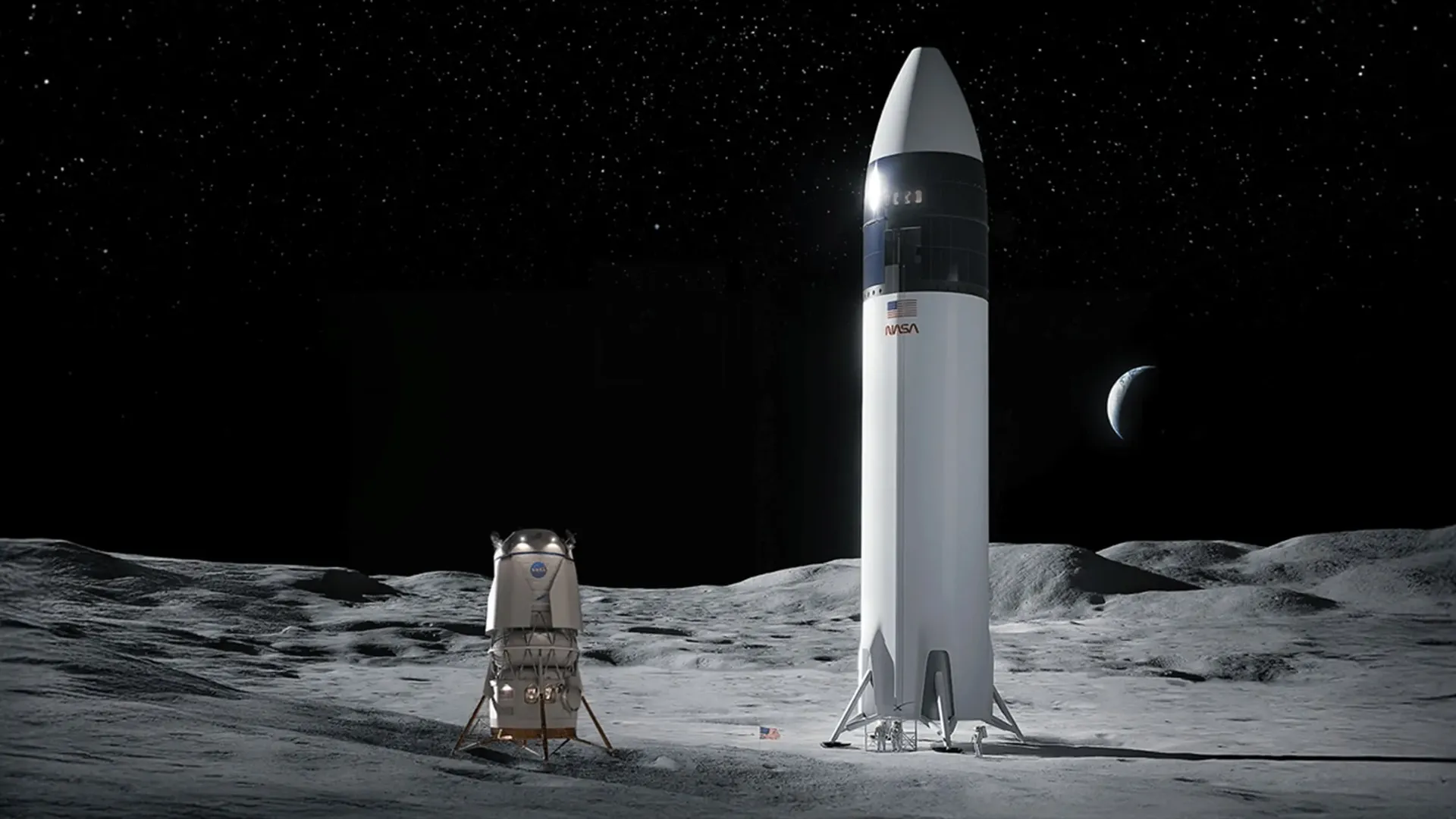
NASA has revealed new details about its plans to return astronauts to the surface of the moon, outlining a series of upcoming milestones for SpaceX and Blue Origin as both companies race to ready their lunar landers for the agency's Artemis program.
During an Oct. 5 presentation at the Astronautical Congress (IAC) in Antalya, Türkiye, Steve Creech, acting manager of NASA's Human Landing System (HLS) Program, laid out development timelines for both spacecraft, with key demonstrations planned through early 2028 that include orbital refueling and uncrewed lunar landing tests to qualify the vehicles to fly astronauts to the surface of the moon.
A more pressing deadline, however, is NASA's Artemis III mission, which is targeted for the third quarter (Q3) of 2027. Artemis III will launch four astronauts aboard NASA's Orion spacecraft to low Earth orbit (LEO), where they will rendezvous and dock with test versions of both companies' landers for interoperability checkouts. Those demonstrations will help inform NASA's determination about which lander the agency will choose to carry astronauts to the moon's surface on Artemis IV, targeted for early 2028.
SpaceX and Blue Origin were both awarded NASA contracts to develop HLS vehicles — Starship and Blue Moon, respectively — and have spent the past several years refining their respective lunar lander designs and dealing with various delays along the way. In the face of those delays, and in an effort to better structure its mission progression for success, NASA overhauled its Artemis program architecture in February to maintain its goal of landing astronauts on the moon by the end of 2028 and establish a more regular cadence of uncrewed landings in the meantime.
As part of that shakeup, Artemis III, previously the program's first crewed lunar landing mission, was moved up a year and repurposed for the lunar lander vehicle tests the agency is preparing to fly to LEO next year. The program's first moon landing remains scheduled for 2028, but was shifted to the manifest for Artemis IV.
Between now and then, both SpaceX and Blue Origin have more than a dozen test demonstrations and vehicle milestones to achieve, including success during Artemis III and flights afterward. This will all lead up to a key decision NASA must make: Which vehicle will carry out the first crewed landing on the surface of the moon since the Apollo program ended in 1972?
Starship reached for the first time on its most recent test flight, which occurred on Sept. 28 from SpaceX's Starbase site in South Texas. NASA lists several other important goals for the vehicle to achieve in 2026, including (in the order listed during the IAC presentation) the first return and catch of the rocket's upgraded Version 3 (V3) booster at its launch pad; the first-ever return and catch of a Ship upper stage; the first Starship launch from one of SpaceX's launch pads still under construction on Florida's Space Coast; and, possibly, the first V3 booster reflight.
NASA also expects SpaceX to complete the initial build of the crew cabin for its lunar lander Starship variant. SpaceX released renders of Starship's interior last year, as well as images of the test elevator astronauts are using to train for Starship egress on the lunar surface, but little else has been made public about the progress the company has made on the cabin's design.

Should the cabin's initial build wrap up by the end of the year, as NASA's presentation suggested, SpaceX will use Q1 2027 to complete integration of the systems that Starship will need to communicate with Orion during Artemis III, and deliver a cabin simulator for astronauts to train on leading up to the mission. SpaceX plans to continue Starship test flights through Q2 of next year, complete a landing leg demonstration and begin crew cabin airlock tests.
Blue Origin's lunar lander mockup is ready for NASA Artemis astronaut training
For Artemis III, SpaceX plans to fly one of its existing V3 Starship upper stages, with some slight modifications. Starship and Orion will dock as part of Artemis III but the SpaceX vehicle won't be equipped with a crew cabin for the mission's astronauts to enter. Between the end of this year and the beginning of the next, SpaceX is expected to complete the addition of a docking system and nosecone cover to the Artemis III Starship vehicle, which, NASA documents suggest, has already completed its mechanical fit checks.
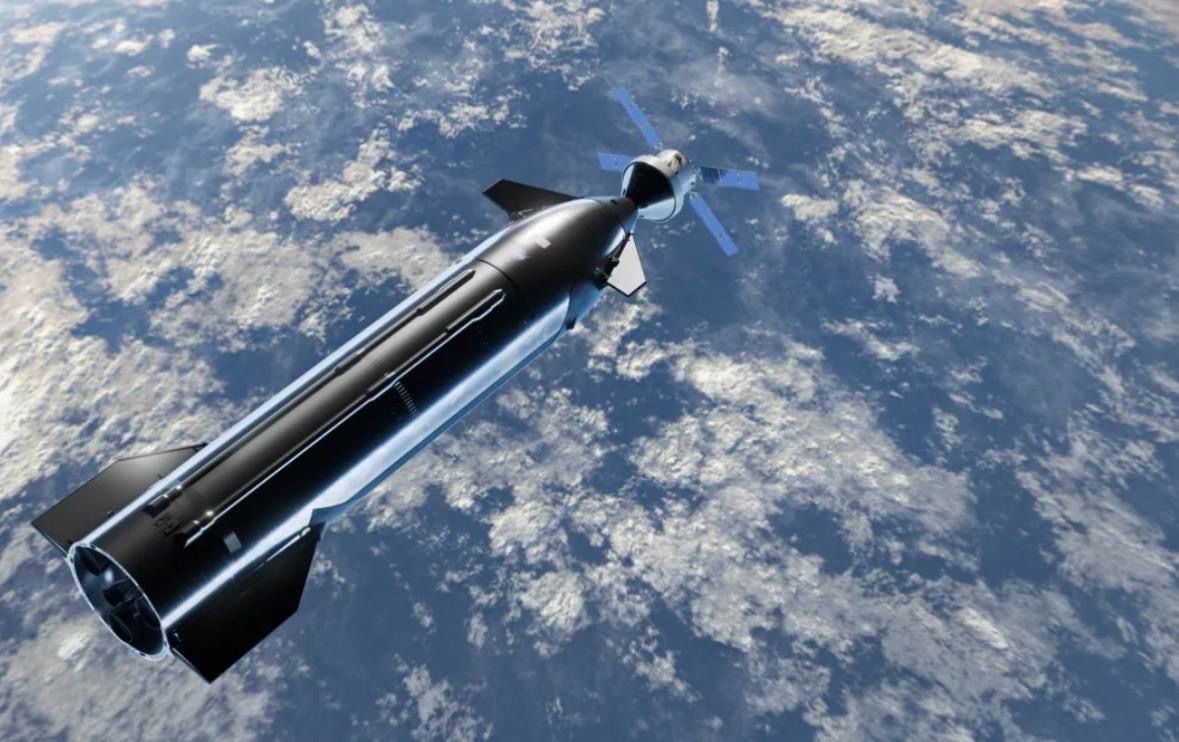
Other notches on SpaceX's checklist leading up to Artemis III include the first propellant transfer demonstration with Starship in orbit. As the first-ever launch vehicle and spacecraft designed for full reusability, Starship's fuel constraints require that its tanks be topped off in order to fly beyond LEO. For a moon landing mission, this could mean up to a dozen launches of SpaceX's Starship "tanker" spacecraft to an orbiting fuel depot, which the moon-bound Starship will visit. To pull that off, though, SpaceX has to show it can successfully transfer those cryogenic fuels on orbit, and also store them effectively enough to prevent too much boil-off.
Starship won't require any refueling flights to complete its objectives for Artemis III, but SpaceX is expected to launch its first Starship tanker vehicle within a few months of that mission as it gears up for the Artemis IV moon landing mission. To that end, a launch of an uncrewed Starship lunar lander variant is targeted sometime toward the end of Q3/beginning of Q4, with an uncrewed lunar landing mission carried out before the end of 2027.
Blue Origin, meanwhile, has its own set of milestones to meet as it develops its Blue Moon Mark 2 (MK2) lander — a 52-foot-tall (16 meters) spacecraft powered by three BE-7 engines. Unlike the bare-bones V3 Starship that SpaceX will launch on Artemis III, Blue Origin plans to fly a completed test vehicle, incorporating the crew cabin, partial life-support, flight software and other systems needed to allow astronauts to enter the lander from Orion during their time docked in LEO. Astronauts will be able to enter Blue Moon from Orion to get a feel for the lander in zero-g and test some of its systems.
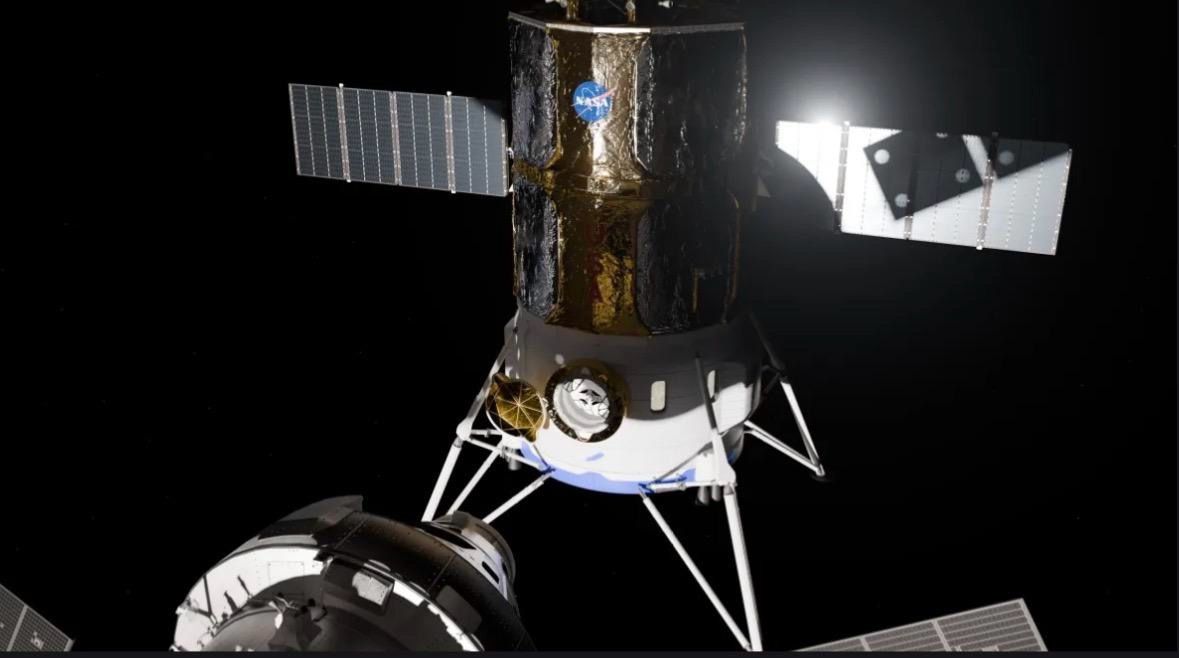
NASA's timeline shows the company working to complete a series of manufacturing and testing milestones in the last few months of 2026, including continued BE-7 testing and qualification of Blue Moon's BT-7 maneuvering thrusters. The company also faces its Artemis III interim design review and a critical design review for an upcoming landing demonstration mission in 2028.
Blue Origin is also working to restore its pad at Cape Canaveral Space Force Station's Launch Complex-36 (LC-36) to operation and return its New Glenn rocket to flight, following an explosion of the rocket in May that caused extensive damage to the facility. NASA's presentation places that milestone in Q4 2026, a timeline the company has also been very vocal about maintaining. A recent Reuters report, however, suggests that may not happen until early 2027.
By early 2027, the company expects to complete the spacecraft's communications systems and finalize its flight software, with assembly, integration and testing continuing into Q2. Q1 2027 is also when Blue Origin's Blue Moon MK1 lander (a smaller, uncrewed version of its MK2 successor) will launch to the lunar surface as a part of NASA's Commercial Lunar Payload Services (CLPS) program of robotic moon missions.
A post shared by Space.com (@spacedotcom)
A photo posted by
During Q2 2027, as the Artemis III mission approaches, Blue Origin is expected to complete integration of its test lander with New Glenn and conclude qualification of its BE-7 engine. Throughout next year, the company plans to continue construction and refurbishments at its launch facilities and hopes to have a new launch pad ready to support the upgraded, more powerful New Glenn 9x4 rocket l by the end of Q3. The first flight of that rocket variant is scheduled for Q4 2027, alongside a second MK1 lunar mission and the launch of an uncrewed MK2 demonstration lander.
That spacecraft is expected to attempt its own uncrewed lunar landing in Q1 2028, around the same time Blue Origin has scheduled a third MK1 flight. Like SpaceX, Blue Origin will need to demonstrate that its lander can safely reach the moon's surface,operate there and return to lunar orbit before NASA clears it to carry astronauts on a future Artemis mission.
NASA's overall timeline remains the same as it has been since the February revamp, with Artemis III expected to launch in mid-2027, followed by a crewed lunar landing on Artemis IV in 2028, and possibly another on Artemis V that same year. There may be changes on the horizon, though. NASA will host a press conference on Friday (Oct. 23) with Administrator Jared Isaacman and Associate Administrator Amit Kshatriya, as well as Artemis program director Jeremy Parsons. During the event, which you'll be able to watch here at Space.com, they will discuss the status of the upcoming moon missions and an "Artemis acceleration."
SpaceX and Blue Origin still face tight schedules to complete their respective uncrewed landing demonstrations before Artemis IV. With SpaceX targeting Q4 2027 and Blue Origin Q1 2028, both are pushing the margins against NASA's hopes to return astronauts to the lunar surface that same year. Which company ultimately gets the green light for that first landing mission will depend on the progress each makes between now and then, and whether their landers can demonstrate the readiness that NASA requires to safely carry astronauts to the surface of the moon and back again.