❌

Reading view

‘I’m always being real’: what on earth persuades disgraced people like Elizabeth Holmes to let the cameras in?

With You Can See Everything, Holmes joins other such high-profile subjects as Lance Armstrong, Imelda Marcos and Anthony Weiner to allow film-makers to document their lives. But do they ever come out well?

In You Can See Everything, convicted fraudster Elizabeth Holmes invites film-makers Nathan Fielder and Lance Oppenheim into her home in a supposed act of “radical transparency”. Holmes is filmed, along with her partner, Billy Evans, and their two young children, in the weeks before starting a prison sentence for defrauding Theranos investors. “The best way for people to see who she is,” Evans says, “is to give as much access as possible into our daily lives”. It may also be the best way to market “Theranos 2.0”, which the couple are working on during filming. But the documentary questions whether Holmes is presenting her authentic self or a manufactured persona. Fielder speaks for the audience when he asks Holmes in a tense exchange whether she’s “being real” with him. “I’m always being real,” she says.

That question of authenticity is at the heart of documentary film-making. You Can See Everything is as much about the ambiguous relationship between film-maker and subject as it is about Holmes herself. There is often a power struggle over narrative control in documentaries, with both sides of the dynamic wanting different outcomes from the final film. Watching You Can See Everything inevitably prompts the question: why would Holmes, days before she heads to jail, invite the scrutiny of a film crew?

Continue reading...

© Photograph: Courtesy of A24
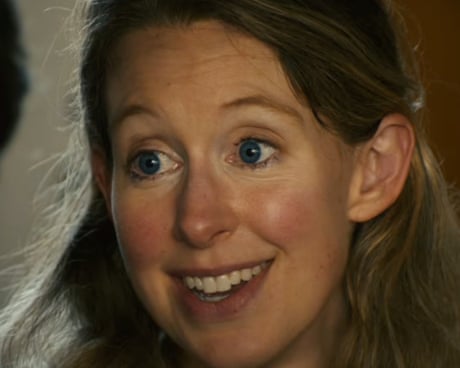
© Photograph: Courtesy of A24
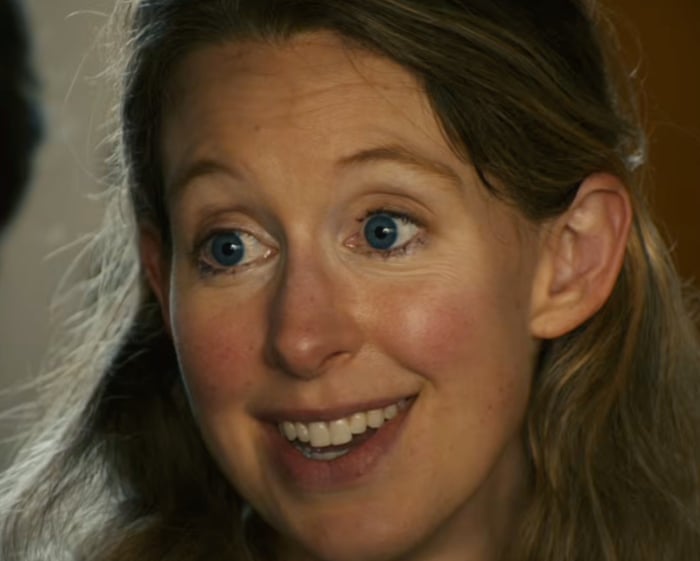
© Photograph: Courtesy of A24

  •  

Americans, this is your chance to slap down the tech broligarchs

The midterms will be a referendum on the GOP’s alignment with tech overlords over the public they’re meant to serve

Welcome back to How We Win, a Guardian opinion series with leading thinkers, offering bold ideas for America’s political future. Last week, Robert Reich highlighted the link between corruption and affordability. Today’s edition was written by Guardian US columnist Rebecca Solnit. Sign up for future editions here.

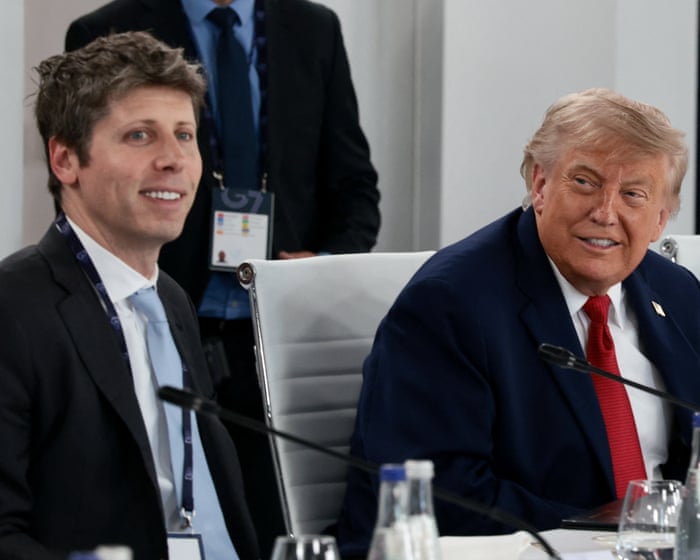
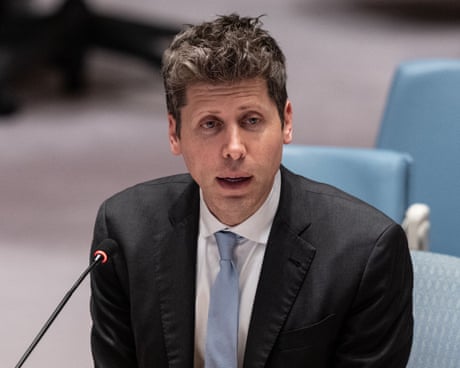
“The world should accept some bad things happening,” Sam Altman, the head of OpenAI, said recently, “for the benefits of this technology and people having the agency.” Like so many things tech oligarchs say, it’s incoherent, since Altman would like to deny the world and the people in it the agency to decide whether or not we should accept his bad things. Surveys show that most Americans would like to pause AI; opposition to AI datacenters is a factor in many races in the midterm elections. People are outraged and anxious about what tech hath wrought, mad enough to fight back in what is coming to seem like a human v machine battle.

Continue reading...

© Photograph: Evelyn Hockstein/Reuters

© Photograph: Evelyn Hockstein/Reuters

© Photograph: Evelyn Hockstein/Reuters

  •  

US judge dismisses sexual abuse lawsuit from Sam Altman’s sister

Ann Altman, the Open AI CEO’s sister, accused her brother of repeatedly sexually abusing her over two decades ago

A judge dismissed a lawsuit filed by Sam Altman’s sister against him on Tuesday. Ann Altman accused the OpenAI CEO of repeatedly sexually abusing her more than two decades ago, which he has denied.

In dismissing Ann Altman’s ⁠lawsuit, the US district judge Zachary Bluestone wrote that she had refused to appear for an independent medical examination despite warnings ⁠that failure to do so would result in the case’s dismissal.

Continue reading...

© Photograph: Lev Radin/Shutterstock

© Photograph: Lev Radin/Shutterstock

© Photograph: Lev Radin/Shutterstock

  •  

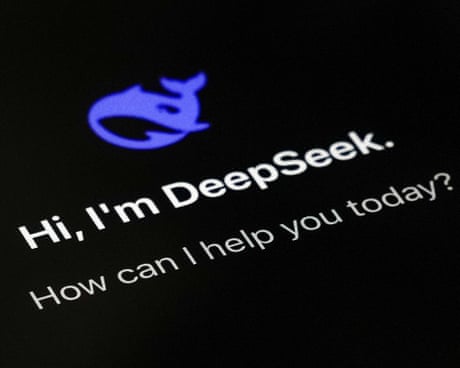
US bans use of China’s DeepSeek AI tools by government agencies

Use of tools ‘may result in the transfer of sensitive data’ to China, defense department says

The US government on Monday ordered its agencies to stop using artificial intelligence (AI) tools from the Chinese startup DeepSeek, as the countries race for dominance in the fast-moving sector.

A notice from the Department of Homeland Security (DHS) announced the ban on products developed by DeepSeek – and tools created using DeepSeek by third parties – saying they must be removed from IT devices.

Continue reading...

© Photograph: Andy Wong/AP

© Photograph: Andy Wong/AP

© Photograph: Andy Wong/AP

  •  

New AI tool can predict cancer survival by a single patient selfie, study suggests

System can estimate a person’s biological age and predict chances of cancer survival from a single photograph

Doctors have developed an artificial intelligence tool that can predict a cancer patient’s chances of survival from a single photograph of their face.

The AI system was custom-built by experts at Mass General Brigham, a nonprofit, integrated academic healthcare system in Massachusetts, to estimate biological age and directly predict survival outcomes in patients diagnosed with cancer.

Continue reading...

© Photograph: Addictive Stock Creatives/Alamy

© Photograph: Addictive Stock Creatives/Alamy

© Photograph: Addictive Stock Creatives/Alamy

  •  

AI firm Anthropic to commit 5% of shares to fund for ‘public good’

The $48bn giveaway comes amid concerns about the tech and as the company prepares for a stock market listing

Anthropic has said it will commit 5% of its shares to a fund for the “public good”, as the AI developer behind the Claude chatbot seeks to bolster its appeal before its stock market listing.

The company announced it would commit the shares, worth around $48bn (£36bn) at its latest valuation in May, subject to shareholder approval. It will add a further 2% of its stock to the fund for every 50% increase in its value above an undisclosed baseline.

Continue reading...

© Photograph: Dado Ruvić/Reuters

© Photograph: Dado Ruvić/Reuters

© Photograph: Dado Ruvić/Reuters

  •  

‘You can’t make this stuff up’: why we remain fascinated by Elizabeth Holmes

The entrepreneur turned fraudster is the subject of an Oscar-tipped new documentary that takes an unusual look at her strange legacy

David Agus’s first encounter with Elizabeth Holmes at a health conference came as a shock. The Holmes he met in the green room was personable and pleasant. The Holmes he interviewed on stage was altogether different.

“The accent changed: this deep voice, very serious,” Agus, a medical oncologist, recalls by phone from Los Angeles. “It was as if I had met a person and then interviewed a separate person. That transition from the green room to the stage – I had never experienced something like that before.”

Continue reading...

© Photograph: Courtesy of A24

© Photograph: Courtesy of A24

© Photograph: Courtesy of A24
  •  

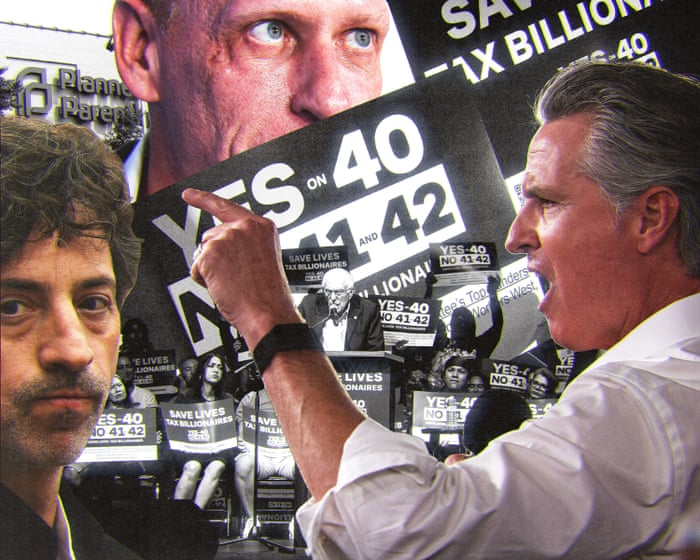
The ultra-rich are spending one million dollars a day fighting California’s proposed billionaire tax

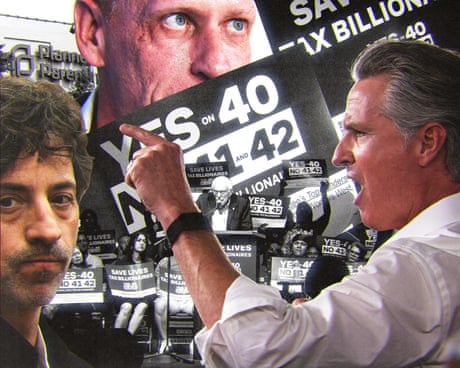
Tech billionaires have raised more than $340m to defeat Prop 40, a one-time 5% wealth tax that will fund healthcare and education

Tech billionaires have been dumping hundreds of millions of dollars into the fight against a wealth tax in California. They’ve raised more than $340m, and the campaign they’re funding is spending more than $1m a day to defeat the measure, according to state financial disclosures.

With the election less than a month away, those funds are being spent at a stepped-up pace. During the first 19 days of September, according to the most recent campaign filings, the opposition campaign plowed through at least $21.2m to fight the billionaire tax – surpassing $1m per day. Voters are being inundated with robotexts, mailers and advertisements that warn a tax on billionaires would “expose all Californians to higher taxes”, as one ad reads.

Continue reading...

© Composite: The Guardian/Getty Images

© Composite: The Guardian/Getty Images

© Composite: The Guardian/Getty Images

  •  

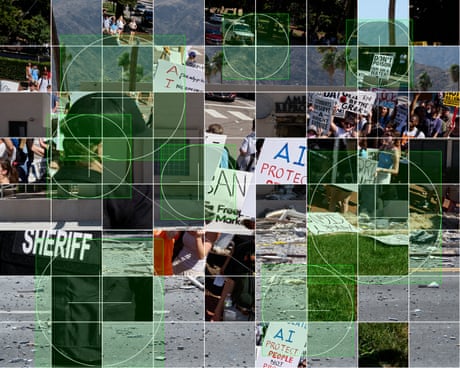
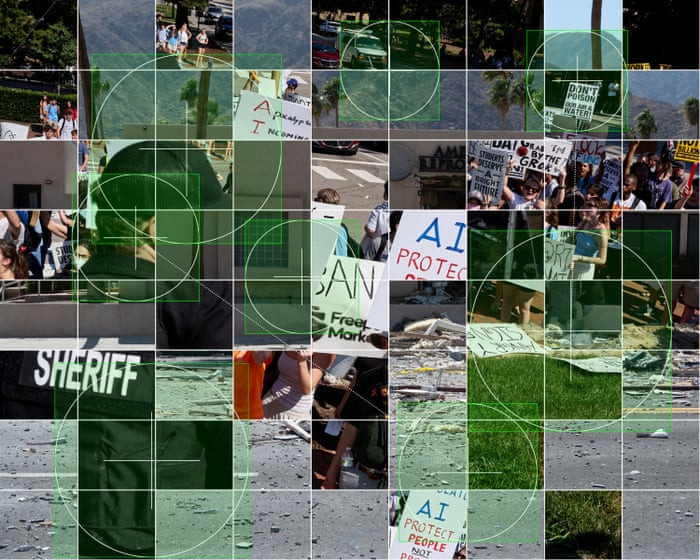
Tool and target: US law enforcement grapple with AI-enabled terrorism and anti-tech extremism

From the FBI to local police departments, US authorities are increasingly warning of would-be terrorists using chatbots to plan attacks and anti-AI extremist threats

In May 2025, a 25-year-old man detonated a car bomb outside a Palm Springs fertility clinic, killing himself and injuring four others. For many, it was a wake-up call about the threats to reproductive care facilities. For the FBI, though, it was also a sign of what the agency had feared for years: bad actors were using generative AI to plan and execute terror plots.

The suspect used an unnamed generative AI tool that failed to detect his request for bomb-making instructions, law enforcement officers wrote in a previously unreported document reviewed by the Guardian. The privacy of his conversation with the AI chatbot hindered alerting police that someone was looking up how to make a bomb, according to the memo.

How extremists could use AI to devise attacks and recruit new members

How AI could be used to disseminate and produce everything from deepfakes to election misinformation and child sexual abuse material (CSAM)

How people seeking information on how to make weaponry or bombs could use AI to circumvent police detection

How to ensure that officers could take advantage of AI tools in policing, for things like social media monitoring, while managing public concern over the use of these tools

Monitoring social media for opposition to AI and potential extremist attacks on datacenters

Continue reading...

© Composite: The Guardian/Getty Images

© Composite: The Guardian/Getty Images

© Composite: The Guardian/Getty Images

  •  
❌