Login

HomePod mini 2: Everything you need to know release date, price & specs
Apple has unveiled the HomePod mini 2, the first major update to its smallest smart speaker since the original launched in November 2020. Announced on October 13, 2026, the new HomePod mini brings Apple’s more capable Siri AI assistant, upgraded audio experiences, improved connectivity, and a selection of new colors. It retains the familiar compact, spherical design but features significantly improved technology inside.
The biggest upgrade is Siri AI, which will bring more natural conversations, broader knowledge, and greater awareness of personal information stored on connected Apple devices. This will allow users to ask more complex questions, find information in messages and emails, and perform tasks across apps. Siri AI will arrive in a future software update. To enable it, the owner of the home in the Home app needs an Apple Intelligence-enabled iPhone or iPad with current software and Siri AI enabled in a supported language. Other household members can then use its general conversational features without their own compatible device, but personal-context requests require a paired Apple Intelligence-enabled device.
Apple has also replaced the original HomePod mini’s aging S5 processor with the newer S10 chip, enabling enhanced computational audio. Other major additions include four-speaker surround sound when paired with the fourth-generation Apple TV 4K, the ability to use HomePod mini 2 as the default audio output for a Mac equipped with Wi-Fi 6E or later, and Sound Glow, which turns the illuminated touch surface into a colorful display that responds to music.
Sound Glow isn’t exclusive to the new model: our testing confirms that it also works on the original HomePod mini with the iOS 27.2 and HomePod Software 27.2 release candidates. Wi-Fi 6E and Bluetooth 6 bring the speaker’s wireless technology up to date.
The HomePod mini 2 comes in five colors: pink, green, blue, white, and midnight. It costs $149, compared with the previous model’s $129 price following Apple’s June 2026 price increase. Pre-orders opened on October 13, with the new speaker going on sale on Friday, October 30. It’s a substantial upgrade for anyone buying their first HomePod mini, although existing owners may find the strongest reason to upgrade is the new Siri experience.
HomePod mini 2 vs. HomePod mini: The 10 biggest changes
| Feature | HomePod mini 2 (2026) | HomePod mini (2020) |
|---|---|---|
| 1. Processor | Apple S10 | Apple S5 |
| 2. Siri | Siri AI, arriving later | Original Siri features |
| 3. Personal context | Cross-app personal context with compatible iPhone/iPad | Limited personal requests |
| 4. Home theater | Four-speaker surround sound with Apple TV 4K (4th gen) | Stereo pairing |
| 5. Mac audio | Default audio output on Macs with Wi-Fi 6E or later; supports one speaker or a stereo pair | AirPlay audio |
| 6. Visual effects | Sound Glow music animations | Sound Glow also supported in HomePod Software 27.2 release-candidate testing |
| 7. Wi-Fi | Wi-Fi 6E | Wi-Fi 4 (802.11n) |
| 8. Bluetooth | Bluetooth 6 | Bluetooth 5.0 |
| 9. Colors | Midnight, white, blue, green, pink | Midnight, white, blue, yellow, orange |
| 10. Price | $149 | $99 at launch; $129 most recently |
The biggest improvements are in software intelligence, audio capabilities, and wireless connectivity rather than the speaker’s physical design. Its fundamental audio hardware remains familiar, including the full-range driver, dual passive radiators, and 360-degree acoustic waveguide.
HomePod mini 2 release date: When will it go on sale?
Apple announced the HomePod mini 2 on Tuesday, October 13, 2026, at its “Welcome Home” product launch. The new speaker is available to pre-order immediately, with the official release date set for Friday, October 30, 2026.
Customers in the U.S. and more than 23 other countries and regions can order the HomePod mini 2 through the Apple online store or Apple Store app. It will also be available in Apple retail stores from October 30. Other retailers are expected to stock the speaker.
The new model arrives almost six years after the original HomePod mini launched in November 2020. Apple had been widely expected to update the speaker in 2025, but reports suggested that development of its redesigned Siri assistant delayed the launch. Standard smart-home controls will be available at launch, but Siri AI will arrive in a later software update. To enable it, the home owner will need a compatible Apple Intelligence-enabled iPhone or iPad.
We recommend: Apple HomePod mini 2
HomePod mini 2 design: What does it look like?
Apple
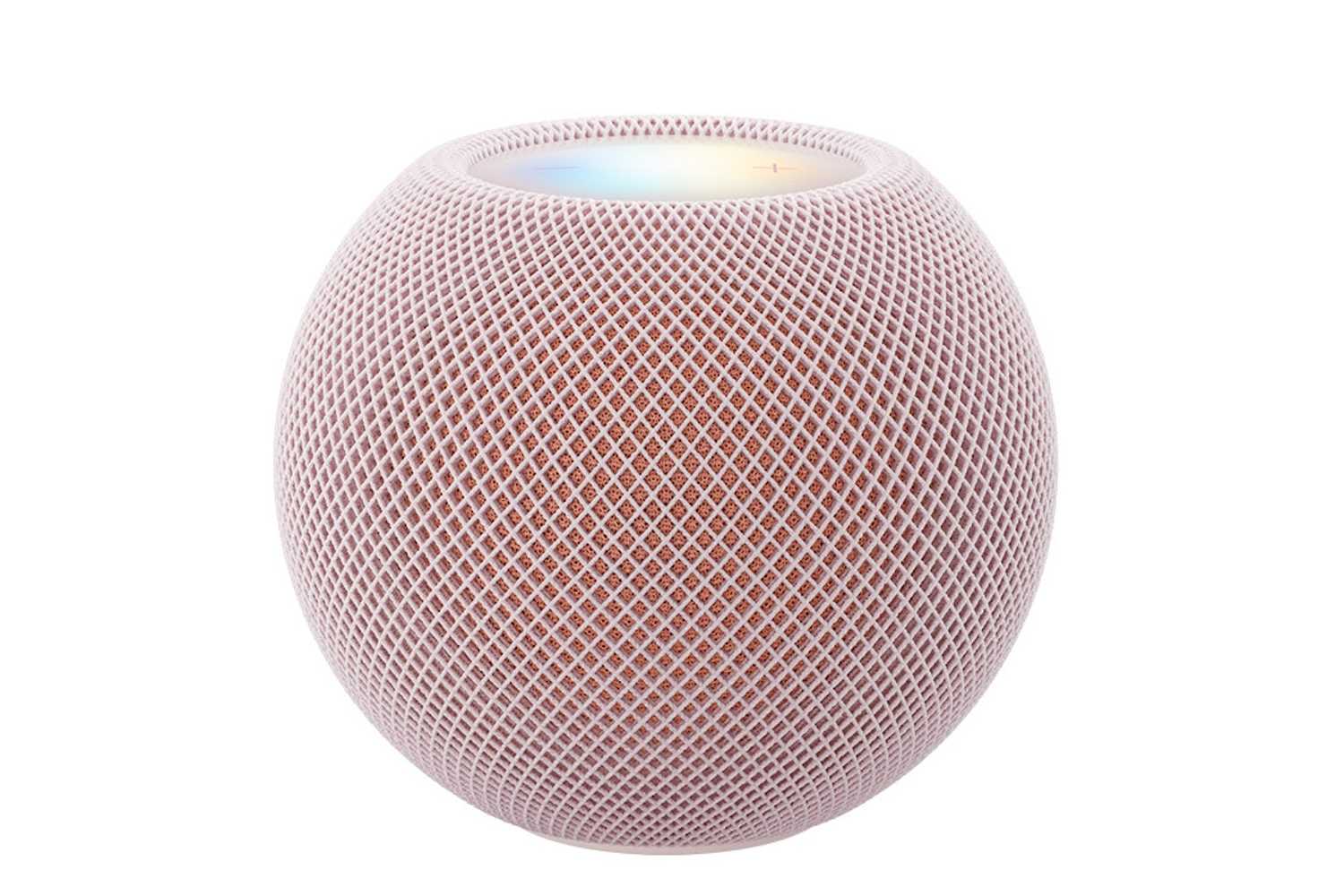
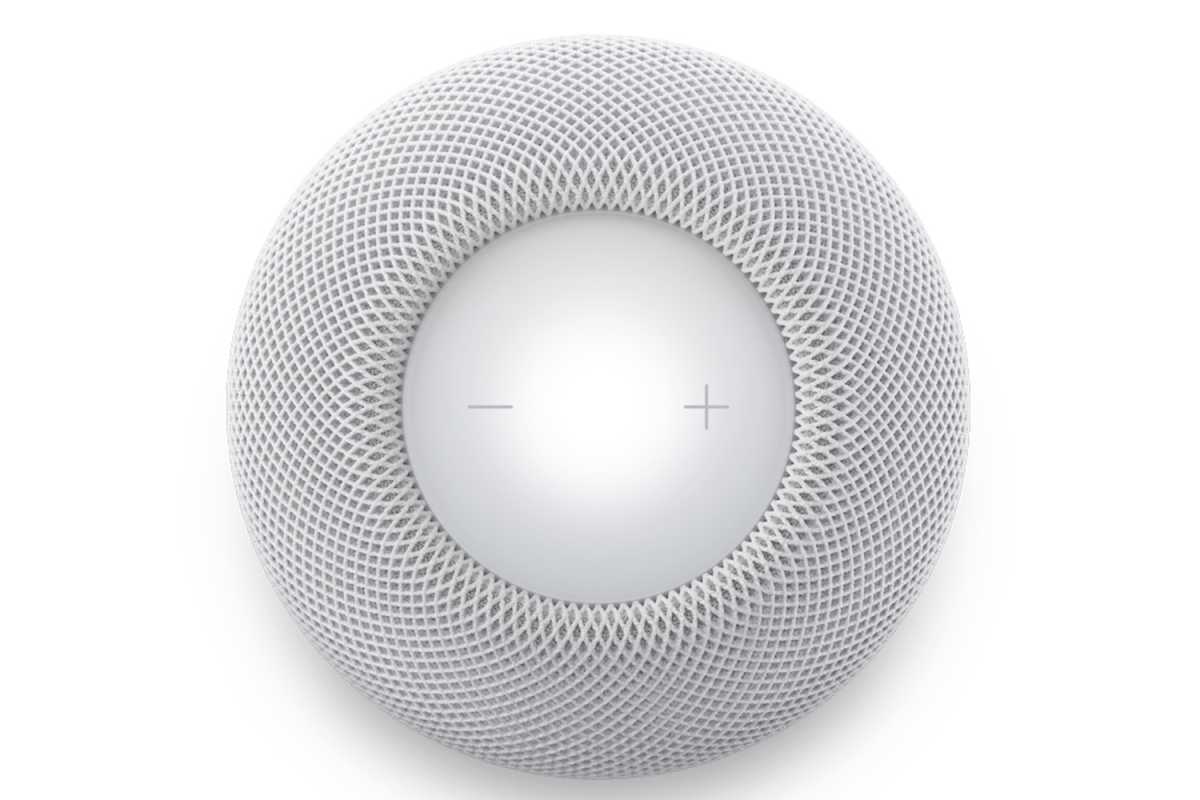
Apple hasn’t radically redesigned the HomePod mini for its second generation. The new speaker retains the familiar spherical shape, with a seamless acoustic mesh covering its body and an illuminated touch-sensitive surface on top. It’s designed to fit unobtrusively on a desk, bookshelf, kitchen counter, or bedside table.
The HomePod mini 2 measures 3.3 inches (84.3mm) high and 3.9 inches (97.9mm) wide, exactly the same dimensions as its predecessor. It weighs 335g, making it slightly lighter than the original 345g model. Apple continues to use acoustically transparent fabric, allowing sound to travel through the enclosure in every direction.
The most obvious visual changes are the colors. HomePod mini 2 is available in pink, green, blue, white, and midnight. Pink and green replace the outgoing orange and yellow options, while blue has a darker appearance than before. Interestingly, these colors closely match those revealed in Apple software before the announcement, although a previously rumored red version hasn’t appeared.
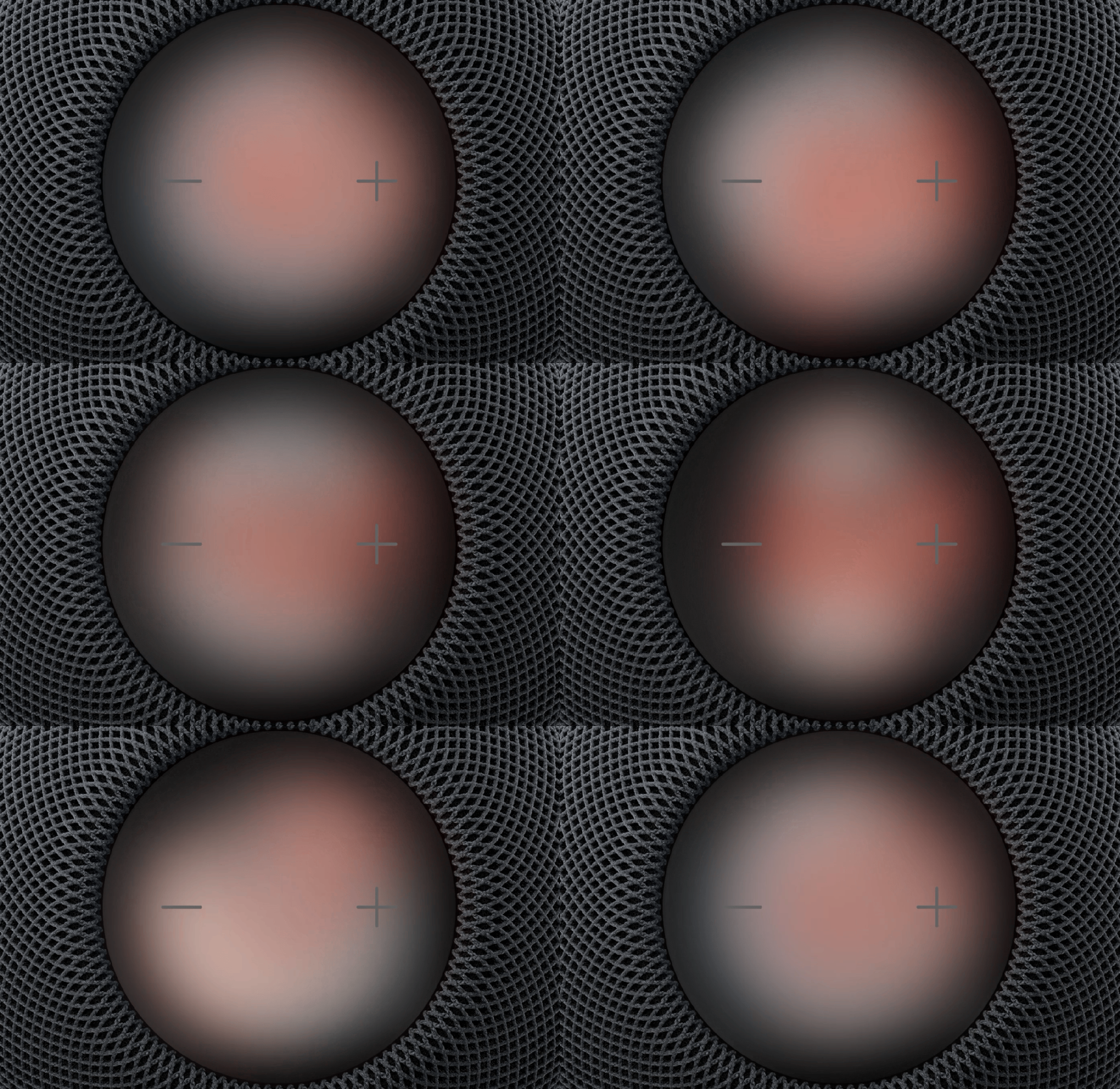
The other significant visual upgrade is Sound Glow, which makes the illuminated surface on top much more expressive. Rather than simply displaying Siri’s familiar animations, it can pulse and glow in response to the bass and treble of music. Colors can reflect the artwork of the song being played, while soundscapes such as rain produce their own lighting effects. Voice control element of Sound Glow requires an Apple Intelligence-enabled iPhone running the latest software.
Owners of the original HomePod mini won’t need to replace their speakers solely to get these lighting effects. Macworld tested Sound Glow successfully on the 2020 model using prerelease software. This does not bring Siri AI to the original mini, however.
Apple hasn’t changed the basic touch controls. Users can still tap to play or pause music, double-tap to skip forward, triple-tap to skip backward, touch and hold to activate Siri, and use the illuminated plus and minus controls to adjust volume. The biggest interface improvements therefore come from Sound Glow and the forthcoming Siri AI features rather than new physical buttons.
HomePod mini 2 processor: What chip does it use?
The HomePod mini 2 uses Apple’s S10 chip, replacing the original model’s S5. It powers computational audio that adjusts the sound in real time, including its dynamic range and loudness.
The new model also supports the forthcoming Siri AI features, including more conversational requests and access to personal context. These will arrive through a future software update and require compatible Apple devices.
The redesigned Siri will support more conversational requests, broader world knowledge, and personal context awareness, with processing distributed between the HomePod, connected Apple devices, and Apple’s Private Cloud Compute servers.
HomePod mini 2 connectivity: What’s changed?
Apple
The HomePod mini 2 brings two confirmed wireless upgrades: Wi-Fi 6E and Bluetooth 6. These replace the original model’s older Wi-Fi 4 and Bluetooth 5.0 technologies, bringing the speaker up to date with Apple’s latest wireless ecosystem.
Wi-Fi 6E adds access to the 6GHz wireless band when used with a compatible router, potentially reducing congestion and improving network performance in busy homes. Bluetooth 6 introduces newer wireless capabilities, although Apple hasn’t specified which Bluetooth improvements the HomePod mini 2 takes advantage of.
The new HomePod mini also supports Thread networking, allowing it to act as part of a compatible smart-home network. This helps it communicate with devices such as smart lights, sensors, and other supported accessories without relying exclusively on traditional Wi-Fi connections.
Apple lists an Ultra Wideband chip for device proximity, continuing support for proximity-based interactions with compatible devices. However, the technical specifications don’t identify the generation of the chip, so it isn’t yet possible to confirm whether this is an improvement over the original model’s U1 hardware.
Despite earlier rumors about Apple’s in-house wireless networking technology, the company hasn’t named a specific Apple-designed connectivity chip for the HomePod mini 2. The speaker continues to depend on Wi-Fi for its internet connection.
HomePod mini 2 speaker setup
You can use HomePod mini 2 on its own, pair two for stereo sound, or build a four-speaker surround system with a compatible Apple TV – while supported Macs can use a single speaker or stereo pair.
Can you use HomePod mini 2 speakers for stereo or surround sound?
You can use one HomePod mini 2 on its own or combine two into a stereo pair, with separate left and right audio channels. Stereo pairing was available on the original HomePod mini.
The new addition is four-speaker surround sound with an Apple TV 4K (4th generation) running the latest software. This uses two speakers at the front and two at the rear.
Each pair must contain matching models, but the front and rear pairs can differ. For example, you can use two HomePod (2nd generation) speakers at the front and two HomePod mini 2 speakers at the rear.
Which Macs can use HomePod mini 2 as their default speaker?
HomePod mini 2 can serve as the default audio output for a Mac with Wi-Fi 6E or later. You can use one speaker or two HomePod mini 2 speakers configured as a stereo pair. Four-speaker surround sound requires an Apple TV 4K (4th generation) and isn’t supported through this Mac feature.
Compatible models include:
- Mac mini: M2 and M2 Pro models or newer
- MacBook Pro: 14-inch and 16-inch models introduced in 2023 or later
- Mac Studio: M2 Max and M2 Ultra models or newer
- Mac Pro: M2 Ultra model
- iMac: M3 models or newer
- MacBook Air: M3 models or newer
HomePod mini 2 price: How much does it cost?
The HomePod mini 2 costs $149/£149, making it $20/£20 more expensive than the previous-generation model at its most recent official price. It’s also $50/£50 more expensive than the original HomePod mini was when it launched in November 2020.
Apple initially sold the HomePod mini for $99/£99, but increased the price to $129/£129 in June 2026. The new model therefore represents another price increase, although it brings a significantly newer processor, support for Siri AI, improved connectivity, and additional audio capabilities.
A 20W power adapter is included in both the U.S. and U.K. boxes. Apple lists an iPhone or iPad running the latest iOS or iPadOS, plus Wi-Fi internet access, as requirements for using the speaker.
| Model | U.S. price | UK price |
|---|---|---|
| HomePod mini (2020 launch) | $99 | £99 |
| HomePod mini (June 2026 price) | $129 | £129 |
| HomePod mini 2 (October 2026) | $149 | £149 |
| Increase over previous price | +$20 | +£20 |
| Increase over launch price | +$50 | +£50 |
Should you buy a HomePod mini 2?
The HomePod mini 2 looks like a worthwhile purchase for anyone looking for an affordable Apple smart speaker, particularly those interested in Siri AI, smart-home control, new Mac audio and home theater options. The S10 chip, upgraded connectivity, and new audio features make it a much more capable device than its predecessor.
However, existing HomePod mini owners shouldn’t rush to upgrade. The design and fundamental speaker hardware remain largely unchanged, and Siri AI won’t arrive until a future software update. If you mainly use your HomePod for music, an inexpensive first-generation model could still be a good choice. For more powerful sound, consider the full-size HomePod.