Atlassian report claims the number of developers saving significant time through AI is actually dropping
Finding information and participating in meetings are major human bottlenecks
More then four in five organizations still don't have a clear AI strategy
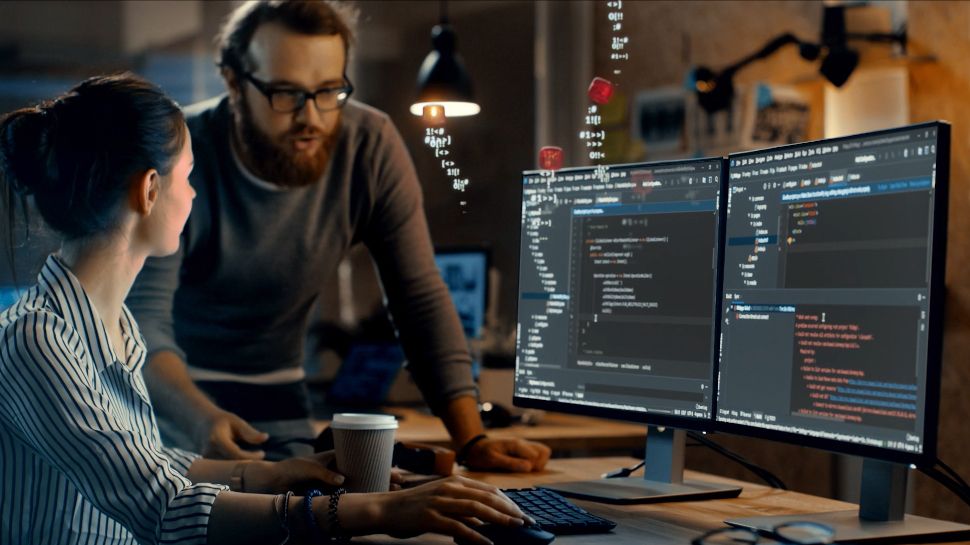
Nearly nine in 10 (87%) developers surveyed by Atlassian now sayAI is helping them to write and ship code faster, but despite offering significant speed improvements across certain parts of the workflow, three in four (72%) also report either the same or greater friction across the entire lifecycle.
Longer-term optimism around AI's ability to save time is also dropping, with just 25% of developers saving 10+ hours a week when using AI, compared with 68% in 2025.
Ultimately, Atlassian's findings point toward AI simply shifting the bottleneck further downstream rather than tackling time constraints altogether.
Is AI actually helping developers?
The data shows that faster code generation isn't translating into faster software delivery, with the reality of AI-assisted coding now highlighting other areas where AI could actually help. For example, half of developers struggling with finding information (51%) and meeting frequency (50%)
"Faster code is not the same as better software delivered sooner," Atlassian Customer CTO Andrew Boyagi explained. "If teams still struggle to find information, clarify requirements and move work through the delivery process, speeding up coding alone won’t translate into business outcomes."
However, many developers simply feel that AI is being implemented too quickly without consideration for its impacts. Three in five say merely using AI is seen as a positive metric – but its real-world impacts don't fall under that scope.
Companies with an effective strategy were found to be in the best position to reduce friction, where twice as many workers reported positive effects. Still, not even a fifth (17%) of developers say their employer has a clearly communicated and implemented AI strategy.
Now that we're beginning to emerge from the early, experimental years of artificial intelligence, and that use cases are starting to be identified, the report calls for greater consideration and clearer strategies from the top down in order to unlock the real benefits.
Two new Chicago lawsuits claim unauthorized biometric data collections
In these cases, the biometrics are face and body scans
Coco Robotics and Serve Robotics have denied the allegations
The backlash to what's perceived as surveillance technology continues, with two Chicago residents taking robot delivery companies to court over the alleged collection of biometric data while dropping off food and groceries.
As the Associated Press reports, the two men bringing the cases claim that robots from Coco Robotics and Serve Robotics turned up — via DoorDash and Uber Eats respectively — even though robot delivery hadn't been requested in the app.
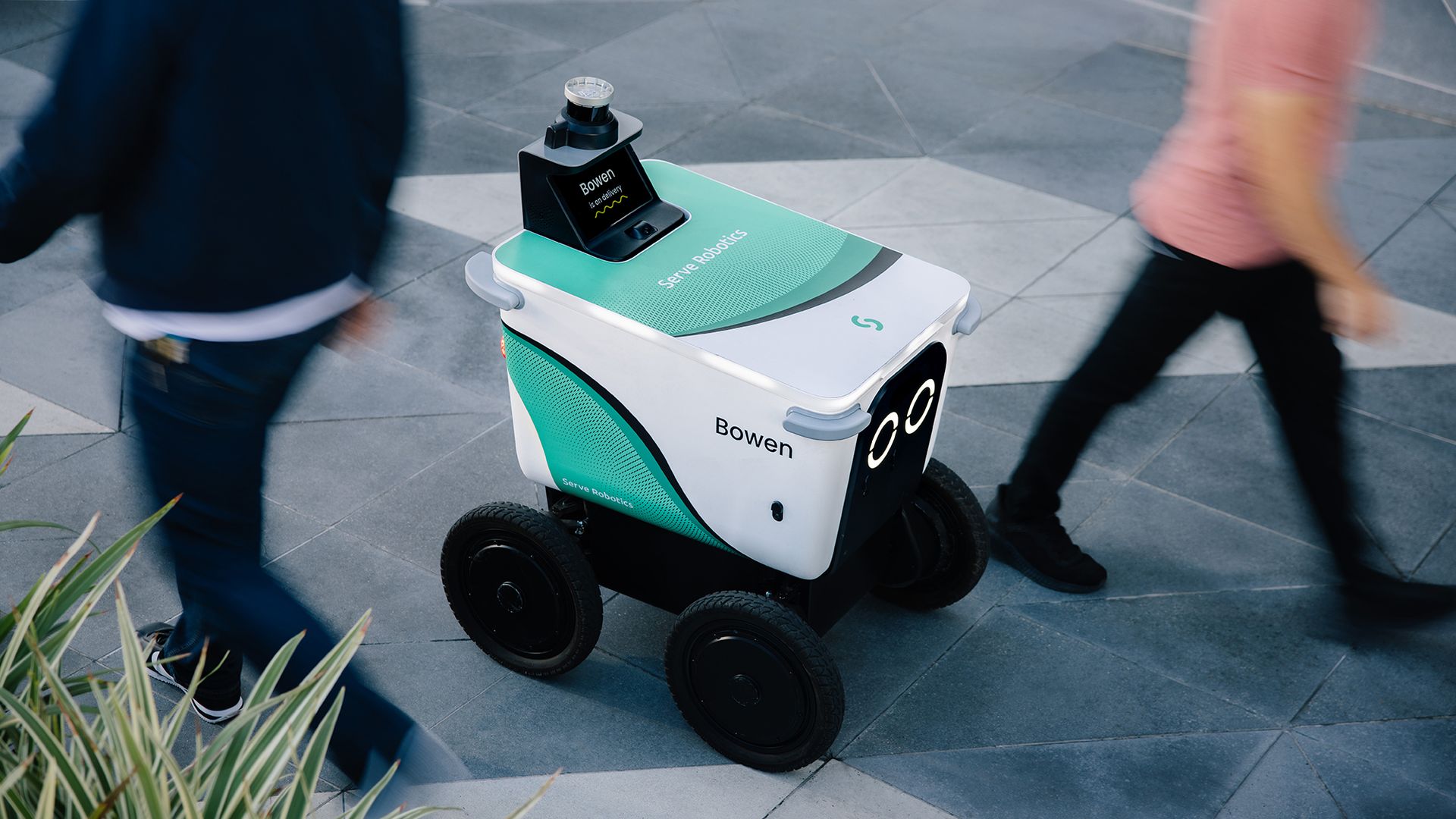
The key allegation is that when these individuals were unlocking the robot cargo bay to get their orders, their hands and faces were scanned via camera and LiDAR technology, without explicit prior permission. If true, that would put Coco and Serve in breach of the Illinois Biometric Information Privacy Act (BIPA) of 2008.
Both class-action lawsuits claim that video and sensor data is being retained by these bots in violation of privacy law, and shared with AI companies for training purposes. Statutory damages of $1,000 per negligent violation or $5,000 per intentional or reckless violation are being claimed through the courts.
Both Coco Robotics and Serve Robotics have denied the allegations. We've reached out to both companies and will update this story if we hear back, but the AP reports Coco as saying the legal action is "frivolous", while Serve says it "does not use data to identify individuals or create biometric profiles".
'Fundamentally misunderstands our technology'
A Serve delivery robot (Image credit: Serve Robotics)
The Coco Robotics privacy policy — last updated in 2022, before it started operating in Chicago — is a little light on data retention policies, but does mention sharing data with third parties and affiliates, though most of this seems to be aggregated and anonymized before it's used.
As for the Serve Robotics privacy policy, it's been updated much more recently. It says data retention periods are determined by "contractual obligations with our delivery partners", and there's the standard vagueness about sharing information with unnamed "service providers and vendors" on occasion. There's also an explicit mention of sharing data "to train AI agents and models".
It's obviously impossible for a delivery robot to work without scanning its environment and navigating around sidewalks and pedestrians, and that's the defense being put forward here. The crux of the case will be whether the data collection involved was done without permission, and contravenes the Illinois privacy act.
"This lawsuit fundamentally misunderstands our technology, we have not collected biometric data in Chicago," a Coco spokesperson told the AP. "The data we share is navigational data used to make sidewalks safer for all users."
With complaints around Flock cameras, delivery drones, 'spy' glasses, and other tech on the rise, it does feel there's more privacy scrutiny than ever before — with Redditors describing these bots as "mobile data thieves" and "sidewalk surveillance".
Unitree has shown off an impressive demo for its new 'kung fu' robot
It's based on the company's H2 platform, and is designed for security
It's unlikely to go on general sale, though, and there are no details on pricing or availability
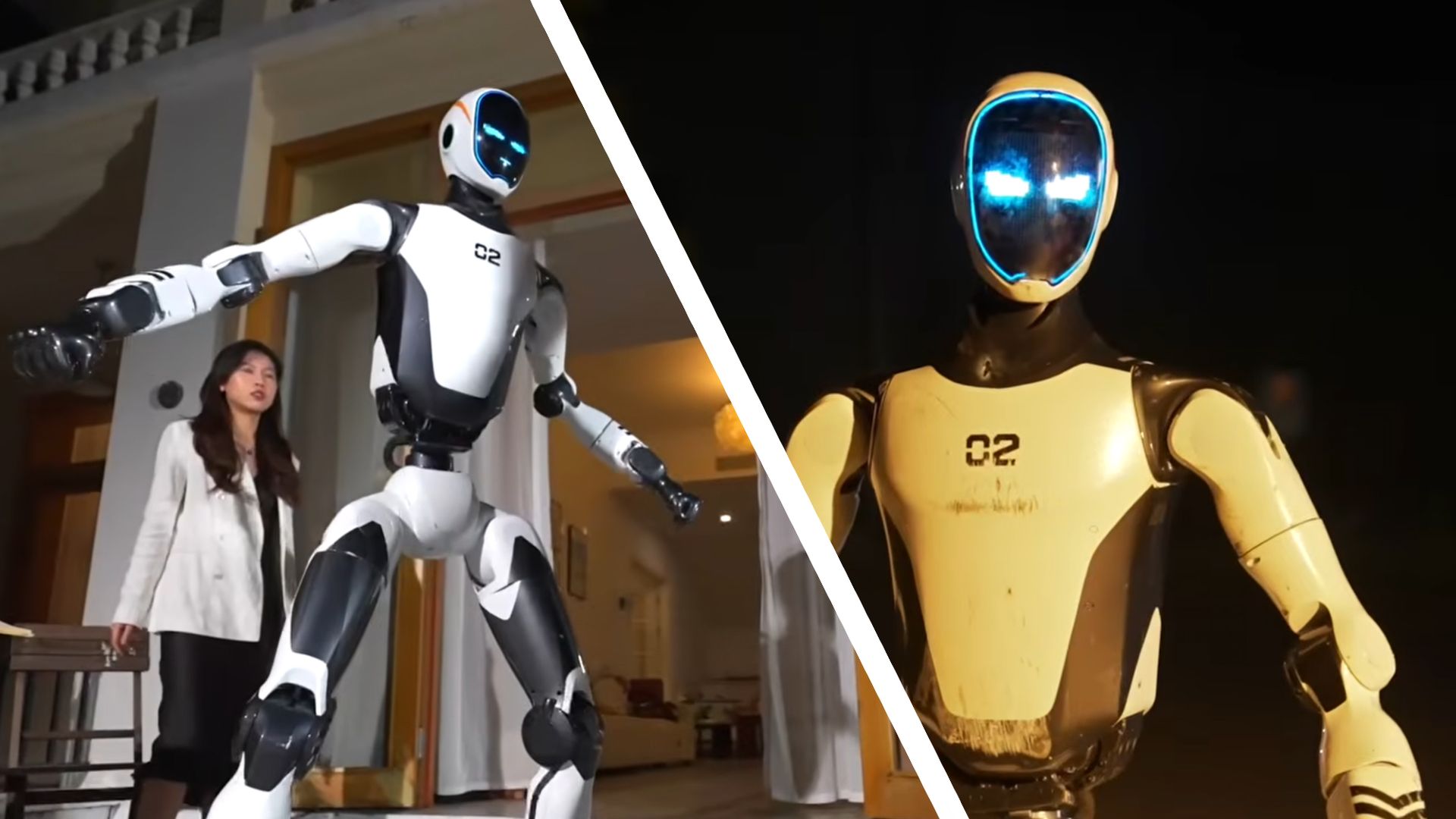
Humanoid robots are improving at a rapid pace, and the world's biggest robotics manufacturer, Unitree, has just revealed a Robocop-esque new model called the H2-X Kung Fu Legend Guardian.
A one-minute teaser video released on X and YouTube (below) shows the H2-X in action across a series of slightly bizarre scenarios. The first few clips show the robot unleashing a series of knees and punches to cars in a scrapyard, in scenes reminiscent of a Street Fighter II bonus stage.
Beyond the robot's kung fu credentials, it isn't exactly clear what real-world roles Unitree is trying to showcase there. But the rest of the video shows that the H2-X is being billed as a personal security guard that can jump in front its owner during attempted robberies, or lift cars to release humans trapped underneath.
Unitree hasn't revealed much in the way of specs for the H2-X, with the only specifics being that it's capable of jumping from four-meter high platforms and also standing for "approximately eight hours" between charges.
However, the similar Unitree H2 robot is a 1.8-meter tall humanoid that comes with an optional Nvidia Jetson AGX Thor chip and costs $29,900 (around £22,380 / AU$42,720). We've asked Unitree for some more specifics on the specs and pricing for the H2-X, and will update this story if we hear back.
However, that doesn't mean Unitree isn't making big strides in humanoid robots, or what is often billed as "embodied intelligence". At Computex 2026 the trio of Unitree, Nvidia and Sharpa announced a collaboration to create an H2+ blueprint for next-gen robots, with Nvidia supplying the much-needed training data and its Jetson AGX Thor T5000 chip.
The H2-X Kung Fu Legend Guardian demo appears to be a different project that's focused more on physical prowess. But despite those impressive jumping abilities, the robot would find it nigh-on impossible to clear the global and national consumer certification hurdles necessary for it make it to market as a personal bodyguard.
It's possible that a version of the robot could be designed for industrial or military uses, but Unitree hasn't yet commented on its future plans. What is clear is that Unitree is keen to continue the momentum it's gained after its IPO in August 2026, which started well but then ran into turbulence last month after a 55% slump from its peak.
According to Reuters, that drop has apparently prompted China to put the brakes on a humanoid robot IPO rush, which has seen half a dozen Chinese robotics companies queuing up to follow Unitree's stock-market debut.
Still, Unitree's latest H2-X video at least keeps us dreaming that personal robot safety guards are coming, even if they might dent a few cars along the way.
Microsoft CEO Satya Nadella extols virtues of "frontier ecosystem" for AI
AI can do great things for human workers, but there still needs to be some control
Microsoft reveals new research showing a divide between bosses and employees over the future of AI in the workplace
Microsoft CEO Satya Nadella has urged businesses to embrace AI even further to push on and succeed, but urged caution around giving such systems too much control in everyday work tasks.
"When I think about what keeps us grounded every day at Microsoft, it's our mission to empower every person and every organization on the planet to achieve more,” Nadella told the company’s Frontier Tour London event.
Looking at what he called the "frontier ecosystem", Nadella identified three key pillars which need to be tackled - including recapturing individual empowerment, as although AI is taking charge of the dullest parts of our jobs, there is still need for a human to have control.
Frontier AI
Nadella also highlighted "the reverse information paradox" - with a digital learning system which is constantly improving itself, the challenge is for organisations to "capture that knowledge and keep it locally to yourself...in other words, you have to own the knowledge that gets created, both with the human capital that you have, as well as the token capital that you generate"
The final challenge concerns trust, as Nadella noted, “our scaling laws are producing even more powerful models that are less and less trustworthy…you need to treat these models as new forms of insiders, and create a zero-trust architecture around it.”
(Image credit: Shutterstock)
The speech came as Microsoft unveiled new research revealing something of a divide between bosses and employees over the future of AI in the workplace.
It found the vast majority (84%) of business leaders believe the UK can become a world-leading AI economy within five years, compared with just 41% of employees.
But it also noted that workers are becoming increasingly concerned about the impact on jobs and opportunities for young people, with over half (57%) of employees using AI at work afraid it will reduce opportunities for young people, while 35% fear for their own job security.
For bosses, the future was a bit brighter, with 90% of leaders claiming they had a clear AI strategy in their business, while 84% of those in organisations already adopting AI say they’ve already experienced moderate or significant changes to how their work gets done.
“Bending the curve changes what the UK can achieve, increasing productivity, business growth, better public services, and the measure of that progress is the difference that people feel in their everyday lives,” noted Darren Hardman, Microsoft UK CEO.
“We will not bend the curve unless people see a place for themselves in what comes next…the question is no longer whether you have a strategy, it’s whether AI is actually changing how work gets done.”
“For organizations here, the challenge is to turn AI's potential into improvements that people can feel in the work they do, the services they use, and the opportunities that are open to them...our role at Microsoft to bring intelligence and trust together in AI that puts your organization's knowledge to work helping people achieve more while providing the safeguards and visibility to stay in control.”
OpenAI recently introduced GPT-6, a new model of ChatGPT. You've probably heard about a lot of its new features but one that I don't think has had nearly enough attention, especially considering how much fun you can have with it, is Intelligent UI.
It allows ChatGPT to generate interactive experiences directly within a conversation. OpenAI explains: “With Intelligent UI, responses can include graphics, tappable buttons, forms, charts, and interactive experiences you can use directly in your conversation.”
What's interesting is there isn’t a single format. Which means, depending on what you ask, ChatGPT might create an interactive diagram, a calculator, a mood board, a map or even a little gaming console.
There are some genuinely useful applications here, from making complicated subjects easier to understand to building simple tools on the spot. But I was particularly interested in something a little less practical — games.
ChatGPT can now create games you can actually play within the chat window. And while there are all sorts of possibilities for educational games, quizzes and entirely new creations, I wanted to see what would happen if I asked it to recreate some old favorites.
So I started with five classic games, including Snake, Pong and Tetris. I gave ChatGPT simple prompts to see how faithfully it could recreate them. I then asked it to reinvent each game with new aesthetics, unexpected gameplay mechanics and a few deliberately chaotic twists. Think Snake in a neon cyberpunk world and Tetris with rules that change every time you clear a line.
Here's what happened when I put ChatGPT's new game-making abilities to the test.
Snake gets a neon makeover
(Image credit: Future)
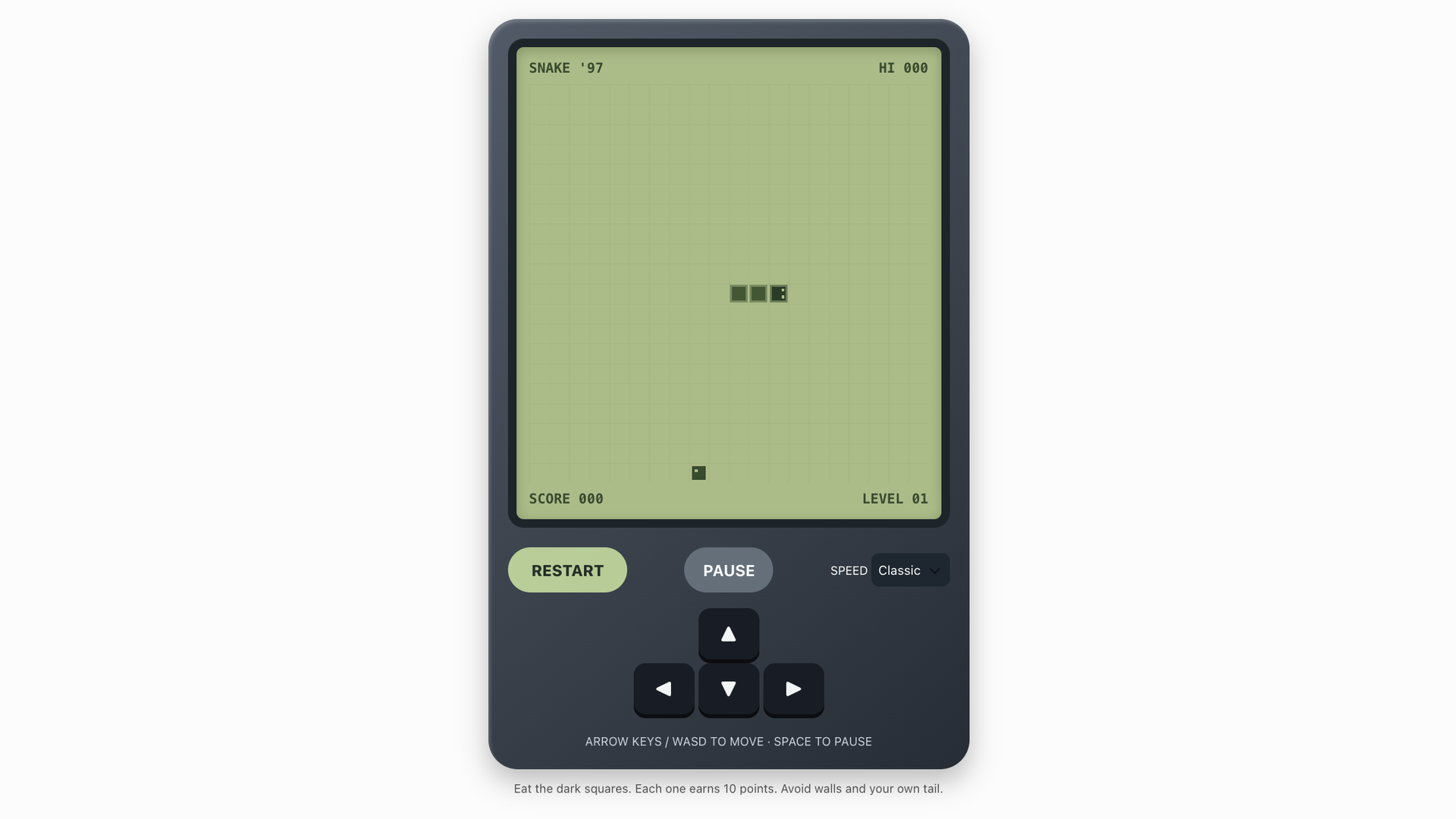
The prompt: "Create a playable version of the classic Snake game directly inside this conversation."
ChatGPT got the basics right straight away. The game was instantly recognizable, with responsive controls and even a slider to adjust the speed. It looked good and, importantly, it was actually fun to play for a couple of games.
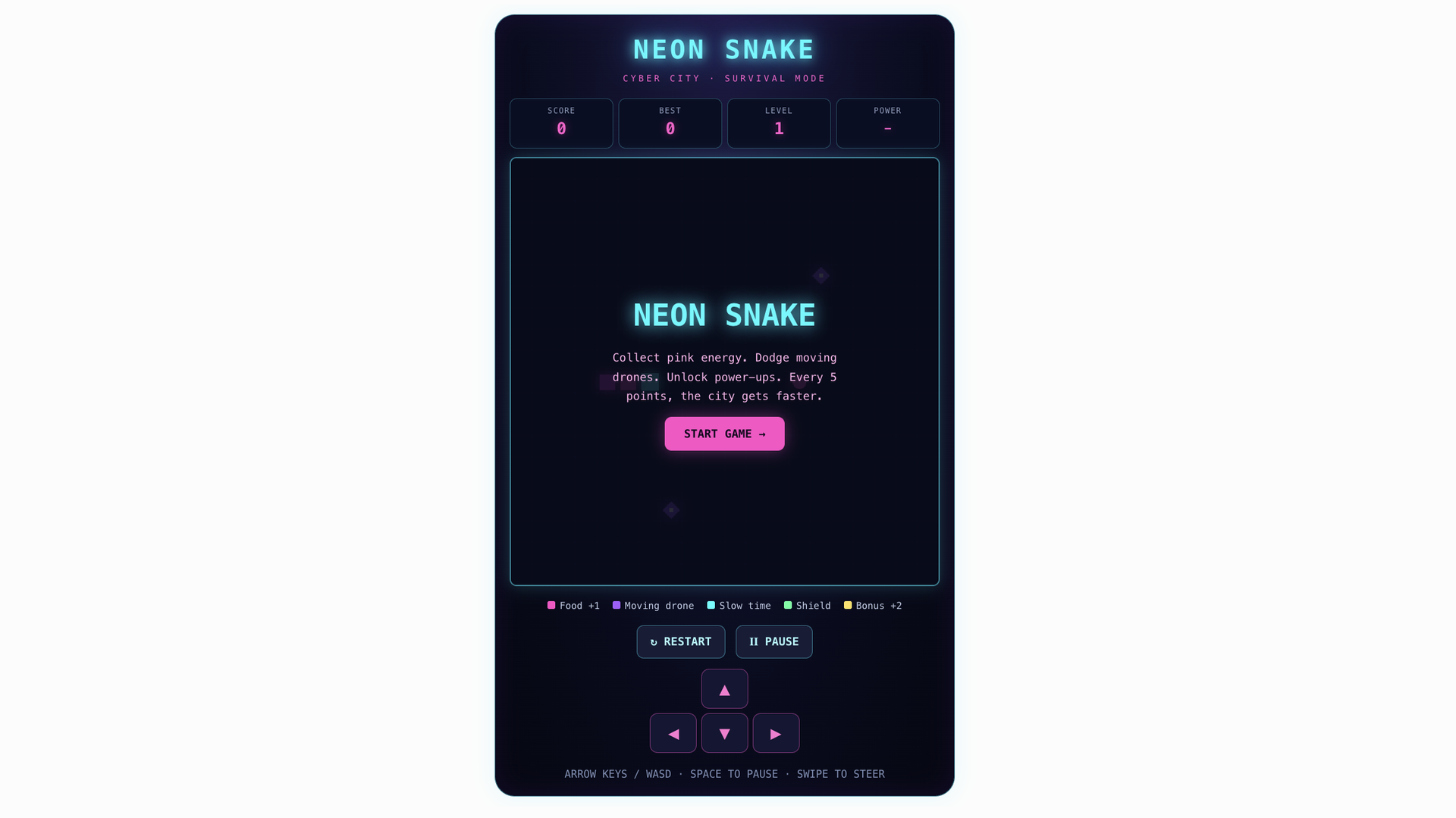
I then asked it to give Snake a neon cyberpunk makeover, complete with moving obstacles, special power-ups and a speed increase every five points. Say hello to Neon Snake.
(Image credit: Future)
There was one small hiccup. Instead of creating the new game directly in the chat window, ChatGPT initially gave me the code. Which wasn't much use when the whole point was to play it there and then.
I tried another prompt asking it if it could make it directly playable in the conversation and that worked. The results of that experiment were fun. The neon aesthetic looked good, everything was color-coded and the new mechanics gave the classic (and, let’s be honest, sometimes boring) game an extra layer of challenge.
Tetris gets new rules
(Image credit: Future)
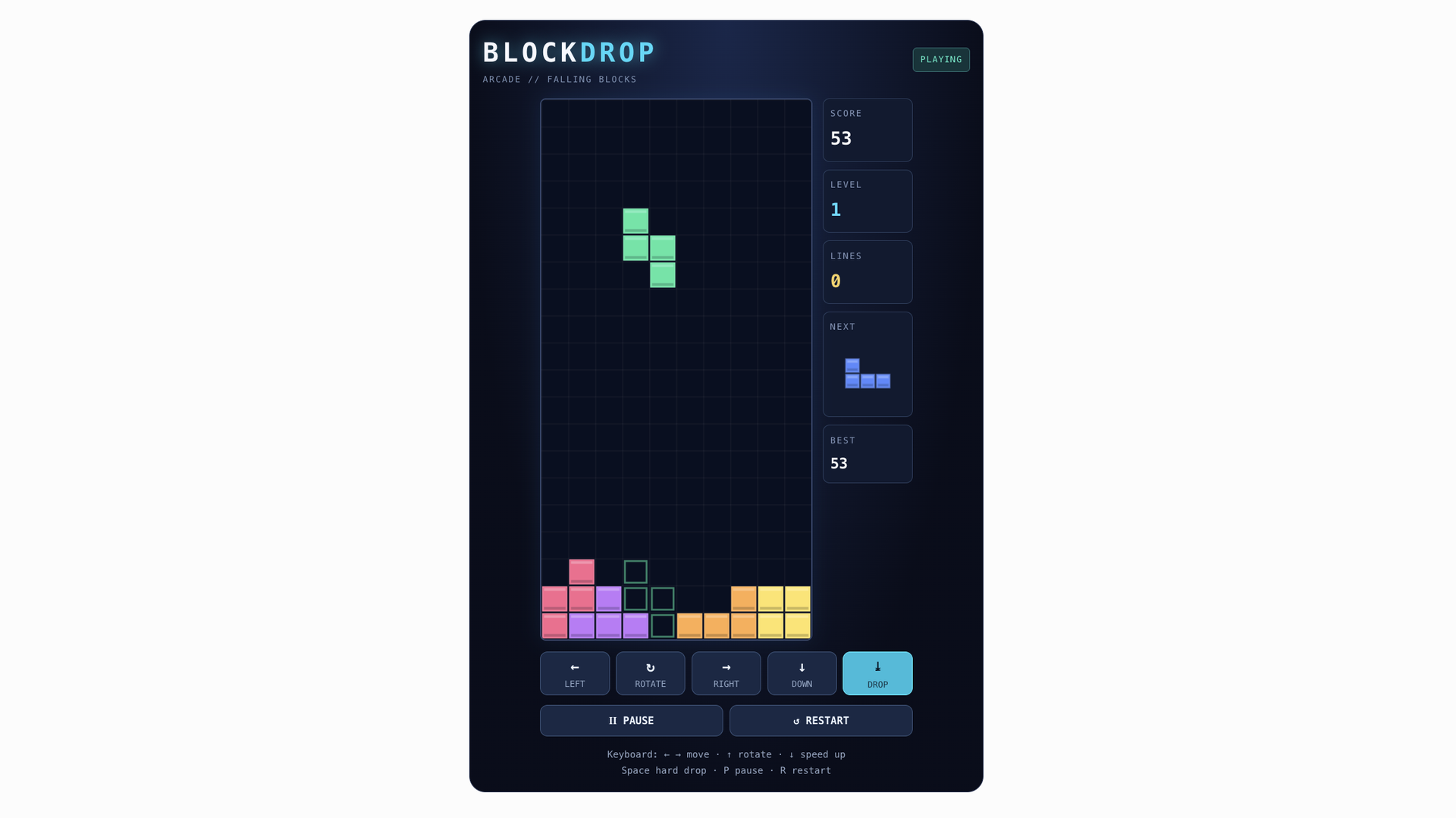
The prompt:"Create a playable game inspired by Tetris directly inside this conversation."
This one worked really well from the start. I’d just assumed it would be a bit buggy and glitchy because there’s so much going on compared to Snake, but the controls were intuitive and responsive, and the classic block-stacking mechanic was all there.
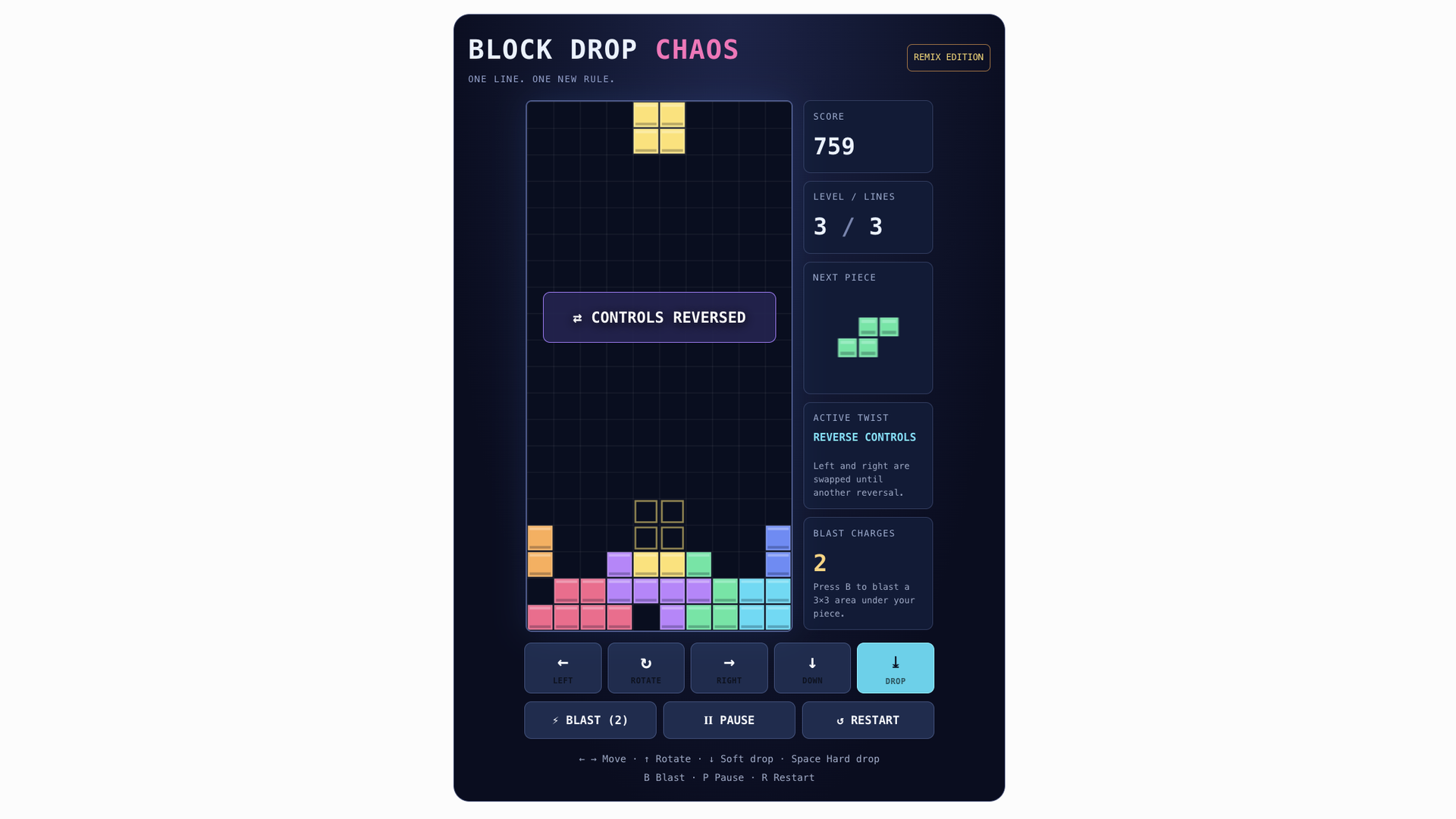
But what if Tetris changed the rules every time you cleared a line? That was the idea behind my follow-up prompt.
(Image credit: Future)
I asked ChatGPT to introduce unexpected twists, which could include rotating the board to adding unusual block shapes or special powers that could destroy part of the grid.
And it delivered. The changing rules introduced a fun element of unpredictability to a game that's usually all about getting into a rhythm. I also came away thinking about how much further you could take this. There are so many opportunities to experiment with different rules, challenges and power-ups.
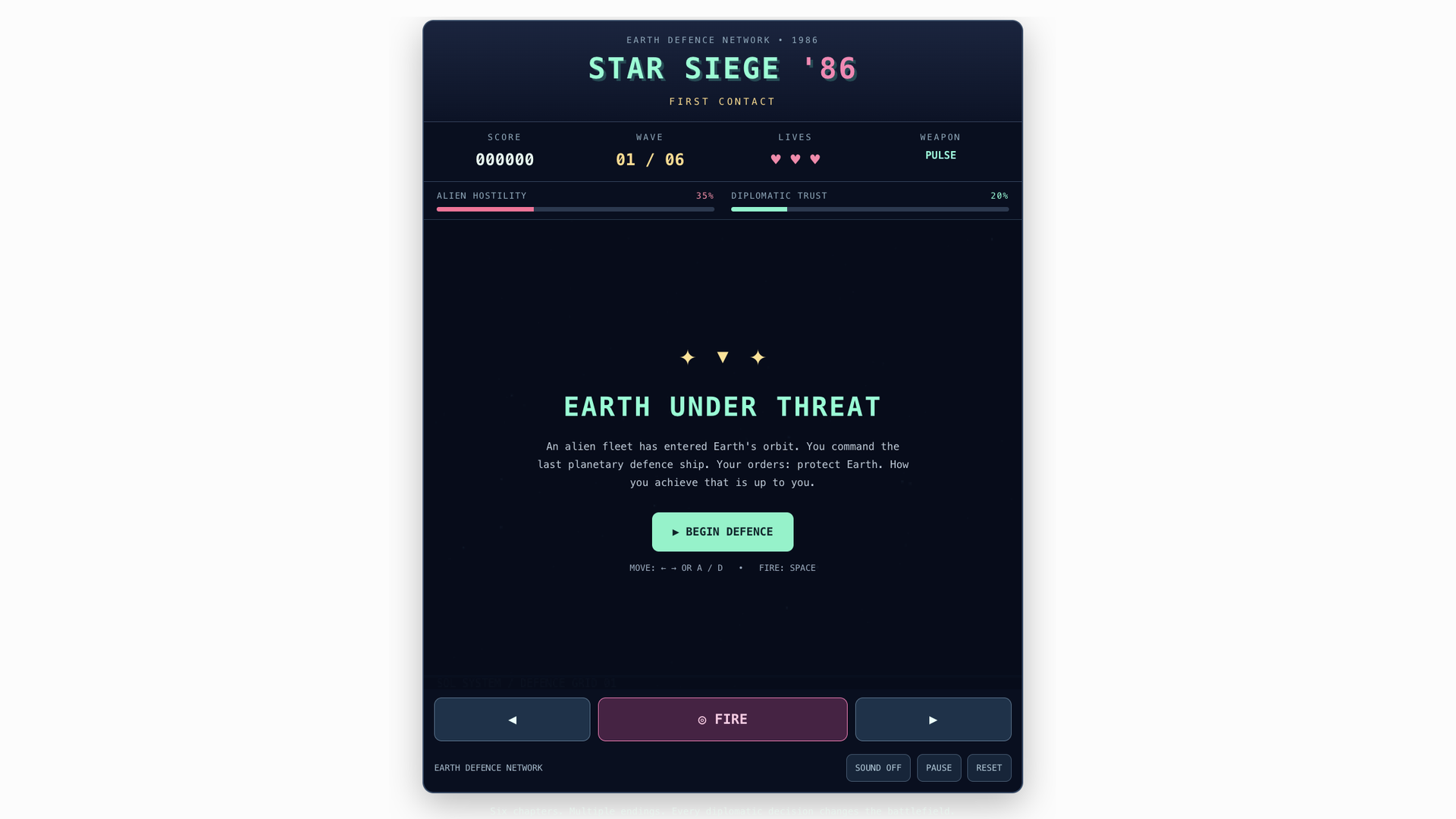
Space Invaders becomes a First Contact situation
(Image credit: Future)
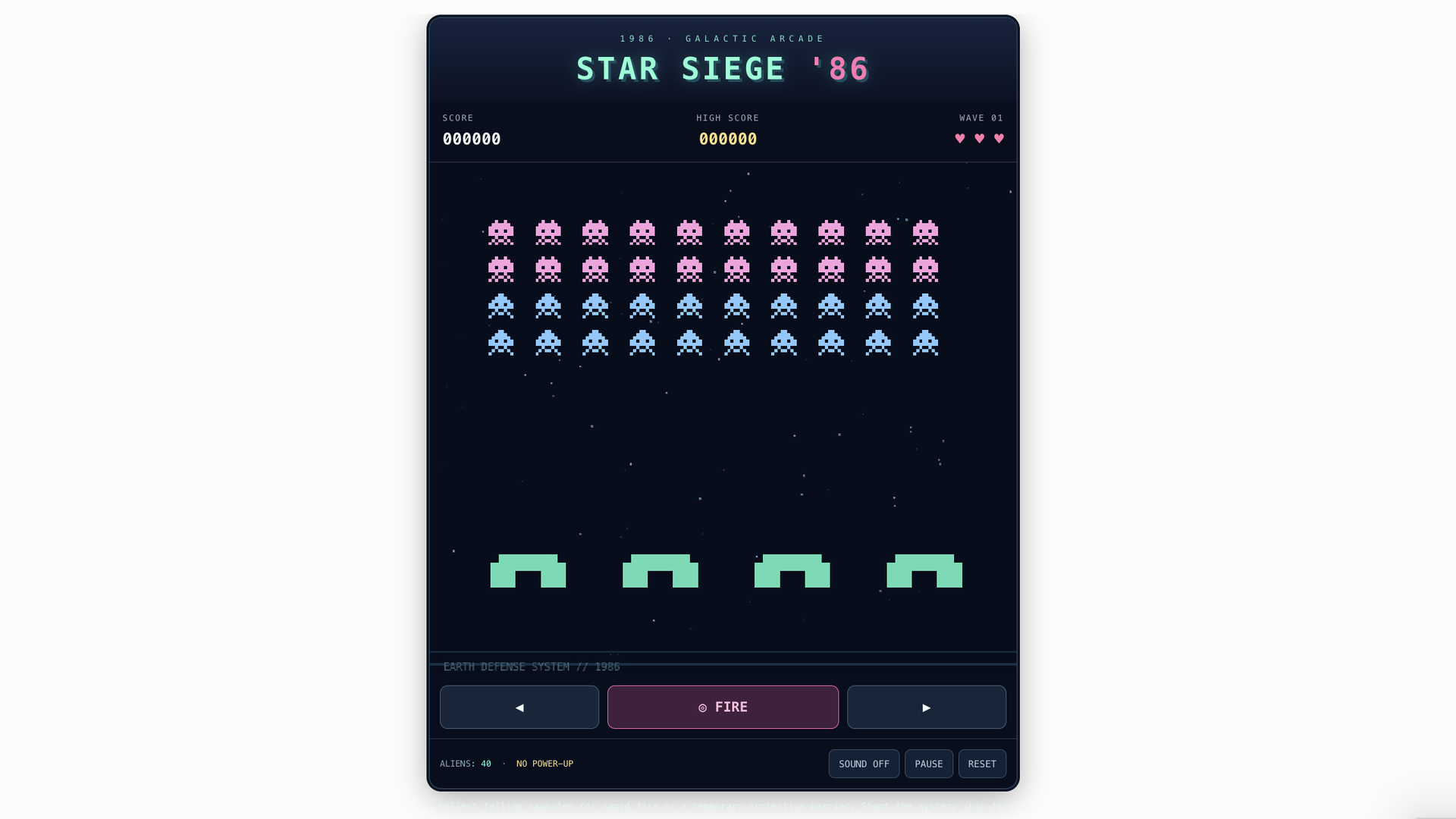
The prompt: "Build me a fully playable retro arcade game inspired by Space Invaders"
Again, ChatGPT recreated the classic arcade experience surprisingly well. It looked and played like the original, with straightforward controls and all the fun of shooting at waves of approaching aliens.
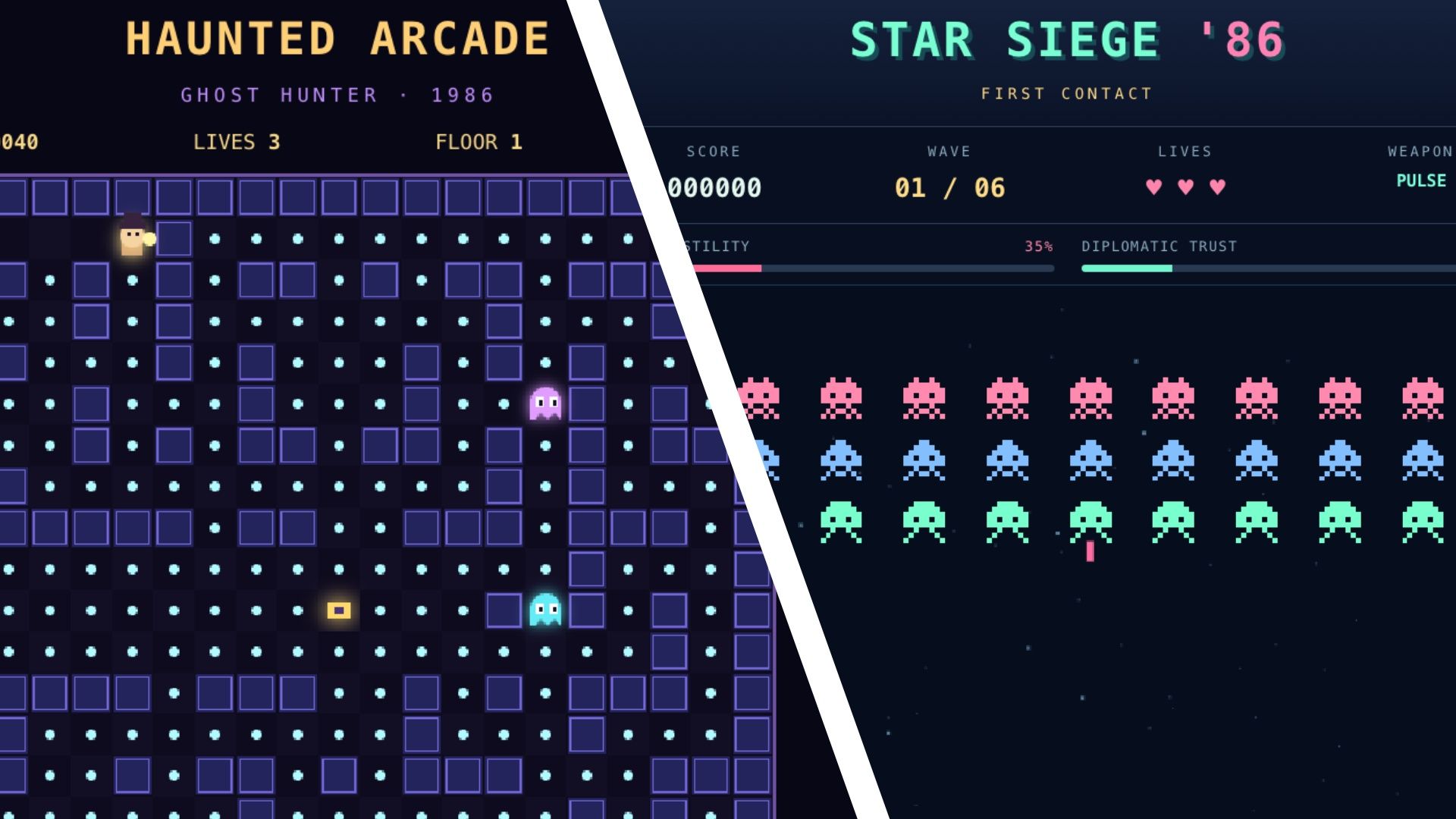
But I wanted to see whether it could do something a bit more imaginative than adding extra enemies or making everything move faster. So I asked it to introduce a choice: what if I could defend Earth by fighting the aliens or negotiating with them?
(Image credit: Future)
I wanted waves of pixel-art enemies, but also decisions between rounds that could unlock weapons, stop an invasion or make the next attack more dangerous.
ChatGPT called its reinvention First Contact, which I loved. Up until this point it was calling most of the games "chaos" or "chaotic" so this felt more inventive.
It was a fun way to introduce a new dimension to a familiar game. But did it work well? I don't know, I couldn't ever make it past the first level. This experiment really suffered with my poor alien-fighting abilities.
Haunted Pac-Man
(Image credit: Future)
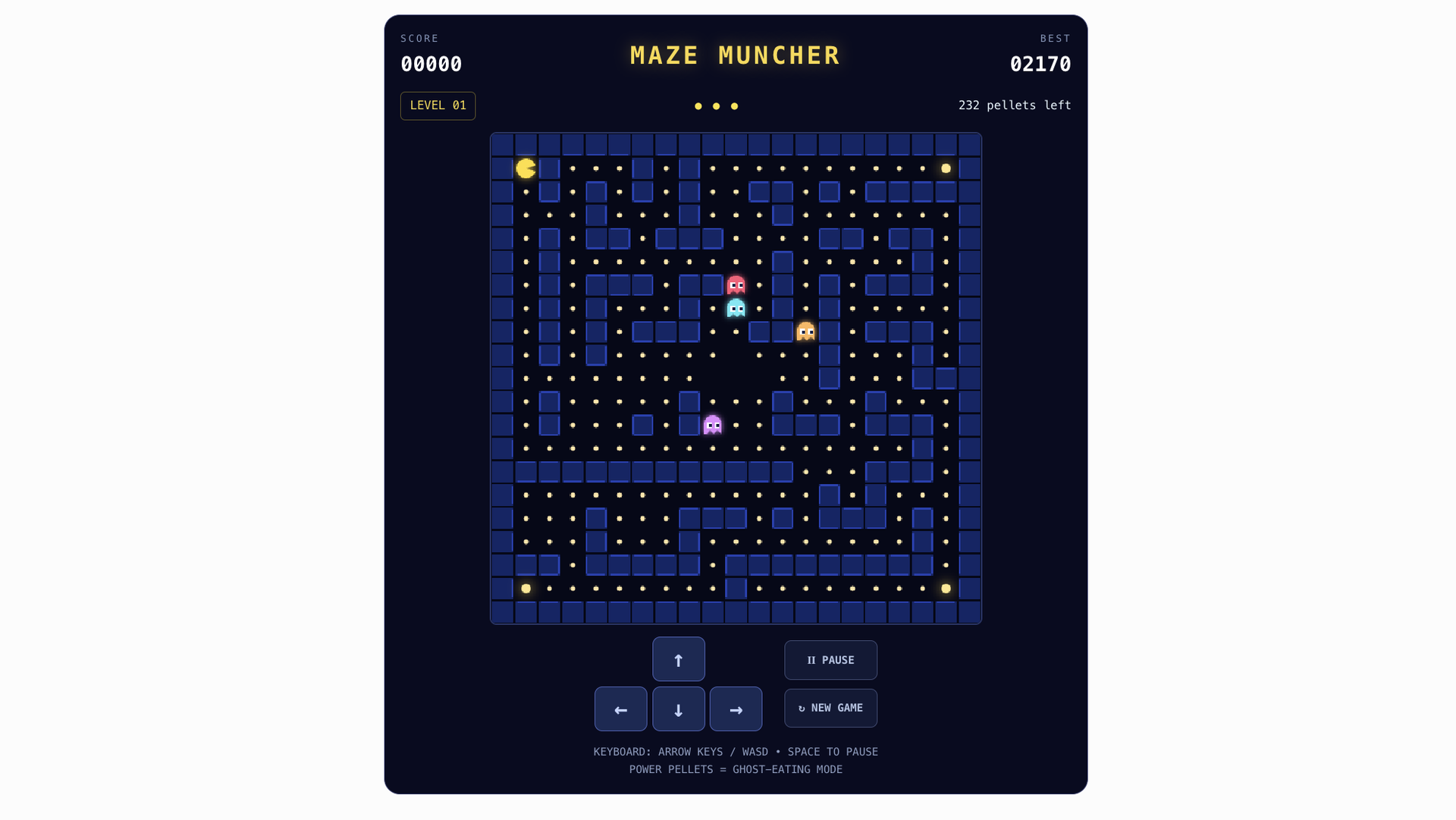
The prompt: "Create a fully interactive retro maze game inspired by Pac-Man that I can play directly inside this ChatGPT conversation."
This was easily my favorite of the five, but I have always adored Pac-Man. ChatGPT's first attempt was a fun, responsive maze game with the familiar mechanics of moving around, collecting things and trying to avoid enemies. Bonus points for the fact it renamed it Maze Muncher.
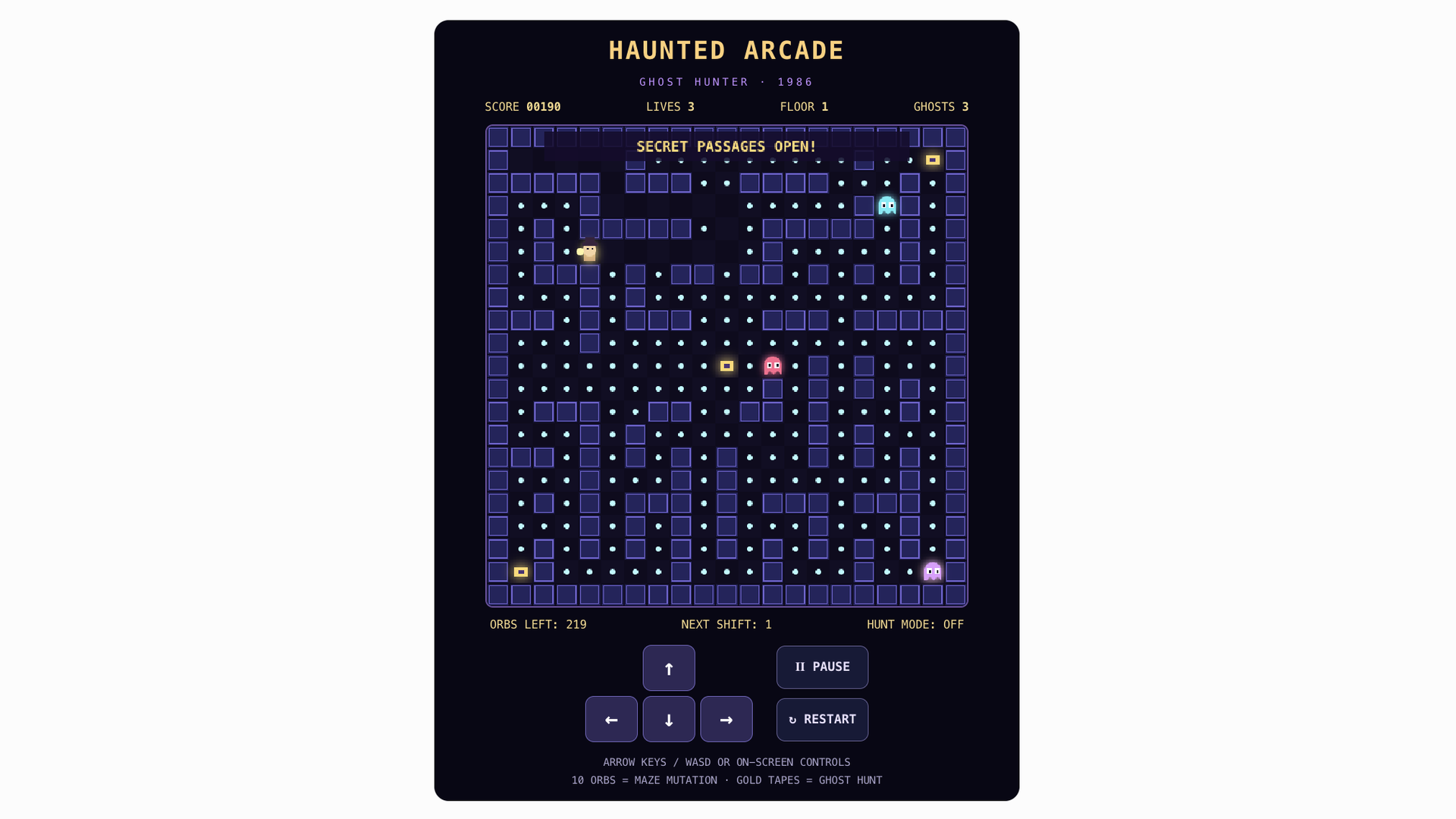
For the reinvention, I decided to lean into Halloween. I asked it to turn the game into a haunted 1980s arcade, with me playing a little ghost hunter instead of Pac-Man.
(Image credit: Future)
I also wanted the maze itself to change. Every ten orbs collected would trigger a surprise, like shifting walls, new passages or an extra ghost. And I asked for temporary power-ups that would let me chase the ghosts for a change.
ChatGPT handled this well but didn't wait until I'd collected orbs. It was super fast-paced and there were new ghosts, secret passages and changing mechanics from the start. It was quick, easy to control and genuinely fun to play.
Pong reinvented
(Image credit: Future)
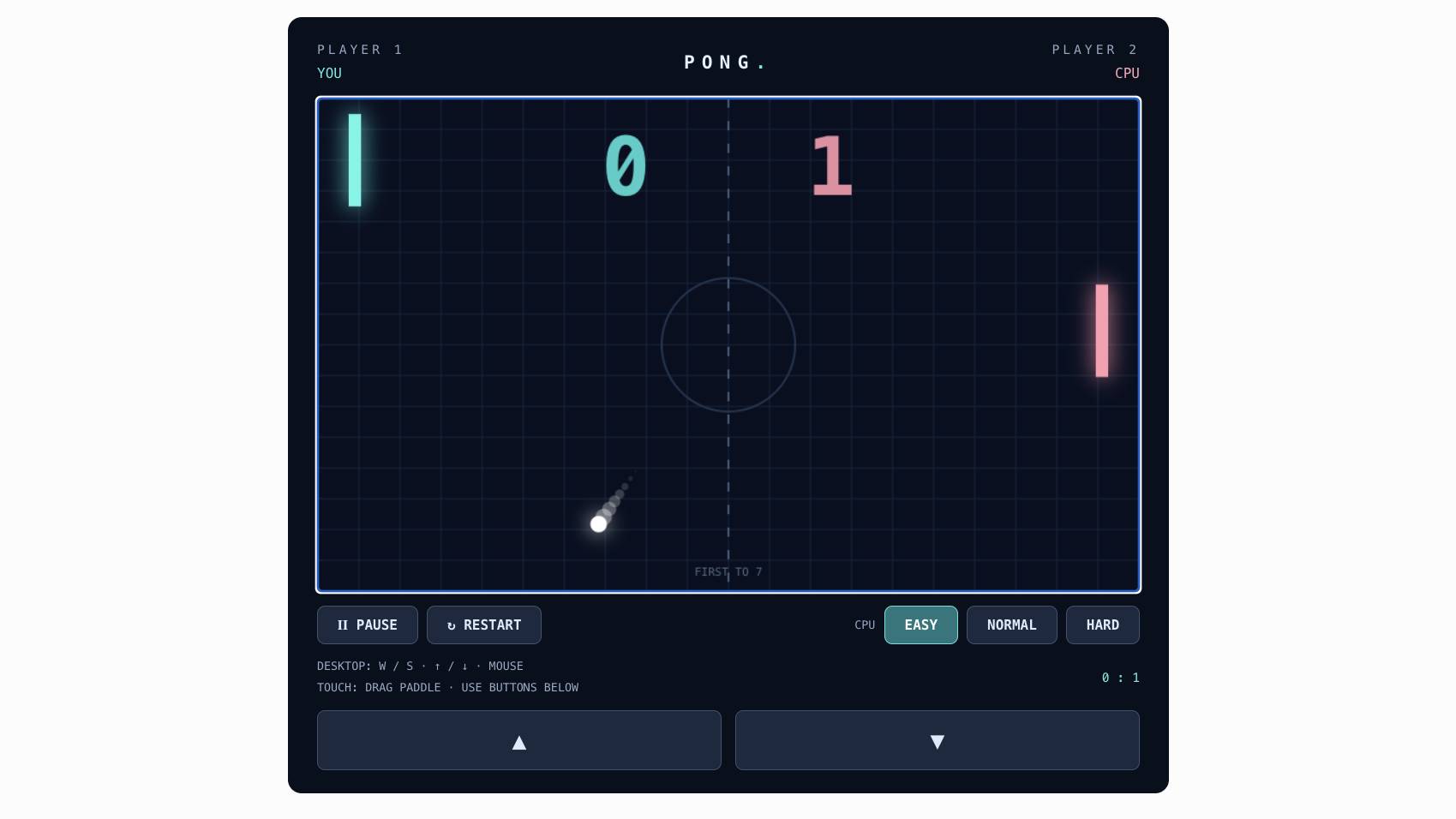
The prompt: Build me a fully playable version of Pong inside this conversation.
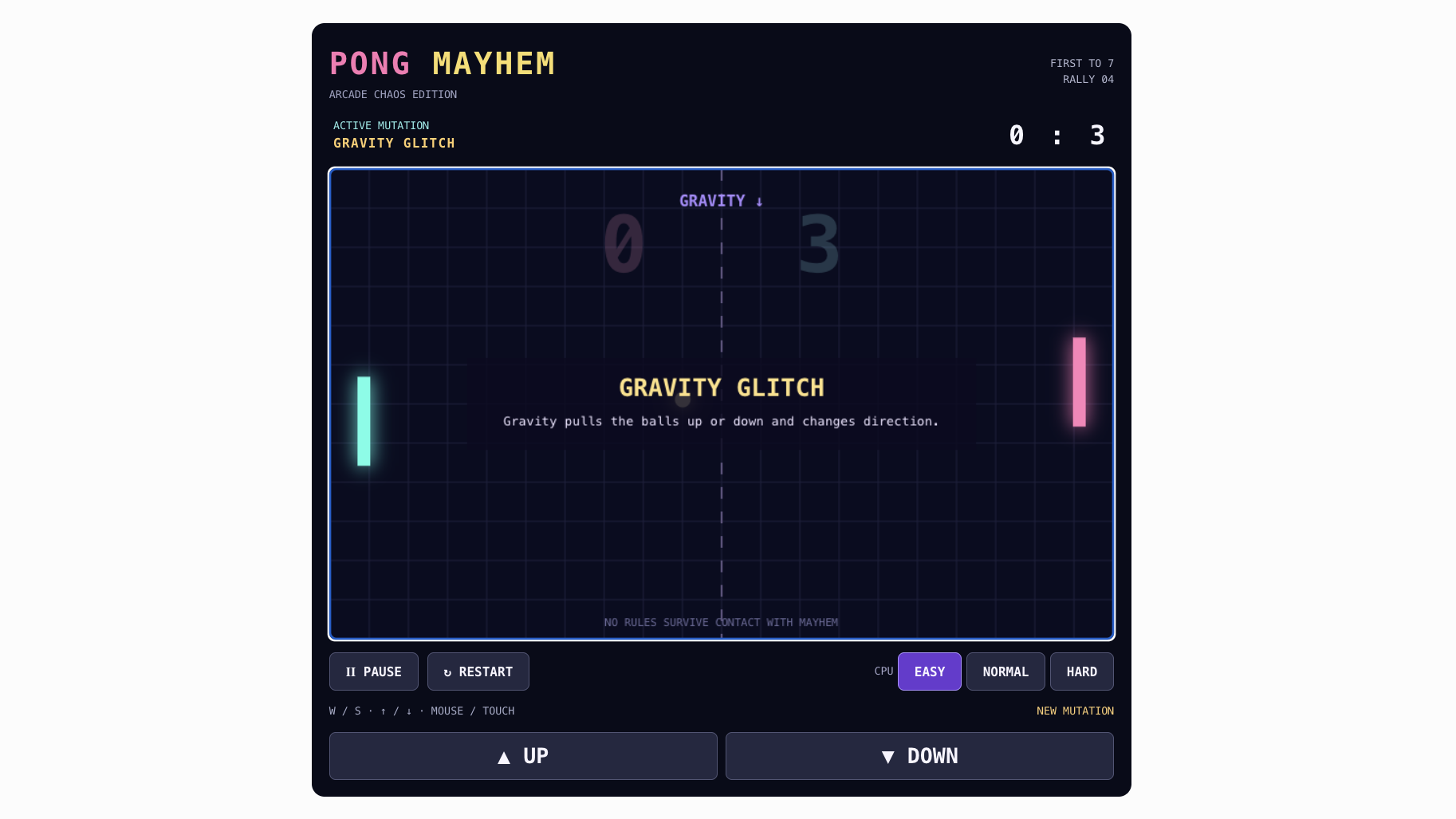
Pong might be the simplest game of the bunch, but ChatGPT made a really solid version. The controls were easy, the aesthetics were nice and it even offered easy, normal and hard difficulty settings.
I decided to ruin that simplicity and asked ChatGPT to create a more chaotic version where every point triggered a random modifier. The ball could split in two, the paddles could shrink, gravity could change or an obstacle could appear in the middle of the court.
The result definitely delivered on the chaos. The familiar back-and-forth gameplay was still there, but the changing rules made each rally a little less predictable. It was also a reminder of how much fun you can have with a simple idea. You don't need to reinvent every part of a game to make it entertaining.
(Image credit: Future)
I was genuinely impressed with how well all five games worked, especially considering how simple my original prompts were.
Yes, there were a few hiccups along the way, like ChatGPT deciding to give me code instead of a playable game a couple of times. But overall, the controls were responsive, the games looked good and the reinventions were more imaginative than I expected.
What I enjoyed most was how easy it was to experiment. You could take a game you already know, change the aesthetic, introduce an unexpected mechanic or come up with something completely ridiculous and see what ChatGPT made of it.
I can imagine this being a fun way to waste half an hour, especially if you loved these games growing up. Although, after all this experimenting, I do feel like I should remind you that the originals are still out there, and they're well worth revisiting too.

 Login