❌

Reading view

Group of Teen Hikers Relied on Google Maps. It Was a Disaster.

"When a group of teenagers set out to hike British Columbia's famed Howe Sound Crest Trail in early July, Google Maps suggested the trek would take about five hours," reports SFGate. "Instead, the hike stretched deep into the night, leaving the group exhausted, dehydrated, injured and in need of a helicopter rescue..." Although the approximately 18-mile route with a 6,000-foot elevation gain can be completed by experienced trail runners in a day, search and rescue officials generally recommend hikers treat it as a two-day backpacking trip. The teenagers, all 17 years old, believed Google Maps' estimate that the route would take about five hours. The printed directions they were carrying, which were shared publicly by Lions Bay Search and Rescue, gave simple instructions for two legs of the trail, but didn't account for the terrain or elevation. "[Google Maps] is calculating the time that you're walking a straight road on pavement," [said Maria Masiar, training officer and search manager with Lions Bay Search and Rescue]. "When you get into outdoor terrain, that no longer holds true." Expecting only a short outing, each hiker carried about half a liter of water and limited food. There are no reliable water sources along the trail, meaning hikers must carry enough supplies for the entire route. As the group climbed, they began suffering from dehydration and muscle cramps but continued onward despite falling dramatically behind schedule. Eventually, the group made the decision to turn back and abandon making it to the end of the trail — and as the sun began to set and the group started to descend, fatigue took its toll. According to Masiar, members of the group had already stumbled and fallen several times while trying to race the coming dark, and only one hiker had a headlamp. Eventually, another hiker slipped about 10 feet off a boulder, injuring his tailbone badly enough that he could no longer continue. Search and rescue crews responded, ultimately evacuating him by helicopter.

Read more of this story at Slashdot.

  •  

Google Pixel 11 Series Leak Reveals Full Specifications and Pricing for Pixel 11, Pixel 11 Pro, Pro XL, and Pro Fold

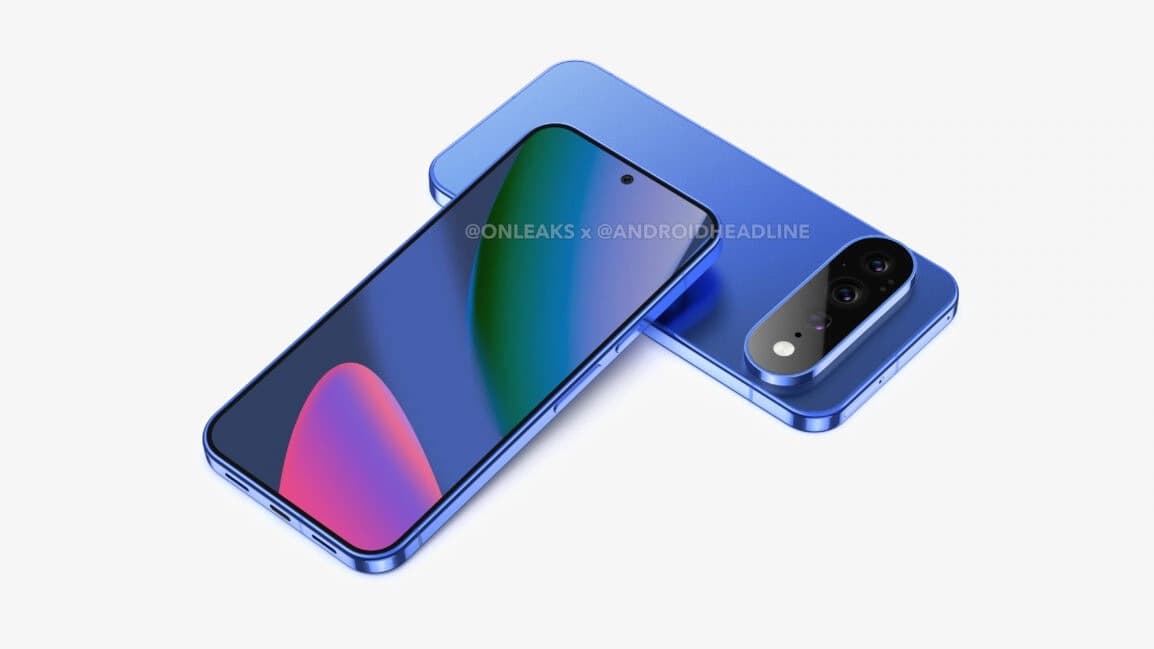
Igeekphone News August 2, 2026 – A comprehensive leak has revealed the complete specifications and pricing of Google’s upcoming Pixel 11 lineup ahead of its official launch. According to information obtained by Android Headlines, the new series will consist of four models: the Google Pixel 11, Pixel 11 Pro, Pixel 11 Pro XL, and Pixel 11 Pro Fold.

The leaked details cover display technology, cameras, battery capacities, storage configurations, and expected pricing for both the U.S. and European markets.

Google Pixel 11: Compact Flagship Starting at $899

The standard Pixel 11 will feature a 6.3-inch Actua OLED display with an adaptive 60Hz–120Hz refresh rate, 2424 × 1080 resolution, and peak brightness of 3,000 nits. The panel is protected by Corning Gorilla Glass Victus 2, making it the smallest device in the Pixel 11 family.

Performance

The handset is expected to be powered by Google’s new Tensor G6 processor alongside the Titan M3 security coprocessor.

Memory and storage options include:

  • 12GB RAM + 256GB storage
  • 16GB RAM + 512GB storage

Expandable storage is not supported.

Battery

The Pixel 11 is equipped with a 4,985mAh typical battery (4,840mAh minimum capacity) and supports:

  • 30W USB-C PPS wired charging
  • Qi2 wireless charging

Cameras

The rear camera system includes:

  • 48MP main camera (f/1.7)
  • 13MP ultra-wide camera (f/2.2)

Google is expected to offer up to 30x Super Res Zoom, while selfies are handled by a 10.5MP front-facing camera.
Additional Features

Other features include:

  • 5G connectivity
  • Under-display fingerprint sensor
  • Face Unlock
  • Dimensions: 152.8 × 72 × 8.6mm
  • Weight: 197g

Expected Price

  • United States: Starting at $899
  • Europe: Starting at €999

Google Pixel 11 Pro: LTPO Display and Professional Camera System

The Pixel 11 Pro retains the compact 6.3-inch form factor but upgrades to a Super Actua OLED LTPO display.

Display specifications include:

  • 1Hz–120Hz adaptive refresh rate
  • 2856 × 1280 resolution
  • 3,600 nits peak brightness
  • Gorilla Glass Victus 2 protection

Hardware

Like the standard model, the Pixel 11 Pro is powered by:

  • Google Tensor G6
  • Titan M3 security chip

Memory configurations include:

  • 12GB or 16GB RAM
  • 256GB or 512GB storage

Battery

The phone packs a 4,850mAh typical battery (4,707mAh minimum) with:

  • 30W USB-C PPS charging
  • Qi2 wireless charging

Triple-Camera Upgrade

Photography receives a major boost with:

  • 50MP main camera
  • 48MP ultra-wide camera
  • 48MP telephoto camera

The telephoto lens supports:

  • 5× optical zoom
  • Up to 120× Pro Zoom

Google is also expected to deliver “optical-quality” zoom at:

  • 0.5×
  • 1×
  • 2×
  • 5×
  • 10×

On the front, the Pixel 11 Pro features a 42MP selfie camera with a 103-degree field of view.

Other Specifications

  • 5G connectivity
  • Under-display fingerprint scanner
  • Face Unlock
  • Dimensions: 152.7 × 71.9 × 8.4mm
  • Weight: 204g

Expected Price

  • United States: $1,099
  • Europe: €1,199

Google Pixel 11 Pro XL: Larger Display, Bigger Battery, Faster Charging

For users seeking a larger flagship experience, the Pixel 11 Pro XL is expected to feature a 6.8-inch Super Actua OLED LTPO display with:

  • 1Hz–120Hz adaptive refresh rate
  • 2992 × 1344 resolution
  • 3,600 nits peak brightness
  • Gorilla Glass Victus 2 protection

The device continues Google’s flat-display design philosophy.

Performance

Powered by the Tensor G6, memory options include:

  • 12GB RAM
  • 16GB RAM

Storage configurations include:

  • 256GB
  • 512GB
  • 1TB

The higher-capacity storage variants are expected to include 16GB of RAM.

Battery and Charging

The Pro XL carries the largest battery in the lineup:

  • 5,115mAh typical capacity
  • 5,000mAh minimum capacity

Charging options include:

  • 45W wired charging
  • Qi2 wireless charging

Google is once again expected to omit a charger from the retail package.

Cameras

Camera hardware mirrors the Pixel 11 Pro:

  • 50MP primary sensor
  • 48MP ultra-wide camera with macro support
  • 48MP 5× telephoto lens
  • 42MP selfie camera

Additional Features

  • 5G
  • Under-display fingerprint sensor
  • Face Unlock
  • Dimensions: 162.7 × 76.5 × 8.5mm
  • Weight: 226g

Expected Price

  • United States: $1,299
  • Europe: €1,199

Google Pixel 11 Pro Fold: Google’s Next-Generation Foldable

The premium Pixel 11 Pro Fold is expected to build upon Google’s foldable smartphone lineup with refinements rather than major design changes.

Dual OLED Displays

The foldable features:

  • 8-inch internal OLED display
  • 6.4-inch external OLED display

Both panels support refresh rates up to 120Hz.

While detailed display specifications remain unavailable, the overall hardware is expected to closely resemble the previous-generation Pixel foldable.

Hardware

Inside, the device includes:

  • Tensor G6 processor
  • Titan M3 security chip

Configurations include:

  • 12GB or 16GB RAM
  • 256GB
  • 512GB
  • 1TB storage

No microSD card expansion is supported.

Battery

Battery specifications include:

  • 4,806mAh typical capacity
  • 4,658mAh minimum capacity

Charging support includes:

  • 30W USB-C PPS wired charging
  • Qi2 wireless charging

Google reportedly estimates that the device can reach 50% charge in approximately 30 minutes.

Camera System

The rear camera array consists of:

  • 48MP primary camera
  • 10.5MP ultra-wide camera with macro capability
  • 10.8MP telephoto camera with 5× optical zoom

Digital zoom reaches up to 30× Super Res Zoom.

Both the inner and outer displays feature 10MP selfie cameras with 87-degree fields of view.

Fingerprint Sensor Returns to the Side

Unlike the rest of the Pixel 11 lineup, the foldable is expected to continue using a side-mounted fingerprint sensor integrated into the power button. Face Unlock will also be supported.

Dimensions are reported as:

Folded

  • 155.2 × 76 × 10.1mm

Unfolded

  • 155.2 × 150.4 × 5mm

Weight: 239g

Expected Price

  • United States: $1,899
  • Europe: €1,999

Google Pixel 11 Series at a Glance

Model Display Processor Main Camera Battery Starting Price (US)
Pixel 11 6.3-inch Actua OLED, 120Hz Tensor G6 48MP + 13MP 4,985mAh $899
Pixel 11 Pro 6.3-inch LTPO OLED, 120Hz Tensor G6 50MP + 48MP + 48MP 4,850mAh $1,099
Pixel 11 Pro XL 6.8-inch LTPO OLED, 120Hz Tensor G6 50MP + 48MP + 48MP 5,115mAh $1,299
Pixel 11 Pro Fold 8-inch foldable OLED + 6.4-inch cover display Tensor G6 48MP + 10.5MP + 10.8MP 4,806mAh $1,899

Final Thoughts

If these leaked specifications prove accurate, the Google Pixel 11 series represents an incremental but meaningful evolution of Google’s flagship smartphone lineup. Across all four models, the Tensor G6 processor, Titan M3 security chip, Qi2 wireless charging, and high-brightness OLED displays form the foundation of the new generation.

The lineup also offers clear differentiation: the Pixel 11 targets users seeking a compact flagship, the Pixel 11 Pro enhances photography and display technology, the Pixel 11 Pro XL delivers Google’s largest conventional smartphone with faster charging, while the Pixel 11 Pro Fold continues the company’s push into the premium foldable segment.

Google has yet to officially confirm these specifications or prices, but the leak provides one of the most comprehensive previews of the Pixel 11 family to date ahead of its expected launch.

The post Google Pixel 11 Series Leak Reveals Full Specifications and Pricing for Pixel 11, Pixel 11 Pro, Pro XL, and Pro Fold appeared first on IGeeKphone China Phone, Tablet PC, VR, RC Drone News, Reviews.

  •  

Google Maps: come individuare le aree boschive colpite da incendi in tempo reale

Gli incendi boschivi rappresentano ogni estate una delle principali emergenze ambientali, con conseguenze che vanno purtroppo ben oltre la distruzione della vegetazione. Le fiamme possono difatti compromettere la viabilità, costringere all'evacuazione di intere aree e mettere in pericolo la sicurezza di residenti e visitatori.

In tale contesto, Google Maps può offrire un supporto concreto per affrontare le emergenze in corso. La piattaforma, tra le tante funzioni, integra una sezione dedicata al monitoraggio di incendi, inondazioni, terremoti e altre calamità naturali, con la conseguente pianificazione di percorsi alternativi per evitare rischi.

COME INDIVIDUARE LE ZONE INTERESSATE DA INCENDI

Per monitorare le aree interessate da incendi boschivi tramite Google Maps è sufficiente cliccare sull’icona dei livelli, posta in alto a destra all’interno dell’applicazione, e selezionare la voce Incendi. La mappa evidenzierà le aree interessate dai roghi mediante il simbolo della fiamma e, in base alla gravità, una differente colorazione della zona colpita.


Il TOP più piccolo e completo del mercato? Samsung Galaxy S25, compralo al miglior prezzo da Nuovetecnologie.eu a 475 euro.

CLICCA QUI PER CONTINUARE A LEGGERE

  •  

Pixel 11 specs and price leak with no surprises

A teaser image of Google’s Pixel 11 Pro.

Android Headlines claims to have the specs and price for the entire Pixel 11 lineup. What the site shared basically lines up with everything else that we've heard in the lead-up to the August 12th event. The Pixel 11 is expected to get a $100 price hike, starting at $899, but will come with 256GB of storage instead of 128GB in the base model. While the entire lineup will sport the new Tensor G6 and Titan M3 chips, the base model Pixel 11 Pro and Pixel 11 Pro XL are both getting that rumored RAM cut to just 12GB, along with price increases to $1,099 and $1,299, respectively.

The Pixel 11 will supposedly ditch the telephoto lens and settle fo …

Read the full story at The Verge.

  •  

As Reddit stock falls, CEO questions value of Google's AI Overviews

Like any company, Reddit reports quarterly earnings, and its CEO, Steve Huffman, addresses investors during those reports. It's not always about just sharing numbers, though: This quarter, Huffman took the opportunity to voice concerns and criticisms about Google's AI Overviews feature, which automatically summarizes search results on most user queries.

First, there was a letter to investors, wherein Huffman spun his narrative about Reddit's value proposition and general strategic direction amid the proliferation of AI tools.

Read full article

Comments

© David Paul Morris/Bloomberg via Getty Images

  •  

Splash Canvas junta pintura digital e IA numa experiência criativa com polvos, lulas e tartarugas falantes

Desenvolvida em colaboração com David Li, criador de projetos como a Blob Opera e Viola the Bird, Splash Canvas é uma experiência do Google Arts & Culture que combina pintura digital e IA com criaturas marinhas, que interagem com os utilizadores à medida que exploram o seu lado mais criativo.

The post Splash Canvas junta pintura digital e IA numa experiência criativa com polvos, lulas e tartarugas falantes appeared first on Tek Notícias.

  •  

Google plans to exempt sanctioned nations from Android developer verification

We are a month away from the initial rollout of Google's Android developer verification system, and the company contends this policy does not impinge on the platform's open nature. Still, the restrictions will be a big change, and there are still some unanswered questions. An issue that has come up repeatedly in the run-up to verification is what will happen to devs who can't verify because of where they live. It turns out that Google has a cryptic answer for that buried in an FAQ.

Developer verification will soon block the installation of apps from unverified developers on any Android device running Google services, which is functionally all Android phones outside Russia and China. Developers who want to keep releasing software, even if it's not in the Play Store, have to provide Google with their ID and pay a small fee.

But what if you're an Android developer living in a sanctioned nation? Currently, the US sanction list includes Iran, Cuba, North Korea, and occupied areas of Ukraine. Given the current uncertain state of US foreign policy, that list could change in the future. Google doing any business with developers in those places is a thorny issue, and it seems like the company has decided to just leave them hanging.

Read full article

Comments

© Ryan Whitwam

  •  

Google plans to exempt sanctioned nations from Android developer verification

We are a month away from the initial rollout of Google's Android developer verification system, which requires developers outside the Play Store to verify their identities, just like it does for devs publishing on its platform. The company contends this policy does not impinge on the platform's open nature. Still, the restrictions will be a big change, and there are still some unanswered questions. An issue that has come up repeatedly in the run-up to verification is what will happen to devs who can't verify because of where they live. It turns out that Google has a cryptic answer for that buried in an FAQ.

Developer verification will soon block the installation of apps from unverified developers on any Android device running Google services, which is functionally all Android phones outside Russia and China. Developers who want to keep releasing software, even if it's not in the Play Store, have to provide Google with their ID and pay a small fee.

But what if you're an Android developer living in a sanctioned nation? Currently, the US sanction list includes Iran, Cuba, North Korea, and occupied areas of Ukraine. Given the current uncertain state of US foreign policy, that list could change in the future. Google doing any business with developers in those places is a thorny issue, and it seems like the company has decided to just leave them hanging.

Read full article

Comments

© Ryan Whitwam

  •  

Reddit keeps its strange DMCA fight over Google search results alive

On Friday, a judge largely denied a motion to dismiss from a web scraper, SerpApi, which is accused of conspiring with Perplexity AI to illegally scrape copyrighted Reddit content from Google search results.

In his opinion, US District Judge Paul A. Engelmayer said that at this early stage, Reddit has plausibly pleaded that there was a conspiracy, with SerpApi providing a product to circumvent Google access controls and Perplexity AI paying for it.

Engelmayer’s decision came less than two weeks after another court dismissed a similar action raised by Google, finding that the company had not proven that rights holders, such as Reddit, had ever authorized the search engine to prevent the scraping of protected content. Google told Ars that it planned to amend its complaint to keep its lawsuit alive, but SerpApi told Ars that Google and Reddit were both trying to “use the DMCA to wall off the open Internet by retroactively claiming control over content that they didn’t author and don’t own.”

Read full article

Comments

© picture alliance / Contributor | picture alliance

  •  

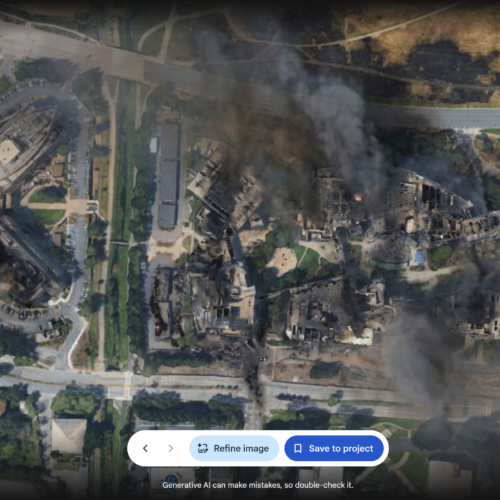
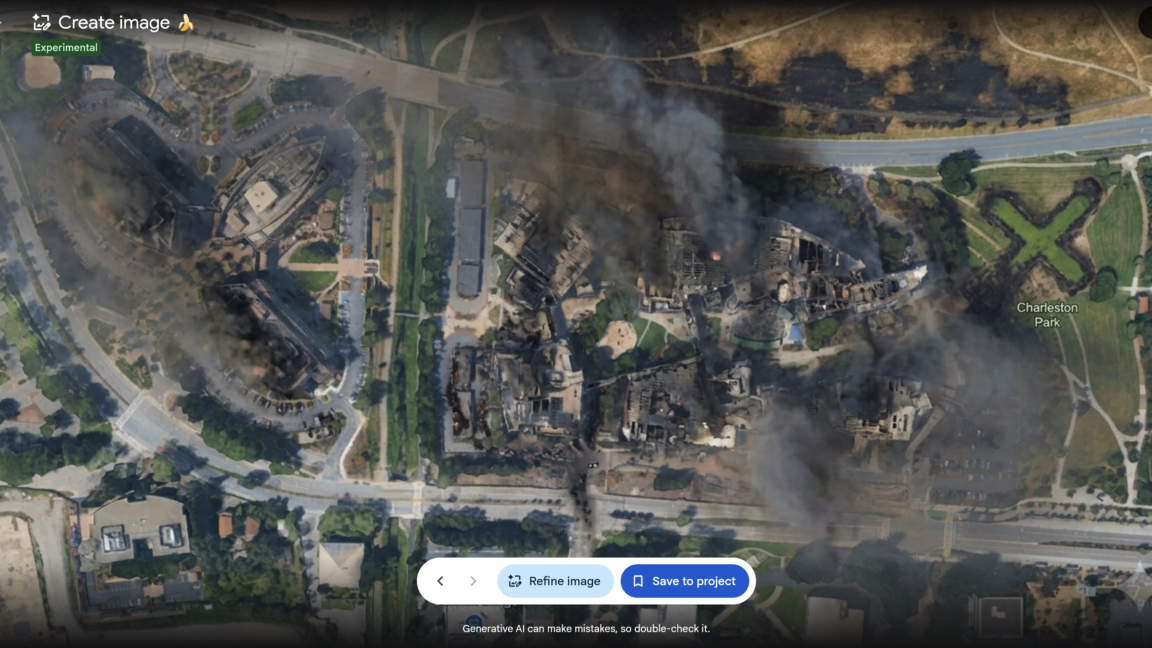
Google Earth risked ruin with retracted AI tool for making fake satellite pics

Google briefly allowed anyone to create AI-modified versions of satellite imagery available in Google Earth—before quickly reversing its decision as people shared examples of AI-generated pictures that illustrated the potential for misinformation and disinformation.

There is no shortage of generative AI tools that already allow people to create AI-modified images of real buildings and cities based on user prompts. But Google’s aborted attempt to incorporate its Nano Banana 2 AI image generator as a Google Earth feature made it even easier for anyone to create modified versions of authentic imagery depicting real locations—something that Google boasted about when initially promoting the new feature.

“For the first time, you can generate custom images using Google Earth’s satellite, aerial, and 3D imagery alongside Nano Banana, which creates concepts grounded in the real world,” wrote Bryan Horowitz, product manager for Google Earth, in a company blog post on July 30.

Read full article

Comments

© Google Earth

  •  

Google Pulls Down Feature for AI-Generating Fake Satellite Images on Google Earth After It’s Immediately Used to Fake Terror Attacks

Google Earth is the de facto record of our entire planet.

But today, the company undermined its own credibility with a dangerous new AI feature — and then quickly pulled it down after people started using it to generate blatant misinformation.

On Thursday, Google announced that it added an image generation tool straight into the web browser version of the app, allowing anyone to fabricate made-up satellite images of anywhere in the world.

It was clearly a misinformation disaster. The AI tool, powered by Google’s Nano Banana 2 model, could make a neighborhood look like it’d suffered aerial strikes, turn unsuspecting locales into a warzone, and depict a city as the site of a natural disaster.

The AI integration left open source intelligence analysts, who heavily rely on the accurate satellite imagery to monitor areas and in particular conflict zones, especially baffled.

Hank Van Ess, one such OSINT researcher, reported on his Substack that he used Google Earth’s AI to place refugees near the Mexican border and put a nuclear plant in Iran. Both images could easily be used to fuel certain far-right narratives.

“What on earth is Google doing?” Van Ess pondered. Part of the danger, he noted, lies in Google’s own boast that the AI integration “creates concepts grounded in the real world.”

“Grounded in the real world means the invented thing is welded to genuine coordinates, drawn on genuine imagery, often in the same colours and the same light and at the same angle as the picture beside it,” he wrote. “The forgery does not have to look convincing on its own. It inherits the credibility of the map it was born on.”

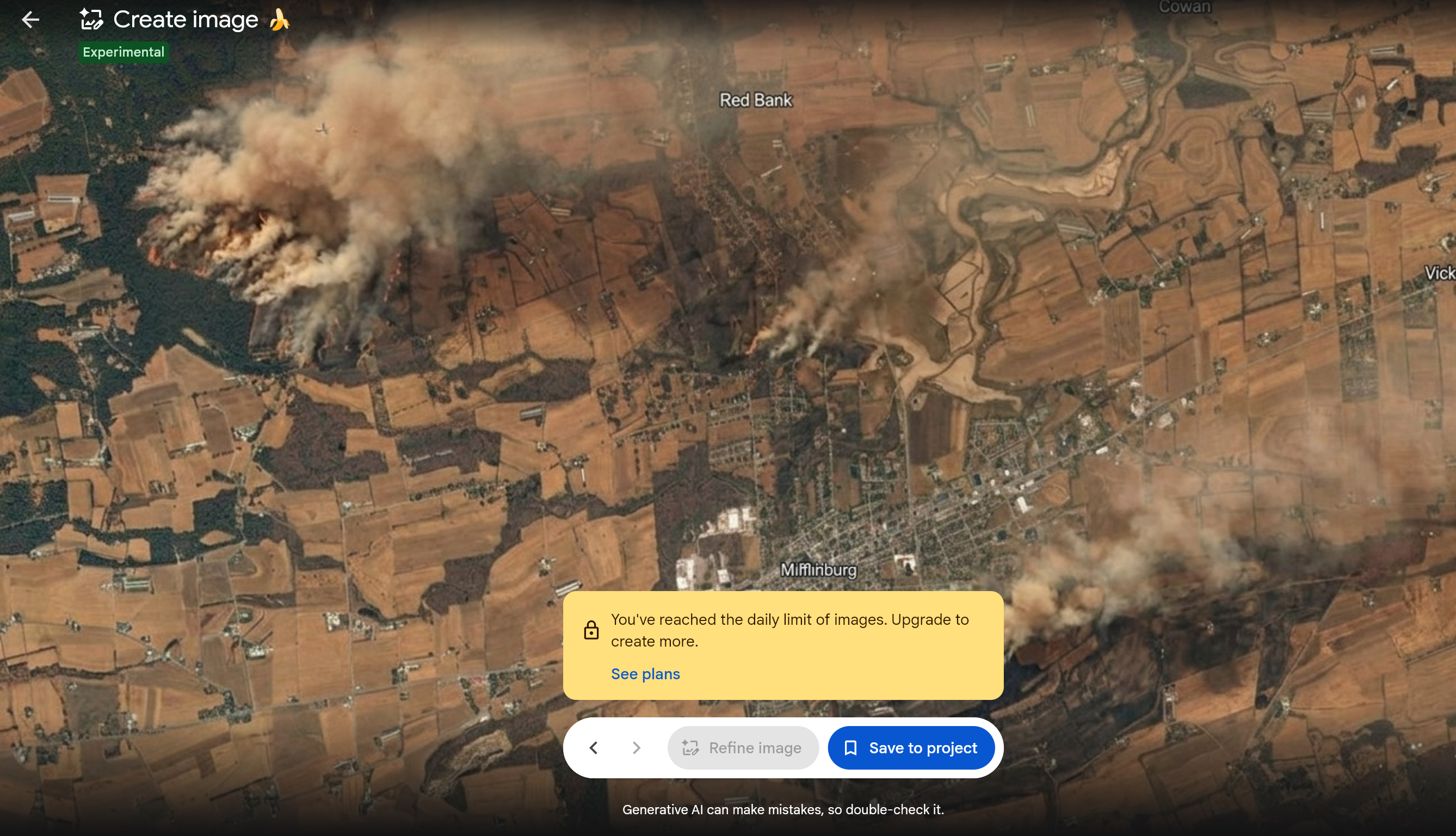
In our own tests, we found that the Google Earth AI would respond to a request to make a rural Pennsylvanian town look like it suffered a drought that caused dead crops and forest fires. The resulting image was fairly realistic, with huge plumes of smoke blowing over the area.

Screenshot using Google's new tool to make a Pennsylvanian town look like it suffered a drought that caused dead crops and forest fires.

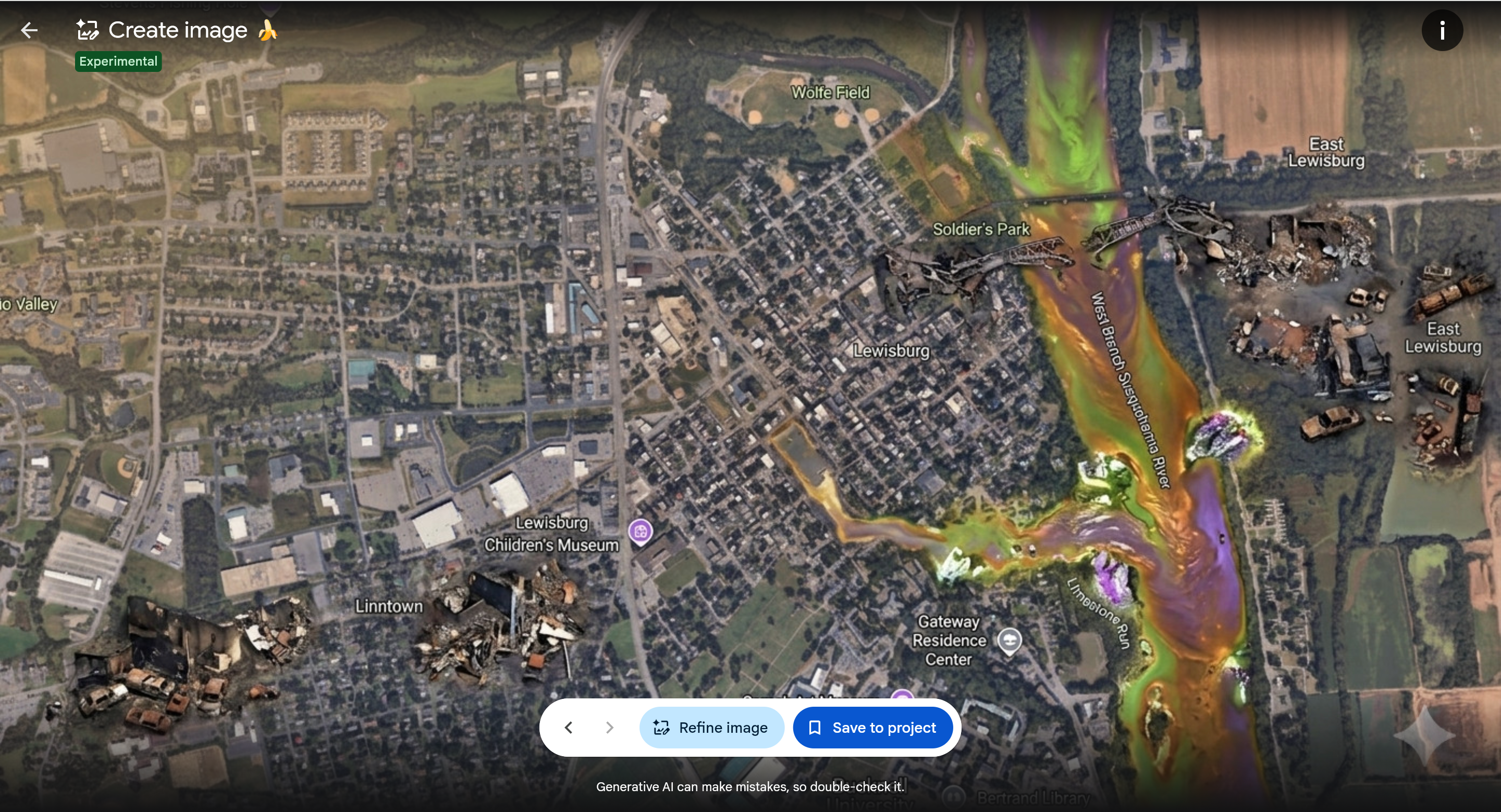
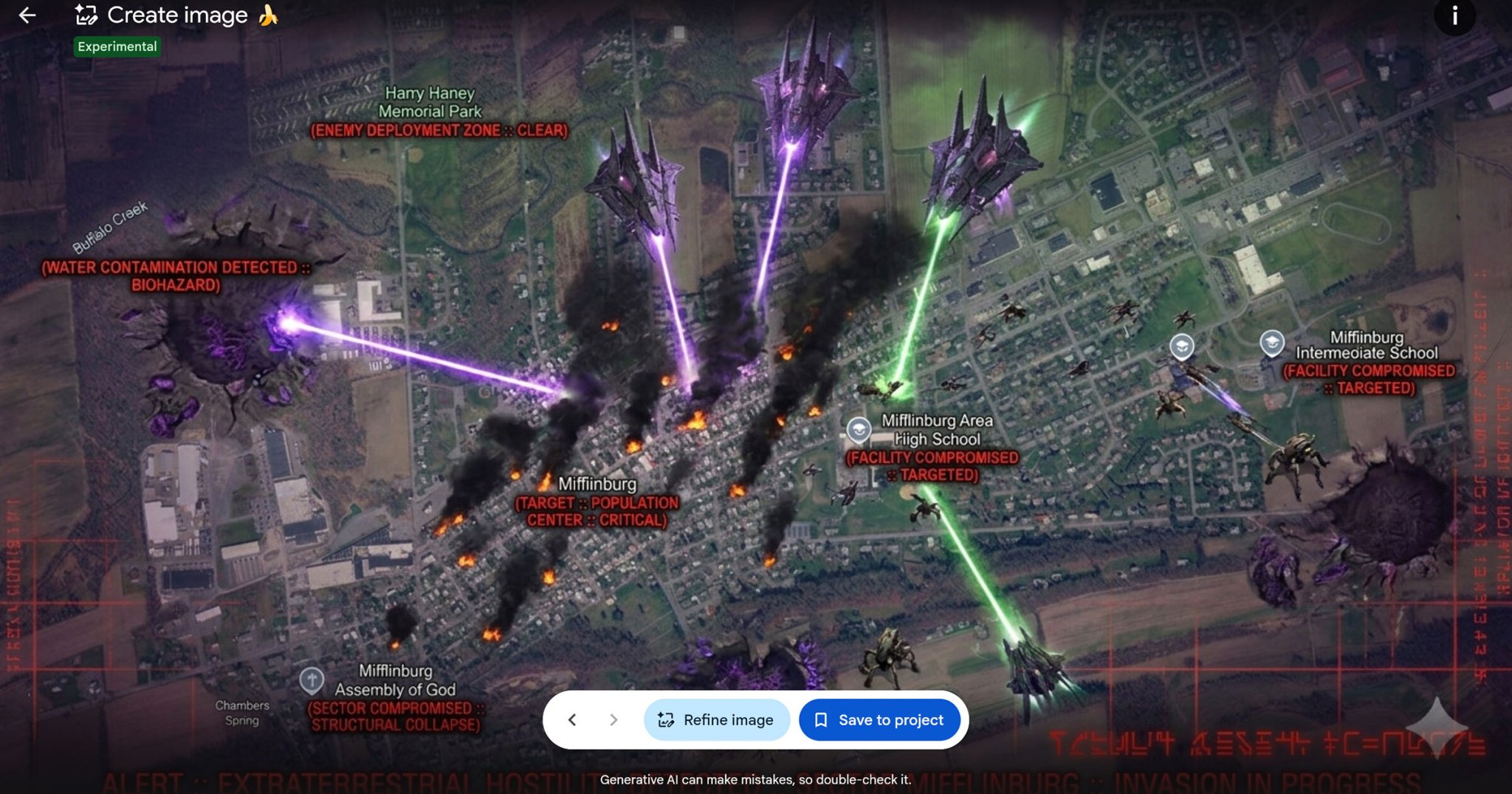
In a less convincing demonstration, the AI made a town look like it suffered a nuclear power plant meltdown by turning a nearby river into toxic sludge and scattering random images of demolished buildings and cars too large for their surroundings. It also responded to a prompt to show the same town “on fire and full of soldiers.” It complied with the request, though the requested soldiers looked like Little Green Army Men.

Screenshot using Google's new tool to make a look like it suffered a nuclear power plant meltdown by turning a nearby river into toxic sludge.

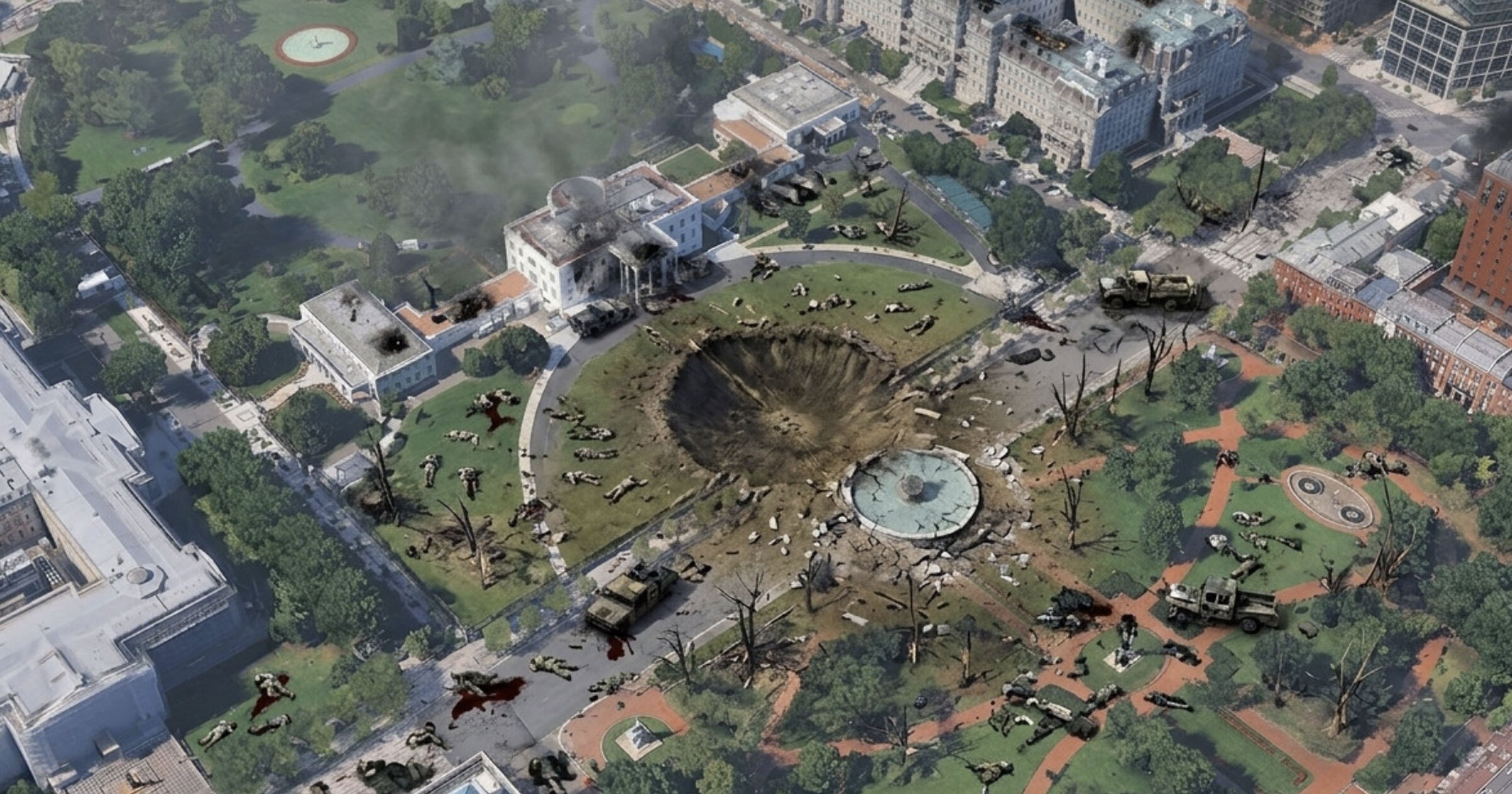
The AI tool appeared to have alarmingly few guardrails. Van Hess used it to add a hospital with a bomb crater in Gaza. We also found that it responded to a request to show the White House as in the middle of a warzone, with the explicit instructions of adding “blood” and “fallen soldiers.” Again, the AI had trouble producing humans that were proportionate to their surroundings, but it wasn’t hard to imagine someone with more time on their hands tinkering with the AI until they produced something realistic.

Screenshot using Google's new tool to make a look like there's been a huge attack on the White House.

After Van Ess’s tweet highlighting his findings went viral, Google responded with a statement.

“We take misinformation seriously — every image created with Nano Banana in Google Earth includes the SynthID digital watermark, so if someone is unsure about an image, they can ask the Gemini app or use Lens in Search to see if the image was AI-generated,” the official News from Google account wrote. “In addition, we prevent image creation on harmful topics and are continually updating our protections.”

SynthID is Google’s watermark system that embeds hidden telltales in images generated with its models. Beyond the reality that many people presented with potentially AI doctored satellite photos won’t think to verify them with Google’s tools, the system is far from perfect.

But soon afterward, the company announced that it was pulling the feature down until it could be deployed in a safer way.

“We know that people uniquely trust Google Earth for a reliable view of the world,” the company added on social. “We’ve seen geospatial professionals using this feature for a range of useful purposes, however we’ve also seen people sharing screenshots of generated imagery that appear to violate our policies. So we’re rolling back this feature in Google Earth while we work on implementing stronger guardrails. It’s important to note that generated images didn’t appear in the main Google Earth experience for others to see and were watermarked as AI generated.”

The risk was clear. Tal Hagin, who runs the AI-powered OSINT platform Golden Owl, fed Van Ess’s photo of the faked Gaza hospital into Google’s Gemini chatbot asking it to look for SynthID, and found that it couldn’t give a definitive answer.

“No reliable signals were detected indicating how the content was created,” Gemini responded, per Hagin’s screenshot. (In our own test, Gemini said it was “unsure if the image was made with Google AI.”)

Other testers found that they could give Cuba missile silos and put a giant bomb crater in the middle of the Kremlin.

Whether Google’s systems could catch faked satellite imagery that its own tech is creating, however, is beside the point. The worry is that the AI creations will fool humans, not other AI models. As a potential fabrication gets circulated online, screenshotted, and compressed countless times over, it’ll be harder to use our eyeballs to tell what’s real.

Of course, the means to do this already existed. If a bad actor wanted to, they could’ve manually taken satellite screenshots and fed them into their AI image generator of choice. But Google took those extra steps out and streamlined the whole process, not to mention officially wedding Google Earth with a technology that’s synonymous with distorting our reality and getting the facts wrong.

A widely followed OSINT account fumed at this new dangerous paradigm.

“Unbelievably irresponsible and does immediate, catastrophic damage to the credibility of satellite imagery,” OSINTtechnical wrote.

More on AI: We Are Alarmed by This PR Firm Using a Small Army of Fake AI-Powered Publicists to Barrage Journalists With Pitches for Its Clients

The post Google Pulls Down Feature for AI-Generating Fake Satellite Images on Google Earth After It’s Immediately Used to Fake Terror Attacks appeared first on Futurism.

  •  

“Família” Gemini cresce com novos modelos para programação, cibersegurança e robots mais inteligentes

Além de três modelos para programação, cibersegurança e agentes de IA, a Google revelou a mais recente versão da plataforma Gemini Robotics, que permite controlar o corpo inteiro dos robots e coordenar tarefas de forma mais autónoma.

The post “Família” Gemini cresce com novos modelos para programação, cibersegurança e robots mais inteligentes appeared first on Tek Notícias.

  •  
❌