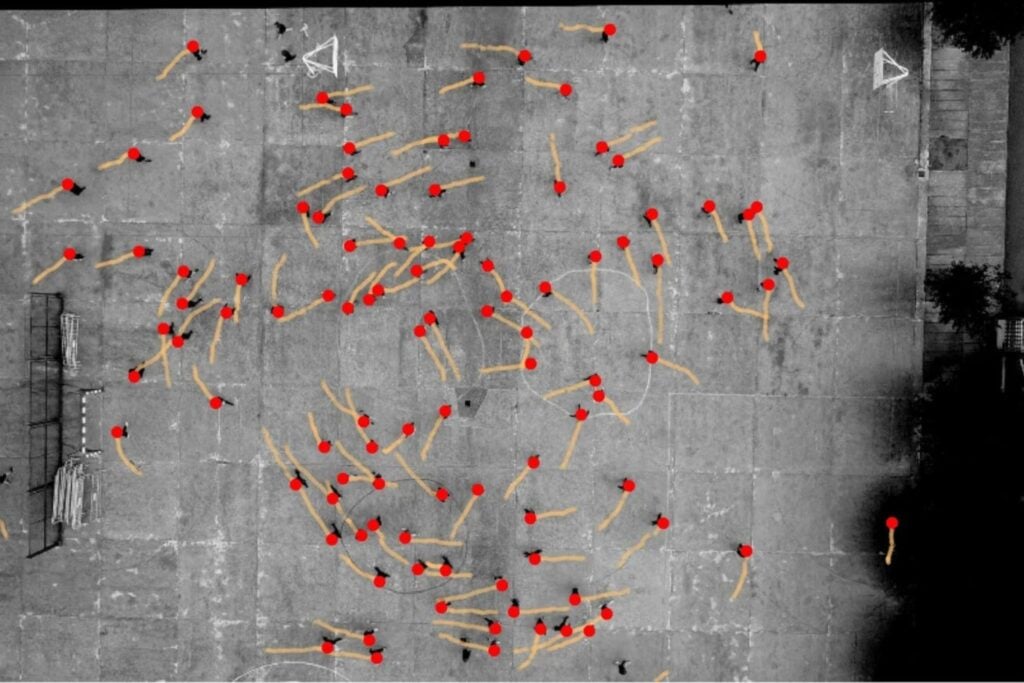
El Mundial 2026 ya tiene su teoría más delirante: una supuesta abducción alienígena en pleno Brasil-Escocia. Una vidente dice haber soñado con naves llevándose jugadores y aficionados


An international team of paleontologists from Romania, Hungary and Italy has identified a new genus and species of herbivorous, duck-billed dinosaur from an incomplete skeleton unearthed in the Hațeg Basin, a bowl-shaped depression in the Carpathians of present-day Romania.
The post New Duck-Billed Dinosaur Unearthed in Romania appeared first on Sci.News: Breaking Science News.


Astrobotic showed off the lunar lander it plans to launch later this year that will be the vanguard of NASA’s new lunar base ambitions.
The post Astrobotic unveils Griffin-1 lunar lander appeared first on SpaceNews.

In a groundbreaking development addressing the burgeoning concern of privacy in modern medical technology, researchers at the University of Kansas have unveiled a transformative artificial intelligence (AI) model designed specifically to safeguard sensitive biometric data embedded within electrocardiograms (ECGs). This innovation is poised to reshape how medical institutions share and analyze vital cardiovascular data without compromising patient confidentiality. Electrocardiograms have long been renowned for their role in capturing the heart’s electrical activity to diagnose and monitor cardiac health; however, as AI integration deepens, these signals inadvertently reveal more than just clinical information — exposing personal attributes such as sex, age, race, and even uniquely identifiable biometric markers.
The research team at Kansas, led by doctoral candidate Fairuz Shadmani Shishir in collaboration with the KU Medical Center, has pioneered the privacy-preserving variational autoencoder (PP-VAE). This novel AI architecture is specially engineered to retain the clinical utility of ECG data while systematically obfuscating sensitive biometric features that might otherwise be inferred through advanced AI analysis. The dual objective of PP-VAE is both technically sophisticated and ethically imperative, ensuring that predictive diagnostic accuracy remains uncompromised while minimizing the risk of privacy breaches inherent in sharing raw biomedical signals.
Electrocardiograms, traditionally viewed as a straightforward diagnostic tool, have grown in complexity with modern AI techniques that can extrapolate a multiplicity of patient traits beyond the cardiovascular parameters they were designed to measure. Shishir notes that these advanced systems can uncover “soft biometrics” such as demographic information, which raises pressing data governance and patient privacy challenges. By developing PP-VAE, the researchers aim to reimagine ECG data processing whereby sensitive attributes are masked without degrading the signal quality necessary for important medical prognoses, such as identifying patients at risk of left ventricular ejection fraction (LVEF) abnormalities, a critical indicator linked to heart failure and mortality risk.
The technical underpinning of PP-VAE involves training independent convolutional neural networks to disentangle and suppress identifiable biometric markers while preserving clinically relevant features within the ECG signal. This balancing act required careful engineering to ensure that the encoded ECG data remained diagnostically rich, capable of supporting predictions related to conditions such as left ventricular hypertrophy and forecasting five-year mortality risk. The research showcased that their method consistently outperformed or competed with other state-of-the-art AI models, marking a significant stride in machine learning’s ability to harmonize privacy with clinical efficacy.
Importance of such privacy-preserving strategies becomes particularly clear against the backdrop of the healthcare industry’s increasing reliance on data sharing for collaborative research, AI model development, and multi-institutional patient care coordination. The KU team articulates that unrestricted data sharing without privacy controls introduces tangible risk vectors for patient re-identification and misuse. PP-VAE proposes a scalable approach toward enabling secure exchange of ECG data, thus fostering innovation and improving medical outcomes while staunchly protecting individual privacy rights.
This research also touches on the profound issue of bias within AI-driven medical diagnostics, which has historically contributed to disparities in healthcare delivery among marginalized populations. The team consciously incorporated balanced datasets reflective of gender and racial diversity in their model training to mitigate bias and improve generalized performance across varied demographic groups. While initial validations were primarily conducted using data from KU Medical Center and publicly available datasets, future work is projected to expand this cross-regional training, enhancing the robustness and impartiality of the model when applied globally.
Another compelling facet of this breakthrough is the planned public release of the PP-VAE model, reflecting the researchers’ commitment to transparency, collaboration, and democratization of AI tools in medicine. By allowing institutions worldwide to access and further refine the model with local datasets, the innovation promises to catalyze a new era of secure, privacy-conscious healthcare analytics. Adoption of PP-VAE could alleviate prevalent trust issues among patients concerned about the confidentiality of their biometric health information—a critical barrier to broader acceptance of AI-driven healthcare technologies.
Furthermore, the researchers discuss the broader implications for data-driven diagnosis, illustrating how balancing the protection of sensitive attributes with clinical utility could become a standard principle in biomedical AI applications beyond cardiology. This approach offers a blueprint for addressing ethical and privacy challenges that increasingly pervade the intersection of health data science and artificial intelligence.
The University of Kansas team’s work is also distinguished by its multidisciplinary nature, featuring collaboration between electrical engineering, computer science, and cardiovascular medicine experts. Such an integrated approach enabled the synthesis of advanced machine learning expertise with intimate clinical insight, culminating in a pragmatic solution tailored precisely to real-world healthcare needs.
This pioneering study was recently published in Scientific Reports, showcasing detailed methodology, experimental evaluations, and comparative performance analyses that underscore the efficacy and potential transformative impact of PP-VAE. Supported by the American Heart Association, this research is an exemplar of innovative technological stewardship addressing one of the most pressing challenges in digital health.
As AI continues to proliferate across medical diagnostics, models like PP-VAE will undeniably play a critical role in shaping ethical frameworks and technological architectures for future patient data management. By protecting sensitive biometric identifiers embedded in ECG data, the model not only preserves patient autonomy but also enhances the potential for AI-driven insights to be safely harnessed for better clinical outcomes worldwide.
The journey ahead involves validating and deploying this technology in diverse healthcare environments globally to ensure scalability, efficacy, and fairness remain intact as data heterogeneity increases. Yet, with the foundational work from the University of Kansas, a robust and privacy-conscious approach to ECG analysis and beyond appears well within reach, heralding a new era of secure AI-driven cardiovascular care.
Subject of Research: Privacy-preserving AI models for electrocardiogram data analysis
Article Title: Safeguarding Patient Privacy in Electrocardiogram Analysis with AI-driven Models
Web References: Scientific Reports Article
Image Credits: Fairuz Shadmani Shishir / University of Kansas
Privacy-preserving AI, Electrocardiogram (ECG), Variational Autoencoder, Convolutional Neural Networks, Biomedical Data Security, Cardiovascular Diagnostics, Left Ventricular Ejection Fraction, Patient Privacy, Machine Learning Bias, Medical Data Sharing, Artificial Intelligence in Healthcare, Clinical Decision Support
In a groundbreaking study published in PNAS Nexus on May 23, 2026, researchers have unveiled compelling evidence that extreme risk protection orders (ERPOs), frequently known as “red flag” laws, substantially diminish the likelihood of arrests among individuals subjected to these legal interventions. This decline in arrests encompasses a broad spectrum of offenses, notably violent crimes and firearm-related offenses, and persists not only during the enforcement period of the orders but intriguingly continues well beyond their expiration. These findings are poised to reshape public policy discussions concerning firearm violence prevention strategies in the United States.
The context driving this research is a nationwide crisis of firearm violence, which as of 2024, has tragically culminated in over 43,000 deaths, with shootings in 2025 alone injuring approximately 40,000 individuals, excluding cases of suicide. Such staggering figures underscore the urgent need for efficacious interventions. ERPOs have emerged as a targeted legal mechanism whereby courts temporarily restrict firearm access for individuals deemed to pose an imminent threat to themselves or others. Currently, 22 states, alongside the U.S. Virgin Islands and the District of Columbia, have enacted distinct ERPO statutes, reflecting growing legislative momentum. California pioneered this policy approach in 2016, branding them Gun Violence Restraining Orders.
The retrospective cohort study analyzed detailed arrest data from 679 California residents subject to ERPOs between 2016 and 2019. Demographic profiling revealed a predominance of males (91.9%) with an average age slightly above 40 years. Ethnically, the cohort comprised mainly White individuals (59.9%), followed by Hispanic (19%) and Black populations (10.3%). Researchers meticulously compared arrest rates across three critical intervals: six months preceding the ERPO issuance, during the active order period, and the subsequent six months following order expiry. The scope of offenses under scrutiny included any form of arrest, violent crime, firearm-related offenses, and firearm-specific violence.
Quantitative analysis revealed that the presence of an ERPO corresponded with an impressive 55% reduction in arrests for any offense compared to the baseline six-month period prior. Arrests specifically for violent crimes plummeted by 71%, while firearm-related arrests witnessed a striking 76% decline. Most notably, firearm violence arrests decreased by an extraordinary 80% during the enforcement phase. These statistics not only affirm ERPOs’ immediate efficacy in curtailing dangerous behaviors but also highlight their targeted protective potential.
Perhaps more unexpectedly, the data indicated that the downward trend in arrests did not revert to pre-order levels once ERPOs expired. Instead, reductions persisted and even deepened in certain categories. Post-expiration, arrest rates for any offense decreased by 63%, violent crime arrests by 75%, firearm-related offenses by 70%, and firearm violence arrests by 63%. Such sustained effects provoke critical questions about the mechanisms through which ERPOs might exert enduring behavioral influence, potentially functioning as a catalyst for long-term risk amelioration.
While the study’s outcomes exude optimism, authors elucidate several methodological limitations. Primary among these is the reliance on arrest records as a proxy for criminal activity, a metric subject to inherent biases and imperfect capture of all unlawful behavior. Additionally, the exclusive focus on California’s ERPO implementation during a specific timeframe limits the generalizability of findings to other jurisdictions or more current contexts. Nonetheless, the robust statistical associations discovered furnish key empirical support for ERPOs’ role in comprehensive violence reduction frameworks.
Veronica Pear, the study’s lead investigator and a respected epidemiologist affiliated with the UC Davis Centers for Violence Prevention, articulates the multipronged utility of ERPOs. “While often conceptualized primarily for suicide prevention, our analysis elucidates their significant function in preventing interpersonal violence,” Pear asserts. This research thus broadens the conceptual paradigm, reinforcing ERPOs as a practical, evidence-based intervention capable of mitigating acute crises and producing enduring safety benefits.
This study also complements a growing body of literature that underscores ERPOs as instrumental in suicide prevention, consolidating their standing as a versatile tool in public health and criminal justice spheres. The convergence of findings across domains of self-directed and other-directed violence lends vital credence to expanding ERPO adoption and refining enforcement protocols, especially given the current societal imperative to stem firearm-related morbidity and mortality.
From a policy perspective, these insights furnish lawmakers with empirically grounded justifications for instituting or strengthening ERPO frameworks. Importantly, the study encourages a nuanced appreciation of ERPOs’ temporal dynamics, highlighting the necessity for continued engagement and perhaps supplemental interventions after an order lapses to sustain positive outcomes.
On the frontier of violence prevention research, the study paves avenues for further investigation into optimizing ERPO implementation, exploring differential impacts across demographic subgroups, and elucidating the behavioral psychology underlying observed arrest reductions. Such endeavors will be pivotal in tailoring ERPO policies that maximize protective effects while respecting individual rights and legal safeguards.
As firearm violence continues to exact a heavy toll on American communities, this research provides a beacon of evidence-informed hope. By harnessing the nuanced potential of ERPOs, stakeholders can better navigate the complex interplay of legal, public health, and social factors driving violence prevention and move toward a safer society.
Subject of Research: People
Article Title: Reduced incidence of arrest following an extreme risk protection order among respondents in California
News Publication Date: 23-May-2026
Web References:
References:
Keywords: Gun violence, Public health, Crime, Criminology, Human social behavior


Marine biologists have identified a new species of the shark genus Hemiscyllium in the waters of eastern Papua New Guinea, expanding a remarkable group of reef-dwelling sharks known for using their four fins to ‘walk’ across the seafloor.
The post New Species of Walking Shark Discovered off Papua New Guinea appeared first on Sci.News: Breaking Science News.


In the ever-evolving landscape of oncology, the management of melanoma remains a critical field of study due to the aggressive nature of this skin cancer and its potential for rapid progression. A groundbreaking new study published in the British Journal of Cancer on June 16, 2026, has shed light on one of the pivotal components in melanoma staging and treatment: the timing of sentinel lymph node biopsy (SLNB). This research provides the most comprehensive analysis to date on how wait times for SLNB affect disease progression, the burden of micrometastatic tumors, and overall survival outcomes in an era marked by advanced treatment modalities.
Sentinel lymph node biopsy is a standard procedure employed to determine the extent of melanoma spread beyond the primary tumor site. By pinpointing the first lymph node (or nodes) to which cancer cells are likely to migrate, clinicians can more accurately stage the disease and tailor treatment regimens accordingly. However, discrepancies in wait times for this critical diagnostic intervention have historically been reported, raising concern about potential impacts on patient prognosis. The new investigation by Breeze et al. systematically explores the implications of these delays using state-of-the-art patient cohorts and rigorous statistical modeling.
The researchers embarked on an extensive retrospective cohort study, leveraging a dataset of melanoma patients from multiple high-volume cancer centers. The timeline from initial biopsy-confirmed melanoma diagnosis to the performance of SLNB was meticulously documented, allowing for stratification of patients based on the duration of delay. Through this stratification, the authors correlated wait times with key clinical endpoints, such as progression of melanoma stage, micrometastatic tumor burden within sentinel nodes, and long-term survival rates, thus providing a granular understanding of the temporal impact on melanoma dynamics.
A central revelation from the study was a statistically significant correlation between prolonged wait times for sentinel node biopsy and increased micrometastatic tumor burden. This finding indicates that delays may facilitate the proliferation of melanoma cells within the nodal basin, effectively allowing the disease to advance silently. This finding is of particular clinical relevance because increased tumor burden within sentinel nodes has been associated with worse prognostic outcomes and may necessitate more aggressive adjuvant therapies.
Delving deeper, the study analyzed the heterogeneity of micrometastatic tumor volume and revealed that patients who underwent SLNB within an optimal window exhibited minimal tumor load, while those subjected to protracted wait times showed proliferative nodal involvement, often translating to higher nodal staging. This advancement of disease within the nodal system provides a pathway for further dissemination to distant sites, thereby complicating therapeutic strategies and reducing survivorship.
Beyond tumor burden, the research also explored the relationship between SLNB wait times and survival outcomes. Utilizing survival analysis techniques such as Kaplan-Meier curves and Cox proportional hazards modeling, the authors demonstrated a clear survival disadvantage for patients experiencing delays beyond four to six weeks. These data underscore the crucial time sensitivity of sentinel node biopsy in the management paradigm of melanoma and advocate for minimizing procedural wait times as a standard of care.
In the context of modern melanoma therapies, including immune checkpoint inhibitors and targeted molecular agents, the findings gain additional weight. Early and accurate staging facilitated by timely SLNB allows for better patient selection for these advanced treatments, which have revolutionized outcomes but are most efficacious when implemented in a well-defined disease context. Delays that permit tumor progression can diminish the window of therapeutic opportunity, underscoring a need for systemic healthcare improvements.
Importantly, the study also aligns with emerging biomolecular data suggesting that during the waiting period, micrometastatic melanoma cells may undergo phenotypic transformations that enhance invasive potential and resistance to apoptosis. These cellular alterations contribute to a more aggressive disease profile and argue for clinical urgency in timely diagnosis and staging. Thus, the research integrates molecular oncology perspectives with clinical outcomes, presenting a holistic view of melanoma pathophysiology.
Healthcare system factors contributing to wait times were also examined, revealing that logistical inefficiencies, resource limitations, and prioritization protocols significantly influence patient experiences. The authors advocate for policy interventions to optimize scheduling processes and resource allocation to reduce unnecessary delays. This approach resonates with ongoing quality improvement initiatives aiming to enhance cancer care delivery at institutional and national levels.
The implications of these findings extend into the realm of patient counseling and shared decision-making. Oncologists and surgical teams can leverage this evidence to stress the importance of expeditious sentinel node biopsy and provide realistic prognostic expectations based on timing. This transparency enhances patient engagement and may improve adherence to follow-up and treatment plans.
From a research standpoint, this study paves the way for prospective trials to evaluate interventions aimed at reducing SLNB wait times and their impact on clinical outcomes. Additionally, it highlights the need for the development of predictive biomarkers that could identify patients at greatest risk from biopsy delays, enabling prioritized scheduling or alternative staging strategies.
Another salient point is the potential economic impact of optimizing SLNB wait times. By mitigating disease progression, fewer patients may require extensive treatments or experience complications associated with advanced melanoma. This reduction in downstream healthcare costs reinforces the value proposition of investing in timely diagnostic services, aligning clinical benefit with economic sustainability.
The study also prompts a re-examination of current clinical guidelines regarding melanoma management. While many protocols recommend SLNB within a certain timeframe, empirical data to justify these benchmarks have been limited. Breeze et al.’s work provides a robust evidence base that can refine these recommendations and harmonize practices internationally.
Moreover, the integration of advanced imaging techniques and diagnostic pathways to streamline SLNB scheduling is an area ripe for innovation inspired by these findings. Combining molecular profiling with precise imaging could improve risk stratification and expedite treatment timelines, a critical step toward personalized melanoma care.
Finally, the study’s emphasis on the “modern treatment era” context ensures that conclusions are relevant to current practice, reflecting the transformations brought by immunotherapy and targeted treatments. This temporal relevance makes the findings particularly urgent for contemporary oncology clinics striving to maximize patient outcomes in a highly competitive therapeutic landscape.
In summary, the meticulous investigation by Breeze and colleagues elucidates the profound impact of sentinel lymph node biopsy timing on melanoma progression, tumor burden, and survival. It sends a clear message to clinicians, healthcare systems, and policymakers: reducing delays in sentinel node assessment is not merely a procedural target but a critical determinant of melanoma prognosis. As melanoma incidence continues to rise globally, these insights will be instrumental in shaping strategies that improve survival while optimizing healthcare resources.
The study signals a paradigm shift by firmly establishing temporal aspects of melanoma staging as a modifiable factor influencing disease biology and clinical outcomes. This research underscores the urgent need for concerted action to reduce procedural delays, integrate multidisciplinary care, and adapt guidelines to embrace new evidence. The future of melanoma management hinges on such data-driven optimizations that align molecular insights with clinical pragmatism, ultimately altering the trajectory of this complex disease.
Subject of Research: The impact of wait times for sentinel lymph node biopsy on melanoma disease progression, micrometastatic tumor burden, and survival outcomes.
Article Title: Implications of wait times for sentinel node biopsy on melanoma disease progression, micrometastatic tumour burden and survival outcomes in the modern treatment era.
Article References:
Breeze, S.O., Heaton, M.J., Snelling, A.P. et al. Implications of wait times for sentinel node biopsy on melanoma disease progression, micrometastatic tumour burden and survival outcomes in the modern treatment era. Br J Cancer (2026). https://doi.org/10.1038/s41416-026-03497-9
Image Credits: AI Generated
DOI: 16 June 2026