❌

Reading view

CAZÉ + IFOOD: R$ 3,5 MILHÕES NO BOLÃO! INSTAGRAM: MAPA EXPONDO SUA LOCALIZAÇÃO?! VÍRUS NO GITHUB E +

💾

VAR 2.0: Copa do Mundo 2026 terá Avatar 3D dos jogadores para usar como ‘tira-teima’. Receita Federal nega vazamento de dados de 248 milhões de brasileiros. CazéTV e iFood lançam bolão da Copa com R$ 3,5 mi em prêmios; confira como participar. Miasma: código-fonte de vírus vaza no GitHub e vira kit de cibercrime. Instagram 'entregou por engano' localização de usuários brasileiros; saiba como funciona e como desativar. A IA entrou em dieta forçada. Anatel quer usar sistema de alerta da Defesa Civil para encontrar desaparecidos.

📱 NOTÍCIAS DO TECMUNDO NO SEU WHATSAPP! https://api.whatsapp.com/send/?phone=5511952130953
🚨 VEM PRO GUIA DE COMPRAS! https://www.tecmundo.com.br/guia-de-compras/?utm_source=youtube&utm_medium=video&utm_campaign=hoje-no-tecmundo
✅ Inscreva-se no Clube de Membros TecMundo e tenha acesso a benefícios exclusivos: https://www.youtube.com/@tecmundo/membership

👀🔥 SEGURA AS OFERTAS DE HOJE QUE ESTÃO BRAVAS!
🔹Copo de Cerveja Stanley Stay Chill 473 ml por R$90 - https://amzn.to/4au4JnF
🔹Caixa de som portátil JBL Xtreme 4 por R$1.159,99 - https://tidd.ly/3SAhFSL
🔹Smartphone Motorola Moto G06 256GB por R$792 - https://tidd.ly/4xnyznM
🔹Kit de internet via satélite Starlink Mini por R$749,90 - https://meli.la/2zp1bzk

CUPONS FRESQUINHOS PRA VC: https://www.tecmundo.com.br/tags/descontos
Entre no nosso canal de ofertas no WhatsApp: https://bit.ly/tecmundoofertas
⚠️ Assine a newsletter do The BRIEF e seja sempre o mais informado no café da empresa: https://thebrief-newsletter.beehiiv.com/subscribe?utm_source=youtube&utm_medium=hojenotec&utm_campaign=maio

#[Tipo: Hoje no Tecmundo]
00:00 Notícias de Hoje
00:59 VAR 2.0: Copa do Mundo 2026 terá Avatar 3D dos jogadores para usar como ‘tira-teima’ https://www.tecmundo.com.br/software/413787-var-20-copa-do-mundo-2026-tera-avatar-3d-dos-jogadores-para-usar-como-tira-teima.htm
01:57 Receita Federal nega vazamento de dados de 248 milhões de brasileiros https://www.tecmundo.com.br/seguranca/413790-receita-federal-sofre-suposto-vazamento-de-dados-de-248-milhoes-de-brasileiros.htm
02:55 Frase do dia
03:09 CazéTV e iFood lançam bolão da Copa com R$ 3,5 mi em prêmios; confira como participar https://www.tecmundo.com.br/internet/413783-cazetv-e-ifood-lancam-bolao-da-copa-com-r-35-mi-em-premios-confira-como-participar.htm
03:57 Miasma: código-fonte de vírus vaza no GitHub e vira kit de cibercrime https://www.tecmundo.com.br/seguranca/413769-miasma-codigo-fonte-de-virus-vaza-no-github-e-vira-kit-de-cibercrime.htm
05:52 Instagram 'entrega' localização de usuários brasileiros; saiba como funciona e como desativar https://www.tecmundo.com.br/produto/413794-instagram-entrega-localizacao-de-usuarios-brasileiros-saiba-como-funciona-e-como-desativar.htm
06:57 Anatel quer usar sistema de alerta da Defesa Civil para encontrar desaparecidos https://www.tecmundo.com.br/mercado/413793-anatel-quer-usar-sistema-de-alerta-da-defesa-civil-para-encontrar-desaparecidos.htm
07:59 THE BRIEF: A IA entrou em dieta forçada https://thebrief-newsletter.beehiiv.com/
09:15 Redação Recomenda
09:45 Aconteceu na História
10:40 Amanhã Edição Especial!

💡 Participe dos canais do TecMundo no WhatsApp!
- TecMundo: https://bit.ly/whatstecmundo
- Voxel: https://bit.ly/whatsvoxel
- Mega Curioso: https://bit.ly/whatsmegacurioso
- Minha Série: https://bit.ly/whatsminhaserie

💡 Temos grupos também no Telegram!
- TecMundo: https://bit.ly/3JZoTbm
- Voxel: https://bit.ly/telegramvoxel
- Mega Curioso: https://bit.ly/telegrammegacurioso
- Minha Série: https://bit.ly/telegramminhaserie

CRÉDITOS
Roteiro: Amanda Fleure
Apresentação: Amanda Fleure
Imagens e áudio: Felipe Pedro
Produção: Vitória Schmidtz, Sara Helen e Guilherme Almeida
Edição de vídeo: Rafael Nogoceke
Motion Graphics: Gustavo Silva
Arte da thumb: Junior Lima

A melhor programação está no TecMundo
- História da Tecnologia
- Análises, Unboxings e tudo sobre Produtos!
- TecDocs
- Matérias especiais
- Assistência Tec
- Lives de tradução e cobertura de eventos
- Listas
- Hoje no TecMundo

#Instagram #CopaDoMundo #VAR #ReceitaFederal #Vazamento #GitHub #Hackers #Cibercrime #IA #Anatel #CazéTV #iFood #Tecnologia #Segurança #Brasil
  •  

High prevalence of poor sleep quality among Japanese esports players

A research team at the University of Tsukuba reported that 43.3% of Japanese esports players were classified as having poor subjective sleep quality, according to a cross-sectional survey. In particular, poor sleep quality was common among individuals who engaged in esports play between 3:00 a.m. and 8:59 a.m. The study also identified differences in sleep patterns according to competitive level: Professional players were more likely to have later bedtimes and wake-up times, and amateur players tended to report a shorter total sleep time.

  •  

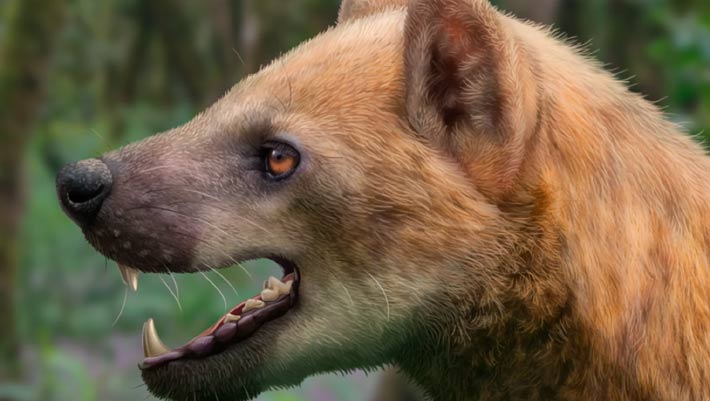
New Species of Ancient Bear-Dog Identified in Spain

Paludocyon moyasolai. Image credit: Jesús Gamarra.

Paleontologists have identified a previously unknown species of amphicyonid -- the extinct family of carnivorous mammals popularly known as bear-dogs -- from two specimens unearthed at a rich fossil site in the Vallès-Penedès Basin near Barcelona, Spain.

The post New Species of Ancient Bear-Dog Identified in Spain appeared first on Sci.News: Breaking Science News.

  •  
  •  

SpaceX IPO: How Our Reporters Assess the Sky-High Valuation and Potential Economic Impact

Two Times tech reporters and their editor talk about assessing the sky-high valuation of the rocket and satellite maker, the potential economic impact of its public debut and the role of the world’s richest man in it all.
  •  

Dodge Charger maker road-tests solid-state EV battery hitting 90% charge in 18 minutes

Stellantis has integrated Factorial Energy’s solid-state battery cells into a Dodge Charger Daytona development vehicle and begun road testing the technology, marking a key step toward bringing solid-state batteries into production vehicles.

The milestone is the first time Factorial’s FEST (Factorial Electrolyte System Technology) solid-state cells have been installed in a Stellantis vehicle. The companies will now evaluate battery performance, reliability, and safety under real-world driving and charging conditions.

The development follows laboratory validation completed in 2025, when Stellantis and Factorial demonstrated automotive-scale FEST cells with an energy density of 375 Wh/kg. The cells also achieved charging from 15 percent to 90 percent in 18 minutes and operated across temperatures ranging from -22 °F to 113 °F.

Moving from laboratory testing to an on-road vehicle required engineers to redesign parts of the battery system. Stellantis said it developed a patented mechanical architecture that allows the solid-state cells to fit within an existing battery pack while maximizing performance.

From lab to road

Engineers also modified battery controls and pack design to meet automotive requirements for durability and safety. According to the companies, these changes were needed to ensure consistent performance under a range of driving and charging conditions.

The battery pack is based on Stellantis’ STLA Large platform and serves as the first vehicle in a previously announced multi-stage development program.

“Battery development is a balancing act. It’s not enough to optimize a single metric. We need a system that delivers real benefits in a real vehicle,” said Ned Curic, Stellantis Chief Engineering and Technology Officer.

“This milestone shows we are bringing solid-state batteries closer to our customers with the potential for longer range, faster charging, and lower costs. Just as important, FEST’s strong compatibility with lithium-ion manufacturing processes gives us a critical path to scale this technology.”

Solid-state batteries replace the liquid electrolyte used in conventional lithium-ion batteries with a solid material. The technology is expected to improve energy density, increase safety, and reduce charging times. However, scaling production and integrating the cells into vehicles have remained major challenges for automakers and battery developers.

Scaling battery technology

With the battery now installed in a working vehicle, Stellantis and Factorial have launched a testing and calibration program to gather performance data from real-world operation.

The companies said the program will evaluate charging behavior, vehicle safety, and long-term reliability. The results will also help refine battery management systems and pack-level controls before any future commercial deployment.

“We are deeply honored to work alongside Stellantis, one of the world’s great mass-market automakers, on this STLA Large-based development car,” said Siyu Huang, CEO of Factorial.

“What we have built together, from cell chemistry to pack architecture to enable real-world road testing, is exactly the kind of deep, full-stack collaboration that solid-state has always required.”

Factorial, which is backed by Stellantis, Mercedes-Benz, Hyundai and Kia, is among several companies racing to commercialize solid-state batteries. The latest milestone moves its technology beyond cell-level testing and into vehicle validation, a critical stage before potential mass-market adoption.

  •  

Capable CEOs communicate climate risks more consistently

Climate disclosures help investors and the public understand how companies view risks such as extreme weather, carbon regulation and the transition to cleaner energy. "Because these risks are uncertain and forward-looking, company leaders have considerable influence over what is communicated and how," says Postdoctoral Researcher Javad Rajabalizadeh from the University of Turku.

  •  

Project to restore US uranium enrichment for defense programs commences operations

The United States is working to rebuild its domestic uranium enrichment infrastructure for its defense programs, through a project known as DUECE (Domestic Uranium Enrichment Centrifuge Experiment).

It began in 2016, with an objective to develop and demonstrate the next generation of gas centrifuges for uranium enrichment. DUCE is based out of Oak Ridge National Laboratory (ORNL).

The project is strategically significant as it aims to provide a domestic source of highly enriched uranium for powering US nuclear submarines as well as provide tritium for the US nuclear weapons stockpile.

The US imports low enriched uranium for its commercial power reactors but international treaties prohibit the use of imported uranium for military applications.

A capability gap decades in the making

The US once operated three large gaseous diffusion plants for uranium enrichment. These were located in Oak Ridge Tennessee, Portsmouth Ohio, and Paducah, Kentucky (which remained operational until 2013).

These facilities consumed enormous amounts of electricity and were gradually shut down as cheaper, more energy-efficient centrifuge-based enrichment became the global standard.

The US was also developing centrifuge technology at Oak Ridge to eventually replace gaseous diffusion. But events like the Three Mile Island nuclear disaster, the end of the Cold War, and the decrease in global demand for enriched uranium halted plans for commercializing the gas centrifuge technology.

The enrichment process

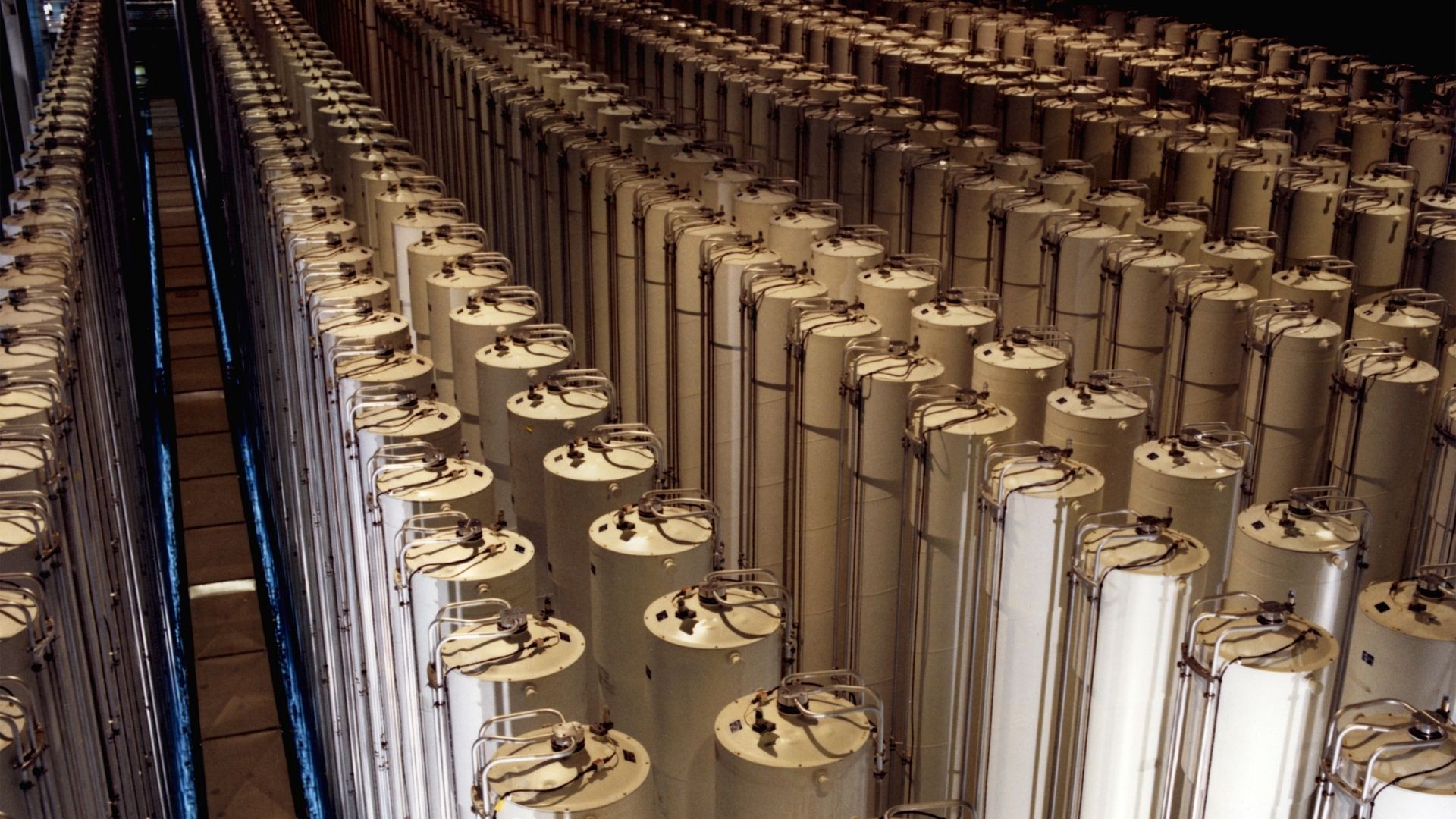
Gas centrifuge enrichment works by spinning uranium hexafluoride gas at high speed; the heavier uranium-238 isotope migrates toward the outer wall while the lighter, fissile uranium-235 concentrates near the axis. Cascades of thousands of centrifuges connected in series are required to achieve commercially useful enrichment levels.

In general the enrichment levels of uranium fuel in US nuclear submarines is 93-97%. These enable high power density and long-lived reactor cores. It also facilitates in building more compact naval reactors.

What DUECE is building

Currently the project is focused on building a pilot plant in collaboration with BWX Technologies (BWXT). BWXT built a Centrifuge Manufacturing Development Facility to support the pilot plant, it commenced operations in January 2026. The plant will use centrifuges based on the ORNL’s Generation 1 centrifuge design. Currently the Generation 1 design is deployed in a laboratory cascade at ORNL.

It commenced operations on June 1, 2026. Additional deployments of the Generation 1 machine at ORNL are planned through the early 2030s to mature the TRL (Technology Readiness Level) of the design in time for the pilot plant deployment.

Michael Whedbee ORNL’s technical project manager for DUECE said “ The DUECE project plans to use the developments in computing and in materials to continue to advance and develop new potential designs and capabilities in the centrifuge arena.”

Eventually the technical and operational learnings from the pilot plant will be utilized in building a follow on commercial scale facility in the 2040s. The DUECE project fits within a broader federal push to secure the nuclear fuel cycle, which includes funding for domestic uranium mining, conversion, enrichment and reprocessing.

  •  

NASA Award Boosts Space Technology Research Capabilities

2 Min Read

NASA Award Boosts Space Technology Research Capabilities

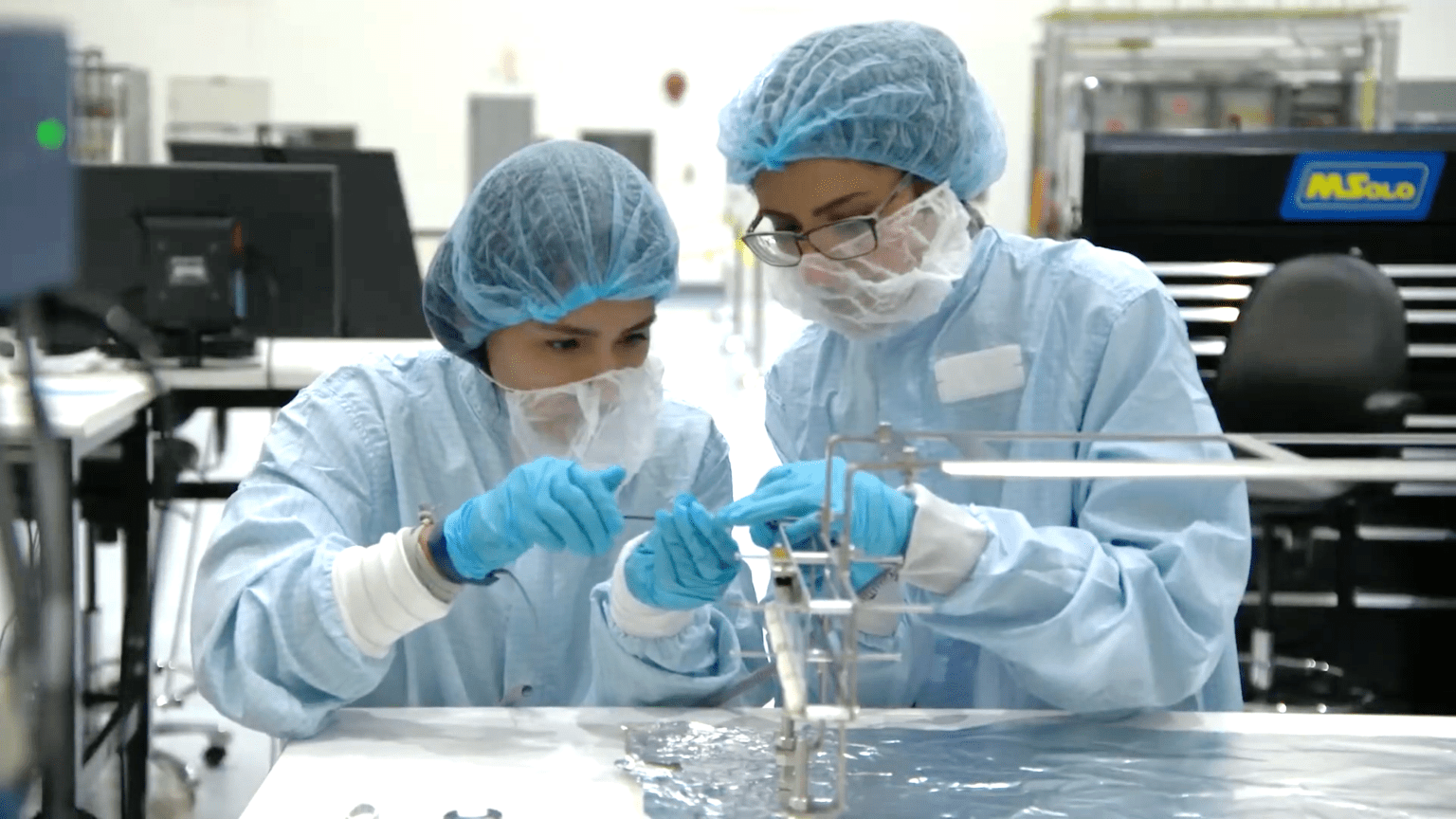
Space Technology Mission Directorate, Two mechanical engineers working on the calibration gas system

NASA is introducing a new funding opportunity to accelerate academic research and technology development. The Minority University Research and Education Project Space Technology Artemis Research (M‑STAR) application window opened Thursday and will remain open through 11:59 p.m. EDT on Tuesday, Aug. 11.

The research funded through this award supports the agency’s priorities for exploring the Moon, Mars, and deep space, while strengthening eligible institutions in the future of space exploration. Through M-STAR, institutions are encouraged to grow their scientific and engineering capabilities, enhance faculty and student engagement in aerospace research, and expand their ability to compete for future federal and commercial research awards.

Administered by NASA’s Office of STEM Engagement, this initiative contributes to NASA’s Space Technology Mission Directorate, and supports the agency’s broader mission to develop innovative technologies that improve space transportation, human exploration, robotic discovery, and the growing space economy.

NASA’s Office of STEM Engagement fosters an ecosystem across education, industry, and government to cultivate a well‑prepared talent pool, while the agency’s Space Technology Mission Directorate develops the transformative space technologies that enable future NASA missions and ensure U.S. leadership in aerospace. Together, they accelerate mission readiness by aligning cutting edge technological innovation with the workforce needed to carry it forward.

For complete eligibility information, help session registration, and to submit an M-STAR proposal, visit:

https://go.nasa.gov/4exkPiH

  •  
❌