Login

Hey, Siri, here’s what I actually want from AI
I'm desperate for a personal AI assistant, but do I really want to become the kind of person who can't function without the friendly robot voice in my phone?


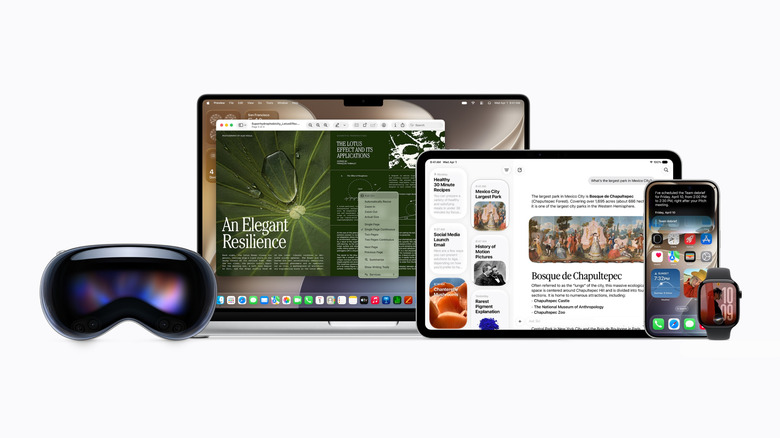
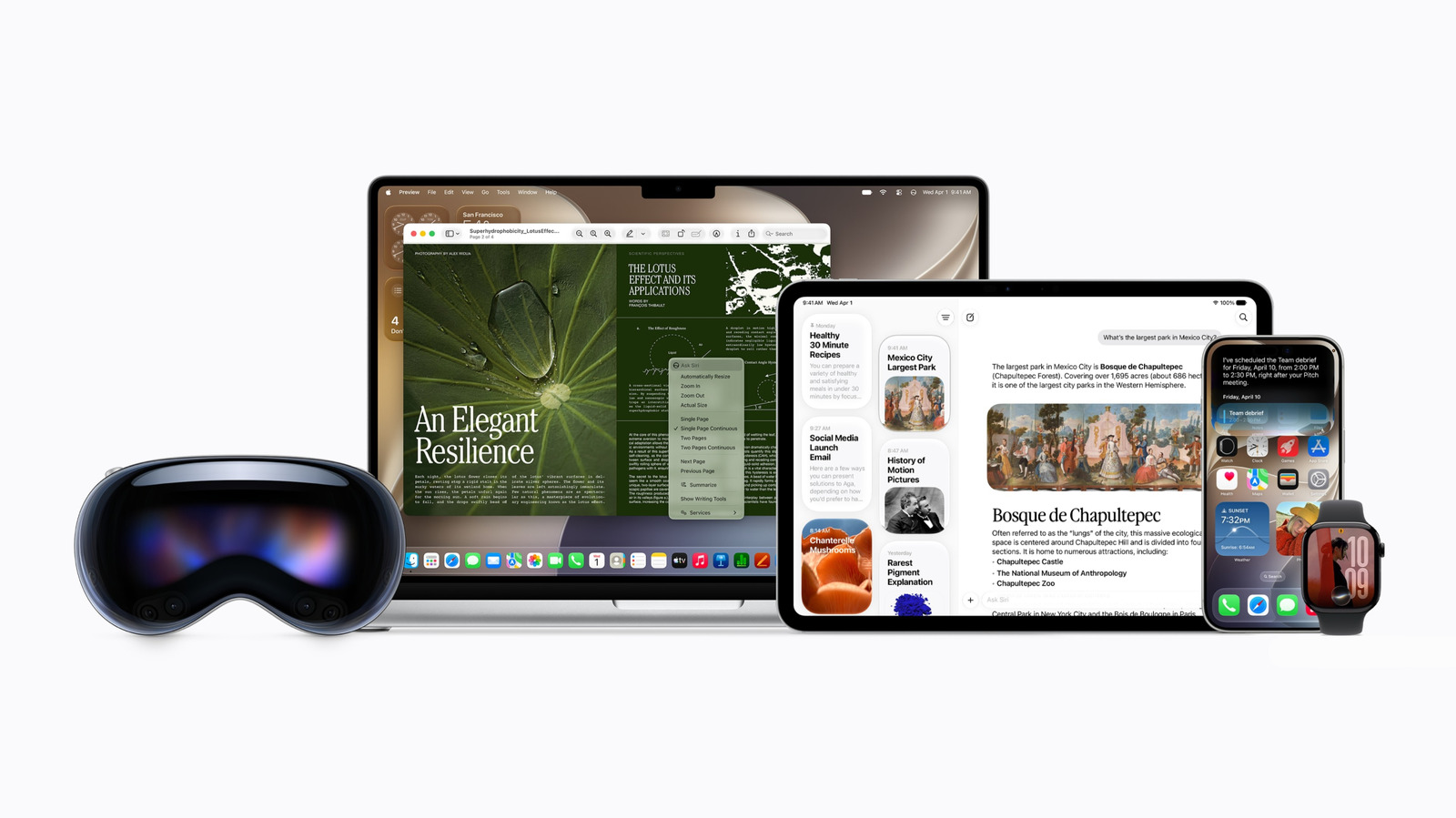
WWDC26 felt like a defining platform moment. Apple is no longer simply promising that AI will arrive eventually; it is arguing that Apple Intelligence and Siri AI should become central to the future of its ecosystem. If that works, the company will have turned AI from a perceived weakness into a new reason to stay inside Apple’s world.
Still, the bigger question is execution. Apple did not present AI as a lab experiment; it presented a polished, consumer-ready experience. That raises expectations.
Users will not judge Apple Intelligence by model architecture or parameter counts. They will judge it by whether Siri understands them, whether actions work reliably, whether personal context feels useful rather than intrusive, and whether the experience is consistent across devices.
Since Monday’s announcements, we’ve learned that some features will not work on all devices — and there’s speculation Siri AI may not fully escape beta until 2027. “Until Apple puts a stake in the ground and says when the new Siri features will be available, the debate remains: Does Apple actually have the chops in personalized AI? The demo suggests yes. The lack of timing suggests maybe,” wrote analyst Gene Munster.
Optimists argue that Apple has regained momentum by presenting a coherent AI story, one built around privacy, integration and everyday utility rather than spectacle. Skeptics counter that many of the features resemble capabilities already available elsewhere, and say the company still needs to prove it can ship them at scale and make them a meaningful reason for consumers to upgrade.
That balance is visible in analyst reaction. In a client note seen by Computerworld, Erik Woodring of Morgan Stanley described the keynote as clear progress on Apple’s AI roadmap and said it suggested monetization opportunities could arrive earlier than expected — even if the overall journey will be “a marathon, not a sprint.”
UBS, in contrast, said the privacy-focused AI additions are useful but unlikely to be a material driver of iPhone demand in the near term, while Barclays called the changes interesting but incremental, and not enough to drive an upgrade cycle.
Ben Wood, chief analyst at CCS Insight, argued that Apple had to answer concerns about its AI shortcomings and now has to prove that its privacy-led, integration-first approach translates into a meaningfully better everyday experience. “Consumers will not judge Apple Intelligence by model sizes, partnerships or technical architecture,” Wood told me. “They will judge it by whether Siri understands them, whether actions work, whether personal context feels useful rather than intrusive, and whether the experience is consistent across devices.”
Dipanjan Chatterjee, vice president principal analyst at Forrester, said Apple’s strength lies in shifting the focus from the underlying technology to outcomes such as usefulness, simplicity and trust, while warning that the company still has skeptics to win over after its stop-start AI rollout. “The lesson for brands is clear: market the value, not the ingredients,” said Chatterjee. “After stumbling with the Apple Intelligence roll-out, Apple’s success will hinge on delivering the new Siri experience quickly, and ensuring it works as promised for iPhone users at scale.”
While many are infuriated about Europe’s inability to build compromise, Apple’s developer army otherwise seems positive about what the company has accomplished.
“On the AI front, it never made sense to me for Apple to develop their own LLM, so focusing on powerful, fast and private for implementation of Apple Intelligence seems to be an effort that is progressing rather nicely. In all, a pretty good Keynote, I’d say,” Rich Siegel, founder and CEO of Bare Bones Software, said in an interview.
“It’s great to see Apple continue to pursue a vision of AI that leverages local systems, preserves privacy, and integrates with third party tools,” said Ken Case, CEO of the Omni Group. “A lot of our work around the Apple Foundation Models and automation, App Intents, and adopting Swift look to be fruitful investments, but it’s clear there’s more to do starting this summer. It’s also welcome to see them refine Liquid Glass, giving customers more control and listening to feedback they’ve heard over the past year.”
“I expected that this year’s Siri revamp would be the biggest personal assistant update Apple has ever done, and that’s exactly what we got,” said Sergii Kryvoblotskyi, director of AI and research at MacPaw. “Since Apple acquired Siri back in 2010, it has lacked one thing: real intelligence. Behind the great speech recognition service it provided, the tech was not ready to provide real value to users.”
“Most notable for me was Siri AI and the push towards on-device and more capable models that can do more with user context,” Matt Vlasach, Jamf senior vice president, enterprise products and solutions engineering,” said in an interview. “While obvious for consumer use cases, as illustrated in the keynote, the opportunity to evolve this to the work context using a more advanced Apple Intelligence framework is an exciting evolution.”
“OS 27 feels like a deliberate reset, less about new features and more about polish and quality-of-life improvements, which most users will welcome,” said John Richards, general manager, IT products, at Iru. “The new capabilities are focused entirely on Apple Intelligence and Siri AI, and what’s encouraging is how much Apple leaned into privacy with the Gemini partnership. That combination of capability and privacy-first design is the right instinct.”
“The single biggest request I made at Apple’s Foundation Models workshop in Madrid was opening Private Cloud Compute to third-party developers,” said Serhii Popov, senior software Eengineer at CleanMyMac. “It’s here and free for apps under 2 million users. That’s a real breakthrough and a huge opportunity for a lot of great apps.”
Joel Rennich, senior vice president for product management at JumpCloud, looked ay how on-device AI will transform other paradigms. For starters, it shifts identity from simple authentication to governing what actions an AI agent is allowed to take.v“Enterprises will need identity frameworks that govern both human and non-human actors consistently,” he said.
“iOS 27 and Apple Intelligence point toward an operating system that does not just launch apps, it executes intent,” Rennich said. “Instead of users navigating between tools, the OS increasingly mediates outcomes directly through AI. This changes how work is initiated and completed on devices.
“With Apple Intelligence integrated across core experiences like Siri, Safari, and system services, AI is no longer an overlay but infrastructure. The separation between where data lives and where it is used becomes increasingly invisible to the user. Intent becomes the primary input, not app selection.”
I also spoke with Hexnode CEO Apu Pavithran, who pointed to some of the concerns enterprise users might have following WWDC: “The keynote didn’t speak much to admins,” he said. “The features that matter most at the management layer, such as how Apple exposes Siri AI through MDM APIs, whether IT gets granular per-app controls for Apple Intelligence, how shared device deployments handle the new assistant — these will be answered in the developer documentation. This week, that’s where IT teams should be looking.”
“Admins should dig in immediately and see what’s changed. Watch the developer docs, audit how Apple Intelligence interacts with existing device policies, and remember that the keynote is only a part of the story for enterprises,” he said.
“Rebuilt from the ground up, Apple is trying to make AI feel native, useful and invisible across the devices people already use every day,” Francisco Jeronimo, vice president for client devices at IDC, said in an interview. “This matters, because the winning AI experience for consumers will not be the loudest or most technically complex. It will be the one that understands context, respects privacy, works reliably across apps, and reduces friction without forcing users to change behavior.”
“[Apple] is also clearly seeking to differentiate through its privacy promises,” said CCS Insight’s Wood. “This looks like a step in the right direction, but there is no room for complacency, and Apple still has a long AI journey ahead.”
Pavithran reflected on something more. “Overall, it’s hard not to think of this year as a deliberately measured keynote, one that’s intentionally playing it safe and seeking to rewrite the AI narrative,” he said. “I won’t be surprised if this ends up setting the stage for a much bigger installment next year with incoming CEO John Ternus hitting the ground running with some ‘wow’ features like new hardware or agentic AI at scale.”
That we can now seriously consider that possibility shows the extent to which Apple has regained momentum in AI on its platforms.
You can follow me on social media! Join me on BlueSky, LinkedIn, Mastodon and The Core.



AST SpaceMobile decoupled from recent launch disappointments by scheduling the orbital deployment of its next three satellites on a SpaceX Falcon 9 rocket.
The space-based mobile network company hopes to blast its BlueBird 8, 9 and 10 satellites into low Earth orbit (LEO) on 17 June. As ever, launches are dependent on various environmental and other factors, so precise timing is fluid.
AST SpaceMobile expects the latest satellites to deliver almost twice the data rates of its initial BlueBird models, which it noted recently hit 98.9Mb/s in the downlink.
Company president Scott Wisniewski said the significance of the satellites goes beyond expanding its constellation and coverage: they represent the culmination of an in-house manufacturing drive and bolster claims to having birds with the largest phase-arrayed antennas at LEO heights.
AST SpaceMobile stated the trio of satellites are already stacked using a proprietary architecture and ready to be integrated with the SpaceX rocket.
The scheduled launch is something of a firing back by AST SpaceMobile at commentators who questioned whether a recent failure of a Blue Origin New Glenn rocket during a test would impact a plan to conduct regular launches throughout 2026.
The post AST SpaceMobile turns to SpaceX for next launches appeared first on Mobile World Live.

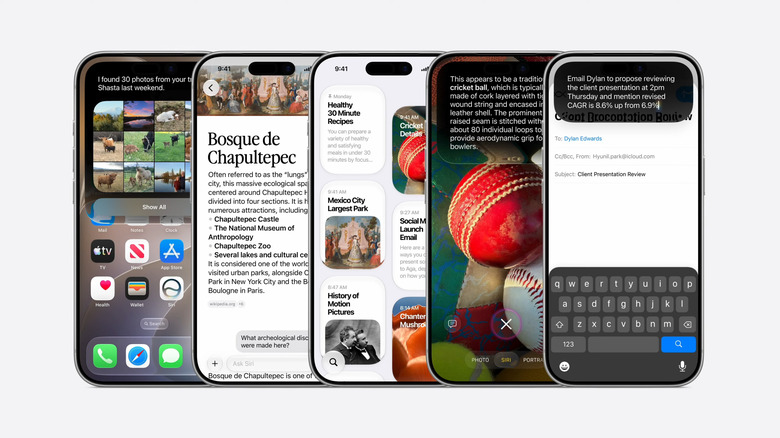
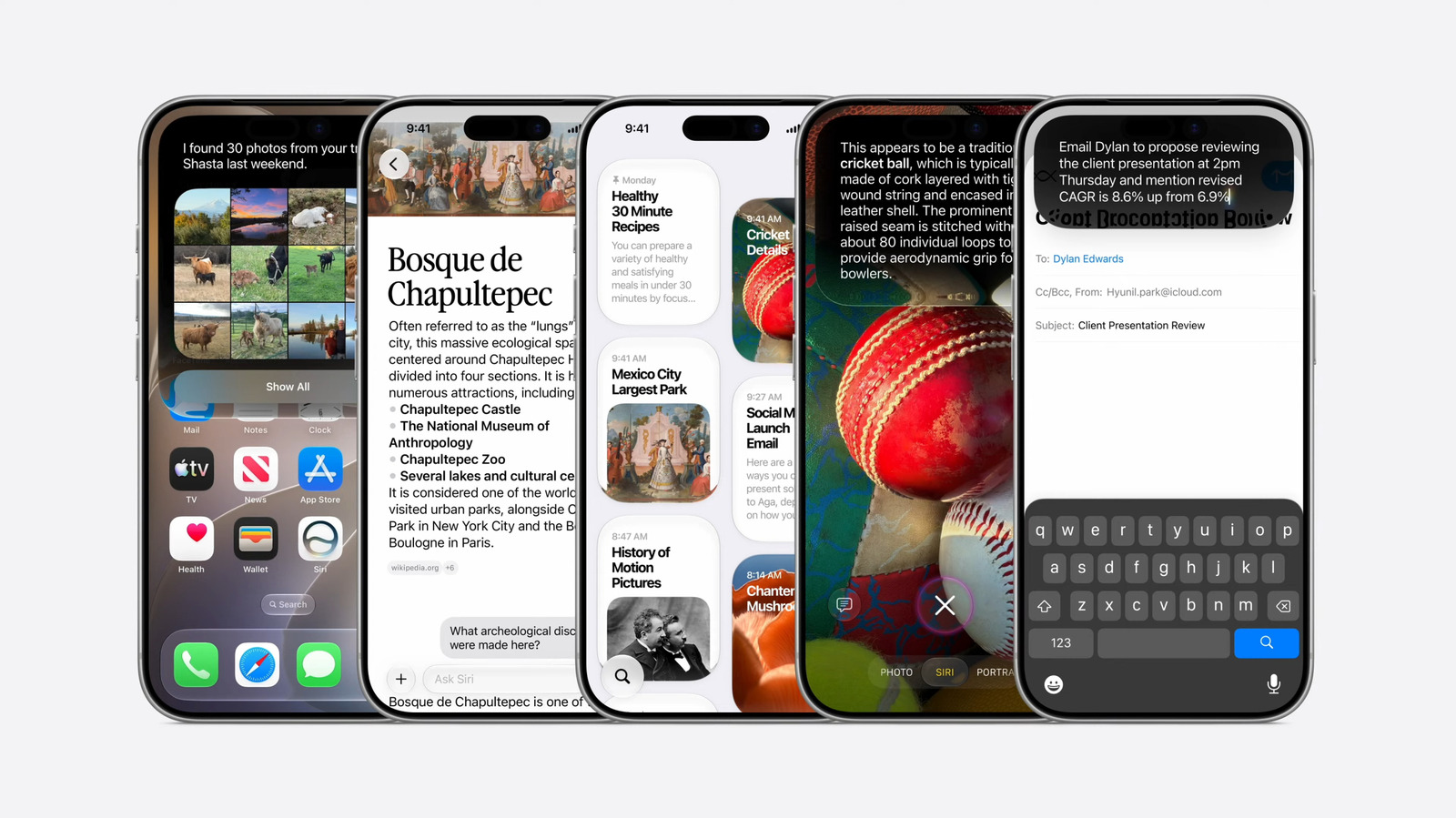
Apesar da confirmação de que a Siri AI não vai chegar para já à Europa, há novas funcionalidades no sistema operativo que certamente vão melhorar a experiência do iPhone. Pode experimentar a beta antes do seu lançamento.
The post Já pode testar o iOS 27 antes do lançamento oficial. Veja como instalar a versão beta para developers appeared first on Tek Notícias.


After two years of over-promising and under-delivering, Apple unveiled an overhauled Siri AI voice assistant with new capabilities, a dedicated app and a foundation built on Google’s Gemini AI.
In January 2026, Apple struck a landmark deal with Google, licencing a custom-built Gemini model purpose-built for Siri and Apple Intelligence and larger than Apple’s previous cloud-based AI models.
At the event, Apple revealed that for the first time the assistant has its own dedicated app with a chatbot-style interface, as the iPhone-maker looks to close the AI gap against Samsung and Google devices.
Siri AI can see what is on a user’s screen, search the web in real time, remember past conversations and surface information such as a friend’s address buried in an old message thread.
“We believe truly helpful AI must be centred around you and your needs,” Apple SVP of software Craig Federighi stated, while laying out a philosophy built around privacy, personal context and deep integration with apps users rely on daily.
Siri AI is now a more conversational assistant capable of understanding context, handling multi-step tasks and interacting more naturally across apps and services. It is also compatible with Visual Intelligence in addition to working across existing apps.
A Search or Ask interface opens when users swipe down from the top centre of the screen, allowing users to search the web using Apple’s AI-powered search and launch apps, send messages, create calendar events, search notes, and perform other tasks.
Apple also plans to introduce an AI agent integration with the App Store, allowing users to delegate tasks such as booking reservations, managing everyday tasks, editing documents, or controlling smart home devices.
On the camera side, a Visual Intelligence section within the Camera app introduces a dedicated Siri mode which sits alongside Photo, Video, Portrait, and Panorama, with the feature using Google Image Search to accurately identify objects the user captures.
Siri AI is embedded directly into Dynamic Island, accessible by swiping down from it, pressing the side button, or saying “Hey Siri”. When a user activates Siri with a wake word or the side button, a Siri animation appears in the Dynamic Island.
The feature will launch in English first, with other languages to follow, and it requires iOS 27. The iOS 27 developer beta dropped June 8, immediately after the keynote.
A public beta is expected in July for those who want to test it early, with the full stable release arriving in September alongside the iPhone 18 lineup
Federighi said Siri AI will not be available initially in the European Union on iOS and iPadOS.
“In China, Siri AI and the other new Apple Intelligence features will not be available while we work through regulatory requirements,” he added
Analyst take
Ben Wood, chief analyst at CCS Insight, noted many of the Apple Intelligence capabilities will be familiar to people who have been using an Android smartphone for some time and in some instances are already available to Apple users who have installed third-party AI apps such as ChatGPT.
“Although it is late to the party, the company has a strong record of taking existing technology and implementing it in a more intuitive way, allowing users to easily discover capabilities in daily use,” he said. “I think the most obvious example of this is the integration of Siri into the Dynamic Island at the top of an iPhone.”
Child safety
New parental controls will, by default, allow children to access only the apps which parents have approved to flip the model from opt-in restriction to opt-out permission. A “ask to browse” feature requires children to seek permission before visiting every new website and not just flagged ones.
On the content side, Apple is expanding its existing nudity-detection tools by adding automatic blurring of gore in messaging apps, with parents alerted when such images are encountered, which builds on earlier features that already blurred nudity by default.
Wood noted Apple’s child-safety push is a welcome and timely move as concerns about smartphones and online harm grow among parents and regulators.
He explained the parental controls, tools and developer APIs are positive steps, but they do not go far enough on their own.
“I believe that stronger cross-industry safeguards need to be built into operating systems at a deeper platform level that deliver protection not only in native apps but for every interaction a child has with a device,“ he said. “Apple is well-positioned to be a driving force in this area.”
Cook’s swan song
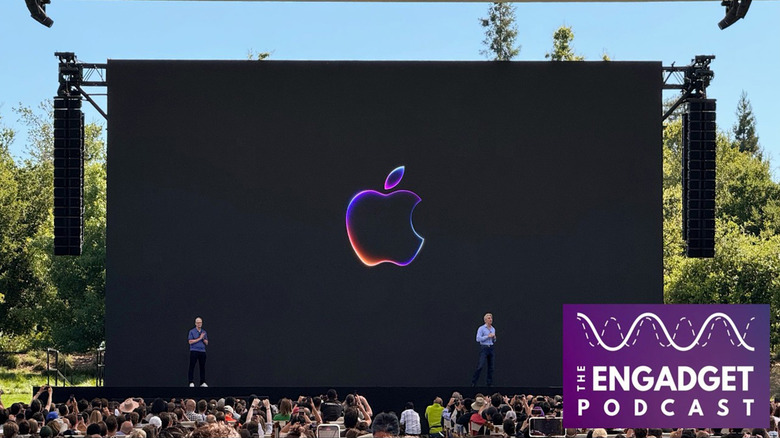
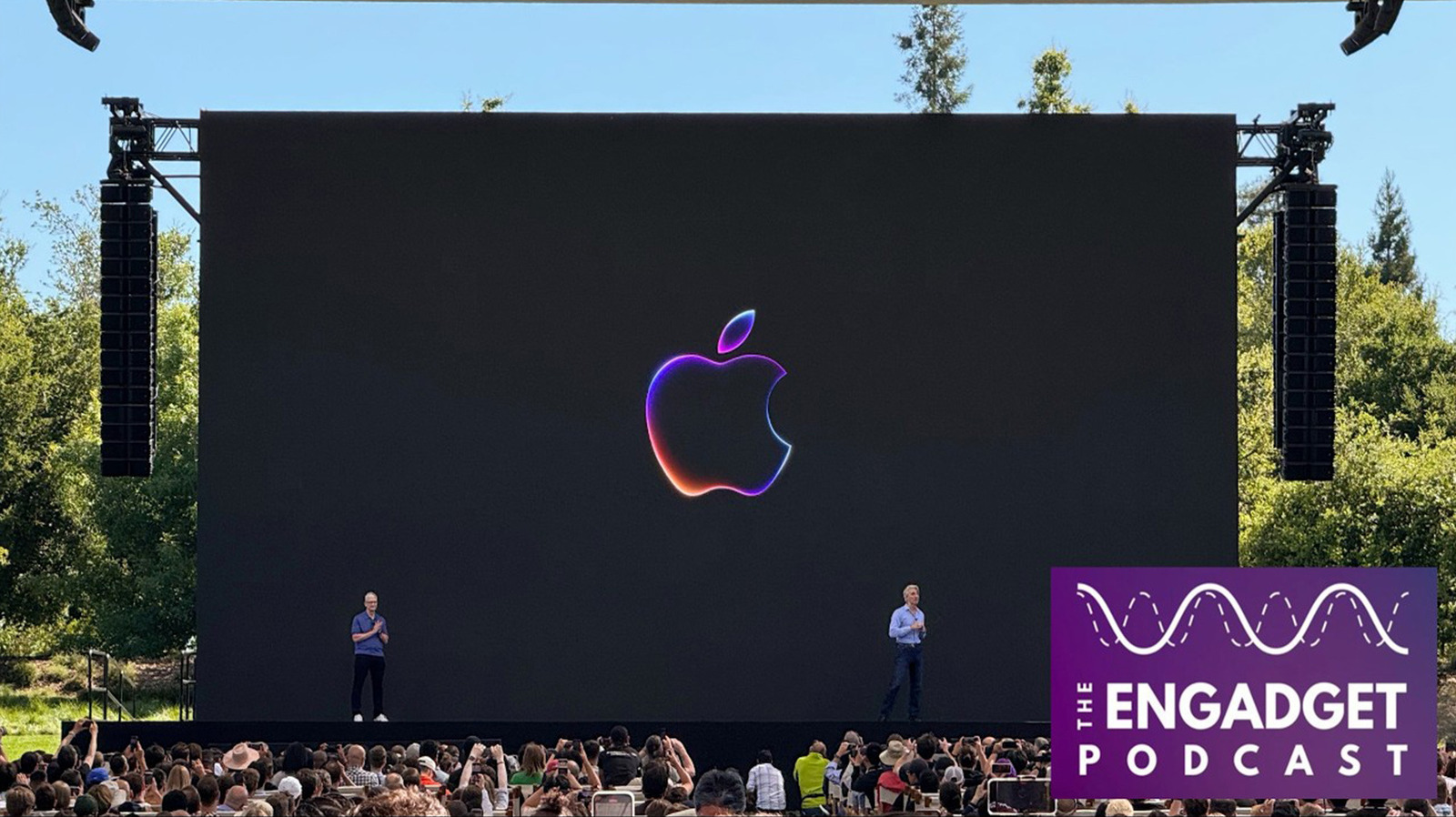
Outgoing CEO Tim Cook (pictured) opened and closed the conference’s presentation, in what many expect will be his last appearance before his planned transition to executive chairman on 1 September, when SVP of hardware engineering John Ternus will take over as CEO.
“Tim Cook’s last WWDC keynote as Apple CEO may be the most important one and it was a clear reflection of his leadership: disciplined, ecosystem-first, privacy-led, and focused on making technology useful at scale,” stated Francisco Jeronimo, VP of client devices at IDC.
Cook closed the keynote by stating creating the best products in the world to deliver experiences that enrich people’s lives has always been Apple’s North Star.
“It’s been the honour of a lifetime to help advance that mission with teams whose creativity, care, and conviction continue to make a lasting difference in people’s lives,” he said.
The post Apple lands Siri AI at WWDC as Cook takes a bow appeared first on Mobile World Live.