A Apple atualizou hoje os apps Pages, Numbers e Keynote com novidades voltadas principalmente aos assinantes do Apple Creator Studio.
Entre os destaques estão um assistente inteligente baseado em linguagem natural, novos conteúdos premium e, no caso do Keynote, suporte à importação e exportação de apresentações em um novo formato de arquivo aberto.
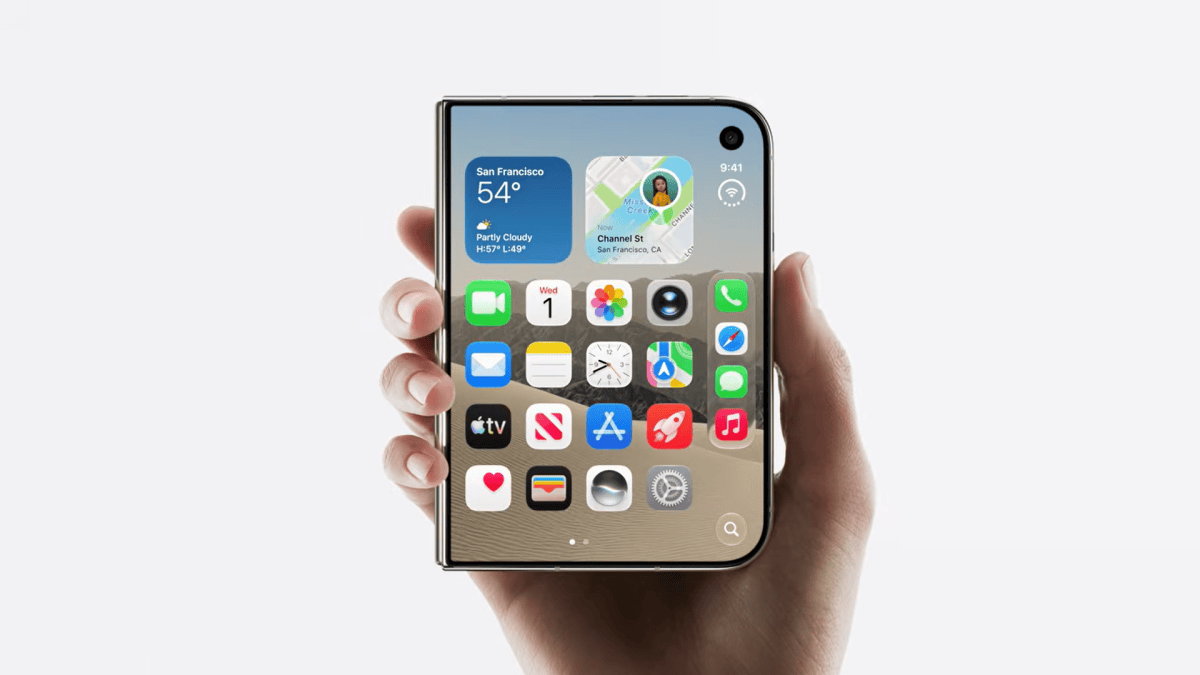
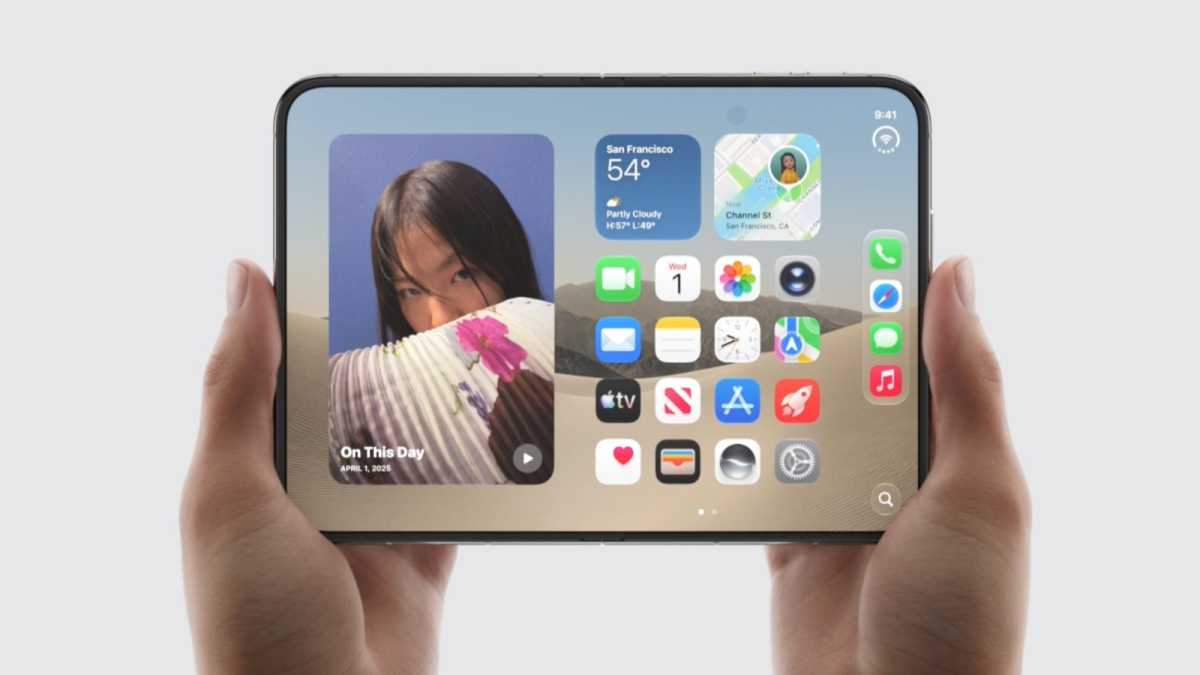
Além disso, os três agora podem aproveitar o maior espaço da tela aberta do iPhone Duo.
Assistente inteligente
Nos três aplicativos, o assistente inteligente — ainda em fase beta e apenas em inglês — permite executar tarefas por meio de comandos em linguagem natural, levando em consideração o conteúdo do documento, da planilha ou da apresentação em que o usuário está trabalhando.
No Pages, a ferramenta pode ajudar a iniciar e revisar textos, reorganizar conteúdos, ajustar o tom da escrita e gerar imagens e formas. Também é possível solicitar informações atualizadas sobre determinado assunto e incorporá-las ao documento.
Já o Numbers utiliza o recurso para ajudar a interpretar dados, criar tabelas, sugerir gráficos e elaborar fórmulas, além de pesquisar informações que possam ser incorporadas às planilhas.
No Keynote, o assistente pode gerar slides, criar notas para apresentações, produzir imagens e formas e ajudar a aprimorar o conteúdo e as animações. Assim como nos outros apps, também é possível pesquisar informações atualizadas para enriquecer o material.
Conteúdos premium
Os três aplicativos ganharam ainda novas coleções de conteúdos premium, incluindo modelos profissionais para documentos e planilhas e temas para apresentações. Os usuários também podem explorar o Content Hub, que reúne vídeos selecionados para adicionar elementos visuais e movimento aos seus projetos.
Novo formato de arquivo aberto
Uma novidade exclusiva do Keynote é o suporte, também ainda em versão beta, à importação e exportação de arquivos no formato KEYX. Trata-se de um formato aberto de intercâmbio que busca facilitar o uso de apresentações e de seus conteúdos fora do aplicativo da Apple.
Suporte ao iPhone Duo
Para completar, embora não tenha mencionado isso nas notas de versão, a Apple implementou suporte ao iPhone Duo nos três aplicativos, como notou o MacRumors.
Vale reforçar que o assistente inteligente — além de estar disponível apenas em inglês e exigir um dispositivo compatível com a Apple Intelligence — e os novos conteúdos premium são exclusivos para assinantes do Apple Creator Studio.
Para quem não é assinante, os updates incluem apenas melhorias gerais, correções de bugs e aprimoramentos de desempenho.
Uma das ausências mais comentadas em análises sobre o iPhone Duo é a do Face ID, sistema de autenticação facial presente em todos os demais iPhones comercializados atualmente pela Apple. Em vez disso, ele conta com o Touch ID no botão lateral, como alguns iPads.
No entanto, isso poderá mudar já na próxima geração do aparelho. Segundo apontou o jornalista Mark Gurman na mais recente edição do seu podcast “Power On”, protótipos do “iPhone Duo 2”, atualmente em desenvolvimento pela Apple, já contam com a tecnologia biométrica facial.
Mais do que isso: os sensores do Face ID deverão ficar sob o display, eliminando a necessidade de qualquer recorte na tela — todos os iPhones já lançados com Face ID tiveram o famoso notch ou o atual recorte em formato de pílula.
Esse detalhe é importante devido ao fato de o iPhone Duo já contar com a tecnologia de câmera frontal sob a tela, o que indica que a Apple pode estar usando o aparelho como “cobaia” para testar tecnologias há muito esperadas e especuladas para as linhas principais.
Além da segunda geração do dobrável, Gurman comentou em seu podcast sobre o “iPhone Duo 3”, cotado para ser lançado em 2028.
Segundo o jornalista, a tela interna do “iPhone Duo 3” será em torno de meia polegada maior, jogando o total para acima das 8 polegadas (contra as 7,6″ do modelo atual). Isso também deverá fazer com que a tela externa cresça ligeiramente.
Gurman falou ainda sobre a possibilidade de vermos uma câmera telefoto ser adicionada ao dobrável — algo que estaria nos planos da Apple, embora ele ainda não saiba quando isso se materializará. “Acho que isso é puramente uma questão de física, por causa da profundidade necessária. Vai ser interessante ver como eles vão resolver isso”, comentou.
iPhone Duo
Cores: branco-estrela ou céu noturno Armazenamento: 256GB, 512GB, 1TB ou 2TB
NOTA DE TRANSPARÊNCIA: O MacMagazine recebe uma pequena comissão sobre vendas concluídas por meio de links deste post, mas você, como consumidor, não paga nada a mais pelos produtos/serviços ao usar os nossos links de afiliado.
A Assistência de Conectividade (Connectivity Assist) chegou aos iPhones e iPads com o iOS/iPadOS 27 — uma evolução do antigo recurso Assistência Wi-Fi.
Como o próprio nome indica, esse recurso ajuda você quando a rede Wi-Fi está instável ou lenta, usando dados celulares para melhorar a conexão.
Caso você se preocupe com o uso de dados celulares, talvez seja interessante desativar esse recurso. Mas, ainda que esse ajuste possa ser ativado e desativado para todo o sistema, a Apple também permite configurá-lo individualmente para cada rede — ou seja, você pode mantê-la habilitada em uma e desabilitada em outra.
O iOS/iPadOS 27 trouxe algumas novidades pequenas, mas muito interessantes para quem utiliza iPhones ou iPads diariamente.
Uma delas é que, na tela de informações sobre a rede Wi-Fi conectada no momento, é possível visualizar qual o tipo dessa conexão sem fio (Wi-Fi 5, Wi-Fi 6 ou até o avançado Wi-Fi 7).
Nesta quarta-feira, economize com nossa tradicional seleção de promoções na App Store!
O Retro Widget 3: Classic Snake é uma proposta que resgata a nostalgia dos celulares clássicos ao levar o jogo da cobrinha diretamente para os widgets do iPhone.
O visual, inspirado nos dispositivos dos anos 2000, reforça a sensação de nostalgia e agrada quem guarda boas lembranças daquela época. Além do clássico jogo, o app se destaca pela personalização dos widgets, que transformam a Tela de Início em um espaço divertido.
Aproveite a oferta e boa viagem no tempo! 🐍
Abaixo outros jogos/apps que, juntos, somam mais de R$70 em descontos:
Jogos
Encontre os emojis.
Gerencie sua equipe de corrida.
Boliche.
Puzzles.
Aplicativos
Fotos estelares.
Adesivos para o iMessage.
Aproveite as ofertas e até amanhã! Lembrando que elas são sempre por tempo limitado, então é bom correr. 🚀
Apple’s upcoming “Pro and Tell” event sparks speculation about new MacBook Pro models, while iPhone Duo preorders raise questions about shipping delays and retail availability. The panel discusses Apple’s $5 trillion valuation, why HomeView won’t launch in the European Union, and the anticipated arrival of Affinity Studio on iPad, including how it could transform creative workflows and provide yet another powerful alternative to Adobe Creative Cloud.
Apple’s iPhone User Guide for iOS 27 explains how to record a phone call when you are talking to one other person, with the recording saved to the Notes app. Apple also lists where call recording is not available: Azerbaijan, Bahrain, Egypt, the European Union, Iran, Iraq, Jordan, Kuwait, Morocco, Nigeria, Oman, Pakistan, Qatar, Russia, […]
The first wave of iPhone Duo reviews has landed, and the overall response is very positive. Reviewers have uncovered numerous issues with Apple’s first-ever foldable, but have proved surprisingly forgiving. Let’s get into the details.
Late to the party
Apple, not for the first time, is arriving late to the party. “The iPhone Duo arrives seven years after Samsung’s first Galaxy Fold,” pointed out Wired. But this is classic Apple strategy, and there are good reasons why the company bided its time. “In Apple tradition,” the site continued, “its first entry into an existing category feels fully mature; the Duo has significantly less jank than the first few generations of its Android counterparts.”
“The iPhone Duo took its time getting here,” CNET agreed, “but it’s made quite an entrance.”
And Gizmodo was impressed by Apple’s ability to play catch-up. “I think we can all agree that the iPhone Duo has already achieved what competing foldables have not been able to in seven years: generate considerable buzz for foldable phones,” the site argues.
Design: Something new
Considering it’s Apple’s first foldable, the Duo appears to offer a more polished design than one might expect. “Apple’s first foldable phone doesn’t look or feel like a first attempt,” wrote Tom’s Guide, “because of the sheer attention to detail. The way the friction hinge holds nearly any angle. The seamless switching between the cover and main display with the same aspect ratio. And the nano-texture coating, which minimizes glare and the dreaded crease.”
PC Mag was impressed, too. “Apple knows hardware, designing high-end devices that look good, feel great to use, and work seamlessly,” the site observed. “And that’s largely true with the Duo… The matte white rear panel of my review unit looks and feels fantastic. I also like how Apple polishes its logo into the glass, making it reflective in contrast to the smooth matte finish surrounding it… The hinge feels utterly fantastic.”
“Despite its added thickness and weight, I’ve found the iPhone Duo surprisingly comfortable to carry in my pockets,” reported 9to5Mac. “Its shorter, wider footprint makes a bigger difference than I expected… it’s hard to overstate just how impressive the whole thing feels in practice.”
Gizmodo did raise one concern. “I was a little irked that the iPhone Duo caused my front pants pocket to sag. I’ve been so spoiled by the iPhone Air’s lightness that the only solution was to wear a belt again to cinch my pants tighter around my waist.” The site conceded, however, that the Duo “is a beautifully engineered device.”
Apple
How easy is it to use?
The problem with new things is that they are unfamiliar. Some reviewers were concerned that buyers would find the Duo difficult to use, particularly at first.
“I’ve been using iPhones since June 2007,” wrote PC Mag, ominously. “I know how to use an iPhone. And since Face ID arrived on the iPhone X back in 2017, I’ve gotten into a good rhythm for swiftly unlocking the phone. You can toss all that muscle memory out the window.”
Gizmodo agreed. “I’ve gotten so used to using Face ID since the iPhone X that going back to Touch ID required a little muscle memory retraining,” the site complained.
The Verge argued that it is “wild to have iPhone apps with controls in all kinds of different places; reaching for the back button in Apple’s Mail app and realizing it’s moved from the top left to the right is kind of disorienting. A lot of using the Duo is just figuring out how to use an iPhone again, which hasn’t happened in a long time.”
But not everyone found the user experience a trial. CNET reported that switching from the iPhone 18 Pro Max to the iPhone Duo “has been seamless, and not only because of the synchronization baked into Apple’s operating system. I haven’t experienced any hiccups while using iOS 27 on both Duo screens. Instead, the implementation feels intentional.”
Screen quality and the crease question
The great challenge when creating a foldable is to avoid the appearance of a crease in the screen. Reviewers felt that Apple did a good job in this department.
“The infamous crease—where the phone folds—is hardly visible thanks to Apple’s display stack and clever use of a matte-finish nanotexture screen,” Wired reported.
PC Mag was a little more conservative in its praise. “Apple has done well at minimizing the crease’s appearance,” the site noted, “but it’s still there. You can see it when the display is off, and you can feel it if you run your finger across the screen.”
In other respects the screens on the Duo were positively received. CNET said the 5.4-inch cover screen “doesn’t feel cramped. I can comfortably do just about anything I would on a bar-style phone, just on a smaller scale. The keyboard is roomy, taking up around half the cover screen, so typing feels seamless and easy. I haven’t grappled with any more typos than usual.” And The Verge was similarly complimentary about the 7.6-inch inner display. “Apple’s very proud of this inner matte display, and for good reason,” the site said. “It looks and feels incredibly solid, a big step up from foldables with glossy, seemingly soft screens with glaringly obvious creases.”
??????????
Apple
How well do third-party apps work?
Apple’s own apps have naturally been tweaked and redesigned to work perfectly on the Duo’s unfamiliar screen arrangement, but the big question is how much effort and skill will third-party developers be prepared to put into optimizing their apps? The answer is: it depends.
“I was intrigued to try third-party apps optimized for the iPhone Duo,” wrote Tom’s Guide, “and there are plenty of standouts so far. [But] non-optimized apps can range from looking a bit off to horrible. Keeping in mind that many top apps will be updated by the Duo’s release date, I noticed that certain apps had huge black bars on the left and right side of the display, like Disney Plus and The Weather Channel. Unoptimized games look pretty terrible, too, filling up only three quarters of the screen. I just hope developers update their wares. Quickly. And I expect they will out of fear of sheer embarrassment.”
Wired was also struck by the disparity between optimized and non-optimized apps, but was more sanguine about the prospects of developers falling into line. “Several apps I’ve tried to open on the sprawling 7.6-inch screen look awful,” the site wrote. “Thick, black bars on the sides, with a phone-sized app in the middle of this tablet-like display. But you likely won’t encounter this problem once the Duo is in your hands… Developers need to target the iOS 27.1 software development kit for full Duo compatibility. That will take some time. But it is a little maddening that some app developers, who for years have never seemed to care about optimizing their app for Android folding phones, are so quick to embrace Apple’s fold.”
Performance: Fast, but occasionally hot
The Duo is a powerful phone with excellent specs, but for the very best performance you may wish to look elsewhere.
“Despite sharing the same processor, memory, and storage options, the Duo’s speeds and performance don’t quite reach the same heights as the [iPhone] Pro models, but it outmatches the [Samsung Galaxy] Z Fold 8,” reported PC Mag. In real life, however, such distinctions are unlikely to make much difference. “In terms of using the phone naturally over the course of a week,” the site added, “I experienced no problems or hiccups. The Duo smoothly transitions from the front screen to the inner screen, apps open swiftly, and multitasking isn’t a challenge at all.”
CNET wrote that Geekbench 7 CPU benchmark tests “place the iPhone Duo well above the Galaxy Z Fold 8, Z Fold 8 Ultra and Pixel 11 Pro Fold. In a graphics test using 3DMark’s Wild Life Extreme, the iPhone Duo again exceeded the performance of the Z Fold 8 and Fold 8 Ultra, and far outpaced the Pixel 11 Pro Fold.”
Impressive. But there are slight concerns about overheating. “For most things it’s plenty fast,” wrote The Verge. “But the reality is that it’s also a thin phone driving two big displays, and it definitely gets warm, and sometimes hot.”
Apple
Cameras: Not pro, but plenty good
As was the case with the iPhone Air last year, the Duo packs slightly less impressive cameras than one might expect given the price. But this may or may not be a problem, depending on your photographic needs.
“I was nervous about whether the iPhone Duo’s cameras would pull their weight,” admitted CNET. “Thankfully, I’ve been pleasantly surprised… The photos I’ve taken in a variety of conditions have turned out sharp and vibrant–though you won’t find more advanced, pro-oriented formats like ProRAW capture and ProRes video.”
PC Mag was also happy with the device’s performance in photo tests. “The Duo takes superb photos in most scenes,” the site wrote. “Outdoor daytime shots look fantastic, with accurate color, sharp focus, and plenty of contrast.”
But Tom’s Guide felt it is “a big deal that the iPhone Duo doesn’t have a telephoto lens. You get just a 48MP main and 48MP Ultrawide, which take great shots. But if you’re zooming in, you’re going to miss the level of detail a dedicated optical can provide.” And The Verge complained that the Duo “relies on heavier sharpening to make up for its weaker [camera] hardware, so fine details look a little crunchier than they do on the 18 Pro. The Duo retains a bit less color detail in low light too, though Night Mode kind of evens out the playing field between them.”
Battery life: Mixed messages
Some sites were happy with the Duo’s battery performance, while others were frustrated.
On the positive side, CNET reported that “even with my excessively high screen time over the past few days, the battery has consistently held up well. One day, I started with a full battery at 8:15 a.m., and after a full day of scrolling through social media, working in Google Docs, sending emails, texting, taking pictures, watching YouTube videos, and placing a couple of phone calls and a video call, I ended the day with 29% at 11 p.m.”
And PC Mag wrote: “I ran our usual battery test overnight and came away impressed. I streamed a YouTube video via Wi-Fi on the inner display with the screen’s brightness set all the way up. It ran for 18 hours and 15 minutes. It bested the Motorola Razr Fold (18 hours), Galaxy Z Fold 8 (16 hours, 30 minutes), Z Fold 8 Ultra (16 hours, 29 minutes), and the Pixel 11 Pro Fold (14 hours, 21 minutes).”
But The Verge was less happy. “The Duo,” it wrote, “doesn’t seem ready to last a full day of heavy use.”
Price: High but justified
Perhaps the most surprising aspect of the early reviews was how comfortable the reviewers were with the iPhone Duo’s price tag.
“The iPhone Duo costs $1,999 for 256GB, rising to $3,199 for 2TB of storage,” noted CNET. “While that starting point is high, it’s in line with most foldable phones.” It added that these prices “sure didn’t stop [the Duo] from selling out almost instantly when preorders opened.”
“Do I think the iPhone Duo is worth two grand?” asked Tom’s Guide. “Yes, as it’s only $100 more than the Galaxy Z Fold 8. And you get a more durable design, faster performance, longer battery life, and smarter software.”
“[On price,] the Duo is surprisingly on par with its competitors (though still expensive),” concluded Wired.
Verdict: Flawed but fun
The iPhone Duo clearly isn’t perfect. But reviewers enjoyed themselves and had plenty of qualified praise for the device.
“It is expensive, it’s full of compromises, and it can be incredibly frustrating to use,” said The Verge. “But all of the risk and weirdness of the Duo is also fun, in the way the best early adopter devices are fun. It’s incomplete as a product, but complete enough as an idea that you can see where things are going.”
“Aside from some minor shortcomings, Apple appears to have stuck the landing with its long-awaited foldable,” said CNET. “Foldable phones offer a breath of fresh air in a stagnant industry, and the iPhone Duo is no exception.” The site did stress, however, that the Duo is not for everyone.
PC Mag was very complimentary in its summing up. “The iPhone Duo overcomes Apple’s late start by delivering the best hardware, performance, and battery life of any foldable phone on the market,” the site enthused. Tom’s Guide described the Duo as “the best designed foldable yet with the most polished, intuitive and fun software experience.” Gizmodo added that “phone hardware and software are genuinely exciting again, which is something to celebrate.”
We’ll end with a note of caution from Wired. “This is often the case with first-generation products,” the site wrote, “but it may be prudent to wait for the Duo 2.”
Apple’s iPhone User Guide explains how to share your screen, ask to see someone else’s screen, or remotely control it during a call in the Phone app. Apple says both you and the other participant need iOS 26 or later, and that remote control is not currently available in the European Union. The feature is […]
If you’re hoping to wait in line at an Apple Store on Friday in the hopes of scoring an iPhone Duo, you might want to reconsider. Some stores will have some units to sell to those who didn’t preorder, but not many, and they’re going to be gone in a flash.
In a statement to Reuters and other news outlets, Apple said:
On Friday morning, our teams look forward to welcoming customers at Apple Stores to experience iPhone Duo and the incredible iPhone line-up for themselves,” Apple said in a statement. “Apple Stores will have limited iPhone Duo available for walk-in customers, and we’re working hard to get this revolutionary new product into customers’ hands as quickly as possible.
Despite the eye-watering starting price of $1,999, preorders for the iPhone Duo at the Apple Store are now listing a date of January 25 for nearly every configuration, pushing delivery of the first folding iPhone far beyond the holiday season. Apple may send a small portion of new iPhone Duo shipments for walk-in purchases at Apple Stores, but between Apple preorders and carrier stores, it’s safe to say that it’s going to be really hard to get one if you haven’t already preordered.
In the past, stores have gotten daily shipments of small numbers of phones, so if you’re not lucky on Friday, you should be able to check back.
New iPhones are always a hot item and often slightly backordered in specific configurations or colors, but the folding iPhone is reportedly very difficult to manufacture, leading to smaller volumes and a lower production rate than something like the iPhone 18 Pro.
Loop Capital recently changed its rating on Apple from “Buy” to “Hold” because of weaker sales expectations. The investment firm cut its price target from $370 to $330. According to the firm, the tech giant will likely ship 13 million fewer smartphones in the second half of 2026 than previously planned. The firm also lowered […]
Apple’s iPhone User Guide for iOS 27 explains how to use Live Translation during a call in the Phone app, so you can hear and read a spoken and text translation in your preferred language. Apple says the feature is powered by Apple Intelligence and works on one-on-one calls in the languages Apple lists, on […]
Apple is recruiting a 6G cellular modem systems engineer, adding a next-generation research focus to its in-house modem development. The position, posted October 19 in Sunnyvale, California, describes responsibilities spanning cellular standards, hardware and software architecture, and power efficiency.
The Apple job listing establishes a concrete engineering focus. It does not identify a future iPhone, name a commercial modem, or provide a release date.
That makes the vacancy useful as a window into development priorities rather than a product announcement. The significant detail is how broadly Apple describes the work: connecting emerging standards with the decisions required to build a functioning cellular system.
The Role Connects Research With Product Engineering
The position covers feature definition, algorithm development, simulation, silicon testing, and preparation for production. Apple specifically identifies next-generation modem requirements with a focus on 6G evolution.
The listing also emphasizes translating engineering improvements into throughput, latency, battery life, and connection reliability. Candidates are expected to understand emerging 6G work alongside 5G and 4G standards.
Those responsibilities explain why modem development extends beyond designing a single chip. A cellular system must coordinate signal processing, software, and hardware while operating within a mobile device’s power constraints.
The practical challenge is balancing competing priorities. An approach that improves one performance measure may introduce costs elsewhere, such as greater processing demands. Evaluating those trade-offs is part of turning a technical possibility into something suitable for a portable product.
Image Credit: Apple Inc.
Apple’s 6G References Predate This Vacancy
The October posting is not the first public indication of this research. A separate Apple RF modeling position, dated June 24, includes modeling and simulation for 4G, 5G, and 6G modem systems.
The distinction matters when interpreting the latest recruitment. A newly published vacancy can reveal current responsibilities without establishing when a project began or how much its staffing has changed.
The two roles address different engineering tasks. The RF modeling position focuses on simulating radio-frequency behavior and investigating performance, while the newer systems role connects standards, algorithms, hardware, and software. Together, they illustrate why modem development requires work across several specialties.
The Standards Process Is Still Underway
The wider industry remains in the process of defining 6G. The International Telecommunication Union refers to the next generation as IMT-2030.
According to the ITU’s current development overview, its expert working party completed draft technical performance requirements in February 2026 and draft evaluation guidelines in June. Both documents have been submitted to ITU-R Study Group 5 for approval scheduled for December 2026.
The ITU has also invited proposals for candidate IMT-2030 radio technologies between February 2027 and February 2029. That window concerns submissions for evaluation, rather than consumer launches, and helps explain why companies are recruiting engineers while the technical framework is still taking shape.
These milestones concern how candidate technologies will be specified and assessed. They do not establish a date when a particular operator will offer service or when Apple will ship compatible hardware.
For readers, this is an important distinction between an industry framework and a usable connection. Standards work helps establish common expectations. Commercial availability requires additional decisions and implementation by device makers, network suppliers, operators, and regulators.
The Work Builds on Apple’s Existing Modem Effort
Apple already has experience bringing its own cellular modem to market. The company introduced C1 with iPhone 16e in February 2025, identifying it as its first internally designed cellular modem and a component supporting 5G connectivity.
That C1 announcement provides a commercial reference point for Apple’s modem work. The recruitment concerns a different stage: developing systems around emerging standards. Shipping a 5G modem and researching 6G are related activities, but progress in one does not establish a launch schedule for the other.
It does not establish that the new role belongs to a particular C-series successor. Assigning a name, manufacturing schedule, or specific iPhone generation would go beyond the information available.
What the Vacancy Means for iPhone Buyers
The immediate takeaway is about Apple’s development direction. The company is seeking engineers who can connect emerging wireless standards with practical requirements such as efficient operation and reliable connectivity.
For someone choosing a phone today, the vacancy provides no basis for predicting when 6G will become a useful purchasing consideration. Published device capabilities, local network coverage, and current service plans remain the information buyers can assess.
The more meaningful future milestones will be finalized specifications, announced compatible hardware, and documented operator deployments. Until those arrive, Apple’s recruitment offers evidence of preparation—and a clearer view of the engineering involved—without establishing the features or timing of a future iPhone.
When Apple launched the iPhone 12 in 2020, one of the headline upgrades across the range was support for 5G. This then-new networking standard enabled the devices to access claimed mobile speeds roughly 50-100 percent higher than 4G LTE… provided coverage was available in the user’s area. This caveat meant improvements were difficult to notice in the short term, but it was an important upgrade for the long term. (Some skeptics disputed its value, admittedly.)
Six years on, Apple is making plans for the next version of the technology, unimaginatively called 6G, and the quality-of-life improvements this will deliver to iPhone owners.
In a new job listing, spotted by MacRumors, the company this week set out to find a “6G Cellular Modem Systems Engineer,” based in either San Diego or Sunnyvale, California. The role carries a brief to “Define & architect system-level features and requirements for next-generation cellular modems, with a focus on 6G evolution and advanced PHY/L1 capabilities.” Base pay is in the range $175,000-$308,500, so get your applications in soon.
Apple is well aware that its job listings are scrutinised eagerly for evidence of upcoming product development, so this posting is significant in what it tells us about the company’s progress and how willing it is for this to be publicised. But it’s been planning for the launch of 6G for some time. A similar, albeit slightly more subtle, listing was spotted way back in 2021, only a year after the iPhone gained support for 5G. That post sought “wireless system research engineers for current and next-generation networks” and then mentioned lower down that the next-generation networks in question were, obviously, 6G.
The progression from research engineers to a systems engineer (the new listing mentions the word research only once, in the context of past experience) may reflect the 6G project’s changing priorities and increasing focus on practical applications. But 6G remains a long way from launch; 6G networks are currently expected to appear in the early 2030s. In other words, the first Apple device to support 6G is likely to be at least the iPhone 22 Pro… or maybe the iPhone Duo 5.
Apple’s new iPhone Duo is both big and small, and it’s more susceptible to knocks and drops than a standard iPhone with its folding function maybe taking a while to get used to. It’s the first iPhone that needs a case built around moving parts—namely the hinge. A case for a foldable can be made from one or two shells, with the additional question of covering the hinge or leaving it bare. The phone goes on sale October 23, and cases are already arriving.
We’ve assessed these cases using a dummy iPhone Duo, comparing their design, materials, fit, and features. This gives us an initial impression, but we haven’t yet verified their performance on a working phone, including wireless charging, Touch ID access, and how they accommodate the hinge during everyday use. We’ll update our recommendations after testing with the iPhone Duo itself.
iPhone Duo test criteria
Until we get our hands on the actual iPhone Duo to test each case with, we’ve used an incredibly accurate test-surrogate iPhone Duo to fit in the cases we’ve tested ourselves. We look for eight key criteria in each case.
Our test surrogate Duo in the Benks ArmorGrid Air (Beyond Blue)
Simon Jary
Protection: We checked corner reinforcement, camera and screen-edge protection, hinge coverage, and how much of the handset each shell covers. We did not run our own drop tests, so protection assessments are based on construction and coverage, and we note manufacturer claims as claims. Some case makers specify the exact measurements of their raised screen and camera edges, other do not.
Materials and grip: We assess surface texture, grip, finish, and visible fingerprint marks during handling. Common case materials include TPU (thermoplastic polyurethane, a flexible, durable plastic) and aramid fiber (a lightweight, high-strength synthetic fiber, best known through the Kevlar brand). The material alone does not establish how well a case protects the phone; construction and coverage also matter. Long-term wear, discoloration, and adhesive durability cannot be established during these initial checks.
Hinge protection and operation: Cases take different approaches to the Duo’s hinge: some include a protective cover, while others leave it exposed. We opened and closed each case on the dummy handset, checking for stiffness, rattling, gaps, and smooth movement of any hinge cover. We also checked whether both shells stayed firmly attached during opening and closing. These checks provide an initial assessment of the case’s construction and movement. We will assess the effect on the actual phone’s hinge movement or opening angle will require further testing with a working iPhone Duo.
Fit and installation: We used the dummy iPhone Duo to assess how securely each section fits the handset, the alignment of cutouts, and the ease of installation. We also checked the positioning and accessibility of button covers and port openings. Final fit and tolerances, button response, Touch ID operation, and cable fit will need confirmation with a retail iPhone Duo.
Slimness: The Duo’s thin profile is part of its appeal but this must be weighed against the backplate’s coverage and reinforcement. We penalize cases that add bulk without a clear benefit, but not where the protective benefits are worthwhile.
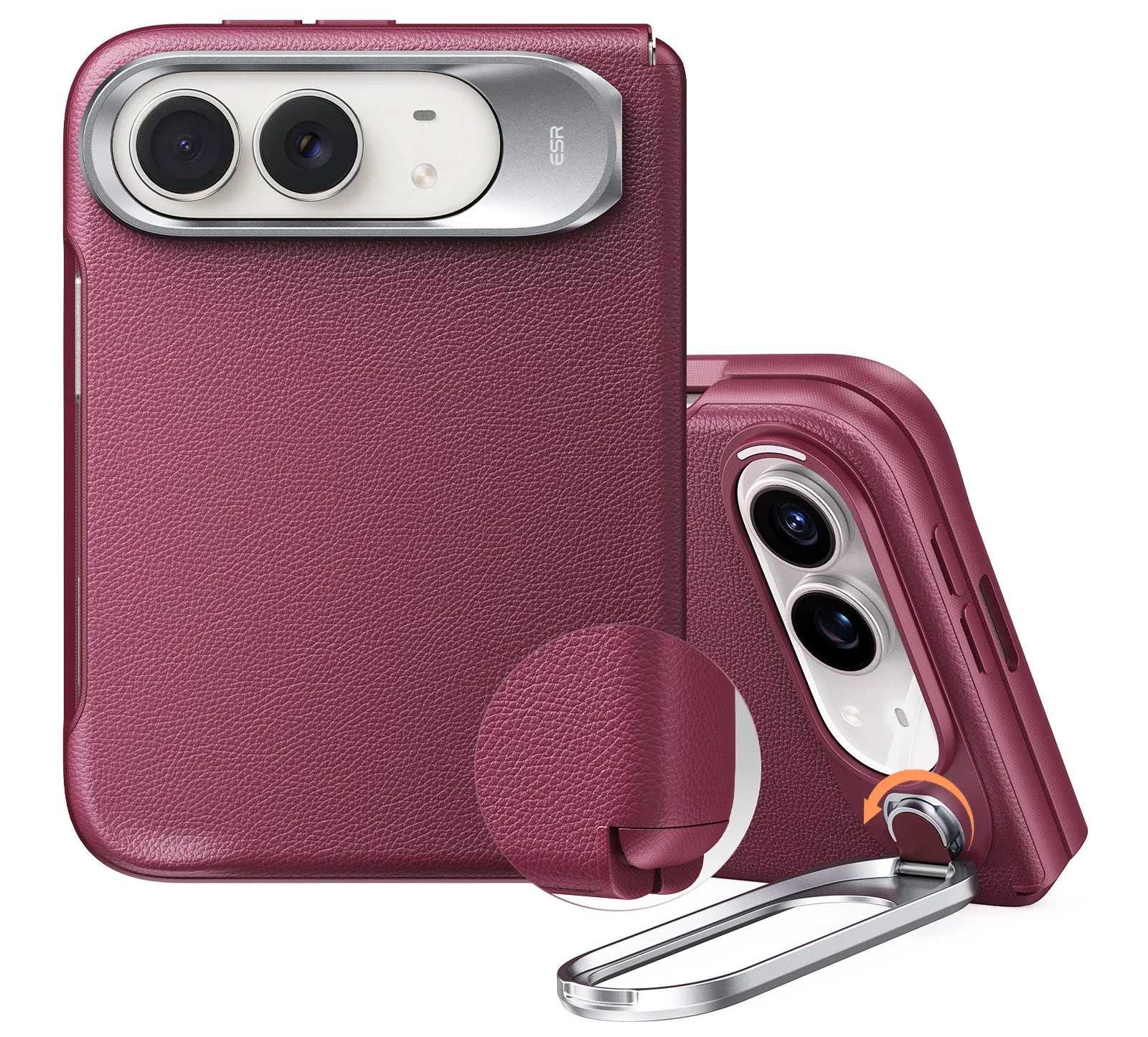
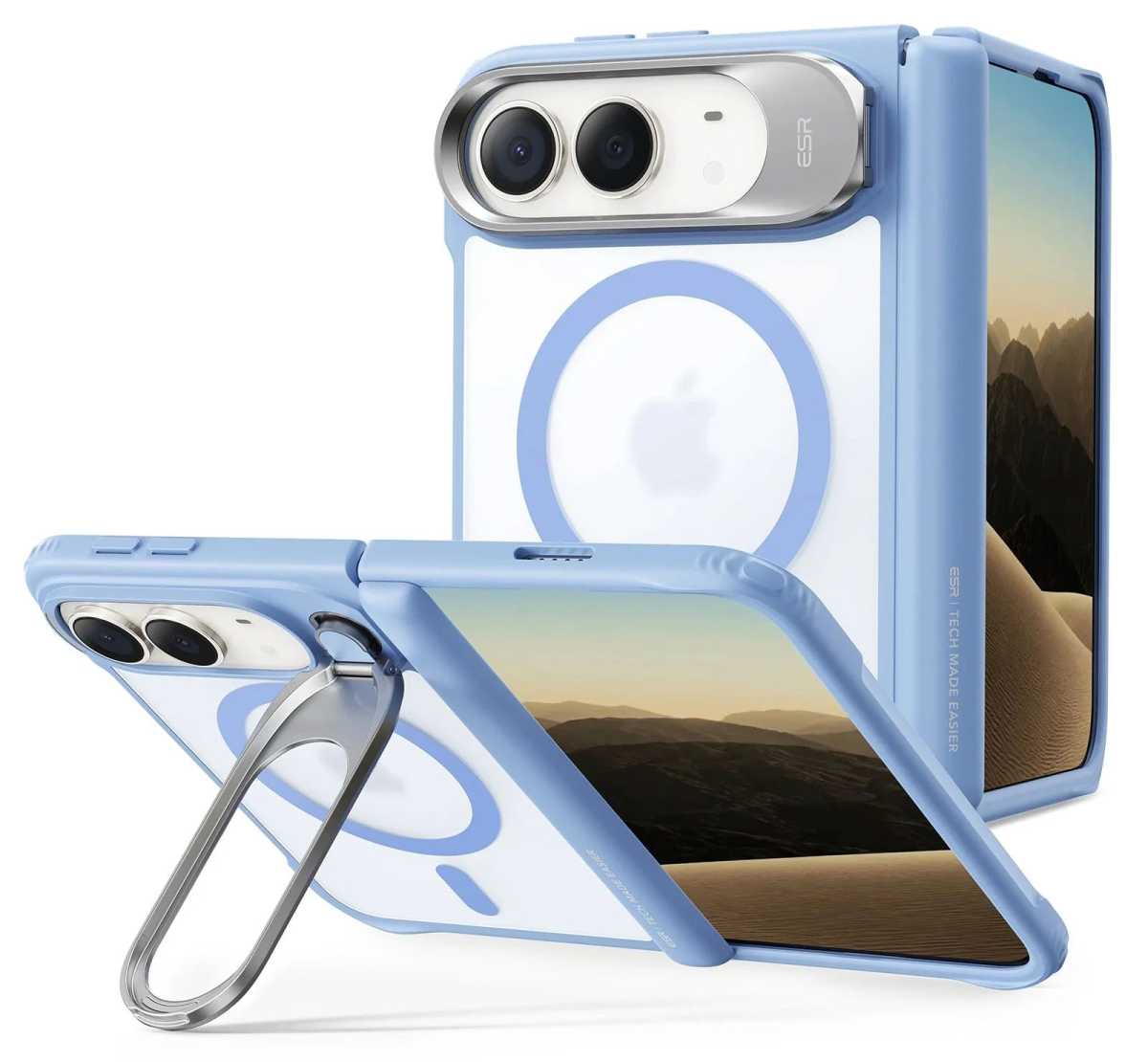
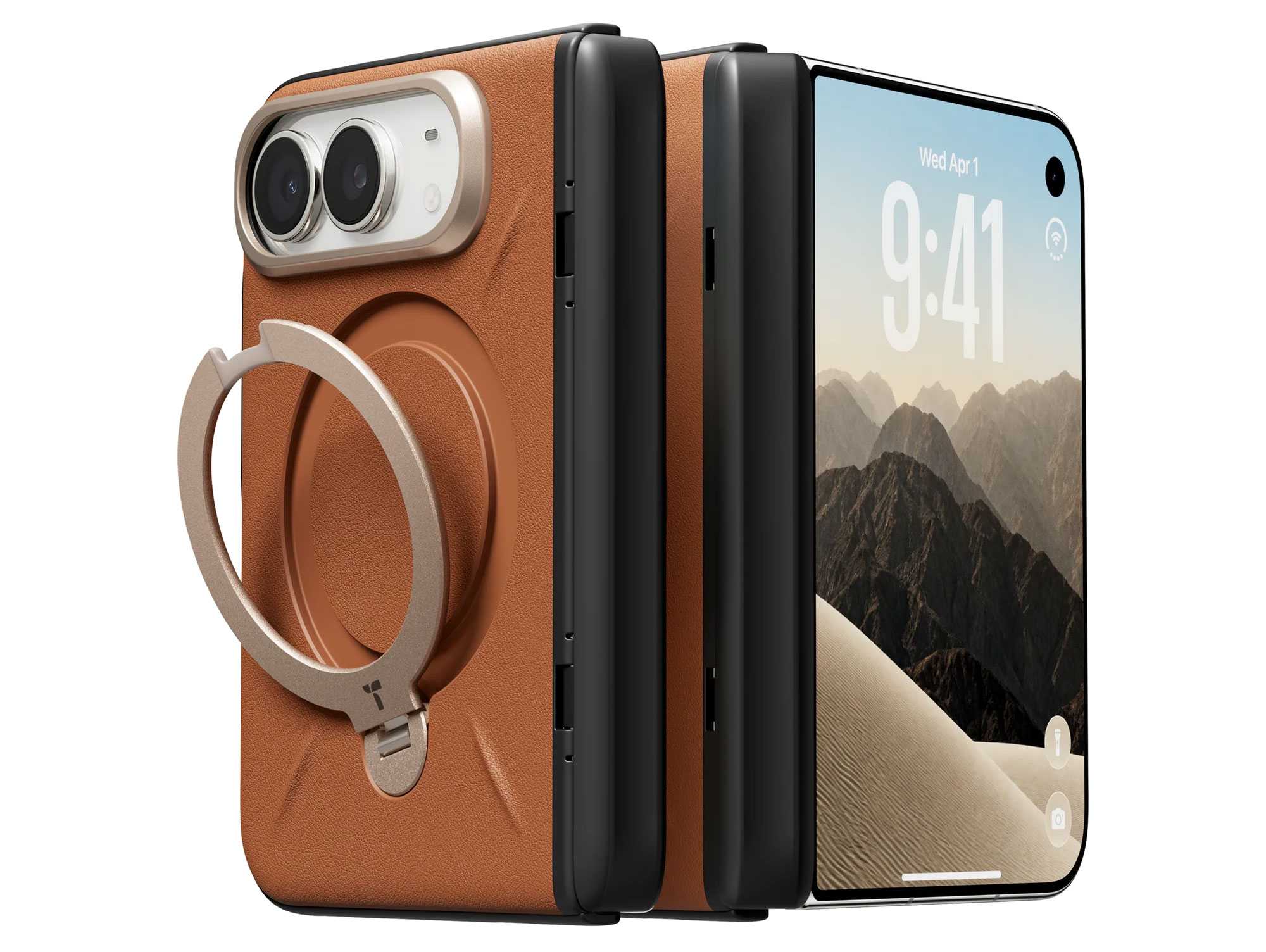
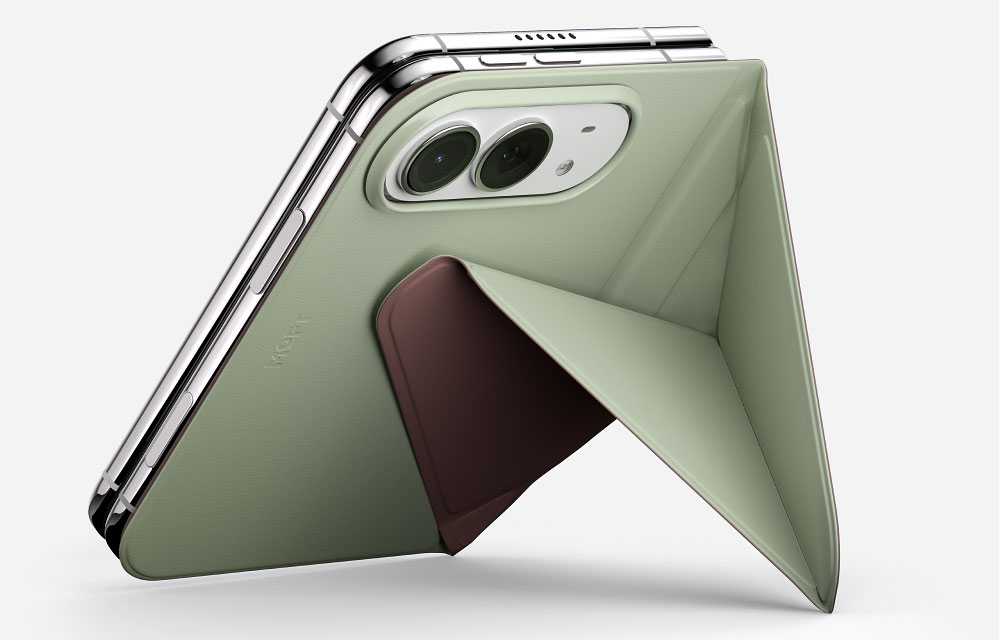
Extra functions: Some iPhone Duo cases include a kickstand for easier viewing. We assessed adjustability and how much bulk the stand adds. ESR’s Flex Stand, for example, rotates 180° and forms a protective guard around the camera bar when not in use. Other stands, such as those on the Torras Ostand and UAG Mouve XTE, rotate 360° and fold flat against the case backplate. The Moft Dynamic Folio uses an origami-like folding stand. Stability with a working iPhone Duo, both folded and unfolded, will require further testing because its weight and balance may differ from those of the dummy handset.
Colors and style: We assessed the range of colors and the quality of the finishes provided. Most of the color and pattern will be seen on the case’s backplate, but it should also be noticed on the front frame and hinge protector where present.
Magnetic accessory compatibility: We checked how securely magnetic chargers, power banks, wallets, and other accessories attached, and whether the case’s camera surround, hinge protection, or kickstand obstructed their fit. Because we used a dummy handset for our initial testing, these checks assess attachment and clearance only. We will test charging performance—including speed, heat, and reliability—once we have a working iPhone Duo.
Price comparison from over 24,000 stores worldwide
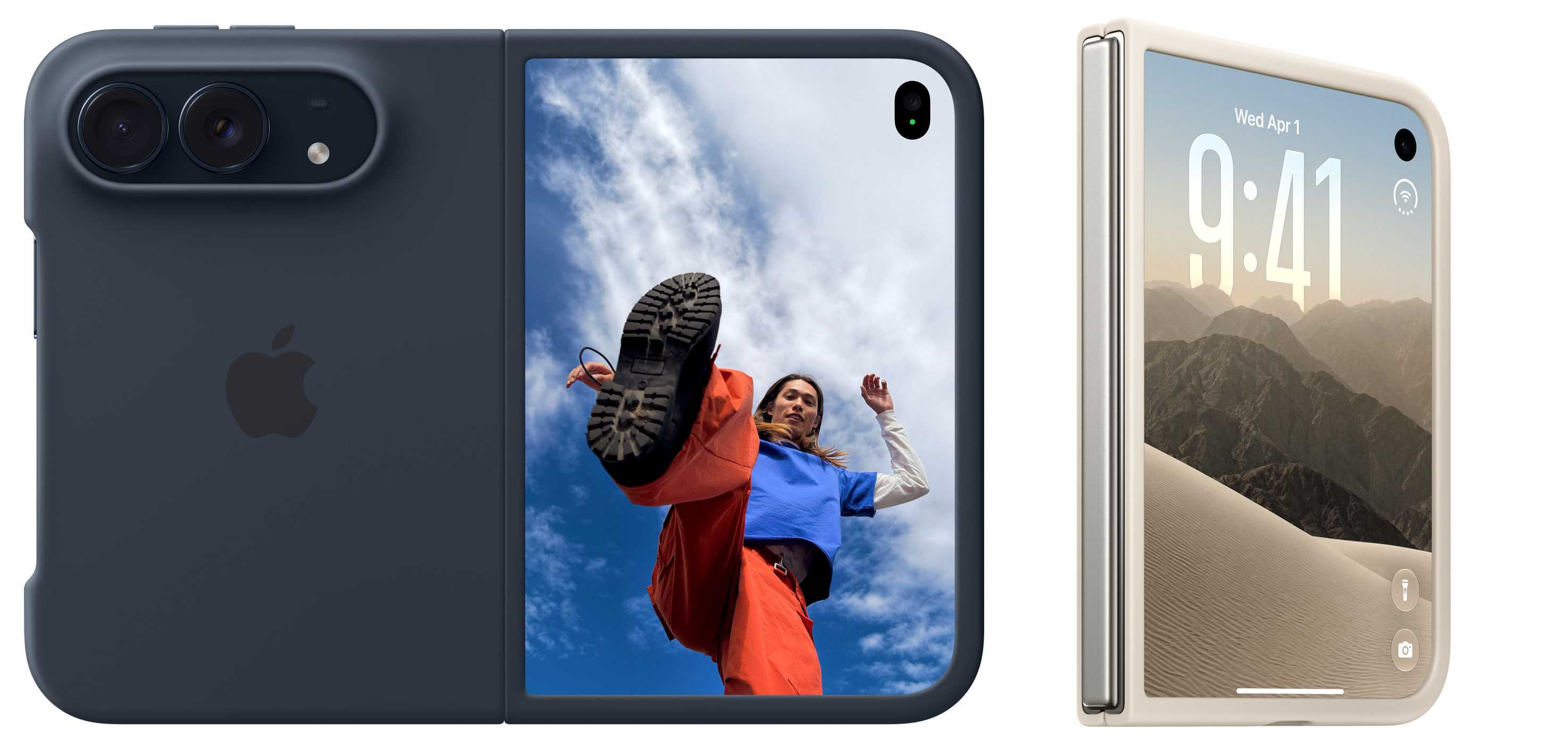
There are two Apple-branded cases for the iPhone Duo. The basic version is called simply the Apple iPhone Duo Case. If you want everything to have an Apple logo on it, this is a solid choice you can’t go wrong with.
It’s a two-part design, with each side having its own thin cover and a protective frame around the edges. This leaves the phone’s hinge area “unobstructed” (which the pessimistic among us could also describe as “exposed”) so the device can fold and close completely flat without interference. Like most two-part cases without a hinge cover, it requires adhesive strips to ensure a secure fit, and so is not as easy to remove and reattach as magnetic cases such as Apple’s own Duo Folio case.
Made from polycarbonate with a matte coating, the case is available in two colors—Navy Blue and Sand—that match the Duo’s own Night Sky and Star White colors.
MagSafe: Yes
Hinge protected: No
Apple iPhone Duo Folio with Kickstand: Magnetic folio with a built-in stand
Price comparison from over 24,000 stores worldwide
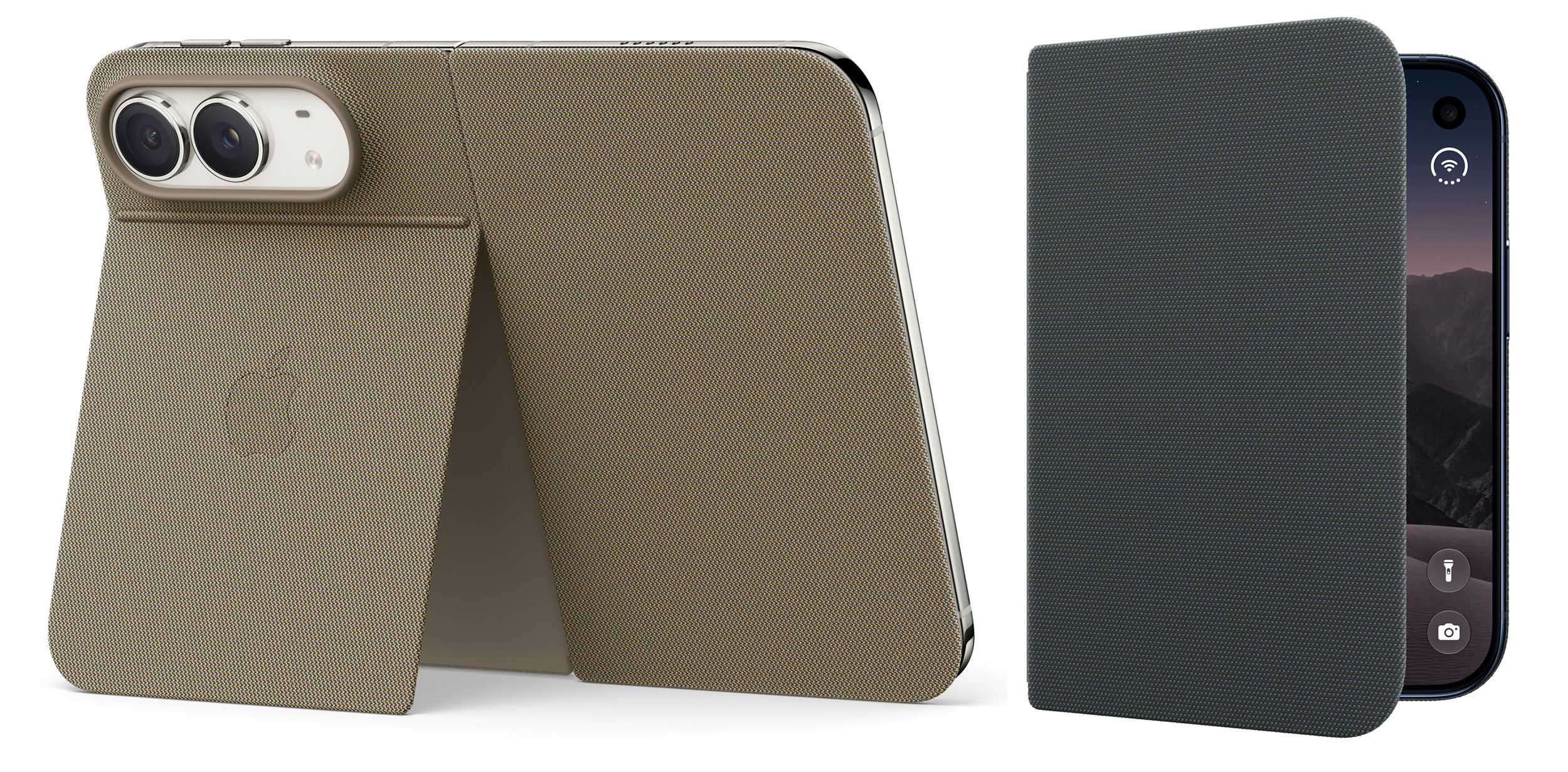
The second Apple-branded iPhone Duo case is the Folio with Kickstand, a thin one-piece multi-function case that attaches magnetically, and both protects and offers stable viewing through a sturdy kickstand at the back. While it does protect the exterior display and the hinge, unlike the basic Apple Duo Case it doesn’t feature a protective frame for the phone’s edges. Somewhat remarkably, the MagSafe connection remains even when the stand cover is closed and will also work when it’s open. The Duo can wirelessly charge at up to 25W.
Again, the Navy Blue and Taupe case colors are suited to each of the two Duo appearances. It’s made with Apple’s leather-alternative TechWoven fabric, found on its standard iPhone cases. Unlike the basic Apple iPhone Duo Case, the Folio has a fabric hinge cover so that’s better protected. This neatly retracts when the Duo is unfolded open so doesn’t affect the outer screen when the device is unfolded.
MagSafe: Yes
Hinge protected: Yes
Benks ArmorGrid Air Grand Combo: Best lightweight case
Price comparison from over 24,000 stores worldwide
Benks makes some of our favorite standard iPhone cases, and its ArmorGrid Air Grand Combo for iPhone Duo matches the ArmorGrid case for iPhone 18 Pro and Pro Max. It’s a protection set that combines a front frame shielding the display perimeter and 1.3mm-thin back case made from super-tough Kevlar, and a screen protector for the front (not unfolded middle) screen. The whole package weighs a slight 23.5g.
There’s no hinge protection, which keeps the Duo’s folding mechanism unencumbered and reduces the possible points of failure but also leaves this area of the Duo bare.
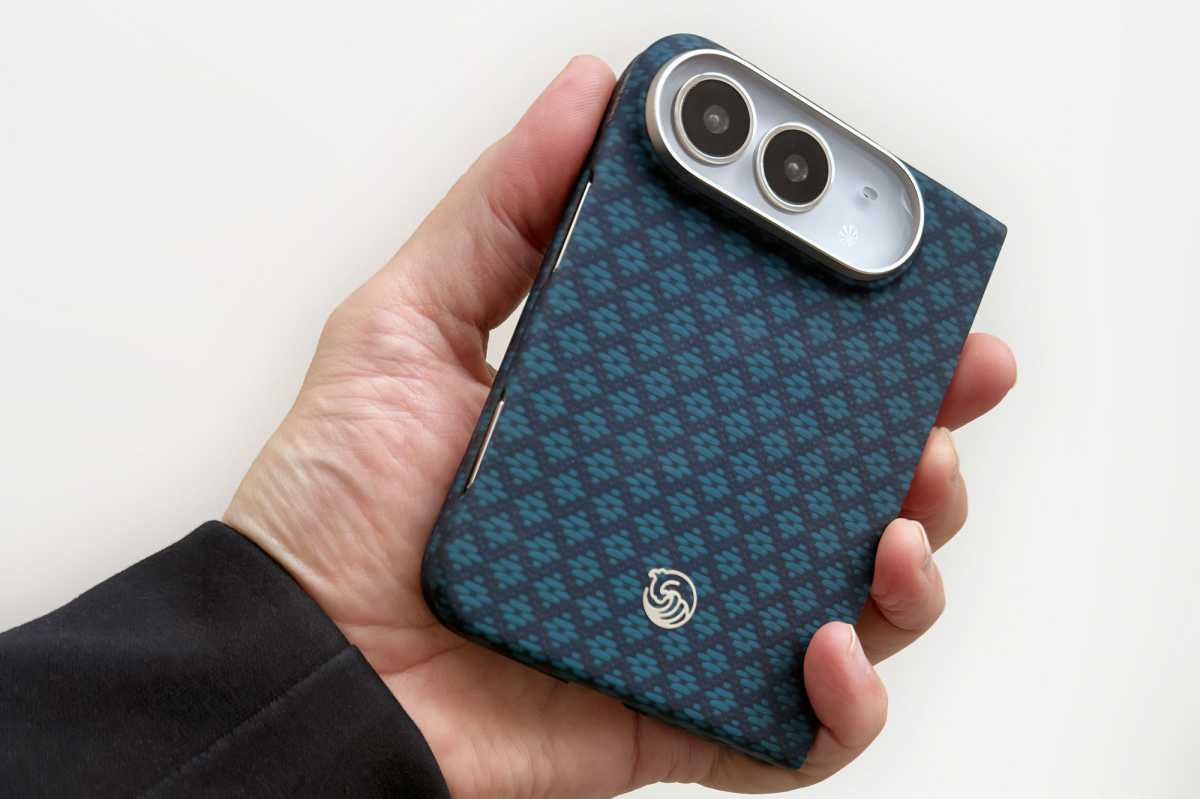
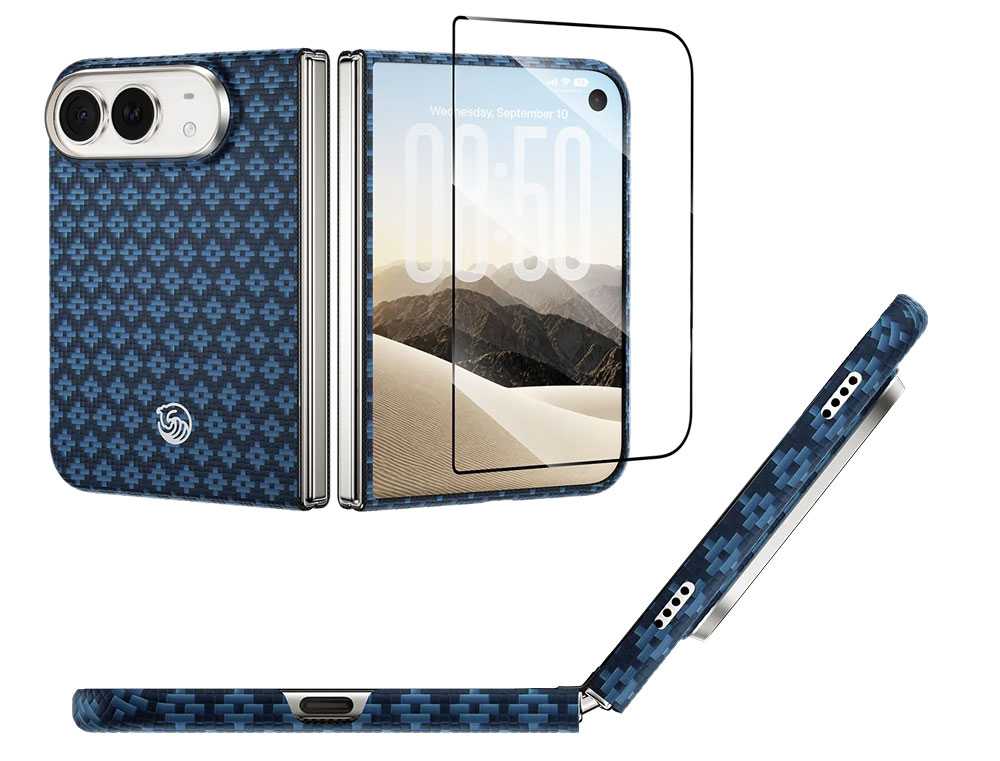
The Kevlar back case features a diamond-pattern weave to create a structured, geometric texture that adds a little extra grip but nothing you really notice in hand. It’s available in either Beyond Blue or Obsidian Black. This can be paired with the $29 Benks ArmorPop Grip Stand for balanced, stability viewing angles.
MagSafe: Yes
Camera edge: 2mm
Screen edge: 1.5mm
Backplate: 1.3mm
Hinge protected: No
Drop protection: Yes, height not claimed
Weight: 23.5g
Benks
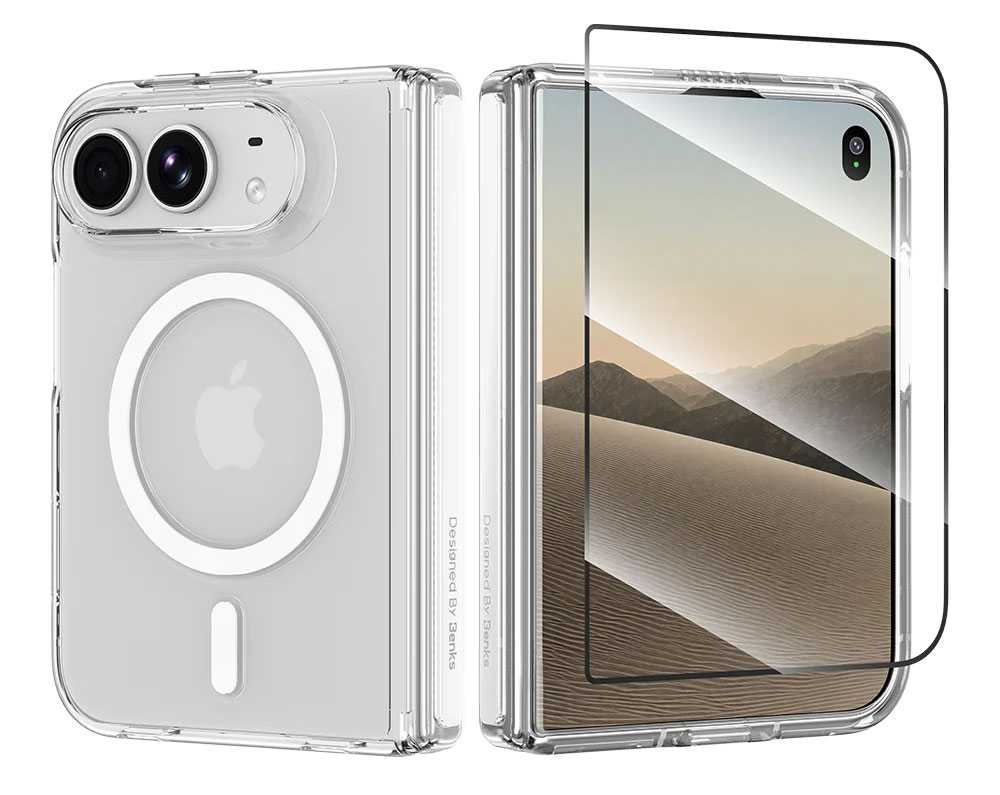
If you prefer to keep Apple’s original Duo coloring Benks also offers its clear Crystal Case for iPhone Duo with transparent polycarbonate front frame and back with corner airbag cushions, plus the front screen protector. Unlike the ArmorGrid Case, there is hinge protection that reduces the force of daily impacts and scratches. An anti-yellowing surface treatment helps resist discoloration from UV exposure.
MagSafe: Yes
Camera edge: 2mm
Screen edge: 1.5mm
Backplate: 1.3mm
Hinge protected: Yes
Drop protection: Yes, height not claimed
Weight: 23.5g
ESR Atelier Case with Flex Stand for iPhone Duo: Best soft-touch case
Price comparison from over 24,000 stores worldwide
ESR’s Atelier Case ($59.99) is made from a soft, smooth silicone material that wraps around front and back including the iPhone Duo’s hinge. ESR claims it can withstand drops of up to 3.6 feet, with a strong TPU frame. Its metal 180° Flex stand doubles as a camera lens protector when not in use, and can be placed in a variety of portrait and landscape positions (adjustable viewing from 15°–69°), whether the Duo is folded or unfolded. The same handy stand is available on ESR’s other Duo cases reviewed below.
MagSafe: Yes
Camera edge: 1.6mm
Screen edge: 2.3mm
Backplate: 2.3mm
Hinge protected: Yes
Drop protection: 3.6 feet
Weight: 59g
ESR
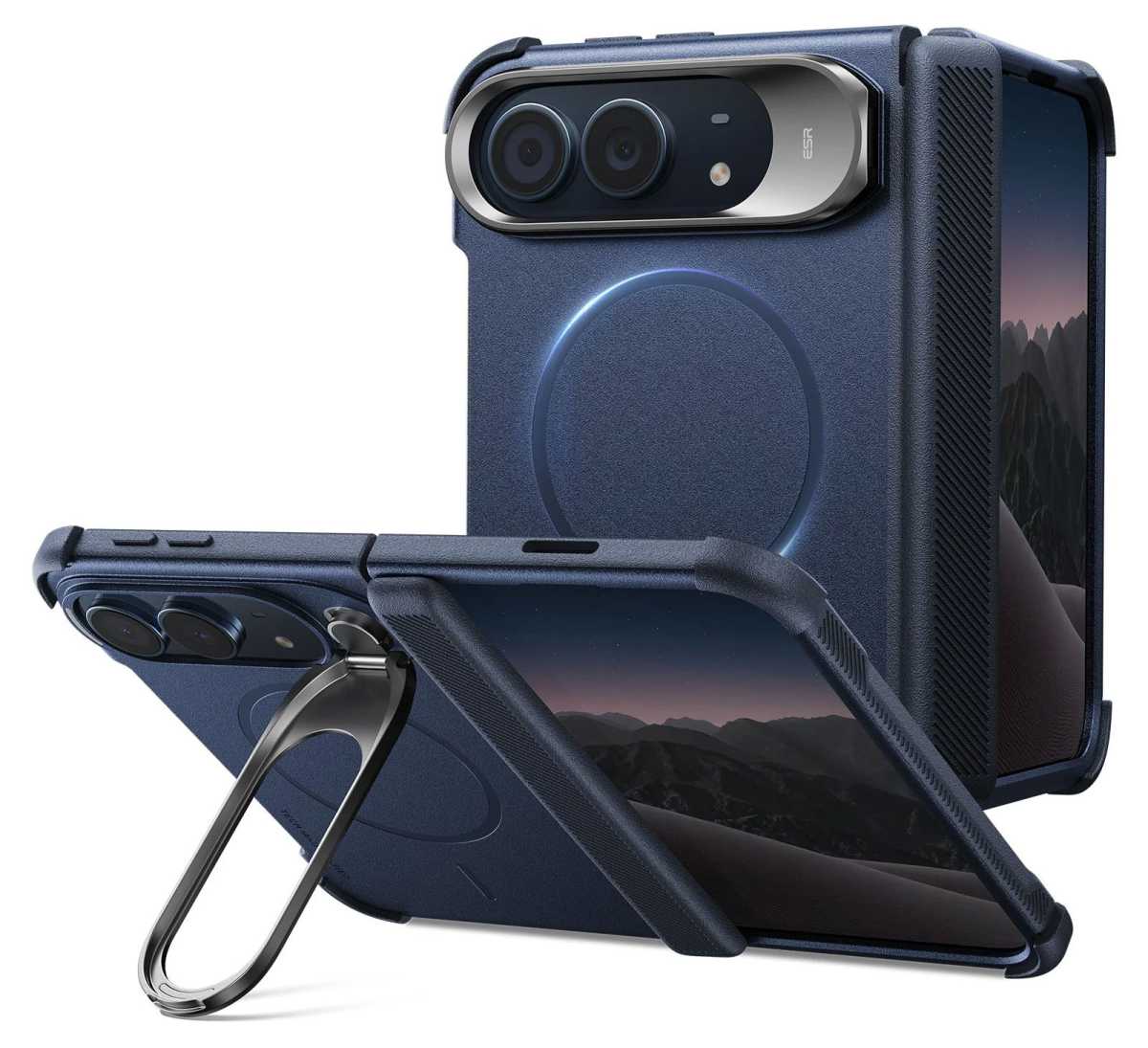
The Cyber Tough Case ($42.99) is ESR’s most protective case for iPhone Duo, offering what ESR claims is 16-foot drop, 4x military-grade protection. It features reinforced hinge coverage, zinc-alloy camera protection, and Air Guard corners. The textured sides add some grip to make dropping the Duo less likely in the first place. The Cyber Tough’s Flex Stand folds 180° and rotates 270° for stable hands-free. As with the Atelier Case, the Flex tucks back to form the camera lends protection when not in use as a stand. Also available on Amazon.
MagSafe: Yes
Camera edge: 1.8mm
Screen edge: 2.6mm
Backplate: 2.5mm
Hinge protected: Yes
Drop protection: 16 feet
Weight: 65g
ESR
Somewhere between the Atelier and Cyber Tough is ESR’s Classic Hybrid Case ($42.99), with a 1.5mm back and the same 180° Flex Stand and reinforced hinge protection. The Frosted cases show more of the original Duo colors. Also available on Amazon.
MagSafe: Yes
Camera edge: 0.8mm
Screen edge: 2.1mm
Backplate: 1.5mm
Hinge protected: Yes
Drop protection: 8 feet
Weight: 55g
Torras Ostand Q3 VegSkin Case for iPhone Duo: Best rotating stand case
Price comparison from over 24,000 stores worldwide
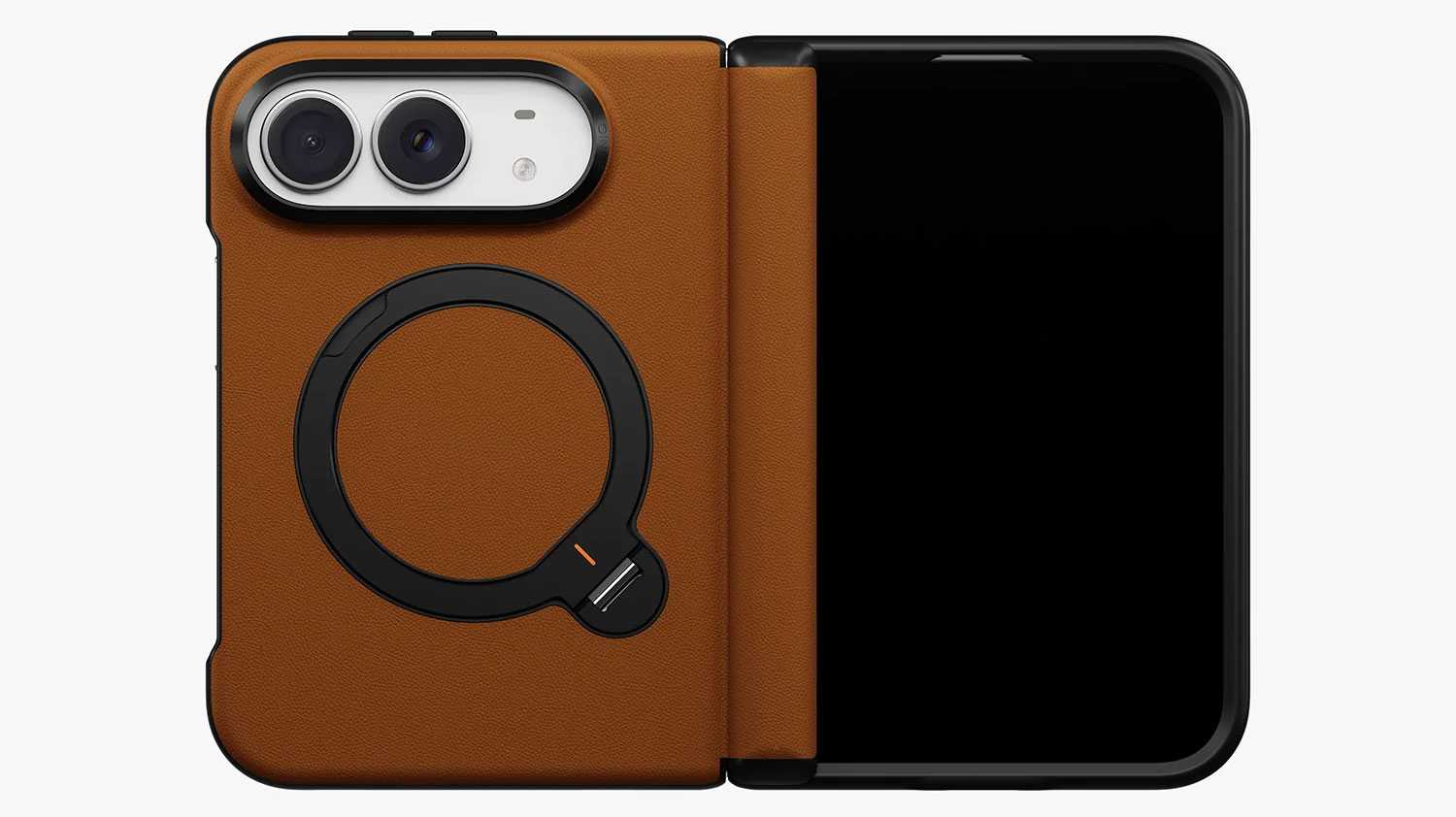
Made from a premium leather-like silicone material, the Ostand Q3 VegSkin Case offers a 3.35mm thick back protection that Torras claims 8-foot drop protection, plus 1.2mm bezels around the camera lenses and front screen.
The aluminum alloy Ostand can pivot 360° and folds flat back into the MagSafe back cover when not in use. It’s a great stand that we’ve previously enjoyed with the standard iPhone.
The VegSkin Case is available in three colors: Deep Blue, Amber Brown, and Pearl Grey. There’s a version without the leather-like appearance in Purple, Black, and Deep Blue.
MagSafe: Yes
Camera edge: 1.2mm
Screen edge: 1.2mm
Backplate: 3.35mm
Hinge protected: Yes
Drop protection: 8 feet
Weight: 46g
MOFT Dynamic Folio for iPhone Duo: Best case with a stand and grip
Price comparison from over 24,000 stores worldwide
MOFT stands out, quite literally, with its origami-inspired case/stand designs for iPhone and iPad. Its Dynamic Folio for iPhone Duo applies the same ingenious folding logic to protection, grip and viewing. The centrally positioned structure balances the Duo’s weight, supporting four portrait and landscape positions. As with most iPhone Duo cases the front frame has a removable adhesive to secure it, while the hinge and backplate are joined magnetically.
MagSafe: Yes
Camera edge: Yes, no size given
Screen edge: Yes, no size given
Backplate: 1.9mm
Hinge protected: Yes
Drop protection: Yes, height not claimed
Weight: 73g
Moft
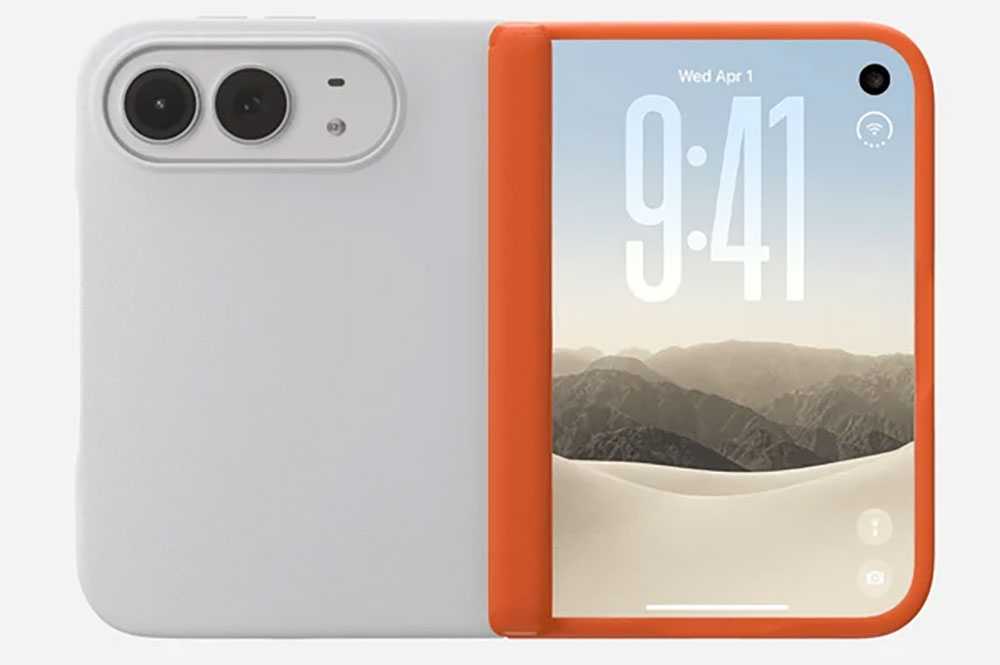
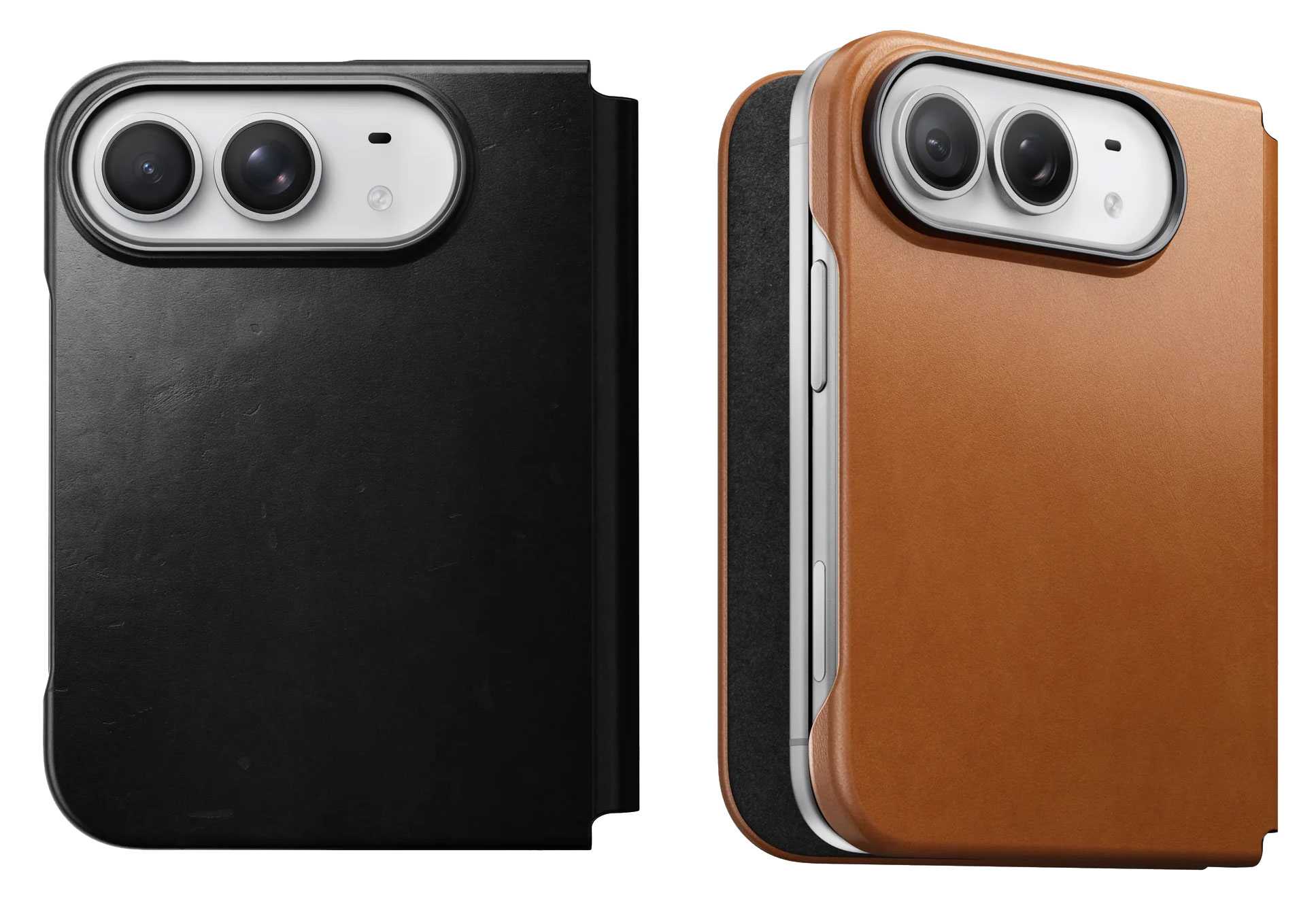
The MOFT MOVAS Modular Case for iPhone Duo is a more traditional case even though it comes in three parts: front frame, hinge, and backplate. It still has a wow-factor over other cases as you can mod your design with an extra hinge/frame in a different color at the point of purchase. Shown above is the Misty Cove backplate with a Terracotta hinge/frame, but you could choose the same backplate with a Khaki Green front, or Navy Blue with either.
Nomad Traditional Leather Folio for iPhone Duo: Best leather wallet case
Price comparison from over 24,000 stores worldwide
The Nomad Traditional Leather Folio wraps the Duo in full-grain, premium vegetable-tanned Horween leather that gains its own patina over time.
The backplate is 2.7mm thick with full Folio thickness of 3.8mm. The hinge is protected, and there’s a 1.15mm lip protecting the screens. You can fit a couple of cards inside the front section of the case.
MagSafe: Yes
Camera edge: 0.5mm
Screen edge: 1.15mm
Backplate: 2.7mm
Hinge protected: Yes
Drop protection:Yes, height not claimed
Weight: 64g
If you don’t need the full folio coverage and desire as thin a Duo as possible but with some back protection, Nomad offers just the magnetic Leather Back (2.2mm thick), also in Horween leather at $59, which features microsuction pads to double-up on the magnetic application.
MagSafe: Yes
Camera edge: 0.5mm
Screen edge: n/a
Backplate: 2.2mm
Hinge protected: No
Drop protection: Drop protection: No—back and camera protection against everyday
Weight: 64g
Pitaka iPhone Duo Edge Case: Slim patterned aramid case
Price comparison from over 24,000 stores worldwide
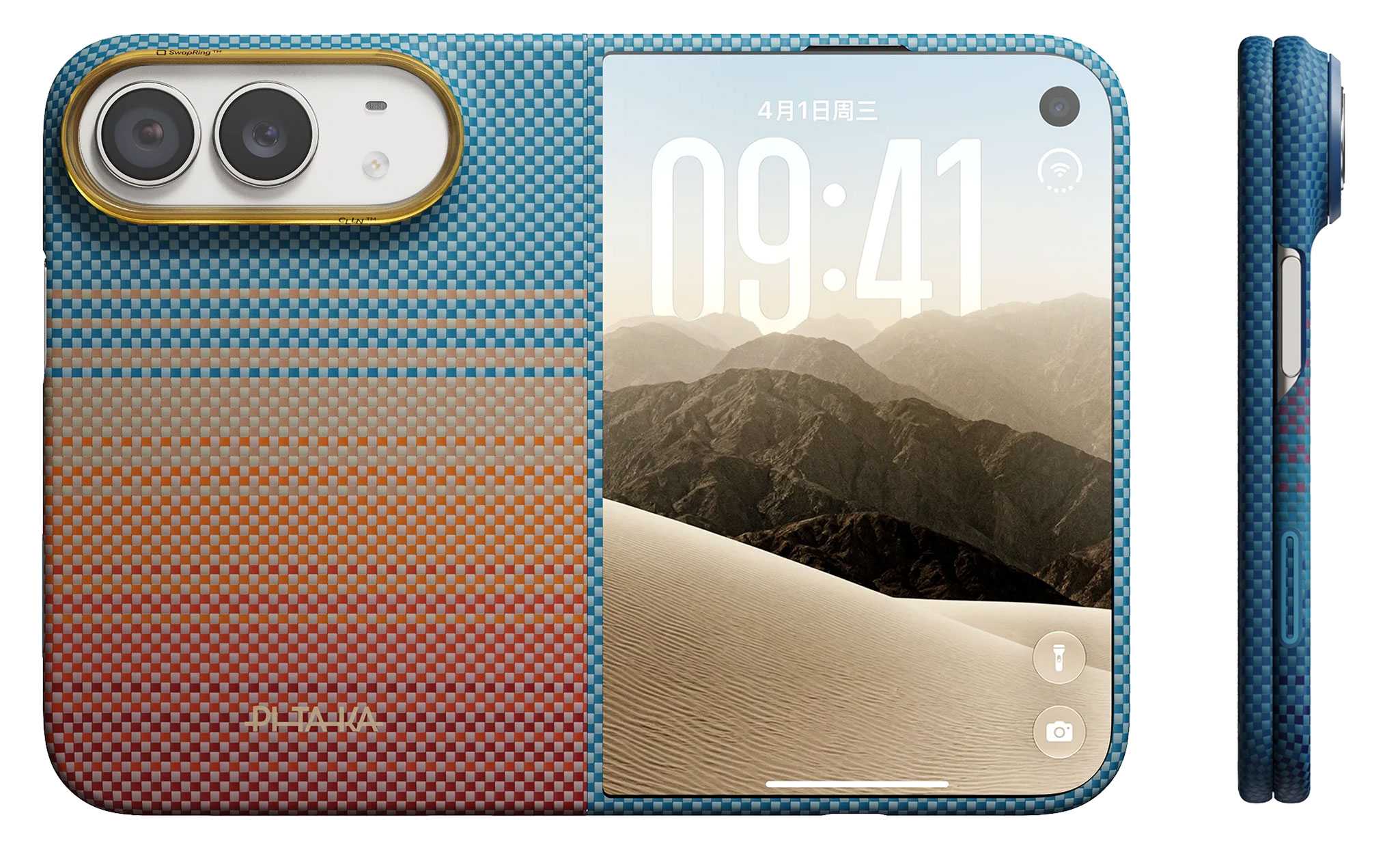
Available in Pitaka’s distinctive California Dream, Black/Grey Twill, Midnight, and Sunset patterns, the Duo Edge Case has no hinge protection keeping it slim but does boast a two-part aramid fiber front frame and 1.3mm back cover with pre-installed anti-slip adhesive strips. Pitaka claims its Mammoth Resin reinforces structural integrity to enhance impact resistance.
The front cover is fitted with HD anti-reflective tempered glass to minimize glare and fingerprint smudges.
MagSafe: Yes
Camera edge: 0.5mm
Screen edge: 0.5mm
Backplate: 1.3mm
Hinge protected: No
Drop protection: 8 feet
Weight: 36g
Casetify Impact Case for iPhone Duo: Best for colorful designs
Price comparison from over 24,000 stores worldwide
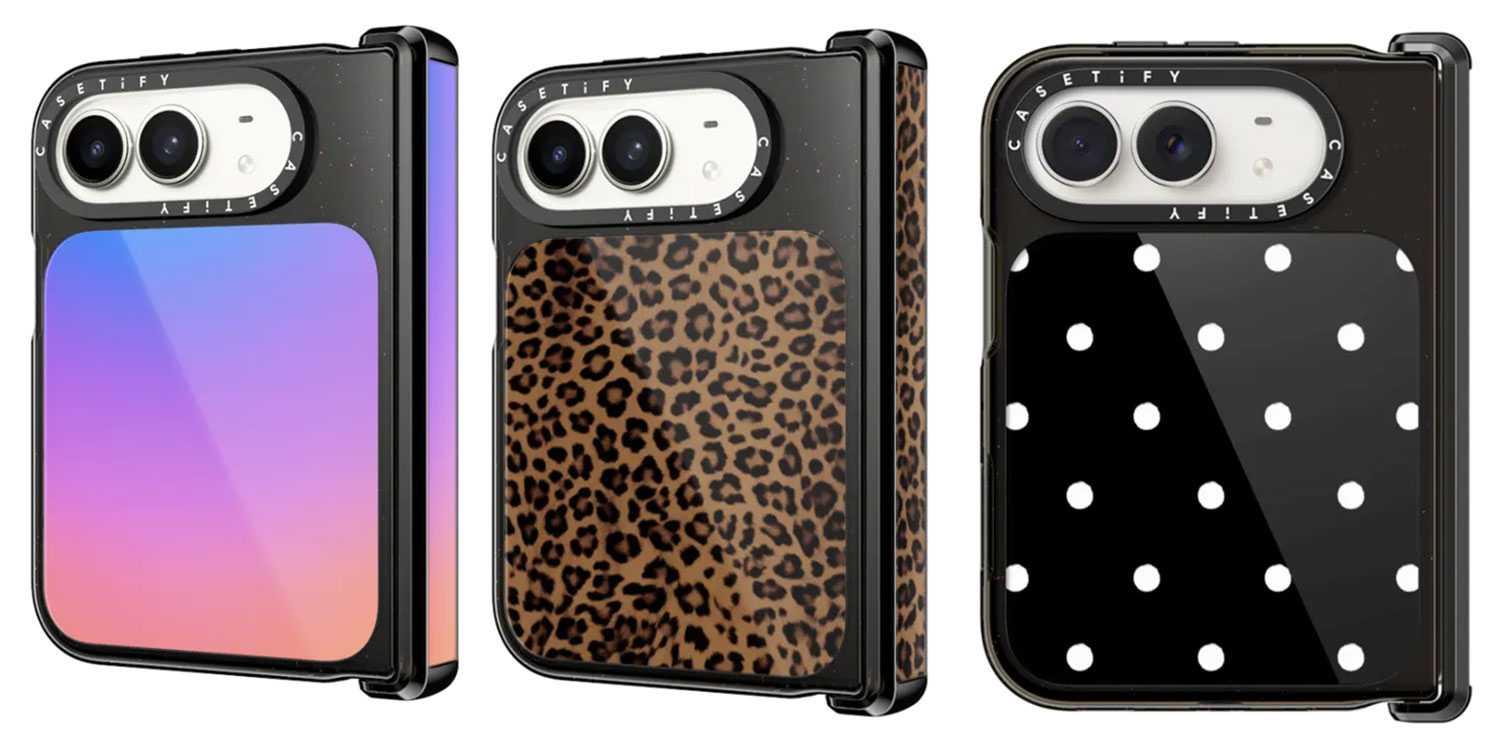
Casetify is a case maker that rejoices in its range of colors and pattern designs, and it has a bunch for the iPhone Duo, including Gradient, Leopard, and Dottie shown above, among others such as Dark Cherry Jelly, Black Kingsnake, Gingham, and Jelly Bears.
You can match it with the company’s many accessories such as the Snappy Grip Stand, Ring Holder and Loop Grip.
MagSafe: Yes
Hinge protected: Yes
Zagg Crystal Palace Snap KS Case for iPhone Duo: Best clear case with a stand
Price comparison from over 24,000 stores worldwide
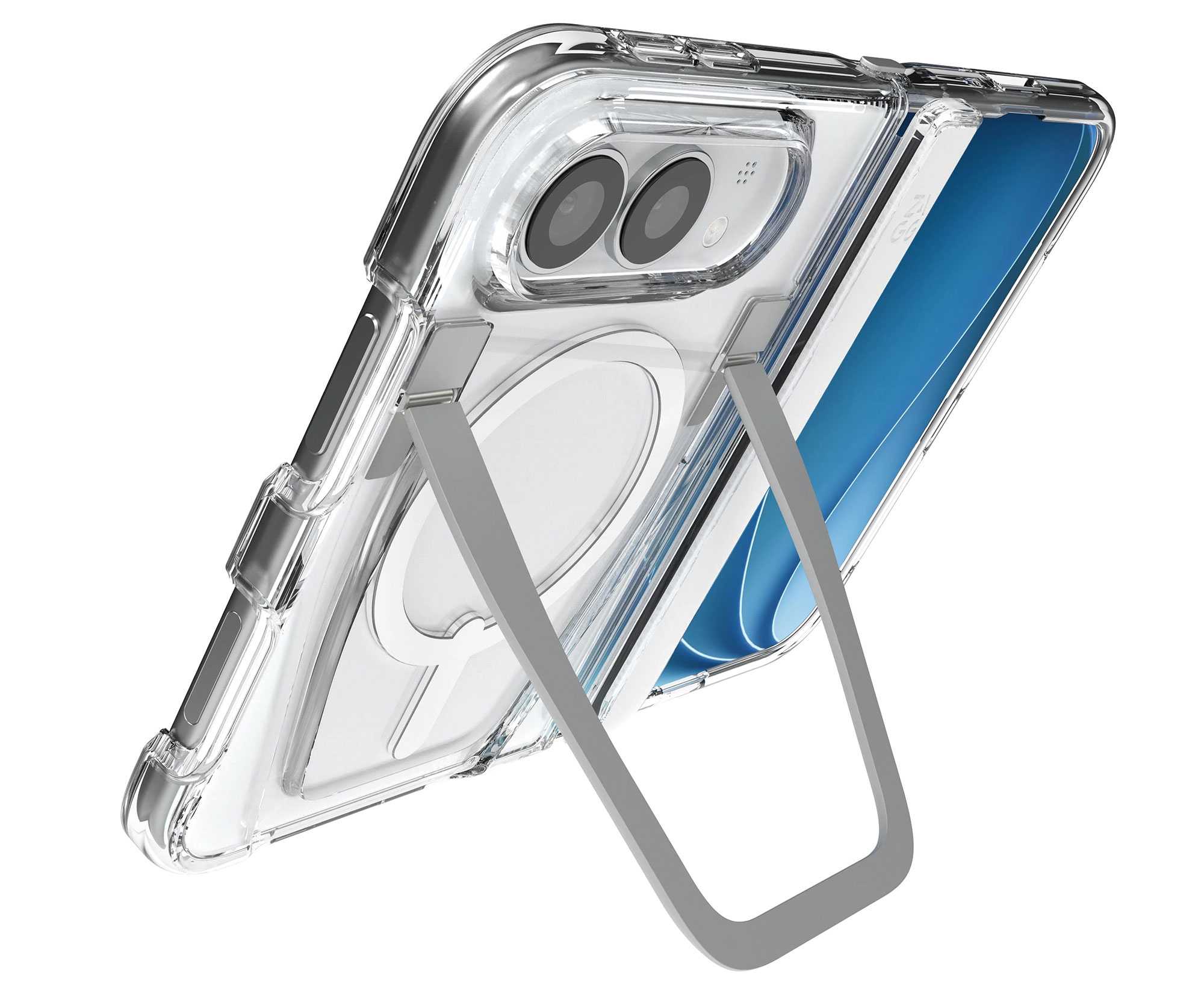
This sleek, clear iPhone Duo case features one of the most robust kickstands available, and it wisely keeps out of the way of magnetic wireless charging connection. It might look less protective because of its transparency, but Zagg claim the Crystal Palace offers 13 feet (4m) of drop protection for the case is reinforced with resilient Graphene without adding bulk. Textured edges provide a more secure grip to save the phone from jumping out as you pull it from your pocket.
MagSafe: Yes
Camera edge: 1.5mm
Screen edge: 2mm
Backplate: 3.5mm
Hinge protected: Yes
Drop protection: 13 feet
Weight: 69g
A Crystal Palace Snap Lite Case ($69.99) is thinner and lacks the kickstand, but still offers a claimed 10-foot (3m) drop protection.
MagSafe: Yes
Camera edge: 1.5mm
Screen edge: 2mm
Backplate: No size given
Drop protection: 10 feet
Weight: 33g
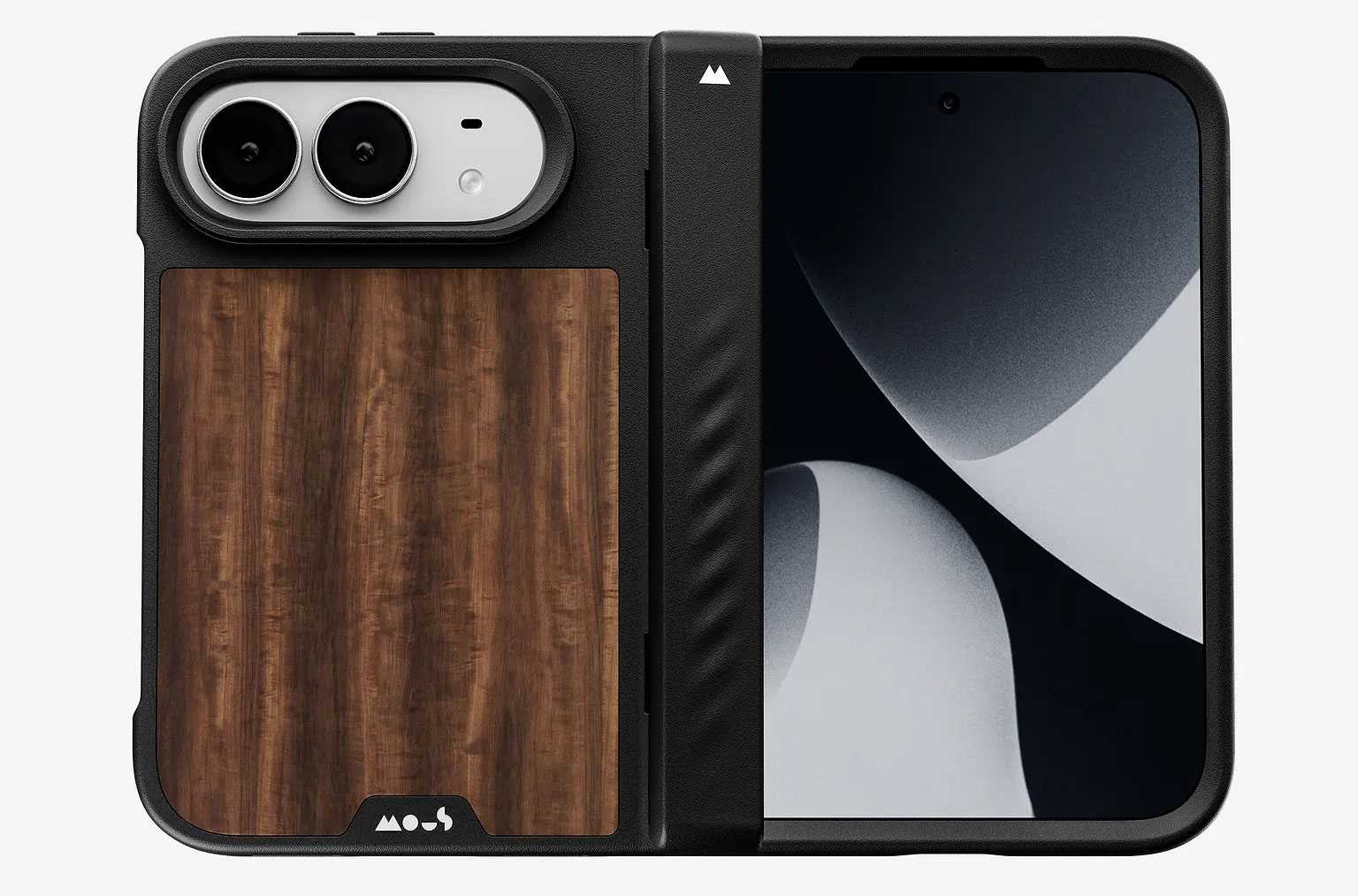
Mous Limitless Case for iPhone Duo: One-piece case with hinge coverage
Price comparison from over 24,000 stores worldwide
Mous’s tough one-piece Limitless case features an interlocking TPU and polycarbonate shell, impact-absorbing AiroShock TPE corners, and an aramid-fiber-reinforced front frame and backplate for extra rigidity. The one-part design aids the fit strength, with the TPU bridge flexing when open. One version of the case is locked across the hinge, offering all-round protection, while another is hinge-free.
It’s available in Mous’s signature Walnut plus Speckled designs as well as Black and a striped aramid fiber.
MagSafe: Yes
Camera edge: 0.5mm
Screen edge: 2mm
Backplate: 1.65mm
Hinge protected: Yes
Drop protection: Yes, height not claimed
Weight: 42g
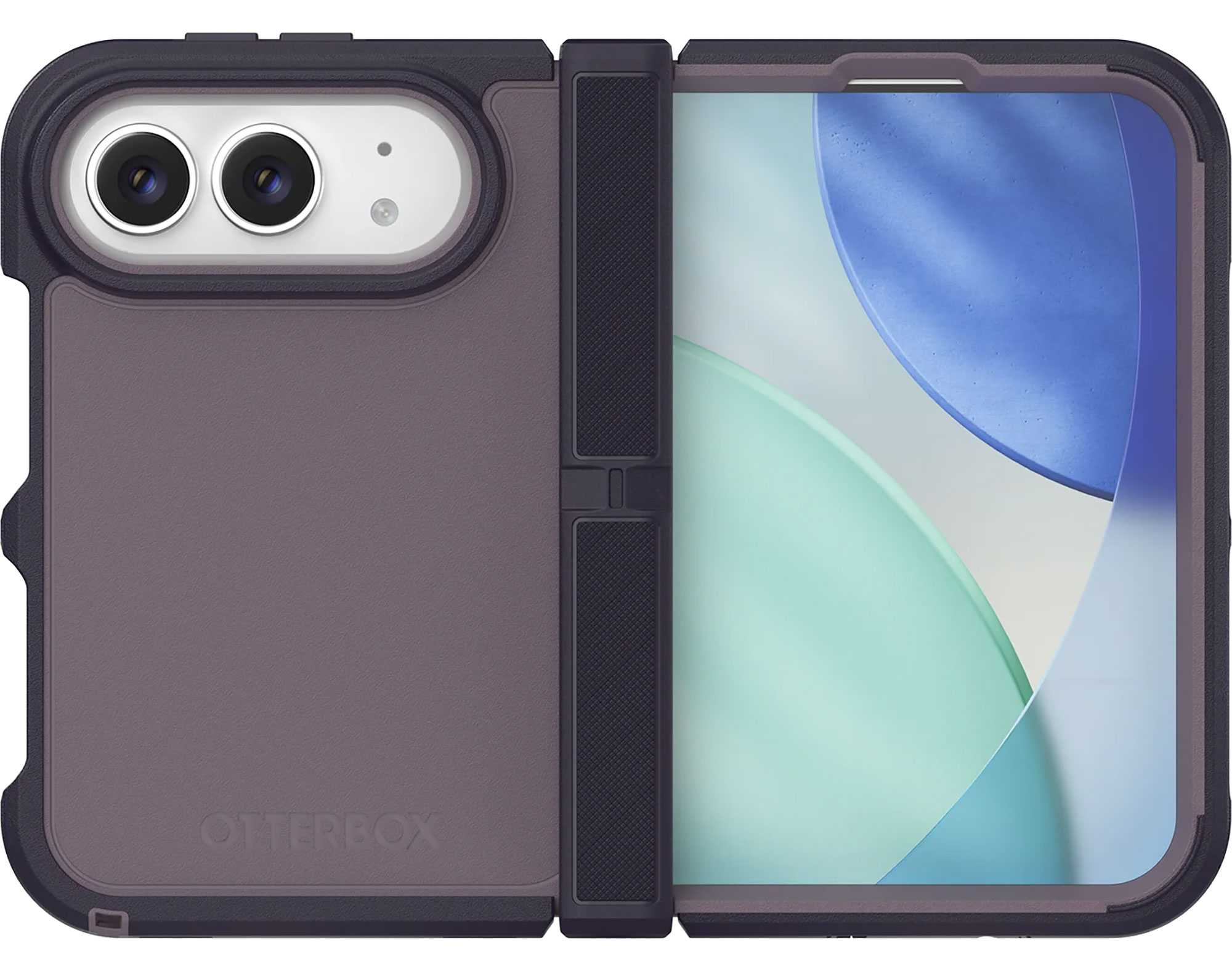
OtterBox Defender Series Pro XT for iPhone Duo: Best for port coverage
Price comparison from over 24,000 stores worldwide
OtterBox is well known for its Defender Pro series of phone cases, and the iPhone Duo doesn’t miss out. Available in three colors—Black, Witherwill Blue, and Adomania Purple—it features grippy rubber edges to help you keep it in your hand, and a protected hinge. It’s the one iPhone Duo case we’ve seen with covers for the ports to help keep dust and other debris out.
MagSafe: Yes
Camera edge: Yes, no size given
Screen edge: Yes, no size given
Backplate: No size given
Hinge protected: Yes
Drop protection: Yes, height not claimed
Weight: 74.4g
OtterBox
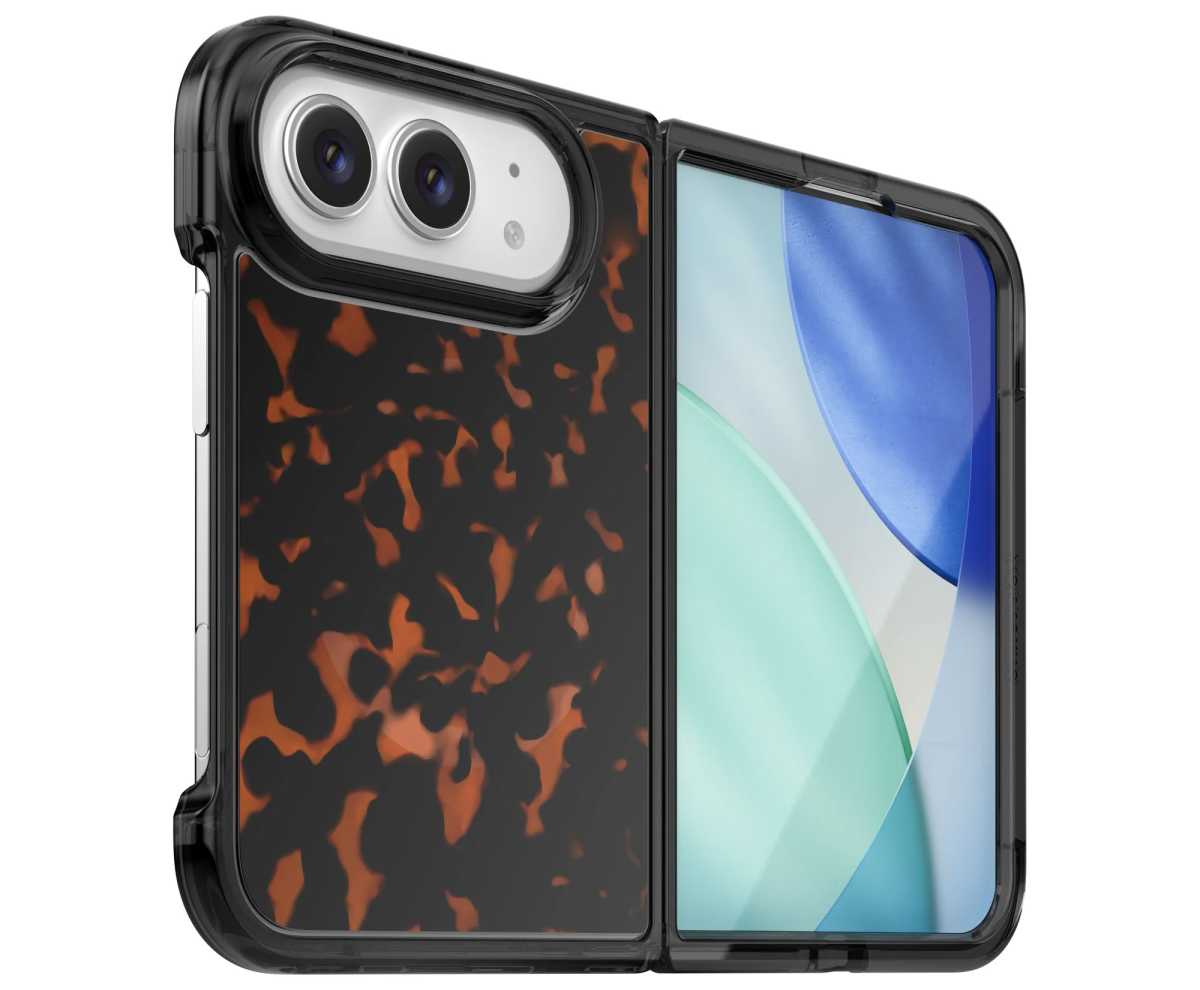
If you want a lower-profile case, the OtterBox Lumen still offers protection but not on the scale of the Defender Pro. The hinge is open, as are the ports, with cutouts for all buttons bar the Camera Control. You can indulge your Tortoise shell desires as well as buy the Lumen in Black Mist and also a Clear case.
MagSafe: Yes
Camera edge: Yes, no size given
Screen edge: Yes, no size given
Backplate: No size given
Hinge protected: No
Drop protection: Yes, height not claimed
Weight: 58.26g
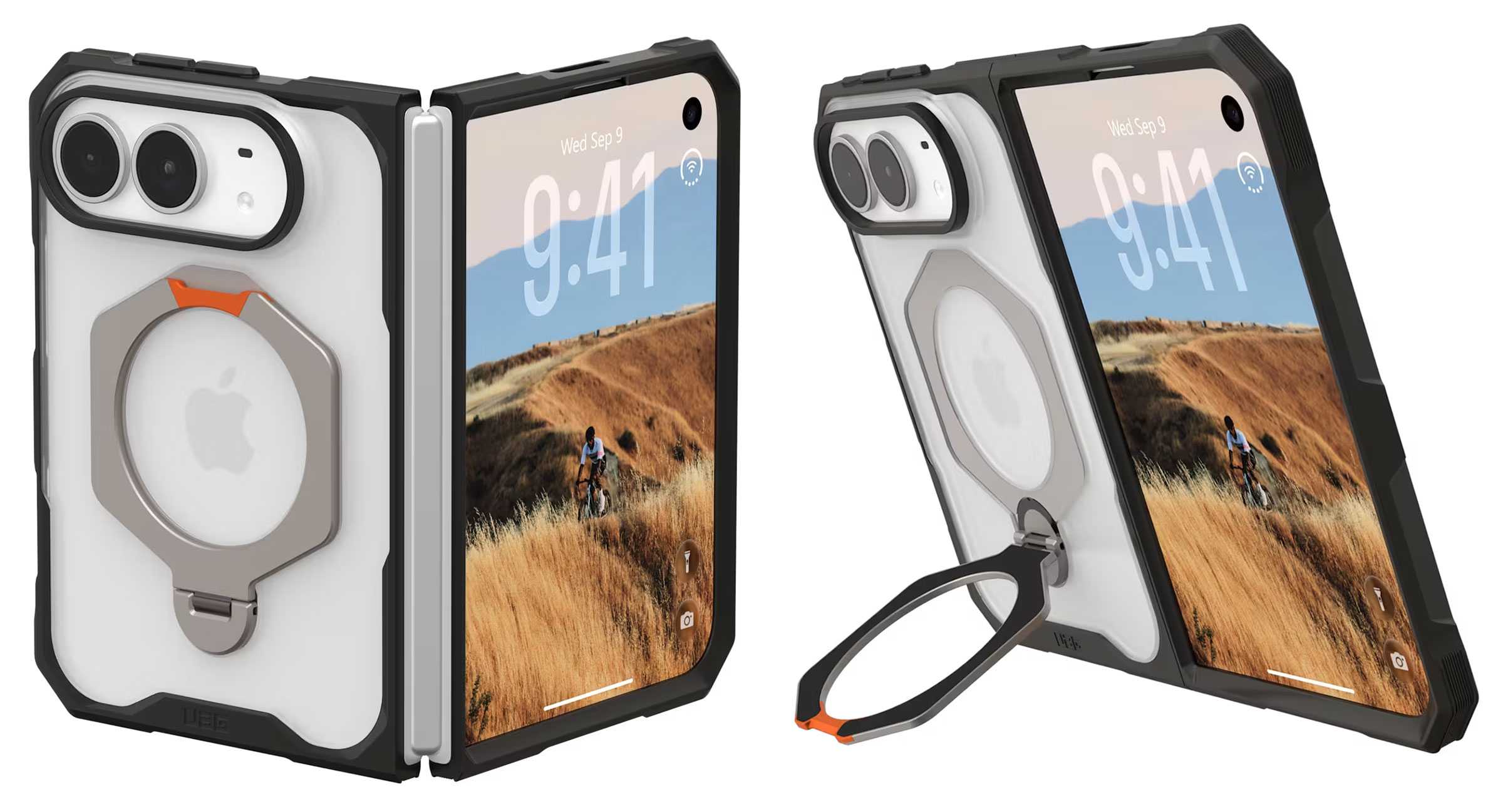
UAG Mouve XTE Case for iPhone Duo: Translucent case with a rotating stand
Price comparison from over 24,000 stores worldwide
UAG is famous for its hexagonal patterned phone cases, and the Mouve cases for the iPhone Duo feature the shape on its smooth 360° rotatable metal kickstand.
There are two models, the Mouve XTE ($84.95) with kickstand and standard Mouve ($64.95) without it. Both are two-part designs that feature translucent shells in either opaque Ice or darker Ash colors. Air-soft corners help cushion impact, and the soft-touch TPU backplate adds further protection.
MagSafe: Yes
Camera edge: 0.9mm
Screen edge: 2.2mm, 2.75 (XTE)
Hinge protected: No
Drop protection: 4 feet
Weight: 34g, 46g (XTE)
UNIQ Elix Q-Fold 360 Leather Case: Soft-touch case with adjustable rotating stand
Price comparison from over 24,000 stores worldwide
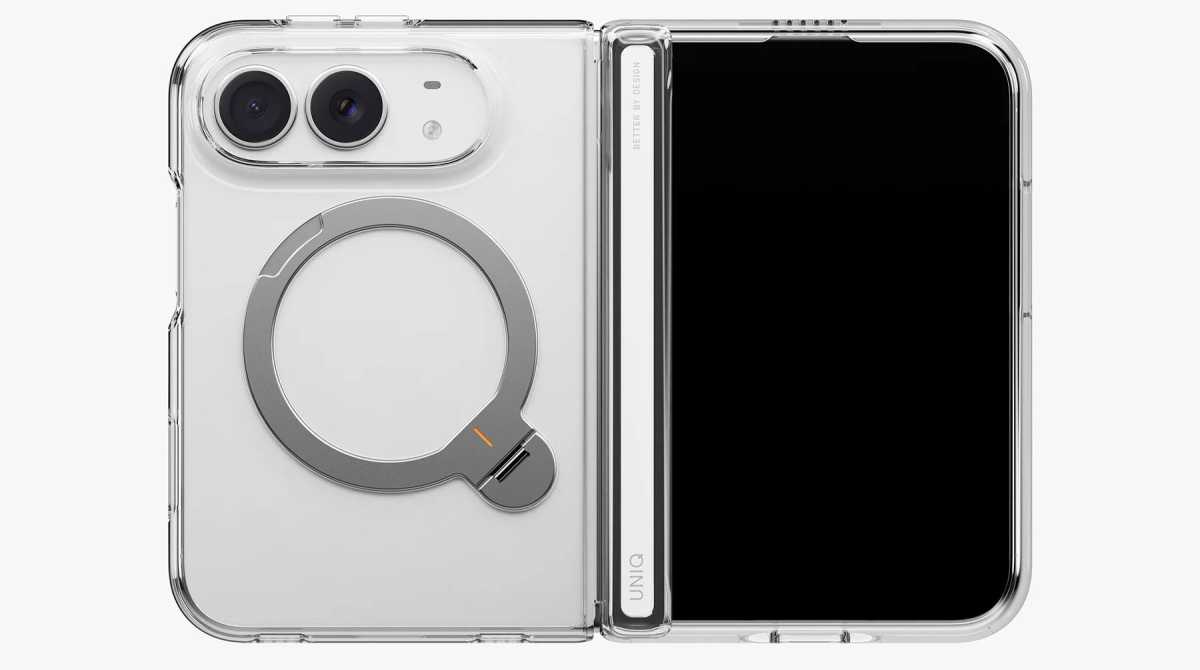
This case wraps the iPhone Duo in a soft silicone VeluxeSkin that will protect the Duo’s back. A dedicated magnetic hinge add further protection to the foldable section of the new iPhone. The Q-Fold Kickstand offers a smooth 360° rotation plus stable 180° multi-angle adjustment.
MagSafe: Yes
Hinge protected: Yes
UNIQ
The clear UNIQ Velix Q-Fold™ 360 Kickstand Case ($46.90) shows off the Duo’s original color but still offers protection via reinforced AirLite corners, and a dedicated magnetic cover protects the hinge. As with the UNIQ Elix silicone leather case the Q-Fold kickstand rotates and adjusts to your preferred viewing angle.
MagSafe: Yes
Hinge protected: Yes
UNIQ
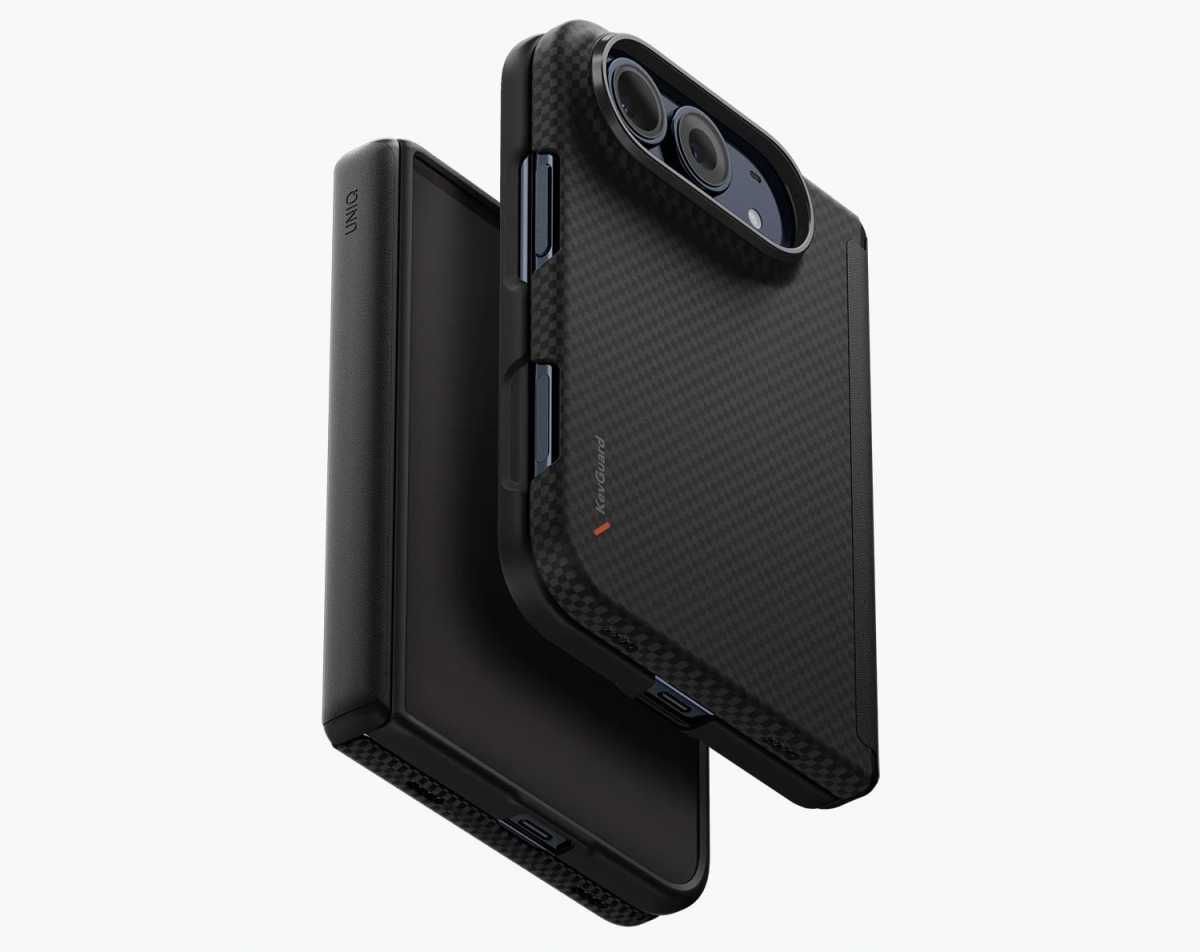
While its backplate is slim at just 1.5mm the UNIQ Keva Edge Slimline Aramid Case ($89.90) makes up for its slim design with a super-tough aramid fiber material with a textured grip panel, plus the dedicated magnetic hinge protection, but lacks the stand found on the other UNIQ iPhone Duo cases.
MagSafe: Yes
Hinge protected: Yes
FAQ
Does the iPhone Duo need a case?
No phone needs a protective case until you drop or knock it. A case isn’t essential for the iPhone Duo, but it’s a sensible investment for a $1,999 foldable. Apple’s Ceramic Shield glass helps protect the displays, but the titanium edges and hinge remain vulnerable to accidental drops, scratches and dents. Unlike conventional iPhone cases, Duo designs must accommodate two halves and a slim cover-screen frame, often using adhesive to stay securely attached.
What to consider when choosing an iPhone Duo case?
Prioritize a precise fit, shock-absorbing corners and the level of coverage you think you need. Raised lips help protect the exterior display and camera, while a dedicated hinge guard covers the folding spine. Check that the case allows easy access to Touch ID and Camera Control without obstructing the inner display or folding mechanism. Since the Duo already weighs 8.9oz (254g), consider whether extra bulk from a kickstand or hinge protector is worthwhile. Choose a slim two-piece case for everyday protection or a hinge-cover design for additional coverage.
Will a case interfere with the iPhone Duo’s hinge or folding action?
A properly fitted iPhone Duo case shouldn’t interfere with folding, but poorly designed hinge covers can add bulk or restrict movement. Some two-piece cases leave the hinge exposed; others include a separate hinge cover, while dedicated covers provide an additional barrier against knocks and grit. However, hinge coverage doesn’t necessarily mean dust protection. Debris can collect between the case and phone, so remove the case periodically and gently clean both surfaces according to Apple’s care guidance. For cases secured with adhesive strips, follow the manufacturer’s removal and cleaning instructions, and check whether replacement strips are required before refitting.
Can I remove and reuse an iPhone Duo case?
That depends on how the case attaches. Some iPhone Duo cases use adhesive strips to secure the front frame or other components. Don’t assume those strips will retain their grip after removal: check whether the manufacturer allows reuse, supplies spare strips, or sells replacements.
A removable component isn’t necessarily reusable with the same adhesive. Before taking off an adhesive-mounted case for cleaning or swapping cases, follow its removal instructions and check what you’ll need to refit it securely.
Is a kickstand case necessary for the iPhone Duo?
If you regularly watch videos, make FaceTime calls or use your iPhone Duo for work, a kickstand case is a useful upgrade. It props up the larger inner display for hands-free viewing, video calls, recipes, and reading. Paired with a Bluetooth keyboard, it can also support light productivity. Some stands double as finger grips for safer handling. The main drawback is added thickness and weight, so look for a stable, well-integrated design that folds flat to the backplate or doubles as a camera bar.
Will MagSafe chargers, wallets, and power banks fit with these cases?
MagSafe uses magnets to align and attach compatible wireless chargers, power banks, wallets, and other accessories. The cases listed here are described as MagSafe compatible, but that doesn’t guarantee every accessory will fit.
Because the iPhone Duo is shorter than a conventional iPhone, larger magnetic wireless power banks and wallets may extend beyond its edges or overlap the camera bar. A case’s kickstand or hinge cover may also prevent an accessory from sitting flat or interfere with unfolding the phone.
Before buying, check the accessory’s dimensions and the case maker’s compatibility guidance. With the accessory attached, make sure it clears the cameras and allows the Duo to open fully. Some wallets and power banks may need to be removed before unfolding.
Our initial case assessments used a dummy handset, allowing us to assess physical clearance and attachment, but not wireless charging performance. We’ll add charging results and recommendations for specific accessories after testing them on a working iPhone Duo.
Would I do better getting AppleCare+ instead of a case?
A combination of slim case and AppleCare+ can offer a good balance between preserving the Duo’s design and protecting against costly accidents. A case helps prevent everyday scratches and knocks, while AppleCare+ covers eligible damage under the plan’s terms, subject to service fees. Theft and loss protection may also be available with a suitable plan. Check Apple’s current pricing and conditions before buying. For maximum peace of mind, use both: prevention for everyday mishaps and coverage for expensive repairs.
Apple’s iPhone User Guide for iOS 27 explains how to export your passwords for websites and accounts to a CSV file, which you can then import into another password manager. The option sits in the Settings app under Apps, then Safari, and Apple warns that the exported file is not encrypted. That makes the export […]
Apple is already looking far beyond today’s cellular networks to lay the groundwork for next-generation mobile devices. Recent job openings show the tech giant wants engineers to help build communication chips for the upcoming 6G rollout. While people are still getting used to fast 5G speeds, the iPhone maker wants to be fully prepared before […]
The first unboxing video for the highly anticipated iPhone Duo has hit the internet just days before its official release. A video posted online by a lucky early recipient shows exactly what buyers can expect when they open the box this Friday. The early look gives the public their first glimpse of the final retail […]
The embargo for iPhone Duo reviews has broken, which means dozens of reviews have appeared all at once. It’s like sitting in an empty office with all the phones ringing at the same time. No one can answer all of them.
So, what are reviewers saying about Apple’s new $2,000 product? What’s hot? What’s not? And what’s next?
Let’s begin with the criticisms.
Almost every review I read is critical about the same things: the lack of a telephoto lens on the camera, the decision to use Touch ID, and lagging third-party software support for the device, with some criticism of the FaceTime camera.
To be fair, one of those criticisms will change as developers build iPhone Duo support for their applications, while others will change in future versions of the device.
A convincing case for foldables
Reviewers seem to agree that Apple has plucked all the best ideas introduced in foldables so far and wrapped them in a highly designed, well-executed, luxurious product they think sets the scene for the next generation of foldable smartphones. As the history of most Apple product introductions shows, first-generation compromises will be overcome.
The iPhone Duo form factor itself, however, seems to be a success.
“For an iPhone user who has never experienced a foldable, I suspect they will be surprised by how quickly the larger display starts to feel useful,” wrote Francisco Jeronimo, IDC vice president, worldwide devices, in a note seen by Computerworld. “Apple has made a convincing case for this form factor. Now comes the next test: turning excitement into availability, adoption and a lasting new chapter for the smartphone market.”
Here’s what the first reviewers have to say
“Masterfully-designed”
“The iPhone Duo is a masterfully designed product that earns its two grand price tag. By borrowing the same aspect ratio as a notepad, it feels compact when folded and expansive when opened up to double in size. It’s crazy thin — just 5.2mm when folded flat — and littered with small design choices that add up to an overwhelming sense of luxury,” wrote Robert Leedham at GQ.
“Hype is justified”
“After a week of testing, I can say that hype is justified. Its polished design and thoughtful craftsmanship, headlined by a unique inner display and hinge design, set a new platinum standard for folding phones, and serve as a shot in the arm of the entire smartphone ecosystem. Needless to say, the Duo is the best foldable phone I’ve tested to date, and the freshest, flashiest phone I’ve used in years,” wrote Stefan Vazharov at Popular Mechanics.
You may not need it
“If you want the convenience of a larger screen without carrying two devices, the Duo could be a compelling proposition. But if you prefer to use your phone and tablet separately, you’re paying a premium for a folding design you may not need,” wrote Shivali Best at the Daily Mail.
“An incredible piece of engineering”
“It’s hard to overstate just how impressive the whole thing feels in practice. The hinge feels fantastic, the smaller footprint makes it surprisingly easy to carry, and you can unfold it into a 7.6-inch display. It’s an incredible piece of engineering, and even after a week, I’m still impressed by how well the entire package comes together,” wrote Chance Miller at 9to5Mac.
“Satisfying“
“’Satisfying’ is the best way to describe the feeling of repeatedly opening and closing the iPhone Duo. It’s as if Apple inadvertently created a digital fidget spinner — the more I carried around the iPhone Duo, the more I found myself absentmindedly folding and unfolding the phone,” wrote Lance Ulanoff at TechRadar.
Cohesive. Intuitive. Useful
“Thoughtful software integrations … give the Duo’s unique design a practical purpose beyond the novelty. The result is a foldable experience that feels cohesive, intuitive and genuinely useful, which could help win over more people to foldables in general. But I think that broader appeal is still a ways off,” wrote CNET’s Abrar Al-Heeti.
“A little bit like magic”
“If you care about having the fanciest phone, this is the one. It’s a neat little book-like iPhone when folded. But that inner display, once you open it, is the nicest phone display I’ve ever seen. It’s matte and has a 120Hz refresh rate, so when you lay the unfolded Duo on a table, a still image on the display appears solid, like a painting… The transition effect Apple’s designers have conjured for opening and closing the phone does look a little bit like magic,” wrote Mashable’s Stan Schroeder.
“Strong and smooth”
“Early folding phones had creaky hinges that felt grindy and didn’t always open fully. Those pioneering devices led the way, to be sure, and they deserve credit for being first to market with those designs. But none of the four competing folding devices on my desk (all from 2026) have a hinge that feels this strong and smooth,” wrote PC Mag‘s Eric Zeman.
“Worth the wait”
“While the Duo is heavy, expensive and late to the market compared to its Android rivals, it encompasses some of the best tech used by its competitors while also redeeming features that other manufacturers have seemingly left for dead. And even though many apps still need to be optimized to fully take advantage of the Duo’s design, the release of Apple’s first foldable has been worth the wait,” said Engadget’s Sam Rutherford.
“Something magical”
“At the risk of sounding cliche, there’s something magical about using the iPhone Duo. The way it seamlessly transitions from phone to tablet and back again. The fact that you can’t even feel the crease — though it is visible. And the way the software reacts based on the angle of the device,” writes Mark Spoonauer at Tom’s Guide.
My take
Having read these reviews, I don’t think any of them will quell enthusiasm for Apple’s $2,000 device. I also think its introduction will help Apple create a mind shift among consumers, some of whom may recall when the $499 entry-level price Apple charged for the original iPhone was seen as too expensive.
In this case, by combining premium hardware design with smart software decisions, Apple seems to have created an experience many consumers will value. Even those who don’t will probably spend time snapping the fold on the display units at their local Apple Store, if only to find out if doing so really is “satisfying” enough to spend two thousand bucks on a machine for doom scrolling and taking pictures of the family cat.
I believe Apple has reset the industry and will sell as many of these things as it is able to create. I also look forward to seeing what it comes up with next year. There’s only eleven months — and the many stages of new Apple product rumor — until we find out. That suggests the first well-timed Bloomberg rumor will slip just before Christmastime…
Now please subscribe to my daily, human-curated Apple-related news headline feed at The Core, or follow me on BlueSky, LinkedIn, or Mastodon.

 Login