❌

Reading view

App brasileiro Curvinha ajuda a decorar sua casa usando o scanner LiDAR dos iPhones

Para quem busca decorar o interior de casa com uma curadoria personalizada, o app brasileiro Curvinha pode ser um grande aliado na hora de adquirir móveis de acordo com seu gosto e seu orçamento.

Desenvolvido por Gabriel Taveira, o app combina a medição por scan (com suporte ao scanner LiDAR dos iPhones e iPads compatíveis), planta em 3D e sugestões de móveis feitas com a curadoria da arquiteta Ana Julia Moretto (da Curva Interiores).

Medição de ambiente com LiDAR no iPhone Pro
Divulgação/Gabriel Taveira

A medição de ambiente leva cerca de dois a cinco minutos, segundo os desenvolvedores, e é seguida da visualização da planta em 3D com as medidas, da adição de sugestões de peças e, de acordo com as preferências do usuário, da geração de uma lista de compras — permitindo o monitoramento de preços e a visualização do móvel em lojas como Tok&Stok e Mercado Livre.

Para aparelhos sem LiDAR, é possível enviar a foto ou o PDF da planta da construtora para que o app obtenha as medidas e consiga fazer as sugestões.

As sugestões levam em consideração as preferências do usuário, bem como os limites orçamentários estabelecidos (que impactam a lista de peças geradas posteriormente).

Limites de orçamento no Curvinha
Divulgação/Gabriel Taveira

O Curvinha está disponível em três modalidades de aquisição: é possível pagar pelo planejamento de um único cômodo via licença vitalícia de R$80, de até 5 cômodos via assinatura anual de R$130 e de até 20 cômodos via licença vitalícia de R$350.

  •  

Insta360 revela microfone intermediário com tela eink e expansão via microSD

A Insta360 lançou hoje o Insta360 Mic, adição intermediária à sua linha de microfones (que já inclui o Mic Air e o Mic Pro), contando com uma tela eink personalizável e armazenamento expansível via microSD.

Pensado para criadores de conteúdo que buscam recursos mais sofisticados de áudio sem investir em um modelo topo de linha, ele é ideal para vlogs do cotidiano, gravações de esportes nos fins de semana, viagens, transmissões ao vivo e conversas em grupo.

O painel eink customizável permite a inserção de logos, emojis, animais de estimação, paisagens ou elementos da identidade visual do criador.

Tela E-Ink do Insta360 Mic
Divulgação/Insta360

Para quem adquirir apenas o receptor, é possível utilizar o Insta360 Mic com as câmeras da fabricante (Insta360 X6, X5, Luna Ultra, Luna Pro, GO Ultra e Ace Pro 2), bem como com smartphones, tudo via Bluetooth. Outra alternativa para as gravações é o cartão microSD, que permite armazenar os áudios capturados pelo produto.

Com o cartão microSD inserido, o Mic é capaz de gravar áudios em ponto flutuante de 32 bits diretamente no transmissor e conta com um chip dedicado à supressão de ruído, baseada na NPU 1Neural processing unit, ou unidade de processamento neural. do microfone, que reduz sons ambiente com maior intensidade.

MicroSD no Insta360 Mic
Divulgação/Insta360

O dispositivo tem dois modos de ganho automático: o Dynamic equilibra as variações de volume para manter a coesão sonora, enquanto o Auto ajuda a evitar a saturação de som. Ele conta ainda com três predefinições de timbre (Regular, Rich e Bright) para ajudar a preservar as características naturais da sonoridade captada.

Assim como o do Mic Pro, um único receptor do Mic se conecta a até quatro transmissores ao mesmo tempo, o que inclui produções com múltiplas câmeras (que podem receber o áudio de até dois receptores simultaneamente).

Câmeras com o Insta360 Mic
Divulgação/Insta360

De acordo com a fabricante, cada transmissor possui até 13 horas de bateria com uma única carga, enquanto a case de carregamento amplia essa autonomia para até 34 horas.

Preço e disponibilidade

O Insta360 Mic está disponível na loja oficial da Insta360, com a seguinte relação de valores (em dólares) para o Brasil:

  • Insta360 Mic (dois transmissores + um receptor): US$250;
  • Insta360 Mic (um transmissor + um receptor): US$140;
  • Um transmissor Insta360 Mic: US$80.

NOTA DE TRANSPARÊNCIA: O MacMagazine recebe uma pequena comissão sobre vendas concluídas por meio de links deste post, mas você, como consumidor, não paga nada a mais pelos produtos/serviços ao usar os nossos links de afiliado.

Notas de rodapé

  • 1
    Neural processing unit, ou unidade de processamento neural.

  •  

'Data centers can be located in exhausted open pits': Russia eyes 300-meter-deep coal mines to shield server infrastructure from Ukrainian drones

  • Russia proposes abandoned coal mines as potential sites for future data centers
  • Some exhausted open pits reach depths of approximately 300 metres
  • Accumulated mine water could offer another option for cooling infrastructure

Russia is considering abandoned coal mines as potential locations for data centers, following reported damage to digital infrastructure during Ukrainian drone attacks.

Ilya Seredyuk, governor of the Kemerovo region, has proposed using exhausted mining sites for computing facilities, cryptocurrency operations and other infrastructure.

The idea could reduce construction expenses while providing additional physical protection for servers against attacks from above.

Abandoned mines offer space and potential protection

Seredyuk introduced the proposal during the recent Russian Energy Week, arguing that instead of spending money to reclaim the mines, they could just build new facilities.

Some former open pits reach about 300m deep, creating substantial vertical space for infrastructure without requiring conventional surface construction across large areas.

Seredyuk also suggested that accumulated mine water and underground waterways could help lower cooling expenses.

At the moment, this is simply a proposal and the technical feasibility of such a project remains uncertain.

The governor suggested covering underground installations with roofs and developing landscaped areas above them, potentially creating parks across reclaimed mining properties.

Such arrangements could conceal server buildings from direct observation, although landscaping alone would not establish meaningful protection against aerial surveillance or precision attacks.

Modern commercial and hyperscale data centers are increasingly treated as legitimate military and strategic targets because they run cloud computing, AI, surveillance, and military-logistics networks.

Consequently, developing public parks above underground server facilities could expose civilians, including children, to potential risks if those installations became targets.

Russia's struggling coal industry could also benefit if abandoned mining properties attracted investment for alternative industrial uses.

However, converting deep open pits into dependable computing facilities would require substantial engineering assessments covering structural stability, water management, electricity supply, ventilation and emergency access.

Yandex incidents expose infrastructure vulnerabilities

The proposal comes amid concerns about attacks on Russia's digital infrastructure, including facilities operated by Yandex, one of the country's major technology companies.

Reports said a drone attack sparked a fire at a Yandex data center in Sasovo, within the Ryazan region, on October 8 2026.

Yandex subsequently suspended operations at the affected facility, although the company did not publicly confirm the full extent of the reported damage.

The incident raised questions about the vulnerability of concentrated computing infrastructure during continuing hostilities between Russia and Ukraine.

Russian outlet Verstka also reported that Yandex had obscured four cloud data center locations on its mapping service.

Those facilities were identified as being in Mytishchi, Kaluga, Vladimir and Sasovo, although concealing map locations does not establish that every site suffered damage.

Moving data centers underground could introduce new engineering difficulties, particularly where groundwater accumulates, or mining operations have weakened surrounding rock.

Reliable computing facilities also require continuous electricity, redundant connectivity, fire suppression, and accessible maintenance routes, regardless of their physical depth.

All these factors would need careful assessment before Russia could determine whether abandoned coal mines offer a practical alternative to conventional data center sites.

Via United24media

Google logo on a black background next to text reading 'Click to follow TechRadar'

  •  

'Autonomously commanded from up to 70 miles away': The US military is testing self-flying cargo helicopters that navigate around sudden no-fly zones on their own

  • Airbus’ MQ-72C rerouted itself after restricted airspace suddenly appeared during flight
  • Starlink carried remote commands to a cargo helicopter from 70 miles away
  • Shield AI’s Hivemind software helps helicopters navigate without constant pilot intervention

The US Army has tested Airbus’ MQ-72C Lakota Connector, an autonomous cargo helicopter designed to reroute around suddenly restricted airspace.

Operators controlled the helicopter from distances reaching 70 miles through communications infrastructure supporting operations beyond conventional line of sight.

The aircraft follows a flight plan supplied by a human operator, while onboard autonomy software handles navigation and responses to changing conditions.

Starlink and Hivemind enable remote control and autonomous navigation

Airbus conducted five demonstration flights at Huntsville Executive Airport in Alabama, showcasing autonomous hovering, complex turns, and conventional airport traffic patterns.

During one exercise, the aircraft encountered a newly introduced restricted airspace area and calculated an alternative route using its onboard autonomy systems.

“The aircraft had to autonomously make decisions about how it was going to route itself around the no-fly zones,” said Jaysen Yochim, Airbus’ senior director for the Aerial Logistics Connector programme.

A pilot remained aboard for safety during these trials, although Yochim said the individual never needed to assume control.

The helicopter’s autonomy depends partly on Shield AI’s Hivemind software, which interprets imagery collected by onboard sensors.

Two LiDAR sensors, facing forward and backward, work alongside a nose-mounted electro-optical camera to supply environmental information for navigation decisions.

Remote command relies on a separate communications layer, with SpaceX’s Starlink satellite network carrying instructions between ground control stations and the aircraft.

Airbus has already tested this arrangement beyond conventional line of sight, enabling human operators to issue commands from far distances.

We’ve had flights that have been autonomously commanded from up to 70 miles away. All of that is stuff that’s happened in the last year,” Yochim added.

“We also have where the aircraft can be commanded from both a ground control station like this and also with the Samsung tablet.”

Cargo conversion and military adoption remain unfinished

Airbus based the MQ 72C on its UH 72B Lakota, derived from the H145, but additional modifications remain necessary for cargo operations.

Front-mounted clamshell doors would create a passage through the cabin, allowing crews to load and unload supplies more quickly.

Although Airbus has completed initial design work and preliminary testing, flight and wind tunnel tests remain outstanding. The company expects to install the doors around 2029 or 2030.

The Army also needs better ways to supply troops following long-distance air assaults involving future MV 75A tiltrotors.

Major General David Gardner, head of the 101st Airborne Division, explained the challenge of transporting heavy equipment across hundreds of miles.

“We can put some things inside the helicopter, and we can put some things under a helicopter with a sling load. We’re not going to sling load something moving 250-ish knots for 500 miles. We’re not going to hang Humvees under that,” said Gardner.

Other contenders for autonomous military cargo delivery include the AW139, Black Hawk, Robinson R66 and Bell 505.

The Army has not announced a procurement requirement, although its interest in Airbus’ demonstration suggests autonomous cargo delivery is receiving attention.

Google logo on a black background next to text reading 'Click to follow TechRadar'

  •  

Ukraine’s new StarGate drone can evacuate wounded soldiers from the battlefield — without risking a rescue crew

  • Ukrainian defense technology company SkyFall unveils new aerial medical evacuation drone
  • StarGate can collect an injured soldier and fly them to the nearest medical unit
  • StarGate has a one-way range of 15 kilometers, can fly autonomously, and is equipped with countermeasures

Ukrainian military personnel could soon be lifted off the battlefield by drone. Kyiv-based technology company SkyFall invited press to see its StarGate drone in action, demonstrating the carrying of a person suspended under the chassis.

A StarGate craft can carry a payload of up to 150 kilograms (330 pounds), enabling a single ground operative in body armor and with combat equipment to be rescued. The aerial medical evacuation drone can be deployed in about around 10 minutes and is equipped with anti-drone nets and other countermeasures.

Capable of a 15 kilometers range, the StarGate can travel at speeds of up to 65mph, and each craft has a basic price of $50,000, with various configurations available.

Automated evacuation

Unveiled to with a press demonstration, the StarGate was seen lifting off carrying a human in the enclosed pod underneath the craft. It has a 65 km/h (40 mph) cruise speed and can reach speeds of up to 105 km/h (65 mph), although its 15 km range does mean it needs to operate within a relatively small area.

A spokesperson for Ukrainian defense tech company SkyFall explained the origins of the concept, “The idea came directly from the front line, from the trenches,” and followed an approach from a commander of the 475th Separate Assault Regiment to find a safer way to evacuate wounded personnel.

The spokesperson explained how StarGate can improve the current rescue times. “Right now the evacuation takes from several hours to several days… with the StarGate we can evacuate a person in a matter of minutes.”

Assuming the injured personnel can make it into the stretcher, the craft can take them to safety, and medical care. “With the StarGate we can give the wounded soldier a golden chance,” he added.

SkyFall’s spokesperson attended the event with their face covered, and remained anonymous throughout.

Ambulance countermeasures

Airlifting injured personnel on the battlefield by drone has obvious challenges, not least from other drones. To help protect rescue efforts, the StarGate is equipped with some countermeasures. These include electronic jamming for attacking drones, and launching nets at attacking drones.

Modern warfare relies on electronic warfare as much as it does munitions. The StarGate has some additional features to assist in surviving GPS blocking, according to SkyFall’s spokesperson: “The drone has several AI functions that allow it to operate even in GPS-denied situations or in the environment of spoofing [and] blocking of the frequencies,” adding that while it is usually controlled by a remote operator, the case of interference, “the drone is fully autonomous.”

Design of the StarGate drone has evolved through several iterations, and SkyFall aims to build around 1,000 per month by the end of 2026. That’s potentially a lot of lives saved.

  •  

South Korea unveils world's first fielded laser air defense weapon — Hanwha's Cheongwang downs drones in 1 second for just $1.50 a shot

  • South Korea deploys Cheongwang, a laser weapon designed to destroy hostile drones
  • Hanwha estimates each Cheongwang engagement costs approximately $1.50
  • Laser weapons could reduce dependence on expensive interceptor missiles against drones

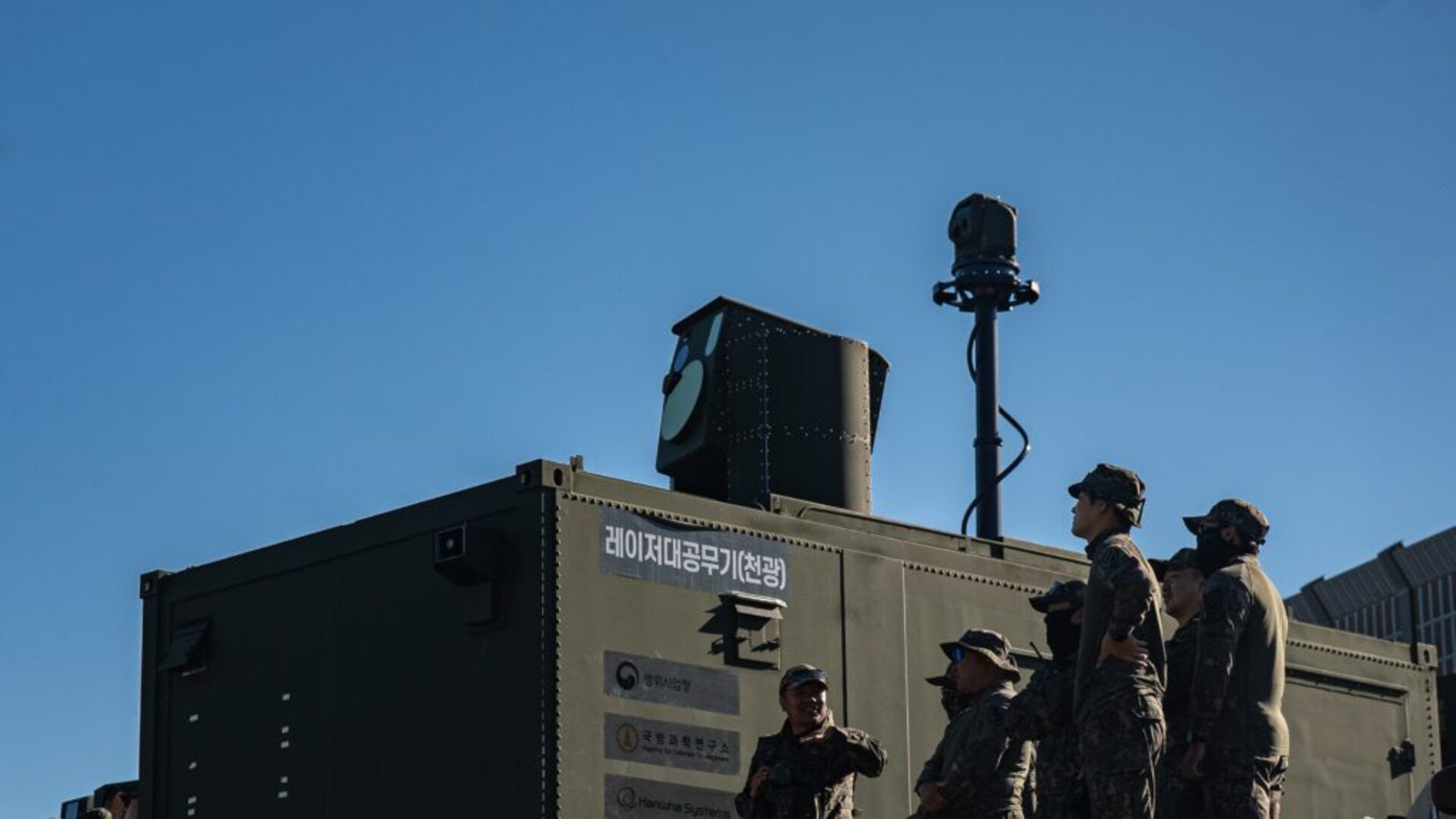
South Korea has deployed Cheongwang, a laser-based air defence system designed to destroy hostile drones without using conventional ammunition.

Developed by Hanwha Systems alongside the Agency for Defense Development, the weapon has entered operational service.

Its manufacturer estimates each engagement costs approximately $1.50, potentially reducing the financial burden of defending against inexpensive aerial threats.

Cheongwang demonstrates low-cost drone interception

The Republic of Korea Army tested Cheongwang during its TIGER+ Future Warfare Integrated Combat Exercise on October 14, 2026.

Hanwha Systems reported that the 30-kilowatt-class weapon destroyed all three drones launched during the exercise, which attracted about 500 military personnel and other observers.

Cheongwang operates by directing concentrated laser energy onto an aerial object until the resulting heat damages its structure or critical components.

Unlike conventional interceptors, the system does not require a separate missile for every engagement, provided sufficient electrical power and cooling remain available.

The manufacturer estimates that firing costs approximately $1.50 per engagement, substantially below the price of many missiles used against attack drones.

That figure does not necessarily represent the complete operating cost, since maintenance, electricity, equipment depreciation and other expenses may also affect deployment economics.

The conflicts between Russia and Ukraine as well as that between the U.S. / Israel and Iran have revealed how expensive drone interception can be. The laser technology seeks to offer a cheaper option.

“Laser weapons are core assets that will fundamentally change the game of air defense,” said Joohun Shin, head of Hanwha Systems' Laser Systems Business Centre

“Driven by unmatched technological capability and proven operational performance, we will accelerate our entry into the global market...”

Hanwha pursues more powerful mobile laser systems

Hanwha also demonstrated a 50-kilowatt Laser Armored Vehicle during the Defense Drone Technology Exhibition on September 16, 2026.

The company reported that Cheongwang neutralised four drones and two uncrewed aircraft consecutively during that separate demonstration.

The more powerful vehicle is being developed for greater mobility and potential international sales, with Hanwha displaying it at MSPO in Kielce, Poland.

Its development indicates that South Korea's defence industry is pursuing laser systems with different power levels and deployment requirements.

The United Kingdom is also advancing similar technology through DragonFire, a directed energy weapon developed by MBDA, Leonardo and QinetiQ alongside the Defence Science and Technology Laboratory.

The system struck aerial targets during trials in Scotland's Hebrides in 2024, and British authorities are advancing plans for installation aboard a Royal Navy Type 45 destroyer.

Laser weapons could offer sustained protection against repeated drone attacks, although their effectiveness depends on available power, tracking accuracy, engagement time and atmospheric conditions.

A laser can engage only a limited number of targets simultaneously, making attack volume an important consideration for operational planners.

South Korea's deployment allows Hanwha to pursue global customers seeking less expensive counter-drone options.

However, wider adoption will depend on independently verifiable performance and operational reliability and evidence of effectiveness.

Via UKDJ

Google logo on a black background next to text reading 'Click to follow TechRadar'

  •  

I use Bitdefender Total Security to protect all of my devices, and it’s down to $28 at Newegg

I've used Bitdefender Total Security to protect my own devices for years, and I highly recommend it. I've found a great deal on the security software at Newegg that brings a year's coverage for up to 10 devices down to under $30.

Bitdefender Total Security 2026 is reduced to $28 (was $100) at Newegg with promo code EPF56892. It doesn't get much cheaper than this, so well-worth checking out.

• Best for: Households with multiple devices, anyone wanting protection across different operating systems, and people looking for antivirus software with additional privacy and ransomware defenses.

• Why I like it: I use Bitdefender Total Security to protect all of my devices at home, and it's much more than a traditional antivirus tool. As well as keeping you safe from viruses, spyware, Trojans, ransomware, and other malicious software, it also uses behavioral detection to identify suspicious activity and defend against unknown threats.

Today's best antivirus software deal

Total Security 2026: was $99.99 now $27.99
Bitdefender Total Security provides one year of protection for 10 Windows, macOS, Android, and iOS devices, with malware detection, ransomware defense, privacy tools, parental controls, and limited daily VPN access included.View Deal

Why we recommend it

The software can block online tracking, monitor attempts to access your webcam or microphone, and identify potentially dangerous websites. The subscription covers up to 10 devices running Windows, macOS, Android, and iOS.

The package also includes access to Bitdefender VPN, although it's limited to 200MB per day per device, which is only really enough for occasional use. Parental control features will be of interest to anyone with children, although availability and functionality depend on the OS.

In covering the software, we said: "Bitdefender tops our list and ticks every box. It performed well across our testing, boasts all the tools you need to protect your devices from malware (and more), and is nice and easy to use – regardless of platform. While some expert users might wish for a little more granular customization, we think that Bitdefender strikes the right balance in terms of configuration and ease of use."

Price context & historical value

Newegg sells the one-year, 10-device subscription for $99.99, but is currently offering it at $52.99. Enter EPF56892 at checkout to save a further $25, bringing the final price to $27.99.

That represents a $72 saving against the original price, approximately 72% off. If you activate the program on all 10 devices, the first-year cost works out to approximately $2.80 per device.

It's important to remember that this is a one-year license, rather than a permanent software purchase. You're not locked in though. What I usually do is search for a new deal around the renewal time.

For more options, take a look at our roundup of the best antivirus software.

Should you buy it?

✅ Buy the Bitdefender Total Security if...

You want one antivirus subscription covering Windows, Mac, Android, and iOS devices. It's also great for ransomware protection, malicious website detection, and privacy tools. At $27.99, this is a fantastic deal.

❌ Skip Bitdefender Total Security if...

You only need to protect one computer and are satisfied with your device's built-in antivirus software. Windows includes Microsoft Defender, and macOS and mobile operating systems have their own security protections.

  •  

DJI’s Power 1000 V2 delivers all-day drone charging with 2,600W of home backup — and Amazon dropped the price to $400

DJI might not be as well-known in the power supply space as Anker, Bluetti, EcoFlow, or Jackery, but its range of portable power stations have proved rather impressive in our tests. I find them particularly good for drone operators, since the units feature SDC ports for charging DJI drones. But that's not the only use for these power stations.

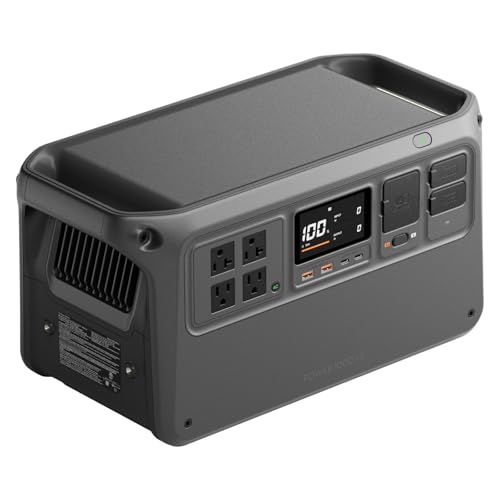
The DJI Power 1000 V2, currently $400 (was $600) at Amazon, is a prime example of that, with its 1,024Wh battery capacity, 2,600W output, and a port selection that makes it well-suited for home backup during emergency power outages.

• Best for: Drone operators charging multiple devices on the move, or home-owners wanting emergency backup power for appliances, electronics, and outdoor equipment.

• What we like: The DJI Power 1000 V2 is a portable battery station that can also come along on camping trips, RV adventures, and outdoor challenges.

Today's best portable power station deal

Power 1000 V2 Portable Power Station: was $699 now $399.98
This portable power station features a 1,024Wh LFP battery, 2,600W continuous output, 37-minute charging to 80%, dual 140W USB-C ports, 10ms UPS switching, quiet operation, and five-year warranty coverage for owners.View Deal

Why we recommend it

The DJI Power 1000 V2 combines a 1,024Wh battery with 2,600W of continuous AC output, making it capable of running a wide range of appliances.

DJI claims the battery can recharge from empty to 80% in 37 minutes, while a full charge takes approximately 56 minutes (under suitable conditions). The station uses lithium iron phosphate (LFP) battery chemistry for long-term durability, and it is rated for 4,000 charge cycles while retaining at least 80% of its original capacity.

You get two AC outlets, two USB-A ports, and two USB-C ports capable of delivering up to 140W each. There's also SDC and SDC Lite ports for charging DJI drones. Alongside this, the unit has a UPS function with an approximately 10ms switching time to allow compatible equipment to continue receiving power when the mains supply is interrupted. For overnight use, the company quotes noise levels as low as 26dB. DJI offers up to five years of warranty coverage.

For more picks, we've tested out the best portable power stations and the best DJI drones.

Price context & historical value

Usually priced at $699, the current deal brings the DJI Power 1000 V2 down to $399.98. That's a saving of $299.02, equivalent to approximately 43%.

It's the lowest price I've personally seen for this model and its combination of battery capacity, continuous output, and rapid recharging make it a great deal.

Should you buy it?

✅ Buy the DJI Power 1000 V2 if...

You want a portable source of electricity for camping, RV trips, outdoor work, or occasional power outages. The 2,600W output gives you flexibility and the fast recharge time reduces how long the battery needs to remain connected to mains power. The dual 140W USB-C ports are also useful.

❌ Skip the DJI Power 1000 V2 if...

You need to run large household appliances for extended periods during an outage. Yes, the 2,600W output can handle substantial loads, but the 1,024Wh battery capacity limits how long it can sustain them.

  •  

Turn your laptop into a triple-screen workstation for $230

Working on a laptop is convenient until you need to keep several applications visible at the same time. The Zumwalt S8 Pro, currently $230 (was $320) at Amazon, tackles that problem by adding two 14-inch Full HD screens to your existing display.

The screen extender offers a practical way to expand your laptop's workspace. It clips onto compatible 13-inch to 17.3-inch laptops, with two additional screens that fold out on either side. You can extend your desktop across all three displays or mirror content when needed.

• Best for: People who work across multiple applications, regularly travel with their laptops, or want more display space without investing in a permanent multi-monitor setup.

• Why we like it: The main attraction is having three screens available wherever you take your laptop. You could keep a document open on the main display, use another for research, and leave email or messaging applications visible on the third.

Laptop Screen Extender: was $319.99 now $229.98
The Zumwalt S8 Pro adds two 14-inch 1080p IPS displays to compatible laptops, featuring 300-nit brightness, adjustable screens, USB-C and HDMI connectivity, an aluminum design, and a carrying case for travel.View Deal

Why we recommend it

Each of the additional screens uses a 14-inch IPS LCD panel with a 1920 x 1080 resolution, 60Hz refresh rate, and 300-nit brightness. The specifications also list 100% sRGB color coverage and 178-degree viewing angles.

Zumwalt describes the extender as having an aluminum construction, an ultra-thin profile, and adjustable screens that fold away for transportation. A protective carrying case is included and there's an integrated kickstand to help support the additional displays.

For more ways to expand your screen, we've tested the best portable monitors.

Price context & historical value

Amazon's current $229.98 price represents a 28% drop from $319.99. The extender has previously sold for $199.99, making today's price $29.99 more expensive than that earlier low.

Should you buy it?

✅ Buy the Zumwalt Laptop Screen Extender if...

You regularly work with several applications at once, need more screen space while traveling, or want to turn a compatible laptop into a three-display workstation without carrying separate monitors.

❌ Skip Zumwalt Laptop Screen Extender if...

Although the extender is advertised for Windows, Mac, ChromeOS, and other devices, your laptop needs to support the necessary video outputs. Some MacBooks have restrictions on how many external displays they can drive.

  •  

'Faster code is not the same as better software delivered sooner': New report claims AI isn't solving productivity across the entire software development lifecycle - yet

  • Atlassian report claims the number of developers saving significant time through AI is actually dropping
  • Finding information and participating in meetings are major human bottlenecks
  • More then four in five organizations still don't have a clear AI strategy

Nearly nine in 10 (87%) developers surveyed by Atlassian now sayAI is helping them to write and ship code faster, but despite offering significant speed improvements across certain parts of the workflow, three in four (72%) also report either the same or greater friction across the entire lifecycle.

Longer-term optimism around AI's ability to save time is also dropping, with just 25% of developers saving 10+ hours a week when using AI, compared with 68% in 2025.

Ultimately, Atlassian's findings point toward AI simply shifting the bottleneck further downstream rather than tackling time constraints altogether.

Is AI actually helping developers?

The data shows that faster code generation isn't translating into faster software delivery, with the reality of AI-assisted coding now highlighting other areas where AI could actually help. For example, half of developers struggling with finding information (51%) and meeting frequency (50%)

"Faster code is not the same as better software delivered sooner," Atlassian Customer CTO Andrew Boyagi explained. "If teams still struggle to find information, clarify requirements and move work through the delivery process, speeding up coding alone won’t translate into business outcomes."

However, many developers simply feel that AI is being implemented too quickly without consideration for its impacts. Three in five say merely using AI is seen as a positive metric – but its real-world impacts don't fall under that scope.

Companies with an effective strategy were found to be in the best position to reduce friction, where twice as many workers reported positive effects. Still, not even a fifth (17%) of developers say their employer has a clearly communicated and implemented AI strategy.

Now that we're beginning to emerge from the early, experimental years of artificial intelligence, and that use cases are starting to be identified, the report calls for greater consideration and clearer strategies from the top down in order to unlock the real benefits.

Google logo on a black background next to text reading 'Click to follow TechRadar'

  •  

Three dormant US nuclear reactors are being restarted to power AI data centers

  • Three nuclear plants would add 2.25GW of electricity to the grid
  • Microsoft and Google plan to use power from those sites
  • Trump wants 400GW of nuclear capacity by 2050

In its ongoing effort to become an AI global superpower, the US is reportedly gearing up to restart three previously closed nuclear power plants simply to keep up with the energy demands caused by AI data centers.

Together, the three nuclear facilities would likely provide 2.25GW of electricity, or enough to power two million homes and businesses (per The Los Angeles Times).

And the US Department of Energy looks to be a major supporter of the projects, providing up to $4.4 billion in federal loans.

Dormant nuclear plants are being woken to power AI

Microsoft and Google have already signed agreements to purchase electricity from two of those facilities, with power plant restarts now slated for between 2027 and 2029, per the report.

Importantly, these likely mark the first commercial nuclear reactors to be restarted after being formally decommissioned, with rising demand for reliable and low-carbon electricity surging.

The first of three, Palisades Nuclear Plant in Michigan, closed in 2022 nine years before its license was due to expire due to its owner withdrawing from the nuclear power business. Electricity purchase agreements for the plan require it to return to service by March 2027, which is just half a year away.

Crane Clean Energy Center in Pennsylvania is also likely targeting a 2027 online date, with Duane Arnold Energy Center in Iowa looking for a 2029 go-live date.

"For anyone who wants zero carbon, nuclear provides that," nuclear engineering expert Todd Allen explained. "For the Trump administration, which really wants nuclear, this fits that story also."

This, of course, falls under Trump's nuclear plans – a May 2025 executive order revealed plans to quadruple US nuclear generating capacity from around 100GW in 2024 to 400GW by 2050.

Still, these latest plans aren't short of criticism, with concerns over the safety of aging reactors being floated, especially in a world of heightened geopolitical activity and natural disasters.

Google logo on a black background next to text reading 'Click to follow TechRadar'

  •  

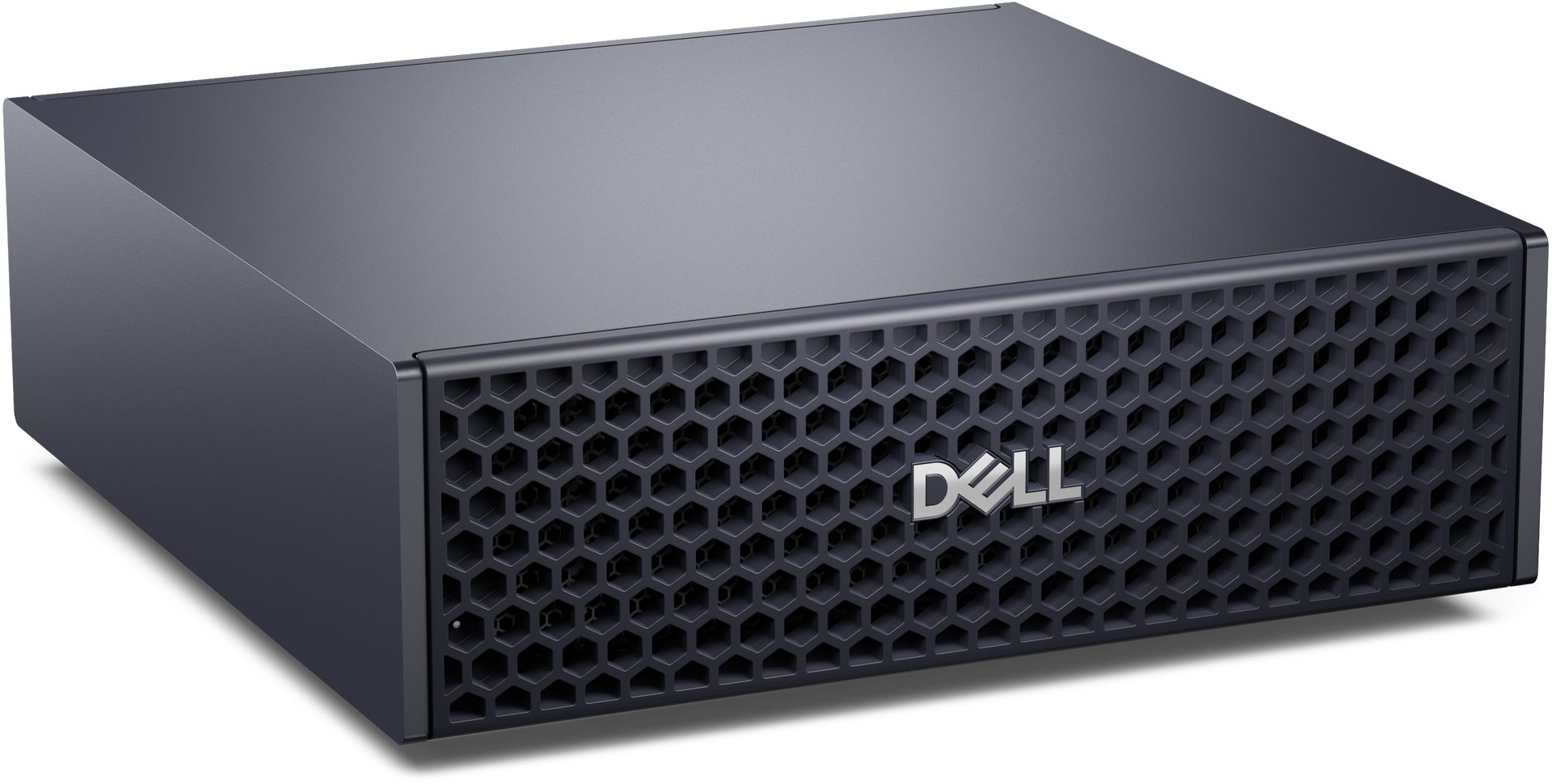
Dell put Nvidia DGX Spark silicon into its Pro Precision workstation — and undercut it by $1,000

Prices for the highly coveted Nvidia DGX Spark mini PC are wallet-squeezing right now. Direct from Nvidia, the Mac mini-sized supercomputer is $6,950, and elsewhere, prices are massively inflated by third-party resellers (there's one for almost 10Gs at Newegg, and another for $9K at Best Buy). But there is a cheaper way to get the same level of performance without the extra cost.

Currently, the Dell Pro Precision with GB10 is listed at $5,903 at Dell. The SFF machine runs Nvidia DGX OS 7 on the GB10 Grace Blackwell Superchip with 128GB LPDDR5x, up to 8533 MT/s, and 2TB SSD storage. You can even shave a little extra off that cost, too, by opting for 1TB SSD configuration for $5,523.

• Best for: AI engineers running larger local AI models.

• Why we like it: Running the same chip and memory as Nvidia's machine, Dell's Pro Precision is a much better price than the DGX Spark, which is fast becoming like gold-dust on the market.

Pro Precision with GB10: $5903
The Dell Pro Precision is equipped with the GB10 superchip, which is also found in Nvidia's DGX Spark PC. This CPU/GPU hybrid delivers high-performance for larger AI models thanks to the 128GB onboard RAM. As always with Dell, it's configurable, with 1TB, 2TB, and 4TB storage capacities. Save an extra $53 by removing the Dell keyboard and mouse when configuring. View Deal

Why we recommend it

Although we've had excellent experiences with Dell desktops in the past, price is the primary driver for highlighting this machine. You're saving over a thousand bucks compared to Nvidia's DGX Spark.

The chip itself combines an Arm-based CPU with a Blackwell GPU, paired with a massive 128GB memory for AI-oriented tasks. For local AI inferencing and development, it has exactly the right specs.

Value verdict

Compared to the Nvidia DGX Spark, which boasts the same specs as Dell's mini PC, you're making a significant saving of $1,047. I'd ignore the inflated prices from third-party sellers - for me, the decision is really, choosing whether to buy what amounts to the same machine from Dell or get the original from Nvidia.

I'd recommend the 1TB or 2TB configurations and offload additional files to an external drive. The 4TB model adds an outlandish $2,830 to the price tag over the base model.

Should you buy it?

✅ Buy the Dell Pro Precision with GB10 if...

You plan to run large AI models locally - it's where this Grace Blackwell chip excels.

❌ Skip the Dell Pro Precision with GB10 if...

You want a general high-performance machine for non-AI tasks, or you'd prefer the official Nvidia SFF.

  •  

Loop Capital Downgrades Apple Rating Over Weak Phone Sales

Loop Capital recently changed its rating on Apple from “Buy” to “Hold” because of weaker sales expectations. The investment firm cut its price target from $370 to $330. According to the firm, the tech giant will likely ship 13 million fewer smartphones in the second half of 2026 than previously planned. The firm also lowered […]

The post Loop Capital Downgrades Apple Rating Over Weak Phone Sales appeared first on The Mac Observer.

  •  

Website admins across the world bracing for impact following major PHP flaw reveal

  • PHP discloses two critical remote code execution vulnerabilities that could enable website takeover and data theft
  • Details leaked before patch release, prompting an early security advisory and urgent upgrade warning
  • Researchers confirmed the flaws are real, with widespread impact expected across multiple PHP versions

PHP, arguably the most popular programming language for websites and web applications in the world, contains two critical-level vulnerabilities that could expose countless sites to remote code execution (RCE) attacks, the provider has revealed.

The flaws could lead to website takeovers, data theft, malicious redirects, and a whole swathe of similarly sinister situations.

Security rush hour

PHP published a new security advisory, giving admins a “heads up” on an incoming patch.

“The PHP security team would like to give advance notice of an upcoming security release,” the advisory reads.

“It is scheduled for Wednesday, 21 October 2026 at 14:00 UTC. It addresses two critical vulnerabilities, both rated CVSS v4.0 9.2. All PHP users are encouraged to prepare now so they can upgrade as soon as the release is available. We reserve the right to release earlier should details of either vulnerability become public, or should evidence of active exploitation appear in the wild.Full details, affected versions, and the fixed versions will be published with the release.”

If you’re thinking the announcement is rather unorthodox and that PHP might as well just released the patch - you’re absolutely right. The problem is that someone spilled the beans on the vulnerabilities before the official embargo was lifted, having the cybersecurity community scrambling for answers.

That ‘someone’ is a person with an alias ‘petecooper’, who published a new post on Y Combinator’s Hacker News forum earlier this week. In the post, they claimed PHP would disclose two remote code execution bugs on October 22 2026.

The post has since been deleted so we couldn’t independently verify it, but BleepingComputer says the post claimed the bugs carried CVSS scores of 10.0 and affected PHP versions dating back to PHP 5.

The post also labeled the bugs as CVE-2026-109618 and CVE-2026-109619, which was subsequently confirmed. Therefore, the only thing that’s wrong is the CVSS score which seems to be 9.2, not 10.0.

Among the people who knew about the flaw and the upcoming patch were watchTowr, and Florian Roth, Head of Research at Nextron Systems.

The embargo on the news was set for October 20, with the patch due a day later, on October 21. However, yesterday Roth posted on X, saying “Okay, since the news is already out: an RCE vulnerability in PHP core, CVSS 10.0. Further details are scheduled for release on October 20. Only PHP 8 will receive patches.”

Leaking the zero-days

This forced PHP’s hand, not just to release the advisory, but also to send a notice to its ANNOUNCE mailing list, according to BleepingComputer.

Security researchers watchTowr confirmed the news, saying the bugs are tracked as CVE-2026-109618 and CVE-2026-109619, and that the duo is being nicknamed “php2shell” by the community. Obviously, technical details are being withheld to protect users, but most likely affect PHP versions 5, 6, 7, and 8.

"In the last hour, two remote code execution vulnerabilities in PHP have been leaked. These vulnerabilities were previously scheduled under embargo and due for release on Thursday at 11 am ET," watchTowr CEO Benjamin Harris told BleepingComputer.

"While we are not able to share technical information at this point for obvious reasons, given the sensitivity, we can confirm that these vulnerabilities are indeed real. Both of them are CVSS10 and are understood to affect PHP versions 5, 6, 7, and 8."

The researchers also told the publication they managed to successfully reproduce CVE-2026-109618, confirming the flaws actually work. Good news is, there are still no confirmed reports of the flaws being used as zero-days in the wild.

  •  

Saily’s security-first travel eSIM is 16% off — and it beats relying on hotel Wi-Fi

Saily is one of the most interesting eSIM providers I know. Because it's from the team behind NordVPN, security and privacy are key features of the platform. So, on top of high-speed data and cheaper-than-roaming fees, the service includes a free ad blocker, web protection, and virtual location. That's a really important layer of security if you're using insecure public and hotel Wi-Fi, or want to stream content from home.

Right now, the security-focused eSIM Saily Ultra Standard yearly plan is down to $400 a year. That works out at $33.33 a month (saving 16% compared to a monthly subscription). In the UK, it's £308 a year, equivalent to £25.66 a month.

• Best for: Frequent travelers who want an extra layer of security when accessing public hotspots.

• Why we like it: Saily scored 4.5 stars in our review, where we found the service , competitively priced, praising the connectivity and the security features as the "travel hacks" travelers should know about

• What you need to know: This is an annual plan paid upfront, and covers 121 destinations.

Today's best eSIM deal

Ultra plans now 16% off:
Saily's Ultra Standard plan comes with 10GB of high-speed data. Other features include access to selected airport lounges, fast-track security and check-in. Security extras include NordVPN, NordPass, NordLocker, and Incogni. Saily also offers Ultra Plus and Ultra Premium plans that increase data to 30GB, with Premium offering a phone number too. View Deal

Why we recommend it

Saily is our top pick for security-conscious travelers in our guide to the best eSIMs for international travel. In our 4.5-star review, we found Nord's extra security tools "genuinely useful in regions with censorship or unreliable public Wi-Fi, and they come at no extra cost above the data plan."

For mobile professionals accessing sensitive information while working on the move, it's an absolute necessity. But I think considering how insecure public Wi-Fi is, anyone regularly flying to other countries will benefit from this.

Because the biggest savings come from the annual plan - although monthly and quarterly plans are available - it's an easy recommendation for regular flyers looking for a layer of security while using an eSIM.

Price context & historical value

Competitive pricing was already one of Saily's strongest suits compared to other eSIM providers. The annual plan makes it even more so. For comparison, a monthly plan costs $40, so you're saving just shy of $7. In the UK, the same plan is £31 a month, or £25.66 on an annual subscription.

Should you buy it?

✅ Buy the Saily Ultra Standard annual plan if...

You travel abroad a lot and want the extra security tools provided by Nord.

❌ Skip the Saily Ultra Standard annual plan if...

You only travel one or two times a year, where a monthly subscription offers better value.

  •  

State Bank of India reports cyberattack — thousands of customer records affected, here's what we know

  • State Bank of India is investigating a suspected dark web data leak affecting thousands of customer records
  • Exposed information reportedly includes personal details, loan-related data, and customer identifiers
  • Bank has launched a forensic investigation but has not yet confirmed the source or authenticity of the leak

The State Bank of India (SBI) has confirmed losing sensitive data on thousands of its users, and worryingly said that it doesn’t yet know when or where the leak took place.

SBI is India’s largest public-sector bank, and one of the country’s biggest financial institutions. Its majority owner is the Indian government, and it provides services such as personal and business banking, loans, credit cards, and similar.

The company has filed a new report with the country’s stock exchange, saying it experienced “an incident involving the loss of certain data.” In the filing, it said that in mid-October 2026 it was contacted by its Threat Intelligence Service Provider, the Defence Cyber Agency, and CERT-In, in response to an alert regarding data leaking into the dark web.

Leaking PII

375,000 records were apparently made available on the dark web, among which were 3,897 bank customer records containing Personally Identifiable Information (PII).

“The exposed information reportedly included customers’ registered mobile numbers, dates of birth, names, gender, email addresses, residential addresses, branch and CIF identifiers, lead IDs, and metadata associated with loan/lead records and other related files,” the filing says.

So far, the bank does not know if the leak is authentic, who leaked it, or how they obtained the data. It kicked off a detailed investigation to determine the source and extent of the exposure, and assess any associated risks. Cyber incident response and containment protocols were triggered, and an independent CERT-In-empanelled cybersecurity agency was brought in for forensic analysis.

The bank stressed that the leak does not have a material impact on its business operations, and that it expects to continue functioning as usual.

In the meantime, an X account called CyberPulse56 flagged a dark web forum post, made on October 16 2026 by a threat actor called Siriusim. In the post, the actor claimed to have 375,000 CSV rows and 2,722 PDF documents belonging to the bank. They allegedly contained personal customer information, loan applications and supporting documents, account-opening applications, and address and other application-related details.

The Free Press Journal later established that the post was made on BreachForums, one of the most popular dark web cybercrime forums, and concluded that at least some of the data found there was authentic. It found that a WhatsApp profile picture associated with one number matched the passport-size photograph on that person’s KYC document, and it also found that the shared sample was primarily related to loans and contained KYC fields.

No clear connection to SBI

However, there was no information connecting the data to SBI, any of its subsidiaries, or third-party providers in its supply chain. Therefore, we cannot conclude if SBI was actually breached or not. There are a number of ways this data might have wound up on the dark web - it could originate from an older breach, it could be from an entirely different entity, or it could be a recycling of multiple older breaches - something cybercriminals are known for doing.

However, if the data is confirmed authentic, it could be a major risk for the bank’s customers. Information such as postal addresses, CIF identifiers, and loan records, can be used to create highly convincing phishing emails, through which the victims could end up downloading malware, or sharing vital login credentials with the attackers.

This type of stage-two compromise can then lead to ransomware or BEC attacks, which could cause severe disruptions, trigger class-action lawsuits, and result in brand erosion. SBI users should be wary of incoming email messages, especially those claiming to be from the bank, carrying a sense of urgency, or threatening account closure or funds displacement.

Via The Hacker News

  •  

Amazon is planning its biggest-ever hiring plan for Christmas 2026 workers

  • Amazon to hire 300,000 workers this Christmas, up from 250,000 last year
  • Average seasonal wages are $20/hour, up around $1 in a year
  • Major healthcare benefit change coming in January 2027

Amazon anticipates creating a massive 300,000 jobs for US workers over the 2026 holiday period, spanning both part-time and seasonal roles as well as full-time options.

The company already generated around 250,000 roles over Christmas 2025, but a further 50,000 roles are set to be created this year as demand for convenient online shopping surges.

But rather than flooding the market with hundreds of thousands of jobs in one go, the company is set to post new vacancies every week between October and December in a more targeted approach, meaning that seasonal jobseekers will need to keep a close eye on the firm's recruitment platform.

Amazon set to hire 300,000 workers this Christmas

Amazon also advertised that there will be opportunities for seasonal recruits to transition into more permanent roles, however the firm didn't explicitly share a figure.

The employer is also set to make an important change to workplace benefits, extending its free healthcare to seasonal employees who work at least 30 hours per week – something it's already been doing with regular full-time employees for several years – however this change won't actually be implemented until the New Year.

Eligible hires from before January 1 will still get this perk after that date, but not before.

Amazon also noted that the average seasonal worker wage stands at $20 per hour, up from the "over $19" it advertised last year when it added 250,000 seasonal roles. This comes just weeks after the company announced it would be raising the minimum (not average) pay for full-time core operations employees to $20 per hour, with an average hourly wage of $24.

Google logo on a black background next to text reading 'Click to follow TechRadar'

  •  

AI 'antidetect' browsers are making scams, fraud, and influence operations harder to spot

  • Cybercriminals use antidetect browsers to disguise devices, hijack accounts, and evade fraud detection systems
  • Stolen session cookies, fake identities, and AI automation help scale scams and account abuse
  • Researchers warn AI-integrated antidetect tools are lowering barriers for large-scale fraud operations

Cybercriminals have started using antidetect browsers as part of their tech stack, helping them evade detection while deploying session cookies, creating thousands of fake accounts, and passing Know Your Customer (KYC) checks. This is according to a new in-depth report published by security experts Check Point Research (CPR), in which it says that Russian, Iranian, and Chinese hackers are spearheading these activities.

What are antidetect browsers?

When users log into services like Facebook or TikTok using regular browsers, they leave behind digital fingerprints - screen resolution, operating system, fonts. This information can be used to identify and track a device across online sessions, and if a single entity (for example, a digital marketing agency) tries logging into multiple accounts from the same browser, it might trigger a security alert (or simply go against certain terms of service).

Hence the need for antidetect browsers - specialized software whose key feature is the ability to create isolated profiles with different digital fingerprints, making multiple accounts appear to originate from separate devices.

They are generally used to manage social media accounts, advertising, and e-commerce accounts, or to run web scraping operations or test websites across environments.

Antidetect browsers are not malicious by design, and are mostly used by digital marketing agencies and affiliate marketers. However, just as many other good things, these browsers are actively used by cybercriminals to exploit the tech and run fraudulent accounts.

Many competing tools are available today, but a handful stand out - Kameleo, AdsPower, Multilogin, GoLogin, and Dolphin Anty.

According to CPR, underground forums are full of discussions on using antidetect browsers for different fraudulent activities. These mostly originate from Chinese, Iranian, or Russian hackers, and generally revolve around Kameleo, AdsPower, and Multilogin.

“We selected these specifically on the basis of documented references across underground forums and criminal marketplaces, indicating active adoption beyond their stated commercial purposes,” CPR explained.

Analyzing these discussions, CPR discovered that the threat actors primarily use antidetect browsers to leverage stolen session cookies. When they steal a cookie, they can inject it into a clean browser profile to assume control of the account and operate it unabated. Banking accounts and cryptocurrency wallets are the most popular targets.

AI seasoning

Besides banks and crypto wallets, threat actors are also using these browsers to test payment credentials across e-commerce platforms without triggering any alarms. They’re also using them to apply for loans under fabricated identities, and to create fake accounts in bulk, which are then used to generate advertising revenue at scale.

At the same time, Artificial Intelligence is making these operations easier to scale, CPR says. AdsPower, for example, offers integration with Large Language Models (LLM) through a Model Context Protocol (MCP) server, allowing AI-powered workflows to connect with browser profiles. Through automation marketplaces, it also offers different templates for things like commenting, liking, or sending messages across multiple accounts.

A combination of antidetect browsers, AI account management, and AI generated content creates a powerful concoction that allows threat actors to run large, coordinated campaigns with minimal involvement. This allows them to build and “warm up” fake accounts over time, which then appear more credible and are easier to use in scam and fraud attacks.

“The antidetect browser ecosystem represents a sophisticated, commercially mature, and increasingly AI-driven infrastructure that has fundamentally lowered the barrier to running scam and fraud operations, as well as coordinated inauthentic operations at scale,” CPR warns. “These commercially maintained tools are available in dozens of languages, backed by customer support teams, tested daily against the world’s largest social media platforms, and are now integrated with LLM pipelines that remove the human operator from the execution layer.”

The researchers advise security teams to look beyond account behavior and focus on the infrastructure, including residential proxies, browser fingerprint inconsistencies, and unusual session-cookie patterns. Social media platforms should start analyzing antidetect browsers to better understand how they bypass their detection mechanisms, while companies should review whether their security systems can detect account takeovers involving session cookies.

  •  

‘It's our mission to empower every person and every organization on the planet to achieve more’: Microsoft CEO Satya Nadella outlines what businesses need to conquer the AI frontier ecosystem

  • Microsoft CEO Satya Nadella extols virtues of "frontier ecosystem" for AI
  • AI can do great things for human workers, but there still needs to be some control
  • Microsoft reveals new research showing a divide between bosses and employees over the future of AI in the workplace

Microsoft CEO Satya Nadella has urged businesses to embrace AI even further to push on and succeed, but urged caution around giving such systems too much control in everyday work tasks.

"When I think about what keeps us grounded every day at Microsoft, it's our mission to empower every person and every organization on the planet to achieve more,” Nadella told the company’s Frontier Tour London event.

Looking at what he called the "frontier ecosystem", Nadella identified three key pillars which need to be tackled - including recapturing individual empowerment, as although AI is taking charge of the dullest parts of our jobs, there is still need for a human to have control.

Frontier AI

Nadella also highlighted "the reverse information paradox" - with a digital learning system which is constantly improving itself, the challenge is for organisations to "capture that knowledge and keep it locally to yourself...in other words, you have to own the knowledge that gets created, both with the human capital that you have, as well as the token capital that you generate"

The final challenge concerns trust, as Nadella noted, “our scaling laws are producing even more powerful models that are less and less trustworthy…you need to treat these models as new forms of insiders, and create a zero-trust architecture around it.”

business vpn

(Image credit: Shutterstock)

The speech came as Microsoft unveiled new research revealing something of a divide between bosses and employees over the future of AI in the workplace.

It found the vast majority (84%) of business leaders believe the UK can become a world-leading AI economy within five years, compared with just 41% of employees.

But it also noted that workers are becoming increasingly concerned about the impact on jobs and opportunities for young people, with over half (57%) of employees using AI at work afraid it will reduce opportunities for young people, while 35% fear for their own job security.

For bosses, the future was a bit brighter, with 90% of leaders claiming they had a clear AI strategy in their business, while 84% of those in organisations already adopting AI say they’ve already experienced moderate or significant changes to how their work gets done.

“Bending the curve changes what the UK can achieve, increasing productivity, business growth, better public services, and the measure of that progress is the difference that people feel in their everyday lives,” noted Darren Hardman, Microsoft UK CEO.

“We will not bend the curve unless people see a place for themselves in what comes next…the question is no longer whether you have a strategy, it’s whether AI is actually changing how work gets done.”

“For organizations here, the challenge is to turn AI's potential into improvements that people can feel in the work they do, the services they use, and the opportunities that are open to them...our role at Microsoft to bring intelligence and trust together in AI that puts your organization's knowledge to work helping people achieve more while providing the safeguards and visibility to stay in control.”

Google logo on a black background next to text reading 'Click to follow TechRadar'

  •  

Trump says data centers should pay locals to get them on side — but last time they offered $10,000 and the residents called it a bribe

  • President Trump says data center developers should offer a 'dividend' to get local community approval for campuses
  • Nebius CRO says the company is "100% in principle" considering some form of local investment
  • Paying local residents to approve a local data resident didn't go so well in Hazle, Pennsylvania

President Trump has told data center companies that one way to get local residents to support new developments is to “make deals” with local residents.

Trump suggested offering communities a “dividend,” adding, “I have watched the process closely, and Data Centers that were highly unpopular in a certain area, have become extremely popular when a financial deal is struck.”

“MAKE DEALS, and get them built!!! GREAT FOR THE U.S.A.,” the President wrote on Truth Social. But as one town has already demonstrated, these payments are viewed as a bribe that threaten to turn communities against each other.

Dividend or bribe?

As the November 2026 midterm elections draw closer, data centers have become a make-or-break topic for some candidates. Data center developers and AI companies have been channeling millions of dollars into political action committees in an effort to get a more favorable view of data centers.

Multiple states are considering enacting moratoriums on AI data center development, which if approved could cost developers and AI companies billions in lost investment. Environmental concerns and issues relating to noise and light pollution are high on the list for residents protesting against local developments.

NorthPoint Development is currently seeking to build an AI data center in Hazle, Pennsylvania, and offered each household $10,000 in an attempt to convince residents to get on board with having the campus approved. But the residents did not react as planned, calling the payment a bribe and turning it down over fears it could split the community in two - those who live near the campus and declined and those who live further away and took the payment.

When questioned by Trump’s proposal, Marc Boroditsky, CRO of Nebius told CNBC that the company is “100% in principle” having discussions about potential investments in local communities.

“We see it today in terms of the tax revenue that are arriving. I could see something like a benefit of some sort that’s more direct economic opportunity for the community as well,” Boroditsky said. “A dividend is being paid in different forms — investing in education, job development, overall economic development. The concept that the president identified... it’s not crazy to consider something like that"

Via CNBC

  •  
❌