Microsoft’s October 2026 Patch Tuesday is the year’s largest release, with 1,408 CVEs requiring customer action, 72 of them rated critical. September, the previous high, carried 963. One CVE is already exploited: CVE-2026-96951, a Windows Shell flaw that bypasses Mark of the Web. Two were publicly disclosed before release, in the .NET Framework and the MessagePack-CSharp library. Separately, on 25 September Microsoft reported attacks against CVE-2026-65660, a SharePoint Server flaw fixed in August. Readiness recommends a Patch Now scheduling for Windows, Office, Exchange and the developer tooling, and a standard release schedule for SQL Server. The Readiness team has published an infographic summarising deployment risk by product family.
Known issues
On 14 October, Microsoft added a known issue to this month’s Windows 11 updates, KB5127648 for versions 24H2, 25H2 and 26H2, and KB5127646 for 26H1. Non-admin users might be unable to open Remote Desktop connections to devices that have Administrator protection enabled, with error 0xC000000D. The issue started with September’s non-security preview update. The Windows 11 security baselines enable Administrator protection by default, so test remote access to managed hosts before broad deployment. Microsoft’s mitigation is to turn off Administrator protection temporarily through your policy management tool, and a fix will follow in a future update.
Two issues remain open:
Some USB Audio Class 1.0 devices might fail to start or produce no sound. The 14 September out-of-band update resolved part of this, and for the remaining symptoms Microsoft directs IT administrators to Microsoft Support for Business.
Windows Server Update Services still does not display synchronisation error details on Server 2025 and Server 2022. Microsoft removed the function to address CVE-2025-59287 and offers no workaround.
And three are now closed:
The incorrect “Microsoft Defender Antivirus is turned off” notifications, still open when we published in September, were fixed by Defender Antivirus update 4.18.26080.4, released on 17 September.
On Windows 11, the October update fixes Explorer failing to start after sign-in on multi-user systems such as Azure Virtual Desktop with FSLogix, which left users at a black screen.
On Windows 10, Windows 11 23H2 and Server 2016 and 2019, it fixes File History failing to back up or restore and showing a false “Reconnect your drive” message.
Major revisions and mitigations
Between the September and October releases, from 9 September to 12 October, Microsoft’s Security Update Guide notifications covered 111 entries for Microsoft’s own products, not counting Chromium republications for Edge. Of those 111, 90 are true revisions rather than new entries. September’s window had one.
On 17 September, 84 of September’s CVEs gained Office for Mac updates. Each revision note tells customers running affected Mac software to “install the update for their product to be protected”.
On 16 September, Microsoft corrected the scoring of three critical SQL Server remote code execution flaws from September, CVE-2026-67378, CVE-2026-67631 and CVE-2026-67643. The scores now record that “an attacker does not require any privileges”. Microsoft calls this an informational change.
On 25 September, Microsoft revised CVE-2026-65660, a SharePoint Server remote code execution flaw fixed in August, to state that it “had reliable evidence of observed attacks against exploitation of this vulnerability”. CISA added it to its list of known exploited vulnerabilities the same day. The Security Update Guide still shows “Exploited: No” for this CVE, so a report filtered on that flag will miss it. If any SharePoint server lacks the August update, install it now.
Of the 21 new entries, 18 are critical cloud-side flaws in Azure, Microsoft 365 Copilot, Dataverse and Fabric, all marked “Customer action required: No”. Two are Edge flaws, and one is CVE-2026-96940 in Exchange Server, published on 2 October and covered below.
Microsoft has published no mitigations and no workarounds in the October release.
Windows lifecycle and enforcement updates
These support milestones passed with this release on 13 October, as scheduled:
Windows Server 2022 moved to extended support, which runs to 14 October 2031.
The next milestones fall on 10 November 2026, the date of November’s Patch Tuesday. .NET 8 and .NET 9 reach the end of support, as do PowerShell 7.4 and 7.5. Windows 11 Enterprise and Education 23H2, and IoT Enterprise 23H2, reach the end of updates, and Microsoft says November’s update “will be the last update available for these editions”.
Microsoft also starts or tightens several enforcement changes with this release:
Windows 11 24H2, 25H2 and 26H2, and Windows Server 2025, now restrict NTLMv1-derived credentials for single sign-on by default. Where Credential Guard is off, Microsoft warns this “might affect Wi-Fi, Ethernet and VPN connections that use MS-CHAPv2-based authentication” (KB5066470).
AD FS Distributed Key Manager container permissions move into enforcement mode. Supported servers remediate automatically, but Server 2012 and 2012 R2 need manual remediation (KB5121391).
ReFS volumes on removable media enter an audit phase, and blocking is enabled by default from the January 2027 update (KB5130741).
The Windows Production PCA 2011 Secure Boot certificate, used to sign the Windows boot loader, expires on 19 October. Devices without its replacement, Windows UEFI CA 2023, keep starting and updating normally, but they stop receiving new early-boot protections (KB5062710).
Microsoft’s test guidance for this release runs to 496 Windows entries, 41 of them flagged as high risk, against 466 and 55 in September. Printing, scanning and font rendering account for 31 of the 41. The Readiness team recommends these testing priorities:
Printing. Print documents with mixed fonts from 32-bit and 64-bit applications to physical and virtual printers. Add network printers by discovery and by IP address, and print through a shared print server, a USB printer and a PostScript driver.
Downloaded files. The exploited Shell flaw bypasses Mark of the Web, so open files and shortcuts downloaded from the internet and confirm the SmartScreen and security warnings still appear.
Remote access. Test Remote Desktop with a non-admin account against hosts that have Administrator protection enabled, and test Wi-Fi and VPN connections that use MS-CHAPv2.
Application installs. Install, repair and uninstall a representative set of MSI packages, including packages with script custom actions. Windows Installer takes 38 fixes this month.
Network servers. Run DNS servers (52 fixes) and DHCP servers (18) under load, and confirm leases, zone transfers and conditional forwarders behave as before.
Each month, we break down the update cycle into product families, as defined by Microsoft, with the following groupings.
Browsers
For the third month in a row, Microsoft’s Patch Tuesday release lists no browser CVEs. Edge security fixes arrived between releases instead. Between 9 September and 12 October, Microsoft published 414 CVEs for Microsoft Edge in the Security Update Guide: 409 republished from Chromium and five specific to Edge. None carries an exploited flag, and no Edge release in that period reported an exploit in the wild.
Microsoft Windows
Windows takes 1,122 CVEs this month, 42 of them critical. Elevation of privilege accounts for 617 entries, information disclosure for 200 and remote code execution for 179. Of the 42 critical entries, 31 are remote code execution, nine are elevation of privilege and two are spoofing.
The exploited flaw is CVE-2026-96951, a Windows Shell security feature bypass that evades Mark of the Web defences. An attacker must convince a user to open a crafted file or follow a link. CISA added it to its list of known exploited vulnerabilities on 13 October, with a remediation date of 16 October.
DHCP takes 18 fixes, six of them critical remote code execution: five in DHCP Server and one in the DHCP client. DNS Server takes 52, 10 of them remote code execution, though none is critical. Critical remote code execution also affects Hyper-V, Message Queuing, Microsoft QUIC, the Remote Desktop Gateway, Windows Deployment Services, Active Directory Domain Services, NDES and the multicast transport driver.
In file and image handling, the Raw Image Extension has three critical fixes, one of them a CVE assigned by Cisco Talos, and the PostScript printer driver takes three more. Text shaping takes two, and Media Foundation, the codecs library, the video decoder, GDI+, the graphics component and the Windows PDF component take one each.
The virtualisation-based security enclave takes eight fixes, five of them critical elevation of privilege.
The most-patched areas are DNS Server at 52, Win32k at 48, the Windows Kernel at 46 and Windows Installer at 38.
Add this Windows update to your Patch Now schedule. Every client needs the fix for the exploited Shell flaw, and DHCP servers and Hyper-V hosts need the critical server-side fixes.
Microsoft Office
Microsoft released 180 Office CVEs this month, 26 of them critical, and remote code execution accounts for 107.
Client updates on Windows are Click-to-Run only, for Microsoft 365 Apps, Office LTSC 2021 and Office LTSC 2024. Office for Mac updates ship in the same release this month, rather than nine days later as they did in September. Excel takes 69 fixes, 11 of them critical. Word takes 22, Access 13, Outlook 10 with five critical, PowerPoint nine with four critical, and Visio three, all critical.
SharePoint Server Subscription Edition takes 34 CVEs in KB5002927, two of them critical. SharePoint Server 2016 and 2019 left extended support on 14 July 2026, and two of this month’s flaws list them as affected with no update: CVE-2026-69943 for both versions and CVE-2026-97783 for 2019.
Office Online Server takes 43 CVEs in KB5002928. Skype for Business Server takes three, in KB5132779 for 2015 CU13, KB5131693 for 2019 CU8 and KB5131692 for Subscription Edition CU1.
Add these updates to your Patch Now schedule, because 25 of the 26 critical entries affect Excel, Outlook, PowerPoint, Visio and Word.
Microsoft Exchange and SQL Server
Exchange has one critical entry this month and SQL Server has none.
Exchange Server has seven CVEs across 2016 CU23, 2019 CU14 and CU15, and Subscription Edition: one critical remote code execution, CVE-2026-70571, five elevations of privilege and one spoofing flaw. Six are fixed by the 13 October updates: KB5128895 for Subscription Edition, KB5128896 for 2019 CU15, KB5128897 for 2019 CU14 and KB5128898 for 2016 CU23.
The seventh, CVE-2026-96940, was published on 2 October. Microsoft lists it against a separate set of updates released that day, KB5129955 to KB5129958, not against the 13 October updates, so confirm both sets are installed. Microsoft rates both CVE-2026-96940 and the critical entry as “Exploitation More Likely”..
Exchange goes on the Patch Now list. SQL Server goes on the Schedule list because none of its 22 entries is critical. If September’s SQL Server update is still outstanding, install it first.
Microsoft Developer Tools
Microsoft released 66 CVEs across its developer tooling this month: two critical, 63 important and one moderate. Remote code execution accounts for 18 entries and elevation of privilege for 13.
Both critical entries also affect Windows. CVE-2026-105016 is a remote code execution flaw in Microsoft QUIC that needs no authentication or user interaction, and it affects .NET 8, 9, 10 and 11 on Windows and Visual Studio 2022 and 2026. CVE-2026-96222 is an AD FS certificate validation flaw that Microsoft lists against both the .NET Framework and Windows Server.
Two entries were publicly disclosed before release. CVE-2026-108398 in the .NET Framework lets an authenticated attacker bypass Windows Defender Application Control. CVE-2026-92707, a denial-of-service vulnerability in the MessagePack-CSharp library assigned by GitHub, affects Visual Studio and the ASP.NET Core SignalR MessagePack protocol.
Visual Studio Code has 10 fixes, five of them security feature bypasses, and PowerShell 7.4, 7.5 and 7.6 take two.
Add these updates to your Patch Now schedule, starting with the .NET updates that carry the QUIC fix.
Adobe (and third-party updates)
Adobe published 11 security bulletins on 13 October, covering 175 CVEs across ColdFusion, Experience Manager, Commerce, Photoshop, Bridge, FrameMaker, Dimension, the Substance 3D tools and the Content Credentials SDK. None is rated priority 1, and Adobe is not aware of exploits for any of them. No Acrobat or Reader security update for this month. I mentioned last month that we are in for a few months of extraordinary patch releases. Harking back to 2003 (when I started work on the nascent field of Microsoft patch management), with Microsoft releasing just 51 updates, anything over a 1000, much less 1400 CVE entries would have been unimaginable. I don’t think that we are at a “patch maximum” yet — but I hope that things calm down soon.
Long before Taco Tuesday became part of the pop-culture vernacular, Tuesdays were synonymous with security — and for anyone in the tech world, they still are. Patch Tuesday, as you most likely know, refers to the day each month when Microsoft releases security updates and patches for its software products — everything from Windows to Office to SQL Server, developer tools to browsers.
The practice, which happens on the second Tuesday of the month, was initiated to streamline the patch distribution process and make it easier for users and IT system administrators to manage updates. Like tacos, Patch Tuesday is here to stay.
Patch Tuesday coverage has long been a staple of Computerworld’s commitment to provide critical information to the IT industry. That’s why we’ve gathered together this collection of recent patches, a rolling list we’ll keep updated each month.
In case you missed a recent Patch Tuesday announcement, here are the latest six months of updates.
October Patch Tuesday: 1,408 CVEs, 1 exploited flaw and a SharePoint surprise
Microsoft just shipped 1,408 vulnerabilities in one month, and a SharePoint flaw it marked “not exploited” is actually under attack right now. Our expert recommends a Patch Now scheduling for Windows, Office, Exchange and the developer tooling, and a standard release schedule for SQL Server.
September Patch Tuesday: 963 CVEs, 2 exploited flaws, 1 message
September’s Patch Tuesday is Microsoft’s biggest of 2026, with 963 CVEs, two exploited flaws and a clear message: prioritize Windows, Office and SQL Server.
Two vulnerabilities are already exploited: CVE-2026-81963 in the Windows Update Stack and CVE-2026-85880 in Advanced Local Procedure Call. Nothing in this release was publicly disclosed ahead of the patch. Readiness recommends a Patch Now scheduling for Windows, Office, SQL Server and the developer tooling, and standard patch release for Exchange.
August’s Patch Tuesday is a monster: 751 fixes, with an exploited Windows flaw
Microsoft’s August 2026 Patch Tuesday closes at 751 CVE entries (across all product families), with 108 rated as critical. One flaw is already exploited, CVE-2026-68820, an elevation of privilege in the Windows WinSock driver (afd.sys). Two more were disclosed but not exploited.
This security-only release earns Patch Now for Windows, Office and Exchange; no SQL Server updates this month. Unfortunately, several critical issues affect server roles: Windows DNS Server carries a cluster of critical RCEs; Windows DHCP Server is the most-populated Microsoft product family at 14 entries. Testing should lead with printing and fonts and the Remote Desktop client, then a WinSock smoke test given the exploited afd.sys flaw.
July’s Patch Tuesday sees an end-of-support collision amidst a massive, record-setting patch wave
Microsoft addressed 722 CVEs this month once the 427 Chromium upstream relays are set aside — roughly three times a normal cycle and one of the largest single months in recent memory. Two vulnerabilities arrive under active exploitation: an elevation of privilege in Active Directory Federation Services (CVE-2026-56155), and an elevation of privilege in SharePoint Server (CVE-2026-56164). A third, a BitLocker security feature bypass (CVE-2026-50661) is publicly disclosed but not yet exploited.
The July 2026 Patch Tuesday earns Patch Now recommendations for Windows, Office, Exchange, and SQL Server. SharePoint has two critical RCEs on top of its exploited zero-day, and Exchange Server returns with a critical on-premises spoofing flaw. Adding to our (dear) administrator’s efforts, SharePoint Server 2016/2019 and SQL Server 2016 all reach end of support today.
Microsoft this month released 206 updates affecting Windows, Office, Exchange Server, and its developer tools — including three Windows vulnerabilities already publicly disclosed. That trio includes an elevation of privilege in the Collaborative Translation Framework (CVE-2026-45586), a denial of service in HTTP.sys (CVE-2026-49160), and a BitLocker security feature bypass (CVE-2026-50507). At the moment, none appear to be under active exploitation, but all three are rated “Exploitation More Likely.”
Even without an exploited zero-day, the June 2026 Patch Tuesday release requires Patch Now recommendations for Windows, Office, and Exchange. The latter is back in the patch picture with a consolidated security update that Microsoft recommends installing “as soon as possible.”
For May, Patch Tuesday means 139 updates — but no zero-days
Microsoft this month released 139 updates affecting Windows, Office, .NET, and SQL Server (though there were no updates for Microsoft Exchange Server). Despite the absence of zero-days, the May Patch Tuesday update still requires Patch Now recommendations for Windows and Office.
The combination of three unauthenticated network RCEs (Netlogon, DNS Client, and SSO Plugin for Jira and Confluence), four Word Preview Pane RCEs, the large TCP/IP vulnerability cluster, and the carry-over BitLocker recovery condition (still active on Windows 10 and Windows Server) warrants an accelerated deployment release schedule.
Microsoft’s September 2026 Patch Tuesday is the year’s largest release, with 963 CVEs requiring customer action, 106 rated critical. Two are already exploited: CVE-2026-81963 in the Windows Update Stack and CVE-2026-85880 in Advanced Local Procedure Call. Nothing in this release was publicly disclosed ahead of the patch. Readiness recommends a Patch Now scheduling for Windows, Office, SQL Server and the developer tooling, and standard patch release for Exchange. The Readiness team has published an infographic summarising deployment risk by product family.
Known issues
Three client issues are carried in from August close with this update, covering:
Microsoft Teams and the new Outlook failing to launch on ARM devices, such as the Surface Pro 11 and Surface Laptop 7, is resolved by KB5124008. The issue originated in August’s KB5121003 and was most likely on freshly imaged machines that had not yet taken Microsoft Store updates.
The same update resolved both desktop backgrounds reverting to solid black and mouse cursor customisation resetting on non-English installations. Both originated in the 27 August preview, KB5120998.
And Microsoft has left open a Microsoft Defender Antivirus notification defect, confirmed on 28 August, in which devices report that Defender is turned off while it is running correctly.
Major revisions and mitigations
The quietest revision window of recent months arrived alongside the largest release. Between the August and September Patch Tuesdays, from 12 August to 7 September, the MSRC Security Update Guide touched 324 CVEs. Of those, 307 were routine Microsoft Edge and Chromium republications requiring no customer action.
That leaves 17 entries affecting Microsoft’s own products, and only one of those is a genuine revision. CVE-2026-59133, an elevation of privilege in the High-Performance Computing Pack, moved to version 1.1, and its own revision note records the change as informational. For comparison, August’s window carried 76 revisions to Microsoft’s own products, 60 of them flagged as requiring customer action.
The Readiness team has reviewed all 963 published updates. Microsoft has published no mitigations and no workarounds anywhere in this release.
Windows lifecycle and enforcement updates
Microsoft has published no new service or enforcement deadlines for September. The lifecycle picture is different, with multiple end-of-support notices for this coming October:
The retail Office 2021 family retires in full, including Access, Excel, Outlook, PowerPoint, Project, Publisher, Visio and Word.
Office LTSC 2021 reaches end of support, and that includes Skype for Business LTSC 2021.
Windows 10 2016 LTSB and Windows 10 IoT Enterprise LTSB 2016 reach the end of extended support.
Windows Server 2012 and 2012 R2 reach the end of Extended Security Update Year 3. This is the final ESU year for both, not a step to a fourth.
Windows Server 2022 moves from mainstream to extended support, where it stays until 14 October 2031.
A second wave follows on 10 November 2026, and it is the one most likely to catch development teams rather than infrastructure teams. .NET 8 reaches the end of its long-term support branch, PowerShell 7.4 does the same, and Windows 11 Enterprise and Education 23H2 ends servicing alongside Windows 11 IoT Enterprise 23H2.
Microsoft’s test guidance for this release runs to 466 Windows entries, 55 of them flagged as high risk, against 109 and four in August. Given the large number of updates this month (who would have thought that we would be here at 963 CVEs), the Readiness team recommends the following testing priorities:
Printing. Print from 32-bit and 64-bit applications to physical and virtual printers, exercise XPS and PDF output, share a printer from a print server and print from a separate client, cancel a job mid-queue, and confirm the queue reflects every state change. This is 20 of the 55 high risk flags, and it is the single most likely source of a visible regression.
Fonts, graphics and imaging. Render varied fonts, sizes and styles across browsers, Office, PDF viewers and Notepad, confirm Print Preview matches the printed page, and open JPEG, TIFF, HEIF and raw images across Explorer, Photos and Office. Watch for clipping, distortion and missing glyphs.
USB Devices. Exercise device attachment and removal. Attach and remove USB audio, video and mass storage devices repeatedly, including through a hub, pair and unpair a wireless device, and confirm each enumerates and releases cleanly. Device Association carries seven high risk flags, and these drivers load whenever hardware is attached.
Remote Desktop. Open several concurrent sessions, enable printer, clipboard, audio, drive and smart card redirection together, disconnect and reconnect, and confirm redirected devices reattach.
Storage (ntfs.sys, spaceport.sys). This is a real hotspot for updates this month, but no high-risk changes. Test on hardware you can recover, because the storage changes reach the boot path, potentially resulting in a dead (test) machine.
Each month, we break down the update cycle into product families, as defined by Microsoft, with the following groupings.
Browsers
Microsoft has not released any updates for their browser products for the second month in a row. September’s Security Update Guide carries no Edge-specific CVEs at all, and the 307 Chromium republications in the revision window required no customer action. The nine Edge CVEs that did appear arrived mid-cycle on 28 August and were serviced through the browser’s own update channel rather than this release.
Estates on a managed Edge channel have nothing to do here beyond confirming the channel is current. It is the one quiet corner of an otherwise heavy month.
Microsoft Windows
Windows carries 726 CVEs, 77 of them critical, which is three-quarters of the entire release. Elevation of privilege dominates by volume at 406 entries, with remote code execution second at 156, information disclosure at 94 and denial of service at 47. The pattern is the reverse of the severity picture: the bulk is local elevation, while the critical-rated entries cluster in the network-facing roles.
Biometrics is a real focus this month as the Windows Biometric Service takes 64 fixes, the largest single-component count of the year. Most of the security issues are heap overflows that give a local attacker SYSTEM. Windows Hello adds nine, all critical. Patch it promptly on any estate using fingerprint or facial sign-in.
Windows DHCP Server leads at 36 entries and is topped by remote code execution at CVSS 9.8. Windows DNS Server takes 10 more, also reaching 9.8. Critical remote code execution also lands on Message Queuing, RRAS, Services for NFS, the HTTP Print Provider, Windows Shell, Netlogon, Internet Connection Sharing, SSTP and Failover Cluster, all at 9.8. Patch the resolvers, the DHCP servers and the domain controllers first.
Storage is the heaviest it has been this year. NTFS takes 29 fixes, Spaceport.sys behind Storage Spaces takes 17, and the Overlay Filter takes seven, with the Volume Manager, VHD miniport, iSCSI and Storage Port drivers behind them. These reach the boot path, so stage them on recoverable hardware.
The rest of the most-patched tally runs Win32k at 19, Microsoft Standard XPS at 18, Windows Error Reporting at 12, and the Windows Kernel, Windows Search, the Print Spooler and the Device Association Service at 11 each.
Add this Windows update to your Patch Now schedule, with DHCP and DNS servers first and the biometric stack close behind.
Microsoft Office
Microsoft released 137 Office CVEs this month, 24 of them critical, with remote code execution the through-line at 69 entries and information disclosure close behind at 52. September breaks the recent pattern in a way that matters for deployment: this wave is not MSI-only.
Click-to-Run estates are squarely in scope. Roughly 105 of the Office CVEs reach Click-to-Run, so Microsoft 365 Apps, Office 2019, LTSC 2021 and LTSC 2024 all update, on Windows and on Mac. Word takes 35 fixes, Excel 32, PowerPoint 10 and Outlook seven. The heaviest client entries are CVE-2026-78510 in Word and CVE-2026-78509 in Outlook, both critical remote code execution at CVSS 9.8, in document-rendering paths that fire on preview or open.
SharePoint Server Subscription Edition takes 16 entries and is the only SharePoint baseline with a package this month. Server updates cannot be uninstalled and always require a reboot, so validate in a maintenance window.
Skype for Business Server takes 10 entries, led by CVE-2026-66302, a critical remote code execution at CVSS 9.8. Patch it and note that the LTSC 2021 edition leaves support on 13 October 2026.
Nothing in Office is exploited this month. With 24 critical-rated entries and the Click-to-Run channel carrying most of the exposure, the September Office updates belong on the Patch Now schedule regardless.
Microsoft Exchange and SQL Server
Exchange is quiet and SQL Server is not, which inverts the usual relationship between the two.
Exchange Server takes nine CVEs across 2016 CU23, 2019 CU14 and CU15, and Subscription Edition. None is critical and none is exploited, though the highest reaches CVSS 9.3. The mix runs to two remote code execution entries, two elevations of privilege, two spoofing, and one each of tampering, denial of service and information disclosure. Apply the update from an elevated command prompt, because an un-elevated run leaves Exchange services partially patched and broken, then confirm mail flow, Autodiscover and any hybrid connection before returning the server to service.
SQL Server takes 62 CVEs, four of them critical, across the 2017, 2019, 2022 and 2025 branches. There is no 2016 package this month. Remote code execution leads at 24 entries, with information disclosure at 22. The critical entries are CVE-2026-67631 and CVE-2026-67643 at CVSS 8.8, and CVE-2026-67378 and CVE-2026-67636 at 8.5.
Eight SQL packages ship, a CU+GDR and an RTM+GDR for each branch: 2025 (KB5122769, KB5122770), 2022 (KB5122768, KB5122771), 2019 (KB5122772, KB5122773) and 2017 (KB5122774, KB5122775). Microsoft’s guidance is explicit that the baseline or RTM version must be installed first and the GDR patch applied on top; test the install and the removal on every servicing branch you run, then restart the service and confirm Always On availability groups stay healthy.
Exchange goes on the Schedule list, and SQL Server goes on the Patch Now list. That is an unusual split, and it is driven by the four critical remote code execution entries on the database estate.
Microsoft Developer Tools
Microsoft released 24 CVEs across its developer tooling this month, 23 rated important and one critical. Security feature bypasses are the main focus with eight CVE entries, with remote code execution and information disclosure at four each.
The single critical entry is CVE-2026-34182 at CVSS 9.1, a flaw in CMS AuthEnvelopedData processing that allows forged messages to be accepted. It reaches Visual Studio 2017 through 2022.
The highest-scoring entry in this family is not the critical one. CVE-2026-81376, a Visual Studio Code security feature bypass, reaches CVSS 9.6 while carrying an important rating. It is a useful reminder that severity labels and CVSS scores answer different questions.
Visual Studio Code and its Copilot extensions take 10 entries, mostly security feature bypasses. Update the editor and confirm workspace trust prompts, extension installation and remote sessions behave as configured.
.NET ships SDK updates on all three supported lines, x64 and x86: 8.0.131 and 8.0.425, 9.0.121 and 9.0.318, and 10.0.112 and 10.0.401. Install them, then build and run a representative project to check for regressions. Keep the 10 November date for .NET 8 in view while you are in there.
The .NET Framework ships monthly rollups per operating system: Windows Server 2012 (KB5126147), Server 2012 R2 (KB5126148), Windows 10 1809 (KB5126144), 21H2 (KB5126145), 22H2 (KB5126146) and Server 2022 (KB5126149). One gap worth noting: the 4.7.2 package for Windows 10 1607 is listed as pending and will follow, so estates still on 1607 will not complete their Framework patching this cycle.
Add these to your standard release schedule, behind this month’s Windows, Office and SQL Server priorities. Keep the 10 November date for .NET 8 and PowerShell 7.4 in view while you are in the developer estate, because a patch this month does not extend either branch.
Adobe (and third-party updates)
September is the largest release of the year, and this (crazy, super high) volume is the least interesting thing about it. The 963 CVEs matter less than the 55 entries Microsoft flags as high risk, and those sit in printing and fonts. Adobe shipped two Acrobat builds one digit apart and only the second is a security update (nothing to worry about here). Of the CVEs Microsoft republished, 25 are not Microsoft’s. A version number tells you very little about the work in front of you. So, given my (super-secret knowledge) of how Microsoft operates over the summer, here is my prediction for next month (October). It won’t be as big as this month – but just you wait – November is going to be big. Let’s up those numbers (or not).
Long before Taco Tuesday became part of the pop-culture vernacular, Tuesdays were synonymous with security — and for anyone in the tech world, they still are. Patch Tuesday, as you most likely know, refers to the day each month when Microsoft releases security updates and patches for its software products — everything from Windows to Office to SQL Server, developer tools to browsers.
The practice, which happens on the second Tuesday of the month, was initiated to streamline the patch distribution process and make it easier for users and IT system administrators to manage updates. Like tacos, Patch Tuesday is here to stay.
Patch Tuesday coverage has long been a staple of Computerworld’s commitment to provide critical information to the IT industry. That’s why we’ve gathered together this collection of recent patches, a rolling list we’ll keep updated each month.
In case you missed a recent Patch Tuesday announcement, here are the latest six months of updates.
September Patch Tuesday: 963 CVEs, 2 exploited flaws, 1 message
September’s Patch Tuesday is Microsoft’s biggest of 2026, with 963 CVEs, two exploited flaws and a clear message: prioritize Windows, Office and SQL Server.
Two vulnerabilities are already exploited: CVE-2026-81963 in the Windows Update Stack and CVE-2026-85880 in Advanced Local Procedure Call. Nothing in this release was publicly disclosed ahead of the patch. Readiness recommends a Patch Now scheduling for Windows, Office, SQL Server and the developer tooling, and standard patch release for Exchange.
August’s Patch Tuesday is a monster: 751 fixes, with an exploited Windows flaw
Microsoft’s August 2026 Patch Tuesday closes at 751 CVE entries (across all product families), with 108 rated as critical. One flaw is already exploited, CVE-2026-68820, an elevation of privilege in the Windows WinSock driver (afd.sys). Two more were disclosed but not exploited.
This security-only release earns Patch Now for Windows, Office and Exchange; no SQL Server updates this month. Unfortunately, several critical issues affect server roles: Windows DNS Server carries a cluster of critical RCEs; Windows DHCP Server is the most-populated Microsoft product family at 14 entries. Testing should lead with printing and fonts and the Remote Desktop client, then a WinSock smoke test given the exploited afd.sys flaw.
July’s Patch Tuesday sees an end-of-support collision amidst a massive, record-setting patch wave
Microsoft addressed 722 CVEs this month once the 427 Chromium upstream relays are set aside — roughly three times a normal cycle and one of the largest single months in recent memory. Two vulnerabilities arrive under active exploitation: an elevation of privilege in Active Directory Federation Services (CVE-2026-56155), and an elevation of privilege in SharePoint Server (CVE-2026-56164). A third, a BitLocker security feature bypass (CVE-2026-50661) is publicly disclosed but not yet exploited.
The July 2026 Patch Tuesday earns Patch Now recommendations for Windows, Office, Exchange, and SQL Server. SharePoint has two critical RCEs on top of its exploited zero-day, and Exchange Server returns with a critical on-premises spoofing flaw. Adding to our (dear) administrator’s efforts, SharePoint Server 2016/2019 and SQL Server 2016 all reach end of support today.
Microsoft this month released 206 updates affecting Windows, Office, Exchange Server, and its developer tools — including three Windows vulnerabilities already publicly disclosed. That trio includes an elevation of privilege in the Collaborative Translation Framework (CVE-2026-45586), a denial of service in HTTP.sys (CVE-2026-49160), and a BitLocker security feature bypass (CVE-2026-50507). At the moment, none appear to be under active exploitation, but all three are rated “Exploitation More Likely.”
Even without an exploited zero-day, the June 2026 Patch Tuesday release requires Patch Now recommendations for Windows, Office, and Exchange. The latter is back in the patch picture with a consolidated security update that Microsoft recommends installing “as soon as possible.”
For May, Patch Tuesday means 139 updates — but no zero-days
Microsoft this month released 139 updates affecting Windows, Office, .NET, and SQL Server (though there were no updates for Microsoft Exchange Server). Despite the absence of zero-days, the May Patch Tuesday update still requires Patch Now recommendations for Windows and Office.
The combination of three unauthenticated network RCEs (Netlogon, DNS Client, and SSO Plugin for Jira and Confluence), four Word Preview Pane RCEs, the large TCP/IP vulnerability cluster, and the carry-over BitLocker recovery condition (still active on Windows 10 and Windows Server) warrants an accelerated deployment release schedule.
Microsoft’s Patch Tuesday release for April is a whopper
Windows admins are going to be busy this month, dealing with the largest Patch Tuesday cycle in memory. The April release involves 165 updates and roughly 340 unique CVEs from Microsoft — including two zero-days, one of which is already being actively exploited in the wild.
The Readiness team recommends “Patch Now” schedules for nearly every major product family: Windows, Office (with a zero-day), Microsoft Edge (Chromium), SQL Server, and Microsoft Developer Tools (.NET). April also brings Phase 2 of Microsoft’s Kerberos RC4 hardening with full enforcement set for July. There is a lot to cover, so here’s a useful infographic mapping the deployment risk for each platform.
The commander and pilot of NASA's Artemis II mission have gained a new distinction five months after splashing down from the Moon: They're not fully retiring from the space agency.
Reid Wiseman and Victor Glover are the first astronauts to join NASA's emeritus program, enabling them to continue to support the work being done at Johnson Space Center in Houston. They will remain available to train and mentor the current workforce while still being able to pursue employment and opportunities outside of NASA.
"I have asked NASA ... to not use the term 'retire' as much, but technically emeritus is a retirement program," Glover told collectSPACE.com on Wednesday. "It's something we have typically done for scientists when they have groundbreaking research, and they want to go back to academia to teach or to research and publish."
Nesta madrugada de quarta para quinta-feira — depois de um evento da Apple —, economize com a nossa seleção de promoções na App Store!
Apesar de já termos uma ferramenta semelhante nativamente no iOS/iPadOS, o Snap Markup – Annotation Tool é um bom utilitário para marcações em fotos.
Toque no canto inferior esquerdo da tela para escolher a origem do arquivo. Selecione uma imagem da sua biblioteca, tire uma foto ou abra uma página na internet.
Linhas, formas geométricas, setas, números e textos podem ser adicionados em imagens ao simples toque de um botão. Marque o que desejar e compartilhe tudo sem sair da tela do Snap Markup.
Se você procura um aplicativo que vá além do recurso nativo do iOS/iPadOS, baixe agora!
Confira outros jogos/apps que, juntos, somam quase R$140 em descontos:
Jogos
História interativa.
Jogo de tabuleiro.
Puzzles.
Aplicativos
Criação musical.
Utilitário para o tempo e estações.
Atividades físicas rápidas.
Aproveite as ofertas e até amanhã! Lembrando que elas são sempre por tempo limitado, então é bom correr. 🏎️
A NASA Launch Services (NLS) II contract has been awarded by the agency to Relativity Space Inc., and its Terran R launch service in accordance with the contract’s on-ramp provision. The Terran R launch service will be available to NASA’s launch services to use for future missions.
The NLS II contracts are multiple-award, indefinite-delivery/indefinite-quantity contracts with an ordering period through June 2030 and an overall period of performance through December 2032. The NLS II contracts include an on-ramp provision that provides an opportunity annually for new launch service providers to compete for future missions and allows existing contractors to introduce launch vehicles not currently on their NLS II contracts.
The NLS II contracts support the goals and objectives of the agency’s Human Spaceflight Mission Directorate, Science Mission Directorate, and the Research and Technology Mission Directorate. Under the contract, NASA also can provide launch services to other government agencies, such as the National Oceanic and Atmospheric Administration.
NASA’s Launch Services Program Office at the agency’s Kennedy Space Center in Florida manages the NLS II contracts. For more information about NASA, visit:
Switzerland's federal government wants to move away from any reliance on Microsoft 365, as it begins testing alternatives to replace the American-made software suite. It's a recurring theme of European countries pursuing digital sovereignty, as we saw earlier this year when the French government began dropping Windows 10/11 in favor of Linux-based operating system 'distros'.
Rising license costs are also attributed to the Swiss switch, but that isn't much of a new trend. (Image credit: Getty Images | Sunphol Sorakul)
For my money, the most interesting part is the data protection reasoning, as Professor Matthias Stürmer at Bern University of Applied Sciences described his concerns about the implied risk of leaks from a system controlled by foreign governments. Stürmer predictably lists rising license costs as a secondary problem, but it's frontloaded by the move away from America's Microsoft.
We know that foreign governments can access this data — this is available at any time.
Professor Matthias Stürmer, BFH (via RTS)
For now, it's just a trial that could yield unsatisfactory results, ultimately leading the Swiss government to stick with Microsoft 365. Either way, the pilot is apparently expected to move 7% of federal admin staff and their 3,000 workstations to whichever alternative suites are selected, taking private government data with them.
On the other hand, Microsoft's own Sovereign Cloud already focuses on data sovereignty, so it's not as if the company isn't aware of these kinds of concerns. The platform "ensures customer data stays in Europe, under European Law — and encryption is under full control of customers," but that hasn't been enough to convince the governments of Germany, France, and now Switzerland.
Join us on Reddit at r/WindowsCentral to share your insights and discuss our latest news, reviews, and more.
The Met Office has quietly axed its dedicated wind and storms chapter from its annual climate report – just as decades of data show UK wind speeds are falling. Funny that, says the Daily Sceptic's Environment Editor.
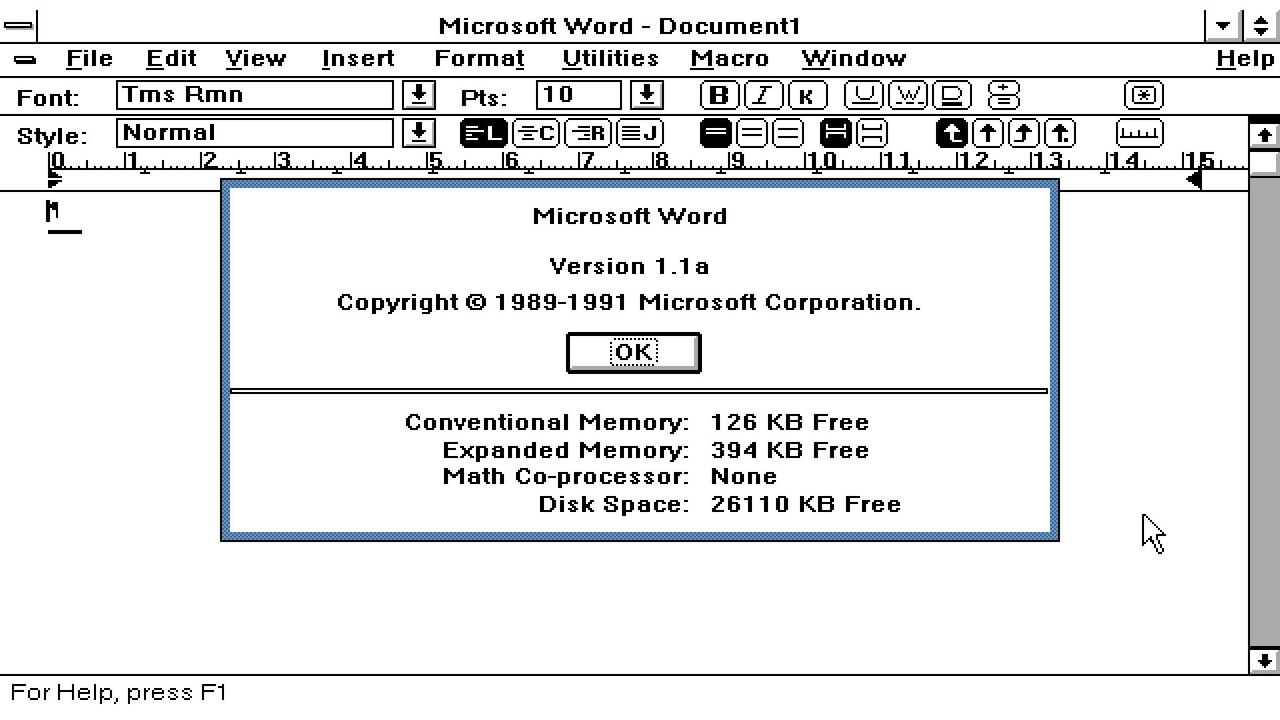
A developer has ported Microsoft Word for Windows 1.1a to x64 so it can now run natively on Windows 11 PC systems. JMarshall23 on GitHub stresses that this is a fully working native Windows x64 port using “original Word source and resources together with modern replacements for the 16-bit assembly, segmented-memory, and Win16 platform boundaries.” It also includes some extra features for “research purposes.” Microsoft Word for Windows 1.1a was originally released over a quarter of a century ago.
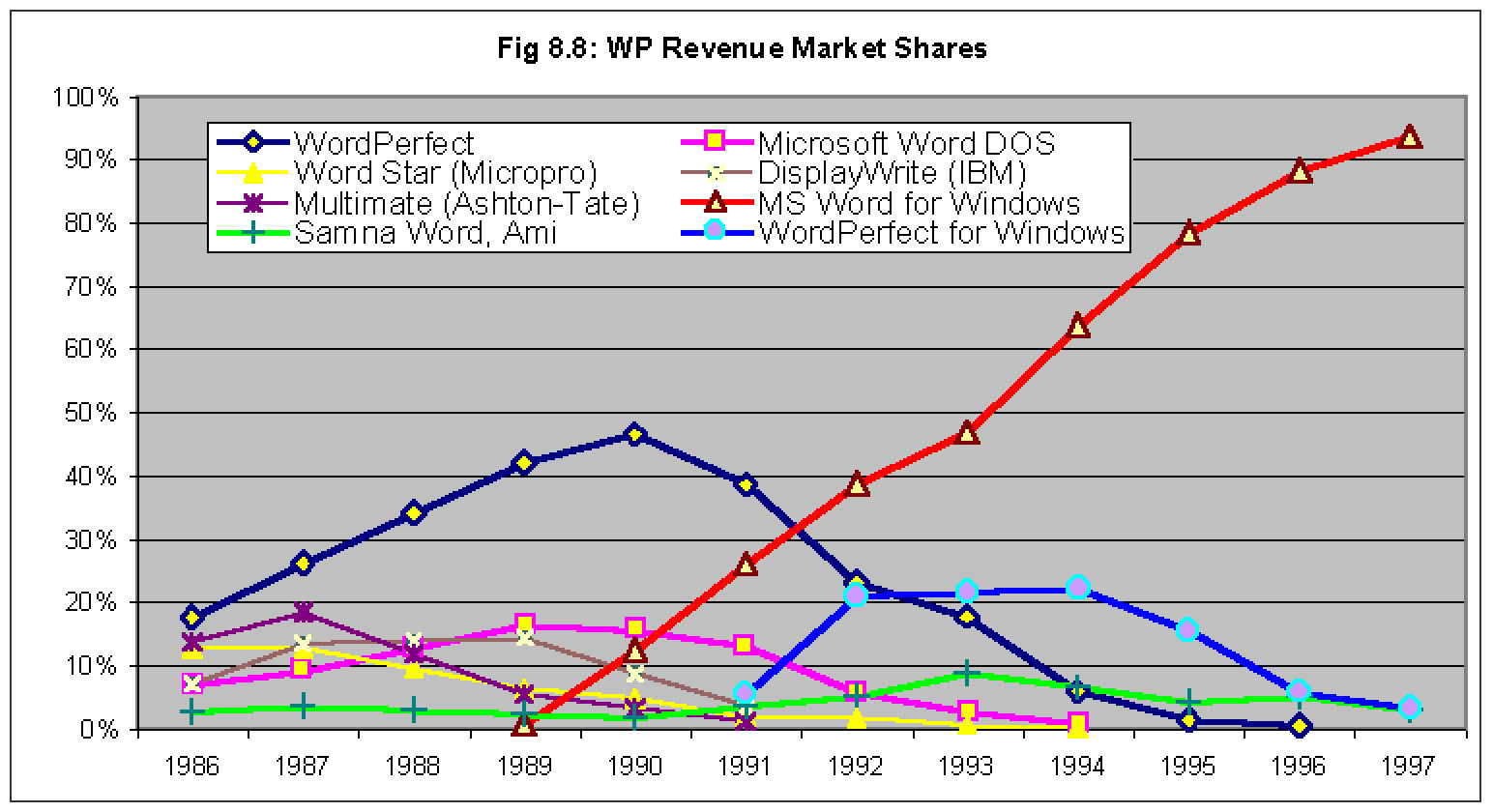
This release of Word marked a milestone in the word processing market, as it pioneered genuinely useful feature additions like WYSIWYG editing, graphics, and table insertion on Windows. It would spearhead the momentum in shifting users from DOS productivity monsters like WordPerfect to complete dominance in Windows-land. Word for Windows 1.1a added all its frills while remaining very efficient, running on systems with CPUs that ran in single-figure MHz speeds, and with as little as 1MB of RAM.
Another notable feature of this version of Word for Windows is that Microsoft permitted its source code to be released in full. You can still grab that code via the Computer History Museum (CHM). There you will find a 7MB bundle of C source, x86 assembly, build tools, and documentation. These 1,021 files in 33 folders are what JMarshall23 started with.
GitHub doesn’t have Windows x64 binaries ready for the casually curious on the lookout for a free, lightweight word processor to download and use. Instead, you’ll need access to Visual Studio 2022 with Desktop development with C++, a Windows 10 or Windows 11 SDK installed through Visual Studio, CMake 3.25 or newer, and PowerShell, notes Marshall. Then simply follow the GitHub instructions to build and run Word1.
It will be interesting to see if more comes from this x64 port, but Microsoft’s Word for Windows 1.1a code release carries a license that “permits only non-commercial use and does not give you the right to license it to third parties by posting copies elsewhere on the web,” says the CHM.
The Met Office has confirmed that its June temperature 'record' of 37.7°C came from a junk site. But rather than dropping it, it has upped it to 38°C! This not a serious scientific organisation, says Paul Homewood.
 Login