❌

Reading view

Exceptionally Preserved Bird Feathers Found in 66-Million-Year-Old Dinosaur Coprolite

While some dinosaurs are thought to have had ‘fuzzy’ or ‘downy’ feathers (shown in this illustration as the yellow spikes on a Nanotyrannus’ neck), ancient birds (such as the one in the Nanotyrannus’ mouth) were more likely to have had feathers that look similar to the birds of today. Image credit: Andrey Atuchin.

Paleontologists in Montana have discovered remarkably preserved feathers of an ancient aquatic bird inside a fossilized dinosaur dropping, offering rare insight into why certain birds survived the asteroid strike that wiped out the dinosaurs 66 million years ago.

The post Exceptionally Preserved Bird Feathers Found in 66-Million-Year-Old Dinosaur Coprolite appeared first on Sci.News: Breaking Science News.

  •  

New Owl Species Discovered in Peru

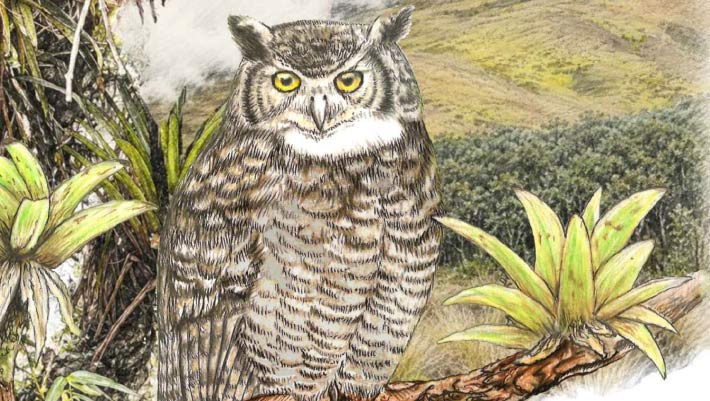
The Jalca horned owl (Bubo jalca). Image credit: López-Lanús et al.

A horned owl living in a narrow strip of high-Andean grassland in northern Peru is a species new to science, according to a paper published in July 2026 in the journal Audiornis.

The post New Owl Species Discovered in Peru appeared first on Sci.News: Breaking Science News.

  •  

Study: Night Owls Face Higher Mental Health Risks Tied to Work-Life Balance

Weekend recovery sleep doesn’t prevent weight gain or reduce insulin sensitivity. Image credit: Wok & Apix.

In a study of 2,266 workers in Finland, evening-type people, or night owls, were up to three times more likely to be treated for depression or anxiety than morning types, with poor work-life balance identified as a key contributing factor.

The post Study: Night Owls Face Higher Mental Health Risks Tied to Work-Life Balance appeared first on Sci.News: Breaking Science News.

  •  

Why Were There No Tiny Non-Avian Dinosaurs? Mammals May Have Been to Blame

Torvosaurus gurneyi. Image credit: © Sergey Krasovskiy.

Dinosaurs evolved into some of the largest animals ever to walk the Earth, but a new mathematical model suggests that early mammals may have crowded them out of the ecological niches reserved for the smallest creatures.

The post Why Were There No Tiny Non-Avian Dinosaurs? Mammals May Have Been to Blame appeared first on Sci.News: Breaking Science News.

  •  

Dodo Had Surprisingly Keen Sense of Smell and Owl-Like Vision, New Study Reveals

The dodo (Raphus cucullatus) by Frederick William Frohawk, 1905.

New research led by University of Lethbridge scientists offers the most detailed look yet at how the dodo (Raphus cucullatus) -- the flightless bird driven to extinction by the 1600s -- actually perceived its world, suggesting the ‘stupid bird’ had a far more complex sensory life than its reputation implies.

The post Dodo Had Surprisingly Keen Sense of Smell and Owl-Like Vision, New Study Reveals appeared first on Sci.News: Breaking Science News.

  •  

40,000-Year-Old Bird Figurines Found in German Cave

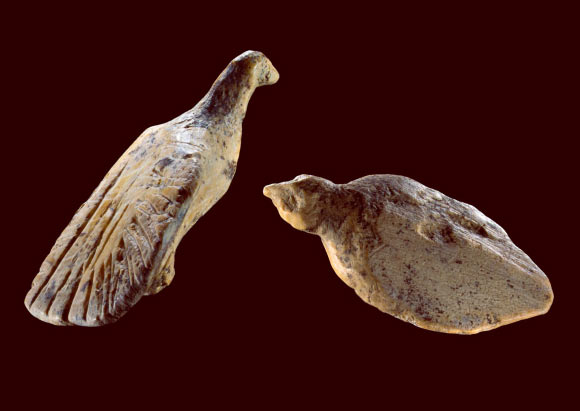
Two bird figurines found at Hohle Fels Cave in Germany. Image credit: Ralf Ehmann / University of Tübingen / Museum of Prehistory and Ice Age Art.

Archaeologists in southwestern Germany have unearthed two miniature bird figurines carved from mammoth ivory, among the smallest and most delicate examples of Ice Age art ever found.

The post 40,000-Year-Old Bird Figurines Found in German Cave appeared first on Sci.News: Breaking Science News.

  •  

Scientists Create Bio-Inspired Robots to Hack the Hovering Powers of This Exceptional Species to Build Better UAVs

An innovative new approach to building safer, more efficient small unmanned aerial vehicles is taking a cue from nature.

Anticipating worsening turbulence due to environmental concerns in the coming years, engineers studying the unmatched hovering ability of kestrels hope to reverse engineer the secrets of their exceptional flight capabilities to help assemble better future drones.

Smaller drones, known as sUAVs, have a range of different applications that include delivery services, photography, and more. However, wind conditions can often cause turbulence that either grounds them temporarily or, when caught off guard, can lead to their destruction.

Now, a team of researchers has published their findings in the Journal of the Royal Society Interface, which details an ongoing collaboration between RMIT University and the University of Bristol that seeks to overcome such issues by building drones that operate more like some of nature’s best flyers.

Specifically, the nankeen kestrel is an avian species whose amazing prowess while flying during adverse conditions still confounds researchers. To unravel the secrets of their flight, the researchers used motion capture technologies made possible in RMIT’s special Industrial Wind Tunnel facility, one of the largest such facilities anywhere on the Australian continent.

“Birds don’t rely on a single response to wind gusts,” according to RMIT researcher Matt Penn. “They constantly adjust their wings and tails to stay balanced, while the natural flexibility of their feathers and joints helps absorb sudden changes in airflow.”

“They can also sense disruptions very quickly, which allows them to respond almost instantly and maintain control,” added Penn, one of the team members who co-led the studies into how birds can cope with turbulence.

According to Penn and his colleagues, these birds possess a range of unique strategies that help them overcome the dangers of turbulence, which help them navigate under conditions that would cause most sUAVs to come tumbling from the sky.

To attempt to understand what makes kestrels such adept fliers, the team created a robotic replica to mimic some of their key flight movements and characteristics, which allowed the team to unravel some of the secrets to how these incredible birds perform.

“By creating a robot replica, we were able to measure how specific movements were contributing to steadiness in flight,” said Dr Mario Martinez Groves-Raines, a researcher now with the Royal Veterinary College in London, adding that precision measurements of kestrel flight that normally could not be achieved in nature were possible using the team’s robotic version.

“We uncovered several unique techniques behind the kestrel’s impressive stability,” Groves-Raines said. “Many of these techniques have the potential to improve [the] manoeuvrability of small aircraft, which encounter similar challenges to kestrels.”

“This research shows what’s possible when engineers look to nature for solutions,” added RMIT senior researcher Associate Professor Abdulghani Mohamed.

“Our findings open new pathways for designing aircraft that can better handle turbulence.”

Going forward, the researchers say they hope to apply their findings toward the construction of novel sUAVs, which can help future drones operate safely and more efficiently, much like their agile avian forebears.

Ultimately, similar engineering in the coming years may have applications that extend well beyond just drone flight, and could also help to ensure safe operations for much larger aircraft.

The team reported their findings in a pair of new studies, ‘Bridging the Gap: A Review of Gust Mitigation in Birds and Small UAVs’, and ‘Stability and control benefits of coupled wing and tail morphing in kestrel wind-hovering flight explored using a robot replica’, both of which were published in the Journal of The Royal Society Interface.

Micah Hanks is the Editor-in-Chief and Co-Founder of The Debrief. A longtime reporter on science, defense, and technology with a focus on space and astronomy, he can be reached at micah@thedebrief.org. Follow him on X @MicahHanks, and at micahhanks.com.

  •  

New Feathered Dinosaur from China Had Peacock-Like Tail

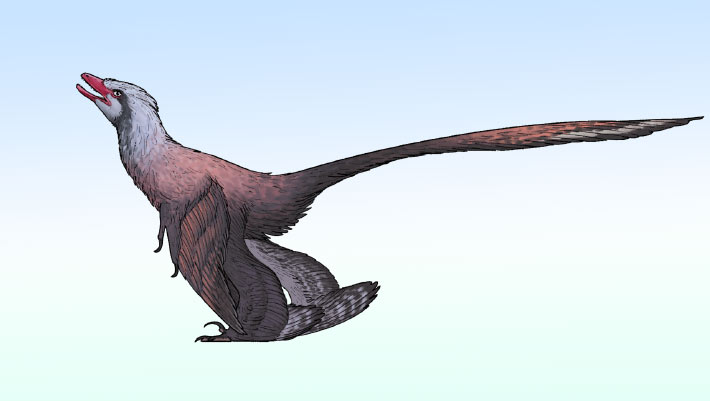
Changzhousaurus sinensis. Image credit: Connor Ashbridge / CC BY 4.0.

A new genus and species of four-winged pennaraptoran dinosaur from the Early Cretaceous of northern China is adding another twist to the story of how birds evolved from their dinosaur ancestors.

The post New Feathered Dinosaur from China Had Peacock-Like Tail appeared first on Sci.News: Breaking Science News.

  •  

Ornithologists Describe New Bird Species from Remote Indonesian Islands

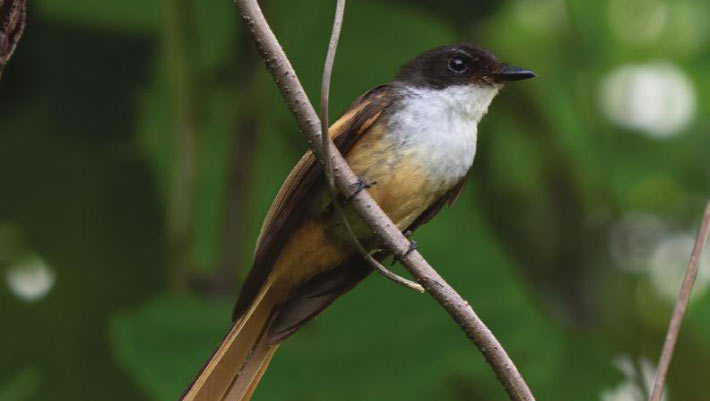
The cheerful fantail (Rhipidura laguceria) in November 2022. Image credit: James A. Eaton.

A small songbird inhabiting the Babar Islands, in the Banda Sea, Indonesia, has been identified as a new species after a duo of researchers discovered that its distinctive song sets it apart from its closest relative.

The post Ornithologists Describe New Bird Species from Remote Indonesian Islands appeared first on Sci.News: Breaking Science News.

  •  

New Microraptorine Dinosaur Discovered in China

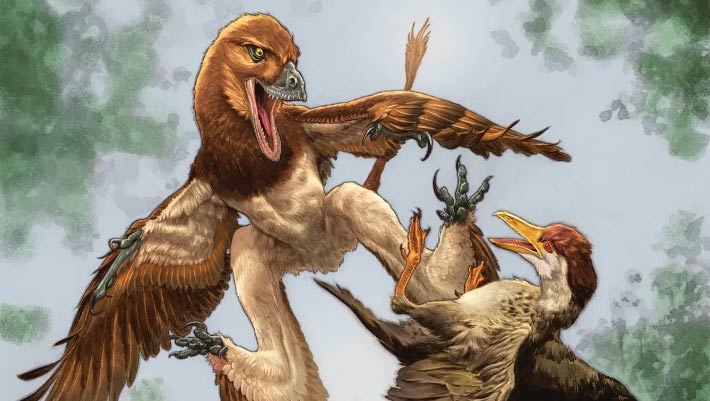
Jian changmaensis (left) attacks the early bird Gansus yumenensis (right) in what is now the Changma Basin of northwestern China approximately 120 million years ago. Image credit: Lewis LaRosa / Jão Canola.

Jian changmaensis is the first non-avian dinosaur found at a paleontological site that has yielded more than 100 specimens of Early Cretaceous birds.

The post New Microraptorine Dinosaur Discovered in China appeared first on Sci.News: Breaking Science News.

  •  

Pigeons May Sense Earth’s Magnetic Field Using Superparamagnetic Immune Cells in Their Livers

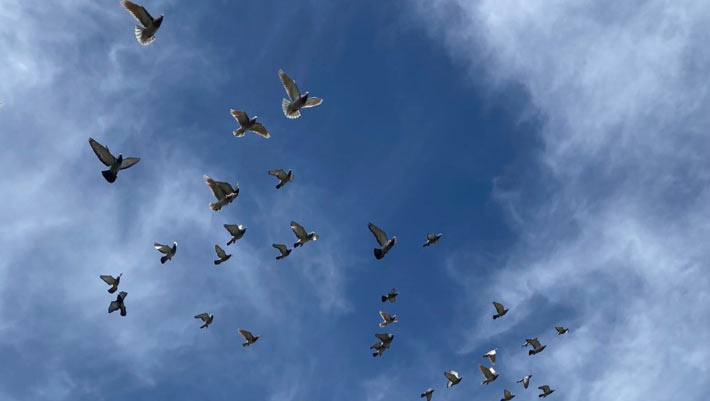
Lisowski et al. used physical, morphological, functional, and genomic assays to identify the presence of superparamagnetic macrophages in the liver of homing pigeons (Columba livia domestica). Image credit: Spanishguitar101 / CC BY-SA 4.0.

Scientists have identified supermagnetic macrophages in the livers of homing pigeons (Columba livia domestica) that appear essential for navigation when the Sun is not visible, pointing to an entirely new mechanism for animal magnetoreception.

The post Pigeons May Sense Earth’s Magnetic Field Using Superparamagnetic Immune Cells in Their Livers appeared first on Sci.News: Breaking Science News.

  •  

Cretaceous Bird from China Had Pair of Tail Feathers Twice as Long as Its Body

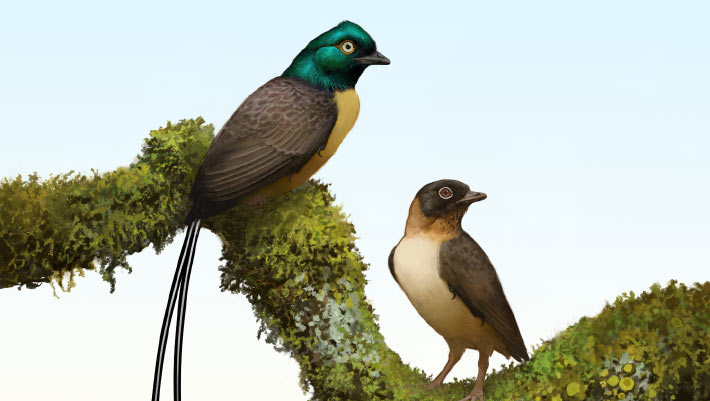
Plumadraco bankoorum is a new bohaiornithid enantiornithine bird with a pair of exceptionally long rectrices. Image credit: Ville Sinkkonen.

Named Plumadraco bankoorum, the newly-described species of enantiornithine bird lived in what is now northeastern China during the Cretaceous period, roughly 121 million years ago.

The post Cretaceous Bird from China Had Pair of Tail Feathers Twice as Long as Its Body appeared first on Sci.News: Breaking Science News.

  •  
❌